• A Note to the Reader

    This essay was written in the spirit of psychological honesty rather than comfort. Its purpose is not to flatter, condemn, shame, or pathologize anyone, but to illuminate unconscious patterns that often remain hidden beneath the surface of personality. Some readers may find certain observations uncomfortable, confronting, or even unsettling, particularly when they recognize aspects of themselves within these pages.

    Those who are unwilling to engage with candid self-examination or who are seeking reassurance rather than insight may find this material difficult to read. The analyses presented here are intended solely for self-reflection and personal growth. They should never be used as weapons against others, as tools for judgment, manipulation, or psychological labeling. The shadow exists within every human being, and genuine understanding requires humility, maturity, and the willingness to confront uncomfortable truths with compassion rather than hostility.
    The Seduction of Possibility

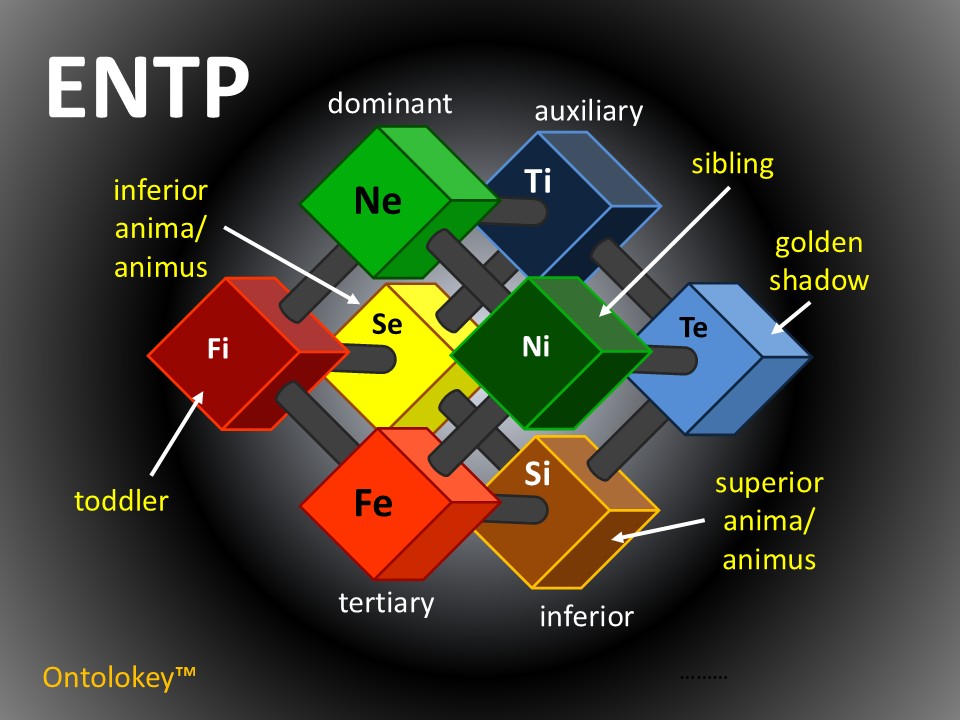
    Among all psychological structures, there are few that appear as alive, adaptive, inventive, and mentally restless as the ENTP. At first glance, this personality often seems gifted by life itself. It possesses an unusual capacity to perceive possibilities where others perceive limitations, to discover hidden connections where others see isolated facts, and to generate alternatives when circumstances appear fixed and unchangeable. Such individuals frequently impress their surroundings with intellectual agility, originality, humor, spontaneity, and a seemingly inexhaustible curiosity. They often enter a room carrying an invisible field of psychological electricity. Conversations accelerate around them. Stagnant situations become dynamic. Established assumptions are challenged. New perspectives emerge almost effortlessly.

    Yet every psychological gift conceals a corresponding danger. Every strength carries within itself the seed of its own distortion. Human beings rarely suffer because of their weaknesses alone. More often, they suffer because their greatest talents become exaggerated, inflated, detached from reality, and transformed into compulsions. What begins as a capacity eventually becomes a prison. What initially grants freedom gradually becomes a form of enslavement. The deepest shadow of the ENTP emerges precisely at this point, where the extraordinary ability to perceive possibility becomes an inability to live within reality.

    To understand this shadow, one must first recognize that the ENTP does not experience the world in the same manner as many other people. Most individuals encounter reality primarily through what already exists. They orient themselves toward established structures, known relationships, proven methods, and observable facts. The ENTP, however, tends to perceive reality through the lens of potentiality. The existing situation is rarely experienced as complete or sufficient. Instead, it appears as raw material for transformation, experimentation, and reinterpretation. Every object, institution, relationship, belief system, career path, and life situation contains hidden alternatives waiting to be discovered.

    This orientation creates remarkable advantages. The ENTP can become an innovator, entrepreneur, inventor, strategist, visionary thinker, social catalyst, or intellectual pioneer. Many of humanity’s breakthroughs originate from minds unwilling to accept the apparent limits of current circumstances. The capacity to challenge assumptions is often a prerequisite for progress. Civilizations advance because certain individuals refuse to believe that the present state of affairs represents the final possibility. In this sense, the ENTP carries an archetypal relationship to the future. Their psychological attention is naturally drawn toward what could become rather than what already is.

    The problem emerges because human life cannot be lived entirely in possibility. Reality demands participation. Possibilities must eventually become choices. Choices must eventually become commitments. Commitments inevitably require sacrifice. The individual who wishes to build a life must eventually exclude countless alternatives in order to actualize one specific path. At precisely this point, the ENTP often encounters an inner conflict that may remain hidden for years. The same psychological force that allows them to perceive unlimited opportunities also makes limitation feel intolerable.

    A subtle anxiety begins to emerge whenever possibility starts transforming into reality. During the early stages of a project, a relationship, a career, or an idea, the ENTP often feels intensely alive. The future appears open. Countless developments seem possible. Imagination operates at maximum speed. Enthusiasm becomes almost contagious. The individual experiences a profound sense of expansion and psychological vitality. However, as the situation gradually stabilizes, something changes. The unknown becomes known. The open field begins to narrow. Practical obligations emerge. Details demand attention. Maintenance replaces discovery. What once felt like freedom now begins to feel like confinement.

    From the outside, this transition may appear irrational. Others observe an opportunity finally becoming successful and assume satisfaction should follow. Yet the ENTP frequently experiences the opposite reaction. The moment others begin celebrating stability, the ENTP may begin feeling restless. The moment a relationship becomes secure, curiosity may drift elsewhere. The moment a business becomes operational, interest may shift toward a new venture. The moment an idea becomes fully articulated, another unexplored possibility starts demanding attention. The psychological energy that initially created the achievement now seeks escape from it.

    This dynamic reveals one of the earliest manifestations of the shadow. The ENTP often falls in love not with reality itself but with emergence. The birth of possibilities becomes psychologically intoxicating. Novelty generates emotional stimulation. Discovery produces excitement. Uncertainty creates fascination. Consequently, completion may feel strangely disappointing. The individual unconsciously becomes dependent on beginnings while avoiding the psychological responsibilities associated with continuation.

    Such a pattern frequently remains invisible because modern culture often rewards it. Society celebrates innovation, disruption, creativity, adaptability, and entrepreneurial thinking. The ENTP can therefore spend many years receiving external validation for behaviors that simultaneously undermine long-term fulfillment. People admire the brilliant ideas, the rapid insights, the intellectual versatility, and the ability to reinvent oneself repeatedly. Far fewer people notice the unfinished projects, abandoned relationships, neglected responsibilities, or chronic dissatisfaction concealed behind the appearance of freedom.

    At a deeper level, the shadow originates in a particular relationship with limitation. Every human life is finite. Time is limited. Energy is limited. Attention is limited. Mortality itself represents the ultimate limitation. Psychological maturity requires accepting these boundaries and learning to work creatively within them. The ENTP, however, often experiences limitation as a threat to identity. If identity is unconsciously built around endless possibility, then every commitment feels like a form of death. Choosing one path means losing all other paths. Committing to one future requires abandoning countless imagined futures. The shadow emerges when the individual becomes unable to tolerate this reality.

    What appears externally as spontaneity may internally conceal avoidance. What appears as intellectual openness may conceal fear of finality. What appears as freedom may conceal dependency. The ENTP can become trapped in an endless cycle of exploration that prevents genuine transformation. New ideas replace old ideas. New relationships replace old relationships. New ambitions replace old ambitions. Yet beneath the surface, the fundamental psychological conflict remains unresolved. The individual continues moving without truly arriving anywhere.

    This is why the shadow of the ENTP is often more tragic than destructive. Many personality structures create suffering through rigidity. The ENTP more often suffers through excess openness. Life becomes fragmented into countless possibilities that never fully mature. Talents remain partially developed. Relationships remain partially explored. Dreams remain partially realized. The individual accumulates experiences rather than building an integrated existence. Years pass in motion, yet the deeper self remains strangely homeless.

    The deepest irony is that the ENTP’s greatest fear is often precisely what could heal them. Stability appears threatening because it seems synonymous with stagnation. Commitment appears restrictive because it seems synonymous with imprisonment. Limitation appears dangerous because it seems synonymous with death. Yet psychological growth requires discovering that reality and possibility are not enemies. Possibility gains meaning only when embodied. Freedom becomes real only when expressed through action. Creativity achieves significance only when it survives contact with concrete life.

    The shadow therefore begins with a paradox. The ENTP seeks freedom through infinite possibility, yet unlimited possibility eventually produces a different kind of captivity. A life spent avoiding limitation becomes limited by avoidance itself. The individual remains surrounded by potential futures while remaining disconnected from the present one. At this point, the shadow ceases to be merely a personality trait and becomes an existential problem. The question is no longer what possibilities exist. The question becomes whether the individual can remain present long enough to transform possibility into reality.

    This is the threshold where the deeper descent into the ENTP shadow truly begins.

    The Addiction to Novelty and the Fear of Completion

    If the first movement of the ENTP shadow emerges through an excessive attachment to possibility, the second movement reveals itself through an addiction that is rarely recognized as such. Unlike addictions associated with substances, this addiction often receives admiration from the surrounding world. It appears intelligent, productive, creative, ambitious, and even visionary. Yet beneath these socially rewarded qualities lies a psychological dependence on stimulation itself. The ENTP does not merely enjoy novelty; in its shadow form, novelty becomes an emotional necessity. New ideas, new projects, new intellectual territories, new relationships, new environments, and new ambitions begin to function as psychological fuel. Without them, an uncomfortable inner emptiness starts to emerge, and it is precisely this emptiness that the shadow seeks to avoid.

    Many ENTPs spend years believing that their constant search for new experiences is simply an expression of curiosity. To a degree, this interpretation is correct. Curiosity is one of the most authentic and beautiful characteristics of this personality structure. However, a crucial distinction exists between curiosity and compulsion. Curiosity expands consciousness because it seeks understanding. Compulsion seeks relief. Curiosity is motivated by genuine interest in reality. Compulsion is motivated by the need to escape an uncomfortable psychological state. The difference becomes visible when novelty ceases to be available. The curious individual can rest. The compulsive individual cannot. The absence of stimulation creates anxiety, restlessness, boredom, irritability, and a vague sense that life itself has somehow become insufficient.

    At the root of this phenomenon lies an important psychological mechanism. The ENTP often experiences aliveness through the anticipation of discovery. The future contains excitement because it contains uncertainty. Every unexplored possibility carries emotional energy. Every unanswered question contains psychological tension. Every emerging project promises transformation. During these phases, the individual feels energized, inspired, and mentally expanded. The future seems infinitely rich. Life appears full of promise. Yet this state depends upon something remaining unresolved. It depends upon there still being something to discover. Once the unknown becomes known, the emotional charge begins to fade.

    This process explains why completion can generate surprisingly complex emotions. Most people assume that achieving a goal should produce satisfaction. Yet for the ENTP, achievement often contains a hidden disappointment. The moment a possibility becomes reality, it loses its mystery. The project that once stimulated imagination now demands maintenance. The business that once represented adventure now requires administration. The relationship that once generated fascination now requires emotional consistency. The intellectual theory that once sparked endless exploration now stands completed before the mind. What was previously alive as potential becomes fixed as actuality. Something essential appears to vanish.

    The shadow interprets this loss as evidence that the achievement itself was flawed. The individual assumes that enthusiasm disappeared because the project was wrong, the relationship was inadequate, the career was limiting, or the idea was insufficiently interesting. Consequently, attention shifts elsewhere. A new possibility appears. Excitement returns. Energy resurges. The cycle begins again. What remains unseen is that the problem was never the object itself. The problem was the unconscious dependency upon anticipation. The individual was attached not to the project but to the feeling generated by the project’s incompleteness.

    This dynamic can become especially destructive in relationships. During the initial stages of romantic attraction, the ENTP often experiences intense fascination. Another human being appears as an unexplored universe. Every conversation reveals new dimensions. Every interaction contains uncertainty. The imagination fills gaps with possibilities. Curiosity flourishes. Emotional energy rises naturally. In healthy development, this phase gradually transforms into intimacy. Mystery gives way to familiarity. Excitement deepens into trust. Exploration evolves into commitment. Yet the shadow resists this transition because intimacy requires a fundamentally different psychological orientation than fascination.

    Fascination thrives on uncertainty. Intimacy thrives on presence. Fascination is sustained by imagination. Intimacy is sustained by reality. Fascination asks what someone could become. Intimacy asks who they actually are. For the shadow-driven ENTP, this transition can feel profoundly disappointing, not because the partner lacks value, but because reality can never compete with unlimited imagination. No human being can embody every possibility projected upon them. No relationship can permanently maintain the excitement of its beginning. Consequently, the individual may unconsciously begin searching for stimulation elsewhere, not because love is absent, but because novelty has become psychologically confused with aliveness itself.

    The same pattern frequently appears in intellectual life. The ENTP often possesses extraordinary cognitive versatility. Ideas are generated with remarkable speed. Connections emerge almost spontaneously. Entire conceptual systems can be constructed in a matter of hours. Yet there is a significant difference between creating ideas and developing them. The first activity requires inspiration. The second requires discipline. The first is driven by excitement. The second is driven by responsibility. Shadow dynamics emerge when the individual continually initiates intellectual exploration while avoiding the slower, less glamorous work of refinement and implementation.

    This avoidance frequently produces a painful paradox. Many ENTPs possess exceptional potential, yet they become haunted by a chronic sense of unrealized capability. They know what they could achieve. Others often know it as well. Teachers, colleagues, friends, and partners repeatedly comment on their intelligence, creativity, and promise. However, potential alone does not build a life. Potential is merely stored energy. If it remains unexpressed, it gradually transforms into frustration. Over time, the individual begins carrying an invisible burden composed of abandoned possibilities. Every unfinished project becomes a reminder of what might have been. Every neglected ambition becomes evidence against the self. The result is not freedom but accumulated psychological debt.

    This debt often manifests as self-doubt. From the outside, observers may assume that the ENTP possesses tremendous confidence. Their verbal fluency, intellectual agility, and willingness to challenge assumptions create an impression of certainty. Yet beneath this appearance there is often a far more complicated reality. The individual knows how many projects have been abandoned. They remember opportunities left unexplored. They are aware of talents that were never fully developed. The contrast between potential and actual achievement becomes increasingly difficult to ignore. What begins as optimism can gradually evolve into an uncomfortable awareness that possibility alone is insufficient.

    As this awareness grows, another shadow process emerges. Instead of confronting the pain of incompletion, the individual may intensify the search for novelty. New projects become psychological distractions from old disappointments. New ambitions temporarily silence feelings of inadequacy. New intellectual adventures provide relief from confronting unfinished aspects of life. The cycle therefore becomes self-reinforcing. The more incompletion accumulates, the greater the need for new stimulation. The greater the need for stimulation, the less likely completion becomes. What initially appeared as freedom slowly reveals itself as dependency.

    There is also a deeper existential dimension to this pattern. Completion is never merely practical. Completion represents finality. To finish something is to acknowledge limits. It means accepting that a particular possibility has reached its fullest expression. It means allowing ambiguity to disappear. It means surrendering the fantasy that infinite alternative outcomes still exist. Psychologically, this can feel surprisingly threatening. As long as a project remains unfinished, it can still become perfect in imagination. As long as a relationship remains undefined, it can still embody every desired possibility. As long as a dream remains unrealized, it remains protected from reality’s inevitable imperfections.

    The shadow therefore develops a subtle preference for incompletion. Unfinished possibilities remain psychologically alive because they have not yet encountered limitation. Reality always introduces complexity, compromise, imperfection, and disappointment. Imagination introduces none of these things. The individual may unconsciously remain loyal to imagination because imagination preserves purity. Reality destroys fantasy by replacing it with facts. Yet only reality allows genuine growth. Only reality allows transformation. Only reality allows a human being to become something rather than merely think about becoming something.

    This is why the fear of completion often conceals a deeper fear: the fear of discovering one’s actual limits. Possibility permits grand visions. Reality demands measurement. Within imagination, one can become a brilliant entrepreneur, revolutionary thinker, devoted partner, influential leader, or creative genius. Reality eventually asks a more difficult question. It asks whether one is willing to perform the repetitive, frustrating, exhausting work required to embody those identities. The shadow prefers potential because potential never faces this test. Potential remains eternally untouched by failure.

    Yet life cannot be lived within potential forever. Sooner or later, the individual encounters an unavoidable truth. The purpose of possibility is not endless expansion. The purpose of possibility is incarnation. Ideas exist to become realities. Dreams exist to become experiences. Love exists to become commitment. Vision exists to become action. Without this transformation, possibility becomes a substitute for life rather than a path toward it.

    The deepest tragedy of the shadow ENTP is therefore not failure. Failure can teach, refine, and strengthen character. The deeper tragedy is perpetual postponement. It is the endless deferral of embodiment. It is the accumulation of futures that never become presents. It is the gradual realization that one has explored countless roads without fully walking any of them. At that point, novelty ceases to feel liberating. It begins to reveal its hidden cost.

    For beneath every addiction lies a sacrifice. The addiction to novelty sacrifices depth for breadth. It sacrifices mastery for exploration. It sacrifices intimacy for fascination. It sacrifices realization for possibility. The individual gains an ever-expanding horizon of opportunities while simultaneously losing contact with the transformative power that emerges only through sustained commitment.

    This realization marks the next stage in the descent into the ENTP shadow. For beneath the addiction to novelty lies something even more unsettling: a profound conflict with structure itself. The personality that worships freedom eventually discovers that freedom without structure can become a sophisticated form of self-sabotage. It is here that the shadow reveals another of its deepest faces.

    Freedom Against Structure: The Self-Sabotaging Rebel

    If novelty represents the emotional fuel of the ENTP shadow, then freedom represents its sacred principle. Few psychological structures value autonomy as intensely. The desire to think independently, explore without restriction, question authority, resist intellectual conformity, and preserve personal sovereignty often forms a central pillar of identity. In its healthy expression, this characteristic produces originality, innovation, courage, and an unusual resistance to collective irrationality. Throughout history, individuals with this orientation have frequently challenged stagnant institutions, exposed hidden contradictions, and expanded the boundaries of accepted thought. Civilization itself depends upon people who are willing to question assumptions that others accept without examination.

    Yet the shadow rarely attacks a virtue directly. Instead, it exaggerates that virtue until it becomes its opposite. The healthy love of freedom gradually mutates into an inability to tolerate structure. The capacity for independent thought becomes compulsive opposition. Intellectual skepticism becomes chronic contrarianism. What initially served growth begins serving avoidance. At this stage, freedom ceases to be a means toward a meaningful life and becomes an end in itself. The individual begins protecting freedom even when that freedom no longer serves any constructive purpose.

    The psychological roots of this process run surprisingly deep. For many ENTPs, structure is not experienced as a neutral framework. It is often perceived as a threat. Rules imply limitation. Expectations imply obligation. Commitments imply permanence. Hierarchies imply constraint. Systems imply predictability. The personality that instinctively seeks expansion often experiences such elements as attempts to compress life into forms that are too narrow, too rigid, too lifeless. As a result, resistance emerges almost automatically. The individual may challenge authority not because authority is wrong but because authority exists. They may reject conventions not because conventions are irrational but because conventions restrict movement.

    In early adulthood, this tendency frequently appears attractive. The rebel often seems courageous. The person who refuses to conform appears authentic. Others admire the willingness to question assumptions and resist social pressure. Indeed, there are circumstances where such resistance is genuinely admirable. Every society contains irrational norms, outdated structures, and institutions that deserve criticism. The problem arises when rebellion becomes detached from discernment. The individual no longer evaluates whether a structure is useful or harmful. Instead, structure itself becomes the enemy.

    At this point, a subtle inversion occurs. The person who believes they are acting freely becomes psychologically predictable. Every request generates resistance. Every expectation triggers opposition. Every form of order invites disruption. Ironically, the individual who prides themselves on independence becomes governed by an unconscious compulsion to reject limitation. Freedom is no longer chosen consciously. It is demanded reflexively. The rebel ceases to direct the rebellion; the rebellion directs the rebel.

    This dynamic frequently reveals itself in professional life. Many ENTPs possess exceptional entrepreneurial instincts because they naturally identify inefficiencies, hidden opportunities, and alternative solutions. They often excel in environments that reward creativity and adaptability. However, every successful endeavor eventually requires systems. Businesses require administration. Teams require coordination. Strategies require execution. Even the most brilliant idea eventually encounters practical realities. Here the shadow begins to create difficulties. The same individual who generated the vision may become frustrated by the structure necessary to realize it.

    What often follows is a cycle of self-sabotage. The ENTP creates something valuable, then unconsciously undermines it when stability emerges. Procedures feel suffocating. Maintenance feels tedious. Repetition feels deadening. Responsibilities accumulate. Instead of adapting to these realities, the individual may abandon the project entirely and redirect attention toward a fresh opportunity. Externally, this appears as inconsistency. Internally, it feels like a desperate attempt to preserve vitality. Yet the long-term result is often deeply painful. The individual repeatedly escapes limitations while simultaneously escaping the rewards that only limitation makes possible.

    The same conflict frequently appears in relationships. Commitment inevitably creates structure. Shared lives require agreements, responsibilities, compromises, and expectations. Love is not sustained merely by emotional intensity; it is sustained by reliability. Reliability requires consistency. Consistency requires discipline. These realities can feel surprisingly threatening to a shadow-driven ENTP because they introduce obligations that cannot be escaped without consequence. The individual may therefore experience an unconscious tension between intimacy and autonomy. The closer the relationship becomes, the stronger the fear of restriction may grow.

    This does not mean the ENTP lacks the capacity for deep attachment. On the contrary, many experience profound emotional bonds. The problem is that attachment and freedom can appear psychologically incompatible when viewed through the lens of the shadow. The individual begins fearing that commitment will eliminate spontaneity, that responsibility will destroy authenticity, or that stability will extinguish excitement. As a result, they may create unnecessary conflict, maintain emotional distance, or continually seek escape routes from situations that actually possess the potential for genuine fulfillment.

    A particularly destructive manifestation of this pattern involves the romanticization of alternatives. Whenever difficulties emerge within an existing commitment, imagination begins generating competing possibilities. Another career path appears more exciting. Another city appears more alive. Another project appears more meaningful. Another relationship appears more compatible. The current reality is unconsciously compared against idealized alternatives that exist only in imagination. Naturally, reality loses this comparison every time. Real life contains frustration, compromise, and imperfection. Fantasy contains none of these elements. Consequently, the individual becomes trapped in perpetual dissatisfaction, not because reality is inadequate, but because imagination is being used as a weapon against reality.

    Beneath this struggle lies a deeper existential conflict. Structure confronts the individual with permanence. It forces encounters with consequences. It demands responsibility for choices. Yet responsibility is inseparable from adulthood itself. Psychological maturity does not mean eliminating freedom. Rather, it means learning that freedom and responsibility are complementary rather than contradictory. The shadow ENTP often experiences them as enemies. Freedom feels alive. Responsibility feels dead. Freedom feels expansive. Responsibility feels restrictive. Yet this perception conceals a profound misunderstanding about human development.

    Without structure, freedom remains abstract. A musician requires disciplined practice to express artistic freedom. A writer requires consistency to transform ideas into books. An entrepreneur requires systems to transform vision into reality. A loving partner requires reliability to transform affection into trust. Every meaningful expression of freedom depends upon forms that initially appear restrictive. Structure is not the enemy of freedom. Structure is the vessel through which freedom becomes effective. The shadow fails to recognize this relationship and therefore remains trapped in a perpetual battle against the very conditions necessary for achievement.

    This misunderstanding often becomes especially visible in the realm of self-discipline. The shadow ENTP frequently seeks motivation before action. They wait for enthusiasm, inspiration, excitement, or intellectual fascination to appear. When these states are present, productivity can become extraordinary. Hours of work may be completed effortlessly. Complex problems are solved with remarkable speed. Creativity seems inexhaustible. However, when inspiration disappears, activity often collapses. Tasks are postponed. Projects stagnate. Deadlines are ignored. The individual becomes dependent upon fluctuating internal states rather than stable commitments.

    Over time, this dependence creates a painful fragmentation of identity. The individual begins seeing two versions of themselves. There is the person they know they can become during periods of inspiration, brilliance, and momentum. Then there is the person they encounter during periods of boredom, routine, and responsibility. The gap between these two selves grows increasingly painful. Self-esteem begins fluctuating dramatically. On some days the individual feels capable of extraordinary achievements. On other days they feel trapped by their own inconsistency. The resulting frustration often reinforces the desire to escape into new possibilities rather than confront the underlying problem.

    The irony is profound. The ENTP shadow fears structure because it appears restrictive. Yet the absence of structure frequently produces far greater restrictions. Opportunities remain unrealized. Talents remain undeveloped. Relationships remain unstable. Financial insecurity persists. Long-term goals remain perpetually distant. What was intended as freedom gradually becomes a form of captivity. The individual remains free from commitment but also free from mastery. Free from responsibility but also free from fulfillment. Free from limitation but also free from achievement.

    At a deeper psychological level, rebellion itself often conceals vulnerability. The compulsive rejection of structure frequently masks fear. There is fear of being controlled. Fear of becoming trapped. Fear of losing identity. Fear of being ordinary. Fear of discovering that one’s potential may not match one’s imagination. Structure introduces measurement. It creates visible outcomes. It exposes strengths and weaknesses alike. For this reason, endless freedom sometimes serves as a defense against self-confrontation. As long as possibilities remain open, definitive evaluation remains impossible.

    The shadow therefore creates a seductive illusion. It whispers that freedom lies beyond every commitment, beyond every structure, beyond every responsibility. Yet every attempt to pursue this absolute freedom leads to the same destination: instability. Human beings require forms. They require continuity. They require commitments capable of surviving temporary fluctuations in emotion and motivation. The individual who refuses all structure eventually discovers that chaos is not liberation. Chaos is merely another prison.

    The transformation begins when the ENTP recognizes that freedom is not the absence of structure but the intelligent selection of structure. Maturity does not require surrendering creativity, curiosity, or independence. It requires directing them. The river becomes powerful not because it lacks banks, but because the banks give its energy a direction. Without them, water disperses into a swamp. The same principle applies psychologically. Structure concentrates potential. Discipline transforms possibility into reality. Commitment allows depth to emerge where constant movement previously prevented it.

    Yet this realization introduces an even more uncomfortable challenge. For beneath the conflict with structure lies something darker still. Beneath the rebellion, beneath the novelty seeking, beneath the restless pursuit of possibility, there often exists an unacknowledged emotional world. The ENTP shadow is not merely a battle against external limitations. It is also a battle against inner vulnerability. And it is there, in the hidden territory of feeling itself, that some of the deepest shadows begin to emerge.

    The Emotional Blind Spot: Intellect as a Defense Against Vulnerability

    One of the most persistent misconceptions surrounding the ENTP concerns emotion. Because these individuals are often articulate, socially agile, expressive, humorous, and psychologically perceptive, many people assume they possess effortless emotional self-awareness. They appear comfortable discussing human behavior. They can analyze motivations, predict reactions, interpret social dynamics, and often display an impressive understanding of psychological patterns. Their intellectual flexibility allows them to examine emotional situations from multiple perspectives. They can explain why people behave as they do, identify hidden tensions within relationships, and deconstruct complex interpersonal conflicts with remarkable clarity. Yet the ability to analyze emotion is not identical to the ability to experience it consciously. The shadow frequently emerges precisely within this distinction.

    The ENTP often develops an extraordinarily sophisticated relationship with thought. Thinking becomes more than a cognitive tool. It becomes a primary mode of existence. Problems are approached intellectually. Conflicts are approached intellectually. Relationships are approached intellectually. Even personal suffering is frequently approached intellectually. The mind becomes a lens through which every experience is filtered before it is allowed to enter conscious awareness. While this process creates enormous strengths, it also introduces a subtle danger. Emotion is transformed into an object of observation rather than a lived reality.

    At first, this tendency appears harmless. Indeed, it often produces genuine advantages. The ability to maintain psychological distance allows the ENTP to remain calm during crises. Emotional situations that overwhelm others may be approached with curiosity and analytical clarity. They can frequently identify solutions where more emotionally reactive individuals become trapped in confusion. This capacity contributes significantly to their reputation as adaptable and resilient thinkers. Yet what appears as resilience from the outside may sometimes conceal avoidance on the inside. Analysis can become a refuge from experience. Understanding a feeling intellectually can become a substitute for actually feeling it.

    This distinction becomes crucial because emotions are not merely information. They are experiences that require participation. Grief cannot be solved as a conceptual puzzle. Fear cannot be neutralized through argument alone. Loneliness does not disappear because its origins have been identified. Shame does not dissolve because it has been accurately categorized. Human beings often attempt to use cognition as a means of controlling emotional reality, yet emotions possess a stubborn autonomy. They insist upon being experienced. When they are repeatedly intellectualized instead of integrated, they do not disappear. They retreat into the unconscious, where they continue influencing behavior in indirect and often destructive ways.

    The ENTP shadow frequently develops around this very process. Faced with emotional discomfort, the individual instinctively moves upward into abstraction. Instead of asking, “What am I feeling?” they ask, “Why is this happening?” Instead of inhabiting sadness, they analyze its causes. Instead of confronting vulnerability, they construct theories about vulnerability. Instead of mourning loss, they philosophize about impermanence. While these intellectual responses may contain genuine insight, they often create distance from the emotional reality itself. The individual becomes knowledgeable about feelings while remaining disconnected from them.

    Over time, this pattern creates an emotional blind spot. The person may genuinely believe they are self-aware because they possess elaborate explanations for their inner life. They can describe their psychological patterns in detail. They understand their motivations. They recognize recurring dynamics. Yet when confronted with direct emotional experience, uncertainty often emerges. Beneath the sophisticated intellectual framework, there may exist surprising difficulty identifying and expressing deeper emotional states. The individual knows what they think about their feelings but may not fully know what they feel.

    This emotional distancing frequently begins early in life. Many intellectually gifted individuals discover that cognitive competence earns approval, admiration, and social value. Intelligence becomes a source of identity. The mind becomes a trusted ally. Emotional vulnerability, by contrast, often feels unpredictable. It introduces uncertainty. It exposes dependency. It reveals needs that cannot always be satisfied through personal competence. Consequently, the developing personality gradually learns to rely upon intellect whenever emotional discomfort appears. The mind becomes both shield and weapon. It protects against pain while simultaneously preventing deeper emotional integration.

    One of the most common manifestations of this pattern appears in close relationships. The ENTP may genuinely care deeply about others and may even experience profound affection. However, when relationships enter emotionally demanding territory, a shift often occurs. Instead of remaining present with vulnerability, the individual moves toward analysis. The partner expresses pain, and the ENTP begins searching for explanations. The partner seeks empathy, and the ENTP offers solutions. The partner desires emotional presence, and the ENTP provides conceptual understanding. Although these responses are usually well-intentioned, they often miss the deeper need being expressed.

    The problem is not lack of care. In many cases, the opposite is true. The ENTP cares intensely but feels uncertain about how to remain emotionally present without retreating into cognition. Vulnerability creates discomfort because it cannot be mastered through intelligence alone. There is no elegant argument capable of eliminating grief. No clever theory can replace emotional intimacy. No conceptual framework can substitute for genuine presence. Consequently, the individual may unconsciously withdraw into intellectual territory whenever emotional demands increase. From the outside, this can appear cold, detached, dismissive, or insensitive. Internally, however, it is often an attempt to regain psychological control.

    This need for control reveals something important about the shadow. Beneath intellectual confidence, there frequently exists a profound discomfort with helplessness. Emotional experiences confront the individual with realities that cannot be managed through ingenuity. Love creates dependency. Loss creates vulnerability. Rejection creates pain. Attachment creates risk. These experiences expose dimensions of human existence that resist rational mastery. The shadow ENTP often responds by attempting to maintain distance from precisely those experiences capable of transforming them most deeply.

    An especially revealing example involves grief. When confronted with significant loss, many ENTPs initially respond through analysis rather than emotional immersion. They seek understanding. They search for meaning. They attempt to contextualize the event within broader philosophical frameworks. Such efforts are not inherently unhealthy. Meaning-making can play a crucial role in healing. Problems arise only when understanding becomes a substitute for mourning. The individual may appear functional, productive, and intellectually composed while carrying unresolved grief beneath the surface. Years later, that grief may reappear unexpectedly through anxiety, restlessness, irritability, cynicism, or chronic dissatisfaction.

    The same dynamic often emerges around shame. Shame represents one of the most difficult emotions for intellectually oriented personalities because it directly threatens self-image. The ENTP frequently defines identity through competence, adaptability, creativity, and intelligence. Consequently, failures that challenge these qualities can become psychologically destabilizing. Rather than confronting shame directly, the shadow may transform it into sarcasm, detachment, rationalization, or endless self-improvement projects. The individual continues moving forward while avoiding the deeper emotional wound beneath the movement. Yet shame that remains unacknowledged continues shaping behavior from the shadows.

    This emotional avoidance is often reinforced by social expectations. Many people admire the ENTP precisely for their mental agility and apparent independence. They become accustomed to being perceived as confident, resilient, and intellectually capable. Over time, vulnerability may begin to feel incompatible with identity itself. Admitting confusion, fear, dependency, sadness, or insecurity seems to threaten the image they have constructed. As a result, emotional honesty becomes increasingly difficult. The individual may reveal thoughts freely while guarding feelings carefully. Others know what they think but remain uncertain who they truly are.

    The tragedy of this pattern lies in the fact that the very qualities being avoided are often the ones most necessary for psychological growth. Vulnerability is not weakness. Vulnerability is the gateway to intimacy. Grief is not failure. Grief is the price of attachment. Fear is not evidence of inadequacy. Fear frequently accompanies meaningful transformation. Human beings become whole not by transcending emotion but by integrating it. The shadow ENTP often spends years attempting to outthink emotional reality before eventually discovering that emotional reality cannot be bypassed.

    When this discovery occurs, it can feel profoundly disorienting. The individual realizes that intelligence, while enormously valuable, possesses limits. Thought can illuminate experience, but it cannot replace experience. Analysis can clarify suffering, but it cannot fully heal suffering. Insight can guide transformation, but transformation itself requires participation. The person who has spent a lifetime living primarily through cognition must gradually learn the unfamiliar language of emotional presence.

    This process is rarely comfortable. It demands surrendering certain illusions of control. It requires remaining present with uncertainty instead of immediately resolving it. It asks the individual to experience sadness without explaining it away, fear without rationalizing it, and vulnerability without defending against it. Yet within this discomfort lies the possibility of genuine integration. The intellect ceases functioning as a fortress and becomes what it was always meant to be: a tool serving a fully embodied human being rather than protecting one from themselves.

    For beneath the emotional blind spot lies an even darker territory. Once the defenses of intellect begin to weaken, another hidden force often emerges into view. It is a force that has quietly influenced countless decisions, relationships, ambitions, and conflicts. It is the shadow’s relationship with superiority itself. For the ENTP does not merely struggle with vulnerability. Very often, they struggle with the temptation to place themselves above the very world they claim to challenge. And it is there that one of the most dangerous distortions of this personality begins to reveal itself.

    The Superiority Complex: When Intelligence Becomes Narcissistic

    Every psychological gift carries a hidden temptation. Strength invites inflation. Talent invites identification. Success invites illusion. The greater the gift, the greater the danger that the individual will unconsciously begin confusing possession of the gift with possession of intrinsic superiority. In the case of the ENTP, the greatest gift is often intellectual agility. The ability to perceive patterns rapidly, identify inconsistencies, dismantle arguments, generate alternatives, and navigate complexity can be genuinely extraordinary. Such individuals frequently discover early in life that they think differently from those around them. They see connections others miss. They solve problems quickly. They become accustomed to being intellectually ahead of conversations, classrooms, workplaces, and sometimes entire social groups. While this capacity can become a source of contribution and creativity, it also contains one of the most dangerous seeds within the ENTP shadow: the temptation to mistake intelligence for value.

    The emergence of this shadow is rarely conscious. Few people wake up one morning and decide to become arrogant. Instead, arrogance develops gradually through a subtle psychological process. The individual repeatedly encounters evidence of their intellectual competence. They notice how often predictions prove accurate. They observe others struggling with concepts that seem obvious. They become accustomed to challenging assumptions successfully. Over time, a hidden equation begins forming in the unconscious. Intelligence becomes associated not merely with capability but with worth. The individual starts measuring themselves and others primarily through cognitive criteria. What begins as confidence slowly evolves into a hierarchy.

    This hierarchy is often invisible to the person who carries it. Outwardly, the ENTP may appear open-minded, humorous, and socially flexible. Indeed, many possess genuine curiosity about diverse perspectives. Yet beneath this openness there may exist an unspoken ranking system. Some people are perceived as intellectually stimulating. Others are perceived as mentally limited. Some are worthy of engagement. Others are tolerated. The distinction is rarely expressed directly, but it subtly shapes interactions. Attention gravitates toward those who provide novelty, complexity, or challenge. Interest diminishes when conversations become predictable or intellectually uninteresting.

    The problem is not that intelligence is valued. Intelligence deserves respect. The problem emerges when intelligence becomes the primary lens through which human beings are evaluated. Such a perspective inevitably distorts reality because human value cannot be reduced to cognitive ability. Wisdom differs from intelligence. Character differs from intelligence. Integrity differs from intelligence. Emotional depth differs from intelligence. Yet the shadow often struggles to recognize these distinctions. It assumes that cognitive sophistication automatically implies overall superiority. In doing so, it commits one of the oldest psychological errors imaginable: confusing one dimension of human development with the whole person.

    This distortion frequently manifests as chronic criticism. The ENTP shadow develops an exceptional capacity for identifying flaws. Weak arguments are exposed. Contradictions are noticed. Inefficiencies are highlighted. Social absurdities become obvious. Institutions reveal their weaknesses. Individuals reveal their inconsistencies. The mind becomes extraordinarily skilled at deconstruction. Initially, this capacity appears impressive. It often is impressive. Yet over time a subtle imbalance develops. The individual becomes far more capable of identifying what is wrong than recognizing what is valuable. Criticism becomes effortless. Appreciation becomes difficult.

    The psychological consequences are profound. The person begins living in a world populated by disappointments. Every system appears flawed. Every authority appears incompetent. Every ideology appears incomplete. Every relationship contains contradictions. Every human being reveals limitations. Because the mind naturally detects imperfections, reality increasingly appears inadequate. What remains unseen is that this perception says as much about the observer as it does about the world. A consciousness trained primarily toward critique eventually loses its capacity for gratitude. It becomes trapped in permanent dissatisfaction.

    This dissatisfaction often conceals an unconscious defense mechanism. The act of judging others creates psychological distance. The person who critiques remains above the object of critique. They become observer rather than participant, evaluator rather than equal. Such a position feels safe because it protects against vulnerability. If others are viewed primarily through their deficiencies, genuine intimacy becomes difficult. To recognize another person’s humanity fully requires recognizing one’s own. Superiority interrupts this process by maintaining separation. The individual remains intellectually engaged while emotionally detached.

    An especially revealing manifestation of this dynamic appears in arguments. Healthy intellectual debate can be invigorating. It sharpens thought, exposes assumptions, and promotes understanding. Yet the shadow gradually transforms dialogue into competition. The purpose shifts from discovering truth to demonstrating superiority. Conversations become arenas. Ideas become weapons. Winning becomes more important than understanding. The individual may not even notice the transition because intellectual combat feels natural and stimulating. Yet those around them often perceive something different. They experience dismissal rather than engagement, correction rather than curiosity, and performance rather than dialogue.

    Over time, this tendency can create loneliness. People admire intelligence but rarely feel emotionally nourished by constant evaluation. Friends become cautious. Partners become defensive. Colleagues become guarded. The ENTP may remain socially connected while experiencing a subtle absence of genuine intimacy. They understand others conceptually but struggle to meet them as equals. Relationships become intellectually active yet emotionally thin. The individual then wonders why profound connection remains elusive, often failing to recognize the role their own superiority has played in creating the distance they now experience.

    The irony is particularly painful because beneath superiority there frequently lies insecurity. Psychological inflation almost always compensates for something. The louder the unconscious claim to exceptionalism, the more likely it is protecting an unacknowledged fear. In many ENTPs, that fear involves inadequacy. Despite outward confidence, there often exists a haunting awareness of unrealized potential. The individual knows how much remains unfinished. They know how many ambitions have been abandoned. They know how often brilliance has failed to become accomplishment. Consequently, superiority sometimes functions as a defense against self-judgment. By focusing on the limitations of others, attention is diverted from unresolved conflicts within the self.

    This dynamic explains why criticism can become addictive. Every flaw identified externally provides temporary relief from confronting internal contradictions. Every intellectual victory offers momentary reassurance. Every demonstration of competence reinforces identity. Yet none of these experiences resolve the underlying insecurity. The relief remains temporary. The need for validation returns. The cycle repeats. What appears externally as arrogance often conceals an inner struggle with self-worth that has never been fully addressed.

    The shadow becomes even more dangerous when intelligence is used to rationalize moral failures. Because the ENTP possesses considerable cognitive flexibility, they can often generate persuasive justifications for almost any behavior. Contradictions can be reframed. Responsibilities can be reinterpreted. Ethical concerns can be debated endlessly. The mind becomes capable of constructing elaborate narratives that protect the ego from accountability. At this stage, intelligence ceases serving truth and begins serving self-preservation. The individual becomes vulnerable to a particularly sophisticated form of self-deception because they possess the intellectual tools necessary to defend almost any position, including positions that undermine their own integrity.

    This possibility was already hinted at in the classical descriptions of the intuitive personality. When intuitive perception becomes detached from balancing functions, loyalty shifts away from objective reality and toward the authority of one’s own vision. External consequences become secondary. Established values lose influence. Conviction derives not from careful integration but from confidence in perception itself. Under such conditions, the individual may begin treating their own insights as inherently superior to the accumulated wisdom of experience, tradition, or collective knowledge. The result is not liberation but inflation. The person becomes convinced of their exceptional perspective while gradually losing contact with corrective feedback.

    The deeper tragedy of intellectual superiority is that it prevents learning. Genuine learning requires humility. One must admit ignorance before knowledge can enter. One must acknowledge limitation before growth becomes possible. The individual who secretly believes they already stand above others becomes increasingly resistant to transformation. New information is filtered through existing certainty. Criticism is dismissed. Feedback is rationalized away. The personality gradually hardens around its own intelligence. Ironically, the very quality that once enabled growth begins obstructing it.

    Psychological maturity requires a painful but necessary realization. Intelligence is real, but it is not enough. A brilliant mind can still live a foolish life. A person capable of understanding human behavior can still misunderstand themselves. Someone able to dismantle every argument can still remain imprisoned by unconscious motivations. Human development involves dimensions that cannot be conquered through intellect alone. Compassion, integrity, humility, courage, loyalty, patience, and emotional depth obey different laws. They cannot be argued into existence. They must be lived.

    The shadow begins dissolving when the ENTP discovers that intelligence reaches its highest form not through superiority but through service. The most developed mind is not the one that dominates others but the one that illuminates reality. It seeks truth rather than victory. It values understanding more than status. It remains curious even when certainty would feel more comfortable. Most importantly, it recognizes that every human being contains forms of knowledge inaccessible to intellect alone.

    Yet this realization opens the door to an even deeper confrontation. For beneath superiority and criticism lies a hidden emotional wound that often drives both. The endless search for novelty, the resistance to commitment, the fear of vulnerability, and the need to remain intellectually above others frequently originate from a more fundamental anxiety. It is the fear of becoming insignificant. It is the terror that beneath all the ideas, possibilities, talents, and ambitions there may be no stable identity at all. And it is there, in the confrontation with inner emptiness, that the shadow reaches one of its darkest depths.

    The Abyss of Meaninglessness: The Fear of Being Nobody

    Every psychological shadow possesses a center of gravity. Numerous symptoms may appear on the surface, yet beneath them there often exists a single organizing fear from which many other distortions emerge. The addiction to novelty, the resistance to commitment, the avoidance of vulnerability, the inflation of intellect, and the tendency toward perpetual reinvention may appear at first glance to be separate issues. However, when examined carefully, they frequently reveal a common emotional source. Beneath the movement, beneath the stimulation, beneath the constant generation of possibilities, there often exists a fear that is rarely acknowledged directly. It is the fear that if all movement were to stop, if all distractions were removed, and if all future possibilities disappeared, there would be nothing substantial left. The shadow asks a terrifying question: Who am I when I am not becoming something?

    This question strikes at the heart of the ENTP’s psychological structure because identity is often experienced dynamically rather than statically. Many people derive a stable sense of self from continuity. They know who they are because they remain connected to enduring commitments, long-term values, established roles, or consistent emotional bonds. The ENTP, by contrast, frequently experiences identity through exploration itself. The self is discovered through movement. It emerges through experimentation, innovation, adaptation, and engagement with new possibilities. This orientation creates extraordinary flexibility, but it also introduces a hidden vulnerability. If identity depends upon movement, then stillness becomes dangerous.

    The shadow therefore develops an unconscious distrust of psychological stability. Stability creates silence. Silence creates self-confrontation. Self-confrontation raises uncomfortable questions. The individual who remains constantly occupied with new ideas rarely has to examine what remains unresolved beneath them. The next project, the next ambition, the next intellectual fascination, or the next life transformation can always postpone the encounter. Activity becomes a form of psychological anesthesia. It keeps deeper anxieties at bay. The individual continues moving, often sincerely believing they are pursuing fulfillment, while simultaneously avoiding an encounter with emptiness.

    This emptiness is frequently misunderstood. It is not necessarily depression. It is not always sadness. Often it manifests as a subtle absence of meaning. The person feels stimulated but not fulfilled. They feel occupied but not grounded. They feel mentally alive but existentially uncertain. Outwardly, life may appear successful. Opportunities abound. Conversations remain interesting. New ideas continue appearing. Yet beneath the surface there is a growing sense that something essential is missing. The individual begins suspecting that endless possibility has failed to answer a deeper question.

    This realization often arrives gradually. In youth, possibility itself provides meaning. The future appears vast. Every year introduces new experiences. Every opportunity feels transformative. The sheer abundance of potential creates excitement. However, as life progresses, a difficult truth begins to emerge. Potential is not meaning. Possibility is not identity. Opportunity is not purpose. One can spend decades accumulating experiences without ever discovering why those experiences matter. One can explore countless paths while remaining uncertain about where one actually belongs.

    The shadow responds to this discomfort by intensifying the search. If one career fails to provide meaning, perhaps another will. If one city feels empty, perhaps a different environment will solve the problem. If one relationship loses emotional intensity, perhaps another connection will restore vitality. If one intellectual framework becomes unsatisfying, perhaps a more sophisticated philosophy will finally provide answers. The search becomes increasingly ambitious because the underlying dissatisfaction remains unresolved. Yet every external solution eventually produces the same outcome. Initial excitement fades. Familiarity emerges. The old questions return.

    At this stage, many ENTPs begin encountering a form of existential fatigue. They have explored enough possibilities to realize that novelty itself cannot provide lasting fulfillment. Yet they may not yet know what can. The result is often a peculiar psychological state characterized by simultaneous excitement and emptiness. The individual remains fascinated by life while feeling strangely disconnected from it. New possibilities continue generating stimulation, but stimulation no longer feels sufficient. Something deeper is being sought, though its nature remains unclear.

    This experience often exposes a painful contradiction. The ENTP frequently defines themselves through potential. They imagine who they could become. They envision future versions of themselves. They maintain multiple possible identities simultaneously. There is often a future entrepreneur, future writer, future philosopher, future creator, future innovator, future leader, future explorer, or future visionary existing somewhere in the imagination. These imagined selves provide motivation and hope. Yet they also create a problem. The actual self is continually measured against idealized future possibilities. The present becomes a temporary state that never feels complete.

    Consequently, life begins occurring somewhere else. Meaning is postponed into the future. Fulfillment is expected after the next breakthrough, the next achievement, the next discovery, or the next transformation. The individual remains psychologically oriented toward what is coming rather than what is here. Years can pass within this orientation. The future remains alive while the present becomes strangely neglected. Eventually, however, reality intervenes. Time moves forward. Certain possibilities disappear forever. Some dreams remain unrealized. Some ambitions lose relevance. The individual begins recognizing that infinite potential is an illusion because human life itself is finite.

    This recognition can trigger a profound existential crisis. The ENTP shadow has often operated under the assumption that identity remains open indefinitely. There is always another possibility. There is always another version of the self waiting to emerge. Yet mortality imposes limits. Every choice excludes alternatives. Every year closes certain doors. Every commitment eliminates competing futures. What once felt like freedom begins to reveal itself as impermanence. The individual realizes that they cannot become everything.

    For some personalities, this realization produces acceptance. For the shadow ENTP, it often produces anxiety. If identity has been built around endless possibility, then limitation feels like annihilation. The person begins fearing that every choice destroys parts of themselves. Every commitment seems to require sacrifice. Every definitive step appears to eliminate countless alternative identities. Consequently, they remain suspended between futures, unable to fully inhabit any one of them. The result is not liberation but fragmentation.

    At its deepest level, this fragmentation reflects a fear of insignificance. The ENTP often dreams on a large scale. Their imagination naturally expands toward future possibilities, innovations, discoveries, and transformations. They frequently carry an implicit expectation that life should be extraordinary. There should be impact. There should be meaning. There should be significance. While such aspirations can inspire remarkable achievements, they also create vulnerability. Ordinary existence begins to feel insufficient. Daily life appears too small. Routine feels threatening because it confronts the individual with the possibility that they may be fundamentally ordinary after all.

    This fear is rarely spoken aloud because it feels embarrassing. Yet it exerts enormous influence. The need to remain exceptional drives perpetual movement. If significance has not yet been achieved, then the search must continue. If fulfillment has not yet arrived, then a greater possibility must exist somewhere else. The individual becomes psychologically dependent upon future greatness because present reality feels inadequate. Yet the pursuit itself often prevents the discovery of what they seek.

    The paradox is devastatingly simple. Meaning is rarely found through expansion alone. Meaning emerges through depth. It arises from sustained relationships, enduring commitments, lived values, and the gradual integration of experience. Meaning requires roots as much as wings. The shadow ENTP often cultivates wings while neglecting roots. They learn how to move but not how to remain. They learn how to explore but not how to belong. Consequently, they become rich in possibilities yet poor in grounded significance.

    The encounter with emptiness therefore represents a crucial turning point. For perhaps the emptiness is not merely an enemy. Perhaps it serves a psychological function. Perhaps it appears when distractions lose their power because something deeper is demanding attention. The individual who has spent years seeking identity externally must eventually confront the possibility that identity cannot be discovered through endless exploration alone. It must also be cultivated internally. The question is no longer what possibilities exist. The question becomes what values remain when possibility disappears.

    This confrontation is profoundly unsettling because it removes familiar defenses. Novelty cannot answer it. Intelligence cannot answer it. Achievement cannot answer it. Social validation cannot answer it. The individual stands before a more fundamental challenge: constructing a self that remains meaningful even in the absence of stimulation, admiration, excitement, or future fantasies. Such a task requires a level of psychological maturity far deeper than intellectual brilliance.

    Yet it is precisely here that transformation becomes possible. The fear of being nobody gradually dissolves when the individual discovers that identity is not something earned through exceptionalism. Identity emerges through authenticity. Meaning is not created by becoming everything. Meaning is created by becoming something fully. The self does not gain depth through infinite expansion but through conscious embodiment. The individual ceases chasing significance and begins living it.

    However, before this transformation can occur completely, another shadow must be confronted. For the fear of insignificance often generates compensatory fantasies of greatness. Hidden beneath the anxiety of being nobody there frequently exists an opposite fantasy: the belief that one is destined to become somebody extraordinary. It is within this tension between grandiosity and emptiness that the next and perhaps most deceptive aspect of the ENTP shadow begins to emerge.

    Grandiosity and Self-Deception: The Seduction of the Exceptional Self

    The fear of insignificance rarely exists in isolation. Human psychology almost never tolerates a vacuum for long. Whenever a profound insecurity develops, the psyche instinctively seeks compensation. Feelings of weakness generate fantasies of strength. Feelings of inferiority generate fantasies of superiority. Feelings of emptiness generate fantasies of special destiny. The greater the unconscious fear, the more seductive the compensatory fantasy often becomes. In the shadow development of the ENTP, this compensatory process frequently assumes a particularly sophisticated form because it becomes intertwined with genuine intelligence, authentic creativity, and legitimate potential. Unlike purely delusional grandiosity, the ENTP’s grandiosity often contains enough truth to remain convincing.

    This is what makes it so dangerous. The individual is not entirely wrong about themselves. They often are highly intelligent. They frequently do possess unusual talents. They may genuinely see possibilities others overlook. They may demonstrate remarkable originality and creative capacity. Consequently, when fantasies of exceptionalism emerge, they find fertile psychological ground. Reality provides supporting evidence. The individual remembers moments of brilliance, flashes of insight, extraordinary ideas, and occasions when their perception proved remarkably accurate. These experiences become building blocks for a hidden narrative. Gradually, the personality begins constructing an image of itself as uniquely gifted, unusually perceptive, or destined for extraordinary significance.

    At first, such beliefs may appear harmless or even motivating. Confidence can encourage achievement. Ambition can inspire growth. Vision can expand horizons. Human beings often accomplish remarkable things because they dare to imagine possibilities beyond their current circumstances. The problem emerges when the imagined future self becomes psychologically more important than the actual self. The individual begins living in relationship not with reality but with a fantasy of future greatness. Identity shifts away from present embodiment toward projected potential. The exceptional person one might become gradually overshadows the ordinary person one currently is.

    This shift creates a subtle but profound distortion of perception. Everyday reality begins losing value because it cannot compete with imagined futures. Ordinary responsibilities seem insignificant. Incremental progress feels inadequate. Practical limitations appear intolerable. Relationships become secondary to future ambitions. The present moment itself starts feeling like an obstacle rather than a home. The individual develops an unconscious impatience with reality because reality unfolds slowly, while imagination moves at the speed of thought.

    The ENTP is particularly vulnerable to this process because imagination often operates with extraordinary power. Future possibilities do not appear as vague abstractions. They feel vivid, alive, emotionally compelling, and psychologically real. Entire futures can be envisioned in exquisite detail. New ventures seem destined for success. Creative projects appear revolutionary. Intellectual contributions feel potentially transformative. The imagination generates not merely possibilities but entire identities. The individual experiences themselves through these projected futures long before any corresponding reality exists.

    Here the shadow introduces a dangerous confusion. Potential becomes mistaken for accomplishment. Vision becomes mistaken for realization. Insight becomes mistaken for transformation. The individual begins deriving emotional satisfaction from imagining achievements rather than creating them. Fantasies of success produce many of the same psychological rewards as actual success. Excitement emerges. Confidence increases. Motivation temporarily rises. Yet nothing concrete has changed. The person experiences the emotional benefits of achievement without enduring the difficulties necessary to achieve anything.

    Over time, this pattern can become deeply addictive. The imagined future remains perfect because it has not encountered reality. Every project exists in ideal form. Every ambition remains free from limitation. Every future self possesses all the qualities currently lacking. Consequently, imagination becomes increasingly attractive while reality becomes increasingly disappointing. Real life introduces obstacles. Real work demands effort. Real relationships involve compromise. Real achievement requires patience. The fantasy remains pure. The world remains imperfect. The shadow naturally gravitates toward the fantasy.

    This dynamic often produces a peculiar psychological split. On one level, the individual possesses grand visions of who they will become. On another level, they remain haunted by awareness of how little has actually been realized. The gap between these two realities gradually widens. Outward confidence may continue, but inward tension increases. The person simultaneously experiences superiority and inadequacy. They feel exceptional in imagination and insufficient in reality. These contradictory experiences coexist because they originate from different psychological levels.

    The resulting instability frequently manifests through cycles of inflation and collapse. During periods of inspiration, the individual feels unstoppable. New ideas emerge rapidly. Future possibilities appear limitless. Confidence expands dramatically. The person becomes convinced that breakthrough success is imminent. Yet when reality inevitably introduces resistance, enthusiasm begins fading. Progress proves slower than expected. Obstacles appear. Doubts emerge. The inflated self-image starts weakening. What follows is often a period of disappointment, self-criticism, or disillusionment. The individual falls from imagined greatness into perceived failure.

    Such cycles can repeat for years. Each new possibility reignites grand expectations. Each encounter with reality generates frustration. Instead of questioning the fantasy itself, the individual often assumes the specific project was flawed. Another opportunity appears. Hope returns. The cycle begins again. What remains unexamined is the psychological need driving the grandiosity. The fantasy persists because it serves an emotional function. It protects against confronting limitations, uncertainty, and ordinary humanity.

    One of the most revealing manifestations of this shadow appears in the relationship to recognition. Many ENTPs sincerely believe they seek truth, innovation, or creative expression for their own sake. Often they do. Yet beneath these motives there may also exist a powerful desire to be seen as exceptional. The individual wants their uniqueness acknowledged. They want their intelligence recognized. They want their contribution appreciated. Such desires are entirely human. Problems arise only when self-worth becomes dependent upon them.

    The shadow gradually transforms recognition into validation of existence itself. If others acknowledge brilliance, then significance feels secure. If admiration appears, identity feels confirmed. If achievement receives attention, self-doubt temporarily recedes. Yet because external validation can never permanently resolve internal insecurity, the hunger continues. Every achievement produces only temporary satisfaction. The need for recognition returns. The person begins chasing admiration in the same way others chase wealth, status, or pleasure. No amount ever feels sufficient because the underlying wound remains untouched.

    This is why grandiosity often coexists with hypersensitivity to criticism. The individual may appear intellectually fearless, eagerly engaging in debate and challenging established ideas. Yet criticism directed toward the self often produces a disproportionately strong reaction. Defensive arguments emerge. Rationalizations appear. The critic is dismissed as uninformed or limited. What seems like confidence reveals itself as fragility. The grandiose self-image requires protection because it compensates for deeper uncertainty. Any challenge to that image threatens the psychological structure supporting it.

    At its most extreme, the shadow develops a subtle contempt for ordinary life. The individual becomes convinced that they are meant for something greater. Routine appears beneath them. Practical responsibilities feel irrelevant. Incremental growth seems unworthy of their potential. They wait for extraordinary opportunities while neglecting ordinary disciplines. Yet almost every genuinely extraordinary achievement emerges from ordinary effort repeated consistently over time. Greatness is built through routines that the grandiose self often despises.

    The tragedy here is immense because the fantasy of exceptionalism frequently prevents the realization of genuine excellence. The person becomes so attached to being extraordinary that they avoid the experiences necessary to become truly capable. They protect their image instead of developing their character. They preserve potential instead of embracing growth. They remain loyal to the dream of greatness while avoiding the humility that greatness requires.

    Beneath all grandiosity lies an existential misunderstanding. The shadow assumes that value must be earned through exceptional achievement. It assumes that being ordinary is equivalent to being insignificant. It assumes that worth depends upon standing above others. Yet human dignity does not originate in exceptionalism. A meaningful life does not require historical importance. Depth of character is not measured by public recognition. The need to become extraordinary often conceals an inability to accept oneself as human.

    Psychological maturity begins when this illusion starts dissolving. The individual gradually recognizes that greatness and ordinariness are not opposites. Every meaningful life contains both. Extraordinary moments emerge from ordinary days. Significant achievements emerge from humble disciplines. Creative breakthroughs emerge from persistent labor. The fantasy of exceptionalism loses its grip when the individual discovers that reality itself possesses enough richness to justify engagement.

    Yet the collapse of grandiosity introduces a new challenge. Once the fantasy of future greatness begins weakening, the individual must confront aspects of themselves that have long remained hidden. Regrets emerge. Unresolved failures return to awareness. Opportunities that were abandoned become visible. The mind that once looked endlessly toward the future is forced to turn backward and examine its own history.

    And it is here, among the unfinished projects, broken commitments, neglected talents, and unrealized possibilities, that another shadow awaits. For beneath grandiosity lies a painful accumulation of ghosts. These are not the ghosts of what happened. They are the ghosts of what could have happened. They are the lost futures that still linger within the psyche, demanding recognition long after they have disappeared.

    The Graveyard of Unlived Lives: Regret, Lost Potential, and the Weight of Unchosen Futures

    There are many forms of psychological suffering, but few are as uniquely characteristic of the ENTP shadow as the burden of unrealized possibility. Other personalities often suffer from failures they experienced, mistakes they made, opportunities they lost through action, or consequences they could not avoid. The ENTP, however, frequently suffers from something more elusive and in many ways more haunting. They suffer from futures that never became realities. Their pain often originates not from what happened, but from what might have happened. They are pursued not by memories alone, but by possibilities.

    This distinction is important because unrealized potential occupies a peculiar position within the human psyche. An actual failure eventually acquires boundaries. It becomes part of history. One can analyze it, learn from it, mourn it, and ultimately integrate it. But unrealized potential remains unfinished. It never reaches completion. It exists in a perpetual state of psychological ambiguity. Because it never became real, it can never be fully evaluated. The imagined future remains suspended between possibility and impossibility. It survives as a question without an answer. The ENTP, perhaps more than most personality structures, possesses an unusual tendency to preserve these unanswered questions for years or even decades.

    This tendency emerges naturally from their orientation toward possibility. Throughout life, they often perceive numerous paths simultaneously. While others commit relatively early to a particular direction, the ENTP frequently maintains awareness of alternatives. Every choice carries visible sacrifices. Every commitment excludes competing opportunities. Every decision closes doors that imagination continues illuminating long after they have been abandoned. Consequently, life becomes populated not only by actual experiences but also by parallel lives that were never lived.

    In youth, this multiplicity often feels exhilarating. The future appears expansive. Possibilities seem endless. One can imagine becoming almost anything. Careers, relationships, intellectual pursuits, creative projects, businesses, adventures, and identities remain available. The individual experiences freedom through abundance. The existence of many possible futures creates hope. Yet time gradually transforms abundance into something more complicated. As years pass, possibilities begin narrowing. Some opportunities vanish. Certain paths become increasingly unlikely. The individual realizes that every life, regardless of intelligence or talent, eventually becomes a specific life rather than an infinite collection of potential ones.

    For many ENTPs, this realization arrives later than expected because imagination continues generating alternatives long after circumstances have changed. Even after choosing a profession, one can still envision dozens of others. Even after entering a committed relationship, one can imagine alternative partners and alternative destinies. Even after establishing a life, countless unrealized versions of the self continue existing within the mind. These imagined lives possess remarkable psychological power because they remain untouched by reality. They never experienced failure. They never encountered limitation. They never suffered disappointment. They remain perfect precisely because they were never tested.

    Here the shadow begins constructing one of its most deceptive illusions. The unlived life gradually becomes idealized. The abandoned path acquires an aura of greatness. The business that was never started appears destined for success. The creative project that remained unfinished seems capable of changing everything. The relationship that never developed acquires mythical significance. The city never moved to, the degree never pursued, the talent never cultivated, and the dream never realized all become psychologically elevated. The imagination edits out uncertainty and preserves only possibility.

    As a result, the actual life becomes vulnerable to constant comparison. Reality, with all its frustrations and imperfections, is measured against fantasies that never encountered resistance. Naturally, reality loses. Every genuine life contains compromises. Every meaningful commitment involves sacrifices. Every achievement contains limitations. Yet the unlived life contains only potential. The comparison is fundamentally unfair, but the psyche often performs it unconsciously. The individual begins feeling dissatisfied not because their actual life lacks value, but because it is being compared to impossibly idealized alternatives.

    This process can create a profound undercurrent of regret. Yet the regret itself often remains difficult to identify because it is diffuse. The person may not consciously think about specific missed opportunities every day. Instead, they experience a generalized sense of incompleteness. There is a feeling that something important was left unfinished. A suspicion that another version of life might have been more authentic. A lingering question about whether one’s greatest potential was ever truly realized. These feelings can persist even in objectively successful individuals because they are rooted not in external achievement but in the relationship between possibility and reality.

    One of the most painful aspects of this shadow involves talent itself. Many ENTPs receive early recognition for their intellectual abilities, creativity, originality, or potential. Teachers notice them. Friends admire them. Colleagues recognize unusual capacities. Throughout life they often hear variations of the same message: “You could do anything if you applied yourself.” While intended as encouragement, such statements frequently create an invisible psychological burden. Potential becomes an obligation. The individual begins measuring themselves not against ordinary standards but against the highest versions of what they might become.

    This burden grows heavier over time. Every abandoned project becomes evidence against the self. Every unrealized ambition contributes to an accumulating sense of debt. The person remembers books they intended to write, businesses they intended to build, disciplines they intended to master, relationships they intended to deepen, and transformations they intended to pursue. Individually, each unfinished endeavor may seem insignificant. Collectively, they create a psychological archive of unrealized possibilities. The shadow turns this archive into a source of self-judgment.

    At a deeper level, these regrets often reveal a conflict between freedom and embodiment. The ENTP naturally loves possibilities because possibilities preserve freedom. Once a possibility becomes reality, it acquires limitations. Consequently, many possibilities remain in the realm of imagination longer than they should. Yet every postponed commitment eventually exacts a cost. Life rewards embodiment, not merely contemplation. Potential acquires value only when translated into action. The tragedy is that the shadow often discovers this truth only after enough time has passed for certain opportunities to disappear permanently.

    This confrontation with irreversibility can be deeply unsettling. Human beings often imagine that life offers unlimited chances for reinvention. To some degree, it does. Yet certain opportunities belong to specific seasons of life. Relationships end. Circumstances change. Energy shifts. Time moves forward. The individual eventually realizes that some futures have truly been lost. Not postponed. Not delayed. Lost. This realization frequently produces grief, though it is a form of grief that society rarely acknowledges.

    Most cultures possess rituals for mourning deaths, endings, and visible losses. Few possess rituals for mourning unlived lives. Yet psychologically, such mourning is necessary. The individual must eventually release attachment to identities that will never become reality. They must allow imagined futures to die. They must stop negotiating with possibilities that no longer exist. Without this process, the psyche remains divided between present reality and vanished alternatives. Energy becomes trapped in the past rather than invested in the life that remains available.

    This mourning is particularly difficult because the ENTP often experiences identity through potential. Letting go of an unlived future can therefore feel like losing a part of oneself. The abandoned entrepreneur, artist, inventor, explorer, thinker, or visionary continues living within the imagination. To acknowledge that some of these identities will never fully materialize feels almost like a symbolic death. Yet psychological maturity requires precisely this acceptance. One cannot become whole while remaining loyal to every possible self.

    Paradoxically, this acceptance often creates freedom rather than limitation. As long as the psyche remains attached to countless unrealized futures, attention becomes fragmented. Energy is divided among competing identities. The individual remains psychologically dispersed across multiple timelines. When those fantasies are consciously mourned, energy returns to the present. The person can finally invest themselves fully in the life they are actually living. Possibility ceases functioning as an escape from reality and begins serving reality instead.

    This transformation involves a profound shift in perspective. The mature individual gradually recognizes that the value of a life is not determined by the number of possibilities preserved. It is determined by the depth with which chosen possibilities are embodied. Meaning does not emerge from keeping all doors open. Meaning emerges from walking through certain doors completely. The unlived life will always appear attractive because it remains untouched by imperfection. Yet only the lived life possesses substance. Only the lived life allows love, contribution, growth, failure, wisdom, and transformation.

    The graveyard of unlived lives therefore contains an unexpected gift. If one has the courage to enter it consciously, it reveals the limits of possibility itself. It teaches that potential is not sacred. Reality is sacred. It teaches that preserving options indefinitely is not freedom. Freedom arises when one willingly sacrifices alternatives in service of something real. Most importantly, it teaches that regret often originates not from choosing wrongly, but from refusing to choose deeply enough.

    Yet even after confronting regret, another challenge remains. For beneath the unfinished projects, beneath the abandoned dreams, and beneath the ghosts of unrealized futures lies a deeper confrontation with time itself. The ENTP shadow often behaves as though there will always be another opportunity, another beginning, another reinvention. But eventually every individual encounters the same truth: life is finite. And it is in the confrontation with finitude that the deepest illusions of endless possibility finally begin to break apart.

    The War Against Time: Mortality, Finitude, and the Collapse of Infinite Possibility

    There comes a moment in every human life when the architecture of possibility collides with the reality of time. For some, this confrontation occurs gradually. For others, it arrives with brutal suddenness through loss, illness, aging, failure, or an unexpected encounter with mortality. Regardless of how it appears, the confrontation cannot be avoided indefinitely. The future, which once seemed endless, begins revealing its boundaries. The individual discovers that life is not merely a field of possibilities but also a process of exclusions. Every year that passes transforms certain futures into impossibilities. Every choice narrows the range of available alternatives. Every commitment closes doors. Every decade removes opportunities that once appeared permanent. For the ENTP shadow, no realization feels more threatening.

    To understand why this confrontation is so profound, one must remember that the ENTP often experiences psychological vitality through openness itself. Possibility is not merely attractive; it is existentially significant. The awareness that life could become something different generates energy, hope, curiosity, and motivation. The future functions almost like a psychological horizon. As long as it remains vast and undefined, the individual feels alive. Consequently, the gradual emergence of limitation is not experienced merely as a practical reality. It is experienced as an assault upon a fundamental orientation toward existence.

    In youth, time appears generous. There is always another opportunity. Another career path can be explored. Another relationship can begin. Another project can be launched. Another skill can be learned. The future seems infinitely expandable. Mistakes appear reversible because there appears to be enough time to correct them. Even failures often feel temporary because countless alternative possibilities remain available. The individual moves through life with an implicit assumption that reinvention remains permanently accessible.

    For many years, this assumption appears justified. The ENTP often possesses sufficient adaptability to recover from setbacks, redirect ambitions, and create new opportunities. Indeed, this capacity becomes one of their greatest strengths. They frequently survive circumstances that would psychologically immobilize others because they instinctively perceive alternatives. When one door closes, they immediately notice five others. When one identity becomes obsolete, they begin constructing another. Their resilience is often inseparable from their relationship to possibility.

    Yet resilience contains a hidden vulnerability when it becomes dependent upon endless alternatives. Eventually, life introduces situations that cannot be solved through reinvention alone. Time itself becomes one of those situations. Unlike careers, relationships, locations, or identities, time cannot be replaced. It cannot be negotiated with. It cannot be outsmarted. It moves in one direction only. Every adaptation, no matter how brilliant, remains subject to this reality. The shadow often spends years unconsciously attempting to escape this truth.

    One of the most common expressions of this escape appears through perpetual postponement. The individual behaves as though essential decisions can always be made later. Meaningful commitments are deferred. Difficult conversations are delayed. Creative ambitions remain in preparation. Personal transformation remains a future project. Life becomes organized around anticipated beginnings rather than actual engagement. The future functions as a psychological storage space where unresolved responsibilities accumulate indefinitely.

    This pattern often persists because postponement initially feels harmless. A year passes. Then another. Opportunities still seem available. Possibilities remain visible. The individual continues assuming that the future will eventually provide the perfect conditions for action. Yet time quietly transforms the landscape. Circumstances change. Priorities shift. Energy fluctuates. Certain opportunities disappear altogether. What once seemed like temporary delay gradually reveals itself as permanent loss. The person discovers that postponement is not neutral. Every delay participates in the shaping of a life.

    The shadow struggles intensely with this realization because it threatens one of its central fantasies: the fantasy of infinite reversibility. The ENTP often imagines that no choice is final because alternatives remain available. Yet life repeatedly demonstrates the opposite. Certain moments occur only once. Certain relationships cannot be recreated. Certain developmental stages belong to specific periods of existence. Every human life contains windows that eventually close. The recognition of this fact introduces a form of existential pressure that the shadow would prefer to avoid.

    This pressure often becomes especially visible during midlife. By this stage, enough time has passed for patterns to become visible. The individual can no longer rely entirely on future projections because a substantial portion of life already exists as history. Dreams that once felt inevitable may remain unrealized. Talents that once seemed destined for development may remain dormant. Ambitions that once generated excitement may have lost relevance. The person begins encountering evidence that possibility alone does not guarantee fulfillment. What matters is not merely what could have happened but what actually happened.

    For some ENTPs, this realization produces anxiety. The future no longer feels limitless. Mortality becomes psychologically real rather than intellectually abstract. The individual recognizes that there are now fewer years ahead than behind. Such awareness can trigger a frantic attempt to recover lost possibilities. New projects emerge. Major life changes are initiated. Radical reinventions are pursued. On the surface, these actions may appear energetic and courageous. Sometimes they genuinely are. Yet they can also represent an unconscious struggle against finitude itself.

    The deeper issue is not aging. The deeper issue is identity. If identity has been built around endless possibility, then mortality threatens that identity directly. Death represents the ultimate limitation. It is the final closure of alternatives. Every unlived life remains unlived forever. Every unrealized possibility remains unrealized. Every postponed decision eventually becomes impossible. Mortality therefore forces a confrontation that the shadow has resisted for decades. It asks a devastatingly simple question: What if there is not enough time to become everything you imagined?

    This question often generates grief because the answer is obvious. There is not enough time. There never was. Human life has always required sacrifice. Every meaningful existence is built upon renunciations. One path is chosen while others are abandoned. One identity develops while others remain dormant. One life is lived while countless alternative lives disappear. The ENTP shadow often attempts to avoid this truth by preserving options indefinitely. Yet mortality exposes the illusion. The finite nature of existence means that every life becomes specific whether one chooses consciously or not.

    Paradoxically, this confrontation contains the possibility of liberation. The collapse of infinite possibility can feel devastating because it destroys cherished fantasies. Yet those fantasies often functioned as obstacles to genuine engagement. As long as countless alternatives remained psychologically active, commitment felt dangerous. Once limitation is accepted, commitment becomes possible. The individual no longer needs to preserve every future because they understand that such preservation is impossible anyway. Energy returns from imagination to reality.

    This transformation resembles a profound psychological simplification. The person stops asking how many possibilities remain and begins asking which possibilities truly matter. Quantity loses importance. Depth becomes central. The future ceases functioning as an escape from the present and becomes an extension of it. The individual no longer seeks endless expansion. They seek meaningful embodiment. Possibility remains valuable, but it serves life rather than replacing it.

    At this stage, mortality acquires a new significance. Instead of appearing solely as a threat, it begins functioning as a source of meaning. Because time is limited, choices matter. Because life ends, commitments gain importance. Because opportunities disappear, action becomes urgent. Finitude transforms abstract values into lived priorities. The person recognizes that meaning emerges not despite limitation but because of it. Without boundaries, nothing would require commitment. Without mortality, nothing would possess urgency. Without endings, beginnings would lose significance.

    This realization stands in direct opposition to the shadow’s deepest assumptions. The shadow believes freedom requires infinite options. Mature consciousness discovers that meaning requires limitation. The shadow believes value lies in preserving possibilities. Mature consciousness discovers that value lies in embodying them. The shadow seeks immortality through endless becoming. Mature consciousness accepts mortality and therefore learns how to live.

    Yet even this profound transformation does not fully complete the confrontation with the shadow. For beyond the fear of time, beyond the fear of limitation, beyond the fear of mortality itself, there remains one final and decisive challenge. It is the confrontation with responsibility. Not responsibility imposed from outside by society, institutions, or authority, but responsibility for one’s own life. The ENTP shadow has often spent years explaining, analyzing, rationalizing, postponing, imagining, and exploring. Eventually, however, every individual arrives at a point where explanations lose their power.

    The question then becomes unavoidable.

    What have you done with the life that was given to you?

    And it is in the attempt to answer that question honestly that the final stage of shadow integration truly begins.

    Radical Responsibility: The Beginning of Shadow Integration

    Every psychological journey eventually arrives at a point where explanation ceases to be enough. Insight reaches its limits. Analysis exhausts itself. Theories lose their capacity to produce transformation. One may understand every mechanism of one’s personality, identify every recurring pattern, recognize every defense mechanism, and articulate every hidden motivation, yet remain fundamentally unchanged. This reality is especially important for the ENTP because few personality structures possess a greater capacity for psychological understanding. The ENTP can often explain themselves brilliantly. They can identify the origins of their fears, recognize their contradictions, and construct remarkably sophisticated interpretations of their behavior. Yet understanding is not transformation. Knowledge becomes meaningful only when it alters the way a person lives.

    The confrontation with responsibility begins precisely at this threshold. Throughout the previous chapters, we have explored the shadow’s relationship with possibility, novelty, freedom, vulnerability, superiority, grandiosity, regret, and mortality. Each of these themes points toward a common conclusion. At some point, the individual must stop relating to life primarily as an observer and begin relating to it as a participant. The shadow thrives within distance. It survives through abstraction, interpretation, speculation, and anticipation. Responsibility destroys that distance by demanding action. It asks not what life could become but what one is willing to do with the life that already exists.

    This transition is often more difficult than it appears because the ENTP possesses extraordinary skill in maintaining psychological mobility. When confronted with uncomfortable realities, alternatives immediately emerge. New interpretations appear. Different perspectives become available. Additional possibilities present themselves. Such flexibility is one of the personality’s greatest strengths, but it can also become a means of avoiding commitment. Every choice remains negotiable. Every conclusion remains provisional. Every identity remains subject to revision. The result is a life lived in perpetual preparation for action rather than through action itself.

    Radical responsibility interrupts this pattern. It begins with a simple but uncomfortable recognition: regardless of the reasons behind one’s behavior, one remains responsible for the consequences. Childhood experiences matter. Temperament matters. Psychological wounds matter. Circumstances matter. Yet none of these realities eliminate responsibility. They explain behavior, but they do not absolve it. The individual who wishes to mature must eventually relinquish the comforting belief that understanding their patterns is equivalent to overcoming them.

    This realization often feels harsh because it removes many of the narratives the shadow uses for protection. The unfinished project can no longer be explained solely through lack of inspiration. The failed relationship can no longer be attributed entirely to incompatibility. The neglected talent can no longer be blamed exclusively on circumstance. The abandoned ambition can no longer remain hidden beneath future intentions. Radical responsibility asks a more direct question. It asks what role the individual themselves played in creating the life they now inhabit.

    For many ENTPs, this confrontation initially produces resistance. The mind instinctively generates counterarguments. There were obstacles. There were complexities. There were valid reasons. In many cases, these explanations are entirely true. Yet responsibility does not require denying complexity. It requires acknowledging agency within complexity. The mature individual learns to hold both realities simultaneously. Circumstances influence behavior, but they do not determine it completely. Limitations exist, yet choices remain. Constraints are real, yet freedom survives within them.

    One of the most transformative aspects of responsibility is its relationship to regret. Earlier we explored the graveyard of unlived lives and the burden of unrealized potential. The shadow often approaches regret passively. It experiences regret as something that happened to it. Opportunities were lost. Time passed. Possibilities disappeared. Responsibility introduces a different perspective. It recognizes that many regrets emerged not because life was unfair, but because decisions were avoided. Commitments were postponed. Risks were not taken. Actions were deferred. This realization can be painful, but it also restores power. If one’s choices contributed to the problem, then one’s choices can contribute to the solution.

    This shift from victimhood to agency represents a crucial stage of integration. Victimhood is psychologically seductive because it protects self-image. If circumstances are entirely responsible, then the self remains innocent. Yet innocence comes at a cost. The individual loses influence over their own future. Agency, by contrast, may initially feel uncomfortable because it requires acknowledging mistakes. However, agency restores freedom. The person recognizes that they are not merely a product of their history. They are also a participant in its ongoing creation.

    Perhaps nowhere is this more important than in the realm of commitment. The shadow often treats commitment as a threat because commitment introduces limitation. Radical responsibility reveals a different truth. Commitment is the mechanism through which identity becomes real. Without commitment, values remain abstractions. Intentions remain fantasies. Potential remains dormant. One does not discover oneself by endlessly exploring possibilities. One discovers oneself by repeatedly choosing certain possibilities over others. Identity emerges through sustained action.

    This understanding transforms the meaning of freedom itself. Earlier we examined how the shadow frequently mistakes freedom for the absence of constraints. Yet mature freedom operates differently. Mature freedom involves the capacity to choose one’s constraints consciously. Every meaningful life contains obligations. Every worthwhile endeavor requires sacrifice. Every enduring relationship imposes limitations. The question is not whether constraints will exist. The question is whether those constraints have been chosen deliberately in service of something meaningful.

    The individual who embraces responsibility gradually stops asking how to avoid limitation and begins asking which limitations deserve devotion. This shift changes everything. Discipline is no longer experienced as oppression but as investment. Commitment is no longer experienced as imprisonment but as embodiment. Responsibility ceases being an external burden and becomes an expression of chosen values. The person discovers that depth requires repetition, mastery requires persistence, and meaning requires continuity.

    Such discoveries often feel profoundly counterintuitive to the shadow ENTP because they challenge long-standing assumptions. The personality that once sought vitality through endless movement begins finding vitality through depth. The individual who once feared structure begins recognizing structure as a vehicle for expression. The person who once avoided permanence begins understanding that permanence grants significance to transient experiences. What previously appeared restrictive now reveals itself as liberating.

    This transformation also alters the relationship with failure. The shadow often fears failure because failure threatens grandiose self-images and exposes limitations. Responsibility changes the equation. Failure is no longer interpreted as evidence of inadequacy. It becomes information. It becomes part of reality. The individual stops protecting their potential and starts developing it. Mistakes cease functioning as verdicts on identity and become opportunities for refinement. Such a shift dramatically reduces the need for self-deception because truth no longer feels dangerous.

    An especially important consequence of responsibility involves emotional life. Earlier we explored the tendency to intellectualize feelings rather than experience them directly. Responsibility requires a different approach. The individual becomes accountable not only for actions but also for emotional honesty. Instead of analyzing feelings endlessly, they begin acknowledging them. Instead of explaining vulnerability away, they inhabit it. Instead of using intellect as a shield, they allow it to serve integration. This process deepens relationships because others finally encounter the person behind the ideas.

    Over time, a remarkable psychological change occurs. The restless search for identity begins calming. The individual no longer needs to chase endless possibilities because they are actively participating in reality. Meaning becomes less dependent upon future achievements and more rooted in present engagement. Life acquires coherence. Choices align with values. Actions support intentions. The fragmented self gradually becomes integrated.

    Yet integration should not be misunderstood. It does not mean eliminating the qualities that make the ENTP unique. Curiosity remains. Creativity remains. Imagination remains. Intellectual exploration remains. The goal is not to suppress possibility but to place possibility in service of reality. The integrated individual retains their capacity for innovation while developing the discipline necessary to embody their insights. They preserve their openness while cultivating commitment. They maintain their intellectual independence while learning humility. Their gifts remain intact, but those gifts are no longer ruled by the shadow.

    This marks the true beginning of psychological adulthood. Not adulthood as defined by age, social status, or external achievement, but adulthood as an inner condition. The individual stops waiting for life to reveal itself and begins participating in its creation. They accept limitation without surrendering imagination. They embrace responsibility without abandoning freedom. They acknowledge mortality without losing vitality. Most importantly, they recognize that meaning emerges not from becoming everything but from becoming something consciously.

    And yet one final chapter remains.

    For responsibility begins integration, but it does not complete it. Beyond responsibility lies a deeper question concerning wholeness itself. What does the ENTP become when the shadow is no longer denied, feared, rationalized, or projected outward? What emerges when possibility and reality cease fighting one another and begin working together?

    The answer lies not in perfection, but in integration. And it is there, in the reconciliation of opposites, that the final chapter of this journey awaits.

    The Integrated ENTP: The Marriage of Possibility and Reality

    The psychological journey into the shadow is often misunderstood. Many people unconsciously imagine that self-development culminates in the elimination of weakness, the conquest of contradiction, or the permanent transcendence of inner conflict. Such fantasies are understandable, yet they are fundamentally mistaken. Human beings do not become whole by removing their darkness. They become whole by integrating it. The shadow is not a foreign invader that can be expelled from the personality. It is part of the personality itself. The task is therefore not destruction but reconciliation. What was unconscious must become conscious. What was divided must become united. What was projected outward must be recognized inwardly. The final stage of development is not purity. It is wholeness.

    This distinction is especially important for the ENTP because the shadow often emerges from the same psychological energies that produce the personality’s greatest strengths. The desire for freedom becomes avoidance of commitment. Curiosity becomes restlessness. Intelligence becomes superiority. Vision becomes grandiosity. Adaptability becomes instability. Possibility becomes escapism. None of these distortions arise from qualities that are inherently negative. They emerge when valuable capacities become disconnected from balance. Consequently, integration does not require abandoning these gifts. It requires transforming one’s relationship to them.

    The mature ENTP therefore does not become less imaginative. If anything, imagination becomes more powerful. The difference is that imagination ceases functioning as an escape from reality and begins functioning as a tool for engaging reality more deeply. Earlier in life, possibility may have existed primarily as an alternative to the present. Whenever difficulties emerged, new futures appeared. Whenever limitations became uncomfortable, the imagination generated exits. Possibility served freedom by preserving distance from commitment. In maturity, possibility serves a different purpose. It becomes a means of enriching what already exists rather than replacing it.

    This transformation represents a profound psychological shift because it alters the relationship between potential and embodiment. The shadow often worships potential precisely because potential remains untouched by failure. An unrealized possibility cannot disappoint. A dream cannot fail while it remains a dream. The integrated individual gradually relinquishes this protection. They accept that every meaningful possibility must eventually enter reality. Once embodied, it becomes vulnerable. It acquires limitations. It encounters resistance. It ceases being perfect. Yet it also becomes real.

    Reality, unlike fantasy, possesses weight. It demands participation. A relationship becomes real only when sustained through difficult conversations. A vocation becomes real only through repeated effort. A creative vision becomes real only through disciplined execution. The integrated ENTP learns to respect this principle. They no longer derive identity primarily from what they might do. They derive identity from what they consistently do. Potential remains valuable, but action becomes sacred.

    This shift transforms the experience of freedom. Earlier chapters explored how the shadow frequently confuses freedom with endless optionality. As long as alternatives remain available, the individual feels unconstrained. Yet such freedom often proves shallow because it remains dependent upon avoiding commitment. The integrated personality discovers a deeper form of freedom. True freedom emerges not from the absence of obligations but from conscious devotion to chosen obligations. One becomes free not by escaping all commitments but by selecting commitments worthy of one’s life.

    This realization frequently surprises the mature ENTP because it reverses long-held assumptions. The structures once perceived as restrictive reveal themselves as enabling. Discipline enhances creativity rather than suppressing it. Commitment deepens love rather than limiting it. Responsibility strengthens individuality rather than destroying it. The individual begins understanding that depth requires continuity. Nothing meaningful develops without sustained attention. Relationships require time. Mastery requires repetition. Character requires consistency. Possibility alone can initiate these processes, but only commitment can complete them.

    The integrated ENTP therefore develops a fundamentally different relationship with time. Earlier, time often appeared as an adversary because it imposed limitations. Every passing year reduced available possibilities. Mortality threatened infinite potential. The future seemed to shrink. In maturity, time acquires another meaning. It becomes the medium through which value is created. A life gains significance not because it contains endless possibilities but because certain possibilities are cultivated over decades. Time ceases functioning as a thief and begins functioning as a partner.

    This altered relationship with time produces greater patience. The younger shadow often seeks immediate transformation. Ideas generate excitement, and excitement creates urgency. Projects begin rapidly. New directions appear irresistible. Yet the integrated individual recognizes that most meaningful achievements unfold slowly. Growth occurs through accumulation rather than sudden revelation. Understanding deepens through repeated encounters. Wisdom emerges through lived experience rather than intellectual brilliance alone. The person becomes capable of remaining with a process long enough for genuine transformation to occur.

    Equally important is the transformation of the relationship with emotion. Earlier we examined the tendency to retreat into analysis whenever vulnerability appears. The integrated ENTP no longer needs to defend against emotional reality so aggressively. They discover that emotions do not threaten intelligence. In fact, emotional awareness often expands intelligence by providing access to dimensions of experience that logic alone cannot reach. Feelings become sources of information rather than obstacles to overcome. Vulnerability becomes a pathway to connection rather than a threat to autonomy.

    This emotional integration changes relationships profoundly. Others no longer encounter only the mind. They encounter the person. Conversations remain intellectually rich, but they also acquire depth, sincerity, and presence. The individual learns that being understood is not the same as being known. One can impress others through ideas while remaining emotionally invisible. Genuine intimacy requires something different. It requires allowing another person to encounter one’s uncertainty, grief, fear, longing, and imperfection. The integrated ENTP gradually develops the courage necessary for such encounters.

    A similar transformation occurs regarding superiority. Earlier, intelligence may have functioned as a source of identity and distinction. The individual measured themselves and others according to cognitive criteria. While intelligence remains valuable, it loses its role as a primary measure of human worth. The mature ENTP recognizes that wisdom appears in many forms. Some people understand systems. Others understand suffering. Some possess intellectual brilliance. Others possess extraordinary emotional depth. Human value reveals itself through multiple dimensions, many of which cannot be quantified or compared. This realization fosters humility without diminishing confidence.

    Humility deserves special attention because it is often misunderstood. Humility is not self-deprecation. It is not the denial of talent. It is not pretending to be less capable than one truly is. Genuine humility involves accurate perception. It recognizes gifts without becoming possessed by them. It acknowledges strengths while remaining aware of limitations. The integrated ENTP no longer needs to inflate themselves because they are no longer secretly at war with inadequacy. They can appreciate their abilities without constructing an identity around superiority.

    As grandiosity recedes, authenticity emerges. The individual becomes less concerned with appearing exceptional and more concerned with living truthfully. This change often produces a surprising sense of relief. Maintaining fantasies of greatness requires enormous psychological energy. One must constantly defend the imagined future self against the realities of the present. Integration dissolves this tension. The person no longer needs to become extraordinary in order to justify their existence. They discover that meaning does not depend upon historical significance. It depends upon conscious participation in life.

    This discovery alters the relationship with achievement as well. Success remains desirable, but it is no longer responsible for creating self-worth. The integrated ENTP can pursue ambitious goals without becoming psychologically dependent upon them. Failure becomes survivable because identity is no longer built exclusively upon accomplishment. Achievement becomes an expression of character rather than a substitute for character. The person contributes because contribution is meaningful, not because significance must be proven.

    Perhaps the deepest transformation concerns identity itself. Earlier, identity was often experienced through movement. The self existed in future possibilities, imagined versions, and unrealized potential. Integration gradually anchors identity in something more stable. The individual begins discovering values that remain meaningful regardless of changing circumstances. Curiosity remains. Creativity remains. Exploration remains. Yet beneath these qualities there emerges a center of gravity. The self no longer depends entirely upon becoming. It learns how to be.

    This does not mean stagnation. The integrated ENTP remains dynamic, adaptive, inventive, and intellectually alive. The difference is that movement now emerges from wholeness rather than escape. Curiosity is no longer driven by restlessness. Exploration is no longer driven by avoidance. Innovation is no longer driven by dissatisfaction with reality itself. The person can explore because they are grounded, not because they are lost. They can change because they possess continuity. They can imagine futures without abandoning the present.

    At the highest level of development, the central conflict between possibility and reality finally begins to dissolve. Earlier, these forces existed in opposition. Possibility criticized reality for being limited. Reality frustrated possibility by refusing perfection. The individual remained suspended between them. Integration reveals that both were necessary all along. Possibility without reality becomes fantasy. Reality without possibility becomes stagnation. One generates vision. The other generates substance. Together they create a life.

    This union represents the deepest form of maturity available to the ENTP. Not the abandonment of imagination, but its embodiment. Not the rejection of freedom, but its conscious use. Not the destruction of the shadow, but its integration into a larger and more complete personality. The individual becomes capable of holding contradictions without fragmentation. They can dream while remaining grounded. They can commit without feeling trapped. They can love without losing autonomy. They can acknowledge mortality without surrendering vitality.

    And it is precisely here that the journey reaches its final insight.

    The greatest danger facing the ENTP was never failure.

    It was dispersion.

    The greatest threat was never limitation.

    It was the inability to choose.

    The greatest shadow was never weakness.

    It was the endless attempt to escape being human.

    For beneath every fantasy of infinite possibility lies a simple truth that the integrated individual eventually accepts:

    A meaningful life is not created by becoming everything.

    A meaningful life is created by becoming oneself.

    The Wisdom Hidden Inside the Shadow

    Every serious exploration of personality eventually arrives at a paradox. The qualities that create the greatest suffering often contain the seeds of the greatest development. What initially appears as weakness may conceal unrealized strength. What seems like a flaw may reveal itself as an unfinished capacity. The shadow is not merely a collection of defects waiting to be corrected. It is a repository of neglected truths. Hidden within every distortion lies an undeveloped virtue. Hidden within every psychological wound lies a possibility for greater consciousness. The journey through the ENTP shadow therefore culminates not in condemnation but in understanding. The purpose of examining darkness is not to become obsessed with darkness. It is to discover what the darkness has been attempting to teach.

    Throughout this exploration, a recurring theme has emerged. The shadow ENTP is often characterized by movement. Possibilities multiply. Futures expand. Ideas proliferate. New directions constantly appear. At first glance, this movement seems to arise from strength. The individual appears energetic, imaginative, adaptive, and intellectually alive. Yet beneath the movement there is frequently another story. Movement often serves as a defense against stillness. Possibility becomes a defense against limitation. Exploration becomes a defense against commitment. Novelty becomes a defense against depth. The shadow reveals itself whenever a gift begins functioning as an escape from reality rather than as a means of engaging reality.

    Yet it would be a profound mistake to conclude that curiosity itself is the problem. Curiosity is one of the ENTP’s greatest virtues. Without curiosity, innovation would disappear. Discovery would cease. Progress would stagnate. Curiosity allows human beings to transcend inherited assumptions and perceive realities that others overlook. The shadow emerges only when curiosity loses its center. When every new possibility becomes more attractive than existing reality, curiosity transforms into restlessness. When no commitment can compete with the excitement of alternatives, freedom becomes fragmentation. The wisdom hidden within the shadow is therefore not a rejection of curiosity but a call to ground it.

    A similar truth applies to intelligence. Throughout this essay we have examined the dangers of intellectual superiority, emotional detachment, rationalization, and grandiosity. Yet intelligence itself is not the enemy. Intelligence remains one of humanity’s most remarkable capacities. It enables understanding, creativity, adaptation, and insight. The problem arises when intelligence attempts to replace other dimensions of human existence. Thought can illuminate life, but it cannot live life. Analysis can clarify emotion, but it cannot substitute for emotion. Knowledge can guide action, but it cannot replace action. The shadow emerges whenever intellect attempts to become sovereign.

    This realization carries profound implications. Much of the ENTP’s suffering originates not from possessing extraordinary mental capacities but from unconsciously identifying with them. Intelligence becomes identity. Creativity becomes identity. Potential becomes identity. Once this occurs, every challenge to those qualities feels existential. Failure threatens self-worth. Criticism threatens existence. Limitation threatens meaning itself. The individual becomes trapped in a fragile relationship with their own gifts. The wisdom hidden within the shadow is the recognition that gifts are expressions of the self, not the self itself.

    Perhaps nowhere is this lesson more important than in the realm of potential. Few personality structures possess such a powerful relationship with possibility. The ENTP often sees not only what exists but what could exist. They perceive alternatives, innovations, transformations, and future developments with remarkable clarity. This ability can become a source of extraordinary contribution. Yet it can also become a source of extraordinary suffering when possibility acquires greater psychological importance than reality. The individual begins inhabiting imagined futures more fully than actual life. Potential becomes sacred while embodiment becomes burdensome.

    The shadow teaches a difficult lesson here. Potential has no intrinsic value until it enters reality. An unwritten book remains unwritten. An unlived relationship remains unlived. An undeveloped talent remains undeveloped. Human beings often romanticize potential because it remains free from imperfection. Reality inevitably introduces limits, resistance, and failure. Yet only reality allows transformation. The wisdom hidden within the shadow is the discovery that possibility exists not to replace life but to become life.

    This insight naturally leads toward the deeper theme underlying the entire essay: the relationship between freedom and responsibility. Much of the ENTP’s shadow emerges from an understandable desire to remain free. Freedom promises movement. Freedom preserves alternatives. Freedom protects against confinement. Yet psychological maturity gradually reveals that freedom without responsibility eventually becomes emptiness. The individual remains surrounded by possibilities yet unable to build meaning from them. Every option remains available, but nothing acquires depth. The paradox is unavoidable. Meaning requires commitment. Commitment introduces limitation. Limitation therefore becomes a condition of meaning.

    This truth stands in direct opposition to many of the shadow’s assumptions. The shadow imagines that commitment destroys freedom. Experience reveals the opposite. Commitment transforms abstract freedom into lived freedom. A person becomes free through mastery, not avoidance. They become free through devotion, not perpetual hesitation. They become free through choosing, not through endlessly preserving options. The wisdom hidden within the shadow is the realization that the life one refuses to commit to can never become meaningful.

    Another recurring theme throughout this exploration has been vulnerability. Again and again we encountered the tendency to retreat into thought whenever emotional reality became difficult. This tendency is understandable. Vulnerability exposes uncertainty. It reveals dependency. It confronts the individual with needs that cannot always be satisfied through competence alone. The mind therefore attempts to regain control through analysis. Yet emotional life obeys different laws. Feelings demand participation. Grief requires mourning. Love requires openness. Fear requires courage. The wisdom hidden within the shadow is the recognition that emotional exposure is not a threat to strength but a dimension of strength itself.

    Indeed, many of the qualities the shadow attempts to avoid eventually reveal themselves as essential components of wholeness. Dependency teaches connection. Limitation teaches focus. Failure teaches humility. Vulnerability teaches intimacy. Mortality teaches meaning. These realities appear threatening only when viewed from the perspective of the ego’s desire for control. From the perspective of development, they become teachers. The shadow does not disappear because these realities are conquered. The shadow begins dissolving because they are accepted.

    Perhaps the deepest lesson concerns identity itself. The shadow ENTP often searches for identity through expansion. More experiences. More possibilities. More knowledge. More futures. More versions of the self. The search appears endless because identity remains associated with becoming rather than being. The individual imagines that fulfillment lies somewhere ahead, waiting within the next transformation. Yet every future eventually becomes a present. Every possibility eventually encounters reality. Every imagined self eventually confronts the question of embodiment.

    The wisdom hidden within the shadow is the realization that identity cannot be discovered through endless expansion alone. Identity emerges through integration. It develops when values become actions. It deepens when commitments endure. It stabilizes when the individual stops fleeing from limitation and begins inhabiting reality consciously. The self is not found through infinite movement. It is found through meaningful participation in life.

    This realization also transforms the relationship with mortality. Earlier we explored how the collapse of infinite possibility often appears threatening. Time imposes boundaries. Opportunities disappear. Futures narrow. Death eventually arrives. The shadow experiences these realities as enemies because they expose limitation. Yet limitation contains unexpected wisdom. If life were endless, urgency would disappear. If possibilities were infinite, choices would lose significance. If mortality did not exist, meaning itself would change fundamentally. The finite nature of existence grants importance to commitment. It forces prioritization. It asks what truly matters.

    Seen from this perspective, mortality ceases being merely a source of anxiety. It becomes a teacher of value. It reminds the individual that no life can contain everything. Therefore something must be chosen. Some path must be walked. Some commitments must be honored. Some possibilities must be sacrificed. Meaning emerges precisely because such sacrifices are unavoidable. The wisdom hidden within the shadow is the recognition that finitude is not the enemy of significance. It is one of its preconditions.

    At the end of this journey, one final observation remains. The ENTP is often described as a personality oriented toward the future. There is truth in this description. Such individuals frequently live in dialogue with possibilities that do not yet exist. They are drawn toward what could be rather than what merely is. Yet psychological maturity requires a reconciliation between future and present. The future must remain a source of vision without becoming a refuge from reality. Possibility must remain alive without undermining commitment. Imagination must remain expansive without dissolving embodiment.

    The integrated ENTP eventually learns to hold these opposites simultaneously. They remain curious without becoming restless. They remain imaginative without becoming detached. They remain free without avoiding responsibility. They remain ambitious without becoming grandiose. They remain intellectually powerful without becoming emotionally absent. Most importantly, they remain open to possibility while fully inhabiting reality.

    This is the final wisdom hidden inside the shadow.

    The shadow was never merely an obstacle.

    It was a guide.

    Every fear pointed toward an undeveloped strength.

    Every avoidance concealed a necessary lesson.

    Every distortion revealed a neglected truth.

    The restlessness pointed toward commitment.

    The grandiosity pointed toward humility.

    The superiority pointed toward humanity.

    The fragmentation pointed toward wholeness.

    And the endless search for possibility pointed, ultimately, toward the life that was waiting to be lived all along.

    For the deepest shadow of the ENTP is not that they dream too much.

    It is that they sometimes forget that dreams exist for one purpose only:

    To become reality.
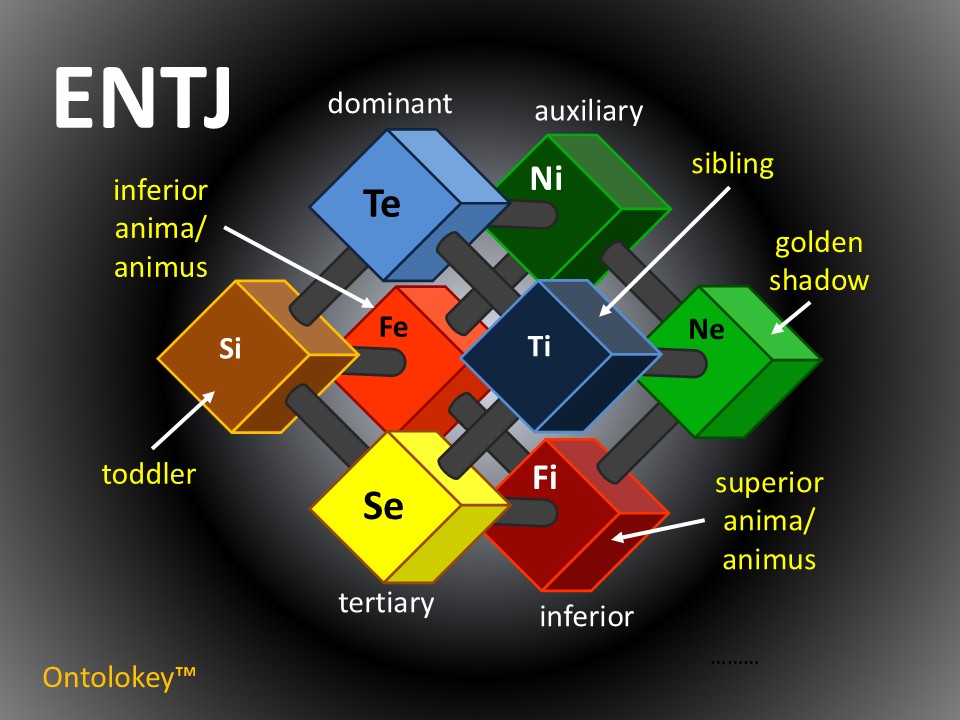
  • A Note to the Reader

    This essay was written in the spirit of psychological honesty rather than comfort. Its purpose is not to flatter, condemn, shame, or pathologize anyone, but to illuminate unconscious patterns that often remain hidden beneath the surface of personality. Some readers may find certain observations uncomfortable, confronting, or even unsettling, particularly when they recognize aspects of themselves within these pages.

    Those who are unwilling to engage with candid self-examination or who are seeking reassurance rather than insight may find this material difficult to read. The analyses presented here are intended solely for self-reflection and personal growth. They should never be used as weapons against others, as tools for judgment, manipulation, or psychological labeling. The shadow exists within every human being, and genuine understanding requires humility, maturity, and the willingness to confront uncomfortable truths with compassion rather than hostility.

    The Tyranny of Certainty

    Most descriptions of the ENTJ begin with strength. They emphasize competence, leadership, strategic intelligence, determination, and the unusual capacity to organize reality according to a vision. Such descriptions are not wrong. The ENTJ is often one of the most effective personalities in the human landscape. They are builders of systems, architects of organizations, reformers of institutions, and often among the few individuals willing to shoulder responsibility when everyone else hesitates. Their psychological orientation naturally seeks order within chaos, direction within uncertainty, and achievement within stagnation. They are frequently drawn toward positions where difficult decisions must be made because ambiguity rarely frightens them as much as inaction does. To the outside observer, this personality often appears remarkably self-contained, confident, and resistant to emotional confusion. Yet precisely because these strengths are so visible, they often conceal the psychological dynamics that make them possible. Every psychological gift is purchased at a price, and every adaptation to reality produces not only advantages but also distortions. The deeper question is therefore not what makes the ENTJ effective, but what the ENTJ must sacrifice in order to become effective.

    The shadow side of this personality does not emerge from weakness. It emerges from an excess of strength concentrated in a particular direction. Human beings become psychologically dangerous not only when they lack power, but also when a single psychological principle acquires too much power over the rest of the psyche. The ENTJ’s greatest strength lies in the ability to create intellectual order from complexity. They instinctively search for principles, structures, causal relationships, strategic frameworks, and objective explanations. They trust what can be demonstrated, organized, measured, implemented, and replicated. This orientation often gives them an extraordinary advantage in professional life because reality rewards those who can transform abstract possibilities into concrete results. Yet the same psychological mechanism that creates effectiveness also contains the seed of psychological rigidity. When a person repeatedly succeeds through a particular mode of perception, that mode gradually acquires authority over the entire personality. What begins as a useful tool slowly becomes an unquestioned worldview.

    The document underlying this analysis repeatedly points toward a central danger: the tendency of the dominant strategic intellect to transform its own conclusions into absolute truths. The personality begins with a formula—a framework that appears to explain reality—and gradually becomes identified with that formula itself. What initially serves as a means of understanding the world eventually becomes a lens through which everything must be interpreted. Reality is no longer encountered directly but filtered through a conceptual system that increasingly defines what is true, valuable, reasonable, and acceptable. The individual comes to believe not merely that the formula works, but that it reflects the structure of reality itself. At that point disagreement is no longer experienced as a difference of perspective. It becomes evidence that others are irrational, misguided, incompetent, or morally deficient. The psychological problem is subtle because it often develops alongside genuine competence. The more successful the individual becomes, the more evidence they accumulate that their framework is correct. The more evidence they accumulate, the more difficult it becomes to recognize the limitations of that framework.

    This is the first gateway into the deepest shadow of the ENTJ. The problem is not arrogance in the conventional sense. Many ENTJs are capable of considerable humility regarding technical matters and are often willing to revise opinions when confronted with superior evidence. The deeper problem concerns identification with certainty itself. Human beings naturally seek psychological stability because uncertainty is uncomfortable. For the ENTJ, certainty is often achieved through conceptual mastery. If reality can be mapped, categorized, explained, and strategically organized, then the anxiety of unpredictability appears manageable. Yet life continually presents phenomena that resist conceptual reduction. Love, grief, beauty, faith, betrayal, mortality, longing, and meaning cannot be fully translated into operational frameworks. The more intensely the ENTJ relies upon strategic cognition as the primary means of navigating existence, the greater the temptation becomes to force these dimensions into structures they cannot inhabit. Instead of expanding the model to accommodate reality, reality is compressed to fit the model.

    The tragedy is that this process often remains invisible to the individual. From their perspective, they are simply being rational. They are merely following evidence, pursuing effectiveness, or defending truth against confusion. Yet beneath this apparent objectivity another psychological dynamic begins to develop. The emotional life, which refuses to conform completely to intellectual control, gradually becomes marginalized. Feelings are tolerated only insofar as they support strategic objectives. Emotional complexity becomes an inconvenience. Vulnerability appears inefficient. Ambivalence feels like weakness. The psyche begins organizing itself around achievement, competence, and control while exiling experiences that cannot be optimized. The document repeatedly emphasizes that no psychological function can be eliminated entirely; what is rejected consciously returns unconsciously in distorted form. Repressed feeling does not disappear. It retreats beneath awareness where it acquires increasing influence over behavior while remaining largely invisible to the conscious mind.

    This creates one of the great paradoxes of the ENTJ psyche. The individual often experiences themselves as highly rational while simultaneously being driven by emotional forces they do not fully recognize. The stronger the identification with reason becomes, the more likely emotional motivations are to disguise themselves as objective conclusions. The person may sincerely believe they are acting entirely in service of truth, justice, efficiency, or progress while unconscious emotional investments quietly shape perception from behind the scenes. What appears to be a defense of principle may partly be a defense of pride. What appears to be a commitment to truth may partly be a refusal to tolerate uncertainty. What appears to be confidence may conceal fear. Because these motivations remain unconscious, they cannot be examined honestly. They are projected outward and interpreted as properties of reality itself. The individual becomes convinced that they are merely responding to facts when they are also responding to emotional needs they cannot consciously acknowledge.

    At this stage the shadow acquires a moral dimension. The ENTJ often possesses a genuine desire to improve systems, solve problems, and create order where disorder exists. However, when identity fuses with a particular vision of truth, criticism becomes increasingly difficult to tolerate. Opposition no longer feels like intellectual disagreement. It feels like an attack on reality itself. The person begins defending ideas with a degree of emotional intensity that exceeds the objective importance of the ideas themselves. Their worldview becomes personalized. Challenges are interpreted as hostility. Alternative perspectives become threats. The need to be correct gradually overshadows the need to understand. The desire to win replaces the desire to learn. What began as a search for truth transforms into a defense of identity. At this point the individual may still appear highly rational from the outside, yet their relationship to truth has subtly changed. Truth is no longer something discovered. It becomes something possessed.

    The consequences often emerge most clearly in intimate relationships. Publicly, the ENTJ may be admired as visionary, competent, disciplined, and effective. Privately, however, family members sometimes experience a very different reality. The same uncompromising standards that produce excellence in organizational environments can become oppressive within emotional environments. Loved ones are not systems. They cannot be optimized indefinitely. Human relationships require tolerance for contradiction, inconsistency, vulnerability, and emotional ambiguity. Yet the ENTJ shadow frequently struggles with these realities because they cannot be resolved through strategy alone. The individual may unknowingly attempt to manage relationships according to the same principles used to manage projects, organizations, or goals. What appears as guidance to the ENTJ may feel like control to others. What appears as honesty may feel like judgment. What appears as leadership may feel like domination. The document describes how the closest people often suffer most from rigid intellectual frameworks because they become the first recipients of principles that leave little room for human complexity.

    Yet the deepest suffering belongs neither to colleagues nor to family members. It belongs to the ENTJ themselves. The external image of strength often conceals a profound inner narrowing. Every time a feeling is dismissed because it appears irrational, part of the personality loses its voice. Every time vulnerability is sacrificed for competence, part of the self retreats further into the unconscious. Every time certainty is chosen over curiosity, psychological growth slows. The individual becomes increasingly powerful in the external world while simultaneously becoming less acquainted with their internal world. Their strategic intelligence continues expanding while their emotional self remains underdeveloped. They learn how to influence markets, organizations, institutions, and people, yet may struggle to understand their own loneliness, grief, fear, or longing. The tragedy is not that they lack depth. The tragedy is that their depth remains largely inaccessible to them.

    The first shadow of the ENTJ, therefore, is not cruelty, ambition, dominance, or even arrogance. Those are merely secondary manifestations. The deepest root is the gradual transformation of a useful orientation toward truth into an identification with certainty. Once certainty becomes sacred, reality itself begins to disappear behind it. The individual no longer encounters life as it is but as their framework permits it to be seen. The shadow begins precisely where intellectual strength becomes psychological absolutism. From that moment onward, the ENTJ is no longer mastering reality. They are increasingly being mastered by their own need to master it.

    The Repressed Heart: Why the ENTJ Fears Vulnerability More Than Failure

    If the first shadow of the ENTJ emerges through the tyranny of certainty, the second emerges through an even more intimate and painful phenomenon: the repression of vulnerability. Contrary to popular assumptions, the deepest fear of this personality is often not failure itself. Failure can be analyzed, corrected, overcome, and transformed into future success. The ENTJ frequently possesses enough resilience to survive professional setbacks, public criticism, financial losses, organizational collapse, or strategic defeat. Many even derive a strange vitality from adversity because obstacles activate their problem-solving capacities. What they find far more difficult to endure is emotional helplessness. The experience of standing before another human being without control, without strategic advantage, without certainty, and without the ability to organize the situation into a coherent framework often evokes a deeper anxiety than external defeat ever could. Failure threatens competence. Vulnerability threatens identity.

    This distinction is crucial because the ENTJ often develops an unconscious equation between strength and self-worth. From an early age, many individuals of this type discover that their ability to think clearly, act decisively, and remain composed under pressure earns admiration, respect, and influence. These qualities become not merely useful traits but foundational pillars of identity. Over time, the personality begins to organize itself around competence as a primary survival strategy. The message absorbed from life is subtle yet powerful: value comes from effectiveness, respect comes from capability, and security comes from control. Such an adaptation can produce remarkable achievements, but it also creates a dangerous blind spot. The emotional dimensions of life cannot be mastered through competence alone. Love does not obey strategy. Grief does not submit to efficiency. Trust cannot be engineered with the same precision as an organization. Yet because the ENTJ has repeatedly succeeded through mastery, there is often an unconscious temptation to apply the same approach to realms where mastery is fundamentally impossible.

    The underlying document repeatedly points toward the consequences of a psyche that over-identifies with an intellectual formula while neglecting feeling. When one mode of functioning becomes dominant, other psychological capacities do not disappear. They retreat into the unconscious, where they remain active but undeveloped. The result is not emotional absence but emotional immaturity. Feelings continue to exist, often with considerable intensity, but they lack the conscious attention necessary for healthy development. They remain primitive, reactive, hypersensitive, and easily distorted because they have not been integrated into the broader personality structure. The individual may therefore appear emotionally controlled while privately experiencing surprisingly intense emotional reactions that seem disproportionate even to themselves. What is repressed does not vanish; it returns through indirect channels.

    This dynamic explains one of the most misunderstood aspects of the ENTJ shadow. Outsiders often assume that emotionally restrained individuals possess fewer feelings than others. In reality, the opposite is frequently true. The repression of feeling does not weaken emotional energy. It merely removes it from conscious regulation. The document describes how unconscious feeling becomes increasingly personal, oversensitive, suspicious, and reactive precisely because it has been excluded from conscious development. The conscious personality may present itself as objective, impartial, and rational, while unconscious feeling quietly accumulates grievances, resentments, fears, and sensitivities beneath the surface. Because these reactions remain largely invisible to conscious awareness, they are often projected outward and attributed to external circumstances. The individual sincerely believes they are responding to objective reality when they are also responding to emotional wounds they do not fully recognize.

    The result is a peculiar contradiction. The ENTJ may regard emotional expression as weakness while simultaneously being profoundly affected by emotional realities. Criticism that appears insignificant to others can linger for years. Betrayal may become psychologically unforgettable. Disrespect can generate disproportionate anger. Rejection may trigger a level of hurt that feels almost unbearable. Yet because these reactions conflict with the self-image of rational strength, they are rarely acknowledged openly. Instead, they are translated into more acceptable forms. Hurt becomes analysis. Sadness becomes irritation. Fear becomes strategic vigilance. Vulnerability becomes intellectual argument. The original emotion remains hidden beneath layers of rationalization until even the individual loses sight of its existence.

    One of the most important observations contained within the source material concerns the relationship between certainty and anxiety. Human beings struggle to tolerate uncertainty, particularly in the social realm where other people remain fundamentally unknowable. The document repeatedly argues that when uncertainty becomes difficult to bear, individuals often create rigid explanatory systems that reduce ambiguity and restore a sense of control. These systems provide psychological relief because they replace probability with certainty. Instead of admitting that another person is complex, unpredictable, and partially mysterious, the mind constructs a fixed interpretation that appears to explain everything. Although this mechanism is described in extreme form within pathological conditions, the underlying psychological principle applies far more broadly. The need for certainty often functions as a defense against emotional insecurity.

    For the ENTJ, intimate relationships frequently become the primary arena where this conflict unfolds. Strategic intelligence performs exceptionally well in environments governed by clear objectives and measurable outcomes. Human intimacy operates according to entirely different principles. The closer another person becomes, the less controllable they appear. Their contradictions become visible. Their autonomy becomes undeniable. Their capacity to disappoint, reject, misunderstand, or abandon becomes psychologically significant. The individual who can confidently manage large organizations may suddenly find themselves uncertain when confronted with the emotional needs of a partner. This uncertainty can feel deeply destabilizing because it exposes a territory where strategic mastery offers limited protection. The temptation then arises to transform relationship problems into technical problems. Emotional complexity becomes something to solve rather than something to experience.

    Yet relationships resist such treatment because intimacy requires precisely what the ENTJ often fears most: sustained exposure to uncertainty. Genuine love demands trust without guarantees. It requires emotional honesty without certainty of acceptance. It asks the individual to reveal parts of themselves that cannot be defended through achievement or competence. The problem is not that the ENTJ lacks the capacity for love. In many cases, they love with extraordinary loyalty and commitment. The problem is that love requires a surrender of control that conflicts with deeply ingrained psychological habits. To love another person fully means accepting that they cannot be managed like a project, predicted like a system, or understood through a fixed model. They remain partly mysterious. For a personality oriented toward mastery, this mystery can be profoundly unsettling.

    The shadow becomes particularly visible when trust begins to erode. The document repeatedly emphasizes that fear of other people often leads individuals to project hidden motivations onto them. Uncertainty becomes filled with assumptions. Ambiguity becomes interpreted as evidence. Isolated incidents become woven into explanatory narratives. What began as anxiety gradually transforms into conviction. The individual becomes increasingly certain that they understand the motives of others despite possessing limited information. In extreme forms this process becomes pathological, but its milder manifestations are surprisingly common. Whenever emotional insecurity remains unconscious, the mind attempts to defend itself through explanation. It becomes easier to assume hidden hostility than to admit vulnerability. Easier to imagine betrayal than to acknowledge fear. Easier to maintain suspicion than to risk trust.

    This tendency often creates a tragic irony. The ENTJ may strive for independence in order to avoid dependence on others, yet excessive independence frequently produces the very loneliness they wish to avoid. The source material repeatedly describes the consequences of a worldview in which people become objects of calculation rather than subjects of relationship. When trust decreases, the social world gradually loses its emotional texture. Human beings cease to appear as complex individuals with strengths and weaknesses. They become strategic variables, competitors, obstacles, allies, threats, or resources. Such a perspective may offer temporary protection from disappointment, but it also impoverishes emotional life. The individual becomes increasingly isolated behind walls that were originally built for self-defense.

    Perhaps nowhere is this more evident than in the ENTJ’s relationship with tenderness. Anger is usually easier for this personality than sadness. Determination is easier than grief. Action is easier than surrender. Criticism is easier than confession. The emotional states that imply agency and strength are generally tolerated far more comfortably than those that imply openness and dependence. Yet psychological maturity requires the integration of precisely those experiences that the ego initially rejects. A person becomes whole not by perfecting their strengths but by reconciling themselves with their neglected capacities. The ENTJ who can command a room but cannot reveal fear remains psychologically divided. The one who can inspire thousands but cannot ask for comfort remains incomplete. The one who can conquer external obstacles but cannot tolerate emotional exposure remains a stranger to significant portions of their own humanity.

    This is why the deepest emotional task of the ENTJ is not learning how to become stronger. Strength is rarely the problem. The deeper task is learning how to remain open when strength offers no solution. It is learning that vulnerability is not the opposite of power but a necessary dimension of psychological wholeness. It is recognizing that uncertainty in human relationships is not a defect to eliminate but a reality to inhabit. Most importantly, it is discovering that trust is not the consequence of certainty. Trust begins precisely where certainty ends. The individual who understands this enters a radically different relationship with life. They no longer need to defend themselves against every emotional risk because they recognize that some risks are inseparable from meaning itself.

    The repressed heart therefore represents one of the central shadows of the ENTJ personality. Beneath the image of confidence often lies an unacknowledged fear that emotional openness may expose weakness, dependency, or loss of control. Yet what the personality fears most frequently contains the key to its deepest development. The ENTJ does not become whole by abandoning strength. They become whole when strength no longer serves as a substitute for intimacy. Only then can certainty yield to trust, control yield to connection, and achievement yield to a more profound form of human fulfillment.

    The Will to Dominate: When Leadership Becomes Psychological Compensation

    Leadership is one of the qualities most frequently associated with the ENTJ. In its healthiest expression, this association is entirely justified. Many individuals of this type possess an unusual ability to perceive long-term trajectories, coordinate complex systems, make difficult decisions under pressure, and assume responsibility in situations where others hesitate. They often display a natural inclination toward organization because they instinctively recognize inefficiencies, contradictions, and unrealized potential within existing structures. When psychologically mature, they can become highly effective builders of institutions, protectors of collective interests, and catalysts for meaningful change. Their leadership is then rooted not in a desire for personal superiority but in a genuine commitment to creating order, competence, and progress. However, every strength contains a shadow, and nowhere is this more evident than in the ENTJ’s relationship with power itself. What begins as leadership can gradually transform into domination when psychological needs become entangled with positions of authority.

    The distinction between leadership and domination is far more profound than it initially appears. Leadership serves a purpose larger than the self. Domination serves the self through the appearance of serving a purpose. Externally, the behaviors may look remarkably similar. Both involve directing others, making decisions, setting standards, and influencing outcomes. Yet the psychological motivations differ dramatically. The true leader is willing to relinquish control when circumstances require it because their loyalty lies with the objective itself. The domineering personality becomes increasingly unable to relinquish control because authority has become psychologically necessary. What was once a functional role gradually evolves into a source of identity. The individual no longer seeks power merely as a tool for accomplishing goals. Power becomes a mechanism for regulating internal insecurities that remain largely unconscious.

    The source material repeatedly points toward a fundamental psychological principle: individuals often construct rigid systems of certainty in order to defend themselves against underlying feelings of insecurity and vulnerability. Human beings rarely pursue control simply because control is useful. They pursue it because uncertainty is emotionally difficult to tolerate. The greater the internal anxiety, the greater the temptation to create external structures that restore a sense of predictability. In its healthier forms, this tendency contributes to organization, discipline, and strategic planning. In its shadow form, it creates an escalating need to dominate environments, situations, and people. Control ceases to be practical and becomes emotional. It no longer solves external problems alone; it begins serving as protection against internal discomfort.

    For the ENTJ, this dynamic often develops gradually and almost invisibly. The individual learns early in life that competence produces results. When they take charge, situations improve. When they intervene, problems are solved. When they organize chaos, efficiency increases. These observations are often objectively true. Yet repeated success can produce a subtle psychological distortion. The personality begins assuming that personal intervention is not merely beneficial but necessary. Responsibility slowly becomes inseparable from control. Delegation becomes increasingly difficult because other people rarely perform at the same standard. The individual develops a growing conviction that outcomes depend upon their involvement. At first this belief appears justified. Over time, however, it evolves into a worldview in which relinquishing control feels irresponsible, dangerous, or intolerable.

    The tragedy of this process lies in its self-reinforcing nature. The more responsibility the ENTJ assumes, the more capable they become. The more capable they become, the more others rely upon them. The more others rely upon them, the more central they become within systems and relationships. Eventually, they may find themselves occupying positions where nearly every important decision passes through them. To outside observers, this appears impressive. To the individual, it often feels necessary. Yet beneath the surface a dangerous dependency begins to form. The personality becomes dependent upon being needed. Their sense of value becomes intertwined with indispensability. Without consciously recognizing it, they begin deriving psychological security from occupying a position of authority.

    At this stage, power ceases to be neutral. It acquires emotional significance. The loss of authority no longer threatens merely a role; it threatens identity itself. Criticism becomes more painful because it challenges the foundation upon which self-worth has been constructed. Independent individuals become frustrating because they reduce opportunities for influence. Competent peers become threatening because they undermine exclusivity. The individual may continue speaking in the language of efficiency, responsibility, and excellence while unconsciously defending a deeper need to remain central within the system. The psychological shadow is rarely revealed through explicit lust for power. It emerges through the inability to imagine oneself without power.

    The source material offers valuable insight into how unconscious fears often generate compensatory behaviors. When certain aspects of the psyche remain underdeveloped, the conscious personality frequently overemphasizes opposing characteristics. A person who feels vulnerable may cultivate invulnerability. A person who feels uncertain may cultivate certainty. A person who feels powerless may pursue power. Because these compensations operate unconsciously, the individual typically experiences them as authentic expressions of identity rather than defenses. The ENTJ who unconsciously fears helplessness may therefore develop an extraordinary attachment to influence, authority, and control while genuinely believing they are motivated solely by practical considerations.

    This dynamic becomes particularly visible during periods of resistance. As long as others cooperate, the shadow often remains hidden. It emerges when people refuse to comply. Healthy leadership can tolerate disagreement because its confidence does not depend upon universal obedience. Psychological domination reacts differently. Opposition is experienced not merely as a challenge to ideas but as a challenge to authority itself. The emotional intensity of the reaction frequently exceeds the objective importance of the disagreement. Irritation becomes anger. Frustration becomes contempt. Debate becomes personal. What appears to be a conflict about strategy often conceals a deeper conflict about control. The individual feels compelled to reassert dominance because the underlying insecurity remains unresolved.

    One of the most revealing indicators of this shadow is the gradual transformation of people into functions. When leadership becomes psychologically compensatory, human beings cease to be encountered primarily as individuals. They become instruments within a larger vision. Their value increasingly derives from their utility. Relationships become organized around contribution, performance, reliability, and effectiveness. Those who advance objectives are appreciated. Those who hinder objectives are dismissed. Such an orientation often appears rational because organizations genuinely require standards and accountability. Yet when extended into all areas of life, it begins eroding the capacity for genuine human connection. The person is no longer seen as a complex psychological reality but as a variable within a strategic equation.

    The document repeatedly warns against systems of thought that reduce human complexity to simplistic explanatory frameworks. Although these warnings are presented within broader discussions of psychological distortion, they illuminate an important aspect of the ENTJ shadow. Human beings resist reduction. Every individual contains contradictions, irrationalities, wounds, aspirations, and hidden dimensions that cannot be captured by functional categories alone. When a personality becomes excessively identified with efficiency, it risks losing contact with this reality. Other people are unconsciously flattened into roles rather than encountered as subjects possessing inner worlds as rich and complex as one’s own. The result is often an increasing emotional distance from those around them.

    Ironically, the desire to dominate often originates from a fear of being dominated. Many ENTJs possess a profound aversion to dependency because dependency implies vulnerability. To depend heavily upon another person is to grant them influence over one’s emotional well-being. Such dependence introduces uncertainty, and uncertainty threatens the illusion of self-sufficiency. Consequently, the individual may unconsciously prefer relationships in which they occupy the stronger position. They become the provider, the protector, the strategist, the advisor, the authority. These roles feel comfortable because they preserve a sense of control. Yet relationships structured around asymmetry often contain hidden loneliness. The individual is respected, admired, or relied upon, but rarely known. Others encounter the role rather than the person behind the role.

    Over many years, this pattern can produce a subtle existential emptiness. External success continues accumulating while emotional intimacy remains underdeveloped. The individual becomes increasingly powerful and increasingly isolated at the same time. Colleagues defer to them. Employees depend upon them. Friends seek guidance from them. Family members rely upon them. Yet few people are permitted to witness the uncertainties, fears, doubts, and vulnerabilities concealed beneath the competent exterior. The very qualities that generated influence gradually prevent genuine connection. The fortress built to ensure strength becomes a prison.

    Perhaps the deepest paradox of domination is that it often conceals a longing for surrender. Beneath the relentless need to remain in control frequently lies an exhausted psyche that yearns for relief from responsibility. Many ENTJs secretly desire relationships in which they can lower their defenses and cease managing everything. Yet such relationships require vulnerability, and vulnerability remains psychologically threatening. Consequently, the individual oscillates between craving intimacy and resisting it. They long to be understood while fearing exposure. They seek connection while maintaining control. They desire acceptance while presenting only the strongest aspects of themselves. This internal contradiction generates a persistent tension that cannot be resolved through achievement alone.

    Psychological maturity begins when the individual recognizes that leadership and domination arise from fundamentally different motivations. Leadership emerges from service to reality. Domination emerges from defense against reality. Leadership accepts the autonomy of others. Domination seeks to reduce that autonomy. Leadership remains secure even when influence decreases. Domination experiences every loss of influence as a personal threat. Most importantly, leadership does not require psychological compensation because it is grounded in self-knowledge rather than self-protection.

    The deepest shadow of the ENTJ is therefore not power itself. Power is neutral. The shadow emerges when power becomes a substitute for emotional security, self-worth, or intimacy. The moment authority becomes necessary for psychological stability, the individual begins sacrificing freedom for control. They become trapped by the very structures they once mastered. Genuine growth requires a different path. It requires discovering that one’s value does not depend upon indispensability, that love does not depend upon superiority, and that respect does not require dominance. Only then can leadership become what it was always meant to be: not an expression of hidden insecurity, but a mature expression of responsibility grounded in inner freedom.

    The Hidden Narcissism of Competence: Superiority, Contempt, and the Corruption of Excellence

    Among all shadow manifestations associated with the ENTJ, few are more difficult to recognize than the hidden narcissism that can emerge from competence itself. This difficulty exists because the narcissism in question rarely resembles the stereotypical image of vanity, exhibitionism, or overt self-obsession. In fact, many ENTJs openly dislike such characteristics and often regard them as signs of weakness. Their narcissism, when it develops, tends to arise through a far more subtle route. It grows from genuine ability. It is nourished by actual achievement. It is reinforced by repeated encounters with inefficiency, irrationality, indecision, and incompetence. Unlike grandiosity built upon fantasy, this form of superiority often possesses a substantial foundation in reality. The individual truly is capable. They truly are productive. They truly can solve problems that others cannot. Precisely because these strengths are real, the shadow hidden within them becomes extraordinarily difficult to detect.

    The psychological danger begins at the moment competence ceases to be something one possesses and becomes something one is. This distinction may appear insignificant, but it separates healthy self-confidence from a deeply problematic form of identity. When competence remains a skill, failure is painful but survivable. When competence becomes identity, failure becomes existentially threatening. The individual is no longer evaluating their performance. They are evaluating their worth. Every success strengthens the self-image. Every mistake weakens it. Because the psyche instinctively seeks stability, it gradually develops defensive mechanisms designed to preserve this identity. The most effective defense is comparison. If self-worth depends upon being competent, then other people’s incompetence becomes psychologically useful. Their failures reinforce one’s superiority. Their confusion validates one’s clarity. Their weakness confirms one’s strength.

    What makes this process especially dangerous is that it often unfolds beneath the threshold of conscious awareness. The ENTJ may sincerely believe they are merely recognizing objective differences in capability. In many situations, they are correct. Human beings genuinely differ in intelligence, discipline, foresight, responsibility, and effectiveness. Denying these differences would be dishonest. The shadow emerges not from observing such differences but from deriving psychological nourishment from them. At that point, competence ceases to be a practical asset and becomes a source of emotional gratification. The individual begins needing to occupy a superior position because superiority itself has become psychologically rewarding.

    The source material repeatedly emphasizes how individuals can become imprisoned within explanatory systems that elevate their own perspective while diminishing alternative viewpoints. Once a person becomes excessively identified with a particular framework, they increasingly interpret reality through distinctions that reinforce their existing worldview. Disagreement is no longer encountered as information but as evidence of deficiency. Complexity becomes simplified into categories of correct and incorrect, enlightened and ignorant, competent and incompetent. Although such tendencies can appear in many personalities, they possess particular relevance for the ENTJ because this type naturally evaluates reality through standards of effectiveness, coherence, and objective performance. The danger arises when these standards become moralized. Competence is no longer merely admirable. It becomes evidence of superiority. Incompetence is no longer merely unfortunate. It becomes evidence of inferiority.

    At this stage, contempt begins to enter the psychological landscape. Contempt differs fundamentally from anger. Anger still acknowledges the significance of its object. Contempt dismisses it. Anger says, “You are wrong.” Contempt says, “You are beneath consideration.” This distinction is critical because contempt often represents the true emotional core of the ENTJ shadow. Frustration with incompetence can easily evolve into disdain for those perceived as less capable. The individual becomes increasingly impatient with weakness, hesitation, emotionality, dependency, or inconsistency. Such qualities are no longer seen as ordinary aspects of human existence. They become personal irritants. The world gradually divides itself into those who contribute and those who obstruct, those who understand and those who do not, those who deserve respect and those who merely consume it.

    The problem is not merely ethical. It is psychological. Contempt creates blindness. The moment another person is viewed primarily through the lens of deficiency, their humanity becomes partially invisible. Their fears, wounds, aspirations, and complexities recede into the background. The individual ceases to encounter them as a full human being and begins encountering them as a category. This reduction offers temporary psychological comfort because categories are easier to manage than people. Yet it simultaneously impoverishes perception. Reality becomes flatter, simpler, and more predictable at the cost of accuracy. The personality gains certainty while losing depth.

    One of the most profound observations contained within the source material concerns the tendency of the human psyche to project disowned qualities onto others. Traits that remain unacknowledged within oneself are often perceived with disproportionate intensity in the external world. The more strongly a person rejects a particular characteristic internally, the more emotionally charged it becomes when encountered externally. This principle illuminates an important dimension of ENTJ contempt. Many of the qualities most harshly judged in others correspond to qualities the individual struggles to accept within themselves. Dependency, confusion, uncertainty, emotional sensitivity, vulnerability, passivity, and weakness often provoke strong reactions because they represent dimensions of the self that have been systematically repressed. The judgment directed outward is simultaneously a judgment directed inward.

    This explains why some ENTJs can become unexpectedly merciless toward themselves. The same standards imposed upon the world are imposed internally with even greater severity. Every mistake becomes evidence of inadequacy. Every emotional reaction becomes evidence of weakness. Every moment of uncertainty becomes evidence of failure. The individual may appear extraordinarily confident while privately conducting a relentless campaign of self-criticism. Because their identity is built upon competence, they grant themselves little permission to be human. They demand perpetual excellence not only from others but from themselves. The resulting pressure can be immense. What appears externally as confidence often conceals a constant fear of falling below one’s own standards.

    Over time, this dynamic creates a peculiar emotional economy. Success produces relief rather than satisfaction because success merely confirms what should have occurred. Failure, however, acquires enormous psychological significance because it threatens identity. Consequently, achievements lose their ability to nourish the individual. No accomplishment feels sufficient for long. Each victory becomes the baseline from which future expectations are measured. The person climbs higher and higher while experiencing diminishing emotional returns. Excellence becomes compulsory rather than meaningful. What began as ambition gradually transforms into compulsion.

    The source material repeatedly describes how rigid psychological systems generate increasing isolation from reality. This observation applies directly to the corruption of excellence. Excellence in itself is not dangerous. On the contrary, the pursuit of excellence often represents one of humanity’s noblest aspirations. The corruption occurs when excellence becomes a defense against inadequacy rather than an expression of growth. At that point, achievement no longer serves development. Development serves achievement. The individual’s relationship with success becomes fundamentally distorted because success is being used to solve an emotional problem it cannot actually resolve. No amount of external accomplishment can permanently eliminate feelings of insufficiency. The psyche therefore demands ever-greater achievements while remaining fundamentally unsatisfied.

    This pattern often becomes visible in the ENTJ’s relationship with ordinary life. Many develop extraordinary capacities for achievement while struggling to appreciate experiences that possess no measurable utility. Leisure feels unproductive. Reflection feels inefficient. Stillness feels uncomfortable. Activities are increasingly evaluated according to outcomes rather than intrinsic value. Relationships become assessed according to contribution. Conversations become assessed according to informational content. Even personal growth can become transformed into another optimization project. The individual remains in perpetual motion because stopping would require confronting aspects of themselves that achievement has long concealed.

    Yet beneath the superiority and beneath the contempt often lies something surprisingly fragile. The hidden narcissism of competence is not ultimately rooted in self-love. It is rooted in conditional self-acceptance. The individual values themselves only insofar as they continue to perform. They respect themselves only insofar as they remain exceptional. Their self-esteem rests upon a foundation that must be constantly maintained. Such a foundation can never provide genuine security because performance fluctuates, circumstances change, and human limitations eventually assert themselves. The stronger the identification with superiority becomes, the more terrifying ordinariness appears.

    This fear of ordinariness deserves particular attention because it frequently remains unconscious. Many ENTJs secretly dread becoming irrelevant, average, replaceable, or forgotten. These possibilities threaten not merely ambition but identity. If value has been equated with exceptional competence, then ordinary humanity appears insufficient. The individual feels compelled to remain extraordinary because anything less seems psychologically intolerable. Yet this pursuit contains a tragic contradiction. Human beings become most fully themselves not through perpetual superiority but through acceptance of their limitations. The person who cannot tolerate being ordinary can never experience genuine freedom because they remain enslaved to the need for distinction.

    Psychological maturity begins when competence is relocated from the center of identity to its proper place as one valuable aspect of a much larger self. The mature ENTJ does not abandon excellence. They cease worshipping it. They continue pursuing mastery while recognizing that human worth cannot be measured exclusively through achievement. They learn to respect people who possess strengths entirely different from their own. They discover that wisdom often appears in forms that competence alone cannot recognize. Most importantly, they begin understanding that vulnerability, uncertainty, dependence, and emotional complexity are not defects in the human condition. They are fundamental aspects of it.

    The deepest shadow explored in this chapter is therefore not pride in the conventional sense. It is the gradual transformation of competence into a substitute for self-worth. Once this transformation occurs, superiority becomes psychologically necessary, contempt becomes tempting, and excellence becomes corrupted by hidden emotional needs. The individual may continue achieving remarkable things, yet each achievement serves an increasingly fragile identity. True development begins only when excellence ceases to function as armor. Only then can competence become what it was always meant to be: not proof of value, but one expression of a value that already exists.

    The Strategic Mind Against Reality: Control, Paranoia, and the Fear of Chaos

    The human psyche seeks order not because order is always true, but because chaos is psychologically difficult to endure. Every personality develops mechanisms for reducing uncertainty and creating a sense of continuity within an unpredictable world. For some individuals, this need is satisfied through tradition. For others, through faith, emotional bonds, social belonging, or personal routines. The ENTJ, however, typically approaches uncertainty through cognition. They seek understanding, structure, causal relationships, strategic frameworks, and predictive models. They attempt to grasp reality by identifying the forces that govern it and by positioning themselves in relation to those forces as effectively as possible. This orientation often produces remarkable strengths. The ability to perceive patterns where others perceive confusion allows the ENTJ to anticipate developments, recognize opportunities, and navigate complexity with unusual confidence. Yet the very capacity that enables strategic mastery also contains one of the deepest shadows within the personality. The strategic mind can become so committed to imposing order upon reality that it gradually loses contact with reality itself.

    The source material repeatedly returns to a fundamental psychological observation: human beings possess a profound difficulty tolerating uncertainty. When ambiguity becomes emotionally overwhelming, the mind frequently responds by constructing explanatory systems that restore predictability. These systems reduce anxiety because they transform unknown variables into coherent narratives. The world appears less threatening when its apparent randomness can be explained. What matters psychologically is not merely whether the explanation is correct, but whether it relieves uncertainty. The danger emerges when the need for certainty becomes stronger than the desire for truth. At that moment, the explanatory system ceases to function as a tool for understanding reality and begins functioning as a defense against reality.

    This danger possesses particular significance for the ENTJ because strategic cognition is often among the strongest and most trusted aspects of the personality. The ENTJ learns through experience that understanding systems produces power. If one can identify the mechanisms operating beneath visible events, one gains influence over outcomes. Such learning is often adaptive. It encourages responsibility, foresight, and disciplined thinking. However, repeated success creates a temptation that gradually intensifies over time. The individual begins assuming that every phenomenon can be understood through sufficient analysis. Every ambiguity must conceal a pattern. Every contradiction must possess an explanation. Every event must fit into a coherent structure. The possibility that reality sometimes exceeds available explanations becomes increasingly difficult to tolerate.

    The psychological issue is not intelligence. It is overconfidence in intelligence. The strategic mind becomes accustomed to solving problems and therefore begins approaching all experiences as problems to be solved. Yet reality contains dimensions that resist complete conceptual mastery. Human motives remain partially opaque. Relationships contain irreducible ambiguities. Historical events unfold through countless interacting variables. Even self-knowledge remains incomplete despite decades of introspection. The mature mind accepts these limitations. The shadowed mind fights against them. Instead of acknowledging uncertainty, it constructs increasingly elaborate frameworks designed to eliminate it. The resulting certainty often feels reassuring precisely because it protects the individual from confronting the boundaries of knowledge.

    The source material offers profound insight into how this process can develop into increasingly rigid interpretations of reality. It repeatedly describes how uncertainty generates anxiety and how anxiety motivates the construction of explanatory models that provide psychological security. As these models become more central to identity, contradictory information is increasingly ignored, reinterpreted, or absorbed into the existing framework. The individual becomes less interested in discovering what is true and more invested in preserving the coherence of the system itself. Reality is filtered through expectation. Evidence is selected rather than encountered. Ambiguity is resolved in favor of conclusions that maintain certainty. Although the source discusses these tendencies in their more extreme manifestations, the underlying psychological mechanism exists on a continuum that extends far beyond pathology.

    For the ENTJ, this dynamic often appears in the form of strategic overinterpretation. The individual begins perceiving hidden motives, underlying agendas, and concealed intentions behind events that may in fact possess simpler explanations. Because they are accustomed to identifying patterns, they become vulnerable to finding patterns even where none exist. Every action appears purposeful. Every inconsistency appears significant. Every coincidence appears suspicious. What begins as perceptiveness gradually evolves into hypervigilance. The mind becomes increasingly unwilling to accept uncertainty and therefore fills informational gaps with strategic assumptions. These assumptions frequently feel convincing because they fit within an internally coherent framework. Their emotional function is to eliminate ambiguity.

    One of the most important consequences of this tendency is the gradual erosion of trust. Trust requires a willingness to coexist with uncertainty. To trust another person means accepting that one cannot fully know their intentions, predict their behavior, or control their choices. Such acceptance is psychologically demanding because it exposes the individual to risk. The strategic mind often responds by attempting to reduce that risk through analysis. It seeks to understand people so thoroughly that uncertainty disappears. Yet this goal is impossible. Human beings remain partially mysterious even to themselves. The more intensely the individual attempts to eliminate uncertainty, the more frustrated they become by the unpredictability inherent in human relationships.

    The source material repeatedly highlights how fear can transform perception. When anxiety remains unconscious, it often disguises itself as insight. The individual believes they are recognizing objective threats when they are also responding to subjective insecurities. This observation illuminates a critical aspect of the ENTJ shadow. The personality frequently prides itself on realism and objectivity, making it particularly difficult to recognize when fear has infiltrated perception. Because emotional reactions are often translated into intellectual conclusions, anxiety may appear as strategic awareness. Suspicion may appear as prudence. Distrust may appear as realism. The individual becomes increasingly convinced that their interpretations are rational while remaining largely unaware of the emotional forces shaping those interpretations.

    This process can eventually create a worldview organized around control. If uncertainty feels threatening, then control appears desirable. If unpredictability creates anxiety, then management appears necessary. The individual begins expanding their sphere of influence in order to reduce exposure to uncontrollable variables. They seek greater authority, greater knowledge, greater oversight, greater strategic advantage. Each increase in control provides temporary relief. Yet the relief never lasts because uncertainty cannot be eliminated from existence. New variables emerge. New ambiguities appear. New threats become imaginable. The psyche responds by seeking even more control. Thus begins a cycle that can continue indefinitely.

    The tragedy of this cycle is that it often produces the very experiences it was designed to prevent. Excessive control undermines trust. Reduced trust damages relationships. Damaged relationships generate isolation. Isolation increases insecurity. Insecurity intensifies the need for control. What initially appeared to be a solution gradually becomes the source of the problem. The individual finds themselves trapped within a self-reinforcing psychological system that continually justifies its own existence. Every disappointment becomes evidence that greater vigilance is necessary. Every betrayal becomes evidence that trust is dangerous. Every conflict becomes evidence that stronger control would have prevented the outcome.

    Nowhere is this dynamic more visible than during periods of significant stress. Under ordinary circumstances, the ENTJ’s strategic abilities often function constructively. During prolonged uncertainty, however, the shadow gains strength. The mind begins working overtime to identify threats, predict outcomes, and restore certainty. Mental activity intensifies while emotional awareness decreases. The individual becomes increasingly focused on external variables while losing contact with internal realities. Sleep may deteriorate. Relationships may become strained. The person may find themselves unable to stop analyzing scenarios that cannot actually be resolved through analysis. The strategic mind becomes trapped within its own machinery.

    At a deeper level, this struggle reveals something profoundly human. The fear of chaos is ultimately the fear of powerlessness. Chaos reminds us that reality exceeds our control. It confronts us with mortality, unpredictability, limitation, and vulnerability. These experiences challenge the illusion that sufficient intelligence can fully master existence. For the ENTJ, whose strengths are often rooted in mastery, such confrontations can feel especially threatening. Yet they also contain the seeds of transformation. Psychological growth frequently begins when the individual encounters realities that cannot be controlled and discovers that survival remains possible nonetheless.

    The mature ENTJ eventually learns a lesson that cannot be acquired through strategy alone. Reality is not merely a system to manage. It is also a mystery to inhabit. Human life contains dimensions that can be understood, dimensions that can be influenced, and dimensions that must simply be accepted. Wisdom emerges from recognizing the difference. The strategic mind remains invaluable, but it ceases to occupy the throne. It becomes one faculty among many rather than the ruler of the entire psyche. Curiosity replaces certainty. Humility replaces omniscience. Participation replaces domination.

    The deepest shadow explored in this chapter is therefore not paranoia in its clinical sense, but the broader psychological tendency to defend oneself against uncertainty through increasingly rigid systems of interpretation and control. The ENTJ is particularly vulnerable to this temptation because strategic cognition has served them so well throughout life. Yet what works in the realm of systems often fails in the realm of existence itself. Life remains larger than any model. People remain more complex than any theory. Reality remains deeper than any framework. The individual who accepts these truths loses a certain kind of certainty but gains something far more valuable: genuine contact with reality.

    The Exile of the Soul: Emotional Starvation, Meaninglessness, and the Collapse of the Achiever Identity

    Every psychological adaptation contains a hidden bargain. The individual gains access to certain strengths, but those strengths are acquired through the relative neglect of other dimensions of the self. The tragedy is that the neglected dimensions rarely disappear. They remain present beneath consciousness, waiting, accumulating pressure, influencing behavior indirectly, and demanding recognition in forms that are often misunderstood. For the ENTJ, one of the most consequential bargains concerns the relationship between achievement and meaning. The personality often develops extraordinary capacities for effectiveness, organization, leadership, and strategic accomplishment. These capacities can generate admiration, influence, wealth, status, and visible success. Yet there exists a profound difference between building a successful life and building a meaningful life. The two may overlap, but they are not identical. The deepest existential shadow of the ENTJ emerges when achievement gradually replaces meaning rather than expressing it.

    This distinction is difficult to recognize because modern culture frequently rewards precisely the qualities that come naturally to the ENTJ. Productivity is celebrated. Ambition is admired. Leadership is respected. Strategic intelligence is often associated with success. Consequently, the personality receives continual reinforcement for remaining within the domain where it already excels. External rewards arrive quickly and predictably. The world acknowledges visible accomplishments far more readily than invisible psychological development. A promotion receives recognition. Emotional maturity often does not. Financial success receives admiration. Inner integration rarely does. The result is that the ENTJ can spend decades perfecting the machinery of achievement while remaining largely disconnected from the deeper psychological questions that eventually determine the quality of existence itself.

    The source material repeatedly points toward the dangers of excessive identification with a particular psychological structure. Whenever the conscious personality becomes overly invested in one mode of being, other aspects of the psyche are pushed into the background. Over time, this creates an imbalance between external adaptation and internal development. The individual becomes highly skilled in navigating the world while remaining increasingly estranged from dimensions of themselves that cannot be reduced to performance, competence, or strategic effectiveness. Such estrangement is rarely noticeable during periods of success. Achievement generates momentum. Goals provide direction. Responsibilities create structure. The individual remains occupied. Yet beneath the surface, a deeper question gradually emerges: what remains when achievement is removed?

    This question represents one of the great existential challenges of the ENTJ psyche because achievement often becomes far more than a behavior. It becomes an identity. The individual does not merely accomplish things. They become the person who accomplishes things. Their sense of value becomes intertwined with productivity, competence, and effectiveness. Such an identity appears stable because it is supported by external evidence. Accomplishments can be measured. Success can be observed. Influence can be quantified. Yet identities built primarily upon external performance possess an inherent fragility. They remain dependent upon conditions that cannot be permanently controlled. Careers change. Markets collapse. Health deteriorates. Relationships end. Aging gradually alters capabilities. Eventually, every human being encounters circumstances that challenge the identities they have constructed.

    For many ENTJs, the first major confrontation with this reality arrives unexpectedly. It may emerge through professional burnout, personal loss, illness, betrayal, or a crisis that renders familiar strengths temporarily ineffective. Suddenly, the strategies that once produced certainty fail to provide orientation. The individual discovers that some experiences cannot be solved through effort. Grief cannot be optimized. Mortality cannot be negotiated. Meaning cannot be manufactured through discipline alone. At such moments, a profound psychological vacuum often becomes visible. The person who has spent years mastering the external world finds themselves strangely unprepared for the internal one.

    The source material repeatedly emphasizes how neglected psychological functions continue operating beneath conscious awareness. Their exclusion does not eliminate them. It merely prevents conscious engagement with them. This observation becomes particularly important when examining existential dissatisfaction. The emotional and symbolic dimensions of life do not disappear simply because they have been deprioritized. Human beings possess an intrinsic need for connection, meaning, belonging, transcendence, and emotional authenticity. These needs may remain dormant for long periods, especially when external demands dominate attention. Yet they eventually reassert themselves. When they do, they often appear as restlessness, chronic dissatisfaction, emptiness, or an inexplicable sense that something essential is missing despite outward success.

    One of the cruelest ironies of the achiever identity is that it often postpones rather than resolves existential questions. Each accomplishment creates temporary satisfaction, but the satisfaction rarely endures. A new goal emerges. A higher standard appears. Another challenge presents itself. The cycle continues because achievement provides direction but not necessarily meaning. Direction answers the question of where one is going. Meaning answers the question of why one is going there. The former can exist without the latter for surprisingly long periods. However, eventually the absence of meaning becomes difficult to ignore. The individual may continue moving forward while increasingly uncertain about the purpose of the movement itself.

    This phenomenon frequently manifests as emotional starvation. The term does not imply a lack of emotional experience. On the contrary, many ENTJs experience powerful emotions throughout their lives. Emotional starvation refers instead to the systematic neglect of emotional nourishment. Just as physical health deteriorates when the body receives insufficient nutrients, psychological health deteriorates when the soul receives insufficient attention. Relationships become transactional. Reflection becomes secondary. Intimacy becomes postponed. Beauty becomes irrelevant. Wonder becomes impractical. The individual remains highly functional while gradually losing contact with the experiences that make functionality worth pursuing in the first place.

    The source material repeatedly warns against forms of thinking that reduce reality to what can be explained, categorized, or controlled. This warning possesses profound existential significance. Meaning rarely emerges from control. It emerges from participation. Human beings experience meaning through love, creativity, sacrifice, beauty, service, connection, and encounters with realities larger than themselves. These experiences cannot be fully managed through strategic reasoning because they require receptivity rather than mastery. They ask the individual to enter into relationship with life rather than merely organize it. For a personality accustomed to directing reality, such receptivity can feel unfamiliar and even threatening. Yet without it, existence gradually becomes psychologically sterile.

    The collapse of the achiever identity often begins subtly. Activities that once felt meaningful start feeling mechanical. Success loses its emotional impact. Motivation becomes increasingly dependent upon obligation rather than inspiration. The individual continues functioning at a high level while privately experiencing a growing sense of emptiness. They may respond by pursuing even greater achievements, assuming that dissatisfaction reflects insufficient accomplishment. Yet each new success provides less fulfillment than the previous one. The strategy that once produced vitality now produces diminishing returns. The individual finds themselves trapped within a cycle that demands constant effort while offering progressively less psychological nourishment.

    At deeper levels, this crisis often reveals unresolved questions concerning identity itself. Who am I when I am not producing? Who am I when I am not leading? Who am I when I am not succeeding? These questions appear deceptively simple, yet they penetrate directly into the foundations of selfhood. A person whose value has become inseparable from achievement may discover that they possess surprisingly few answers. The self has been defined primarily through function rather than being. The individual knows what they do but not necessarily who they are.

    This confrontation can be profoundly painful because it exposes the limitations of an identity that may have taken decades to construct. Yet it also creates the possibility of transformation. The collapse of a false center often precedes the emergence of a more authentic one. When achievement loses its ability to provide meaning, the individual is forced to search elsewhere. They begin exploring dimensions of existence that were previously neglected. Relationships acquire new importance. Emotional honesty becomes necessary. Reflection becomes valuable. Questions once dismissed as impractical suddenly become essential.

    The source material consistently suggests that psychological growth requires integration rather than further specialization. The neglected aspects of the psyche must eventually be acknowledged and incorporated into conscious life. For the ENTJ, this means recognizing that meaning cannot be reduced to accomplishment. Human fulfillment arises not from perfecting one aspect of the self while neglecting others, but from cultivating a relationship among all dimensions of personality. Strength remains important. Competence remains valuable. Achievement retains significance. Yet none of these qualities can substitute for emotional depth, self-knowledge, intimacy, or existential purpose.

    The mature ENTJ ultimately discovers that achievement functions best as an expression of meaning rather than a replacement for it. Goals become meaningful when they serve values that transcend personal success. Leadership becomes meaningful when it contributes to human flourishing. Work becomes meaningful when it reflects deeper convictions about life. Accomplishment then ceases to be a desperate attempt to establish worth and becomes a natural expression of an already established identity. The individual no longer needs success in order to justify existence. Success becomes one possible manifestation of existence.

    The deepest shadow explored in this chapter is therefore not ambition itself. Ambition can be noble, creative, and profoundly life-affirming. The shadow emerges when ambition becomes a substitute for the soul. It appears when achievement is asked to answer questions it was never designed to answer. No accomplishment, regardless of magnitude, can permanently resolve the human need for meaning. No career can replace intimacy. No status can replace self-knowledge. No victory can eliminate existential uncertainty. The ENTJ who learns this lesson undergoes a fundamental transformation. They cease treating life as a problem to solve and begin experiencing it as a reality to inhabit. Only then can achievement and meaning finally become allies rather than rivals.

    The Shadow of Power: Manipulation, Emotional Blindness, and the Instrumentalization of Human Beings

    Power is among the most misunderstood forces in human psychology because it rarely reveals its deepest motivations openly. Most individuals imagine power primarily in political, economic, or organizational terms. They think of authority, status, influence, command, and control. Yet power begins long before it becomes institutional. It begins as a psychological relationship to uncertainty, vulnerability, and dependency. Every human being must eventually confront the fact that they cannot fully control life. Other people remain autonomous. Events unfold unpredictably. Love cannot be guaranteed. Loyalty cannot be demanded. Mortality cannot be negotiated. These realities confront the individual with limits that no amount of intelligence can entirely overcome. The ENTJ, whose natural strengths often revolve around mastery, organization, and strategic influence, encounters a particularly complex relationship with these limitations. The shadow emerges not because the ENTJ seeks power more than others, but because power can become an attractive substitute for emotional security.

    At its healthiest level, the ENTJ’s relationship with influence is constructive and necessary. Strong leadership requires the ability to direct collective energy toward meaningful objectives. Organizations depend upon individuals who can make difficult decisions and accept responsibility for outcomes. Entire societies would stagnate without people willing to organize resources, coordinate efforts, and transform vision into reality. There is nothing inherently pathological about influence. In fact, many ENTJs become profoundly beneficial forces within their communities because they possess an unusual willingness to carry burdens that others avoid. The shadow appears only when power ceases to serve reality and begins serving unconscious emotional needs. At that point, influence no longer functions merely as a tool. It becomes psychological compensation.

    One of the most significant observations contained within the source material concerns the human tendency to construct systems that reduce uncertainty and increase predictability. These systems often emerge because uncertainty generates anxiety. The psyche seeks relief from this anxiety by establishing structures through which reality appears understandable and manageable. When such structures become overly rigid, however, they begin reshaping perception itself. The individual increasingly interprets events in ways that reinforce their need for control. What initially appeared as practical organization gradually evolves into a psychological defense against vulnerability.

    This dynamic illuminates a critical aspect of the ENTJ shadow: the temptation to relate to people strategically rather than relationally. Strategic thinking is one of the personality’s greatest strengths. It allows the individual to perceive incentives, anticipate consequences, identify leverage points, and coordinate complex interactions. In organizational settings, these abilities can be invaluable. Problems arise when the same strategic orientation begins dominating personal relationships. Human beings are no longer encountered primarily as subjects possessing intrinsic value. They become variables within a larger system of objectives. Their importance becomes increasingly connected to their usefulness. Consciously, the individual may still care deeply about others. Unconsciously, however, relationships begin to acquire an instrumental quality.

    The distinction between valuing people and using people is often more subtle than moral discussions suggest. Few individuals consciously decide to exploit others. Most manipulation develops gradually through rationalization. The individual convinces themselves that they are helping, guiding, improving, protecting, or educating. Their intentions may even be partially sincere. Yet beneath these justifications lies an unwillingness to allow other people genuine autonomy. The relationship becomes organized around influence rather than encounter. Instead of asking who the other person truly is, the individual becomes preoccupied with what role that person plays within a broader vision. The human being is transformed into a function.

    The source material repeatedly warns against explanatory frameworks that reduce complexity to simplistic categories. This warning possesses profound interpersonal significance. Every person contains contradictions, irrationalities, hidden wounds, unconscious motivations, aspirations, fears, and dimensions that resist complete understanding. To encounter another person authentically requires accepting this complexity. Yet complexity creates uncertainty, and uncertainty challenges the strategic mind. Consequently, there is a temptation to simplify. The individual unconsciously develops models of people that make them more predictable and therefore more manageable. Relationships become organized around assumptions rather than discovery. The other person’s reality is gradually replaced by an internal representation of that reality.

    This process often generates a form of emotional blindness that remains largely invisible to the individual. Because the ENTJ frequently relies upon objective reasoning, they may assume that understanding a person’s behavior is equivalent to understanding the person themselves. Yet behavior and being are not identical. Human actions emerge from layers of experience that cannot always be inferred through external observation alone. Emotional realities often remain hidden even from those experiencing them. The strategic mind, however, tends to prefer explanations over mysteries. It seeks closure. It wants coherent narratives. As a result, the ENTJ may develop considerable confidence in their assessments of others while simultaneously overlooking dimensions that cannot be captured through analysis.

    The consequences become particularly significant in intimate relationships. Emotional blindness rarely manifests as cruelty. More often, it appears as misattunement. The individual responds to what they believe the other person needs rather than what the other person is actually expressing. Solutions replace empathy. Advice replaces understanding. Action replaces presence. From the ENTJ’s perspective, these responses often seem caring because they are intended to reduce suffering. Yet many forms of emotional pain cannot be solved. They can only be shared. The individual who immediately seeks resolution may unintentionally communicate that emotional experience itself is unacceptable unless it can be fixed.

    At deeper levels, manipulation frequently arises from precisely this inability to tolerate emotional uncertainty. Genuine relationships require mutual influence rather than unilateral influence. They involve negotiation, vulnerability, unpredictability, and compromise. Such realities can feel threatening because they reduce control. Manipulation offers an alternative. Instead of engaging openly with uncertainty, the individual attempts to shape outcomes indirectly. Information is selectively disclosed. Conversations are strategically directed. Emotional responses are anticipated and managed. The individual remains focused on achieving a preferred result rather than participating honestly in the relational process.

    The source material repeatedly explores how unconscious fears distort perception and behavior. This principle becomes especially important here because manipulation often originates not from malice but from fear. The fear may concern rejection, dependence, betrayal, humiliation, abandonment, or loss of control. Yet because these fears remain insufficiently acknowledged, they express themselves indirectly. The individual becomes increasingly focused on managing circumstances that might expose vulnerability. They seek influence because influence appears safer than openness. They seek leverage because leverage appears safer than trust. They seek predictability because predictability appears safer than intimacy.

    One of the great paradoxes of this pattern is that manipulation frequently destroys the very experiences it seeks to secure. Love obtained through influence never feels entirely trustworthy because it was not freely given. Loyalty maintained through pressure remains perpetually uncertain because it depends upon continued pressure. Respect generated through dominance often conceals resentment. The individual becomes trapped within a psychological contradiction. They desire authentic connection while simultaneously controlling the conditions under which connection occurs. Yet authenticity cannot emerge under conditions of excessive control. It requires freedom.

    Over time, the instrumentalization of human beings produces increasing isolation. The individual may remain surrounded by people while feeling strangely disconnected from them. Relationships become efficient but emotionally shallow. Communication becomes functional rather than intimate. Others may admire the individual, depend upon them, or seek their guidance while remaining largely unfamiliar with their inner world. The ENTJ often occupies the role of advisor, leader, protector, strategist, or provider. These roles confer influence, but they can also create distance. The more strongly the individual identifies with such roles, the more difficult it becomes to participate in relationships as an ordinary human being rather than as a function.

    This distance eventually affects self-perception as well. A person who consistently relates to others through influence often loses contact with their own emotional reality. Feelings become secondary to objectives. Needs become subordinated to responsibilities. Vulnerability becomes hidden beneath competence. The individual becomes increasingly skilled at directing external systems while becoming progressively less familiar with internal ones. They know how to motivate others but not necessarily how to understand themselves. They know how to manage relationships but not necessarily how to experience intimacy.

    At its deepest level, the shadow of power concerns a misunderstanding of what genuine strength actually is. The immature psyche equates strength with influence. It assumes that power over others represents security. Yet mature psychological development reveals a different truth. Real strength consists not in controlling people but in tolerating their freedom. It consists not in shaping every outcome but in remaining present despite uncertainty. It consists not in eliminating vulnerability but in accepting it. The strongest individual is often the one least dependent upon power because their sense of self no longer requires domination, manipulation, or control.

    The mature ENTJ eventually discovers that leadership becomes most effective when it ceases to function as psychological compensation. Influence remains, but its character changes. People are no longer viewed primarily through the lens of utility. They become ends rather than means. Relationships become encounters rather than projects. Listening becomes as important as directing. Presence becomes as important as performance. The individual learns that not every problem requires a solution and not every uncertainty requires management. Some realities demand participation rather than control.

    The deepest shadow explored in this chapter is therefore not power itself but the unconscious temptation to use power as protection against emotional exposure. Once power assumes this defensive role, manipulation becomes attractive, emotional blindness increases, and human beings gradually become instruments within a strategic framework. Yet the path beyond this shadow is not powerlessness. It is a different relationship with power altogether. The mature ENTJ learns that the highest form of influence emerges not from controlling people but from respecting their autonomy. Only then does power cease to isolate and begin to connect. Only then does leadership become fully human.

    The Inferior Feeling Function: The Wounded Child Beneath the Commander

    Every personality develops around a center of gravity. Certain psychological capacities become trusted, cultivated, and consciously integrated, while others remain comparatively neglected. The neglected dimensions do not disappear. They simply develop more slowly, remain less differentiated, and often continue operating outside conscious awareness. As a result, they frequently emerge in forms that appear surprisingly immature when compared to the sophistication of the dominant personality structure. This principle is especially important for understanding the deepest emotional shadow of the ENTJ. Few personalities display such a striking contrast between external competence and hidden emotional vulnerability. On the surface, the ENTJ often appears decisive, composed, strategic, and psychologically self-sufficient. Beneath this exterior, however, there frequently exists a surprisingly sensitive emotional core that has received far less conscious development than the intellectual and executive dimensions of the personality. The commander often conceals a wounded child.

    This statement should not be misunderstood as a sentimental metaphor. It refers to a specific psychological reality. Human development rarely proceeds uniformly across all dimensions of the psyche. Individuals typically become highly differentiated in some capacities while remaining comparatively undeveloped in others. The ENTJ’s conscious personality is generally built around clarity, organization, effectiveness, and rational control. These capacities become trusted because they repeatedly prove useful. The emotional life, however, often occupies a more ambiguous position. Feelings are experienced, but they are not always granted equal authority. Emotional reactions may be regarded as secondary, unreliable, distracting, or inefficient. Over time, the personality learns to prioritize strategic judgment while relegating emotional realities to the background. The result is not emotional absence but emotional underdevelopment.

    The source material repeatedly emphasizes that neglected psychological functions do not vanish. Instead, they retreat into the unconscious, where they continue influencing behavior in indirect and often distorted ways. Because these dimensions receive less conscious attention, they tend to remain relatively primitive compared to the more developed aspects of the personality. This observation is crucial for understanding why highly competent individuals can sometimes display surprisingly disproportionate emotional reactions. The emotional response itself is not necessarily stronger than in other people. What differs is the degree of conscious integration. The feeling dimension has not been granted the same opportunity for maturation as the intellectual dimension. Consequently, it often emerges in forms that seem inconsistent with the individual’s otherwise impressive psychological sophistication.

    This hidden emotional immaturity frequently remains invisible for long periods because the ENTJ possesses numerous compensatory strengths. Strategic thinking can solve many practical problems. Confidence can conceal insecurity. Achievement can compensate for self-doubt. Leadership can mask loneliness. As long as life remains relatively stable, the emotional shadow often stays dormant. It becomes visible primarily during situations that penetrate beneath the personality’s usual defenses. Rejection, betrayal, humiliation, abandonment, deep criticism, romantic disappointment, and experiences of emotional helplessness often serve as catalysts. Suddenly, the individual who appears so composed in ordinary circumstances finds themselves confronted by emotional reactions that seem irrationally intense. The experience can be deeply confusing because it conflicts with the self-image they have carefully cultivated.

    The source material repeatedly explores how unconscious content acquires power precisely because it remains unconscious. What is acknowledged can be examined. What is denied must express itself indirectly. Emotional wounds therefore tend to emerge through displacement, projection, rationalization, and defensive behavior. The ENTJ may experience profound hurt but express it as anger. They may feel abandoned but interpret the experience as a strategic betrayal. They may feel ashamed but respond with criticism. They may feel emotionally dependent but react by increasing their independence. The original feeling remains hidden beneath layers of intellectual interpretation. As a result, even the individual themselves may lose contact with the true source of their suffering.

    One of the most striking characteristics of this emotional shadow is hypersensitivity to personal valuation. Publicly, the ENTJ often appears remarkably resilient. They can tolerate enormous pressure, substantial responsibility, and significant external challenges. Yet beneath this resilience there frequently exists a hidden vulnerability concerning questions of personal worth, acceptance, and emotional significance. The individual may not consciously seek validation in obvious ways. In fact, many pride themselves on their independence from external approval. Nevertheless, emotional wounds often cluster around precisely these themes. They may be deeply affected by indications that they are not respected, not appreciated, not valued, or not genuinely loved. Because these needs remain insufficiently acknowledged, they acquire disproportionate emotional intensity.

    This dynamic often creates a paradoxical relationship with intimacy. The ENTJ frequently desires profound connection while simultaneously fearing the vulnerability required to achieve it. Emotional dependence feels dangerous because it introduces uncertainty. The closer another person becomes, the greater their capacity to wound. Consequently, the individual may oscillate between longing for intimacy and defending against it. They reveal enough of themselves to create connection but not enough to create genuine exposure. The relationship remains partially controlled. Yet control prevents the very depth they seek. The result is a recurring cycle of desire and avoidance, closeness and withdrawal, openness and defense.

    The source material repeatedly discusses how fear and uncertainty can distort perception. This observation acquires particular significance within intimate relationships. Emotional insecurity often generates interpretations that appear rational while serving primarily defensive functions. The individual becomes convinced they are recognizing objective realities when they are actually protecting themselves from emotional risk. Ambiguity is interpreted negatively. Distance becomes evidence of rejection. Criticism becomes evidence of devaluation. Silence becomes evidence of withdrawal. The emotional wound quietly shapes perception while remaining largely invisible to conscious awareness.

    Another important manifestation of this shadow concerns the experience of shame. Shame differs fundamentally from guilt. Guilt concerns actions. Shame concerns identity. Guilt says, “I made a mistake.” Shame says, “I am the mistake.” Because the ENTJ often identifies strongly with competence and effectiveness, failures can sometimes activate deeper layers of shame than the individual consciously realizes. The external setback becomes psychologically intertwined with questions of worth. The person does not merely feel unsuccessful. They feel diminished. Such experiences can be extraordinarily painful because they threaten the very foundation upon which self-esteem has been constructed.

    This hidden shame often explains the intensity of certain defensive reactions. Criticism may provoke disproportionate anger because it activates deeper insecurities. Challenges to authority may feel personally threatening because authority has become linked with self-worth. Emotional needs may be denied because acknowledging them would expose vulnerabilities associated with shame. The individual becomes engaged in a continual effort to protect an image of strength that conceals a much more fragile emotional reality. The tragedy is that the protection itself often perpetuates the fragility. What remains hidden cannot mature.

    The image of the wounded child beneath the commander captures this dynamic with remarkable precision. The child represents emotional needs that were never fully integrated into conscious identity. The commander represents the structure developed to compensate for those needs. The stronger the commander becomes, the easier it is to ignore the child. Yet the ignored child never disappears. It waits beneath the surface, influencing decisions, relationships, ambitions, fears, and perceptions. The individual may spend decades strengthening the commander without realizing that true development requires attending to the child.

    This confrontation often becomes unavoidable during major life transitions. Success eventually fails to provide emotional nourishment. Control eventually encounters its limits. Relationships eventually expose vulnerability. Aging eventually challenges identity. Mortality eventually raises questions that competence cannot answer. At such moments, the neglected emotional dimension demands recognition. The individual discovers that psychological wholeness cannot be achieved through further achievement alone. Something deeper is required.

    The source material consistently suggests that healing begins through integration rather than suppression. The answer is not to abandon strength, intelligence, discipline, or leadership. The answer is to bring neglected emotional realities into conscious relationship with those strengths. The mature ENTJ learns to recognize feelings before they become distortions. They learn to tolerate vulnerability without experiencing it as weakness. They learn to acknowledge emotional needs without shame. Most importantly, they learn that self-worth cannot remain permanently dependent upon competence, achievement, or control. A deeper foundation must emerge.

    This transformation often produces a striking change in character. The individual becomes less defensive because they no longer need to protect a perfect image. They become more compassionate because they have encountered their own fragility. They become more patient because they understand that human development is rarely linear. They become more authentic because they no longer need to conceal entire dimensions of themselves. Strength remains, but it acquires a different quality. It becomes softer without becoming weaker. It becomes more human.

    The deepest shadow explored in this chapter is therefore not emotional weakness but emotional abandonment. The wounded child beneath the commander represents parts of the self that were sacrificed in service of competence, achievement, certainty, and control. These sacrifices often produced impressive results, yet they also created profound psychological costs. True development begins when the ENTJ stops treating vulnerability as an enemy and starts recognizing it as a neglected dimension of humanity itself. The commander may build a successful life, but only the integration of the wounded child can make that life feel whole.

    The Dark Triad Temptation: Why the ENTJ Shadow Can Drift Toward Machiavellianism Without Becoming Evil

    Among the many misconceptions surrounding powerful personalities, perhaps none is more persistent than the assumption that psychological strength automatically protects an individual from moral corruption. Human beings often imagine morality and pathology as clearly separated territories. In reality, they overlap far more than most people would like to admit. The qualities that enable extraordinary achievement can, under certain conditions, become the very qualities that facilitate psychological distortion. Intelligence can rationalize. Confidence can justify. Strategic thinking can manipulate. Discipline can suppress conscience. Leadership can conceal domination. None of these capacities are inherently destructive, yet all possess the potential to become so when separated from self-awareness and ethical reflection. The ENTJ represents a particularly fascinating case because many of the strengths that allow this personality to create order, build institutions, and exercise effective leadership are psychologically adjacent to traits that, in their shadow form, resemble what modern psychology associates with Machiavellian tendencies. Understanding this proximity is essential, not because the ENTJ is inherently immoral, but because the path toward moral distortion often begins precisely where psychological strengths become detached from human empathy.

    It is important to establish a careful distinction from the outset. The existence of a temptation does not imply inevitability. The overwhelming majority of ENTJs are not manipulative schemers, emotional predators, or morally bankrupt opportunists. Such caricatures belong more to fiction than to reality. However, psychological development always involves latent possibilities. Every strength contains an exaggerated form that eventually becomes destructive. Courage can become recklessness. Confidence can become arrogance. Compassion can become self-sacrifice to the point of self-destruction. Similarly, strategic intelligence can become manipulation when it loses connection with ethical restraint. The purpose of this chapter is not to pathologize ambition or competence but to examine how certain shadow dynamics can gradually transform healthy strengths into morally ambiguous behaviors.

    The source material repeatedly emphasizes that human beings often construct psychological systems designed to reduce uncertainty and preserve internal stability. These systems are not necessarily conscious. They frequently emerge as adaptations to fear, insecurity, vulnerability, and existential anxiety. Once established, they tend to perpetuate themselves by filtering perception and reinforcing their own assumptions. This observation becomes especially important when examining moral behavior because individuals rarely perceive themselves as villains. They create narratives that justify their actions. They interpret reality in ways that preserve a coherent self-image. The greater the intelligence, the greater the capacity for sophisticated rationalization. The mind becomes capable of constructing highly convincing explanations for behaviors that may, at a deeper level, be motivated by less noble impulses.

    For the ENTJ, the temptation toward Machiavellian thinking often begins with an entirely reasonable observation: human beings are influenced by incentives. People respond to rewards, consequences, status, emotions, social dynamics, and perceived self-interest. Anyone who spends sufficient time leading organizations inevitably learns this reality. Effective leadership requires understanding how human motivation functions. The problem emerges when this insight gradually expands into a comprehensive worldview. People cease to appear primarily as conscious subjects and begin appearing as predictable systems that can be managed, directed, and optimized. The individual starts viewing relationships through the lens of leverage rather than mutuality. Influence becomes increasingly attractive because influence works.

    This transformation rarely happens overnight. Initially, strategic influence serves legitimate purposes. The individual learns how to persuade effectively, negotiate successfully, and coordinate collective efforts. Such skills are valuable and often necessary. Yet beneath the surface, a subtle shift may occur. The focus moves from understanding people to controlling outcomes. Communication becomes increasingly instrumental. Conversations become vehicles for influence. Relationships become networks of strategic significance. The individual still values people, but their value becomes increasingly connected to function. What matters is not who someone is but what role they play within a broader objective.

    The source material repeatedly warns against psychological frameworks that simplify human complexity into manageable categories. This warning becomes particularly relevant here because Machiavellian tendencies often begin with reductionism. Human beings are no longer encountered in their full complexity. They become resources, allies, competitors, obstacles, assets, liabilities, or opportunities. Such categories possess undeniable practical utility, especially within organizational contexts. Yet when these categories dominate perception, something essential is lost. The individual’s capacity to encounter people as ends in themselves gradually weakens. Relationships become transactional even when they appear cooperative. The person remains visible as a function but disappears as a human being.

    One of the reasons this shadow is so difficult to recognize is that it often masquerades as realism. The ENTJ frequently prides themselves on seeing reality as it is rather than as they wish it to be. This commitment to realism can become one of their greatest strengths. Yet realism itself possesses a shadow. It can slowly transform into cynicism. The individual becomes increasingly convinced that most people are motivated primarily by self-interest. Trust appears naïve. Idealism appears childish. Moral principles appear secondary to practical outcomes. Over time, this worldview begins shaping behavior. The person starts acting according to the assumptions they hold about human nature. If everyone is fundamentally self-interested, then strategic manipulation appears less like exploitation and more like competence.

    The source material repeatedly highlights the role of fear in shaping perception. Individuals often believe they are responding objectively to reality when they are also responding to hidden anxieties. This insight reveals a deeper layer of the Machiavellian temptation. The desire to influence others is frequently rooted in a fear of being vulnerable to them. Control reduces uncertainty. Leverage reduces dependency. Strategic advantage reduces risk. The individual gradually builds a psychological environment in which they remain protected from emotional exposure. Relationships become safer because they are managed rather than fully experienced. Yet safety obtained through control always carries a cost. The more influence one exerts over others, the more difficult it becomes to know whether their affection, loyalty, or respect is genuine.

    This dynamic creates one of the central paradoxes of the ENTJ shadow. The individual seeks power in order to reduce uncertainty, yet power often increases isolation. The more influence they possess, the less honest feedback they receive. The more authority they exercise, the more others adapt their behavior around them. Gradually, the social environment becomes distorted. People reveal less of themselves. Disagreement becomes less frequent. Relationships become increasingly filtered through status dynamics. The individual may gain influence while losing authenticity. What appears externally as strength often conceals growing emotional distance from the people around them.

    The temptation toward emotional detachment plays an important role in this process. Strategic thinking functions most effectively when emotions do not interfere with judgment. Consequently, many ENTJs learn to compartmentalize feelings in order to make difficult decisions. This ability can be highly adaptive. Leaders often face situations where sentimentality would undermine responsibility. Yet prolonged emotional compartmentalization can produce unintended consequences. The individual becomes increasingly comfortable evaluating outcomes while becoming less attentive to human experiences. Efficiency gradually displaces empathy. Results become more important than relationships. People become variables within calculations. Once this shift occurs, manipulation becomes easier because emotional resistance decreases.

    However, it is crucial to understand that Machiavellian tendencies differ fundamentally from genuine evil. Evil, in its most profound sense, involves the deliberate embrace of human suffering for personal gratification, ideological obsession, or destructive intent. The shadow discussed here operates differently. It emerges through overreliance upon strengths that have become disconnected from balance. The individual does not necessarily wish to harm others. In many cases, they believe they are acting responsibly. The danger lies precisely in this self-perception. Because their intentions appear reasonable, they fail to recognize the gradual erosion of empathy occurring beneath the surface.

    The source material repeatedly demonstrates how psychological systems become self-validating. Once a worldview is established, evidence is unconsciously selected to support it. This mechanism explains why manipulative tendencies often intensify over time. Every successful act of influence reinforces belief in influence. Every strategically achieved outcome confirms the utility of strategy. The individual becomes increasingly convinced that their approach is correct because it continues producing results. Yet effectiveness and morality are not synonymous. History repeatedly demonstrates that highly effective methods can also be deeply destructive when divorced from ethical considerations.

    What ultimately protects the ENTJ from descending into this shadow is not intelligence but humanity. The antidote to Machiavellianism is not incompetence. It is empathy. It is the capacity to recognize that people possess intrinsic value independent of their usefulness. It is the willingness to encounter others as autonomous beings rather than strategic variables. It is the ability to tolerate vulnerability without compensating through control. Most importantly, it is the recognition that success achieved at the expense of one’s humanity is ultimately a form of failure.

    Mature ENTJs often arrive at this realization through experience. They discover that influence alone cannot create love. Control cannot generate trust. Strategic brilliance cannot substitute for emotional authenticity. They begin recognizing the limits of power and the importance of reciprocity. Relationships cease to be arenas of influence and become spaces of encounter. Leadership becomes service rather than domination. Strategy remains present, but it becomes guided by conscience rather than detached from it.

    The deepest shadow explored in this chapter is therefore not evil but temptation. It is the temptation to substitute influence for intimacy, leverage for trust, and effectiveness for wisdom. The ENTJ stands particularly close to this temptation because their strengths naturally generate influence. Yet those same strengths also contain the possibility of extraordinary ethical leadership when integrated with empathy and self-awareness. The difference between the manipulator and the mature leader is not intelligence, competence, or ambition. It is whether power serves the ego or serves reality. The moment power becomes subordinate to humanity, the shadow begins to lose its grip.

    The Tyranny of Self-Mastery: Why the ENTJ Often Becomes Their Own Harshest Oppressor

    Among the many paradoxes contained within the psychology of the ENTJ, perhaps none is more significant than the relationship between freedom and self-discipline. From the outside, the ENTJ often appears remarkably autonomous. They seem resistant to social pressure, capable of independent judgment, and willing to pursue objectives regardless of external resistance. Such individuals are frequently admired precisely because they possess a level of psychological determination that many others struggle to maintain. They are capable of imposing structure upon chaos, maintaining focus during adversity, and pursuing long-term goals despite immediate discomfort. Yet beneath these strengths lies a shadow that often remains invisible both to observers and to the individuals themselves. The person who appears most free from external control may become profoundly enslaved by internal control. The commander who refuses to be dominated by others frequently develops an inner authority far more unforgiving than any external tyrant could ever be.

    This phenomenon emerges because every strength, when overdeveloped, eventually begins consuming the very qualities it was meant to serve. Discipline exists to support life. It becomes destructive when life is forced to serve discipline. Self-mastery exists to increase freedom. It becomes pathological when freedom is sacrificed in the pursuit of mastery. The ENTJ often stands dangerously close to this boundary because their natural capacities for organization, ambition, and strategic determination generate continual reinforcement from the external world. Society rewards productivity. Institutions reward achievement. Organizations reward competence. Consequently, the personality receives constant confirmation that greater discipline produces greater success. What is rarely questioned is whether success itself remains connected to genuine psychological well-being.

    The source material repeatedly emphasizes that psychological systems often begin as adaptive responses before gradually transforming into self-perpetuating structures. What initially serves growth eventually begins demanding obedience. The same principle applies to self-discipline. In its healthy form, discipline functions as a tool. In its shadow form, it becomes an identity. The individual no longer exercises discipline. They become disciplined. Their sense of worth becomes intertwined with self-control, productivity, and effectiveness. As a result, every lapse acquires disproportionate significance. Fatigue becomes weakness. Rest becomes laziness. Uncertainty becomes failure. Emotional needs become obstacles. Human limitations become personal disappointments. The individual enters into an increasingly adversarial relationship with their own humanity.

    One of the most revealing characteristics of this shadow is the gradual moralization of performance. Success ceases to be merely desirable and becomes evidence of virtue. Failure ceases to be merely unfortunate and becomes evidence of deficiency. The individual develops an internal value system organized around achievement. Consciously, they may reject simplistic notions of superiority. Yet unconsciously, they begin evaluating themselves according to standards that leave little room for imperfection. The question is no longer whether they have accomplished something meaningful. The question becomes whether they have accomplished enough. Unfortunately, enough remains perpetually undefined.

    This dynamic creates an internal environment characterized by chronic dissatisfaction. Achievement loses its capacity to generate lasting fulfillment because each accomplishment immediately becomes the baseline for future expectations. The individual completes one objective only to confront another. They reach one summit only to discover a higher one. Satisfaction becomes fleeting because the psyche has learned to derive motivation from deficiency rather than fulfillment. Progress depends upon perceiving what remains unfinished. Consequently, the individual becomes increasingly skilled at identifying shortcomings while becoming progressively less capable of appreciating accomplishments.

    The source material repeatedly explores how unconscious structures shape perception. This observation illuminates why self-critical personalities often experience reality differently from others. Their attention becomes selectively drawn toward flaws, inefficiencies, vulnerabilities, and inadequacies. Such attention is not entirely irrational. Improvement genuinely requires recognizing weaknesses. However, when this orientation becomes dominant, perception itself becomes distorted. The individual develops an increasingly adversarial relationship with their own existence. They become both judge and defendant, prosecutor and accused. Every mistake enters evidence. Every success receives only temporary acknowledgment before new charges are filed.

    What makes this shadow particularly destructive is its apparent rationality. Unlike more obvious forms of self-sabotage, excessive self-mastery often appears admirable. The individual remains productive. They continue achieving. Their standards remain high. Others may even praise their discipline and determination. Yet beneath these external indicators, an internal struggle intensifies. The person becomes incapable of granting themselves the compassion they would readily offer to others. Human limitations are tolerated in colleagues, friends, and loved ones while being ruthlessly condemned within themselves. The standard applied inward becomes increasingly severe.

    This severity often originates from a hidden fear that remains largely unconscious. The fear is not merely failure. Failure can often be corrected. The deeper fear concerns worthlessness. If value has become linked to achievement, then any reduction in performance threatens the foundation upon which self-esteem rests. The individual therefore becomes trapped within a continual effort to prove their value through accomplishment. Yet proof is never permanent. Each achievement provides temporary reassurance before uncertainty inevitably returns. The cycle repeats because the underlying problem remains unresolved. Self-worth cannot be permanently established through performance because performance itself remains unstable.

    The source material repeatedly highlights the role of insecurity in generating compensatory behaviors. Individuals frequently overdevelop certain capacities in response to perceived vulnerabilities. Strength compensates for weakness. Certainty compensates for doubt. Control compensates for anxiety. The same mechanism often operates within the ENTJ’s relationship to self-discipline. Extraordinary self-control may partially compensate for deeper fears concerning inadequacy, vulnerability, or loss of value. Because these fears remain insufficiently acknowledged, the individual becomes increasingly dependent upon discipline as a means of maintaining psychological stability. Productivity ceases to be merely productive. It becomes emotionally necessary.

    Over time, this dependency can create profound emotional consequences. Rest becomes psychologically difficult because inactivity removes a primary source of self-validation. Leisure generates guilt rather than renewal. Reflection becomes uncomfortable because it creates contact with neglected emotional realities. The individual remains in perpetual motion not because movement is always necessary, but because stopping feels threatening. Activity functions as both achievement and avoidance. It produces results while simultaneously preventing confrontation with deeper existential questions.

    One of the most tragic consequences of this pattern is emotional self-alienation. Human beings possess needs that cannot be reduced to productivity. They require affection, belonging, intimacy, beauty, meaning, playfulness, grief, rest, and emotional expression. These dimensions of existence are not optional luxuries. They are fundamental aspects of psychological health. Yet the shadowed ENTJ often treats them as secondary concerns. Emotional realities become subordinated to objectives. Inner experiences become evaluated according to usefulness. Feelings that facilitate achievement are welcomed. Feelings that complicate achievement are suppressed.

    The result is a growing division within the psyche. One part becomes increasingly powerful, disciplined, and effective. Another part becomes increasingly neglected, exhausted, and unseen. The stronger the disciplined self becomes, the more difficult it becomes to hear the neglected self beneath it. Yet the neglected self never disappears. It manifests through burnout, chronic dissatisfaction, unexplained emptiness, emotional numbness, relationship difficulties, and moments of profound existential fatigue. The individual discovers that self-conquest possesses limits. Eventually, there is nothing left to conquer except the false assumption that life is primarily a battlefield.

    The source material repeatedly suggests that genuine psychological growth involves integration rather than domination. This principle represents the turning point in the ENTJ’s relationship with self-mastery. Maturity begins when the individual recognizes that the psyche is not an enemy to defeat. Emotions are not obstacles to eliminate. Vulnerability is not a defect to correct. Human limitations are not evidence of failure. They are conditions of existence. The goal is no longer greater control but greater wholeness. Discipline remains valuable, yet it becomes balanced by self-understanding. Ambition remains powerful, yet it becomes guided by meaning. Excellence remains important, yet it no longer determines worth.

    This transformation often produces a profound shift in motivation. The individual ceases striving because they feel inadequate and begins striving because they feel alive. Achievement becomes expressive rather than compensatory. Goals become meaningful rather than obligatory. Work becomes an extension of values rather than a mechanism for self-validation. Most importantly, the internal relationship changes. The harsh inner authority gradually softens. Self-respect replaces self-condemnation. Responsibility remains, but cruelty disappears.

    The mature ENTJ eventually discovers a truth that appears simple yet often requires decades to understand. Human beings cannot earn their right to exist. They cannot achieve their way into worthiness. No amount of accomplishment can resolve a problem that was never meant to be solved through accomplishment. The desire to become enough through achievement is fundamentally endless because it begins from a false premise. Worth is not the reward for success. It is the foundation from which meaningful success becomes possible.

    The deepest shadow explored in this chapter is therefore not discipline but identification with discipline. The individual becomes trapped when self-mastery transforms from a tool into a tyrant. The very strengths that once created freedom begin demanding perpetual obedience. The commander turns inward and governs the self with relentless severity. Yet liberation becomes possible the moment the individual recognizes that genuine mastery includes compassion. The highest form of self-control is not domination over one’s humanity but reconciliation with it. Only then does discipline cease to be a prison and become what it was always meant to be: a servant of life rather than its ruler.

    The Existential Shadow: Mortality, Meaning, and the Fear of Becoming Irrelevant

    Every psychological structure ultimately encounters a reality against which its ordinary defenses prove insufficient. No amount of intelligence can entirely explain it away. No degree of discipline can fully master it. No level of influence can permanently postpone it. No achievement can finally transcend it. This reality is mortality. The awareness that human existence is finite exerts a profound influence upon the psyche, whether consciously acknowledged or unconsciously avoided. Yet mortality does not merely confront human beings with the prospect of physical death. It confronts them with something equally unsettling: limitation. Every life contains boundaries. Every possibility excludes countless others. Every achievement eventually belongs to the past. Every identity gradually dissolves. Every generation is eventually replaced by another. For the ENTJ, whose psychological orientation often revolves around growth, mastery, achievement, and impact, these realities create a particularly powerful existential tension. The deepest existential shadow of this personality frequently emerges not through the fear of death itself, but through the fear of irrelevance.

    At first glance, this concern may appear superficial. Modern culture often dismisses the desire to matter as a form of vanity or egoism. Yet the issue reaches far deeper than reputation or recognition. Human beings possess an intrinsic need to believe that their existence carries significance. They want their efforts to contribute to something meaningful. They want their lives to participate in a story larger than personal survival. They want to leave traces of themselves within the world. The ENTJ often experiences this need with unusual intensity because their natural orientation directs attention toward consequences, results, and long-term impact. They instinctively think in terms of systems, legacies, institutions, and trajectories. As a result, questions concerning significance frequently acquire enormous psychological weight. The individual may spend years pursuing achievement while simultaneously pursuing something less visible: permanence.

    The problem, however, is that permanence remains fundamentally incompatible with the conditions of human existence. Every institution eventually changes. Every organization evolves. Every accomplishment becomes historically distant. Even the most influential figures gradually recede into memory. Human beings can leave effects, but they cannot escape impermanence itself. The strategic mind often struggles with this reality because it resists solutions. There is no project capable of abolishing mortality. There is no optimization capable of eliminating finitude. The individual eventually encounters a truth that cannot be negotiated: all achievements exist within time, and time ultimately carries everything away.

    The source material repeatedly emphasizes how human beings construct psychological systems designed to protect themselves from uncertainty and existential anxiety. These systems often provide coherence and direction, yet they can also function as defenses against deeper realities. One of the most powerful defenses available to achievement-oriented personalities is productivity itself. Continuous action creates a sense of momentum. Goals provide orientation. Success generates reassurance. The individual remains focused on what must be accomplished next. Such focus can postpone existential confrontation for remarkably long periods. Yet postponement is not resolution. Eventually, moments emerge when activity slows, achievements lose their emotional intensity, and deeper questions begin demanding attention. Why am I doing all of this? What remains when the goals are completed? What survives when the role disappears? What gives life meaning beyond accomplishment?

    These questions often become especially powerful during transitional periods. Professional success may reveal unexpected emptiness. Retirement may remove a central source of identity. Aging may introduce limitations that discipline cannot overcome. Personal loss may expose the fragility of everything previously taken for granted. During such moments, the individual discovers that effectiveness and meaning are not synonymous. A person can be extraordinarily effective while remaining uncertain about the significance of their existence. The achiever identity, which once provided stability, suddenly appears inadequate for addressing existential concerns.

    One of the most overlooked aspects of the ENTJ shadow is the hidden fear of becoming replaceable. This fear rarely appears in obvious forms because the personality often projects confidence and self-sufficiency. Nevertheless, beneath the surface there frequently exists a profound desire to remain indispensable. The individual wants to contribute something unique, something irreplaceable, something that justifies their presence within the larger story of life. This desire can produce remarkable accomplishments. Entire careers may be built upon it. Yet it also creates vulnerability because the world continually demonstrates that every human being is, in some sense, replaceable. Organizations survive leadership transitions. Companies continue after founders depart. Families adapt to loss. History moves forward. The individual confronts a painful realization: the world does not stop when they are absent.

    The immature psyche often responds to this realization through intensified striving. If significance feels uncertain, then greater achievement appears necessary. If legacy seems fragile, then larger accomplishments become desirable. The individual attempts to solve an existential problem through quantitative expansion. More influence. More success. More recognition. More impact. Yet this strategy inevitably fails because existential concerns cannot be resolved through accumulation. No amount of achievement can permanently silence questions concerning meaning, mortality, and significance. Each accomplishment merely postpones them.

    The source material repeatedly highlights how psychological systems become rigid when they are used to defend against realities that cannot be fully controlled. This observation illuminates an important aspect of existential anxiety. The ENTJ often attempts to approach meaning strategically. They seek frameworks, objectives, and coherent explanations. Such efforts are understandable. The personality naturally prefers clarity over ambiguity. Yet meaning does not function like a strategic objective. It cannot be manufactured through effort alone. It emerges through relationship, participation, sacrifice, creativity, love, and engagement with realities that transcend individual ambition. The more aggressively one pursues meaning as a goal, the more elusive it often becomes.

    At deeper levels, the fear of irrelevance frequently conceals a fear of insignificance. The distinction matters because irrelevance concerns social impact while insignificance concerns existential value. A person may achieve tremendous influence while still feeling insignificant. Conversely, a person may live quietly while experiencing profound meaning. The shadowed ENTJ often confuses these two realities. They assume that significance must be demonstrated externally. Consequently, they become dependent upon accomplishment as evidence that life matters. Yet external validation remains unstable. Recognition fluctuates. Success is temporary. Influence changes. The search for significance therefore becomes endless because it relies upon conditions that cannot provide lasting security.

    This dynamic often creates a subtle but persistent restlessness. The individual struggles to remain fully present because attention remains directed toward future outcomes. The current moment is experienced primarily as a step toward something else. Achievement becomes meaningful because of what it leads to rather than what it is. Life gradually transforms into a sequence of objectives. Yet existence is not merely a project. It is also an experience. The person who continually postpones fulfillment in pursuit of future significance may eventually discover that life has passed while they were preparing to live it.

    The source material repeatedly suggests that genuine psychological development requires accepting realities that cannot be eliminated. This principle represents a turning point in the ENTJ’s relationship with mortality. The mature individual eventually recognizes that impermanence is not a problem to solve but a condition to embrace. Meaning does not emerge despite finitude. It emerges because of it. The fact that life is limited gives urgency to love, value to time, and significance to choice. Mortality transforms existence from abstraction into reality. It reminds the individual that every moment matters precisely because it cannot be repeated indefinitely.

    This realization often produces a profound shift in priorities. Legacy becomes less important than presence. Influence becomes less important than connection. Achievement becomes less important than authenticity. The individual begins evaluating life according to different criteria. Instead of asking how much they accomplished, they ask whether they lived fully. Instead of asking how many people admired them, they ask whether they genuinely loved and were loved. Instead of asking what they built, they ask what kind of person they became.

    Paradoxically, this transformation frequently enhances rather than diminishes effectiveness. The individual continues achieving, leading, and contributing. However, their relationship with achievement changes fundamentally. Success is no longer required to justify existence. It becomes an expression of existence. The fear of irrelevance loses much of its power because self-worth is no longer dependent upon permanence. The individual recognizes that value does not originate from lasting forever. It originates from participating fully in the finite reality that one has been given.

    The deepest existential shadow of the ENTJ is therefore not death itself. It is the belief that worth depends upon impact, permanence, or exceptional achievement. Once this belief takes root, the individual becomes trapped in a perpetual struggle against limitation. They attempt to earn significance through accomplishment and escape irrelevance through productivity. Yet mortality eventually reveals the inadequacy of this strategy. Human beings do not become meaningful because they are remembered forever. They become meaningful because they live consciously, love deeply, create honestly, and participate courageously in a reality that they know will not last.

    The mature ENTJ ultimately discovers that the most enduring legacy is not influence but presence. Not power but character. Not status but integrity. Not the structures one leaves behind but the humanity one embodied while alive. In that realization, the fear of irrelevance begins to dissolve. What remains is something quieter, deeper, and far more stable: the recognition that a finite life can be meaningful without being permanent, and that significance does not have to conquer mortality in order to transcend it.

    Integration of the Shadow: The Individuated ENTJ and the Birth of Inner Authority

    Every psychological journey eventually arrives at a decisive crossroads. Up to this point, this essay has explored the various manifestations of the ENTJ shadow: the addiction to certainty, the fear of vulnerability, the temptation toward domination, the hidden narcissism of competence, the obsession with control, the exile of emotional life, the instrumentalization of human beings, the wounded child beneath the commander, the attraction of Machiavellian solutions, the tyranny of self-mastery, and the existential fear of irrelevance. Taken together, these themes may appear overwhelmingly dark. Yet such an impression would fundamentally misunderstand the purpose of shadow work. The shadow is not explored in order to condemn the personality. It is explored because everything unconscious ultimately seeks consciousness. The purpose of psychological development is not self-destruction but self-recovery. The shadow does not represent what is evil within the individual. More often, it represents what is incomplete.

    One of the greatest misconceptions in modern discussions of personality is the assumption that growth consists primarily of strengthening one’s strengths. This belief appears logical because strengths produce visible results. They generate achievement, recognition, competence, and influence. Yet psychological maturity follows a different trajectory. Strengthening strengths can improve performance, but integration transforms character. The first path creates a more effective version of the existing personality. The second creates a more complete human being. The difference is profound. The effective personality can accomplish remarkable things while remaining internally divided. The integrated personality may still achieve greatly, but its actions emerge from a deeper center. It is no longer governed primarily by compensation, fear, insecurity, or unconscious necessity.

    The source material repeatedly emphasizes a principle that lies at the heart of all genuine psychological development: what remains unconscious acquires disproportionate power. The individual is not controlled by what they know about themselves. They are controlled by what they do not know. Every shadow dynamic explored throughout this work derives its force from this reality. The need for certainty becomes destructive because uncertainty is unconscious. The drive for control becomes excessive because vulnerability is unconscious. The pursuit of superiority becomes compulsive because shame is unconscious. The hunger for achievement becomes endless because deeper questions of worth remain unconscious. The solution is not suppression but illumination. What enters consciousness can enter relationship with the rest of the personality.

    For the ENTJ, this process often begins with a painful recognition. Many of the qualities that once appeared to represent strength are revealed as partial adaptations. Control may conceal fear. Competence may conceal insecurity. Independence may conceal loneliness. Leadership may conceal a longing for acceptance. Ambition may conceal a search for significance. Such realizations can feel deeply destabilizing because they challenge identities that may have taken decades to construct. Yet they are also liberating. The individual begins understanding that they no longer need to maintain these structures with the same relentless intensity. What was once necessary for psychological survival becomes optional.

    This transition marks the beginning of genuine inner authority. Inner authority differs fundamentally from external authority. External authority depends upon position, status, achievement, influence, or recognition. Inner authority depends upon self-knowledge. The externally powerful individual derives confidence from circumstances. The inwardly authoritative individual derives confidence from consciousness. One requires continual validation. The other remains stable even when validation disappears. This distinction explains why some highly accomplished people remain psychologically fragile while others possess extraordinary resilience despite limited external success. Their stability originates from different sources.

    The source material repeatedly demonstrates how psychological rigidity develops when individuals attempt to defend themselves against uncertainty. The mature ENTJ gradually abandons this defensive posture. They discover that certainty is not the highest form of intelligence. Humility is. The truly developed mind no longer needs to know everything. It no longer experiences ambiguity as a threat. It becomes capable of holding complexity without rushing toward premature conclusions. This shift transforms not only cognition but character itself. The individual becomes less reactive, less defensive, and less dependent upon being correct. Their relationship with reality becomes participatory rather than adversarial.

    Perhaps the most significant transformation occurs in the realm of emotional life. Throughout earlier chapters, we examined the hidden vulnerability that often exists beneath the ENTJ’s composed exterior. Integration does not eliminate this vulnerability. It legitimizes it. The individual stops treating emotional needs as evidence of weakness and begins recognizing them as aspects of humanity. Sadness no longer requires translation into irritation. Fear no longer requires translation into control. Hurt no longer requires translation into anger. Emotional experiences can be encountered directly rather than disguised through intellectual interpretation.

    This development fundamentally alters relationships. Other people cease to be strategic variables within a larger system of objectives. They become realities in their own right. The mature ENTJ no longer needs to dominate because self-worth no longer depends upon superiority. They no longer need to manipulate because trust has become possible. They no longer need to maintain emotional distance because vulnerability no longer feels catastrophic. Relationships become encounters rather than negotiations. Listening becomes as important as directing. Presence becomes as important as performance.

    The source material repeatedly warns against the reduction of human complexity into rigid explanatory frameworks. The integrated ENTJ internalizes this lesson not merely intellectually but existentially. They begin encountering themselves with the same complexity they have learned to grant others. Contradictions are tolerated rather than eliminated. Imperfections are acknowledged rather than hidden. The personality becomes less concerned with presenting a coherent image and more concerned with living authentically. This authenticity often produces a paradoxical increase in influence. People trust those who no longer need to appear flawless. They respond to humanity more deeply than perfection.

    Another crucial transformation concerns ambition. The shadowed ENTJ often pursues achievement in order to establish worth, secure identity, or defend against existential anxiety. The integrated ENTJ pursues achievement for entirely different reasons. Achievement becomes expressive rather than compensatory. It reflects values instead of insecurities. The individual continues building, leading, organizing, and creating, but the emotional burden attached to these activities decreases dramatically. Success remains meaningful, yet it is no longer required for psychological survival. Failure remains painful, yet it is no longer experienced as evidence of worthlessness.

    This shift also transforms the individual’s relationship with power. Earlier chapters explored how authority can become psychologically addictive when it compensates for hidden insecurity. The mature ENTJ discovers a different form of power altogether. True power is not control over others. It is freedom from the need to control others. The individual becomes capable of leading without dominating, influencing without manipulating, and guiding without possessing. They no longer experience autonomy in other people as a threat. Instead, they recognize it as the foundation of authentic relationships.

    One of the most profound changes occurs in the relationship with mortality and meaning. The shadowed personality often attempts to escape impermanence through achievement, legacy, influence, or significance. The integrated personality abandons this impossible project. It accepts finitude. This acceptance does not reduce ambition. It purifies it. The individual stops striving in order to overcome mortality and begins striving because life itself is meaningful. Work becomes an act of participation rather than self-justification. Creation becomes an expression of gratitude rather than a defense against oblivion. The need to be remembered forever gradually gives way to the desire to live fully now.

    The source material repeatedly suggests that psychological health emerges when previously divided aspects of the psyche enter into conscious relationship with one another. This principle reaches its culmination here. The commander and the wounded child are no longer enemies. Strength and vulnerability coexist. Competence and humility coexist. Ambition and meaning coexist. Leadership and compassion coexist. Rationality and feeling coexist. The personality ceases to organize itself around exclusion and begins organizing itself around integration. What was fragmented becomes whole.

    It is important to understand that this integration does not create perfection. Perfection remains another illusion of the shadow. The integrated ENTJ still experiences pride, fear, frustration, ambition, insecurity, and moments of defensiveness. Psychological development does not eliminate human limitations. It changes the individual’s relationship with them. Instead of being unconsciously governed by these forces, they become capable of observing them. Awareness creates freedom. The shadow does not disappear. It loses its monopoly on behavior.

    This is the birth of genuine inner authority. Such authority does not depend upon titles, achievements, followers, status, wealth, or recognition. It emerges from the difficult work of self-confrontation. The individual becomes trustworthy because they are no longer strangers to themselves. They have encountered their fear of vulnerability, their hunger for significance, their attraction to power, their hidden shame, their existential anxieties, and their neglected emotional life. Rather than fleeing these realities, they have integrated them. As a result, they no longer require constant compensation. Their strength becomes quieter. Their confidence becomes less performative. Their leadership becomes more humane.

    The deepest truth revealed by the ENTJ shadow is therefore not that power corrupts, that ambition destroys, or that competence isolates. The deeper truth is that every strength becomes dangerous when it is used to avoid humanity. The shadow emerges whenever achievement is used to escape vulnerability, whenever certainty is used to escape uncertainty, whenever control is used to escape fear, and whenever superiority is used to escape shame. Conversely, growth begins whenever these defenses become conscious. The individual discovers that what they spent years trying to transcend was never their enemy. It was their humanity.

    In the end, the highest expression of the ENTJ is not the conqueror, the commander, the strategist, or the architect of systems. It is the individual who has learned to unite strength with wisdom, power with compassion, ambition with meaning, and authority with humility. Such a person remains capable of extraordinary achievement, yet achievement no longer defines them. They lead, but they are not possessed by leadership. They influence, but they are not dependent upon influence. They build, but they are not imprisoned by what they build.

    The journey through the shadow concludes where all genuine psychological development ultimately arrives: not at superiority, but at wholeness. And wholeness, unlike achievement, is not something that can be conquered. It can only be lived.

  • A Note to the Reader

    This essay was written in the spirit of psychological honesty rather than comfort. Its purpose is not to flatter, condemn, shame, or pathologize anyone, but to illuminate unconscious patterns that often remain hidden beneath the surface of personality. Some readers may find certain observations uncomfortable, confronting, or even unsettling, particularly when they recognize aspects of themselves within these pages.

    Those who are unwilling to engage with candid self-examination or who are seeking reassurance rather than insight may find this material difficult to read. The analyses presented here are intended solely for self-reflection and personal growth. They should never be used as weapons against others, as tools for judgment, manipulation, or psychological labeling. The shadow exists within every human being, and genuine understanding requires humility, maturity, and the willingness to confront uncomfortable truths with compassion rather than hostility.

    The Seduction of the Social Mirror

    Among all psychologically recognizable character structures, few possess a more fascinating paradox than the ENFJ. At first glance, this personality often appears exceptionally alive. There is warmth, emotional responsiveness, interpersonal intelligence, charisma, and an uncanny ability to understand the emotional atmosphere of a room. Such individuals frequently become the emotional centers of families, communities, organizations, friendships, and social movements. They seem gifted in reading human needs, articulating collective aspirations, and generating emotional momentum wherever they go. People are naturally drawn toward them because they often radiate a sense of purpose, conviction, and human connection that feels increasingly rare in a fragmented world. Yet beneath this remarkable social competence lies a psychological tension that can become one of the deepest sources of suffering within the personality. The very gift that allows the ENFJ to connect so effectively with others may also become the mechanism through which the self gradually disappears. What initially appears as empathy can slowly transform into dependency. What begins as attunement can evolve into self-alienation. What starts as emotional intelligence can ultimately become a sophisticated adaptation to external expectations that leaves the authentic personality buried beneath layers of social performance.

    The central psychological drama of the ENFJ does not begin with power, manipulation, control, or emotional intensity. It begins much earlier, at the level of identity formation itself. The developing ENFJ often learns that relationships are not merely important; they become the primary arena through which reality is experienced and interpreted. Other people are not simply companions on life’s journey. They become mirrors through which the individual discovers who they are. The opinions, reactions, approvals, disappointments, and emotional responses of others acquire enormous psychological significance. The self gradually becomes organized around interpersonal feedback. This process is subtle because it frequently produces socially desirable outcomes. The young ENFJ learns how to inspire, encourage, harmonize, motivate, comfort, and emotionally coordinate others. Teachers appreciate them. Friends trust them. Partners feel understood by them. Communities often reward them. Consequently, the personality receives continuous reinforcement for its capacity to adapt itself to the emotional demands of the social environment. What remains largely unnoticed is that adaptation and authenticity are not the same thing. The individual may become increasingly skilled at expressing what others need while becoming increasingly disconnected from what emerges spontaneously from within.

    The deepest problem appears when the personality unconsciously begins to substitute social reflection for self-knowledge. At that moment, the individual ceases asking, “What do I truly feel?” and begins asking, “How am I being perceived?” This shift is subtle enough to remain invisible for years. In fact, it is often celebrated by society because it produces highly functional individuals. Such people become excellent leaders, caregivers, teachers, activists, mentors, therapists, community builders, and public figures. Yet beneath the surface, a dangerous psychological equation is taking shape. Personal worth becomes tied to emotional impact. Identity becomes tied to social response. Meaning becomes tied to recognition. The individual gradually loses contact with the internal source of value and begins deriving value from external affirmation. This creates a personality that may appear confident while secretly remaining dependent upon psychological mirrors. The stronger the need for affirmation becomes, the more difficult it becomes to tolerate solitude, disagreement, rejection, criticism, or emotional indifference from others. The self increasingly exists outside itself.

    The tragedy of this process is that it often masquerades as love. The ENFJ genuinely cares about people. This must be emphasized because any serious psychological analysis risks becoming distorted if it reduces everything to pathology. The desire to help, support, uplift, and emotionally nurture others is usually authentic. Yet authenticity and unconscious compensation can coexist within the same behavior. An individual may genuinely love others while simultaneously depending upon that love to stabilize an uncertain identity. The external behavior looks identical in both cases. The distinction lies beneath the surface. One form of caring emerges from inner abundance. The other emerges from psychological necessity. When helping others becomes necessary for maintaining self-worth, the individual enters dangerous territory. Relationships cease being encounters between two autonomous individuals and instead become mechanisms for regulating self-esteem. The person may continue appearing generous while unconsciously extracting validation from every act of generosity. They may continue appearing compassionate while secretly needing others to remain dependent upon them. They may continue appearing altruistic while quietly fearing the psychological emptiness that emerges when nobody needs them.

    This is where the shadow first begins to form. The shadow is not evil. It is not moral corruption. It is not villainy. The shadow consists of everything the conscious personality cannot fully acknowledge about itself. Whenever a person identifies too strongly with a particular image, everything incompatible with that image is pushed into the unconscious. The ENFJ frequently develops an identity organized around kindness, emotional awareness, social responsibility, inspiration, and moral leadership. These qualities may be real, but the psyche remains larger than any identity. Consequently, every trait excluded from the conscious self-image accumulates below the surface. Anger accumulates. Selfishness accumulates. Resentment accumulates. Envy accumulates. The desire for power accumulates. The wish to dominate accumulates. The longing to withdraw from humanity accumulates. The urge to stop caring accumulates. None of these tendencies disappear merely because they are inconsistent with the preferred identity. They simply descend into psychological darkness where they continue developing outside conscious awareness.

    Because the ENFJ often possesses exceptional emotional expressiveness, many people mistakenly assume that such individuals are highly self-aware. The opposite can sometimes be true. Emotional expression and self-knowledge are not identical capacities. A person may express emotions continuously while remaining disconnected from their deeper motives. Indeed, constant emotional expression can sometimes function as a defense against self-examination. If one remains perpetually engaged with other people’s feelings, crises, dreams, conflicts, and needs, one never has to confront the unanswered questions residing within oneself. The result is a peculiar form of psychological displacement. The individual becomes an expert on everyone except themselves. They can explain the emotional dynamics of entire groups while remaining blind to the subterranean forces shaping their own behavior. Their insight moves outward with extraordinary precision but rarely turns inward with equal intensity.

    The social world often rewards this imbalance. Modern culture celebrates visibility, influence, emotional impact, and social engagement. Consequently, the ENFJ may become trapped inside a feedback loop that appears successful from the outside while generating increasing fragmentation internally. The more approval they receive, the more they become invested in maintaining the image that produced that approval. The more they become invested in the image, the more difficult it becomes to acknowledge anything that contradicts it. The more contradiction is denied, the larger the shadow becomes. Eventually a split develops between the presented self and the hidden self. The presented self remains optimistic, encouraging, compassionate, emotionally available, and socially engaged. The hidden self becomes exhausted, resentful, lonely, angry, controlling, and psychologically starved. The tragedy is not that one side is real and the other false. Both sides are real. The tragedy lies in the fact that they no longer know each other.

    As this division deepens, the ENFJ may begin experiencing an increasingly strange relationship with authenticity. They often become obsessed with authenticity in others while quietly losing contact with it in themselves. They can immediately recognize dishonesty, emotional manipulation, or insincerity in those around them, yet remain blind to the subtle performances operating within their own personality. This blindness is rarely intentional. It arises because the social persona has become psychologically necessary. If the individual has spent decades constructing an identity around being admired, trusted, needed, respected, or loved, questioning that identity can feel like psychological annihilation. The unconscious conclusion becomes terrifyingly simple: if I am not this person, then who am I? At that moment, the social mask ceases being a mask. It becomes experienced as the self itself.

    The deepest shadow of the ENFJ therefore does not begin with manipulation, narcissism, emotional drama, or control, although all of these can emerge later as secondary manifestations. The deepest shadow begins with a more fundamental danger: the gradual replacement of the authentic self by the reflected self. The individual becomes increasingly dependent upon emotional mirrors while losing contact with the source of identity that exists prior to social approval. The tragedy unfolds slowly because the process is rewarded rather than punished. Society applauds it. Relationships reinforce it. Communities celebrate it. The individual may spend decades believing they are becoming more themselves while unconsciously moving further away from themselves. By the time the crisis arrives, it often feels less like a psychological problem and more like an existential collapse. The person suddenly discovers that the life they have built was organized around being seen rather than being known, around being valued rather than valuing themselves, around performing meaning rather than inhabiting it.

    It is precisely at this point that the real confrontation with the shadow begins. The ENFJ must eventually face the terrifying possibility that much of what appeared to be love contained dependency, that much of what appeared to be confidence contained insecurity, that much of what appeared to be selflessness contained hidden needs, and that much of what appeared to be identity consisted of reflections gathered from countless social mirrors. This confrontation is profoundly painful because it threatens the entire structure upon which the personality has been built. Yet it is also the beginning of psychological liberation. For only when the mirror loses its authority can the individual finally encounter the face that existed before the mirror was ever needed.

    The False Self and the Addiction to Being Needed

    If the first movement of the ENFJ’s shadow begins with the seduction of the social mirror, the second movement begins when the personality discovers a powerful psychological truth: being needed creates security. This discovery rarely occurs consciously. It emerges gradually through countless interpersonal experiences in which appreciation, affection, belonging, and significance appear to increase whenever the individual becomes emotionally indispensable to others. The developing personality learns that emotional value can be created through service, guidance, encouragement, rescue, inspiration, and support. Over time, these experiences begin to form an unconscious equation. Existence itself becomes associated with usefulness. The individual does not merely enjoy helping people. Helping becomes the primary mechanism through which identity is stabilized. What initially appears as compassion slowly evolves into a subtle dependency upon being emotionally relevant. The individual feels most alive when someone needs them, most secure when someone depends upon them, and most valuable when they are playing a meaningful role in another person’s life. Because society often celebrates such behavior as altruistic, the underlying psychological dependency can remain hidden for decades.

    The danger begins when the capacity to help becomes inseparable from the need to help. Healthy care emerges from freedom. One gives because one chooses to give. One supports because one genuinely wishes to support. Yet psychological necessity transforms the structure entirely. When the personality requires opportunities to help in order to maintain self-worth, care becomes burdened with unconscious expectations. The individual may still believe they are acting selflessly, but hidden motives begin to accumulate beneath the surface. They unconsciously seek appreciation. They seek confirmation of their importance. They seek evidence that they matter. They seek reassurance that their existence has meaning. None of these needs are inherently pathological. Every human being longs to matter. The problem arises when these needs become almost exclusively tied to interpersonal usefulness. The person gradually loses the ability to experience intrinsic worth. Instead of believing “I am valuable,” they begin believing “I am valuable because I am needed.” The distinction may appear subtle, but psychologically it creates entirely different lives.

    This dynamic often produces one of the most misunderstood aspects of the ENFJ psyche. Outwardly, such individuals frequently appear extraordinarily confident. They can speak with conviction, lead groups, inspire movements, motivate teams, and influence emotional atmospheres with remarkable effectiveness. Yet beneath this social confidence there may exist a surprisingly fragile relationship with self-worth. The confidence is often conditional rather than fundamental. It remains stable as long as the individual occupies a meaningful social role. The admired leader feels confident. The trusted advisor feels confident. The indispensable partner feels confident. The beloved mentor feels confident. Yet remove the audience, remove the role, remove the emotional dependence of others, and something unsettling may emerge. A profound uncertainty begins to surface. The individual suddenly confronts the possibility that they do not know who they are outside the relationships they cultivate. What initially appeared to be confidence reveals itself as role-based identity. The self has become fused with function.

    This fusion gives rise to what depth psychology has often described as the false self. The false self is not simple dishonesty. It is not deliberate deception. Rather, it is a psychological construction designed to secure love, approval, safety, and belonging. Every human being develops some version of it. Yet within the ENFJ, the false self often acquires unusual sophistication because it is reinforced through genuine social success. The personality becomes exceptionally skilled at understanding what others need emotionally. It learns how to provide encouragement, affirmation, guidance, inspiration, emotional containment, and hope. These abilities are real. They are not fabricated. Yet over time, the individual may become increasingly identified with the role itself. Instead of asking, “What am I experiencing?” they begin asking, “What does this situation require me to be?” The distinction is crucial. One question emerges from authenticity. The other emerges from adaptation. A life built entirely around adaptation eventually produces psychological exhaustion because no role, no matter how admirable, can permanently substitute for a genuine identity.

    The false self becomes particularly dangerous because it frequently appears virtuous. Unlike more obvious forms of psychological compensation that reveal themselves through aggression or grandiosity, the ENFJ’s false self often disguises itself as goodness. The individual becomes the helper, the healer, the teacher, the rescuer, the advocate, the visionary, the moral voice, the emotional caretaker. These roles carry tremendous social approval. Consequently, questioning them can feel almost sacrilegious. Yet beneath even the most noble role, hidden motivations may exist. The rescuer may unconsciously need dependency. The mentor may unconsciously need admiration. The caregiver may unconsciously need gratitude. The visionary may unconsciously need followers. The advocate may unconsciously need moral superiority. Again, none of these dynamics necessarily invalidate the positive contributions being made. The shadow does not negate virtue. Rather, it reveals the hidden psychological investments attached to virtue. The more the individual denies these investments, the more power they acquire from the unconscious.

    This is why resentment often becomes one of the first major signals that the false self has taken control. Resentment is psychologically fascinating because it frequently exposes unconscious bargains. Whenever a person repeatedly gives more than they genuinely wish to give, hidden expectations begin accumulating beneath the surface. The conscious personality insists that it is acting freely, while the unconscious quietly keeps score. The ENFJ may spend years supporting others, solving problems, providing emotional labor, offering guidance, maintaining relationships, and sacrificing personal needs. On the surface, everything appears generous. Yet beneath the surface a silent accounting system develops. Every sacrifice becomes registered. Every overlooked need becomes stored. Every disappointment accumulates. Eventually the individual begins feeling strangely unappreciated. They feel unseen. They feel taken for granted. They feel exploited. What makes this particularly confusing is that the people around them often never requested such extensive sacrifice in the first place. The ENFJ unconsciously volunteered for responsibilities that exceeded healthy boundaries and later experienced resentment when others failed to recognize the magnitude of those sacrifices.

    At this stage, many individuals encounter an uncomfortable realization. Their generosity was not entirely unconditional. Hidden beneath the giving existed an unspoken hope. The hope was not necessarily material. It was often emotional. The individual hoped to receive loyalty, admiration, affection, gratitude, commitment, or recognition. Because these expectations remained unconscious, they were never openly negotiated. As a result, disappointment became inevitable. The person feels betrayed by obligations that nobody explicitly agreed to fulfill. This dynamic can generate enormous bitterness because it creates the illusion that the world is unfairly withholding appreciation. In reality, the deeper issue is that the personality has built its identity upon a form of emotional investment that was never consciously acknowledged.

    One of the darkest manifestations of this pattern emerges in intimate relationships. The ENFJ frequently possesses a profound capacity for emotional devotion. When healthy, this devotion can create extraordinary intimacy. Yet when shadow dynamics dominate, devotion can become entangled with psychological possession. The individual begins deriving identity from their importance within another person’s life. They do not simply love the other person. They need to occupy a central role within that person’s emotional universe. As a result, independence may unconsciously feel threatening. Personal growth in the partner may feel destabilizing. Emotional distance may feel catastrophic. The individual often interprets these reactions as evidence of love when they may actually reveal dependency. Love desires the flourishing of the other. Dependency desires the preservation of psychological security. Because the two can appear identical externally, years may pass before the distinction becomes visible.

    The shadow becomes even more complex when rejection enters the picture. Few experiences expose the ENFJ’s unconscious structure more dramatically than the realization that someone they deeply invested in does not need them. Such moments often generate disproportionate emotional pain because they strike at the foundation of identity itself. The individual may consciously believe they are grieving a relationship, while unconsciously they are grieving the collapse of a role. The loss is not merely relational. It is existential. If being needed has become synonymous with being valuable, then no longer being needed feels like a form of psychological death. This explains why some ENFJs experience rejection not simply as sadness but as annihilation. The wound reaches far deeper than the surface event. It touches the hidden conviction that worth depends upon emotional indispensability.

    Over time, the personality may become trapped in a repetitive cycle. It seeks relationships in which it can provide value. It becomes indispensable. It sacrifices itself. It develops hidden expectations. Resentment accumulates. Disappointment follows. The relationship deteriorates. The individual feels misunderstood and unappreciated. Then the cycle begins again with a new person, a new group, a new mission, or a new cause. Because the underlying psychological mechanism remains unconscious, each repetition appears unique. Yet beneath the changing circumstances, the same structure continues operating. The self seeks validation through usefulness, discovers temporary fulfillment, and eventually encounters the inevitable limitations of that strategy.

    The deeper tragedy is that this cycle prevents genuine intimacy. Authentic intimacy requires the courage to be known apart from one’s usefulness. It requires revealing confusion, weakness, selfishness, uncertainty, anger, neediness, and imperfection. Yet the false self fears precisely these disclosures because it believes love depends upon performance. Consequently, the individual may spend years surrounded by people who admire them without feeling truly known by anyone. They are loved for what they provide rather than for what they are. Ironically, this often happens because they themselves have unconsciously encouraged the arrangement. By presenting a carefully curated identity built around competence, strength, guidance, and emotional availability, they make it difficult for others to encounter the vulnerable human being beneath the role.

    The shadow therefore confronts the ENFJ with a devastating but liberating question: Who are you when nobody needs you? This question cuts deeper than questions about career, relationships, success, or reputation. It reaches the core of identity itself. If the answer produces panic, emptiness, or confusion, the individual has likely discovered the hidden foundation upon which much of their life has been built. The realization can feel brutal because it dismantles years of psychological adaptation. Yet it also opens the door to genuine freedom. A person who no longer depends upon being needed can finally choose to care rather than compulsively caring. They can choose to help rather than compulsively helping. They can choose connection rather than compulsively seeking validation through connection.

    The path toward integration begins when the ENFJ learns a truth that initially feels almost impossible to accept: worth exists before usefulness. Human value does not emerge from service, sacrifice, inspiration, leadership, or emotional labor. These may be beautiful expressions of the self, but they cannot become substitutes for the self. The mature personality eventually recognizes that being loved for one’s function is not the same as being loved for one’s existence. Only when this distinction is fully understood does the false self begin to loosen its grip. Only then can the individual stop performing importance and begin inhabiting identity. Only then can relationships become encounters between whole human beings rather than transactions organized around psychological need.

    And yet, even after this realization, an even darker layer remains hidden beneath the surface. For underneath the addiction to being needed lies another force entirely—a force that has little to do with love and much to do with power. The ENFJ rarely sees it at first because it is concealed beneath idealism, compassion, and moral conviction. Yet it is there, waiting in the depths of the shadow, shaping motivations from behind the scenes. To encounter it requires entering territory that many never willingly explore.

    The Hidden Will to Power Behind Compassion

    Every psychological structure contains within it a paradox. The qualities that appear most virtuous on the surface often conceal the deepest shadow beneath. This is not because virtue is false, nor because every admirable characteristic secretly masks corruption. Rather, the psyche naturally compensates for one-sided identifications. Whenever a person strongly identifies with a particular image of themselves, unconscious forces begin accumulating in the opposite direction. The individual who identifies with rationality discovers irrational impulses lurking beneath consciousness. The individual who identifies with strength encounters hidden vulnerability. The individual who identifies with purity discovers forbidden desires. In the same way, the personality that identifies strongly with compassion eventually confronts something deeply uncomfortable: the existence of power motives hidden within acts of care. For the ENFJ, this realization is often among the most psychologically shocking experiences of adult development because it threatens the very foundation of the identity they have spent years constructing.

    The reason this confrontation feels so disturbing is that the ENFJ typically experiences themselves as someone who genuinely wants the best for people. In most cases, this perception is accurate. Their concern for others is usually authentic. Their desire to inspire growth, facilitate healing, create harmony, and help people reach their potential is not merely an act. Yet authenticity alone does not eliminate unconscious motivations. Human beings rarely act from a single psychological source. Most behavior emerges from multiple layers operating simultaneously. A person may genuinely love while also seeking validation. They may genuinely teach while also seeking influence. They may genuinely help while also seeking significance. The problem is not that these secondary motivations exist. The problem arises when they remain unconscious. Hidden motives tend to acquire disproportionate power precisely because they are denied. What remains unseen begins governing behavior from the shadows.

    Among the least discussed aspects of the ENFJ personality is its profound relationship with influence. Much has been written about empathy, emotional intelligence, and interpersonal awareness, yet these descriptions often overlook a crucial reality. The ENFJ does not merely perceive emotional dynamics. They instinctively understand how emotional dynamics can be shaped. They do not simply observe the atmosphere within a group. They frequently possess the ability to alter that atmosphere. They can elevate morale, redirect emotional energy, create enthusiasm, reduce tension, generate loyalty, inspire commitment, and influence collective perception. This capacity is neither inherently good nor inherently bad. It is simply power. Yet because it manifests through emotions rather than through overt authority, it often remains socially invisible. People readily recognize political power, financial power, physical power, and institutional power. Emotional power is more difficult to identify because it disguises itself as connection.

    The immature ENFJ frequently experiences this influence as a natural extension of care. They genuinely want people to grow, succeed, heal, and flourish. Consequently, they feel justified in guiding others toward what they perceive as beneficial outcomes. At first glance, there appears to be nothing problematic about this tendency. Every teacher guides. Every parent guides. Every mentor guides. The difficulty emerges when guidance becomes psychologically entangled with identity. The individual gradually begins deriving self-worth from their ability to shape the lives of others. Influence ceases being a tool and becomes a source of validation. The person unconsciously needs evidence that their presence matters. They need proof that they are making an impact. They need confirmation that they can alter reality through interpersonal engagement. What initially appeared as generosity slowly becomes intertwined with the need for efficacy. The individual no longer merely helps because help is needed. They help because influence itself has become psychologically rewarding.

    At this point, a subtle shift occurs. The ENFJ may begin experiencing other people less as autonomous individuals and more as psychological projects. This transformation rarely happens consciously. In fact, the individual often believes they are acting entirely out of concern. Yet beneath the surface, an unconscious hierarchy begins to emerge. The helper occupies the position of guidance. The other occupies the position of development. The helper becomes the one who sees. The other becomes the one who must be seen. Such arrangements can remain stable for years because both parties derive benefits from them. One receives support and direction. The other receives significance and purpose. The danger is that genuine equality gradually disappears. Relationships become organized around asymmetrical emotional roles rather than mutual recognition. The ENFJ may sincerely believe they are empowering others while unconsciously maintaining structures that preserve their own psychological importance.

    This dynamic becomes especially visible when others refuse guidance. Nothing reveals unconscious power motives more clearly than resistance. As long as people appreciate advice, seek support, and welcome influence, the ENFJ experiences themselves as caring and constructive. Yet what happens when someone chooses a different path? What happens when a partner rejects their insight? What happens when a friend refuses their recommendations? What happens when a group ceases responding to their leadership? These situations often trigger reactions that surprise even the individual experiencing them. Irritation emerges. Frustration emerges. Disappointment emerges. Occasionally, profound resentment emerges. The conscious mind interprets these emotions as concern for the other person’s wellbeing. Yet beneath the surface, another possibility exists. The rejected guidance may represent not merely a failed attempt to help but a wound to the individual’s sense of influence. The person is forced to confront a painful truth: perhaps they were more attached to being effective than they realized.

    The shadow deepens further because the ENFJ frequently possesses strong moral convictions. Their emotional sensitivity often leads them toward questions of justice, ethics, human development, and collective wellbeing. Such concerns can produce extraordinary contributions to society. Many become remarkable advocates, reformers, educators, leaders, and visionaries. Yet morality itself can become a vehicle for unconscious power. Few psychological positions provide greater authority than moral certainty. When an individual becomes convinced that they represent not merely a personal opinion but a higher ethical truth, disagreement begins to feel like something more than disagreement. It begins to feel like ignorance, resistance, immaturity, or moral failure. This is where the shadow acquires its most seductive form. The individual no longer experiences themselves as exercising power. They experience themselves as defending what is right. Consequently, power becomes almost impossible to detect because it is cloaked in idealism.

    History repeatedly demonstrates that some of the most controlling individuals have sincerely believed they were helping humanity. They did not perceive themselves as tyrants. They perceived themselves as saviors. This pattern appears on every scale of human life, from political revolutions to intimate relationships. The psychological mechanism remains remarkably consistent. The stronger a person’s conviction that they know what others need, the greater the temptation to override autonomy in the name of care. Within the ENFJ shadow, this temptation can manifest through emotional pressure, subtle guilt, strategic persuasion, moral framing, or relational leverage. Rarely does it appear as direct domination. Instead, it operates through the emotional field itself. The individual influences perception, shapes narratives, and redirects emotional energies while maintaining the subjective experience that they are simply acting out of compassion.

    One of the most uncomfortable truths the ENFJ eventually encounters is that emotional influence can become addictive. Every form of power carries this risk. The politician becomes addicted to authority. The entrepreneur becomes addicted to achievement. The intellectual becomes addicted to being right. The emotionally gifted individual may become addicted to influence. This addiction is rarely recognized because it lacks obvious external markers. Yet internally it creates a powerful reinforcement loop. The person experiences satisfaction whenever they successfully guide outcomes, shape relationships, inspire action, or alter emotional realities. These experiences produce a sense of significance that becomes increasingly difficult to relinquish. Over time, situations in which they lack influence begin generating discomfort. They feel invisible. Irrelevant. Unimportant. The absence of influence creates a subtle identity crisis because influence has become intertwined with self-definition.

    This hidden attachment to power explains many of the interpersonal conflicts that emerge later in life. Mature relationships require increasing respect for autonomy. Children become adults. Students surpass teachers. Friends develop independent perspectives. Partners establish boundaries. Communities evolve beyond their founders. These developments are natural expressions of growth. Yet for the shadow-bound ENFJ, such changes can feel strangely painful. The individual may consciously celebrate the independence of others while unconsciously mourning the loss of influence. They may tell themselves they are happy for another person’s growth while secretly feeling abandoned. This emotional contradiction often generates confusion because it appears incompatible with their self-image. Yet the contradiction only reveals the coexistence of love and power within the same psychological structure.

    The connection between power and identity becomes even clearer during periods of failure. When influence diminishes, many ENFJs experience profound psychological disorientation. The organization no longer listens. The relationship no longer depends upon them. The community moves in another direction. The audience disappears. Suddenly, the individual confronts a terrifying possibility. If their value has become tied to their ability to shape reality through other people, what remains when that ability disappears? This question strikes at the heart of the shadow because it exposes the hidden dependence beneath apparent strength. The person who seemed so socially powerful may discover that their sense of self was contingent upon maintaining emotional centrality within the lives of others.

    The deeper purpose of shadow work is not to eliminate power but to transform one’s relationship with it. Power itself is neither virtuous nor corrupt. It is simply the capacity to influence reality. The psychologically mature ENFJ eventually learns to recognize their influence without becoming possessed by it. They learn to help without needing dependency. They learn to guide without needing obedience. They learn to inspire without needing followers. They learn to love without needing psychological centrality. This transformation requires immense courage because it demands relinquishing one of the personality’s most reliable sources of validation. The individual must gradually accept that people have the right to reject their guidance, misunderstand their intentions, ignore their insights, and pursue different paths. Only then does influence become truly ethical because it is no longer organized around unconscious need.

    Yet surrendering the will to power does not immediately resolve the ENFJ’s shadow. In fact, another layer often emerges once the individual begins examining their hidden motives. Beneath the need for influence lies something even older and more painful: the fear that without admiration, without significance, without emotional relevance, they may ultimately be abandoned. The pursuit of influence often conceals a deeper wound. Power is not always sought because one wants control. Sometimes it is sought because one fears disappearance. Sometimes it is sought because being forgotten feels psychologically equivalent to ceasing to exist.

    To understand this wound, one must descend further into the unconscious architecture of the ENFJ personality, into a realm where shame, longing, idealization, and abandonment converge. There, beneath compassion, beneath influence, and beneath the carefully maintained social identity, waits one of the deepest fears the personality can experience: the terror of becoming emotionally invisible.

    The Terror of Emotional Irrelevance and the Fear of Being Forgotten

    There comes a point in every serious psychological investigation when the visible symptoms must be abandoned and attention must turn toward the hidden wound that generates them. Until now, we have examined the ENFJ’s relationship with social validation, emotional usefulness, and interpersonal influence. Yet none of these phenomena constitute the deepest layer of the personality. They are expressions of something more fundamental. Human beings do not usually devote extraordinary amounts of energy to securing admiration, significance, emotional centrality, or relational indispensability unless some deeper anxiety compels them to do so. Beneath every persistent psychological strategy lies a fear. Beneath every fear lies a wound. And beneath every wound lies a particular experience of vulnerability that the personality has spent years attempting to escape. The ENFJ’s deepest vulnerability often revolves around a question so primitive and so emotionally charged that it frequently remains unconscious throughout much of life: If I am no longer emotionally significant to others, do I still exist in a meaningful way? The question may never appear in this exact form, yet it quietly shapes countless decisions, relationships, ambitions, and sacrifices.

    This fear emerges because the ENFJ’s identity tends to develop in close relationship with the emotional field surrounding them. Whereas some personalities establish their sense of self primarily through internal convictions, intellectual frameworks, personal competence, or individual autonomy, the ENFJ often discovers identity through relational participation. They come alive in connection. They discover themselves through emotional exchange. Their experience of meaning is frequently intertwined with the experience of interpersonal resonance. This orientation possesses enormous strengths. It allows for extraordinary empathy, social awareness, emotional intelligence, and human understanding. Yet every strength contains a hidden vulnerability. When identity becomes heavily dependent upon relational significance, the loss of significance begins to feel like a threat to identity itself. The individual does not merely fear loneliness. They fear psychological disappearance. They fear becoming irrelevant within the emotional lives of others. They fear the possibility that their absence may ultimately make little difference.

    This fear is rarely acknowledged because it appears incompatible with the image most ENFJs hold of themselves. They generally prefer to see themselves as strong, caring, purposeful, and socially engaged individuals. The idea that so much of their emotional life might be organized around a fear of invisibility feels humiliating. Consequently, the fear often disguises itself behind more acceptable concerns. The individual becomes preoccupied with helping. They become devoted to relationships. They become committed to causes. They become invested in leadership. They become emotionally available to everyone around them. On the surface, these behaviors appear admirable. Often they genuinely are. Yet beneath them there may exist an unconscious attempt to ensure psychological continuity. If one remains important enough, helpful enough, admired enough, loved enough, or necessary enough, then perhaps one can avoid confronting the terrifying possibility of emotional insignificance.

    What makes this fear particularly painful is that it often remains hidden even from the individual experiencing it. The psyche possesses a remarkable ability to transform existential anxieties into practical concerns. Instead of consciously worrying about irrelevance, the ENFJ may become distressed when messages are not returned, when invitations cease arriving, when appreciation decreases, when a friend becomes distant, when a partner grows more independent, or when a social role loses importance. The surface explanation appears obvious. They feel hurt because someone withdrew. Yet the emotional intensity of the reaction frequently exceeds the objective circumstances. What has actually been activated is a deeper fear. The withdrawal is interpreted symbolically. It becomes evidence that significance is diminishing. The individual unconsciously experiences the event not merely as separation but as erasure. The emotional pain therefore carries a disproportionate weight because it touches an existential concern rather than a purely relational one.

    This dynamic becomes especially visible during major life transitions. Many ENFJs thrive during periods when they occupy central positions within social systems. They become community organizers, leaders, teachers, mentors, parents, activists, advisors, or influential members of various groups. These roles provide opportunities to contribute meaningfully while simultaneously reinforcing a sense of relevance. Difficulties often emerge when circumstances change. Retirement arrives. Children leave home. Relationships end. Careers shift. Communities evolve. Social networks fragment. The individual suddenly discovers that roles which once provided structure and significance no longer exist. At such moments, many experience a profound crisis that cannot be explained solely by practical loss. What disappears is not merely activity. What disappears is a familiar source of identity. The individual is forced to confront a question that had previously remained dormant: Who am I when my importance to others is no longer guaranteed?

    The shadow frequently responds to this crisis through intensification. Rather than confronting the underlying fear, the personality often doubles its efforts to remain relevant. Some become increasingly involved in other people’s lives. Others develop stronger emotional attachments. Some seek larger audiences. Others become more invested in social recognition. Still others begin subtly creating situations in which their presence remains indispensable. These strategies may provide temporary relief, but they ultimately deepen the problem. Every attempt to secure significance externally reinforces the unconscious belief that significance must be externally secured. The individual becomes trapped within a psychological cycle that can never truly satisfy itself. No amount of appreciation permanently eliminates the fear of irrelevance because the fear itself originates from an unstable foundation. The self has become dependent upon conditions that inevitably fluctuate.

    One of the more tragic manifestations of this dynamic appears in the phenomenon of emotional overextension. Many ENFJs become deeply involved in the lives of others not merely because they care but because emotional involvement provides reassurance. The suffering of others creates opportunities for meaning. The struggles of others create opportunities for contribution. The needs of others create opportunities for significance. Consequently, the individual may unconsciously gravitate toward situations that require their intervention. They become the counselor among friends, the mediator within families, the stabilizing force within organizations, the emotional anchor within relationships. While these roles can be genuinely valuable, they also carry hidden risks. The person gradually loses contact with life as a participant and increasingly experiences life as a caretaker of participants. Their own existence becomes organized around maintaining relevance within the emotional ecosystems surrounding them.

    This tendency often creates an unusual relationship with solitude. Solitude itself is not necessarily difficult for every ENFJ. Many enjoy reflection, creativity, learning, and personal growth. The deeper challenge lies elsewhere. Solitude removes external confirmation. It removes immediate feedback. It removes opportunities to influence, help, support, encourage, and connect. In solitude, the individual encounters themselves without relational reinforcement. For psychologically mature individuals, this encounter becomes a source of freedom. For those whose identity remains externally anchored, it can become profoundly unsettling. The silence begins asking questions that social activity successfully concealed. Am I enough without my roles? Am I enough without my usefulness? Am I enough without my audience? Am I enough without being remembered today? These questions reveal the true nature of the struggle. The problem is not loneliness. The problem is the uncertainty surrounding intrinsic worth.

    The fear of being forgotten represents perhaps the most existential expression of this dynamic. Human beings possess a deep desire to leave traces of themselves within the world. We want our lives to matter. We want our existence to have significance beyond immediate survival. Yet for the ENFJ, this desire can acquire unusual emotional intensity because significance is often experienced relationally rather than abstractly. Being remembered becomes proof that one mattered. Being valued becomes proof that one existed meaningfully. Being missed becomes proof that one’s presence had substance. Consequently, the prospect of being forgotten may evoke a disproportionate level of anxiety. It symbolizes more than mortality. It symbolizes emotional nonexistence. The individual fears not merely dying but disappearing from the emotional memory of others.

    This fear often fuels remarkable achievements. Many ENFJs dedicate themselves passionately to causes, communities, relationships, educational efforts, artistic endeavors, humanitarian work, and leadership responsibilities. Their contributions can be extraordinary. Entire organizations, families, and social movements may benefit from their dedication. Yet shadow work requires distinguishing between contribution and compensation. One may create meaningful change while simultaneously attempting to escape existential insecurity. The external achievement remains valuable. The internal motive remains conflicted. The individual must eventually ask whether they are building something because they genuinely love the work or because they cannot tolerate the possibility of being forgotten. The answer is rarely simple. Most human motivations contain both elements. The task is not to eliminate ambition but to illuminate the fears that secretly drive it.

    The paradox is that the more desperately a person seeks significance, the more elusive significance becomes. This occurs because genuine meaning cannot be obtained through psychological coercion. The attempt to guarantee one’s importance creates chronic anxiety. Every relationship becomes a referendum on worth. Every social interaction becomes a measurement of relevance. Every silence becomes suspicious. Every rejection becomes catastrophic. The individual lives in a state of perpetual vigilance, constantly monitoring the emotional environment for evidence that they still matter. Such a life eventually becomes exhausting because it transforms human connection into an endless quest for reassurance. No relationship can bear that burden indefinitely.

    Psychological maturity begins when the ENFJ gradually separates existence from significance. This distinction may initially sound strange, yet it represents a profound transformation. The immature personality believes it must earn significance in order to justify existence. The mature personality recognizes that existence precedes significance. Human worth is not contingent upon visibility. It is not contingent upon admiration. It is not contingent upon influence. It is not contingent upon remembrance. These things may enrich life, but they cannot serve as foundations for identity. The individual eventually learns that being forgotten by some people does not erase one’s reality. Losing importance within a particular social system does not diminish intrinsic value. The disappearance of a role does not constitute the disappearance of the self.

    Yet this realization is extraordinarily difficult because it requires relinquishing one of the deepest fantasies within the shadow. The fantasy is that enough love, enough admiration, enough contribution, enough achievement, enough emotional impact, or enough importance will finally eliminate insecurity. The mature ENFJ eventually discovers that no external accomplishment can perform this function. The wound does not heal through greater visibility. It heals through a transformed relationship with vulnerability itself. One learns to exist without constant proof of significance. One learns to love without demanding permanence. One learns to contribute without requiring immortality. One learns to care without making identity dependent upon being remembered.

    Only then does a remarkable shift occur. The individual begins acting from freedom rather than compensation. They help because they genuinely wish to help. They lead because leadership is needed. They love because love enriches life. They create because creation is meaningful. Their actions remain outwardly similar, yet their psychological foundation has changed entirely. They are no longer attempting to secure existence through significance. They have discovered something far deeper: existence never required justification in the first place.

    And yet, beneath the fear of irrelevance lies another shadow still waiting to be confronted. For much of the ENFJ’s social identity depends upon maintaining an image of goodness, compassion, and emotional maturity. But what happens when rage enters the picture? What happens when years of sacrifice, repression, disappointment, and unspoken expectations begin demanding recognition? What happens when the individual can no longer sustain the image of the endlessly understanding human being?

    There, in the darkness beneath kindness itself, waits one of the most explosive dimensions of the ENFJ shadow: the accumulated anger that develops whenever a person spends too many years becoming what everyone else needs them to be.

    The Repressed Rage Beneath the Mask of Compassion

    One of the most persistent illusions surrounding the ENFJ personality is the belief that emotional warmth and emotional harmony imply an absence of aggression. Because these individuals often appear encouraging, diplomatic, compassionate, and socially oriented, both they and those around them frequently assume that anger occupies only a minor role within their psychological lives. This assumption is profoundly mistaken. In reality, some of the most intense and potentially destructive forms of anger are found precisely within personalities that invest enormous energy into maintaining an image of kindness. The reason is simple. Anger that is acknowledged can be integrated. Anger that is denied does not disappear. It accumulates. It sinks beneath consciousness. It waits. Over years or even decades, it becomes compressed beneath layers of duty, responsibility, emotional self-control, and interpersonal adaptation. What eventually emerges is not ordinary irritation but something far more powerful: a reservoir of rage generated by the repeated betrayal of one’s own authentic needs.

    To understand this phenomenon, one must first recognize how early the process often begins. The ENFJ typically develops exceptional sensitivity to the emotional states of others. They learn to anticipate reactions, monitor interpersonal atmospheres, and adapt their behavior accordingly. This adaptation frequently brings rewards. Relationships become smoother. Conflicts become easier to navigate. Approval becomes more accessible. Yet there is an unavoidable psychological cost. Every adaptation requires a decision regarding which emotions are acceptable and which are not. The child quickly discovers that warmth creates connection, while anger often threatens it. Compassion generates approval, while selfishness invites criticism. Understanding others strengthens relationships, while demanding understanding for oneself can produce tension. As a result, certain emotional experiences are welcomed into consciousness while others are gradually excluded. Anger becomes one of the primary casualties of this process.

    The exclusion is rarely absolute. The individual does not become incapable of anger. Instead, anger undergoes transformation. Rather than being experienced directly, it becomes translated into more socially acceptable emotions. Frustration becomes concern. Resentment becomes disappointment. Hostility becomes moral disapproval. Aggression becomes excessive helpfulness. The person continues experiencing the underlying emotional energy, but its true nature becomes obscured. Consequently, many ENFJs develop a surprisingly poor relationship with their own anger. They can identify anger in others with remarkable accuracy, yet struggle to recognize it within themselves. They describe themselves as hurt, exhausted, disappointed, misunderstood, or unappreciated while remaining largely unaware that anger is operating beneath these experiences. The psyche protects the preferred self-image by disguising emotions that appear incompatible with compassion.

    The shadow, however, does not accept such exclusions indefinitely. Every act of self-suppression creates psychological pressure. Every time an individual sacrifices a genuine need in order to preserve harmony, something remains unresolved. Every time they remain silent when honesty is required, something accumulates. Every time they prioritize another person’s comfort over their own reality, a small fragment of resentment is stored away. Most of these experiences appear insignificant in isolation. Yet psychological life is cumulative. The unconscious remembers what consciousness prefers to forget. Over years, thousands of small acts of self-abandonment begin forming an emotional debt. The individual continues presenting an image of patience, understanding, and generosity while internally becoming increasingly burdened by emotions they have never fully acknowledged.

    This process is particularly dangerous because it often produces an illusion of virtue. The ENFJ may genuinely believe that continual self-sacrifice represents moral superiority. They become proud of their patience. Proud of their tolerance. Proud of their willingness to carry burdens for others. Proud of their ability to absorb emotional difficulties without complaint. Society frequently reinforces this self-concept. People praise their generosity. They admire their emotional strength. They appreciate their availability. Yet beneath these compliments, a troubling dynamic develops. The individual’s identity becomes invested in being the one who endures. They begin deriving self-worth from suffering nobly. Consequently, they become increasingly disconnected from their legitimate anger because acknowledging anger would require acknowledging limits. It would require admitting that some sacrifices should never have been made.

    The shadow eventually retaliates against this arrangement. Repressed anger cannot remain dormant forever because anger serves an essential psychological function. Anger protects boundaries. Anger signals violations. Anger reveals where the self has been compromised. Anger announces that something important has been neglected. When anger is consistently ignored, the psyche seeks alternative methods of expression. The result is often passive aggression. The individual begins communicating hostility indirectly because direct hostility remains inconsistent with the preferred identity. They become sarcastic. They withdraw emotionally. They create guilt. They offer help while secretly resenting the recipient. They become subtly controlling. They engage in moral criticism disguised as concern. They maintain plausible deniability while expressing aggression through increasingly indirect means. Because these behaviors operate largely outside conscious awareness, the individual often experiences themselves as innocent while others experience them as surprisingly hostile.

    This phenomenon helps explain one of the most misunderstood aspects of the ENFJ shadow: the capacity for emotional manipulation. Popular descriptions frequently portray manipulation as a conscious strategy employed by malicious individuals. Reality is usually more complicated. Most manipulation emerges from unmet needs that cannot be expressed directly. The ENFJ often struggles to state certain desires openly because doing so threatens the image of selflessness. They may want appreciation but feel ashamed of wanting it. They may want loyalty but fear appearing possessive. They may want recognition but fear appearing narcissistic. Because these desires remain unacknowledged, they seek indirect routes toward fulfillment. The individual begins influencing emotional situations in subtle ways designed to produce desired outcomes without openly admitting those desires. What appears externally as manipulation often originates internally as emotional illiteracy regarding one’s own needs.

    The most explosive manifestations occur when the accumulated resentment finally exceeds the personality’s capacity for containment. At such moments, observers are frequently shocked by the intensity of the reaction. The person who appeared endlessly patient suddenly becomes ruthless. The individual who seemed perpetually understanding becomes condemning. The one who always prioritized harmony becomes confrontational. Friends, partners, and colleagues often describe these episodes as if an entirely different personality has emerged. In reality, the eruption reveals emotions that have existed for years beneath the surface. The explosion feels disproportionate because it is not responding solely to present circumstances. It is expressing the weight of countless previous grievances that were never properly acknowledged. What appears to be a reaction to one event is often the culmination of a decade of emotional suppression.

    This dynamic bears a striking resemblance to descriptions found in certain psychiatric and depth psychological analyses of emotionally expressive personality structures. Such personalities often develop a split between an approved identity and a rejected identity. The approved identity contains socially rewarded traits. The rejected identity contains impulses, desires, and emotions deemed unacceptable. Over time, the rejected material accumulates within the unconscious and acquires increasing emotional intensity. The result is a form of psychological volcanism. The personality appears stable on the surface while immense pressures gather below. Eventually, eruptions occur that seem inconsistent with the individual’s normal behavior precisely because they originate from parts of the psyche that have been systematically excluded from conscious life.

    Perhaps the most painful aspect of this process is that the ENFJ often experiences enormous guilt after expressing anger. Because the self-image remains organized around kindness and emotional responsibility, any display of aggression feels like a personal failure. Instead of exploring the underlying causes, the individual frequently attempts to restore harmony as quickly as possible. They apologize prematurely. They rationalize the conflict. They return to caretaking. They reestablish the familiar role of emotional stabilizer. Unfortunately, this response prevents genuine integration. The anger is never understood. It is merely reburied. Consequently, the cycle begins again. New sacrifices accumulate. New resentments form. Another eruption eventually follows.

    The deeper issue is not anger itself but the individual’s relationship with it. Mature anger possesses extraordinary psychological value. It reveals truth. It exposes self-deception. It identifies exploitation. It protects dignity. It preserves individuality. Without access to anger, a person becomes incapable of maintaining authentic boundaries. They gradually transform into whatever their environment requires. The ENFJ’s challenge is therefore not to eliminate anger but to reclaim it from the shadow. They must learn that anger and compassion are not opposites. In fact, authentic compassion often requires anger. One cannot genuinely care for others while consistently abandoning oneself. The person who never permits anger ultimately becomes incapable of sustaining real love because love without boundaries degenerates into self-erasure.

    This realization marks a crucial stage in psychological maturation. The individual begins recognizing that many of their most painful experiences did not result from excessive selfishness but from insufficient selfishness. They discover that some conflicts were necessary. Some disappointments were inevitable. Some relationships depended upon their willingness to neglect themselves. Some forms of harmony were purchased at an unacceptable cost. Such insights are deeply unsettling because they challenge decades of conditioning. Yet they also create the possibility of freedom. The person no longer needs to choose between kindness and authenticity. They begin constructing a more integrated identity capable of containing both.

    At this stage, the ENFJ starts encountering a disturbing but transformative truth. Much of the suffering they attributed to external circumstances was actually generated by an internal split. One part of the personality wanted approval, harmony, and emotional connection. Another part wanted freedom, truth, and self-determination. For years, the first part dominated consciousness while the second remained buried. The resulting imbalance produced chronic resentment because the neglected side never ceased demanding recognition. Anger was simply its language.

    Yet even anger is not the deepest layer of the shadow. Beneath the resentment, beneath the rage, beneath the accumulated frustrations, there exists an even more unsettling reality. For many ENFJs, the greatest fear is not conflict. It is not rejection. It is not failure. The deepest fear is discovering that much of the personality they have spent their lives protecting may not be entirely authentic. Beneath the social roles, the emotional performances, the moral ideals, the carefully maintained image, and even the accumulated anger, waits a terrifying question:

    What if I no longer know who I am?

    That question leads directly into one of the darkest and most transformative dimensions of the ENFJ shadow—the crisis of identity itself.

    Identity Diffusion, Self-Deception, and the Collapse of the Persona

    There are few psychological experiences more destabilizing than the gradual realization that one’s identity may be built upon foundations that are not entirely real. Most people encounter moments of self-doubt throughout life. They question decisions, relationships, beliefs, and ambitions. Yet these ordinary forms of uncertainty differ fundamentally from what may eventually occur within the shadow development of the ENFJ. Here the crisis reaches beyond isolated choices and penetrates the structure of identity itself. The individual does not merely wonder whether they made mistakes. They begin wondering whether the person who made those choices was ever fully authentic in the first place. Such moments often arrive unexpectedly. A relationship ends. A career loses meaning. A social role disappears. A betrayal occurs. A period of solitude becomes unavoidable. Suddenly, the familiar sources of self-definition no longer function. The personality discovers that it has spent years, sometimes decades, organizing itself around external references. What follows is not ordinary confusion but a profound confrontation with the possibility that much of one’s life has been shaped by adaptation rather than self-discovery.

    To understand why this crisis can become so intense, one must examine the peculiar relationship the ENFJ often develops with the social world. Throughout life, they become highly skilled at understanding expectations. They learn how groups function, how relationships maintain stability, how emotional bonds are strengthened, and how influence operates within interpersonal systems. This sensitivity frequently becomes one of their greatest strengths. However, every adaptation carries a hidden risk. The more accurately a person perceives external expectations, the greater the temptation to organize themselves around those expectations. The individual gradually learns what version of themselves receives approval, admiration, affection, trust, and recognition. Over time, this preferred version becomes increasingly reinforced. The personality begins selecting traits that fit the social environment while suppressing traits that create friction. The process often occurs so gradually that it appears entirely natural. Yet beneath the surface, an important distinction begins disappearing: the distinction between who one is and who one has learned to become.

    The tragedy is that adaptation often works remarkably well. The individual becomes successful. Relationships flourish. Opportunities appear. Communities respond positively. Because the strategy produces tangible rewards, there is little reason to question it. In fact, questioning it may seem irrational. Why examine a structure that appears to function effectively? Yet psychological reality is not measured solely by external outcomes. A person can achieve extraordinary social success while becoming increasingly alienated from themselves. The false self often thrives precisely because it is effective. It delivers results. It secures approval. It facilitates belonging. It creates influence. What it cannot provide is authenticity. Authenticity requires contact with dimensions of the self that may not be socially rewarded. It requires acknowledging impulses, desires, doubts, contradictions, and truths that cannot be entirely managed through adaptation.

    This is where self-deception enters the picture. Self-deception is often misunderstood as a conscious refusal to face reality. More commonly, it emerges through selective awareness. The individual does not deliberately lie to themselves. Instead, they become increasingly invested in a particular narrative about who they are. Any information supporting that narrative is welcomed. Any information threatening it is minimized, rationalized, or ignored. The ENFJ may construct an identity organized around being compassionate, insightful, selfless, emotionally mature, and dedicated to others. These qualities may indeed exist. The problem arises when the individual becomes incapable of acknowledging evidence that complicates the story. They cannot admit selfish motives because they identify with selflessness. They cannot admit resentment because they identify with compassion. They cannot admit the desire for power because they identify with service. The personality becomes trapped within a restricted image of itself.

    Such dynamics bear a striking resemblance to descriptions found within the psychological material underlying the emotionally expressive personality structure examined in the attached document. There, one repeatedly encounters the theme of a divided psyche, a split between the socially approved identity and another hidden dimension containing rejected impulses, contradictory motivations, and unacknowledged desires. The conscious personality becomes organized around values that receive social approval, while conflicting elements are pushed beyond awareness. Over time, two parallel structures emerge within the same individual. Neither represents the whole person. One becomes visible and socially acceptable. The other remains hidden yet increasingly influential. The resulting condition creates chronic uncertainty because the individual never experiences themselves as psychologically unified.

    The consequences of this split are profound. Most importantly, the individual begins losing direct access to their own motivations. They know what they believe they should want. They know what they are expected to value. They know what version of themselves others admire. Yet they become increasingly uncertain about their genuine desires. This uncertainty often remains hidden beneath activity. As long as life provides continuous opportunities for engagement, the crisis can be postponed. The individual remains occupied with helping, leading, organizing, teaching, building relationships, and pursuing goals. Movement becomes a substitute for self-examination. The personality remains in motion because stillness threatens to reveal uncomfortable questions. Many ENFJs therefore discover that periods of inactivity, isolation, or major life transition provoke unusual levels of anxiety. Without external structures demanding adaptation, they are left alone with themselves. For the first time, they must confront the possibility that they no longer know who that self actually is.

    This phenomenon often manifests through a peculiar form of emotional volatility. The individual begins oscillating between conflicting identities. One day they feel deeply committed to a particular direction. The next day they question everything. One relationship seems essential until another emotional reality emerges. One value system appears absolute until a contradictory perspective becomes emotionally compelling. To outside observers, these fluctuations can appear confusing or inconsistent. Yet beneath them lies a deeper issue. The personality lacks a sufficiently integrated center. Different aspects of the self take turns occupying consciousness, but no stable synthesis has been achieved. The person feels authentic in multiple incompatible ways, and because they have never fully integrated these contradictions, each new perspective temporarily displaces the previous one.

    The crisis intensifies when reality begins exposing inconsistencies that the individual can no longer ignore. They notice recurring patterns in relationships. They observe the same disappointments repeating themselves. They encounter identical conflicts despite changing circumstances. They begin recognizing that the problem cannot always be explained by other people. This realization is profoundly painful because it threatens the protective narrative through which they have understood their lives. The psyche naturally resists such confrontations. Denial becomes tempting. Rationalization becomes tempting. Projection becomes tempting. Yet reality possesses remarkable persistence. Eventually the evidence accumulates. The individual can no longer avoid seeing the contradictions. The image they cultivated no longer aligns with the outcomes they continue producing.

    At this stage, what Jungian psychology might describe as the collapse of the persona begins to occur. The persona is not inherently pathological. It represents the social face every individual develops in order to function within society. Problems arise only when the persona becomes mistaken for the entire personality. The ENFJ is particularly vulnerable to this confusion because social adaptation often constitutes one of their greatest talents. They become so skilled at inhabiting socially meaningful roles that they gradually lose awareness of the distinction between role and identity. The teacher becomes the self. The leader becomes the self. The caretaker becomes the self. The advocate becomes the self. The mentor becomes the self. Yet none of these roles encompass the totality of a human being. When circumstances force the individual to relinquish them, the underlying emptiness becomes impossible to ignore.

    The collapse of the persona is rarely experienced as liberation at first. More often it feels like disintegration. The individual loses confidence in previously reliable sources of meaning. Relationships become uncertain. Motivations become ambiguous. Emotional reactions become difficult to interpret. The person may feel fraudulent, lost, fragmented, or internally divided. Many describe the experience as though they are meeting themselves for the first time and discovering a stranger. This sensation arises because the personality has spent so many years maintaining a coherent social image that it never fully explored the territory lying beyond that image. What appears to be psychological breakdown is often the beginning of psychological honesty.

    The attached material repeatedly emphasizes the theme of inauthenticity and inner division. The personality becomes organized around approved values while contradictory elements continue developing beneath consciousness. This creates a chronic need for external confirmation because the individual lacks confidence in their own identity. Approval temporarily stabilizes the self, yet the stabilization never lasts because it does not address the underlying split. The person continues oscillating between competing versions of themselves, uncertain which one is real.

    The great paradox is that this crisis, devastating as it may feel, represents one of the most important opportunities within the ENFJ’s psychological development. The collapse of an illusion creates the possibility of reality. For perhaps the first time, the individual is forced to confront dimensions of themselves that were previously excluded. They encounter selfishness and discover it does not make them evil. They encounter anger and discover it does not destroy compassion. They encounter insecurity and discover it does not invalidate strength. They encounter power motives and discover they can coexist with genuine care. The psyche gradually becomes larger, more complex, and more honest. What was previously split apart begins moving toward integration.

    Yet integration requires a painful sacrifice. The individual must abandon the fantasy of being purely good. This fantasy often forms the hidden core of the ENFJ persona. They want to be the helper, the healer, the guide, the source of inspiration, the force for positive change. These aspirations may remain valid. What must disappear is the illusion that they exist without contradiction. Human beings are not angels. They are not devils. They are complex organisms containing opposing tendencies that must somehow coexist within a single consciousness. The mature personality does not eliminate darkness. It acknowledges darkness and assumes responsibility for it.

    Only then can authentic identity emerge. Authenticity is not perfection. It is not moral purity. It is not consistency. Authenticity means no longer needing to hide from oneself. It means allowing contradictory truths to coexist without fragmenting the personality. It means recognizing that one can be compassionate and manipulative, generous and selfish, loving and angry, idealistic and power-seeking, all within the same psyche. Such recognition initially feels humiliating because it dismantles cherished illusions. Yet it ultimately creates a far deeper form of self-respect. One no longer needs constant validation because one is no longer defending a fragile image.

    And still, beneath the collapse of the persona, another confrontation remains. For when the social identity dissolves, when self-deception weakens, and when the individual begins seeing themselves with greater honesty, they eventually encounter something that has haunted the ENFJ shadow from the very beginning: the terrifying presence of inner emptiness. Not sadness. Not loneliness. Something deeper. A sense that beneath all the activity, all the relationships, all the emotional intensity, there may be a void that has never truly been faced.

    It is within that void that the deepest shadow finally reveals itself.

    The Abyss Within: Emptiness, Meaninglessness, and the ENFJ’s Ultimate Shadow

    Every serious journey into the depths of the psyche eventually arrives at a place where ordinary psychological language begins to fail. Up to a certain point, the shadow can be discussed in terms of repressed anger, hidden motives, emotional dependency, identity conflicts, power dynamics, and self-deception. These concepts are important because they describe real psychological phenomena. Yet beneath all of them lies something more primitive and more unsettling. There exists a level of experience where the personality ceases asking, “What am I doing wrong?” and begins asking, “What if there is nothing underneath all of this?” This question marks the threshold between psychological conflict and existential confrontation. It is here, in this territory beyond roles and beyond social identity, that the ENFJ encounters what may be the deepest shadow of all: the fear that beneath the endless activity, the emotional intensity, the relationships, the ideals, and the devotion to others, there may exist an inner void that has never truly been faced.

    The existence of this void often comes as a profound shock because the ENFJ is rarely a personality associated with emptiness. On the contrary, such individuals frequently appear full of life. They are engaged with people, invested in causes, immersed in relationships, and emotionally connected to the world around them. Their lives are often characterized by movement rather than withdrawal, participation rather than isolation, expression rather than detachment. Because of this outward vitality, both the individual and those around them may assume that existential emptiness belongs to other personality structures. Yet psychological reality is often paradoxical. Sometimes the people who appear most alive are the ones running hardest from inner deadness. Sometimes the people who dedicate themselves most passionately to meaning are those who secretly fear meaninglessness. The intensity of the search often reveals the intensity of the underlying anxiety.

    To understand why this abyss can become so central to the ENFJ shadow, one must return to the fundamental issue explored throughout the previous chapters: the tendency to construct identity through external engagement. For many years, perhaps even decades, the individual may derive a sense of self through relationships, influence, usefulness, emotional relevance, and social participation. These activities provide structure. They provide direction. They provide significance. Most importantly, they provide distraction. As long as attention remains focused outward, certain questions remain dormant. The person remains occupied with solving problems, helping others, pursuing ideals, maintaining relationships, and responding to life’s demands. The machinery of existence continues operating. Yet beneath this activity, another reality waits patiently. The question is not whether it exists. The question is when circumstances will finally force the individual to encounter it.

    Such encounters often emerge during periods of loss. A relationship ends. A marriage collapses. A career loses meaning. A community dissolves. Children become independent. Illness interrupts familiar routines. Aging alters previously stable identities. Sometimes the trigger is less dramatic. The individual simply reaches a stage of life where old forms of validation no longer satisfy. What once felt meaningful now feels strangely empty. Activities continue, but the emotional vitality has disappeared. Achievements accumulate, yet fulfillment remains absent. Relationships persist, yet something essential seems missing. These moments often produce profound confusion because the person has acquired many of the things they once believed would create happiness. They have achieved significance, influence, connection, and recognition. Yet despite obtaining what they sought, they remain haunted by an inexplicable sense of incompleteness.

    This experience frequently resembles what existential psychology has described as the confrontation with the void. The void is not depression in the clinical sense, although depression may accompany it. Nor is it simple loneliness. Rather, it is the sudden awareness that many of the structures previously relied upon to generate meaning are incapable of answering deeper questions. The individual begins recognizing that no amount of admiration can permanently establish self-worth. No relationship can eliminate existential uncertainty. No social role can provide ultimate identity. No achievement can permanently resolve insecurity. One by one, the external solutions reveal their limitations. The personality discovers that it has been attempting to answer existential questions through psychological strategies. Unfortunately, the questions are larger than the strategies.

    The ENFJ often experiences this realization with unusual intensity because so much of their psychological energy has historically been invested in creating meaningful engagement with the world. Meaning has been pursued through connection, contribution, leadership, inspiration, care, and emotional participation. When these avenues begin losing their capacity to satisfy, the individual may feel as though reality itself is collapsing. The assumptions that organized life no longer function. The familiar methods of generating purpose produce diminishing returns. What emerges instead is a strange sense of internal vacancy. The person may continue doing all the things they have always done, yet they experience them differently. Activities that once generated fulfillment now feel mechanical. Relationships that once provided certainty now reveal their fragility. Ideals that once inspired devotion now appear incomplete.

    At this stage, many individuals become desperate to escape the void. They seek new relationships. New causes. New ambitions. New communities. New identities. New forms of recognition. The psyche instinctively attempts to restore the previous equilibrium by replacing lost sources of meaning with new ones. Sometimes these efforts succeed temporarily. The emptiness recedes. The individual feels revitalized. Yet the relief rarely lasts because the underlying confrontation remains unresolved. The void returns, often with greater intensity than before. What makes this experience so painful is that the individual gradually realizes that no external arrangement can permanently eliminate it. The problem does not lie in the environment. The problem lies in a dimension of existence that the environment cannot address.

    This is where many people encounter a truth they have spent their entire lives avoiding. Human beings cannot construct a stable identity solely from external realities. Relationships matter. Achievement matters. Contribution matters. Love matters. Community matters. Yet none of these things can replace a direct relationship with oneself. The ENFJ often postpones this realization because external engagement comes so naturally. The world of people feels more compelling than the world of introspection. The emotional life of others feels more urgent than the unexplored regions of one’s own psyche. Consequently, enormous portions of life may pass before the individual fully develops an inner foundation independent of external validation. When the void appears, it often reveals precisely this deficiency. The person discovers that they know how to connect with others but do not fully know how to inhabit themselves.

    The attached psychological material repeatedly alludes to a similar dynamic. The emotionally expressive personality becomes increasingly dependent upon external emotional structures while remaining insufficiently grounded in an autonomous internal center. As a result, identity fluctuates according to changing social conditions. The self lacks a stable core because too much psychological energy has been invested in adaptation and emotional engagement. When external supports weaken, profound instability emerges. What appears to be a crisis of circumstances is often a crisis of internal grounding.

    The deepest shadow reveals itself precisely here. For beneath the fear of rejection, beneath the fear of irrelevance, beneath the need for admiration, beneath the addiction to being needed, and beneath the collapse of the persona lies a terrifying possibility: perhaps the individual has spent years avoiding themselves. Not because they are weak. Not because they are dishonest. Not because they are malicious. But because genuine self-confrontation is among the most difficult tasks a human being can undertake. To encounter oneself without distraction, without performance, without social mirrors, without emotional roles, and without carefully maintained identities requires extraordinary courage. Many people never attempt it. The ENFJ often postpones it through activity. The world continually provides opportunities to remain externally engaged. Yet eventually life removes enough distractions that avoidance becomes impossible.

    The experience of the abyss is therefore both destructive and transformative. It destroys illusions. It destroys false identities. It destroys dependency upon external significance. It destroys fantasies of permanent validation. It destroys the belief that meaning can be manufactured through endless activity. At first, this destruction feels catastrophic because the personality loses familiar reference points. Yet gradually another possibility emerges. The void reveals itself not as an enemy but as a doorway. What initially appeared empty begins revealing hidden depths. The silence that once felt terrifying becomes instructive. Solitude becomes fertile rather than threatening. The individual begins discovering aspects of themselves that were previously obscured by constant engagement with the external world.

    This transformation marks the beginning of authentic individuality. For perhaps the first time, the ENFJ starts developing an identity that is not dependent upon emotional centrality. They discover values that remain meaningful even when nobody is watching. They discover interests that require no audience. They discover convictions that survive disagreement. They discover forms of self-respect that do not depend upon admiration. Most importantly, they discover that existence itself possesses value independent of performance. The self no longer needs to justify itself through usefulness. It no longer needs to secure worth through influence. It no longer needs to establish reality through emotional impact. The individual begins inhabiting a deeper level of being.

    This does not eliminate suffering. Human life remains uncertain. Relationships remain fragile. Loss remains inevitable. Mortality remains unavoidable. Yet the relationship to these realities changes. The person no longer seeks salvation through external significance because they have encountered a deeper source of stability. The void that once appeared as annihilation becomes the ground upon which a more authentic life can be built. Instead of fleeing emptiness, they learn to remain present within it. Instead of demanding certainty, they develop the capacity to tolerate ambiguity. Instead of constructing identity through endless activity, they begin allowing identity to emerge organically from self-knowledge.

    Paradoxically, it is only after passing through this abyss that the ENFJ becomes capable of genuine freedom. Before the confrontation, every act of care contained traces of dependency. Every relationship contained traces of fear. Every achievement contained traces of compensation. Afterward, these activities can continue, but their psychological meaning changes. Love becomes freer because it is no longer organized around self-validation. Leadership becomes healthier because it is no longer driven by the need for significance. Compassion becomes more authentic because it no longer requires emotional centrality. The individual can finally engage with the world without secretly demanding that the world provide an identity.

    The ultimate shadow of the ENFJ is therefore not anger, manipulation, dependency, narcissism, or self-deception. All of these are secondary expressions. The deepest shadow is the fear of confronting the inner emptiness that exists when every external source of validation is removed. Yet within that emptiness lies the possibility of transformation. The void that appears to threaten the self ultimately reveals the self. The darkness that seemed to promise annihilation becomes the birthplace of authenticity. What initially felt like the end of identity becomes the beginning of a real one.

    And yet, one final chapter remains. For after the abyss has been crossed, another question emerges. What does an integrated ENFJ actually look like? What remains when the shadow has been acknowledged rather than denied? What kind of human being emerges when compassion is united with truth, power is united with humility, and identity is grounded not in social mirrors but in psychological reality?

    That question belongs to the final movement of this journey.

    Integration: The Birth of the Authentic ENFJ

    Every descent into the shadow poses a final question. After the illusions have collapsed, after the hidden motives have been exposed, after the anger has been acknowledged, after the dependency on admiration has been recognized, and after the abyss of inner emptiness has been confronted, what remains? Many people assume that shadow work ends in disillusionment, as though psychological honesty ultimately strips life of beauty. The opposite is often true. What dies is not the capacity for love, purpose, leadership, or connection. What dies is the compulsion to use these things as substitutes for an unformed self. The integrated ENFJ does not become cold, detached, or indifferent. Rather, they become capable of expressing their gifts without being secretly enslaved by them. The difference is subtle from the outside and revolutionary from the inside. Before integration, the personality seeks itself through the world. After integration, it brings itself to the world.

    The first sign of integration is a transformed relationship with truth. The shadow-bound ENFJ often organizes life around maintaining emotional harmony and preserving a coherent social identity. This creates a constant temptation to soften realities that threaten connection. The integrated individual develops a greater tolerance for discomfort. They no longer need every relationship to remain emotionally smooth in order to feel secure. They can disappoint people without experiencing total psychological collapse. They can disagree without feeling that love has ended. They can hear criticism without immediately converting it into shame. Most importantly, they can tell the truth even when the truth complicates their image. This does not make them harsh. On the contrary, their compassion often becomes more genuine because it is no longer dependent upon maintaining universal approval. They discover that honesty and kindness are not enemies. Mature love sometimes requires saying what is difficult rather than what is pleasing.

    A second transformation involves the relationship with anger. Earlier in life, anger was often either suppressed or expressed indirectly through resentment, guilt, moral criticism, or emotional withdrawal. The integrated ENFJ learns that anger is neither a moral failure nor a threat to connection. It is information. It reveals where boundaries have been crossed, where values have been violated, and where the self has been neglected. Instead of accumulating silent grievances for years, they begin addressing problems earlier and more directly. They can say, “This hurts me,” “This is not acceptable,” or “I cannot continue this arrangement,” without needing to become cruel. Their anger becomes cleaner because it is no longer carrying the weight of decades of repression. The volcanic eruptions that once shocked everyone around them become less necessary because emotional reality is acknowledged before pressure reaches catastrophic levels.

    Perhaps the most profound change occurs in the realm of identity. The shadow-bound ENFJ often experiences themselves through roles: the helper, the leader, the mentor, the partner, the parent, the advocate, the source of encouragement. These roles may remain important, but they cease being the entire self. The integrated individual develops an identity that exists even when the roles disappear. They can be alone without feeling erased. They can step back from leadership without feeling worthless. They can allow others to grow beyond their guidance without experiencing it as abandonment. This new stability does not come from arrogance or emotional detachment. It comes from discovering that worth is intrinsic rather than earned through usefulness. The person no longer needs constant evidence that they matter because they have developed an internal center that is not entirely dependent upon external reflection.

    This shift radically changes relationships. Before integration, love often contained hidden contracts. The individual gave care, support, devotion, and emotional labor while unconsciously hoping to receive reassurance, loyalty, admiration, or indispensability in return. After integration, these contracts gradually dissolve. The ENFJ can love more freely because they are less dependent upon the relationship for identity. They no longer need to be the emotional center of another person’s life in order to feel secure. They can support growth even when that growth leads someone away from them. They can tolerate periods of distance without immediately interpreting them as evidence of worthlessness. Ironically, this often makes their relationships deeper rather than weaker. People feel less controlled, less obligated, and more genuinely seen because the connection is no longer organized around hidden needs.

    The integrated ENFJ also develops a healthier relationship with influence. Earlier, influence was often unconsciously tied to significance. Helping others change, inspiring people, shaping groups, and guiding outcomes provided proof that one mattered. Now influence becomes a tool rather than an identity. They can lead without needing followers. They can teach without needing disciples. They can inspire without needing to be admired. This creates a remarkable paradox: the less they need influence, the more trustworthy their influence becomes. Others sense the absence of hidden coercion. Guidance feels less manipulative because it is no longer driven by the fear of becoming irrelevant. The person can genuinely ask, “What is best for you?” because they are no longer secretly asking, “How can I remain important to you?”

    Another crucial aspect of integration is the capacity to hold contradictions. Earlier, the personality often split itself into approved and disapproved parts. Compassion was accepted; selfishness was denied. Strength was accepted; vulnerability was denied. Idealism was accepted; power motives were denied. Integration does not eliminate these opposites. It allows them to coexist within consciousness. The mature ENFJ knows they can be generous and selfish, loving and angry, idealistic and ambitious, confident and insecure. This knowledge does not make them cynical. It makes them whole. They no longer need to maintain the fantasy of being purely good because they have discovered that psychological maturity consists not in purity but in responsibility. One becomes less dangerous when one stops pretending to be incapable of darkness.

    The confrontation with emptiness also bears unexpected fruit. Earlier, solitude often threatened the self because identity depended heavily upon external engagement. After passing through the abyss, solitude becomes less frightening. The individual discovers interests, reflections, values, and forms of meaning that do not require an audience. They can enjoy creating without immediate recognition, learning without immediate application, and existing without constant performance. This does not diminish their love of people. It simply means that connection becomes a choice rather than a necessity for psychological survival. They can return to relationships from fullness rather than from hunger.

    One of the most beautiful outcomes of this process is a new kind of compassion. The shadow-bound ENFJ often helps from a mixture of love and need. The integrated ENFJ helps from freedom. They no longer need to rescue everyone. They no longer feel responsible for managing every emotional atmosphere. They no longer believe that another person’s growth depends entirely upon their intervention. This allows them to respect the autonomy of others more deeply. They can stand beside people without taking over their lives. They can support suffering without making themselves indispensable. They can care without controlling.

    Such individuals often become quieter in subtle ways. Not necessarily less expressive, but less performative. They no longer need every room to recognize their emotional presence. They no longer need constant confirmation that they are inspiring, valuable, or admired. Their confidence becomes less theatrical and more grounded. They can remain unseen without feeling annihilated. They can contribute without needing credit. They can love without needing guarantees. This quietness is not resignation. It is the stability that emerges when identity is no longer built entirely from mirrors.

    In the end, the authentic ENFJ is not the person who has transcended all shadow. No human being achieves that state. Rather, authenticity appears when the individual stops fleeing from their own complexity. They acknowledge the hunger for admiration without being ruled by it. They recognize the desire for influence without disguising it as pure altruism. They accept their anger without drowning in it. They admit their vulnerabilities without constructing an identity around them. They confront emptiness without desperately filling it. Out of this honesty emerges a form of presence that is both warm and solid, compassionate and truthful, emotionally alive and psychologically grounded.

    What remains after the deepest shadow has been faced is not a perfect person. It is a real person. And for the ENFJ, that may be the greatest transformation of all. The social mirror loses its throne. The false self loosens its grip. The hidden rage becomes integrated. The fear of irrelevance softens. The abyss reveals depth rather than annihilation. In place of the endlessly adaptive performer stands a human being who can finally say, without needing applause, “This is who I am.”

  • A Note to the Reader

    This essay was written in the spirit of psychological honesty rather than comfort. Its purpose is not to flatter, condemn, shame, or pathologize anyone, but to illuminate unconscious patterns that often remain hidden beneath the surface of personality. Some readers may find certain observations uncomfortable, confronting, or even unsettling, particularly when they recognize aspects of themselves within these pages.

    Those who are unwilling to engage with candid self-examination or who are seeking reassurance rather than insight may find this material difficult to read. The analyses presented here are intended solely for self-reflection and personal growth. They should never be used as weapons against others, as tools for judgment, manipulation, or psychological labeling. The shadow exists within every human being, and genuine understanding requires humility, maturity, and the willingness to confront uncomfortable truths with compassion rather than hostility.

    The Beloved Social Self

    Few personalities are as universally appreciated as the ESFJ. Throughout history, communities have depended upon people like them to maintain social cohesion, preserve traditions, nurture relationships, and provide the emotional stability upon which collective life depends. Families often rely on them as emotional anchors, organizations value their dedication and reliability, and social groups frequently gravitate toward their warmth, generosity, and willingness to care for others. They are often the individuals who instinctively know when someone feels excluded, who remember important personal details, and who invest remarkable amounts of energy into ensuring that the people around them feel valued and connected.

    Because these qualities are so visible and so socially rewarded, most descriptions of the ESFJ focus almost exclusively on their strengths. They are portrayed as compassionate, dependable, sociable, supportive, and deeply committed to the welfare of others. None of these descriptions are incorrect. Yet they only reveal part of the psychological picture. Like every personality structure, the ESFJ develops through a particular adaptation to reality, and every adaptation carries both advantages and hidden costs. The very qualities that make the ESFJ beloved by others can also become the source of profound internal conflicts that remain invisible not only to observers but often to the ESFJ themselves.

    The deepest psychological challenges of this personality do not arise because they lack empathy or because they possess malicious intentions. On the contrary, their shadow emerges precisely from the same mechanisms that generate their greatest strengths. The need to create harmony can gradually become stronger than the need to confront reality. The desire to be loved can slowly overshadow the need to be authentic. The ability to understand others can become so dominant that the individual loses contact with their own inner life. What begins as genuine care for people can eventually evolve into a subtle form of self-abandonment.

    This process rarely appears dramatic. It does not usually manifest as rebellion, chaos, or obvious dysfunction. In fact, it often unfolds within lives that appear highly successful by conventional standards. The ESFJ may be admired, respected, and appreciated while simultaneously becoming increasingly disconnected from aspects of themselves that cannot be easily integrated into their social role. The danger lies precisely in the fact that society often rewards this adaptation. The more effectively the ESFJ meets expectations, the more praise they receive. The more they sacrifice for others, the more indispensable they become. The more they maintain harmony, the more valuable they appear.

    Yet beneath this positive social feedback a deeper psychological question gradually begins to emerge. It is a question many ESFJs spend years avoiding because confronting it threatens the foundations of the identity they have built. That question is deceptively simple: who am I when nobody needs me?

    The answer to that question leads directly into the deepest shadow of the ESFJ personality.


    The Architecture of the ESFJ Psyche

    At the center of the ESFJ personality lies an extraordinary sensitivity to interpersonal reality. While many individuals navigate life primarily through abstract principles, personal ambitions, intellectual frameworks, or internal value systems, the ESFJ tends to orient themselves toward the living network of human relationships surrounding them. They naturally focus on emotional atmospheres, social dynamics, collective needs, and the maintenance of interpersonal stability. Their attention is drawn toward the human dimension of every situation.

    This orientation gives rise to many of the qualities for which they are admired. The ESFJ often notices emotional shifts long before others become aware of them. They recognize subtle changes in mood, identify social tensions before they escalate, and possess an intuitive understanding of how to make people feel welcomed and appreciated. Their emotional awareness frequently enables them to act as organizers, facilitators, and stabilizing forces within groups. They are often the people who keep friendships alive, sustain family traditions, and ensure that communities continue functioning cohesively.

    The shadow begins to emerge when this interpersonal focus gradually expands beyond healthy boundaries. Over time, many ESFJs begin to experience an unconscious sense of responsibility for the emotional well-being of those around them. They do not merely care about relationships; they begin to feel accountable for them. They do not simply empathize with others’ emotions; they start to experience those emotions as problems that must be managed, resolved, or prevented.

    At first glance, this may appear admirable. Society tends to celebrate individuals who take responsibility for others. Yet psychologically, this pattern can become deeply problematic because it places the individual in an impossible position. Human beings are not capable of controlling the emotional lives of other people. They cannot prevent disappointment, eliminate conflict, guarantee happiness, or protect everyone from suffering. Nevertheless, many ESFJs spend enormous amounts of energy attempting to accomplish precisely these goals.

    The result is often a form of chronic emotional overextension. The individual becomes accustomed to carrying burdens that do not truly belong to them. They monitor the moods of family members, absorb the frustrations of friends, anticipate the needs of colleagues, and attempt to maintain emotional equilibrium within multiple relationships simultaneously. Because this behavior is socially rewarded, it may continue for decades before the individual recognizes its cost.

    Eventually a subtle but important distortion develops. The ESFJ begins to derive their sense of worth from their usefulness to others. Their identity becomes increasingly tied to their role as caretaker, organizer, supporter, or emotional provider. Rather than experiencing these functions as expressions of who they are, they gradually begin to experience them as proof that they deserve love, appreciation, and belonging.

    This shift marks the beginning of one of the deepest vulnerabilities within the personality. Once self-worth becomes dependent upon being needed, the individual becomes psychologically trapped. They can no longer easily distinguish between genuine generosity and the unconscious need to secure their place within the social world.


    The Addiction to Approval

    One of the most misunderstood aspects of the ESFJ personality is the depth of its relationship to social approval. It would be inaccurate to suggest that all ESFJs are people-pleasers in the simplistic sense often portrayed in popular psychology. Many are capable of remarkable determination and strong convictions. Yet beneath these surface differences lies a common psychological dynamic that deserves closer examination.

    Human beings naturally seek acceptance from others. Social belonging is a fundamental psychological need. However, for the ESFJ, approval often acquires a significance that extends far beyond ordinary social validation. Because their attention is so strongly directed toward interpersonal realities, positive social feedback becomes deeply intertwined with their emotional sense of security. Approval is not merely pleasant. It becomes reassuring. It confirms that relationships are stable, that social bonds remain intact, and that the individual continues to occupy a valued position within the collective.

    The problem arises when approval ceases to be a preference and becomes a necessity. Once this transition occurs, the personality begins unconsciously reorganizing itself around the maintenance of acceptance. The individual becomes increasingly sensitive to signs of rejection, criticism, or disapproval. They monitor interpersonal reactions with extraordinary precision and gradually learn how to adjust their behavior in ways that maximize positive responses.

    This adaptation often occurs so naturally that it remains invisible. The ESFJ may genuinely believe they are simply being considerate, cooperative, or kind. In many cases they are. Yet beneath these behaviors there may also exist a less conscious motivation. The avoidance of conflict, the suppression of unpopular opinions, and the tendency to prioritize social comfort over personal truth can all become strategies for preserving emotional security.

    The long-term consequence is a gradual erosion of authenticity. The individual becomes highly skilled at understanding what others expect while becoming increasingly uncertain about their own independent perspective. Decisions are filtered through anticipated reactions. Opinions are evaluated according to their social consequences. Emotional expression becomes carefully calibrated to maintain harmony.

    What makes this shadow particularly difficult to identify is that it often produces positive outcomes in the short term. Relationships remain stable. Conflicts are minimized. Social interactions proceed smoothly. Yet beneath this surface stability an internal division begins to develop. The authentic self and the socially acceptable self gradually move further apart.

    The greater this distance becomes, the more exhausting life often feels. Maintaining approval requires constant adaptation. The individual becomes trapped in an endless cycle of emotional management, attempting to anticipate reactions, prevent tensions, and preserve acceptance. Eventually they may discover that they have become experts at meeting expectations while losing touch with their own desires, convictions, and needs.

    This realization can be profoundly unsettling because it reveals a difficult truth. The approval they have spent years pursuing may have come at the cost of developing a stable sense of self independent of that approval.


    When Harmony Becomes a Substitute for Truth

    Among all the shadow tendencies associated with the ESFJ, perhaps none is more significant than the tendency to elevate harmony above reality. This tendency does not emerge because the individual is dishonest. On the contrary, it often emerges because they genuinely care about people and wish to protect relationships from unnecessary suffering. Nevertheless, good intentions do not eliminate psychological consequences.

    The ESFJ is naturally attuned to emotional disturbances within their environment. Conflict, tension, resentment, hostility, and division are often experienced as deeply uncomfortable. Their instinct is usually to reduce these disruptions, restore equilibrium, and re-establish a sense of connection among the people involved. In healthy form, this ability is enormously valuable. Many conflicts can indeed be resolved through empathy, communication, and mutual understanding.

    The shadow emerges when harmony itself becomes the highest value. Once this occurs, the individual begins treating conflict as inherently negative regardless of its cause. Disagreement becomes something to eliminate rather than something to understand. Emotional discomfort becomes something to avoid rather than something to learn from.

    This orientation creates a subtle but powerful distortion. Truth and harmony do not always align. Sometimes honesty creates tension. Sometimes reality is uncomfortable. Sometimes growth requires confrontation. Sometimes relationships must endure periods of instability before they can become healthier.

    The shadow version of the ESFJ struggles with these realities because emotional disruption feels threatening not only to relationships but also to identity itself. If harmony defines psychological safety, then anything that threatens harmony begins to feel dangerous. As a result, difficult conversations may be postponed indefinitely. Uncomfortable truths may remain unspoken. Dysfunctional patterns may be tolerated for years because acknowledging them would disrupt the emotional equilibrium of the group.

    Families frequently become trapped within this dynamic. Everyone senses that something is wrong, yet nobody addresses it directly because maintaining peace appears more important than confronting reality. Relationships may continue functioning on the surface while deeper problems remain unresolved. Communities may preserve traditions long after those traditions have ceased to serve their original purpose because questioning them risks social disruption.

    The tragedy is that reality does not disappear simply because it is ignored. Suppressed tensions continue to accumulate beneath the surface. Unspoken frustrations gradually transform into resentment. Avoided conflicts evolve into chronic dysfunction. What initially appeared to be harmony slowly reveals itself to be collective avoidance.

    The ESFJ often becomes both the guardian and the victim of this process. Their remarkable ability to maintain social stability enables them to postpone confrontations for far longer than most people. Yet the psychological cost of this postponement eventually becomes unavoidable. The truth that was excluded from conscious awareness does not vanish. It simply reappears in more destructive forms.

    The deepest lesson confronting the mature ESFJ is therefore both simple and difficult. Genuine harmony cannot be created by avoiding reality. It can only emerge through the willingness to face reality honestly, even when that honesty temporarily disrupts the peace they have worked so hard to preserve.

    The Tyranny of Emotional Consensus

    One of the least discussed aspects of the ESFJ shadow is the immense social influence this personality can accumulate over time. Because most descriptions focus on warmth, kindness, and generosity, it is easy to overlook the fact that social awareness is also a form of power. In many cases, it is a far more effective form of power than authority, status, or force. People who understand emotional dynamics possess the ability to shape the behavior of others without ever issuing direct commands. They can influence group norms, determine what is considered acceptable, and subtly guide the emotional direction of entire communities.

    The ESFJ often develops this influence naturally. Their sensitivity to interpersonal realities allows them to understand how approval and disapproval function within social groups. They know which behaviors strengthen cohesion and which behaviors threaten it. They understand the emotional rewards that encourage conformity and the emotional penalties that discourage deviation. Most of the time this influence is exercised with positive intentions. The ESFJ genuinely wants people to cooperate, support one another, and maintain healthy relationships.

    The shadow emerges when social cohesion becomes more important than individual truth. At this point, the individual’s emotional intelligence begins functioning less as a tool for understanding people and more as a mechanism for regulating them. What initially appears as encouragement gradually transforms into pressure. What begins as guidance slowly becomes expectation. The emotional needs of the collective start to outweigh the psychological autonomy of the individual.

    This process is rarely conscious. The ESFJ usually does not view themselves as controlling. On the contrary, they often see themselves as protecting harmony, preserving values, or helping people make better decisions. Yet beneath these noble motivations there can exist an unconscious desire to reduce uncertainty by ensuring that everyone remains emotionally aligned with the group’s expectations.

    The result is a subtle form of social coercion. Unlike overt domination, it does not rely on threats or force. Instead, it operates through emotional mechanisms. Approval becomes conditional. Warmth is extended toward those who conform and quietly withdrawn from those who do not. Disappointment becomes a tool of influence. Guilt becomes a method of correction. Social belonging becomes linked to behavioral compliance.

    The danger of this dynamic is that it often remains invisible to everyone involved. The ESFJ experiences themselves as caring. The group experiences itself as harmonious. Yet beneath the surface, genuine individuality may be slowly suffocated by the need to preserve emotional consensus. People learn which opinions are acceptable, which topics should remain unspoken, and which perspectives are likely to generate subtle forms of social rejection.

    Over time, the group begins prioritizing emotional comfort over intellectual honesty. Dissent becomes increasingly difficult. Difference becomes increasingly uncomfortable. Individuals who challenge collective assumptions may be viewed not merely as incorrect but as disruptive. The psychological atmosphere gradually shifts from authentic harmony toward enforced agreement.

    This tendency reveals one of the central paradoxes of the ESFJ shadow. A personality that genuinely values people can become surprisingly intolerant of individuality. Not because they dislike others, but because genuine individuality inevitably introduces unpredictability into social systems. Independent thinkers challenge assumptions. Nonconformists disrupt expectations. Authentic people refuse to perform according to established scripts.

    To the mature ESFJ, such differences become opportunities for learning. To the shadow ESFJ, they often appear as threats to stability itself.

    The deeper psychological issue is not disagreement. The deeper issue is uncertainty. Independent individuals cannot be managed through the ordinary mechanisms of social approval and disapproval. They derive their identity from sources that exist beyond collective validation. Their willingness to tolerate rejection exposes a form of psychological freedom that the shadow secretly envies.

    For this reason, the individuals who provoke the strongest reactions in unhealthy ESFJs are often not the cruelest, most selfish, or most harmful people. Instead, they are frequently the people who refuse to organize their lives around social approval. Their very existence challenges one of the deepest assumptions within the shadow: that belonging must always take precedence over authenticity.


    The Hidden Manipulator Behind the Caregiver

    One of the most uncomfortable truths about psychological development is that every virtue possesses a distorted counterpart. Compassion can become control. Responsibility can become domination. Loyalty can become possessiveness. The qualities themselves are not problematic; the problem arises when they become disconnected from self-awareness.

    For the ESFJ, this principle manifests most clearly through the relationship between caregiving and manipulation. Healthy caregiving emerges from genuine concern for another person’s well-being. It respects boundaries, acknowledges autonomy, and allows individuals to make their own choices even when those choices involve risk or discomfort. The caregiver offers support without demanding ownership.

    The shadow version operates differently. Although it may still appear caring on the surface, it gradually becomes entangled with unconscious emotional needs. Helping others is no longer simply an expression of generosity. It becomes a method of securing significance, influence, and attachment. The individual begins needing to be needed.

    At first this distinction may seem insignificant. After all, the outward behavior often looks identical. The ESFJ continues supporting others, solving problems, offering assistance, and investing emotional energy into relationships. The difference lies beneath the surface. The helping behavior is no longer entirely free. It contains an unspoken expectation that the recipient will respond with appreciation, loyalty, affection, or dependence.

    This expectation frequently remains unconscious. The ESFJ may genuinely believe they are acting selflessly. Yet when their efforts go unnoticed, unreciprocated, or unappreciated, powerful feelings of hurt begin to emerge. The intensity of these reactions often reveals that something more than pure generosity was involved from the beginning.

    The shadow caregiver frequently struggles to distinguish between supporting another person and managing another person. They may offer advice that was never requested. They may intervene in situations that do not require intervention. They may become uncomfortable when loved ones make independent decisions that contradict their recommendations. In extreme cases, they begin organizing relationships around subtle forms of dependency.

    The underlying fear is rarely malicious. It is usually rooted in anxiety about abandonment and irrelevance. If people no longer require their support, what role remains? If loved ones become fully autonomous, where does that leave the caregiver who has built their identity around being indispensable?

    These fears often remain hidden beneath layers of good intentions. Yet they exert enormous influence over behavior. The ESFJ may unconsciously create situations in which others continue relying upon them. They may resist changes that increase another person’s independence. They may experience mixed feelings when someone they care about becomes more self-sufficient.

    The paradox is that genuine love requires precisely the opposite orientation. True care seeks the flourishing of the other person even when that flourishing reduces dependence. Healthy relationships support autonomy rather than preventing it. They encourage growth rather than attachment through obligation.

    For the ESFJ, accepting this reality often requires confronting one of the deepest fears within the shadow: the fear that they may not be lovable unless they are useful.


    Martyrdom, Resentment, and Emotional Debt

    Among the most destructive manifestations of the ESFJ shadow is the development of what might be called the martyr complex. This pattern emerges when the individual repeatedly sacrifices their own needs in service of others while simultaneously failing to acknowledge the emotional consequences of those sacrifices.

    The process usually begins with genuine generosity. The ESFJ notices a need and responds to it. They help because helping feels natural. They support because supporting feels meaningful. Over time, however, a subtle imbalance develops. The individual becomes increasingly accustomed to prioritizing everyone else’s well-being while postponing their own needs indefinitely.

    Because this behavior is socially praised, it often continues unchecked for years. Friends appreciate the support. Family members rely on the assistance. Colleagues value the dedication. The ESFJ receives continual reinforcement for self-sacrifice, which makes it difficult to recognize when generosity has crossed the line into self-neglect.

    The psychological consequences gradually accumulate beneath the surface. The individual becomes exhausted, overextended, and emotionally depleted. Yet admitting these feelings creates an internal conflict. Their identity is built around being strong, dependable, and supportive. Acknowledging resentment threatens this identity. As a result, negative emotions are often suppressed rather than expressed directly.

    Suppressed resentment rarely disappears. Instead, it transforms into more indirect forms of communication. The individual begins keeping an unconscious ledger of sacrifices made, favors provided, and emotional labor performed. Although they may never openly discuss this ledger, they continue updating it internally. Every act of generosity becomes a psychological investment that creates an expectation of future recognition.

    This dynamic creates what might be called emotional debt. The ESFJ feels that others owe them appreciation, loyalty, consideration, or reciprocity. Yet because these expectations were rarely communicated directly, the people around them often remain completely unaware that such debts exist.

    The inevitable result is disappointment. Others fail to provide the recognition the ESFJ unconsciously expects. They take the support for granted. They continue living their lives without realizing that an invisible account book has been accumulating in the background. The ESFJ then experiences profound feelings of being unappreciated, misunderstood, and taken for granted.

    What makes this pattern particularly painful is that both sides often feel confused. The ESFJ cannot understand why others fail to recognize everything they have done. The others cannot understand why the ESFJ suddenly seems resentful after years of apparently voluntary generosity.

    In reality, neither side fully understands the psychological dynamic at work. The resentment was not created by the absence of gratitude alone. It was created by the individual’s inability to establish healthy boundaries and communicate their needs honestly.

    The mature ESFJ eventually learns a difficult lesson. Generosity that requires hidden repayment is not truly generosity. Self-sacrifice that produces resentment is not genuine compassion. Healthy relationships depend not on endless giving but on the ability to balance care for others with care for oneself.

    This realization marks one of the most important turning points in the journey beyond the shadow.

    The Fear of Individuality

    Beneath many of the behavioral patterns associated with the ESFJ lies a psychological conflict that is rarely discussed openly because it touches one of the deepest existential tensions of human life. Every person must eventually confront the choice between belonging and authenticity. While most individuals experience this tension to some degree, it occupies a particularly central position within the development of the ESFJ.

    From an early age, the ESFJ often discovers that connection provides safety. Relationships offer meaning. Communities offer identity. Shared values create stability. The individual learns to navigate life through participation in a larger social structure. Family expectations, cultural norms, traditions, and collective values become deeply intertwined with the formation of selfhood. In many ways, this adaptation serves them extraordinarily well. It provides a sense of purpose and allows them to build strong, enduring bonds with others.

    The difficulty arises because genuine psychological development eventually requires separation from collective expectations. There comes a point in every mature life when an individual must decide whether they are willing to disappoint others in order to remain faithful to themselves. They may need to challenge family assumptions, reject inherited beliefs, pursue unconventional goals, or choose paths that others do not understand. These moments are rarely comfortable because they force the individual to confront the possibility that authenticity may come at the price of approval.

    For many ESFJs, this possibility feels profoundly threatening. Their psychological foundation has often been built upon connection, reciprocity, and belonging. The thought of creating disappointment within important relationships can trigger intense anxiety. As a result, they may remain loyal to identities they have outgrown, continue participating in systems they no longer believe in, or suppress desires that conflict with social expectations.

    The tragedy of this pattern is not that it prevents rebellion. Rebellion, by itself, is not psychological growth. The tragedy is that it prevents individuation. The individual becomes increasingly skilled at performing the version of themselves that others expect while becoming increasingly disconnected from the person they might have become under different circumstances.

    This conflict often remains hidden because the ESFJ genuinely values the relationships they are preserving. They are not acting dishonestly in the conventional sense. Their affection for others is real. Their loyalty is real. Their desire to maintain connection is real. Yet beneath these authentic emotions there may exist a quieter reality that receives far less attention. There may be parts of themselves that have never been fully expressed because those parts threatened the stability of the social world they depended upon.

    Over time, these neglected aspects of the personality do not simply disappear. They retreat into the unconscious. The individual may begin experiencing vague dissatisfaction, unexplained restlessness, or a persistent sense that something important is missing. They may look at their life and recognize that they have fulfilled countless obligations while remaining strangely uncertain about their own identity.

    The deeper shadow emerges when conformity becomes so deeply internalized that the individual no longer recognizes it as conformity. They mistake adaptation for authenticity. They assume that the roles they perform are identical to who they are. At that point, individuality begins to feel dangerous because it threatens the entire structure upon which the personality has been organized.

    Psychological growth requires confronting this fear directly. The mature ESFJ eventually discovers that true belonging cannot be achieved through self-erasure. Relationships built upon performance inevitably create loneliness because the person receiving love is not the authentic self but the carefully adapted version designed to secure acceptance. Genuine intimacy only becomes possible when the individual develops the courage to reveal aspects of themselves that may not be universally approved of.

    The great developmental challenge of the ESFJ is therefore not learning how to care for others. They already know how to do that. The challenge is learning how to remain themselves while doing so.


    The Suppressed Thinking Function and Cognitive Blindness

    Every personality possesses areas of natural competence and areas of relative weakness. The shadow often emerges most powerfully not through what a person does well, but through what they unconsciously avoid developing. For the ESFJ, one of the most significant vulnerabilities involves the relationship between emotional certainty and objective analysis.

    The ESFJ naturally excels at understanding human realities. They recognize emotional dynamics, social consequences, and interpersonal implications with remarkable speed. Their attention is drawn toward people rather than systems, relationships rather than abstractions, and lived experience rather than detached theory. These tendencies contribute enormously to their strengths. They make the ESFJ practical, socially aware, and deeply attuned to the human dimension of life.

    However, every strength produces a corresponding blind spot. Because the ESFJ is so focused on interpersonal realities, they may underestimate the importance of impersonal analysis. Questions of logic, systemic consistency, abstract principles, and objective evaluation can sometimes feel secondary compared to questions of human impact and social harmony. When healthy, this creates balance. When unhealthy, it creates cognitive distortions that become increasingly difficult to recognize.

    The central problem is not a lack of intelligence. Many ESFJs are highly intelligent individuals. The issue is that intelligence itself can become selectively employed. Information is often evaluated according to its relationship with existing emotional commitments. Facts that support established beliefs are welcomed. Facts that threaten important relationships, values, or social identities create psychological tension.

    This tension frequently produces subtle forms of rationalization. The individual may unconsciously search for evidence that confirms existing assumptions while dismissing evidence that challenges them. They may place excessive trust in familiar authorities, accepted traditions, or collective opinions because these sources provide emotional stability. Alternative perspectives may be viewed with suspicion not because they are logically flawed, but because they disrupt the emotional coherence of the worldview.

    The danger becomes particularly pronounced in group settings. Since the ESFJ places significant value on social cohesion, they can become vulnerable to collective forms of thinking. Group consensus may begin functioning as a substitute for independent analysis. If everyone within the social environment agrees about something, disagreement can start to feel not merely incorrect but socially inappropriate.

    History repeatedly demonstrates the dangers of this tendency. Entire communities have supported false beliefs, unjust systems, and destructive ideologies while maintaining strong internal harmony. The presence of consensus does not guarantee the presence of truth. In fact, some of the greatest errors in human history were sustained precisely because large numbers of people agreed with one another.

    The mature ESFJ gradually learns to tolerate intellectual discomfort. They learn that disagreement is not inherently hostile. They learn that truth sometimes emerges through conflict rather than consensus. Most importantly, they learn to separate emotional certainty from objective reality. A belief may feel comforting and still be wrong. A perspective may feel unsettling and still contain truth.

    This realization often represents a major turning point in psychological development because it strengthens the individual’s ability to think independently without abandoning their natural concern for people. The goal is not to become detached or cold. The goal is to develop enough intellectual autonomy to resist the temptation of emotional conformity.

    Only then can the ESFJ begin integrating one of the most neglected aspects of their personality: the capacity to pursue truth even when truth threatens comfort.


    The Shadow of Social Power

    The popular image of the ESFJ often obscures an important reality. Beneath the warmth, friendliness, and interpersonal sensitivity lies a personality capable of exercising considerable social influence. Because this influence rarely appears aggressive, it frequently goes unnoticed both by the individual and by those around them. Yet in many situations, emotional influence can be more powerful than overt authority.

    The ESFJ naturally understands how groups function. They recognize the importance of reputation, belonging, and collective approval. They know how social bonds are formed and how they are maintained. This knowledge gives them access to forms of influence that more detached personalities may struggle to comprehend. They understand how encouragement motivates behavior. They understand how exclusion discourages it. They understand the emotional rewards that reinforce conformity and the emotional penalties that suppress deviation.

    In healthy individuals, these abilities are used to strengthen communities and foster cooperation. The ESFJ becomes a source of encouragement, support, and social cohesion. Their influence creates environments where people feel valued and connected.

    The shadow emerges when influence becomes intertwined with insecurity. The individual begins using social power not merely to support relationships but to regulate them. Emotional approval becomes a mechanism for maintaining control. Warmth becomes conditional. Acceptance becomes dependent upon compliance with implicit expectations.

    What makes this dynamic particularly dangerous is its subtlety. Unlike overt domination, it is rarely recognized as a form of control. The ESFJ may believe they are simply encouraging appropriate behavior. Others may experience the interaction as ordinary social pressure. Yet beneath the surface, a more complicated psychological process is unfolding.

    The individual becomes invested in preserving a particular emotional order. Certain behaviors are rewarded because they support stability. Certain viewpoints are discouraged because they create tension. Certain individuals are embraced because they reinforce collective norms. Others are marginalized because they challenge them.

    Over time, this creates an environment in which authenticity becomes increasingly difficult. People learn which aspects of themselves are socially acceptable and which aspects are likely to provoke disapproval. Instead of expressing their genuine perspectives, they begin adapting to the emotional expectations of the group.

    The irony is that the ESFJ often finds themselves trapped within the same system they helped create. Having invested so heavily in maintaining social approval, they become vulnerable to its withdrawal. The very mechanisms they use to influence others can eventually be turned against them. Fear of criticism increases. Fear of rejection intensifies. Fear of social exclusion grows stronger.

    Thus, the pursuit of social influence ultimately becomes a source of psychological dependence. The individual gains power within the collective but loses freedom from the collective’s judgments.

    The mature ESFJ eventually recognizes that authentic leadership cannot be built upon emotional control. True influence emerges from integrity rather than manipulation. It allows disagreement without punishment. It welcomes individuality without perceiving it as a threat. It creates belonging without demanding conformity.

    This realization marks a profound transformation because it shifts the individual from managing people to genuinely understanding them. Instead of seeking emotional order, they begin seeking psychological truth. Instead of protecting consensus, they become capable of tolerating complexity.

    And it is precisely within that complexity that genuine maturity begins.

    Relationships, Possession, and Emotional Control

    Nowhere does the shadow of the ESFJ reveal itself more clearly than in intimate relationships. This is not because the ESFJ is incapable of love. On the contrary, few personalities invest more energy, devotion, and emotional commitment into the people they care about. The problem is that love itself can become entangled with unconscious needs that neither the individual nor their partner fully understands.

    The healthy ESFJ approaches relationships with genuine generosity. They want to support, nurture, protect, and contribute to the well-being of those they love. They often derive deep satisfaction from acts of service, emotional attentiveness, and shared experiences. Relationships provide a sense of meaning that extends far beyond personal gratification. They become expressions of identity, purpose, and belonging.

    Yet this very depth of investment creates a psychological risk. The more the ESFJ derives their sense of self from relationships, the more threatening independence can become. A partner’s autonomy may unconsciously be interpreted as distance. A loved one’s desire for privacy may feel like rejection. Emotional self-sufficiency may appear as evidence that the relationship is becoming less important.

    The shadow does not typically respond to these fears through direct confrontation. Instead, it often attempts to preserve connection through subtle forms of emotional influence. The individual may increase caretaking behaviors, offer unsolicited support, or become increasingly involved in the lives of those they love. These actions are rarely experienced as controlling because they emerge from genuine concern. Yet concern can gradually become possessiveness when it is driven by fear rather than trust.

    One of the central illusions within the ESFJ shadow is the belief that love and closeness are essentially the same thing. In reality, the healthiest relationships often require significant psychological distance. Individuals need space to develop their own identities, pursue their own interests, and maintain aspects of themselves that exist independently of the relationship. Mature intimacy depends not upon fusion but upon connection between two separate individuals.

    The shadow struggles with this distinction because separation activates deep anxieties. If love no longer requires constant involvement, what guarantees its existence? If another person is free to pursue their own path, what prevents them from leaving? If attachment is not maintained through continuous emotional investment, can it truly be trusted?

    These questions often remain unconscious, yet they influence behavior in profound ways. The ESFJ may become overly invested in solving a partner’s problems, anticipating their needs, or organizing their life around the relationship. They may find themselves drawn toward people who require support because dependency creates a sense of security. Conversely, highly independent individuals may provoke both fascination and anxiety because they challenge the assumption that love must be reinforced through constant emotional exchange.

    The deepest shadow emerges when affection becomes conditional upon reciprocity. The individual gives, but unconsciously expects equivalent emotional returns. They sacrifice, but secretly hope their sacrifices will be recognized. They invest themselves in the relationship while gradually developing expectations that remain unspoken. Over time, disappointment accumulates. Resentment develops. What began as love becomes intertwined with obligation.

    The tragedy is that both individuals often suffer. The partner feels controlled by expectations they never explicitly agreed to. The ESFJ feels unappreciated for sacrifices that seemed self-evident. Neither fully understands that the underlying problem is not a lack of love but a lack of psychological differentiation.

    Mature love requires the courage to allow others their freedom. It requires accepting that genuine affection cannot be secured through usefulness, sacrifice, or emotional management. The individual must eventually learn that people cannot be loved into permanence. They can only be loved.


    The Collapse of the Persona

    One of the most profound psychological crises the ESFJ can experience occurs when the social identity they have spent years constructing begins to break down. This collapse rarely happens suddenly. More often it develops gradually through a series of disappointments, losses, conflicts, or life transitions that expose the limitations of an identity built primarily around external validation.

    For much of their life, the ESFJ may function exceptionally well within established social structures. They know how to meet expectations. They know how to fulfill responsibilities. They know how to maintain relationships and preserve stability. These abilities often bring genuine success. The individual becomes respected, appreciated, and valued by others.

    Yet beneath this success there may exist a hidden vulnerability. If self-worth depends heavily upon being needed, admired, or socially integrated, then any disruption to these conditions threatens the foundations of identity itself.

    A divorce may trigger it.

    The departure of children from the family home may trigger it.

    Retirement may trigger it.

    The loss of a community, relationship, or social role may trigger it.

    Sometimes the trigger is not even external. The individual may simply reach a point where the life they have built no longer feels meaningful despite appearing successful from the outside.

    When this occurs, a profound psychological confrontation begins. The roles that once provided certainty no longer function as they once did. The caretaker discovers that not everyone wants to be cared for. The organizer discovers that they are no longer indispensable. The emotional provider discovers that others are capable of surviving without them.

    At first this realization can feel devastating because it threatens the identity structure that has organized the personality for years. Feelings of emptiness often emerge. Confusion develops. The individual may experience a profound sense of disorientation as they confront questions that were previously avoided through activity and responsibility.

    Who am I beyond my roles?

    Who am I when nobody requires my support?

    Who am I when I stop managing everyone else’s needs?

    These questions mark the beginning of genuine psychological transformation.

    The collapse of the persona is painful precisely because it exposes aspects of the self that were hidden beneath social performance. The individual begins recognizing how much of their behavior was motivated by fear, how much of their generosity contained unconscious expectations, and how much of their identity depended upon external affirmation.

    This realization can initially produce shame. Yet it also creates an opportunity for growth. For perhaps the first time, the individual is forced to confront themselves directly rather than through the mirror of other people’s reactions.

    The persona collapses so that a more authentic identity can emerge. What initially appears to be a crisis often becomes the beginning of individuation.


    Projection and the War Against Difference

    One of the most fascinating features of psychological development is that people often react most strongly against qualities they have not integrated within themselves. The traits that provoke irritation, judgment, or hostility frequently reveal aspects of the personality that remain unconscious.

    For the ESFJ, this dynamic often manifests through their relationship with highly individualistic people.

    Independent thinkers may appear selfish.

    Emotionally detached individuals may appear cold.

    People who reject social expectations may appear irresponsible.

    Those who prioritize personal authenticity over group harmony may appear disruptive.

    While some individuals genuinely possess these flaws, the intensity of the ESFJ’s reaction is often disproportionate to the actual behavior being observed. The reason is that such individuals frequently embody qualities the ESFJ has struggled to develop within themselves.

    The fiercely independent person represents freedom from approval.

    The unconventional person represents freedom from conformity.

    The emotionally autonomous person represents freedom from dependency.

    The individual who willingly accepts rejection for the sake of authenticity represents a form of courage the shadow deeply fears.

    Projection transforms admiration into criticism because acknowledging admiration would require confronting uncomfortable truths. If the independent individual is not selfish but free, then perhaps the ESFJ’s own dependence on approval is greater than they wish to admit. If the unconventional person is not irresponsible but authentic, then perhaps the ESFJ has sacrificed too much of themselves in order to maintain acceptance.

    The shadow avoids these conclusions by transforming psychological tension into moral judgment. Difference becomes deviance. Independence becomes selfishness. Nonconformity becomes immaturity.

    Entire communities can become organized around this process. Groups often reward conformity while subtly discouraging individuality. Members learn to suppress aspects of themselves that threaten collective expectations. Over time, the culture becomes increasingly homogeneous, not because everyone genuinely agrees, but because disagreement carries emotional consequences.

    The mature ESFJ gradually learns to recognize projection for what it is. They begin asking different questions. Instead of immediately judging people who live differently, they become curious about what those differences reveal. Instead of interpreting independence as rejection, they learn to see it as self-possession. Instead of perceiving authenticity as a threat, they begin recognizing it as a necessary component of psychological health.

    This shift dramatically alters their relationship with both themselves and others. What once provoked anxiety becomes a source of insight. What once appeared dangerous becomes a pathway toward growth.

    In learning to tolerate difference, they begin learning how to tolerate their own individuality as well.


    Individuation: The ESFJ’s Hardest Psychological Task

    Every personality possesses a developmental challenge that defines its path toward maturity. For the ESFJ, that challenge is individuation.

    Individuation requires the individual to develop an identity that exists independently of external validation. This does not mean abandoning relationships, rejecting community, or becoming emotionally detached. Rather, it means learning to maintain connection without becoming psychologically dependent upon it.

    For many ESFJs, this task feels profoundly unnatural because it requires moving directly against deeply ingrained patterns. They must learn to tolerate disapproval without immediately attempting to repair it. They must learn to express unpopular opinions without experiencing overwhelming guilt. They must learn to establish boundaries without interpreting boundaries as selfishness.

    Perhaps most importantly, they must learn to distinguish love from usefulness.

    This distinction sounds simple, yet it strikes at the heart of the shadow. If love can exist independently of service, then the individual no longer needs to earn affection through constant sacrifice. If worth is intrinsic rather than conditional, then approval loses its power as a source of psychological control.

    The individuation process therefore involves reclaiming aspects of the self that were abandoned in pursuit of acceptance. Hidden desires, neglected ambitions, unconventional opinions, creative impulses, intellectual interests, and personal truths gradually return to consciousness. The individual begins constructing an identity based not solely upon relationships but upon a deeper understanding of who they actually are.

    This process often feels destabilizing because it challenges long-established assumptions. Relationships may change. Social dynamics may shift. Certain forms of approval may disappear. Yet what is lost in certainty is gained in authenticity.

    The mature ESFJ eventually discovers that genuine connection becomes stronger rather than weaker when it is no longer built upon dependency. Relationships become more honest because performance is no longer necessary. Love becomes freer because it is no longer tied to obligation. Care becomes healthier because it emerges from choice rather than fear.

    The individual does not become less compassionate. They become more authentic.

    And authenticity transforms everything.


    Beyond the Need to Be Needed

    The deepest shadow of the ESFJ is not manipulation, conformity, dependency, or control. These are merely symptoms of a deeper psychological issue. At the very center of the shadow lies a fundamental fear: the fear that one’s value depends upon being necessary to others.

    This fear silently influences countless decisions. It shapes relationships. It shapes identities. It shapes entire lives. The individual becomes accustomed to earning their place through usefulness, emotional labor, reliability, and service. They become indispensable because indispensability feels safe.

    Yet safety purchased through necessity is never true security. It remains vulnerable to every change in circumstance. People move away. Relationships end. Communities evolve. Roles disappear. The identity built upon being needed eventually encounters realities it cannot control.

    The mature ESFJ gradually comes to understand that worth cannot be earned because worth was never absent to begin with. Their value does not depend upon their usefulness. It does not depend upon the approval of others. It does not depend upon their ability to maintain harmony or solve problems or carry emotional burdens.

    This realization is both liberating and terrifying because it removes the psychological structures that once provided certainty. The individual can no longer define themselves solely through service. They must confront themselves directly.

    Who am I when I stop performing?

    Who am I when I stop adapting?

    Who am I when I stop earning love?

    These questions lead beyond the shadow.

    The answer is not a new role. It is not a new identity. It is not another performance. The answer is the emergence of a self that existed long before approval became necessary and long before belonging became synonymous with survival.

    At the highest level of development, the ESFJ retains all of their greatest strengths. They remain caring, generous, socially aware, and deeply invested in human connection. Yet these qualities no longer arise from insecurity. They arise from freedom.

    They help because they choose to help.

    They love because they choose to love.

    They care because they genuinely care.

    Nothing is demanded in return.

    Nothing must be earned.

    Nothing must be proven.

    The need to be needed dissolves, and in its place emerges something far rarer: a person capable of profound connection without losing themselves within it.

    That achievement represents the true victory over the deepest shadow of the ESFJ. It is not the abandonment of relationships but the discovery that relationships become most meaningful when they are no longer required to answer the question of who we are. Only then does love cease being a strategy for survival and become what it was always meant to be: a free expression of a fully realized self.

    The Ultimate Fear: Becoming Unnecessary

    At the deepest level of the ESFJ shadow lies a fear that is rarely acknowledged directly because it is woven into the very structure of the personality itself. Many of the behaviors commonly associated with the type—helpfulness, generosity, loyalty, responsibility, attentiveness, and social involvement—are genuine strengths. Yet when these strengths become fused with insecurity, they begin orbiting around a hidden psychological concern that gradually shapes the individual’s entire relationship with themselves and with others.

    The fear is not merely rejection. Rejection is painful for almost everyone. Nor is it simply loneliness, although loneliness often accompanies it. The deeper fear is the possibility of becoming psychologically unnecessary. The ESFJ frequently builds identity through contribution. They become the person who organizes, supports, remembers, facilitates, encourages, and maintains. Over time, these functions become so deeply integrated into their sense of self that they no longer appear to be roles. They appear to be the self.

    This distinction becomes critically important later in life because roles are inherently unstable. Every role exists within a specific context and depends upon circumstances that can change without warning. Children grow up. Relationships end. Communities evolve. Careers conclude. Social networks shift. Individuals who once depended heavily upon the ESFJ become increasingly independent. What once seemed permanent gradually reveals itself to be temporary.

    For a psychologically mature individual, such transitions are painful but manageable because identity extends beyond external functions. For an ESFJ whose self-worth has become heavily invested in being needed, these changes can trigger a profound existential crisis. The individual suddenly discovers that much of what provided certainty, meaning, and direction has begun to disappear. In many cases, the practical challenges are not the most difficult aspect of the experience. The more difficult challenge is confronting the question that emerges in the absence of familiar responsibilities.

    Who am I when I am no longer serving a role that defines me?

    Many people assume that identity crises arise primarily among highly individualistic personalities. In reality, they often strike communal personalities with equal force. The difference is that the crisis manifests differently. Rather than questioning abstract beliefs or life goals, the ESFJ may find themselves questioning their significance. They may wonder whether they still matter if they are no longer indispensable. They may struggle to separate their intrinsic value from the functions they have performed for decades.

    The shadow becomes particularly dangerous when the individual attempts to solve this anxiety by intensifying the very patterns that created it. Rather than developing a stronger internal foundation, they may seek additional responsibilities. Rather than confronting their dependency on external validation, they may become even more invested in maintaining it. They take on new obligations, involve themselves more deeply in other people’s problems, and continue constructing identity around usefulness.

    At first glance, this appears admirable. Friends praise their dedication. Family members appreciate their support. Communities benefit from their involvement. Yet the psychological problem remains unresolved because the activity itself has become a defense against self-confrontation. The individual remains trapped within a cycle in which worth must continually be proven rather than simply possessed.

    This pattern often explains why some ESFJs struggle profoundly with periods of stillness. When external responsibilities diminish, distractions disappear. The individual is left alone with questions that years of activity may have successfully postponed. Without obligations to organize, crises to manage, or relationships to maintain, they encounter a silence that can feel deeply unsettling. Beneath that silence lies the possibility that they have spent much of their life defining themselves through the needs of others rather than through direct knowledge of who they are.

    Psychological growth begins at precisely this point. The individual gradually recognizes that usefulness and worth are not identical. They discover that being loved is not the same as being needed. They learn that relationships become healthier when they are based upon mutual freedom rather than mutual dependency. Most importantly, they begin constructing an identity that can survive the inevitable changes that accompany every human life.

    The mature ESFJ eventually realizes that significance cannot be secured through endless service because significance was never absent in the first place. Their value does not arise from the number of people who depend upon them. It does not depend upon their ability to maintain harmony, solve conflicts, or hold communities together. These are expressions of who they are, but they are not the source of who they are.

    This realization represents one of the most profound transformations available to the personality. The individual stops seeking proof of their worth through constant contribution and begins relating to others from a position of psychological freedom. They continue helping, caring, and supporting, but these actions no longer function as attempts to secure identity. They become genuine expressions of character rather than strategies for survival.

    At this stage, something remarkable occurs. The fear of becoming unnecessary begins to lose its power. The individual discovers that their deepest relationships often become stronger when they stop trying to be indispensable. Love becomes less anxious. Generosity becomes less conditional. Care becomes less possessive. Connection becomes less dependent upon obligation.

    The irony is that the very thing the shadow fears most—the loss of necessity—often becomes the doorway to authentic intimacy. Only when the ESFJ no longer needs to be needed can they fully experience relationships as encounters between two free individuals. What emerges is not detachment but a deeper form of connection, one rooted not in dependency but in choice.

    And it is precisely at this point that the deepest shadow finally begins to dissolve.

    The Existential Vacuum Beneath Social Success

    One of the most misunderstood realities of the ESFJ psyche is that external success and internal fulfillment are not necessarily connected. In fact, some of the deepest crises experienced by this personality occur precisely when life appears successful from the outside. The individual may have achieved everything they were taught to value. They may have built a stable family, established meaningful relationships, earned the respect of their community, fulfilled their responsibilities, and become someone upon whom countless others depend. By all conventional measures, their life appears successful.

    Yet beneath this success, a quiet emptiness can begin to emerge.

    This emptiness is particularly difficult for the ESFJ to understand because it seems irrational. Nothing is obviously wrong. There may be no dramatic failures, no catastrophic losses, and no obvious sources of suffering. On paper, life looks exactly as it should. The individual has fulfilled expectations, honored commitments, and built the kind of life that society consistently rewards. And yet something feels absent.

    The source of this emptiness often lies in a painful realization that arrives much later than most people expect. The ESFJ may gradually discover that they spent decades constructing a meaningful life without ever fully constructing a meaningful self. Their identity became deeply intertwined with their social function, their responsibilities, and their relationships. While these things provided purpose, they also created a subtle dependency. Meaning was continually derived from external participation rather than internal self-knowledge.

    For years, this arrangement may function adequately. As long as people need them, there is always another task to complete, another relationship to maintain, another responsibility to fulfill. The individual remains in constant motion, and motion creates the impression of purpose. However, purpose and activity are not identical. A person can spend decades moving without ever asking where they are going.

    Eventually, circumstances force that question into awareness. Sometimes it happens during midlife. Sometimes it emerges after retirement. Sometimes it appears following the loss of an important relationship or social role. The specific trigger varies, but the underlying experience remains remarkably similar. The structures that once provided meaning begin to loosen, and the individual suddenly finds themselves confronting a part of life that cannot be managed through responsibility alone.

    For perhaps the first time, they are confronted not with what others need from them, but with what they need from themselves.

    This confrontation can be profoundly unsettling because many ESFJs have spent years developing extraordinary sensitivity toward external realities while neglecting the cultivation of an independent inner world. They know how to care for others. They know how to maintain relationships. They know how to navigate social expectations. Yet they may discover that they know surprisingly little about their own deepest desires, convictions, fears, and aspirations.

    The resulting experience often resembles a form of existential disorientation. The individual recognizes that they have fulfilled countless obligations while remaining uncertain about who they might have become had those obligations not dictated the direction of their life. Questions emerge that can no longer be silenced through activity alone. What do I genuinely want? Which aspects of my life reflect my authentic nature and which merely reflect adaptation? How many of my choices were freely made, and how many were guided by the desire to maintain acceptance and belonging?

    These questions strike directly at the heart of the ESFJ shadow because they challenge one of its most fundamental assumptions: the belief that a meaningful life can be built entirely around external contribution. The mature individual eventually discovers that contribution, while important, is not enough. A life devoted exclusively to serving others can still feel incomplete if the self doing the serving remains underdeveloped.

    This realization often marks the beginning of a second psychological life. The individual starts turning inward in ways they may have avoided for decades. They begin examining assumptions that previously felt unquestionable. They explore interests that were neglected in favor of responsibilities. They develop perspectives that exist independently of collective expectations. Most importantly, they begin cultivating a relationship with themselves that is not mediated through the needs and reactions of other people.

    What initially feels like emptiness gradually reveals itself to be something else entirely. It is not a void. It is unexplored territory. The silence that once felt threatening becomes a space in which a more authentic identity can emerge. The absence of constant external demands creates room for reflection, self-discovery, and psychological integration.

    The shadow fears this process because it requires relinquishing familiar sources of certainty. Yet without this confrontation, true individuation remains impossible. The individual may continue functioning effectively within society, but they will remain dependent upon external structures to provide a sense of meaning. Only by entering the apparent emptiness can they discover a form of purpose that originates from within.

    Paradoxically, it is often at this stage that the ESFJ becomes more effective in relationships rather than less. Because their identity is no longer entirely dependent upon being needed, they are able to relate to others with greater freedom. They become less anxious, less controlling, and less invested in securing validation through service. Their generosity becomes more authentic because it no longer functions as a strategy for maintaining self-worth.

    The existential vacuum therefore turns out not to be an endpoint but a threshold. It represents the moment at which externally derived meaning begins giving way to internally grounded identity. What appears at first to be a crisis gradually reveals itself as an invitation—an invitation to discover that there is more to life than fulfilling expectations and more to identity than being useful.

    Only by crossing that threshold can the ESFJ fully transcend the deepest shadow that has accompanied them throughout life: the belief that their value depends upon what they provide rather than who they are.

    The Dark Side of Loyalty: When Commitment Becomes Self-Betrayal

    Loyalty is often regarded as one of the most admirable qualities a person can possess. Entire cultures celebrate it. Families depend upon it. Friendships are strengthened by it. Relationships frequently rise or fall based upon its presence or absence. Few personalities embody loyalty as naturally as the ESFJ. Once they commit themselves to a person, a community, a belief system, or a shared responsibility, they often demonstrate extraordinary endurance. They remain present during difficult periods, continue investing when others withdraw, and frequently carry burdens that many people would abandon long before reaching their limit.

    Yet every virtue contains a hidden danger when it becomes disconnected from self-awareness. Loyalty is no exception.

    The shadow emerges when loyalty ceases to be a conscious choice and becomes an unquestioned obligation. At that point, the individual no longer evaluates whether a commitment remains healthy, meaningful, or aligned with reality. Instead, the mere existence of the commitment becomes sufficient justification for preserving it. The relationship may have become destructive. The institution may have become dysfunctional. The belief may no longer reflect the truth. Nevertheless, the ESFJ often feels compelled to remain invested because leaving would feel like a betrayal of their own identity.

    This tendency is rooted in the personality’s deep connection to continuity. Relationships are not experienced merely as temporary arrangements. They become part of the individual’s psychological structure. Shared histories acquire immense significance. Established bonds create emotional gravity. The longer a connection exists, the more difficult it becomes to question it objectively.

    As a result, many ESFJs develop an unconscious bias toward preservation. They instinctively seek ways to repair, maintain, and sustain existing structures rather than evaluating whether those structures deserve to survive. This instinct is often valuable because modern culture frequently encourages premature abandonment. Many relationships fail not because they are unsalvageable but because people are unwilling to endure discomfort. The ESFJ’s commitment can therefore be a source of tremendous strength.

    However, the same strength can become a weakness when endurance transforms into self-sacrifice without limits.

    The shadow ESFJ often struggles to recognize the difference between perseverance and self-abandonment. They may remain loyal to people who consistently exploit them. They may continue supporting individuals who take their generosity for granted. They may remain emotionally attached to relationships that have long ceased to provide mutual growth or genuine affection. In extreme cases, they become custodians of emotional structures that everyone else has already abandoned.

    What makes this pattern particularly tragic is that it is often reinforced by moral reasoning. The individual tells themselves that leaving would be selfish, disloyal, or irresponsible. They interpret their suffering as evidence of virtue. The longer they endure, the more morally justified they feel. Yet morality and psychological health are not always identical. There are situations in which staying becomes more destructive than leaving. There are circumstances in which loyalty serves fear rather than love.

    This distinction is crucial because fear frequently disguises itself as commitment. The individual convinces themselves they are preserving a relationship because they care deeply about the other person. While this may be partially true, another motivation often exists beneath the surface. Leaving would require confronting uncertainty. It would require accepting loss. It would require acknowledging that not every bond can be preserved indefinitely. Most importantly, it would require accepting that identity cannot be built entirely upon maintaining connections.

    The mature ESFJ eventually learns that loyalty is meaningful only when it remains voluntary. The moment loyalty becomes a prison, it ceases to be a virtue and becomes a form of self-neglect. Healthy commitment requires discernment. It requires recognizing when a relationship deserves additional investment and when continued investment merely postpones an unavoidable ending.

    One of the most painful lessons of maturity is realizing that not everything can be saved. Some relationships exist for a season rather than a lifetime. Some communities evolve beyond recognition. Some commitments fulfill their purpose and naturally come to an end. The shadow resists this reality because endings feel like failures. Yet endings are often simply expressions of change.

    Psychological growth requires the courage to release what no longer belongs in one’s life. For the ESFJ, this can feel like a profound violation of their deepest instincts. Yet it is often precisely this willingness to let go that creates the possibility of genuine renewal.

    Only when loyalty is balanced by wisdom does it become what it was always meant to be: a conscious expression of love rather than an unconscious fear of loss.

  • A Note to the Reader

    This essay was written in the spirit of psychological honesty rather than comfort. Its purpose is not to flatter, condemn, shame, or pathologize anyone, but to illuminate unconscious patterns that often remain hidden beneath the surface of personality. Some readers may find certain observations uncomfortable, confronting, or even unsettling, particularly when they recognize aspects of themselves within these pages.

    Those who are unwilling to engage with candid self-examination or who are seeking reassurance rather than insight may find this material difficult to read. The analyses presented here are intended solely for self-reflection and personal growth. They should never be used as weapons against others, as tools for judgment, manipulation, or psychological labeling. The shadow exists within every human being, and genuine understanding requires humility, maturity, and the willingness to confront uncomfortable truths with compassion rather than hostility.

    The Architecture of Power, Control, and Resentment

    Most descriptions of the ESTJ personality focus almost exclusively on its strengths. Such portrayals are understandable. Few personality structures possess such a natural capacity for organization, execution, discipline, and practical leadership. Wherever complex systems must be maintained, standards enforced, resources allocated, and collective efforts coordinated, individuals of this type often emerge naturally into positions of responsibility. They possess an unusual ability to translate abstract intentions into concrete outcomes. While others discuss possibilities, they formulate plans. While others become lost in speculation, they focus on implementation. While others hesitate before uncertainty, they move toward action.

    There is nothing inherently problematic about these characteristics. In their healthiest manifestation, they represent some of the most valuable capacities a human being can possess. Entire institutions, governments, businesses, and communities often depend upon individuals willing to shoulder burdens that others would rather avoid. The ESTJ frequently becomes such a person. They assume responsibility not merely because they desire authority, but because they possess a profound conviction that reality should be organized, managed, and improved through effort. Their relationship to the world is fundamentally active rather than contemplative. Life is experienced not as something to be interpreted but as something to be shaped.

    Yet this same orientation contains the seeds of a profound psychological danger. The greatest shadows rarely emerge as opposites of our strengths. More often they emerge as their exaggerations. The tyrant is not the opposite of the leader but a leader whose strengths have become detached from self-awareness. Fanaticism is not the opposite of conviction but conviction that has become incapable of questioning itself. Likewise, the deepest darkness of the ESTJ does not arise from weakness, passivity, or incompetence. It arises when the very qualities that once enabled effectiveness begin to dominate the entire personality. The result is a gradual transformation in which discipline hardens into rigidity, responsibility evolves into control, and leadership becomes domination.

    To understand this process, one must first understand the psychological foundations upon which the ESTJ personality is built.

    At the center of this personality lies a profound orientation toward objective reality. The ESTJ tends to trust observable facts more readily than subjective impressions. They are naturally inclined to evaluate situations according to measurable outcomes rather than emotional atmospheres. Their attention is drawn instinctively toward efficiency, productivity, and practical consequences. This orientation often grants them a remarkable immunity to certain forms of self-deception. While many people become lost in fantasies, ideals, or wishful thinking, the ESTJ frequently sees what is directly in front of them. They notice what functions and what fails. They identify weaknesses within systems and seek methods to correct them. Because of this, they often become indispensable in environments where competence matters.

    However, the psychological rewards associated with competence create an important developmental risk. Over time, effectiveness ceases to be merely something the ESTJ possesses and gradually becomes something they are. Their sense of worth becomes increasingly tied to their ability to produce results, maintain order, solve problems, and exercise influence. Achievement becomes more than a goal; it becomes a source of identity. Responsibility becomes more than a duty; it becomes evidence of personal value. Authority becomes more than a practical necessity; it becomes a psychological confirmation of worth.

    This transformation usually occurs slowly and almost invisibly. The individual receives praise for being capable, reliable, and effective. Others come to depend upon them. Their judgment is trusted. Their decisions shape outcomes. Their efforts generate tangible rewards. Under such circumstances it is entirely natural for a person to begin identifying with the role they consistently perform. Yet the consequences of this identification are rarely recognized until life introduces failure, limitation, or defeat.

    The hidden vulnerability of the ESTJ is not insecurity in the conventional sense. In many cases they appear remarkably confident. Rather, their deepest fear often concerns powerlessness. Beneath the desire for order lies a profound need to believe that reality responds to effort. They need to believe that competence matters, that discipline produces results, and that strength has practical value. As long as life confirms these assumptions, the ESTJ remains psychologically stable. Difficulties become challenges to overcome. Obstacles become problems to solve. Setbacks become temporary interruptions.

    The situation changes dramatically when reality begins to contradict these assumptions. When effort goes unrewarded, when loyalty is betrayed, when competence is ignored, or when authority is challenged, the injury often penetrates far deeper than outsiders realize. Such experiences do not merely threaten goals; they threaten identity itself. If effectiveness has become the foundation of self-worth, then experiences of ineffectiveness begin to feel existentially significant. The individual is not simply frustrated by failure. They feel diminished by it.

    It is here that one of the most important elements of the ESTJ shadow begins to emerge: resentment.

    Resentment differs fundamentally from ordinary anger. Anger is immediate, explosive, and often temporary. Resentment is cumulative. It develops gradually through repeated experiences of perceived injustice, disrespect, betrayal, or frustration. Whereas anger seeks immediate expression, resentment seeks long-term compensation. It stores grievances rather than releasing them. It remembers rather than forgets.

    The ESTJ possesses a particular susceptibility to resentment because they frequently invest extraordinary amounts of energy into achievement and responsibility. They often work harder than those around them. They frequently carry burdens others avoid. They make sacrifices in pursuit of objectives that benefit not only themselves but entire groups or organizations. Consequently, they often develop a strong belief that effort deserves reward, competence deserves recognition, and loyalty deserves reciprocity.

    The difficulty arises when reality fails to satisfy these expectations. A promotion is awarded to someone less capable. A subordinate proves ungrateful. A colleague receives credit for work performed by others. An organization rewards political maneuvering rather than merit. Under such circumstances the ESTJ may experience not only disappointment but profound moral indignation. They perceive a violation of an implicit contract between effort and reward.

    The danger is not that this perception is necessarily false. In many cases it is entirely accurate. The ESTJ often has worked harder. They often have sacrificed more. They often do possess greater competence. What makes resentment psychologically dangerous is precisely this mixture of truth and emotional injury. The individual begins constructing an internal narrative in which they become the wronged party and others become debtors. Every sacrifice enters an invisible ledger. Every betrayal becomes a recorded offense. Every disappointment acquires symbolic significance.

    Over time this process can alter the individual’s entire perception of reality. Relationships become increasingly transactional. Trust becomes conditional. Interactions are evaluated according to fairness, contribution, and reciprocity. The person begins measuring what they have given against what they have received. Although this mentality initially appears reasonable, it gradually transforms human relationships into systems of accounting. Affection becomes difficult because affection requires generosity beyond calculation. Forgiveness becomes difficult because forgiveness requires releasing debts rather than collecting them.

    The emergence of resentment frequently coincides with another development: the growing attraction of power.

    Power is often misunderstood as a desire for dominance over others. In reality, power possesses a deeper psychological significance. Power reduces uncertainty. Power increases predictability. Power allows intentions to shape outcomes. For an individual whose psychological security depends upon effectiveness, power naturally becomes attractive because it appears to provide protection against helplessness.

    At first this attraction may remain entirely healthy. The ESTJ assumes leadership positions because leadership allows them to solve problems. They acquire authority because authority permits effective action. They seek influence because influence enables meaningful results. In this stage power remains a tool. It serves practical objectives rather than personal insecurities.

    Yet under conditions of prolonged frustration, resentment, or wounded pride, the relationship to power may begin to change. Authority ceases to be merely useful and gradually becomes psychologically necessary. Control no longer exists simply to improve outcomes; it begins protecting self-esteem. The individual becomes increasingly uncomfortable with unpredictability, dissent, and independence. Disagreement feels less like intellectual variation and more like personal opposition. Challenges to authority begin to resemble threats.

    This transformation often occurs so gradually that neither the individual nor those around them immediately recognize it. The person continues believing they are acting rationally. Indeed, they often possess compelling arguments for their decisions. Their intelligence remains intact. Their organizational abilities remain intact. Their practical effectiveness may even increase. What changes is the emotional foundation beneath their behavior.

    The healthy ESTJ asks whether a particular course of action is effective. The shadow-oriented ESTJ increasingly asks whether it preserves their position. The healthy ESTJ seeks solutions. The shadow-oriented ESTJ seeks control. The healthy ESTJ values authority because it facilitates responsibility. The shadow-oriented ESTJ values responsibility because it legitimizes authority.

    One of the most dangerous aspects of this transformation is that it often remains hidden behind a sincere sense of moral conviction. Unlike certain personality structures that pursue power openly, the ESTJ frequently justifies power through duty. They genuinely believe they are acting in the interests of efficiency, stability, or collective welfare. Because they often possess real competence, this belief may be partially correct. However, partial truths frequently become the foundation of the most convincing self-deceptions.

    The individual gradually develops the conviction that they know what is best. Initially this conclusion may be justified. Experience has taught them valuable lessons. Their judgment has often proven reliable. Yet as self-confidence grows, a subtle shift begins to occur. The belief that one often knows best gradually evolves into the belief that one always knows best. Constructive certainty hardens into psychological infallibility.

    Once this transition occurs, the individual becomes increasingly resistant to criticism. Alternative viewpoints are not evaluated objectively but interpreted as obstacles. Independent thinkers become troublesome. Emotional considerations appear irrational. Human complexity becomes inconvenient. The temptation emerges to simplify reality into categories of competence and incompetence, loyalty and disloyalty, usefulness and obstruction.

    At this stage another crucial dimension of the ESTJ shadow becomes visible: emotional blindness.

    Contrary to common stereotypes, ESTJs are not emotionless. In many cases they possess extremely powerful emotional lives. The difficulty is not an absence of feeling but an underdeveloped relationship to feeling. Throughout life they often learn that competence earns respect while vulnerability invites discomfort. Action receives approval whereas introspection receives little reward. Consequently, emotional awareness may remain less differentiated than other psychological functions.

    This imbalance becomes particularly dangerous during periods of stress. Because emotions are insufficiently examined, they often express themselves indirectly. Hurt appears as anger. Fear appears as control. Humiliation appears as aggression. Anxiety appears as micromanagement. Resentment appears as moral judgment. The individual sincerely believes they are behaving rationally because the emotional roots of their behavior remain largely unconscious.

    This dynamic creates one of the defining paradoxes of the ESTJ shadow. The personality often appears most objective precisely when it is least objective. Decisions seem grounded in logic while actually being driven by unacknowledged emotional wounds. The person experiences themselves as defending principles when they may in fact be defending pride. They believe they are preserving order when they may be attempting to suppress anxiety. They insist they are enforcing standards when they may be retaliating against perceived disrespect.

    The tragedy of this situation lies in the fact that the individual rarely recognizes what is happening. The more they rely upon logic as a source of identity, the more difficult it becomes to acknowledge emotional influences. Admitting vulnerability threatens the very image of strength upon which self-esteem depends. Consequently, emotional pressures continue accumulating beneath the surface, where they gradually distort perception, judgment, and relationships.

    A particularly revealing feature of the ESTJ shadow concerns its relationship to weakness. Every personality possesses qualities it admires and qualities it fears. For the ESTJ, weakness often occupies a uniquely threatening position because it symbolizes the possibility of powerlessness. Dependency, indecision, emotional fragility, and helplessness evoke discomfort not necessarily because they are morally objectionable but because they represent states the ESTJ desperately wishes to avoid within themselves.

    In healthy development this fear produces resilience and determination. The individual works hard to become capable and self-sufficient. In unhealthy development, however, the same fear may generate contempt. Human limitations become intolerable. Mistakes appear unforgivable. Emotional needs become irritating. Compassion is interpreted as weakness. The individual who once developed strength to overcome suffering gradually loses the ability to recognize suffering in others.

    This transformation marks one of the most significant turning points in the evolution of the shadow. Strength ceases to serve humanity and begins demanding sacrifices from it. Discipline becomes rigidity. Responsibility becomes domination. Confidence becomes arrogance. The desire to create order becomes a need to control reality itself.

    Yet the deepest tragedy of the ESTJ shadow does not ultimately concern cruelty. It concerns imprisonment. The very structures that once provided security gradually become psychological walls. Authority replaces intimacy. Achievement replaces meaning. Respect replaces love. Control replaces trust. The individual may continue accumulating success while simultaneously losing contact with the emotional dimensions of life that make success worthwhile.

    From the outside such a person may appear extraordinarily accomplished. They may command organizations, influence institutions, and shape the lives of countless individuals. Yet internally they become increasingly dependent upon the very things they control. Their sense of worth narrows. Their flexibility diminishes. Their capacity for vulnerability disappears. The fortress they constructed to protect themselves eventually becomes their prison.

    It is precisely at this point that the shadow enters its most dangerous phase. For when control becomes a psychological necessity rather than a practical tool, every challenge begins to resemble a threat. Every rival becomes a potential enemy. Every criticism becomes evidence of hostility. Every uncertainty becomes intolerable. The path toward paranoia, vindictiveness, and authoritarianism has not yet been completed, but its foundations have already been laid.

    The tragedy is not that the ESTJ becomes weak. The tragedy is that they become too dependent upon strength. The tragedy is not that they lose control. The tragedy is that they become incapable of living without it. The deepest shadow of the ESTJ therefore begins not with malice but with an excessive identification with competence, power, and authority. What starts as a legitimate desire to shape reality gradually evolves into a desperate need to dominate it. And once domination replaces understanding, the personality enters a psychological landscape where resentment, suspicion, and moral self-justification can flourish unchecked.

    The next stage of this development leads into an even darker territory: the emergence of the paranoid worldview, the fixation upon enemies and betrayal, the transformation of leadership into tyranny, and the archetypal figure who ultimately sacrifices truth, love, and humanity upon the altar of power itself.

    The Paranoid Turn, the Tyrant Archetype, and the Psychology of Moral Self-Justification

    The shadow of the ESTJ does not emerge suddenly. There is rarely a dramatic moment in which a healthy and productive individual consciously decides to become controlling, vindictive, or authoritarian. Psychological decline is usually more subtle than that. It unfolds through a series of adaptations that initially appear reasonable. Each step can be justified. Each reaction seems understandable when viewed in isolation. The danger lies not in any single decision but in the cumulative effect of hundreds of small psychological concessions that gradually reshape the individual’s relationship to reality.

    The first stage of this transformation often begins with disappointment. The ESTJ enters life with a strong belief in the value of competence, effort, responsibility, and merit. They work hard because they assume hard work matters. They accept responsibility because they assume responsibility deserves respect. They strive for excellence because they believe excellence should be recognized. These assumptions are not irrational. In many environments they are largely correct. Yet reality is rarely governed by merit alone. Human affairs are influenced by politics, envy, incompetence, chance, corruption, and irrationality. Consequently, the ESTJ eventually encounters situations in which effort is not rewarded, loyalty is not reciprocated, and competence is not recognized.

    At first such experiences produce frustration. However, when they accumulate over years, frustration begins to evolve into something far more dangerous. The individual gradually develops the conviction that the world is fundamentally unfair. More importantly, they begin to suspect that others are not merely mistaken but intentionally obstructive. The distinction is critical. A person who believes they have encountered bad luck remains psychologically flexible. A person who believes they are surrounded by enemies begins to interpret reality through an entirely different lens.

    This marks the beginning of what might be called the paranoid turn.

    Paranoia in its psychological form does not necessarily mean delusion. Popular culture often associates paranoia with irrational fantasies and bizarre conspiracies. In reality, many forms of paranoia emerge from experiences that contain genuine elements of truth. The individual has been betrayed. They have been undermined. They have encountered dishonesty, manipulation, and injustice. The problem is not that the initial observations are false. The problem is that they become generalized into a comprehensive worldview.

    The unhealthy ESTJ increasingly begins to perceive hidden motives everywhere. Neutral actions acquire suspicious meanings. Ambiguous situations are interpreted negatively. Criticism is no longer viewed as feedback but as evidence of opposition. Independent thought appears as disloyalty. Success achieved by others becomes suspect. Every interaction is unconsciously scanned for signs of disrespect, betrayal, or challenge.

    This process is intensified by one of the ESTJ’s greatest strengths: memory for practical realities. Unlike personalities who readily move on from past experiences, the ESTJ often remembers details with remarkable precision. They remember promises that were broken. They remember insults that were delivered. They remember favors that were never repaid. They remember opportunities that were denied. Under healthy circumstances this memory supports accountability and realism. Under shadow conditions it becomes a repository of grievances.

    Gradually, the individual’s internal world begins to resemble a courtroom. Evidence is continuously collected. Cases are continuously built. The prosecution never rests. Every new disappointment is added to an expanding archive of previous injuries. Because the ESTJ values evidence, this archive often appears convincing. There are facts. There are examples. There are names, dates, and events. Yet the emotional significance attached to these facts slowly exceeds their objective importance. The individual no longer remembers experiences simply because they occurred. They remember them because they reinforce an emerging narrative of betrayal.

    This narrative performs an important psychological function. It protects self-esteem.

    One of the most difficult experiences for the ESTJ is the realization that effort alone cannot guarantee outcomes. Such a realization threatens the foundational belief that competence controls reality. It is often psychologically easier to conclude that others are malicious than to accept that life itself may be unpredictable. The enemy provides an explanation. The rival restores coherence. Betrayal feels more manageable than randomness because betrayal at least implies intention.

    As this mentality deepens, the personality becomes increasingly organized around vigilance. Trust declines. Suspicion grows. Relationships become strategic rather than intimate. Every interaction acquires an undercurrent of evaluation. The individual unconsciously asks: Can this person be trusted? Does this person respect me? Does this person threaten my position? Does this person deserve loyalty?

    The result is not merely emotional isolation but a gradual distortion of perception itself. Human beings become increasingly difficult to see as individuals. Instead, they are categorized according to their relationship to the self. Some are allies. Some are competitors. Some are obstacles. Some are potential traitors. The rich complexity of human psychology becomes compressed into a framework of loyalty and threat.

    At this stage the shadow begins to assume a distinctly political character.

    Politics, in its deepest psychological sense, is not merely the management of institutions. It is the management of power. The unhealthy ESTJ becomes increasingly preoccupied with questions of power because power appears to offer protection against vulnerability. If one possesses sufficient authority, one can prevent betrayal. If one controls enough resources, one can eliminate uncertainty. If one occupies a sufficiently dominant position, one can neutralize threats before they become dangerous.

    This logic appears persuasive because it contains a kernel of truth. Power does provide protection. Authority does increase influence. Control does reduce uncertainty. Yet none of these advantages can eliminate the fundamental vulnerabilities of human existence. No amount of power can guarantee loyalty. No amount of control can prevent loss. No amount of authority can eliminate mortality, failure, or rejection.

    The shadow-oriented ESTJ nevertheless continues pursuing these goals because they have become psychologically symbolic. Power is no longer merely power. It becomes a substitute for security. Authority becomes a substitute for trust. Control becomes a substitute for emotional resilience.

    This transformation creates the psychological conditions from which the tyrant archetype emerges.

    The tyrant is often misunderstood as a uniquely evil individual. In reality, tyranny is usually the pathological exaggeration of otherwise admirable traits. The tyrant is frequently hardworking, disciplined, organized, determined, and capable. What distinguishes the tyrant from the leader is not strength but the relationship to strength.

    A genuine leader remains accountable to reality. They recognize that authority exists to serve a purpose beyond itself. They remain capable of self-correction. They understand that power is a tool rather than an identity.

    The tyrant undergoes a different psychological evolution. Gradually, power becomes fused with self-worth. Criticism threatens identity. Opposition threatens legitimacy. Dissent threatens psychological stability. Consequently, the tyrant begins defending authority not because authority serves a higher goal but because authority has become necessary for emotional survival.

    The most dangerous aspect of this process is that it is often accompanied by an increasing sense of moral righteousness.

    The unhealthy ESTJ rarely experiences themselves as a villain. On the contrary, they often view themselves as the only responsible person remaining in an increasingly irresponsible world. They see themselves as protectors of standards, defenders of order, guardians of competence, and champions of discipline. In many cases there is genuine truth in this self-perception. They may indeed be more responsible than those around them. They may indeed possess greater competence. Their judgments may frequently prove correct.

    Yet psychological corruption rarely begins with obvious falsehoods. It begins when legitimate strengths become the foundation of moral superiority.

    The individual starts by believing they are capable. Eventually they begin believing they are indispensable. From there it is only a short step toward believing they alone understand what must be done. The final stage arrives when they conclude that ordinary moral constraints no longer apply because their goals are too important.

    This mechanism has appeared repeatedly throughout history. Individuals convince themselves that harsh measures are necessary. They justify cruelty as discipline. They justify domination as responsibility. They justify suppression as protection. The language changes, but the psychological structure remains remarkably similar.

    At the heart of this structure lies a profound inability to distinguish between being right and being good.

    The unhealthy ESTJ often assumes that correctness automatically justifies action. If their analysis is accurate, then their methods appear acceptable. If their conclusions are valid, then opposition appears irrational. If their goals are beneficial, then resistance appears malicious. This mindset gradually erodes empathy because empathy requires acknowledging the subjective reality of others even when they are objectively mistaken.

    The shadow therefore creates a paradoxical situation. The individual may become increasingly accurate in certain practical judgments while simultaneously becoming increasingly blind to human realities. They understand systems but not souls. They understand procedures but not suffering. They understand efficiency but not meaning.

    This blindness becomes particularly destructive in intimate relationships.

    The ESTJ often approaches relationships with sincerity and commitment. They value loyalty, stability, and reliability. They are frequently willing to make substantial sacrifices for those they love. Yet under shadow conditions these strengths become distorted. Love gradually acquires transactional elements. Affection becomes linked to obedience. Loyalty becomes confused with agreement. Disagreement begins to feel like betrayal.

    The individual may genuinely believe they are acting in the best interests of others while simultaneously suppressing their autonomy. Their desire to help transforms into a desire to direct. Their concern becomes intrusive. Their guidance becomes control. Because their intentions appear noble, they remain largely unaware of the damage they cause.

    This dynamic often reaches its most extreme form in individuals whose identities become entirely organized around achievement and status. Such individuals frequently derive self-worth from external accomplishments. Success confirms value. Recognition confirms importance. Authority confirms significance.

    The problem emerges when these external sources of validation become threatened.

    A career setback, loss of status, public humiliation, or challenge to authority can trigger reactions that appear wildly disproportionate to the objective event. Outsiders may struggle to understand why the individual responds with such intensity. Yet from a psychological perspective the explanation is straightforward. The event threatens not merely circumstances but identity itself.

    The person who has built an entire self-concept around competence cannot easily tolerate evidence of limitation. The individual who derives meaning from authority cannot easily endure powerlessness. The person who has spent decades constructing an image of strength cannot easily acknowledge vulnerability.

    Consequently, they often respond through compensation. They become more controlling when they feel powerless. They become more aggressive when they feel insecure. They become more rigid when reality becomes uncertain. The very qualities that once enabled adaptation become obstacles to it.

    At this point the shadow approaches its most dangerous form. The individual no longer seeks truth but confirmation. They no longer seek understanding but validation. They no longer seek solutions but victory.

    Reality itself begins to split into two camps: those who support the self and those who oppose it.

    This is the psychological soil from which some of history’s most destructive personalities have emerged. Not because they were born evil, but because they became incapable of questioning their own righteousness. Their strengths became absolute. Their certainty became invulnerable. Their grievances became sacred. Their enemies became necessary.

    The final tragedy is that the individual often experiences increasing loneliness as this process unfolds. The more power becomes central to identity, the more difficult genuine intimacy becomes. Relationships require vulnerability. Trust requires uncertainty. Love requires the willingness to relinquish control. Yet these are precisely the capacities that the shadow-oriented ESTJ increasingly loses.

    The result is a profound irony. The individual may achieve everything they once desired—status, authority, influence, recognition—and yet remain haunted by a persistent sense of dissatisfaction. No amount of external success can satisfy a psychological wound rooted in the fear of vulnerability. No amount of control can eliminate existential uncertainty. No amount of power can replace emotional integration.

    The shadow therefore reaches its culmination not in triumph but in isolation. The individual who sought strength above all else eventually discovers that strength alone is insufficient. The fortress they spent a lifetime constructing protects them from danger, but it also separates them from life itself.

    And it is here, at the very edge of psychological rigidity, that two paths finally emerge. One path leads toward increasing paranoia, deeper resentment, and the complete identification of self with power. The other path requires a confrontation with everything the ESTJ has spent a lifetime trying to master: vulnerability, uncertainty, emotional truth, and the recognition that human worth cannot ultimately be measured by competence alone.

    The possibility of redemption begins precisely where the illusion of control ends.

    The Psychology of Contempt

    Among the darker emotions that emerge within the ESTJ shadow, contempt occupies a particularly important place. Unlike anger, contempt does not erupt suddenly. It develops gradually through repeated experiences of disappointment, frustration, and disillusionment. Whereas anger still acknowledges the significance of the other person, contempt subtly strips them of value. It transforms disagreement into inferiority and weakness into a defect of character.

    The roots of this process lie deeper than simple arrogance. In reality, contempt often emerges from an unresolved relationship with vulnerability. Throughout life, the ESTJ typically learns to respect competence, discipline, endurance, and self-reliance. These qualities become associated not only with success but with psychological survival. Strength is admired because strength appears to protect against chaos. Self-control is valued because self-control appears to prevent failure. Responsibility becomes sacred because responsibility provides structure in an unpredictable world.

    As a consequence, traits that symbolize the opposite qualities frequently evoke discomfort. Dependency, indecision, emotional instability, passivity, or helplessness are not merely perceived as weaknesses in others; they become reminders of states the ESTJ fears within themselves. What is rejected externally often reflects what remains unaccepted internally.

    Under healthy circumstances this dynamic encourages personal growth. The individual strives toward competence without losing compassion for human limitations. Under shadow conditions, however, the opposite occurs. Human frailty begins to provoke irritation rather than empathy. Mistakes appear less forgivable. Emotional needs become burdensome. The suffering of others is increasingly interpreted through the lens of personal responsibility.

    The danger is that contempt gradually erodes the ability to perceive complexity. People cease to be seen as struggling human beings and become reduced to categories. They are judged according to usefulness, discipline, reliability, or contribution. Once this reduction takes place, empathy begins to disappear. The personality that once sought order in the world starts imposing value hierarchies upon human beings themselves.

    At its extreme, contempt becomes a form of psychological blindness. The individual loses the capacity to recognize that weakness and strength coexist within every person, including themselves. What remains is a hardened worldview in which human worth becomes conditional upon performance. In such a worldview, compassion is interpreted as indulgence, vulnerability is mistaken for deficiency, and mercy begins to appear irrational.


    The Addiction to Being Right

    One of the least discussed aspects of the ESTJ shadow is the gradual transformation of competence into psychological certainty. In its healthy form, confidence emerges from experience. The individual learns to trust their judgment because their judgment has repeatedly proven effective. This confidence allows decisive action and practical leadership. Without it, many responsibilities could never be carried successfully.

    The problem arises when confidence becomes inseparable from identity itself. Over time, the ability to make correct decisions becomes more than a skill; it becomes the foundation of self-worth. Being right no longer provides satisfaction alone. It provides security. It confirms competence. It validates identity.

    At this point disagreement acquires a new emotional significance. A challenge to an idea is no longer experienced merely as an intellectual disagreement. It begins to feel like a challenge to the self. Criticism becomes difficult to tolerate because criticism threatens the very foundation upon which self-esteem has been constructed.

    As this process deepens, discussions cease to function as collaborative searches for truth. They gradually become contests. The objective shifts from understanding reality to defending one’s position within it. Winning becomes psychologically rewarding in ways that have little to do with accuracy. Defeat becomes psychologically threatening in ways that have little to do with facts.

    This dynamic explains why some shadow-oriented ESTJs become increasingly rigid despite their intelligence. The issue is rarely an inability to understand alternative perspectives. More often, it is an inability to emotionally tolerate the implications of being wrong. The possibility of error threatens a self-concept built upon reliability, competence, and authority.

    Over time the distinction between truth and personal judgment begins to blur. The individual unconsciously assumes that because they are often correct, they must therefore be correct now. Confidence hardens into certainty. Certainty hardens into dogmatism. What once appeared as strength gradually transforms into ideological rigidity.

    The tragedy is that the person may continue believing they are defending reason while becoming increasingly incapable of genuine self-correction. The pursuit of truth slowly gives way to the pursuit of confirmation, and intellectual integrity becomes subordinate to psychological self-preservation.


    The Secret Relationship Between Power and Fear

    Observers frequently assume that powerful individuals are motivated primarily by confidence. While confidence certainly plays a role, psychological reality is often more complicated. Many forms of power-seeking behavior are rooted not in strength but in a desire to escape vulnerability.

    For the shadow-oriented ESTJ, power often serves a symbolic function. It represents protection against uncertainty. It promises immunity from helplessness. It creates the illusion that reality can be controlled if sufficient authority is obtained.

    This illusion becomes particularly seductive after experiences of betrayal, humiliation, failure, or loss. Such experiences expose the limits of competence. They reveal that effort cannot guarantee outcomes and that authority cannot eliminate uncertainty. For many individuals these realizations become opportunities for greater humility. For the shadow-oriented ESTJ they may instead trigger an intensified pursuit of control.

    The individual unconsciously reasons that greater authority will prevent future disappointments. More influence will reduce vulnerability. More control will eliminate uncertainty. Yet none of these assumptions can ever be fully realized because uncertainty is not a problem to be solved but a condition of existence.

    As a result, the pursuit of power becomes self-perpetuating. The individual never feels sufficiently secure because security was never the true issue. The deeper issue was fear. Since fear remains unexamined, each increase in power merely creates a temporary sense of relief before new anxieties emerge.

    What appears externally as dominance therefore often conceals an internal struggle with vulnerability. The more intensely the individual fears losing control, the more desperately they attempt to expand it. Eventually power ceases to be a practical instrument and becomes a psychological dependency. Authority functions not as a means of accomplishing goals but as a defense against existential insecurity.

    This is one of the reasons why some individuals become increasingly rigid with age. They are not becoming stronger. They are becoming more dependent upon the structures that once made them feel safe.


    The Tragic Hero Complex

    One of the most seductive narratives available to the ESTJ shadow is the story of the misunderstood hero. Few personality structures are as willing to shoulder responsibility or endure hardship in pursuit of long-term objectives. They frequently carry burdens that others avoid. They solve problems that others ignore. They make sacrifices that often go unnoticed.

    These realities can easily foster a powerful sense of moral legitimacy. The individual begins to view themselves as someone who continually contributes more than they receive. In many cases this perception contains substantial truth. However, when combined with resentment, it gradually evolves into something more dangerous.

    The person starts to see themselves as uniquely burdened by responsibility. They become convinced that few people understand the pressures they endure. Their sacrifices acquire increasing psychological significance. Every hardship becomes evidence of virtue. Every disappointment becomes proof of injustice.

    The resulting narrative is profoundly seductive because it transforms suffering into superiority. The individual no longer experiences themselves simply as someone who has struggled. They begin experiencing themselves as someone whose struggles elevate them above others.

    Once this mentality becomes established, criticism becomes extraordinarily difficult to accept. Any challenge to their behavior appears insensitive because it fails to acknowledge their sacrifices. Any opposition appears unfair because it ignores their contributions. The heroic self-image creates a psychological shield that protects the personality from self-examination.

    Over time the individual may become trapped within their own narrative. Their identity becomes dependent upon being the responsible one, the competent one, the burdened one, the misunderstood one. Relationships become increasingly unequal because others are viewed not as equals but as beneficiaries of sacrifices they can never fully appreciate.

    The tragic irony is that the individual often becomes emotionally isolated by the very narrative that once provided meaning. The hero who seeks recognition gradually loses the capacity for mutuality. What remains is a profound loneliness disguised as moral superiority.


    The Inability to Forgive

    Among the most destructive consequences of prolonged resentment is the gradual erosion of forgiveness. The ESTJ often possesses a remarkable memory for concrete events. They remember promises, obligations, betrayals, insults, and disappointments with unusual clarity. This capacity serves valuable purposes when it supports accountability and realism. Under shadow conditions, however, it becomes a mechanism through which old wounds remain permanently alive.

    The problem is not memory itself. The problem is psychological investment in memory. The injury becomes incorporated into identity. The betrayal becomes part of the personal narrative through which life is interpreted. The grievance acquires meaning beyond the original event.

    As a result, forgiveness begins to feel psychologically threatening. To forgive would require relinquishing a story that has become central to the self. It would require surrendering a source of moral certainty. It would require acknowledging that the injury no longer defines reality.

    Many shadow-oriented ESTJs therefore maintain emotional relationships with events that occurred years or even decades earlier. The original offense may have ended long ago, but its psychological consequences continue shaping perceptions and decisions. The individual believes they are preserving justice when they are often preserving suffering.

    The tragedy of this dynamic lies in its self-perpetuating nature. The longer resentment is maintained, the more essential it becomes to identity. The more essential it becomes, the harder it becomes to release. Eventually the person is no longer holding onto the past. The past is holding onto them.

    Forgiveness in this context does not mean denying wrongdoing. It means refusing to allow an old wound to govern the future. Yet this remains one of the most difficult lessons for a personality that naturally values accountability, memory, and justice.


    Franz Moor: The Final Evolution of the Shadow

    Few literary figures embody the darkest possibilities of this psychological structure more vividly than Franz Moor. He represents neither irrational evil nor chaotic destruction. His danger lies precisely in his intelligence, his calculation, and his capacity for strategic thinking. Unlike impulsive villains driven by passion, Franz operates through cold analysis and systematic manipulation.

    What makes him psychologically fascinating is that his resentment possesses understandable origins. He experiences himself as overlooked, disadvantaged, and deprived of what he believes he deserves. His grievances are not entirely imaginary. They contain enough truth to sustain his sense of righteousness. Yet rather than integrating these injuries, he builds his entire identity around them.

    In Franz we witness what happens when resentment becomes the organizing principle of personality. Intelligence ceases to serve understanding and becomes an instrument of revenge. Logic ceases to seek truth and becomes a tool of justification. Ambition becomes detached from meaning. Power becomes detached from responsibility.

    The most disturbing aspect of his character is not his cruelty but his certainty. He experiences little inner conflict because he has transformed personal grievance into moral legitimacy. Every action appears justified. Every manipulation appears necessary. Every act of destruction appears rational.

    This is the final danger of the ESTJ shadow. The individual no longer merely possesses resentment; they become resentment. Their identity fuses with their grievances. Their wounds become sacred. Their enemies become essential. Their pursuit of power becomes indistinguishable from their pursuit of justice.

    At that point the original injury has long since ceased to matter. The personality is no longer responding to the wound. It is serving it. And what began as a legitimate experience of suffering ultimately culminates in self-destruction, because no human being can build a meaningful life upon resentment without eventually becoming consumed by it.

    Beyond the Fortress: The Integration of the Shadow

    The ultimate danger of the ESTJ shadow is not power, ambition, control, resentment, or even tyranny. These are merely symptoms. The deeper problem lies in a fundamental misunderstanding about what strength actually is.

    Throughout much of life, the ESTJ often learns to equate strength with competence. Strength means being capable when others are incapable. It means remaining disciplined when others become distracted. It means carrying responsibility when others retreat from it. Such qualities undoubtedly possess immense value. They allow individuals to build careers, institutions, families, and civilizations. They create stability where instability threatens to prevail.

    Yet there comes a point at which every psychological strength reaches its limit. There are realities that competence cannot solve. There are losses that discipline cannot prevent. There are betrayals that authority cannot undo. There are wounds that power cannot heal. The tragedy of the shadow-oriented ESTJ is that they often spend years attempting to solve existential problems through methods that only work in the practical world.

    Control can organize an institution, but it cannot eliminate uncertainty. Authority can command obedience, but it cannot create love. Achievement can generate admiration, but it cannot create inner peace. Power can silence opposition, but it cannot silence fear.

    The deeper the personality enters the shadow, the more desperately it attempts to use external solutions to resolve internal conflicts. Every new accomplishment promises fulfillment. Every new position promises security. Every new victory promises satisfaction. Yet the promised relief never fully arrives because the underlying problem remains untouched.

    At its core, the shadow develops through a rejection of vulnerability. The ESTJ learns to trust strength while distrusting weakness. They learn to rely on action while neglecting reflection. They learn to master the external world while leaving large portions of the internal world unexplored. For many years this strategy appears successful. Eventually, however, life presents experiences that cannot be mastered through force of will alone.

    Failure arrives.

    Loss arrives.

    Aging arrives.

    Mortality arrives.

    At such moments, the individual encounters a reality that no amount of competence can overcome. What was previously hidden beneath achievement suddenly becomes visible. The fear of helplessness, the fear of insignificance, the fear of betrayal, the fear of vulnerability—these forces emerge from the shadows and demand recognition.

    This confrontation represents the decisive turning point in the development of the personality. One path leads toward increasing rigidity. The individual doubles down on control, intensifies resentment, expands suspicion, and seeks ever-greater authority in a desperate attempt to suppress uncertainty. This is the path of psychological hardening. It may preserve the illusion of strength, but it gradually impoverishes the soul.

    The other path requires a far greater form of courage.

    It requires the willingness to discover that vulnerability is not the opposite of strength.

    It is part of strength.

    The mature ESTJ eventually realizes that true authority does not require domination. True confidence does not require constant validation. True competence does not require superiority. Most importantly, true strength does not require the denial of human weakness.

    The integrated personality no longer needs to be right at all costs. It no longer interprets disagreement as disrespect or criticism as betrayal. It becomes capable of recognizing that other people possess realities, fears, and struggles that cannot be reduced to categories of competence and incompetence. Empathy begins to complement judgment. Wisdom begins to temper certainty.

    Perhaps most importantly, the integrated ESTJ learns that forgiveness is not an act of weakness but an act of liberation. Resentment creates the illusion of power because it preserves moral certainty. Yet every grievance carried indefinitely becomes a chain connecting the present to the past. The individual believes they are holding onto justice while justice gradually transforms into imprisonment.

    To forgive does not mean to excuse wrongdoing. It means refusing to organize one’s future around an old wound.

    The same principle applies to control itself. There comes a moment when the healthiest response to life is not greater control but greater acceptance. Reality cannot be completely managed. Human beings cannot be completely understood. Relationships cannot be completely secured. The future cannot be completely predicted. These truths are not defects within existence. They are existence itself.

    The deepest shadow of the ESTJ emerges from the attempt to conquer uncertainty. The highest expression of the ESTJ emerges from the willingness to face uncertainty without becoming enslaved by it.

    This is why the final lesson of the ESTJ is profoundly paradoxical. The personality that spends much of its life mastering the external world eventually discovers that its greatest challenge lies elsewhere. The final frontier is not leadership, achievement, authority, or power.

    It is self-knowledge.

    For in the end, the strongest individual is not the one who controls everything around them. The strongest individual is the one who no longer needs to.

    The fortress can protect a person from many dangers. Yet every fortress eventually becomes a prison if its gates are never opened. The integrated ESTJ does not destroy the fortress. They simply stop living inside it.

    And in doing so, they discover something the shadow could never understand: that humanity begins where domination ends, that wisdom begins where certainty ends, and that genuine strength begins where the fear of weakness is finally left behind.

  • A Note to the Reader

    This essay was written in the spirit of psychological honesty rather than comfort. Its purpose is not to flatter, condemn, shame, or pathologize anyone, but to illuminate unconscious patterns that often remain hidden beneath the surface of personality. Some readers may find certain observations uncomfortable, confronting, or even unsettling, particularly when they recognize aspects of themselves within these pages.

    Those who are unwilling to engage with candid self-examination or who are seeking reassurance rather than insight may find this material difficult to read. The analyses presented here are intended solely for self-reflection and personal growth. They should never be used as weapons against others, as tools for judgment, manipulation, or psychological labeling. The shadow exists within every human being, and genuine understanding requires humility, maturity, and the willingness to confront uncomfortable truths with compassion rather than hostility.

    The Seduction of Possibility and the Birth of the Shadow

    Every personality carries within itself a paradox. Its greatest gift is also the seed of its greatest danger. The qualities that enable an individual to flourish under favorable conditions often become the very forces that undermine psychological stability when left unconscious. This principle is especially true for the ENFP personality structure, whose extraordinary capacity for perceiving possibilities, inspiring others, generating emotional intensity, and imagining alternative futures makes it one of the most creative and life-affirming orientations of the human psyche. Yet the same mechanisms that allow such individuals to become visionaries, innovators, artists, catalysts, and emotional explorers can gradually transform into sources of fragmentation, restlessness, self-deception, emotional dependency, and existential dissatisfaction. The shadow of this personality does not emerge because something is fundamentally wrong with it. Rather, it emerges because its greatest strengths possess an inherent tendency toward excess. Like a river that nourishes a civilization when contained within its banks but becomes destructive when it overflows, the psychological energy of the ENFP can either create extraordinary growth or profound inner chaos. Understanding this shadow therefore requires moving beyond simplistic personality descriptions and entering the deeper territory of psychological contradiction, where gifts and wounds become inseparable aspects of the same phenomenon.

    At the center of the ENFP psyche lies an almost instinctive attraction toward potential. Such individuals are not primarily interested in what exists. They are fascinated by what could exist. Reality, as it presently appears, often feels incomplete, unfinished, or merely transitional. Their attention naturally gravitates toward emerging patterns, unexplored opportunities, hidden meanings, future developments, and unrealized human potential. They possess a remarkable ability to detect possibilities long before others perceive them. This creates an undeniable advantage in creative endeavors, entrepreneurship, social innovation, personal development, artistic exploration, and the discovery of new ideas. Yet embedded within this gift is the first and perhaps most fundamental shadow dynamic. When possibility becomes psychologically more compelling than reality, an individual gradually loses contact with the concrete world. The imagination begins to dominate perception. Potential becomes more seductive than actuality. Dreams become more emotionally rewarding than implementation. The future becomes more meaningful than the present. Over time, the individual may find themselves living not in life itself but in a perpetual anticipation of life. The promise of tomorrow begins to eclipse the reality of today. This tendency was already described in classical psychological observations of the intuitive personality, where the pursuit of emerging possibilities repeatedly pulls attention away from established realities and existing commitments.

    This attraction to possibility often creates an illusion of freedom. The ENFP frequently experiences life as an open horizon filled with countless pathways. At first glance this appears liberating, and indeed it often is. However, psychological freedom contains a hidden burden. The more possibilities a person perceives, the more difficult commitment becomes. Every choice automatically excludes alternative futures. Every decision closes doors. Every investment of energy into one direction requires abandoning hundreds of others. For many ENFPs, this psychological reality generates an underlying tension that remains largely unconscious throughout much of life. Commitment begins to feel less like self-definition and more like self-limitation. Stability can gradually acquire the emotional texture of confinement. Predictability may be experienced as stagnation. The individual therefore becomes trapped in a cycle where novelty generates excitement, commitment generates anxiety, and escape appears to restore vitality. Yet the restoration is temporary because the underlying conflict remains unresolved. What initially appeared to be freedom slowly reveals itself as an inability to remain psychologically present within the consequences of one’s own choices.

    The shadow becomes even more visible in the realm of identity. Most people construct a relatively stable sense of self through repetition, continuity, and consistent engagement with particular roles and responsibilities. The ENFP often approaches identity differently. Rather than asking, “Who am I?” they are unconsciously inclined to ask, “Who might I become?” This distinction appears subtle, but its consequences are profound. When identity becomes organized around future possibilities rather than present realities, the self remains perpetually unfinished. There is always another version waiting to emerge, another life that could be lived, another transformation just beyond the horizon. Such a mindset can fuel remarkable growth and adaptability, yet it also creates chronic dissatisfaction. No achievement feels complete because another possibility immediately appears. No identity feels sufficient because alternative identities remain unexplored. No destination feels final because the psyche is already scanning for the next frontier. The individual may therefore become addicted not to achievement itself but to becoming. What appears externally as ambition may internally be an inability to rest within one’s own existence.

    This perpetual orientation toward emergence produces another important shadow phenomenon: the devaluation of the ordinary. Because the ENFP psyche is naturally drawn toward novelty, intensity, discovery, and transformation, everyday life can seem psychologically undernourishing. Routine responsibilities rarely provide the same emotional stimulation as new experiences. Maintenance lacks the excitement of creation. Sustaining something often feels less rewarding than initiating it. As a result, many ENFPs unconsciously divide life into two categories. The first category contains experiences associated with inspiration, possibility, and emotional aliveness. The second contains experiences associated with repetition, limitation, and obligation. Unfortunately, mature adulthood requires continuous engagement with the second category. Relationships require maintenance. Careers require consistency. Financial security requires repetition. Psychological growth requires discipline. The shadow emerges when the individual continually attempts to extract the rewards of adulthood while avoiding its repetitive demands. Over time, unfinished projects accumulate. Promising beginnings fail to mature. Potential remains unrealized. The person becomes surrounded by evidence of talent yet haunted by a growing awareness that talent alone is insufficient.

    The emotional dimension of this shadow is equally significant. The ENFP personality often possesses exceptional emotional responsiveness and empathy. Emotional experiences are not merely registered intellectually; they are felt with remarkable vividness. Joy can become ecstasy. Inspiration can become transcendence. Love can become devotion. Yet emotional intensity operates according to the same psychological principles as intuitive exploration. The pursuit of emotional highs can gradually become addictive. Everyday emotional states begin to feel inadequate. Normal contentment may seem dull compared to passionate excitement. Calm relationships may appear less meaningful than emotionally dramatic ones. Stability may be mistaken for stagnation. Consequently, some ENFPs unconsciously organize their lives around the pursuit of emotional intensity rather than emotional depth. This distinction is crucial. Intensity concerns magnitude. Depth concerns integration. Intensity is dramatic but temporary. Depth is quieter but enduring. The shadow emerges when intensity becomes confused with authenticity. The individual begins to trust feelings simply because they are strong rather than because they are true.

    This dynamic is closely related to the heightened emotional reactivity described in classic descriptions of affectively exalted temperaments, where emotional responses can move rapidly between enthusiasm and despair, often with extraordinary psychological force. Such individuals may experience beauty, love, inspiration, disappointment, and loss with a depth that exceeds ordinary emotional ranges. While this sensitivity contributes significantly to creativity, empathy, and artistic expression, it also increases vulnerability to emotional instability and psychological overwhelm.

    The deepest irony of the ENFP shadow is that it often develops precisely because the individual is attempting to remain loyal to what feels most alive within them. They do not abandon stability because they wish to be irresponsible. They do not pursue endless possibilities because they wish to avoid commitment. They do not seek emotional intensity because they consciously desire chaos. Rather, they are responding to a profound inner drive toward vitality, meaning, expansion, and authentic experience. The tragedy emerges when this drive becomes detached from psychological grounding. What begins as a search for life gradually transforms into an escape from reality. What begins as openness becomes fragmentation. What begins as imagination becomes avoidance. What begins as freedom becomes compulsion.

    For this reason, the true shadow of the ENFP is not selfishness, immaturity, emotionality, inconsistency, or impulsiveness, although all of these may appear as secondary symptoms. The deepest shadow is the inability to reconcile possibility with reality. It is the unconscious belief that one must choose between aliveness and stability, between freedom and commitment, between imagination and embodiment. As long as this split remains unresolved, the individual continues oscillating between inspiration and disappointment, enthusiasm and exhaustion, attachment and escape. The central psychological task therefore begins with a difficult realization: possibility is not the opposite of reality. Possibility achieves its highest expression only when it is incarnated within reality. Until this truth is learned, the ENFP remains haunted by futures that never arrive and identities that never fully emerge.

    The Addiction to Becoming: Why the ENFP Can Never Feel Finished

    One of the least understood dimensions of the ENFP psyche is its peculiar relationship to completion. From the outside, many ENFPs appear ambitious, adventurous, intellectually curious, emotionally engaged, and passionately invested in personal growth. They often seem to be among the most psychologically alive individuals in any social environment. They are explorers of ideas, seekers of meaning, and enthusiastic participants in the unfolding drama of life. Yet beneath this vibrant exterior there frequently exists a subtle but relentless sense of incompleteness. Regardless of achievements, experiences, relationships, or personal development, something inside continues to whisper that the real life has not yet begun. The individual may accumulate impressive accomplishments, meaningful connections, and profound experiences, yet still feel strangely unfinished. This feeling is rarely recognized as a psychological pattern. Instead, it is usually projected onto external circumstances. The problem appears to be the current job, the current relationship, the current city, the current project, or the current version of the self. Somewhere beyond the present moment lies a future state that promises fulfillment. The tragedy is that this future state continuously recedes as soon as it is approached.

    At the heart of this phenomenon lies a fundamental psychological orientation toward becoming rather than being. For many ENFPs, identity is experienced less as a stable structure and more as an unfolding process. They do not merely live their lives; they continuously reinvent them. While other personalities often derive security from consistency, the ENFP frequently derives vitality from transformation. Growth is not simply desirable; it becomes existentially necessary. Stagnation feels dangerous. Repetition feels threatening. The absence of change can evoke a subtle sensation of psychological suffocation. Consequently, the individual becomes deeply invested in self-expansion. New philosophies, new relationships, new creative pursuits, new ambitions, and new visions of the future become vehicles through which the self continually evolves. In healthy forms, this orientation produces extraordinary adaptability and resilience. However, when driven unconsciously, it creates a chronic inability to accept one’s current existence. The self becomes a perpetual project rather than a lived reality.

    This dynamic creates a paradoxical relationship with success. Most people imagine that success eventually generates satisfaction. The ENFP often discovers the opposite. Success may briefly produce excitement, but it rarely resolves the underlying feeling of incompleteness. The reason is psychological rather than practical. The individual has unconsciously attached fulfillment to future development itself rather than to any specific outcome. Once a goal is achieved, the mind immediately generates a new horizon. Once a dream becomes reality, it ceases to function as a dream. The emotional energy that previously surrounded it evaporates. What was once charged with meaning now becomes ordinary. Consequently, the individual experiences a recurring pattern of enthusiasm, pursuit, achievement, disappointment, and renewed pursuit. Because the underlying mechanism remains unconscious, each new goal appears uniquely significant. Yet the emotional sequence remains remarkably consistent throughout life. The person is not chasing fulfillment. They are chasing the anticipation of fulfillment.

    Classical observations of highly intuitive personalities described precisely this tendency. Such individuals often become completely absorbed by emerging possibilities, investing enormous emotional energy into future developments while gradually losing interest once those possibilities become concrete realities. What captivates them is not the object itself but the field of potential surrounding it. When the future becomes the present, the psychological fascination weakens and attention shifts toward a new horizon. This pattern explains why many ENFPs feel more energized at the beginning of projects than at their completion. The initiation phase is saturated with possibility. The middle phase requires endurance. The final phase demands implementation. Unfortunately, implementation often feels emotionally less rewarding than imagination. As a result, many ENFPs accumulate beginnings while struggling to cultivate endings.

    The shadow side of this orientation becomes especially visible in personal relationships. The early stages of connection often provide exactly the psychological ingredients that the ENFP finds most intoxicating: discovery, emotional intensity, mystery, idealization, and the perception of unrealized potential. Every conversation reveals new dimensions of the other person. Every interaction contains possibility. The future feels open and exciting. Yet genuine intimacy operates according to entirely different principles. Mature relationships gradually replace novelty with familiarity. Mystery gives way to knowledge. Possibility gives way to reality. Fantasy yields to truth. At this point, the unconscious shadow emerges. The individual may begin experiencing restlessness, boredom, uncertainty, or a vague sense that something is missing. Frequently, nothing is actually missing. What has disappeared is the intoxicating psychological experience of potential. The relationship has become real.

    For an unconscious ENFP, reality often feels emotionally less powerful than imagination. The partner standing before them can never compete with the infinite perfection of possibility. No human being can. Real people possess limitations, contradictions, flaws, weaknesses, and imperfections. Potential partners, by contrast, remain untouched by reality. They exist largely within fantasy and therefore appear endlessly promising. The shadow manifests when the individual repeatedly abandons reality in pursuit of imagined possibilities. Over time, they may develop a painful history of relationships that begin with extraordinary passion but end when ordinary life inevitably emerges. The person often interprets this pattern as bad luck, incompatibility, or unfortunate timing. In reality, they may be unconsciously addicted to possibility itself.

    The same mechanism frequently appears in careers and creative endeavors. The ENFP often possesses an astonishing capacity to generate ideas. Their minds naturally produce connections, innovations, visions, and conceptual frameworks. They can envision futures that others cannot yet see. Yet generating ideas and building realities are fundamentally different psychological activities. Creation requires discipline. Execution requires patience. Long-term achievement requires repetition. The shadow emerges when the individual becomes psychologically attached to ideation while remaining resistant to implementation. New ideas continue arriving faster than old ideas can be completed. Excitement repeatedly outpaces commitment. Eventually, the individual becomes surrounded by evidence of unrealized potential. Half-finished manuscripts, abandoned businesses, incomplete artistic projects, neglected ambitions, and forgotten dreams accumulate like archaeological remains of previous identities.

    What makes this dynamic particularly painful is that ENFPs are usually aware of their unrealized potential. They often possess acute insight into what they could become. This awareness distinguishes them from individuals who simply lack ambition. The ENFP frequently sees the gap between current reality and future possibility with extraordinary clarity. Unfortunately, this awareness can become psychologically destructive. Instead of serving as inspiration, it gradually transforms into self-judgment. Every unfinished project becomes evidence of failure. Every abandoned path becomes a reminder of wasted potential. Every unrealized dream becomes an accusation. The individual begins carrying an invisible burden composed not of actual failures but of alternative lives that were never fully lived.

    This burden often generates profound anxiety around aging. While many people fear physical decline or mortality, the ENFP frequently fears limitation itself. Youth feels psychologically attractive because it contains countless possible futures. As life progresses, certain possibilities inevitably disappear. Some doors close permanently. Certain identities can no longer be pursued. Reality becomes increasingly defined by commitments already made. For a personality oriented toward endless expansion, this process can feel deeply threatening. Aging is unconsciously experienced not merely as growing older but as losing options. Consequently, some ENFPs spend years attempting to preserve psychological adolescence by avoiding definitive commitments. They maintain flexibility at all costs. They resist structures that might narrow future possibilities. Yet this strategy creates a cruel irony. In attempting to keep every door open, they often fail to fully enter any room.

    The emotional consequences of this pattern become increasingly severe over time. What begins as freedom gradually transforms into fragmentation. The individual may experience persistent feelings of restlessness, dissatisfaction, and existential uncertainty. Nothing feels entirely right because the psyche remains oriented toward an imagined future. The present moment becomes psychologically devalued. Even positive experiences are partially overshadowed by thoughts of what might come next. This condition resembles a form of existential homesickness. The person longs for a place that does not actually exist. They are searching for a future self that continually retreats beyond reach. The object of desire remains permanently displaced into tomorrow.

    The deeper shadow hidden beneath this endless becoming is often fear. On the surface, ENFPs appear courageous. They willingly explore unfamiliar ideas, challenge conventions, take social risks, and pursue unconventional paths. Yet underneath this courage there may exist a profound fear of finality. Completion carries psychological consequences that are rarely acknowledged. To finish something means accepting its limitations. To commit means surrendering alternatives. To define oneself means excluding other identities. To complete a project means exposing it to reality. As long as something remains unfinished, it retains perfection within imagination. Once completed, it becomes vulnerable to judgment, failure, disappointment, and imperfection. Therefore, endless becoming can function as a defense against the painful realities of embodiment.

    The unconscious logic operates as follows: if I never fully commit, I never fully fail. If I never finish, the dream remains alive. If I keep moving, I never have to confront what is actually there. Although this strategy initially protects the individual from disappointment, it eventually creates far greater suffering. Life becomes populated by ghosts of unlived possibilities. The future becomes crowded with versions of the self that never materialized. The person remains suspended between identities, unable to fully inhabit any of them.

    The ultimate psychological challenge for the ENFP is therefore not learning how to dream. They already know how to dream. It is not learning how to imagine, inspire, create, or envision possibilities. These capacities emerge naturally. The deeper challenge is learning how to stop becoming long enough to begin being. This requires a radical shift in consciousness. The individual must recognize that fulfillment does not exist at the end of an endless process of self-expansion. Fulfillment emerges when possibility becomes embodied within reality. The future self must eventually die so that the present self can live. The fantasy must surrender to the actual. The horizon must yield to the ground beneath one’s feet.

    Only then does a remarkable transformation occur. The individual discovers that completion is not imprisonment. Commitment is not death. Stability is not stagnation. Reality is not the enemy of possibility. Reality is the vessel through which possibility becomes real. Until this lesson is learned, the ENFP remains trapped in an endless pursuit of the next version of themselves. Once it is learned, they finally discover something that has eluded them for years: the freedom to be unfinished without needing to endlessly become.

    The Narcissism of Potential: The Hidden Ego Structure Behind the ENFP Shadow

    Among all the shadow dynamics that can emerge within the ENFP personality, few are as misunderstood, controversial, or psychologically significant as what might be called the narcissism of potential. The term immediately invites misunderstanding because it evokes images of grandiosity, vanity, self-obsession, or overt superiority. Yet the phenomenon being described here is far more subtle and far more common. In fact, many ENFPs who suffer from this shadow would strongly reject any association with narcissism because they genuinely experience themselves as empathetic, caring, emotionally sensitive, and deeply concerned with the welfare of others. In many cases this self-perception is entirely accurate. The shadow does not manifest as a conscious belief that one is better than others. Rather, it emerges as an unconscious emotional investment in one’s own unrealized possibilities. The individual becomes psychologically attached not to who they are, but to who they imagine themselves capable of becoming. Over time, this imagined self gradually acquires greater emotional importance than the actual self living in reality.

    This process begins innocently enough. The ENFP naturally perceives possibilities where others perceive limitations. They often recognize latent talents in themselves and others long before those potentials become visible. This capacity allows them to encourage people, inspire growth, and challenge restrictive assumptions. It is one of their most beautiful gifts. However, when directed inward, this same perception can become psychologically intoxicating. The individual begins to develop an internal relationship not with reality, but with possibility. They become fascinated by their own future potential. The artist they could become, the entrepreneur they could become, the healer they could become, the writer they could become, the visionary they could become, the lover they could become, and the extraordinary life they could someday create gradually form a constellation of idealized identities. These identities remain largely untouched by reality because they have not yet been fully lived. Consequently, they retain a sense of perfection that actual achievements can never possess.

    The psychological danger lies in the fact that potential cannot be disproven. Reality is vulnerable to evidence. Potential is not. A completed novel can be criticized. An unfinished masterpiece exists beyond criticism. A real business can fail. A business idea remains protected by imagination. A relationship can reveal incompatibilities. A fantasy relationship remains flawless. The unrealized self therefore enjoys a unique psychological advantage. It is immune to reality. The ENFP may unconsciously become attached to this immunity. Instead of deriving self-worth from actual accomplishments, they begin deriving it from imagined futures. Instead of valuing themselves for what they have built, they value themselves for what they might someday build. The center of identity slowly shifts from actuality to possibility.

    At first glance this may appear harmless. After all, many successful individuals are motivated by visions of future achievement. The difference lies in the emotional relationship to those visions. Healthy aspiration uses possibility as a guide. Shadow aspiration uses possibility as a refuge. In the former, potential inspires action. In the latter, potential replaces action. The individual becomes emotionally nourished by imagining future greatness while remaining psychologically disconnected from the difficult and often humiliating realities required to achieve it. Dreams become substitutes for embodiment. Fantasy becomes compensation for incompletion. The imagined self gradually overshadows the real one.

    This dynamic explains a puzzling phenomenon frequently observed in highly intuitive and creative personalities. Some individuals appear extraordinarily gifted yet remain chronically unfulfilled. They speak passionately about future projects, future transformations, future ambitions, and future achievements. Their visions are often impressive. Their insight is often genuine. Their intelligence is often undeniable. Yet years pass and relatively little changes. The problem is not a lack of ability. The problem is that imagining success has become emotionally rewarding enough to partially replace the effort required to achieve it. The psyche learns that anticipation can generate many of the same emotional benefits as realization. Consequently, the person becomes unconsciously addicted to imagining rather than creating.

    Classical descriptions of highly intuitive personalities repeatedly pointed toward this danger. Such individuals often become fused with future possibilities, investing enormous psychological energy into visions of what might emerge. They animate possibilities with extraordinary enthusiasm and inspire others through their conviction. Yet this same process can lead them to abandon realities once the initial promise fades, leaving others to harvest what they themselves initiated. The result is a life filled with beginnings but lacking integration. The individual continually falls in love with potential while struggling to remain faithful to reality.

    The narcissism of potential becomes particularly dangerous because it often disguises itself as humility. The ENFP may openly acknowledge personal shortcomings, discuss insecurities, and express vulnerability. In fact, many genuinely struggle with self-doubt. Yet these insecurities coexist with a powerful unconscious conviction that extraordinary potential lies within them. This creates a strange psychological contradiction. On one level, the person may feel inadequate. On another level, they may feel secretly destined for something exceptional. These two beliefs are not mutually exclusive. They often reinforce one another. The more distant the idealized future self becomes, the more inadequate the present self appears by comparison.

    This comparison gradually generates chronic dissatisfaction. The individual evaluates themselves not against reality but against fantasy. Every ordinary achievement feels insufficient because it cannot compete with infinite possibility. Every success contains traces of disappointment because reality inevitably falls short of imagination. The person becomes trapped between grand potential and ordinary existence. Life begins to feel like a perpetual failure to become who one was supposed to be.

    What makes this shadow particularly painful is that it often remains invisible. The individual believes they are pursuing growth when in reality they may be avoiding embodiment. They believe they are honoring their potential when they are actually protecting it from reality. They believe they are remaining open-minded when they are avoiding commitment. Because the behavior appears positive on the surface, it rarely receives critical examination. Friends often reinforce it. Society frequently celebrates it. Contemporary culture constantly promotes self-optimization, reinvention, and limitless possibility. Consequently, the ENFP shadow can flourish while appearing psychologically healthy.

    The problem becomes even more complex in relationships. Many ENFPs possess a remarkable ability to perceive hidden potential in others. They often see strengths, talents, and possibilities that remain invisible to everyone else. This capacity makes them extraordinary encouragers, mentors, and emotional supporters. Yet the shadow emerges when they begin relating to potential rather than reality. Instead of loving people as they are, they become attached to who those people might become. Relationships transform into developmental projects. Partners become future versions of themselves rather than present human beings. Initially this dynamic may feel deeply supportive. Over time, however, it creates subtle forms of disappointment and resentment.

    The ENFP may unconsciously expect others to evolve according to their vision. When this transformation fails to occur, frustration emerges. The individual feels betrayed not by reality but by possibility. The partner has not violated any promise. The imagined future simply never materialized. Yet because the emotional investment was real, the disappointment feels profound. Relationships suffer under the weight of expectations that were never explicitly communicated. The individual becomes trapped between love for the actual person and attachment to the imagined version.

    The same phenomenon can occur in reverse. Many ENFPs desperately want to be seen for their own potential. They long for someone who recognizes what they could become rather than merely what they are. On the surface this desire appears understandable. Everyone wants to be understood deeply. Yet in its shadow form, this longing becomes insatiable. No amount of appreciation feels sufficient because the individual is seeking recognition for identities that do not yet exist. They want validation not only for their reality but also for their imagined future greatness. Since no other person can fully validate unrealized possibilities, chronic feelings of misunderstanding often result.

    Beneath all of this lies a deeper existential issue. The narcissism of potential functions as a defense against mortality. To exist fully in reality means accepting limitation. It means acknowledging that life is finite. It means recognizing that certain dreams will never be realized. Certain identities will never be lived. Certain possibilities will remain permanently unexplored. The ENFP psyche often resists this recognition with tremendous force. Possibility becomes a psychological strategy for escaping limitation. As long as new futures remain available, the individual avoids confronting the boundaries imposed by reality.

    Yet reality eventually asserts itself. Time passes. Opportunities narrow. Life demands choices. At this stage the shadow often intensifies dramatically. The person begins experiencing profound regret, anxiety, or existential grief. They realize that preserving every possibility has prevented them from fully inhabiting any particular reality. The identities they protected remained imaginary. The futures they cherished remained theoretical. The life they postponed never arrived.

    This confrontation can become the beginning of genuine psychological maturity. For perhaps the first time, the individual recognizes a painful truth. Potential itself possesses no value until it becomes embodied. A thousand unrealized possibilities cannot equal one fully lived reality. A dream remains incomplete until it enters the world. An identity remains fantasy until it is enacted. The future self remains a ghost until it becomes present.

    Paradoxically, the ENFP discovers freedom only when the worship of potential ends. The idealized future self must be sacrificed. The fantasy of limitless possibility must be relinquished. The individual must accept that they will never become every version of themselves. Most possibilities will die. Most futures will remain unlived. Most identities will remain unexplored.

    This realization initially feels devastating. Yet it contains the seed of liberation. For the first time, the person becomes available to reality. They stop trying to become everything and begin becoming something. They stop protecting their potential and start expressing it. They stop identifying with imagined greatness and start engaging with actual existence.

    The deepest shadow of the ENFP is not arrogance. It is the unconscious belief that potential is more valuable than reality. The deepest healing occurs when this belief dissolves. At that moment, the individual discovers that reality was never the enemy of possibility. Reality is where possibility finally becomes alive.

    Emotional Addiction, Romantic Obsession, and the ENFP’s Secret Hunger for Intensity

    One of the most misunderstood aspects of the ENFP shadow is the degree to which emotional intensity can become psychologically addictive. Most descriptions of this personality emphasize enthusiasm, empathy, warmth, imagination, idealism, and emotional openness. While all of these characteristics are certainly present, they often conceal a deeper dynamic operating beneath conscious awareness. The ENFP is not merely someone who experiences emotions strongly. The deeper truth is that emotional intensity itself frequently becomes a primary source of psychological vitality. It functions almost like oxygen for the psyche. When life feels emotionally charged, meaningful, and alive, the individual feels connected to existence. When emotional intensity diminishes, a subtle sense of deadness can emerge. Consequently, many ENFPs spend years unconsciously organizing their lives around the pursuit of emotionally stimulating experiences without ever recognizing the underlying pattern.

    To understand this phenomenon, one must first appreciate the relationship between intensity and meaning within the ENFP psyche. For many individuals, meaning is derived from stability, achievement, duty, belonging, or security. The ENFP often experiences meaning through aliveness. Experiences feel significant because they are emotionally vivid. Moments become memorable because they evoke strong psychological reactions. Relationships become valuable because they generate emotional depth. Ideas become compelling because they inspire passion. Consequently, emotional activation frequently serves as an unconscious indicator of importance. The stronger the feeling, the more meaningful the experience appears. This creates a profound vulnerability because emotional intensity and psychological truth are not the same thing. An experience can be emotionally overwhelming while being psychologically destructive. Conversely, something deeply beneficial can initially feel boring, repetitive, or emotionally uneventful.

    The shadow emerges when intensity becomes confused with authenticity. The individual gradually begins trusting emotions simply because they are powerful. Excitement feels like destiny. Attraction feels like certainty. Inspiration feels like truth. Desire feels like guidance. Yet emotions, however valuable they may be, are not infallible. They reveal psychological energy, not objective reality. When intensity becomes the primary criterion for decision-making, life gradually starts revolving around emotional stimulation rather than genuine development. The person begins chasing feelings rather than pursuing integration.

    This tendency becomes especially visible in romantic relationships. Few personality structures are as capable of profound romantic idealization as the ENFP. When emotionally captivated, they often perceive far more than the person standing before them. They perceive possibilities, hidden dimensions, unrealized futures, symbolic meanings, and transformative potential. Love becomes not merely a relationship but an unfolding narrative. The beloved is experienced simultaneously as a real human being and as a doorway into a more meaningful existence. This capacity for romantic imagination can produce extraordinary intimacy, devotion, and emotional richness. Yet it also contains the seeds of obsession.

    The problem is not that the ENFP loves too deeply. The problem is that they frequently fall in love with psychological possibilities as much as with actual people. The beloved becomes a carrier of meaning. They represent hope, transformation, redemption, inspiration, adventure, emotional fulfillment, and future happiness. As a result, romantic attraction often acquires an intensity that exceeds the reality of the relationship itself. The individual is no longer responding solely to who the other person is. They are responding to what the relationship symbolizes.

    This dynamic creates an experience that many ENFPs mistake for fate. The emotional intensity feels so overwhelming that it appears impossible to interpret it as anything other than profound truth. Yet intensity often says more about the needs of the perceiver than about the nature of the relationship. The psyche projects unlived possibilities onto another person. The beloved becomes a screen onto which unconscious desires are displayed. What appears to be perfect compatibility may partially consist of fantasy. What appears to be destiny may partially consist of projection.

    Classical psychological observations regarding highly intuitive personalities repeatedly noted a tendency toward becoming unconsciously entangled with unsuitable partners. Such attachments often emerge unexpectedly and acquire a strangely compulsive quality. The individual feels irresistibly drawn toward a person despite obvious contradictions, incompatibilities, or warning signs. The relationship acquires an irrational emotional force that resists logical analysis. From the outside, observers may see the dysfunction clearly. From the inside, however, the emotional experience feels overwhelming and undeniable.

    The shadow deepens because the ENFP often possesses a remarkable capacity for emotional endurance when pursuing romantic ideals. Many personalities abandon impossible relationships relatively quickly. The ENFP may continue investing enormous emotional energy into relationships sustained primarily by hope. Because they perceive potential so vividly, they remain connected not merely to what exists but to what could exist. As long as possibility remains alive, emotional withdrawal becomes extraordinarily difficult. The relationship does not have to be healthy. It merely has to remain psychologically open.

    This creates one of the most painful patterns within the ENFP shadow: attachment to unrealized futures. The individual becomes emotionally bonded not only to a person but to a vision. They are mourning not merely what was lost but what might have been. Consequently, breakups often feel devastating in ways that others struggle to understand. The grief extends beyond the actual relationship. Entire imagined futures collapse simultaneously. Shared dreams, symbolic meanings, future identities, and psychological narratives disappear overnight. What dies is not merely a relationship but an entire possibility structure.

    The same mechanism that fuels romantic obsession also fuels emotional addiction more broadly. Many ENFPs unconsciously seek situations that generate strong feelings because emotional activation temporarily alleviates a deeper existential discomfort. Intensity creates a sense of aliveness. Conflict creates stimulation. Drama creates movement. Passion creates meaning. Consequently, calm periods may provoke unexpected restlessness. Stable relationships can begin feeling emotionally underwhelming. Predictable environments may appear lifeless. The individual starts craving emotional peaks without recognizing the psychological dependency that has developed.

    This tendency resembles what some psychologists describe as intermittent reinforcement. Unpredictable emotional rewards generate stronger psychological attachment than consistent rewards. Consequently, relationships characterized by inconsistency, uncertainty, emotional highs, and emotional lows often become strangely addictive. The ENFP may find themselves repeatedly drawn toward emotionally unavailable partners, complicated situations, or unstable dynamics precisely because these environments generate intense psychological activation. Stability feels less exciting by comparison.

    The tragedy is that many ENFPs interpret this emotional activation as evidence of profound connection. In reality, it may reflect psychological dysregulation. The nervous system mistakes uncertainty for passion. Anxiety becomes confused with attraction. Emotional volatility becomes confused with intimacy. The individual feels alive, but aliveness alone does not indicate health.

    Descriptions of affectively intense temperaments frequently emphasize their capacity to move rapidly between emotional extremes. Joy can become ecstasy. Disappointment can become despair. Hope can become euphoria. Loss can become devastation. Emotional experiences acquire extraordinary magnitude and vividness. While this sensitivity contributes to creativity, empathy, artistic expression, and emotional depth, it also creates vulnerability to overwhelming reactions and psychological instability. The same emotional intensity that allows profound love can also produce profound suffering.

    Beneath the addiction to intensity lies a deeper existential issue. Emotional peaks provide temporary escape from emptiness. When intensely in love, intensely inspired, intensely engaged, or intensely activated, the individual does not have to confront deeper questions about identity, purpose, mortality, and self-worth. Intensity fills psychological space. It creates movement. It generates momentum. The problem emerges when the intensity fades. Eventually every emotional high subsides. Every romance normalizes. Every passion stabilizes. Every crisis resolves. What remains is the individual confronting themselves.

    For many ENFPs, this moment is profoundly uncomfortable. Without emotional stimulation, they encounter feelings that have been temporarily obscured by intensity. Loneliness, insecurity, existential uncertainty, grief, self-doubt, and unresolved psychological wounds begin surfacing. Consequently, the individual may unconsciously seek new sources of emotional activation rather than remaining present with these deeper experiences. A new relationship replaces the old one. A new obsession replaces the previous obsession. A new dream replaces the abandoned dream.

    The pattern can continue for decades.

    Yet genuine psychological maturity requires something entirely different. It requires developing the capacity to remain present when emotional intensity disappears. It requires discovering meaning without excitement. It requires learning to love without idealization. It requires learning to remain committed after the emotional fireworks have faded. Most importantly, it requires recognizing that depth and intensity are not identical.

    Intensity is easy to notice because it is loud. Depth is difficult to notice because it is quiet. Intensity creates emotional explosions. Depth creates transformation. Intensity demands attention. Depth changes character. Intensity often arrives suddenly and disappears just as quickly. Depth develops slowly and endures.

    The mature ENFP eventually discovers a painful but liberating truth. Many of the most meaningful experiences in life do not feel extraordinary in the moment. Genuine intimacy often feels ordinary. Authentic love frequently feels calm. Psychological growth usually feels repetitive. Meaningful work often requires routine. Real life rarely produces the dramatic emotional peaks that fantasy promises.

    Yet something remarkable happens when the addiction to intensity begins to loosen its grip. The individual starts perceiving dimensions of reality that were previously invisible. They discover beauty within stability. They discover intimacy within familiarity. They discover freedom within commitment. They discover depth within repetition. Most importantly, they discover that emotional intensity was never the ultimate source of aliveness.

    Aliveness emerges from presence.

    The shadow ENFP spends years chasing feelings in order to feel alive. The mature ENFP learns how to feel alive without chasing anything at all.

    The Fear of Ordinary Life: Why the ENFP Often Sabotages Stability, Success, and Happiness

    Perhaps no shadow dynamic is more difficult for the ENFP to recognize than their often unconscious fear of ordinary life. On the surface, this statement appears unfair or even absurd. After all, many ENFPs actively pursue meaningful careers, loving relationships, creative projects, and personal growth. They are not typically indifferent to success, nor are they incapable of commitment. In fact, many work extraordinarily hard and sincerely desire stability. Yet beneath these conscious aspirations there frequently exists a hidden psychological conflict. Part of the psyche longs for security, belonging, intimacy, achievement, and rootedness. Another part fears precisely these outcomes. The conflict rarely appears in explicit form. Few ENFPs wake up in the morning and consciously think, “I am afraid of happiness.” Instead, the fear manifests indirectly through restlessness, dissatisfaction, chronic reinvention, impulsive decisions, unfinished projects, unnecessary crises, and a persistent feeling that life should somehow be more than it currently is. The result is a subtle pattern of self-sabotage that can continue for years before it becomes visible.

    To understand this dynamic, one must first understand how the ENFP experiences possibility. Possibility is not merely a cognitive category for this personality. It is an emotional experience. Potential futures carry psychological energy. They evoke excitement, anticipation, curiosity, and hope. The future often appears brighter than the present because it remains unburdened by reality. Every unrealized possibility retains perfection within imagination. A future relationship contains no conflicts. A future career contains no disappointments. A future version of oneself contains no compromises. Consequently, the individual develops a deep emotional attachment to what has not yet happened. This attachment becomes so strong that actual reality frequently struggles to compete.

    The irony is that success itself often threatens this orientation. Success transforms possibility into reality. It converts dreams into responsibilities. It turns aspirations into structures. Once something becomes real, it ceases to exist primarily as potential. A successful business requires management. A successful marriage requires maintenance. A successful career demands consistency. A successful creative project requires refinement and repetition. In other words, success introduces limits. It narrows possibilities. It commits energy in specific directions. For many ENFPs, this narrowing process generates unexpected anxiety.

    This anxiety is rarely interpreted correctly. The individual often assumes they have simply chosen the wrong path. Perhaps the job is not inspiring enough. Perhaps the relationship lacks passion. Perhaps the city feels restrictive. Perhaps another opportunity would be more fulfilling. While such assessments are occasionally accurate, they often conceal a deeper issue. The discomfort is not being caused by the specific reality. It is being caused by reality itself. The psyche is reacting to the loss of unlimited possibility.

    Classical descriptions of highly intuitive personalities repeatedly emphasized their tendency to become fascinated by emerging opportunities while eventually experiencing established circumstances as restrictive. Situations that initially appear liberating gradually come to feel confining. Commitments once embraced with enthusiasm are later perceived as prisons. The individual becomes compelled toward new possibilities regardless of previous convictions or investments. What begins as adaptability eventually becomes chronic dissatisfaction.

    The shadow becomes particularly destructive when it encounters genuine happiness. Most people assume that happiness naturally reinforces itself. Psychological reality is often more complicated. For individuals who have unconsciously organized their identity around striving, searching, becoming, and pursuing, fulfillment can feel surprisingly threatening. The reason is simple. If happiness is achieved, the search must end. If fulfillment is found, the pursuit loses its purpose. If life becomes genuinely satisfying, entire psychological structures organized around longing and anticipation become obsolete.

    For the ENFP, whose identity is often deeply intertwined with exploration and transformation, this can create profound unconscious resistance. The individual may begin generating reasons why current happiness is insufficient. Minor imperfections become magnified. Hypothetical alternatives become increasingly attractive. New ambitions emerge. New dissatisfactions appear. What seemed like fulfillment gradually loses its emotional significance. The psyche reorients toward another horizon.

    This process is not deliberate. In most cases, the individual genuinely believes they are pursuing growth or authenticity. Yet from a psychological perspective, something more complex is occurring. The search itself has become part of identity. The person knows how to desire. They know how to dream. They know how to pursue. What they do not know is how to stop searching long enough to inhabit what they already possess.

    The fear of ordinary life also emerges in a subtler form: the fear of being average. Many ENFPs possess an intense need for significance. This need should not automatically be interpreted as vanity. More often, it reflects a deep existential longing to matter. The individual wants life to be meaningful. They want their existence to contribute something unique. They want to express their individuality fully. These desires are entirely healthy. Problems arise when significance becomes inseparable from extraordinariness.

    The unconscious assumption develops that a meaningful life must also be exceptional. Ordinary existence begins to feel inadequate. Stable routines appear spiritually impoverished. Everyday responsibilities seem uninspiring. The person starts imagining that fulfillment exists somewhere beyond normal human experience. Yet reality presents an uncomfortable truth. Most meaningful lives are built through ordinary activities repeated consistently over long periods of time. Love grows through daily interactions. Careers develop through repetitive effort. Families thrive through mundane responsibilities. Mastery emerges through sustained practice. Psychological maturity is built through countless ordinary choices.

    The shadow ENFP often struggles to accept this reality because ordinariness appears emotionally underwhelming. It lacks drama. It lacks novelty. It lacks immediate excitement. Consequently, the individual may unconsciously reject precisely the conditions required for long-term fulfillment.

    This tendency is closely connected to emotional exaltation and sensitivity. Individuals who experience emotions intensely often perceive life through amplified psychological contrasts. Joy can feel transcendent. Inspiration can feel sacred. Disappointment can feel catastrophic. As a result, ordinary emotional states may seem insufficient by comparison. The person becomes accustomed to emotional peaks and begins overlooking quieter forms of fulfillment. The satisfaction of a stable relationship, a productive routine, or a peaceful evening can feel almost invisible when compared to the emotional intensity of dramatic experiences.

    Over time, this creates a dangerous illusion. The individual starts believing that intensity equals significance. Calmness becomes associated with stagnation. Stability becomes associated with boredom. Predictability becomes associated with psychological death. Consequently, they may unconsciously disrupt situations that are actually healthy. A relationship is questioned not because it is failing but because it has become stable. A career is abandoned not because it lacks value but because it has become familiar. A project is discarded not because it lacks potential but because it requires maintenance rather than imagination.

    The tragedy of this pattern lies in its cumulative consequences. Years pass. Opportunities are abandoned. Relationships dissolve. Foundations are repeatedly dismantled. Each departure feels justified in the moment because the next possibility appears more alive. Yet eventually a painful realization begins emerging. The issue was never the specific circumstances. The issue was the inability to remain present once novelty faded.

    At a deeper level, the fear of ordinary life often conceals a fear of limitation. To embrace ordinary existence requires accepting human finitude. It requires acknowledging that one cannot live every possible life. One cannot pursue every dream. One cannot become every version of oneself. Reality demands sacrifice. Every commitment excludes alternatives. Every decision closes doors.

    For a personality deeply attached to possibility, this realization can feel devastating. Yet it also marks the beginning of maturity. Psychological adulthood requires grieving unlived lives. It requires accepting that meaning emerges not from infinite options but from chosen directions. It requires recognizing that depth is impossible without limitation.

    The mature ENFP eventually discovers something that the younger version of themselves could scarcely imagine. The ordinary is not the opposite of the extraordinary. The ordinary is where the extraordinary becomes possible. Great love emerges through ordinary conversations. Great achievements emerge through ordinary effort. Great wisdom emerges through ordinary suffering. Great character emerges through ordinary decisions repeated consistently over time.

    The individual who constantly seeks transcendence often overlooks this truth. They imagine that fulfillment will arrive through a dramatic breakthrough, a perfect relationship, a transformative opportunity, or a revolutionary change in circumstances. Yet life repeatedly demonstrates something else. Meaning is rarely hidden in distant horizons. More often, it is concealed within realities already present.

    This realization fundamentally transforms the relationship between possibility and existence. The individual no longer needs to escape stability in order to feel alive. They no longer need to sabotage happiness in order to preserve freedom. They no longer need to abandon ordinary life in search of significance.

    Instead, they discover a deeper form of freedom. They learn that meaning does not require constant reinvention. Happiness does not require emotional intensity. Fulfillment does not require endless possibility. Life does not need to be extraordinary every day in order to be profoundly meaningful.

    The deepest shadow of the ENFP is often the belief that something greater is always waiting elsewhere.

    The deepest healing begins when they finally understand that much of what they have been searching for was already quietly present within the life they kept trying to escape.

    The Dark Side of Empathy: Manipulation, Emotional Influence, and the ENFP’s Capacity for Psychological Seduction

    Few aspects of the ENFP shadow provoke as much resistance as the discussion of manipulation. Most ENFPs identify strongly with authenticity, emotional honesty, compassion, individuality, and human connection. They generally view themselves as people who value freedom rather than control, understanding rather than domination, and inspiration rather than coercion. In many cases this self-perception is entirely justified. Compared to more overtly controlling personality structures, the ENFP often possesses little interest in rigid authority, hierarchical power, or direct domination of others. Yet this very self-image can create a blind spot. Manipulation does not always appear in the form of commands, threats, intimidation, or explicit control. Some of the most powerful forms of influence operate through emotional connection, psychological insight, charisma, idealization, and the ability to shape how others perceive themselves. The ENFP’s shadow frequently emerges not through force but through seduction—not necessarily sexual seduction, but psychological seduction. The individual learns, often unconsciously, how to influence the emotional realities of other people.

    To understand this shadow, one must first appreciate the extraordinary interpersonal sensitivity that often characterizes the ENFP psyche. Such individuals frequently possess an intuitive awareness of emotional undercurrents. They notice tensions, desires, insecurities, aspirations, hidden strengths, and unspoken needs that others overlook. They can often sense what motivates a person before that person consciously understands it themselves. This capacity makes them gifted counselors, teachers, artists, leaders, friends, and partners. It allows them to encourage growth where others see limitations. It allows them to communicate directly with the emotional core of another human being. Yet every psychological gift possesses a shadow counterpart. The ability to understand people deeply also creates the ability to influence them deeply.

    Most ENFPs do not consciously seek this influence. In fact, many remain unaware of the degree to which they affect others. Their enthusiasm feels natural. Their encouragement feels sincere. Their emotional engagement feels authentic. However, authenticity does not eliminate influence. Sometimes it amplifies it. The individual may enter a conversation with no intention of changing anyone, yet leave a profound psychological impression. They awaken possibilities, activate dormant desires, challenge existing identities, and create emotional experiences that linger long after the interaction ends. Because these effects arise naturally, the ENFP may underestimate their power.

    This power becomes particularly significant because of the personality’s tendency to perceive potential in others. Few people feel more deeply seen than when an ENFP directs focused attention toward them. The ENFP often recognizes hidden talents, suppressed ambitions, neglected strengths, and unrealized possibilities that others have failed to acknowledge. This experience can be profoundly transformative. Many individuals go through life feeling misunderstood, invisible, or underestimated. When someone suddenly recognizes dimensions of their personality that have remained unseen, the emotional impact can be enormous. The ENFP becomes not merely a conversation partner but a mirror reflecting a more expansive vision of the self.

    The shadow emerges when this process becomes psychologically rewarding. The individual begins enjoying the role of catalyst, awakener, rescuer, inspirer, or emotional guide. At first, there appears to be nothing problematic about this. After all, helping others grow is a positive endeavor. Yet unconscious motivations gradually complicate the picture. The ENFP may become attached to the emotional responses they evoke in others. They enjoy being admired, needed, understood, appreciated, or idealized. They begin deriving self-worth from the transformations they inspire. Without realizing it, they become emotionally dependent upon their role as a source of possibility.

    This dependency often creates subtle forms of manipulation. The individual does not necessarily lie. They do not necessarily deceive. Instead, they selectively amplify emotional realities. They encourage certain narratives while neglecting others. They emphasize possibilities while minimizing limitations. They create emotional momentum around particular interpretations of events. Because their intentions are often positive, these behaviors rarely appear manipulative on the surface. Yet influence remains influence regardless of motivation.

    Classical descriptions of highly intuitive personalities repeatedly emphasized their remarkable capacity to inspire enthusiasm, kindle courage, and animate emerging possibilities in others. Such individuals possess an almost unparalleled ability to generate excitement around new visions, ideas, and futures. They can become living embodiments of possibility itself. The difficulty is that influence of this magnitude carries ethical responsibilities that many never fully examine.

    One of the most common manifestations of this shadow occurs in romantic contexts. The ENFP often creates intense emotional experiences simply by being fully present. They listen deeply. They engage passionately. They communicate vulnerability. They express curiosity. They recognize hidden dimensions of another person’s identity. Many individuals interpret these behaviors as evidence of profound romantic significance. Sometimes that interpretation is correct. Sometimes it is not.

    The problem arises because the ENFP frequently enjoys emotional intimacy even when they are uncertain about long-term commitment. They are often fascinated by people. They enjoy exploring emotional depth. They appreciate meaningful conversations and authentic connection. Yet the emotional impact of these interactions may exceed their intentions. Another person may experience the connection as uniquely significant while the ENFP experiences it as a natural expression of openness.

    When unconscious, the ENFP may continue fostering emotional intensity despite lacking clear intentions. They enjoy the connection. They enjoy being seen as special. They enjoy the mutual exchange of vulnerability. They enjoy the emotional energy. Yet they avoid defining the relationship because definition introduces limitation. As a result, ambiguity persists. The other person remains emotionally invested. Hope remains alive. Possibility remains open.

    This is where manipulation becomes most subtle. No explicit promises have been made. No direct deception has occurred. Yet emotional realities have been shaped. Expectations have been encouraged. Psychological investments have been cultivated. The ENFP may genuinely believe they are simply being authentic. However, authenticity does not absolve responsibility for the effects one has on others.

    The shadow deepens further when emotional influence becomes a substitute for genuine self-development. Instead of confronting their own insecurities, the individual learns how to evoke admiration. Instead of resolving internal wounds, they become skilled at helping others heal. Instead of developing stable self-worth, they rely on external affirmation generated through emotional impact. The role of catalyst becomes psychologically addictive.

    This pattern shares certain features with what some psychologists describe as compensatory narcissism, though it manifests very differently from traditional forms. Rather than seeking superiority, the individual seeks significance. Rather than demanding attention directly, they generate it indirectly through emotional influence. Rather than controlling through authority, they influence through connection. The underlying psychological mechanism remains similar: self-worth becomes dependent upon external responses.

    The danger is particularly pronounced because the ENFP often possesses strong empathic abilities. Empathy allows them to understand emotional vulnerabilities. In healthy forms, this understanding fosters compassion. In shadow forms, it can facilitate manipulation. The individual learns which words create hope, which gestures create attachment, which insights create dependency, and which forms of attention create emotional investment.

    Importantly, this manipulation is often unconscious. The ENFP rarely sits down and formulates a strategy for controlling others. Instead, they discover through experience that certain behaviors reliably generate emotional responses. They learn what makes people feel special. They learn what inspires loyalty. They learn what creates attachment. Because these responses feel good, the behaviors become reinforced.

    Descriptions of emotionally sensitive and affectively intense temperaments frequently note their extraordinary capacity for attachment, emotional responsiveness, and interpersonal influence. Their feelings are contagious. Their enthusiasm spreads. Their suffering evokes sympathy. Their joy inspires participation. Their emotional states shape social environments with remarkable force. While this capacity contributes enormously to leadership, creativity, and human connection, it also increases the ethical burden associated with emotional expression.

    At a deeper level, the shadow of emotional influence often conceals a profound fear of insignificance. The ENFP wants to matter. They want their existence to create positive impact. They want to leave traces within the lives of others. These desires are deeply human. Yet when they remain unconscious, they can distort relationships. The individual begins seeking proof of significance through the reactions they evoke. They become attached to being unforgettable.

    This desire is understandable but dangerous. Human beings are not meant to function as mirrors reflecting our importance back to us. When relationships become vehicles for validating significance, genuine intimacy becomes difficult. Other people are unconsciously transformed into audiences, students, admirers, projects, or emotional resources. Connection becomes contaminated by hidden needs.

    Psychological maturity requires confronting this dynamic directly. The ENFP must learn that influence is not the same as intimacy. Being admired is not the same as being loved. Inspiring others is not the same as knowing oneself. Creating emotional impact is not the same as creating genuine connection.

    Perhaps the most difficult lesson involves accepting anonymity. The mature ENFP gradually relinquishes the need to be unforgettable. They stop measuring their value by the transformations they inspire. They stop requiring emotional proof of significance. They allow relationships to exist without constantly generating intensity.

    Paradoxically, this surrender produces deeper intimacy than psychological seduction ever could. Once the need to influence dissolves, genuine encounter becomes possible. The individual no longer relates to people as sources of affirmation or recipients of transformation. They meet them as equals.

    The deepest shadow of the ENFP is not cruelty, domination, or malice. More often, it is the unconscious temptation to derive identity from the emotional effects one has on others.

    The deepest healing begins when they discover that their value does not depend upon being extraordinary, unforgettable, inspiring, or transformative.

    It depends upon something much simpler and much harder:

    the willingness to be real.

    The Child Who Never Grew Up: Regression, Dependency, and the ENFP’s Hidden Emotional Immaturity

    Among the many shadows that can emerge within the ENFP personality, few are as difficult to acknowledge as the possibility of emotional immaturity. The reason is not that ENFPs lack emotional awareness. Quite the opposite. They are often exceptionally aware of emotions, both their own and those of others. They may spend years exploring psychological concepts, reflecting on personal experiences, discussing relationships, and pursuing self-understanding. Many become remarkably articulate regarding emotional life. Yet emotional awareness and emotional maturity are not identical phenomena. A person may possess extraordinary insight into feelings while remaining unconsciously governed by them. They may understand psychological dynamics intellectually while still being unable to tolerate frustration, limitation, boredom, rejection, or emotional deprivation. The shadow therefore does not emerge because the ENFP is emotionally blind. It emerges because emotional sophistication can sometimes disguise developmental areas that remain fundamentally unresolved.

    At the center of this shadow lies a psychological tendency toward regression. Regression is not a sign of pathology in itself. Every human being regresses under stress. During periods of overwhelm, uncertainty, fear, or emotional pain, the psyche often reverts to earlier coping strategies developed during childhood. What distinguishes personalities is not whether regression occurs but how frequently it occurs and how deeply it shapes behavior. For the ENFP, whose psychological life is often organized around emotional responsiveness, imagination, possibility, and interpersonal connection, regression frequently manifests through a return to youthful modes of experiencing reality. The individual seeks novelty, stimulation, emotional reassurance, freedom from responsibility, and relief from limitation. When life becomes painful, they may unconsciously retreat into fantasy, idealization, impulsivity, emotional dependency, or endless future-oriented thinking. The adult self temporarily yields control to psychological patterns that originated much earlier in development.

    This dynamic is often difficult to detect because it rarely resembles the stereotypical image of immaturity. The ENFP does not necessarily become irresponsible in obvious ways. They may continue working, maintaining relationships, paying bills, and fulfilling obligations. Externally they may appear entirely functional. Internally, however, a different process may be unfolding. Whenever reality becomes disappointing, frustrating, repetitive, or emotionally unsatisfying, the psyche begins searching for escape routes. New possibilities suddenly appear attractive. Existing commitments feel oppressive. Dreams become more compelling than realities. The future becomes psychologically preferable to the present. What appears to be creativity or adaptability may sometimes function as avoidance.

    The roots of this tendency often extend back into childhood experiences. Many ENFPs grow up feeling emotionally intense in environments that do not fully understand or accommodate that intensity. Their emotional reactions may have been dismissed as excessive, unrealistic, dramatic, or impractical. Their imaginative tendencies may have been misunderstood. Their need for authenticity may have conflicted with social expectations. As a result, they often learn to construct rich internal worlds. Fantasy becomes a refuge. Imagination becomes a sanctuary. Possibility becomes protection. These strategies are highly adaptive during childhood. They allow the individual to preserve vitality and hope in environments that feel restrictive or disappointing.

    The difficulty arises when these same strategies remain dominant during adulthood. Reality inevitably imposes frustrations that imagination cannot solve. Relationships disappoint. Careers stagnate. Dreams encounter obstacles. Other people fail to live up to expectations. The mature personality gradually develops the capacity to tolerate these realities without abandoning engagement. The immature personality continues searching for escape. In the ENFP shadow, this escape frequently takes the form of psychological reinvention. Rather than confronting limitations directly, the individual seeks a new possibility. Instead of integrating disappointment, they replace the disappointing reality with a more exciting fantasy.

    This pattern often creates the illusion of growth while preventing actual development. The person is constantly changing, constantly exploring, constantly transforming. Yet transformation and maturation are not identical processes. Transformation involves movement. Maturation involves integration. One can change endlessly without ever growing up. In fact, perpetual change sometimes functions as a defense against growth because growth requires remaining present long enough to confront difficult truths.

    One of the clearest manifestations of this shadow appears in the relationship to responsibility. Responsibility is often misunderstood as a purely practical concept. Psychologically, responsibility represents something far deeper. It means accepting ownership of reality. It means acknowledging consequences. It means remaining present after excitement fades. It means continuing engagement when emotional rewards diminish. For many ENFPs, responsibility initially feels constricting because it limits freedom and narrows possibilities. Yet beneath this discomfort often lies a deeper issue. Responsibility forces confrontation with reality as it actually exists rather than as it might someday become.

    The immature psyche resists this confrontation. It longs to preserve the emotional freedom of childhood, where possibilities appear limitless and consequences remain distant. This resistance rarely appears as open rebellion. Instead, it manifests through procrastination, inconsistency, chronic indecision, unfinished commitments, and recurring cycles of enthusiasm followed by withdrawal. The individual genuinely wants success, intimacy, stability, and achievement. Yet another part of them resists the very structures through which these outcomes become possible.

    The shadow becomes especially visible in intimate relationships. Mature love requires sustained engagement with reality. It demands patience, compromise, accountability, and emotional consistency. It requires remaining present not only for moments of passion but also for moments of disappointment, boredom, conflict, and uncertainty. For the regressive ENFP, these demands often activate unconscious resistance. The relationship initially feels magical because it is saturated with possibility. Over time, however, ordinary realities emerge. The partner reveals limitations. Differences become apparent. Daily life replaces romantic fantasy.

    At this point, the immature psyche often interprets normal relational challenges as evidence that something is wrong. Instead of recognizing that intimacy naturally evolves beyond idealization, the individual may begin searching for renewed emotional intensity elsewhere. They mistake developmental challenges for incompatibility. They confuse familiarity with stagnation. They interpret the loss of fantasy as the loss of love. Consequently, they repeatedly abandon relationships at precisely the moment deeper intimacy becomes possible.

    This dynamic is closely related to what developmental psychologists sometimes describe as the refusal of disillusionment. Psychological growth requires accepting that reality will never fully satisfy fantasy. No relationship will be perfect. No career will eliminate insecurity. No achievement will permanently resolve self-doubt. No life will contain every possibility. The mature personality gradually integrates these realities. The immature personality continues searching for an experience capable of preserving childhood fantasies indefinitely.

    Classical psychological observations frequently noted that highly intuitive personalities often remain captivated by future possibilities while neglecting existing realities. Their attention repeatedly gravitates toward what could emerge rather than what already exists. While this orientation fuels creativity and innovation, it can also prevent full participation in present life when not balanced by psychological grounding. In its shadow form, possibility becomes a refuge from responsibility rather than a source of inspiration.

    Dependency forms another important dimension of this shadow. Many ENFPs strongly value independence and therefore rarely perceive themselves as dependent individuals. Yet dependency is not always practical or financial. Emotional dependency can exist beneath a highly independent exterior. The individual may rely heavily on external validation, emotional stimulation, romantic attention, social affirmation, or interpersonal resonance to maintain psychological equilibrium. When these sources disappear, profound feelings of emptiness often emerge.

    The immature psyche struggles to generate stability internally. It requires continuous input from the environment. Attention becomes nourishment. Connection becomes regulation. Excitement becomes medication. As long as these resources remain available, the individual feels alive. When they disappear, anxiety, loneliness, and self-doubt quickly surface. Consequently, relationships may become burdened with unconscious expectations. Partners are expected not only to provide companionship but also to regulate emotional states that the individual has not yet learned to manage independently.

    This hidden dependency often creates a strange contradiction. The ENFP may fiercely defend personal freedom while simultaneously requiring significant emotional support from others. They may resist commitment while fearing abandonment. They may reject limitations while craving security. These contradictions are not signs of hypocrisy. They are expressions of developmental tension between psychological adulthood and unresolved childhood needs.

    The deepest layer of this shadow concerns the relationship to suffering. Childhood consciousness often assumes that suffering is an interruption of life. Adulthood eventually reveals something different. Suffering is not an interruption. It is an inevitable dimension of existence. Loss, disappointment, grief, failure, rejection, uncertainty, and limitation are woven into the fabric of human life. Psychological maturity emerges when an individual stops treating suffering as evidence that something has gone wrong and begins recognizing it as part of reality itself.

    The immature ENFP frequently resists this realization. They continue searching for a future configuration of life that will eliminate suffering. A better relationship, a more meaningful career, a new environment, a transformative experience, a deeper purpose, a more authentic identity. Each possibility promises relief. Yet every reality eventually reintroduces difficulty because difficulty is inseparable from existence.

    At some point, the individual faces a crucial psychological crossroads. They can continue pursuing endless reinvention, or they can begin the more difficult work of maturation. Maturation requires relinquishing the fantasy that life will someday become free of frustration. It requires accepting limitation without surrendering hope. It requires remaining present when emotional intensity fades. It requires choosing reality over fantasy again and again.

    Paradoxically, this surrender does not diminish vitality. It deepens it. The mature ENFP does not lose imagination, creativity, spontaneity, or wonder. Those qualities remain. What disappears is the compulsion to escape reality whenever reality becomes difficult. The individual no longer needs constant novelty in order to feel alive. They no longer require endless possibility in order to maintain hope. They no longer depend upon emotional intensity in order to experience meaning.

    The child within is not destroyed. The child is integrated.

    And this integration marks one of the most profound transformations available to the ENFP psyche. For the first time, freedom ceases to mean escape. It becomes the capacity to remain fully present within reality itself.

    Self-Deception, Identity Diffusion, and the ENFP’s War Against Reality

    Among all shadow manifestations that can emerge within the ENFP personality, perhaps none is more psychologically sophisticated than self-deception. Unlike simple dishonesty, self-deception does not involve knowingly rejecting the truth. Rather, it involves constructing interpretations of reality that allow the individual to avoid truths that feel psychologically threatening. The most effective forms of self-deception are rarely conscious. They operate beneath awareness, shaping perception itself. The individual does not experience themselves as lying. They experience themselves as being sincere. This is precisely what makes the phenomenon so powerful. The ENFP, whose personality is often organized around authenticity, self-expression, emotional honesty, and personal growth, may become especially vulnerable to this shadow because they frequently assume that sincerity guarantees truth. Yet sincerity only guarantees that one believes what one is saying. It does not guarantee that what one believes corresponds to reality.

    The roots of this tendency lie in the extraordinary imaginative capacity that characterizes the ENFP psyche. Imagination is among its greatest gifts. It allows the individual to perceive possibilities hidden beneath appearances. It fuels creativity, innovation, empathy, and psychological insight. However, imagination possesses a dangerous double nature. The same faculty that allows a person to envision possibilities can also enable them to reinterpret reality in ways that protect preferred narratives. When reality becomes uncomfortable, imagination begins generating alternative explanations. These explanations often contain elements of truth, which makes them especially convincing. Yet their deeper function is defensive. They protect the individual from confronting realities that threaten identity, self-esteem, emotional attachments, or cherished beliefs.

    The first arena in which this shadow typically emerges is self-understanding. ENFPs often spend significant portions of their lives exploring who they are. They analyze experiences, examine motivations, question assumptions, pursue personal development, and search for authenticity. On the surface, this appears highly self-aware. Yet self-exploration and self-knowledge are not always identical. In fact, excessive self-analysis can sometimes become a substitute for self-confrontation. The individual becomes fascinated with understanding themselves while unconsciously avoiding aspects of themselves that generate discomfort. They develop increasingly sophisticated explanations for their behavior without fundamentally changing the behavior itself.

    This phenomenon creates a peculiar psychological illusion. The individual feels self-aware because they possess extensive insight into their emotional life. They can explain their fears, describe their patterns, articulate their wounds, and discuss their developmental history. Yet genuine self-awareness is measured not by explanatory complexity but by contact with reality. A person who accurately perceives an uncomfortable truth possesses greater self-awareness than someone who can generate elaborate theories about themselves while remaining disconnected from that truth. The ENFP shadow often favors interpretation over confrontation. Understanding becomes a way of avoiding transformation.

    One reason this occurs is that the ENFP frequently identifies with growth itself. They see themselves as evolving, learning, expanding, and becoming. This self-image is often accurate. However, it can also become defensive. If one sees oneself primarily as a person who is constantly growing, then evidence of stagnation becomes difficult to acknowledge. If one identifies as authentic, it becomes painful to recognize self-deception. If one views oneself as open-minded, it becomes threatening to discover hidden biases. Consequently, the ego develops subtle mechanisms for preserving its preferred identity.

    These mechanisms rarely appear in obvious forms. Instead, they emerge through rationalization. Failed commitments become evidence that something “was not aligned.” Chronic inconsistency becomes proof of being “multifaceted.” Fear of commitment becomes a desire for “freedom.” Avoidance becomes “intuition.” Emotional dependency becomes “deep connection.” Impulsivity becomes “following one’s heart.” None of these interpretations are necessarily false. The problem arises when they become automatic explanations that prevent deeper examination. Reality is repeatedly translated into narratives that preserve the self-image.

    This process becomes particularly significant because the ENFP often possesses exceptional verbal and conceptual abilities. They can explain almost anything, including their own contradictions. They can construct compelling narratives around their decisions, emotions, and experiences. They can find meaning within confusion and possibility within failure. These capacities are valuable. Yet they also create the ability to intellectually outmaneuver reality. Instead of confronting a painful truth directly, the individual unconsciously reframes it until it becomes emotionally tolerable.

    Classical observations of highly intuitive personalities frequently emphasized their tendency to become captivated by subjective interpretations of reality. Because their attention naturally gravitates toward possibilities, meanings, and emerging patterns, they may gradually lose contact with concrete facts when imagination becomes detached from reality. The individual becomes increasingly influenced by internal visions while external realities receive less psychological weight. When balanced, this capacity produces creativity and innovation. When unbalanced, it creates distortion.

    One of the most profound consequences of chronic self-deception is identity diffusion. Identity diffusion occurs when a person possesses numerous potential identities but lacks a stable center. The ENFP is particularly vulnerable because they often perceive multiple possible versions of themselves simultaneously. They can imagine being an artist, entrepreneur, teacher, writer, healer, activist, traveler, philosopher, creator, or visionary. Each identity contains genuine aspects of their personality. Yet the abundance of possibilities creates a problem. If every identity feels partially true, which identity should be lived?

    The unconscious solution is often to postpone the decision. Rather than committing to a particular identity, the individual remains psychologically open. They preserve flexibility. They avoid definitive self-definition. Initially this feels liberating. Over time, however, it produces fragmentation. The person becomes a collection of possibilities rather than an integrated self. Different contexts evoke different identities. Different relationships activate different versions of the personality. Different aspirations pull in different directions.

    Eventually, the individual begins experiencing a strange sense of unreality. They no longer know which version of themselves is authentic because all versions feel authentic in certain moments. The self becomes fluid but unstable. Adaptable but undefined. Expansive but fragmented. The person possesses freedom without coherence.

    This diffusion often generates chronic anxiety. Human beings require some degree of continuity in order to experience psychological stability. Without continuity, life begins feeling directionless. Decisions become difficult because every choice excludes alternative identities. Commitment becomes threatening because it requires narrowing possibilities. The individual remains suspended between futures, unable to fully inhabit the present.

    The shadow intensifies further when identity becomes organized around emotional states rather than enduring values. Many ENFPs experience emotions with tremendous intensity. Consequently, they may unconsciously assume that authenticity means remaining faithful to whatever they feel in a particular moment. Yet emotions are inherently transient. If identity shifts with every emotional fluctuation, coherence becomes impossible. Today’s certainty becomes tomorrow’s doubt. Today’s passion becomes next month’s indifference. The self is continually reconstructed according to changing internal conditions.

    This dynamic creates an ongoing war against reality because reality requires consistency. Relationships require reliability. Careers require persistence. Character requires continuity. The world rewards individuals who can remain committed beyond temporary emotional states. The shadow ENFP often experiences this demand as oppressive because it conflicts with the desire to remain open to every emerging feeling, possibility, and impulse.

    Beneath this conflict lies a deeper existential fear. A stable identity inevitably involves limitation. To become someone means not becoming someone else. Every commitment closes alternatives. Every chosen path excludes countless unlived lives. Identity therefore confronts the individual with mortality in symbolic form. Infinite possibility must die so that actual life can emerge.

    The immature psyche resists this death. It continues preserving alternatives. It refuses finality. It seeks ways of remaining everything simultaneously. Yet reality eventually exposes the impossibility of this strategy. A person cannot live every life. They cannot embody every identity. They cannot pursue every path. Existence itself demands selection.

    At this stage, many ENFPs experience what can only be described as an identity crisis. The crisis is not caused by confusion alone. It is caused by the collapse of possibility. The individual begins recognizing that certain futures will never occur. Certain identities will never be lived. Certain dreams must be relinquished. What appears externally as confusion is often grief. The person is mourning unlived versions of themselves.

    This grief is necessary. Without it, integration cannot occur. Psychological maturity requires accepting that identity is not discovered through endless exploration. It is created through commitment. One becomes oneself not by preserving every possibility but by choosing among possibilities and accepting the consequences.

    The mature ENFP eventually realizes that authenticity does not mean remaining faithful to every feeling, fantasy, impulse, or potential identity. Authenticity means remaining faithful to reality. It means recognizing uncomfortable truths even when they threaten cherished narratives. It means acknowledging limitations without surrendering imagination. It means allowing fantasy to inspire life rather than replace it.

    At this point, the war against reality begins to end. The individual no longer needs to reinterpret every disappointment as hidden opportunity or every failure as misunderstood destiny. They stop defending idealized versions of themselves. They stop constructing narratives designed to preserve endless possibility.

    Instead, they develop the courage to encounter reality directly.

    This courage is far rarer than creativity. It is far more difficult than imagination. It is far more transformative than self-analysis.

    For the deepest shadow of the ENFP is not ignorance.

    It is the temptation to love possibility so much that reality itself begins to feel like an enemy.

    The deepest healing begins when reality is no longer experienced as a limitation upon the self, but as the very ground upon which the self can finally become whole.

    The Inferior Function Unleashed: Control, Obsession, Rigidity, and the Collapse into the Shadow

    Every personality possesses regions of psychological competence and regions of psychological weakness. The areas in which a person feels naturally gifted usually receive conscious development throughout life. Other capacities remain relatively unconscious, undeveloped, and psychologically primitive. Under normal conditions this imbalance creates manageable difficulties. Under prolonged stress, however, the neglected regions of the psyche often emerge with surprising force. What has remained unconscious for years suddenly erupts into consciousness, frequently in distorted and exaggerated forms. The result is one of the most fascinating and disturbing phenomena in depth psychology: the shadow inversion. The personality temporarily becomes the opposite of what it normally appears to be. Traits that once defined the individual seem to disappear, replaced by behaviors that feel foreign, compulsive, and often deeply destructive. For the ENFP, this inversion reveals one of the darkest dimensions of the personality structure, because beneath the visible enthusiasm, spontaneity, openness, and flexibility lies a hidden capacity for rigidity, obsession, control, perfectionism, and psychological authoritarianism.

    Most people encounter the ENFP as someone who values freedom. They appear adaptable, exploratory, tolerant of ambiguity, and resistant to excessive structure. They often dislike rigid rules, bureaucratic systems, excessive planning, and overly controlled environments. They prefer discovery to predictability and inspiration to regulation. Consequently, few observers suspect that beneath this orientation exists an unconscious fascination with order. Yet what remains unconscious does not disappear. It accumulates psychological energy precisely because it has been neglected. The more intensely a person identifies with one side of their nature, the more forcefully the opposite side tends to emerge when circumstances become extreme.

    This hidden dimension typically remains dormant during periods of psychological well-being. The individual feels energized by possibilities, connected to people, and engaged with meaningful goals. Under such conditions, flexibility comes naturally. Stress changes everything. When uncertainty becomes overwhelming, when repeated disappointments accumulate, when emotional exhaustion reaches critical levels, or when life begins to feel uncontrollable, the psyche starts searching for stability. The normal strategies no longer provide sufficient regulation. Possibility becomes exhausting rather than exciting. Openness becomes overwhelming rather than liberating. Freedom begins to feel like chaos. At this point, the unconscious seeks compensation.

    The compensation often appears in the form of an intense desire for control. The same person who previously embraced ambiguity now demands certainty. The individual who once celebrated flexibility becomes rigid. The personality that normally explores possibilities starts obsessing over details. The mind narrows its focus dramatically. Instead of scanning for future opportunities, it becomes preoccupied with concrete facts, procedures, mistakes, inconsistencies, and imperfections. What was previously ignored suddenly becomes intolerably important.

    This transformation can be profoundly confusing because it feels unlike the individual’s usual self. Many ENFPs describe periods in which they become consumed by compulsive thinking. They obsess over decisions, analyze details endlessly, and become trapped in repetitive mental loops. Small problems acquire disproportionate significance. Minor errors feel catastrophic. The individual becomes unusually critical of themselves and others. Their attention narrows around perceived flaws and inefficiencies. What once seemed trivial now feels urgent.

    From a psychological perspective, this shift represents an attempt to regain stability through control. The mind unconsciously concludes that uncertainty has become dangerous. Consequently, it seeks security through precision. The individual begins focusing on what can be measured, organized, categorized, verified, and controlled. The more anxious they become, the more intensely they pursue certainty.

    The irony is that certainty remains elusive. Life cannot be fully controlled. Human relationships cannot be perfectly managed. Future outcomes cannot be guaranteed. Reality contains ambiguity regardless of how much analysis is applied. Therefore, the pursuit of certainty becomes self-defeating. The individual continually searches for reassurance but never finds enough. Every answer generates new questions. Every solution reveals additional uncertainties. The mind becomes trapped in an endless attempt to eliminate unpredictability.

    This dynamic often manifests as perfectionism. Many people mistakenly assume that perfectionism is driven by high standards. In reality, perfectionism is frequently driven by fear. The perfectionist believes that flawless performance will eliminate vulnerability. If everything is done correctly, perhaps disappointment can be avoided. If every detail is managed, perhaps failure can be prevented. If every possibility is anticipated, perhaps uncertainty can be controlled.

    For the ENFP, perfectionism often emerges unexpectedly because it contrasts so sharply with their usual spontaneity. Yet the underlying logic is understandable. A personality accustomed to navigating life through intuition and inspiration may experience profound insecurity when those capacities no longer provide clear guidance. In moments of psychological collapse, details become substitutes for trust. Rules become substitutes for confidence. Control becomes a substitute for faith.

    The shadow becomes particularly dangerous because the individual often directs this rigidity inward. They develop harsh internal standards. Every mistake becomes evidence of inadequacy. Every inconsistency becomes proof of failure. The same imagination that once generated inspiring possibilities now generates catastrophic scenarios. Instead of envisioning opportunities, the mind envisions errors. Instead of anticipating growth, it anticipates disaster.

    This process frequently produces obsessive rumination. The individual replays conversations repeatedly. They analyze decisions long after decisions have been made. They scrutinize their own behavior with relentless intensity. Psychological energy that once flowed outward toward exploration becomes trapped within repetitive cycles of self-analysis. The result is exhaustion.

    Classical descriptions of intuitive personalities repeatedly noted that under severe stress they often become unusually fixated on concrete details. Their attention narrows dramatically, and they may become preoccupied with practical concerns, procedural issues, and perceived errors. What normally remains peripheral suddenly dominates consciousness. The psyche attempts to compensate for overwhelming uncertainty by overemphasizing control and precision.

    The interpersonal consequences can be equally severe. During these periods, the ENFP often becomes surprisingly critical. Individuals who normally celebrate individuality and freedom may begin demanding conformity. They become impatient with ambiguity. They insist upon clarity, order, and consistency. Others experience them as rigid, judgmental, controlling, or unusually demanding. Friends and partners are often bewildered because the behavior appears entirely out of character.

    Yet from the inside, the experience feels different. The individual is not consciously attempting to dominate others. They are attempting to reduce anxiety. Control becomes a defensive strategy. Unfortunately, what feels like self-protection often feels like oppression to those around them. Relationships suffer as flexibility gives way to rigidity.

    Another manifestation of this shadow involves compulsive productivity. The ENFP who normally thrives on inspiration may become obsessed with efficiency. Every moment must be optimized. Every task must be completed. Every weakness must be corrected. The person becomes trapped in a relentless cycle of self-improvement. Ironically, this pursuit often undermines genuine growth because it is driven by fear rather than development.

    Beneath all these behaviors lies a profound existential issue. The collapse into control represents a crisis of trust. The individual no longer trusts life. They no longer trust themselves. They no longer trust the unfolding process through which uncertainty gradually reveals meaning. Consequently, they attempt to replace trust with management. They seek certainty where certainty does not exist.

    This is why shadow episodes often feel so psychologically exhausting. The ENFP is trying to solve an existential problem through procedural means. They are attempting to eliminate uncertainty through analysis. They are attempting to control life itself. Because this goal is impossible, the effort generates increasing frustration.

    Yet hidden within this collapse lies an important opportunity. The emergence of the shadow reveals dimensions of the personality that have been neglected for years. The problem is not that order, discipline, structure, and precision appear. These qualities are necessary for psychological maturity. The problem is that they emerge in exaggerated and distorted forms because they have remained unconscious.

    The mature ENFP eventually learns a crucial lesson. Structure is not the enemy of freedom. Discipline is not the enemy of creativity. Precision is not the enemy of imagination. In fact, these qualities often make creativity possible. Great works of art require discipline. Meaningful relationships require consistency. Significant achievements require structure.

    The shadow transformation becomes constructive when the individual stops rejecting these capacities and begins integrating them consciously. Order no longer appears only during crises. Discipline no longer emerges only through fear. Structure becomes an ally rather than a prison.

    At this point, something remarkable occurs. The person no longer oscillates between chaos and control. They no longer alternate between limitless possibility and obsessive rigidity. Instead, they develop a psychological center capable of containing both.

    The deepest shadow revealed during collapse is not perfectionism, control, or obsession themselves.

    It is the belief that uncertainty is intolerable.

    The deepest healing begins when the ENFP discovers that uncertainty was never the enemy.

    Uncertainty is the condition of life itself.

    And maturity begins when one learns to participate in life without demanding guarantees.

    The Existential Abyss: Meaninglessness, Depression, and the ENFP’s Dark Night of the Soul

    Every personality has a characteristic form of suffering. There are particular psychological wounds toward which each structure is especially vulnerable. Some struggle primarily with anxiety. Others battle guilt, shame, isolation, inadequacy, dependency, or control. The deepest suffering of the ENFP, however, is often existential in nature. While many descriptions emphasize enthusiasm, optimism, creativity, emotional warmth, and visionary imagination, they frequently overlook the fact that these very qualities create a unique vulnerability to despair. The brighter a person’s vision of what life could be, the more painful it becomes when reality appears incapable of fulfilling that vision. The deeper one’s hunger for meaning, the more devastating meaninglessness becomes. The more intensely one experiences aliveness, the more terrifying psychological deadness appears. Consequently, the darkest periods in the life of the ENFP are rarely defined merely by sadness. They are often defined by an existential collapse in which the entire structure of meaning upon which life depended begins to disintegrate.

    To understand this abyss, one must first recognize that the ENFP rarely seeks happiness in a superficial sense. Their deeper longing is usually directed toward meaning, vitality, authenticity, connection, purpose, and psychological aliveness. They want life to matter. They want experiences to possess depth. They want relationships to feel genuine. They want existence itself to reveal some hidden significance. This longing can become a source of extraordinary creativity and personal growth. Yet it also creates a dangerous expectation. Life is unconsciously asked to provide a level of meaning that reality cannot consistently sustain. When this expectation remains unconscious, disappointment becomes inevitable.

    The first signs of existential collapse often emerge subtly. Activities that once generated excitement begin feeling strangely empty. Dreams that once inspired passion lose their emotional charge. Future possibilities no longer produce the same anticipation. Relationships continue functioning externally, yet something essential feels absent. The individual often interprets these experiences as temporary fatigue, burnout, or dissatisfaction with specific circumstances. Consequently, they search for external explanations. Perhaps the job is wrong. Perhaps the environment is uninspiring. Perhaps the relationship has become stagnant. Perhaps a major life change is necessary.

    Sometimes such explanations are correct. Frequently they are not. The deeper issue lies elsewhere. What is beginning to disappear is not a particular source of meaning but the psychological mechanism through which meaning itself has been experienced. The individual discovers that many of the structures that previously sustained vitality no longer function. Novelty no longer excites. Possibility no longer inspires. Emotional intensity no longer satisfies. The old methods of escaping existential uncertainty begin failing.

    This moment is profoundly destabilizing because the ENFP often organizes much of life around future orientation. The future serves as a psychological reservoir of hope. Even during difficult periods, the individual can usually imagine alternative possibilities. There is always another dream, another direction, another opportunity, another version of the self waiting to emerge. The future remains emotionally charged. During existential collapse, however, something unprecedented occurs. The future loses its emotional magnetism. Possibility itself becomes exhausted.

    This is one of the most frightening experiences available to the ENFP psyche. Their greatest psychological resource begins disappearing. The imagination continues functioning intellectually, but it no longer generates hope. New opportunities appear hollow. New ambitions feel artificial. New identities seem unconvincing. The individual becomes trapped within a reality that can no longer be escaped through possibility.

    At this stage, many ENFPs encounter a form of depression that differs significantly from common stereotypes. Rather than simply feeling sad, they often experience profound meaninglessness. Life appears emotionally flattened. Activities continue, responsibilities remain, conversations occur, yet everything feels strangely disconnected from significance. The world loses symbolic depth. Experiences that once felt rich and alive become psychologically neutral. The person may continue functioning effectively while internally feeling as though they have been cut off from existence itself.

    Existential thinkers throughout the twentieth century repeatedly described this condition. It is not merely a mood. It is a confrontation with the absence of meaning structures that previously organized experience. The individual is no longer suffering from a specific problem. They are suffering from the collapse of the framework through which problems and solutions were understood. What disappears is not happiness but orientation.

    For the ENFP, this crisis often arrives unexpectedly because it contradicts their self-image. They are accustomed to being hopeful. They are accustomed to finding possibilities where others see limitations. They are accustomed to generating enthusiasm even under difficult circumstances. Consequently, when despair emerges, it feels alien. The individual may become frightened by the intensity of their own darkness. They begin questioning aspects of themselves that previously seemed certain. If they can no longer access hope, who are they? If meaning no longer appears self-evident, what remains?

    The shadow deepens because the ENFP frequently attempts to solve existential problems using the same strategies that worked in earlier stages of life. They seek new experiences, new relationships, new ideas, new projects, or new identities. Yet nothing works. Every solution eventually collapses because the crisis is not situational. It is structural. The psyche is no longer willing to accept substitutes for genuine meaning.

    This point marks the beginning of what many depth psychologists have called the dark night of the soul. The phrase is often romanticized, but its actual psychological reality is far less glamorous. It involves the progressive dismantling of illusions. Identities that once seemed meaningful begin losing credibility. Dreams reveal hidden motivations. Relationships expose unconscious dependencies. Personal narratives disintegrate. The individual discovers that many aspects of life were built upon assumptions that can no longer be sustained.

    For the ENFP, this dismantling is particularly painful because imagination has often served as a primary source of psychological stability. The person has relied upon visions of the future, ideals, possibilities, and narratives of becoming. During the dark night, these structures collapse one after another. What remains is reality stripped of projection. The individual confronts existence without the protective filter of possibility.

    Classical psychological observations repeatedly noted that highly intuitive personalities can experience profound crises when the possibilities that previously animated life lose their emotional significance. The same capacity that generates extraordinary enthusiasm can, under certain conditions, generate equally profound disillusionment. When future-oriented energy collapses, the individual may experience severe psychological exhaustion and despair.

    Yet the deepest layer of this crisis concerns neither depression nor disappointment. It concerns mortality. Beneath the endless search for possibility often lies an unconscious attempt to transcend finitude. As long as new futures remain available, the individual avoids confronting the limits of existence. Possibility creates psychological distance from death. One is always becoming, always moving, always expanding. The dark night removes this protection. The person begins recognizing that life is finite. Time is limited. Certain dreams will never occur. Certain identities will never be lived. Certain possibilities are permanently gone.

    This realization frequently produces grief of extraordinary intensity. The individual is not merely grieving events. They are grieving unlived lives. They mourn abandoned futures, forgotten identities, lost opportunities, failed relationships, and vanished possibilities. The pain often feels disproportionate because its true object is invisible. What is being mourned is not reality but potential.

    Paradoxically, this grief becomes the doorway to transformation. As long as the individual remains attached to infinite possibility, they cannot fully inhabit reality. The death of possibility is therefore psychologically necessary. Not all possibility must disappear, but the fantasy of limitless possibility must die. Only then can genuine life begin.

    The mature ENFP eventually discovers something astonishing during this descent. Meaning cannot be manufactured through excitement. It cannot be sustained through novelty. It cannot be guaranteed through achievement. It cannot be permanently secured through relationships. Meaning emerges through participation in reality itself.

    This insight fundamentally alters the individual’s relationship to existence. They stop demanding that life continuously inspire them. They stop expecting every experience to feel meaningful. They stop measuring the value of life by emotional intensity. Instead, they begin engaging reality directly, including its suffering, uncertainty, limitations, and imperfections.

    The transformation is gradual. Hope returns, but it is different from before. Earlier hope was often rooted in future possibilities. Mature hope emerges from the capacity to remain present regardless of outcomes. Earlier meaning depended upon inspiration. Mature meaning survives disappointment. Earlier identity revolved around becoming. Mature identity learns how to be.

    The dark night therefore serves a profound psychological function. It destroys forms of hope that cannot survive reality. It dismantles identities dependent upon fantasy. It exposes hidden dependencies on possibility itself. What initially appears as catastrophe gradually reveals itself as initiation.

    The deepest shadow of the ENFP is not sadness, depression, or despair.

    It is the unconscious belief that life must feel meaningful in order to be meaningful.

    The deepest healing begins when the individual discovers that meaning exists even when it cannot be felt.

    And it is often in the darkest periods of existence that this truth finally becomes visible.

    The Integration of the Shadow: How the ENFP Becomes Whole

    After a long examination of the ENFP shadow, an important question inevitably arises. What is the purpose of confronting all these darker dimensions? Why spend so much time exploring self-deception, emotional addiction, romantic obsession, psychological seduction, existential despair, dependency, identity diffusion, avoidance of reality, fear of limitation, and the collapse into rigidity? If personality development were merely an exercise in cataloging flaws, such an exploration would have little value. The purpose of shadow work, however, is not self-condemnation. It is integration. The goal is not to become less of oneself but more fully oneself. Every shadow contains energies that have been distorted, denied, misunderstood, or expressed unconsciously. The task is not elimination but transformation. What appears initially as darkness often conceals unrealized strength. What appears as weakness frequently contains the seeds of wisdom. The shadow is not simply the enemy of personality. In many respects, it is the unfinished part of personality.

    One of the most damaging misconceptions about psychological growth is the belief that maturity means becoming fundamentally different from who one is. Many ENFPs unconsciously fear that integration requires abandoning spontaneity, imagination, emotional depth, creativity, idealism, and passion. They fear becoming rigid, conventional, emotionally flat, or excessively practical. This fear is understandable because development often involves confronting neglected aspects of the psyche associated with structure, discipline, realism, and limitation. Yet genuine integration does not replace one side of personality with another. It creates dialogue between opposing forces. The mature ENFP does not become less imaginative. They become capable of grounding imagination in reality. They do not become less passionate. They become capable of sustaining passion through commitment rather than novelty alone.

    To appreciate this transformation, one must understand that every shadow pattern discussed throughout this essay originates from a legitimate psychological need. Emotional intensity emerges from the longing to feel alive. Romantic idealization emerges from the longing for transcendence and connection. Endless possibility emerges from the desire for freedom. Identity exploration emerges from the search for authenticity. The need to inspire others emerges from the desire to contribute meaningfully to human life. Even the collapse into control emerges from the longing for stability amidst uncertainty. None of these impulses are inherently pathological. Problems arise when they operate unconsciously and without balance. Integration therefore requires neither suppression nor indulgence. It requires consciousness.

    The first major transformation occurs in the relationship to possibility. Earlier in life, possibility often functions as an escape from reality. Future visions become refuges from present frustrations. The individual invests enormous psychological energy into what could happen while neglecting what is happening. This creates chronic dissatisfaction because reality can never compete with imagination. The mature ENFP gradually reverses this relationship. Possibility no longer serves as an alternative to reality. Instead, it becomes a way of enriching reality. Imagination is used to deepen engagement with life rather than avoid it. Dreams remain important, but they cease functioning as substitutes for existence.

    This shift fundamentally changes the experience of freedom. The younger ENFP frequently defines freedom as the absence of limitation. Freedom means keeping options open, preserving flexibility, avoiding commitments that feel restrictive, and maintaining access to multiple possible futures. Yet such freedom often proves surprisingly fragile. It depends upon avoiding choices. It depends upon preserving alternatives. It depends upon resisting the very commitments through which meaningful life emerges. The mature ENFP discovers a deeper form of freedom. Freedom becomes the ability to choose consciously and accept consequences willingly. It is no longer threatened by commitment because commitment itself becomes an expression of freedom.

    This realization has profound implications for relationships. Earlier shadow patterns often revolve around idealization, projection, emotional dependency, and fear of limitation. The individual loves possibility as much as reality. They become attached not only to people but to imagined futures. They seek emotional intensity and interpret it as evidence of depth. Consequently, relationships become unstable because they are asked to satisfy impossible expectations. The mature ENFP learns a radically different form of love. They begin loving people as they are rather than as they might become. They stop confusing emotional activation with intimacy. They stop measuring relationships by intensity and start evaluating them by truth, trust, reciprocity, and presence.

    This transformation requires grieving certain fantasies. It requires accepting that no relationship will fulfill every psychological need. No partner will embody every possibility. No human connection will permanently eliminate loneliness or uncertainty. Yet what is lost in fantasy is gained in reality. Intimacy deepens because the other person is no longer burdened with impossible expectations. Love becomes less dramatic but more enduring. It becomes grounded in encounter rather than projection.

    A similar process occurs regarding identity. The younger ENFP often experiences identity as an open-ended exploration. Numerous possible selves coexist simultaneously. Every new experience reveals another potential direction. While this flexibility encourages growth, it can also produce fragmentation. The individual remains psychologically dispersed across countless possibilities. Integration requires accepting that identity emerges through commitment rather than endless exploration. One becomes oneself not by preserving every option but by choosing among options repeatedly over time.

    This does not mean becoming rigid. The mature identity remains capable of adaptation and growth. The difference is that change now occurs around a stable center. The person no longer reinvents themselves whenever emotions fluctuate. They possess enduring values, responsibilities, and commitments that provide continuity amidst transformation. Flexibility remains, but it exists within a coherent framework.

    Perhaps the most important transformation concerns the relationship to emotion. Earlier chapters explored how emotional intensity can become addictive. The individual unconsciously pursues stimulation because stimulation creates a sense of aliveness. Over time, however, this pursuit often produces instability. Emotional highs become followed by emotional lows. Relationships become evaluated according to intensity rather than substance. Decisions become driven by temporary feelings rather than enduring values.

    Integration does not involve suppressing emotion. The mature ENFP remains emotionally alive, often far more alive than many other personalities. The difference lies in their relationship to feeling. Emotions cease functioning as absolute authorities. They become sources of information rather than sources of command. The individual learns to experience feelings fully without immediately acting upon them. Excitement no longer automatically dictates direction. Anxiety no longer automatically determines avoidance. Emotional life becomes richer because it is no longer governed by compulsion.

    This development naturally reduces susceptibility to self-deception. Earlier in life, imagination frequently collaborates with desire to construct appealing narratives. The individual explains away contradictions, rationalizes avoidance, and interprets reality according to emotional preferences. The mature ENFP gradually develops a profound respect for reality itself. They stop asking whether a belief feels inspiring and begin asking whether it is true. This shift sounds simple but represents a major psychological achievement.

    Truth often arrives bearing uncomfortable messages. It exposes inconsistencies. It reveals limitations. It dismantles illusions. Yet truth also liberates. Every illusion requires energy to maintain. Every distortion creates distance from reality. The mature ENFP learns that genuine freedom emerges not from escaping truth but from inhabiting it fully. Imagination remains valuable, but it no longer functions as a defense against reality.

    The integration of the shadow also transforms the relationship to suffering. Earlier chapters described the tendency to seek experiences that eliminate pain, uncertainty, boredom, limitation, and existential discomfort. Much of the shadow develops through attempts to avoid suffering. Endless possibility avoids commitment. Idealization avoids disappointment. Emotional intensity avoids emptiness. Control avoids uncertainty. Yet life repeatedly demonstrates that suffering cannot be eliminated.

    The mature ENFP eventually abandons the search for a life without pain. This surrender initially feels like defeat but ultimately becomes liberation. Once suffering is accepted as an inevitable dimension of existence, enormous psychological energy becomes available. The individual no longer wastes effort attempting to avoid unavoidable realities. Instead, they focus upon how to respond meaningfully to those realities.

    Existential maturity emerges from precisely this shift. Earlier hope depends upon favorable circumstances. It depends upon future possibilities and positive outcomes. Mature hope survives disappointment. It remains present even when certainty disappears. The individual learns to participate in life without demanding guarantees. They become capable of meaning without constant inspiration, commitment without certainty, and love without idealization.

    This transformation inevitably includes the integration of structure, discipline, and responsibility. Earlier in life, these qualities often appear threatening because they seem opposed to freedom and creativity. Yet shadow work reveals something surprising. Structure is not the enemy of spontaneity. Discipline is not the enemy of imagination. Responsibility is not the enemy of authenticity. When integrated consciously, these qualities provide containers within which creativity can flourish. They transform inspiration from a temporary state into a sustainable force.

    The mature ENFP therefore becomes far more powerful than either the idealized version or the shadow version of the personality. They retain imagination without losing reality. They retain passion without becoming enslaved by intensity. They retain freedom without avoiding commitment. They retain empathy without manipulating others. They retain hope without denying suffering. Most importantly, they retain openness without dissolving into fragmentation.

    At the deepest level, integration involves reconciliation with reality itself. Much of the shadow originates from an unconscious conflict between what is and what could be. The psyche becomes polarized between imagination and existence, possibility and limitation, ideal and real. The mature ENFP no longer experiences these forces as enemies. They recognize that reality and possibility need each other. Possibility without reality becomes fantasy. Reality without possibility becomes stagnation. Meaning emerges through their union.

    This realization marks the culmination of psychological development. The individual no longer needs to escape ordinary life in search of significance. They no longer require constant novelty to feel alive. They no longer fear limitation as though limitation were death. They understand that every meaningful life is finite, imperfect, uncertain, and incomplete.

    And yet it is precisely these conditions that make meaning possible.

    The deepest shadow of the ENFP is ultimately a refusal to accept reality as sufficient.

    The deepest achievement of the mature ENFP is learning to love reality without surrendering imagination.

    When this integration occurs, something remarkable becomes visible. The qualities that once generated suffering become sources of wisdom. Sensitivity becomes compassion. Imagination becomes vision. Passion becomes devotion. Freedom becomes responsibility. Possibility becomes purpose.

    The personality does not become smaller through integration.

    It becomes whole.

  • A Note to the Reader

    This essay was written in the spirit of psychological honesty rather than comfort. Its purpose is not to flatter, condemn, shame, or pathologize anyone, but to illuminate unconscious patterns that often remain hidden beneath the surface of personality. Some readers may find certain observations uncomfortable, confronting, or even unsettling, particularly when they recognize aspects of themselves within these pages.

    Those who are unwilling to engage with candid self-examination or who are seeking reassurance rather than insight may find this material difficult to read. The analyses presented here are intended solely for self-reflection and personal growth. They should never be used as weapons against others, as tools for judgment, manipulation, or psychological labeling. The shadow exists within every human being, and genuine understanding requires humility, maturity, and the willingness to confront uncomfortable truths with compassion rather than hostility.

    The Tragedy of the Invisible Self

    The popular image of the INFP is often built around words such as empathy, idealism, authenticity, compassion, creativity, and emotional depth. While these descriptions contain truth, they are also profoundly incomplete. They describe the visible surface of the personality while leaving its darker psychological architecture largely unexplored. Every personality structure develops compensatory strengths around specific vulnerabilities, and the strengths that make the INFP appear gentle, humane, and morally sensitive are inseparable from deeper conflicts that often remain hidden even from the individual himself. The shadow of this personality is not primarily aggression, domination, cruelty, or narcissistic grandiosity. Its deepest shadow emerges from a far more subtle place: an increasingly painful separation between inner possibility and lived reality. This gap becomes the central drama of the INFP life. What begins as sensitivity gradually becomes hesitation. What begins as idealism slowly transforms into dissatisfaction. What begins as conscience eventually risks becoming self-condemnation. The tragedy is not that the INFP lacks depth, but that depth itself can become a prison when it remains unexpressed.

    One of the most striking observations found throughout the psychological descriptions associated with this personality pattern is the recurring theme of excessive self-monitoring. The individual often experiences himself as standing under a permanent internal spotlight. He becomes intensely aware of how he appears, how he sounds, whether he is behaving correctly, whether his actions reflect his values, whether he has unintentionally harmed someone, whether his motives are pure enough, whether he has spoken too much or too little. This internal observation system develops to such an extent that spontaneity becomes increasingly difficult. Instead of moving naturally into action, the individual first evaluates the action, then evaluates the evaluation, and then evaluates the motives behind the evaluation. The result is not wisdom but paralysis. Action becomes burdened by an extraordinary weight of responsibility. Even minor decisions may feel morally significant, psychologically loaded, and existentially consequential. The person who appears calm from the outside may internally be navigating an exhausting labyrinth of self-reflection. The document repeatedly describes this phenomenon as a hypertrophy of self-control, where the individual feels constantly judged by an invisible audience and increasingly doubts his own adequacy.

    The irony is that such people are often perceived by others as highly conscientious and morally reliable. They tend to be responsible, thoughtful, diligent, and careful in their dealings with others. Yet beneath this socially admirable exterior often lies a private experience of chronic insufficiency. No achievement feels complete. No effort feels entirely adequate. No expression fully captures what was intended. The inner vision remains larger than the outer reality. The individual imagines a richer conversation than the one that occurred, a deeper relationship than the one that exists, a nobler action than the one that was performed, a more authentic self than the one currently embodied. This discrepancy between the ideal and the real becomes one of the central psychological wounds of the INFP personality. The individual is not merely disappointed with life; he is disappointed by the inability of reality to fully embody the possibilities he perceives within himself. Consequently, life often feels like a succession of imperfect translations. What appears in the world always seems inferior to what existed inwardly before expression.

    This psychological mechanism helps explain why many INFPs experience a peculiar form of hidden suffering. Unlike personalities whose frustrations arise from external obstacles, the INFP often experiences conflict between potential and realization. The imagination is not merely active; it is often richer, more emotionally nuanced, and more meaningful than external life itself. Inner worlds become populated with ideal conversations, ideal relationships, ideal futures, ideal moral resolutions, and ideal forms of self-expression. Reality, by comparison, feels crude, disappointing, and strangely inadequate. The individual may therefore begin retreating from life not because he consciously rejects it, but because reality repeatedly fails to satisfy the standards established by imagination. Over time this creates a dangerous pattern. The person increasingly lives among possibilities rather than realities. Dreams become emotionally safer than actions. Fantasies become psychologically richer than relationships. Reflection becomes more rewarding than participation. Eventually the individual may discover that he has become a spectator of his own existence.

    The deepest shadow begins precisely here. Most people assume the opposite of life is death. Psychologically speaking, however, the opposite of life is often unrealized potential. Life requires incarnation. It requires that inner realities take form in speech, action, creativity, relationships, commitments, and risks. Potential that remains forever potential eventually becomes corrosive. The document repeatedly emphasizes the danger of an excessive accumulation of unrealized structures within consciousness. When possibilities endlessly multiply without becoming realities, the personality becomes overloaded. Decision-making becomes increasingly difficult because every choice simultaneously kills countless alternatives. The more possibilities the individual perceives, the harder it becomes to commit to one path. As a result, hesitation expands. Doubt expands. Self-consciousness expands. Meanwhile actual life contracts. The personality becomes rich inwardly and poor outwardly. It possesses enormous psychological substance but insufficient embodiment.

    This dynamic also reveals why many INFPs carry a hidden relationship with melancholy. The melancholy is not necessarily caused by trauma, rejection, or failure, although such experiences may intensify it. Rather, it emerges from the constant awareness of unrealized possibilities. Every unspoken truth, every abandoned dream, every unlived version of oneself remains psychologically active. Many people leave their past behind. The INFP often carries entire alternative lives within memory and imagination. There is the artist who never created. The lover who never confessed. The leader who never stepped forward. The writer who never finished the manuscript. The visionary who never trusted his vision. These figures continue living inside the psyche like ghosts. They are not fantasies in the trivial sense. They are psychological realities that demand acknowledgment. The result is often a subtle feeling that life has not been fully lived, even when objective accomplishments suggest otherwise.

    Another aspect of the shadow emerges through the individual’s relationship with social judgment. Popular descriptions often portray the INFP as completely independent and unconcerned with public opinion. The psychological evidence suggests something far more complicated. Beneath the appearance of independence often lies profound sensitivity to rejection, ridicule, misunderstanding, and moral condemnation. The person may not seek admiration in an overt way, but he often longs for acceptance. More specifically, he longs for acceptance of what is most authentic within him. Because his identity is strongly connected to personal values and emotional truth, criticism is rarely experienced as criticism of behavior alone. It frequently feels like criticism of the self. Consequently, social disapproval can become disproportionately painful. The individual may therefore conceal significant parts of himself from the world. He learns to remain invisible. He avoids situations where exposure could lead to humiliation. He retreats from opportunities that might reveal inadequacy. Eventually, the desire for authenticity collides with the fear of being seen.

    This creates one of the great paradoxes of the INFP condition. On the surface, the personality appears private because it values individuality. At a deeper level, privacy often functions as protection. The individual is not merely guarding uniqueness; he is protecting vulnerability. He senses that what matters most to him is fragile. He therefore hides it from a world that appears careless, cynical, superficial, or hostile. Yet every act of concealment comes with a psychological cost. The hidden self cannot receive confirmation. It cannot participate in relationships. It cannot influence reality. Gradually the individual begins living in two worlds. One is visible, functional, socially adapted, and relatively safe. The other is invisible, emotionally intense, morally charged, and psychologically alive. The more these worlds separate, the greater the feeling of alienation. The individual may become surrounded by people who know him while simultaneously feeling that nobody truly knows him at all.

    The document repeatedly returns to a theme that many modern personality descriptions overlook entirely: a painful sense of insufficiency. Sensitive individuals often carry extraordinarily high moral standards and ethical expectations toward themselves. They notice shortcomings that others would never perceive. They interpret weaknesses as evidence of character failure. They often experience guilt not because they have done something wrong, but because they have failed to become what they believe they should be. This distinction is crucial. Ordinary guilt concerns actions. Existential guilt concerns unrealized potential. The INFP shadow is frequently saturated with the latter. The individual does not merely regret mistakes. He regrets unrealized possibilities. He judges himself not only according to what he has done but according to everything he could have done. Because the imagined ideal remains perpetually out of reach, self-forgiveness becomes difficult. The personality becomes trapped in an endless courtroom where the judge, prosecutor, and accused are the same person.

    Seen from this perspective, the deepest shadow of the INFP is not emotionality, introversion, idealism, or even sensitivity. The deepest shadow is the gradual replacement of life by possibility. The individual becomes so concerned with preserving inner truth that he struggles to embody it. He becomes so devoted to authenticity that he fears imperfect action. He becomes so aware of complexity that he loses confidence in decisions. He becomes so sensitive to meaning that ordinary reality appears insufficient. The result is not dramatic destruction but something quieter and more tragic. A person can spend years preparing to live, years refining values, years searching for certainty, years waiting for the perfect moment, and only later discover that life was occurring during the preparation itself. At that moment the central question emerges with unsettling force: How much of the self remained potential when it should have become reality?

    This question marks the entrance into the true shadow territory of the INFP personality. Everything that follows in this essay will explore the consequences of that division between the inner world and the lived world, because it is within that fracture that the deepest psychological conflicts of this personality are born.

    The Tyranny of the Ideal Self: Why INFPs Become Their Own Harshest Judge

    One of the most misunderstood aspects of the INFP personality is the source of its suffering. Outsiders often assume that such individuals suffer primarily because the world is insensitive, unfair, superficial, or hostile to their values. While this is certainly part of the picture, it is not the deepest source of pain. The deeper conflict originates within the personality itself. Long before the individual feels judged by society, he has already established an internal tribunal whose standards exceed anything the external world could reasonably demand. The INFP often spends years believing that his greatest enemy is misunderstanding, rejection, or social alienation. Only later does he begin to recognize that the most relentless criticism originates from within. The true tyrant is frequently not society but the ideal self he carries inside his imagination. This ideal self is not merely a goal. It gradually becomes a psychological authority, a silent judge against which every action, emotion, decision, relationship, and achievement is measured. Because the ideal remains unattainable by definition, the verdict is almost always the same: not enough.

    This internal dynamic develops from what is otherwise one of the personality’s greatest strengths. The INFP possesses an unusual capacity for self-reflection. Unlike individuals who move quickly from impulse to action, he often experiences a rich intermediate stage of evaluation, contemplation, and ethical examination. The problem is not reflection itself. Reflection becomes destructive when it loses its relationship to reality and becomes exclusively accountable to perfection. At that point the individual no longer evaluates himself according to human standards but according to imagined standards. He does not ask whether he acted reasonably well under imperfect circumstances. Instead he asks whether his behavior perfectly embodied his highest values. He does not ask whether a relationship was meaningful. He asks whether it matched the ideal vision of intimacy he carries within himself. He does not ask whether a creative work was valuable. He asks whether it fully expressed the image that existed in his imagination before it entered reality. Because reality is inherently limited and imperfect, it can never satisfy these expectations. Thus every accomplishment arrives accompanied by disappointment.

    What makes this process especially dangerous is that it often disguises itself as morality. The individual may believe he is simply being conscientious, responsible, or ethically serious. Yet there is an important distinction between conscience and perfectionism. Conscience evaluates behavior according to values while preserving compassion for human limitations. Perfectionism, by contrast, treats limitation itself as a moral failure. The INFP shadow frequently crosses this boundary without noticing it. A forgotten obligation becomes evidence of irresponsibility. An awkward social interaction becomes evidence of personal inadequacy. A failed project becomes evidence of a flawed character. The personality gradually loses the ability to distinguish between mistakes and identity. Every failure becomes existential. Every disappointment becomes personal. Every imperfection becomes evidence in an ongoing case against oneself. The result is a form of psychological self-surveillance that never rests because the standards themselves are impossible to satisfy.

    Many descriptions of this personality emphasize the individual’s strong ethical orientation. Yet relatively few examine the darker consequence of such an orientation when combined with insecurity. The document repeatedly describes a tendency toward feelings of insufficiency, self-reproach, exaggerated responsibility, and chronic self-doubt. These tendencies are not incidental characteristics. They emerge directly from the relationship between aspiration and self-perception. The individual often develops extraordinarily high ideals while simultaneously underestimating his own capabilities. This creates a devastating combination. The standards continually rise while confidence continually declines. The gap between who one is and who one believes one should be widens year after year. Eventually the individual may become incapable of appreciating genuine growth because every achievement merely reveals a new level that remains unattained. The psychological horizon constantly retreats into the distance. No matter how far one travels, fulfillment never arrives.

    This phenomenon can be observed most clearly in the INFP’s relationship with guilt. Many people experience guilt after violating their values. The INFP often experiences guilt for failing to embody them completely. The difference may appear subtle, but psychologically it is enormous. In the first case, guilt serves a corrective function. In the second case, guilt becomes a permanent condition. The individual feels guilty not because he has done something objectively wrong, but because he has fallen short of an imagined ideal version of himself. He may feel guilty for not helping enough, caring enough, creating enough, achieving enough, loving enough, understanding enough, or sacrificing enough. The list becomes endless because perfection has no natural limit. Consequently, self-acceptance remains perpetually postponed until some future state of moral or psychological completion is achieved. Since such completion never arrives, self-acceptance never arrives either.

    An especially tragic manifestation of this pattern emerges in the domain of personal authenticity. The INFP values authenticity more deeply than most people realize. Yet this value often becomes distorted by perfectionistic thinking. Instead of asking whether he is generally living in accordance with his values, the individual begins demanding complete authenticity in every thought, feeling, and action. He monitors his motives obsessively. He questions whether his kindness is sufficiently pure. He wonders whether his generosity contains hidden self-interest. He analyzes whether his emotions are genuine enough. He even scrutinizes the sincerity of his self-scrutiny. What initially appears to be self-awareness gradually becomes an endless recursive loop. The individual no longer lives his values. He audits them. He no longer experiences his emotions naturally. He investigates them. In extreme cases, this can create a profound sense of psychological exhaustion because consciousness becomes occupied by continuous internal evaluation rather than direct participation in life.

    The paradox is that the INFP is often considerably more forgiving toward others than toward himself. He can recognize complexity in other human beings. He can understand context, trauma, uncertainty, weakness, and contradiction when evaluating the behavior of friends, family members, and even strangers. Yet this compassion frequently disappears when directed inward. Toward himself he often becomes remarkably severe. The very empathy he extends toward others becomes unavailable when he examines his own shortcomings. This asymmetry reveals the true nature of the shadow. The issue is not a lack of compassion. It is a refusal to include oneself among those who deserve it. Somewhere beneath the surface lies an unconscious belief that one’s own flaws require stricter judgment than the flaws of others. Such a belief inevitably leads to chronic self-condemnation because no human being can survive indefinitely under standards that exceed those applied to everyone else.

    The roots of this tendency frequently extend into early experiences of sensitivity and social caution. Many individuals of this type grow up acutely aware of disapproval, criticism, embarrassment, and rejection. They often learn to monitor themselves carefully in order to avoid social pain. Over time this external monitoring becomes internalized. The voice that once belonged to parents, teachers, peers, or authority figures eventually becomes one’s own voice. Yet something important changes during this process. External criticism has limits because it depends on actual events. Internal criticism possesses no such limitations. Imagination can generate infinitely more accusations than reality ever could. The result is an inner authority that becomes increasingly detached from objective circumstances. Even when the environment is supportive, the individual continues judging himself according to old standards of vigilance and self-protection.

    The document repeatedly notes that acceptance has an unusually powerful psychological effect upon this personality structure. This observation reveals something essential about the nature of the internal judge. Acceptance does not merely provide emotional comfort. It temporarily weakens the inhibitory mechanisms that prevent self-expression. When the individual feels genuinely accepted, his self-monitoring decreases. The internal critic loses authority. Creative expression becomes easier. Decisions become easier. Action becomes easier. The person begins transforming possibilities into realities rather than endlessly evaluating them. This suggests that much of the INFP’s inhibition is not caused by laziness, lack of talent, or lack of motivation. Instead it originates from fear of judgment combined with excessive self-criticism. The individual often possesses sufficient ability to act but insufficient permission to do so.

    Perhaps the most destructive consequence of the ideal self emerges in the realm of identity. Over time the individual begins relating not to who he actually is but to who he imagines he should become. Life gradually transforms into a perpetual self-improvement project. Every experience becomes evaluated according to its usefulness in closing the gap between reality and ideality. Yet because the ideal self is largely imaginary, the gap can never fully disappear. The person therefore develops a strange relationship with his own existence. He lives continuously in anticipation of becoming himself. The authentic self is always located in the future. The worthy self is always one achievement away. The lovable self is always one transformation away. The complete self is always one insight away. Years may pass under this illusion without the individual noticing that the person being rejected in the meantime is his actual self.

    This dynamic helps explain why many INFPs report feeling chronically unfinished. Their lives often contain a recurring sensation that something essential remains unrealized. While some of this feeling arises from genuine unrealized potential, much of it originates from perfectionistic comparison between reality and imagination. The individual compares himself not with other human beings but with an idealized psychological construct that has never existed anywhere. Naturally reality loses every comparison. Human life is inconsistent, contradictory, uncertain, and incomplete. The ideal self is none of these things. It exists beyond error because it exists beyond reality. To compare oneself to such a figure is to guarantee permanent dissatisfaction.

    The shadow reaches its deepest form when the individual unconsciously becomes addicted to self-improvement itself. At first this statement sounds paradoxical. Self-improvement is generally considered virtuous. Yet psychological growth differs profoundly from psychological self-rejection. Growth emerges from acceptance and development. Self-rejection emerges from inadequacy and shame. The two may produce similar behaviors while arising from completely different motivations. Many INFPs spend years pursuing growth while secretly hoping to earn the right to accept themselves. The tragedy is that self-acceptance cannot be earned in this way. Any achievement sufficient to justify acceptance would also create a higher standard demanding further achievement. Thus the pursuit becomes endless. The individual runs toward a destination that recedes with every step.

    The liberation from this shadow begins with a difficult realization. The ideal self is not an attainable destination but a symbolic guide. Its purpose is orientation, not judgment. It points toward values, meaning, and direction. It was never meant to function as a weapon against the actual self. Yet many INFPs unconsciously transform it into precisely that. The ideal becomes a tyrant. The vision becomes a prosecutor. The dream becomes an accusation. When this occurs, the personality enters a state of perpetual psychological warfare against itself. The deepest challenge is therefore not to become better but to stop treating humanity as failure. Only when the individual learns to extend toward himself the same compassion he naturally offers others can the internal tribunal finally begin to dissolve. Until then, the harshest critic the INFP will ever encounter is not the world but the impossible figure standing silently within his own imagination.

    Living Among Possibilities: The Seduction of Fantasy and the Flight from Reality

    If the ideal self represents the internal authority that judges the INFP, imagination represents the kingdom in which that authority resides. No discussion of the deeper shadow of this personality can avoid confronting the extraordinary role that possibility plays within its psychological structure. For many people, imagination functions primarily as a tool. It helps them solve problems, anticipate outcomes, or generate creative ideas. For the INFP, imagination often becomes something much larger. It becomes an alternative reality. It becomes a psychological homeland. It becomes a realm in which emotional truths, unrealized identities, ideal relationships, moral aspirations, and future possibilities coexist in a richness that external reality struggles to match. This capacity is one of the greatest gifts associated with the personality. It allows for profound creativity, empathy, symbolic thinking, artistic vision, and psychological insight. Yet every gift carries a shadow. The shadow emerges when imagination ceases to enrich life and begins replacing it. At that point possibility no longer serves reality. Reality begins serving possibility.

    The fundamental psychological problem is not that the INFP dreams too much. Human beings require imagination in order to create, innovate, and transcend immediate circumstances. The problem emerges when imagination becomes emotionally superior to reality itself. The individual gradually discovers that the world inside his mind is more meaningful, more coherent, more beautiful, more emotionally satisfying, and more controllable than the world outside it. Internal experiences possess an intensity that ordinary life rarely provides. Relationships in imagination are free from misunderstanding. Creative achievements in imagination are free from technical limitations. Moral victories in imagination are free from compromise. The future remains perfect because it has not yet encountered reality. Consequently, the psyche develops a subtle preference. Instead of moving outward toward action, it increasingly moves inward toward possibility. This movement is rarely conscious. The individual simply notices that thinking about life feels more rewarding than living it. The dream slowly becomes more attractive than the journey required to realize it.

    This tendency is especially powerful because imagination allows the personality to preserve perfection. Reality destroys perfection by forcing choices. Every actual relationship excludes countless alternative relationships. Every career path closes other possibilities. Every commitment eliminates competing futures. Every decision transforms possibility into limitation. Yet within imagination, all possibilities remain alive simultaneously. Nothing has to be sacrificed. Nothing has to be abandoned. The individual can be a writer, philosopher, artist, humanitarian, visionary, lover, traveler, and spiritual seeker all at once within the internal world. The moment action begins, however, reality demands prioritization. One path must be chosen over another. One identity must become more developed than others. One life must be lived instead of thousands. For a personality acutely aware of possibility, this necessity often feels painful. Every decision contains a hidden death. Every commitment requires renouncing countless unrealized alternatives.

    The document repeatedly describes difficulties related to decisiveness, implementation, and movement from contemplation into action. These difficulties are not adequately explained by laziness or lack of discipline. More often they emerge from the psychological burden of possibility itself. The individual sees too much. He perceives too many variables, too many consequences, too many meanings, too many alternative paths. While others simplify reality in order to act, he often experiences its complexity in overwhelming detail. As a result, action becomes increasingly difficult. Every choice feels irreversible. Every commitment feels morally significant. Every step forward appears to close doors that remain psychologically alive. The individual may therefore postpone decisions while attempting to discover the perfect path. Unfortunately, the perfect path exists only within imagination. Reality offers only imperfect paths chosen under conditions of uncertainty.

    This dynamic creates one of the central paradoxes of the INFP life. The personality often values authenticity above all else, yet authenticity requires embodiment. One cannot become authentic merely by imagining authenticity. Values must be translated into behavior. Convictions must become actions. Creativity must become creation. Love must become relationship. Meaning must become commitment. Yet each of these transformations requires entering the imperfect realm of reality. The individual therefore finds himself caught between two psychological forces. One force seeks expression, participation, and manifestation. The other seeks preservation, purity, and possibility. The first demands action. The second fears what action inevitably destroys. This conflict can persist for decades without reaching conscious awareness. The person simply experiences chronic hesitation, unexplained dissatisfaction, and recurring feelings that life remains somehow incomplete.

    A particularly important aspect of this shadow concerns the emotional function of fantasy. Many people assume fantasy serves primarily intellectual purposes. In reality, fantasy often functions emotionally. It protects the psyche from disappointment. An imagined future cannot reject us. An imagined relationship cannot abandon us. An imagined achievement cannot fail. Within fantasy, emotional investments remain safe because reality never tests them. The INFP may therefore develop an unconscious attachment to possibility itself. Possibility becomes comforting precisely because it remains unrealized. Once a dream enters reality, it becomes vulnerable to imperfection. The book that is never written remains brilliant. The relationship that never begins remains ideal. The talent that is never tested remains extraordinary. Reality threatens these illusions because reality introduces limits, flaws, and uncertainty. Consequently, some individuals begin protecting their dreams by refusing to realize them.

    This mechanism helps explain why many highly gifted INFPs struggle with implementation despite possessing remarkable insight and creativity. The obstacle is often not inability but exposure. Creation requires vulnerability. The moment an idea becomes a book, painting, business, philosophy, or public statement, it becomes subject to criticism. Others can evaluate it. Others can misunderstand it. Others can reject it. As long as the idea remains internal, however, it remains protected from judgment. The psyche therefore faces a difficult choice. It can preserve perfection through inaction, or it can risk imperfection through expression. Many individuals unconsciously choose the former for far longer than they realize. The cost of this choice only becomes visible later when unrealized potential begins generating regret.

    The tragedy becomes especially apparent in the domain of identity. The INFP often possesses an unusually vivid awareness of who he might become. This awareness can be inspiring, but it can also become destabilizing. The personality becomes populated with alternative selves. There is the version who pursued art. The version who moved abroad. The version who started the company. The version who wrote the novel. The version who transformed his life after some decisive moment of courage. These identities remain psychologically active because imagination continues feeding them. As years pass, the individual accumulates not only memories but unlived lives. Each unlived life becomes a silent comparison against present reality. The actual self therefore finds itself competing against countless idealized alternatives that never encountered real-world limitations. Unsurprisingly, reality loses the comparison.

    This phenomenon often produces a subtle but persistent dissatisfaction that outsiders struggle to understand. The individual may possess stable relationships, meaningful work, creative talents, and considerable accomplishments. Yet he still feels that something essential is missing. The source of this feeling is frequently misunderstood. It is not necessarily a deficiency in external circumstances. Rather, it emerges from the coexistence of actual life and imagined life. Actual life contains compromises, limitations, disappointments, and unfinished projects. Imagined life contains unlimited possibility. The comparison is fundamentally unfair. Nevertheless, the psyche performs it continuously. Every achievement is measured not against ordinary standards but against idealized futures that never had to prove themselves.

    Over time, this tendency can evolve into a more dangerous form of escapism. Not all escapism is obvious. Many people imagine escapism as addiction, distraction, or avoidance through entertainment. The INFP often escapes through introspection, fantasy, contemplation, symbolic thinking, and emotional immersion. These activities are not inherently unhealthy. In fact, they often contribute significantly to creativity and personal growth. The problem arises when they become substitutes for engagement with reality. Reflection replaces action. Analysis replaces participation. Vision replaces execution. The individual becomes increasingly skilled at understanding life while becoming increasingly disconnected from living it. He develops profound insight into human nature yet struggles to make practical decisions regarding his own future. He understands the psychology of courage while avoiding situations that require courage from himself.

    The document repeatedly emphasizes the importance of acceptance, encouragement, and supportive environments in unlocking the potential of this personality. This observation reveals something profound. The INFP often moves toward reality when he feels psychologically safe. Acceptance reduces self-consciousness. Encouragement reduces fear of failure. Trust reduces inhibition. Under these conditions, imagination begins serving reality rather than replacing it. The individual starts translating inner visions into concrete action. Creativity becomes productive rather than merely speculative. Relationships become lived rather than imagined. Possibility becomes embodiment. This transformation illustrates that the problem is not imagination itself. The problem is fear combined with imagination. Fear turns possibility into refuge. Courage turns possibility into creation.

    The deeper shadow, however, emerges when the individual unconsciously mistakes potential for achievement. Potential possesses a peculiar psychological intoxication. It allows one to feel exceptional without confronting reality. The person knows he could write the novel, start the movement, create the artwork, transform his life, or fulfill his calling. This knowledge provides emotional satisfaction. Yet there is a crucial distinction between possessing potential and actualizing it. Potential is possibility. Achievement is incarnation. One exists in imagination; the other exists in reality. The longer potential remains unrealized, the easier it becomes to confuse the two. The individual begins identifying with what he might do rather than what he actually does. He lives psychologically in future accomplishments that never arrive.

    This is perhaps the most painful truth confronting the INFP shadow. Possibility can become addictive because it protects identity from reality. As long as a dream remains unrealized, it cannot fail. As long as a talent remains untested, it cannot disappoint. As long as a future remains hypothetical, it remains perfect. Yet life demands something far more difficult. It demands that possibility surrender its perfection and enter reality. It demands that dreams accept limitation. It demands that ideals tolerate imperfection. It demands that the individual stop living among infinite futures and begin inhabiting one actual life.

    The mature development of the INFP does not require abandoning imagination. Such a demand would destroy one of the personality’s greatest strengths. Rather, maturity requires a new relationship between imagination and reality. Imagination must become a servant rather than a refuge. Possibility must become a source of direction rather than escape. The individual must learn that imperfect embodiment is psychologically superior to perfect fantasy. A flawed book is more real than an unwritten masterpiece. An imperfect relationship is more meaningful than an imagined soulmate. A difficult journey is more transformative than a thousand beautiful plans. Reality may never achieve the elegance of imagination, but it possesses something imagination lacks entirely: existence.

    The deepest danger for the INFP is therefore not failure. It is the temptation to remain forever within the kingdom of possibility, endlessly preparing, endlessly imagining, endlessly refining, while life quietly passes outside the gates. The shadow whispers that one more insight is needed before action, one more certainty before commitment, one more refinement before expression. Yet reality teaches the opposite lesson. Life is not discovered before participation. Life reveals itself through participation. The individual does not become himself by perfecting possibility. He becomes himself by risking reality.

    The Hidden Dependency: Why the INFP Secretly Needs More Acceptance Than They Admit

    One of the most persistent myths surrounding the INFP personality is the belief that it is fundamentally independent of social approval. Because these individuals often appear private, self-directed, and resistant to conformity, observers frequently conclude that they simply do not care what others think. On the surface, there is some truth to this perception. The INFP is often willing to hold unpopular opinions, reject collective trends, and preserve personal convictions even when external pressure encourages compromise. Yet beneath this visible independence lies a far more complicated psychological reality. The INFP may not seek approval in the obvious manner associated with more socially expressive personalities, but this should not be mistaken for immunity to acceptance and rejection. In fact, the opposite is often true. The need for acceptance frequently exists at extraordinary depth, hidden beneath layers of self-protection, idealism, and emotional privacy. The individual may spend years convincing himself that he does not need validation while simultaneously organizing large portions of his psychological life around avoiding rejection.

    The key to understanding this apparent contradiction lies in recognizing the difference between admiration and acceptance. Many people seek admiration because they desire status, recognition, influence, or superiority. The INFP’s psychological need tends to be different. What he longs for is not necessarily praise but recognition of his authentic self. He wants to know that who he genuinely is can exist within relationships without being condemned, ridiculed, dismissed, or fundamentally misunderstood. This distinction is crucial because it explains why ordinary forms of approval often feel strangely unsatisfying. Compliments directed toward achievements, appearances, or social roles may provide temporary pleasure, but they rarely reach the deeper psychological need. What the individual seeks is confirmation that the vulnerable, hidden, emotionally authentic self can safely emerge into the world. Because this desire is so profound, rejection of the authentic self often wounds far more deeply than rejection of performance or competence.

    The document repeatedly describes a personality structure that becomes highly responsive to acceptance, encouragement, and emotional validation. This responsiveness is not accidental. It reveals a central psychological dynamic operating beneath the surface. The INFP often experiences life through a heightened awareness of interpersonal atmosphere. Even when outwardly reserved, he is continuously registering signals of approval, disapproval, safety, tension, trust, and emotional receptivity. The surrounding psychological environment therefore exerts far greater influence than outsiders typically recognize. In supportive environments, the personality becomes expansive, creative, productive, and expressive. In critical or hostile environments, it often becomes inhibited, withdrawn, uncertain, and self-protective. What appears from the outside as inconsistency is often the consequence of fluctuating psychological safety. Acceptance functions not merely as comfort but as permission for self-expression.

    This phenomenon becomes particularly visible when examining the individual’s relationship with vulnerability. The INFP often possesses emotional depths that are not immediately apparent. Thoughts, values, dreams, insecurities, and personal meanings are frequently protected behind carefully maintained boundaries. Outsiders sometimes interpret this privacy as emotional self-sufficiency. In reality, privacy often develops because the individual has learned through experience that exposure can be painful. Sensitivity creates memory. Every experience of ridicule, misunderstanding, betrayal, dismissal, or emotional invalidation leaves a lasting psychological impression. Over time, the personality develops sophisticated strategies for protecting what matters most. The authentic self retreats into increasingly private territories. Yet this protection creates a dilemma. The more successfully the self is hidden, the less opportunity exists for genuine acceptance. The individual longs to be known while simultaneously fearing the consequences of being seen.

    This tension produces one of the defining paradoxes of the INFP shadow. On one level, the individual desires intimacy, understanding, and emotional recognition. On another level, he fears the vulnerability required to obtain them. Genuine acceptance requires exposure. One cannot be accepted for one’s authentic self without first revealing that self. Yet revelation creates risk. The hidden self may be misunderstood. The values that seem noble internally may appear naive externally. The emotions that feel profound privately may appear excessive publicly. Consequently, many INFPs develop a pattern of partial self-disclosure. They reveal enough to maintain relationships but conceal the most vulnerable dimensions of their identity. The result is a peculiar form of loneliness. The individual may be loved, appreciated, and respected while still feeling fundamentally unseen.

    The psychological consequences of this hidden dependency become especially significant in the realm of self-esteem. Because the personality often places great importance on authenticity, acceptance from others carries unusual symbolic weight. It becomes evidence that one’s true self can survive contact with reality. Rejection, by contrast, threatens more than social belonging. It appears to confirm fears that authenticity itself is dangerous. Consequently, criticism often penetrates deeper than observers realize. What appears externally as a minor disagreement may internally trigger complex questions regarding worth, identity, belonging, and self-expression. The individual may spend hours or days reflecting upon interactions that others have already forgotten. This prolonged processing is not simply emotional sensitivity. It reflects the fact that social experiences frequently activate deeper existential concerns regarding acceptance and rejection.

    The shadow becomes more complicated because the INFP often dislikes needing acceptance. There is frequently a strong desire for psychological independence. The individual wants to believe that his values remain stable regardless of public opinion and that his sense of self does not depend upon external validation. To some extent this aspiration is genuine. Yet because the need for acceptance remains active beneath consciousness, a conflict emerges. The individual simultaneously seeks validation and resents needing it. He longs for understanding while insisting that understanding should not matter. He desires affirmation while attempting to appear unaffected by its absence. This internal contradiction generates confusion because the dependency cannot be acknowledged openly. Instead it often manifests indirectly through withdrawal, disappointment, resentment, self-criticism, or emotional isolation.

    One of the most revealing observations within the source material concerns the transformative impact of supportive relationships. When genuine acceptance is present, many of the personality’s chronic difficulties begin to diminish. Self-doubt decreases. Creativity increases. Initiative increases. Emotional expression becomes easier. Confidence emerges naturally rather than through force of will. This pattern suggests that much of the INFP’s inhibition originates not from incapacity but from psychological constriction. The personality possesses substantial resources that remain inaccessible under conditions of perceived judgment. Acceptance functions like sunlight reaching a previously hidden landscape. Qualities that appeared absent suddenly become visible. Talents emerge. Confidence emerges. Productivity emerges. The person who seemed uncertain reveals unexpected strength.

    This observation points toward a deeper truth regarding the nature of the INFP shadow. Many psychological difficulties associated with this personality do not arise from weakness itself but from chronic self-protection. The individual becomes so focused on avoiding rejection that large portions of his vitality remain suppressed. Creative ideas are withheld. Opinions remain unspoken. Affections remain unexpressed. Ambitions remain unexplored. The person gradually adapts himself to anticipated judgment rather than actual reality. Ironically, this adaptation often creates the very loneliness it seeks to avoid. By hiding vulnerable aspects of the self, the individual prevents others from genuinely knowing him. Relationships become safer but less intimate. Social acceptance becomes easier but less meaningful. The authentic self remains protected yet isolated.

    Over time this dynamic can evolve into a subtle dependency on idealized forms of connection. Because real relationships involve misunderstanding, compromise, and imperfection, the individual may increasingly invest emotional energy into imagined forms of acceptance. He dreams of the friend who understands everything without explanation, the partner who recognizes his deepest self immediately, the community where complete belonging exists, the future relationship in which no concealment is necessary. These fantasies emerge from legitimate psychological needs, but they often become problematic when compared against actual human relationships. Real people are limited. They misunderstand. They overlook important details. They fail to recognize emotional subtleties. If acceptance is expected to arrive in perfect form, reality inevitably disappoints. Consequently, the individual may overlook genuine acceptance because it arrives imperfectly rather than ideally.

    This tendency also helps explain why some INFPs remain emotionally attached to relationships that never fully materialized. The imagined version of the relationship may become psychologically more significant than the actual relationship itself. Possibility once again competes with reality. The person is not merely grieving what existed. He is grieving everything that might have existed. Since imagined possibilities possess no limitations, they often appear more emotionally compelling than actual experiences. This dynamic reinforces withdrawal from reality because fantasy offers forms of acceptance that reality rarely provides. Yet the comfort gained through imagination comes at the cost of genuine participation in life.

    The deeper tragedy is that the hidden dependency often remains unconscious. The individual interprets his behavior through other explanations. He believes he is withdrawing because people are superficial. He believes he is remaining silent because others would not understand. He believes he is avoiding vulnerability because privacy is preferable. While these explanations contain elements of truth, they frequently conceal a deeper fear. The fear is not merely that others will misunderstand him. The fear is that they will understand him and reject what they find. This possibility feels intolerable because so much of the personality’s identity is invested in authenticity. If the authentic self proves unacceptable, what remains?

    Yet this question ultimately reveals the path beyond the shadow. The mature development of the INFP requires recognizing that acceptance cannot serve as the foundation of identity. Acceptance is valuable, healing, and deeply important, but it cannot become the source of selfhood itself. As long as identity depends upon external recognition, vulnerability will remain terrifying. Every social interaction will contain hidden existential stakes. Every disagreement will threaten self-worth. Every rejection will feel catastrophic. Freedom emerges only when the individual learns to grant himself the acceptance he seeks from others. This does not eliminate the human need for connection. Rather, it transforms the relationship between acceptance and identity. The self no longer exists because it is validated. It exists independently and then enters relationships from a position of psychological solidity.

    For the INFP, this lesson is extraordinarily difficult because the longing to be understood runs so deep. Yet it is precisely this longing that must be examined. The individual spends years searching for people who will finally provide unconditional recognition, only to discover that no human being can completely fulfill such a role. Every relationship remains partial. Every understanding remains incomplete. Every acceptance remains imperfect. Maturity begins when one recognizes that imperfect acceptance is still acceptance and that authentic connection does not require perfect understanding.

    The hidden dependency therefore contains both the wound and the cure. The wound is the belief that one’s authentic self requires external permission to exist. The cure is the realization that authenticity becomes strongest precisely when it no longer depends upon unanimous approval. Only then can the individual reveal himself honestly, not because rejection is impossible, but because acceptance is no longer the condition for selfhood. When that transformation occurs, relationships cease being courts of judgment and become what they were always meant to be: encounters between two imperfect human beings who are learning, however incompletely, to see one another as they truly are.

    Emotional Idealism and Romantic Self-Deception: The Shadow of Love, Longing, and Projection

    Among all dimensions of the INFP personality, perhaps none are more susceptible to distortion through idealization than love. While every personality type projects fantasies onto relationships to some degree, the INFP often experiences this process with unusual psychological intensity because relationships are rarely perceived merely as social arrangements. They are experienced as carriers of meaning. Love becomes connected not only to companionship but to identity, transcendence, redemption, emotional recognition, and existential belonging. The individual is not simply searching for a partner. He is often searching for a person through whom the deepest dimensions of his inner world can finally become visible. This longing is profoundly human and not inherently pathological. Yet precisely because it touches such fundamental psychological needs, it becomes vulnerable to some of the most powerful forms of self-deception. The shadow does not emerge because the INFP loves too deeply. It emerges because depth itself can become confused with projection, possibility, and fantasy.

    To understand this dynamic, one must first recognize the unusual relationship the INFP often has with emotional meaning. Experiences are rarely evaluated solely according to observable facts. They are interpreted symbolically. A conversation may represent more than a conversation. A moment of connection may represent more than a moment. A shared interest, a meaningful glance, an unexpected act of kindness, or a profound intellectual exchange may acquire significance that extends far beyond its objective reality. This symbolic sensitivity enriches life enormously. It allows the individual to perceive layers of meaning that others overlook. Yet it also creates vulnerability because the psyche begins constructing narratives around fragments of reality. Small experiences become seeds from which entire emotional worlds emerge. The individual is often not relating exclusively to the person before him. He is relating to the possibilities that person appears to represent.

    This distinction is crucial because projection always begins with possibility. No one falls in love with a fantasy knowingly. The process occurs unconsciously. Certain qualities in another person resonate with hidden aspects of the self. Perhaps the individual perceives intelligence, emotional depth, creativity, kindness, mystery, vulnerability, or moral beauty. These qualities activate powerful internal responses. Yet the psyche rarely stops there. Instead it begins filling gaps. Characteristics that are merely suggested become assumed. Potential compatibility becomes imagined certainty. Emotional resonance becomes interpreted as destiny. The person gradually transforms into a symbolic figure carrying meanings that may have little relationship to reality. The beloved becomes not simply a human being but an embodiment of hope, fulfillment, understanding, or salvation.

    The tragedy of projection is that it often feels indistinguishable from genuine insight. The INFP frequently prides himself on psychological perception. He notices emotional subtleties. He detects underlying motivations. He senses complexities hidden beneath social masks. These abilities are often very real. Yet they can create overconfidence regarding interpersonal understanding. The individual begins believing he sees the person’s true essence, sometimes before substantial evidence exists. What he often sees, however, is a combination of reality and projection woven together so seamlessly that they become impossible to separate. The imagined person and the actual person merge into a single psychological image. Because the imagined elements originate from the individual’s own psyche, they often feel extraordinarily convincing.

    This tendency becomes especially powerful when combined with loneliness or unmet emotional needs. The more deprived a person becomes of understanding, intimacy, or belonging, the greater the temptation to project these qualities onto potential relationships. The psyche naturally seeks completion. It searches for figures who appear capable of resolving internal tensions. The INFP may therefore become emotionally invested in people who symbolize psychological possibilities rather than demonstrated realities. What appears to be love may partially consist of longing directed toward an idealized image. The individual is not merely attracted to who the person is. He is attracted to what the person represents within his own emotional narrative.

    The source material repeatedly emphasizes the importance of acceptance, emotional affirmation, and psychological safety for this personality structure. These needs naturally become activated in romantic relationships because intimate relationships seem capable of providing precisely what the individual longs for most deeply. A partner appears capable of offering understanding without judgment, closeness without intrusion, acceptance without compromise, and recognition without explanation. Yet such expectations create enormous pressure because no human being can consistently fulfill them. Every real relationship eventually encounters misunderstanding, disappointment, conflict, and limitation. The shadow emerges when these inevitable imperfections are interpreted not as normal aspects of intimacy but as evidence that something essential is wrong. The individual unconsciously compares the actual relationship against an idealized emotional vision that never existed outside imagination.

    One of the less discussed aspects of the INFP shadow is the tendency to become attached not only to people but to emotional potential itself. Potential possesses extraordinary psychological power because it remains untouched by reality. A future relationship can still become perfect. An undeclared attraction can still become extraordinary. A connection that never fully materialized can still become legendary within memory. Once reality intervenes, however, possibilities collapse into actualities. Imperfections emerge. Differences become visible. Contradictions appear. The beloved becomes human. For many INFPs, this transition from possibility to reality constitutes one of the most difficult emotional adjustments in life. They are often exceptionally gifted at falling in love with potential and considerably less prepared for the ordinary realities that follow.

    This dynamic helps explain why some INFPs remain emotionally attached to relationships long after objective circumstances suggest they should move on. They are not only attached to what happened. They are attached to what could have happened. In psychological terms, unrealized possibilities often remain more emotionally active than completed experiences. The mind continues exploring alternative futures, alternative decisions, alternative outcomes, and alternative versions of the relationship. Every unrealized possibility remains psychologically alive because it was never disproven by reality. Consequently, endings become unusually difficult. The individual is not grieving one loss but many losses simultaneously. He mourns the actual relationship, the imagined future, the symbolic meaning, and the version of himself that existed within that emotional possibility.

    The shadow deepens further through the relationship between love and identity. Because the INFP often experiences intimacy as a form of self-revelation, romantic relationships frequently become intertwined with personal authenticity. Being loved feels equivalent to being understood. Being understood feels equivalent to being seen. Being seen feels equivalent to existing fully. While these connections contain elements of truth, they also create vulnerability. If identity becomes dependent upon romantic recognition, every relationship acquires existential significance. Rejection no longer concerns compatibility alone. It appears to invalidate the self. The individual may therefore enter relationships carrying psychological expectations that no partner can realistically satisfy. Love becomes burdened with responsibilities that properly belong to personal development, self-acceptance, and individuation.

    A particularly subtle form of self-deception emerges when emotional intensity becomes confused with emotional truth. The INFP often experiences feelings with considerable depth. Because these feelings are powerful, there is a natural tendency to treat them as evidence. Yet emotions reveal subjective realities, not necessarily objective realities. Intense longing does not guarantee compatibility. Powerful attraction does not guarantee understanding. Emotional resonance does not guarantee sustainability. The shadow appears when feelings are granted authority they do not possess. The individual begins trusting emotional certainty more than observable evidence. Relationships are evaluated according to internal intensity rather than external reality. This can lead to repeated disappointment because reality eventually asserts itself regardless of emotional conviction.

    The role of suffering deserves special attention here because many INFPs possess an unconscious tendency to romanticize emotional pain. This does not mean they enjoy suffering. Rather, suffering often acquires symbolic significance. Unfulfilled love feels meaningful because it reflects emotional depth. Longing feels profound because it demonstrates sincerity. Heartbreak feels transformative because it reveals vulnerability. There is truth within these perceptions. Yet suffering can also become psychologically seductive. The individual begins identifying with longing itself. Desire becomes more familiar than fulfillment. Yearning becomes more comfortable than possession. The psyche develops an attachment not merely to love but to the emotional intensity associated with unattainable love. In extreme cases, relationships that remain incomplete become more psychologically compelling than relationships that are actually available.

    This tendency often contributes to a recurring pattern in which the individual becomes fascinated by emotionally unavailable people. Such attractions are rarely accidental. Emotionally unavailable partners preserve possibility while postponing reality. The relationship remains suspended within a realm of hope, imagination, and interpretation. Because fulfillment never fully arrives, projection remains intact. The beloved continues functioning as a symbolic figure rather than a fully known human being. Ironically, actual intimacy often threatens this arrangement because intimacy exposes reality. The more closely one knows another person, the less room remains for fantasy. Genuine closeness therefore requires surrendering the idealized image in favor of the actual individual.

    The mature development of the INFP requires confronting one of the most uncomfortable truths about love: genuine intimacy is less magical than fantasy but infinitely more real. Real love contains misunderstandings. It contains ordinary days. It contains limitations, frustrations, disappointments, and imperfections. Yet it also contains something fantasy can never provide. It contains mutual participation in reality. Two people encounter one another not as symbols but as human beings. They are not asked to fulfill impossible psychological roles. They are not burdened with carrying one another’s unrealized dreams. Instead they share the difficult task of living.

    This transformation requires relinquishing a powerful illusion. The illusion is that somewhere there exists a person who will finally eliminate loneliness, resolve self-doubt, heal existential uncertainty, and provide complete understanding. Such figures belong to fantasy, not reality. Real human beings cannot perform these functions because they are struggling with their own incompleteness. Yet this realization is not tragic. In many ways it is liberating. When the beloved is no longer expected to serve as savior, oracle, or destiny, genuine relationship becomes possible. Love shifts from projection to encounter. It ceases being a search for completion and becomes a meeting between two incomplete individuals.

    The deepest shadow of the INFP in matters of love is therefore not emotional excess. It is the tendency to confuse possibility with reality, symbolism with personhood, longing with intimacy, and projection with understanding. The mature individual learns that authentic love begins precisely where idealization ends. It begins when another person is allowed to remain human. It begins when reality becomes more important than fantasy. It begins when connection is valued not because it fulfills a dream but because it exists. Only then can love cease functioning as an escape from life and become one of life’s most profound expressions.

    The Passive Rebel: Resentment, Withdrawal, and the Dark Psychology of Unexpressed Anger

    One of the most overlooked aspects of the INFP shadow is anger. The omission is understandable because anger rarely appears on the surface of this personality in its most recognizable forms. Unlike personalities whose frustration tends to manifest through confrontation, domination, or overt aggression, the INFP often develops a far more complicated relationship with hostility. Many spend years believing they are not particularly angry people at all. They identify with compassion rather than aggression, understanding rather than judgment, reconciliation rather than conflict. Yet beneath this self-image there frequently exists a vast reservoir of unacknowledged resentment, disappointment, frustration, and rage. The shadow emerges because anger does not disappear when it is ignored. Psychological energies that remain unconscious do not cease to exist. They simply change form. What cannot be expressed directly eventually seeks expression indirectly. Consequently, one of the deepest hidden dramas of the INFP personality concerns not the presence of anger but the refusal to recognize it.

    The roots of this phenomenon often lie in the individual’s moral relationship with aggression itself. Many INFPs develop an early association between goodness and non-aggression. To be kind means not hurting others. To be compassionate means understanding rather than condemning. To be ethical means avoiding cruelty and domination. These values are admirable and frequently become genuine strengths. However, problems emerge when natural anger becomes unconsciously categorized alongside destructive aggression. The individual begins viewing his own hostile feelings as evidence of moral failure. Resentment feels shameful. Rage feels dangerous. Assertiveness feels selfish. Conflict feels inherently destructive. As a result, anger becomes pushed underground. The personality learns to remain patient, understanding, accommodating, and tolerant even when significant violations of personal boundaries occur.

    This suppression creates an internal contradiction that can persist for decades. Human beings possess anger for a reason. Anger is not merely a destructive force. At its healthiest, it functions as a psychological alarm system. It signals injustice. It identifies violations. It protects boundaries. It mobilizes energy for necessary action. When this system is chronically suppressed, the individual loses access to an essential dimension of self-protection. He continues understanding others while failing to defend himself. He empathizes with those who harm him. He rationalizes mistreatment. He searches for explanations rather than responses. Over time, unresolved grievances accumulate beneath consciousness. The person who appears gentle externally may internally carry years of disappointment that have never been fully acknowledged.

    The document repeatedly describes tendencies toward self-restraint, inhibition, accommodation, and excessive concern regarding interpersonal harmony. These characteristics help explain why anger often remains hidden within this personality structure. The individual frequently places substantial emphasis on maintaining positive relationships and avoiding unnecessary conflict. Consequently, emotional reactions that might threaten connection are often minimized or redirected inward. Instead of expressing frustration, he questions whether he is being unreasonable. Instead of defending himself, he attempts to understand the other person’s perspective. Instead of confronting injustice directly, he wonders whether he has somehow contributed to the problem. This pattern may appear mature on the surface, but it often conceals a profound imbalance. Compassion toward others gradually becomes abandonment of oneself.

    The psychological consequences of this imbalance are significant because anger that cannot move outward typically turns inward. This transformation represents one of the central mechanisms underlying chronic self-criticism. The hostility that should be directed toward external violations becomes redirected against the self. The individual becomes his own adversary. He blames himself for circumstances beyond his control. He internalizes responsibility for relational failures that involve multiple people. He criticizes himself more harshly than he criticizes those who have actually harmed him. From the outside, this appears as humility. Psychologically, however, it often represents displaced aggression. The anger exists, but it has changed targets.

    Over time, suppressed anger rarely remains entirely hidden. Instead it begins emerging through indirect channels. One of the most common manifestations is withdrawal. The INFP often avoids open confrontation for extended periods, yet eventually reaches a threshold beyond which continued tolerance becomes impossible. At this point, rather than initiating direct conflict, the individual frequently retreats. Communication decreases. Emotional openness decreases. Availability decreases. Interest decreases. Relationships that once seemed meaningful suddenly become distant. To observers, this shift may appear mysterious or disproportionate. In reality, it often represents the final stage of a long internal process. The resentment was present for months or years before the withdrawal occurred. The difference is that the individual never expressed it openly.

    This tendency reveals why passive rebellion frequently replaces direct opposition within the INFP shadow. When anger cannot be expressed straightforwardly, it seeks alternative forms. Resistance becomes indirect. The individual may procrastinate, disengage, become emotionally unavailable, ignore expectations, quietly abandon commitments, or retreat into private autonomy. These behaviors often serve as substitutes for confrontation. Instead of saying no directly, the person becomes inaccessible. Instead of articulating dissatisfaction, he withdraws participation. Instead of challenging authority openly, he quietly stops cooperating. The rebellion remains real, but it unfolds through absence rather than presence.

    The passive nature of this rebellion often causes both the individual and others to misunderstand what is occurring. Because no explicit conflict takes place, the underlying anger remains invisible. Yet invisibility does not reduce its power. In many cases, unexpressed resentment exerts greater influence than openly acknowledged frustration because it operates unconsciously. The individual begins making decisions motivated by grievances he has never articulated. Relationships deteriorate without clear explanations. Opportunities are abandoned for reasons that remain partially hidden even from himself. The psyche becomes organized around avoidance rather than conscious choice.

    A particularly important aspect of this shadow concerns idealism. The INFP frequently enters relationships, workplaces, communities, and social structures carrying strong hopes regarding fairness, sincerity, authenticity, and mutual respect. These expectations are not unrealistic in themselves. Problems arise because reality inevitably falls short. People disappoint. Institutions disappoint. Friendships disappoint. Romantic partners disappoint. Society disappoints. The individual experiences these disappointments intensely because they violate not only practical expectations but moral expectations. What has been betrayed is not merely preference but meaning. Consequently, resentment often accumulates around perceived hypocrisy, dishonesty, manipulation, superficiality, and betrayal of values.

    This moral dimension gives the INFP’s anger a distinctive character. Many personalities become angry when their interests are threatened. The INFP often becomes angry when his values are violated. Yet because he tends to suppress direct expressions of hostility, the resulting resentment acquires a particularly corrosive quality. It remains unresolved. The individual continues revisiting old wounds, old disappointments, old betrayals, and old injustices internally. The emotional energy never receives adequate expression. Instead it becomes incorporated into memory and identity. The person develops a growing sense that the world repeatedly fails to live up to its own ideals.

    The danger here is not merely bitterness. The deeper danger is cynicism. Cynicism represents wounded idealism. It emerges when hopes remain alive but trust collapses. Many INFPs begin life with remarkable faith in authenticity, goodness, sincerity, and human potential. When repeated disappointments accumulate without proper emotional processing, these ideals do not disappear. Instead they become inverted. The individual begins expecting hypocrisy rather than integrity. He anticipates betrayal rather than loyalty. He assumes superficiality rather than depth. Cynicism provides psychological protection because it lowers expectations. Yet it also destroys wonder, openness, and trust. The person remains emotionally alive but increasingly guarded against hope itself.

    Another manifestation of unexpressed anger appears through moral judgment. Because direct hostility feels uncomfortable, resentment often disguises itself as ethical evaluation. The individual focuses on the flaws, contradictions, insincerities, or shortcomings of others. These observations may contain considerable truth. However, their emotional intensity frequently reveals the presence of deeper frustrations. The anger that cannot be admitted directly becomes transformed into criticism. The person remains convinced he is merely identifying objective problems while remaining unaware of the emotional energy fueling his observations. Consequently, resentment gains moral legitimacy while remaining psychologically unresolved.

    Perhaps the most painful consequence of this shadow concerns vitality. Anger contains energy. It mobilizes action. It generates momentum. It pushes the individual toward necessary change. When anger is chronically suppressed, this energy becomes unavailable. Many INFPs experience periods of passivity, stagnation, indecision, or low motivation that cannot be explained solely through anxiety or self-doubt. Sometimes the missing ingredient is anger itself. The individual has become so disconnected from healthy aggression that he lacks access to the force required for decisive action. He understands what should change yet feels unable to act. He recognizes injustice yet remains passive. He perceives violations yet struggles to respond. The problem is not absence of insight. The problem is absence of mobilized energy.

    The mature development of this personality therefore requires a profound reevaluation of anger. The goal is not becoming aggressive, hostile, or confrontational. Rather, it is learning that anger and compassion are not opposites. Healthy anger protects what compassion values. Boundaries protect intimacy. Assertiveness protects authenticity. Conflict, when approached consciously, often preserves relationships rather than destroying them. The individual must learn that expressing dissatisfaction is not cruelty, defending oneself is not selfishness, and saying no is not moral failure.

    This transformation often feels revolutionary because it challenges long-standing assumptions regarding goodness. The mature INFP gradually discovers that kindness without boundaries becomes self-erasure. Understanding without self-protection becomes vulnerability to exploitation. Forgiveness without acknowledgment becomes denial. Love without anger becomes submission. The integration of anger therefore represents not a departure from the personality’s values but a completion of them. The individual learns to honor both empathy and self-respect, both compassion and strength.

    The deepest shadow of the passive rebel is not rage itself. It is the fear that anger will destroy love. Yet the truth is often the opposite. What destroys relationships, creativity, authenticity, and psychological well-being is not acknowledged anger but unacknowledged anger. Resentment grows in silence. Withdrawal grows in silence. Cynicism grows in silence. The mature personality learns to bring these forces into consciousness before they become destructive. Only then can anger cease being a hidden enemy and become what it was always meant to be: a guardian of the self rather than a threat to it.

    The Martyr Complex: Self-Sacrifice, Moral Superiority, and the Addiction to Suffering

    Among the many shadows hidden within the INFP personality, few are as difficult to recognize as the shadow of moral suffering. Unlike aggression, resentment, or self-criticism, this shadow often disguises itself as virtue. It emerges from qualities that are genuinely admirable: empathy, compassion, idealism, loyalty, and a willingness to endure hardship for the sake of others. Yet psychological strengths, when exaggerated beyond their natural function, frequently transform into sources of pathology. What begins as generosity can become self-erasure. What begins as devotion can become dependency. What begins as compassion can become unconscious manipulation. The tragedy of the martyr complex is that the individual often experiences himself as morally noble while remaining unaware of the psychological needs hidden beneath his sacrifices. Consequently, one of the most dangerous forms of self-deception available to the INFP is not selfishness but the conviction that he is being selfless.

    To understand this phenomenon, one must first recognize the extraordinary importance that moral identity often holds within the INFP psyche. For many people, identity is organized primarily around achievement, competence, status, influence, or social belonging. The INFP, by contrast, frequently organizes identity around ethical coherence. The question is not merely whether one succeeds but whether one remains true to oneself while succeeding. Personal worth becomes intertwined with integrity, authenticity, and fidelity to deeply held values. This orientation creates remarkable strengths. It allows the individual to resist corruption, preserve conscience, and maintain loyalty to principles under considerable pressure. Yet it also creates vulnerability because moral identity can become psychologically addictive. The individual begins needing to see himself as good. Not merely decent or adequate, but fundamentally good. Once this need becomes unconscious, suffering itself may acquire moral significance.

    The psychological logic behind this process is subtle. If goodness becomes central to identity, then sacrifice begins functioning as evidence of goodness. The more one gives, the more virtuous one appears. The more one endures, the more morally worthy one feels. Initially this dynamic remains healthy because genuine sacrifice is often necessary in relationships, communities, and meaningful commitments. Problems emerge when sacrifice ceases serving reality and begins serving identity. At that point the individual is no longer helping others simply because help is needed. He is helping because helping confirms a cherished image of himself. The behavior may appear identical from the outside, but psychologically the motivation has changed. Service has become self-definition.

    The document repeatedly highlights tendencies toward self-restraint, accommodation, responsibility, and concern for others. These traits create fertile ground for the development of martyr dynamics because they encourage the individual to place other people’s needs ahead of his own. Over time, this pattern can become habitual. The person becomes highly skilled at recognizing what others require while gradually losing contact with his own requirements. He notices emotional wounds in friends, family members, partners, colleagues, and strangers, yet struggles to acknowledge his own frustrations, desires, and limitations. Compassion flows outward continuously while little flows inward. The result is an increasingly unequal relationship between self and others. Everyone receives understanding except the individual himself.

    This imbalance often develops because self-sacrifice initially produces powerful emotional rewards. It generates meaning. It creates a sense of purpose. It allows the individual to feel useful, needed, and morally significant. In some cases, it even provides relief from personal uncertainty. Focusing on another person’s problems can temporarily distract from one’s own unresolved conflicts. Caring for others offers structure when inner life feels chaotic. Consequently, the individual may become unconsciously attached to situations that require sacrifice. Relationships characterized by mutuality and healthy boundaries can feel strangely unfamiliar, while relationships involving emotional rescue, excessive responsibility, or chronic caretaking feel meaningful and compelling.

    At this stage the shadow begins revealing its more complicated dimensions. The martyr is rarely motivated solely by generosity. Hidden beneath the sacrifice there often exists a profound desire to be needed. Being needed provides psychological security because it guarantees significance. If others depend upon me, then my existence matters. If I am indispensable, then abandonment becomes less likely. If I continually give, then perhaps I will eventually receive the love, recognition, or acceptance I desire. These expectations are seldom conscious. The individual genuinely believes he is acting altruistically. Yet resentment frequently emerges whenever the expected emotional return fails to materialize. The sacrifice was offered freely on the surface but carried hidden conditions beneath it.

    This helps explain why many INFPs experience recurring cycles of overgiving followed by exhaustion and disappointment. They invest enormous emotional energy into relationships, projects, causes, or communities. They offer understanding, patience, loyalty, and support far beyond what is reasonably sustainable. For a time this behavior feels meaningful. Eventually, however, reality intervenes. The individual begins noticing that his efforts are not fully reciprocated. Others continue taking while giving less in return. Appreciation feels insufficient. Recognition feels absent. The person becomes tired, discouraged, and increasingly resentful. Yet because resentment conflicts with the self-image of selflessness, it often remains unacknowledged. Instead the individual experiences vague disappointment without understanding its source.

    The deeper issue is that genuine generosity differs fundamentally from sacrificial identity. True generosity gives because giving is appropriate. It does not require compensation. It does not create hidden debts. It does not demand emotional repayment. The martyr complex, by contrast, often contains unconscious expectations. The individual sacrifices with the hope that the sacrifice will eventually produce understanding, loyalty, gratitude, love, or validation. When these outcomes fail to appear, bitterness emerges. The person feels betrayed despite never communicating the expectations that existed beneath the surface. Thus relationships become burdened by invisible obligations that no one else knows exist.

    Another aspect of the martyr shadow concerns moral superiority. This topic is particularly uncomfortable because it directly contradicts the humble self-image many INFPs maintain. Yet psychological reality is rarely concerned with conscious intentions. When individuals repeatedly position themselves as the ones who understand, forgive, endure, and sacrifice, a subtle hierarchy often develops. The individual begins seeing himself as morally deeper than those around him. He becomes the one who feels more, cares more, suffers more, and understands more. Again, this perception may contain elements of truth. However, it can gradually evolve into a covert form of superiority. The person remains externally modest while internally identifying with a special moral status.

    The danger of moral superiority is that it isolates. Once the individual unconsciously identifies with being the wounded idealist surrounded by less sensitive people, genuine connection becomes difficult. Relationships require equality. They require recognition that all human beings possess strengths, weaknesses, contradictions, and blind spots. Moral superiority disrupts this balance because it places the individual in a psychologically elevated position. He becomes the observer of others rather than a participant among them. Compassion subtly transforms into judgment. Understanding becomes condescension. The individual remains convinced of his humility while unconsciously maintaining emotional distance from those he perceives as less aware or less ethical.

    This pattern often intersects with another shadow tendency: the romanticization of suffering. Many INFPs possess a deep appreciation for emotional depth, existential struggle, and the transformative power of pain. Such appreciation is not inherently problematic. Human suffering can indeed foster wisdom, compassion, and growth. Yet the shadow emerges when suffering itself becomes a source of identity. The individual begins deriving meaning from hardship in ways that make recovery psychologically threatening. If pain has become central to self-understanding, healing creates uncertainty. Who am I without my wounds? Who am I without my struggles? Who am I if I am no longer the misunderstood outsider, the sacrificial caregiver, the lonely idealist, or the emotional survivor?

    At this point suffering ceases being merely an experience and becomes a role. The individual unconsciously protects the very pain he consciously wishes to overcome. He remains attached to old grievances, old disappointments, old heartbreaks, and old narratives because they have become woven into identity. Letting go would require relinquishing a familiar self-concept. Consequently, healing proceeds slowly not because the individual lacks desire for change but because part of the psyche remains invested in maintaining the existing story.

    The mature development of the INFP requires confronting a difficult truth: suffering does not automatically create virtue. Sacrifice does not automatically create wisdom. Pain does not automatically create depth. These experiences can contribute to growth, but only when they are integrated consciously. Otherwise they become psychological currency used to justify self-worth. The individual begins measuring value according to how much he has endured rather than how authentically he lives.

    Perhaps the most liberating realization occurs when the person understands that self-care is not selfishness. This lesson sounds simple but often represents a profound psychological revolution. The martyr believes that caring for oneself detracts from caring for others. In reality, chronic self-neglect eventually damages both. Exhausted people become resentful. Overextended people become unavailable. Self-erasure eventually produces bitterness rather than love. Healthy compassion therefore requires boundaries. It requires recognizing that one’s own needs possess equal legitimacy. The individual is not morally obligated to destroy himself in order to prove his goodness.

    The deepest shadow of the martyr complex is ultimately the belief that love must be earned through suffering. The individual unconsciously assumes that value emerges from sacrifice, endurance, and self-denial. Yet mature love operates according to a different principle. Human worth is not something that must be purchased through pain. It exists prior to achievement, prior to sacrifice, and prior to suffering. The person does not become valuable because he gives everything away. He becomes capable of genuine giving only after recognizing that his value does not depend upon doing so.

    When this realization finally emerges, the martyr begins transforming into something far healthier: a person who helps because he chooses to help, loves because he chooses to love, and sacrifices when sacrifice is genuinely necessary rather than psychologically required. Compassion remains, but self-erasure disappears. Generosity remains, but hidden expectations disappear. Meaning remains, but suffering loses its privileged status. Only then can the individual discover a profound truth that the shadow concealed for years: a life does not become meaningful because it suffers. It becomes meaningful because it lives.

    The Crisis of Action: Why So Many INFPs Remain Trapped Between Vision and Reality

    If there is one shadow dynamic that ultimately determines whether the INFP’s gifts become reality or remain unrealized potential, it is the problem of action. Many of the previous chapters have circled around this issue indirectly. The ideal self creates impossible standards. Imagination generates infinite possibilities. The need for acceptance produces inhibition. Romantic projection encourages attachment to potential rather than actuality. Unexpressed anger weakens decisive movement. The martyr complex transforms suffering into identity. All these patterns converge upon a single psychological dilemma: the inability to consistently transform inner reality into outer reality. The tragedy is not that the INFP lacks vision. On the contrary, vision is often abundant. The tragedy is that vision alone cannot alter existence. Human beings are ultimately shaped not only by what they imagine, feel, understand, or intend, but by what they repeatedly do. The deepest crisis of the INFP therefore emerges at the boundary where imagination encounters execution.

    From the outside, this difficulty is frequently misunderstood as laziness, lack of discipline, or insufficient ambition. Such interpretations rarely capture the underlying psychology. Most INFPs possess enormous reservoirs of emotional energy, intellectual curiosity, and idealistic motivation. They are often capable of working obsessively when inspired by meaningful goals. The problem is not the absence of motivation but the instability of motivation. Action depends heavily upon emotional alignment. When a task resonates deeply with personal values, extraordinary dedication becomes possible. When that resonance weakens, however, momentum often collapses. Consequently, the individual’s productivity appears inconsistent. Periods of intense engagement alternate with periods of stagnation, creating a life characterized less by steady development and more by cycles of inspiration and withdrawal.

    The source material repeatedly emphasizes difficulties related to implementation, practical follow-through, sustained execution, and the translation of internal insights into external outcomes. These difficulties do not arise because the individual lacks intelligence regarding what should be done. In many cases, he understands exactly what needs to happen. The obstacle lies elsewhere. Action requires accepting reality’s imperfections. Every project becomes less ideal once it begins. Every plan encounters obstacles. Every creative effort reveals deficiencies. Every meaningful goal demands repetitive work that lacks emotional excitement. The individual therefore faces a painful transition from possibility to actuality. What existed as a beautiful vision in imagination becomes an unfinished, flawed, and uncertain process in reality. Many INFPs unconsciously resist this transition because it feels like a loss. The dream appears diminished by incarnation.

    This dynamic reveals an important psychological truth. The INFP often falls in love with becoming but struggles with being. Becoming contains infinite possibility. Being contains concrete limitation. The future remains emotionally seductive because it has not yet encountered friction. The imagined novel remains perfect because it has not yet been written. The imagined career remains fulfilling because it has not yet encountered bureaucracy. The imagined relationship remains extraordinary because it has not yet encountered conflict. Reality inevitably introduces disappointment because reality introduces specifics. The individual therefore develops an unconscious preference for preparation over participation. Planning feels meaningful. Reflecting feels meaningful. Understanding feels meaningful. Yet these activities can gradually become substitutes for engagement rather than pathways toward it.

    One of the most revealing characteristics of this shadow is the tendency to mistake insight for transformation. The INFP often possesses remarkable self-awareness. He can analyze motivations, identify emotional patterns, recognize personal wounds, and articulate psychological complexities with considerable sophistication. This capacity is valuable, but it creates a unique danger. Understanding a problem can generate the illusion that the problem is being solved. The individual experiences genuine relief when a psychological insight emerges. Something previously hidden becomes visible. A pattern finally makes sense. A wound receives a name. This experience feels transformative because consciousness expands. Yet insight and change are not identical. Awareness alters perception, but behavior changes only through repeated action. Consequently, many INFPs accumulate profound psychological understanding while continuing to live according to old patterns.

    The distinction between revelation and implementation becomes crucial here. The personality often experiences life through moments of profound realization. These moments feel decisive. They seem capable of reorganizing the future. Yet without corresponding behavioral change, even the most profound realization gradually loses power. The individual discovers himself repeatedly standing at the same crossroads despite having understood the nature of the crossroads years earlier. This creates a particularly painful form of frustration because ignorance can no longer serve as an explanation. He knows what he should do. He understands why he struggles. He recognizes the pattern. Yet the pattern persists. The resulting self-criticism often becomes severe because the individual mistakes psychological knowledge for practical capability.

    Underlying this problem is a deeper conflict regarding identity. Action requires commitment, and commitment necessarily excludes alternatives. Every time the individual acts decisively, he narrows possibility. A writer who commits to one book is not writing thousands of others. A professional who chooses one career is not pursuing countless alternatives. A person who enters one relationship is abandoning infinite hypothetical relationships. To many personalities, this narrowing feels natural. To the INFP, who often experiences possibility with unusual vividness, it can feel psychologically costly. Every commitment contains loss. Every choice contains sacrifice. Every action kills alternative futures. Consequently, hesitation often reflects grief rather than indecision. The individual is mourning possibilities before they have even disappeared.

    This phenomenon becomes especially visible in creative endeavors. Many INFPs possess extraordinary creative potential, yet their relationship with creation is frequently complicated by perfectionism. The imagined work exists in a state of purity. It carries emotional significance, symbolic meaning, and aesthetic beauty. Once the creative process begins, however, imperfections emerge immediately. The execution fails to match the vision. Technical limitations become visible. The gap between imagination and reality appears overwhelming. At this point many individuals withdraw, not because they lack talent, but because the discrepancy feels intolerable. The unfinished project remains emotionally safer than the completed imperfect work. Potential once again triumphs over reality.

    The document’s repeated emphasis on supportive environments offers an important clue regarding this struggle. Acceptance consistently appears as a catalyst for action. When the individual feels psychologically safe, many barriers begin dissolving. Initiative increases. Creativity increases. Confidence increases. This suggests that the crisis of action is deeply connected to fear. The problem is not merely practical execution. The problem is exposure. Action makes the self visible. A completed project can be evaluated. A public statement can be criticized. A relationship can fail. A dream can disappoint. Inaction protects identity from these risks. As long as the vision remains internal, it remains untouched by judgment. Reality, by contrast, exposes the individual to uncertainty.

    The shadow deepens further because inactivity often generates guilt, and guilt paradoxically makes action even more difficult. The individual becomes increasingly aware of unrealized potential. He knows what he could be doing. He knows what he intended to accomplish. He knows how much time has passed. This awareness produces self-reproach. Yet self-reproach rarely creates sustainable motivation. More often it creates anxiety, discouragement, and avoidance. The task becomes associated not only with effort but with accumulated shame. Every day of delay increases the emotional burden attached to beginning. Eventually the project itself becomes psychologically contaminated by years of disappointment. Starting no longer means merely starting. It means confronting the entire history of postponement.

    One of the darkest manifestations of this pattern is the gradual replacement of life with preparation for life. The individual continually improves, learns, reflects, heals, plans, and develops. Each activity appears productive. Each activity contains genuine value. Yet years pass without substantial movement toward concrete goals. The person remains perpetually on the threshold of becoming. He is always preparing for the future version of himself who will finally begin living fully. Unfortunately, this future self never arrives because he is imagined as possessing qualities no real human being possesses. He will be more confident, more disciplined, more inspired, more healed, more certain, and more prepared. Since such a figure does not exist, action remains indefinitely postponed.

    At the heart of this crisis lies a profound misunderstanding regarding readiness. Many INFPs unconsciously believe that action should follow certainty. They wait until they feel fully aligned, fully motivated, fully prepared, or fully convinced. Reality rarely grants such conditions. Most meaningful actions occur under circumstances of ambiguity. People begin careers before feeling ready. They start relationships before feeling certain. They create art before believing it is good enough. They make decisions while still carrying doubts. The mature individual eventually recognizes that readiness is often the consequence of action rather than its prerequisite. Confidence emerges through participation. Clarity emerges through engagement. Identity emerges through experience.

    This realization marks a decisive turning point because it reverses the entire psychological structure underlying procrastination. The individual stops waiting for inner perfection before acting. Instead he allows action itself to shape development. He accepts that uncertainty is not evidence of incapacity. He accepts that fear does not invalidate desire. He accepts that imperfect beginnings are not failures but necessities. Most importantly, he accepts that reality will always remain less elegant than imagination and that this discrepancy is not a flaw in existence but a condition of existence itself.

    The mature INFP eventually discovers a truth that initially feels almost offensive to the idealistic psyche: action creates meaning more reliably than contemplation. Reflection remains valuable, but it cannot substitute for participation. One learns courage by acting courageously, not by understanding courage. One learns love by loving, not by imagining love. One becomes a writer by writing, not by identifying as someone who could write. Life unfolds through embodiment rather than possibility. The self is constructed not merely through dreams but through decisions.

    The deepest shadow of the INFP is therefore not failure. It is unrealized potential. Failure at least belongs to reality. Failure proves participation. Unrealized potential belongs to possibility alone. It leaves behind no tangible evidence except longing, regret, and the haunting awareness of what might have been. The tragedy is not that the individual falls short of perfection. The tragedy is that he sometimes remains so devoted to perfection that he never fully enters life at all.

    The path beyond this shadow begins when the individual abandons the fantasy of perfect readiness and accepts a more difficult truth: reality is where transformation occurs. Not in imagination. Not in reflection. Not in possibility. Reality. Every meaningful life eventually requires the same leap. The INFP’s challenge is not to dream less but to risk more. Not to abandon vision but to incarnate it. Not to choose certainty over uncertainty, but to act despite uncertainty. Only then does the inner world cease being a refuge from life and become what it was always meant to be: a source from which life itself can emerge.

    The Fear of Power: Why Many INFPs Sabotage Their Own Strength

    One of the most paradoxical aspects of the INFP personality is that many individuals who possess considerable psychological depth, creativity, insight, and influence spend large portions of their lives feeling powerless. This perception is often so deeply ingrained that it becomes part of identity itself. The individual comes to see himself as sensitive rather than strong, reflective rather than decisive, idealistic rather than effective. Over time these distinctions harden into assumptions about what kind of person he fundamentally is. Yet beneath this self-concept lies an uncomfortable possibility: many INFPs are not actually afraid of weakness. They are afraid of power. More specifically, they are afraid of what their own power might require from them, what it might reveal about them, and how it might alter the moral identity upon which so much of their psychological stability depends.

    At first glance, this claim appears counterintuitive. The INFP rarely resembles conventional images of power. He is often more interested in meaning than dominance, more concerned with authenticity than authority, more attracted to ideals than hierarchy. Consequently, power may seem irrelevant to his inner life. Yet this assumption depends upon an impoverished understanding of power itself. Power is not merely the capacity to control others. At its deepest level, power is the capacity to affect reality. It is the ability to transform vision into action, values into consequences, intentions into outcomes. Understood in this way, power becomes central to the entire developmental journey of the INFP. The tragedy is that many individuals unconsciously distance themselves from this capacity precisely because they associate power with forms of behavior they find morally objectionable.

    The roots of this conflict often emerge early in life. Sensitive individuals frequently develop a heightened awareness of coercion, manipulation, domination, and abuse. They witness people using authority carelessly. They observe ambition detached from conscience. They see status pursued at the expense of integrity. These experiences generate an understandable moral response. The individual concludes that power corrupts authenticity and that strength inevitably leads toward insensitivity. As a result, he begins identifying with the opposite qualities. He embraces humility, introspection, gentleness, and moral concern. These traits become not merely preferences but protective identities. The problem is that psychological opposites are rarely as separate as they appear. By rejecting unhealthy forms of power, the individual often rejects power itself.

    The document repeatedly emphasizes tendencies toward self-doubt, hesitation, inhibition, and difficulties asserting oneself within external systems. These characteristics are often interpreted as limitations, but they can also be understood as manifestations of a deeper conflict regarding influence. The individual frequently possesses strong convictions, sophisticated insights, and profound values. Yet he struggles to impose these values upon reality. He hesitates to lead. He hesitates to direct. He hesitates to claim authority. He hesitates to occupy space. In many cases this hesitation does not arise because he lacks capability. It arises because capability itself feels morally ambiguous. To act decisively appears dangerously close to becoming the kind of person he does not wish to be.

    This creates a psychological dilemma that remains largely unconscious. The individual wants his values to matter. He wants beauty, truth, authenticity, compassion, and integrity to influence the world. Yet influence requires power. Ideas that never leave the imagination affect nothing. Values that never become actions change nothing. Compassion that never acquires agency remains sentiment rather than transformation. Consequently, the INFP often finds himself in a painful contradiction. He longs for meaningful impact while simultaneously distrusting the very capacities required to create it.

    The shadow emerges because rejected power does not disappear. Like all rejected aspects of the psyche, it becomes unconscious. Once unconscious, it often returns in distorted forms. One manifestation appears as chronic passivity. The individual convinces himself that circumstances prevent action when in reality he is avoiding responsibility for his own agency. Another manifestation appears as resentment toward those who possess influence. He criticizes leaders, institutions, successful individuals, or authority figures while remaining unwilling to assume comparable responsibility himself. The resentment is often justified in part because many forms of power genuinely deserve criticism. Yet beneath the criticism there may also exist envy. The individual sees others shaping reality while he remains confined to observation.

    This dynamic becomes particularly evident in creative and professional contexts. Many INFPs possess talents that could significantly influence others. They have ideas worth sharing, perspectives worth articulating, and insights capable of changing lives. Yet they often remain hidden. The individual waits for perfect confidence before speaking, perfect certainty before leading, perfect competence before acting. Since these conditions never fully arrive, influence remains unrealized. The person continues identifying with potential rather than expression. He tells himself that he lacks readiness while unconsciously avoiding the burden of power itself.

    The burden of power deserves careful attention because power always creates responsibility. Once the individual recognizes his own capacity to affect reality, excuses become less convincing. It becomes harder to blame circumstances exclusively. It becomes harder to attribute stagnation entirely to external obstacles. Agency introduces accountability. The moment one acknowledges the ability to act, one must confront the consequences of failing to act. Many INFPs unconsciously avoid this realization because it is psychologically demanding. Remaining powerless preserves innocence. Remaining powerful requires choice.

    There is another dimension to this fear that reaches even deeper into the personality structure. The INFP often derives a significant portion of identity from being the observer rather than the actor. Observation feels safe. One can evaluate, analyze, understand, empathize, and imagine without becoming implicated in outcomes. Action changes this relationship fundamentally. Once the individual enters the arena of reality, he becomes subject to the same imperfections he observes in others. He makes mistakes. He disappoints people. He misjudges situations. He creates unintended consequences. In short, he becomes human in a more visible way. The fantasy of moral purity becomes difficult to maintain.

    This is why many INFPs unconsciously cling to idealism in ways that undermine effectiveness. Idealism preserves psychological innocence because it remains uncontaminated by reality. The moment values are implemented, however, they encounter complexity. Every meaningful decision benefits some people while disappointing others. Every leadership role involves compromise. Every act of influence produces consequences that cannot be fully controlled. Power therefore requires tolerating imperfection. The individual must accept that acting ethically does not mean acting flawlessly. For personalities deeply attached to moral coherence, this realization can be profoundly uncomfortable.

    The source material repeatedly suggests that acceptance and encouragement significantly increase confidence and initiative within this personality type. This observation reveals something important about the nature of the fear involved. The individual often requires reassurance that strength does not invalidate sensitivity. He needs evidence that influence does not destroy authenticity. He needs permission to occupy space without becoming domineering. When supportive environments provide such experiences, previously hidden capacities begin emerging. Leadership appears. Confidence appears. Assertiveness appears. The individual discovers qualities that were present all along but remained constrained by internal prohibitions.

    Yet external encouragement can only accomplish so much. Ultimately the deeper work involves integrating a new understanding of power. The mature INFP gradually learns that power and conscience are not opposites. In fact, conscience without power often remains ineffective. Compassion without strength cannot reliably protect what it values. Vision without execution cannot transform reality. Authenticity without courage remains private. The individual begins recognizing that power is not inherently corrupting. It merely amplifies whatever already exists. In the hands of a narcissist, power magnifies narcissism. In the hands of a compassionate person, power magnifies compassion.

    This realization often produces a profound shift in identity. The individual stops viewing strength as a threat to authenticity and begins seeing it as authenticity’s necessary ally. He understands that values require agency. Principles require embodiment. Meaning requires action. Rather than choosing between sensitivity and strength, he learns to unite them. The gentleness remains, but passivity diminishes. The empathy remains, but boundaries strengthen. The imagination remains, but execution improves. What emerges is not a different personality but a more complete one.

    The shadow becomes particularly visible whenever opportunities for growth appear. Many INFPs unknowingly sabotage success because success threatens existing self-concepts. A promotion introduces authority. Public recognition introduces visibility. Creative achievement introduces influence. Financial success introduces responsibility. Leadership introduces accountability. These developments may be consciously desired yet unconsciously feared. The individual therefore creates obstacles. Projects remain unfinished. Opportunities are declined. Commitments are postponed. Dreams remain hypothetical. The sabotage appears irrational until one understands that the psyche is protecting an identity organized around limitation.

    One of the most painful consequences of this pattern is the gradual accumulation of unrealized authority. The individual senses, often correctly, that he is capable of more than he currently expresses. He sees glimpses of latent strength. He notices moments when courage emerges unexpectedly. He experiences periods of extraordinary competence when circumstances demand it. These experiences reveal possibilities that cannot easily be forgotten. Yet if they remain unintegrated, they become sources of frustration. The person spends years oscillating between awareness of potential and avoidance of responsibility. He knows who he could become while remaining attached to who he has been.

    At the deepest level, the fear of power is ultimately a fear of adulthood in its fullest psychological sense. Childhood permits dependence, hesitation, and prolonged preparation. Adulthood demands participation. It demands that one become an active force within reality rather than a passive observer of it. The INFP often postpones this transition because the inner world remains so rich, meaningful, and emotionally compelling. Yet sooner or later life presents a difficult question: Will your values remain private convictions, or will they become forces capable of shaping the world around you?

    The mature answer requires a radical shift in perspective. The individual must stop asking whether he deserves power and begin asking what happens if he refuses it. What beauty remains uncreated? What truths remain unspoken? What relationships remain unlived? What contributions remain unrealized? What parts of himself remain unborn? At that point power ceases being a personal privilege and becomes an ethical responsibility. The question is no longer whether one wishes to influence reality. The question is whether one is willing to abandon reality to forces less conscientious than oneself.

    The deepest shadow of the INFP is therefore not weakness. Weakness can be overcome. The deeper danger is the refusal to acknowledge strength. A person who knows he is weak can seek growth. A person who fears his own power often hides from growth because growth threatens the identity he has constructed around limitation. Liberation begins when the individual recognizes that strength does not betray sensitivity. It fulfills it. The purpose of power is not domination. The purpose of power is incarnation. It allows values to enter reality, dreams to become tangible, and inner truth to assume visible form.

    Only then does the INFP cease being merely a guardian of possibilities and become what he was always capable of becoming: a creator of realities.

    The Existential Wound: Meaning, Melancholy, and the Loneliness of the Inner World

    Beneath all the visible struggles of the INFP personality—self-doubt, idealism, procrastination, emotional intensity, romantic longing, fear of power, and chronic dissatisfaction—there often lies a deeper wound that is more difficult to identify because it is woven into the fabric of existence itself. This wound is existential in nature. It does not originate from a specific trauma, a particular relationship, or a single developmental event. Rather, it emerges from the collision between an unusually sensitive consciousness and a reality that rarely conforms to the psyche’s deepest intuitions about beauty, truth, love, meaning, and human potential. Many INFPs spend years attempting to solve this wound through self-improvement, relationships, creativity, spiritual exploration, intellectual inquiry, or psychological growth. Yet no solution ever feels entirely sufficient because the problem itself is larger than any individual circumstance. It concerns the nature of existence. It concerns the painful gap between what life is and what life could be. Most importantly, it concerns the burden of perceiving that gap with unusual clarity.

    This existential sensitivity often appears very early in life. While others adapt relatively easily to the structures and assumptions of the surrounding world, the INFP frequently experiences a subtle sense of estrangement. Something feels incomplete. Something feels missing. The individual may struggle to articulate the nature of this feeling, but it persists nonetheless. Everyday routines appear strangely disconnected from deeper questions. Social conventions often seem arbitrary. Collective ambitions frequently appear superficial. The world functions, but it rarely feels fully alive. Consequently, many INFPs grow up carrying a vague but persistent intuition that reality ought to contain more meaning than it visibly does. They are not merely dissatisfied with particular circumstances. They are dissatisfied with existence’s apparent inability to fulfill its own promise.

    The source material repeatedly emphasizes the personality’s orientation toward ideals, values, emotional depth, and psychological significance. These qualities create extraordinary strengths, but they also generate profound vulnerability. The more intensely one perceives meaning, the more intensely one perceives meaninglessness. The more deeply one values authenticity, the more painful superficiality becomes. The more vividly one imagines beauty, the more noticeable ugliness appears. Every gift creates a corresponding shadow. The INFP’s capacity for transcendence therefore carries an unavoidable cost: an equally powerful awareness of life’s deficiencies. The individual is not simply aware of suffering. He is aware of the contrast between suffering and the possibilities that suffering appears to violate.

    This dynamic helps explain why melancholy occupies such a central position within the emotional life of many INFPs. Melancholy differs significantly from ordinary sadness. Sadness usually concerns a specific loss. Melancholy concerns something more elusive. It is the feeling that accompanies an absence one cannot fully define. The individual senses that something essential is missing but cannot identify precisely what has been lost. Consequently, melancholy often becomes a recurring emotional atmosphere rather than a temporary state. It drifts through consciousness without obvious cause. External circumstances may appear relatively stable, yet an underlying ache remains. The person feels nostalgic for something that may never have existed, homesick for a place he has never known, and longing for a form of fulfillment he cannot clearly describe.

    This experience frequently confuses both the individual and those around him. Friends may encourage gratitude. Family members may point toward achievements. Society may emphasize practical success. Yet none of these responses address the underlying issue because the wound is not primarily circumstantial. The INFP often possesses an intuitive awareness that no external accomplishment can fully resolve existential dissatisfaction. Career success cannot eliminate mortality. Romantic fulfillment cannot remove loneliness entirely. Creative achievement cannot answer ultimate questions. Material security cannot guarantee meaning. Consequently, the individual remains haunted by concerns that many people successfully ignore. He wonders whether life is being lived authentically. He wonders whether meaning is being discovered or merely constructed. He wonders whether beauty possesses objective reality or exists only within perception. These questions are not intellectual hobbies. They become emotional realities.

    The loneliness associated with this orientation deserves special attention because it differs from ordinary social loneliness. Many INFPs can experience profound loneliness even while surrounded by people who care about them. The source of this loneliness lies not in physical isolation but in psychological depth. The individual often inhabits an extraordinarily rich inner world filled with values, symbols, memories, fantasies, contradictions, and reflections. Yet much of this inner world remains invisible to others. Communication inevitably simplifies experience. Language translates complexity into approximation. No matter how sincere the effort, something remains unspoken. Something remains inaccessible. The person therefore develops a recurring sense that his deepest reality cannot be fully shared.

    This feeling is intensified by the fact that the INFP frequently experiences relationships through a lens of existential recognition. He does not merely want companionship. He wants to be known. More specifically, he wants the hidden dimensions of his inner life to be encountered without distortion. Yet such recognition is extraordinarily difficult because human beings never perceive one another completely. Every relationship contains misunderstandings. Every act of communication remains partial. Every attempt at intimacy encounters limits. The mature personality eventually accepts these limitations, but acceptance rarely eliminates the longing itself. The desire to be fully seen remains active even after one recognizes its impossibility.

    This tension often contributes to the development of what might be called existential idealism. The individual unconsciously constructs images of future states in which alienation finally disappears. Perhaps a perfect relationship will provide complete understanding. Perhaps a creative masterpiece will communicate the incommunicable. Perhaps a spiritual revelation will resolve uncertainty. Perhaps a future version of oneself will finally achieve coherence. These hopes serve important psychological functions because they preserve meaning. Yet they can also become traps. The person begins postponing fulfillment until some imagined future condition arrives. Life becomes organized around anticipation rather than presence. The existential wound remains unhealed because the individual continually projects healing into the future.

    One of the most painful aspects of this process is the recurring experience of disillusionment. The INFP often invests extraordinary emotional significance into people, projects, philosophies, movements, and ideals. Initially these investments generate enthusiasm because they appear capable of resolving existential tensions. A new relationship seems transformative. A new purpose seems definitive. A new belief system seems illuminating. Yet reality eventually introduces complexity. Imperfections emerge. Contradictions appear. Expectations collapse. The individual experiences disappointment not merely because something failed but because another potential source of meaning has proven incomplete. Over time these disappointments accumulate. The result is often a peculiar combination of idealism and skepticism. The person continues hoping while simultaneously expecting disappointment.

    This combination contributes significantly to the personality’s vulnerability to existential exhaustion. Unlike physical fatigue, existential exhaustion concerns meaning itself. The individual becomes tired of searching, tired of hoping, tired of questioning, and tired of carrying expectations that reality repeatedly fails to satisfy. He may continue functioning effectively in daily life while privately experiencing profound weariness. Activities that once felt meaningful lose emotional intensity. Aspirations feel distant. The future appears less compelling than before. At such moments the individual confronts one of the central challenges of psychological development: whether meaning can survive disillusionment.

    The answer to this question often determines the trajectory of the second half of life. Younger INFPs frequently seek meaning through idealization. They imagine conditions under which life will finally become complete. Maturity gradually reveals that completeness does not exist. No relationship eliminates loneliness entirely. No achievement resolves uncertainty permanently. No philosophy answers every question. No identity remains free from contradiction. Initially this realization feels devastating because it appears to invalidate hope itself. Yet over time a deeper possibility emerges. Meaning may not require perfection. Meaning may not require completion. Meaning may arise precisely within imperfection.

    This shift represents one of the most important transformations available to the personality. Instead of searching for ultimate fulfillment, the individual begins participating in life despite incompleteness. He stops demanding that experiences justify existence and begins valuing experiences because they exist. Beauty remains meaningful even though it is temporary. Love remains meaningful even though it is fragile. Creativity remains meaningful even though it is unfinished. Life ceases being a problem to solve and becomes a reality to inhabit. The existential wound does not disappear, but its function changes. Rather than serving as evidence that something is wrong, it becomes a reminder that human existence itself contains irreducible mystery.

    The mature INFP eventually discovers that melancholy and meaning are not enemies. In fact, they often emerge from the same source. Both arise from sensitivity to depth. The same consciousness capable of perceiving life’s tragedies is also capable of perceiving its beauty. The same awareness that notices imperfection notices wonder. The same heart that experiences longing experiences love. Attempting to eliminate melancholy entirely would require eliminating the capacities from which it originates. The goal is therefore not emotional invulnerability but integration. One learns to carry sadness without surrendering hope and to recognize limitations without abandoning meaning.

    This realization also transforms the experience of loneliness. The individual gradually understands that complete understanding is not a prerequisite for connection. Human beings meet one another imperfectly, yet those imperfect meetings still matter. A conversation need not reveal everything in order to be profound. A relationship need not provide total recognition in order to be transformative. The longing to be fully known gives way to gratitude for partial understanding. Intimacy becomes less absolute and therefore more attainable.

    At its deepest level, the existential wound of the INFP concerns the relationship between the finite and the infinite. The personality senses possibilities that reality cannot fully embody. It glimpses ideals that history cannot completely realize. It longs for forms of beauty, truth, and love that remain perpetually beyond reach. This longing can become a source of suffering, but it can also become a source of greatness. Much of humanity’s finest art, philosophy, literature, spirituality, and moral progress emerged from precisely this tension. The wound hurts because it points toward something larger than the self.

    The deepest shadow appears when the individual interprets this wound as evidence that life is failing. The deeper wisdom emerges when he understands that the wound is inseparable from the very capacities that make life meaningful. Sensitivity creates vulnerability, but it also creates depth. Longing creates dissatisfaction, but it also creates aspiration. Melancholy creates pain, but it also creates awareness. The goal is not to escape these realities but to live consciously alongside them.

    For the INFP, maturity begins when the search for a perfect world gives way to participation in an imperfect one. Meaning is no longer found beyond life. Meaning is discovered within life. Not because existence finally satisfies every ideal, but because the individual learns that beauty, love, truth, and purpose do not require perfection in order to matter. They require presence. And presence, however incomplete, is where life finally begins.

    The Integrated INFP: What Emerges When the Shadow Is Finally Confronted

    Every psychological journey eventually arrives at the same fundamental question: What remains after illusion collapses? The preceding chapters have explored numerous dimensions of the INFP shadow—the tyranny of the ideal self, the seduction of fantasy, hidden dependency on acceptance, romantic projection, suppressed anger, martyrdom, paralysis of action, fear of power, and the existential wound itself. Each of these patterns represents an attempt to solve a genuine human problem. None of them emerge from weakness alone. They arise because the personality is attempting to protect something precious: authenticity, meaning, sensitivity, conscience, individuality, or hope. Yet every protective strategy eventually becomes a prison when it remains unconscious. The shadow is not dangerous because it is evil. It is dangerous because it disguises itself as necessity. It convinces the individual that certain limitations are essential for survival when, in reality, they merely preserve old adaptations. The integrated INFP is therefore not someone who eliminates darkness. It is someone who stops being governed by it.

    One of the first signs of genuine integration is the collapse of the idealized self-image. Earlier in life, the INFP often lives under the authority of an internal figure who represents perfection. This figure embodies flawless authenticity, complete moral coherence, unlimited creativity, ideal love, and perfect self-expression. The individual spends years trying to become this imagined person. Every failure becomes evidence of inadequacy. Every imperfection becomes a source of shame. Integration begins when the individual recognizes the impossible nature of this project. The ideal self was never meant to be achieved. It was meant to provide orientation. Once this distinction becomes clear, something remarkable happens. The person stops measuring himself against a fantasy and begins relating to himself as a human being. Compassion replaces condemnation. Growth replaces self-punishment. Development becomes possible because perfection is no longer required.

    This shift transforms the individual’s relationship with authenticity. In its immature form, authenticity often functions as a demand. The person feels obligated to discover a perfectly coherent identity and express it flawlessly in every aspect of life. Yet human beings are inherently contradictory. They contain competing motives, conflicting values, unresolved tensions, and evolving perspectives. The integrated INFP no longer interprets contradiction as failure. Instead he recognizes contradiction as part of psychological reality. Authenticity ceases being a rigid state and becomes a dynamic process. One does not become authentic once and for all. One continually negotiates authenticity through conscious engagement with life. This realization removes an enormous burden because it allows the individual to remain genuine without requiring perfection.

    Another profound transformation occurs in the relationship between imagination and reality. Earlier chapters described how imagination can become a refuge from existence. The immature personality often prefers possibility to actuality because possibility remains untouched by limitation. The integrated individual discovers something different. He learns that reality is not the enemy of imagination but its fulfillment. A dream that remains internal eventually becomes sterile. A vision that never enters the world eventually becomes a source of regret. Consequently, imagination ceases functioning as an escape and begins functioning as a source of creation. Ideas become projects. Values become actions. Insights become contributions. The inner world remains rich, but it no longer competes with reality. Instead it nourishes reality.

    This development fundamentally alters the experience of action. The immature INFP often waits for certainty before acting. He waits until he feels ready, confident, inspired, healed, or fully aligned. The integrated individual gradually realizes that such conditions rarely exist. Life unfolds amid uncertainty. Meaningful decisions are made without guarantees. Creativity emerges through imperfect attempts. Courage develops through repeated exposure to fear rather than its absence. The person stops treating readiness as a prerequisite and begins treating it as a consequence. He acts before confidence arrives and discovers that confidence follows action rather than preceding it. This reversal may appear simple, but psychologically it represents a revolution.

    The relationship with acceptance also undergoes a profound transformation. Earlier in life, much of the individual’s behavior may be organized around avoiding rejection and seeking understanding. Even when these needs remain unconscious, they exert enormous influence. The integrated INFP does not become indifferent to acceptance. Human beings never outgrow the need for connection. What changes is the foundation upon which identity rests. Selfhood no longer depends upon external validation. The individual appreciates recognition when it appears, but he no longer requires it in order to exist authentically. This independence creates a paradoxical effect. Because he is less dependent upon approval, he becomes more capable of genuine intimacy. Relationships cease being courts of judgment and become encounters between equals.

    Perhaps one of the most important markers of integration involves the individual’s relationship with anger. Earlier, anger appeared as something feared, suppressed, redirected, or disguised. The mature personality no longer views anger as evidence of moral failure. Instead he recognizes it as information. Anger reveals violated boundaries, unmet needs, and legitimate concerns. It becomes one emotional voice among many rather than an enemy to be silenced. Consequently, resentment decreases because feelings are addressed before they accumulate. Boundaries become clearer. Communication becomes more direct. Relationships improve not because conflict disappears but because conflict becomes conscious. The person learns that honesty preserves connection more effectively than silent accommodation ever could.

    The integration of power may be even more significant. For many INFPs, power initially appears suspicious. It seems associated with domination, corruption, and loss of authenticity. Yet mature development reveals a deeper truth. Power is simply the capacity to influence reality. Without power, values remain private. Compassion remains ineffective. Vision remains unrealized. The integrated individual therefore reclaims agency. He no longer apologizes for his strengths. He no longer minimizes his influence in order to remain psychologically comfortable. Instead he accepts responsibility for his capacity to shape the world around him. This acceptance often produces a noticeable increase in confidence, but it is a different kind of confidence than the personality typically imagines. It is not arrogance. It is not certainty. It is trust in one’s ability to engage reality despite uncertainty.

    A similar transformation occurs in the realm of love. Earlier chapters explored how romantic idealism often leads to projection, longing, and disappointment. The immature personality seeks completion through another person. The integrated personality seeks companionship. This distinction changes everything. The beloved is no longer expected to heal existential wounds, resolve identity conflicts, eliminate loneliness, or provide absolute understanding. Such expectations are recognized as impossible. As a result, genuine intimacy becomes possible for the first time. The partner is allowed to remain human. Imperfection becomes tolerable. Reality becomes preferable to fantasy because reality offers something fantasy never can: mutual participation in life.

    The martyr complex also begins dissolving during this process. The integrated INFP no longer measures worth through suffering. He no longer believes that love must be earned through sacrifice or that goodness requires self-erasure. Compassion remains central, but it becomes balanced by self-respect. The individual learns that caring for himself does not diminish his capacity to care for others. In fact, the opposite proves true. Boundaries increase generosity because they prevent resentment. Self-care increases availability because it prevents exhaustion. The person discovers that sustainable love requires reciprocity rather than perpetual self-denial. This realization often feels liberating because it allows him to contribute without disappearing.

    Perhaps the most profound change, however, concerns the existential wound itself. Earlier in life, the individual often experiences the gap between reality and ideality as a source of chronic suffering. He sees what could be and feels pain because what is falls short. The integrated personality does not lose this sensitivity. He continues perceiving beauty, injustice, possibility, and limitation with unusual intensity. What changes is his interpretation of the experience. The gap no longer appears as evidence that life is failing. It becomes part of what life is. Meaning emerges not despite imperfection but within it. The person stops demanding that reality fulfill impossible expectations and begins participating in reality as it actually exists.

    This shift gives rise to a quality that might best be described as tragic wisdom. The integrated INFP understands that existence contains suffering, loss, uncertainty, and incompleteness. He no longer requires illusions regarding human nature or the future. Yet neither does he become cynical. Cynicism represents wounded idealism. Wisdom represents transformed idealism. The individual continues valuing beauty despite impermanence, love despite vulnerability, truth despite ambiguity, and hope despite disappointment. He becomes capable of holding opposites simultaneously. Life is meaningful and incomplete. Human beings are flawed and worthy of compassion. Dreams are necessary and insufficient. Reality is imperfect and beautiful.

    One of the most visible external changes associated with integration is increased groundedness. The person remains imaginative, sensitive, and reflective, but these qualities become anchored in action. Others often notice a new solidity. The individual appears calmer, more decisive, and less reactive. He spends less time defending identity and more time expressing it. Conversations become clearer. Boundaries become stronger. Creative work becomes more consistent. Relationships become more honest. The transformation may seem dramatic from the outside, yet internally it often feels surprisingly simple. The person has merely stopped fighting himself.

    This point cannot be overstated because much of the INFP’s suffering originates from internal civil war. One part seeks perfection while another part seeks freedom. One part longs for connection while another fears exposure. One part desires action while another clings to possibility. One part values strength while another distrusts power. Integration occurs when these competing factions are brought into dialogue rather than conflict. The goal is not victory. The goal is reconciliation. The psyche becomes less fragmented. Energy previously consumed by self-opposition becomes available for living.

    In practical terms, the integrated INFP often accomplishes more than the immature INFP ever imagined possible. This is not because he becomes more ambitious. It is because less energy is wasted. He no longer needs to maintain impossible standards. He no longer waits for perfect conditions. He no longer spends years negotiating with fear before acting. The same sensitivity that once created paralysis now creates insight. The same imagination that once fostered escapism now fuels creation. The same idealism that once generated disappointment now provides direction. Nothing essential has been lost. The strengths remain. Only the distortions have diminished.

    Yet integration does not mean completion. This is perhaps the final lesson. There is no permanent state in which the shadow disappears forever. Human beings remain vulnerable to old patterns throughout life. The difference is that the integrated individual recognizes them when they emerge. He notices perfectionism before it becomes tyranny. He notices fantasy before it becomes escape. He notices resentment before it becomes bitterness. He notices longing before it becomes projection. Awareness does not eliminate struggle, but it prevents unconscious possession.

    Ultimately, the integrated INFP is not someone who transcends humanity. He is someone who accepts it. He accepts his sensitivity without worshipping it. He accepts his flaws without identifying with them. He accepts uncertainty without surrendering meaning. He accepts reality without abandoning vision. The shadow loses its power because it is no longer hidden. What was once feared becomes understood. What was once denied becomes integrated. What was once unconscious becomes conscious.

    And from that integration emerges something rare: a person who can remain idealistic without becoming naïve, sensitive without becoming fragile, compassionate without becoming self-sacrificing, powerful without becoming domineering, and deeply human without apologizing for it.

    The journey does not end here. In many ways, it begins here.

    The Dark Gift of the INFP: Why the Shadow Was Necessary All Along

    At the conclusion of any serious psychological inquiry, a difficult question inevitably emerges. If the shadow creates so much suffering, why does it exist at all? Why does the INFP repeatedly encounter the same patterns of idealization, disappointment, self-doubt, withdrawal, longing, perfectionism, existential melancholy, and inner conflict? Why do so many of the personality’s greatest strengths appear inseparable from its deepest wounds? The instinctive answer is to view the shadow as an unfortunate obstacle, a collection of defects that interfere with psychological health. Yet such an interpretation remains incomplete. The shadow is never merely an error. It is a distorted expression of something valuable. Every shadow contains hidden intelligence. Every psychological wound contains a history. Every defensive structure once served a purpose. Consequently, the final stage of development requires a shift in perspective. The question is no longer how to eliminate the shadow. The question becomes what the shadow was attempting to accomplish all along.

    This distinction is crucial because many people approach personal growth as a form of self-correction. They imagine development as a process through which undesirable traits are removed and desirable traits are strengthened. While there is some truth in this model, it often fails to capture the deeper reality of psychological transformation. Human beings are not machines with defective components. The psyche does not create patterns randomly. Even its most self-destructive tendencies emerge from attempts to solve genuine problems. The challenge lies in understanding those attempts. Once understood, the shadow ceases appearing as an enemy and begins revealing itself as a misguided ally. The integrated INFP eventually recognizes that many of the struggles that caused the greatest suffering were simultaneously cultivating the capacities that would later become sources of wisdom.

    Consider idealism, perhaps the defining characteristic of the personality. Throughout previous chapters, idealism appeared repeatedly as a source of pain. It generated impossible standards, chronic disappointment, romantic projection, dissatisfaction with reality, and difficulties accepting imperfection. Yet without idealism, the INFP would lose something essential. The ability to imagine a better world is not a flaw. The capacity to perceive unrealized possibilities is not a weakness. Human progress depends upon individuals who refuse to accept existing reality as the final expression of what reality can become. Every significant moral advancement, artistic achievement, philosophical breakthrough, and cultural transformation began with someone imagining possibilities that did not yet exist. The problem was never idealism itself. The problem was demanding that reality conform perfectly to the ideal. Once this demand dissolves, idealism reveals its true purpose. It becomes not a weapon against reality but a compass within reality.

    The same principle applies to sensitivity. Much of the INFP’s suffering originates from heightened emotional awareness. The individual notices subtleties others overlook. He perceives emotional undercurrents, contradictions, symbolic meanings, and psychological complexities with unusual intensity. This sensitivity often feels burdensome because it increases vulnerability. Pain penetrates more deeply. Rejection lingers longer. Disappointment carries greater weight. Yet sensitivity is also the foundation of empathy, creativity, intuition, and emotional intelligence. The qualities that allow the individual to suffer deeply are the same qualities that allow him to love deeply, understand deeply, and create deeply. One cannot selectively remove vulnerability while preserving depth. They emerge from the same source.

    This realization introduces a profound paradox. Many INFPs spend years trying to escape precisely those qualities that make them who they are. They wish to be less affected by criticism, less prone to longing, less vulnerable to disappointment, less sensitive to emotional pain. Such desires are understandable. Suffering naturally motivates self-protection. Yet complete protection would require sacrificing the very capacities that give the personality its unique richness. The integrated individual eventually recognizes that the goal is not invulnerability. The goal is resilience. Sensitivity remains intact, but it is no longer experienced as helplessness. Vulnerability remains present, but it is no longer mistaken for weakness.

    A similar pattern appears in relation to imagination. Earlier chapters described how imagination can become an escape from reality. The individual retreats into fantasy because fantasy remains uncontaminated by limitation. Dreams become preferable to participation. Possibility becomes safer than action. Yet imagination itself is not the problem. Without imagination, there would be no creativity, innovation, vision, or psychological flexibility. The ability to envision alternative realities is one of humanity’s greatest gifts. The shadow emerged only when imagination ceased serving life and began replacing it. Once integrated, imagination regains its proper function. It becomes a bridge rather than a refuge. Instead of pulling the individual away from existence, it helps him engage existence more fully.

    The same truth extends to melancholy. Few experiences feel more burdensome to the INFP than the recurring sense of existential sadness explored in the previous chapter. The individual often carries a deep awareness of impermanence, limitation, loss, and incompleteness. At times this awareness feels unbearable. Yet melancholy also performs an important psychological function. It protects depth. A person entirely untouched by melancholy would likely be incapable of fully appreciating beauty. The awareness that life is fragile intensifies the value of what exists. The awareness that time is limited deepens appreciation for meaningful moments. Melancholy reminds the individual that existence is precious precisely because it is temporary. It becomes destructive only when interpreted as evidence that life lacks value. Properly understood, it reveals the opposite.

    Perhaps the most surprising example concerns self-doubt. Throughout the essay, self-doubt has appeared as a major obstacle. It undermines confidence, delays action, weakens assertiveness, and contributes to chronic hesitation. Yet even self-doubt contains hidden intelligence. Individuals entirely free from self-doubt often become arrogant, dogmatic, or blind to their own limitations. The INFP’s tendency toward self-questioning creates humility. It encourages reflection. It prevents simplistic certainty. The shadow emerges only when self-questioning becomes excessive. Once balanced by self-trust, however, the capacity for introspection becomes an extraordinary strength. The individual learns to examine himself honestly without becoming trapped in endless self-analysis.

    This pattern reveals a deeper principle operating throughout the personality. The shadow rarely emerges because the individual possesses too much darkness. More often it emerges because genuine strengths lose balance. Virtues become exaggerated. Sensitivity becomes fragility. Idealism becomes perfectionism. Compassion becomes self-sacrifice. Reflection becomes paralysis. Imagination becomes escapism. Humility becomes self-erasure. The shadow therefore cannot be healed through rejection. It must be healed through integration. The strengths must remain, but their distortions must be recognized.

    Understanding this principle fundamentally alters the relationship between suffering and growth. Many people imagine that wisdom emerges despite suffering. In reality, wisdom often emerges through suffering. This does not mean suffering is inherently noble or desirable. Pain alone teaches nothing. Countless people suffer without becoming wiser. What matters is the relationship one develops toward suffering. The INFP often possesses a remarkable capacity to extract meaning from difficulty. Emotional wounds become sources of empathy. Loneliness becomes a catalyst for self-discovery. Disappointment becomes a teacher of realism. Failure becomes an invitation to humility. The shadow’s greatest gift lies precisely here. It forces confrontation with dimensions of existence that others may successfully avoid for years.

    This confrontation frequently produces a kind of psychological depth that cannot be acquired through comfort alone. Individuals who have never wrestled with doubt often possess fragile confidence. Individuals who have never experienced loneliness often possess shallow relationships with themselves. Individuals who have never encountered disappointment often maintain unrealistic expectations. The INFP’s shadow repeatedly brings him into contact with complexity, ambiguity, contradiction, and limitation. These encounters hurt, but they also cultivate maturity. The individual gradually learns that life cannot be reduced to simplistic categories of success and failure, happiness and sadness, strength and weakness. Reality becomes richer, more nuanced, and more human.

    There is another dimension to the shadow that deserves recognition. The INFP often feels different from those around him. This feeling can become a source of alienation, insecurity, and loneliness. Yet difference itself carries value. Individuals who stand slightly outside prevailing norms frequently perceive aspects of reality that remain invisible to others. They question assumptions. They challenge conventions. They preserve perspectives that collective thinking tends to suppress. Much of what society later recognizes as wisdom initially appears strange, impractical, or unrealistic. The outsider’s position is uncomfortable, but it also creates unique vision. The shadow emerges only when difference becomes isolation rather than contribution.

    The mature INFP eventually realizes that his task was never to become less himself. The task was to become more completely himself. This distinction changes everything. Early development is often dominated by attempts to solve the self. The individual wants to eliminate weaknesses, overcome contradictions, resolve uncertainty, and achieve psychological coherence. Integration reveals that the self is not a problem requiring a solution. It is a reality requiring acceptance. Growth continues, but it no longer emerges from self-rejection. It emerges from participation in life.

    At this point, the relationship between light and shadow changes fundamentally. Earlier in life, the individual experiences them as enemies. One represents the person he wishes to become. The other represents the person he fears being. Yet maturity reveals that both belong to the same psyche. The shadow contains undeveloped strengths. The strengths contain latent vulnerabilities. They cannot be separated completely because they originate from the same psychological roots. The goal is therefore not victory but wholeness. The individual stops dividing himself into acceptable and unacceptable parts. He begins relating to himself as a complete human being.

    This movement toward wholeness represents the deepest psychological achievement available to the INFP. It does not produce perfection. It produces integration. The person remains sensitive, but sensitivity no longer controls him. He remains idealistic, but idealism no longer blinds him. He remains reflective, but reflection no longer paralyzes him. He remains vulnerable, but vulnerability no longer defines him. The shadow continues to exist, yet it loses its autonomous power because it has been brought into consciousness.

    Ultimately, the dark gift of the INFP is not suffering itself. It is what suffering makes possible. The shadow repeatedly forces the individual to confront questions that many people spend their lives avoiding. What is authenticity? What is love? What is meaning? What is integrity? What is worth sacrificing for? What does it mean to live truthfully? These questions are not distractions from life. They are among life’s central concerns. The shadow hurts because it refuses superficial answers. It demands depth. It demands honesty. It demands psychological courage.

    And so the final paradox emerges. The very shadow that appeared to obstruct development was secretly guiding it. The loneliness taught self-knowledge. The disappointment taught realism. The self-doubt taught humility. The longing taught aspiration. The melancholy taught depth. The struggle taught compassion. None of these experiences were pleasant. None were easy. Yet together they formed the path.

    The deepest shadow of the INFP was never merely darkness.

    It was an initiation.

    And the person who emerges from that initiation is not someone who has conquered the shadow, but someone who has learned why it was necessary all along.

  • There are certain personalities whose lives seem animated by possibility. They move through the world with an instinctive attraction to what has not yet happened, to roads not yet taken, to futures still hidden beyond the horizon of the present moment. Others are drawn toward beauty, intimacy, contemplation, or the search for meaning itself. Yet there exists another psychological orientation altogether—one that is less fascinated by possibility than by necessity, less concerned with what could be than with what must be done.

    The personality commonly associated with the ESTJ archetype belongs to this category.

    Such individuals are often described in deceptively simple terms. They are said to be practical, responsible, organized, hardworking, disciplined, and reliable. These observations are not inaccurate. Anyone who has known such people recognizes the truth within them. Yet they explain surprisingly little. To describe a person as organized is not to explain why organization matters so deeply to him. To call someone responsible does not reveal why responsibility occupies such a central position within his identity. The visible behavior is merely the surface expression of a much deeper psychological structure.

    The deeper question concerns the relationship between order and security. Why do some individuals seem almost instinctively drawn toward systems, procedures, schedules, and hierarchies? Why does disorder provoke in them a degree of discomfort that others barely notice? Why does competence become not merely a useful skill but a moral obligation? And why do many of these same individuals, despite their undeniable strengths, remain vulnerable to forms of rigidity, bitterness, emotional isolation, and existential exhaustion that seem inseparable from their virtues?

    To answer such questions requires leaving behind the language of popular typology and entering the territory of psychology proper. Here one discovers that what appears from the outside as mere efficiency is often rooted in something far more profound. Beneath the visible preference for structure lies a particular relationship to uncertainty. Beneath discipline lies a relationship to self-worth. Beneath ambition lies a relationship to recognition. And beneath the formidable exterior that many such individuals present to the world there often exists a surprisingly vulnerable emotional life that remains largely hidden, not only from others but sometimes from the individual himself.

    What emerges is not the portrait of a personality that simply loves order. Rather, it is the portrait of a personality that seeks refuge within order, finds dignity through order, builds identity through order, and occasionally becomes imprisoned by the very structures that once granted stability and meaning.

    The central psychological drama of this character begins with a simple fact about human existence: life is fundamentally unpredictable.

    Human beings possess a remarkable capacity to ignore this reality. We make plans years in advance despite knowing that circumstances can change overnight. We assume that tomorrow will resemble today. We behave as though stability were the natural state of affairs when, historically speaking, uncertainty is the rule and stability the exception. Every civilization can be understood, at least partially, as an attempt to construct islands of order within an ocean of unpredictability.

    For some personalities this condition of uncertainty remains tolerable. They adapt as circumstances change. They improvise. They explore possibilities. They trust their capacity to respond when difficulties arise.

    The ESTJ temperament often takes a different approach. It seeks to reduce uncertainty before uncertainty arrives.

    This distinction may seem subtle, but its consequences are profound. The attraction toward schedules, procedures, traditions, measurable goals, institutional structures, and clearly defined responsibilities is rarely arbitrary. These systems perform an important psychological function. They transform ambiguity into clarity. They establish expectations where none previously existed. They provide a framework through which the chaos of reality can be organized into something manageable.

    From this perspective, organization is not merely a preference. It becomes a strategy for navigating existence itself.

    One frequently encounters the misconception that highly structured individuals are motivated primarily by a desire for control. While there is some truth in this observation, the explanation often remains incomplete. Control is usually not the ultimate goal. More often it serves as a means of protecting oneself against unpredictability. The individual who insists upon order is not necessarily obsessed with power. In many cases he is attempting to create conditions under which life becomes understandable, reliable, and therefore less threatening.

    This tendency can produce extraordinary strengths. Such individuals frequently become the people upon whom families, organizations, communities, and institutions depend. They are often capable of sustaining effort long after others have become exhausted. They possess an unusual tolerance for responsibility and a willingness to carry burdens that many people instinctively avoid. In moments of crisis they are frequently the individuals who remain standing while others become overwhelmed by confusion or indecision.

    Civilization depends more heavily upon such people than modern culture is often willing to admit.

    The roads are maintained because someone insists upon maintenance. Organizations function because someone ensures that responsibilities are fulfilled. Hospitals operate because someone monitors procedures. Businesses survive because someone pays attention to details. The practical foundations of social life rarely emerge from inspiration alone. They require conscientious individuals willing to exchange personal comfort for collective stability.

    Yet every psychological strength contains within itself the possibility of distortion.

    The very traits that allow such individuals to become builders of order can gradually transform into sources of rigidity. The line separating discipline from inflexibility is often thinner than it appears. A person who has spent decades learning that structure produces success may eventually begin to assume that structure is the answer to every problem. What began as a useful tool slowly acquires moral significance. Procedures become principles. Principles become certainties. Certainties become dogmas.

    The individual may not notice the transformation because each step appears reasonable in isolation. After all, order has worked before. Rules have prevented mistakes. Standards have improved outcomes. Discipline has generated achievement. Why should these principles suddenly become less trustworthy?

    The difficulty lies in the nature of reality itself.

    Reality is rarely as orderly as the systems designed to manage it.

    Human beings possess contradictions. Relationships resist standardization. Moral dilemmas often involve competing goods rather than obvious distinctions between right and wrong. People fail despite sincere effort. Others succeed despite incompetence. Circumstances emerge that no procedure anticipated.

    Life repeatedly presents situations that cannot be solved through efficiency alone.

    This creates one of the central developmental challenges of the ESTJ character. The same mind that excels at creating structure must eventually learn where structure reaches its limits. Maturity requires discovering that not every problem is a logistical problem. Some are emotional. Some are existential. Some belong to dimensions of human experience that refuse quantification altogether.

    Perhaps nowhere is this tension more visible than in the relationship between duty and identity.

    Most individuals perform duties throughout their lives. They work, raise children, care for aging parents, fulfill obligations, and contribute to society in countless ways. Yet for many people of this temperament, duty gradually becomes more than behavior. It becomes identity.

    This transformation rarely occurs through a single dramatic event. Rather, it emerges through thousands of seemingly insignificant experiences accumulated across many years. The responsible child receives praise. The dependable student earns trust. The conscientious employee receives opportunities. Reliability becomes associated with approval, competence with belonging, usefulness with value.

    Over time an unconscious equation begins to form.

    I am valuable because I am useful.

    The power of this belief is difficult to overstate. It can produce extraordinary resilience, discipline, and achievement. Individuals who internalize such assumptions often accomplish remarkable things precisely because they are willing to sacrifice comfort in pursuit of responsibility. They develop a capacity for sustained effort that others frequently admire and sometimes envy.

    Yet the equation carries hidden costs.

    If usefulness becomes the foundation of self-worth, then failure acquires a significance far beyond its practical consequences. A mistake is no longer merely a mistake. Poor performance becomes a reflection of personal inadequacy. Criticism becomes more painful than outsiders realize because it threatens not only behavior but identity itself.

    One begins to understand why so many highly conscientious individuals struggle with rest. Leisure can feel strangely uncomfortable when self-worth has become intertwined with productivity. Doing nothing creates an unexpected form of guilt. Unstructured time produces unease. The individual feels compelled to justify his existence through activity because activity has become inseparable from value.

    What appears from the outside as admirable industriousness may therefore conceal a subtle inability to accept oneself independently of achievement.

    The consequences often remain invisible during periods of success. As long as the individual continues producing results, the psychological system functions effectively. Competence generates recognition. Recognition reinforces identity. Identity motivates further competence.

    The cycle appears healthy.

    The real test arrives when competence can no longer solve the problem.

    This moment often emerges during major life transitions. Retirement, illness, unemployment, aging, organizational displacement, or personal loss can all produce similar effects. Suddenly the individual confronts circumstances in which effort no longer guarantees outcomes. The familiar mechanisms of control cease functioning. The strategies that worked for decades become insufficient.

    Many experience these periods not merely as practical challenges but as profound existential crises.

    The question lurking beneath the surface is rarely, “What should I do now?”

    The deeper question is, “Who am I when I am no longer needed?”

    For a personality that has spent years deriving identity from usefulness, this can be an extraordinarily painful confrontation. The external problem often masks a much deeper psychological dilemma. The individual is not simply losing a role. He is losing a structure through which he understood himself.

    At this point another dimension of the personality often becomes visible: the desire for recognition.

    Popular discussions frequently portray such individuals as motivated exclusively by practical concerns. In reality, ambition and recognition often occupy a far more significant position than they are willing to acknowledge. Human beings naturally desire acknowledgment for their efforts, but in this personality the need can become particularly intense because achievement serves as evidence that one’s sacrifices have meaning.

    The hardworking manager who spends years building an organization, the parent who dedicates decades to supporting a family, the employee who consistently carries responsibilities that others avoid—such individuals often possess an implicit expectation that effort will eventually be recognized.

    Sometimes it is.

    Often it is not.

    Reality has an unfortunate tendency to distribute rewards unevenly. Competence does not guarantee appreciation. Sacrifice does not guarantee gratitude. Loyalty does not guarantee reciprocity.

    When these realities accumulate over time, the psychological consequences can become severe.

    The individual who once found meaning in responsibility may gradually begin to focus upon perceived injustices. Past grievances remain vivid. Slights are remembered. Recognition that never arrived becomes difficult to forget. What initially appears as healthy ambition can slowly harden into resentment.

    This transformation represents one of the most dangerous possibilities within the ESTJ character structure because it often develops from qualities that were originally admirable. The individual was genuinely hardworking. The sacrifices were real. The disappointments were not imagined.

    Yet grievances possess a peculiar tendency to expand when they become central to one’s identity.

    A person who spends years contemplating what he has not received gradually loses sight of what he has accomplished. Every interaction becomes interpreted through the lens of recognition withheld. Every disagreement feels disrespectful. Every criticism appears hostile.

    The world begins to divide itself into those who appreciate one’s efforts and those who do not.

    At its most extreme, this process produces a kind of psychological hardening. The individual becomes increasingly inflexible, suspicious, and punitive. Standards that once existed to create order now serve as instruments through which disappointment is expressed. Rules become weapons. Authority becomes compensation for wounded pride.

    What makes this transformation particularly tragic is that it often emerges from a genuine desire to contribute.

    The builder becomes an enforcer.

    The protector becomes a judge.

    The servant of order becomes its prisoner.

    And yet this is not the only possible outcome.

    There exists another path, though it requires confronting an aspect of the personality that many such individuals spend years neglecting: emotional life itself.

    One of the enduring misconceptions surrounding highly rational and structured personalities is the assumption that they possess weaker emotions than other people. The evidence suggests something quite different. The issue is not emotional absence but emotional marginalization.

    Feeling has often occupied a secondary position throughout life. Practical considerations took precedence. Responsibilities demanded attention. Problems required solutions. Emotions, by comparison, seemed unreliable, inefficient, and difficult to manage.

    For years this arrangement may function adequately.

    Then something happens.

    A loss occurs. A relationship deteriorates. A period of exhaustion arrives. A long-ignored loneliness finally becomes impossible to dismiss. Suddenly the individual encounters emotional realities that cannot be solved through organization or discipline.

    The experience is frequently disorienting.

    The person who has successfully managed external reality discovers that inner reality follows different rules. Grief cannot be scheduled. Meaning cannot be manufactured through productivity. Intimacy cannot be reduced to responsibility.

    What emerges during such moments is often surprising. Beneath the formidable exterior one frequently finds profound loyalty, tenderness, vulnerability, and a genuine desire for connection. These qualities were present all along. They simply remained overshadowed by the demands of effectiveness.

    Perhaps this explains why relationships can become both deeply rewarding and unexpectedly challenging for such individuals. They often express love through action. They provide stability, protection, reliability, and practical support. They demonstrate commitment through what they do rather than what they say.

    Yet human relationships require something more than competence.

    They require presence.

    The partner who expresses loneliness is not always requesting a solution. Sometimes she is asking to be understood. The child who seeks attention may not need advice. The friend who suffers may not require a strategy.

    They may simply need another human being willing to inhabit the experience with them.

    Learning this distinction often marks an important stage of psychological development. The individual begins to recognize that people do not merely wish to be helped. They wish to be known.

    Ultimately the deepest challenge facing this personality concerns neither efficiency nor leadership nor productivity. It concerns the relationship between order and life itself.

    At the beginning of life, order often appears as the highest good. It creates stability, enables achievement, and protects against chaos. Without it little of lasting value can be built.

    Yet as experience accumulates, a more complicated truth gradually emerges. Order is indispensable, but it is not the purpose of existence. Structures matter because they serve human beings. Rules matter because they support life. Responsibility matters because something worth protecting exists beyond responsibility itself.

    The mature individual eventually discovers that some of the most valuable dimensions of existence cannot be measured, optimized, or justified through utility. Love possesses no efficiency metric. Beauty contributes nothing to productivity. Friendship cannot be reduced to performance. Meaning frequently emerges from experiences that serve no practical purpose whatsoever.

    This realization does not require abandoning order.

    Rather, it requires placing order in its proper position.

    The final wisdom of the ESTJ character lies not in becoming less disciplined, less responsible, or less competent. It lies in understanding that competence alone cannot answer the deepest questions of human existence. There comes a point at which achievement must give way to reflection, control to acceptance, and usefulness to being.

    Only then does the individual cease to be merely a builder of structures and become something rarer: a steward of life itself. Such a person still values responsibility, still respects discipline, still understands the necessity of order. But he no longer mistakes these things for ultimate ends. He understands that they are means rather than destinations.

    And perhaps that is the deepest lesson hidden within this personality. The purpose of order is not to conquer life. The purpose of order is to make life possible. Once that distinction is understood, the burden of order becomes lighter, and the individual who carried it for so many years discovers that his worth was never dependent upon the weight he bore. Visit www.ontolokey.com for deeper insights.

    The Fear of Uselessness

    There is a particular anxiety that appears with striking frequency among highly conscientious personalities, though it is rarely discussed openly and even more rarely acknowledged by those who experience it. It does not resemble ordinary fear. It is not fear of failure, nor fear of poverty, nor even fear of death itself. Rather, it is the fear of becoming unnecessary.

    To understand this fear, one must first understand the psychological bargain upon which much of the individual’s life has been built.

    From an early age he learned that usefulness generated value. Competence brought admiration. Reliability created trust. Responsibility produced belonging. These lessons were not necessarily imposed by cruel parents or demanding institutions. In many cases they emerged naturally through success itself. The individual discovered that the world rewarded effectiveness, and because he was effective, the world rewarded him.

    For decades this arrangement appears entirely reasonable. Society functions because people contribute. Families survive because somebody accepts responsibility. Organizations depend upon individuals willing to carry burdens. There is nothing pathological about any of this.

    The problem emerges when usefulness ceases to be something one possesses and becomes something one is.

    At that point the prospect of becoming unnecessary acquires existential significance. Retirement no longer means merely leaving work. It means losing a source of identity. Aging no longer means growing older. It means gradually confronting the possibility that younger and more capable individuals may assume responsibilities once considered uniquely one’s own. Illness no longer threatens only the body. It threatens the very structure through which self-worth has been maintained.

    One occasionally encounters older men who appear unable to stop working even after achieving financial security. Outsiders often interpret this behavior as greed, ambition, or habit. Sometimes those explanations are correct. Yet there are also cases in which something deeper is occurring. The individual is not pursuing additional success. He is fleeing irrelevance.

    The distinction matters.

    Success seeks achievement.

    Irrelevance fears disappearance.

    The latter often remains hidden beneath a lifetime of competence. The individual himself may never consciously recognize its presence. Yet its influence can be observed in subtle ways: the inability to rest without guilt, the compulsion to remain productive, the discomfort that arises whenever leisure extends beyond a certain point, the persistent need to justify one’s existence through activity.

    The tragedy is that no amount of achievement can permanently resolve this fear. Every accomplishment eventually belongs to the past. Every role is eventually surrendered. Every institution replaces its leaders. Every generation yields to the next.

    Reality possesses little interest in preserving anyone’s indispensability.

    The mature individual eventually recognizes this truth and suffers because of it. The immature individual attempts to deny it altogether.

    Yet denial merely postpones the confrontation.

    Sooner or later life asks the same question of everyone:

    Who are you when nobody needs you?

    For many conscientious personalities this may be among the most difficult questions they will ever face. Visit www.ontolokey.com for deeper insights.

    The Tyranny of Competence

    Competence is one of the great virtues of civilization.

    Without competent individuals bridges collapse, governments fail, hospitals malfunction, and businesses disintegrate. Entire societies depend upon people who understand how to transform intentions into results.

    Yet competence contains a shadow that receives far less attention.

    Human beings often assume that the methods through which they succeeded are universally applicable. A scientist begins to see every problem as a technical problem. A lawyer interprets reality through legal frameworks. An economist perceives incentives everywhere.

    Likewise, highly competent individuals often begin to assume that every difficulty can be solved through effort, discipline, and proper execution.

    This assumption appears sensible because it is frequently true.

    The difficulty arises when it encounters dimensions of life that refuse to behave accordingly.

    A marriage cannot always be repaired through efficiency.

    Grief cannot be overcome through organization.

    Meaning cannot be manufactured through discipline.

    Loneliness does not disappear because one works harder.

    The competent individual frequently struggles with such realities because they violate the psychological principles upon which his success has been built. Faced with suffering, he instinctively searches for solutions. Faced with uncertainty, he develops plans. Faced with confusion, he seeks clarity.

    These responses are often admirable.

    Sometimes they are profoundly inadequate.

    Many people do not require solutions. They require understanding. Many crises are not logistical failures but existential dilemmas. Human beings frequently suffer not because they lack answers but because reality itself contains contradictions that no answer can eliminate.

    The highly conscientious personality may therefore find himself increasingly frustrated by problems that refuse to yield to competence. He begins to encounter individuals who cannot simply “pull themselves together.” He discovers forms of suffering that cannot be fixed. He meets people whose lives unfold according to emotional rather than rational logic.

    At first this may appear as weakness.

    With sufficient maturity it becomes something else.

    It becomes a confrontation with the limits of competence itself.

    There are few lessons more difficult for such individuals to learn.

    Competence grants power.

    Wisdom requires recognizing where power ends.

    The Encounter with Chaos

    Perhaps the deepest psychological conflict within this character structure concerns the relationship between order and chaos.

    The distinction extends far beyond cleanliness, punctuality, or organizational habits. At its deepest level it concerns two fundamentally different attitudes toward reality.

    Order seeks predictability.

    Chaos represents everything that escapes prediction.

    For much of life the conscientious individual attempts, often successfully, to expand the territory of order. Through planning, discipline, foresight, and effort he creates stability where none previously existed. Careers are built. Families are supported. Institutions are strengthened. Problems are solved.

    The strategy works so well that it gradually acquires the status of a worldview.

    Then life introduces chaos.

    A child develops into someone entirely different than expected.

    A marriage reveals complexities no preparation anticipated.

    A trusted friend commits betrayal.

    A disease appears without warning.

    A death arrives decades too early.

    The individual discovers that existence contains dimensions fundamentally immune to management.

    This realization often produces a crisis far more profound than ordinary disappointment. It is not merely that a plan failed. It is that reality itself has refused to conform to principles that seemed unquestionably valid.

    The young personality often responds by tightening control.

    The mature personality eventually responds by expanding acceptance.

    This distinction marks one of the great dividing lines of psychological development.

    The first response says:

    “If my system failed, I must strengthen the system.”

    The second says:

    “Perhaps there are realities no system can contain.”

    In many respects this is the beginning of wisdom.

    Not because order loses value, but because its limitations become visible.

    One gradually discovers that the richest dimensions of existence possess an irreducibly chaotic quality. Love cannot be predicted. Creativity cannot be scheduled. Spiritual transformation rarely occurs according to plan. Even the unconscious mind behaves less like an obedient employee than a wilderness operating according to laws of its own.

    The older one becomes, the more impossible it becomes to ignore this fact.

    Life repeatedly demonstrates that control is partial, temporary, and ultimately incomplete.

    Some individuals spend their entire lives resisting this realization.

    Others learn to coexist with it.

    The latter tend to become softer without becoming weaker, humbler without becoming passive, and wiser without surrendering responsibility.

    They continue building order, but no longer imagine that order can save them from the mysteries of existence.

    Power, Authority, and Corruption

    Power presents a unique challenge to personalities organized around responsibility.

    Unlike those who pursue authority primarily for status or domination, conscientious individuals often arrive at positions of power through genuine competence. They work hard. They perform reliably. Others trust them. Leadership emerges naturally.

    This is frequently beneficial.

    Organizations require leaders capable of making decisions and accepting consequences. The conscientious personality often excels in precisely these domains.

    Yet power introduces a subtle temptation.

    The temptation is not merely to exercise authority.

    It is to confuse authority with moral correctness.

    After years of solving problems and carrying responsibilities, the individual may begin to assume that his judgment is inherently superior. Dissent becomes irritating. Opposition appears irresponsible. Alternative perspectives seem increasingly unnecessary.

    The danger develops gradually because each step feels justified.

    After all, experience does matter.

    Competence does matter.

    Responsibility does matter.

    Yet none of these qualities eliminate human fallibility.

    History repeatedly demonstrates that some of the most dangerous authorities were not fools. They were intelligent, disciplined, hardworking, and absolutely convinced of their own correctness.

    The mature leader eventually learns that power requires humility more than confidence.

    The immature leader learns the opposite lesson.

    One becomes a steward.

    The other becomes a ruler.

    The distinction is subtle at first.

    Eventually it becomes enormous. Visit www.ontolokey.com for deeper insights.

    The Second Half of Life

    There is an observation that appears repeatedly throughout the history of psychology, philosophy, and literature: the qualities that serve us well in the first half of life often become insufficient in the second.

    Youth is fundamentally concerned with construction. A young person must establish himself in the world. He must develop competence, acquire skills, build relationships, earn a living, establish a reputation, and secure a place within society. The tasks are concrete. The goals are visible. Success and failure possess relatively clear definitions.

    For personalities organized around responsibility, discipline, and achievement, these demands often align remarkably well with their natural strengths.

    The world asks for competence.

    They provide competence.

    The world rewards reliability.

    They become reliable.

    The world requires structure.

    They build structure.

    For many years the arrangement appears almost ideal. The individual moves steadily forward through life, accumulating accomplishments, responsibilities, and practical successes. He becomes the person others depend upon. Problems that once seemed impossible become routine. Challenges are met and overcome. The future appears to unfold according to principles that have already proven themselves.

    Then, often gradually and almost imperceptibly, the nature of the questions begins to change.

    The world no longer asks primarily what the individual can accomplish.

    It begins asking who he has become.

    This transition frequently arrives disguised as something else. Sometimes it appears as dissatisfaction despite success. Sometimes it emerges as an unexpected sense of emptiness following the achievement of long-sought goals. Sometimes it takes the form of a strange melancholy that seems disconnected from external circumstances. The individual discovers that the strategies which once generated meaning now generate only momentum.

    He continues moving.

    Yet he is increasingly uncertain where he is going.

    This moment is psychologically significant because it represents the beginning of a confrontation with dimensions of life that achievement alone cannot satisfy.

    For decades, action provided answers.

    Now questions arise for which action is insufficient.

    The individual may possess a successful career, financial security, social respect, and a history of meaningful accomplishments. Yet he finds himself haunted by concerns that would have seemed almost irrational in earlier years.

    What remains unfinished?

    What has been neglected?

    What has been sacrificed in pursuit of success?

    What aspects of myself never had an opportunity to develop?

    And perhaps most unsettling of all:

    Was all of this enough?

    These questions often arrive at precisely the moment when society assumes the individual should feel most satisfied. From the outside his life may appear successful. From the inside he is confronting realities that belong not to the social world but to the soul.

    Jung devoted much of his later work to this phenomenon. He observed that psychological development does not end with adulthood. The personality continues evolving throughout life, and often in directions that seem to contradict earlier priorities. Characteristics that remained neglected during youth begin demanding attention. Dimensions of the psyche that were once ignored seek recognition. The individual discovers that becoming whole requires more than becoming effective.

    For the conscientious and highly structured personality, this often means confronting the emotional and reflective aspects of life that were subordinated during the years of building and striving.

    The realization can be deeply unsettling.

    Many such individuals spent decades trusting objective realities more than subjective ones. Facts seemed more reliable than feelings. Action seemed more valuable than reflection. Productivity appeared more meaningful than contemplation.

    These assumptions were not entirely wrong.

    They were merely incomplete.

    The second half of life often reveals the incompleteness.

    One begins to notice that some of the most important experiences cannot be measured. The birth of a child, the death of a parent, the collapse of a marriage, the discovery of forgiveness, the experience of beauty, the confrontation with mortality—none of these events can be adequately understood through efficiency, logic, or productivity.

    They belong to a different category of existence altogether.

    For some individuals this realization arrives gently.

    For others it arrives through suffering.

    Indeed, suffering frequently becomes the great teacher of the second half of life precisely because it forces attention toward dimensions of reality that success allowed one to ignore. A career setback may reveal emotional dependencies that remained hidden for decades. Illness may expose the fragility beneath a lifetime of competence. The death of a loved one may shatter assumptions about control that once seemed unquestionable.

    Such experiences are painful.

    Yet they also possess transformative potential.

    The individual who spends his entire life identifying with strength eventually discovers the necessity of vulnerability. The individual who trusted only what could be controlled learns to coexist with uncertainty. The individual who measured his worth through usefulness begins, slowly and often reluctantly, to consider the possibility that human value exists independently of achievement.

    This transformation should not be romanticized.

    It is rarely comfortable.

    In fact, many people resist it fiercely.

    There is understandable reluctance in surrendering psychological principles that have guided an entire life. The disciplined executive who built a successful career through determination and structure naturally hesitates before embracing ambiguity. The practical individual who solved countless problems through competence does not easily accept that some questions have no solutions.

    Yet life continues pressing toward integration.

    The neglected aspects of the personality do not disappear simply because they were ignored. They remain present beneath the surface, exerting influence in subtle and often unconscious ways. The emotional life that was subordinated to responsibility continues seeking expression. The desire for intimacy persists beneath the emphasis on duty. The need for meaning survives long after practical goals have been achieved.

    One of the great ironies of psychological development is that many individuals spend the first half of life becoming the person they believe they should be, only to spend the second half discovering the person they actually are.

    For the ESTJ character, this frequently means learning that strength and tenderness are not opposites. Responsibility and vulnerability are not mutually exclusive. Authority and humility can coexist within the same individual. The disciplined exterior that once seemed sufficient gradually becomes permeable to dimensions of experience previously excluded.

    This process often manifests as increased patience.

    The younger personality tends to divide the world into categories of competence and incompetence, responsibility and irresponsibility, order and disorder. Such distinctions are useful, but they can become overly rigid. Experience gradually complicates them. One encounters good people who make terrible decisions. One meets irresponsible individuals capable of extraordinary compassion. One discovers that human beings rarely fit neatly into the categories one initially constructed.

    The world becomes less predictable but more understandable.

    Judgment softens.

    Curiosity expands.

    Certainty gives way to perspective.

    What emerges is not weakness but depth.

    This development frequently surprises both the individual and those around him. Family members may notice increased warmth. Friends observe greater openness. Conversations become less focused upon solutions and more interested in understanding. The individual who once rushed to fix every problem begins recognizing that some forms of suffering require companionship rather than correction.

    There is wisdom in this shift.

    Not because solutions lose value, but because one finally recognizes their limitations.

    The deepest human experiences cannot be solved.

    They must be lived.

    Love cannot be mastered through discipline.

    Grief cannot be eliminated through efficiency.

    Meaning cannot be manufactured through productivity.

    Mortality cannot be negotiated.

    The second half of life gradually teaches these lessons, often against the individual’s wishes. Yet those who learn them frequently discover a freedom unavailable during earlier years.

    The freedom consists not in abandoning responsibility but in no longer allowing responsibility to define the entirety of one’s existence.

    One continues working.

    One continues contributing.

    One continues caring for others.

    Yet the relationship to these activities changes.

    Achievement becomes something one does rather than something one is.

    Failure loses some of its power because identity no longer depends entirely upon success.

    Recognition becomes pleasant rather than necessary.

    Even usefulness itself begins to occupy a healthier position within the psyche.

    The individual realizes that he possesses value before he performs, not because he performs.

    This insight may appear obvious when expressed in language.

    Psychologically, however, it is revolutionary.

    Entire lives can be spent moving toward its realization.

    As old age approaches, another transformation often occurs.

    The future, once expansive and seemingly endless, becomes increasingly finite. Ambitions that once dominated consciousness begin losing their urgency. Projects remain unfinished. Goals remain unrealized. Certain dreams quietly disappear altogether.

    For some personalities this awareness generates despair.

    For others it produces clarity.

    The individual begins distinguishing between what mattered and what merely seemed important.

    Many discover that the memories carrying the greatest emotional weight are not professional victories but human moments. Conversations. Friendships. Acts of loyalty. Reconciliations. Shared hardships. Unexpected kindnesses. The presence of loved ones during difficult times.

    The metrics by which life was once evaluated gradually lose their authority.

    Something deeper emerges.

    One begins to understand that meaning was never located exclusively in accomplishment. Meaning existed alongside accomplishment, hidden within experiences that often appeared secondary while they were occurring.

    This realization does not invalidate achievement.

    It contextualizes it.

    The structures one built were valuable.

    The responsibilities one fulfilled were necessary.

    The discipline one cultivated was admirable.

    But none of these things constituted the entirety of life.

    The mature individual eventually reaches a position that would have been difficult to imagine during youth. He remains committed to order yet no longer worships it. He continues valuing competence yet recognizes its limits. He still accepts responsibility yet understands that responsibility alone cannot answer the deepest questions of existence.

    The young man sought mastery.

    The older man seeks understanding.

    The young man attempted to shape reality.

    The older man learns to participate in it.

    The young man believed that meaning would emerge from achievement.

    The older man discovers that achievement itself derived its meaning from something far more fundamental: connection, love, sacrifice, gratitude, and the simple privilege of having lived.

    Perhaps this is the final development toward which the conscientious personality moves when it reaches its highest expression.

    Not the abandonment of order.

    Not the rejection of discipline.

    Not even the surrender of ambition.

    Rather, their integration into a larger and more humane vision of existence.

    The individual remains a builder, but he no longer mistakes the building for the purpose. He remains responsible, but responsibility is no longer the source of his worth. He remains strong, but strength has learned humility. He remains disciplined, but discipline now serves life rather than attempting to govern it.

    At the end of this journey, one discovers something that would have seemed almost paradoxical at the beginning.

    The deepest form of order is not control.

    It is acceptance.

    And the deepest form of strength is not the ability to carry every burden alone.

    It is the wisdom to recognize which burdens were never meant to be carried in the first place.

    The Life Not Lived

    There is one final problem that confronts every developed personality, though it often remains invisible beneath the practical concerns of daily life. It does not belong exclusively to the conscientious individual, nor to any particular temperament. It is a human problem in the deepest sense. Yet it appears with particular force among those who have spent decades pursuing responsibility, achievement, and competence.

    The problem concerns not the life that was lived, but the life that was not.

    Youth often creates the illusion that human potential is limitless. The future appears expansive. Multiple paths remain open simultaneously. One can imagine becoming many different people. Careers have not yet solidified into identities. Responsibilities have not yet narrowed the range of possibilities. The individual stands before existence as one stands before a vast landscape, aware that countless roads disappear beyond the horizon.

    What youth rarely understands is that every meaningful choice simultaneously creates and destroys possibilities.

    To choose one path is necessarily to abandon another.

    A person becomes something precisely because he does not become everything.

    This reality is easy to ignore during the years of striving. The conscientious individual is often too occupied with immediate responsibilities to dwell upon alternatives. There are careers to build, families to support, obligations to fulfill, problems to solve. Life demands action. Reflection can wait.

    And so he moves forward.

    Year after year.

    Achievement after achievement.

    Responsibility after responsibility.

    The structure of life gradually solidifies around the choices already made. What once appeared temporary becomes permanent. Habits become character. Roles become identities. The future that was once open narrows into a particular shape.

    From the outside this often appears successful.

    Frequently it is successful.

    Yet success possesses an unusual characteristic. It tends to illuminate what has been achieved while concealing what has been surrendered.

    The successful executive sees the organization he built.

    He does not immediately see the alternative lives that vanished in order to build it.

    The devoted parent sees the family that exists because of countless sacrifices.

    He does not always see the unexplored parts of himself left behind along the way.

    The disciplined professional sees the achievements accumulated over decades.

    He may never fully confront the possibilities that remained undeveloped because achievement demanded such relentless focus.

    None of this implies regret.

    Regret is only one possible response.

    The phenomenon is deeper than regret.

    It concerns the recognition that every life, no matter how successful, is also a cemetery of unrealized possibilities.

    For much of adulthood this reality remains hidden beneath momentum. The individual is moving too quickly to notice it. Goals generate new goals. Responsibilities generate new responsibilities. The machinery of daily existence continues operating.

    Then something changes.

    Often the catalyst appears trivial.

    An old photograph.

    A forgotten journal.

    A conversation with an old friend.

    A novel encountered at precisely the right moment.

    A piece of music unexpectedly heard after many years.

    A memory surfaces, carrying with it an entire atmosphere from another period of life.

    For a brief moment the individual encounters a strange sensation.

    He catches sight of a person he might have been.

    Not a fantasy.

    Not an idealized version of himself.

    A genuine possibility.

    A road that once existed and was never taken.

    The experience can be surprisingly emotional.

    One suddenly remembers interests abandoned decades earlier. Creative impulses dismissed as impractical. Relationships that ended. Dreams that quietly disappeared beneath the weight of responsibility. Aspects of personality that never received sufficient attention because other priorities seemed more urgent.

    The conscientious individual is often particularly vulnerable to such encounters because responsibility tends to narrow life more aggressively than many other values. The person devoted to duty frequently sacrifices possibilities willingly and even nobly. He does what is necessary rather than what is merely interesting. He chooses stability over experimentation, obligation over curiosity, practicality over exploration.

    Society often rewards these decisions.

    Psychologically, however, every sacrifice leaves traces.

    The unlived life does not disappear.

    It retreats.

    It continues existing within the unconscious as a collection of neglected potentials, forgotten desires, unexplored interests, and unrealized capacities. Sometimes it appears in dreams. Sometimes in unexpected fascinations. Sometimes in a strange sense of longing that seems disconnected from any obvious object.

    The individual may not understand what he misses.

    Only that something is missing.

    Jung repeatedly returned to this theme throughout his work. He understood that psychological development does not consist merely of strengthening the qualities already present. Genuine development also requires some relationship with the neglected dimensions of the self. The goal is not perfection of one-sidedness but movement toward wholeness.

    This distinction becomes increasingly important during the second half of life.

    The younger individual often asks:

    How can I become more effective?

    The older individual begins asking:

    What parts of myself never had the opportunity to live?

    These questions emerge not because achievement failed but because achievement succeeded.

    The external tasks have largely been completed.

    The attention that was once directed toward the world gradually turns inward.

    One begins examining not only accomplishments but omissions.

    Not only victories but sacrifices.

    Not only what was built but what was abandoned in order to build it.

    This process can become pathological if approached incorrectly. Some individuals become consumed by nostalgia. They romanticize roads never taken. They imagine alternative lives free from the disappointments that accompanied reality. They transform possibility into fantasy.

    Such responses rarely produce wisdom.

    The mature confrontation with the unlived life takes a different form.

    It does not attempt to recover the past.

    It attempts to understand it.

    The individual gradually recognizes that the person he became was neither a mistake nor a complete expression of his potential. It was one realization among many possible realizations. Valuable. Necessary. Meaningful.

    Yet incomplete.

    Every human life is incomplete.

    There is something profoundly liberating in this realization.

    One no longer needs to defend every decision ever made.

    One no longer needs to pretend that sacrifices carried no cost.

    One no longer needs to insist that the chosen path was the only possible path.

    The individual can acknowledge complexity.

    He can love the life he lived while simultaneously grieving aspects of the life he did not.

    These emotional states are not contradictory.

    They are complementary.

    In fact, the capacity to hold both simultaneously may represent a significant marker of psychological maturity.

    The disciplined executive can appreciate the organization he built while mourning the creative ambitions that never developed.

    The devoted parent can cherish the family he raised while acknowledging opportunities relinquished along the way.

    The successful professional can take pride in his accomplishments while recognizing that portions of his personality remained unexplored.

    Nothing needs to be denied.

    Nothing needs to be rewritten.

    Everything can be included.

    This movement toward inclusion often produces subtle but important changes. The individual becomes more curious. Less defensive. More tolerant of ambiguity. He develops sympathy for younger people still searching for themselves because he remembers, perhaps more vividly than before, the uncertainty of his own beginnings.

    Unexpected interests emerge.

    The retired manager develops an interest in literature.

    The former military officer begins studying philosophy.

    The engineer discovers painting.

    The entrepreneur finds himself drawn toward spirituality.

    From the outside these developments can appear insignificant, even eccentric.

    Psychologically they may represent something far more important.

    The neglected parts of the self are finally receiving attention.

    Not enough to rewrite the past.

    Enough to enrich the present.

    One of the great misconceptions about aging is the assumption that development eventually stops. Biological growth slows. Professional ambition often declines. Certain opportunities disappear forever.

    Yet psychological growth remains possible until the end of life.

    Indeed, some forms of growth become possible only after the pressures of achievement begin loosening their grip.

    The individual finally acquires the freedom to ask questions that responsibility previously prevented him from asking.

    Who am I beyond my roles?

    What remains when achievement is removed?

    What aspects of myself have been waiting patiently beneath the surface all these years?

    The answers rarely arrive dramatically.

    More often they emerge quietly, through reflection, conversation, reading, solitude, art, memory, and the gradual accumulation of insight.

    The process is less like discovering a new self than remembering an old one.

    Something long forgotten begins returning.

    Something abandoned but never entirely lost.

    Perhaps this is why the final stages of psychological development often possess a bittersweet quality. There is sadness in recognizing how much of life has passed. There is sadness in confronting possibilities that will never be realized.

    Yet there is also gratitude.

    The individual begins seeing his life not as a series of isolated successes and failures but as a complete human story, filled with necessary sacrifices, unavoidable limitations, unexpected gifts, and imperfect choices made under conditions of uncertainty.

    He no longer asks whether he lived perfectly.

    He asks whether he lived truthfully.

    The distinction matters.

    Perfection belongs to fantasy.

    Truth belongs to life.

    And life, when examined honestly, reveals itself as something both smaller and greater than we imagined during youth. Smaller because many possibilities inevitably disappear. Greater because meaning was never dependent upon realizing every possibility in the first place.

    The final wisdom of the conscientious personality may therefore consist in a form of reconciliation.

    Not merely reconciliation with other people.

    Not merely reconciliation with the world.

    But reconciliation with the unlived portions of oneself.

    The individual recognizes that he could never become every person he might have been. No human being can. Existence requires selection. Every identity is built from countless renunciations.

    Yet the abandoned possibilities need not become enemies.

    They can become companions.

    Silent reminders of the richness of human potential.

    Witnesses to the complexity of a life that could never be reduced to a single role, achievement, or identity.

    And perhaps, at the very end, this realization brings a kind of peace.

    The person one became stands beside the person one might have become.

    Neither triumphs over the other.

    Neither invalidates the other.

    Together they reveal the full shape of a human life: not a perfect life, not a complete life, but a life honestly lived within the limits of time, circumstance, responsibility, and choice.

    For many years the conscientious individual believed that meaning would be found through building.

    Only later does he discover that meaning also resides in understanding what was built, what was sacrificed to build it, and why the sacrifice was worth making.

    That discovery does not erase the burden of order.

    It transforms it. For the first time, the individual sees his life whole.

  • The Hidden Burden of Extraverted Feeling

    Few psychological patterns are as easy to recognize on the surface and as difficult to understand at depth as Extraverted Feeling.

    The popular image is familiar enough. The ESFJ appears warm, expressive, socially engaged, and instinctively attentive to the needs of others. They are often found at the center of families, friendship circles, communities, and organizations, not necessarily because they seek power or status, but because they possess an unusual sensitivity to the emotional forces that either hold human beings together or drive them apart. They notice when someone feels excluded. They remember details that others forget. They often feel compelled to repair tensions before those tensions become conflicts and to maintain connections that others might neglect. Viewed from the outside, their behavior appears straightforward. They care about people.

    Yet this description, while not inaccurate, barely touches the psychological reality beneath it. It describes what Extraverted Feeling looks like, but not what it is. More importantly, it overlooks the existential tension that frequently lies at its core.

    The deepest truth about Extraverted Feeling is that it is not fundamentally oriented toward individuals. It is oriented toward relationships themselves. It is concerned with the invisible emotional field that emerges whenever human beings come together and attempt to share a world. While some people naturally direct their attention toward ideas, systems, principles, possibilities, or private values, the person led by Extraverted Feeling is instinctively drawn toward the emotional atmosphere that exists between people. This atmosphere is not experienced as something abstract or imaginary. It is often perceived as something almost tangible, a living reality that shapes conversations, relationships, families, and entire communities.

    This difference is more significant than it initially appears. Most people think of emotions as private experiences that occur within individuals. Happiness belongs to me. Grief belongs to you. Anger belongs to someone else. Extraverted Feeling perceives another dimension. It recognizes that emotions do not simply exist inside people; they also exist between them. Every family develops an emotional climate. Every friendship creates an atmosphere. Every group, organization, or culture generates a collective mood that influences the behavior of its members. The individual guided by Extraverted Feeling often becomes extraordinarily skilled at navigating these invisible realities.

    This sensitivity is one of the reasons why ESFJs are frequently described as natural caretakers, organizers, and community builders. Yet every psychological strength carries within it the possibility of a corresponding weakness. The very ability that allows a person to become deeply attuned to the emotional needs of others can also make it difficult to remain equally attentive to themselves.

    This is where the popular image begins to break down.

    The stereotype suggests that ESFJs possess an uncomplicated sense of identity because they appear socially confident and emotionally expressive. In reality, many spend a considerable portion of their lives adapting themselves to the needs, expectations, and emotional demands of their environment. This adaptation is rarely conscious. It does not usually emerge from dishonesty or manipulation. More often it emerges from genuine care. The individual learns, little by little, how to become what a particular situation requires. They become the responsible child, the supportive partner, the reliable friend, the devoted parent, the dependable colleague, or the person who can always be counted upon when others are struggling.

    There is something admirable about this capacity. Human communities depend upon such people far more than modern culture tends to acknowledge. Every family contains individuals who quietly maintain relationships that would otherwise dissolve. Every community relies upon people who remember, organize, encourage, reconcile, and support. Entire social systems survive because someone cares enough to keep them functioning.

    The difficulty is that a role performed long enough eventually becomes difficult to distinguish from identity itself.

    What begins as an act of service gradually becomes a definition of the self.

    The transition is subtle enough that many people never notice it happening.

    A person spends years becoming indispensable and eventually discovers that being needed has become inseparable from feeling valuable. They begin to derive meaning from their usefulness. Their sense of worth becomes intertwined with their ability to help, support, guide, comfort, organize, or sustain the lives of those around them. The psychological equation develops quietly and often remains invisible because society rewards it so generously.

    After all, who questions the person who sacrifices for others?

    Who questions the individual who is always available, always supportive, always willing to help?

    Such people are usually praised rather than examined.

    Yet beneath the admiration there sometimes exists a profound existential vulnerability. If a person’s identity has become rooted primarily in their usefulness, what happens when they are no longer needed?

    Life eventually forces this question upon almost everyone.

    Children grow up and establish lives of their own. Careers end. Relationships change. Loved ones die. Communities evolve. Social roles that once provided certainty gradually disappear. The structures that once organized identity begin to weaken, and the individual may find themselves confronting a question that had remained hidden beneath decades of responsibility.

    Who am I apart from what I do for others?

    For some, this question arrives quietly. For others, it arrives in the form of crisis. A divorce, retirement, illness, bereavement, or unexpected period of isolation can suddenly expose psychological foundations that were never as stable as they appeared. The individual discovers that much of their self-understanding was built upon external relationships and responsibilities. Once those structures begin to shift, a deeper confrontation becomes unavoidable.

    Existential psychology has long recognized this moment. It occurs whenever borrowed meaning begins to collapse.

    Much of ordinary life protects us from such confrontations. Responsibilities provide direction. Routines create stability. Social expectations offer a ready-made sense of purpose. There is comfort in knowing what is expected of us and where we belong. Yet beneath this structure lies a more difficult reality. Human beings are ultimately responsible for constructing meaning within lives that offer no permanent guarantees. We are finite creatures living in a world characterized by uncertainty, change, loss, and mortality.

    For the Extraverted Feeling type, this confrontation often takes a particularly painful form because their deepest investments have usually been placed in relationships and social bonds. The possibility that these bonds might not provide an enduring foundation for identity can feel profoundly unsettling.

    It is here that the shadow side of Extraverted Feeling begins to reveal itself.

    Popular personality discussions frequently portray Fe as synonymous with kindness, empathy, or emotional intelligence. While these qualities may certainly accompany healthy expressions of the function, they are not its essence. Extraverted Feeling is neither inherently moral nor inherently benevolent. Like every psychological capacity, it possesses both creative and destructive potential.

    Its greatest strength is influence over emotional reality.

    Its shadow emerges whenever this influence becomes disconnected from self-awareness.

    A person who possesses a sophisticated understanding of emotions can heal, encourage, inspire, and unite. They can also manipulate, pressure, shame, and control. The same sensitivity that allows someone to recognize suffering can allow them to identify vulnerabilities. The same ability to create harmony can become an unwillingness to tolerate disagreement. The same devotion to social cohesion can become hostility toward anything that threatens collective stability.

    History offers countless examples of communities committing injustice not despite their shared values, but because of them. Human beings often imagine that cruelty originates primarily from selfishness. In reality, some of the most destructive forms of cruelty emerge from excessive devotion to collective norms, moral certainty, and social conformity.

    This is one of the dangers that Jung recognized in the extraverted feeling type. When emotional adaptation becomes excessive, personal judgment can gradually become subordinate to prevailing values. The individual begins experiencing social approval as moral truth and social disapproval as evidence of moral error. At this point, genuine individuality starts to weaken.

    What is lost is not intelligence.

    What is lost is psychological independence.

    The individual becomes increasingly identified with the emotional assumptions of the surrounding environment and increasingly disconnected from perspectives that challenge those assumptions.

    Yet the psyche never allows one-sided development indefinitely.

    Whatever consciousness excludes eventually returns through the shadow.

    For many ESFJs, the shadow contains precisely those qualities that conflict with their social identity: anger, selfishness, doubt, ambition, resentment, independence, and skepticism. These impulses are not necessarily absent. They simply remain hidden because acknowledging them threatens the image of being caring, supportive, and emotionally available.

    But repressed aspects of the personality do not disappear. They accumulate beneath awareness and seek expression through indirect means. Unacknowledged anger may emerge as passive aggression. Suppressed independence may emerge as controlling behavior. Hidden resentment may appear beneath acts of apparent generosity. Doubt may transform into rigidity. The individual may continue appearing socially competent while becoming increasingly divided internally.

    Many eventually discover that beneath years of service lies exhaustion. Beneath constant positivity lies grief. Beneath reliability lies disappointment. Beneath emotional strength lies an unspoken fear that they may only be valued for what they provide.

    This fear touches something extraordinarily deep.

    At its most fundamental level, Extraverted Feeling is often haunted by the possibility of emotional irrelevance.

    Not death itself.

    Something more subtle.

    The fear of no longer mattering.

    The fear of becoming disconnected from the network of relationships that gives life its meaning.

    The fear of being forgotten.

    The fear of becoming unnecessary.

    Because connection functions as a primary psychological reality, exclusion can feel like a form of existential injury. The individual may experience loneliness not merely as solitude, but as a loss of participation in life itself.

    Yet one of the great paradoxes of Extraverted Feeling is that the fear of rejection can sometimes create the very loneliness it seeks to avoid. When belonging becomes too important, authenticity becomes dangerous. When approval becomes necessary, honesty becomes risky. The individual begins adapting themselves in countless small ways, softening opinions, concealing frustrations, suppressing needs, and shaping their identity around what appears most acceptable to others.

    The result may be social success combined with psychological isolation.

    People appreciate them.

    People depend upon them.

    People enjoy being around them.

    Yet the individual quietly wonders whether anyone truly knows them.

    This is a uniquely painful form of loneliness because it can exist even in the presence of love. One may be surrounded by relationships and still feel unseen if those relationships are directed primarily toward a carefully maintained social identity rather than the deeper self beneath it.

    The movement toward maturity therefore requires something profoundly difficult: the willingness to disappoint others in order to become real.

    This does not mean becoming selfish or indifferent. It means recognizing that genuine connection cannot exist without individuality. Relationships built upon adaptation alone inevitably become fragile because they depend upon performance rather than authenticity.

    The mature ESFJ gradually discovers that love and usefulness are not the same thing. They discover that service and identity are not synonymous. They learn that belonging loses its meaning when it requires the sacrifice of the self.

    This realization often marks the beginning of genuine individuation.

    The person does not abandon relationships. They do not retreat into isolation. Instead, they develop an internal center of gravity that allows them to participate in relationships without becoming psychologically dependent upon them. They learn to care without controlling, to support without sacrificing themselves, and to love without requiring constant validation in return.

    At this stage, Extraverted Feeling reveals its highest potential. It becomes neither conformity nor self-sacrifice, but conscious participation in the shared reality of human existence. The individual recognizes that connection remains one of life’s deepest sources of meaning while simultaneously understanding that no relationship can replace self-knowledge and no community can provide an identity that must ultimately be discovered from within.

    Perhaps this is the deepest truth about the ESFJ. Beneath the warmth, sociability, generosity, and concern for others lies a psychological journey that is ultimately concerned with a universal human question: how can one remain genuinely connected to others without losing oneself in the process?

    Everything else is secondary.

    The social roles, the responsibilities, the acts of care, the desire to preserve harmony, and even the fear of loneliness all revolve around this central tension. The challenge is not learning how to love others. Most ESFJs begin life with an extraordinary capacity for that. The challenge is learning that their own existence possesses value independent of what they contribute, provide, organize, or sustain.

    Only when that realization emerges can Extraverted Feeling become fully itself.

    Not as a performance.

    Not as a role.

    Not as a form of emotional management.

    But as a conscious expression of love grounded equally in truth, individuality, and human connection.

  • Most descriptions of Extraverted Sensing begin with its most visible characteristics. They emphasize responsiveness to the environment, a preference for action over reflection, an appreciation of sensory experience, or an unusual awareness of the present moment. While these observations are not entirely inaccurate, they rarely reach the psychological core of the function. They describe how Se appears from the outside rather than what motivates it from within.

    At its deepest level, Extraverted Sensing is defined by a particular relationship to reality. It is the orientation that remains most attentive to the world as it exists independently of interpretation. Where other psychological attitudes may become absorbed in meanings, ideals, possibilities, memories, theories, or symbolic frameworks, Se remains anchored in what can be observed, tested, influenced, and ultimately made real. For this reason, it is less concerned with what people claim than with what they demonstrate, less interested in intentions than in consequences, and more attentive to outcomes than to explanations.

    This orientation often produces a form of realism that others may find unsettling. Human beings naturally construct narratives about themselves and the world around them. These narratives provide meaning, identity, and psychological stability. They help individuals navigate uncertainty and allow societies to organize themselves around shared assumptions. Yet the world itself remains largely indifferent to the stories that people tell. A theory may be intellectually elegant, a belief may be morally inspiring, and an intention may be entirely sincere, but none of these qualities guarantee effectiveness. Reality responds to consequences rather than aspirations, and it is precisely this fact that Se instinctively recognizes.

    As a result, individuals who lead with Extraverted Sensing often develop an unusual sensitivity to the gap between appearance and actuality. They notice when rhetoric diverges from behavior, when ideals fail to produce results, and when institutions continue to project strength long after their foundations have begun to weaken. This does not necessarily make them cynical. More often, it makes them attentive. They are continually asking what is actually happening beneath the surface of events, because they understand that visible outcomes reveal more than self-descriptions ever can.

    A businessman may speak eloquently about his vision, but the condition of his company reveals whether that vision has substance. A politician may proclaim noble principles, yet his decisions under pressure reveal his true priorities. A person may describe himself as disciplined, courageous, or independent, but it is his behavior during moments of uncertainty that determines whether these qualities genuinely exist. In each case, Se directs attention toward evidence rather than narrative. The question is not what should be true, nor even what someone wishes to be true, but what reality itself appears to confirm.

    Because of this orientation, Extraverted Sensing often develops a natural skepticism toward abstraction. This skepticism should not be confused with anti-intellectualism. Se does not reject ideas; it simply insists that ideas eventually justify themselves through contact with reality. Every theory must survive implementation. Every belief must demonstrate utility. Every claim must encounter evidence. Knowledge that cannot be applied or verified remains incomplete.

    This emphasis on reality has profound implications for how Se perceives human beings. Most people prefer to view themselves through idealized categories. They think in terms of values, identities, intentions, and aspirations. Extraverted Sensing, however, tends to notice another layer of human behavior—one governed by competence, influence, attraction, status, ambition, and power. These dynamics often operate beneath conscious awareness, yet they shape social life in ways that are impossible to ignore once they become visible.

    A person enters a room, and within moments subtle hierarchies begin to form. Some individuals naturally command attention while others seek approval. Certain voices carry weight while others are overlooked. Some people alter the emotional atmosphere simply through confidence and presence, while others unconsciously adapt themselves to stronger personalities. Most individuals perceive these patterns only vaguely, if at all. Se notices them almost immediately because it is highly attuned to the distribution of influence within any environment.

    This sensitivity to hierarchy is frequently misunderstood. Modern culture often treats hierarchy as a purely social invention, something imposed by institutions or sustained by convention. Yet hierarchy appears throughout nature long before human societies emerge. It exists wherever differences in competence, strength, adaptability, knowledge, or effectiveness produce different outcomes. The strongest wolf occupies a different position than the weakest. The experienced hunter contributes differently to the tribe than the novice. The skilled surgeon carries responsibilities that cannot be entrusted to an amateur.

    Extraverted Sensing does not create these distinctions; it observes them. It recognizes that wherever performance matters, differences in capability inevitably generate differences in influence. This recognition can appear harsh in cultures that emphasize equality as a moral ideal. Yet even those who reject hierarchy in theory often rely upon it in practice. When facing surgery, people want the most competent surgeon available. During a crisis, they prefer capable leadership over symbolic representation. When consequences become real, competence suddenly matters.

    For this reason, Se often places extraordinary value on self-development. The desire to become stronger, more capable, more effective, and more resilient is not always rooted in insecurity. Frequently it emerges from the recognition that increased capability expands one’s ability to shape circumstances rather than merely react to them. To become more competent is to gain greater influence over the direction of one’s life.

    This orientation creates a profound relationship with agency. While others may spend years explaining why action is impossible, Se tends to ask a different question: given the circumstances that exist, what can actually be done? The answer may be imperfect. It may involve risk, sacrifice, or uncertainty. Yet action remains preferable to helplessness because action creates information. Through engagement with reality, possibilities emerge that could never have been discovered through contemplation alone.

    This explains why Se is so frequently associated with decisiveness. The function understands that there is a significant difference between imagining reality and participating in it. One may spend years constructing plans, theories, or ambitions, but reality begins only when action begins. Direct engagement produces feedback, and feedback allows adaptation. From the Se perspective, failure is often less dangerous than paralysis because failure provides information while avoidance provides nothing.

    Such an attitude naturally fosters resilience. Individuals who remain focused on reality rather than self-image often recover from setbacks more quickly because they interpret failure as feedback rather than as a judgment upon their worth. Their attention turns toward understanding what happened, identifying weaknesses, and adjusting their approach. The goal is not to protect an identity but to improve effectiveness.

    This relationship with effectiveness helps explain another important characteristic of Extraverted Sensing: its intimate connection with power. Unfortunately, the word power has accumulated so many negative associations that its original meaning is often forgotten. In its most fundamental sense, power simply refers to the ability to produce effects. A river possesses power because it reshapes landscapes. A skilled engineer possesses power because she transforms ideas into structures. A successful entrepreneur possesses power because he can reorganize resources and influence behavior.

    Power, in other words, is effectiveness made visible.

    Se is naturally drawn toward effectiveness because effectiveness determines what becomes real. This does not necessarily mean that Se seeks domination. Rather, it seeks the capacity to act meaningfully within reality. The desire for power is often, at a deeper level, a desire for efficacy—the reassurance that one is capable of influencing events rather than merely being carried along by them.

    This same dynamic extends into the realm of status and recognition. Many people dismiss status as a superficial social concern, yet status exists in virtually every human culture because it serves a practical function. It communicates information about competence, influence, reliability, achievement, and desirability. Human beings continuously evaluate one another because cooperation, competition, leadership, and reproduction all depend upon such evaluations.

    Extraverted Sensing understands this instinctively. It recognizes that people respond not only to arguments but also to confidence, presence, capability, and demonstrated achievement. Whether one approves of these tendencies is largely irrelevant. They exist, and therefore they influence outcomes. Se is less interested in judging this reality than in understanding it.

    For this reason, many Se-oriented individuals devote considerable effort toward developing themselves in visible ways. Physical fitness, professional success, leadership ability, financial achievement, social influence, and personal competence often become important because they represent tangible manifestations of effectiveness. The underlying motivation is rarely accumulation for its own sake. More often, it reflects a desire to become someone whose actions have measurable impact upon the world.

    Yet this pursuit contains an inherent danger.

    Reality rewards achievement, but achievement itself is incapable of providing lasting satisfaction. Every success eventually becomes normal. Every victory fades into memory. Every accomplishment creates the possibility of another accomplishment. The horizon continuously recedes. What begins as a healthy desire for growth can gradually transform into an endless pursuit of validation.

    Many highly developed Se individuals eventually discover that success cannot answer existential questions. No amount of status permanently resolves insecurity. No amount of admiration eliminates self-doubt. No amount of achievement provides an enduring sense of meaning. Reality may reward effectiveness, but effectiveness alone cannot explain why anything is worth doing.

    This realization marks an important turning point in the development of Se. It is the moment at which power ceases to be an end and becomes a means.

    The immature expression of Se often seeks victory for its own sake. It becomes fascinated by influence, competition, conquest, and acquisition. The world is experienced primarily as an arena in which winners and losers emerge. Human beings become resources, relationships become transactions, and success becomes the ultimate measure of value.

    At first glance, such individuals may appear powerful. In reality, they are often controlled by the very forces they believe they have mastered. They become dependent upon stimulation, achievement, recognition, and external confirmation. Without challenges they feel restless. Without victories they feel empty. Without admiration they feel invisible.

    The mature expression of Se moves beyond this stage. It gradually discovers that genuine strength has less to do with controlling others than with mastering oneself. The strongest individual is not necessarily the one who dominates competitors, accumulates resources, or commands attention. The strongest individual is often the one whose will remains stable when circumstances become painful, uncertain, or hostile.

    This distinction transforms the entire meaning of power.

    Power is no longer understood as domination. It becomes responsibility. It becomes the capacity to remain effective despite adversity. It becomes the ability to carry burdens without collapsing beneath them. Such strength cannot be borrowed from status, purchased through wealth, or granted by institutions. It emerges only through repeated contact with reality itself.

    At this stage, Extraverted Sensing begins to reveal its highest potential. The individual no longer seeks reality merely as a field of competition but as a field of participation. Life is no longer experienced as something to conquer but as something to engage fully. The desire for mastery remains, but mastery is directed inward rather than outward.

    This perspective also changes one’s understanding of civilization. Entire societies can be viewed as large-scale expressions of Se. Roads, bridges, cities, technologies, institutions, and infrastructures are not abstractions. They are reality transformed through sustained action. Every civilization depends upon the capacity to engage effectively with the physical world. Food must be produced, resources extracted, structures maintained, and threats addressed. Without these capacities, even the most beautiful ideals eventually collapse.

    History repeatedly demonstrates that societies prosper when they remain connected to reality and decline when narratives become detached from practical consequences. Prosperity often creates comfort, comfort reduces hardship, and reduced hardship can weaken the very qualities that originally produced success. Over time, competence becomes undervalued, discipline becomes optional, and symbolic gestures begin to replace substance. Extraverted Sensing reacts strongly against such tendencies because it continually returns attention to a simple question: does this actually work?

    This insistence upon reality is perhaps the deepest contribution of Se. It serves as a corrective force against self-deception. Human beings naturally gravitate toward comforting narratives because narratives provide certainty. Yet certainty purchased through illusion carries a hidden cost. It prevents adaptation.

    Only accurate perception allows effective action.

    This is why Se often develops a unique relationship with truth. Not truth as ideology, doctrine, or abstract principle, but truth as contact with reality. The function continually tests assumptions against evidence and abandons explanations that no longer correspond to observable outcomes. This process is often uncomfortable because reality frequently destroys cherished beliefs before better ones have been constructed. Yet without this confrontation, growth becomes impossible.

    The mature Se individual eventually recognizes that reality is neither fair nor unfair. It simply is. A storm is not malicious. A disease is not immoral. Time does not negotiate. Consequences unfold according to forces that exist independently of personal preference. Understanding this does not produce despair. On the contrary, it creates freedom. Once reality is seen clearly, action becomes meaningful because it is grounded in truth rather than illusion.

    Ultimately, Extraverted Sensing is not defined by sensation, excitement, or even action. These are merely secondary expressions of a deeper orientation. At its core, Se represents a willingness to engage reality directly and without retreat. It is the courage to see what exists rather than what one wishes existed, the discipline to act despite uncertainty, and the humility to accept consequences as teachers rather than enemies.

    In its highest form, Extraverted Sensing becomes neither conquest nor hedonism, neither domination nor impulsiveness. It becomes stewardship—a disciplined engagement with reality in service of something larger than oneself. Such individuals understand that life cannot be controlled completely, that mortality cannot be defeated, and that certainty can never be guaranteed. Yet they also understand that meaning emerges through participation. To build, to create, to protect, to lead, to endure, and to leave behind something that would not have existed otherwise—these become expressions of a life lived in direct contact with reality.

    For reality is not merely the environment in which human beings exist. It is the arena in which character is revealed. And Extraverted Sensing, at its deepest level, is the willingness to meet that arena with open eyes.