With the help of Ontolokey the 16 personality types according to C.G.Jung can be shown three-dimensionally just by turning the cube into the desired position.
A Deep Psychological Exploration of Extraversion, Introversion, and the Social Dynamics of Defamation
I. Introduction: When Social Volume Outweighs Emotional Accuracy
In most societies, we like to believe that truth, facts, and reason shape social reality. Yet anyone who has ever found themselves misunderstood, misrepresented, or out-voiced in a group knows that this belief only holds in theory. In practice, social reality is built less on facts than on narratives, emotional resonance, and interpersonal influence.
This creates a particular challenge for people whose personalities orient inward—those who think before they speak, who process slowly and deeply, who rarely engage in emotional theatrics, and who prefer accuracy over speed. These individuals often find themselves at a social disadvantage when conflicts emerge, especially if someone more expressive, reactive, or socially dominant begins shaping the story first.
This article examines why this happens—not in a superficial, pop-psychological way, but through the deeper lenses of:
Jungian typology
MBTI cognitive function theory
Socionics Model A (information metabolism)
Social psychology and group dynamics
Emotional communication research
It also explores why defamation and misrepresentation disproportionately harm introverted individuals, and why extraverted personalities hold structural power in social conflicts—even without malicious intent.
Finally, it discusses what introverts can realistically do to protect themselves, reclaim their narrative, and engage with social systems without compromising their nature.
II. The Psychological Architecture of Extraversion and Introversion
Before we can understand the power imbalance, we need to define what psychologists actually mean by “Extraversion” and “Introversion.” These terms are often used loosely in everyday language, but in analytical psychology and type theory they refer to very specific cognitive orientations.
1. Jung’s Original Insight: Orientation of Psychic Energy
Carl Gustav Jung defined introversion and extraversion not as behavioral traits, but as directions of psychic energy:
This remains the foundational understanding in MBTI and Socionics.
2. MBTI Interpretation: Energy, Information, and Comfort Zone
MBTI reframes Jung’s ideas more accessibly:
Extraverts gain energy from external engagement
Introverts gain energy from internal focus
But beyond energy, MBTI emphasizes that the dominant cognitive function—whether introverted or extraverted—shapes how a person thinks, feels, and navigates the world.
Examples:
An extraverted thinker expresses conclusions quickly; an introverted thinker refines them privately.
An extraverted feeler communicates emotions openly; an introverted feeler experiences them internally and privately.
An extraverted intuitive connects ideas rapidly in conversation; an introverted intuitive sees patterns unfold quietly within.
Thus, extraversion tends to manifest as social immediacy, whereas introversion manifests as processing depth.
3. Socionics Model A: Information Metabolism
Socionics is more structural. It treats personality as an information metabolism system, where each type has preferred ways of processing and generating information. The distinction between extraverted and introverted informational elements is crucial:
In conflicts, extraverted information elements are simply louder:
Fe externalizes emotion—instantly persuasive
Ne externalizes possibilities—narratives form quickly
Se externalizes force—dominance appears naturally
Te externalizes facts—arguments sound authoritative
Meanwhile, introverted elements are quiet:
Fi internalizes evaluations—opaque to outsiders
Ti internalizes logic—slow, careful
Ni internalizes meaning—hard to verbalize
Si internalizes experience—non-confrontational
This difference becomes critical in social conflict: extraverted information expands outward and influences group perception; introverted information stays inside and takes longer to articulate.
III. The Extraversion Advantage: Social Influence as a Cognitive Byproduct
Extraverted individuals do not inherently seek power over others—but they naturally generate social influence through their cognitive orientation.
This influence emerges from three domains:
1. Expressive Bandwidth
Extraverts have higher expressive bandwidth:
They speak earlier in conversations
They articulate emotions as they arise
They externalize thought processes
They “own the floor” without conscious effort
Research in communication psychology shows that people who express more emotion appear more trustworthy, even when their content is inaccurate.
2. Real-time processing and narrative speed
Extraverted cognitive functions are:
faster
more reactive
more socially attuned
more confident in uncertain situations
This enables extraverts to shape the narrative early, often before introverts have even finished processing the event internally.
3. Social Resonance and Group Dynamics
Humans are wired to respond to social cues. Extraverts:
adapt tone, facial expression, and timing
use emotional framing
create shared reality quickly
gain allies without effort
In a disagreement, a group often unconsciously gravitates toward the person who appears:
more expressive
more certain
more emotionally coherent
more engaged
This is a built-in bias—not a moral flaw.
IV. Why Introverts Are Psychologically Disadvantaged in Conflicts
Introverted cognition is:
internal
slow
nonlinear
careful
complexity-seeking
emotionally private
This creates several disadvantages:
1. Processing Lag
Introverts often need more time to:
interpret the situation
evaluate their internal response
consider multiple angles
align their values with potential actions
This creates silence—often misinterpreted as guilt, apathy, or avoidance.
2. Emotional Privacy
Introverted feeling and thinking types rarely perform emotion publicly. This can be misread as:
lack of remorse
coldness
defensiveness
indifference
Even when the introvert is deeply affected internally.
3. Reluctance to Escalate
Introverts resist:
drama
emotional volume
public confrontation
quick judgments
Thus, while extraverts escalate—or at least externalize—the conflict, introverts withdraw.
4. Difficulty “owning the room”
Introverts do not intuitively:
shape group consensus
manage impressions
anticipate social consequences
frame narratives
This makes them vulnerable to misrepresentation by someone who does.
V. Defamation as a Social and Cognitive Phenomenon
Defamation rarely begins as a fully malicious plan. Psychologically, it often emerges from:
emotional overreaction
narrative simplification
projection
self-protection
misinterpreting silence
seeking group validation
fear of appearing guilty
cognitive shortcuts
Extraverted individuals (especially those using Fe, Ne, Se, Te dominantly) are more likely to:
externalize their emotions quickly
verbalize perceived injustices
tell others immediately
seek allies unconsciously
construct a narrative that feels coherent to them in the moment
This makes defamation not merely a moral issue, but a function of information metabolism.
VI. An Exemplary Case (Neutral & Fully Fictional)
Consider the following hypothetical scenario:
A group of colleagues works together on a project. One of them—let’s call the person “Jordan”—is introverted, highly analytical, and soft-spoken. Another colleague—“Riley”—is extraverted, emotionally expressive, and comfortable taking the lead in discussions.
A misunderstanding occurs: Jordan critiques part of Riley’s plan in a way that Riley perceives as dismissive, though Jordan intended it analytically, not personally.
Riley reacts immediately:
emotionally hurt
verbally expressive
seeking support from peers
narrating the situation as it felt, not as it factually unfolded
Jordan, meanwhile:
withdraws to think
feels overwhelmed
can’t articulate a response quickly
avoids amplifying the conflict
Within hours, Riley’s emotional narrative circulates. Jordan, who says little, becomes seen as the cause of the tension—even though the misunderstanding was mutual or perhaps even misinterpreted by Riley.
The group trusts Riley’s version because:
it arrived first
it was emotionally coherent
it was socially reinforced
Jordan’s silence felt suspicious or uncaring
No lies were told. No intentional harm occurred. But the outcome is socially asymmetric.
Jordan becomes the “problem,” not because of truth, but because of narrative volume and emotional accessibility.
VII. Social Psychology: Why Groups Believe the Louder Person
Group behavior research identifies several mechanisms:
1. Emotional Coherence Bias
We trust narratives that “feel” emotionally consistent—even when the facts are incomplete.
2. First-Mover Advantage
Whoever speaks first defines the frame. Introverts almost never speak first.
3. Social Proof
If three people hear an expressive version of events, the group adopts it by default.
4. Silence as Suspicion
Humans interpret hesitation as guilt, even if the hesitation is purely cognitive.
5. Storytelling Skill
Extraverts provide:
context
emotional emphasis
pacing
relational cues
This makes their version more persuasive, even unintentionally.
VIII. Why Introverts Experience Disproportionate Harm From Defamation
Because introverts internalize emotion, the harm penetrates deeply into:
self-concept
moral identity
trust in others
ability to form new relationships
psychological security
Introverts do not simply “move on”—they ruminate, analyze, and search for meaning, often blaming themselves.
They may also experience:
moral injury
erosion of interpersonal trust
existential questioning
withdrawal and social isolation
Over time, the damage can shape personality development.
IX. How Introverts Can Defend Themselves (Realistically, Without Becoming Extraverted)
These strategies align with introverted cognition—they do not require theatrics or emotional escalation.
1. Structure Your Thoughts Before Responding
You do not need to respond immediately. You need to respond intentionally.
2. Shift to Written Communication When Possible
Writing allows:
clarity
precision
emotional neutrality
documenting evidence
It also prevents others from “filling in the blanks.”
3. Use Neutral, Boundaried Language
Examples:
“I prefer to clarify this calmly.”
“Here is what happened from my perspective.”
“Let’s separate facts from interpretations.”
4. Document Interactions
Not for revenge— for psychological grounding.
5. Build a Micro-Network of Rational Allies
Quality beats quantity. Even one level-headed person can stabilize a narrative.
6. Avoid Engaging With People Who Prefer Drama to Dialogue
Some personalities are incompatible with calm reasoning. Disengagement is not weakness—it is strategy.
7. Assert Your Story Publicly (Calmly)
Silence cedes narrative power. Introverts can reclaim it through:
writing
structured explanation
carefully chosen conversations
Expression does not violate introversion—it strengthens it.
8. Protect Your Sense of Self
Your identity cannot hinge on others’ interpretations. Reinforce your internal structure through:
journaling
philosophy
psychological study
reflective practices
X. Conclusion: Quiet Strength Must Be Chosen, Not Assumed
Introverts often assume truth will win by itself. It will not. Not in social systems.
Truth must be communicated—not aggressively, but clearly.
Extraverts are not villains; introverts are not victims. But the structural differences in cognitive orientation create real inequalities in social conflicts, defamation dynamics, and group perception.
The solution is not for introverts to mimic extraverts. It is to understand the underlying mechanics, to navigate them consciously, and to reclaim narrative agency without compromising psychological integrity.
Quiet voices can shape reality— but only if they choose to speak.
For years, the intersection between MBTI, Socionics, and emerging hybrid models has been a maze of overlapping terminology, conflicting definitions, and structural inconsistencies. People who are familiar with MBTI often move on to Socionics for its precision, only to discover that typology becomes even more complex once various schools, interpretations, and terminologies collide. And now, with Ontolokey entering the landscape, users are asking a new wave of questions: how exactly do Ontolokey’s eight function positions relate to Socionics Model A? Why do these correspondences matter? And how can someone understand their functions more deeply than the usual “strengths vs. weaknesses” dichotomy found in mainstream MBTI descriptions?
This article will operate as a Masterclass — a deep, richly textured, and highly contextualized exploration of each Ontolokey function, how it maps to Socionics Model A, and how all of this relates back to MBTI and Jung’s original conceptual groundwork. The goal is not to promote Ontolokey but to provide clarity for readers who already know it at least superficially and want to understand its inner mechanics on a level that is coherent, psychologically meaningful, and grounded in established typological structures.
Let us begin by setting the conceptual stage.
A — Why This Comparison Matters: A New Era of Cognitive Architecture
Personality theory in the 21st century isn’t the same field Jung inaugurated a century ago. Today, people use personality theory as an interpretive technology — a tool of self-analysis, a way to understand cognitive patterns under different mental loads, and increasingly, as a framework integrated into digital environments and AI-driven self-reflection tools. Because of this, we need typological models that are not only psychologically resonant but also structurally coherent.
MBTI popularized the language of functions but left many architectural questions unanswered. Socionics Model A refined the structure but remained niche and challenging. Ontolokey introduces an integrative labeling system that resonates immediately with users while respecting the rigor of Socionics.
The most important clarification to begin with is this:
Ontolokey itself does not use the Socionics terms “Mental Ring” and “Vital Ring.” However, Ontolokey maps onto Socionics’ Model A in such a way that the functions fall into the same ring structures depending on the MBTI type (P vs. J).
This means Ontolokey does not reinvent the underlying architecture — it renames Socionics positions in a way that is more psychologically intuitive for many users, especially those coming from MBTI.
Why does this matter? Because most confusion in the typology community arises from terminology, not conceptual differences. When labels across systems don’t align, the underlying ideas appear contradictory even when they are structurally similar.
This article resolves these contradictions by giving you a single, coherent map.
B — Building the Bridge: How MBTI, Socionics, and Ontolokey Interrelate
Before diving deep into the functions, it’s essential to understand the three systems and how each conceptualizes cognitive operations.
MBTI: The Accessible Framework
MBTI gives you an easy entrance point with its four dichotomies and function stacks. Strengths: intuitive, relatable, widely used. Weaknesses: structurally ambiguous, especially regarding the inferior and tertiary functions.
Socionics Model A: The Structural Precision System
Socionics reshapes Jungian functions into eight distinct positions, each with a defined cognitive role, energy cost, and level of conscious access. Strengths: very precise functional architecture. Weaknesses: terminology is opaque to newcomers, and its relationship to MBTI is not straightforward.
Ontolokey: The Semantic Clarifier
Ontolokey takes the eight Socionics positions and renames them using psychologically resonant archetypes:
Ontolokey does not modify the structure of Socionics — it changes the storytelling lens, giving each function a name that users can intuitively relate to.
This is why Ontolokey is helpful as a descriptive tool, not a theoretical innovation: It imports Socionics’ architecture and gives English-speaking MBTI users a familiar conceptual vocabulary.
Now that the conceptual groundwork is laid, we can move into the heart of this Masterclass: the eight functions.
C — The Functional Architecture: A Deep Exploration of Each Position
Below follows the comprehensive examination of each Ontolokey function, how it maps to Socionics Model A, and what it represents psychologically. Each function receives a multi-paragraph deep dive.
1. Dominant = Leading Function (Socionics)
MBTI Equivalent: Dominant Function
Ontolokey Archetype: The Central Identity Axis
The Dominant in Ontolokey corresponds to Socionics’ Leading Function, the engine of consciousness. This is the function that defines the person’s default mode of understanding the world. It is not only the strongest but the most identity-defining cognitive disposition.
In Socionics, the Leading function is considered “programmatic,” meaning it acts like a long-running internal script that shapes perception and behavior without needing deliberate effort. It is deeply conscious yet not always flexible: its strength lies in consistency, not adaptability.
Ontolokey captures this beautifully. When people describe themselves using MBTI function language — “I’m a Ti-dom,” “I lead with Fi,” “My Se is always on” — they are speaking from the vantage point of the Dominant. It feels instinctive, self-trusting, and foundational.
Psychologically, the Dominant also creates confirmation patterns. People look for information that fits the logic of their Leading function, which can make the Dominant both a genius and a blind filter. Its greatest limitation isn’t weakness — it’s over-reliance.
From a developmental perspective, the Dominant matures early and remains stable throughout life. But its very stability can create rigidity. Many midlife crises are essentially confrontations with the limitations of the Leading function.
However, the Leading function is also where a person’s sense of meaning resides. It is the axis around which the entire psyche organizes itself.
2. Auxiliar = Creative Function (Socionics)
MBTI Equivalent: Auxiliary Function
Ontolokey Archetype: The Supportive Innovator
The Auxiliar in Ontolokey matches Socionics’ Creative Function, the collaborator to the Leading. Where the Dominant is fixed, the Creative is flexible. Where the Dominant is serious, the Creative is exploratory. Where the Dominant drives identity, the Creative drives adaptability.
This is the function that shapes how one expresses the dominant outwardly. In MBTI language, it often accounts for why two people with the same dominant function can seem very different: a Ti-dom with Ne will move through the world differently than a Ti-dom with Se.
In Socionics, the Creative is both conscious and improvisational. It is the function used for “cognitive craftsmanship”: problem-solving, experimentation, and interactive engagement. Unlike the Dominant, which seeks consistency, the Creative seeks novelty and flexibility.
Ontolokey’s Auxiliar naming reflects this elegant dynamic. This function supports the Dominant, stabilizes it under pressure, and gives it the tools to manifest in the real world. It is often the function that others find most relatable or visible in a person’s behavior — not because it is stronger, but because it is more behaviorally expressed.
Over time, the Auxiliar becomes the place where people discover their personal style — their way of doing things, not just understanding them.
3. Anima/Animus = Role Function (Socionics)
MBTI: No direct equivalent
Jungian Connection: Contrapsychic image
This is one of the most fascinating functions in the entire cognitive ecosystem. In Ontolokey, the Anima/Animus corresponds to the Socionics Role Function, a function that is:
unconscious
effortful
compensatory
designed to meet social expectations rather than inner desires
The naming brings Jungian symbolism into play: the Anima/Animus represents both the internal “other” and the internalized expectations of the outside world. This includes projections, idealized roles, and the pressure to behave a certain way.
In practical life, the Role Function feels like a mask worn to appear competent or socially acceptable. A person can operate through it, but the experience feels stiff or emotionally expensive. In Socionics, this function is seen as something one uses out of obligation, not preference.
Ontolokey’s framing emphasizes that this function is not a shadow to be ignored but a role to be understood. It is the part of us that negotiates with society, that tries to “be a good citizen,” that meets responsibilities. It is functional but not nourishing.
When overused, the Role Function leads to burnout. When underused, it leads to social friction. Finding balance here is an art of self-awareness.
4. Toddler = PoLR (Point of Least Resistance) — (Socionics)
MBTI: No equivalent
Ontolokey Archetype: The Cognitive Vulnerable Spot
The Toddler function in Ontolokey maps directly to the Socionics PoLR — the most sensitive and underdeveloped part of the cognitive system. The Toddler ≠ Blindspot (which is instead the tertiary in Ontolokey).
The PoLR is not playful or immature in the MBTI sense — it is structurally vulnerable.
This function is:
easily overwhelmed
prone to misinterpretation
defensive when triggered
avoided whenever possible
Ontolokey’s choice of the name “Toddler” is fitting: this function behaves like a child who has not yet developed the motor skills to manage the task they are asked to perform. When someone’s PoLR is challenged, reactions can range from withdrawal to anger to panic — depending on personality type and life experience.
In daily life, people often develop elaborate compensatory strategies to avoid PoLR situations. Others may project competence here, only to crumble under pressure. The Toddler does not tolerate sustained cognitive load.
Understanding and protecting this function is often a turning point in personal development.
5. Sibling = Mobilizing Function (Socionics)
MBTI: No equivalent
Ontolokey Archetype: The Competitive Companion
The Sibling corresponds to Socionics’ Mobilizing Function, one of the most paradoxical cognitive positions. It is a function that people want to use but struggle to integrate smoothly. It sits in psychological tension with the Dominant because it has opposite orientation (e.g., introverted vs. extraverted).
In daily life, the Sibling function behaves like a rival sibling: familiar, compelling, but also challenging and emotionally charged.
This function motivates growth, ambition, and self-improvement. Yet it can also become an area of insecurity, because a person may feel that they “should” be good at it — and are frustrated when they are not.
In Socionics, this function is nurtured most effectively through supportive relationships. Ontolokey maintains this idea: the Sibling function thrives when others validate it, encourage it, and collaborate with it. Left unsupported, it can turn into a source of self-doubt or overcompensation.
Understanding one’s Sibling function often illuminates hidden ambitions and unspoken emotional needs.
6. Golden Shadow = Suggestive Function (Socionics)
MBTI: No equivalent
Jungian Influence: Idealized potential
Ontolokey Archetype: The Hidden Aspiration
The Golden Shadow in Ontolokey corresponds to the Socionics Suggestive Function, often described as the most psychologically “hungry” position. It is the function through which a person seeks nourishment, guidance, and affirmation.
In Jungian terms, this represents the idealized shadow — the part of the self that holds latent potential, longing, and projected admiration.
People do not usually feel confident expressing their Golden Shadow on their own. Instead, they are deeply drawn to people who embody this function elegantly. This is one reason why certain interpersonal relationships feel instantly meaningful: someone else naturally expresses what you wish you could access more easily within yourself.
Ontolokey’s Golden Shadow naming captures the emotional texture perfectly. It is not a dark, repressed shadow — it is a luminous one, a function full of aspiration, softness, and possibility.
This function often plays a significant role in romantic attraction, mentorship choices, and even creative inspiration.
7. Inferior Function = Observing (Ignoring) Function (Socionics)
MBTI Equivalent: Inferior Function
Ontolokey Archetype: The King/Queen — The Quiet Regulator
In MBTI, the inferior function is described as explosive, childish, or insecure. Ontolokey, drawing from Socionics’ Observing Function, presents a more nuanced view.
This function is:
subconscious
stable
calm
protective
vigilant
Ontolokey associates this with the King/Queen archetype — the part of the psyche that quietly oversees, guards, and regulates. It is the panicked, volatile inferior of MBTI pop psychology; it is a deep layer of awareness that rarely acts but often senses.
8. Tertiary Function = Demonstrative (Socionics Model A)
In Socionics’ Model A, the final position in the eight-function stack is called the Demonstrative function — and it is far from a mere afterthought. While it sits at the edge of conscious awareness, this function operates continuously in the background, shaping how a person moves through life in subtle but unmistakable ways. Unlike the Ego block’s functions, which govern conscious identity and agency, or the Super-id and Super-ego blocks, which tug at aspiration and social adaptation, the Demonstrative lives in the Id block — an arena of unspoken competence and instinctive influence that also forms the counterpart to the Ignoring (seventh) function.
Where the Role and Vulnerable positions carry social expectations and psychological strain, the Demonstrative is more akin to an unclaimed reserve of strength: it is strong but unvalued and, crucially, effortless to use when unconsciously engaged. In practice, this means that a person may perform admirably in areas governed by this function without ever acknowledging it — they simply do what needs doing without explanation, without inner dialogue, and without seeking credit. This is why it is called demonstrative: it appears outwardly as action, example, and competence, but not as verbally argued logic or conscious strategy.
Psychological Texture and Interaction
Psychologically, the Demonstrative sits at the interface between what a person can do naturally and what they do not value consciously. It tends to emerge most clearly in everyday behaviors, embodied responses, and practical solutions that don’t require reflection or justification. Socionics theorists often describe it as the part of the psyche that prevents negative developments in one’s environment through quiet, effective intervention — not by forecasting problems with words, but by shaping outcomes through behavior and presence. This sets it apart from functions that are debated internally or expressed intentionally; it works like a silent guardian or background director of experience.
Within the self–other dynamics of Model A, the Demonstrative function also plays an interpersonal role. It aligns with the fourth function of the dual type and serves as a kind of living example for that type to learn from. The demonstrative individual doesn’t lecture or instruct verbally — instead, others learn how it’s done simply by observing what they do. In this respect, the Demonstrative function creates a bridge between internal capability and external influence, offering a quiet model of competence and resilience that others can adopt through proximity and imitation.
Ontolokey Mapping and the Tertiary Archetype
In the Ontolokey schema, this Socionics eighth position corresponds to the Tertiary function, completing the eight-part cognitive architecture with a function that is simultaneously powerful and undercover. Within Ontolokey’s cube, the Demonstrative occupies a function that connects the vital energies of the psyche in a way that is both grounding and stabilizing: it represents the unconscious reservoir of competence that supports growth without dominating personality narrative. This is why, despite lying outside the conscious ego and social blocks, the Demonstrative ultimately enriches the psychological whole — it is the silent field of mastery from which a person’s lived functionality often springs.
Where the Ego functions delineate conscious style, and the Super-ego and Super-id functions shape aspiration and adaptation, the Demonstrative simply is — manifesting as practical efficacy, instinctual confidence, and a level of performance that doesn’t demand explanation, argument, or justification.
In the landscape of modern personality frameworks, Ontolokey is one of the first models attempting to bridge classical Jungian cognitive functions with a more dynamic, developmental perspective. Where many systems focus on strengths, preferences, or behavioral tendencies, Ontolokey places particular emphasis on the unconscious architecture of the mind — and especially on a function that is often overlooked: the tertiary function, referred to in Ontolokey as the Blindspot.
This Blindspot is not simply a “weak side” or a minor preference. According to Ontolokey, it represents a childlike, archaic mode of functioning that the adult personality often fails to regulate. When triggered, it produces dependency, overreaction, and irrational vulnerability. Its impact is sometimes subtle, and sometimes dramatically visible in patterns of avoidance, interpersonal conflict, or sudden loss of autonomy.
In this article, we will explore how the Blindspot forms, why it behaves the way it does, and what this means for individuals whose tertiary function is something highly consequential — like Extraverted Thinking (Te). By connecting the Ontolokey model to Jung, modern cognitive-function theorists, neuropsychology, and personality development research, we can gain a richer understanding of why this archetype holds so much power in shaping human behavior.
1. The Ontolokey System: A Brief Overview
Ontolokey builds upon Carl Gustav Jung’s theory of psychological types (1921), which introduced the idea that each personality is guided by a hierarchy of cognitive functions. Jung emphasized that these functions have different levels of consciousness, and that our most “primitive” or least differentiated functions tend to behave instinctively or irrationally.
Later, the Myers–Briggs model (MBTI), as well as the Socionics Model A, adapted Jung’s ideas into a typology, but often oversimplified the developmental complexity. Cognitive-function theorists like John Beebe, Linda Berens, Dario Nardi, and others sought to expand the original Jungian layers by re-introducing concepts like:
The Archetypal Unconscious
Developmental hierarchies
Shadow functions
Compensatory psychological dynamics
Ontolokey goes a step further by integrating:
developmental psychology
archetypal roles
behavioral patterns under stress
the relational impact of unconscious functions
In this system, the tertäre Funktion — the third function — is not merely “childlike” but is conceptualized as a Blindspot: a domain where the individual becomes dependent, naive, reactive, or easily manipulated.
In contrast to Socionics Model A, Ontolokey places the Blindspot not in the Mental Ring but in the Vital Ring, where unconscious, pre-rational patterns dominate. Socionics uses the term PoLR (Point of Least Resistance) to denote the most vulnerable function in the Mental Ring and often refers to it as the “blind spot.” Ontolokey, however, argues that the Mental Ring is significantly more conscious and more structurally accessible than the Vital Ring, and therefore the true Blindspot must lie in the latter. Interestingly, both systems ultimately point to the same functional domain, but with opposite polarity: if Socionics identifies the PoLR as Se, Ontolokey identifies the corresponding Blindspot as Si; if the PoLR is Ti, the Ontolokey Blindspot is Te, and so forth. In this sense, the Ontolokey “Toddler Function”—the least developed function of the Mental Ring—always corresponds to the Socionics PoLR, even though each system assigns it to a different energetic orientation.
Socionics also labels the tertiary function as “Demonstrative” because the individual expresses it outwardly without conscious awareness. Ontolokey interprets this same phenomenon as evidence of the Blindspot: a function that is visible to everyone except the person using it. For example, a male ESFP with tertiary Te may project an archaic, underdeveloped form of dominance, becoming fascinated with war narratives, heroic conquest, or fantasies of being an invincible ruler or king. Although these behaviors are externally noticeable, the individual remains unaware that they stem from an immature Te function. This lack of self-recognition — the inability to see what others clearly observe — aligns precisely with Ontolokey’s definition of the Blindspot.
2. What Is the Blindspot?
Ontolokey describes the Blindspot as:
“A suppressed but emotionally charged function that never matured beyond an archaic, childlike stage.”
This aligns closely with Jung’s description of “inferior and tertiary functions” as archaic remnants of the psyche that lack differentiation, discipline, or conscious integration.
Where the dominant function is confident and adult, the Blindspot is:
impulsive
insecure
easily influenced
driven by unmet needs
lacking self-regulation
relationally dependent
The Blindspot often surfaces only in:
moments of stress
interpersonal tension
emotional neediness
loss of control
unexpected conflict
When it does, it tends to hijack the personality with primitive instincts, often surprising even the individual themselves.
3. Why the Blindspot Is “Childish” and “Archaic”
Three psychological principles explain this:
1. Cognitive Energy Allocation
Jung believed psychological energy (libido) is not distributed equally. The dominant and auxiliary functions receive the most investment. The tertiary, by contrast, remains:
half-formed
indulgent
emotionally immature
Like a child that never grows up.
2. Developmental Delay
Research in personality development (McAdams, Loevinger, Kegan) shows that psychological capacities develop sequentially. The tertiary function rarely receives training, social reinforcement, or consistent use. It becomes a dormant structure, activated only in regression.
3. Neuropsychological Underuse
Dario Nardi’s EEG research demonstrates that people show reduced neural efficiency in their lower functions — matching Ontolokey’s idea of archaic behavior. The tertiary function literally fires less efficiently.
4. The Blindspot as a Source of Dependency
One of Ontolokey’s most important insights is that the Blindspot does not merely lead to incompetence — it leads to dependency.
Because the tertiary function is experienced as insecure and unstable, individuals seek external regulation from others. They look for someone to play the “adult” in the area where their own psyche is “childlike.”
Examples:
Someone with tertiary Feeling depends on others for emotional validation.
Someone with tertiary Sensing depends on others for structure and routine.
Someone with tertiary Intuition depends on others for meaning or vision.
Someone with tertiary Thinking depends on others for order, fairness, or boundaries.
This external reliance makes humans manipulable, often without realizing it.
Ontolokey’s Blindspot is therefore not just a cognitive weakness, but a relational vulnerability.
5. When Extraverted Thinking (Te) Is the Blindspot: The ESFP & ENFP Case
Let us examine these examples: ESFPs and ENFPs, whose tertiary (Blindspot) function is Extraverted Thinking (Te).
Te in its mature form (as seen in types like ENTJ or ESTJ) provides:
structural clarity
objective decision-making
legal reasoning
organizational strength
ethical frameworks based on fairness
rule-based social stability
These individuals often excel in professions such as law, engineering, politics, management, or public administration.
But what happens when Te remains underdeveloped?
Ontolokey argues that tertiary Te manifests in a primitive, reactive form:
control dynamics
overreliance on authority figures
impulsive attempts to impose order
black-and-white thinking
susceptibility to ideological manipulation
This aligns with Jung, who warned that the underdeveloped Thinking function tends to produce rigid judgments, moralizing, or bursts of aggression.
6. The “Warrior Archetype” and the Biology of Reactivity
Some individuals, especially men with high testosterone, may express this primitive Te through aggressive, dominance-oriented instincts.
Testosterone is correlated with dominance-seeking, not necessarily violence (Archer, 2006).
Dominance can be expressed prosocially (leadership, protection) or antisocially (aggression, coercion).
When combined with an underdeveloped cognitive regulatory system (like tertiary Te), the person may fall back into archaic behavior patterns.
Thus, Ontolokey’s view is not that Te “causes war,” but that underdeveloped executive functions fail to regulate instinctive impulses, leading to overcompensation:
seeking to dominate others
submitting to strong authority
enforcing order impulsively
responding to conflict with escalation instead of logic
This fits Jung’s notion of the “shadow warrior” archetype — a primitive form of Thinking that fights, conquers, and controls because it lacks maturity and ethical grounding.
7. Te as Law vs. Te as Control
A powerful contrast emerges when we compare developed vs. undeveloped Te:
Mature Te (e.g., in judges, lawyers, administrators)
Fairness
Logical consistency
System-building
Long-term planning
Ethical clarity
Calm decision-making
Responsibility toward society
Immature Te (in the Blindspot)
Tunnel vision
Power struggles
Impatience
Externalizing blame
Moral absolutism
Overreactions to disorder
Unquestioned submission to authority
This mirrors established psychological research:
Lawrence Kohlberg’s stages of moral development
David Keltner’s power paradox
Authoritarian personality patterns (Adorno)
Erikson’s identity and moral formation theories
Undeveloped Te does not build laws — it obeys or enforces them without understanding their deeper ethical structure.
This is why people with tertiary Te may become:
overly deferent to strong leaders
attracted to strict ideologies
dependent on others to “take charge”
fearful of chaos and uncertainty
Or, in some cases:
reactive and controlling
aggressive when challenged
moralistic without nuance
8. How the Blindspot Leads to Manipulation by Others
Because the Blindspot is naive and dependent, others can exploit it.
For ENFPs/ESFPs with tertiary Te:
They may be drawn to domineering partners or bosses.
They may accept rules or systems that work against their own interests.
They may outsource decision-making to others.
They may comply with authority rather than think critically.
This reflects the Ontolokey notion of externalized control. The Blindspot seeks a “parent” to take charge.
9. The Blindspot Under Stress
Stress activates regressions — a concept consistent with Jung, Karen Horney, and modern trauma psychology. When the dominant and auxiliary functions are overwhelmed:
the psyche drops to its lower functions
the Blindspot becomes reactive and overinflated
the person shifts into survival mode
For tertiary Te, stress may show as:
sudden outbursts of anger
harsh judgments
impulsive decisions
attempts to force order
a desire to dominate or punish
panic over loss of structure
This mirrors the “Fight” response in the fight/flight/freeze/fawn model.
10. The Path to Integration: How to Mature the Blindspot
Ontolokey emphasizes that the Blindspot is not destiny; it represents a latent potential.
To mature tertiary Te, individuals can:
1. Learn structured decision-making
pros/cons analysis
logical sequencing
project management basics
prioritization techniques
2. Develop a personal ethical code
clarify values
differentiate ethics from authority
question unfair systems
3. Practice neutral communication
nonviolent communication
assertiveness training
de-escalation strategies
4. Build executive-function habits
planning
scheduling
organizing
self-monitoring
5. Learn to differentiate boundaries and control
Te in its primitive form conflates the two; maturity means understanding when structure is necessary — and when it becomes coercion.
When the Blindspot is integrated:
dependency becomes autonomy
aggression becomes leadership
rigidity becomes clarity
control becomes accountability
11. Why Understanding the Blindspot Matters
Ontolokey’s contribution is timely. We live in an era of:
polarization
authoritarian movements
social media outrage
emotional reactivity
collapsing attention spans
identity instability
Many of these phenomena reflect unintegrated tertiary functions acting on a societal scale.
By understanding our personal Blindspot, we gain:
autonomy
emotional resilience
relational awareness
ethical maturity
psychological wholeness (individuation)
This is directly aligned with Jung’s lifelong mission: to help individuals integrate unconscious material and become more complete human beings.
12. Final Thoughts
The Blindspot, as described by Ontolokey, is not simply a weakness — it is a doorway into our psychological past, a remnant of childhood that continues to shape how we relate to power, structure, and control. When misunderstood, it creates dependency, manipulation, and reactivity. When understood and integrated, it becomes a source of clarity, autonomy, and inner strength.
Whether one has tertiary Te, Fi, Si, Ni, or any other function, the challenge is always the same:
To bring the archaic into awareness, and to transform the childlike into the mature.
This is the path from unconscious instinct to conscious choice. This is the essence of individuation — and the deeper purpose behind Ontolokey’s Blindspot model.
For more than a century, personality psychology has been defined by two seemingly opposing forces: the desire to understand the deep structures of the human psyche and the equally strong desire to simplify that complexity into neat, usable categories. From the early psychoanalytic theories of Freud and Jung, to trait-based models like the Big Five, to the recent revival of typology through frameworks such as the MBTI, the field has spent decades circling a central paradox: how do we represent something as multidimensional and dynamic as human personality without reducing it into something too flat to be meaningful?
Today, we stand at the threshold of a new wave in psychological modeling—one that merges the depth of classical theory with the usability of modern visualization. A new system called Ontolokey proposes that our long-standing struggle stems from a fundamental limitation: most personality models operate in two dimensions, using charts, lists, or spectra. In contrast, Ontolokey introduces a three-dimensional approach that treats personality as a dynamic spatial structure—something we can not only read, but see, rotate, and experience.
The result is a conceptual leap with surprising consequences: deeper self-understanding, more empathic interpersonal insight, and even a framework for examining societal behavior with greater nuance.
This article explores how Ontolokey works, why the ability to visualize personality in three dimensions matters, and what this paradigm shift might mean for individuals, organizations, and society at large.
1. The Problem with Flat Personality Models
Before exploring what Ontolokey adds, it is important to look at what traditional personality models are missing.
Most people are familiar with at least one personality system:
The MBTI, which identifies 16 types
The Big Five, which maps traits across five dimensions
Jung’s cognitive functions
Enneagram motivations
Trait-based assessments used in modern organizational psychology
Each system provides insights—but each also has blind spots.
1.1 Typologies simplify too much
Typologies like the MBTI are easy to remember and fun to explore, but they often flatten human identity into fixed categories. Labels like “INTP” or “ESFJ” imply that personality is static, when research overwhelmingly shows that personality is:
influenceable
context-dependent
developmental
full of internal contradictions
In other words, you are never only your type.
1.2 Trait models are precise but abstract
Trait models like the Big Five offer scientific rigor but struggle to capture the lived experience of personality. Terms like “Openness to experience” or “Agreeableness” can feel too generic to be personally meaningful. Trait models measure; they rarely explain.
1.3 Most models ignore internal dynamics
Perhaps the biggest limitation is structural: nearly all personality systems present information in a flat format—charts, lists, percentages, or axes. But human psychology is not flat. It is a structure of interlocking processes, shifting priorities, and competing internal voices. Many conflicts in personal development arise not from a lack of traits, but from tensions between internal psychological functions.
Without a way to represent these relationships visually, we are left with a fragmented understanding of the whole.
This is the gap Ontolokey seeks to bridge.
2. Ontolokey: A 3D Framework for a 3D Mind
Ontolokey is built on the theoretical foundation of C. G. Jung’s cognitive functions, the same underlying elements later used by the MBTI. But it diverges sharply from the traditional typology approach by translating these abstract psychological processes into a 3D geometric model: the Ontolokey Cube.
2.1 The Ontolokey Cube
The cube is more than a metaphor. It is a spatial representation of the psyche, where each cognitive function occupies a structural position. These positions reflect:
degree of consciousness
dominance or suppression
relational tension between functions
developmental potential
Instead of defining people through labels, Ontolokey shows the architecture of their psychology.
2.2 Why 3D matters
People understand spatial systems intuitively. A map, a globe, an anatomical model—these objects make complex systems navigable because they allow us to:
see connections
rotate perspectives
grasp scale
recognize asymmetries
observe internal relationships
Ontolokey brings this same spatial cognition to psychological understanding.
When someone interacts with the cube—digitally or physically—they experience personality not as an abstract theory, but as a living structure.
2.3 A system of tensions, growth, and balance
One of the key insights of the Ontolokey method is that personal growth often comes from integrating weaker or unconscious psychological functions, not simply amplifying dominant ones.
The cube makes this visually obvious:
Overdeveloped areas create visible imbalance.
Shadow functions appear in the “hidden” areas.
Growth becomes a process of expanding or rotating neglected regions.
Through this, Ontolokey reframes personality as a dynamic system—one that evolves over time and responds to life experience.
3. How 3D Visualization Improves Self-Understanding
The psychological benefits of seeing one’s personality structure in three dimensions fall into three categories: clarity, awareness, and development.
3.1 Clarity: Seeing the whole instead of isolated traits
When personality is mapped visually, individuals often have immediate “aha” reactions. They can see:
why some tasks feel effortless
why certain patterns repeat in relationships
where emotional blind spots come from
why they behave differently under stress
Words can describe these patterns, but visuals reveal them.
3.2 Awareness: Understanding blind spots and shadow functions
Every psychological model acknowledges the concept of the “shadow”—those aspects of ourselves we do not see or do not want to see. Ontolokey allows people to identify:
suppressed thinking styles
emotional biases
overlooked perspectives
underdeveloped decision-making functions
This is not about labeling flaws, but understanding the architecture that produces them.
3.3 Growth: A map for development rather than a label for identity
Traditional personality types often feel like identity boxes. Ontolokey positions personality as a starting point, not a definition.
Seeing one’s cube allows individuals to ask:
What would a more balanced version of myself look like?
Which functions do I want to strengthen?
How do stress or trauma distort my internal structure?
What developmental trajectory feels authentic?
The 3D model becomes a guide for intentional self-evolution.
4. Understanding Others: A More Empathic Lens on Human Behavior
Where Ontolokey truly shines is not only in self-exploration, but in interpersonal understanding. By giving people a structured view of how others think, feel, and process information, it provides a new foundation for empathy.
4.1 Moving beyond stereotypes
Typology communities often fall into caricatures:
“INTJs are cold.”
“ESFPs are shallow.”
“INFPs are overly sensitive.”
These stereotypes collapse the richness of psychological diversity into cartoons.
The Ontolokey Cube makes it harder to simplify people. Its structural form highlights internal tensions and hidden strengths, revealing that:
An “analytical” person may struggle internally with emotional uncertainty.
A “warm” personality may carry deep internal logic unseen by others.
A “practical” individual may contain repressed creativity waiting for space to emerge.
Personality becomes more dimensional—and so do people.
4.2 Seeing how others see the world
One of the most powerful applications of Ontolokey is perspective-shifting.
When you visualize another person’s psychological structure, you can ask:
What information does this person notice first?
How do they process decisions?
What feels natural vs. stressful for them?
How do they experience conflict?
Instead of assuming malicious intent or ignorance, it becomes clearer that:
People behave differently because they perceive the world differently.
This reduces interpersonal tension and increases collaboration.
4.3 Predicting interpersonal dynamics
The cube also allows for analysis of relational dynamics:
Which personality structures complement each other?
Which combinations create friction—and why?
How do dominant functions interact across individuals?
How can groups balance diverse psychological strengths?
In organizations, teams, friendships, and families, these insights can dramatically improve communication and reduce conflict.
5. Applications Across Society
A three-dimensional personality model has implications stretching beyond personal growth. Ontolokey opens new possibilities in education, mental health, organizational psychology, and cultural analysis.
5.1 Education: Teaching students how their minds work
Students learn better when they understand how they think. Ontolokey helps learners:
identify their cognitive strengths
understand their processing bottlenecks
tailor study methods to their psychological architecture
recognize the diversity of thinking styles among peers
Teachers can also benefit, adapting instruction to cognitive profiles to increase engagement and reduce frustration.
5.2 Coaching and therapy: Mapping the mind for transformation
Therapists and coaches often rely on verbal descriptions of internal experiences. Ontolokey provides:
a shared reference point
a visual map for discussing psychological tensions
a tool for tracking growth over time
a method for decoding personality-shifts under stress
It makes abstract concepts concrete, which can accelerate insight and healing.
5.3 Organizational development: Building balanced teams
Teams often fail not because individuals lack skill, but because their psychological functions are unevenly distributed. For example:
A team full of intuitive thinkers may lack grounding.
A team of strong feelers may struggle with conflict.
A team dominated by analysts may overvalue data and undervalue human impact.
Ontolokey makes these imbalances visible and helps leaders build more complementary teams.
5.4 Cultural and societal understanding
Beyond individuals and groups, Ontolokey opens the possibility of examining personality structures on a societal scale:
Why do cultures differ in values and decision-making?
How do societies shift psychologically over time?
Which cognitive functions are rewarded or suppressed in different environments?
By mapping psychological tendencies across populations, researchers may gain new insights into:
political polarization
generational differences
cultural conflict
collective trauma
societal resilience
A model that treats personality as a structural, interconnected system could provide tools for understanding entire societies as psychological ecosystems.
6. The Scientific and Philosophical Implications
Ontolokey sits at the intersection of psychology, philosophy, and systems thinking. Its conceptual foundation has broader implications for how we think about the human mind.
6.1 From traits to systems
Modern psychology has long favored trait models because they can be quantified. But traits alone cannot capture:
meaning
internal conflict
cognitive processes
unconscious dynamics
identity formation
Ontolokey reintroduces systems into the conversation—offering a framework that explains how parts work together, not just what the parts are.
6.2 A dynamic view of consciousness
The cube acknowledges that consciousness is not a fixed state but a fluid structure. It suggests that:
awareness can expand
suppressed functions can emerge
cognitive patterns can reorganize
identity evolves with time
This aligns with modern neuroscience, which increasingly describes the brain as a dynamic, plastic, adaptive system.
6.3 Bridging rational psychology and lived experience
One of the longstanding challenges in psychology is the gap between:
scientific models (precise but abstract)
personal experience (rich but subjective)
Ontolokey bridges this divide by providing a model that is both conceptually rigorous and personally intuitive.
It allows people to experience theory rather than just read about it.
7. The Future of Personality Science: Toward a More Dimensional Psychology
Ontolokey represents an important shift in our understanding of personality—one that reflects broader trends across psychology, neuroscience, and even artificial intelligence.
7.1 Visual cognition as a tool for psychological insight
The brain evolved as a spatial processor. We understand the world most clearly when we can see structures and manipulate them. Ontolokey’s visual approach is likely the first of many systems that will emphasize:
spatial modeling
interactive cognition
multimodal learning
dynamic mapping of psychological processes
7.2 The end of one-dimensional thinking
Reducing people to types is comfortable but inaccurate. Flattening human personality into traits is measurable but incomplete. Ontolokey points toward a future where personality science embraces complexity without sacrificing usability.
7.3 Personality as a developmental journey
Most models describe personality as a fixed identity. Ontolokey portrays it as a trajectory: a structure that shifts across life stages, experiences, and relationships.
This perspective aligns with developmental psychology and offers a more humane and hopeful understanding of personal change.
Conclusion: A More Human Way of Understanding Humans
Ontolokey’s contribution to personality science is not merely that it introduces a new model, but that it restores something essential: dimensionality.
Humans are not flat. Our minds are not lists. Our personalities are not static labels.
We are dynamic, evolving, complex systems whose inner structures shape the way we relate to ourselves, to others, and to society.
By visualizing personality in three dimensions—by literally seeing parts of ourselves we could previously only imagine—Ontolokey offers a profound shift in perspective. It helps individuals understand their inner architecture, enables more empathy across differences, and opens a new path for social insight.
In a time of growing polarization and misunderstanding, tools that help us see ourselves and others more clearly are not just psychologically interesting—they are socially necessary.
Ontolokey is one such tool, inviting us to look at personality not as a box to categorize people, but as a multidimensional space to explore, develop, and ultimately integrate.
It reminds us that the mind is not a stereotype. It is not a checklist. It is a structure—alive, evolving, and uniquely dimensional.
For some readers, Ontolokey may at first appear to be just another personality system—one more creative invention in an already crowded field. But this impression usually arises from unfamiliarity with its actual foundations. Ontolokey is not a spontaneous creation detached from established theory. Instead, it is a structured, three-dimensional representation built directly on the core principles of Jungian typology, Socionics, Model A, and conceptual frameworks also familiar within MBTI theory.
Far from contradicting these models, Ontolokey maps onto them with remarkable precision. Its purpose is not to replace existing typological systems, but to render them in a clearer, more integrated, and visually coherent form. To understand this, it helps to revisit the theoretical lineage on which Ontolokey is constructed.
1. Jung’s Foundation: Psychological Types (1921)
Carl Gustav Jung’s Psychologische Typen provided the conceptual origin of modern typological systems. His distinctions between:
function orientations (dominant, auxiliary, etc.),
form the basis for nearly every later model, including Socionics and MBTI. Jung described typology as a conceptual map for understanding information processing—not a set of traits—and Ontolokey follows this interpretation closely.
Ontolokey’s cube visually encodes the same functional oppositions Jung described, but spatially, allowing relationships to be perceived rather than merely described.
2. Socionics & Model A: Structuralizing Jung’s Concepts
Developed in the 1970s–80s in Eastern Europe by Aušra Augustinavičiūtė, Socionics expanded Jung’s functional model into a systemic, information-metabolic framework. Model A introduced:
eight information elements,
functional positions,
intertype relations,
a mathematically structured arrangement of the psyche’s information flow.
Socionics may not be uniformly recognized internationally, but several countries—especially in Eastern Europe—have published academic work, university theses, mathematical formalizations, and institutional research engaging with its structure.
Ontolokey adheres to this same architecture. The eight functions of Model A map directly onto the geometric logic of the Ontolokey cube; the cube simply renders their relationships spatially rather than linearly.
In other words: Ontolokey does not modify Socionics — it translates it into 3D form.
3. MBTI & Western Typology: Shared Roots, Different Expression
Although MBTI operationalizes Jung differently, its:
cognitive function framework,
preference dichotomies,
and patterns of functional hierarchy,
remain compatible with the structural logic of Socionics when interpreted carefully (e.g., considering differences between information elements and cognitive functions).
Ontolokey positions itself as a meta-framework capable of representing these differences without contradiction. By embedding the dichotomies and functional axes spatially, Ontolokey can illustrate both Socionic and MBTI-type structures without distortion.
4. What Ontolokey Adds: A Three-Dimensional, Integrative Model
Where previous models list or chart functions, Ontolokey introduces a spatial logic:
Cognitive functions become coordinates.
Dichotomies become axes.
Information flow becomes geometric structure.
Intertype relations become spatial transformations.
This makes Ontolokey not a competing theory, but an extension tool—a way to perceive typological systems at a level of integration that two-dimensional charts cannot offer.
In this sense, Ontolokey goes beyond the earlier systems precisely by staying faithful to their theoretical foundations.
5. Addressing the Misconception: “Is Ontolokey Scientific?”
The word scientific requires clarification.
Ontolokey is scientific in the same sense that:
Jung’s typology,
Socionics Model A,
and cognitive-information models of personality
are scientific: It is a theory-based, logically structured system grounded in established conceptual frameworks.
The scientific literature supporting the components on which Ontolokey is based includes:
Analytical psychology (Jung, Neumann, von Franz)
Information metabolism theory (Augustinavičiūtė, Gulenko, various Eastern European publications)
Cognitive function research in psychology and neuroscience exploring perception vs. judgment processes
Cross-cultural typology research
Mathematical modeling of Socionics structures
Ontolokey does not ask for blind belief—it invites analytical examination.
Its correctness lies in the accuracy with which it preserves and integrates the logic of its source models. When compared function-by-function and axis-by-axis, Ontolokey aligns with Jung, Model A, and MBTI-based systems with structural consistency.
6. Conclusion: Ontolokey as a Framework, Not a Fantasy
Ontolokey is not an invention detached from psychological theory. It is a three-dimensional synthesis of typological systems whose roots go back over a century. It respects the internal logic of Jungian functions, preserves the structural rigor of Socionics, accommodates MBTI interpretations, and adds a spatial clarity that helps resolve ambiguities present in all of them.
Rather than being a whimsical creation, Ontolokey is a visual mathematics of typology—a model designed to clarify, not complicate, one of psychology’s most enduring theoretical frameworks.
Skepticism is natural. But skepticism should be answered by structure, logic, and theoretical continuity. Ontolokey offers all three.
More than 100 articles on depth psychological personality typology are waiting for you here, including very precise descriptions of your own personality type, which you can find in the “Table of Contents”.
To make it even easier to find exactly what you’re looking for, you can use AI, such as ChatGPT or Gemini etc. as your personal guide.
Why use AI (ChatGPT, Gemini etc.)?
Instead of scrolling through all articles manually, you can simply ask Google (Gemini), ChatGPT or similar AIs questions in natural language. It can point you to the most relevant content on Ontolokey and help you explore deeper insights about your personality type.
How it works
Start with a clear question For example:
“Find me all articles about ENFP personality type on Ontolokey.com.”
“What does Ontolokey.com say about INTJ Golden Shadow?”
“Are there comparisons between ENFP and INFJ on Ontolokey.com?”
Mention Ontolokey.com in your query This helps ChatGPT focus on the content from this website.
Ask follow-up questions You can refine your search:
“Show me ENFP strengths from Ontolokey.com.”
“Where can I read about ENFP career paths on Ontolokey.com?”
Dive deeper ChatGPT can summarize, compare, and guide you to related articles.
Example prompt
👉 “I’m an ENFP. Can you show me the articles about ENFP on Ontolokey.com and summarize the key insights?”
In recent years, the Enneagram of personality has become a ubiquitous feature of organizational coaching, leadership development, and even recruitment processes. From glossy workshop manuals to social media infographics, the nine-type framework has entered the mainstream of professional training with remarkable speed. For many HR departments and coaching practices, the Enneagram promises both a language for understanding individual differences and a pathway toward personal transformation. Yet beneath the polished packaging lies a complex story, one that raises pressing questions about legitimacy, evidence, and ethical application.
This essay seeks to address those questions with a professional-critical lens. It argues that the modern, type-based Enneagram is best understood not as an “ancient wisdom” tool but as a twentieth-century construction that owes as much to marketing ingenuity as to psychology. It will further contend that while the Enneagram can function as a useful developmental language in some contexts, it lacks the psychometric grounding required for high-stakes HR decisions. More rigorous alternatives—such as the Myers-Briggs Type Indicator (MBTI), Socionics (particularly Model A), and emerging integrative models like the Ontolokey Cube—offer more serious foundations for practice, though each also carries its own limitations.
The goal here is neither to dismiss the Enneagram outright nor to disparage the genuine insights some practitioners derive from it. Rather, the task is to place the model in its proper historical and methodological context, to distinguish between reflective narrative tools and validated assessment instruments, and to guide organizational professionals toward more responsible choices.
The Symbol Before the Types: Sufi and Process-Oriented Roots
The nine-pointed symbol we now associate with personality typing did not begin as a typology at all. Its history is both contested and layered, but certain strands are clear. In Sufi traditions, the figure was used as a contemplative device, a way of mapping spiritual struggle and ethical refinement. Scholars such as Laleh Bakhtiar have emphasized that for centuries the symbol functioned as a tool of character training—a means of cultivating balance, tempering the ego, and orienting the self toward what she calls the “zero-point,” a state of inner equilibrium. In this context, the enneagram was less about categorizing individuals than about guiding them through stages of discipline and transformation.
The Sufi use of geometric diagrams was not unique. Similar symbolic systems can be found across mystical traditions, from Kabbalistic trees of emanation to mandalas in Buddhist practice. In each case, geometry provided a way of encoding process: how the human psyche could be trained, how attention could be sharpened, how moral virtues could be embodied. The enneagram circle, divided by interlocking lines, represented dynamic motion rather than static identity. Its original function was practical and ethical, not descriptive or diagnostic.
The Twentieth-Century Transformation
The story changes decisively in the mid-twentieth century. George Ivanovich Gurdjieff, the Armenian-Greek mystic, introduced the enneagram symbol to Western students in the early 1900s, presenting it as a diagram of cosmic laws—the “Law of Three” and the “Law of Seven.” For Gurdjieff, the figure illustrated the dynamics of process, the inevitable points at which transformation required a “shock” to prevent decline into inertia. Crucially, even in his teaching, the enneagram was never a typology of persons; it was a cosmological map.
The shift to personality occurred later, most notably through Oscar Ichazo and, subsequently, Claudio Naranjo. Ichazo, working in the 1960s, proposed linking nine “ego-fixations” and corresponding “passions and virtues” to the points of the figure. Naranjo, trained as a psychiatrist, brought these ideas into dialogue with contemporary psychology and began teaching them to groups in California in the 1970s. From there, the Enneagram of nine personality types entered wider circulation, increasingly detached from its process-oriented origins and recast as a tool for identity.
This transformation should be acknowledged for what it is: an inventive twentieth-century repurposing, not an unbroken chain of ancient wisdom. There is no continuous historical line connecting medieval Sufi contemplatives to modern HR training rooms. To claim otherwise is to confuse inspiration with inheritance.
The Marketing of the Enneagram and the Evidence Gap
From Spiritual Device to Commercial Platform
By the late twentieth century, the Enneagram had completed its transformation from a spiritual diagram into a commercialized personality system. Popular books, certification programs, and eventually corporate training packages multiplied. The marketing pitch was elegant: the Enneagram was framed as both timeless and novel—an “ancient secret” now revealed in a modern, accessible form. For individuals, it promised insight into the deepest layers of the psyche; for organizations, it promised shortcuts to leadership development and team harmony.
The appeal was powerful. Human resources departments and coaching practices, often under pressure to deliver rapid results, welcomed a tool that offered rich narratives and memorable labels. The nine types provided a convenient shorthand for complex behaviors, and the dramatic stories of each type—perfectionist, helper, achiever, and so on—were easy to communicate. What began as a fringe teaching in small groups became a global industry. Workshops, retreats, and online courses proliferated. Certification bodies emerged, each offering tiers of training and professional accreditation.
What is striking is how much of this success rested on marketing ingenuity rather than empirical validation. The Enneagram became a brand, complete with logos, curricula, and influencer culture. In doing so, it joined a long tradition of self-help movements that thrive on narrative appeal. Unlike more established psychometric instruments, however, its commercial spread often outpaced systematic evaluation.
Spiritual Capitalism and Organizational Risk
This raises an uncomfortable but necessary point: the Enneagram is often deployed not because it meets the rigorous standards of organizational psychology, but because it feels meaningful. The stories resonate. The diagrams look profound. The group exercises produce memorable “aha” moments. These qualities make the Enneagram an effective workshop tool, but they do not guarantee reliability or fairness when applied in professional contexts.
From the perspective of organizational ethics, this matters. When frameworks are used in hiring, promotion, or leadership pipelines, they carry consequences for careers. Using an instrument without established validity or clear evidence of predictive power exposes organizations to both ethical and legal risks. Professional associations such as the Society for Industrial and Organizational Psychology (SIOP) and the American Psychological Association (APA) provide clear principles: assessments must demonstrate reliability, validity, and fairness before being used for selection. The Enneagram, in its current form, does not meet those standards.
The problem is compounded by the way the Enneagram is often marketed. Certification programs can be expensive, with participants encouraged to ascend through multiple levels of training. While such pathways may foster community and skill-sharing, they also resemble the structures of multi-tiered commercial enterprises. This dynamic has led some critics to describe the Enneagram industry as an example of “spiritual capitalism”—the transformation of esoteric symbols into revenue-generating products.
What the Research Actually Shows
What does the evidence say? The research base on the Enneagram is relatively small compared to established personality frameworks such as the Big Five. Some studies suggest that the nine-type model can be mapped, in broad terms, onto traits identified in more mainstream psychology, such as neuroticism, conscientiousness, or extraversion. Other studies, however, highlight problems of reliability: individuals do not always receive the same type classification across administrations, and the boundaries between types can be fuzzy.
Systematic reviews tend to conclude that the Enneagram may be useful for personal reflection and narrative exploration, but that it lacks the robustness required for formal assessment in organizational contexts. In particular, its predictive validity for workplace outcomes remains limited. This does not mean the model is useless—many practitioners find it facilitates valuable conversations—but it does mean that it should be handled with caution.
In sum, the Enneagram offers narrative power without scientific certainty. For HR professionals and coaches, the challenge is to separate the symbolic and experiential value of the model from claims of psychometric rigor. Used transparently, as a developmental conversation tool, it can have merit. Used as a hiring or promotion instrument, it falls short of professional standards.
Alternatives to the Enneagram: MBTI, Socionics, and the Ontolokey Cube
Why Alternatives Matter
Critiquing the Enneagram is only half of the task. If HR leaders and coaches are to move beyond narrative appeal toward more professional practice, they need viable alternatives. The aim is not to replace one dogma with another, but to highlight models that either possess stronger psychometric foundations or are structured in ways that facilitate clearer research and responsible application. Among these, three stand out: the Myers-Briggs Type Indicator (MBTI), Socionics (particularly Model A), and the Ontolokey Cube. Each offers different strengths, limitations, and levels of recognition in academic and professional circles.
The Myers-Briggs Type Indicator (MBTI): A Popular but Contested Tool
The MBTI is perhaps the most widely known personality instrument in organizational contexts. Based on Carl Jung’s theory of psychological types, it classifies individuals into one of 16 types along four dichotomies: Extraversion–Introversion, Sensing–Intuition, Thinking–Feeling, and Judging–Perceiving. Unlike the Enneagram, MBTI is anchored in a standardized assessment instrument, supported by decades of training manuals, practitioner networks, and a vast body of corporate application.
For HR departments, the MBTI’s appeal lies in its accessibility. Its dichotomies are easy to grasp, its four-letter codes are memorable, and its application to teamwork and communication is straightforward. Workshops built around MBTI often succeed in creating a shared language for differences, reducing interpersonal friction, and encouraging appreciation of diverse working styles.
That said, MBTI is not without criticism. Psychometricians frequently highlight its limitations: test-retest reliability can be modest, many people fall near the midpoint of its dichotomies, and its predictive validity for job performance is weak. Academic psychologists generally prefer trait-based models like the Big Five, which rest on stronger empirical foundations. The key, however, is that MBTI is at least explicit about its structure, has standardized administration, and is accompanied by a long record of organizational use. When deployed responsibly—primarily for developmental conversations rather than high-stakes selection—it can play a constructive role.
Socionics and Model A: Toward Structural Clarity
Less familiar to Western HR audiences but highly regarded in some intellectual communities is Socionics, a framework that extends Jungian typology into a more formalized system. Developed in the late Soviet period, Socionics uses information metabolism theory to describe how individuals process different types of information. Model A, its most widely used formulation, proposes eight functional positions, arranged in a structural matrix that accounts for strengths, vulnerabilities, and interpersonal dynamics.
What distinguishes Socionics from the Enneagram is its emphasis on theoretical coherence and systematic intertype relations. Rather than offering archetypal narratives, it presents a detailed model of cognitive processing. This makes it attractive for organizations or coaching programs seeking a deeper structural vocabulary for personality dynamics. For example, Socionics can provide nuanced explanations of why two individuals may consistently misunderstand one another, grounded in the interaction of their functional configurations.
The limitation is that Socionics, despite its theoretical richness, has not achieved widespread recognition in mainstream psychology. Research remains uneven, and its presence in HR practice is limited outside specialist circles. Still, for practitioners willing to engage with its complexity, Socionics offers a more rigorous alternative to the simplified storytelling of the Enneagram. Its technical orientation, if combined with empirical study, could yield valuable insights for professional application.
The Ontolokey Cube: An Integrative Proposal
Emerging more recently is the Ontolokey Cube, a model that explicitly seeks to integrate elements of Jungian typology, MBTI, Socionics, and even the Enneagram into a three-dimensional framework. The cube structure aims to map recurring personality archetypes in a way that preserves empirical observations while stripping away the more mystical packaging. Its ambition is translational: to provide a bridge between popular systems and academically informed models of cognition and behavior.
For coaches and HR professionals, the Ontolokey Cube is intriguing because it addresses a recurring problem: organizations often use multiple frameworks simultaneously, leaving employees confused by overlapping typologies. By offering a unifying structure, the cube could reduce conceptual noise and provide a clearer platform for dialogue. Its designers present it as a professional tool that values clarity over branding, an antidote to the excesses of the Enneagram industry.
Comparing the Options
Placed side by side, these alternatives highlight a spectrum of possibilities. MBTI, though imperfect, offers standardized administration and decades of practice-based knowledge. Socionics provides theoretical rigor and a detailed structural model, albeit with less mainstream validation. The Ontolokey Cube brings integrative ambition and conceptual innovation. Each surpasses the modern Enneagram in one key respect: they avoid the conflation of mystical narrative with psychometric claim.
For HR leaders and coaches, the choice is not about adopting a flawless system—no such system exists—but about selecting frameworks that are transparent, structurally coherent, and capable of being tested. What matters most is intellectual honesty: acknowledging the limits of each model, applying them appropriately, and resisting the temptation to mistake marketing charisma for methodological soundness.
Guidelines for Responsible Practice and Concluding Reflections
A Framework for Responsible Use
Having surveyed the Enneagram’s historical trajectory, its commercialization, and its available alternatives, the question remains: what should HR leaders and coaches do in practice? The answer lies in applying the same standards of evidence, transparency, and fairness that guide professional psychology more broadly. Several guidelines follow:
Clarify Purpose. Determine whether the instrument is being used for development or for selection. Developmental tools can be more narrative and exploratory; selection tools must be validated, reliable, and fair. Confusing the two is a common error.
Demand Evidence. Before investing in certifications or large-scale deployment, review the psychometric evidence. Has the tool been tested for reliability? Does it predict relevant outcomes? Are there independent studies, or only vendor claims?
Pilot Before Scaling. Introduce new frameworks in limited contexts. Gather feedback, monitor outcomes, and assess whether the tool delivers value beyond the initial “workshop effect.” Evidence should be collected internally as well as externally.
Ensure Transparency. Participants should understand what the tool measures, what it does not measure, and how results will (and will not) be used. Avoid mystification; informed consent is a basic professional standard.
Resist Over-Commercialization. Be wary of certification ladders that prioritize revenue generation over professional competence. Training should be about skill and integrity, not about perpetual buy-ins.
Integrate, Don’t Idolize. No single model explains the entirety of human personality. Use tools in combination: pair narrative frameworks with trait-based assessments, and balance typological insights with behavioral observation. This reduces the risk of over-reliance on any one system.
Ethical Stakes for HR and Coaching
The stakes are not merely theoretical. When organizations adopt a framework uncritically, they risk shaping careers based on weak evidence. An employee’s promotion, a candidate’s hiring outcome, or a leader’s developmental trajectory can be influenced by tools that may not withstand scrutiny. Beyond legal liability, this raises ethical questions: do we owe employees practices that are not only engaging but also fair and defensible?
Coaches face similar responsibilities. Clients often arrive with genuine vulnerability, seeking guidance for growth. To offer them a system without clarifying its limits is to risk substituting entertainment for transformation. Professional coaching, like organizational psychology, must balance inspiration with accountability.
The Role of Alternatives
As argued earlier, alternatives such as MBTI, Socionics, and the Ontolokey Cube illustrate how structured frameworks can serve different purposes. MBTI offers accessibility and a well-developed infrastructure for team building, albeit with psychometric caveats. Socionics provides theoretical depth and systematic modeling, though it remains less familiar to Western HR practice. The Ontolokey Cube seeks integrative clarity and professional rigor. None are flawless, but all demonstrate the value of models that are explicit, testable, and transparent.
By contrast, the modern Enneagram’s greatest weakness is not that it is modern—it is that it often obscures its modernity behind claims of ancient authority. In this sense, the Enneagram is a case study in how easily organizations can confuse symbolic power with scientific reliability.
Concluding Reflections: Reclaiming Integrity in Practice
The story of the Enneagram reminds us that tools are never neutral. They carry histories, assumptions, and commercial strategies. As HR leaders and coaches, the responsibility lies in choosing instruments that align not only with organizational goals but also with professional ethics.
The Enneagram, in its type-based form, can still play a constructive role when used transparently: as a narrative lens for reflection, a catalyst for conversation, a mirror for self-exploration. But it should not be mistaken for a validated assessment tool. To do so risks conflating marketing charisma with methodological integrity.
The broader lesson extends beyond the Enneagram itself. The coaching and HR fields must cultivate discernment, refusing to equate popularity with legitimacy. In a landscape crowded with typologies and branded systems, the true mark of professionalism is the willingness to ask difficult questions: Where does this model come from? What does the evidence say? How should it be applied responsibly?
Reclaiming integrity in this way will not always be glamorous. It may mean tempering enthusiasm, resisting hype, and asking vendors for data rather than stories. Yet it is precisely this discipline that protects employees, sustains credibility, and upholds the values of fairness and evidence-based practice.
In the end, the Enneagram’s enduring popularity demonstrates the human hunger for meaning and self-understanding. That hunger is real and worthy. The task for professionals is to honor it without exploitation, to channel it toward tools that are not only engaging but also responsible. In doing so, coaches and HR leaders can ensure that personality frameworks serve growth rather than branding, integrity rather than profit.
1. Introduction — Bridging East and West: Toward an Archetypal and Operational Psychology
Personality theory in the twentieth and twenty-first centuries has often been narrated as a principally Western endeavor: Jung’s typology provided an archetypal grammar, Myers–Briggs rendered it practicable for institutions, and Socionics systematized Jungian functions into a formal structural model. Yet parallel intellectual traditions exist outside this familiar lineage—systems that, for millennia, have encoded human orientation, decision dynamics, and social role into symbolic schemes. Two of the most consequential of these are the Daoist Bagua (the Eight Trigrams) and the corpus of popular myth surrounding the Eight Immortals (Ba Xian). Both capture eight primary patterns of relation and action, and both do so in a language of process, complementarity, and transformation rather than of static trait lists.
This essay contends that Ontolokey — a three-dimensional, functionally-oriented framework for personality — is uniquely positioned to translate these Asian symbolic systems into an academically tractable psychology. Ontolokey’s cube (with eight vertices, paired axes, and articulated tripods of conscious and shadow functions) mirrors the formal eightfold structure of Bagua and the archetypal multiplicity embodied by the Eight Immortals. But Ontolokey does more than observe a formal similarity: by offering coordinates, manipulable dynamics, and an explicit mapping to cognitive functions, Ontolokey can convert traditionally symbolic claims into operational hypotheses, measurable variables, and testable predictions—without reducing or misrepresenting their cultural meanings.
The aims of this essay are therefore threefold:
Descriptive Mapping. Provide a careful, historically informed reading of Bagua trigrams and the Eight Immortals as archetypal patterns, and propose systematic mappings from these archetypes into Ontolokey’s eight-function architecture (vertices, tripods, and intertype axes).
Methodological Translation. Outline methods by which symbolic, hermeneutic content can be translated into operational constructs—psychometric anchors, behavioral markers, and dynamic indices—while preserving cultural context and interpretive nuance.
Applications & Validation. Sketch practical implications for intercultural coaching, leadership, and clinical work, and propose empirical pathways (cross-cultural validation, longitudinal studies, and organizational trials) that allow scholars to evaluate the epistemic and predictive claims of the integrated model.
Two methodological principles guide the project. First, structural isomorphism: we begin from the proposition that resemblance in formal structure (both systems enumerate eight differentiated positions and specify oppositions and complementarities) provides a legitimate analytic opening—but resemblance alone does not prove equivalence. We therefore supplement structural parallels with semantic and functional analysis, asking not only whether positions correspond but how their psychological logics align in practice. Second, hermeneutic fidelity with empirical rigor: the translation must respect the symbolic density and cultural valences of the Bagua and the Eight Immortals while producing constructs that can be subjected to empirical scrutiny. Put differently, the essay advocates a mixed hermeneutic-empirical method: careful textual and cultural interpretation followed by operationalization and empirical testing.
To achieve these aims the essay proceeds in five substantive steps:
Section 2 — The Bagua Revisited: a focused exegesis of each trigram’s traditional meanings, their polarities, and preliminary psychological readings that will form the basis for mapping onto Ontolokey’s vertices.
Section 3 — The Eight Immortals as Psychological Personas: an analysis of each immortal’s mythic narrative as a developmental and functional pattern, with proposed mappings to Ontolokey tripods and shadow axes.
Section 4 — Translational Framework: a methodological toolkit for converting symbolic archetypes into measurable constructs—covering content mapping, item generation, behavioral proxies, and digital calibration methods.
Section 5 — Comparative Synthesis: a side-by-side comparison of Bagua/Ontolokey and Ba Xian/Ontolokey mappings, highlighting convergences, tensions, and interpretive boundaries.
Section 6 — Applications and Research Agenda: proposals for cross-cultural validation, organizational pilots, therapeutic interventions, and ethical considerations for deploying an integrated model in practice.
Throughout, the essay will take care to avoid cultural flattening. Integration here does not mean absorption or erasure: rather, it insists that symbolic traditions contribute richly textured hypotheses to contemporary personality science and that modern modeling tools like Ontolokey can honor and translate those traditions into forms useful for research and practice. In doing so, the project seeks a double outcome: to enrich Ontolokey with centuries of archetypal insight and to offer East Asian symbolic systems new routes into systematic, empirically accountable study.
The next section turns to the Bagua itself: its lines, images, and dialectical logic—and begins the careful work of reading each trigram as a potential cognitive-functional orientation within Ontolokey’s three-dimensional field.
2. The Bagua Revisited: Eight Archetypes of Orientation
The Bagua is not only a symbolic cosmology but also an eightfold dialectical system. Its trigrams are arranged into pairs of opposites:
Qian (☰) Heaven ↔ Kun (☷) Earth
Zhen (☳) Thunder ↔ Xun (☴) Wind/Wood
Kan (☵) Water ↔ Li (☲) Fire
Gen (☶) Mountain ↔ Dui (☱) Lake/Marsh
These oppositions mirror the psychological dichotomies that structure Ontolokey’s cube:
Te ↔ Fi
Fe ↔ Ti
Ne ↔ Si
Se ↔ Ni
By aligning the Bagua opposites with these functional oppositions, we see that both systems articulate not just eight archetypes, but four fundamental polarities that generate dynamic balance.
Archetypal Polarities as Psychological Functions
When we look closely at the Bagua, we find not only eight archetypal trigrams but also a profound logic of oppositions. The ancient Daoist sages did not present these symbols in isolation; they always appear in pairs, locked in a dance of balance and tension. Heaven is always mirrored by Earth, Fire is tempered by Water, Thunder is answered by Wind, and the stillness of the Mountain is completed by the joy of the Lake.
What makes this particularly striking is how seamlessly these four cosmic polarities align with the psychological dichotomies of Ontolokey’s cube. Just as the Bagua arranges its eight orientations around four axes of contrast, Ontolokey organizes the eight cognitive functions into four oppositions: Te against Fi, Fe against Ti, Ne against Si, and Se against Ni. Both systems insist that human orientation cannot be understood in isolation, but only as the tension and dialogue between opposites.
Let us look at each of these pairings more closely.
Heaven (Qian ☰) and Earth (Kun ☷)
The trigram of Heaven represents the creative principle—expansive, directive, and authoritative. It initiates, structures, and brings forth order. In psychological terms, this resonates with Extraverted Thinking (Te), the function that establishes systems, organizes resources, and brings clarity through external frameworks.
By contrast, Earth is the receptive principle—yielding, nurturing, and adaptive. It accepts rather than imposes, values depth rather than direction. Here we find the spirit of Introverted Feeling (Fi), which grounds the individual in authentic values and relational integrity. Together, Heaven and Earth embody the polarity of system and value, structure and care.
Thunder (Zhen ☳) and Wind/Wood (Xun ☴)
Thunder is sudden, disruptive, and transformative. It shakes the ground, awakens what is dormant, and forces movement. This imagery parallels Extraverted Intuition (Ne), which shocks established patterns by generating possibilities and provoking innovation.
Wind or Wood, by contrast, is gentle but persistent. It penetrates slowly, shaping the environment over time, preserving continuity. This reflects Introverted Sensing (Si), which stabilizes life through memory, detail, and respect for tradition. Here the polarity is clear: innovation versus continuity, disruption versus preservation.
Water (Kan ☵) and Fire (Li ☲)
Water is deep, hidden, and potentially dangerous. It flows into unseen spaces, drawing one into introspection and immersion. In psychological terms, this corresponds to Introverted Thinking (Ti), which dives into abstract structures, exploring unseen logical depths.
Fire, by contrast, illuminates and communicates. It radiates outward, expressing meaning and igniting collective energy. This is the domain of Extraverted Feeling (Fe), which generates warmth, shared emotion, and the external articulation of values. Together, Water and Fire create the polarity of inner analysis versus outer expression, depth versus illumination.
Mountain (Gen ☶) and Lake/Marsh (Dui ☱)
The Mountain stands for stillness, boundary, and reflection. It is immovable, a place of meditation and foresight. This maps naturally onto Introverted Intuition (Ni), the function of inner vision, contemplative insight, and long-term foresight.
Opposite the Mountain lies the Lake, symbol of joy, play, and open interaction. The Lake reflects movement, immediacy, and sensory delight—qualities of Extraverted Sensing (Se), which grounds us in the present moment, in tangible action, and in the vibrancy of life itself. This polarity captures the tension between vision and presence, stillness and movement.
Structural Resonance
Once we see these mappings, the structural resonance between Bagua and Ontolokey becomes undeniable. Both systems—one born from Daoist cosmology, the other from modern typology—speak in the same geometry of opposites. The Bagua offers a cosmic-poetic language; Ontolokey translates the same dynamics into a psychological-scientific framework. The cube of Ontolokey does not invent new dichotomies but reveals that the architecture of the psyche has been mirrored in human culture for millennia.
Thus, when we set the Bagua alongside Ontolokey, we do not see two incompatible traditions but one underlying structure expressed in different tongues: the language of symbol, and the language of science.
3. The Eight Immortals as Psychological Archetypes
Where the Bagua offers the structural grammar of opposites, the Eight Immortals provide a more intimate, narrative lens: vivid personalities, moral tensions, and embodied archetypes that dramatize the psychological functions of the Ontolokey Cube. Each Immortal exemplifies a distinct cognitive orientation, showing how abstract functional polarities can live within human stories, with virtues, flaws, and dynamic potentials.
Crucially, the Ontolokey Cube distinguishes between Dichotomies—opposite corners representing absolute psychological polarities—and Axes, which run along the cube’s edges, indicating dynamic but non-oppositional relations. This distinction preserves the cube’s geometric and functional integrity while allowing rich narrative interpretation.
Li Tieguai – The Visionary (Ni)
Li Tieguai, often pictured as a beggar carrying a gourd, embodies Introverted Intuition (Ni). His strength lies in perceiving hidden patterns, anticipating the unseen currents of life, and moving through depth with discernment. In the cube, he faces Han Xiangzi (Se) along the Ni–Se Dichotomy, illustrating the tension between inward vision and outward engagement. Li Tieguai reminds us that foresight and introspection are most meaningful when balanced by awareness of the tangible world.
Han Xiangzi – The Artist (Se)
Han Xiangzi, the flutist who can animate nature itself, radiates Extraverted Sensing (Se). Where Li Tieguai retreats into inner vision, Han Xiangzi immerses himself in immediate experience, attuned to rhythm, color, and life in motion. Together, they dramatize one of the Ontolokey Cube’s clearest polarities: vision versus presence, intuition versus perception, inward depth versus outward immediacy.
Zhang Guolao – The Sage Trickster (Ti)
Zhang Guolao rides backward on his donkey, delighting in paradox and eccentricity. As an embodiment of Introverted Thinking (Ti), he questions conventions, unravels hidden structures, and finds logic in unexpected places. His polar opposite, Cao Guojiu (Fe), reminds us that analysis must be tempered by relational awareness. Zhang shows that wisdom often arrives wrapped in playfulness and that intellectual rigor gains meaning through social resonance.
Cao Guojiu – The Noble Arbiter (Fe)
Cao Guojiu, the dignified court official, personifies Extraverted Feeling (Fe). He governs relationships, etiquette, and harmony in the world around him. His function opposes Zhang Guolao’s detached reasoning, creating the classic Ti–Fe Dichotomy: the interplay of internal logic and external social attunement. Cao’s example demonstrates that leadership and moral order depend as much on empathy and coordination as on abstract insight.
He Xiangu – The Nurturer (Fi)
He Xiangu, carrying a lotus of immortality, embodies Introverted Feeling (Fi). Her strength lies in values, authenticity, and the cultivation of personal integrity. Her opposite, Zhongli Quan (Te), brings the outer structure, systematization, and practical execution. This Fi–Te Dichotomy illustrates the delicate balance between inner moral compass and external efficacy—reminding us that compassion is most powerful when supported by capable action.
Zhongli Quan – The Alchemist (Te)
Zhongli Quan wields a fan that revives life, symbolizing Extraverted Thinking (Te): the capacity to organize, implement, and shape reality. Opposed to He Xiangu’s inner values, he exemplifies how structured action channels purpose and empowers transformation. Together, they dramatize the dance of principle and practice, heart and method.
Lan Caihe – The Eternal Youth (Ne)
Lan Caihe, playful and androgynous, wanders singing with flowers. They exemplify Extraverted Intuition (Ne), the faculty of exploration, spontaneity, and imaginative possibility. Opposed to Lu Dongbin (Si), they dramatize the tension between novelty and tradition. Lan Caihe reminds us that creativity flourishes when boundaries exist to give direction to inspiration.
Lu Dongbin – The Contemplative Sage (Si)
Lu Dongbin, the alchemist of inner transformation, embodies Introverted Sensing (Si). He preserves tradition, cultivates discipline, and anchors insight in experience. His dichotomous opposition with Lan Caihe’s Ne highlights the balance between innovation and stability. Lu Dongbin teaches that foresight and mastery grow from attentive engagement with the past and the body’s accumulated wisdom.
3.9 Synthesizing Dichotomies and Dynamics
The Eight Immortals, arranged in Ontolokey’s structure, reveal four essential dichotomies:
Ni ↔ Se: Li Tieguai ↔ Han Xiangzi
Ti ↔ Fe: Zhang Guolao ↔ Cao Guojiu
Fi ↔ Te: He Xiangu ↔ Zhongli Quan
Ne ↔ Si: Lan Caihe ↔ Lu Dongbin
Each dichotomy represents a tension between complementary human capacities: vision and presence, analysis and empathy, values and action, innovation and tradition. Beyond the dichotomies, the edges of the cube connect functions dynamically, creating axes along which energy flows, skills develop, and growth occurs. In this way, myth, structure, and psychology converge: the Immortals bring to life the abstract geometry of the Ontolokey Cube, transforming it into a living, narratively rich model of personality.
4. Integrating Bagua and the Eight Immortals within the Ontolokey Cube
The Bagua and the Eight Immortals may seem, at first glance, like two unrelated traditions—one abstract and structural, the other mythical and personal. Yet within the Ontolokey Cube, their logics converge. The Bagua offers the skeleton of opposites: Heaven and Earth, Water and Fire, Thunder and Wind, Mountain and Lake. The Eight Immortals, by contrast, give these opposites flesh and character, illustrating how the polarities of nature live in the psyche and the stories we tell.
4.1 Structural Mapping
Each pair of Bagua opposites resonates with a functional dichotomy of Ontolokey.
Qian (Heaven ☰) ↔ Kun (Earth ☷): This mirrors the Ni ↔ Se polarity, where expansive vision is grounded in tangible presence. Li Tieguai (Ni) and Han Xiangzi (Se) animate this tension: the seer of hidden patterns versus the artist of the here-and-now.
Kan (Water ☵) ↔ Li (Fire ☲): Water and fire dramatize the Ti ↔ Fe axis: detached analysis versus social warmth. Zhang Guolao, eccentric logician, stands opposite Cao Guojiu, the dignified arbiter.
Zhen (Thunder ☳) ↔ Xun (Wind/Wood ☴): Thunder’s sudden force and wind’s subtle diffusion echo the Te ↔ Fi polarity: external structuring power versus internal moral compass. Zhongli Quan (Te) and He Xiangu (Fi) embody this balance.
Gen (Mountain ☶) ↔ Dui (Lake ☱): The stillness of the mountain and the openness of the lake align with Si ↔ Ne: memory and tradition versus spontaneity and exploration. Lu Dongbin anchors this pole (Si), while Lan Caihe embodies playful renewal (Ne).
Through this mapping, Bagua becomes not only a cosmological diagram but also a psychological framework that fits seamlessly into Ontolokey’s architecture.
4.2 Archetypes in Dynamic Balance
The Immortals dramatize what the Bagua abstracts. Water and fire as symbols may suggest balance, but Zhang Guolao’s trickster-logician and Cao Guojiu’s noble arbiter make us feel the lived experience of Ti and Fe in human form. Likewise, Qian and Kun may stand for Heaven and Earth, but Li Tieguai’s visionary wandering and Han Xiangzi’s artistic presence show us how these cosmic poles shape personality.
This integration highlights a crucial point: Ontolokey is not a system of isolated functions, but a living matrix of tensions and harmonies. Just as yin and yang interpenetrate within the Bagua, so too do the Immortals interact in stories, teaching us that every function reaches its fullest potential only when balanced by its opposite.
4.3 Toward a Cross-Cultural Synthesis
By aligning Bagua opposites with the Eight Immortals inside the Ontolokey Cube, we create a bridge between Eastern cosmology and Western psychology. The Bagua provides a universal grammar of dualities, while the Immortals provide narrative case studies of these dualities in action. Together, they reveal that personality typology is not limited by culture—it is a shared human endeavor, expressed in myths, diagrams, and psychologies across civilizations.
In this synthesis, Ontolokey achieves its ambition: not merely to refine an existing typology, but to serve as a unifying framework where traditions of East and West can converse, complement, and illuminate one another.
5. Psychological Applications of the Bagua–Immortals Integration
The union of the Bagua’s structural opposites with the Eight Immortals’ archetypal narratives does more than enrich Ontolokey conceptually—it provides a toolkit for applied psychology. By embedding Eastern wisdom traditions into a rigorous typological framework, Ontolokey allows practitioners to draw upon a broader symbolic repertoire when addressing human development, conflict resolution, and leadership challenges.
5.1 Therapy and Personal Growth
In psychotherapy, clients often struggle to recognize and integrate the shadow side of their functional preferences. A person dominated by extraverted thinking (Te), for instance, may undervalue the inner compass of feeling (Fi). The Bagua offers a cosmic language for framing this struggle: thunder must always be balanced by wind, structure by compassion. The Eight Immortals provide mythic narratives clients can identify with—He Xiangu, for example, offers a gentle image of Fi’s nurturing dimension, making it easier for someone with a Te-dominant psyche to appreciate and develop this polarity.
This dual lens transforms therapy from a purely clinical endeavor into a culturally resonant journey, where myth and structure guide self-discovery.
5.2 Leadership in Complexity
Leaders frequently lean too heavily on a single mode of cognition: some privilege data and efficiency (Te), others intuition and vision (Ni). Ontolokey, enriched by Bagua opposites, reframes effective leadership as the art of dynamic balance. A leader who can channel both the Mountain’s stillness (Si) and the Lake’s openness (Ne), or both the Fire’s warmth (Fe) and the Water’s clarity (Ti), becomes resilient in the face of complexity.
The Immortals offer role models here as well: Zhongli Quan as the strategic organizer, Lu Dongbin as the patient mentor, Lan Caihe as the playful innovator. By drawing upon these archetypes, leadership coaching can move beyond abstract competencies to embodied narratives that inspire transformation.
5.3 Education and Cross-Cultural Learning
In education, Ontolokey’s synthesis bridges cultural gaps. Western students trained in MBTI or Socionics can learn about Bagua and the Immortals as parallel expressions of the same psychological truths, deepening cultural empathy. Eastern students may find their own traditions honored and validated, seeing in Ontolokey not a foreign imposition but a cross-cultural dialogue that situates their heritage within a global framework.
By weaving these symbolic languages into pedagogy, teachers empower students to understand themselves not just through categories but through living metaphors—the thunder and the wind, the sage and the trickster—that resonate across cultures.
5.4 The Ontolokey Advantage
What makes Ontolokey unique is its ability to translate myth into method. Bagua opposites ensure structural rigor; the Eight Immortals supply narrative depth. Together, they offer therapists, leaders, and educators tools that are not only analytical, but also imaginative and humanly accessible. This balance between precision and poetry is what enables Ontolokey to thrive as a modern, academically credible, and globally relevant system of personality typology.
6. Symbolic Resonance and Cross-Cultural Bridges
If Section 5 revealed how Ontolokey can be applied in practice, Section 6 turns toward a deeper question: why do myths, symbols, and traditions matter at all in personality psychology? At first glance, they may appear merely decorative—colorful cultural layers draped over a rigorous typological structure. But in reality, they serve a far greater function: they resonate with human imagination and allow people to see themselves reflected in patterns that transcend time, culture, and geography.
6.1 Myths as Cognitive Gateways
When an individual encounters a symbol like the Bagua, or hears the story of Lü Dongbin’s immortal patience, something powerful occurs. The abstract framework of cognitive dichotomies—Te vs. Fi, Ni vs. Se—suddenly acquires flesh and story. The person recognizes that their inner struggles are not unique, but part of a universal narrative that has been told for centuries.
This recognition can serve as a gateway. Someone rooted in Taoist traditions may first connect with Ontolokey through the familiar imagery of the Bagua. Yet as they begin to see how the same structural opposites reappear in Socionics or MBTI, their worldview expands. The symbolic language thus acts as a bridge, inviting them to explore beyond their cultural home ground.
6.2 Rituals as Embodied Integration
Symbols are not only cognitive but also embodied through ritual. In Taoist practice, rituals involving the Bagua or the Eight Immortals are not intellectual exercises—they are lived performances, shaping how communities understand harmony, balance, and identity.
Ontolokey can channel this same principle into psychology. Therapeutic exercises, leadership training, or educational workshops that use symbolic enactment (for example, inviting participants to “step into” the role of an Immortal) allow insights to move from the abstract mind into the lived body. In this way, ritual practices inform modern psychodynamics by grounding abstract opposites in concrete, experiential learning.
6.3 Discovering Common Humanity
The deeper message here is profoundly simple: we are all more alike than different. Whether one starts with the Bagua, with MBTI, or with Socionics, the patterns of cognition and personality remain strikingly similar. The Taoist sees the dance of Heaven and Earth; the Socionist sees the polarity of logic and ethics; the Ontolokey framework reveals these as different dialects of the same universal grammar of mind.
By situating Ontolokey as a cross-cultural translation device, we dissolve the illusion that East and West are speaking different psychological languages. Instead, we recognize that all traditions, from Taoist cosmology to Western typology, are attempts to map the same fundamental dynamics of human nature.
6.4 From Curiosity to Dialogue
The result is not just intellectual enrichment but also dialogical transformation. A Taoist practitioner, curious about Ontolokey’s integration of Bagua, may become open to Socionics. A Western psychologist, intrigued by Socionics, may discover new layers of meaning through the Immortals’ archetypes. In this way, cultural entry points do not create boundaries—they create pathways.
Ontolokey thus does not merely classify personality. It stimulates a global dialogue about what it means to be human, showing us that across centuries and continents, we have always been telling variations of the same story.
7. Ontolokey as a Universal Anthropology of Mind
Ontolokey, at its core, is more than a typology. It is a universal anthropology—a way of understanding human beings that bridges not only disciplines but civilizations. While psychology frames these dynamics as cognitive functions and philosophy considers them epistemic categories, anthropology adds another dimension: it shows us how every culture, across time and geography, has rediscovered the same underlying patterns of the human psyche.
7.1 Recurrent Patterns Across Civilizations
The Eight Trigrams of the Bagua in Taoism, the Four Humors of Hippocratic medicine, the Enneagram of Sufi mysticism, the Jungian functions, and the Socionic dichotomies—these are not isolated cultural artifacts. They are parallel inventions, attempts to describe what every society encounters when reflecting on the variability of human character.
What is remarkable is not that they differ in imagery—trigrams, fluids, numbers, or cubes—but that they converge in structure. Each system recognizes polarity, balance, and transformation as the irreducible grammar of the psyche. Ontolokey crystallizes this insight by providing a geometric model that integrates them all, revealing the same cognitive opposites that Taoists expressed in yin and yang, or that medieval scholars saw in the four temperaments.
7.2 Universality Beyond Culture
From an anthropological standpoint, this universality is not surprising. The human nervous system, the evolutionary pressures of survival, and the social needs of cooperation and differentiation are constants across all populations. What differs are the symbolic codes through which these constants are articulated.
In China, the Bagua codes cognition in trigrams of broken and unbroken lines.
In Europe, scholastic thought expressed it through the dialectic of reason and faith.
In modern psychology, MBTI and Socionics articulate them as functions and dichotomies.
Ontolokey reveals these not as separate inventions but as translations of the same human universals.
7.3 Anthropology of Archetypes
The Eight Immortals themselves illustrate a timeless anthropological principle: every society personifies psychological functions through archetypal figures. Whether gods, heroes, saints, or tricksters, these figures serve to embody abstract cognitive dynamics in narratives that are easier to remember and pass down.
In Taoist myth, Lü Dongbin becomes the seeker of truth (Ti); in Greek myth, Hermes plays the same role of intuition and mediation; in Christian tradition, saints often embody care, patience, or judgment, paralleling Fi, Si, or Te. Anthropology shows us that behind cultural variety lies the same archetypal skeleton—the same Ontolokey cube, disguised in different symbolic costumes.
7.4 Toward a Global Psychology
By framing Ontolokey as an anthropology of mind, we recognize its potential not only as a clinical or organizational tool but as a cross-cultural language. It enables a Buddhist monk, a Western academic, and a corporate leader to all speak about personality in a way that respects cultural differences but also acknowledges shared humanity.
In this sense, Ontolokey is less an invention than a rediscovery. It affirms that human beings, since the dawn of civilization, have always intuited the same patterns—whether through ritual, myth, philosophy, or science. By aligning these perspectives, Ontolokey offers a bridge between psychology and anthropology, between East and West, and between the ancient and the modern.
8. Practical Relevance of Anthropological Universality
If Ontolokey demonstrates that personality structures are universal across cultures, the immediate question becomes: so what? What difference does this recognition make in real life? The answer lies in its ability to transform intercultural understanding. By uncovering the common grammar of human cognition, Ontolokey does not merely describe personality; it provides a tool for dialogue—between East and West, tradition and modernity, science and spirituality.
8.1 Intercultural Dialogue and Global Leadership
In international contexts, conflicts often arise not from fundamental differences in human needs, but from the cultural codes through which those needs are expressed. For example:
A Western executive may prioritize direct, logical communication (Te–Ti orientation).
An East Asian counterpart may prefer contextual harmony and relational balance (Fe–Fi orientation).
Without a shared framework, these differences can appear irreconcilable. Ontolokey, however, reveals that these are not alien modes of being but complementary expressions of universal dichotomies. Leaders trained in this framework can see beyond surface-level differences and negotiate with an awareness of the underlying unity of human cognitive structures.
8.2 Diplomacy and Conflict Resolution
Diplomacy often fails when parties assume cultural uniqueness means cognitive incompatibility. Yet, by framing negotiation styles, value systems, and communication preferences as different instantiations of the same Ontolokey dimensions, mediators can highlight common ground. A Taoist leader invoking Bagua and a Western diplomat referencing rational-legal frameworks are, in essence, navigating the same cube—just from different symbolic entry points. Recognizing this can diffuse tension and establish a meta-language of trust.
8.3 Education and Cross-Cultural Psychology
In education, students from diverse backgrounds often struggle with imported models that fail to resonate with their cultural narratives. Ontolokey, however, is adaptable: it allows a Chinese student to see personality through the Bagua, a Russian student to connect it to Socionics, and an American student to map it to MBTI—while realizing that all three are reflections of the same deeper geometry. This makes Ontolokey a powerful framework for global curricula in psychology and leadership training.
8.4 Interreligious and Philosophical Dialogue
Religious and philosophical systems often emphasize their uniqueness, yet they converge on similar archetypal patterns. By translating Christian archetypes, Taoist immortals, and Buddhist bodhisattvas into the same Ontolokey framework, interfaith dialogue shifts from “which is true” to “how do they reflect the same human universals?” This reframing fosters respectful pluralism without relativism: the cube provides an objective structure, while the myths provide diverse interpretations.
8.5 Toward a Global Psychology of Unity
The practical power of Ontolokey, therefore, is not only in helping individuals understand themselves but in helping cultures understand each other. It enables us to say:
We are not fundamentally different; we are differently symbolic.
Our stories diverge, but our structures converge.
What appears foreign is, at its root, familiar.
In a time when global cooperation is both fragile and necessary, this recognition can be revolutionary. Ontolokey becomes not just an academic framework but a diplomatic and cultural technology—a means of fostering unity in a divided world.
9. Ontolokey as a Future Paradigm
Up to this point, Ontolokey has been framed as an integrative system: a cube in which diverse cultural typologies find common expression. Yet the implications stretch further. Ontolokey does not simply offer a tool for personality description; it points toward a new paradigm in human sciences, one that could reshape psychology, anthropology, and even computational models of mind.
9.1 Beyond Fragmented Typologies
For decades, psychology has been marked by a proliferation of typologies: MBTI, Big Five, Enneagram, Socionics, indigenous models like Bagua, and countless others. Each carries partial truth, but none alone commands universal acceptance. Ontolokey demonstrates that these are not competing systems but different dialects of the same structural language. By unifying them, it establishes a foundation for psychology that is structurally coherent, culturally inclusive, and scientifically testable.
9.2 Anthropological Universality as Scientific Basis
Anthropology has long sought “human universals,” traits and patterns that appear across all cultures. Ontolokey provides a precise framework for this search: the cube functions as a cognitive map of universality. Rather than treating cultural differences as barriers, it translates them into variations within the same system. This is not cultural reductionism but cultural translation—each myth, each typology, each symbolic schema reveals how humanity has encoded the same archetypal oppositions in different languages.
9.3 Integration into Artificial Intelligence
As AI systems grow more sophisticated, the challenge lies in making them understand the nuances of human cognition. Current models of personality in AI (such as sentiment analysis or Big Five approximations) remain shallow and reductionist. Ontolokey, however, provides a multi-dimensional architecture that could inform more human-like models of intelligence. A machine trained to recognize the cube’s dichotomies would not only predict behavior but also appreciate the symbolic richness by which cultures interpret cognition. This is critical for AI operating in cross-cultural contexts—where misunderstanding is often more dangerous than ignorance.
9.4 Toward a Unified Science of Personality
If psychology, anthropology, and AI adopt Ontolokey as a common reference, we could move toward what Thomas Kuhn once called a paradigm shift. Instead of fragmented theories, there emerges a unified science of personality, where empirical data, cultural narratives, and computational models reinforce one another. Such a paradigm would:
anchor itself in geometry (the cube as formal structure),
validate itself through cross-cultural anthropology,
extend itself into technological applications,
and remain open to mythological and symbolic traditions as interpretive layers.
9.5 The Vision of a Global Framework
In this light, Ontolokey ceases to be merely a “new typology.” It becomes a meta-framework: a universal geometry of the psyche that is at once ancient and futuristic, rooted in human tradition yet forward-looking. Just as the periodic table unified chemistry, or the double helix unified biology, Ontolokey has the potential to unify the study of human personality across cultures, disciplines, and technologies.
This is not to suggest that it ends inquiry. Quite the opposite: Ontolokey opens new pathways. By providing a universal map, it allows each culture, discipline, and research program to locate itself, dialogue with others, and explore deeper. It is a paradigm of unity without uniformity—a structure broad enough to embrace diversity while rigorous enough to sustain academic credibility.
10. Conclusion: A Universal Geometry of the Psyche
When we look back at the journey traced in this essay, a striking image emerges: humanity, scattered across continents and centuries, has been sketching the same map of the mind. The Bagua of Taoist tradition, the myths of the Eight Immortals, the structural logic of Socionics, the intuitive categories of MBTI—all of them are mirrors of the same archetypal architecture. Ontolokey does not claim to have invented this architecture; it reveals it, distills it, and gives it a precise, three-dimensional form.
What makes Ontolokey unique is not simply its elegance as a model, but its power as a bridge. It invites dialogue where division has reigned. The Taoist philosopher, the psychologist trained in Western typologies, the anthropologist studying indigenous cosmologies, the AI researcher designing human-centered systems—all can find a place within the cube. In this sense, Ontolokey is not merely a system of classification, but a lingua franca of personality, a shared geometry in which every cultural voice can recognize itself.
And perhaps this is the deeper lesson. Personality typology, long dismissed as fragmented or pseudoscientific, can achieve academic legitimacy not by narrowing its scope, but by widening it—by demonstrating that the opposites encoded in myth, philosophy, and science are not local curiosities but universal truths of the human condition. To place Bagua and MBTI, Immortals and Socionics, side by side is not to dilute their meaning but to amplify it. Each becomes more intelligible when seen as part of a larger whole.
The challenge of our century is complexity. Globalization, technology, and cultural pluralism demand frameworks that can hold difference without dissolving into chaos. Ontolokey rises to this challenge. It shows that beneath our differences lies a shared architecture—that we are, in fact, variations on the same design. To grasp this is more than academic; it is profoundly human.
Thus Ontolokey is not an endpoint but a beginning. A beginning of a discipline in which East and West, science and myth, psychology and philosophy converge. A beginning of a dialogue that does not erase differences but situates them within a common framework. A beginning of a vision where the study of personality is not just about describing individuals, but about recognizing the universal geometry of the psyche—a geometry that has been with us since the dawn of human thought, and which Ontolokey now makes visible with clarity and precision. In this geometry, the cube is not a prison but a cosmos: a space where every culture, every symbol, every theory finds its place. Ontolokey invites us to step into this cosmos, not to lose ourselves, but to finally see ourselves—together.
Across the last century, personality theory has advanced through three complementary lenses: Jung’s cognitive functions (how we perceive and judge), Socionics’ structural model of these functions in interaction (Model A and intertype relations), and MBTI’s pragmatic, test-driven popularization. Ontolokey positions itself squarely at the intersection of these traditions—retaining the typological architecture that Socionics formalized while translating it into a manipulable, three-dimensional instrument and offering a clean bridge to familiar MBTI outputs. In other words: it aims to be academically legible where typology often becomes opaque, and practically usable where theory often becomes inert.
The core claim of this essay is twofold. First, at the level of foundational constructs, Ontolokey is functionally isomorphic to classical Socionics: the same eight Jungian functions, the same oppositions and support relations, the same conscious–unconscious tensions that Model A encodes—only rendered spatially so that structure becomes visible and measurable. Second, Ontolokey extends this inheritance in two academically relevant ways: (a) by modeling the system as a 3D object whose vertices (functions), edges (axes), and sliders (relative emphasis) make dynamics observable; and (b) by providing a direct mapping pathway from standard MBTI profiles into the same eight-function space, allowing researchers and practitioners to translate between communities without sacrificing depth.
Why should this matter to scholars and practitioners? Because a persistent weak point of personality work is the translation layer: the step where mathematically defensible constructs must be communicated to non-experts (clients, students, teams) without losing nuance. Ontolokey’s design choice—embodied visualization—targets that gap. Cognitive-science literatures on dual coding, cognitive offloading, and shared external representations predict gains in comprehension, recall, and interpersonal alignment when abstract relationships are made spatial and tangible. Ontolokey operationalizes precisely that: a cube you can rotate, calibrate, and unfold, turning typology from static report to dynamic model. This is not mere pedagogy; it is a hypothesis about how to represent personality so that it remains both rigorous and usable.
Equally important, the model foregrounds psychology’s depth—the conscious “tripod” that stabilizes a dominant function and the structurally paired “shadow tripod,” including the inferior (“royal”) function and symbolic counterparts (anima/animus, golden shadow). By letting users literally “turn the psyche around,” Ontolokey embeds Jung’s individuation logic into the geometry itself. The cube can then be unfolded into a cross, exposing the vertical (dominant → auxiliary → inferior → tertiary) and horizontal (sibling ↔ golden shadow; anima/animus ↔ toddler) axes as a unified field for dialogue, intervention, and research design.
Finally, the framework is positioned for academic comparability. Because its primitives mirror Socionics—and because it cleanly ingests MBTI reports into an eight-function representation—Ontolokey can be evaluated with the same criteria scholars already use: internal coherence with Model A, predictive utility for intertype dynamics, and measurable outcomes in applied contexts (e.g., conflict de-escalation, team coordination, coaching efficacy). The sections that follow will (i) formalize the mapping between Ontolokey and Socionics; (ii) examine the cube’s architecture as an operational model; (iii) outline validation pathways; (iv) survey psychological and organizational applications; and (v) situate Ontolokey against the documented academic footprint of Socionics in Eastern Europe and beyond.
2) Lineage: From Jung to Socionics to MBTI — and Where Ontolokey Fits
The intellectual ancestry of Ontolokey begins with C. G. Jung’s Psychological Types (1921), where he introduced the eight fundamental cognitive orientations: four functions (Thinking, Feeling, Intuition, Sensing), each expressed in introverted and extraverted attitudes. Jung himself was cautious about systematizing these into fixed “types,” but his framework became the seedbed for two major typological systems that followed.
MBTI (Myers–Briggs Type Indicator), developed in the mid-20th century, popularized Jung’s ideas in the English-speaking world. It distilled the functional theory into four dichotomies (E/I, S/N, T/F, J/P), producing 16 types. Its accessibility led to widespread corporate, educational, and counseling use, but its reliance on self-report dichotomies and limited treatment of functional dynamics drew criticism in academic psychology.
Socionics, originating in the 1970s–80s in Eastern Europe (Aushra Augustinavičiūtė and successors), went in the opposite direction: rather than simplifying, it formalized Jungian functions into Model A, an eight-function structural map with distinct roles (leading, creative, mobilizing, vulnerable, etc.). It also developed a system of intertype relations that allowed for predictive modeling of dyadic and group dynamics. Crucially, Socionics established a scholarly presence: it is taught at universities in Russia, Ukraine, Lithuania, and Estonia; presented at dedicated conferences; and published in regional academic journals. In this sense, it has achieved what MBTI never fully secured—recognition within academic curricula.
Ontolokey enters this lineage not as a rival but as a bridge and expansion. It preserves Socionics’ full functional architecture, ensuring one-to-one correspondence at the level of constructs. At the same time, it incorporates MBTI’s familiar entry point—16 types expressed in dichotomies—so that Western practitioners and researchers can “translate” their existing datasets into the richer eight-function framework without discarding prior work. Where MBTI offers reach and Socionics offers rigor, Ontolokey seeks to provide both.
The innovation lies in the mode of representation. By mapping functions, their pairings, and their shadow opposites into a three-dimensional cube model, Ontolokey makes visible what is often hidden in linear charts. It operationalizes Socionics’ structural insights while integrating MBTI’s communicative clarity. Thus, Ontolokey does not merely inherit two traditions; it unites them into a system designed to satisfy academic standards and practical accessibility.
3) The Ontolokey Architecture: A Three-Dimensional Cube of the Psyche
If Socionics provides the grammar of personality, Ontolokey provides its geometry. The Ontolokey Cube is not a metaphor but a structural mapping: every vertex, edge, and plane corresponds to psychological constructs that Socionics and MBTI articulate in words. By encoding the psyche into a three-dimensional object, Ontolokey transforms a static typology into a dynamic, manipulable system—something one can rotate, unfold, and analyze.
3.1 Vertices: The Eight Cognitive Functions
Each corner of the cube represents one of Jung’s eight functions (e.g., Se, Si, Ne, Ni, Te, Ti, Fe, Fi). Their placement is not arbitrary: opposite vertices encode the tension between extraverted and introverted expressions of the same function, while adjacent vertices show synergetic or complementary processes. In this way, the cube becomes a visual Socionics Model A, enabling practitioners to see the conscious hierarchy and its shadow counterpart simultaneously.
3.2 Edges and Axes: Dynamic Pairings
Edges between vertices capture functional pairings:
Sibling ↔ Golden Shadow (lateral axis),
Anima/Animus ↔ Toddler (depth axis),
Dominant ↔ Inferior (dichotomy).
In classical Socionics, these relationships are textual abstractions; in Ontolokey, they are lines you can trace and measure. This spatialization allows for sliders—interactive adjustments of emphasis and balance—that operationalize concepts like overuse, repression, or integration of functions.
3.3 Tripods: Conscious and Shadow Stabilizers
Ontolokey emphasizes two stabilizing tripods:
The Conscious Tripod anchors the dominant, auxiliary, and tertiary functions. It defines the individual’s immediate self-concept and outward mode of operation.
The Shadow Tripod mirrors this structure in the unconscious, including the inferior (or “royal”) function and its compensatory allies.
Together, the two tripods form a structural symmetry that embodies Jung’s individuation logic: growth arises when conscious and shadow tripod are brought into dialogue. By showing both simultaneously, the cube offers what Socionics diagrams only imply—a whole-psyche view.
3.4 The Unfolded Cube: Cross of Development
The cube can be “unfolded” into a two-dimensional cross, a symbolic and diagnostic tool. In this unfolded form:
The vertical axis displays the dominant–auxiliary–inferior–tertiary progression, illustrating how stability and tension are distributed across the type.
The horizontal axis reveals symbolic pairings (sibling ↔ golden shadow; anima/animus ↔ toddler), showing where unconscious material seeks integration.
This unfolded cube not only aids teaching but also guides therapeutic and coaching interventions: it visualizes the pathways of psychological growth.
3.5 Beyond Static Typology: Movement and Calibration
Unlike fixed questionnaires, Ontolokey models the psyche as dynamic balance. Through sliders and rotations, practitioners can simulate changes under stress, development across time, or shifts in social context. For example:
A leader under pressure may “tilt” the cube toward extraverted thinking (Te), revealing stress-induced distortions.
A client in therapy may visualize the gradual strengthening of a shadow function, making individuation tangible.
This introduces a methodological gain: the cube is not only a taxonomy but also a simulation model—a way to test hypotheses about intra- and intertype dynamics.
4) Formal Equivalence: Ontolokey as a Mirror of Socionics and Bridge to MBTI
A core claim of Ontolokey is that it is not a speculative “new typology,” but a formal restatement of Socionics in three dimensions, with direct mappings to MBTI. This equivalence matters because it allows Ontolokey to inherit the academic credibility Socionics has already secured, while extending its accessibility to audiences familiar with MBTI.
4.1 One-to-One Correspondence with Socionics (Model A)
At its foundation, Ontolokey encodes the exact constructs Socionics formalized in Model A:
Eight Jungian functions are preserved, each with its orientation (introverted/extraverted).
Positional roles (leading, creative, mobilizing, vulnerable, suggestive, etc.) are represented in the cube’s geometry. The conscious tripod anchors the leading and creative roles, while the shadow tripod embeds vulnerable and suggestive functions.
Intertype relations can be derived by comparing the structural overlays of two cubes, producing the same predictions as Socionics (duality, conflict, supervision, etc.).
Thus, for any Socionics type (e.g., ILE, ESI), Ontolokey produces a cube that is structurally identical to its Model A configuration—only spatialized. Nothing is lost in translation.
4.2 The MBTI Translation Layer
Where MBTI types are typically introduced via four-letter codes (e.g., ENTJ, INFP), Ontolokey provides a mapping function:
Each MBTI profile, with its dichotomies, is mapped into the cube as a starting configuration.
From there, the full eight-function stack is derived—exactly as MBTI theorists (e.g., Beebe, Grant, Berens) attempt to do, but here represented spatially.
The user can “see” not just the dominant–auxiliary axis but also the tertiary–inferior tensions, shadow counterparts, and intertype relations.
This translation solves a long-standing problem: MBTI’s global reach coexists with its academic weakness, while Socionics’ rigor is geographically constrained. Ontolokey bridges both by allowing MBTI data to be ingested into an academically robust system.
4.3 Symbolic Parity: Depth Psychology Made Structural
Ontolokey also preserves the symbolic architecture of depth psychology embedded in Socionics:
The anima/animus, shadow, and golden shadow are mapped as geometric oppositions.
These constructs, which often remain metaphorical in Jungian psychology, gain formal coordinates within the cube.
In this sense, Ontolokey is not merely compatible with Socionics—it is Socionics in three dimensions, with the added advantage of being visually demonstrable, manipulable, and integrative.
4.4 Implications for Academic Legitimacy
Because of this formal equivalence, Ontolokey can legitimately claim:
Continuity: It is an academic successor, not a speculative rival.
Extension: It integrates MBTI’s global footprint without diluting rigor.
Operationalization: It provides a simulation-ready model that enables empirical testing of Socionics constructs (e.g., stress responses, intertype dynamics).
The implication is straightforward: if Socionics is academically recognized in multiple countries (Russia, Ukraine, Lithuania, Estonia, etc.), then Ontolokey—by being a structurally identical restatement with methodological innovations—merits recognition at the same level or higher.
5) Methodological Rigor: What “Academic-Level” Means
For a typological system to be regarded as academically credible, it must meet criteria familiar to psychological science: internal coherence, operational definitions, reliability, validity, and falsifiability. Ontolokey, by virtue of its formal equivalence with Socionics and its innovations in representation, is well positioned to satisfy these criteria.
5.1 Internal Coherence
Socionics Heritage: Ontolokey inherits the logical structure of Socionics’ Model A, which is already a rigorously specified system. Every Ontolokey Type on the cube corresponds directly to a Model A chart, ensuring structural fidelity.
Geometric Mapping: The cube imposes additional coherence by giving each function and relation a fixed coordinate. This reduces ambiguity: a “dominant Ni” is not a textual abstraction but a vertex location, symmetrically opposed to its counterpart (Se).
5.2 Operationalization
Constructs as Coordinates: Functions and roles are mapped onto geometric points and axes, making them quantifiable. For example, the strength of a function can be modeled as a slider along an axis, yielding numeric values.
Dynamic Simulations: Stress states, developmental trajectories, or intertype relations can be operationalized as transformations of the cube (rotations, shifts, distortions). This creates a computational pathway for testing typological predictions.
5.3 Reliability
Inter-rater Reliability: Because cube configurations are rule-based, two trained coders should produce identical mappings for the same subject’s MBTI/Socionics type.
Test–Retest Reliability: The cube enables longitudinal measurement: if a subject is tested at two time points, stable elements (e.g., dominant function, intertype relations) should remain consistent, while growth can be tracked in calibrated changes along secondary axes.
Convergent Validity: Predictions from Ontolokey (e.g., stress responses, relational compatibility) can be compared with outcomes from Socionics and MBTI studies.
Predictive Validity: The cube allows for testable hypotheses: teams with complementary cube structures should outperform mismatched teams in cooperative tasks; individuals with visible tripod asymmetry may display predictable stress patterns.
A specific cube arrangement predicts a specific intertype relation (e.g., supervision, duality).
If outcomes systematically fail to match predictions, the model can be revised or rejected. This falsifiability is essential for academic legitimacy.
5.6 Comparative Advantage
Ontolokey extends beyond traditional Socionics in methodological rigor:
It quantifies what Socionics describes qualitatively.
It visualizes what MBTI leaves implicit.
It simulates what neither system could dynamically model.
These properties align with current trends in computational psychology and systems modeling, where abstract constructs must be made operational, measurable, and testable. Ontolokey thus transforms personality typology into a framework that can participate in the empirical research dialogue of psychology.
6) Psychological Applications: From Clinical Depth to Everyday Practice
While methodological rigor anchors Ontolokey in academic discourse, its true power emerges in applied psychology. The cube’s geometry functions not only as a research model but also as a practical instrument for therapy, coaching, education, and personal development.
6.1 Translating Depth Psychology into Structure
Jungian psychology introduced symbolic constructs—the shadow, anima/animus, inferior function—that often remain abstract in practice. Ontolokey renders these symbols structural and visible:
The inferior (“royal”) function is placed at the cube’s most precarious vertex, highlighting its instability and its potential for breakthrough.
The anima/animus axis, traditionally described metaphorically, becomes a literal line of tension within the cube.
The golden shadow is revealed not as vague potential but as a specific, measurable counterpart to the sibling function.
By mapping symbols into geometry, Ontolokey bridges analytic psychology and cognitive modeling—allowing therapists and clients to “see” what was once spoken only in mythic language.
6.2 Applications in Psychotherapy
Ontolokey aligns with, and extends, established therapeutic modalities:
Gestalt Therapy: Techniques such as the “empty chair” can be interpreted as a dialog between conscious and shadow tripod positions. For example, a Se-dominant client confronting an imagined interlocutor may activate Ni, fostering integration.
Cognitive-Behavioral Approaches: Maladaptive patterns can be modeled as distortions or fixations within the cube (e.g., over-reliance on Te while suppressing Fi). Visualization helps clients externalize and rebalance these dynamics.
Depth-Oriented Work: The unfolded cube cross allows for symbolic exploration of individuation: moving vertically through dominant–auxiliary–inferior–tertiary reflects developmental arcs long theorized in analytic psychology.
6.3 Coaching and Education
Ontolokey is not limited to clinical contexts. Its visual pedagogy makes it suitable for leadership training, career counseling, and education:
Leadership Coaching: Executives can see their “tripod balance,” helping them recognize shadow overcompensation under stress. This aligns with current complexity leadership theories, which emphasize psychological adaptability.
Career Guidance: Students can explore how their cube configuration interacts with vocational environments—translating typology into career counseling tools.
Team-Building: Trainers can overlay multiple cubes to visualize intertype relations in groups, showing why certain collaborations feel effortless while others are conflict-prone.
6.4 Cultural and Symbolic Applications
Beyond individual psychology, Ontolokey resonates with cultural and symbolic frameworks:
In mythology and literature, archetypes can be mapped onto cube structures, illustrating collective dimensions of psyche.
In intercultural psychology, the cube can serve as a neutral framework to compare how different traditions interpret the same archetypal dynamics.
As an embodied symbol, the cube invites meditative and experiential exploration—transforming typology from abstract chart to living practice.
6.5 Making the Psyche Tangible
What unites these applications is embodiment. Clients, students, and leaders are not merely told they are “INFP” or “ILE”; they are handed a model they can rotate, adjust, and unfold. The psyche becomes tangible. This tangibility fosters agency: individuals can experiment with shifts, see consequences, and internalize insights in a way static reports rarely achieve.
7) Leadership and Organizational Use in Complex Environments
The contemporary world of organizations is marked by complexity, volatility, and interdependence. Traditional leadership models—focused on stable traits or linear hierarchies—struggle to capture the psychological dynamics required for adaptive performance. Ontolokey addresses this gap by offering a systemic, psychologically precise framework that translates individual typology into collective strategy.
7.1 Leadership as Psychological Balance
Ontolokey’s cube emphasizes the tension between conscious and shadow functions. For leaders, this visualization highlights two critical insights:
Stress Dynamics: Under pressure, leaders often over-activate their dominant tripod while neglecting shadow functions, resulting in rigid decision-making. By showing these shifts geometrically, Ontolokey enables leaders to recognize imbalance in real time.
Adaptive Potential: Successful leadership requires integration of shadow tripod resources—what Jung called individuation. Ontolokey provides a structured way to practice this integration, fostering leaders who can flex between intuition and sensing, thinking and feeling, extraversion and introversion.
7.2 Team Composition and Intertype Relations
Ontolokey preserves Socionics’ predictive power in intertype relations, now made spatially transparent:
Duality and Complementarity: Teams composed of complementary cube structures (e.g., Ni–Se balanced with Se–Ni) show higher resilience and problem-solving diversity.
Conflict Dynamics: Supervision or conflict relations are mapped visibly, helping managers anticipate friction points and design interventions before escalation.
Diversity as Structure: Rather than abstractly calling for “diverse teams,” Ontolokey specifies which psychological complementarities are beneficial for which tasks.
7.3 Organizational Learning and Complexity
Ontolokey’s three-dimensionality resonates with complexity theory in management:
Organizations can be seen as networks of cubes—individual psychologies interlocking to create emergent culture.
Feedback Loops: Just as the cube has internal symmetries, organizations evolve through feedback between dominant strategies and suppressed potentials.
Adaptive Cycles: The cube’s dynamic calibration (sliders, rotations) mirrors organizational shifts in response to crisis, innovation, or restructuring.
This positions Ontolokey as more than a personality tool: it is a systems model linking psychology to organizational dynamics.
7.4 Leadership Development and Coaching
Practical applications include:
Executive Coaching: Leaders can visualize how their cube “tilts” under stress and practice re-centering strategies.
Conflict Mediation: Teams can map collective dynamics, making implicit tensions explicit.
Succession Planning: By comparing cube structures of potential successors, organizations can anticipate shifts in leadership style and cultural fit.
7.5 Global and Intercultural Leadership
Because Ontolokey integrates MBTI’s accessibility with Socionics’ rigor, it is particularly suited for global organizations:
In regions where MBTI dominates (U.S., Western Europe), Ontolokey provides familiar entry points.
In regions where Socionics is academically recognized (Russia, Ukraine, Lithuania, Estonia), it demonstrates continuity with established scholarship.
For multinational teams, the cube serves as a shared language that transcends cultural divides, visualizing psychological diversity in a neutral, universal format.
8) The Academic Footprint of Socionics by Country
A compelling argument for Ontolokey’s academic credibility lies in its formal one-to-one correspondence with Socionics, which is already academically recognized in multiple countries. This section provides an evidence-based overview of Socionics’ institutional presence and illustrates why Ontolokey, as its structural successor, inherits academic legitimacy.
8.1 Socionics in Universities and Academic Contexts
Widespread University Teaching Socionics is taught at over 150 universities in Russia, Ukraine, Kazakhstan, and other CIS countries, as well as in Bulgaria, Latvia, Lithuania, Estonia, Romania, and additional regions—either as a standalone course or integrated into disciplines such as psychology, pedagogy, management, conflict studies, social work, informatics, and engineering. (liquisearch.com, Wikipedia)
Academic Journals and Conferences The field maintains several peer-reviewed journals (e.g., Socionics, Mentology and Personality Psychology, Management and Personnel: Leadership, Socionics, and Sociology) and regular international conferences focused on applying Socionics in management, education, therapy, social work, conflict research, and more. (Wikipedia, wikisocion.github.io)
Monographs and Teaching Materials In Russia, Ukraine, Bulgaria, and Romania, multiple books and monographs document Socionics theory and practice, covering psychology, pedagogy, and management applications. (Wikipedia, liquisearch.com)
8.2 Research and Practical Application
Dissertations and Publications Over 800 doctoral dissertations have been produced referencing Socionics, demonstrating an active research community. (liquisearch.com)
Diverse Application Fields Socionics has been applied in education, aviation, library science, engineering, linguistics, corrections, and other domains. (liquisearch.com, europeanproceedings.com)
Case Studies in Education and Profession Universities have published studies on teacher-student compatibility and learning outcomes. In practice, Socionics has even been used in personnel selection for safety-critical industries (e.g., nuclear facilities), demonstrating applied predictive utility. (socionicsmbti.wordpress.com)
8.3 Implications for Ontolokey
Structural Identity: Since Ontolokey is formally equivalent to Socionics (see Section 4), it automatically inherits this academic legitimacy.
International Reach: While Socionics’ recognition is strongest in Eastern Europe, Ontolokey’s MBTI compatibility ensures accessibility for Western researchers and practitioners, creating a globally integrative model.
9) Research Agenda: Empirical Foundations for Ontolokey
For Ontolokey to secure a firm place within academic psychology, it must not only demonstrate conceptual clarity but also provide operationalized, testable frameworks. The following research directions outline a systematic agenda through which Ontolokey can be empirically validated and integrated into mainstream scholarship.
9.1 Operationalization and Measurement
Cube-Based Assessment Instruments Ontolokey’s 3D cube offers an opportunity to develop innovative psychometric tools. Rather than relying on static questionnaires, assessments could involve interactive calibration tasks where participants adjust their cube positions, revealing real-time psychological dynamics.
Cross-Model Concordance By aligning Ontolokey results with MBTI and Socionics diagnostics, researchers can establish convergent validity while also highlighting the added depth of three-dimensional modeling.
Dynamic Stress Testing Experimental protocols could track how cube configurations shift under stress conditions (e.g., cognitive load, time pressure), providing objective markers of psychological resilience.
9.2 Longitudinal and Developmental Studies
Personality Development Following Jung’s theory of individuation, Ontolokey allows researchers to track how individuals integrate their shadow tripod over time. Longitudinal studies could empirically map developmental trajectories across decades.
Life Stage Applications Studies might compare how cube structures manifest in adolescence, midlife, and late adulthood—testing hypotheses about when integration of shadow functions is most critical.
9.3 Intertype Dynamics and Social Networks
Dyadic Relations Ontolokey can extend Socionics’ predictive power in intertype relations by modeling dyads as intersecting cubes. Experimental designs could test hypotheses about communication efficiency, trust formation, and conflict likelihood.
Organizational Networks At the macro level, research could model entire organizations as networks of interlinked cubes, exploring how team composition affects resilience, creativity, and decision-making quality.
9.4 Applied Research Fields
Clinical Psychology Ontolokey could support therapeutic practice by visualizing patient blind spots, tracking progress, and integrating shadow aspects into treatment planning.
Education Research could investigate how cube-based learner profiles influence teaching methods, curriculum design, and teacher-student compatibility.
High-Stakes Professions Studies in aviation, nuclear power, or emergency response could test Ontolokey’s predictive capacity for error prevention and team performance—building on precedents already set by Socionics research.
9.5 Cross-Cultural Validation
East–West Integration Since Socionics has been established in Eastern Europe and MBTI in the West, Ontolokey offers a unique platform for global comparative studies. Research could test whether the cube model provides a universal psychological language across cultural contexts.
Linguistic Adaptation Psychometric development should include multilingual instruments, ensuring semantic accuracy across English, Russian, Lithuanian, German, and beyond.
9.6 Methodological Innovation
Digital Platforms Ontolokey’s cube is inherently suited to digital environments, enabling large-scale data collection through apps, VR/AR simulations, and gamified assessments.
AI Integration Machine learning could detect hidden patterns in cube calibration data, potentially refining typology classifications and predicting behavioral outcomes.
10) Philosophical and Epistemological Implications
Ontolokey is not merely a technical improvement upon existing personality models—it represents a philosophical reorientation in how we understand personality, cognition, and human interaction. Its multidimensional architecture invites reflection on fundamental questions of knowledge, systems, and the nature of psychological reality.
10.1 Systems Thinking and Complexity
Ontolokey resonates with the principles of systems theory, treating the psyche not as a linear hierarchy of traits but as an interactive, dynamic system. Each cube facet corresponds to a functional subsystem, while the cube as a whole represents the emergent order of personality. This is a direct application of cybernetic thinking—feedback loops, adaptive equilibrium, and nonlinear causality.
Where MBTI tends toward reductionism and Socionics formalizes structural relations, Ontolokey synthesizes these perspectives into a living system.
This situates Ontolokey alongside academic discourses on complex adaptive systems, widely recognized in fields ranging from biology to organizational theory.
10.2 Epistemological Coherence
Traditional psychometrics often treat personality as a set of measurable variables. Ontolokey, in contrast, highlights the interdependence of constructs—a person cannot be fully understood by isolating functions. Instead, knowledge emerges from the configuration of parts within a system.
This epistemological stance aligns with Gestalt psychology’s insight that “the whole is more than the sum of its parts.”
It also resonates with constructivist epistemology, where the act of modeling is itself part of how reality is constituted and understood.
10.3 Integration of Shadow and Consciousness
Ontolokey operationalizes Carl Jung’s profound insight that growth requires engagement with the shadow. The cube’s lower dimensions visualize the unconscious tripod not as an abstract idea but as a tangible structural element.
This bridges the gap between depth psychology and cognitive-behavioral science by giving clinicians and researchers a way to measure and track shadow integration.
It positions Ontolokey within ongoing academic debates on consciousness studies, where the role of unconscious processes is increasingly recognized as pivotal to decision-making, creativity, and moral development.
10.4 Towards a Unified Science of Personality
The epistemological promise of Ontolokey lies in its synthesizing capacity. It demonstrates that competing traditions—MBTI, Socionics, Jungian depth psychology, Gestalt, systems theory—are not contradictory but complementary when embedded in a higher-dimensional model.
Ontolokey, therefore, is not just a new typology but a step toward a general theory of personality.
Such a theory could provide the foundation for cross-disciplinary bridges between psychology, sociology, anthropology, and even artificial intelligence, where modeling human behavior is critical.
10.5 Ethical and Existential Dimensions
Finally, Ontolokey raises ethical questions about how personality knowledge is used. If we can visualize unconscious structures and predict interpersonal dynamics with unprecedented precision, how should this power be applied?
In education, this could prevent mismatches and foster authentic growth.
In organizations, it could enhance leadership and prevent systemic failures.
But it also requires a responsible framework, ensuring that psychological modeling enhances human autonomy rather than reducing individuals to mechanistic diagrams.
11) Conclusion & Call to Action
Ontolokey emerges not simply as a refinement of existing typologies, but as a structurally rigorous, empirically testable, and philosophically integrative paradigm. It retains the proven theoretical foundation of Socionics—already recognized across universities, journals, and conferences in Eastern Europe—while extending it into a three-dimensional architecture that incorporates MBTI and deepens the visualization of Jungian functions.
This synthesis accomplishes three critical goals:
Scientific Legitimacy – By inheriting the academic credibility of Socionics and offering new operational tools for measurement and research, Ontolokey positions itself as a candidate for inclusion in mainstream psychology.
Global Integration – By bridging Eastern (Socionics) and Western (MBTI) traditions, Ontolokey creates a common framework for international collaboration and cross-cultural study.
Practical Relevance – From education to leadership, from clinical psychology to high-stakes professions, Ontolokey offers actionable insights that move beyond description into prediction and transformation.
Yet the true promise of Ontolokey lies not merely in what it explains but in what it makes possible. By rendering the unconscious tripod visible, by modeling interpersonal relations dynamically, and by embedding personality within the language of systems theory, Ontolokey opens a pathway toward a unified science of personality—one that can guide both personal growth and collective resilience in an age of accelerating complexity.
The task ahead is clear:
Scholars are invited to operationalize Ontolokey through psychometrics, longitudinal research, and cross-cultural studies.
Practitioners are encouraged to apply Ontolokey in clinical, educational, and organizational contexts, testing its transformative potential.
Ethicists and philosophers are called upon to critically engage with Ontolokey, ensuring its power is harnessed responsibly.
In this sense, Ontolokey stands not only as an academic framework but as an invitation: to rethink personality, to bridge traditions, and to build a psychology capable of meeting the challenges of the 21st century.
12) The Bagua as an Archetypal Precursor of Ontolokey
When discussing the intellectual lineage of modern personality frameworks, most references remain within the Western canon: Jung’s analytical psychology, the Myers–Briggs Type Indicator, and, more recently, Socionics. Yet outside this familiar genealogy lies a vast reservoir of archetypal thinking, developed for millennia in Eastern philosophy. Among the most sophisticated of these systems is the Bagua of Daoist cosmology, an eightfold model of complementary energies that, while symbolic in form, contains a striking psychological relevance.
From Symbol to Structure
The Bagua (八卦), literally “Eight Trigrams,” emerged from the I Ching (Book of Changes), one of the most influential works in Chinese intellectual history. Each trigram is a configuration of three lines, either unbroken (Yang) or broken (Yin). These combinations yield eight unique patterns, each associated with natural phenomena, archetypal qualities, and modes of human expression.
At first glance, the Bagua appears to belong more to metaphysics than psychology. Yet its enduring appeal lies precisely in its ability to symbolize the dynamic interplay of opposites—a feature that resonates deeply with the dialectical structure of personality theory. Just as Jung spoke of introversion versus extraversion, or Socionics of rational versus irrational dichotomies, the Bagua presents eight primary orientations, each paired with its complement.
The Eight Archetypes of the Bagua
In psychological terms, the trigrams can be understood as eight archetypal energies:
Qián (☰, Heaven, pure Yang): Creativity, initiative, leadership, vision.
Kūn (☷, Earth, pure Yin): Receptivity, nurturance, adaptability, grounding.
Taken together, these eight orientations provide a proto-psychological typology, long before the advent of empirical psychology. Each trigram embodies both potential strengths and possible distortions, echoing the balance of light and shadow that Jung would later describe within the psyche.
Parallels to Socionics and MBTI
The structural resonance with Western models is difficult to overlook. Socionics identifies eight information elements, while MBTI’s cognitive function model rests upon eight distinct modes of perception and judgment. The Bagua, likewise, proposes eight fundamental archetypes, organized around polarities: Heaven versus Earth, Fire versus Water, Thunder versus Mountain, Wind versus Lake.
This symmetry suggests that the Bagua may be read as a cultural precursor to what Ontolokey formalizes scientifically. Where the Bagua employed lines and symbols, Ontolokey employs three-dimensional modeling, yet both point toward a holistic framework of eight interrelated orientations.
The Value of Dialectical Thinking
One of the greatest strengths of the Bagua lies in its dialectical nature. No trigram exists in isolation; each is defined in relation to its opposite. This mirrors the Socionic principle of duality, in which types achieve balance through complementary partners, and it resonates with Ontolokey’s emphasis on dynamic interaction within a 3D matrix. In Eastern thought, personality is never static but always in motion—an unfolding process shaped by the interplay of Yin and Yang. Ontolokey translates this insight into psychological science, offering not only static profiles but also a way to map transformation and development over time.
Toward Integration in Ontolokey
By situating the Bagua within the intellectual genealogy of personality theory, Ontolokey demonstrates its unique ability to serve as a bridge between East and West. Where Socionics established academic legitimacy in Russia, Ukraine, and beyond, and where MBTI shaped corporate and educational practice in the West, the Bagua provides a symbolic matrix already familiar across East Asia. Its integration into Ontolokey opens possibilities for intercultural psychology, leadership development, and even therapeutic practice, particularly in societies where Daoist concepts of balance and harmony remain deeply embedded in cultural consciousness.
Conclusion
The Bagua is not merely an artifact of Chinese philosophy but an archetypal model of human orientation, one that converges in striking ways with the eight-function models of modern psychology. By incorporating the Bagua into its three-dimensional architecture, Ontolokey not only extends the legacy of Socionics but also aligns itself with an ancient, global tradition of personality typology. In doing so, it strengthens its claim to be more than a regional or cultural system: Ontolokey emerges as a universal science of personality, capable of uniting symbolic heritage with academic rigor.
Authenticity is a central construct in psychological discourse and coaching practice, conventionally invoked to describe congruence between inner states and outward behavior. Yet the assumption that authenticity is a unitary, static condition is theoretically and practically fragile when applied to individuals whose dominant psychic orientation is inward: introverts. In professional environments that valorize sustained outward engagement — sales roles provide a paradigmatic example — the introverted professional routinely negotiates between an internally oriented dominant function and externally demanded modes of social presence. The result is not simply a problem of performance, but a structurally patterned tension between core identity and role enactment.
This essay advances three interrelated claims. First, for introverted types operating in extraverted professions the Persona functions as the principal mechanism of adaptation: a predictable sub-personality generated by the interaction of the auxiliary function (at Ontolokey’s D3 level) with the inferior anima/animus (at the D2 level). Second, although the Anima/Animus contributes to the sub-personality, it retains a secondary position; the Persona itself — not the Anima — is the immediate instrument of public engagement and therefore the principal locus for questions of authenticity and role strain. Third, and paradoxically, sustained occupation of extraverted roles can produce developmental gains for the introvert: recurrent displacement outside the comfort zone forces engagement with weaker functions, including the Toddler function at the D1 level, thereby advancing individuation and yielding long-term increases in functional breadth and resilience.
To make these claims precise, the essay proceeds in three moves. I will first situate the argument within a theoretical synthesis that integrates Jungian function theory, the MBTI interpretive scaffold, Socionics’ Mental-Ring dynamics (directional impulse and function attenuation), and the Ontolokey developmental schema (D1–D4). Second, I will analyze the Persona in the context of sales work, showing how specific introverted types instantiate predictable sub-personalities (for example, INTP → ENFP-style Persona; INTJ → ESTJ-style Persona; INFJ → ESFJ-style Persona; INFP → ENTP-style Persona), and explicate how the Socionics notions of “vulnerable role” and “PoLR” correspond to Ontolokey’s D2 and D1 positions. Third, the essay will examine developmental consequences: repeated role enactment often produces strain in the short term but can accelerate long-term individuation, as introverts are compelled to integrate previously underdeveloped functions.
From a coaching perspective, this perspective has two immediate implications. One, authenticity for the introverted professional must be reconceptualized as a processual, relational achievement rather than a binary property; coaching interventions should aim to make the Persona a conscious instrument rather than an over-identified self. Two, the very occupational contexts that provoke inauthentic feelings may paradoxically be arenas for deeper personality development, provided that the individual receives reflective support (through coaching or organizational supervision) that translates role experience into integrative developmental work.
In the following sections I will expand these points: first by specifying the theoretical apparatus (terminology and mapping across systems), then by applying that apparatus to the micro-dynamics of Persona formation in sales contexts, and finally by tracing developmental consequences for coaching and organizational practice.
Theoretical Framework: Mapping Jung, MBTI, Socionics, and Ontolokey
Any discussion of introversion and authenticity in professional contexts requires a precise theoretical map of how psychic functions are defined and related across different typological systems. While Jung’s original model of psychological types provided the foundational vocabulary of dominant, auxiliary, and inferior functions, later models — notably MBTI, Socionics, and Ontolokey — have elaborated the structure in distinct but interrelated ways. For the present argument, these frameworks can be integrated into a coherent schema that highlights the functional basis of the Persona.
2.1 Jung and MBTI
In Jung’s framework, introverted types orient primarily to an internal dominant function, supported by an auxiliary function that stabilizes the psyche and enables some form of external adaptation. MBTI formalized this model into 16 types, specifying the order of dominant, auxiliary, tertiary, and inferior functions. MBTI has thus been widely adopted in professional and organizational contexts as a descriptive tool for personality preferences, but its explanatory depth remains limited without engagement with subsequent theories.
2.2 Socionics: The Mental Ring and Functional Roles
Socionics, developed in Eastern Europe, refines function dynamics through the concept of the Mental Ring: a closed circuit of four functions arranged in a fixed order. Within this ring, a directional neural impulse moves unidirectionally from the strongest function to the weakest, with each successive function operating at a lower intensity. The strength hierarchy is thus inherent and structural, not contingent on external circumstances.
Each function in the ring is assigned a role:
Leading (corresponds to Ontolokey D4, dominant function): the strongest, most confident expression of the psyche.
Creative (corresponds to Ontolokey D3, auxiliary function): flexible, adaptive, and outwardly more visible; crucial in professional adaptation.
Role / Vulnerable (corresponds to Ontolokey D2, anima/animus): weak, easily strained; carries potential for unconscious projection or compensatory behavior.
PoLR (Point of Least Resistance) (corresponds to Ontolokey D1, Toddler): the most fragile position, prone to breakdown under stress and often avoided.
The concept of vulnerable role and PoLR explains why certain behaviors, while outwardly possible, are psychologically costly for specific types.
2.3 Ontolokey: Developmental D-Levels and Sub-Personalities
Ontolokey builds upon the Jungian-Socionics lineage by explicitly framing the functions as developmental levels (D1–D4). These levels not only indicate relative strength but also chart potential growth trajectories across the lifespan.
D4 (Dominant / Leading): the stable core function, directing inner orientation and serving as the anchor of authenticity.
D3 (Auxiliary / Creative): the primary adaptive resource; in Ontolokey, this function forms the backbone of the Persona sub-personality.
D2 (Inferior / Anima-Animus / Role): fragile yet symbolically potent, often a source of unconscious motivation or projection.
D1 (Toddler / PoLR): the weakest point, immature and reactive, yet potentially a site of profound long-term growth if integrated.
Ontolokey also adds the concept of sub-personalities, particularly relevant for understanding professional adaptation. In this model, the Persona is a coherent sub-structure generated from the combination of the auxiliary function (D3, Creative) and the inferior anima/animus (D2, Role). This explains why the Persona has both effectiveness (grounded in the auxiliary) and fragility (tinged by the anima/animus).
2.4 Implications for the Persona in Extraverted Professions
When an introvert enters a role such as sales, the Persona is mobilized as a sub-personality built from the auxiliary (Creative, D3) and inferior anima/animus (Role, D2). This Persona is outwardly effective but internally fragile, because its impulse strength is inherently weaker than that of the dominant function (D4). In other words, introverts perform authentically in private (through D4) but adapt professionally through a Persona that operates on diminished psychic intensity. This discrepancy is the structural root of their recurrent experience of inauthenticity.
Persona as Sub-Personality: Mechanics and Type-Specific Dynamics in Sales
Introverted professionals who work in sales do not simply perform tasks; they enact a structured sub-personality that enables sustained extraverted engagement. Within the integrated framework used here, that sub-personality — the Persona — is not a free-floating social mask but a predictable psychological formation: it is generated principally by the auxiliary function (Ontolokey D3; Socionics “Creative”) in combination with the anima/animus (Ontolokey D2; Socionics “Role” or “vulnerable role”). Functionally, the Creative/D3 element supplies the adaptive capacities necessary for outward effectiveness (idea generation, executive action, affective mirroring), while the Role/D2 element supplies the affective or evaluative coloring that makes the Persona feel subjectively “human” to others (values, felt authenticity cues). Because both components occupy lower positions on the Mental-Ring impulse hierarchy than the Leading/D4 element, the Persona is effective but inherently of reduced psychic intensity compared with the introvert’s core. This structural fact explains why performance in sales can feel simultaneously competent and estranged.
Below I describe how this formation manifests, in patterned but distinct ways, for four introverted types commonly encountered in sales contexts: INTP, INTJ, INFJ, and INFP. For each type I indicate (a) the underlying D-level architecture, (b) the composition of the Persona sub-personality, (c) the habitual sales strategy that flows from that Persona, and (d) the characteristic authenticity tension and developmental dynamic that typically follows from sustained role enactment.
INTP — Ti (Leading, D4) → Ne (Creative, D3) + Fi (Role/Anima, D2) → Se (Toddler, D1)
The INTP’s leading function (Ti, D4) organizes experience around internal logical coherence and conceptual precision. In sales, the INTP cannot rely on Ti alone; the required outward curiosity, associative thinking, and interpersonal warmth are supplied by a ENFP-style Persona built from Ne (creative, D3) and Fi (role/anima, D2). This Persona lends fluency in generating spontaneous possibilities, reframing client problems, and presenting novel options — capacities that are highly serviceable in consultative selling. Fi provides the moral tint or personal valuation that permits emotional attunement, but because Fi operates at D2 it remains fragile and easily depleted.
Authenticity tension for the INTP often takes the form of cognitive–affective dissonance: externally they display enthusiastic ideation and empathic language; internally they remain governed by detached analysis. The Persona can feel “borrowed” — effective in momentary persuasion but psychically expensive when enacted continuously. Developmentally, however, repeated Ne-Fi enactment provides an experiential pathway for Ne to become more integrated and for Fi to accrue strength. Over time (often across years of practice), the INTP may find that their associative fluency and personal valuation become better coordinated with Ti, producing a wider repertoire and deeper interpersonal competence.
INTJ — Ni (Leading, D4) → Te (Creative, D3) + Si (Role/Anima, D2) → Fe (Toddler, D1)
The INTJ’s core orientation (Ni, D4) is inwardly focused pattern cognition and long-range vision. The Persona required in sales, however, is ESTJ-like, structured by Te (creative, D3) and shaded by Si (role/anima, D2). Te supplies instrumental efficiency, concrete structuring of proposals, and decisive closure — all skills directly translatable to transactional and strategic selling. Si contributes the conservative, reliability-oriented affect that reassures clients (shared routines, precedent, embodied competence), but it functions as a vulnerable role and may feel inauthentic if the INTJ’s inner symbolism is not acknowledged.
For the INTJ the authenticity strain commonly emerges as a mismatch between deliberate future-oriented planning and the micro-social demands of relationship building. Enacting Te-Si in the service of sales success is likely to be experienced as competent but effortful; the INTJ may report a sense of “performing professionalism” rather than being psychologically present. Developmentally, repeated activation of Te and Si can strengthen the INTJ’s executive adaptability and embodied relational memory; in the long term this process can yield a more integrated practitioner who retains Ni’s depth while commanding Te’s external efficacy.
INFJ — Ni (Leading, D4) → Fe (Creative, D3) + Si (Role/Anima, D2) → Te (Toddler, D1)
INFJs are led by Ni’s symbolic sense-making and by Fe’s social attunement as an auxiliary. In extraverted selling the ESFJ-style Persona — Fe (creative, D3) colored by Si (role/anima, D2) — becomes the operative sub-personality. Fe supplies calibrated emotional responsiveness, normative warmth, and an ability to mirror the customer’s affective state, while Si supplies concrete reassurance (ritual, memory, reliability) but is experienced as a vulnerable complement.
The authenticity problem for INFJs in sales is paradoxical: their Persona is highly convincing and socially resonant (because Fe is naturally relational), yet the Ni-centered inner life can feel occluded by the necessity to maintain consistent external warmth. The cost is often gradual exhaustion and numbing of inner reflective life if the Persona is overused without integration. Nevertheless, the INFJ’s repeated Fe-Si enactments are themselves fertile ground for individuation: over time the INFJ can learn to translate Ni’s symbolic insights into relationally intelligible language, while Si can supply embodied continuity for Ni’s otherwise future-oriented imaginings.
INFP — Fi (Leading, D4) → Ne (Creative, D3) + Ti (Role/Animus, D2) → Se (Toddler, D1)
The INFP’s interior life is governed by Fi (D4), a highly individuated value system. In sales, the adaptive Persona approximates ENTP-style behavior, with Ne (creative, D3) generating possibilities and improvisational solutions, and Ti (role/animus, D2) furnishing a rational analytic scaffolding that legitimizes proposals to clients. The result is a sales approach that is ideational, improvisational, and undergirded by a fragile, quasi-analytic posture.
For the INFP authenticity tension centers on moral congruence: when the sales tasks require performative persuasiveness that seems to compromise core values, the Persona feels especially alienating. Because Ti is a D2 function for the INFP, the analytic arguments offered in sales may feel secondary or instrumentally deployed rather than genuinely rational; the INFP may sense that the reasoning is “borrowed” to serve an extrinsic end. Developmentally, however, sustained Ne-Ti activation can sharpen the INFP’s capacity for public argumentation and broaden their capacity to translate values into structured proposals, thereby deepening the consonance between inner valuation and external action over time.
Cross-type Dynamics and the Structure of Authenticity Strain
Across these types several structural regularities obtain. First, the Persona is effective because it is rooted in the Creative/D3 function: it supplies the outward skillset that clients and organizations reward. Second, the presence of the Role/D2 element ensures that the Persona has a relational or evaluative texture — it feels “human” enough to persuade — yet the D2 status means that this emotional texture is fragile and prone to exhaustion. Third, the Toddler/D1 function (PoLR) remains a predictable weak point: under acute stress or excessive role enactment, the individual will often regress to reflexive, unintegrated behavior associated with the D1/Toddler function, producing breakdowns in communication, decision making, or affect regulation.
Importantly, the Persona should not be pathologized as a mere deception. It is a purposive adaptive instrument: in sales it increases social efficacy, client rapport, and career viability. The normative mistake is to assume that use of the Persona equates to loss of self. More accurate is to view authenticity as a processual integration — the capacity to use the Persona instrumentally while maintaining access to the Leading/D4 core and to reflect on role enactment afterwards.
Developmental Consequences: Strain as a Vehicle for Individuation
A crucial paradox follows. Short-term, sustained Persona enactment produces fatigue, depersonalization, and role-strain. Medium- to long-term, however, repeated activation of weaker functions (D3 → D2 → D1) produces habituation, skill acquisition, and sometimes reconfiguration of function strength. Because introverts must continually step beyond their comfort zones to meet extraverted work demands, they are pushed into experiential integration tasks that more sheltered individuals may avoid. When this “forced plasticity” is accompanied by reflective support (coaching, supervision, deliberate rest and recovery), it often accelerates the individuation process: previously weak functions gain durability, the Persona becomes more experientially grounded, and the Leading/D4 function can reinscribe its authority within a broader functional repertoire. Many introverts report, empirically and anecdotally, an enhanced sense of competence and psychological depth in later life — a consolidation that is plausibly traceable to cumulative exposure to extraverted roles earlier on.
Coaching Implications (brief, practice-oriented)
For coaches working with introverts in sales roles, the following practice principles follow directly from the Persona model:
• Map the functional architecture: Help the client identify their Leading/D4, Creative/D3, Role/D2, and Toddler/D1 functions in concrete terms; this reduces shame and relocates “inauthenticity” into a structural frame. • Instrumentalize the Persona: Encourage deliberate scripting and role-play where the Persona is used as an instrument — rehearsed, time-bounded, and debriefed — rather than as an all-day performance. • Buffer recovery: Build predictable recovery rituals (micro-pauses, reflective journaling, embodiment practices) that restore access to the Leading/D4 function between sales interactions. • Gradual exposure and integration work: Design staged challenges that progressively activate D3→D2→D1 capacities, paired with reflective coaching to translate performance experience into internal learning. • Symbolic and narrative work: Use narrative exercises, values clarification, and symbolic integration (dream or imagery work where appropriate) to make anima/animus content available for conscious assimilation. • Supervision and peer feedback: Structure feedback loops that validate Persona effectiveness while also tracking indicators of fatigue, PoLR activation, and existential mismatch.
In sum, the Persona as Creative/D3 + Role/D2 is the introvert’s pragmatic answer to extraverted professions such as sales. It secures competence but introduces a recurrent authenticity tension because it draws its primary energies from positions structurally weaker than the Leading/D4 core. The paradox is pedagogical: the very effort required to sustain the Persona creates developmental opportunities. With coaching that is informed by an integrated Ontolokey–Socionics-MBTI perspective, introverted professionals can convert role strain into staged expansion of their functional repertoire, often yielding a deeper, more resilient authenticity in the second half of life.
Empirical and Coaching Consequences
The structural account of the Persona sub-personality (Creative + Role) gains credibility not merely through conceptual elegance but through empirical resonance with the lived reports of introverted professionals in sales. When asked to describe their day-to-day work, many use language that aligns with the predicted strain pattern: “I feel like I am performing a version of myself,” “I need more downtime than my colleagues,” or “I can do it, but it drains me.” Such reports are not idiosyncratic; they repeat across types and industries, reflecting the predictable energy economy of the Mental-Ring impulse.
Empirical Patterns of Strain
Two recurrent forms of stress can be distinguished:
Performance Fatigue — directly traceable to overuse of the Creative/D3 function, which though adaptive, does not replenish itself at the same rate as the Leading/D4. This fatigue often manifests as cognitive clouding, irritability, or a sense of “flattening” enthusiasm by the end of the day.
Authenticity Dissonance — linked to the Role/D2 function. Because D2 operates in a vulnerable position, the individual often experiences interpersonal interactions as “just slightly off,” even when externally successful. Clients may not detect the dissonance, but the professional feels internally misaligned, leading to subtle forms of alienation.
Both stress patterns, when chronic, can precipitate D1/Toddler regressions: blunt emotional reactions, abrupt withdrawal, or ineffective improvisations. Coaches and supervisors often misinterpret these regressions as “lack of motivation” or “poor fit,” when they are in fact predictable byproducts of Persona over-extension.
Developmental Markers in Practice
Yet the same stress patterns, if properly scaffolded, can signal growth rather than decline. Empirically, three developmental markers are often observable in introverts who endure prolonged exposure to extraverted work demands:
Strengthening of the Creative/D3 Function: What initially feels like “acting” gradually becomes second nature. For instance, the INTP’s Ne-based ideational fluency may transform from scattered brainstorming into structured client narratives.
Partial Integration of the Role/D2 Function: The vulnerable function gains resilience through repeated enactment. The INFJ who once found Si-based routine oppressive may discover comfort in consistent rituals that anchor their Fe responsiveness.
Increased Reflexivity Around the Leading/D4: The introvert develops an enhanced ability to oscillate between external role and internal core. This oscillation itself is a hallmark of individuation, allowing the person to remain rooted in their deepest function while engaging the external world more flexibly.
Coaching Strategies Grounded in Empirical Dynamics
From a coaching perspective, the objective is not to eradicate strain but to convert strain into structured practice. Several strategies follow:
Energy Mapping: Tracking daily patterns of Persona use allows the client to anticipate fatigue cycles and strategically allocate recovery periods. Coaches may guide the introvert to arrange their most socially demanding tasks at predictable peaks of energy.
Role Consciousness: Naming the Persona explicitly (“This is my ENFP mode” or “This is my ESTJ hat”) reframes enactment from deception into deliberate skill deployment. Conscious role-taking reduces authenticity dissonance because the individual retains a meta-position.
Micro-Recovery Rituals: Short, intentional practices (breathing, journaling, stepping outside) between client interactions help prevent D1/Toddler regression by re-establishing contact with the Leading/D4 function.
Value Integration Exercises: Especially for Fi- or Ni-led types, connecting sales actions back to inner values or vision lessens alienation. The task is to demonstrate that the Persona is not betrayal but translation — a way to render deep convictions communicable.
Peer Validation and Supervision: Coaches can encourage group reflection, where introverts recognize that others share the same structural challenges. This reduces the sense of personal defect and frames strain as systemic.
Longitudinal Consequences
Over time, introverted sales professionals who engage in reflective coaching often report a paradoxical reward: they feel not only more competent but also more whole. What begins as enforced adaptation evolves into a broadened personality structure. The Persona no longer feels like a mask imposed from outside but like a cultivated extension of the self — one that does not diminish the Leading/D4 function but rather contextualizes and strengthens it.
This trajectory offers a hopeful corrective to the myth of the introvert as perpetually disadvantaged in extraverted professions. Instead, the empirical pattern suggests that introverts, though they pay a higher short-term energetic cost, may reap a disproportionate long-term developmental gain. The strain that once threatened authenticity becomes the very crucible in which individuation is accelerated.
Individuation and Later-Life Consolidation
The paradoxical reward of the introverted professional’s struggle in extraverted environments becomes most apparent in the arc of later-life development. Whereas extraverted types may find comfort in continuity — their dominant orientation already aligns with social expectations — introverts frequently undergo a more arduous but ultimately transformative path. This is precisely what Jung termed individuation: the process by which the personality, having traversed tensions and compensations, consolidates into a more integrated whole.
From Compulsion to Choice
In the early career of the introvert, adaptation is often driven by necessity. Sales targets must be met, clients must be engaged, and colleagues expect responsiveness. The Persona (Creative + Role) is therefore initially experienced as a compulsory mask, donned for survival in a world calibrated to extraversion. This phase is marked by fatigue, self-questioning, and recurrent lapses into the Toddler/D1 function.
By midlife, however, a qualitative shift becomes possible. Through repeated enactment and reflective practice, the Persona is no longer sustained solely by compulsion. Instead, it may be integrated as a deliberate instrument of choice. The introvert recognizes that he or she can “step into” the Persona without losing touch with the Leading/D4 function. What once felt like alienation becomes flexibility — an expanded repertoire rather than a divided self.
Consolidation of the Weaker Functions
The individuation process is most evident in the relative strengthening of functions that were once developmental liabilities:
The Creative/D3 function, having been repeatedly exercised, now operates with greater fluidity and resilience. Its output no longer drains energy as severely; it becomes a second channel of authentic expression.
The Role/D2 function, though never as stable as D4 or D3, often develops sufficient reliability to cease being merely “vulnerable.” It contributes to balanced judgment, offering perspectives that the dominant function might otherwise exclude.
Even the Toddler/D1 function, once a liability, can be partially tamed. The individual develops self-awareness of its regressions, learning to interrupt destructive patterns with humor, ritual, or conscious redirection.
This strengthening sequence amounts to a gradual leveling of the impulse gradient described by Socionics: the steep drop in functional strength is softened, allowing the introvert to distribute psychic energy more evenly across the system.
Authenticity Revisited
In this later-life consolidation, the meaning of authenticity shifts yet again. For the young introvert, authenticity is often equated with fidelity to the Leading/D4 function — a refusal to compromise the inward orientation. For the mature introvert, however, authenticity is no longer about single-function purity but about integration across functions. To speak persuasively in sales, or to comfort a client, or to manage a team pragmatically is not felt as betrayal but as enactment of a more capacious self. Authenticity becomes relational, multidimensional, and generous.
The Coaching Implication
For coaches working with introverted clients in midlife or beyond, the task is less about managing strain and more about narrative integration. Many introverts look back on their careers with ambivalence — grateful for growth, but haunted by years of perceived inauthenticity. Coaching interventions at this stage can help reframe the past: what was once seen as masking can be understood as training, what was once mere fatigue can be seen as the forge of individuation.
In this sense, later-life consolidation does not erase the difficulties of the professional journey but redeems them. The introvert emerges not simply as someone who “survived” in an extraverted world but as someone who has been shaped into a more flexible, resilient, and integrated person. The paradox is that the very environments least hospitable to introversion may, over time, contribute most decisively to the introvert’s growth.
The Pain of Inauthenticity
Beneath the structural and developmental descriptions lies a reality that no introverted professional in an extraverted field can ignore: the emotional pain of inauthenticity. This pain does not stem merely from fatigue or overextension, but from a subtler and more corrosive conflict — the sense that one’s outward life diverges from one’s inner truth.
The Inner Conflict
For the introvert, the Leading/D4 function is not simply a cognitive preference but the very axis of identity. To live habitually in the Persona means to live at a distance from this axis. Over time, such dissonance can evoke feelings of alienation, emptiness, or even quiet despair:
“I am good at this, but it is not me.”
“I feel like I am borrowing my own voice.”
“People praise me, yet I leave the room with a sense of absence.”
This conflict is particularly acute when professional recognition increases. Success in sales, for instance, may paradoxically intensify the introvert’s estrangement: the more the Persona is rewarded, the more invisible the authentic self feels.
Psychological Consequences
The pain of inauthenticity often manifests in subtle but persistent ways:
Emotional exhaustion disproportionate to actual workload.
Chronic self-doubt, as though professional accomplishments were undeserved.
Withdrawal fantasies, where the individual dreams of escaping the field entirely.
Moral unease, especially for Fi- or Ni-led types, who feel they are betraying core convictions by sustaining a “false” persona.
Left unaddressed, this conflict risks crystallizing into cynicism or burnout. Unlike mere fatigue, the pain of inauthenticity corrodes meaning itself, creating a void where motivation and joy once resided.
The Developmental Potential of Pain
Yet this very pain is not merely destructive; it also harbors transformative potential. The ache of inauthenticity forces the introvert to confront the limits of the Persona and to seek integration rather than mere adaptation. In Jungian terms, the suffering marks the psyche’s demand for individuation.
Here, the role of coaching is not to deny or suppress the pain but to legitimize it: to help the introvert see that this tension is not a personal defect but an inevitable byproduct of their type’s developmental journey. Coaches can guide clients in reframing the pain as a compass — pointing not toward withdrawal but toward a higher, more integrated authenticity.
In this light, the pain of inauthenticity becomes less an obstacle and more a passage. It is the necessary threshold through which the introvert must pass to discover that true authenticity is not the rejection of Persona but the reconciliation of Persona with the inner self.
Conclusion & Future Directions
The exploration of introversion in extraverted professional contexts reveals a paradox that is both challenging and promising. On the one hand, introverts are often compelled to inhabit a Persona that does not reflect their inner core, generating fatigue, emotional conflict, and the acute pain of inauthenticity. On the other hand, this very tension becomes the crucible of growth: by stretching beyond their comfort zone, introverts accelerate processes of self-reflection, functional development, and, ultimately, individuation.
Key Insights
The Persona as Necessity and Tool: In sales or socially intensive professions, introverts rely on a Persona composed of their Creative (D3) and Role (D2) functions. Initially experienced as a mask, this structure can, over time, be integrated into the individual’s authentic repertoire.
The Gradient of Functional Strength: Following Socionics’ model of unidirectional impulse, Ontolokey clarifies how each function (D4 through D1) carries developmental potential. Repeated external demands stimulate functions that would otherwise remain underdeveloped.
The Pain of Inauthenticity: Emotional strain arises from the gap between the Leading/D4 function and the outward Persona. Yet this pain is not meaningless; it signals the psyche’s demand for reconciliation and deeper authenticity.
Individuation as Reward: In the second half of life, introverts who have endured this struggle often achieve greater integration across functions, a broader expressive range, and a more resilient sense of authenticity.
Implications for Coaching and Applied Psychology
For practitioners, these findings suggest several directions:
Legitimizing the Struggle: Coaches can help introverted clients see their difficulties not as failures, but as structural features of their type’s development.
Reframing Persona: Rather than viewing Persona as inauthentic, clients can be guided to understand it as a necessary extension — an adaptive instrument that need not negate the inner self.
Harnessing Pain for Growth: The discomfort of inauthenticity can be reinterpreted as a developmental signal, marking the path toward individuation rather than away from it.
Long-Term Perspective: Clients benefit from a temporal reframing: early struggles, though painful, can yield long-term personality consolidation and a richer, more flexible authenticity in later life.
Toward a More Nuanced Understanding of Authenticity
The case of the introvert in extraverted professions challenges simplistic notions of authenticity as “being true to oneself” in a narrow sense. Authenticity, in this framework, is not static fidelity to the Leading/D4 function, but the capacity to integrate multiple functions into a coherent self. The introvert’s journey demonstrates that authenticity is often forged in tension, refined through adaptation, and completed through integration.
Final Reflection
In a culture that prizes extraversion, introverts are often pressured to mask themselves. Yet it may be precisely this pressure — painful though it is — that propels them toward greater individuation. Their struggle becomes their strength, and their eventual authenticity is not less but more than what they began with: not a singular voice, but a chorus of integrated functions.
The future of coaching and applied personality psychology lies in deepening this understanding — recognizing that the pain of inauthenticity is not an aberration to be eliminated, but a developmental passage to be supported. By accompanying introverts through this journey, practitioners can help transform alienation into integration, and survival into flourishing.
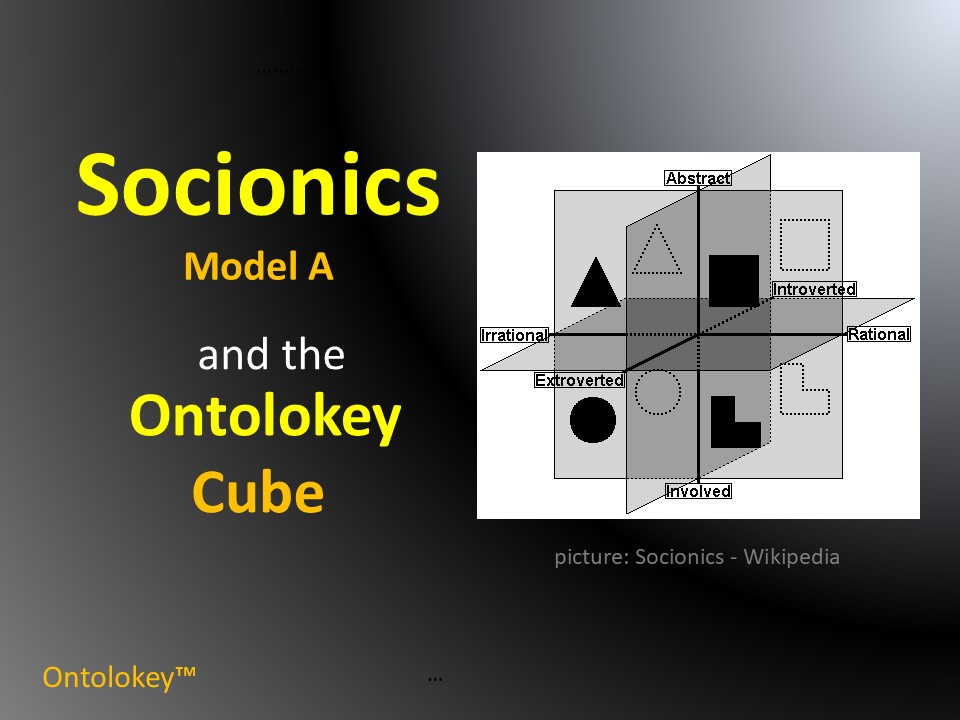

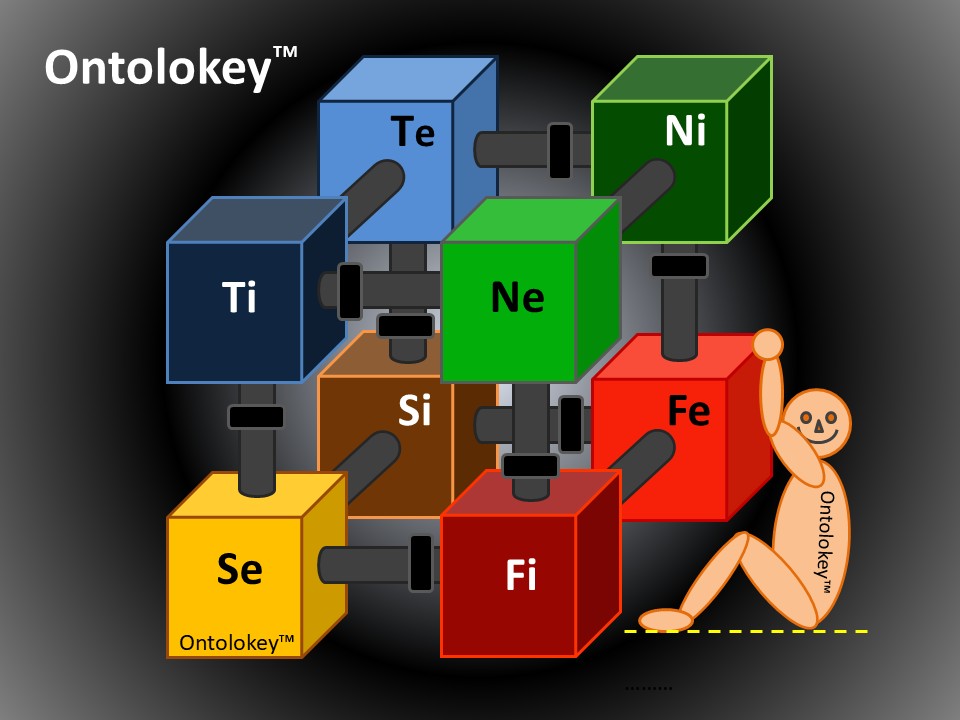
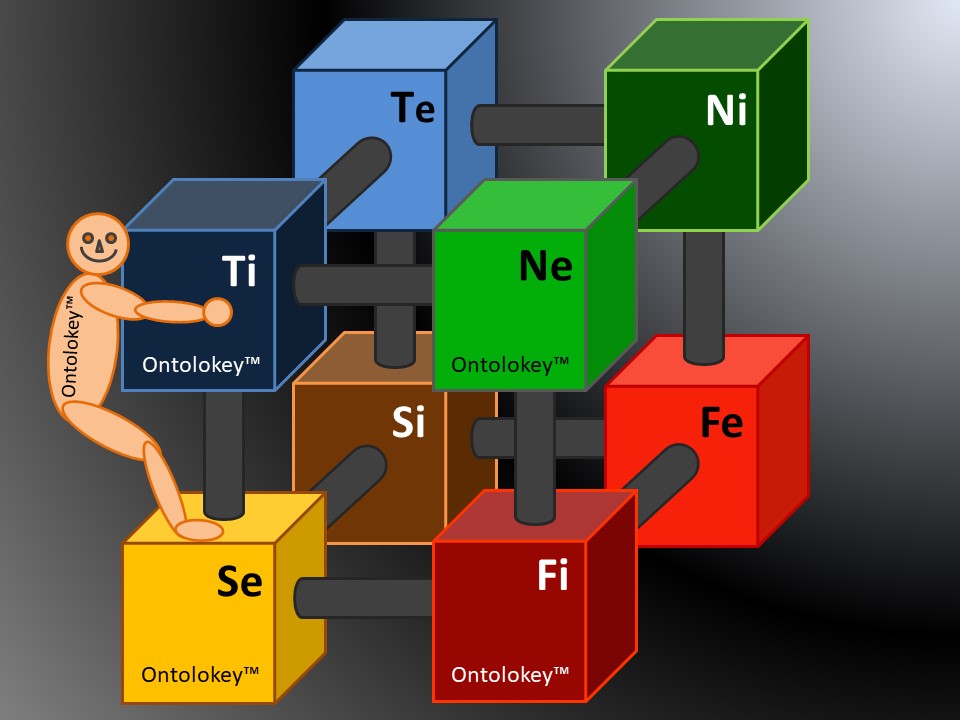

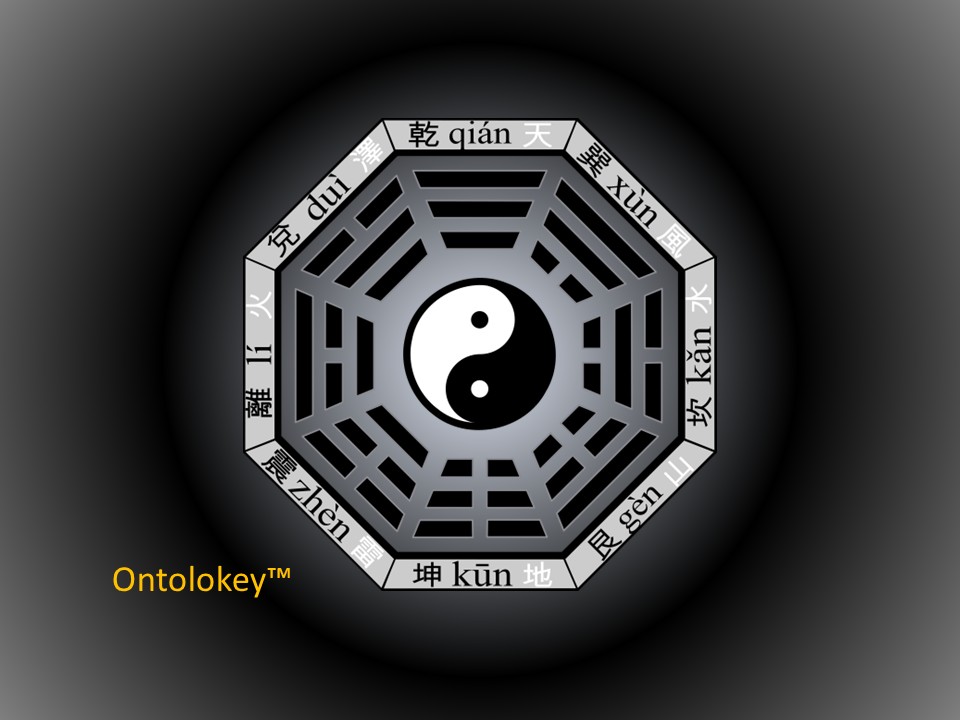

 Ontolokey