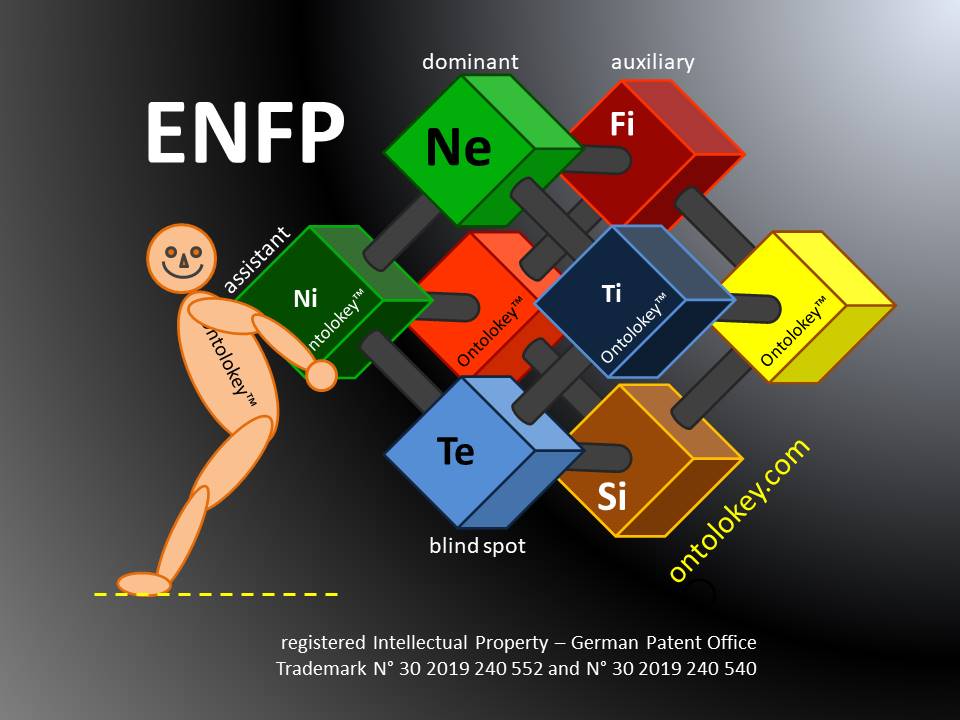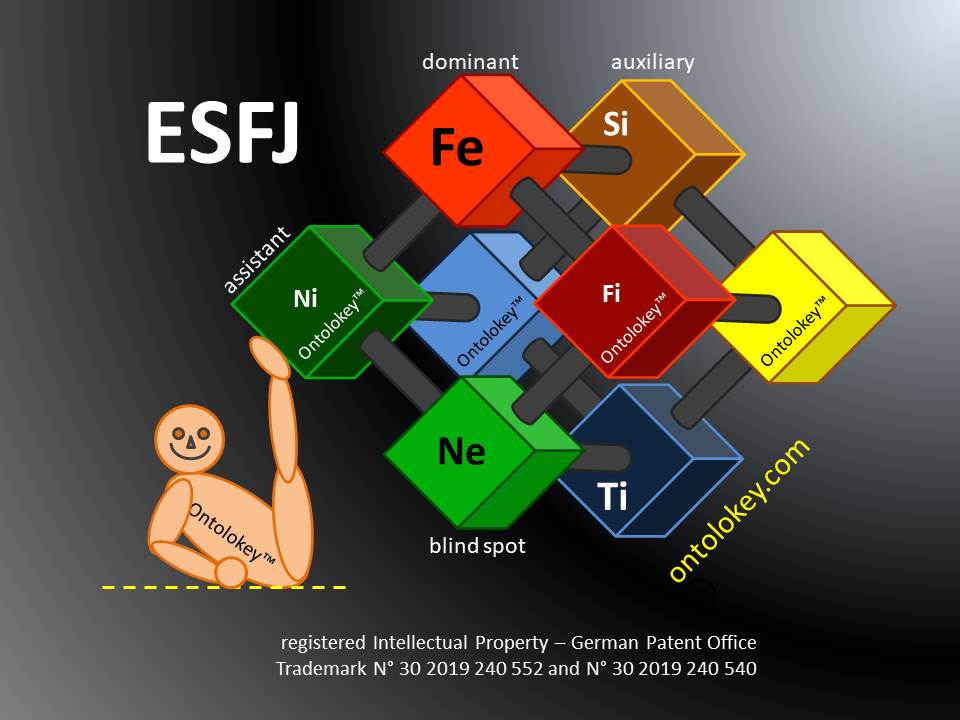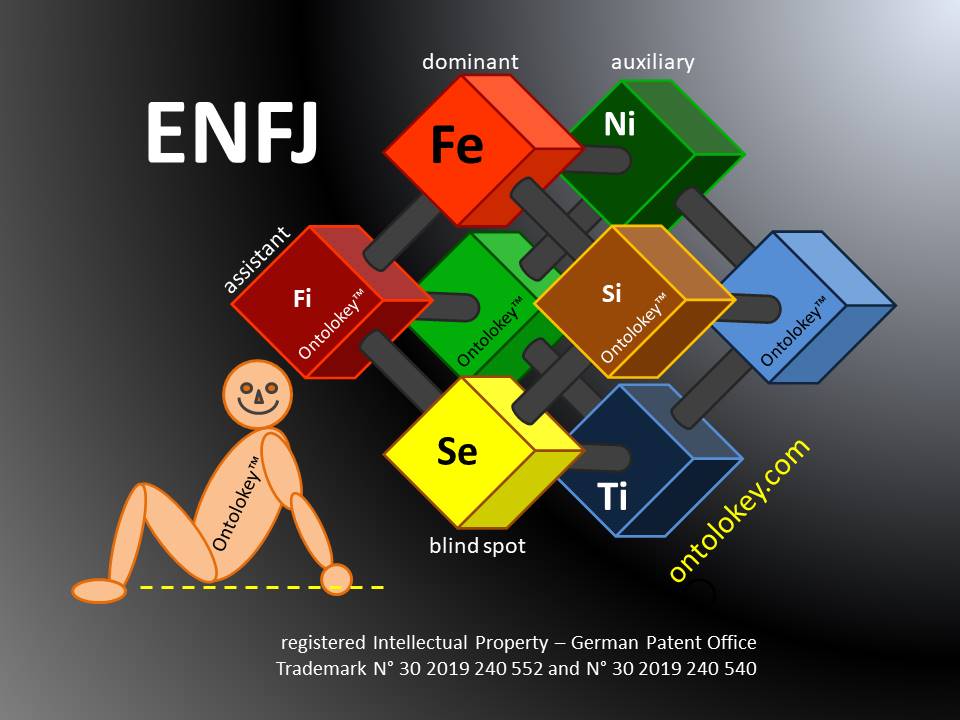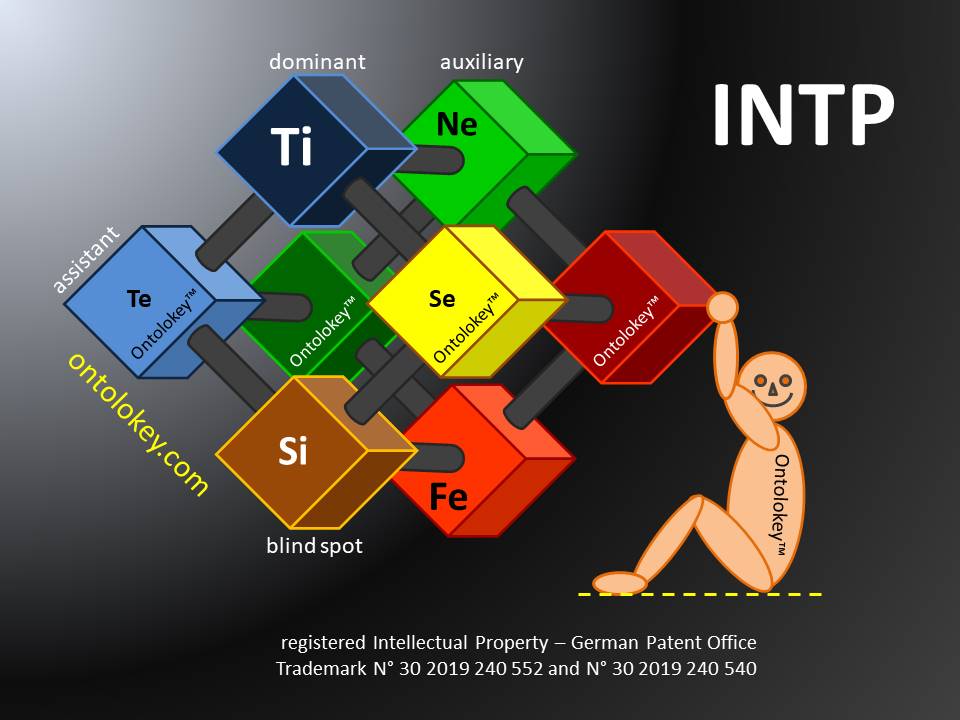
• ein tiefenpsychologischer Vergleich

    1. Grundausrichtung: Außen- versus Innenwelt

    Der grundlegendste Unterschied zwischen extravertiertem und introvertiertem Denken liegt in der Richtung, in die sich die Denkfunktion orientiert. Beim extravertierten Denken richtet sich der Fokus auf die äußere Realität: auf objektive Tatsachen, allgemein akzeptierte Theorien, messbare Daten und gesellschaftlich bewährte Strukturen. Die Wahrheit liegt außerhalb des Subjekts – im Konsens, im empirisch Überprüfbaren, im „Funktionieren“.

    Demgegenüber ist das introvertierte Denken auf die innere Welt gerichtet. Es orientiert sich an subjektiven Ideen, innerer Logik und selbstkonsistenter Struktur. Der introvertierte Denker sucht die Wahrheit nicht im Sichtbaren, sondern im geistigen Prinzip, im Eigenwert eines Gedankens. Ob die Außenwelt diesen Gedanken teilt, ist zweitrangig. Entscheidend ist, dass er „stimmt“ – im Sinne innerer Notwendigkeit oder philosophischer Tiefe.

    Extravertiertes Denken neigt also zur Anpassung an das Gegebene, während introvertiertes Denken eher danach strebt, die Welt an das Denken anzupassen – nicht aus Überheblichkeit, sondern aus der Überzeugung, dass Wahrheit auch unabhängig vom Sichtbaren existieren kann.


    2. Zielsetzung des Denkens

    Für extravertierte Denker besteht das Hauptziel darin, Ordnung und Struktur in die Außenwelt zu bringen. Sie sind systematische, regelorientierte Menschen, die sich oft in Bereichen wie Wissenschaft, Technik, Recht oder Verwaltung wiederfinden. Denken hat für sie einen pragmatischen, anwendungsbezogenen Charakter: Es soll lenken, strukturieren und organisieren.

    Das introvertierte Denken hingegen verfolgt ein anderes Ziel. Es geht ihm nicht primär um Anwendung oder Umsetzung, sondern um Verstehen um des Verstehens willen. Denken ist eine existenzielle Aktivität. Es strebt nach begrifflicher Durchdringung, nach kohärentem Weltbild, nach innerer Wahrheit – selbst wenn diese in der Praxis keine unmittelbare Auswirkung hat. Dieses Denken ist oft metaphysisch, philosophisch, spekulativ.

    Während extravertierte Denker dazu tendieren, ihre Systeme in der Welt zu verwirklichen, neigen introvertierte Denker dazu, in ihren inneren Modellen zu leben. Der eine gestaltet Gesellschaft, der andere das Denken selbst.


    3. Verhältnis zur Realität

    Extravertierte Denker betrachten Erkenntnis als die bestmögliche Widerspiegelung der Realität. Sie glauben, dass Wahrheit im empirischen Abgleich besteht – also darin, wie gut ein Gedanke mit den Beobachtungen der Welt übereinstimmt. Objektivität ist das höchste Kriterium.

    Introvertierte Denker dagegen definieren Wahrheit nicht über empirische Bewährung, sondern über innere Stimmigkeit und begriffliche Stringenz. Ein Gedanke ist für sie wahr, wenn er logisch unausweichlich ist – auch wenn er noch nicht beobachtet oder bewiesen werden kann. Das Resultat ist eine starke Tendenz zur Abstraktion, mit dem Risiko, von der realen Welt abzukoppeln.

    In der psychologischen Praxis bedeutet das: Extravertierte Denker können in eine übermäßige Anpassung an das Objektive verfallen, bis hin zum Dogmatismus. Introvertierte Denker hingegen laufen Gefahr, sich in abstrakten Gedankengebäuden zu verlieren, die kaum Rückbindung an das Leben haben.


    4. Umgang mit anderen Funktionen und das Problem der Einseitigkeit

    Beide Denktypen unterdrücken tendenziell jene Funktionen, die ihrem Denken widersprechen – insbesondere die Gefühlsfunktion. Beim extravertierten Denker geschieht dies, weil Gefühle subjektiv, unberechenbar und nicht quantifizierbar sind. Sie stören das rationale Urteil. Deshalb wird das Gefühl oft verdrängt oder rationalisiert. Die Folge ist ein moralischer Rigorismus, bei dem abweichendes Verhalten als irrational oder gar unmoralisch abgewertet wird. Die verdrängte Gefühlsfunktion kann sich in Form von Ressentiments, plötzlicher Aggressivität oder fanatischer Starrheit äußern.

    Beim introvertierten Denker ist es meist nicht das Fühlen, das verdrängt wird, sondern das Empfinden – also der direkte Kontakt zur sinnlichen Realität. Viele introvertierte Denker neigen dazu, ihre Körperlichkeit, ihre Umwelt oder soziale Bezüge zu vernachlässigen. Sie verlieren sich in ihren Konzepten und erscheinen anderen als weltfremd, kühl oder abgehoben. Auch hier entwickelt sich eine Schattenseite: eine unbewusste Sehnsucht nach Vitalität, Konkretheit oder Nähe, die aber nicht integriert ist und deshalb destruktiv wirken kann.


    5. Kommunikation und Ausdrucksweise

    Der Kommunikationsstil beider Typen unterscheidet sich deutlich: Der extravertierte Denker spricht klar, logisch, systematisch und zielgerichtet. Er möchte überzeugen, anleiten oder erklären. Seine Sprache ist strukturiert und nachvollziehbar, oft sachlich und knapp.

    Der introvertierte Denker hingegen kommuniziert häufig abstrakter, komplexer und introspektiver. Seine Sprache ist nicht immer leicht zugänglich, weil sie oft eine innere Logik transportiert, die nicht an die Konventionen des Alltags gebunden ist. Er tendiert zu paradoxer, symbolischer oder verdichteter Sprache. Nicht selten wird er missverstanden – oder bleibt lieber ganz still, wenn er seine Gedanken nicht angemessen vermitteln kann.

    Im Alltag wirkt der extravertierte Denker wie ein klarer Analytiker oder Organisator, der introvertierte Denker wie ein stiller Philosoph oder Theoretiker, dessen Gedanken nur bei genauerem Hinhören ihre Tiefe offenbaren.


    6. Pathologische Einseitigkeit und psychische Risiken

    Wird das extravertierte Denken zu einseitig, kann es sich in Dogmatismus, übermäßiger Systemgläubigkeit oder Technokratie verlieren. Gefühle werden unterdrückt, Menschen auf Zahlen oder Rollen reduziert. Die Welt wird zur Maschine, die nur „funktionieren“ soll. In der Psychotherapie zeigen solche Menschen häufig Symptome wie Burnout, Beziehungsprobleme, psychosomatische Beschwerden oder Fanatismus.

    Introvertiertes Denken im Extrem führt zur Isolation, Zersplitterung des Denkens, übermäßiger Skepsis und Weltabgewandtheit. Diese Menschen verlieren sich in Gedankenschleifen, zweifeln an allem, selbst an sich. Pathologisch kann sich dies in Depressionen, existenziellen Krisen oder paranoiden Ideen äußern. Auch Zynismus und intellektuelle Arroganz sind typische Abwehrformen.

    In beiden Fällen ist die Lösung die gleiche: Integration der verdrängten Funktionen, also eine bewusste Hinwendung zu Fühlen, Empfinden oder Intuition – je nachdem, was am meisten vernachlässigt wurde.


    7. Persönliche Entwicklung und Individuation

    Nach Jung besteht der Weg zur psychischen Ganzheit – die sogenannte Individuation – darin, die einseitige Dominanz einer Funktion zu überwinden und die unterentwickelten Gegenseiten zu integrieren. Für extravertierte Denker bedeutet dies, Gefühle ernst zu nehmen, sich für Subjektivität, persönliche Erfahrung und Emotionalität zu öffnen. Nur dann werden sie nicht zu kalten Rationalisten, sondern zu empathischen Gestaltern mit innerem Rückhalt.

    Introvertierte Denker wiederum müssen lernen, ihre Gedanken an der konkreten Welt zu prüfen, mit anderen in Austausch zu treten und ihre abstrakten Einsichten in praktisches Handeln zu überführen. Nur dann werden sie nicht zu weltfremden Grüblern, sondern zu weisen Vermittlern zwischen Idee und Wirklichkeit.

    Die psychologische Reifung liegt darin, dass Denken nicht mehr alles beherrschen will, sondern Teil eines psychischen Gesamtsystems wird, das auch das Fühlen, Empfinden und Intuieren einbezieht.


    Fazit

    Extravertiertes und introvertiertes Denken sind zwei grundlegend verschiedene Arten, mit der Welt und mit sich selbst in Beziehung zu treten. Beide bergen enorme Potenziale – zur Erkenntnis, zum Aufbau von Wissen, zur Gestaltung von Welt. Doch beide bergen auch spezifische Gefahren: Die eine Richtung führt zur Verobjektivierung des Menschen, die andere zur Abspaltung von der Realität.

    Jungs großes Verdienst liegt darin, diese Unterschiede nicht nur beschrieben, sondern in ein entwicklungspsychologisches Modell gestellt zu haben. Er fordert uns auf, nicht im Typus zu verharren, sondern an seiner Einseitigkeit zu wachsen – durch bewusste Auseinandersetzung mit dem, was wir lieber verdrängen.

  • A Deep Psychological Analysis

    1. Definition and Core Characteristics

    The extraverted thinking type is someone whose dominant psychological function is thinking, oriented outward toward the external world. Thinking, in this context, is not just problem-solving or cognition in a general sense. It refers specifically to objective, logical analysis—the ability to structure information, draw conclusions based on evidence, and derive rules or systems from observable data.

    Because this type is extraverted, their thinking is shaped not by personal, subjective values but by external facts, norms, and accepted truths. Their judgment is aligned with what is measurable, verifiable, and universally valid. For them, the truth is something “out there”—an objective structure that should guide behavior, both their own and others’.

    Such individuals aim to build their lives in accordance with these truths. Their decision-making is not primarily guided by emotions or inner convictions but by rational deduction from what they perceive as reality. When highly developed, they show remarkable efficiency, precision, and an ability to organize complex systems, from scientific theories to political institutions.


    2. Functional Dominance and Imbalance

    Jung emphasizes that no one is purely one function, but when thinking dominates and overshadows other functions—especially feeling, intuition, and sensation—a psychic imbalance arises. This imbalance becomes particularly problematic when the dominant function becomes ideological—when the individual starts to treat their logic or “formula” not as a tool but as an absolute truth.

    The extraverted thinking type, in its more rigid form, may begin to judge everything and everyone in light of its internalized system of logic. Actions, people, and events are deemed “correct” if they align with the system, and “wrong” if they contradict it. Nuance is lost in favor of categorical, black-and-white thinking.

    This is not just a personal quirk; it’s a structural risk of functional dominance. When one function becomes inflated, it doesn’t just guide behavior—it colonizes the psyche. Other functions (especially the inferior function) are repressed, underdeveloped, and eventually return in dysfunctional or unconscious forms.


    3. The Drive to Systematize the World

    Driven by an unconscious need for order and predictability, the extraverted thinking type often becomes a system-builder. Whether in science, politics, education, or economics, they aim to impose rational structure onto the world. Often this is done with great success—many reformers, engineers, or scientists are of this type.

    But the danger lies in overreach. The system becomes more than a tool—it becomes an ideology. Once convinced of the system’s truth, this type tends to assume that it must be universally applicable. Everyone else must conform, or they are seen as irrational, immoral, or regressive. In extreme cases, this leads to authoritarian tendencies, even when cloaked in the language of justice or truth.

    Jung notes that this type does not act out of sentimental motives like compassion or empathy, but from a sense of rational duty. Their pursuit of justice is depersonalized—a matter of principle, not of emotional concern. This can make their interventions both admirable and harsh.


    4. Emotional Suppression and the Inferior Feeling Function

    Perhaps the most important psychological dynamic in this type is the suppression of feeling. Since personal feelings are often at odds with logical structure, they are dismissed, minimized, or denied. This includes:

    • Aesthetic feelings (art, beauty, taste)
    • Relational feelings (friendship, intimacy)
    • Moral sentiments (empathy, compassion)
    • Religious or spiritual experiences (intuition, mystery)

    Over time, this repression leads to a split psyche. Consciously, the individual believes they are rational, detached, and fair. But unconsciously, repressed feelings accumulate, distort, and eventually return in pathological forms—e.g., mood swings, irrational judgments, moral rigidity, or resentment.

    This aligns with modern findings in clinical psychology, which recognize that emotional suppression often leads to:

    • Poor emotion regulation
    • Burnout or emotional numbness
    • Psychosomatic symptoms
    • Chronic interpersonal conflict

    The “inferior feeling function” becomes the Achilles’ heel of the extraverted thinker. Because it is not integrated, it shows up as oversensitivity, defensiveness, or even passive-aggressive behavior.


    5. The Tyranny of the Ideal

    A defining feature of this type is the tendency to become enslaved by their own ideals. They don’t just serve a cause—they identify with it. As Jung says, they treat their formula as a kind of world-law, a rational order that everyone must follow.

    This often leads to personal sacrifice:

    • They may neglect their health.
    • Their family relationships suffer.
    • Their emotional needs go unmet.

    What makes this sacrifice tragic is that it’s often unreciprocated. The people closest to them (spouses, children, coworkers) are the ones who suffer most from the individual’s rigidity. While society may praise them for their dedication or moral courage, their family may know them as cold, distant, or authoritarian.

    In Jungian terms, this represents the inflation of the ego by the dominant function. The person becomes possessed by their thinking, and their life becomes one-sided.


    6. Neurosis, Compromise, and Shadow Dynamics

    Jung warns that the prolonged repression of feeling and other non-dominant functions leads to neurotic symptoms. These may include:

    • Chronic irritability
    • Relationship breakdowns
    • Obsessive behavior
    • Psychological splitting or projection

    To avoid collapse, many extraverted thinking types create “safety valves”—small concessions to emotion or irrationality, cloaked in rational terms. They might:

    • Allow art or beauty in “controlled” ways.
    • Justify acts of kindness as “social utility”.
    • Rationalize moments of doubt as “productive skepticism”.

    This mechanism mirrors what modern psychology calls rationalization, a defense mechanism in which unconscious feelings are explained away with plausible logic.

    But the shadow side is still active. The more feelings are repressed, the more they shape behavior from below. For example:

    • Acts of altruism may hide unconscious self-interest.
    • Public reform efforts may mask private emotional wounds.
    • Rigid logic may conceal personal insecurity.

    7. Fanaticism and the Illusion of Truth

    The most dangerous expression of this type is fanaticism—when the individual becomes so identified with their logical system that they view criticism as a personal attack. Jung says this happens because the ego fuses with the truth, making it impossible to tolerate dissent.

    At this point, truth becomes a defensive identity rather than an open pursuit. The thinker becomes:

    • Defensive and argumentative
    • Emotionally reactive despite claiming objectivity
    • Hostile toward opposing views

    They may even resort to unethical behavior in defense of their system, believing that “the end justifies the means”. Jung gives the example of scientists who falsify data to support theories they passionately believe in. Their emotional attachment distorts their rational process.


    8. Pseudoscience, Theosophy, and Sterile Thinking

    Jung criticizes not only materialist thinking (which reduces everything to biology or chemistry), but also theosophical and spiritualist systems that offer overly simplistic explanations cloaked in mystery.

    Both, he says, are examples of negative extraverted thinking:

    • They offer “explanations” that block further inquiry.
    • They replace curiosity with dogma.
    • They pretend to understand what remains unexplained.

    Modern examples might include conspiracy theories, pop-psychology “solutions,” or spiritual bypassing—when emotional pain is avoided by appealing to vague metaphysical claims.

    This kind of thinking is sterile. It doesn’t create understanding; it prevents it.


    9. Reclaiming Balance and Integration

    The growth path for the extraverted thinking type involves:

    • Reintegrating feeling as a valid source of knowledge
    • Accepting ambiguity and emotional complexity
    • Learning to value subjectivity and interpersonal connection

    This doesn’t mean abandoning logic or systems, but it does mean tempering them with humility. The goal is not to dominate the psyche with one function, but to create a functional hierarchy where each function plays its part.

    In Jung’s model, real individuation requires that we:

    • Recognize the shadow (repressed aspects of the psyche)
    • Develop the inferior function (in this case, feeling)
    • Withdraw projections and reclaim inner balance

    Only then can the extraverted thinking type become not just effective, but whole—a person whose clarity is matched by empathy, and whose reason is enriched by depth.

  • Reclaiming the Light Within
    A deep dive into Jungian and ontological psychology


    1. Understanding the Shadow: The Unconscious Mirror

    In Carl Gustav Jung’s analytical psychology, the shadow refers to the parts of the psyche that the conscious ego does not identify with—traits, impulses, or desires we repress, deny, or are simply unaware of. These can be negative (aggression, envy, fear), but also positive qualities that we fail to recognize as our own.

    The shadow is morally neutral. It represents the “other side” of consciousness and is shaped by both individual experiences and collective cultural values. What society deems unacceptable or unimportant often ends up in the shadow, whether it’s assertiveness, emotional vulnerability, or artistic genius.

    While most people associate the shadow with darkness, Jung emphasized that this is only a partial view. Without integrating the shadow—both dark and golden—we remain fragmented and emotionally reactive.


    2. The Golden Shadow: Hidden Light in the Unconscious

    The Golden Shadow refers to positive potential hidden in the unconscious: creativity, confidence, vision, leadership, insight. These aspects have often been suppressed or ignored, not because they are negative, but because: – We were never encouraged to express them, – Cultural norms discouraged them, – Or they seemed inconsistent with our self-image.

    Instead of owning these traits, we project them onto others—idealizing people who embody qualities we secretly desire.

    Example: Someone admires another’s courage and independence but sees themselves as passive. Unknowingly, they may have a strong core of independence they’ve never accessed.

    This projection mechanism is often unconscious. As long as these traits remain unintegrated, we remain externally dependent, unconsciously trying to reclaim our power by attaching it to others.


    3. Typical Mistakes – When Personality Stands Above the Shadow

    Each personality type in the Ontolokey model has its unique behaviour, caused by ignoring the Golden Shadow. These oversights lead to predictable psychological patterns, relational challenges, and internal conflicts. Below is a deeper psychological interpretation of each type’s main misjudgment, and the potential lying dormant in the Golden Shadow.

    ENTP – The rebellious visionary
    • Mistake: ENTPs often reject formal systems and external structures, believing them to be oppressive or creatively limiting. They may impulsively challenge authority or resist external discipline, believing that innovation must come from total freedom.
    • Psychological root: A discomfort with accountability and a fear that structure will diminish spontaneity.
    • Golden Shadow – potential: Extraverted Thinking (Te) helps them transform abstract ideas into structured plans, execute long-term goals, and influence systems with clarity and strategic drive.
    INTP – The skeptical philosopher
    • Mistake: INTPs tend to intellectualize and dismiss intuition-based insights that are not logically verifiable. They may mock or trivialize spirituality, mythology, or archetypal thinking as irrational.
    • Psychological root: A fear of the unknown and a strong attachment to logical control.
    • Golden Shadow – potential: Introverted Intuition (Ni) helps them tap into symbolic, abstract, and long-range visions, enriching their philosophy with deep inner coherence.
    ENTJ – The executive pioneer
    • Mistake: ENTJs can become overly rigid, focusing only on measurable outcomes and ignoring open-ended exploration. They often distrust unproven or abstract ideas that lack immediate utility.
    • Psychological root: Anxiety over losing control or appearing directionless.
    • Golden Shadow –  potential: Extraverted Intuition (Ne) helps them think beyond the known, embrace experimentation, and evolve from strict execution to visionary leadership.
    INTJ – The strategic mystic
    • Mistake: INTJs often dismiss slow, detail-oriented logic that doesn’t serve their larger vision. They may appear impatient or intolerant of nuance.
    • Psychological root: A desire to bypass complexity for the sake of strategic clarity.
    • Golden Shadow – potential: Introverted Thinking (Ti) helps them refine abstract concepts with precision, ensuring that their vision is supported by coherent logic.
    ENFP – The idealistic catalyst
    • Mistake: ENFPs may rebel against group norms, seeing social harmony as inauthentic or conformist. They sometimes withdraw emotionally from communal expectations.
    • Psychological root: Fear that external expectations will crush individuality.
    • Golden Shadow – potential: Extraverted Feeling (Fe) helps them express their ideals in ways that resonate socially, enabling them to connect, unify, and inspire communities.
    INFP – The inner-world dreamer
    • Mistake: INFPs often neglect structure, time, and grounded routine. They may struggle with consistency and undervalue experience-based knowledge.
    • Psychological root: An unconscious rejection of obligation and repetition.
    • Golden Shadow – potential: Introverted Intuition (Ni) helps them connect their values to visionary insight, synthesizing emotional truth with future-oriented clarity.
    ENFJ – The visionary connector
    • Mistake: ENFJs may become fixed in their ideals and resist open-ended exploration. They can be overwhelmed by too many new ideas and avoid divergent thinking.
    • Psychological root: Fear of disrupting relational harmony or losing emotional focus.
    • Golden Shadow – potential: Extraverted Intuition (Ne) helps them embrace spontaneity, entertain new possibilities, and evolve their ideals through exploration.
    INFJ – The empathic oracle
    • Mistake: INFJs may avoid objective, critical analysis, fearing it will damage emotional depth or harmony. They can become overly certain of their intuition without checking it logically.
    • Psychological root: Desire to preserve emotional and intuitive coherence.
    • Golden Shadow –  potential: Introverted Feeling (Fi) helps them stay emotionally authentic, even when it means standing apart, fostering quiet strength and personal conviction.
    ESTP – The kinetic realist
    • Mistake: ESTPs often resist imposed structure and long-term planning. They rely on instinct and immediate action, avoiding strategic systems.
    • Psychological root: Discomfort with delayed gratification and loss of sensory engagement.
    • Golden Shadow – potential: Extraverted Thinking (Te) helps them harness their energy for sustainable success by applying focus, discipline, and structured decision-making.
    ISTP – The independent technician
    • Mistake: ISTPs may ignore accumulated wisdom, tradition, or consistency. They can appear detached from community or history.
    • Psychological root: Desire for personal autonomy and resistance to repetition.
    • Golden Shadow – potential: Introverted Sensing (Si) helps them build mastery through structure, repetition, and accumulated experience, anchoring their independence in wisdom.
    ESTJ – The pragmatic commander
    • Mistake: ESTJs often cling to the known and resist speculative thinking. They may dismiss creativity as impractical.
    • Psychological root: Insecurity about ambiguity and chaos.
    • Golden Shadow –  potential: Extraverted Sensing (Se) helps them stay attuned to the present moment, expanding their effectiveness with sensory awareness and adaptability.
    ISTJ – The structured guardian
    • Mistake: ISTJs may become overly conservative, resistant to new perspectives or approaches.
    • Psychological root: A strong need for predictability and safety.
    • Golden Shadow –  potential: Introverted Thinking (Ti) helps them become more analytically agile, questioning norms and improving systems with quiet precision.
    ESFP – The energetic harmonizer
    • Mistake: ESFPs often avoid deeper emotional analysis in group settings, preferring spontaneous interaction over social accountability.
    • Psychological root: Fear of losing personal freedom in group dynamics.
    • Golden Shadow – potential: Extraverted Feeling (Fe) helps them lead with emotional intelligence, attune to group dynamics, and deepen their impact in social environments.
    ISFP – The quiet artisan
    • Mistake: ISFPs may resist structure, planning, and reflection, favoring moment-to-moment experiences.
    • Psychological root: A discomfort with permanence and resistance to routine.
    • Golden Shadow – potential: Introverted Sensing (Si) helps them bring depth and beauty through mindful repetition, grounding their creativity in memory, rhythm, and craftsmanship.
    ESFJ – The social steward
    • Mistake: ESFJs may over-identify with group values and ignore personal moral integrity or deeper ethical questions.
    • Psychological root: Fear of rejection or breaking social cohesion.
    • Golden Shadow – potential: Extraverted Sensing (Se) helps them engage fully with the here and now, enhancing their ability to respond dynamically and lead with presence.
    ISFJ – The caring traditionalist
    • Mistake: ISFJs may resist change or creative disruption, clinging to inherited norms.
    • Psychological root: Emotional attachment to familiarity and fear of uncertainty.
    • Golden Shadow – potential: Introverted Feeling (Fi) helps them clarify personal values, make independent ethical choices, and develop a resilient moral identity.

    4. The Path to Integration: Shadow Work in Ontolokey

    True integration of the Golden Shadow involves: – Becoming aware of projections, – Engaging the auxiliary function as a bridge to the shadow, – Expanding the self-image to include “who I might become,” – Using symbolic methods like mythology, dreamwork, or guided introspection.

    This work demands courage, because the Golden Shadow is often the most brilliant and intimidating part of ourselves—not because it’s dark, but because it’s so full of light.


    5. Why It Matters – Especially for Leaders

    The higher the responsibility, the more dangerous an unacknowledged shadow becomes.

    Leaders who ignore their Golden Shadow: – Make impulsive or authoritarian decisions, – Misjudge others’ capabilities, – Or sabotage innovation out of fear of uncertainty.

    By becoming conscious of the Golden Shadow, leaders can: – Lead with humility and clarity, – Empower others authentically, – And realize their full creative and moral potential.


    Conclusion: The Shadow as Treasure

    “Where your shadow is, there too lies your treasure.”
    — Inspired by Carl Jung

    The Golden Shadow is not a mystical concept—it’s a psychological necessity. It contains the keys to our most untapped potential, our deepest authenticity, and our highest contribution to the world.

    Ignoring it brings fragmentation.
    Integrating it brings wholeness.

  • 1. Introduction: Jungian Typology and the Inner World

    Carl Gustav Jung’s typological model distinguishes between attitudes (introversion and extraversion) and functions (thinking, feeling, sensing, intuition). Within this framework, introverted types, especially when led by irrational (perceiving) or rational (judging) functions, present a unique psychological challenge—both for themselves and for the societies in which they live.

    This analysis focuses on the four introverted types dominated by:

    • Introverted Sensing (Si)
    • Introverted Intuition (Ni)
    • Introverted Thinking (Ti)
    • Introverted Feeling (Fi)

    These types reveal important truths about the psyche, and about modernity’s bias toward externalized expression, objectivity, and performativity. What follows is a structured and in-depth exploration of their psychological structure, existential struggle, and cultural significance.


    2. The Introverted Irrational Types: Si and Ni

    2.1 Psychological Core: Perception Turned Inward

    Introverted irrational types are guided by perception rather than judgment—meaning they experience the world rather than evaluating it. However, this perception is turned inward, oriented not toward objective facts, but toward the subjective impression or symbolic image the outer world evokes.

    • Si-dominant individuals (Introverted Sensing) do not merely register sensory facts; they compare them unconsciously with internalized, deeply rooted impressions—often tied to personal memory, archetypal images, or a body-based sense of familiarity.
    • Ni-dominant individuals (Introverted Intuition) track the unfolding of inner images, symbolic patterns, and unconscious potentials. Their experience is often future-oriented or transpersonal but remains difficult to articulate.

    2.2 Outer Invisibility and Misunderstanding

    Because their dominant function is inward and nonverbal, these types often appear to others as:

    • Withdrawn, emotionally unavailable, or oddly unresponsive
    • Disconnected from current reality, even if inwardly hyper-aware
    • Fragmented in their communication—offering symbols, metaphors, or anecdotes that resist straightforward interpretation

    Their inferior functions (usually extraverted thinking or feeling) may erupt under stress in uncontrolled, indirect, or even awkward ways. As a result, they are prone to be misjudged or underestimated—seen as either “odd,” “ineffective,” or “unmotivated.”

    2.3 The Inner Life as a Vortex of Meaning

    For both Ni and Si types, the inner world is vivid, complex, and endlessly stimulating—even overwhelming.

    • Ni types are drawn to archetypes, hidden trajectories, and unconscious potentialities. Their psyche “sees” what is not yet visible but likely to become.
    • Si types, in contrast, immerse themselves in inner reconstructions of the past or in the fine-tuned familiarity of inner impressions; reality is evaluated in terms of “rightness” based on internalized standards.

    This rich subjective landscape often absorbs so much attention that external communication seems secondary or even pointless. Consequently, what they do share with others is often incomplete, lacking emotional warmth or social “packaging,” and may appear cryptic or out of place.

    2.4 Cultural Friction and Silent Teaching

    In a society that privileges clarity, speed, and productivity, the value of these types is obscured. They are often perceived as useless or out of sync—not because they lack insight, but because their insights are difficult to externalize. Their mode of being is inherently non-instrumental.

    And yet, their very silence is instructive. These types remind us that:

    • Not all wisdom is teachable in words
    • The deepest truths often come not from rational exposition, but from quiet observation, symbolic experience, or aesthetic resonance
    • The unconscious psyche is real, and its content—though often incommunicable—exerts profound influence on life and culture

    “They are not teachers in the usual sense—but their lives embody an alternative to the culture of method and measurability.”


    3. The Introverted Rational Types: Ti and Fi

    3.1 Psychological Core: Subjective Judgment

    Introverted rational types are led by judging functions—they seek coherence, meaning, or ethical integrity. However, like the irrational introverts, their evaluations are rooted in the subjective realm.

    • Ti-dominant individuals (Introverted Thinking) develop highly refined internal frameworks, analyzing phenomena through abstract logical coherence, often independently of external data or consensus.
    • Fi-dominant individuals (Introverted Feeling) evaluate the world according to a deeply personal value system, often grounded in authenticity, conscience, or integrity—but not necessarily shared with others.

    3.2 The Hidden Logic of the Inner World

    To an outside observer, Ti and Fi types can seem:

    • Detached, difficult to persuade, or morally rigid
    • Obsessively focused on internal consistency rather than practicality
    • Resistant to social norms, trends, or common sense

    Their reasoning is not flawed, but it often begins from subjective premises that others do not share or even recognize. What may look like “irrationality” is simply a different internal valuation system.

    The real disagreement often lies not in the logic of the conclusion, but in the starting assumptions—a psychological blind spot in many arguments.

    3.3 The Burden of a Biased Epoch

    In modern Western society, where objective measurement and external achievement are idealized, introverted rational types live in philosophical exile.

    • The Ti type is forced to simulate objectivity, suppressing the inward source of understanding
    • The Fi type may find their inner values invalidated or pathologized, as subjective morality loses credibility in a data-driven world

    This results in internal self-undermining. Because they participate in a culture that dismisses their own inner foundations, they may suffer from chronic self-doubt, moral fatigue, or feelings of alienation.

    3.4 Ego Inflation and the Psychology of the Marginalized

    When these types lose connection with their guiding inner principle (thinking or feeling), they may become:

    • Defensive or moralistic (Fi)
    • Hyper-critical or abstractly argumentative (Ti)

    They begin to view others as oppressors, unaware that they themselves have begun to doubt the value of their own internal compass. This often leads to a false sense of victimization, ego inflation, or a retreat into self-reinforcing echo chambers.

    The real tragedy lies in their failure to remain loyal to the subjective principle with the same conviction that extraverts show toward objective norms. If they did, they might earn misunderstanding—but not misjudgment.

    “Misunderstood, yes. But not mistaken—if they remain true to themselves.”


    4. Cultural Implications and Psychological Critique

    These four introverted types reveal fundamental blind spots in modern culture:

    • An overvaluation of the spoken word and method at the expense of authentic presence
    • A dismissal of subjective truth in favor of “evidence,” even when it concerns inner states
    • The assumption that teaching, morality, and intelligence can be standardized

    The text critiques what Jung called the “superstition of the spoken word”—the idea that what we say (or how well we say it) matters more than how we live, perceive, and relate.

    This has pedagogical consequences:

    • Children are shaped not by what parents say, but by what they embody
    • Students are influenced not by teaching methods, but by the maturity of the teacher’s psyche
    • A brilliant methodology cannot compensate for the ethical or psychological immaturity of the person applying it

    “A child is educated not by the parent’s words, but by the parent’s life.”


    5. Conclusion: The Quiet Necessity of the Introvert

    Introverted types—irrational and rational—are often out of tune with the tempo of modern life. Yet they bear witness to essential aspects of the human experience:

    • The irreducibility of inner truth
    • The limits of language and rationality
    • The quiet, often painful, dignity of being true to the self in a world obsessed with performance

    Though their contributions are easy to overlook, they challenge the collective to slow down, turn inward, and consider that not all value is visible—and not all truth is verbal.

    “They are living counterweights to the modern world’s spiritual imbalance.”

  • A Deeper Exploration of Functional Interdependence


    The Ontolokey Cube: A Three-Dimensional Cognitive Model

    Unlike traditional typological systems such as MBTI, which depict personality through a flat structure of four functions, Ontolokey offers a visually spatial model that captures the interconnectivity and functional gradients between all eight Jungian cognitive functions. The Ontolokey Cube conceptualizes each function as a vertex (corner) of a cube. These eight functions are:

    • Thinking (T): Ti (Introverted Thinking), Te (Extraverted Thinking)
    • Feeling (F): Fi (Introverted Feeling), Fe (Extraverted Feeling)
    • Sensing (S): Si (Introverted Sensing), Se (Extraverted Sensing)
    • Intuition (N): Ni (Introverted Intuition), Ne (Extraverted Intuition)

    Each function is geometrically connected to three others via the cube’s edges. Along these edges (conceptualized as rods or axes) are sliders that indicate an individual’s relative preference or usage of the two functions connected by that edge. This visual representation provides an elegant solution to a long-standing issue in typology: the false dichotomy of function preference.

    Whereas traditional models may label a person a “Ti user,” Ontolokey shows that individuals rarely operate with a purely isolated function. Instead, their cognition is distributed across multiple interconnected modalities — in degrees of use rather than absolutes.

    This aligns with Jung’s original premise:

    “There is no such thing as a pure extravert or a pure introvert. Such a man would be in the lunatic asylum.”
    (Jung, Psychological Types, 1921)

    The cube’s structure visualizes this psychological truth.


    The Dynamic Functional Quartet: Dominant, Helper, Sibling, and Toddler

    Each dominant function within the Ontolokey system is embedded in a functional matrix of four, consisting of:

    1. Dominant Function – the primary lens through which a person filters reality. It is the most differentiated and energetically charged function.
    2. Helper Function (Auxiliary) – supports the dominant and helps maintain psychological balance, especially in social and practical contexts.
    3. Sibling Function – shares the same domain (T/F/N/S) but has the opposite attitude (introverted ↔ extraverted). Often subtly present, it balances the primary approach with alternative strategies.
    4. Toddler Function – developmentally immature yet behaviorally relevant. Though less conscious, it significantly affects emotional reactivity, practical challenges, and blind spots.

    These four functions form a “Tripod Configuration”, where the dominant function acts as the central hub supported by the three others — akin to a camera mounted on a tripod: stable, yet mobile and flexible. The metaphor captures the functional interdependence Jung alluded to in his later works but which models like MBTI often reduce to linear stacks.

    Each connection (dominant ↔ other) is visualized with a slider, indicating the degree of balance or imbalance in real-life use. Unlike MBTI’s binary typology (e.g., “INFJ” or “ESTP”), Ontolokey models the tensions between functions and encourages individual variability and adaptive integration.


    Visual Percentages: Quantifying Psychological Dynamics

    Ontolokey introduces a visual metric system to reflect function utilization along three core axes:

    • Dominant ↔ Helper
    • Dominant ↔ Sibling
    • Dominant ↔ Toddler

    Each edge has a slider, and its position represents the percentage of preference or activation. For instance:

    • A slider 80% toward Ti and 20% toward Te indicates a strong introverted logical style, but not a complete exclusion of extraverted reasoning.
    • Similarly, a 50/50 split between Fi and Fe may suggest ambivalence or versatility in affective expression.

    These percentages offer continuous, non-binary data and reflect the dynamic interplay of cognition. This approach aligns with more modern psychological assessments that move away from typological rigidity (e.g., Big Five trait spectra) and embrace dimensional modeling — a central concept in contemporary personality research.

    Psychological Relevance

    • Sliders as feedback tools: This quantitative approach enables self-awareness and coaching tools. It can help individuals track functional development over time.
    • Therapeutic use: The cube can help therapists identify underdeveloped or overused functions, serving as a diagnostic metaphor for behavioral rigidity or inner conflict.
    • Educational relevance: For educators and parents, the model highlights areas where a child may struggle not from lack of intelligence, but from functional underdevelopment — e.g., poor Se leading to difficulties with concrete tasks or time management.

    Deep Dive: What is the Toddler Function?

    The Toddler Function is perhaps the most novel and misunderstood element in Ontolokey. It represents a third, peripheral yet behaviorally active function, which shares the same orientation (introversion or extraversion) as the helper, but with an opposing cognitive domain.

    Example: Fi-Dominant Personality

    Let’s consider someone whose dominant function is Introverted Feeling (Fi):

    • If their Helper is Extraverted Sensing (Se) → their Toddler becomes Extraverted Intuition (Ne)
    • If their Helper is Extraverted Intuition (Ne) → their Toddler becomes Extraverted Sensing (Se)

    In both cases, the Toddler shares the attitude (Extraverted) of the Helper but serves a different cognitive purpose: perception vs. judgment, sensation vs. intuition, or thought vs. feeling.

    The Toddler is not “inferior” in value but is developmentally raw — more instinctive, reactive, and prone to being overlooked unless consciously integrated.

    Theoretical Justification

    Jung himself hinted at this layer of the psyche in his typology of inferior functions, though he didn’t give it formal structure. Later typologists (e.g., John Beebe) proposed archetypal roles for all eight functions, suggesting that lower-tier functions have behavioral consequences — especially under stress.

    The Toddler Function corresponds loosely to Beebe’s Tertiary or “Child” function, often associated with immature defense mechanisms, emotional regression, or unconscious needs.

    Ontolokey’s innovation lies in giving this function a specific geometrical position, making its relationship to the dominant and helper functions visually intelligible.


    The Neglected Power of the Toddler: A Case Study

    Let’s take a practical scenario:

    An individual with Introverted Thinking (Ti) as the Dominant function, and Extraverted Intuition (Ne) as Helper, will have Extraverted Sensing (Se) as the Toddler.

    In this case:

    • Ti focuses on internal logic
    • Ne explores patterns, abstract potential
    • Se relates to real-world sensory data: time, money, space, the body, etc.

    Because Se is the Toddler, it may be functionally neglected. Such a person might:

    • Forget to eat
    • Mismanage finances
    • Miss social cues
    • Ignore physical surroundings

    Not due to incapability, but due to cognitive under-attention. The intuitive helper overrides the sensory Toddler, leading to material-world vulnerabilities.

    Ontolokey emphasizes this not as a flaw, but as a developmental insight: the Toddler is undeveloped, not irrelevant. With practice and intention, it can mature — much like a child growing into adolescence.


    MBTI vs. Ontolokey: Key Distinctions

    FeatureMBTIOntolokey
    Number of Functions4 per type8 fully modeled
    VisualizationNone; static labelsInteractive 3D Cube with function sliders
    Sibling FunctionNot explicitly definedCore connection (dominant ↔ sibling axis)
    Toddler FunctionIgnoredFully visualized and behaviorally modeled
    Flexibility of UseAssumes static function stackAllows gradient use, change over time
    Psychological DepthTypological (categorical)Integrative, dimensional, and developmentally dynamic

    Ontolokey’s model addresses one of the most common criticisms of MBTI: its lack of developmental flexibility and context sensitivity. It assumes a type remains the same across situations and life stages. Ontolokey suggests instead that functions exist in gradients, that preferences evolve, and that neglected functions matter — especially in complex real-world contexts.


    Conclusion: Integrating the Toddler into the Whole Psyche

    The Toddler Function represents a shadow-like zone in the psyche — often unpolished, but necessary. While the Dominant and Helper functions structure conscious behavior and decision-making, the Toddler remains a background influencer — showing up in:

    • Emotional overreactions
    • Sensory overwhelm
    • Poor material management
    • Inconsistent performance under pressure

    Ignoring this function, as MBTI largely does, results in oversimplified personality theory. Integrating it, as Ontolokey proposes, leads to:

    • More holistic personality development
    • Greater emotional intelligence
    • Better coping strategies under stress

    Ultimately, the Ontolokey Cube offers more than a typology. It is a functional cartography — a map of how the mind uses, avoids, or integrates its own tools. The Toddler is a critical part of that map. Though less mature, it carries untapped potential — and deserves a seat at the table.

  • The Ontolokey Model: A Three-Dimensional Perspective on Personality

    The Ontolokey personality model builds upon the foundational work of Carl Gustav Jung and modernizes it through a more holistic, dynamic, and visual approach. Unlike traditional personality systems like the MBTI (Myers-Briggs Type Indicator), which rely on a binary framework of four cognitive functions, Ontolokey introduces a more nuanced view by incorporating all eight psychological functions and mapping them in a three-dimensional cube. This allows for a more accurate representation of how different aspects of personality interact and influence behavior in real-life situations.


    The Ontolokey Cube: A Spatial Map of Mental Functions

    At the core of the Ontolokey model lies a conceptual cube, with each of its eight corners representing one of Jung’s cognitive functions:

    • Introverted Thinking (Ti) / Extraverted Thinking (Te)
    • Introverted Feeling (Fi) / Extraverted Feeling (Fe)
    • Introverted Sensing (Si) / Extraverted Sensing (Se)
    • Introverted Intuition (Ni) / Extraverted Intuition (Ne)

    The cube’s edges represent direct functional relationships—links between opposing functions of the same domain (e.g., Ti ↔ Te). These edges are dynamic axes, each equipped with a sliding marker that visually indicates a person’s position between the two poles.

    This spatial representation allows individuals to see their functional balance, rather than relying solely on categorical type labels. Unlike the MBTI’s flat 4-letter code, Ontolokey embraces the complexity of cognition by making each person’s unique combination of preferences and tendencies visually accessible and quantifiable.

    Functional Balance in Action

    For example, an individual may lean more heavily toward introverted thinking (Ti), reflected by a slider positioned closer to that corner. However, the proximity of the marker to the extraverted thinking (Te) end indicates how much this function is also integrated into daily cognitive behavior. In a professional context, especially in structured environments like offices, extraverted thinking is often necessary—requiring planning, decision-making based on external logic, and execution of strategies. Even a dominant Ti user, therefore, must engage Te to function effectively in the external world.


    The Sibling Function: Essential, Yet Often Ignored

    One of the key contributions of Ontolokey is the concept of the Sibling Function—the non-dominant but intrinsically connected counterpart to the dominant function. For instance:

    • Ti (introverted thinking) is “paired” with Te (extraverted thinking)
    • Ni (introverted intuition) is paired with Ne (extraverted intuition)
    • Si (introverted sensing) is paired with Se (extraverted sensing), etc.

    These sibling functions form a cognitive duality. They operate on the same plane (e.g., both are thinking or both are sensing functions) but in opposite orientations—inward vs. outward. Ontolokey posits that no function operates in a vacuum. While a person may have a clear preference (e.g., 55% Ti vs. 45% Te), both are constantly and necessarily at play.

    Unlike MBTI, which simplifies individuals into types and ignores sibling functions, Ontolokey recognizes that functional interplay—even among opposites—is essential for psychological adaptability and development.

    In fact, the sibling function can serve as a compensatory mechanism. For instance, a Ti-dominant individual may rely more heavily on Te when working in team environments, under stress, or in situations requiring external validation of ideas.


    The Tripod Structure: How Personality Stabilizes Itself

    Ontolokey introduces the metaphor of the tripod to describe how a dominant function is supported and balanced by three key relationships:

    1. The Sibling Function (brother or sister counterpart)
    2. The Auxiliary Function (supportive function in a complementary domain)
    3. The Toddler Function (a more primitive but instinctive function)

    Each of these is connected to the dominant function via a physical “leg” on the cube—represented as edges. These connections create a stable base for personality, much like how a three-legged stool can support weight even if one leg is slightly weaker.

    Cognitive Load Distribution

    The tripod metaphor emphasizes the reality that our conscious behavior is influenced not only by dominant or auxiliary functions but also by less conscious or situationally active functions, such as the Toddler. This function, although less developed, often plays a role in emotional responses, gut decisions, and habits, particularly under stress or in early development stages.

    In Jungian terms, this reflects the complexity of the psyche, where the ego (dominant function) is continually interacting with both conscious and unconscious counterparts. Ontolokey makes this interaction explicit and measurable.


    Visual Percentages: A Fluid View of Personality

    In contrast to static type labels, Ontolokey introduces a percentage-based visualization to indicate how much each function is engaged in a person’s real-life cognitive behavior.

    Three sliders measure the degree of influence from:

    • Dominant ↔ Auxiliary
    • Dominant ↔ Sibling
    • Dominant ↔ Toddler

    This approach acknowledges that personality is not a fixed construct but a fluid, context-dependent spectrum. For example:

    • A person may show 70% preference for Ni over Ne, but when brainstorming with others, the Ne aspect might temporarily dominate.
    • Under stress, a person may fall back on their Toddler function—e.g., a highly analytical Ti user suddenly relying on Se (extraverted sensing) to seek pleasure, escape, or immediate feedback.

    This trifold percentage visualization aligns with findings in cognitive neuroscience, where mental functions are shown to operate in networks rather than isolated regions or types. Ontolokey, in this way, models personality more like a dynamic system, rather than a mechanical list of traits.


    Ontolokey vs. MBTI: Key Theoretical Differences

    While MBTI has been widely adopted and is useful for introducing people to Jungian typology, it has significant structural limitations:

    FeatureOntolokeyMBTI
    Number of functions8 (full function stack)4 (dominant, auxiliary, tertiary, inferior)
    Spatial model3D cube with real-time dynamicsFlat letter-code (e.g., INTP, ESFJ)
    Sibling/Toddler functionsFully included and visualizedIgnored or undeveloped
    Functional interactionsEmphasizes interplay and blendingFocuses on static preference
    Relation to Jung’s theoryCloser to Jung’s original function modelMore interpretive and simplified

    MBTI offers a valuable introduction to typology, but it lacks the granularity and depth needed for long-term self-development, coaching, or therapeutic use. Ontolokey restores this by returning to Jung’s function-based, dynamic psyche, while also making it visually accessible.


    Practical Applications: Work, Growth, and Relationships

    The Ontolokey model is particularly valuable in real-world applications:

    • In work environments, recognizing one’s functional balance helps in team roles, decision-making, and task allocation. A Ti-dominant person aware of their Te usage can navigate external processes more effectively.
    • In personal development, users can track which functions are overused or underdeveloped and deliberately work to engage their Toddler or Sibling functions more consciously.
    • In relationships, the model facilitates empathy and communication, especially when people operate from different dominant functions but share supportive or sibling connections.

    By visualizing the cognitive profile in full 3D—rather than boxing it into types—Ontolokey encourages ongoing self-awareness, growth, and adaptation.


    Conclusion: A Modern Model for a Complex Mind

    The Ontolokey model offers a modernized, more psychologically sophisticated way to understand personality. It acknowledges the multidimensional nature of cognition, honors Jung’s full functional theory, and provides users with practical tools for reflection, growth, and real-life application.

    In a world that demands flexibility, collaboration, and internal coherence, understanding not just who you are, but how you operate, is more important than ever.

    Ontolokey provides the map.

  • Understanding Introverted Thinking: The Core Principle

    Introverted Thinking (Ti) is a cognitive function that seeks internal consistency, coherence, and clarity of thought. It is primarily subjective in orientation, not in the sense of being irrational, but in that it prioritizes the internal framework of logic over the external validation of facts.

    This function does not derive its conclusions from outer experience, but rather starts from internal hypotheses, models, or symbolic images—what Jung would refer to as “archetypal contents” or “primordial images”—and attempts to refine them through mental analysis.

    Key Characteristics:

    • Inner Logical Framework: Ti-users build complex models of how things should work, often independent of real-world messiness.
    • Detached Objectivity: Ironically, although subjective in orientation, Ti aims at objectivity within the self—”what makes sense internally must be true.”
    • Reduction to Principles: It seeks to strip phenomena down to their most essential conceptual core.

    📘 Think of Immanuel Kant: Instead of analyzing how we experience the world, he analyzed the conditions that make experience possible.

    While this thinking can be incredibly innovative and synthetic, it risks detachment from external reality, especially when it uses the outer world only to confirm what is already internally accepted.


    The Role of External Facts: Supportive, Not Foundational

    Introverted thinking has a complicated relationship with empirical data. External facts are not inherently interesting unless they illustrate or support an internal idea. The thinker collects data selectively, using it to confirm or test their inner models—but never to derive those models.

    This is in stark contrast to Extraverted Thinking (Te), which builds frameworks from observed regularities in the outer world.

    🔬 Where Te might conduct an experiment to gather data for a hypothesis, Ti might build a hypothesis based on logical necessity and then seek data to confirm or illustrate it.

    Risks of Ti:

    • Confirmation Bias: Since facts are often used to validate internal models, opposing data may be downplayed or ignored.
    • Detachment: If taken too far, Ti becomes self-referential—seeking internal harmony over practical usefulness.
    • Symbolic Dominance: Over time, ideas may become highly abstract or even “mythological” in nature, operating more like symbolic truths than practical insights.

    This function is excellent for theory-building, model construction, and philosophical analysis, but less reliable for grounded decision-making in environments where adaptive responses to facts are required.


    Symbolism, Archetypes, and the Mythological Drift

    One of the most striking features of introverted thinking—especially in highly developed or imbalanced individuals—is its tendency to internalize meaning symbolically. The “truth” of an idea becomes less dependent on its external applicability and more on its resonance with internal archetypes—universal, unconscious patterns deeply embedded in the human psyche (Jung’s archetypal theory).

    Symbolic Thinking:

    • A Ti user may see causality, time, or identity not as observable phenomena, but as symbolic systems.
    • The value of a theory lies in how well it “feels” true within the internal schema, rather than how verifiable it is.
    • Eventually, this symbolic world can become cut off from experience, resulting in ideas that are internally consistent but practically unusable.

    ⚠️ At this point, Ti becomes prone to what Jung calls “mythologizing”—a process where abstract thought morphs into symbolic narratives disconnected from empirical verification.


    Psychological Risk: Overidentification with the Inner Image

    When Ti is not balanced by other functions (such as Extraverted Sensation or Feeling), the individual may fall into a state where they over-identify with their inner constructs. The thinker may come to believe that if something makes internal sense, it is necessarily true or universally valid.

    This leads to:

    • Dogmatism: Ideas become non-negotiable.
    • Alienation: Others are seen as intellectually inferior or irrelevant.
    • Resistance to feedback: Since the validity of the idea is internal, criticism from the outside is dismissed or taken personally.

    Over time, this process may lead to psychological inflation, where the ego fuses with the idea, believing itself to be the source of ultimate truth.

    🧠 In Jungian terms, the ego becomes “possessed” by an archetype, unable to distinguish itself from the symbolic truth it represents.


    When the Unconscious Responds: Archetypal Compensation

    As the conscious mind contracts into a narrow inner logic, the unconscious responds by flooding the psyche with archaic, symbolic material—often in dreams, fantasies, or irrational impulses. Jung refers to this process as compensation: the psyche attempting to restore balance.

    Depending on the individual’s secondary function, this may manifest as:

    • Intuition: Vivid, surreal imagery (à la Alfred Kubin or Gustav Meyrink)
    • Feeling: Intense, irrational emotional reactions
    • Sensation: Hypersensitivity to bodily or sensory experiences

    These can be both creative and destructive. If integrated, they renew the personality. If resisted, they lead to dissociation, confusion, or even psychasthenia—a state marked by mental fatigue, indecision, and obsessive doubts.


    The Introverted Thinking Personality: Strengths and Pitfalls

    The person dominated by Ti is typically:

    • Highly independent in thought
    • Detached from social conventions
    • Skeptical of external authority
    • More concerned with depth than breadth

    While they may appear cold or aloof, they are often deeply principled and morally serious, albeit by their own standards.

    Common Issues:

    • Struggles with social relationships due to indifference to the emotional needs of others.
    • Tends to underestimate the value of practical execution or external validation.
    • Poor ability to communicate ideas effectively, especially in group or teaching settings.
    • Reluctance to “sell” ideas—believing their value should be self-evident.

    Paradoxically, while fiercely independent, they may become naively suggestible in personal relationships, especially when the other party seems non-threatening. This can lead to exploitation, which they often fail to notice until it’s too late.


    Neurotic Outcomes: Isolation, Rigidity, and Inner Conflict

    If Ti remains unbalanced over time, it can become pathological. The individual isolates themselves intellectually and emotionally. They may become:

    • Hostile to critique
    • Paranoid of influence
    • Unable to adapt their inner truths to outer conditions

    They may start to confuse their ideas with their identity, taking any disagreement as a personal attack. As they reject the world, the unconscious world pushes back, leading to internal breakdowns or compulsive behaviors.

    ⚠️ Jung notes that at this stage, introverted thinkers often develop “magical defenses”—rituals, intellectual rationalizations, or avoidance behaviors to fend off external intrusion.


    Psychological Integration: The Path to Wholeness

    Despite these dangers, introverted thinking can be immensely creative and powerful, especially when it maintains a dynamic relationship with other functions. The key is integration:

    • Pairing Ti with Extraverted Sensing grounds abstract thought in lived reality.
    • Balancing it with Feeling introduces empathy and ethical consideration.
    • Allowing Intuition to inform ideas helps Ti transcend mere technical logic toward vision.

    Jungian psychology emphasizes that no function can dominate forever without imbalance. Ti must eventually give way to other psychic processes—just as thinking cannot grasp the fullness of life alone.

    💡 The matured introverted thinker learns not only to pursue truth, but also to communicate, embody, and share it.


    Summary Table: Ti in Balance vs. Ti in Excess

    TraitHealthy TiUnbalanced Ti
    Source of logicInternal consistencyArchetypal possession
    Use of factsAs illustrationsIgnored or twisted
    Relationship to othersDetached but respectfulCold, dismissive, or avoidant
    Creative outputTheories, systems, insightsIsolated myths or impractical visions
    Risk behaviorConstructive introversionNeurotic isolation, rigid dogma
    Ideal developmentIntegration with feeling/sensationDominance of inner logic alone

  • Understanding Introverted Feeling (Fi): A Core Psychological Function

    Introverted Feeling (abbreviated as Fi) is one of the eight cognitive functions identified by Carl Gustav Jung in his theory of psychological types. As a judging function, Fi evaluates experiences, people, and situations based on deeply personal, internal value systems rather than objective or socially agreed-upon standards.

    While Extraverted Feeling (Fe) organizes emotional responses around collective values—such as harmony, etiquette, or the emotional needs of a group—Fi filters emotion through individual authenticity and inner resonance. It seeks emotional truth, not consensus. Therefore, Fi often prioritizes what “feels right” internally over what is expected externally.

    Jung considered Fi to be profoundly subjective, shaped by the unique emotional landscape of the individual. This subjectivity grants Fi moral depth, but also makes it inaccessible and easily misunderstood by others.


    The Elusive Nature of Fi: Why It’s Hard to Recognize

    Fi rarely manifests in visible or socially expected emotional expressions. Its evaluations are intensely private and often nonverbal, making it one of the most opaque and misunderstood psychological functions. Jung described Fi as “difficult to describe intellectually,” and noted that it often withdraws from the outside world rather than engaging with it directly.

    This can make Fi types appear emotionally flat, cold, or indifferent—especially to those with extraverted feeling (Fe) preferences. However, this perception stems from a fundamental misreading: Fi isn’t emotionless; it’s simply inward-facing. Its intensity increases with depth, not breadth. The more profound the emotional experience, the less likely it is to be shared outwardly.

    Moreover, Fi types often underreport or hide their emotional reactions, not because they lack feeling, but because they protect it like something sacred. This protectiveness can create an aura of mystery or emotional detachment, especially in situations where emotional conformity is expected.


    Fi’s Relationship to Archetypal Ideals and Inner Imagery

    Jung highlighted that introverted feeling is frequently guided by archetypal images or emotional ideals—unconscious mental templates that represent universal emotional truths (e.g., the nurturing mother, the innocent child, the noble warrior). Fi seeks to align personal experience with these deeply symbolic emotional patterns, which often operate outside of conscious awareness.

    Rather than adapting to reality, Fi attempts to elevate reality to match these internal standards. This is a constructive but also frustrating process, as the external world almost never lives up to the inner emotional vision. As a result, Fi can glide over real-world people and situations with disinterest or even disdain—not because they are unworthy, but because they fail to resonate with the person’s internal emotional truth.

    This tendency to pursue an inner emotional ideal rather than connect emotionally to actual people or objects contributes to Fi’s reputation for aloofness. It can also cause dissatisfaction, existential loneliness, and emotional longing that is hard to articulate or resolve.


    Emotional Reserve and Self-Containment

    Fi-dominant individuals (especially in Jung’s time, more frequently observed in women) tend to display a calm, self-contained emotional attitude. They often come across as reserved, introspective, and socially neutral, avoiding outward demonstrations of emotion or attempts to emotionally influence others.

    This restraint is not an absence of emotional energy but a form of emotional self-discipline. These individuals often resist overt passion, melodrama, or excessive sentimentality—whether in themselves or others. Strong emotional displays from others may be met with detachment or even discomfort, unless the emotional expression taps into a shared internal symbol or feeling that resonates unconsciously.

    This “quiet passion” gives Fi types a certain emotional dignity, but also renders them susceptible to being misread. Many are unfairly labeled as cold or distant, when in fact they are simply deeply selective and cautious about emotional exposure.


    The Intensity and Selectivity of Fi Emotions

    One hallmark of introverted feeling is its emotional intensity, even if it is not externally visible. Fi doesn’t seek broad emotional involvement, but rather deep, personal resonance. An Fi person may be unmoved by a large-scale tragedy, yet emotionally devastated by a single, symbolically meaningful detail.

    Fi prefers emotional fidelity over emotional efficiency. For example, where extraverted feeling might express compassion through helpful action or comforting words, Fi may be emotionally frozen—consumed by an inner response that defies articulation.

    Because of this inward processing, Fi can at times seem paralytic—especially when faced with moral dilemmas or emotionally complex situations. Yet when Fi does act, it may do so with surprising force and commitment, often in ways that appear heroic or sacrificial, driven not by external reward but by an internal imperative to be true to oneself.


    Misinterpretation, Projection, and Isolation

    Because Fi processes feelings privately and in depth, it is often at odds with social norms. Many Fi users have experienced misunderstanding, social friction, or alienation because their emotional responses are not shared or explained in conventional ways.

    Fi types may experience the painful sense that others “don’t understand” them or that their emotional world is too complex or sacred to be shared. Over time, this can lead to emotional withdrawal, suspicion, or even contempt toward those perceived as shallow, emotionally manipulative, or morally inconsistent.

    If this process is internalized too strongly, Fi can begin projecting mistrust or moral judgment onto others—seeing them as impure, self-serving, or emotionally dishonest. This tendency can contribute to social isolation, emotional rigidity, and—if unbalanced—neurotic symptoms.


    The Archetypal Power and Magnetism of Fi

    One of the most striking features of Fi is its archetypal emotional power—a kind of quiet intensity that exerts a gravitational pull on others, especially on individuals who lack this inner connection themselves. Jung noted that this often has a mystical or even spiritual quality, giving Fi-dominant individuals an aura of emotional wisdom or unspoken authority.

    This power arises not from charisma or social influence but from a profound attunement to inner truths. In a healthy individual, this can create a grounding emotional presence; in an unbalanced one, it can evolve into emotional manipulation, spiritual superiority, or even tyranny—especially when the ego identifies too closely with these unconscious emotional archetypes.


    The Shadow Side of Fi: Ego, Sentimentality, and Neurosis

    When Fi becomes inflated by ego, it no longer serves inner truth, but starts to protect or aggrandize the self. This leads to a distorted version of Fi: emotionally hypersensitive, controlling, judgmental, and obsessed with being seen as morally superior or “special.”

    In this state, Fi may produce behaviors such as:

    • Sentimentality that masks emotional control
    • Emotional blackmail or silent treatment
    • Paranoia about how others “really” feel
    • Obsessive focus on betrayal, rejection, or injustice

    In Jungian terms, this descent reflects a breakdown of integration between the feeling function and the unconscious. As Fi becomes consumed with self-concern, its compensating opposite—extraverted thinking (Te)—may assert itself in distorted ways: planning, scheming, suspecting others of manipulation, or micromanaging relationships.

    This can manifest as neurotic defenses, including social withdrawal, psychosomatic symptoms, or intense rivalries based on imagined slights. Jung linked this condition more with neurasthenia than hysteria: exhaustion, internal tension, and spiritual collapse.


    Fi and Gender: Jung’s Cultural Context

    Jung’s original writing associated dominant Fi more commonly with women—particularly those of an introverted, sensitive, and emotionally reserved disposition. He emphasized their stillness, depth, and a tendency to live through inner emotional worlds rather than outwardly directed ambitions.

    However, it’s important to modernize this view: Fi is not gendered. Many men today—especially those of the INFP or ISFP MBTI types—demonstrate dominant Fi. What Jung observed culturally in women was likely influenced by social roles and expectations of his time, which restricted emotional expression in men and action in women.

    The essence of Fi remains consistent across gender: a deeply personal relationship to values, a tendency toward emotional integrity, and a preference for quiet authenticity over external validation.


    Integration and Growth: The Path of Fi Development

    For Fi to be psychologically healthy and integrated, it must remain rooted in values larger than the ego. As long as the individual recognizes that their emotional truths point toward something beyond the self, Fi becomes a source of moral insight, integrity, and human depth.

    This requires:

    • Openness to other people’s truths (without abandoning one’s own)
    • Finding creative or symbolic outlets for emotional expression (e.g., art, writing, spirituality)
    • Balancing Fi with its opposite function (Extraverted Thinking), to bring clarity, action, and structure to emotional conviction

    When integrated, Fi offers something rare and precious: a capacity for quiet, authentic compassion that neither demands attention nor depends on external approval. It is the emotional conscience of the psyche—a voice that whispers, not shouts, but always tells the truth.

  • Introduction: Reframing Sensation in the Introverted Psyche

    In Jungian typology, sensation is typically understood as the function that registers the concrete, immediate reality provided by the senses. It is the most “objective” of the four primary functions. However, in its introverted form, sensation undergoes a profound transformation. Rather than merely receiving impressions from the external world, introverted sensation (Si) becomes oriented toward the subjective experience of perception.

    This means that what is perceived is filtered not just through the senses, but through an internal framework of meaning, memory, and affective resonance. The object, while still present, becomes secondary to the inner image it evokes.


    The Subjective Nature of Introverted Sensation

    All perception includes both a stimulus (the object) and a perceiver (the subject). In the case of introverted sensation, the subject plays a dominant role in shaping how sensory information is processed. The result is a perceptual experience that is often deeply colored by inner states, mood, and unconscious archetypes.

    This is best illustrated in the arts. When multiple artists attempt to depict the same landscape, the resulting paintings will vary—not only in technical skill, but more crucially in mood, style, and psychological tone. These variations reveal the influence of the subjective factor in sensation. The painting reflects less of the objective landscape and more of the artist’s internal response to it.

    Introverted sensation thus does not represent a direct reproduction of reality, but a reconstitution of it within the psyche. The sensory impression is interwoven with the personal and collective unconscious, often subtly, sometimes dramatically.


    Archetypes and the Deep Structure of Perception

    Si-type perception is often saturated with mythological or archetypal imagery—not overtly symbolic, but rather unconsciously embedded in how the object is experienced. The impression of an object evokes more than its appearance; it awakens ancient layers of meaning. These meanings are not constructed through conscious reasoning but arise spontaneously, as if from an older, more primordial level of mind.

    Jung compares this to viewing the world from the standpoint of eternitysub specie aeternitatis. In such perception, objects are not seen only in their present form but are imbued with temporal depth: their becoming, their vanishing, their symbolic weight across time. A house might be perceived not merely as a structure, but as an embodiment of shelter, tradition, or ancestral continuity—even if the observer is unaware of these associations.


    Characteristics of the Introverted Sensation Type

    The personality type dominated by introverted sensation is irrational in Jungian terms. That is, it does not prioritize logic or rational judgments but is led by what presents itself inwardly as significant or real. The type is receptive rather than constructive, often passive in appearance, and highly selective in what it attends to.

    This selectivity is not governed by external criteria but by inner resonance. Consequently, there is no clear or predictable link between the external stimulus and the individual’s reaction. What seems trivial to others may deeply move the Si type, while what is generally considered important might leave them unmoved.

    Externally, these individuals often appear calm, balanced, and even indifferent. But beneath the surface, their inner world is vivid, intricate, and emotionally charged. What seems like emotional neutrality is often a cover for intense, internal experiences that are not easily verbalized.


    Expression Difficulties and Misunderstanding by Others

    One of the challenges for introverted sensation types lies in articulating their inner experiences. Their dominant function operates largely outside the realm of language. Their conscious thinking and feeling functions are often underdeveloped or only serviceable at a mundane level, which makes expressing the richness of their inner life difficult.

    Unless they have cultivated a medium of symbolic expression—such as art, music, or poetry—they may find themselves misunderstood or dismissed. Their experiences are authentic and deeply felt, but often remain private or misinterpreted by others.

    This difficulty in externalizing their internal experiences can lead to a sense of isolation or self-alienation. The individual may feel that even they cannot fully grasp or explain what moves them so profoundly.


    Relationship to the Outer World: Detachment and Sensitivity

    Although Si types are not typically hostile to the external world, they often relate to it with a neutral detachment. The object is not devalued intentionally, but it fails to dominate their psyche because its influence is immediately filtered through a subjective lens. This can make the Si type appear insensitive or unengaged, though in reality they are often highly sensitive—just not in an outwardly expressive way.

    Their interaction with the world tends to regulate extremes: they tone down enthusiasm, curb extravagance, and normalize the unusual. This can make them seem like calming, stabilizing presences—or, in some cases, like suppressive forces.

    If their harmlessness is perceived, they may be exploited by more dominant personalities. This can lead to passive resistance or stubborn defiance in inappropriate contexts, as repressed reactions seek an outlet.


    Vulnerability to Inner Overload and Neurosis

    When the unconscious components of introverted sensation become too dominant, the individual risks confusing inner images with external reality. This does not necessarily indicate psychosis, but it may distort behavior, relationships, or judgment.

    In extreme cases, the unconscious intuitive function, which is extraverted and archaic, may become activated. This function has an uncanny ability to sense the dark, dangerous, or hidden possibilities behind objects or people. It is not the constructive intuition of extraverted intuitive types but a paranoid, undermining force that distrusts appearances and projects disturbing meanings onto reality.

    If this unconscious intuition takes over, it may lead to obsessive thoughts, compulsions, or paranoia—a clinical picture that resembles obsessive-compulsive neurosis, especially when the conscious mind is unable to integrate or distance itself from these intrusive perceptions.


    Mythological Consciousness and Archaism

    The Si type often unconsciously lives in a mythic landscape. People, objects, and events may be experienced as representations of archetypal forces—benevolent gods, punishing spirits, mysterious powers. This mythological perception of reality, while largely unconscious, shapes judgment and behavior as if these forces were real.

    Unless the individual becomes aware of the discrepancy between subjective image and objective fact, they risk living in a world of projections, where the outer world is interpreted symbolically but not accurately.

    When reality and perception finally clash, the Si type faces a dilemma: either invalidate the inner experience and feel mentally unwell, or dismiss the outer world as a shallow illusion. This tension defines the Si type’s inner drama—usually hidden, but deeply influential.


    Conclusion: The Hidden Depth of Si

    Introverted sensation is a subtle, deep, and often misunderstood function. It is not oriented toward controlling or changing the world, but toward absorbing, experiencing, and giving meaning to it—through a slow, internal alchemy that connects the personal with the archetypal.

    Its strength lies in its ability to reveal depth beneath the surface, to sense meaning where others see only matter. But it comes with a risk: losing contact with objective reality, becoming captive to one’s own psychic images.

    In a balanced psyche, introverted sensation offers a poetic, contemplative, and soulful relation to the world—one that speaks less to the intellect and more to the timeless language of the inner self.

  • Introverted Intuition: An Overview

    In Jungian psychology, introverted intuition (Ni) is one of the eight fundamental cognitive functions. It belongs to the irrational (perceiving) category of functions, which are concerned not with judging or decision-making, but with perceiving the world—either as it is (sensation) or as it might become (intuition).

    Whereas extraverted intuition (Ne) scans the external world for emerging possibilities, Ni turns inward and focuses on the unconscious. It is attuned to internal symbolic images, archetypal patterns, and hidden meanings. These are not created by conscious effort but emerge spontaneously from within, often without an immediately traceable source.

    These internal images are not physical, but they are experienced as objectively real to the person perceiving them. Jung describes these as “inner objects,” which relate to consciousness in a manner analogous to how physical objects relate to the senses.

    Ni is therefore less about reacting to the outer world and more about receiving signals from the inner landscape, drawing on the vast, layered strata of the collective unconscious.


    The Nature of Ni Perception: Symbolic, Holistic, and Acausal

    Introverted intuition doesn’t perceive the world in linear or literal terms. It operates through symbolism, condensation, and synthesis. Like a dream, a single image may carry layers of meaning. Ni sees patterns not only between external events but between internal states, instincts, images, and historical archetypes.

    Jung emphasizes that Ni does not dwell on the physiological or affective response (as introverted sensation would), but instead seeks the underlying source of psychic activity. It tries to perceive the “why” behind an experience rather than describing the “what” of the experience.

    For example:

    A person experiences dizziness (a psychogenic reaction).
    An introverted sensation type would analyze the nature of the dizziness: its intensity, location, duration, and physical characteristics.
    The Ni type, in contrast, would receive the dizziness as a signal and quickly shift focus to an inner image—perhaps a vision of a wounded figure or a symbol of vulnerability. The sensation is bypassed, and attention is immediately given to the internal representation.

    This movement from symptom to symbol is characteristic of Ni.


    Subjectivity and Detachment from Reality

    One of the unique features of Ni is that while it draws from the deep unconscious, it often does so with detached neutrality. The Ni type may become absorbed in a vision without emotionally identifying with it or recognizing its personal relevance.

    Jung notes that Ni types often fail to link these inner images to themselves, even if the image originates from their own psyche. This creates a paradox: they perceive profound internal material but treat it as “other”—as though it exists outside the self.

    This detachment can lead to:

    • A lack of bodily awareness or physical self-care.
    • A distancing from social or moral implications of their visions.
    • A tendency to chase inner imagery without regard for its real-world significance.

    Jung compares this to the extraverted intuitive, who jumps from outer possibility to possibility, often at the cost of stability or responsibility. The Ni type does the same internally, jumping from image to image, vision to vision—often without integrating them into a coherent life path.


    Aesthetic vs. Moral Engagement

    To most Ni-dominant individuals, the content of the inner world is experienced aesthetically—that is, it is appreciated for its beauty, strangeness, or symbolic power, but not necessarily interpreted morally or acted upon ethically.

    However, Jung observes that with some development of the judging functions (thinking or feeling), Ni may evolve into a moral function. This shift occurs when the individual begins to ask:

    • What does this vision mean for me personally?
    • What ethical demand or responsibility arises from it?
    • How should I respond to what I have perceived?

    This development is rare, but when it occurs, the Ni type may transform into a visionary leader, spiritual guide, or moral reformer—someone who sees not only what is, but what should be, and feels personally called to embody it.

    However, Jung warns that even when Ni types attempt to act on their visions, they may still lack the language or logic to communicate them effectively. Their moral life may become symbolic, poetic, or mystical, but it often remains inaccessible or confusing to others.


    Ni and the Collective Unconscious: The Role of Archetypes

    A central insight in Jung’s typology is that introverted intuition draws upon archetypes—the inherited, universal patterns within the collective unconscious.

    Archetypes are not memories or personal symbols; they are primordial blueprints of human experience (e.g., the Hero, the Mother, the Shadow). They emerge through dreams, visions, myths, or spontaneous imagery, and Ni is particularly attuned to them.

    These inner forms:

    • Are transpersonal (not belonging to the individual alone),
    • Are timeless and cross-cultural,
    • Represent psychic facts as real as physical objects to the Ni type.

    Because Ni has access to this layer of the psyche, it may also seem to have prophetic abilities. Jung suggests that this function can foresee future developments, not because it predicts events in a linear sense, but because it intuits the unfolding of patterns already set in motion.


    The Ni Personality Type: Mystic, Artist, Visionary

    When introverted intuition dominates a personality, it creates a distinct psychological type—often withdrawn, visionary, and symbolic in thinking.

    Such a person may be:

    • A mystic or spiritual thinker,
    • A symbolic artist whose work evokes powerful but hard-to-define reactions,
    • A dreamer or fantasist whose visions lack external structure or application.

    If the person does not learn to express or act upon these visions, they may become trapped in them. Jung refers to this as the “aesthetic” version of the type—someone who sees, but does not respond; who witnesses, but does not integrate.

    If moral judgment is integrated, the person may attempt to live the vision, but often in a highly symbolic or idiosyncratic way, leading to misunderstanding by others. They may become hermetic, misunderstood geniuses—or spiritual outsiders who “preach in the desert.”


    The Shadow of Ni: The Repressed Sensory Function

    According to Jung, every dominant function comes at the expense of its opposite. For Ni types, the inferior function is usually extraverted sensation (Se)—the capacity to engage with the present, tangible, physical world.

    Because Se is repressed, it lives in the unconscious and tends to be:

    • Crude, excessive, or impulsive,
    • Emotionally charged and unintegrated,
    • Fixated on sensory pleasures or anxieties.

    When Ni becomes overactive or inflated, this inferior Se may break through in the form of:

    • Sensory obsessions,
    • Hypochondria,
    • Compulsive attraction to people or objects,
    • Physical symptoms without clear cause.

    This can result in a neurotic conflict: the conscious mind pursues elevated, symbolic meanings, while the unconscious pulls toward base, uncontrolled sensations. Jung identifies this pattern as a kind of obsessive-compulsive neurosis.


    Psychological Importance and Cultural Role of Ni Types

    Despite their challenges, Ni-dominant individuals serve a vital function in the psychological ecosystem of humanity. They are:

    • Visionaries who perceive possibilities before others do,
    • Prophets who intuit future developments,
    • Artists who give form to the inexpressible.

    As Jung famously noted, “Israel would not have had its prophets without this type.”

    Although often misunderstood, Ni types anchor society in deep meaning, connect us to the timeless truths of the human condition, and ensure that humanity does not lose its inner compass in the face of external change.


    Final Reflection

    Introverted Intuition is not easy to understand—nor is it easy to live with. It demands a delicate balance between vision and reality, between perception and action, between symbol and responsibility.

    Yet in a world dominated by immediate gratification and surface-level thinking, Ni remains one of the most radical and necessary psychological functions. It reminds us that the deepest truths are not always visible, but must be felt, seen inwardly, and lived symbolically.