A Note to the Reader
This essay was written in the spirit of psychological honesty rather than comfort. Its purpose is not to flatter, condemn, shame, or pathologize anyone, but to illuminate unconscious patterns that often remain hidden beneath the surface of personality. Some readers may find certain observations uncomfortable, confronting, or even unsettling, particularly when they recognize aspects of themselves within these pages.
Those who are unwilling to engage with candid self-examination or who are seeking reassurance rather than insight may find this material difficult to read. The analyses presented here are intended solely for self-reflection and personal growth. They should never be used as weapons against others, as tools for judgment, manipulation, or psychological labeling. The shadow exists within every human being, and genuine understanding requires humility, maturity, and the willingness to confront uncomfortable truths with compassion rather than hostility.
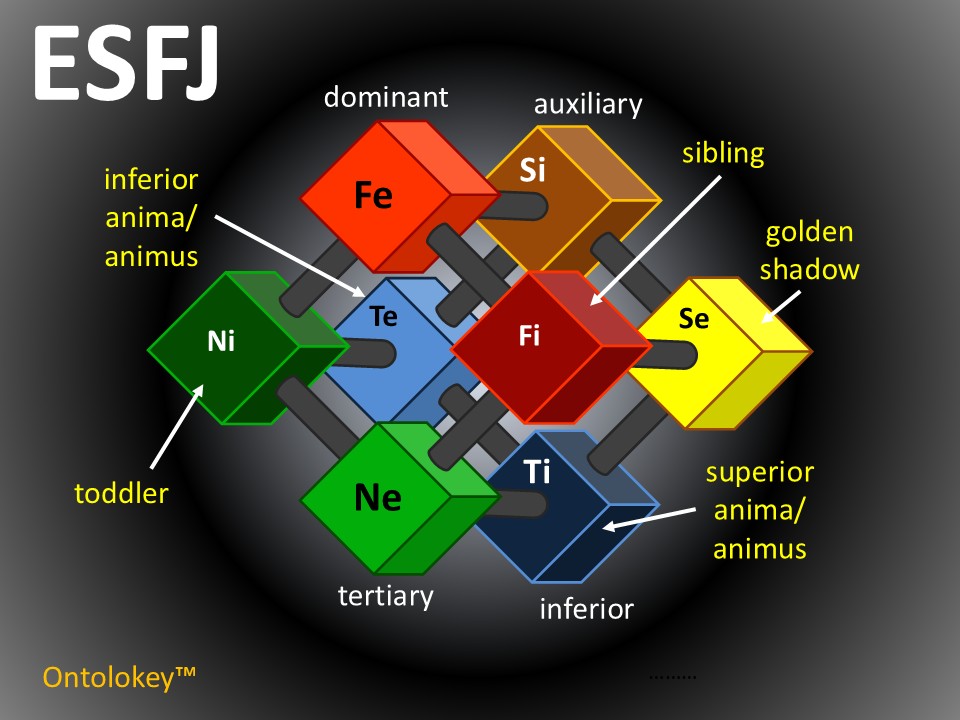
The Beloved Social Self
Few personalities are as universally appreciated as the ESFJ. Throughout history, communities have depended upon people like them to maintain social cohesion, preserve traditions, nurture relationships, and provide the emotional stability upon which collective life depends. Families often rely on them as emotional anchors, organizations value their dedication and reliability, and social groups frequently gravitate toward their warmth, generosity, and willingness to care for others. They are often the individuals who instinctively know when someone feels excluded, who remember important personal details, and who invest remarkable amounts of energy into ensuring that the people around them feel valued and connected.
Because these qualities are so visible and so socially rewarded, most descriptions of the ESFJ focus almost exclusively on their strengths. They are portrayed as compassionate, dependable, sociable, supportive, and deeply committed to the welfare of others. None of these descriptions are incorrect. Yet they only reveal part of the psychological picture. Like every personality structure, the ESFJ develops through a particular adaptation to reality, and every adaptation carries both advantages and hidden costs. The very qualities that make the ESFJ beloved by others can also become the source of profound internal conflicts that remain invisible not only to observers but often to the ESFJ themselves.
The deepest psychological challenges of this personality do not arise because they lack empathy or because they possess malicious intentions. On the contrary, their shadow emerges precisely from the same mechanisms that generate their greatest strengths. The need to create harmony can gradually become stronger than the need to confront reality. The desire to be loved can slowly overshadow the need to be authentic. The ability to understand others can become so dominant that the individual loses contact with their own inner life. What begins as genuine care for people can eventually evolve into a subtle form of self-abandonment.
This process rarely appears dramatic. It does not usually manifest as rebellion, chaos, or obvious dysfunction. In fact, it often unfolds within lives that appear highly successful by conventional standards. The ESFJ may be admired, respected, and appreciated while simultaneously becoming increasingly disconnected from aspects of themselves that cannot be easily integrated into their social role. The danger lies precisely in the fact that society often rewards this adaptation. The more effectively the ESFJ meets expectations, the more praise they receive. The more they sacrifice for others, the more indispensable they become. The more they maintain harmony, the more valuable they appear.
Yet beneath this positive social feedback a deeper psychological question gradually begins to emerge. It is a question many ESFJs spend years avoiding because confronting it threatens the foundations of the identity they have built. That question is deceptively simple: who am I when nobody needs me?
The answer to that question leads directly into the deepest shadow of the ESFJ personality.
The Architecture of the ESFJ Psyche
At the center of the ESFJ personality lies an extraordinary sensitivity to interpersonal reality. While many individuals navigate life primarily through abstract principles, personal ambitions, intellectual frameworks, or internal value systems, the ESFJ tends to orient themselves toward the living network of human relationships surrounding them. They naturally focus on emotional atmospheres, social dynamics, collective needs, and the maintenance of interpersonal stability. Their attention is drawn toward the human dimension of every situation.
This orientation gives rise to many of the qualities for which they are admired. The ESFJ often notices emotional shifts long before others become aware of them. They recognize subtle changes in mood, identify social tensions before they escalate, and possess an intuitive understanding of how to make people feel welcomed and appreciated. Their emotional awareness frequently enables them to act as organizers, facilitators, and stabilizing forces within groups. They are often the people who keep friendships alive, sustain family traditions, and ensure that communities continue functioning cohesively.
The shadow begins to emerge when this interpersonal focus gradually expands beyond healthy boundaries. Over time, many ESFJs begin to experience an unconscious sense of responsibility for the emotional well-being of those around them. They do not merely care about relationships; they begin to feel accountable for them. They do not simply empathize with others’ emotions; they start to experience those emotions as problems that must be managed, resolved, or prevented.
At first glance, this may appear admirable. Society tends to celebrate individuals who take responsibility for others. Yet psychologically, this pattern can become deeply problematic because it places the individual in an impossible position. Human beings are not capable of controlling the emotional lives of other people. They cannot prevent disappointment, eliminate conflict, guarantee happiness, or protect everyone from suffering. Nevertheless, many ESFJs spend enormous amounts of energy attempting to accomplish precisely these goals.
The result is often a form of chronic emotional overextension. The individual becomes accustomed to carrying burdens that do not truly belong to them. They monitor the moods of family members, absorb the frustrations of friends, anticipate the needs of colleagues, and attempt to maintain emotional equilibrium within multiple relationships simultaneously. Because this behavior is socially rewarded, it may continue for decades before the individual recognizes its cost.
Eventually a subtle but important distortion develops. The ESFJ begins to derive their sense of worth from their usefulness to others. Their identity becomes increasingly tied to their role as caretaker, organizer, supporter, or emotional provider. Rather than experiencing these functions as expressions of who they are, they gradually begin to experience them as proof that they deserve love, appreciation, and belonging.
This shift marks the beginning of one of the deepest vulnerabilities within the personality. Once self-worth becomes dependent upon being needed, the individual becomes psychologically trapped. They can no longer easily distinguish between genuine generosity and the unconscious need to secure their place within the social world.
The Addiction to Approval
One of the most misunderstood aspects of the ESFJ personality is the depth of its relationship to social approval. It would be inaccurate to suggest that all ESFJs are people-pleasers in the simplistic sense often portrayed in popular psychology. Many are capable of remarkable determination and strong convictions. Yet beneath these surface differences lies a common psychological dynamic that deserves closer examination.
Human beings naturally seek acceptance from others. Social belonging is a fundamental psychological need. However, for the ESFJ, approval often acquires a significance that extends far beyond ordinary social validation. Because their attention is so strongly directed toward interpersonal realities, positive social feedback becomes deeply intertwined with their emotional sense of security. Approval is not merely pleasant. It becomes reassuring. It confirms that relationships are stable, that social bonds remain intact, and that the individual continues to occupy a valued position within the collective.
The problem arises when approval ceases to be a preference and becomes a necessity. Once this transition occurs, the personality begins unconsciously reorganizing itself around the maintenance of acceptance. The individual becomes increasingly sensitive to signs of rejection, criticism, or disapproval. They monitor interpersonal reactions with extraordinary precision and gradually learn how to adjust their behavior in ways that maximize positive responses.
This adaptation often occurs so naturally that it remains invisible. The ESFJ may genuinely believe they are simply being considerate, cooperative, or kind. In many cases they are. Yet beneath these behaviors there may also exist a less conscious motivation. The avoidance of conflict, the suppression of unpopular opinions, and the tendency to prioritize social comfort over personal truth can all become strategies for preserving emotional security.
The long-term consequence is a gradual erosion of authenticity. The individual becomes highly skilled at understanding what others expect while becoming increasingly uncertain about their own independent perspective. Decisions are filtered through anticipated reactions. Opinions are evaluated according to their social consequences. Emotional expression becomes carefully calibrated to maintain harmony.
What makes this shadow particularly difficult to identify is that it often produces positive outcomes in the short term. Relationships remain stable. Conflicts are minimized. Social interactions proceed smoothly. Yet beneath this surface stability an internal division begins to develop. The authentic self and the socially acceptable self gradually move further apart.
The greater this distance becomes, the more exhausting life often feels. Maintaining approval requires constant adaptation. The individual becomes trapped in an endless cycle of emotional management, attempting to anticipate reactions, prevent tensions, and preserve acceptance. Eventually they may discover that they have become experts at meeting expectations while losing touch with their own desires, convictions, and needs.
This realization can be profoundly unsettling because it reveals a difficult truth. The approval they have spent years pursuing may have come at the cost of developing a stable sense of self independent of that approval.
When Harmony Becomes a Substitute for Truth
Among all the shadow tendencies associated with the ESFJ, perhaps none is more significant than the tendency to elevate harmony above reality. This tendency does not emerge because the individual is dishonest. On the contrary, it often emerges because they genuinely care about people and wish to protect relationships from unnecessary suffering. Nevertheless, good intentions do not eliminate psychological consequences.
The ESFJ is naturally attuned to emotional disturbances within their environment. Conflict, tension, resentment, hostility, and division are often experienced as deeply uncomfortable. Their instinct is usually to reduce these disruptions, restore equilibrium, and re-establish a sense of connection among the people involved. In healthy form, this ability is enormously valuable. Many conflicts can indeed be resolved through empathy, communication, and mutual understanding.
The shadow emerges when harmony itself becomes the highest value. Once this occurs, the individual begins treating conflict as inherently negative regardless of its cause. Disagreement becomes something to eliminate rather than something to understand. Emotional discomfort becomes something to avoid rather than something to learn from.
This orientation creates a subtle but powerful distortion. Truth and harmony do not always align. Sometimes honesty creates tension. Sometimes reality is uncomfortable. Sometimes growth requires confrontation. Sometimes relationships must endure periods of instability before they can become healthier.
The shadow version of the ESFJ struggles with these realities because emotional disruption feels threatening not only to relationships but also to identity itself. If harmony defines psychological safety, then anything that threatens harmony begins to feel dangerous. As a result, difficult conversations may be postponed indefinitely. Uncomfortable truths may remain unspoken. Dysfunctional patterns may be tolerated for years because acknowledging them would disrupt the emotional equilibrium of the group.
Families frequently become trapped within this dynamic. Everyone senses that something is wrong, yet nobody addresses it directly because maintaining peace appears more important than confronting reality. Relationships may continue functioning on the surface while deeper problems remain unresolved. Communities may preserve traditions long after those traditions have ceased to serve their original purpose because questioning them risks social disruption.
The tragedy is that reality does not disappear simply because it is ignored. Suppressed tensions continue to accumulate beneath the surface. Unspoken frustrations gradually transform into resentment. Avoided conflicts evolve into chronic dysfunction. What initially appeared to be harmony slowly reveals itself to be collective avoidance.
The ESFJ often becomes both the guardian and the victim of this process. Their remarkable ability to maintain social stability enables them to postpone confrontations for far longer than most people. Yet the psychological cost of this postponement eventually becomes unavoidable. The truth that was excluded from conscious awareness does not vanish. It simply reappears in more destructive forms.
The deepest lesson confronting the mature ESFJ is therefore both simple and difficult. Genuine harmony cannot be created by avoiding reality. It can only emerge through the willingness to face reality honestly, even when that honesty temporarily disrupts the peace they have worked so hard to preserve.
The Tyranny of Emotional Consensus
One of the least discussed aspects of the ESFJ shadow is the immense social influence this personality can accumulate over time. Because most descriptions focus on warmth, kindness, and generosity, it is easy to overlook the fact that social awareness is also a form of power. In many cases, it is a far more effective form of power than authority, status, or force. People who understand emotional dynamics possess the ability to shape the behavior of others without ever issuing direct commands. They can influence group norms, determine what is considered acceptable, and subtly guide the emotional direction of entire communities.
The ESFJ often develops this influence naturally. Their sensitivity to interpersonal realities allows them to understand how approval and disapproval function within social groups. They know which behaviors strengthen cohesion and which behaviors threaten it. They understand the emotional rewards that encourage conformity and the emotional penalties that discourage deviation. Most of the time this influence is exercised with positive intentions. The ESFJ genuinely wants people to cooperate, support one another, and maintain healthy relationships.
The shadow emerges when social cohesion becomes more important than individual truth. At this point, the individual’s emotional intelligence begins functioning less as a tool for understanding people and more as a mechanism for regulating them. What initially appears as encouragement gradually transforms into pressure. What begins as guidance slowly becomes expectation. The emotional needs of the collective start to outweigh the psychological autonomy of the individual.
This process is rarely conscious. The ESFJ usually does not view themselves as controlling. On the contrary, they often see themselves as protecting harmony, preserving values, or helping people make better decisions. Yet beneath these noble motivations there can exist an unconscious desire to reduce uncertainty by ensuring that everyone remains emotionally aligned with the group’s expectations.
The result is a subtle form of social coercion. Unlike overt domination, it does not rely on threats or force. Instead, it operates through emotional mechanisms. Approval becomes conditional. Warmth is extended toward those who conform and quietly withdrawn from those who do not. Disappointment becomes a tool of influence. Guilt becomes a method of correction. Social belonging becomes linked to behavioral compliance.
The danger of this dynamic is that it often remains invisible to everyone involved. The ESFJ experiences themselves as caring. The group experiences itself as harmonious. Yet beneath the surface, genuine individuality may be slowly suffocated by the need to preserve emotional consensus. People learn which opinions are acceptable, which topics should remain unspoken, and which perspectives are likely to generate subtle forms of social rejection.
Over time, the group begins prioritizing emotional comfort over intellectual honesty. Dissent becomes increasingly difficult. Difference becomes increasingly uncomfortable. Individuals who challenge collective assumptions may be viewed not merely as incorrect but as disruptive. The psychological atmosphere gradually shifts from authentic harmony toward enforced agreement.
This tendency reveals one of the central paradoxes of the ESFJ shadow. A personality that genuinely values people can become surprisingly intolerant of individuality. Not because they dislike others, but because genuine individuality inevitably introduces unpredictability into social systems. Independent thinkers challenge assumptions. Nonconformists disrupt expectations. Authentic people refuse to perform according to established scripts.
To the mature ESFJ, such differences become opportunities for learning. To the shadow ESFJ, they often appear as threats to stability itself.
The deeper psychological issue is not disagreement. The deeper issue is uncertainty. Independent individuals cannot be managed through the ordinary mechanisms of social approval and disapproval. They derive their identity from sources that exist beyond collective validation. Their willingness to tolerate rejection exposes a form of psychological freedom that the shadow secretly envies.
For this reason, the individuals who provoke the strongest reactions in unhealthy ESFJs are often not the cruelest, most selfish, or most harmful people. Instead, they are frequently the people who refuse to organize their lives around social approval. Their very existence challenges one of the deepest assumptions within the shadow: that belonging must always take precedence over authenticity.
The Hidden Manipulator Behind the Caregiver
One of the most uncomfortable truths about psychological development is that every virtue possesses a distorted counterpart. Compassion can become control. Responsibility can become domination. Loyalty can become possessiveness. The qualities themselves are not problematic; the problem arises when they become disconnected from self-awareness.
For the ESFJ, this principle manifests most clearly through the relationship between caregiving and manipulation. Healthy caregiving emerges from genuine concern for another person’s well-being. It respects boundaries, acknowledges autonomy, and allows individuals to make their own choices even when those choices involve risk or discomfort. The caregiver offers support without demanding ownership.
The shadow version operates differently. Although it may still appear caring on the surface, it gradually becomes entangled with unconscious emotional needs. Helping others is no longer simply an expression of generosity. It becomes a method of securing significance, influence, and attachment. The individual begins needing to be needed.
At first this distinction may seem insignificant. After all, the outward behavior often looks identical. The ESFJ continues supporting others, solving problems, offering assistance, and investing emotional energy into relationships. The difference lies beneath the surface. The helping behavior is no longer entirely free. It contains an unspoken expectation that the recipient will respond with appreciation, loyalty, affection, or dependence.
This expectation frequently remains unconscious. The ESFJ may genuinely believe they are acting selflessly. Yet when their efforts go unnoticed, unreciprocated, or unappreciated, powerful feelings of hurt begin to emerge. The intensity of these reactions often reveals that something more than pure generosity was involved from the beginning.
The shadow caregiver frequently struggles to distinguish between supporting another person and managing another person. They may offer advice that was never requested. They may intervene in situations that do not require intervention. They may become uncomfortable when loved ones make independent decisions that contradict their recommendations. In extreme cases, they begin organizing relationships around subtle forms of dependency.
The underlying fear is rarely malicious. It is usually rooted in anxiety about abandonment and irrelevance. If people no longer require their support, what role remains? If loved ones become fully autonomous, where does that leave the caregiver who has built their identity around being indispensable?
These fears often remain hidden beneath layers of good intentions. Yet they exert enormous influence over behavior. The ESFJ may unconsciously create situations in which others continue relying upon them. They may resist changes that increase another person’s independence. They may experience mixed feelings when someone they care about becomes more self-sufficient.
The paradox is that genuine love requires precisely the opposite orientation. True care seeks the flourishing of the other person even when that flourishing reduces dependence. Healthy relationships support autonomy rather than preventing it. They encourage growth rather than attachment through obligation.
For the ESFJ, accepting this reality often requires confronting one of the deepest fears within the shadow: the fear that they may not be lovable unless they are useful.
Martyrdom, Resentment, and Emotional Debt
Among the most destructive manifestations of the ESFJ shadow is the development of what might be called the martyr complex. This pattern emerges when the individual repeatedly sacrifices their own needs in service of others while simultaneously failing to acknowledge the emotional consequences of those sacrifices.
The process usually begins with genuine generosity. The ESFJ notices a need and responds to it. They help because helping feels natural. They support because supporting feels meaningful. Over time, however, a subtle imbalance develops. The individual becomes increasingly accustomed to prioritizing everyone else’s well-being while postponing their own needs indefinitely.
Because this behavior is socially praised, it often continues unchecked for years. Friends appreciate the support. Family members rely on the assistance. Colleagues value the dedication. The ESFJ receives continual reinforcement for self-sacrifice, which makes it difficult to recognize when generosity has crossed the line into self-neglect.
The psychological consequences gradually accumulate beneath the surface. The individual becomes exhausted, overextended, and emotionally depleted. Yet admitting these feelings creates an internal conflict. Their identity is built around being strong, dependable, and supportive. Acknowledging resentment threatens this identity. As a result, negative emotions are often suppressed rather than expressed directly.
Suppressed resentment rarely disappears. Instead, it transforms into more indirect forms of communication. The individual begins keeping an unconscious ledger of sacrifices made, favors provided, and emotional labor performed. Although they may never openly discuss this ledger, they continue updating it internally. Every act of generosity becomes a psychological investment that creates an expectation of future recognition.
This dynamic creates what might be called emotional debt. The ESFJ feels that others owe them appreciation, loyalty, consideration, or reciprocity. Yet because these expectations were rarely communicated directly, the people around them often remain completely unaware that such debts exist.
The inevitable result is disappointment. Others fail to provide the recognition the ESFJ unconsciously expects. They take the support for granted. They continue living their lives without realizing that an invisible account book has been accumulating in the background. The ESFJ then experiences profound feelings of being unappreciated, misunderstood, and taken for granted.
What makes this pattern particularly painful is that both sides often feel confused. The ESFJ cannot understand why others fail to recognize everything they have done. The others cannot understand why the ESFJ suddenly seems resentful after years of apparently voluntary generosity.
In reality, neither side fully understands the psychological dynamic at work. The resentment was not created by the absence of gratitude alone. It was created by the individual’s inability to establish healthy boundaries and communicate their needs honestly.
The mature ESFJ eventually learns a difficult lesson. Generosity that requires hidden repayment is not truly generosity. Self-sacrifice that produces resentment is not genuine compassion. Healthy relationships depend not on endless giving but on the ability to balance care for others with care for oneself.
This realization marks one of the most important turning points in the journey beyond the shadow.
The Fear of Individuality
Beneath many of the behavioral patterns associated with the ESFJ lies a psychological conflict that is rarely discussed openly because it touches one of the deepest existential tensions of human life. Every person must eventually confront the choice between belonging and authenticity. While most individuals experience this tension to some degree, it occupies a particularly central position within the development of the ESFJ.
From an early age, the ESFJ often discovers that connection provides safety. Relationships offer meaning. Communities offer identity. Shared values create stability. The individual learns to navigate life through participation in a larger social structure. Family expectations, cultural norms, traditions, and collective values become deeply intertwined with the formation of selfhood. In many ways, this adaptation serves them extraordinarily well. It provides a sense of purpose and allows them to build strong, enduring bonds with others.
The difficulty arises because genuine psychological development eventually requires separation from collective expectations. There comes a point in every mature life when an individual must decide whether they are willing to disappoint others in order to remain faithful to themselves. They may need to challenge family assumptions, reject inherited beliefs, pursue unconventional goals, or choose paths that others do not understand. These moments are rarely comfortable because they force the individual to confront the possibility that authenticity may come at the price of approval.
For many ESFJs, this possibility feels profoundly threatening. Their psychological foundation has often been built upon connection, reciprocity, and belonging. The thought of creating disappointment within important relationships can trigger intense anxiety. As a result, they may remain loyal to identities they have outgrown, continue participating in systems they no longer believe in, or suppress desires that conflict with social expectations.
The tragedy of this pattern is not that it prevents rebellion. Rebellion, by itself, is not psychological growth. The tragedy is that it prevents individuation. The individual becomes increasingly skilled at performing the version of themselves that others expect while becoming increasingly disconnected from the person they might have become under different circumstances.
This conflict often remains hidden because the ESFJ genuinely values the relationships they are preserving. They are not acting dishonestly in the conventional sense. Their affection for others is real. Their loyalty is real. Their desire to maintain connection is real. Yet beneath these authentic emotions there may exist a quieter reality that receives far less attention. There may be parts of themselves that have never been fully expressed because those parts threatened the stability of the social world they depended upon.
Over time, these neglected aspects of the personality do not simply disappear. They retreat into the unconscious. The individual may begin experiencing vague dissatisfaction, unexplained restlessness, or a persistent sense that something important is missing. They may look at their life and recognize that they have fulfilled countless obligations while remaining strangely uncertain about their own identity.
The deeper shadow emerges when conformity becomes so deeply internalized that the individual no longer recognizes it as conformity. They mistake adaptation for authenticity. They assume that the roles they perform are identical to who they are. At that point, individuality begins to feel dangerous because it threatens the entire structure upon which the personality has been organized.
Psychological growth requires confronting this fear directly. The mature ESFJ eventually discovers that true belonging cannot be achieved through self-erasure. Relationships built upon performance inevitably create loneliness because the person receiving love is not the authentic self but the carefully adapted version designed to secure acceptance. Genuine intimacy only becomes possible when the individual develops the courage to reveal aspects of themselves that may not be universally approved of.
The great developmental challenge of the ESFJ is therefore not learning how to care for others. They already know how to do that. The challenge is learning how to remain themselves while doing so.
The Suppressed Thinking Function and Cognitive Blindness
Every personality possesses areas of natural competence and areas of relative weakness. The shadow often emerges most powerfully not through what a person does well, but through what they unconsciously avoid developing. For the ESFJ, one of the most significant vulnerabilities involves the relationship between emotional certainty and objective analysis.
The ESFJ naturally excels at understanding human realities. They recognize emotional dynamics, social consequences, and interpersonal implications with remarkable speed. Their attention is drawn toward people rather than systems, relationships rather than abstractions, and lived experience rather than detached theory. These tendencies contribute enormously to their strengths. They make the ESFJ practical, socially aware, and deeply attuned to the human dimension of life.
However, every strength produces a corresponding blind spot. Because the ESFJ is so focused on interpersonal realities, they may underestimate the importance of impersonal analysis. Questions of logic, systemic consistency, abstract principles, and objective evaluation can sometimes feel secondary compared to questions of human impact and social harmony. When healthy, this creates balance. When unhealthy, it creates cognitive distortions that become increasingly difficult to recognize.
The central problem is not a lack of intelligence. Many ESFJs are highly intelligent individuals. The issue is that intelligence itself can become selectively employed. Information is often evaluated according to its relationship with existing emotional commitments. Facts that support established beliefs are welcomed. Facts that threaten important relationships, values, or social identities create psychological tension.
This tension frequently produces subtle forms of rationalization. The individual may unconsciously search for evidence that confirms existing assumptions while dismissing evidence that challenges them. They may place excessive trust in familiar authorities, accepted traditions, or collective opinions because these sources provide emotional stability. Alternative perspectives may be viewed with suspicion not because they are logically flawed, but because they disrupt the emotional coherence of the worldview.
The danger becomes particularly pronounced in group settings. Since the ESFJ places significant value on social cohesion, they can become vulnerable to collective forms of thinking. Group consensus may begin functioning as a substitute for independent analysis. If everyone within the social environment agrees about something, disagreement can start to feel not merely incorrect but socially inappropriate.
History repeatedly demonstrates the dangers of this tendency. Entire communities have supported false beliefs, unjust systems, and destructive ideologies while maintaining strong internal harmony. The presence of consensus does not guarantee the presence of truth. In fact, some of the greatest errors in human history were sustained precisely because large numbers of people agreed with one another.
The mature ESFJ gradually learns to tolerate intellectual discomfort. They learn that disagreement is not inherently hostile. They learn that truth sometimes emerges through conflict rather than consensus. Most importantly, they learn to separate emotional certainty from objective reality. A belief may feel comforting and still be wrong. A perspective may feel unsettling and still contain truth.
This realization often represents a major turning point in psychological development because it strengthens the individual’s ability to think independently without abandoning their natural concern for people. The goal is not to become detached or cold. The goal is to develop enough intellectual autonomy to resist the temptation of emotional conformity.
Only then can the ESFJ begin integrating one of the most neglected aspects of their personality: the capacity to pursue truth even when truth threatens comfort.
The Shadow of Social Power
The popular image of the ESFJ often obscures an important reality. Beneath the warmth, friendliness, and interpersonal sensitivity lies a personality capable of exercising considerable social influence. Because this influence rarely appears aggressive, it frequently goes unnoticed both by the individual and by those around them. Yet in many situations, emotional influence can be more powerful than overt authority.
The ESFJ naturally understands how groups function. They recognize the importance of reputation, belonging, and collective approval. They know how social bonds are formed and how they are maintained. This knowledge gives them access to forms of influence that more detached personalities may struggle to comprehend. They understand how encouragement motivates behavior. They understand how exclusion discourages it. They understand the emotional rewards that reinforce conformity and the emotional penalties that suppress deviation.
In healthy individuals, these abilities are used to strengthen communities and foster cooperation. The ESFJ becomes a source of encouragement, support, and social cohesion. Their influence creates environments where people feel valued and connected.
The shadow emerges when influence becomes intertwined with insecurity. The individual begins using social power not merely to support relationships but to regulate them. Emotional approval becomes a mechanism for maintaining control. Warmth becomes conditional. Acceptance becomes dependent upon compliance with implicit expectations.
What makes this dynamic particularly dangerous is its subtlety. Unlike overt domination, it is rarely recognized as a form of control. The ESFJ may believe they are simply encouraging appropriate behavior. Others may experience the interaction as ordinary social pressure. Yet beneath the surface, a more complicated psychological process is unfolding.
The individual becomes invested in preserving a particular emotional order. Certain behaviors are rewarded because they support stability. Certain viewpoints are discouraged because they create tension. Certain individuals are embraced because they reinforce collective norms. Others are marginalized because they challenge them.
Over time, this creates an environment in which authenticity becomes increasingly difficult. People learn which aspects of themselves are socially acceptable and which aspects are likely to provoke disapproval. Instead of expressing their genuine perspectives, they begin adapting to the emotional expectations of the group.
The irony is that the ESFJ often finds themselves trapped within the same system they helped create. Having invested so heavily in maintaining social approval, they become vulnerable to its withdrawal. The very mechanisms they use to influence others can eventually be turned against them. Fear of criticism increases. Fear of rejection intensifies. Fear of social exclusion grows stronger.
Thus, the pursuit of social influence ultimately becomes a source of psychological dependence. The individual gains power within the collective but loses freedom from the collective’s judgments.
The mature ESFJ eventually recognizes that authentic leadership cannot be built upon emotional control. True influence emerges from integrity rather than manipulation. It allows disagreement without punishment. It welcomes individuality without perceiving it as a threat. It creates belonging without demanding conformity.
This realization marks a profound transformation because it shifts the individual from managing people to genuinely understanding them. Instead of seeking emotional order, they begin seeking psychological truth. Instead of protecting consensus, they become capable of tolerating complexity.
And it is precisely within that complexity that genuine maturity begins.
Relationships, Possession, and Emotional Control
Nowhere does the shadow of the ESFJ reveal itself more clearly than in intimate relationships. This is not because the ESFJ is incapable of love. On the contrary, few personalities invest more energy, devotion, and emotional commitment into the people they care about. The problem is that love itself can become entangled with unconscious needs that neither the individual nor their partner fully understands.
The healthy ESFJ approaches relationships with genuine generosity. They want to support, nurture, protect, and contribute to the well-being of those they love. They often derive deep satisfaction from acts of service, emotional attentiveness, and shared experiences. Relationships provide a sense of meaning that extends far beyond personal gratification. They become expressions of identity, purpose, and belonging.
Yet this very depth of investment creates a psychological risk. The more the ESFJ derives their sense of self from relationships, the more threatening independence can become. A partner’s autonomy may unconsciously be interpreted as distance. A loved one’s desire for privacy may feel like rejection. Emotional self-sufficiency may appear as evidence that the relationship is becoming less important.
The shadow does not typically respond to these fears through direct confrontation. Instead, it often attempts to preserve connection through subtle forms of emotional influence. The individual may increase caretaking behaviors, offer unsolicited support, or become increasingly involved in the lives of those they love. These actions are rarely experienced as controlling because they emerge from genuine concern. Yet concern can gradually become possessiveness when it is driven by fear rather than trust.
One of the central illusions within the ESFJ shadow is the belief that love and closeness are essentially the same thing. In reality, the healthiest relationships often require significant psychological distance. Individuals need space to develop their own identities, pursue their own interests, and maintain aspects of themselves that exist independently of the relationship. Mature intimacy depends not upon fusion but upon connection between two separate individuals.
The shadow struggles with this distinction because separation activates deep anxieties. If love no longer requires constant involvement, what guarantees its existence? If another person is free to pursue their own path, what prevents them from leaving? If attachment is not maintained through continuous emotional investment, can it truly be trusted?
These questions often remain unconscious, yet they influence behavior in profound ways. The ESFJ may become overly invested in solving a partner’s problems, anticipating their needs, or organizing their life around the relationship. They may find themselves drawn toward people who require support because dependency creates a sense of security. Conversely, highly independent individuals may provoke both fascination and anxiety because they challenge the assumption that love must be reinforced through constant emotional exchange.
The deepest shadow emerges when affection becomes conditional upon reciprocity. The individual gives, but unconsciously expects equivalent emotional returns. They sacrifice, but secretly hope their sacrifices will be recognized. They invest themselves in the relationship while gradually developing expectations that remain unspoken. Over time, disappointment accumulates. Resentment develops. What began as love becomes intertwined with obligation.
The tragedy is that both individuals often suffer. The partner feels controlled by expectations they never explicitly agreed to. The ESFJ feels unappreciated for sacrifices that seemed self-evident. Neither fully understands that the underlying problem is not a lack of love but a lack of psychological differentiation.
Mature love requires the courage to allow others their freedom. It requires accepting that genuine affection cannot be secured through usefulness, sacrifice, or emotional management. The individual must eventually learn that people cannot be loved into permanence. They can only be loved.
The Collapse of the Persona
One of the most profound psychological crises the ESFJ can experience occurs when the social identity they have spent years constructing begins to break down. This collapse rarely happens suddenly. More often it develops gradually through a series of disappointments, losses, conflicts, or life transitions that expose the limitations of an identity built primarily around external validation.
For much of their life, the ESFJ may function exceptionally well within established social structures. They know how to meet expectations. They know how to fulfill responsibilities. They know how to maintain relationships and preserve stability. These abilities often bring genuine success. The individual becomes respected, appreciated, and valued by others.
Yet beneath this success there may exist a hidden vulnerability. If self-worth depends heavily upon being needed, admired, or socially integrated, then any disruption to these conditions threatens the foundations of identity itself.
A divorce may trigger it.
The departure of children from the family home may trigger it.
Retirement may trigger it.
The loss of a community, relationship, or social role may trigger it.
Sometimes the trigger is not even external. The individual may simply reach a point where the life they have built no longer feels meaningful despite appearing successful from the outside.
When this occurs, a profound psychological confrontation begins. The roles that once provided certainty no longer function as they once did. The caretaker discovers that not everyone wants to be cared for. The organizer discovers that they are no longer indispensable. The emotional provider discovers that others are capable of surviving without them.
At first this realization can feel devastating because it threatens the identity structure that has organized the personality for years. Feelings of emptiness often emerge. Confusion develops. The individual may experience a profound sense of disorientation as they confront questions that were previously avoided through activity and responsibility.
Who am I beyond my roles?
Who am I when nobody requires my support?
Who am I when I stop managing everyone else’s needs?
These questions mark the beginning of genuine psychological transformation.
The collapse of the persona is painful precisely because it exposes aspects of the self that were hidden beneath social performance. The individual begins recognizing how much of their behavior was motivated by fear, how much of their generosity contained unconscious expectations, and how much of their identity depended upon external affirmation.
This realization can initially produce shame. Yet it also creates an opportunity for growth. For perhaps the first time, the individual is forced to confront themselves directly rather than through the mirror of other people’s reactions.
The persona collapses so that a more authentic identity can emerge. What initially appears to be a crisis often becomes the beginning of individuation.
Projection and the War Against Difference
One of the most fascinating features of psychological development is that people often react most strongly against qualities they have not integrated within themselves. The traits that provoke irritation, judgment, or hostility frequently reveal aspects of the personality that remain unconscious.
For the ESFJ, this dynamic often manifests through their relationship with highly individualistic people.
Independent thinkers may appear selfish.
Emotionally detached individuals may appear cold.
People who reject social expectations may appear irresponsible.
Those who prioritize personal authenticity over group harmony may appear disruptive.
While some individuals genuinely possess these flaws, the intensity of the ESFJ’s reaction is often disproportionate to the actual behavior being observed. The reason is that such individuals frequently embody qualities the ESFJ has struggled to develop within themselves.
The fiercely independent person represents freedom from approval.
The unconventional person represents freedom from conformity.
The emotionally autonomous person represents freedom from dependency.
The individual who willingly accepts rejection for the sake of authenticity represents a form of courage the shadow deeply fears.
Projection transforms admiration into criticism because acknowledging admiration would require confronting uncomfortable truths. If the independent individual is not selfish but free, then perhaps the ESFJ’s own dependence on approval is greater than they wish to admit. If the unconventional person is not irresponsible but authentic, then perhaps the ESFJ has sacrificed too much of themselves in order to maintain acceptance.
The shadow avoids these conclusions by transforming psychological tension into moral judgment. Difference becomes deviance. Independence becomes selfishness. Nonconformity becomes immaturity.
Entire communities can become organized around this process. Groups often reward conformity while subtly discouraging individuality. Members learn to suppress aspects of themselves that threaten collective expectations. Over time, the culture becomes increasingly homogeneous, not because everyone genuinely agrees, but because disagreement carries emotional consequences.
The mature ESFJ gradually learns to recognize projection for what it is. They begin asking different questions. Instead of immediately judging people who live differently, they become curious about what those differences reveal. Instead of interpreting independence as rejection, they learn to see it as self-possession. Instead of perceiving authenticity as a threat, they begin recognizing it as a necessary component of psychological health.
This shift dramatically alters their relationship with both themselves and others. What once provoked anxiety becomes a source of insight. What once appeared dangerous becomes a pathway toward growth.
In learning to tolerate difference, they begin learning how to tolerate their own individuality as well.
Individuation: The ESFJ’s Hardest Psychological Task
Every personality possesses a developmental challenge that defines its path toward maturity. For the ESFJ, that challenge is individuation.
Individuation requires the individual to develop an identity that exists independently of external validation. This does not mean abandoning relationships, rejecting community, or becoming emotionally detached. Rather, it means learning to maintain connection without becoming psychologically dependent upon it.
For many ESFJs, this task feels profoundly unnatural because it requires moving directly against deeply ingrained patterns. They must learn to tolerate disapproval without immediately attempting to repair it. They must learn to express unpopular opinions without experiencing overwhelming guilt. They must learn to establish boundaries without interpreting boundaries as selfishness.
Perhaps most importantly, they must learn to distinguish love from usefulness.
This distinction sounds simple, yet it strikes at the heart of the shadow. If love can exist independently of service, then the individual no longer needs to earn affection through constant sacrifice. If worth is intrinsic rather than conditional, then approval loses its power as a source of psychological control.
The individuation process therefore involves reclaiming aspects of the self that were abandoned in pursuit of acceptance. Hidden desires, neglected ambitions, unconventional opinions, creative impulses, intellectual interests, and personal truths gradually return to consciousness. The individual begins constructing an identity based not solely upon relationships but upon a deeper understanding of who they actually are.
This process often feels destabilizing because it challenges long-established assumptions. Relationships may change. Social dynamics may shift. Certain forms of approval may disappear. Yet what is lost in certainty is gained in authenticity.
The mature ESFJ eventually discovers that genuine connection becomes stronger rather than weaker when it is no longer built upon dependency. Relationships become more honest because performance is no longer necessary. Love becomes freer because it is no longer tied to obligation. Care becomes healthier because it emerges from choice rather than fear.
The individual does not become less compassionate. They become more authentic.
And authenticity transforms everything.
Beyond the Need to Be Needed
The deepest shadow of the ESFJ is not manipulation, conformity, dependency, or control. These are merely symptoms of a deeper psychological issue. At the very center of the shadow lies a fundamental fear: the fear that one’s value depends upon being necessary to others.
This fear silently influences countless decisions. It shapes relationships. It shapes identities. It shapes entire lives. The individual becomes accustomed to earning their place through usefulness, emotional labor, reliability, and service. They become indispensable because indispensability feels safe.
Yet safety purchased through necessity is never true security. It remains vulnerable to every change in circumstance. People move away. Relationships end. Communities evolve. Roles disappear. The identity built upon being needed eventually encounters realities it cannot control.
The mature ESFJ gradually comes to understand that worth cannot be earned because worth was never absent to begin with. Their value does not depend upon their usefulness. It does not depend upon the approval of others. It does not depend upon their ability to maintain harmony or solve problems or carry emotional burdens.
This realization is both liberating and terrifying because it removes the psychological structures that once provided certainty. The individual can no longer define themselves solely through service. They must confront themselves directly.
Who am I when I stop performing?
Who am I when I stop adapting?
Who am I when I stop earning love?
These questions lead beyond the shadow.
The answer is not a new role. It is not a new identity. It is not another performance. The answer is the emergence of a self that existed long before approval became necessary and long before belonging became synonymous with survival.
At the highest level of development, the ESFJ retains all of their greatest strengths. They remain caring, generous, socially aware, and deeply invested in human connection. Yet these qualities no longer arise from insecurity. They arise from freedom.
They help because they choose to help.
They love because they choose to love.
They care because they genuinely care.
Nothing is demanded in return.
Nothing must be earned.
Nothing must be proven.
The need to be needed dissolves, and in its place emerges something far rarer: a person capable of profound connection without losing themselves within it.
That achievement represents the true victory over the deepest shadow of the ESFJ. It is not the abandonment of relationships but the discovery that relationships become most meaningful when they are no longer required to answer the question of who we are. Only then does love cease being a strategy for survival and become what it was always meant to be: a free expression of a fully realized self.
The Ultimate Fear: Becoming Unnecessary
At the deepest level of the ESFJ shadow lies a fear that is rarely acknowledged directly because it is woven into the very structure of the personality itself. Many of the behaviors commonly associated with the type—helpfulness, generosity, loyalty, responsibility, attentiveness, and social involvement—are genuine strengths. Yet when these strengths become fused with insecurity, they begin orbiting around a hidden psychological concern that gradually shapes the individual’s entire relationship with themselves and with others.
The fear is not merely rejection. Rejection is painful for almost everyone. Nor is it simply loneliness, although loneliness often accompanies it. The deeper fear is the possibility of becoming psychologically unnecessary. The ESFJ frequently builds identity through contribution. They become the person who organizes, supports, remembers, facilitates, encourages, and maintains. Over time, these functions become so deeply integrated into their sense of self that they no longer appear to be roles. They appear to be the self.
This distinction becomes critically important later in life because roles are inherently unstable. Every role exists within a specific context and depends upon circumstances that can change without warning. Children grow up. Relationships end. Communities evolve. Careers conclude. Social networks shift. Individuals who once depended heavily upon the ESFJ become increasingly independent. What once seemed permanent gradually reveals itself to be temporary.
For a psychologically mature individual, such transitions are painful but manageable because identity extends beyond external functions. For an ESFJ whose self-worth has become heavily invested in being needed, these changes can trigger a profound existential crisis. The individual suddenly discovers that much of what provided certainty, meaning, and direction has begun to disappear. In many cases, the practical challenges are not the most difficult aspect of the experience. The more difficult challenge is confronting the question that emerges in the absence of familiar responsibilities.
Who am I when I am no longer serving a role that defines me?
Many people assume that identity crises arise primarily among highly individualistic personalities. In reality, they often strike communal personalities with equal force. The difference is that the crisis manifests differently. Rather than questioning abstract beliefs or life goals, the ESFJ may find themselves questioning their significance. They may wonder whether they still matter if they are no longer indispensable. They may struggle to separate their intrinsic value from the functions they have performed for decades.
The shadow becomes particularly dangerous when the individual attempts to solve this anxiety by intensifying the very patterns that created it. Rather than developing a stronger internal foundation, they may seek additional responsibilities. Rather than confronting their dependency on external validation, they may become even more invested in maintaining it. They take on new obligations, involve themselves more deeply in other people’s problems, and continue constructing identity around usefulness.
At first glance, this appears admirable. Friends praise their dedication. Family members appreciate their support. Communities benefit from their involvement. Yet the psychological problem remains unresolved because the activity itself has become a defense against self-confrontation. The individual remains trapped within a cycle in which worth must continually be proven rather than simply possessed.
This pattern often explains why some ESFJs struggle profoundly with periods of stillness. When external responsibilities diminish, distractions disappear. The individual is left alone with questions that years of activity may have successfully postponed. Without obligations to organize, crises to manage, or relationships to maintain, they encounter a silence that can feel deeply unsettling. Beneath that silence lies the possibility that they have spent much of their life defining themselves through the needs of others rather than through direct knowledge of who they are.
Psychological growth begins at precisely this point. The individual gradually recognizes that usefulness and worth are not identical. They discover that being loved is not the same as being needed. They learn that relationships become healthier when they are based upon mutual freedom rather than mutual dependency. Most importantly, they begin constructing an identity that can survive the inevitable changes that accompany every human life.
The mature ESFJ eventually realizes that significance cannot be secured through endless service because significance was never absent in the first place. Their value does not arise from the number of people who depend upon them. It does not depend upon their ability to maintain harmony, solve conflicts, or hold communities together. These are expressions of who they are, but they are not the source of who they are.
This realization represents one of the most profound transformations available to the personality. The individual stops seeking proof of their worth through constant contribution and begins relating to others from a position of psychological freedom. They continue helping, caring, and supporting, but these actions no longer function as attempts to secure identity. They become genuine expressions of character rather than strategies for survival.
At this stage, something remarkable occurs. The fear of becoming unnecessary begins to lose its power. The individual discovers that their deepest relationships often become stronger when they stop trying to be indispensable. Love becomes less anxious. Generosity becomes less conditional. Care becomes less possessive. Connection becomes less dependent upon obligation.
The irony is that the very thing the shadow fears most—the loss of necessity—often becomes the doorway to authentic intimacy. Only when the ESFJ no longer needs to be needed can they fully experience relationships as encounters between two free individuals. What emerges is not detachment but a deeper form of connection, one rooted not in dependency but in choice.
And it is precisely at this point that the deepest shadow finally begins to dissolve.
The Existential Vacuum Beneath Social Success
One of the most misunderstood realities of the ESFJ psyche is that external success and internal fulfillment are not necessarily connected. In fact, some of the deepest crises experienced by this personality occur precisely when life appears successful from the outside. The individual may have achieved everything they were taught to value. They may have built a stable family, established meaningful relationships, earned the respect of their community, fulfilled their responsibilities, and become someone upon whom countless others depend. By all conventional measures, their life appears successful.
Yet beneath this success, a quiet emptiness can begin to emerge.
This emptiness is particularly difficult for the ESFJ to understand because it seems irrational. Nothing is obviously wrong. There may be no dramatic failures, no catastrophic losses, and no obvious sources of suffering. On paper, life looks exactly as it should. The individual has fulfilled expectations, honored commitments, and built the kind of life that society consistently rewards. And yet something feels absent.
The source of this emptiness often lies in a painful realization that arrives much later than most people expect. The ESFJ may gradually discover that they spent decades constructing a meaningful life without ever fully constructing a meaningful self. Their identity became deeply intertwined with their social function, their responsibilities, and their relationships. While these things provided purpose, they also created a subtle dependency. Meaning was continually derived from external participation rather than internal self-knowledge.
For years, this arrangement may function adequately. As long as people need them, there is always another task to complete, another relationship to maintain, another responsibility to fulfill. The individual remains in constant motion, and motion creates the impression of purpose. However, purpose and activity are not identical. A person can spend decades moving without ever asking where they are going.
Eventually, circumstances force that question into awareness. Sometimes it happens during midlife. Sometimes it emerges after retirement. Sometimes it appears following the loss of an important relationship or social role. The specific trigger varies, but the underlying experience remains remarkably similar. The structures that once provided meaning begin to loosen, and the individual suddenly finds themselves confronting a part of life that cannot be managed through responsibility alone.
For perhaps the first time, they are confronted not with what others need from them, but with what they need from themselves.
This confrontation can be profoundly unsettling because many ESFJs have spent years developing extraordinary sensitivity toward external realities while neglecting the cultivation of an independent inner world. They know how to care for others. They know how to maintain relationships. They know how to navigate social expectations. Yet they may discover that they know surprisingly little about their own deepest desires, convictions, fears, and aspirations.
The resulting experience often resembles a form of existential disorientation. The individual recognizes that they have fulfilled countless obligations while remaining uncertain about who they might have become had those obligations not dictated the direction of their life. Questions emerge that can no longer be silenced through activity alone. What do I genuinely want? Which aspects of my life reflect my authentic nature and which merely reflect adaptation? How many of my choices were freely made, and how many were guided by the desire to maintain acceptance and belonging?
These questions strike directly at the heart of the ESFJ shadow because they challenge one of its most fundamental assumptions: the belief that a meaningful life can be built entirely around external contribution. The mature individual eventually discovers that contribution, while important, is not enough. A life devoted exclusively to serving others can still feel incomplete if the self doing the serving remains underdeveloped.
This realization often marks the beginning of a second psychological life. The individual starts turning inward in ways they may have avoided for decades. They begin examining assumptions that previously felt unquestionable. They explore interests that were neglected in favor of responsibilities. They develop perspectives that exist independently of collective expectations. Most importantly, they begin cultivating a relationship with themselves that is not mediated through the needs and reactions of other people.
What initially feels like emptiness gradually reveals itself to be something else entirely. It is not a void. It is unexplored territory. The silence that once felt threatening becomes a space in which a more authentic identity can emerge. The absence of constant external demands creates room for reflection, self-discovery, and psychological integration.
The shadow fears this process because it requires relinquishing familiar sources of certainty. Yet without this confrontation, true individuation remains impossible. The individual may continue functioning effectively within society, but they will remain dependent upon external structures to provide a sense of meaning. Only by entering the apparent emptiness can they discover a form of purpose that originates from within.
Paradoxically, it is often at this stage that the ESFJ becomes more effective in relationships rather than less. Because their identity is no longer entirely dependent upon being needed, they are able to relate to others with greater freedom. They become less anxious, less controlling, and less invested in securing validation through service. Their generosity becomes more authentic because it no longer functions as a strategy for maintaining self-worth.
The existential vacuum therefore turns out not to be an endpoint but a threshold. It represents the moment at which externally derived meaning begins giving way to internally grounded identity. What appears at first to be a crisis gradually reveals itself as an invitation—an invitation to discover that there is more to life than fulfilling expectations and more to identity than being useful.
Only by crossing that threshold can the ESFJ fully transcend the deepest shadow that has accompanied them throughout life: the belief that their value depends upon what they provide rather than who they are.
The Dark Side of Loyalty: When Commitment Becomes Self-Betrayal
Loyalty is often regarded as one of the most admirable qualities a person can possess. Entire cultures celebrate it. Families depend upon it. Friendships are strengthened by it. Relationships frequently rise or fall based upon its presence or absence. Few personalities embody loyalty as naturally as the ESFJ. Once they commit themselves to a person, a community, a belief system, or a shared responsibility, they often demonstrate extraordinary endurance. They remain present during difficult periods, continue investing when others withdraw, and frequently carry burdens that many people would abandon long before reaching their limit.
Yet every virtue contains a hidden danger when it becomes disconnected from self-awareness. Loyalty is no exception.
The shadow emerges when loyalty ceases to be a conscious choice and becomes an unquestioned obligation. At that point, the individual no longer evaluates whether a commitment remains healthy, meaningful, or aligned with reality. Instead, the mere existence of the commitment becomes sufficient justification for preserving it. The relationship may have become destructive. The institution may have become dysfunctional. The belief may no longer reflect the truth. Nevertheless, the ESFJ often feels compelled to remain invested because leaving would feel like a betrayal of their own identity.
This tendency is rooted in the personality’s deep connection to continuity. Relationships are not experienced merely as temporary arrangements. They become part of the individual’s psychological structure. Shared histories acquire immense significance. Established bonds create emotional gravity. The longer a connection exists, the more difficult it becomes to question it objectively.
As a result, many ESFJs develop an unconscious bias toward preservation. They instinctively seek ways to repair, maintain, and sustain existing structures rather than evaluating whether those structures deserve to survive. This instinct is often valuable because modern culture frequently encourages premature abandonment. Many relationships fail not because they are unsalvageable but because people are unwilling to endure discomfort. The ESFJ’s commitment can therefore be a source of tremendous strength.
However, the same strength can become a weakness when endurance transforms into self-sacrifice without limits.
The shadow ESFJ often struggles to recognize the difference between perseverance and self-abandonment. They may remain loyal to people who consistently exploit them. They may continue supporting individuals who take their generosity for granted. They may remain emotionally attached to relationships that have long ceased to provide mutual growth or genuine affection. In extreme cases, they become custodians of emotional structures that everyone else has already abandoned.
What makes this pattern particularly tragic is that it is often reinforced by moral reasoning. The individual tells themselves that leaving would be selfish, disloyal, or irresponsible. They interpret their suffering as evidence of virtue. The longer they endure, the more morally justified they feel. Yet morality and psychological health are not always identical. There are situations in which staying becomes more destructive than leaving. There are circumstances in which loyalty serves fear rather than love.
This distinction is crucial because fear frequently disguises itself as commitment. The individual convinces themselves they are preserving a relationship because they care deeply about the other person. While this may be partially true, another motivation often exists beneath the surface. Leaving would require confronting uncertainty. It would require accepting loss. It would require acknowledging that not every bond can be preserved indefinitely. Most importantly, it would require accepting that identity cannot be built entirely upon maintaining connections.
The mature ESFJ eventually learns that loyalty is meaningful only when it remains voluntary. The moment loyalty becomes a prison, it ceases to be a virtue and becomes a form of self-neglect. Healthy commitment requires discernment. It requires recognizing when a relationship deserves additional investment and when continued investment merely postpones an unavoidable ending.
One of the most painful lessons of maturity is realizing that not everything can be saved. Some relationships exist for a season rather than a lifetime. Some communities evolve beyond recognition. Some commitments fulfill their purpose and naturally come to an end. The shadow resists this reality because endings feel like failures. Yet endings are often simply expressions of change.
Psychological growth requires the courage to release what no longer belongs in one’s life. For the ESFJ, this can feel like a profound violation of their deepest instincts. Yet it is often precisely this willingness to let go that creates the possibility of genuine renewal.
Only when loyalty is balanced by wisdom does it become what it was always meant to be: a conscious expression of love rather than an unconscious fear of loss.


Leave a Reply