A Note to the Reader
This essay was written in the spirit of psychological honesty rather than comfort. Its purpose is not to flatter, condemn, shame, or pathologize anyone, but to illuminate unconscious patterns that often remain hidden beneath the surface of personality. Some readers may find certain observations uncomfortable, confronting, or even unsettling, particularly when they recognize aspects of themselves within these pages.
Those who are unwilling to engage with candid self-examination or who are seeking reassurance rather than insight may find this material difficult to read. The analyses presented here are intended solely for self-reflection and personal growth. They should never be used as weapons against others, as tools for judgment, manipulation, or psychological labeling. The shadow exists within every human being, and genuine understanding requires humility, maturity, and the willingness to confront uncomfortable truths with compassion rather than hostility.
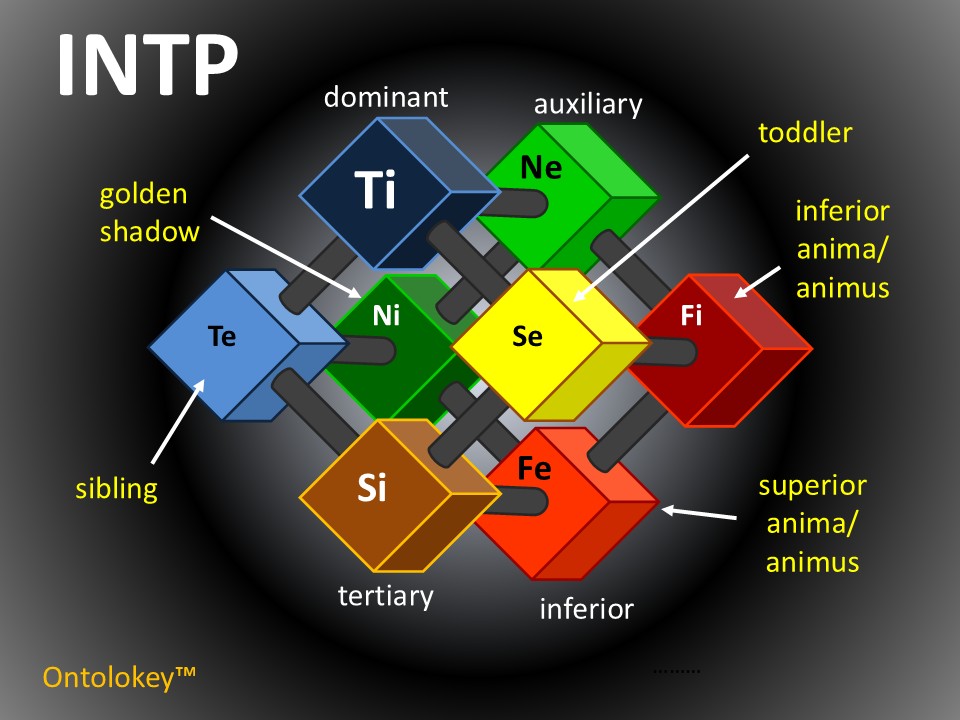
The Architecture of the Inner Citadel
Among all psychological structures, there are few that appear as self-contained, intellectually autonomous, and inwardly complex as the INTP. To the casual observer, this personality often seems defined by intelligence, abstraction, creativity, and an unusual degree of independence from collective opinion. Many descriptions stop there. They celebrate analytical brilliance, conceptual depth, and intellectual originality as though these qualities exist in isolation from the darker realities that accompany them. Yet every psychological strength casts a shadow proportional to its intensity. The deeper a personality’s gifts penetrate into the hidden architecture of the mind, the more profound the distortions become when those gifts lose contact with reality, embodiment, emotion, and human relatedness. To understand the deepest shadow side of the INTP, one must move beyond simplistic notions of introversion or intellectuality and examine the fundamental psychological dilemma at the center of this type: the tendency to trust internal models of reality more deeply than reality itself.
The INTP does not merely think. Thinking is not simply an activity for this personality; it becomes an environment. Other people live primarily among objects, relationships, obligations, institutions, and practical concerns. The INTP often lives among conceptual structures. Ideas are not tools used to navigate reality. They become realities in their own right. The individual gradually constructs an intricate internal universe governed by principles, logical relations, abstractions, and theoretical frameworks. Within this universe, coherence becomes the highest value. Truth is pursued not because it provides comfort, social approval, or material success, but because intellectual contradiction produces a kind of psychological discomfort that cannot easily be tolerated. The result is often a remarkable capacity for independent thought. However, the same mechanism that creates intellectual depth can also create psychological isolation. The more compelling the inner world becomes, the easier it is for the external world to appear crude, superficial, irrational, and disappointing by comparison.
This is where the shadow begins to emerge. The central danger is not intellectual arrogance in the ordinary sense. In fact, many INTPs are outwardly modest and may even struggle with self-doubt. The shadow appears in a subtler form. It manifests as an unconscious conviction that reality must ultimately conform to the logic of one’s internal understanding. Whenever reality behaves differently, the individual experiences a deep tension. Rather than immediately revising the internal model, there is often a temptation to assume that reality itself is misunderstood by others. Over time, this creates a widening gap between theoretical certainty and lived experience. The person may become increasingly sophisticated in explaining life while simultaneously becoming less capable of participating in it. The intellect grows stronger, but the personality becomes weaker. Knowledge accumulates while adaptation declines.
The tragedy is that this process often unfolds invisibly. Unlike personalities whose shadow erupts dramatically through impulsive behavior or emotional excess, the INTP’s shadow develops in silence. It hides behind books, theories, projects, intellectual pursuits, and endless analysis. The individual may appear productive and thoughtful while a subtle psychological withdrawal is taking place beneath the surface. Relationships become secondary to ideas. Experience becomes secondary to interpretation. Action becomes secondary to preparation. The person begins to exist one step removed from life itself. Instead of directly encountering reality, reality is filtered through increasingly elaborate conceptual frameworks. This creates the illusion of mastery while simultaneously reducing genuine contact with existence.
One of the most misunderstood aspects of the INTP psyche is the relationship between intelligence and anxiety. Popular descriptions often portray this type as emotionally detached, but detachment and fear are not the same thing. Beneath the calm analytical surface there frequently exists a profound anxiety regarding uncertainty, responsibility, and irreversible consequences. The mind continuously generates hypothetical futures, alternative outcomes, potential dangers, and hidden variables. Because the INTP naturally perceives complexity, simple decisions rarely appear simple. Every choice opens a network of possibilities. Every action eliminates countless alternatives. Every commitment closes doors that cannot easily be reopened. As a result, the individual may become trapped in a perpetual state of cognitive anticipation. Life is not experienced as a sequence of actions but as an endless landscape of possibilities requiring further analysis before movement can occur.
This dynamic creates one of the most painful paradoxes in the INTP personality. The very mind that seeks freedom becomes a prison. Most people imagine freedom as the absence of limitations. For the INTP, freedom often becomes the preservation of possibilities. Yet possibilities preserved indefinitely eventually become unrealized potential. The individual avoids committing to a career because other careers remain conceivable. A relationship remains undefined because alternative futures cannot be excluded. Creative projects remain unfinished because perfection remains theoretically attainable. Years pass while psychological energy is invested not in living but in maintaining optionality. What appears from the outside as independence may gradually transform into paralysis.
The shadow deepens further when disappointment accumulates. The INTP frequently enters life with a hidden expectation that truth, intelligence, and rationality possess transformative power. There is often an implicit belief that if something can be understood clearly enough, it can be improved. Reality, however, rarely rewards intelligence as consistently as the intellect expects. Institutions remain irrational. Organizations reward politics over competence. Relationships are influenced by emotions more than logic. Public discourse often favors simplicity over accuracy. The mature personality eventually integrates these realities. The shadowed INTP, however, may respond differently. Instead of adapting to reality, the individual withdraws from it. Cynicism emerges as a defense against disappointment. Intellectual superiority becomes a shield protecting the wounded idealist hidden underneath.
What outsiders perceive as coldness is often the residue of repeated disillusionment. The INTP does not necessarily withdraw because people are uninteresting. More often, withdrawal occurs because people are painfully unpredictable. Human beings refuse to behave according to logical principles. They contradict themselves. They act against their own interests. They allow emotions to override reason. To a mind seeking consistency, such behavior can appear exhausting. Gradually, solitude begins to feel safer than intimacy. Ideas become safer than relationships. Systems become safer than emotions. Yet every retreat from emotional reality increases psychological starvation. The person may possess extraordinary intellectual nourishment while suffering from severe emotional malnutrition.
The deepest irony is that the INTP often longs for connection more intensely than observers realize. Beneath the detached exterior there frequently exists a profound desire to be understood. Not admired. Not celebrated. Understood. These are not the same thing. Admiration can be achieved through competence. Understanding requires psychological intimacy. Unfortunately, the very defenses developed to protect the inner world often prevent others from entering it. The individual conceals vulnerability behind abstraction, uncertainty behind intellectualization, and emotional need behind self-sufficiency. Consequently, loneliness becomes self-reinforcing. The person feels unseen while simultaneously hiding the very parts that need to be seen.
As adulthood progresses, two paths gradually emerge. On one path, the individual learns to reconnect thought with life. Logic becomes a servant rather than a ruler. Intellectual depth is integrated with emotional maturity. The person accepts imperfection, embraces action despite uncertainty, and develops the courage to participate in reality rather than merely analyze it. On the other path, the shadow consolidates itself. Isolation increases. Bitterness replaces curiosity. Analysis replaces experience. The internal world becomes more elaborate while the external life becomes increasingly narrow. Eventually, the personality risks becoming trapped inside its own brilliance, surrounded by theories that explain everything except why fulfillment remains absent.
The deepest shadow side of the INTP therefore cannot be reduced to introversion, indecision, or social awkwardness. At its core lies a more profound existential problem. It is the temptation to substitute understanding for living. It is the gradual elevation of conceptual reality above embodied reality. It is the belief that if one thinks deeply enough, one can avoid the vulnerability that accompanies participation in life. Yet life refuses such bargains. No amount of analysis can eliminate uncertainty. No theory can replace love. No intellectual framework can remove the necessity of action. The shadow emerges precisely when the individual attempts to use the mind as a refuge from existence itself. The path toward wholeness begins when the INTP discovers that truth is not found solely in thought. It is also found in risk, relationship, limitation, disappointment, responsibility, and direct engagement with reality. Only then does the inner citadel cease to be a prison and become what it was always meant to be: a place of reflection that remains connected to the living world beyond its walls.
The Tyranny of Endless Analysis
If the first shadow of the INTP emerges through withdrawal into an internal world of ideas, the second emerges through a far more subtle mechanism: the transformation of thought from a tool of understanding into an instrument of avoidance. This distinction is psychologically crucial. Healthy analysis clarifies reality and facilitates action. Pathological analysis delays action indefinitely. From the outside, these two processes often look identical because both involve reflection, contemplation, and intellectual engagement. Yet their psychological functions are entirely different. In one case, thought serves life. In the other, life becomes subordinate to thought. The shadow begins precisely at the moment when the mind discovers that analysis can be used not merely to understand uncertainty but to postpone confronting it.
Few personalities are as vulnerable to this trap as the INTP. The reason lies in the extraordinary sophistication of the analytical apparatus itself. Most people encounter uncertainty and eventually act despite incomplete information. The INTP encounters uncertainty and immediately perceives additional variables. Where others see a decision, the INTP often sees a network of interconnected systems. Where others recognize a problem, the INTP identifies hidden assumptions, unexamined premises, and alternative interpretations. This capacity is one of the great strengths of the personality. It enables intellectual breakthroughs, original discoveries, and unconventional solutions. Yet every strength possesses an inverse expression. The same ability that reveals complexity can eventually become incapable of moving through complexity. The individual begins to experience action as intellectually premature because there is always another factor to consider.
The deeper psychological issue is not perfectionism in the conventional sense. The INTP often cares less about flawless execution than many achievement-oriented personalities. What matters more is epistemological certainty. The individual seeks confidence that the chosen course of action rests upon a sufficiently accurate understanding of reality. Unfortunately, reality rarely provides such certainty. Human existence unfolds under conditions of incomplete information. Decisions must often be made before all variables are known. Relationships develop before compatibility can be fully verified. Careers evolve before outcomes become predictable. The shadowed INTP struggles to tolerate this condition because uncertainty activates an intense internal tension. The result is a persistent search for additional information, further refinement, deeper understanding, and more comprehensive models. Yet the pursuit of certainty never reaches completion because certainty itself is largely unattainable.
At first, this pattern appears rational. It seems prudent to think carefully before acting. It seems intelligent to anticipate consequences. It seems responsible to avoid impulsive choices. Indeed, these behaviors are often rewarded academically and intellectually. The problem arises when analysis ceases to reduce uncertainty and instead becomes a ritual for managing anxiety. At that point, thinking no longer serves knowledge. It serves emotional regulation. The individual continues analyzing not because additional insight is necessary but because action feels psychologically threatening. Thought becomes a protective barrier between the self and reality. As long as the problem remains under examination, no irreversible consequences can occur. No failure can happen. No rejection can be experienced. No disappointment can become real. The mind discovers that postponement creates temporary safety, and thus postponement becomes habitual.
This tendency frequently manifests in the domain of identity. Many INTPs spend years attempting to determine who they truly are before fully committing to a direction in life. They seek the perfect intellectual framework that will reveal their authentic vocation, ideal relationship structure, ultimate worldview, or deepest purpose. Yet identity does not emerge exclusively through reflection. Identity emerges through participation. Human beings discover themselves not only by thinking about life but by living it. The shadowed INTP often reverses this sequence. Instead of acting in order to learn, the individual attempts to learn enough to act perfectly. Since perfect knowledge never arrives, development becomes suspended. Decades can pass while enormous psychological energy is invested in understanding the self without the corresponding experiences necessary to transform that understanding into reality.
The consequences become particularly visible in creative pursuits. The INTP frequently possesses remarkable creative potential because of the ability to perceive hidden patterns and generate original conceptual combinations. However, creative work requires confrontation with imperfection. Every finished project represents a compromise between vision and reality. Every book, invention, theory, artwork, or business must eventually leave the protected realm of possibility and enter the world of limitation. This transition is psychologically difficult because reality inevitably falls short of imagination. The imagined project remains infinitely flexible and flawless. The real project acquires flaws, constraints, criticism, and practical complications. Consequently, many INTPs become collectors of unrealized brilliance. Their minds contain libraries of unwritten books, unfinished theories, abandoned inventions, and dormant ambitions. The tragedy is not lack of ability. The tragedy is the inability to tolerate the imperfections inherent in manifestation.
Beneath this pattern lies a profound fear rarely acknowledged openly. It is the fear of discovering the limits of one’s own potential. As long as an ability remains untested, it remains theoretically unlimited. The unpublished writer may still imagine literary greatness. The aspiring entrepreneur may still envision revolutionary success. The uncommitted scholar may still believe in intellectual mastery. Action forces confrontation with reality. Reality reveals strengths, but it also reveals weaknesses. The shadowed INTP often remains unconsciously attached to unrealized potential because unrealized potential preserves hope. The possibility of greatness can feel safer than the reality of imperfection. Thus the individual may protect an idealized self-image at the cost of actual development.
This dynamic creates an especially painful relationship with time. In youth, endless analysis appears harmless because the future seems expansive. There is always another opportunity, another path, another possibility waiting beyond the horizon. Yet time introduces a reality that no amount of intellectual sophistication can overcome. Every decision postponed eventually becomes a decision made through inaction. Every opportunity delayed eventually changes form or disappears. The shadowed INTP often experiences a growing awareness of this fact in adulthood. Suddenly the preserved possibilities that once felt liberating begin to resemble lost opportunities. The freedom that was protected so carefully reveals itself as a form of confinement. Regret emerges not because the individual chose incorrectly but because so many choices were never fully made.
The psychological burden of this realization can become immense. Unlike personalities who regret impulsive actions, the INTP often regrets unlived lives. The mind continually reconstructs alternative timelines. What if that relationship had been pursued? What if that project had been completed? What if that opportunity had been accepted? What if that risk had been taken? Because imagination remains highly active, these hypothetical realities retain emotional power long after the moment itself has passed. The individual may become haunted not by concrete failures but by unrealized futures. This form of regret is particularly corrosive because it lacks closure. An actual failure can be processed, understood, and integrated. An unlived possibility remains eternally unfinished.
Over time, endless analysis often generates another shadow phenomenon: intellectual exhaustion. Many assume that thinking-oriented personalities possess unlimited cognitive energy. The opposite is frequently true. The mind consumes extraordinary resources maintaining thousands of unresolved possibilities simultaneously. Every unanswered question remains psychologically active. Every decision deferred continues generating cognitive tension. The individual becomes mentally crowded. Thought loses its original vitality and gradually acquires a repetitive quality. Instead of discovering new insights, the mind circles familiar territory. Old questions are revisited. Old doubts are reconsidered. Old scenarios are reconstructed. What once felt like exploration begins to resemble imprisonment.
The irony is that reality itself often resolves problems more efficiently than analysis ever could. Human beings learn through feedback. Action generates information unavailable through contemplation alone. A relationship reveals its nature only when entered. A career reveals its suitability only when pursued. A creative project reveals its strengths and weaknesses only when completed. The shadowed INTP frequently attempts to acquire this knowledge theoretically before acting. Yet certain forms of wisdom exist only on the far side of experience. They cannot be accessed through abstraction. They require participation. They require vulnerability. They require exposure to uncertainty.
The deepest lesson confronting the INTP is therefore profoundly paradoxical. The individual who values understanding above all else must eventually recognize the limitations of understanding itself. There comes a point where additional analysis produces diminishing returns and increasing paralysis. At that threshold, courage becomes more important than intelligence. Not because intelligence loses value, but because intelligence alone cannot carry a person across the gap between possibility and reality. The bridge must ultimately be crossed through action.
The shadow of endless analysis reaches its maximum intensity when the individual unconsciously equates certainty with safety. In reality, no human being achieves absolute certainty. Life unfolds through approximation, adaptation, and continual revision. The healthiest expression of the INTP learns to embrace this condition rather than resist it. Thought remains deep, rigorous, and sophisticated, but it no longer functions as a refuge from existence. Analysis becomes preparation for engagement rather than a substitute for it. The individual discovers that action does not require certainty. It requires sufficient clarity combined with the willingness to learn from consequences. At that moment, the mind ceases to be a maze without exits. It becomes what it was always capable of being: a powerful instrument for navigating reality rather than escaping from it.
Anxiety, Catastrophic Imagination, and the Hidden Fear Structure of the INTP
One of the greatest misconceptions surrounding the INTP personality is the belief that intellectual detachment implies emotional immunity. Because this personality often appears calm, analytical, and self-controlled, observers frequently assume that emotional turbulence plays only a minor role in its inner life. In reality, the opposite is often true. The emotional life of the INTP tends not to disappear; it becomes internalized, intellectualized, and hidden beneath layers of analysis. What remains invisible to others can become overwhelmingly powerful within the private world of the individual. Beneath the apparent rationality there often exists a persistent undercurrent of anxiety, uncertainty, and anticipatory fear. This fear rarely expresses itself dramatically. It does not usually erupt through emotional outbursts or overt panic. Instead, it infiltrates the cognitive system itself, disguising itself as caution, reflection, thoroughness, or intellectual rigor. The result is a personality that often appears highly rational while secretly being driven by concerns that are deeply emotional in origin.
The roots of this anxiety frequently emerge from the same psychological mechanism that gives the INTP extraordinary intellectual depth. The mind naturally seeks patterns, connections, possibilities, and hidden implications. Every event becomes linked to larger systems. Every action generates consequences. Every consequence produces further consequences. This capacity allows the individual to understand complexity at levels that many others never reach. Yet complexity has a darker side. A mind capable of imagining multiple futures is also capable of imagining multiple disasters. The same imagination that generates innovation can generate catastrophe. The same intellect that predicts opportunities can predict failure. Consequently, anxiety within the INTP personality rarely centers on immediate dangers. Instead, it focuses on hypothetical futures, unseen variables, and potential outcomes that may never occur. The individual becomes psychologically affected not by what is happening but by what could happen.
This distinction is profoundly important. Most fears arise from concrete threats. The INTP often suffers from abstract threats. An immediate danger can be confronted directly. A hypothetical danger cannot. It exists in a realm of possibility where evidence remains incomplete and certainty remains unattainable. Because the mind continually generates alternatives, reassurance becomes difficult. Every answer creates new questions. Every solution reveals new complications. Every attempt to establish certainty uncovers additional unknowns. Thus anxiety develops a self-sustaining structure. The individual does not merely fear specific events. The individual fears the existence of uncertainty itself. Since uncertainty can never be eliminated from life, the mind becomes trapped in a perpetual search for security that reality cannot provide.
The psychological experience resembles standing before an endless series of unopened doors. Behind each door may exist opportunity, danger, disappointment, success, humiliation, fulfillment, or loss. Most people eventually choose a door and proceed. The INTP often feels compelled to analyze what might exist behind every door simultaneously. The imagination begins constructing elaborate scenarios. Best-case outcomes are considered. Worst-case outcomes are examined. Alternative interpretations are explored. Secondary consequences are projected. Eventually the number of possibilities becomes overwhelming. What began as intelligence gradually transforms into cognitive overload. The individual becomes paralyzed not because of ignorance but because of excessive awareness.
This process frequently creates a phenomenon that can be described as catastrophic imagination. The term does not imply irrationality. On the contrary, many of the imagined dangers are technically possible. The difficulty lies elsewhere. The INTP often assigns psychological significance to possibilities regardless of probability. Since the mind naturally recognizes rare outcomes, those outcomes remain cognitively present even when they are statistically unlikely. A relationship may fail. A career move may prove disastrous. A business venture may collapse. A health problem may emerge unexpectedly. A loved one may suffer misfortune. None of these outcomes are impossible. Yet the mind’s capacity to generate them does not necessarily reflect their likelihood. The shadow emerges when possibility begins to carry the same emotional weight as reality.
Over time, this tendency can produce a persistent state of anticipatory tension. The individual becomes vigilant toward future threats, continuously scanning reality for signs of emerging problems. Unfortunately, this vigilance often goes unnoticed because it hides behind apparently rational behavior. Excessive research is interpreted as thoroughness. Endless preparation appears responsible. Reluctance to commit seems prudent. Skepticism appears intelligent. While each of these qualities possesses legitimate value, they can also function as defenses against uncertainty. The individual may spend countless hours gathering information not because the information is necessary but because the act of gathering information temporarily reduces anxiety. Yet relief remains temporary because new uncertainties inevitably appear. The cycle therefore repeats indefinitely.
One of the most painful expressions of this dynamic appears in relationships. Contrary to popular stereotypes, many INTPs form extremely deep emotional attachments. The difference is that these attachments often remain concealed beneath a restrained exterior. Once emotional investment develops, the imagination immediately begins generating potential threats to the bond. Misunderstandings, abandonment, incompatibility, betrayal, emotional distance, future conflicts, and countless other scenarios become subjects of unconscious analysis. The individual may therefore experience significant anxiety even within stable relationships. Ironically, the very capacity that creates emotional depth also creates emotional vulnerability. Because the attachment is profound, the possibility of loss acquires enormous psychological weight.
The shadow becomes even darker when anxiety merges with self-analysis. Few personalities examine themselves as relentlessly as the INTP. Self-reflection can be extraordinarily valuable, but it can also become pathological when directed by fear. Instead of promoting growth, introspection becomes an endless investigation into perceived inadequacies. The individual examines motives, emotions, thoughts, decisions, and behaviors with microscopic intensity. Every mistake is analyzed. Every social interaction is reviewed. Every emotional reaction becomes a subject of scrutiny. The mind turns inward not to understand itself but to protect itself from future failure. Yet perfection remains unattainable, and therefore the investigation never reaches a conclusion.
This creates a hidden psychological exhaustion that outsiders rarely perceive. Because the INTP often appears composed, few recognize the immense amount of mental energy devoted to managing uncertainty. The individual may look relaxed while internally processing dozens of unresolved concerns. Conversations continue while parallel streams of analysis evaluate potential implications. Plans are made while hidden doubts remain active beneath the surface. Life becomes cognitively crowded. The mind seldom experiences genuine rest because it remains occupied with simulations of possible futures. Over months and years, this constant mental activity can generate a subtle but profound fatigue. The person becomes tired not from physical exertion but from carrying an entire universe of hypothetical realities within consciousness.
An especially destructive consequence emerges when anxiety begins influencing worldview itself. The INTP generally values truth and objectivity. However, chronic fear gradually distorts perception. The mind becomes disproportionately attentive to problems, contradictions, risks, and failures. Optimism begins to appear naïve. Hope appears intellectually irresponsible. Trust seems dangerous. What initially presents itself as realism slowly evolves into pessimism. The individual may even take pride in this perspective, believing it represents superior objectivity. Yet true objectivity includes both dangers and possibilities. When fear dominates cognition, reality becomes selectively filtered through the lens of potential threat. The result is not greater realism but a subtle form of distortion.
The deepest layer of this anxiety often concerns control. At the core of the shadowed INTP lies a painful recognition: reality cannot be fully predicted. Human beings cannot eliminate uncertainty regardless of how intelligently they think. Illness, loss, change, aging, rejection, failure, and death remain permanent features of existence. The intellect can understand these realities, but understanding does not remove them. Here the personality encounters a fundamental existential dilemma. The mind seeks mastery through knowledge, yet life remains partially uncontrollable. The greater the desire for certainty, the more threatening reality becomes. Anxiety intensifies because reality continually demonstrates the limits of intellectual control.
Many INTPs spend years unconsciously fighting this truth. They attempt to construct increasingly sophisticated models capable of reducing uncertainty to manageable levels. Yet every model eventually encounters the unpredictability of life itself. Relationships refuse to follow formulas. Human beings remain contradictory. Circumstances change unexpectedly. Events emerge that no theory anticipated. Eventually the individual must confront a painful but liberating realization: uncertainty is not a problem to solve. It is a condition of existence.
This realization marks a profound turning point in psychological development. The mature INTP does not overcome anxiety by acquiring perfect knowledge. Such knowledge does not exist. Instead, growth occurs through developing a different relationship with uncertainty itself. The individual learns that courage is not the absence of fear but the willingness to act despite incomplete information. Trust becomes possible not because outcomes are guaranteed but because uncertainty is accepted. Decisions become easier not because all variables are known but because perfection is no longer demanded. Life becomes more expansive because the imagination ceases to function primarily as a generator of threats and begins functioning once again as a source of creativity and possibility.
The deepest shadow of the INTP is therefore not ignorance but over-awareness. It is the burden of seeing too many possibilities at once. It is the tendency to inhabit future catastrophes before they exist. It is the unconscious belief that enough thinking can eventually eliminate uncertainty. Yet genuine psychological freedom emerges only when the individual discovers that uncertainty is not the enemy. It is the environment within which every meaningful human life unfolds. The moment this truth is accepted, anxiety loses much of its hidden authority. The mind no longer serves fear. It becomes available once more for curiosity, discovery, creation, and genuine participation in reality.
Emotional Repression, Hidden Vulnerability, and the INTP’s Fear of Human Dependency
Among the many misconceptions that surround the INTP personality, perhaps none is more persistent than the belief that emotional distance reflects emotional absence. Because the INTP often appears composed, reserved, intellectually oriented, and difficult to read, others frequently conclude that emotions occupy only a secondary position in the inner life. In reality, emotional intensity and emotional visibility are not the same phenomenon. Some personalities externalize their feelings immediately and unmistakably. Others internalize them so thoroughly that even they lose conscious access to their own emotional depths. The INTP belongs overwhelmingly to the latter category. The shadow therefore does not arise because emotions are weak. It arises because emotions become hidden behind intellectual processes that gradually assume responsibility for functions they were never designed to perform. Thought begins to regulate pain. Analysis begins to contain longing. Abstraction begins to manage vulnerability. The individual learns to understand emotions rather than experience them, and this distinction becomes one of the central tragedies of the personality.
The origins of this pattern often begin surprisingly early in life. Many INTPs discover long before adulthood that their intellectual abilities provide a unique form of psychological safety. Logic is predictable. Systems are coherent. Ideas can be examined without the risks associated with human intimacy. Emotional reality, by contrast, appears unstable and difficult to control. Human beings are inconsistent. Relationships contain ambiguity. Affection can be withdrawn. Trust can be broken. Emotional investment creates exposure. Whether through personal experience, temperament, family dynamics, or simple observation, the individual gradually learns that intellectual competence offers protection from vulnerabilities that feel far more threatening. Consequently, the mind develops into both a sanctuary and a fortress. What begins as a healthy appreciation for reason slowly evolves into a subtle distrust of emotional dependence.
This distrust is rarely conscious. The INTP does not typically think, “I must avoid emotional intimacy.” Instead, the personality develops a series of sophisticated psychological adaptations that reduce exposure to emotional risk. Feelings become subjects for analysis rather than experiences for direct engagement. Emotional conflicts are reframed as conceptual problems. Personal wounds are interpreted through theoretical frameworks. Disappointment becomes philosophy. Loneliness becomes independence. Fear becomes skepticism. The remarkable intelligence of the personality enables these transformations so effectively that the individual may genuinely believe emotional needs have been transcended. Yet psychological needs do not disappear because they are intellectualized. They merely retreat into deeper layers of the psyche where they continue influencing behavior indirectly.
One of the most significant consequences of this process is the emergence of hidden vulnerability. The INTP often appears less emotionally affected by events than is actually the case. Criticism that seems to bounce harmlessly off the surface may continue reverberating internally for months or years. Rejection that appears to be dismissed intellectually may create profound private suffering. Betrayal that receives little outward reaction may permanently alter the individual’s capacity for trust. Because emotional reactions are frequently processed internally rather than expressed externally, observers underestimate their intensity. Over time, the individual may even begin underestimating them as well. Emotional pain becomes difficult to recognize because it rarely arrives in a form that resembles conventional emotionality. Instead, it appears as withdrawal, cynicism, obsessive analysis, exhaustion, detachment, or increasing immersion in intellectual pursuits.
The shadow becomes particularly powerful when vulnerability intersects with self-sufficiency. Most INTPs take considerable pride in their independence. They prefer forming conclusions through personal investigation rather than relying on social consensus. They value autonomy of thought. They resist unnecessary dependence upon external authority. These qualities often contribute to genuine psychological strength. However, independence possesses a shadow form just as surely as dependence does. At its healthiest, independence allows a person to stand firmly within their own identity while remaining connected to others. In its shadow expression, independence becomes emotional isolation disguised as self-sufficiency. The individual begins to experience reliance upon others as a threat rather than a natural aspect of human existence.
The fear underlying this pattern is rarely fear of people themselves. More often it is fear of needing people. There is an enormous psychological difference between these two experiences. Needing another person creates vulnerability because it introduces the possibility of loss. The more valuable the relationship becomes, the greater the potential pain associated with its disruption. The INTP often perceives this reality with unusual clarity. As attachment deepens, awareness of potential loss deepens alongside it. The individual may therefore unconsciously limit emotional investment as a means of self-protection. Intimacy becomes simultaneously desired and feared. The longing for connection remains genuine, but so does the desire to preserve emotional autonomy. This internal conflict frequently produces relationships characterized by ambivalence, hesitation, and emotional inconsistency.
Many INTPs experience a peculiar paradox in their interpersonal lives. They often crave exceptionally deep forms of connection while rejecting many of the conventional pathways through which such connections develop. Superficial interaction feels unsatisfying. Social rituals appear artificial. Emotional displays may seem exaggerated or uncomfortable. Yet beneath these preferences lies an intense desire for authenticity, understanding, and genuine psychological resonance. The problem is that intimacy requires gradual exposure rather than immediate certainty. Trust develops through vulnerability. Vulnerability involves risk. The shadowed INTP therefore finds themselves caught between opposing forces. One part seeks profound connection. Another part seeks protection from the very conditions that make such connection possible.
This conflict becomes even more complicated because emotional dependency often appears psychologically incompatible with the self-image many INTPs construct. The personality frequently defines itself through competence, understanding, and intellectual autonomy. To acknowledge emotional need can therefore feel strangely humiliating. It threatens the illusion of complete self-sufficiency. The individual may unconsciously interpret emotional dependency as weakness, irrationality, or loss of control. Yet the more vigorously dependency is denied, the stronger its unconscious influence becomes. Human beings remain relational creatures regardless of intellectual sophistication. The need for attachment, recognition, and belonging cannot be permanently eliminated. It can only be acknowledged consciously or expressed indirectly through shadow mechanisms.
One such mechanism is idealization. Because direct emotional vulnerability feels threatening, the INTP may become attached not merely to people but to internal representations of people. The imagined relationship acquires qualities that reality cannot sustain. The idealized partner, friend, mentor, or companion becomes psychologically safer than an actual human being because the internal image remains under intellectual control. Real relationships, however, inevitably introduce contradiction. The other person reveals flaws, limitations, needs, and complexities. At this point the individual often faces a difficult choice. Either intimacy deepens through acceptance of imperfection, or disappointment triggers withdrawal. Many shadowed INTPs unconsciously repeat this cycle throughout life, searching for a level of relational certainty that no human being can provide.
Another consequence of emotional repression is the gradual accumulation of unprocessed grief. Because feelings are often managed through cognition, emotional losses may never receive full psychological expression. Relationships end. Opportunities disappear. Life unfolds differently than expected. Yet instead of mourning these experiences directly, the individual analyzes them. Explanations are generated. Lessons are extracted. Theoretical understanding develops. What frequently remains absent is emotional integration. The grief itself survives beneath consciousness, influencing mood, worldview, and interpersonal behavior long after the original event has passed. Over years and decades, these unresolved emotional residues can contribute to chronic detachment, pessimism, and a subtle sense of existential loneliness.
This loneliness represents one of the deepest wounds associated with the shadow side of the INTP. It is not merely social isolation. Many people experience solitude without loneliness. Rather, it is the experience of feeling fundamentally unknown. The individual may possess meaningful relationships and still feel unseen because large portions of the inner world remain concealed. Others interact with the intellectual persona while the vulnerable self remains protected behind psychological walls. Unfortunately, protection and connection are often inversely related. The more thoroughly the self is defended, the more difficult genuine intimacy becomes. Thus the very mechanisms designed to prevent emotional pain often create the loneliness they were intended to avoid.
At its most extreme, this pattern can evolve into a subtle form of emotional nihilism. Repeated disappointments reinforce the belief that dependence is dangerous. Cynicism replaces hope. Distance replaces vulnerability. Intellectual observation replaces participation. The individual begins relating to human experience as an observer rather than a participant. Relationships are analyzed rather than inhabited. Emotions are interpreted rather than felt. Life becomes something to understand rather than something to share. While this stance provides temporary safety, it gradually erodes the very experiences that give existence emotional meaning.
The path beyond this shadow does not require abandoning reason. On the contrary, mature development involves expanding the scope of reason itself. The individual gradually recognizes that emotional dependency is not evidence of weakness but evidence of humanity. Every meaningful relationship involves vulnerability. Every act of love contains the possibility of loss. Every genuine attachment introduces uncertainty. These realities are not defects within human existence. They are conditions of it. The healthiest INTP eventually discovers that emotional courage requires a different form of strength than intellectual mastery. It demands the willingness to remain open despite the impossibility of guarantees.
Ultimately, the deepest vulnerability of the INTP is not emotional intensity but the fear of that intensity. The shadow emerges when the individual attempts to protect the heart by retreating entirely into the mind. Yet no intellectual fortress, regardless of its sophistication, can fully replace human connection. The longing to be understood, accepted, and loved remains present even when hidden beneath layers of analysis. Growth begins when the individual stops treating vulnerability as an enemy and starts recognizing it as the doorway through which intimacy, meaning, and psychological wholeness inevitably enter life. Only then can the mind and heart cease functioning as rivals and begin functioning as partners within a more complete and integrated self.
Bitterness, Cynicism, and the Birth of the Intellectual Nihilist
Every psychological structure possesses a particular way of responding to disappointment. Some personalities react with anger, others with grief, others with renewed determination. The shadowed INTP often responds through a far more subtle process: the gradual withdrawal of belief. This withdrawal rarely occurs all at once. It develops slowly, sometimes over decades, as repeated encounters with reality fail to match the expectations established by the inner world. The individual who once approached existence with curiosity, intellectual openness, and a genuine desire to understand begins to experience a succession of disillusionments. Human beings prove less rational than expected. Institutions reveal corruption and incompetence. Relationships expose contradictions. Social systems reward conformity rather than truth. The world repeatedly demonstrates that intelligence alone does not determine outcomes. When these disappointments accumulate without sufficient psychological integration, a dangerous transformation begins to unfold. The seeker of truth gradually becomes the observer of absurdity.
This transformation is particularly significant because the INTP often begins life with an unusually idealistic relationship to truth itself. Unlike personalities primarily motivated by power, status, or emotional security, the INTP frequently assumes that understanding possesses intrinsic value. There is often a hidden conviction that if reality can be understood clearly enough, meaningful progress becomes possible. Knowledge appears redemptive. Insight appears liberating. Intellectual honesty appears morally superior to self-deception. These assumptions may not always be consciously articulated, yet they quietly shape the individual’s worldview. The shadow emerges when reality repeatedly fails to reward these values. The person discovers that truth does not necessarily prevail. Intelligence does not guarantee influence. Accuracy does not ensure recognition. In many environments, social perception matters more than objective correctness. For a mind deeply invested in coherence and understanding, this realization can feel profoundly destabilizing.
Initially, the individual responds through intensified effort. More analysis is applied. More knowledge is acquired. More sophisticated models are constructed. The hope remains that deeper understanding will eventually resolve the discrepancy between ideals and reality. Yet reality continues resisting simplification. Human beings remain driven by motives that often contradict logic. Entire societies persist in behaviors that appear self-destructive. Emotional narratives routinely overpower factual evidence. Again and again, the intellect encounters forces it cannot easily organize into a coherent framework. The resulting frustration is not merely intellectual. It is existential. The individual begins questioning whether truth possesses the significance previously assigned to it.
At this stage, cynicism often emerges as a psychological defense. Cynicism should not be confused with skepticism. Skepticism remains open to evidence. Cynicism assumes disappointment in advance. The skeptical mind investigates reality. The cynical mind believes it already understands reality’s inevitable flaws. This distinction is crucial because cynicism offers a seductive form of emotional protection. If one expects failure, failure cannot surprise. If one assumes corruption, corruption cannot wound. If one anticipates disappointment, disappointment appears to confirm wisdom rather than create suffering. The individual gradually discovers that cynicism reduces vulnerability. Unfortunately, it also reduces openness, wonder, trust, and hope. What begins as a defense against pain slowly becomes a prison that limits psychological growth.
The INTP is especially vulnerable to this trap because cynicism can masquerade as intelligence. Unlike more overt forms of bitterness, intellectual cynicism often appears sophisticated. The individual develops elaborate critiques of society, politics, culture, relationships, institutions, and human nature. Many of these critiques contain genuine insight. That is precisely what makes the shadow difficult to recognize. The problem is not that the observations are entirely false. The problem is that they become incomplete. The mind develops extraordinary sensitivity to flaws while gradually losing sensitivity to possibilities. Contradictions become obvious. Failures become visible. Absurdities become impossible to ignore. Yet examples of courage, integrity, beauty, resilience, and growth receive diminishing psychological attention. Reality becomes filtered through a lens that selectively amplifies disappointment.
Over time, cynicism frequently evolves into something even darker: bitterness. While cynicism remains primarily cognitive, bitterness carries an emotional charge. It emerges when disappointment is not merely observed but personalized. The individual begins to feel that life itself has violated an implicit contract. Effort did not produce expected rewards. Integrity did not guarantee fairness. Intelligence did not ensure understanding. Relationships did not provide lasting security. The world appears not merely flawed but unjust. Bitterness therefore contains an element of wounded idealism. Beneath every bitter personality lies a person who once hoped more deeply than they are willing to admit.
This hidden idealism is essential to understanding the shadow side of the INTP. Outsiders often perceive only the detached exterior. They see sarcasm, criticism, pessimism, and emotional distance. What remains invisible is the disappointed idealist concealed beneath these defenses. The individual who now dismisses human nature may once have believed deeply in human potential. The person who now rejects intimacy may once have longed intensely for connection. The observer who now mocks institutions may once have hoped they could be improved. Cynicism often appears mature because it abandons illusion. Yet bitterness emerges when the abandonment extends beyond illusion and begins encompassing possibility itself.
A particularly destructive consequence of bitterness is the erosion of agency. The INTP normally possesses a strong drive toward understanding and mastery. The shadowed version gradually loses faith in the value of effort. Why create if mediocrity dominates? Why contribute if corruption persists? Why invest emotionally if relationships fail? Why pursue truth if falsehood spreads more easily? These questions become psychologically dangerous because they transform disappointment into passivity. The individual ceases engaging with reality not because engagement is impossible but because it appears meaningless. This marks the beginning of intellectual nihilism.
Intellectual nihilism differs significantly from ordinary despair. Despair remains emotionally engaged with life. It still longs for meaning even while struggling to find it. Nihilism represents a withdrawal of investment. The individual concludes that meaning itself is illusory or irrelevant. Values become arbitrary. Commitments appear naïve. Ideals seem self-deceptive. Existence is reduced to mechanisms, probabilities, and inevitable decline. For a personality naturally oriented toward analysis, this worldview can become extraordinarily persuasive. The intellect constructs increasingly sophisticated arguments supporting detachment. Every hope is deconstructed. Every value is relativized. Every aspiration is exposed as contingent and imperfect. The mind becomes capable of dismantling meaning faster than it can create it.
This tendency often intensifies because intelligence alone cannot generate purpose. Intelligence can explain why a value exists. It cannot determine whether that value should be embraced. Analysis can reveal contradictions within every belief system. It cannot provide a reason to live. The shadowed INTP eventually discovers that rationality, while indispensable, remains insufficient as a complete foundation for existence. Human beings require orientation toward something beyond analysis itself. They require commitments, relationships, responsibilities, ideals, and forms of meaning that transcend purely intellectual evaluation. Without these elements, the mind gradually consumes the very structures that sustain psychological vitality.
Another characteristic feature of this stage is increasing emotional detachment from collective life. The individual begins relating to society as an outsider. Political debates appear absurd. Cultural trends seem superficial. Social conventions feel artificial. Public discourse becomes intolerable. While many observations may be accurate, the emotional posture underlying them becomes increasingly problematic. The person no longer critiques reality in order to improve it. Reality is critiqued in order to justify withdrawal from it. Observation replaces participation. Commentary replaces contribution. The intellect becomes a spectator watching existence from a distance.
The tragedy is that this withdrawal often appears justified. The world genuinely contains irrationality, hypocrisy, and injustice. Yet mature wisdom requires the capacity to acknowledge these realities without surrendering to them. The shadowed INTP struggles precisely because the intellect recognizes flaws so clearly. The clearer the flaws become, the harder it feels to continue investing emotionally. Hope begins appearing irrational. Commitment appears naïve. Engagement seems futile. Consequently, the personality risks becoming trapped within an endless cycle of observation and criticism that never leads to transformation.
At the deepest level, intellectual nihilism represents a crisis of faith—not necessarily religious faith, but faith in existence itself. It is the loss of confidence that meaning can survive contact with reality. The individual becomes convinced that understanding inevitably destroys value. Every ideal becomes an illusion. Every aspiration becomes self-deception. Every source of meaning is reduced to psychological or biological mechanisms. Yet this conclusion contains a hidden contradiction. If understanding truly annihilated meaning, then the search for understanding would itself be meaningless. The nihilistic intellect ultimately undermines its own foundation.
The path beyond bitterness therefore requires something profoundly difficult for the INTP: the willingness to preserve meaning despite imperfection. Mature development does not involve returning to naïve optimism. The individual does not become blind to corruption, irrationality, or human limitation. Rather, a more sophisticated form of hope emerges. Reality is accepted without idealization, yet engagement continues. Human beings remain flawed, yet relationships retain value. Institutions remain imperfect, yet contribution remains worthwhile. Truth remains difficult, yet the pursuit of truth remains meaningful.
The deepest shadow of the INTP is not ignorance, emotionality, or irrationality. It is the temptation to become so aware of life’s contradictions that participation itself appears pointless. The intellectual nihilist sees through everything and eventually believes in nothing. Yet psychological maturity begins when the individual discovers that meaning does not require perfection. Value does not require certainty. Hope does not require guarantees. The world may never fully conform to the standards envisioned by the intellect, but that does not render existence meaningless. It merely renders it human. And it is precisely within that imperfect humanity that the possibility of genuine wisdom begins to emerge.
Isolation, Alienation, and the Collapse into the Inner Labyrinth
Every personality possesses a preferred method of psychological self-preservation. Some seek safety through attachment, others through achievement, others through power or conformity. The INTP most often seeks safety through withdrawal into the inner world. In moderation, this tendency represents one of the great strengths of the personality. The capacity for solitude allows independent thinking. Detachment from collective pressures facilitates originality. Time spent alone often becomes fertile ground for intellectual development, creativity, and self-discovery. Yet every strength becomes dangerous when transformed into an exclusive strategy for existence. What begins as healthy solitude can gradually evolve into chronic isolation. What begins as introspection can become self-imprisonment. The deepest shadow emerges when the individual ceases using the inner world as a place of reflection and begins using it as a substitute for reality itself.
This process rarely unfolds consciously. Few people deliberately choose alienation. Rather, alienation develops through countless small adaptations to disappointment, misunderstanding, and psychological fatigue. The INTP repeatedly discovers that the external world often feels less coherent than the internal one. Conversations seem superficial. Social expectations appear arbitrary. Institutions reward conformity over insight. Relationships demand forms of emotional expression that do not come naturally. Again and again, the individual encounters environments in which the richness of inner experience finds no adequate expression. Under such conditions, withdrawal becomes understandable. Solitude feels restorative because it eliminates friction. The inner world appears preferable because it remains intellectually hospitable. Yet the very comfort of this retreat creates its own danger. The more rewarding the internal universe becomes, the less motivation remains to engage with the complexities of external reality.
The shadow intensifies because the INTP often experiences misunderstanding at a particularly deep level. Many personalities feel misunderstood in specific situations. The INTP frequently feels misunderstood in principle. The difficulty is not merely that others fail to grasp certain opinions or interests. It is the recurring impression that the structure of one’s inner life remains fundamentally inaccessible to those around them. Thoughts branch into abstractions that few conversations can accommodate. Motivations differ from conventional social incentives. Concerns that feel profoundly important often appear invisible to others. Over time, the individual may begin assuming that genuine understanding is so unlikely that pursuing it becomes psychologically inefficient. Consequently, self-disclosure decreases. Emotional transparency declines. The private world becomes increasingly private.
At first glance, this adaptation appears harmless. The individual simply becomes more reserved. Yet psychological consequences accumulate over time. Human identity does not develop exclusively through introspection. It also develops through dialogue, relationship, and recognition. We discover aspects of ourselves through interaction that cannot emerge in isolation. The isolated INTP gradually loses access to this developmental process. The mind continues evolving, but it evolves within a closed system. Ideas interact primarily with other ideas. Beliefs are refined without sufficient external challenge. Emotional patterns remain partially unconscious because they are rarely reflected back through intimate relationships. The result resembles an intellectual ecosystem that becomes increasingly sophisticated while simultaneously growing detached from corrective feedback.
This detachment creates conditions under which the inner world can begin transforming into what might be called an inner labyrinth. A labyrinth differs from a sanctuary in one crucial respect. A sanctuary provides refuge while preserving orientation. A labyrinth creates endless complexity without clear direction. Many shadowed INTPs eventually encounter this phenomenon. The mind becomes extraordinarily intricate. The individual develops elaborate theories concerning psychology, philosophy, society, human behavior, and existence itself. Yet despite this growing complexity, a strange sense of stagnation emerges. Understanding expands, but fulfillment does not. Analysis deepens, but clarity does not necessarily increase. The individual feels intellectually active while existentially motionless.
One reason for this stagnation lies in the self-referential nature of isolated cognition. When external engagement decreases, thought begins feeding upon itself. Questions generate more questions. Doubts produce additional doubts. Theories are revised endlessly. Perspectives multiply without resolution. Because the INTP naturally values nuance, certainty becomes increasingly elusive. Every conclusion reveals exceptions. Every framework exposes limitations. Every answer generates further inquiry. Under healthy conditions, interaction with reality balances this tendency. Experience imposes constraints. Action produces feedback. Relationships reveal consequences. In isolation, however, the mind lacks these stabilizing influences. It becomes possible to spend years refining interpretations without substantially altering one’s lived experience.
This condition often produces a peculiar form of existential exhaustion. Contrary to common stereotypes, the isolated INTP is not necessarily content within endless introspection. Many experience profound fatigue resulting from prolonged habitation within their own mental landscape. The imagination remains active. Analysis continues. Internal dialogues persist. Yet a growing sense of unreality begins to emerge. Life is increasingly observed rather than lived. The individual becomes a commentator on existence rather than a participant within it. The psychological cost of this stance is immense because human beings derive meaning not solely from understanding reality but from engaging with it. No amount of intellectual sophistication can fully compensate for the absence of embodied participation.
Alienation deepens further when repeated isolation begins altering perceptions of other people. Relationships become increasingly hypothetical. Human beings are encountered more often as concepts than as living realities. The individual develops theories about society, friendship, intimacy, morality, and human motivation while spending decreasing amounts of time within the relational contexts necessary to test those theories. Consequently, abstraction begins replacing experience. People become categories. Groups become stereotypes. Motivations become assumptions. The richness and unpredictability of actual human beings gradually disappear behind intellectual models. This process often remains invisible because the theories themselves may contain substantial truth. The problem lies not in their accuracy but in their incompleteness. Human beings cannot be fully understood from a distance.
The shadow reaches another level when isolation becomes intertwined with identity itself. The INTP may begin viewing alienation as evidence of uniqueness. Feeling different becomes psychologically meaningful. Not fitting in becomes a source of self-definition. There is a subtle seduction in this position because it transforms loneliness into distinction. The individual no longer feels merely disconnected but exceptional. Yet this adaptation carries significant risks. If isolation becomes central to identity, connection begins threatening the very self-concept constructed around separateness. Relationships become psychologically complicated because intimacy requires relinquishing certain narratives of uniqueness. Genuine connection reveals shared humanity. The isolated individual may unconsciously resist this revelation because it undermines the protective mythology of being fundamentally separate from others.
One of the darkest manifestations of the inner labyrinth appears through increasing detachment from practical reality. The individual remains intellectually engaged but loses motivation for concrete action. Responsibilities feel burdensome. Projects remain unfinished. Opportunities pass unnoticed. Life narrows gradually rather than dramatically. Days become dominated by thought rather than participation. The external world continues moving while the individual remains psychologically stationary. This condition is especially dangerous because it often lacks obvious symptoms. There may be no crisis, no breakdown, no dramatic failure. Instead, there is a slow erosion of vitality. The person survives but ceases to expand. Potential remains intact while actualization diminishes.
The tragedy becomes particularly visible in later adulthood. The isolated INTP frequently possesses extraordinary reservoirs of unrealized insight. Books remain unwritten. Ideas remain unpublished. Relationships remain undeveloped. Experiences remain postponed. The inner world contains immense wealth, yet much of it never reaches expression. Looking backward, the individual may discover that isolation protected against certain forms of suffering while simultaneously preventing many forms of fulfillment. The price of safety was participation. The cost of protection was connection. The reward for avoiding disappointment was the absence of experiences capable of generating genuine meaning.
At its deepest level, alienation represents not merely separation from other people but separation from existence itself. Human beings require engagement with something beyond their own consciousness. They require relationships, responsibilities, commitments, challenges, and forms of participation that anchor them within reality. The shadowed INTP often attempts to satisfy these needs through thought alone. Yet thought, regardless of its brilliance, cannot replace lived experience. The mind can describe love but cannot substitute for loving. It can analyze courage but cannot replace courageous action. It can explain meaning but cannot generate meaning independently of engagement.
The path out of the inner labyrinth therefore requires a profound psychological reversal. The individual must gradually accept that participation inevitably involves imperfection. Relationships will contain misunderstandings. Projects will contain flaws. Decisions will contain uncertainty. Communities will contain contradictions. None of these realities invalidate engagement. They merely define it. The mature INTP eventually learns that the purpose of the inner world is not to replace reality but to enrich contact with reality. Solitude becomes valuable because it deepens participation rather than avoiding it. Reflection becomes meaningful because it informs action rather than replacing action.
The deepest shadow of the INTP is not loneliness itself but the temptation to make a permanent home within loneliness. The inner world offers immense beauty, complexity, and depth, but it was never designed to function as a complete universe. Human beings become fully themselves only when inner reality and outer reality enter into dialogue. The collapse into the inner labyrinth occurs when that dialogue ceases. Psychological renewal begins when it is restored. Only then can the individual transform isolation into solitude, alienation into understanding, and the private richness of the inner world into something capable of contributing to the larger world beyond it.
The Inferior Emotional Function: Shame, Emotional Blindness, and Sudden Emotional Eruptions
Among all dimensions of the INTP shadow, none is more misunderstood, more psychologically consequential, or more difficult for the individual to recognize than the realm of emotional functioning. Popular depictions often suggest that the INTP simply possesses weaker emotions than other personalities. Such interpretations are profoundly inaccurate. The issue is not emotional absence but emotional asymmetry. Certain aspects of emotional life remain highly developed, while others remain comparatively unconscious, difficult to access, or poorly integrated into conscious identity. The result is a personality that may display remarkable intellectual sophistication while simultaneously experiencing significant difficulties in recognizing, regulating, expressing, and trusting emotional experience. This imbalance creates one of the central tensions within the INTP psyche: the intellect becomes highly differentiated, while large portions of emotional life remain partially hidden, underdeveloped, or relegated to the shadow.
To understand this phenomenon, one must first recognize that emotional repression does not eliminate emotions. Every emotion that is ignored, minimized, rationalized, or intellectualized continues to exist. The only difference is that it no longer participates consciously in psychological life. Instead, it migrates into less visible regions of the psyche where it begins influencing perception, behavior, relationships, and self-concept indirectly. The individual remains convinced that decisions are guided primarily by reason, while emotional factors quietly shape priorities beneath awareness. This is one of the defining characteristics of the shadow. What remains unconscious does not disappear. It gains power precisely because it is not recognized.
For many INTPs, emotional awareness develops unevenly from an early age. Intellectual capacities often receive reinforcement through education, achievement, and personal interest. Emotional capacities receive far less systematic cultivation. Feelings may appear confusing, intrusive, irrational, or difficult to interpret. When emotional experiences arise, the instinctive response is often to analyze them rather than inhabit them. The individual asks why an emotion exists before fully acknowledging that it exists. Interpretation precedes experience. Explanation precedes acceptance. Over time, this pattern creates a subtle disconnect between emotional reality and conscious awareness. The person becomes highly skilled at discussing emotions conceptually while remaining surprisingly disconnected from their immediate emotional state.
One of the most significant consequences of this disconnection is emotional blindness. The term should not be understood as a complete inability to recognize feelings. Rather, it refers to delayed recognition. Many INTPs do not immediately know what they feel. Emotional information enters consciousness slowly, often after extensive reflection. An event occurs. The individual responds intellectually. Days later, an emotional reaction emerges. Weeks later, the full significance becomes apparent. Months later, underlying wounds reveal themselves. The delay creates a peculiar psychological condition in which the person appears emotionally unaffected while actually processing substantial emotional material beneath the surface. By the time awareness arrives, circumstances may already have changed, making direct expression more difficult.
This delay frequently produces misunderstandings in relationships. Others expect emotional responses to occur in real time. They anticipate immediate communication, visible reactions, and direct expressions of feeling. The INTP often cannot provide these responses consistently because emotional understanding itself requires time. During conflict, for example, the individual may appear detached, analytical, or indifferent. Yet this apparent indifference is often misleading. The emotional impact may be profound, but conscious access remains incomplete. Unfortunately, others rarely interpret the situation this way. Emotional restraint is frequently perceived as emotional absence, creating cycles of misunderstanding that reinforce the individual’s tendency toward withdrawal.
Beneath emotional blindness lies an even deeper issue: shame. While not always visible, shame occupies a central position within the shadow structure of many INTPs. Unlike guilt, which concerns specific actions, shame concerns identity itself. It emerges whenever individuals experience aspects of themselves as fundamentally inadequate, unacceptable, or deficient. For the INTP, shame often develops around emotional needs. The individual unconsciously absorbs the belief that needing reassurance, affection, validation, support, or intimacy reflects weakness. Intellectual competence becomes associated with self-sufficiency. Emotional dependency becomes associated with vulnerability. As a result, normal human needs begin generating internal conflict. The person not only experiences loneliness but may feel ashamed of being lonely. They not only desire connection but may feel embarrassed by the desire itself.
This shame becomes especially powerful because it remains largely hidden. The individual rarely articulates it directly. Instead, it manifests through defensive adaptations. Emotional needs are minimized. Vulnerability is disguised as irony. Longing is concealed beneath detachment. Rejection is reframed as indifference. The intellect constructs narratives that preserve dignity while protecting against exposure. Yet the underlying shame remains active. Every experience that threatens the self-image of autonomy activates anxiety. Every reminder of emotional dependency challenges the carefully constructed identity of self-sufficiency. Consequently, relationships often become psychological battlegrounds where competing needs for intimacy and independence struggle for dominance.
Another manifestation of emotional repression appears through hypersensitivity to criticism. This phenomenon often surprises those who assume the INTP is emotionally invulnerable. Outwardly, criticism may appear to have little effect. Internally, however, it can trigger intense reactions. The reason lies partly in the relationship between identity and competence. Many INTPs derive significant self-worth from intellectual integrity, understanding, and independent thought. Criticism directed toward these domains therefore penetrates deeply. Even when the individual appears calm, extensive internal processing may be occurring. Arguments are reconstructed. Statements are reviewed. Alternative interpretations are examined. The mind continues revisiting the experience long after the external interaction has ended.
The shadow becomes especially dangerous when accumulated emotions remain unacknowledged for extended periods. Human psychology requires periodic emotional expression. Feelings that are continually suppressed do not remain static. They accumulate pressure. Frustration, disappointment, resentment, loneliness, grief, humiliation, envy, and anger gradually gather beneath the surface. Because the INTP often prides themselves on rational self-control, these emotions may remain hidden for remarkably long periods. Yet psychological pressure cannot increase indefinitely without consequence. Eventually, the emotional system seeks release.
At this point, sudden emotional eruptions become possible. These eruptions frequently surprise both the individual and those around them. Months or years of emotional restraint can suddenly collapse under sufficient stress. Long-suppressed resentment emerges all at once. Anger appears disproportionate to the immediate situation. Personal criticisms become unexpectedly sharp. Emotional reactions seem inconsistent with the personality’s usual demeanor. Observers often conclude that the person has changed dramatically. In reality, the emotions were present all along. They simply remained outside conscious expression until the psychological system could no longer contain them.
One reason these eruptions appear so intense is that they often involve material accumulated over long periods. The triggering event itself may be relatively minor. What creates the explosive reaction is the presence of unresolved emotional history attached to it. Every ignored frustration contributes additional weight. Every unexpressed disappointment adds pressure. Every suppressed wound remains psychologically active. Eventually, a seemingly insignificant event becomes the final catalyst. The resulting outburst appears irrational only because observers see the immediate trigger rather than the years of emotional accumulation behind it.
Particularly concerning is the relationship between emotional repression and bitterness. When emotions remain unprocessed, they frequently transform into enduring attitudes. Sadness becomes cynicism. Disappointment becomes pessimism. Hurt becomes contempt. Fear becomes intellectual superiority. The individual gradually loses awareness of the original emotional sources and experiences only the secondary attitudes that remain. Thus a person who once felt deeply wounded may come to believe they are merely realistic. Someone who experienced repeated rejection may interpret their withdrawal as intellectual independence. The shadow disguises emotional pain as philosophical conviction.
The psychological danger increases further because emotional blindness limits opportunities for correction. If the individual does not fully recognize what they feel, they cannot respond effectively to those feelings. Needs remain unmet because they remain unidentified. Boundaries remain unclear because emotions signaling violations are ignored. Relationships suffer because emotional communication remains incomplete. The person continues relying upon analysis to solve problems that originate in emotional life. Yet no amount of intellectual sophistication can fully compensate for missing emotional information. Feelings are not obstacles to understanding. They are sources of understanding in their own right.
Mature development therefore requires a radical shift in perspective. The INTP must gradually abandon the assumption that emotions are inferior forms of cognition. Emotions contain information unavailable through logic alone. They reveal values, attachments, priorities, wounds, desires, and needs. They provide orientation within domains where analytical reasoning reaches its limits. The goal is not to replace thought with feeling but to establish cooperation between them. Intellect remains invaluable, but it ceases functioning as an authoritarian ruler. Instead, it becomes one component within a more integrated psychological system.
This integration requires courage because it involves confronting shame directly. The individual must learn that emotional need is not evidence of weakness. Vulnerability is not failure. Dependency is not humiliation. Human beings are relational creatures by nature. To require connection, recognition, support, and intimacy is not a defect within the personality. It is an expression of humanity itself. The healthier the INTP becomes, the less energy is devoted to concealing these realities and the more energy becomes available for living them openly.
The deepest shadow associated with emotional functioning is therefore not emotional intensity but emotional estrangement. The individual becomes separated from dimensions of experience essential for psychological wholeness. Emotions remain present yet inaccessible. Needs remain active yet unacknowledged. Wounds remain influential yet unnamed. Growth begins when the person stops treating emotions as intruders and starts recognizing them as indispensable participants in the unfolding process of becoming fully human. Only then can the immense power of the intellect operate in partnership with emotional wisdom rather than in perpetual opposition to it.
Obsession, Perfectionism, and the Self-Destructive Search for Absolute Certainty
If there is one shadow tendency that silently connects nearly every difficulty discussed thus far, it is the relentless pursuit of certainty. Beneath the indecision, beneath the anxiety, beneath the endless analysis, beneath the fear of vulnerability, there often exists a deeper psychological demand: the desire to eliminate uncertainty before committing oneself to action, belief, attachment, or responsibility. This tendency does not initially appear pathological. In fact, it often masquerades as intelligence, caution, rigor, and intellectual honesty. Many of the behaviors associated with it are socially rewarded. Careful thinking is praised. Thorough preparation is admired. Skepticism is respected. Yet psychological dysfunction rarely begins through obviously destructive impulses. More often it emerges when healthy capacities become exaggerated beyond their proper function. The shadow appears when the search for truth becomes a search for guarantees and when the pursuit of understanding becomes an attempt to escape the fundamental uncertainty built into existence itself.
The roots of this tendency are deeply embedded within the structure of the INTP mind. Unlike personalities that instinctively move toward action, the INTP instinctively moves toward comprehension. Before acting, the individual seeks understanding. Before committing, they seek clarity. Before trusting, they seek evidence. Before concluding, they seek coherence. In moderation, these tendencies produce wisdom. They prevent impulsiveness, reduce avoidable errors, and foster intellectual integrity. The difficulty arises because reality rarely provides definitive closure. Every conclusion contains assumptions. Every decision contains unknown variables. Every relationship contains risks. Every belief contains limitations. The more thoroughly the individual investigates reality, the more visible these uncertainties become. Consequently, increased knowledge often produces increased hesitation rather than increased confidence.
This creates a psychological paradox. Most people assume that uncertainty decreases as understanding grows. For the INTP, the opposite frequently occurs. The more the mind explores a subject, the more complexity it discovers. Every answer reveals further questions. Every explanation uncovers deeper layers. Every certainty dissolves into nuance. As a result, confidence becomes increasingly difficult to attain. The individual may know vastly more than others while feeling significantly less certain than they do. The intellect becomes trapped in a peculiar situation where expanding knowledge continually expands awareness of ignorance. What should facilitate action instead postpones it.
Over time, this dynamic often evolves into obsessive cognition. Obsession differs from ordinary reflection in one crucial respect: reflection seeks resolution, whereas obsession seeks impossible certainty. The mind revisits the same questions repeatedly, not because new information is being generated but because complete reassurance remains unattainable. Decisions are reviewed after they have already been made. Conversations are mentally reconstructed long after they have ended. Alternative scenarios are endlessly simulated. Potential mistakes are reexamined from every conceivable angle. The individual believes that continued analysis will eventually produce peace of mind. Instead, analysis becomes the very mechanism through which uncertainty is perpetuated.
The tragedy lies in the fact that obsession often feels productive. Unlike obviously destructive behaviors, obsessive thinking creates the impression of progress. Hours are spent examining possibilities, refining conclusions, and evaluating alternatives. From the inside, this activity appears meaningful because it resembles intellectual work. Yet genuine thinking moves toward action, adaptation, or understanding. Obsession moves in circles. It revisits territory already explored. The same doubts reappear in slightly altered forms. The same concerns are reexamined through different conceptual frameworks. The individual remains mentally active while psychologically stationary. Time passes. Energy is consumed. Nothing fundamentally changes.
The relationship between obsession and anxiety is especially important. Anxiety generates uncertainty. Obsessive analysis attempts to eliminate uncertainty. Because uncertainty cannot be fully eliminated, anxiety returns. The cycle then repeats with increasing intensity. Eventually the individual becomes trapped in a self-reinforcing system. Thinking no longer reduces anxiety. Thinking becomes anxiety’s primary expression. The mind continuously searches for a final answer that reality is incapable of providing. Every temporary reassurance quickly dissolves because the underlying problem was never lack of information. The underlying problem was intolerance of uncertainty itself.
This pattern becomes particularly visible in matters involving responsibility. The INTP often experiences responsibility in a psychologically unique way. Many people fear making the wrong choice. The INTP frequently fears making an irreversible choice. Once a commitment is made, alternative possibilities disappear. A career path excludes countless others. A relationship narrows future options. A public position creates obligations. Responsibility introduces consequences that cannot always be undone. Because the mind perceives numerous alternatives simultaneously, every commitment carries the psychological weight of lost possibilities. The individual therefore hesitates not merely because of fear of failure but because of awareness of complexity. Yet complexity itself becomes paralyzing when every possibility receives equal consideration.
The shadow deepens when perfectionism enters the picture. Traditional perfectionism often centers on performance. The INTP’s perfectionism is frequently more conceptual than behavioral. The individual seeks perfect understanding, perfect coherence, perfect certainty, or perfect alignment between theory and reality. This form of perfectionism can be extraordinarily difficult to recognize because it does not always produce outwardly meticulous behavior. Instead, it produces endless refinement. Projects remain unfinished because better solutions remain conceivable. Decisions remain delayed because superior options might exist. Beliefs remain provisional because absolute certainty remains unavailable. The person becomes trapped in a permanent state of preparation.
One of the most destructive consequences of this pattern is the gradual erosion of trust in oneself. Confidence develops through repeated engagement with reality. Human beings become capable decision-makers not because they eliminate uncertainty but because they learn they can survive imperfect decisions. The shadowed INTP often deprives themselves of this developmental process. Because action is delayed until sufficient certainty exists, opportunities for experiential learning are reduced. The individual therefore remains dependent upon analysis while simultaneously becoming less confident in practical judgment. This creates a vicious cycle. Reduced confidence increases the desire for certainty. Increased desire for certainty increases hesitation. Increased hesitation reduces opportunities for growth.
The influence of obsessive perfectionism extends far beyond decision-making. It often shapes identity itself. Many INTPs unconsciously maintain an image of who they should become. This image may involve intellectual mastery, creative achievement, philosophical insight, personal independence, or some combination thereof. The ideal becomes psychologically powerful because it offers orientation and purpose. Yet the ideal also creates danger. Reality never fully matches internal perfection. Human development unfolds unevenly. Progress contains setbacks. Success coexists with failure. Contradictions remain unavoidable. The shadow emerges when the individual begins evaluating actual life against impossible standards. Every accomplishment appears incomplete. Every achievement reveals deficiencies. Satisfaction becomes elusive because perfection remains perpetually beyond reach.
At a deeper level, obsession and perfectionism often conceal a fear of exposure. As long as understanding remains incomplete, action can be postponed. As long as preparation continues, judgment can be delayed. As long as the project remains unfinished, its imperfections remain invisible. Perfectionism therefore serves a protective function. It shields the individual from encounters with limitation. Yet limitation is not merely inevitable. It is necessary. Human beings discover themselves through confronting their imperfections, not by avoiding them. The perfectionist attempts to transcend limitation before acting. The result is often chronic stagnation.
This dynamic frequently becomes more painful with age. In youth, endless preparation appears harmless because the future seems expansive. Time feels abundant. Possibilities appear inexhaustible. Later in life, however, a difficult realization emerges. Many of the anticipated certainties never arrived. The perfect moment never appeared. The complete understanding never materialized. Absolute confidence remained elusive. Meanwhile, opportunities passed, relationships evolved, and life continued moving forward. The individual may suddenly recognize that the search for certainty consumed years that could have been spent living. This realization often produces profound regret because the losses involved are not always visible. They consist of unlived experiences, untested abilities, unexplored relationships, and unrealized futures.
Yet within this realization lies the possibility of transformation. The mature INTP eventually discovers a truth that the shadow continually resists: certainty is not the prerequisite for action. In fact, action is often the prerequisite for clarity. Understanding frequently emerges through participation rather than preceding it. Human beings do not solve uncertainty before entering life. They learn to navigate uncertainty by entering it. The willingness to act without guarantees becomes a form of wisdom more profound than intellectual certainty because it reflects alignment with reality itself.
This shift requires abandoning a deeply ingrained illusion—the belief that enough analysis can eventually eliminate existential risk. No theory can prevent disappointment. No framework can guarantee success. No model can remove vulnerability. Existence remains fundamentally uncertain. Yet uncertainty is not merely a source of anxiety. It is also the source of possibility. Creativity exists because outcomes are not predetermined. Love exists because vulnerability is real. Growth exists because the future remains open. The very uncertainty that the shadow attempts to eliminate is also the condition that makes a meaningful life possible.
The deepest shadow of the INTP therefore reveals itself through a tragic misunderstanding. The individual assumes that certainty creates freedom when, in reality, the pursuit of certainty often destroys freedom. Endless preparation becomes a substitute for living. Obsession becomes a substitute for trust. Perfectionism becomes a substitute for courage. The path toward wholeness begins when the individual recognizes that life cannot be mastered from a distance. It must be entered. The future cannot be guaranteed. It must be encountered. Reality cannot be perfectly understood before participation begins. Participation itself is part of understanding. Only then does the search for certainty give way to something far more valuable: the capacity to live fully within uncertainty without being ruled by it.
The Dark Relationship with Power, Competence, and Intellectual Superiority
One of the least discussed aspects of the INTP shadow is its complicated relationship with power. At first glance, this may seem surprising. Unlike personalities openly oriented toward dominance, status, authority, or competition, the INTP often appears relatively indifferent to conventional forms of influence. Material prestige may hold little attraction. Social hierarchies frequently appear arbitrary. Political maneuvering often seems exhausting rather than rewarding. Many INTPs genuinely prefer autonomy over authority and intellectual freedom over institutional power. Yet the absence of overt ambition should not be mistaken for the absence of power dynamics. Power exists in many forms, and every personality develops a characteristic relationship to it. The INTP’s relationship with power is simply more subtle, more internalized, and therefore often more difficult to recognize. When integrated, it manifests as intellectual independence and genuine competence. When distorted by the shadow, it can evolve into intellectual elitism, hidden arrogance, passive superiority, and an increasingly adversarial relationship with the world.
The roots of this dynamic frequently begin with competence itself. From an early age, many INTPs discover that intellectual ability provides access to a form of influence unavailable through conventional social means. The individual may not possess exceptional social confidence, emotional charisma, or organizational dominance, but they often possess something equally powerful: the capacity to understand what others overlook. Patterns become visible. Contradictions become obvious. Problems yield to analysis. Solutions emerge unexpectedly. This experience naturally fosters confidence in one’s own reasoning abilities. In its healthy form, such confidence enables creativity, innovation, and intellectual courage. The individual becomes willing to challenge assumptions and question consensus because they have repeatedly observed that majority opinion is not synonymous with truth.
The shadow emerges when confidence gradually transforms into identification. Competence ceases being something the individual possesses and becomes something the individual is. This distinction may appear subtle, yet psychologically it is enormous. When intelligence becomes central to identity, threats to intellectual competence acquire emotional significance far beyond their objective importance. Criticism no longer challenges an idea. It challenges the self. Disagreement no longer represents a difference in perspective. It becomes evidence that others fail to understand. The individual begins unconsciously protecting identity through intellectual mechanisms, and the pursuit of truth becomes increasingly entangled with the protection of self-esteem.
This process is particularly dangerous because it often develops invisibly. The INTP usually dislikes obvious displays of arrogance. Overt self-aggrandizement appears intellectually unsophisticated. Boastfulness feels vulgar. Consequently, superiority rarely expresses itself through explicit claims of greatness. Instead, it manifests indirectly. The individual quietly concludes that most people are intellectually careless. Social trends appear irrational. Public discourse seems shallow. Institutions appear incompetent. Popular beliefs appear unexamined. In many cases, these observations contain substantial truth. The difficulty lies not in recognizing deficiencies but in the emotional relationship that develops toward those deficiencies. Critique gradually becomes contempt. Insight gradually becomes judgment. Intelligence slowly transforms into distance.
At this stage, a subtle form of intellectual elitism often emerges. The individual begins dividing people into categories based largely upon perceived intellectual sophistication. Conversations become mentally filtered through assessments of competence. Respect becomes conditional upon analytical ability. Those who fail to demonstrate sufficient rigor are quietly dismissed. The person may never express these judgments openly, yet they shape interpersonal behavior nonetheless. Emotional warmth decreases. Patience diminishes. Curiosity narrows. Human beings become evaluated primarily through cognitive criteria. What is lost in this process is the recognition that intelligence represents only one dimension of human value among many.
The irony is that the INTP often arrives at this position through disappointment rather than arrogance. Repeated encounters with irrationality can be exhausting. Observing poor decisions, intellectual dishonesty, groupthink, and ideological rigidity naturally generates frustration. The problem arises when frustration hardens into a generalized worldview. Instead of seeing irrationality as one aspect of human nature, the individual begins seeing it as its defining characteristic. Humanity itself becomes associated with intellectual deficiency. The resulting perspective provides a sense of superiority but simultaneously deepens alienation. The more contemptuous the individual becomes, the more difficult genuine connection becomes. The world increasingly appears populated by people who cannot be understood, respected, or trusted.
This dynamic becomes even more complicated because the INTP often experiences a hidden tension between feelings of superiority and feelings of inadequacy. Contrary to popular assumptions, intellectual arrogance frequently coexists with profound self-doubt. The same individual who quietly judges the ignorance of others may simultaneously question their own competence relentlessly. The same mind capable of recognizing flaws in society may obsess over personal shortcomings. This contradiction exists because superiority and insecurity often emerge from the same psychological source: identification with intellect. If intelligence becomes the primary foundation of self-worth, then every comparison acquires emotional significance. Others become threats, rivals, judges, or sources of validation. The individual alternates between feeling intellectually superior and intellectually inadequate, never achieving stable self-acceptance.
The shadow becomes darker when intellectual superiority begins compensating for emotional wounds. Experiences of rejection, exclusion, misunderstanding, or social failure can create lasting psychological pain. Rather than confronting these experiences directly, the individual may reinterpret them through the lens of competence. The problem was not that they were hurt. The problem was that others were unintelligent. The issue was not loneliness. The issue was intellectual incompatibility. The wound was not emotional. It was cultural, social, or philosophical. While these interpretations may contain elements of truth, they often conceal unresolved pain beneath layers of analysis. Superiority becomes a defense against vulnerability. Contempt becomes protection against disappointment.
One of the most significant consequences of this defense is the erosion of humility. Genuine humility does not require denying one’s strengths. Rather, it involves recognizing the limitations inherent in every perspective, including one’s own. The shadowed INTP frequently struggles with this form of humility because intellectual competence has repeatedly proven reliable throughout life. The individual learns to trust their reasoning, often with good reason. Yet no mind, regardless of sophistication, escapes limitation. Every worldview contains blind spots. Every theory remains incomplete. Every perspective excludes certain dimensions of reality. When humility declines, curiosity declines alongside it. The individual becomes increasingly certain of conclusions while becoming less receptive to correction.
A particularly revealing manifestation of this pattern appears in debates and disagreements. The healthy INTP enjoys intellectual exploration. Discussion serves as a means of discovering truth. The shadowed INTP increasingly treats discussion as a means of demonstrating competence. Winning becomes more important than understanding. Contradictions are sought not to illuminate reality but to expose deficiencies in others. Conversations become intellectual competitions rather than collaborative investigations. Even when the individual remains factually correct, something essential has been lost. The pursuit of truth has become contaminated by the pursuit of superiority.
The relationship between power and withdrawal also deserves careful attention. Unlike more overtly dominant personalities, the INTP often expresses power through disengagement. If the world appears irrational, participation is withheld. If conversations seem superficial, attention is withdrawn. If institutions appear flawed, involvement ceases. This form of power can feel psychologically satisfying because it preserves autonomy. The individual refuses to submit to systems they regard as inferior. Yet withdrawal carries hidden costs. Every refusal to engage also represents a refusal to influence. Every retreat from imperfect realities reduces opportunities to improve them. The person preserves intellectual purity at the expense of practical impact.
Over time, this tendency can produce a particularly painful realization. Many highly intelligent individuals discover that understanding and influence are not identical. One may perceive problems accurately while remaining incapable of changing them. One may identify solutions while lacking the ability to implement them. One may understand human behavior deeply while struggling to navigate actual relationships. For the INTP, this realization can feel deeply frustrating because intellectual competence has long functioned as a primary source of confidence. The world repeatedly demonstrates that competence alone is insufficient. Influence requires communication, cooperation, emotional intelligence, persistence, leadership, and engagement with imperfect human realities.
At its deepest level, the shadow relationship with power reflects an attempt to escape vulnerability. Intellectual superiority creates distance. Distance reduces emotional risk. If others are viewed primarily as less informed, less rational, or less aware, then their judgments lose significance. Rejection hurts less. Criticism matters less. Loneliness becomes easier to rationalize. Yet the protection comes at a considerable cost. The individual sacrifices intimacy, humility, and connection in exchange for psychological safety. The mind remains elevated above the crowd but increasingly isolated from humanity itself.
The path toward integration requires a profound reorientation. The mature INTP eventually discovers that intelligence is most valuable when it serves understanding rather than superiority. Competence becomes a tool rather than an identity. Knowledge becomes a means of contribution rather than distinction. The individual learns that wisdom differs fundamentally from intellect. Intellect separates, categorizes, analyzes, and distinguishes. Wisdom connects. It recognizes complexity without losing compassion. It perceives flaws without becoming contemptuous. It acknowledges ignorance without abandoning humility.
The deepest shadow surrounding power is therefore not domination but separation. The individual unconsciously uses intelligence to elevate themselves above experiences that feel emotionally threatening. Yet true strength emerges not through superiority but through participation. One does not become wiser by standing apart from humanity. One becomes wiser by understanding humanity deeply enough to remain connected despite its imperfections. When this realization occurs, competence no longer serves the ego’s need for distinction. It serves something far greater: the ongoing effort to understand reality while remaining fully human within it.
The Existential Crisis of the INTP: Meaning, Mortality, and the Abyss of Consciousness
Every personality confronts existential questions eventually, but not every personality approaches them with the same intensity, persistence, or psychological vulnerability. For the INTP, existential concerns often emerge not as occasional philosophical curiosities but as recurring psychological realities. The same cognitive architecture that drives the individual toward abstraction, analysis, and conceptual exploration naturally extends itself toward the largest questions human beings can ask. What is reality? What is consciousness? What constitutes meaning? Is there purpose inherent in existence, or is purpose merely a psychological construction? What remains after death? Does human life possess objective significance, or does significance emerge solely through subjective interpretation? These questions are not merely intellectual exercises for many INTPs. They become central organizing themes within the inner world, influencing emotional life, personal identity, motivation, and one’s relationship with existence itself.
This tendency arises because the INTP mind rarely remains satisfied with surface-level explanations. Most people establish functional narratives that allow them to navigate daily life without continuously questioning fundamental assumptions. The INTP often finds such narratives psychologically insufficient. Beneath every explanation lies another question. Beneath every answer lies another layer of uncertainty. The individual instinctively follows conceptual chains toward increasingly fundamental levels of reality. While this inclination can generate extraordinary intellectual depth, it also creates unique vulnerabilities. The deeper one explores existence, the more difficult it becomes to rely upon inherited certainties. Beliefs once taken for granted begin dissolving under analysis. Assumptions reveal contradictions. Social narratives lose persuasive power. The individual gradually discovers that many foundations upon which ordinary life rests are far less stable than they initially appeared.
For some personalities, uncertainty primarily concerns practical matters. For the INTP, uncertainty often extends into the structure of existence itself. Questions that others can comfortably ignore remain psychologically active. The individual may spend years wrestling with issues that possess no definitive resolution. Consciousness itself becomes mysterious. Human identity appears fluid. Reality reveals paradoxes. Scientific understanding expands while simultaneously exposing new unknowns. Philosophical inquiry generates insight while multiplying ambiguity. Rather than providing closure, deeper exploration frequently produces greater awareness of uncertainty. Consequently, the INTP often inhabits a psychological landscape where intellectual honesty and existential security seem increasingly difficult to reconcile.
This creates the conditions for a uniquely painful form of existential crisis. Many existential crises originate from emotional upheaval, personal loss, or dramatic life transitions. The INTP often arrives at existential crisis through cognition itself. The individual thinks their way into the abyss. Analysis dismantles assumptions faster than new foundations can be established. Traditional sources of meaning become subject to scrutiny. Cultural norms appear arbitrary. Collective beliefs seem historically contingent. Personal ambitions reveal underlying ambiguities. Even the concept of meaning itself becomes questionable. The intellect performs precisely the function it was designed to perform: it examines reality critically. Yet the consequences of this examination can be psychologically destabilizing because the process often destroys certainty more effectively than it creates it.
One of the defining experiences of this stage is the encounter with absurdity. Human existence contains undeniable contradictions. People seek permanence within a transient world. They pursue certainty despite living within uncertainty. They strive for significance while inhabiting a universe whose ultimate nature remains unknown. The INTP often perceives these contradictions with unusual clarity. What others experience intuitively becomes explicit. The individual becomes acutely aware of the tension between human aspirations and existential limitations. This awareness can generate profound wisdom, but it can also generate despair. The difference depends largely upon how the individual responds to the contradiction itself.
Many shadowed INTPs initially respond through detachment. If ultimate certainty cannot be achieved, emotional investment appears irrational. If objective meaning cannot be proven, commitment seems questionable. If mortality renders all achievements temporary, ambition begins appearing arbitrary. The intellect gradually deconstructs the motivational structures that support engagement with life. The individual becomes increasingly capable of explaining why things may not matter while becoming increasingly incapable of explaining why they do. This imbalance creates a dangerous psychological condition. Meaning is analyzed rather than experienced. Purpose becomes an object of study rather than a lived reality.
The issue becomes even more significant when mortality enters conscious awareness. Every human being knows intellectually that life is finite. Yet intellectual knowledge and psychological integration are not the same thing. For many INTPs, awareness of mortality eventually acquires extraordinary intensity because the mind cannot easily avoid its implications. Death introduces a boundary that analysis cannot remove. No amount of intelligence alters its inevitability. No theory eliminates its mystery. No intellectual achievement transcends its reality. The individual therefore confronts one of the most profound limitations within human existence. Everything unfinished may remain unfinished. Every relationship will eventually end. Every identity will dissolve. Every accomplishment will pass into history.
For some, this awareness generates urgency. For others, it generates paralysis. The shadowed INTP often struggles because mortality exposes the limitations of cognition itself. Many problems yield to understanding. Death does not. It remains partially inaccessible regardless of intellectual sophistication. The same mind that seeks comprehensive models encounters a phenomenon that ultimately resists complete comprehension. This confrontation can be deeply unsettling because it reveals a truth that the shadow repeatedly attempts to avoid: reality contains dimensions that cannot be mastered through analysis alone.
The fear underlying this confrontation is not always fear of death itself. More often it is fear of meaninglessness. Human beings can endure tremendous suffering if suffering appears meaningful. What becomes psychologically intolerable is the suspicion that existence lacks significance altogether. The INTP frequently encounters this possibility because intellectual inquiry continually tests the foundations upon which meaning rests. Every belief system reveals limitations. Every philosophy encounters unresolved questions. Every worldview contains assumptions that cannot be proven conclusively. Consequently, the individual may begin suspecting that meaning itself is merely a comforting illusion constructed to shield consciousness from existential uncertainty.
At this stage, the abyss becomes visible. The abyss is not simply despair. It is the experience of confronting existence without predetermined answers. It is the realization that ultimate certainty may never arrive. It is the recognition that consciousness exists within a reality whose deepest nature remains mysterious. Many individuals retreat from this realization. The INTP often remains facing it for extended periods because the intellect refuses simplistic resolutions. Yet prolonged exposure to the abyss carries risks. Without sufficient psychological balance, curiosity can transform into nihilism. Skepticism can become paralysis. Intellectual honesty can become self-destructive.
What makes this crisis especially difficult is that purely intellectual solutions rarely succeed. The individual often attempts to think their way out of existential uncertainty, only to discover that each solution generates new questions. Meaning cannot be proven mathematically. Purpose cannot be derived solely through logic. Value cannot be established through analysis alone. These realizations often feel deeply unsatisfying because they challenge the very cognitive strengths upon which the personality has relied throughout life. The intellect remains essential, yet it cannot provide everything the human psyche requires.
Gradually, however, a different possibility begins emerging. The mature INTP eventually discovers that meaning and certainty are not identical. Meaning does not require absolute proof. Human beings routinely commit themselves to values, relationships, ideals, and purposes that cannot be justified through perfect logic. Love cannot be reduced to a theorem. Beauty cannot be demonstrated scientifically in any ultimate sense. Loyalty, courage, responsibility, creativity, and compassion all transcend purely analytical validation. Yet their significance remains undeniable within lived experience. The individual begins recognizing that meaning is not always discovered through abstract reasoning. Often it emerges through participation.
This realization marks a profound psychological transformation. Instead of demanding certainty before commitment, the individual learns to commit despite uncertainty. Instead of requiring objective guarantees, they accept subjective responsibility. Meaning becomes something actively created, embodied, and lived rather than passively discovered. The abyss does not disappear. Mortality remains real. Uncertainty remains unavoidable. The mysteries of existence remain unresolved. Yet these realities cease functioning as arguments against engagement. They become the very conditions that make engagement meaningful.
The paradox is striking. The same awareness of mortality that once threatened meaning now intensifies it. Finitude creates urgency. Impermanence creates value. Vulnerability creates depth. The fact that experiences cannot last forever becomes one reason they matter. The fact that relationships eventually end becomes one reason they deserve care. The fact that life remains finite becomes one reason to participate fully rather than observe from a distance. Existential maturity therefore does not emerge through escaping uncertainty but through integrating it.
At the deepest level, the existential crisis of the INTP represents a confrontation between consciousness and reality. The mind seeks final answers. Reality provides mystery. The intellect seeks certainty. Existence offers ambiguity. The shadow emerges when the individual interprets this tension as evidence that life lacks meaning. Growth begins when the tension itself is accepted as part of the human condition. One need not solve existence in order to live meaningfully within it. One need not eliminate mystery in order to engage with reality. One need not conquer the abyss in order to walk beside it.
The deepest shadow of the INTP is not ignorance but overexposure to uncertainty without sufficient trust in life itself. The individual sees too much complexity to accept simplistic answers and too much ambiguity to embrace easy certainty. Yet psychological wholeness emerges when they discover that meaning survives uncertainty. Purpose survives ambiguity. Value survives mortality. The abyss remains, but it no longer dominates consciousness. It becomes one part of a larger reality—one that includes love, creation, responsibility, wonder, and participation. At that point, the search for ultimate answers gives way to something quieter and far more profound: the willingness to live deeply within questions that may never be fully resolved.
Self-Sabotage, Missed Destiny, and the Tragedy of Untapped Potential
Among all the shadows that haunt the INTP personality, perhaps none is more painful than the possibility of unrealized potential. Many personalities suffer because they pursue the wrong goals. Others suffer because they fail to recognize their strengths. The INTP often suffers for a different reason entirely. The tragedy is not usually a lack of ability. It is the inability to fully convert ability into reality. Few psychological experiences are as devastating as looking back upon one’s life and recognizing that the greatest obstacles were not external limitations but internal mechanisms operating largely outside conscious awareness. The individual begins to understand that the most significant barriers were not imposed by circumstances, enemies, institutions, or fate. They emerged from within. This realization can be profoundly unsettling because it transforms destiny from something denied by the world into something repeatedly postponed by the self.
The roots of self-sabotage within the INTP psyche are rarely obvious. Unlike overtly self-destructive behaviors, this form of sabotage often disguises itself as caution, intellectual rigor, independence, perfectionism, or strategic patience. The individual does not consciously decide to undermine their own development. On the contrary, they frequently believe they are protecting future success. More information is gathered. Additional preparation is completed. Better opportunities are awaited. More refined plans are developed. From the inside, these actions appear responsible and intelligent. Yet years later, a disturbing pattern may become visible. Preparation occurred. Reflection occurred. Planning occurred. Potential accumulated. Reality, however, remained strangely unchanged.
The tragedy becomes particularly acute because the INTP is often unusually aware of possibilities. Many people live within relatively narrow visions of what their lives could become. The INTP typically perceives a far wider landscape of potential futures. Different careers appear conceivable. Different intellectual pursuits seem possible. Alternative lifestyles can be imagined in remarkable detail. Creative projects unfold vividly within the mind. Philosophical systems, inventions, books, businesses, artistic works, and personal transformations all appear psychologically attainable. This abundance of possibility initially feels liberating. Yet over time it can become oppressive. Every chosen path excludes countless alternatives. Every commitment narrows possibility. The individual becomes attached not only to actual futures but also to imagined futures. Consequently, decision-making acquires extraordinary emotional weight because selecting one life means relinquishing many others.
This dynamic creates one of the central paradoxes of untapped potential. The more possibilities a person perceives, the more difficult commitment becomes. The INTP frequently remains psychologically loyal to unrealized futures long after practical circumstances require decisions. Careers are delayed because superior options might exist. Relationships remain tentative because more ideal connections seem conceivable. Creative projects remain unfinished because more elegant versions can be imagined. The individual attempts to preserve maximum freedom by avoiding premature limitation. Yet reality introduces an unavoidable truth: refusing to choose is itself a choice. Time continues moving forward regardless of whether commitments are made consciously. Possibilities preserved indefinitely eventually become possibilities lost.
At a deeper level, self-sabotage often emerges through fear of confrontation with reality. Potential possesses a unique psychological quality. As long as an ability remains unrealized, it remains theoretically unlimited. The unpublished author can still imagine literary brilliance. The aspiring entrepreneur can still envision extraordinary success. The unrealized thinker can still believe in revolutionary ideas. Reality introduces limits. The moment potential becomes action, evaluation becomes possible. Strengths become visible, but weaknesses become visible as well. The individual discovers not merely what they can achieve but also what they cannot achieve. For many INTPs, this confrontation feels more threatening than they consciously recognize.
The fear involved is rarely simple fear of failure. Failure itself can often be analyzed, understood, and survived. What proves more difficult is the collapse of idealized self-images. The individual frequently carries hidden assumptions regarding what they might become under optimal conditions. These assumptions are rarely examined directly because they remain embedded within dreams, fantasies, and future projections. Action threatens these assumptions because reality provides feedback. A project may reveal limitations in ability. A relationship may expose emotional weaknesses. A career may uncover practical shortcomings. The individual therefore unconsciously protects idealized possibilities by avoiding situations that would test them definitively.
This mechanism frequently operates through procrastination, though not in its stereotypical form. The INTP’s procrastination is often highly sophisticated. Rather than avoiding work entirely, the individual remains engaged in activities adjacent to meaningful action. Research replaces execution. Planning replaces implementation. Learning replaces creation. Reflection replaces commitment. Considerable effort is invested, yet the effort remains concentrated within preparatory stages. The person remains busy while substantive progress remains limited. Because intellectual activity continues, the illusion of movement persists. Yet preparation eventually becomes another form of avoidance when it ceases leading toward engagement.
Over time, these patterns accumulate consequences that are difficult to ignore. Projects remain incomplete. Opportunities expire. Relationships dissolve through inaction. Professional advancement slows. Creative ambitions remain unrealized. The individual begins encountering an increasingly painful discrepancy between internal potential and external reality. Inside, immense possibilities remain alive. Outside, evidence of those possibilities remains surprisingly limited. This discrepancy often generates shame because the person recognizes their own capabilities. They understand what could have been accomplished. They can see paths that were available. The gap between vision and manifestation becomes psychologically burdensome.
The emotional impact of this gap is often underestimated. Society tends to sympathize with those who fail despite effort. It is less comfortable addressing those who suffer because effort never fully materialized. Yet the pain associated with unrealized potential can be profound. The individual is haunted not by what happened but by what never happened. The mind repeatedly reconstructs alternative versions of life. What if the manuscript had been finished? What if the risk had been taken? What if the opportunity had been accepted? What if commitment had occurred when it was still possible? These questions possess unusual emotional intensity because they concern futures that once existed as genuine possibilities.
Regret acquires a particularly complex form within the INTP psyche because imagination remains active long after opportunities have passed. Many people gradually forget abandoned possibilities. The INTP often remembers them vividly. The unrealized futures remain psychologically present. Entire alternate lives continue existing within memory and imagination. The individual can still envision who they might have become under different circumstances. This capacity enriches creativity, but it also intensifies regret. The unlived life remains visible. The roads not taken never fully disappear.
The shadow becomes even darker when self-sabotage begins affecting identity. Repeated avoidance of meaningful challenges gradually undermines confidence. The individual loses trust in their own ability to act decisively. Plans become less believable. Aspirations feel increasingly disconnected from reality. Cynicism emerges as a defense against disappointment. Rather than acknowledging fear directly, the person may begin dismissing ambitions altogether. Dreams are reinterpreted as unrealistic. Goals are labeled arbitrary. Success is viewed with suspicion. What appears to be intellectual realism may actually conceal accumulated discouragement.
At this stage, many INTPs experience a crisis concerning destiny itself. The word “destiny” need not imply supernatural forces or predetermined outcomes. It can simply refer to the fullest realization of one’s capacities. Every individual possesses latent possibilities that seek expression. The tragedy arises when those possibilities remain perpetually deferred. The person senses that something essential has not been lived. A persistent feeling emerges that life has remained smaller than it could have been. This sensation is especially painful because it cannot be attributed entirely to external circumstances. The individual recognizes their own participation in the process.
Yet this recognition also contains the possibility of liberation. Self-sabotage persists only as long as its mechanisms remain unconscious. Once the patterns become visible, responsibility becomes possible. The individual begins recognizing that fear often disguised itself as preparation. Perfectionism disguised itself as standards. Withdrawal disguised itself as independence. Endless analysis disguised itself as wisdom. What appeared to be protection often functioned as limitation. This awareness is painful, but it is also empowering because it restores agency. If internal mechanisms contributed to stagnation, internal transformation can contribute to growth.
The mature INTP eventually discovers a truth that the shadow consistently obscures: potential is not a possession. It is a process. Potential exists only insofar as it is continually translated into action, experience, and contribution. The value of an idea lies not merely in its elegance but in its expression. The value of a talent lies not merely in its existence but in its cultivation. The value of a life lies not merely in what it could become but in what it actually becomes. This realization shifts attention away from hypothetical futures and toward lived reality.
Importantly, maturity does not eliminate the awareness of unrealized possibilities. The INTP will likely always perceive alternative paths and unexplored horizons. What changes is the relationship to them. Instead of mourning every unchosen possibility, the individual learns to honor chosen commitments. Instead of protecting potential indefinitely, they accept the vulnerability of manifestation. Imperfect action replaces idealized preparation. Real accomplishments replace imagined greatness. Life becomes less conceptually perfect but substantially more meaningful.
The deepest shadow of the INTP is therefore not failure but nonparticipation. It is the gradual surrender of life to possibility. It is the preference for imagined futures over lived realities. It is the temptation to remain forever on the threshold of becoming rather than stepping into existence itself. Yet the greatest strength of the mature INTP emerges precisely at the point where this temptation is overcome. When the individual finally accepts the limitations, uncertainties, and imperfections inherent in action, potential ceases to be a haunting presence and becomes a living force. Destiny is no longer postponed. It begins unfolding through participation. The tragedy of untapped potential gives way to something far more powerful: the courage to embody possibility within the imperfect conditions of reality.
The Integrated Shadow: The Path Toward Psychological Wholeness
Every shadow examined throughout this work ultimately converges upon a single psychological reality. Anxiety, isolation, intellectual superiority, emotional repression, perfectionism, existential doubt, self-sabotage, cynicism, and endless analysis are not separate problems existing independently of one another. They are interconnected expressions of a deeper struggle occurring within the architecture of the personality itself. Each shadow reflects an attempt to solve a fundamental human problem through a strategy that, while initially adaptive, gradually becomes self-limiting. The anxious mind attempts to achieve safety through certainty. The perfectionistic mind seeks protection through flawless understanding. The detached mind seeks freedom through emotional distance. The cynical mind seeks invulnerability through lowered expectations. The isolated mind seeks stability through self-sufficiency. In every case, the underlying impulse is understandable. The tragedy arises because the solution eventually becomes part of the problem. The individual spends years constructing psychological defenses that simultaneously protect and imprison.
For this reason, genuine development does not consist of eliminating the shadow. Such a goal is neither realistic nor psychologically desirable. The shadow contains vital psychological energies that cannot simply be discarded. The same analytical depth that produces paralysis also produces insight. The same skepticism that creates cynicism also protects against deception. The same emotional sensitivity that generates vulnerability also makes profound intimacy possible. The same awareness of uncertainty that fuels anxiety also allows exceptional intellectual honesty. Psychological growth therefore requires something far more subtle than eradication. It requires integration. The goal is not to destroy the shadow but to establish a conscious relationship with it.
This distinction is crucial because many intellectually oriented individuals unconsciously approach personal development as another optimization project. The shadow becomes a problem to solve. Emotional difficulties become inefficiencies to eliminate. Psychological contradictions become errors requiring correction. Yet the psyche does not function like a machine. Human beings are not collections of defects awaiting repair. Much of psychological suffering emerges precisely because individuals attempt to exile dimensions of themselves that refuse exile. The more aggressively one rejects fear, vulnerability, uncertainty, dependency, grief, or limitation, the more power those forces acquire in unconscious form. Integration begins when the individual stops asking how to remove the shadow and starts asking how to understand it.
For the INTP, this often requires a profound shift in the relationship with intellect itself. Throughout life, intelligence has frequently served as the primary instrument for navigating reality. It has provided competence, autonomy, identity, and psychological security. There is nothing inherently problematic about this. The difficulty emerges when intellect becomes the exclusive authority within the personality. Human beings possess emotional, relational, moral, existential, and embodied dimensions that cannot be fully reduced to analytical reasoning. The integrated individual does not abandon intellect. Rather, intellect is liberated from responsibilities it was never meant to carry alone. It ceases functioning as judge, protector, parent, therapist, and substitute for life itself. It returns to its proper role: a powerful instrument serving a larger and more complete self.
One of the first signs of genuine integration is a transformed relationship with uncertainty. Throughout the shadow, uncertainty appears repeatedly as an enemy. It fuels anxiety, perfectionism, indecision, and obsessive analysis. The individual repeatedly attempts to eliminate it through understanding. Eventually a deeper realization emerges. Uncertainty is not a flaw within existence. It is one of its defining characteristics. Every meaningful human experience contains uncertainty. Love contains uncertainty. Creativity contains uncertainty. Friendship contains uncertainty. Purpose contains uncertainty. Even identity remains partially uncertain because human beings continually evolve. The mature INTP stops treating uncertainty as evidence that something is wrong and begins recognizing it as evidence that life is real.
This transformation produces remarkable psychological consequences. Decisions become easier because certainty is no longer demanded. Relationships become richer because vulnerability is no longer interpreted as weakness. Creativity becomes more productive because imperfection is accepted as unavoidable. Action becomes possible because understanding no longer requires completion before participation begins. The individual discovers that courage and certainty are not synonymous. In fact, courage becomes meaningful precisely because certainty remains unavailable. One acts despite uncertainty rather than after its disappearance.
Emotional integration represents another essential dimension of this process. Throughout much of life, the INTP often experiences emotions as interruptions, complications, or unreliable sources of information. Feelings are analyzed, categorized, explained, or suppressed. Yet emotional maturity begins when emotions are approached differently. Instead of asking whether a feeling is rational, the individual asks what the feeling reveals. Emotions cease functioning as adversaries and become sources of information. Anxiety reveals fear. Anger reveals violated boundaries. Sadness reveals loss. Shame reveals wounded aspects of identity. Longing reveals unmet needs. Emotional awareness therefore becomes an expansion of consciousness rather than a threat to it.
This shift frequently produces greater self-compassion. Many INTPs maintain extraordinarily high internal standards. The same intellectual precision applied to external reality is often directed inward. Weaknesses are scrutinized. Contradictions are highlighted. Failures receive extensive analysis. Yet psychological wholeness requires recognizing that self-understanding and self-condemnation are not the same thing. One can acknowledge limitations without defining oneself by them. One can recognize mistakes without constructing an identity around failure. Compassion becomes possible when the individual stops demanding perfection from a fundamentally imperfect creature. Human beings are not designed for flawless execution. They are designed for continual adaptation.
A related transformation occurs in the realm of relationships. Earlier chapters explored the fear of dependency and the tendency toward isolation. Integration does not eliminate the need for solitude. Solitude remains essential to the personality’s well-being. What changes is the meaning assigned to connection. Relationships are no longer experienced primarily as threats to autonomy. They become opportunities for expansion. The individual recognizes that intimacy does not diminish individuality. Properly understood, it deepens individuality by exposing dimensions of the self that cannot emerge in isolation. Human beings discover aspects of themselves through relationship that remain inaccessible through introspection alone. The mature INTP therefore learns to maintain independence without confusing independence with emotional separation.
Perhaps the most profound transformation concerns meaning. Earlier chapters described the existential crises that often accompany deep analytical inquiry. The individual confronts mortality, ambiguity, uncertainty, and the apparent absence of ultimate guarantees. Initially these confrontations may generate nihilism or despair. Yet integration reveals a different possibility. Meaning does not require certainty. It does not require universal validation. It does not require permanent outcomes. Meaning emerges through participation, responsibility, creation, love, and engagement. One does not discover meaning solely by contemplating existence. One discovers meaning by inhabiting existence fully.
This realization fundamentally alters the relationship between thought and action. In the shadow, thought frequently functions as a substitute for experience. Life is examined from a distance. Possibilities are explored mentally rather than lived directly. Integration reverses this dynamic. Thought becomes a companion to experience rather than a replacement for it. Analysis continues, but it now serves participation. Reflection deepens engagement rather than postponing it. The individual no longer attempts to solve life before entering it. Life itself becomes part of the process through which understanding emerges.
The concept of failure also undergoes significant revision. Within the shadow, failure often appears catastrophic because it threatens identity, competence, or idealized self-images. The mature individual gradually recognizes that failure possesses developmental value unavailable through success alone. Every meaningful achievement contains errors, revisions, disappointments, and unexpected outcomes. Reality educates through resistance. Human beings grow not despite imperfection but partly because of it. Once this truth is accepted, experimentation becomes easier. Risks become more tolerable. Creativity expands because the fear of imperfection loses much of its authority.
Importantly, integration does not create perpetual happiness. No psychological development eliminates grief, uncertainty, anxiety, loneliness, or loss. Such experiences remain inseparable from human existence. What changes is the individual’s relationship to them. Pain is no longer interpreted as evidence of failure. Vulnerability is no longer treated as pathology. Uncertainty is no longer viewed as an enemy. The person becomes capable of containing contradictory experiences without demanding immediate resolution. Strength and vulnerability coexist. Confidence and doubt coexist. Knowledge and mystery coexist. This capacity for psychological complexity represents one of the highest forms of maturity available to the human mind.
The integrated INTP therefore becomes something profoundly different from the caricature often associated with the type. The mature individual remains analytical but is no longer imprisoned by analysis. They remain skeptical but are no longer consumed by cynicism. They remain independent but are no longer isolated. They remain intellectually rigorous but are no longer emotionally estranged. They continue seeking truth, yet they no longer demand that truth provide absolute certainty before life can be lived. Wisdom gradually replaces mere intelligence because the individual learns to balance understanding with participation.
At the deepest level, psychological wholeness emerges when the individual stops attempting to escape the conditions of being human. Much of the shadow consists of efforts to transcend vulnerability, uncertainty, dependency, limitation, mortality, and imperfection. Yet these conditions cannot be transcended. They can only be accepted and integrated. The mature person no longer experiences this realization as defeat. It becomes liberation. Enormous psychological energy is released once the impossible task of achieving complete certainty, perfect understanding, or absolute self-sufficiency is abandoned. Life ceases to be a problem requiring a final solution and becomes an experience inviting continual engagement.
This brings us to the ultimate paradox at the heart of the INTP journey. The personality begins by seeking mastery through understanding. It ends by discovering that understanding reaches its fullest expression only when joined with humility. The individual who once stood outside life attempting to comprehend it eventually learns to stand within life while continuing to explore its mysteries. Questions remain. Uncertainty remains. Complexity remains. Yet none of these realities prevent meaningful participation. In fact, they enrich it.
The deepest shadow of the INTP is the temptation to remain forever an observer of existence. The highest expression of the INTP is the willingness to become a participant without abandoning observation, a thinker without abandoning feeling, an individual without abandoning connection, and a seeker of truth without demanding that truth eliminate mystery. At that point, the shadow has not disappeared. It has been integrated. The fragmented psyche gradually becomes whole. The labyrinth becomes a path. The burden becomes a source of wisdom. The potential life becomes the lived life. And the individual finally discovers that psychological maturity was never about becoming someone else. It was about becoming fully oneself.


Leave a Reply