A Note to the Reader
This essay was written in the spirit of psychological honesty rather than comfort. Its purpose is not to flatter, condemn, shame, or pathologize anyone, but to illuminate unconscious patterns that often remain hidden beneath the surface of personality. Some readers may find certain observations uncomfortable, confronting, or even unsettling, particularly when they recognize aspects of themselves within these pages.
Those who are unwilling to engage with candid self-examination or who are seeking reassurance rather than insight may find this material difficult to read. The analyses presented here are intended solely for self-reflection and personal growth. They should never be used as weapons against others, as tools for judgment, manipulation, or psychological labeling. The shadow exists within every human being, and genuine understanding requires humility, maturity, and the willingness to confront uncomfortable truths with compassion rather than hostility.
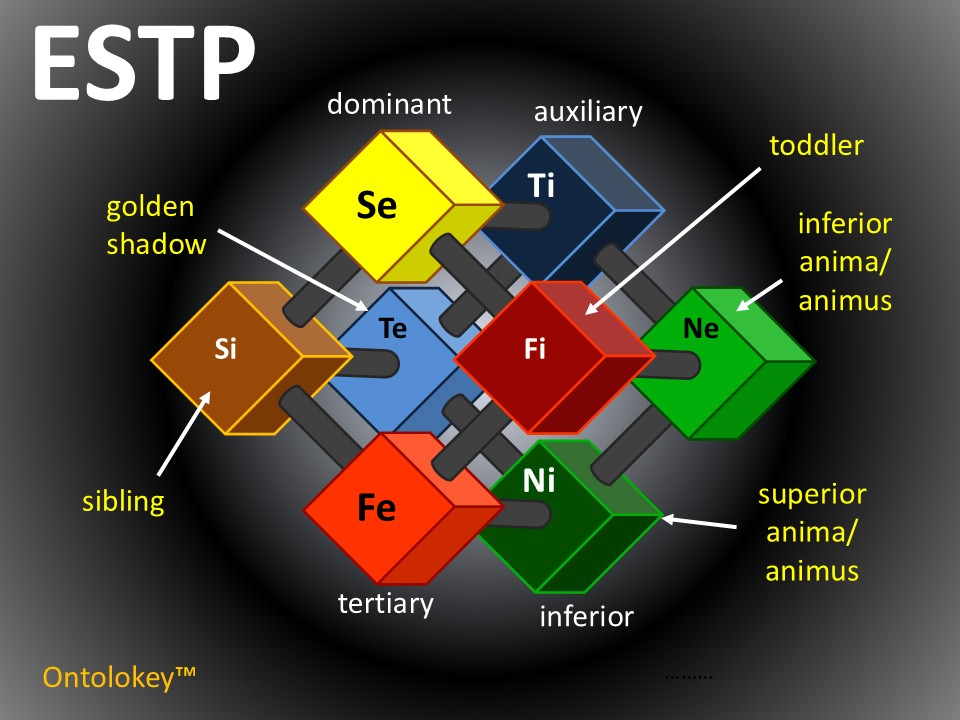
The Seduction of Strength and the Birth of the Shadow
Among all personality structures, few are as consistently misunderstood as the ESTP. Popular descriptions tend to portray this type as energetic, charismatic, fearless, practical, action-oriented, and intensely alive. Such descriptions are not entirely false. In fact, they often describe the visible surface with remarkable accuracy. The problem begins when the surface is mistaken for the whole person. Human beings are never exhausted by their strengths. Every psychological gift casts a shadow, and the brighter the gift, the darker the shadow often becomes. The same force that allows an individual to dominate uncertainty can also create a profound blindness toward inner reality. The same instinct that makes a person effective in the world can eventually sever them from parts of themselves that do not conform to their preferred image of strength. It is precisely here that the deeper psychological investigation of the ESTP must begin—not with what makes this type impressive, but with what its impressive qualities conceal.
The ESTP is fundamentally oriented toward engagement with immediate reality. Such individuals tend to trust what can be seen, touched, measured, experienced, conquered, negotiated, manipulated, or acted upon. Their relationship with life is not primarily theoretical but experiential. They are often at their best when confronted with concrete challenges requiring rapid adaptation and decisive action. In many situations, they possess a remarkable capacity to remain functional under pressure while others become overwhelmed by uncertainty. They can move through crisis with unusual composure because they instinctively orient themselves toward what can be done rather than what can be feared. This practical realism often makes them highly effective leaders in volatile situations. Yet every psychological adaptation comes at a cost. What is developed becomes strong, but what is neglected does not disappear. It retreats into the unconscious, where it begins to exert influence indirectly. The shadow is not the opposite of personality. It is the rejected half of personality.
The central psychological dilemma of the ESTP emerges from a subtle but powerful identification with effectiveness itself. Many ESTPs unconsciously learn from an early age that competence earns respect, action earns status, and strength earns security. They discover that the world rewards decisiveness far more reliably than vulnerability. Consequently, they may become increasingly invested in a self-image built around capability. They become the one who handles the situation, solves the problem, takes the risk, confronts the challenge, and moves forward while others hesitate. This identity can become extraordinarily successful. Yet it also creates an implicit psychological rule: whatever appears weak, uncertain, dependent, emotionally confused, fragile, or internally conflicted must be suppressed. The personality gradually organizes itself around the maintenance of strength. What cannot be integrated into that image is pushed underground.
At first, this process appears adaptive. The young ESTP learns that emotional exposure often produces disappointment, embarrassment, or loss of control. They discover that decisive action is rewarded while introspection rarely receives the same validation. Over time, the psyche develops a preference for movement over reflection. Problems are solved through action. Anxiety is managed through activity. Pain is escaped through stimulation. Conflict is addressed through confrontation or strategic maneuvering. These methods often work, which is precisely why they become psychologically dangerous. A successful defense mechanism is harder to detect than a failing one. The ESTP may not realize that constant movement has become a way of avoiding stillness, just as perpetual action may become a way of avoiding self-confrontation. The shadow grows strongest when it disguises itself as competence.
The historical psychiatric descriptions associated with this personality structure repeatedly point toward a recurring pattern: the increasing dominance of instinct, impulse, and immediate reaction over reflective evaluation. The descriptions emphasize individuals whose behavior is often governed less by deliberation and more by drives, urges, tensions, and affective pressures that gradually accumulate until they seek release. The individual may not consciously perceive this process because the tension builds beneath awareness before erupting into visible action. What appears externally as sudden aggression is frequently the endpoint of a long period of internal pressure. The crucial insight is that the explosion itself is not the problem. The inability to recognize the accumulating pressure is the problem.
One of the most misunderstood aspects of the ESTP shadow is anger. Popular psychology often treats anger as merely an emotional reaction. In reality, anger frequently functions as a defensive structure protecting more vulnerable experiences beneath it. For many ESTPs, anger feels cleaner than grief, stronger than fear, and more controllable than shame. A person can act while angry. They can dominate, challenge, confront, and impose consequences. By contrast, grief demands surrender. Fear demands acknowledgment of vulnerability. Shame demands self-examination. Consequently, anger often becomes the preferred emotional language of the shadow. Over time, this preference creates a dangerous illusion. The individual begins to believe they are expressing their authentic feelings when in fact they are expressing only the most armored layer of those feelings. The emotional life becomes increasingly one-dimensional, even while deeper emotional realities remain active beneath the surface.
The shadow deepens further because the ESTP is often highly capable of rationalizing instinctive behavior after the fact. Human beings generally prefer to believe they act consciously. The psyche therefore tends to construct explanations for actions that originated elsewhere. A decision driven by wounded pride may be explained as strategic necessity. An act motivated by envy may be described as justice. An aggressive response rooted in humiliation may be interpreted as principled strength. The individual is not necessarily lying. They may genuinely believe their explanation. Yet the unconscious frequently acts first and explains later. This tendency becomes especially dangerous in strong personalities because their confidence makes self-deception more convincing. The greater the certainty, the less likely introspection becomes.
The darker manifestations described in clinical and characterological literature reveal what happens when this pattern becomes extreme. Under severe psychological imbalance, instinctive drives can gradually override reflective judgment. Irritation grows into hostility. Hostility grows into aggression. Immediate desire overwhelms long-term consideration. Consequences lose psychological weight compared to the urgency of present impulses. The individual becomes increasingly governed by what feels compelling in the moment rather than what remains meaningful across time. Importantly, these descriptions do not suggest that all ESTPs become violent or antisocial. Such conclusions would be absurd. Rather, they illustrate the direction in which the shadow moves when left entirely unconscious. The deeper lesson is psychological rather than behavioral: when strength becomes disconnected from self-awareness, instinct gradually replaces wisdom.
A particularly tragic dimension of the ESTP shadow emerges in the realm of identity. Because these individuals often experience themselves through action, achievement, influence, and engagement with reality, they may unconsciously lose contact with who they are apart from performance. As long as life provides challenges, victories, stimulation, and opportunities for action, this problem remains hidden. The difficulty emerges during periods of failure, illness, aging, loss, or existential transition. Suddenly the individual encounters situations that cannot be conquered through force of will. A relationship collapses despite every effort. A career fails. The body weakens. A loved one dies. An inner emptiness appears that no amount of activity can eliminate. At such moments, the ESTP often faces a psychological crisis that others may find surprising. The person who seemed strongest discovers that much of their identity depended upon conditions they could not permanently control.
This confrontation marks the true beginning of shadow work. The shadow is not merely aggression, impulsivity, recklessness, or excess. These are symptoms. The deeper shadow consists of everything the personality refused to become in order to maintain its preferred self-image. Hidden behind the warrior may be the abandoned child. Hidden behind confidence may be terror. Hidden behind independence may be profound longing. Hidden behind realism may be despair. Hidden behind charisma may be loneliness. The shadow contains not only darkness but also undeveloped humanity. This is why genuine psychological growth is so difficult. The ESTP does not merely need to become less aggressive or more reflective. They must risk discovering aspects of themselves that their entire personality structure has spent years avoiding.
Paradoxically, the deepest strength of the mature ESTP emerges only when the worship of strength itself begins to dissolve. True courage is not the absence of vulnerability but the willingness to face vulnerability consciously. True realism includes inner reality as well as outer reality. True power is not domination over circumstances but the capacity to remain psychologically honest even when circumstances cannot be dominated. The shadow therefore represents not an enemy but an invitation. What initially appears as weakness often becomes the doorway to depth. What appears as limitation often becomes the beginning of wisdom. The ESTP who turns toward the shadow rather than away from it may discover that the most difficult conquest was never external. It was the conquest of self-deception. And unlike every external victory, that conquest never ends.
The Tyranny of Impulse and the Fear of Inner Stillness
One of the greatest misconceptions about the ESTP is the belief that impulsivity is merely a behavioral characteristic. In reality, impulsivity is often the visible expression of a much deeper psychological structure. The external action is only the final stage of a process that begins long before the behavior itself appears. What observers see is the decision, the confrontation, the risk, the provocation, the sudden change of direction, or the explosive reaction. What they do not see is the growing internal pressure that precedes it. The shadow side of the ESTP is not fundamentally impulsive because it lacks intelligence. It becomes impulsive because action gradually acquires a psychological function that exceeds its practical purpose. Action becomes emotional regulation. Movement becomes anesthesia. Stimulation becomes escape. The individual does not simply act because there is something to do; increasingly, they act because remaining still would require confronting experiences they have spent years avoiding.
This distinction is crucial because the ESTP often develops a powerful identity around responsiveness. They see themselves as realistic people who deal with facts rather than fantasies. They trust action more than speculation and direct engagement more than abstraction. In healthy development, this creates remarkable adaptability. The individual becomes capable of navigating crises with a clarity that others may lack. Yet the same adaptation contains the seeds of its own distortion. If action consistently provides relief from inner discomfort, the psyche begins to depend upon action in the same way other personalities may depend upon intellectualization, fantasy, emotional reassurance, or ideological certainty. The person becomes psychologically addicted not necessarily to specific activities but to the state of movement itself. Stillness becomes threatening because stillness removes distraction. Without distraction, the contents of the unconscious become increasingly audible.
Many ESTPs are therefore confronted with a paradox they rarely recognize. They may appear extraordinarily comfortable with risk while simultaneously being deeply uncomfortable with introspection. The average observer mistakes the first condition for courage and overlooks the second entirely. Yet from a psychological perspective, these two tendencies are often connected. The willingness to confront external uncertainty does not automatically imply a willingness to confront internal uncertainty. In fact, the latter may be considerably more frightening. External dangers can be fought, negotiated, outmaneuvered, or overcome. Internal conflicts demand a different kind of strength. They require surrender rather than conquest. They require observation rather than intervention. They require the ability to tolerate ambiguity without immediately resolving it through action. For a personality organized around decisiveness, this can feel intolerable.
The psychiatric descriptions associated with this personality structure repeatedly emphasize a pattern in which instinctive pressures gradually accumulate beneath conscious awareness before seeking discharge through behavior. These descriptions stress that the individual is not necessarily characterized by spontaneous eruptions but rather by a slow buildup of affective tension that eventually demands release. Irritation intensifies, resentment accumulates, dissatisfaction grows, and eventually action emerges as the vehicle through which pressure is discharged. The critical psychological issue is that the individual often experiences only the final stage of the process consciously. The buildup itself remains largely invisible. Consequently, the person experiences the reaction as justified by immediate circumstances rather than recognizing the deeper emotional accumulation behind it.
This phenomenon becomes particularly important when examining aggression. Popular culture frequently romanticizes the ESTP’s assertiveness, presenting it as evidence of confidence and strength. Healthy assertiveness is indeed one of this personality’s greatest assets. Yet shadow aggression operates according to entirely different principles. Healthy assertiveness seeks resolution. Shadow aggression seeks discharge. Healthy assertiveness remains connected to reality. Shadow aggression becomes connected to accumulated tension. The difference is subtle but profound. In the first case, confrontation is a tool. In the second case, confrontation becomes an emotional necessity. The individual no longer addresses the actual situation before them. Instead, they are unconsciously attempting to relieve internal pressure generated by dozens of unresolved experiences stretching far into the past.
One of the reasons this process remains hidden is that many ESTPs possess an unusually high tolerance for emotional discomfort. What would cause another person to seek support, reflection, or emotional processing may simply be absorbed and carried forward. On the surface this appears admirable. Such individuals seem resilient. They continue functioning. They remain productive. They keep moving. Yet resilience and suppression are not identical phenomena. True resilience metabolizes experience. Suppression merely stores it. The psyche never forgets what consciousness refuses to acknowledge. Every humiliation, disappointment, betrayal, fear, rejection, and injury remains active beneath awareness. Over years or decades, these experiences can accumulate into a reservoir of unprocessed emotional energy. The ESTP often discovers this reservoir only when it finally erupts.
What makes the shadow especially dangerous is that it frequently disguises itself as realism. The individual may insist that they are simply responding to facts. They may believe their anger is justified, their impatience necessary, their ruthlessness practical, and their emotional detachment rational. Sometimes these assessments are partially correct. Yet shadow dynamics rarely operate through complete falsehoods. They operate through partial truths. The individual sees the external trigger accurately while remaining blind to the internal amplification. A minor insult becomes intolerable not because of the insult itself but because it resonates with years of unacknowledged humiliation. A disagreement becomes a battle because it activates deeper fears of powerlessness. A challenge to authority becomes psychologically explosive because it threatens a fragile identity built around competence and control.
Another recurring feature of the ESTP shadow is the tendency to underestimate the influence of instinctive drives. The psychiatric material associated with this structure repeatedly notes the possibility that immediate desires can overpower reflective judgment when psychological development becomes distorted. Under such circumstances, long-term consequences lose their emotional weight. What matters is immediate relief, immediate satisfaction, immediate expression, immediate action. The individual may intellectually understand future consequences while remaining psychologically dominated by present impulses. This distinction is essential because many highly intelligent people assume that awareness automatically produces self-control. In reality, awareness and self-control are entirely different capacities. One can understand a destructive impulse perfectly while remaining unable to resist it.
The deeper issue is not desire itself. Desire is an indispensable part of human life. The problem emerges when desire becomes disconnected from reflection. The ESTP possesses a powerful instinctual relationship with existence. Such individuals often experience life vividly, intensely, and directly. They are naturally attuned to opportunities, possibilities, pleasures, challenges, and experiences that others overlook. This vitality is one of their greatest gifts. Yet every gift contains the possibility of inflation. The shadow version of vitality becomes compulsivity. Experience becomes consumption. Freedom becomes irresponsibility. Confidence becomes entitlement. Courage becomes recklessness. The individual does not merely seek life. They attempt to outrun themselves through life.
At this stage, a deeper existential problem begins to emerge. Human beings inevitably encounter suffering that cannot be escaped through activity. Grief cannot be conquered. Mortality cannot be negotiated. Meaninglessness cannot be punched into submission. Loneliness cannot be permanently distracted away. Yet the shadow ESTP often continues applying external solutions to internal problems. More stimulation is sought when what is actually needed is understanding. More activity is pursued when what is needed is mourning. More conquest is attempted when what is required is acceptance. The tragedy is not that these strategies fail immediately. The tragedy is that they often work temporarily. Temporary success delays deeper psychological development.
The result is a peculiar form of existential exhaustion. Outwardly, the individual may remain highly functional. They may continue achieving, competing, building, leading, and acquiring experiences. Yet beneath the surface, an increasing sense of emptiness begins to appear. Every victory provides less satisfaction than the one before it. Every new challenge loses its novelty more quickly. Every accomplishment requires a larger accomplishment to maintain the same psychological effect. What initially felt like freedom gradually begins to resemble dependency. The individual becomes dependent on external stimulation because they have never developed a meaningful relationship with their internal world. The shadow is no longer merely hidden. It has become the silent architect of their behavior.
Perhaps the most painful realization for the mature ESTP is that endless motion cannot solve the problem of self-alienation. A person may cross continents, build empires, dominate industries, accumulate wealth, attract admiration, and still remain fundamentally disconnected from themselves. The unconscious does not care how impressive a life appears from the outside. It demands integration rather than performance. Every rejected fear, every denied vulnerability, every suppressed grief, every abandoned emotional truth eventually seeks recognition. The shadow is patient. It can wait decades. But it never disappears.
For this reason, the true antidote to the tyranny of impulse is not greater self-control in the conventional sense. Mere discipline often strengthens the same defensive structures that created the problem. The deeper task is awareness. The ESTP must learn to recognize emotional pressure before it demands discharge. They must become curious about their reactions rather than immediately acting upon them. They must cultivate the capacity to remain present with discomfort without instantly transforming it into movement. This is not passivity. It is a more advanced form of strength. The individual who can tolerate inner tension consciously possesses a power far greater than the individual who simply releases it through action.
The paradox is that the ESTP becomes most powerful precisely when they cease worshipping power. When they no longer need to dominate every situation, they become more effective. When they no longer need to prove strength, genuine strength emerges. When they no longer flee from stillness, stillness becomes a source of insight. And when they finally stop using action to escape themselves, action regains its original dignity. It becomes an expression of freedom rather than a mechanism of avoidance. Only then does the shadow begin to transform from an unconscious force into a source of wisdom.
The Cult of Power and the Terror of Vulnerability
If impulse represents one major dimension of the ESTP shadow, power represents another. The relationship between these two themes is far more intimate than it initially appears. Impulsivity often emerges as a response to tension, while power frequently emerges as a defense against vulnerability. Together they form a psychological system that can remain stable for decades. The individual learns that action reduces anxiety and that strength prevents injury. Over time these lessons become embedded not merely as behaviors but as assumptions about reality itself. The world begins to appear as a place where weakness invites exploitation, where hesitation creates disadvantage, and where control serves as the primary safeguard against uncertainty. Such assumptions may contain elements of truth. Human life does indeed involve competition, conflict, and unequal distributions of power. Yet when these realities become exaggerated within the psyche, they begin to distort perception. The individual no longer sees power as one dimension of existence. Power becomes the lens through which existence itself is interpreted.
For many ESTPs, strength is not merely admired. It becomes morally elevated. Strong people are respected because they appear capable of shaping reality rather than being shaped by it. Weakness, by contrast, is often viewed with suspicion or discomfort. This attitude rarely develops out of cruelty alone. More often it emerges from personal history. Somewhere beneath the conscious personality lies an experience of vulnerability that was judged unsafe, ineffective, humiliating, or painful. The psyche remembers this lesson with remarkable persistence. As a result, the individual gradually organizes themselves around avoiding the return of that experience. They become strong not only because strength is useful but because weakness feels intolerable. The shadow therefore does not consist merely of a desire for power. It consists of an unconscious fear of everything power is meant to defend against.
The difficulty is that vulnerability never disappears simply because it has been rejected. Human beings remain vulnerable regardless of their accomplishments. They remain vulnerable to illness, aging, loss, betrayal, grief, rejection, failure, uncertainty, and death. No amount of competence abolishes these realities. Yet the shadow ESTP often attempts to negotiate with existence as though sufficient strength could eventually eliminate vulnerability altogether. This is one of the deepest illusions within the psychology of power. The individual unconsciously assumes that enough success, enough influence, enough capability, enough control, or enough resilience will finally produce invulnerability. The tragedy is that every achievement merely postpones the confrontation. Life eventually presents circumstances that cannot be mastered through force of will.
The historical descriptions associated with this personality structure repeatedly emphasize an orientation toward force, influence, assertion, and the active imposition of will upon reality. At healthy levels this produces extraordinary effectiveness. The individual develops confidence in their ability to navigate the world directly rather than retreating into passivity. However, the same dynamic can become distorted when self-worth becomes increasingly dependent upon maintaining dominance over circumstances. Under such conditions, power ceases to be a tool and becomes an identity. Once this occurs, any threat to control begins to feel like a threat to the self itself. The person is no longer defending a position. They are defending their entire psychological structure.
This phenomenon becomes especially visible in situations involving humiliation. Few experiences activate the ESTP shadow more intensely than perceived humiliation. Humiliation is psychologically devastating because it bypasses the external persona and strikes directly at the hidden fear beneath it. The individual who identifies with strength can tolerate many forms of adversity. They can often endure physical hardship, competitive setbacks, financial losses, and intense pressure. Yet humiliation introduces a different problem. It exposes vulnerability publicly. It threatens the image of competence upon which the personality depends. Consequently, the reaction to humiliation is often disproportionate to the event itself. What appears externally as anger may internally be a desperate attempt to restore a damaged sense of self.
This is one reason why shadow aggression frequently appears most intensely when status, respect, authority, or competence are questioned. The issue is not the criticism alone. The issue is what the criticism symbolizes. If the individual’s identity rests upon being capable, then evidence of incapability becomes psychologically catastrophic. If their identity rests upon strength, evidence of weakness becomes intolerable. The shadow therefore responds with escalation. The person doubles down, fights harder, dominates more aggressively, dismisses opposing perspectives, or seeks victory at any cost. What they cannot see is that the ferocity of the reaction reveals the insecurity it attempts to conceal. Genuine confidence rarely requires such defense. Inflated confidence requires constant protection.
The paradox of power is that it often attracts exactly the people who feel powerless internally. This observation should not be misunderstood. It does not mean that powerful individuals are secretly weak. Rather, it means that the pursuit of power frequently carries psychological motives beyond conscious awareness. The ESTP shadow may seek influence, achievement, leadership, wealth, status, or control not solely because these things are desirable but because they promise relief from deeper anxieties. The individual believes that power will finally resolve the feeling of vulnerability. Yet because vulnerability is an intrinsic aspect of human existence, the promised relief never arrives. Each achievement creates only temporary reassurance before a new threat emerges. The cycle continues indefinitely.
One of the most revealing aspects of this shadow dynamic is the relationship between dominance and intimacy. Many ESTPs are capable of remarkable social confidence. They can be charming, persuasive, engaging, and highly effective in interpersonal situations. Yet intimacy operates according to principles fundamentally different from influence. Influence requires strength. Intimacy requires openness. Influence depends upon managing impressions. Intimacy depends upon revealing realities that may not be impressive at all. Influence allows one to remain in control. Intimacy requires relinquishing control. These differences create profound psychological tension for the shadow-oriented ESTP.
As a result, relationships may unconsciously become arenas of negotiation rather than spaces of mutual revelation. The individual may excel at attraction while struggling with genuine emotional exposure. They may reveal accomplishments more easily than fears, opinions more easily than wounds, competence more easily than longing. Partners often sense this imbalance long before the individual recognizes it themselves. They may feel close to the ESTP in terms of shared experiences while simultaneously feeling distant from them emotionally. The relationship contains activity but not depth. There is engagement without true vulnerability. The person is physically present yet psychologically guarded.
The deeper reason for this difficulty becomes apparent when vulnerability is examined honestly. Vulnerability involves surrendering the illusion of control. When a person reveals what genuinely matters to them, they expose themselves to the possibility of rejection, disappointment, misunderstanding, and loss. The shadow ESTP often experiences this exposure as fundamentally dangerous. Their instinctive response is therefore to regain control through humor, confidence, distraction, action, sexuality, competition, problem-solving, or strategic maneuvering. All of these methods can be effective. None of them create intimacy. In fact, they frequently prevent it.
A particularly tragic consequence of this pattern emerges later in life. Many ESTPs spend years mastering the external world while neglecting the development of emotional self-awareness. During youth and early adulthood, this imbalance often remains invisible because external success compensates for internal underdevelopment. Yet life gradually shifts its demands. Aging reduces physical dominance. Professional victories become less exciting. Familiar achievements lose their psychological impact. At this stage, questions emerge that cannot be answered through competence alone. Who am I when I am not performing? What remains when success no longer defines me? What relationships exist beyond utility, attraction, or influence? What parts of myself have never been allowed to speak?
These questions frequently mark the beginning of a profound psychological crisis. Yet they also represent an opportunity. The collapse of the power illusion creates space for something deeper to emerge. The individual begins to realize that strength and vulnerability were never opposites. In fact, they require one another. Strength without vulnerability becomes rigidity. Vulnerability without strength becomes helplessness. Psychological maturity requires both. The mature ESTP eventually discovers that the most courageous act is not domination but honesty. It is the willingness to acknowledge fear without being governed by it. It is the ability to experience grief without fleeing from it. It is the capacity to love without guaranteeing protection from loss.
The shadow resists this realization because it threatens the entire defensive system. If vulnerability is accepted, then decades of protective behaviors must be reevaluated. The individual must confront how much energy has been spent maintaining an image that concealed rather than expressed the self. This confrontation is often painful. It may involve regret, mourning, embarrassment, and disillusionment. Yet it also produces liberation. What was previously hidden no longer requires concealment. What was previously feared no longer requires avoidance. The individual begins to live from a place of authenticity rather than compensation.
Ultimately, the deepest weakness of the shadow ESTP is not aggression, dominance, impulsivity, or recklessness. These are merely secondary manifestations. The deeper weakness is the belief that vulnerability must be conquered rather than integrated. Such a belief creates endless struggle because it pits the individual against an essential aspect of their own humanity. No one wins that battle. The mature personality emerges only when the conflict itself ends. Vulnerability is no longer treated as an enemy but as a source of psychological truth. Strength remains, but it is transformed. It ceases to be armor. It becomes presence.
And when strength becomes presence rather than defense, the shadow begins to lose its power.
The Hidden Emotional Life: Why the Strongest Person in the Room Often Feels the Most Alone
One of the most persistent myths surrounding the ESTP is the assumption that emotional depth is somehow absent from the personality structure. Because ESTPs often display confidence, decisiveness, pragmatism, and behavioral directness, many observers conclude that they are fundamentally less emotional than other people. This conclusion is psychologically naïve. Human beings do not become less emotional because they appear strong. They become less transparent about their emotions. The distinction is critical. The shadow side of the ESTP is not emotional emptiness but emotional concealment. Beneath the visible personality often exists an inner world that is far more sensitive than either the individual or their environment is willing to acknowledge. The tragedy is that this sensitivity frequently remains buried beneath layers of adaptation, self-protection, and identification with strength. As a result, the ESTP may spend years believing that emotional vulnerability is something they possess less of than others, when in reality it is something they have learned to hide more effectively.
This concealment often begins early in life. Many ESTPs discover that competence generates admiration while emotional exposure creates discomfort. When they solve problems, people trust them. When they take charge, people follow them. When they remain calm under pressure, people respect them. These experiences gradually shape identity. The child learns which aspects of themselves are welcomed and which aspects are ignored. Over time, the practical self becomes increasingly developed while the emotional self receives comparatively little attention. The individual may become extraordinarily skilled at handling external reality while remaining surprisingly unfamiliar with their own internal landscape. This imbalance is not immediately problematic because life often rewards external competence. The difficulty emerges later when emotional realities arise that cannot be managed through action alone.
The psychological cost of this adaptation is rarely visible from the outside. The ESTP often becomes highly effective at converting emotional states into behavioral responses. Sadness becomes activity. Fear becomes preparation. Uncertainty becomes problem-solving. Shame becomes defensiveness. Loneliness becomes stimulation. Because these transformations occur automatically, the individual may lose awareness of the original emotion entirely. They experience only the behavioral impulse that follows it. This process creates the illusion that emotions are weak or irrelevant because they seem absent from conscious experience. Yet the emotions have not disappeared. They have merely changed form. What appears to be emotional detachment is often emotional translation.
The psychiatric descriptions contained within the source material repeatedly emphasize a phenomenon that modern observers frequently overlook. Individuals who appear externally hardened, irritable, antisocial, or emotionally restricted often retain a surprisingly intact emotional life beneath the surface. The descriptions caution against simplistic conclusions regarding apparent coldness. In several cases, individuals initially perceived as callous or insensitive revealed deep emotional responsiveness once the appropriate psychological approach allowed access to it. What appeared to be emotional absence was actually emotional concealment beneath instinctive defenses and accumulated affective tension.
This observation has enormous implications for understanding the ESTP shadow. The defensive personality often becomes so convincing that even the individual begins to believe it. They see themselves as unaffected when they are wounded. They view themselves as detached when they are disappointed. They consider themselves realistic when they are grieving. Because they do not consciously experience the emotion in its original form, they assume it is not present. Yet the unconscious communicates through indirect channels. The denied sadness appears as irritability. The unacknowledged fear appears as excessive control. The buried humiliation appears as aggression. The hidden longing appears as compulsive pursuit. The psyche never loses information. It simply changes the language through which the information is expressed.
One of the most painful manifestations of this process appears in relationships. The ESTP often possesses significant interpersonal strengths. They can be engaging, protective, loyal, charismatic, and emotionally supportive during moments of crisis. Many become the person others call when something goes wrong because they bring stability to situations that overwhelm more emotionally reactive individuals. Yet this strength contains a hidden weakness. Being needed is not the same as being known. The ESTP may become indispensable while remaining fundamentally unseen. Others admire their competence without understanding their fears. Others appreciate their strength without recognizing their loneliness. Others rely on them without realizing that they too require emotional recognition.
This dynamic frequently creates a profound form of isolation. The individual becomes surrounded by relationships while simultaneously feeling emotionally disconnected. Because they have spent years presenting competence, others naturally assume competence is all that exists. The ESTP may then feel trapped by their own persona. Revealing vulnerability suddenly feels impossible because it contradicts the image that everyone has come to expect. The stronger the persona becomes, the harder authentic self-disclosure feels. Ironically, the very traits that generate admiration may also create loneliness. The individual becomes loved for the role they play rather than for the person they actually are.
The source material contains an especially revealing insight regarding individuals who appear emotionally deficient. Several clinical observations note that beneath apparently impulsive, aggressive, or socially problematic behavior there often remains a fully human emotional core capable of attachment, aspiration, disappointment, and genuine feeling. In one particularly telling example, a young delinquent initially appeared indifferent, hostile, and emotionally disconnected. Yet deeper examination revealed disappointment, hope, regret, and meaningful emotional investment concealed beneath defensive structures. The emotional life had not disappeared. It had merely become inaccessible beneath layers of instinctive adaptation.
This pattern frequently appears in shadow-oriented ESTPs. The individual may insist that nothing affects them while simultaneously organizing large portions of their life around avoiding emotional pain. They may claim indifference toward rejection while reacting intensely to disrespect. They may dismiss the importance of attachment while struggling profoundly with abandonment. They may deny their need for emotional connection while repeatedly seeking situations that provide validation, admiration, or attention. The contradiction often remains invisible because the underlying emotional needs are expressed indirectly rather than consciously acknowledged.
A particularly significant emotional wound within many ESTPs involves the experience of disappointment. Because they are naturally action-oriented, they often approach life with a degree of confidence that others admire. They expect movement, progress, opportunity, and engagement. When reality cooperates, this orientation generates remarkable vitality. However, repeated disappointments gradually accumulate beneath the surface. Betrayals, failures, broken relationships, lost opportunities, and unmet aspirations create emotional injuries that are often insufficiently processed. Instead of mourning these losses directly, the individual frequently moves forward immediately. They adapt. They recover. They continue functioning. Yet adaptation is not always integration. What is left unprocessed remains psychologically active.
Over time, these accumulated disappointments may produce a subtle hardening of the personality. Cynicism begins to replace openness. Distrust replaces curiosity. Control replaces spontaneity. The individual becomes increasingly reluctant to invest emotionally because previous investments resulted in pain. They may continue pursuing experiences while avoiding genuine attachment. They continue participating in life while gradually withdrawing emotionally from it. From the outside this appears as maturity or realism. Internally it often represents a defense against grief.
The fear of grief deserves special attention because it occupies a central position within the ESTP shadow. Grief is perhaps the ultimate challenge to a personality organized around action. Unlike most problems, grief cannot be solved. It cannot be negotiated, conquered, accelerated, or outperformed. It demands patience, surrender, and emotional endurance. These qualities often feel profoundly unnatural to individuals whose psychological strengths lie in movement and intervention. Consequently, grief is frequently postponed. The individual keeps moving. They remain busy. They seek new goals, new challenges, new relationships, new experiences. Yet grief does not disappear when postponed. It simply waits.
This is one reason why some ESTPs encounter unexpected emotional crises later in life. For decades they may function successfully while carrying a vast reservoir of unresolved emotional experience. Then a single event—a divorce, a death, a serious illness, a career collapse, an experience of aging—suddenly overwhelms the existing defenses. The individual discovers that beneath their strength lies an entire emotional history that has never been fully acknowledged. The experience can be disorienting because it contradicts their long-held self-image. They believed they had moved on. In reality, they had moved around.
Yet this confrontation with emotional reality also represents the beginning of psychological depth. The mature ESTP eventually discovers that emotions are not obstacles to strength but sources of information. Fear reveals what matters. Grief reveals what was loved. Shame reveals where identity has become fragile. Loneliness reveals the need for connection. Vulnerability reveals the limits of self-sufficiency. None of these experiences diminish strength. They humanize it. The strongest individuals are not those who eliminate emotion. They are those who can remain conscious in its presence.
The shadow resists this realization because it equates emotional awareness with weakness. But emotional awareness is not weakness. It is complexity. It allows the individual to experience themselves as more than a performer of roles, more than a manager of circumstances, more than a problem-solver moving from challenge to challenge. It allows them to become a complete human being rather than merely an effective one. The difference between these two conditions is profound. Effectiveness can earn admiration. Wholeness creates meaning.
Ultimately, the hidden emotional life of the ESTP represents one of the greatest paradoxes of the personality. The very individual who appears most invulnerable often carries vulnerabilities they have never fully explored. The person who seems most self-sufficient often longs most deeply for genuine understanding. The individual who appears emotionally uncomplicated frequently possesses a remarkable emotional depth hidden beneath years of adaptation. The shadow is not evidence that these feelings are absent. It is evidence that they have been denied expression.
And the moment those denied feelings are finally allowed into consciousness, the ESTP begins a transformation that no external victory could ever produce. For the first time, strength ceases to conceal the self and begins to reveal it.
The Addiction to Intensity: Why Peace Often Feels More Threatening Than Chaos
There exists a peculiar paradox at the heart of the ESTP shadow that is rarely discussed with sufficient psychological seriousness. It is the tendency to become unconsciously attached not merely to action, but to intensity itself. At first glance this seems counterintuitive. Most people assume that human beings seek peace, stability, security, and emotional equilibrium. While this is partially true, psychological reality is considerably more complex. Human beings do not merely seek what is healthy. They seek what is familiar. If a personality has spent years or decades adapting to environments characterized by challenge, pressure, competition, conflict, unpredictability, or emotional volatility, the nervous system gradually begins to interpret intensity as normal. Under such circumstances, peace may no longer feel natural. It may feel strange, empty, unsettling, or even threatening. The individual becomes so accustomed to operating under pressure that the absence of pressure creates discomfort.
For the ESTP, whose natural orientation already favors engagement, stimulation, responsiveness, and direct interaction with reality, this tendency can become particularly pronounced. The individual often experiences vitality through movement. Challenges awaken attention. Obstacles generate focus. Competition produces energy. Crisis sharpens awareness. In healthy forms, these qualities contribute to extraordinary adaptability and resilience. Yet when shadow dynamics become involved, intensity gradually transforms from a situational response into a psychological dependency. The person no longer seeks challenge because challenge serves a meaningful purpose. They begin seeking challenge because ordinary existence feels insufficiently stimulating. What originally functioned as a strength slowly evolves into a compulsion.
This transformation is subtle because it disguises itself as courage. The individual may genuinely believe they are pursuing growth, freedom, achievement, adventure, or excellence. Sometimes they are. Yet beneath these conscious motivations another process may be operating. Intensity itself becomes emotionally regulating. The heightened state of engagement suppresses awareness of deeper psychological realities. Anxiety becomes difficult to notice when attention is fully absorbed by action. Loneliness becomes less visible when life remains saturated with stimulation. Existential uncertainty recedes when the individual is occupied by immediate challenges. The problem is not the activity itself. The problem is the psychological function the activity begins to serve.
The source material repeatedly highlights the tendency of certain individuals within this personality structure to become increasingly governed by immediate impulses, excitations, and instinctive pressures. What emerges from these observations is not merely impulsivity but a broader pattern of psychological overinvestment in stimulation. Internal tension seeks discharge. Restlessness seeks activity. Desire seeks gratification. The resulting behavioral style often appears energetic and vigorous, yet beneath the surface it may reflect an inability to tolerate psychological quiet. The person becomes uncomfortable in the absence of external engagement because external engagement has become the primary method through which internal tensions are managed.
To understand the shadow dimension of intensity, it is necessary to distinguish between aliveness and stimulation. These concepts are often confused. Aliveness is a state of presence. It involves a direct encounter with reality, whether that reality is joyful, painful, ordinary, or profound. Stimulation, by contrast, refers to the amplification of psychological or physiological arousal. A person can be highly stimulated while remaining disconnected from themselves. They can feel excited without feeling present. They can experience constant activity without experiencing meaning. The shadow ESTP frequently mistakes stimulation for aliveness because stimulation is more immediately noticeable. Presence is quieter. Presence demands awareness. Presence often emerges in moments of stillness that the shadow has spent years avoiding.
This confusion creates a peculiar cycle. The individual pursues increasingly intense experiences in search of vitality. Initially these experiences provide genuine satisfaction. New opportunities, new relationships, new risks, new ambitions, and new adventures all produce excitement. Yet psychological adaptation eventually occurs. What once felt exhilarating becomes familiar. The nervous system adjusts. The previous level of stimulation no longer generates the same effect. Consequently, a more intense experience becomes necessary. The cycle repeats itself. Gradually the person discovers that satisfaction is becoming increasingly difficult to maintain. The problem is not that life contains too little intensity. The problem is that intensity has become the primary source of psychological nourishment.
One of the most revealing manifestations of this pattern appears in relationships. Many ESTPs are drawn toward dynamic interpersonal experiences. They often enjoy spontaneity, excitement, attraction, challenge, and emotional energy. These qualities can contribute to highly vibrant relationships. However, the shadow introduces a dangerous distortion. The individual may unconsciously associate emotional intensity with emotional significance. Conflict begins to feel more meaningful than stability. Pursuit feels more exciting than intimacy. Uncertainty feels more alive than commitment. The relationship becomes psychologically valuable not because it fosters genuine connection but because it generates stimulation.
This dynamic frequently explains why some individuals repeatedly enter relationships characterized by volatility. From an outside perspective the pattern appears irrational. The person repeatedly chooses partners, situations, or emotional environments that create turbulence. Yet from a shadow perspective the behavior serves a psychological purpose. Chaos produces intensity. Intensity produces temporary relief from inner emptiness. Consequently, the individual becomes trapped in a cycle where the very experiences causing suffering also provide emotional activation. They begin confusing emotional drama with emotional depth.
A similar process often unfolds in professional life. The ESTP’s natural adaptability can make them highly effective in fast-moving environments. They frequently excel in situations requiring rapid decisions, strategic flexibility, and practical problem-solving. Yet the shadow can transform this strength into dependency. The individual becomes uncomfortable when life becomes predictable. Stability begins to feel like stagnation. Routine feels oppressive. Peace feels boring. As a result, they may unconsciously create crises where none previously existed. Opportunities are abandoned prematurely. Commitments are disrupted. Conflicts are intensified. The person repeatedly destabilizes situations that might otherwise provide long-term fulfillment.
The deeper psychological question is why peace becomes so difficult to tolerate. The answer often lies beneath awareness. Peace removes distraction. Without distraction, unresolved emotional material begins to surface. Old disappointments become visible. Hidden grief emerges. Questions of meaning arise. The individual encounters aspects of themselves that were previously drowned out by activity. From the perspective of the shadow, this experience feels dangerous. Consequently, the psyche seeks renewed stimulation. The return of intensity restores familiar psychological conditions and postpones self-confrontation.
The existential dimension of this pattern becomes particularly significant in midlife. During earlier stages of development, external achievements often provide sufficient stimulation to sustain the personality’s momentum. Career advancement, competition, romance, social influence, physical challenges, and personal ambition all contribute to a sense of forward movement. Yet eventually many of these pursuits lose their novelty. Success becomes familiar. Accomplishments become routine. The excitement generated by external victories begins to diminish. At this stage, the individual faces a choice. They can either escalate the pursuit of intensity or begin exploring the deeper psychological territory that intensity has concealed.
Many choose escalation. More risks are taken. More stimulation is pursued. More distractions are acquired. Yet this strategy ultimately fails because the problem was never insufficient intensity. The problem was insufficient self-knowledge. No external experience can permanently satisfy an internal need for integration. The individual may continue accumulating experiences while remaining fundamentally estranged from themselves. In some cases this produces profound existential exhaustion. The person has lived intensely but not deeply. They have consumed experiences without understanding their meaning.
The mature ESTP eventually discovers that peace and aliveness are not opposites. In fact, genuine aliveness often emerges only after the addiction to stimulation begins to dissolve. This realization can be profoundly unsettling because it requires the individual to relinquish one of their most reliable psychological defenses. They must learn to tolerate ordinary moments without immediately seeking enhancement. They must learn to sit with emotional discomfort without transforming it into action. They must learn to experience themselves without requiring constant external activation.
This process is neither passive nor easy. In many respects it represents one of the most demanding forms of psychological development available to the ESTP. The individual who can face a physical challenge often discovers that facing internal stillness is considerably more difficult. Yet it is precisely within that stillness that deeper transformation becomes possible. The noise of constant stimulation gradually subsides. The hidden contents of the psyche become audible. The individual begins to recognize emotions, desires, fears, regrets, and aspirations that had been obscured for years.
What emerges from this encounter is not weakness but depth. The person no longer requires intensity to feel alive because they have developed a relationship with their own inner world. They no longer depend upon crisis to generate meaning because meaning is discovered within consciousness itself. They no longer pursue stimulation compulsively because they have learned to tolerate reality in all its forms, including its quiet moments.
The greatest irony of the ESTP shadow is that the individual often spends years searching for life in increasingly intense experiences while overlooking the fact that life was present all along. It existed beneath the distractions, beneath the pursuits, beneath the victories, beneath the conflicts, and beneath the endless movement. The shadow convinced them that aliveness required intensity. Psychological maturity reveals a more difficult truth.
Aliveness requires presence.
And presence begins where the addiction to intensity finally ends.
The War Against Dependency: Autonomy, Control, and the Fear of Needing Others
Few psychological forces shape the ESTP shadow more profoundly than the drive toward autonomy. On the surface, autonomy appears unquestionably healthy. The ability to stand on one’s own feet, make independent decisions, assume responsibility, and navigate reality without excessive reliance upon others represents a genuine strength. Many ESTPs develop precisely these capacities. They learn to trust their own judgment, solve practical problems, adapt quickly to changing circumstances, and maintain effectiveness under pressure. These qualities often become central pillars of identity. Yet as with every strength, a subtle transformation can occur when psychological development becomes unbalanced. Autonomy ceases to be a capability and becomes a defense. Independence is no longer valued because it enhances freedom. It becomes necessary because dependency has become psychologically intolerable.
To understand this transformation, one must recognize that dependency occupies a uniquely sensitive position within the ESTP psyche. Dependency implies vulnerability. It implies the possibility that one’s well-being may be influenced by forces beyond one’s direct control. It introduces uncertainty into the carefully constructed image of self-sufficiency. For a personality that derives confidence from competence and agency, this can feel deeply threatening. Consequently, many ESTPs unconsciously organize large portions of their lives around minimizing situations in which they might need emotional, psychological, financial, or existential support from others. The resulting independence often appears admirable. Yet beneath that independence there may exist a persistent fear that needing others inevitably leads to disappointment, weakness, or loss of control.
This fear rarely emerges in explicit form. Most ESTPs do not walk through life consciously thinking, “I am afraid of dependency.” The shadow is rarely that transparent. Instead, the fear reveals itself indirectly through patterns of behavior. The individual avoids asking for help even when help is genuinely needed. They minimize their emotional needs. They become uncomfortable when receiving care. They withdraw during periods of distress rather than seeking support. They solve problems alone whenever possible. They pride themselves on self-reliance while simultaneously experiencing growing emotional isolation. What appears externally as strength may therefore conceal an inability to tolerate one of the most fundamental realities of human existence: interdependence.
The source material repeatedly highlights a tendency within this personality structure toward intensified self-assertion, resistance to external influence, and a preference for acting according to one’s own impulses rather than submitting to imposed constraints. At healthy levels, these traits contribute to resilience and independence. Yet when shadow dynamics dominate, resistance to control gradually expands into resistance to intimacy itself. The individual becomes increasingly unwilling to place themselves in situations where they might be emotionally affected by another person. The result is not freedom but psychological fortification. The walls designed to prevent injury also prevent connection.
One of the most important distinctions in psychology is the difference between autonomy and isolation. Autonomy allows a person to remain connected while retaining individuality. Isolation sacrifices connection in order to preserve perceived safety. The shadow ESTP often confuses these two conditions because both involve self-reliance. Yet their psychological consequences differ dramatically. A genuinely autonomous person can depend on others when necessary without experiencing shame. They can receive support without feeling diminished. They can acknowledge emotional needs without perceiving themselves as weak. By contrast, the isolated individual experiences dependency as a threat to identity. Every need becomes embarrassing. Every vulnerability feels dangerous. Every request for support appears as evidence of inadequacy.
The origins of this dynamic often lie in early experiences involving trust. Many individuals who later become intensely self-sufficient learned, consciously or unconsciously, that relying on others carried significant risks. Perhaps emotional needs were dismissed. Perhaps vulnerability was exploited. Perhaps support proved inconsistent. Perhaps competence received praise while emotional openness received little recognition. Regardless of the specific circumstances, the developing psyche draws a conclusion. It decides that dependence is unreliable while self-reliance is safe. Once this conclusion becomes embedded, it influences relationships for decades.
A particularly revealing aspect of the ESTP shadow is the tendency to transform emotional needs into practical activities. Rather than acknowledging loneliness, the individual seeks stimulation. Rather than admitting disappointment, they pursue new goals. Rather than expressing hurt, they become irritable or distant. Rather than requesting support, they double their efforts toward self-sufficiency. These strategies often produce short-term relief because they restore a sense of agency. Yet they do not address the underlying emotional reality. The need remains present even while being denied. Over time, the individual may become increasingly disconnected from their own emotional requirements because every need is immediately converted into action.
This pattern becomes especially significant within intimate relationships. The shadow-oriented ESTP frequently desires connection while simultaneously fearing the vulnerability that genuine connection requires. As a result, relationships become sites of internal conflict. One part of the personality seeks closeness, loyalty, intimacy, and emotional recognition. Another part seeks autonomy, control, and protection from dependency. These competing motivations create recurring tension. The individual moves toward connection and then retreats. They reveal themselves and then conceal themselves. They seek emotional security while resisting the conditions necessary to create it.
Partners often experience this dynamic as inconsistency. During certain periods, the ESTP appears deeply invested, emotionally engaged, and highly present. During others, they seem distant, detached, or unexpectedly self-contained. The underlying cause is frequently not a lack of feeling but an excess of internal conflict. The closer the relationship becomes, the more vulnerable the individual feels. The more vulnerable they feel, the stronger the impulse toward self-protection becomes. Consequently, the very relationships they value most may activate the defenses that prevent deeper intimacy.
The paradox grows even more pronounced when examining trust. Many ESTPs pride themselves on being trustworthy. They honor commitments, protect those they care about, and often display remarkable loyalty when emotionally invested. Yet trusting others often proves considerably more difficult than being trusted. This asymmetry reveals something important about the shadow. Providing support allows the individual to remain in a position of strength. Receiving support requires relinquishing control. The first condition reinforces identity. The second challenges it. As a result, the ESTP may become highly reliable while remaining emotionally inaccessible.
There is also an existential dimension to this struggle. Human beings are fundamentally dependent creatures despite their aspirations toward autonomy. Every life is shaped by relationships, communities, biological limitations, historical circumstances, and forces beyond individual control. The shadow resists this reality because it threatens the fantasy of complete self-sufficiency. Yet complete self-sufficiency does not exist. No amount of competence eliminates dependency entirely. Illness reminds us of dependency. Aging reminds us of dependency. Love reminds us of dependency. Grief reminds us of dependency. Mortality reminds us of dependency. The mature personality eventually recognizes that vulnerability is not evidence of failure. It is evidence of humanity.
Many ESTPs encounter this realization through crisis. A significant loss, relationship breakdown, health challenge, or existential transition exposes the limits of self-reliance. The strategies that previously worked no longer provide sufficient stability. The individual discovers that some forms of suffering cannot be solved alone. At first this realization often feels humiliating because it contradicts long-standing beliefs about strength. Yet over time it can become profoundly liberating. The person begins to understand that accepting support does not diminish autonomy. It deepens it. Genuine independence includes the freedom to acknowledge dependency when dependency exists.
The shadow strongly resists this lesson because it has spent years equating need with weakness. Yet psychological reality suggests the opposite. Denied needs do not disappear. They become distorted. The need for connection becomes possessiveness. The need for reassurance becomes control. The need for love becomes performance. The need for belonging becomes dominance. What is rejected returns in disguised form. Only conscious acknowledgment allows transformation.
The mature ESTP gradually learns that strength and dependency are not mutually exclusive. One can be capable and still need others. One can be resilient and still experience loneliness. One can be independent and still desire intimacy. These realities do not contradict one another. They complete one another. The most psychologically developed individuals are not those who eliminate dependency but those who integrate it without surrendering agency.
This integration fundamentally alters the individual’s relationship with power. Power is no longer used to compensate for vulnerability. Control is no longer used to suppress uncertainty. Autonomy is no longer used to avoid intimacy. Instead, these qualities become grounded in reality rather than defense. The person can stand alone when necessary and connect when possible. They no longer experience these conditions as opposites. They understand them as complementary dimensions of a fully developed life.
Ultimately, one of the deepest wounds within the ESTP shadow is the belief that needing others somehow compromises personal strength. This belief produces loneliness disguised as independence and isolation disguised as autonomy. It convinces the individual that self-protection is freedom when, in reality, self-protection often becomes a prison. The walls built to prevent disappointment gradually prevent connection. The defenses designed to eliminate vulnerability eventually eliminate intimacy.
Psychological maturity begins when the individual recognizes a difficult truth: dependence is not the opposite of freedom. Unconscious dependence is. Conscious interdependence represents something entirely different. It allows a person to remain strong without becoming isolated, vulnerable without becoming helpless, and connected without losing themselves.
Only then does autonomy cease being a defense against life and become what it was always meant to be: a way of participating in life more fully.
The Shadow of Conscience: Self-Deception, Moral Blindness, and the Rationalization of Instinct
Every personality possesses preferred methods of deceiving itself. These deceptions are rarely deliberate. Human beings generally do not wake up in the morning intending to distort reality. Rather, the psyche develops unconscious strategies that protect identity from information it finds difficult to integrate. The shadow does not primarily operate through lies. It operates through selective perception. It allows certain truths into consciousness while excluding others. It highlights information that supports the existing self-image and minimizes information that threatens it. In the case of the ESTP, one of the most significant shadow dynamics concerns the relationship between instinct and conscience. More specifically, it concerns the remarkable ability of the personality to justify impulses that originate outside conscious awareness.
This issue is especially important because the ESTP is often highly intelligent in practical matters. They are frequently capable of rapid situational assessment, strategic thinking, and effective adaptation to complex realities. Such intelligence can become a tremendous asset in psychological development. However, it can also become a sophisticated instrument of self-deception. The more intelligent the personality, the more elaborate its rationalizations can become. Human beings often assume that intelligence automatically produces wisdom. Yet intelligence merely increases one’s ability to explain behavior. Wisdom requires understanding the true motivations behind that behavior. These are not the same thing.
The shadow ESTP frequently experiences desires, impulses, reactions, and emotional pressures that emerge before conscious reflection has occurred. This does not make them unusual. All human beings experience such processes. The difference lies in what happens afterward. Rather than examining the impulse itself, the individual often constructs a logical narrative that explains why the impulse was reasonable. Anger becomes justified outrage. Pride becomes principle. Possessiveness becomes loyalty. Envy becomes fairness. Dominance becomes leadership. Impulsivity becomes authenticity. The explanation may contain elements of truth, but it often conceals deeper motivations operating beneath awareness.
The clinical observations contained within the source material repeatedly describe situations in which instinctive drives gradually dominate reflective judgment. What is particularly noteworthy is that individuals often remain unaware of the degree to which their behavior is being shaped by unconscious impulses. They experience themselves as acting reasonably even when their actions are increasingly governed by affective pressures, accumulated tensions, and instinctive reactions. This lack of insight is not necessarily caused by low intelligence. On the contrary, it frequently coexists with considerable practical competence. The problem is not an inability to think. The problem is an inability to recognize what is doing the thinking.
This distinction leads directly into one of the most uncomfortable truths about the ESTP shadow. The greatest danger is often not aggression, recklessness, or impulsivity themselves. The greater danger is certainty. When a person becomes convinced that their motives are entirely transparent to themselves, introspection begins to deteriorate. Questions disappear. Curiosity vanishes. Self-examination feels unnecessary. The individual assumes they understand why they act as they do. Yet the unconscious thrives wherever certainty eliminates inquiry. The moment a person becomes absolutely convinced of their own objectivity, the shadow gains freedom to operate unnoticed.
One of the most common manifestations of this phenomenon appears in conflicts involving power. The ESTP often values directness and decisiveness. These qualities can produce healthy leadership and effective action. However, when shadow dynamics dominate, the desire for influence may become disguised as concern for efficiency, justice, competence, or truth. The individual may genuinely believe they are acting for noble reasons while unconsciously pursuing control. Because control often produces practical benefits, the rationalization remains convincing. The person sees the positive outcomes while overlooking the underlying psychological motive. Consequently, power becomes increasingly attractive without ever being consciously acknowledged as such.
The same pattern frequently appears in interpersonal relationships. Consider jealousy. Few people enjoy admitting jealousy because jealousy conflicts with the self-image most individuals prefer to maintain. The shadow therefore transforms it. Jealousy becomes vigilance. Possessiveness becomes protection. Distrust becomes realism. The individual experiences the transformed version consciously while remaining disconnected from the original emotion. They may spend years defending behaviors whose actual motivation remains invisible to them. The rationalization is not merely an excuse presented to others. It is a story presented to oneself.
This capacity for self-justification becomes particularly dangerous when combined with emotional suppression. Earlier chapters explored how many ESTPs learn to convert emotional experiences into behavioral responses. When this tendency intersects with rationalization, a powerful shadow structure emerges. The individual feels an emotion unconsciously, reacts behaviorally, and then constructs a logical explanation afterward. By the time conscious awareness becomes involved, the process is already complete. What remains is not the original emotion but the narrative surrounding it. Consequently, self-knowledge becomes increasingly difficult because the person is examining explanations rather than causes.
One of the most revealing psychological questions a mature ESTP can ask themselves is deceptively simple: What if my stated reason is not the real reason? This question introduces uncertainty into the defensive system. It creates space for introspection. It allows alternative interpretations to emerge. Perhaps the argument was not truly about principle. Perhaps the conflict was not really about justice. Perhaps the decision was not entirely strategic. Perhaps the reaction contained fear, shame, envy, insecurity, disappointment, or wounded pride. Such possibilities are deeply uncomfortable because they challenge the preferred image of oneself as fundamentally rational and self-directed.
The shadow strongly resists these inquiries because they threaten identity. Most people prefer seeing themselves as conscious actors rather than psychologically influenced organisms. Yet human beings are both. We possess ideals, values, aspirations, and deliberate intentions. We also possess instincts, fears, desires, and unconscious motivations. Psychological maturity does not require choosing one side over the other. It requires recognizing both. The ESTP shadow becomes dangerous precisely when instinct is denied rather than acknowledged. What is denied gains power because it no longer remains visible.
The source material offers an important warning in this regard. It repeatedly describes situations in which instinctive drives become increasingly dominant while the individual’s capacity for self-observation remains limited. As the imbalance grows, behavior becomes more reactive, more impulsive, and more governed by immediate pressures. Yet the person often experiences no corresponding increase in subjective irrationality. They continue perceiving themselves as reasonable. This discrepancy highlights one of the central realities of shadow psychology: awareness of behavior does not necessarily imply awareness of motivation.
The moral implications of this insight are profound. Most discussions of morality focus on external actions. They ask whether a behavior is right or wrong, beneficial or harmful, ethical or unethical. While these questions are important, they address only part of the problem. Equally important is the question of self-knowledge. A person who does not understand their own motivations cannot fully understand the moral significance of their actions. Good intentions may conceal selfish motives. Noble causes may become vehicles for personal compensation. Acts of apparent generosity may contain unconscious desires for validation, influence, or control.
This does not mean that all actions are secretly selfish. Such cynicism is merely another form of self-deception. Rather, it means that human motivation is complex. Multiple motives frequently coexist. Genuine care may coexist with pride. Love may coexist with possessiveness. Courage may coexist with fear. Integrity may coexist with ambition. Psychological maturity requires tolerating this complexity without reducing it to simplistic categories. The shadow prefers simplicity because simplicity protects identity. Reality is usually more ambiguous.
The mature ESTP eventually discovers that conscience is not a set of rules imposed from outside. It is an internal capacity for honest self-observation. Conscience develops whenever the individual becomes willing to examine motives without immediately defending them. It grows whenever one can acknowledge uncomfortable truths without collapsing into shame. It strengthens whenever instinct is recognized rather than denied. In this sense, conscience is not the enemy of freedom. It is the foundation of freedom. A person cannot choose consciously while remaining governed by forces they refuse to see.
Perhaps the deepest shadow temptation for the ESTP is the belief that effectiveness alone is sufficient. If something works, it is assumed to be justified. If it produces results, it is assumed to be right. Yet effectiveness and wisdom are not identical. Many destructive behaviors are highly effective in the short term. Many defenses successfully protect the ego while simultaneously damaging the soul. A life organized entirely around effectiveness eventually loses contact with meaning. The question ceases to be merely whether something can be done. It becomes whether it should be done, and more importantly, why one wishes to do it at all.
The transformation begins when the ESTP develops the courage to doubt their own certainty. Not in a self-destructive sense, but in a reflective one. They become willing to investigate their motivations rather than merely assuming them. They stop treating introspection as weakness and begin treating it as a form of strategic intelligence directed inward. They recognize that the greatest blind spots are often hidden within their strongest convictions.
At that point, the shadow loses one of its most powerful weapons. It can no longer operate invisibly. Its impulses remain. Its desires remain. Its fears remain. But they become conscious enough to be examined rather than automatically obeyed.
And that examination marks the birth of genuine conscience—not the conscience of obedience, but the conscience of self-knowledge.
The Predator and the Void: Hedonism, Excess, and the Search for Meaning
Every personality type develops characteristic strategies for coping with existential uncertainty. Some seek certainty through ideas. Others seek security through relationships. Some attempt to escape uncertainty through structure, discipline, ideology, or spiritual conviction. The ESTP, particularly when operating under the influence of its shadow, often chooses a different path. Rather than retreating from existence, it moves deeper into it. Rather than avoiding life, it seeks more life. More experience. More sensation. More intensity. More stimulation. More conquest. More reality. At first glance, this approach appears healthy, even admirable. After all, many people suffer precisely because they withdraw from life. The ESTP shadow suffers for the opposite reason. It attempts to consume life faster than life can be integrated.
This distinction is crucial because the deepest existential danger for the ESTP is not passivity but excess. The shadow does not usually emerge through withdrawal from experience. It emerges through overidentification with experience itself. The individual begins to believe, often unconsciously, that meaning can be accumulated through sufficient exposure to reality. If one has enough adventures, enough achievements, enough lovers, enough victories, enough wealth, enough freedom, enough stimulation, then perhaps the persistent sense of incompleteness will finally disappear. The problem is not that these pursuits are inherently wrong. Many of them can enrich life profoundly. The problem arises when experience itself becomes a substitute for self-understanding.
The psychological logic underlying this process is surprisingly simple. Human beings naturally seek relief from internal tension. When an activity reliably provides relief, the psyche becomes attached to it. For many shadow-oriented ESTPs, intense experiences produce temporary freedom from self-awareness. During moments of excitement, challenge, competition, attraction, risk, or triumph, the inner conflicts explored throughout previous chapters become temporarily silent. Fear disappears. Loneliness recedes. Vulnerability loses visibility. Existential uncertainty fades into the background. The individual feels alive, powerful, engaged, and fully present. Such moments are genuinely intoxicating. Yet the very intensity that makes them appealing also ensures their impermanence.
The source material repeatedly emphasizes the possibility that instinctive drives can become increasingly dominant when not balanced by reflective functions. Immediate desires acquire disproportionate psychological importance. Long-term consequences lose emotional weight. The individual becomes increasingly oriented toward satisfaction in the present moment rather than integration across time. While these descriptions were often framed in clinical language, they reveal a broader existential truth. A life organized primarily around impulse eventually loses contact with continuity. The person becomes trapped within an endless series of moments, each seeking satisfaction yet none producing lasting fulfillment.
This dynamic frequently manifests as hedonism, though the term requires careful definition. Popular discussions often reduce hedonism to pleasure-seeking. Psychologically, however, hedonism is not merely the pursuit of pleasure. It is the belief that pleasure can solve problems that pleasure was never designed to solve. Pleasure can relieve tension. It can enhance experience. It can enrich life. What it cannot do is answer existential questions. It cannot provide identity. It cannot resolve grief. It cannot eliminate mortality. It cannot establish meaning. When pleasure is asked to perform these functions, it inevitably fails.
For the shadow ESTP, this failure often creates confusion. The individual acquires experiences that should theoretically produce satisfaction. They achieve goals. They attain freedom. They enjoy success. They experience excitement that others envy. Yet the anticipated fulfillment remains incomplete. A subtle emptiness persists. Rather than questioning the strategy itself, the individual frequently concludes that the problem lies in insufficient intensity. More experiences become necessary. Greater risks are pursued. New forms of stimulation are sought. The cycle accelerates. Yet the underlying emptiness remains untouched because its origins were never located in the external world.
This pattern resembles what many existential psychologists have described as compensation. A person senses a deficiency but misidentifies its source. Consequently, they seek solutions in areas unrelated to the actual problem. The individual who feels emotionally unseen may pursue admiration. The individual who lacks meaning may pursue achievement. The individual who fears mortality may pursue endless novelty. Each strategy produces temporary relief while leaving the original wound intact. In the ESTP shadow, compensation frequently takes the form of experiential accumulation. Life becomes a collection project. Experiences are gathered with the hope that quantity will eventually transform into depth.
One of the most fascinating aspects of this process is the relationship between conquest and identity. Many ESTPs naturally enjoy challenges. They are often motivated by the opportunity to overcome obstacles, prove competence, and engage directly with reality. Healthy ambition emerges from this orientation. Shadow ambition, however, operates differently. The challenge itself becomes less important than the validation it provides. Success is no longer pursued for its own sake but for the temporary reinforcement of identity. The individual feels valuable when winning, desirable when admired, significant when achieving, and alive when overcoming. Consequently, achievement becomes psychologically addictive because it functions as a source of self-definition.
The difficulty is that every achievement eventually becomes part of the past. No victory remains emotionally vivid forever. Human beings adapt rapidly to success. What once felt extraordinary becomes ordinary. The psyche recalibrates. The individual then requires a new challenge to reproduce the previous emotional effect. This mechanism explains why some highly successful people remain perpetually dissatisfied. Their dissatisfaction does not result from insufficient accomplishment. It results from using accomplishment to answer questions that accomplishment cannot answer.
A similar process often unfolds in the realm of sexuality and attraction. The ESTP’s natural engagement with sensory reality can contribute to a vibrant and healthy erotic life. Yet the shadow frequently transforms sexuality into a vehicle for psychological compensation. Attraction becomes proof of worth. Desire becomes evidence of significance. Conquest becomes reassurance against insecurity. Under such conditions, the individual is not merely seeking pleasure or connection. They are seeking confirmation of identity. Because identity cannot be permanently stabilized through external validation, the need inevitably returns. What initially appears as freedom gradually reveals itself as dependency.
The deeper existential issue underlying all forms of excess is the inability to tolerate emptiness. Modern culture often treats emptiness as a pathology to be eliminated immediately. Yet psychological development requires a different perspective. Emptiness is often a transitional state. It emerges when old sources of meaning lose their power before new sources have been discovered. The shadow interprets emptiness as evidence that something is wrong. Consequently, it seeks immediate distraction. The mature personality interprets emptiness differently. It recognizes emptiness as an invitation to deeper inquiry.
This distinction marks a turning point in the development of the ESTP. For much of life, external engagement may have provided sufficient meaning. Challenges, achievements, relationships, experiences, and ambitions created a sense of purpose. Eventually, however, the individual encounters questions that external engagement cannot answer. What remains when achievement no longer defines identity? What remains when attraction fades? What remains when novelty disappears? What remains when one is finally alone with oneself? These questions cannot be resolved through increased stimulation. They require an entirely different mode of consciousness.
The source material indirectly points toward this problem through its repeated emphasis on the limitations of instinct-driven living. A personality governed primarily by immediate impulses eventually encounters difficulties because human existence unfolds across time. Meaning requires continuity. Identity requires reflection. Wisdom requires perspective. Instinct alone cannot provide these capacities. It excels at navigating the present but struggles to orient itself toward larger existential realities.
The mature ESTP therefore faces a challenge that is both psychological and philosophical. They must learn that meaning and intensity are not the same thing. A meaningful experience may be intense, but it may also be quiet, ordinary, and seemingly insignificant. Meaning often emerges through sustained engagement rather than dramatic stimulation. It appears in commitment, responsibility, love, creativity, sacrifice, and self-understanding. These experiences rarely provide the immediate rewards associated with excitement. Yet they possess a depth that excitement alone cannot achieve.
At this stage, the shadow undergoes a profound transformation. The individual ceases viewing life as something to be conquered and begins viewing it as something to be understood. Experiences are no longer consumed compulsively. They are integrated. Achievement is no longer pursued as proof of worth. It becomes an expression of purpose. Pleasure is no longer expected to provide meaning. It becomes one dimension of a meaningful existence. The entire psychological orientation shifts from acquisition to participation.
This transformation does not diminish vitality. On the contrary, it deepens it. The mature ESTP often becomes even more engaged with life than before. The difference is that engagement is no longer driven by emptiness. It is driven by presence. The individual no longer needs constant stimulation because they have developed an internal relationship with meaning itself. They can enjoy intensity without depending upon it. They can pursue experiences without being consumed by them. They can embrace pleasure without expecting pleasure to save them.
Ultimately, the shadow’s addiction to excess conceals a deeper longing. Beneath every pursuit of stimulation lies a search for significance. Beneath every conquest lies a desire for identity. Beneath every experience lies a longing for meaning. The tragedy occurs when these deeper needs remain unconscious. The individual spends years seeking externally what can only be discovered internally.
And when that realization finally arrives, one of the oldest illusions of the shadow begins to dissolve. The person discovers that meaning was never hiding inside the next experience.
It was hiding inside the self that had been running toward that experience all along.
The Shadow of Time: Aging, Mortality, and the Collapse of the Invincible Self
There are certain psychological confrontations that no human being can permanently avoid. Throughout much of life, personality functions as a remarkably effective adaptation to reality. It helps us navigate challenges, build relationships, pursue goals, establish identities, and create a coherent sense of self. Yet personality also contains defensive elements. It protects us not only from external threats but from existential truths that would otherwise overwhelm consciousness. For many ESTPs, one of the most powerful defensive illusions involves the experience of vitality itself. Because they are naturally oriented toward engagement, action, responsiveness, and direct participation in life, they often develop a profound identification with movement. To move is to live. To act is to exist. To engage is to matter. This orientation can generate extraordinary energy and achievement. However, it also creates a hidden vulnerability. Eventually, time begins to challenge the very foundations upon which that identity was built.
The confrontation with time rarely occurs all at once. It unfolds gradually, almost imperceptibly. A recovery takes longer than it once did. A risk feels different than it did a decade earlier. A younger generation enters the arena. New cultural realities emerge. Physical limitations begin appearing where none previously existed. At first these changes seem insignificant. They can be ignored, compensated for, or dismissed. Yet the cumulative effect becomes increasingly difficult to deny. The individual begins to recognize that existence is not merely a field of opportunities. It is also a process of limitation. Possibilities remain, but they no longer appear infinite. Choices begin carrying greater consequences because time itself becomes visible.
For many personalities, this realization is uncomfortable. For the shadow-oriented ESTP, it can be profoundly destabilizing because it threatens a central psychological assumption: the belief that life can always be met through action. Youth reinforces this belief. During youth, problems often appear solvable. Opportunities seem abundant. Recovery feels automatic. The future appears expansive. Under such conditions, confidence develops naturally. Yet confidence formed under conditions of apparent limitlessness encounters a difficult challenge when limits eventually reveal themselves. Aging is not merely a biological process. It is a psychological confrontation with finitude.
This confrontation strikes at the heart of one of the ESTP’s deepest shadow structures: the fantasy of invincibility. It is important to understand that invincibility rarely appears in conscious form. Most mature adults do not literally believe they are invulnerable. The fantasy operates at a subtler level. It manifests as the assumption that there will always be more time, more opportunities, more experiences, more chances to correct mistakes, more occasions to pursue neglected goals. The future is experienced as an inexhaustible resource. Consequently, difficult existential questions can be postponed indefinitely. Why confront mortality today if life still feels endless? Why examine unresolved emotional wounds when tomorrow remains available?
The shadow depends heavily upon this postponement. Earlier chapters explored how many ESTPs avoid introspection through movement, stimulation, achievement, and engagement. These strategies function effectively only as long as the future remains psychologically available as an escape route. Time permits avoidance because time creates the illusion of endless opportunity. The individual assumes they will eventually confront deeper issues, just not now. Yet aging gradually weakens this assumption. The future begins shrinking. The postponed encounters approach. Questions that once seemed distant suddenly become immediate.
The clinical material underlying this personality structure repeatedly emphasizes the dominance of immediate experience and instinctive engagement with present reality. While these qualities contribute to vitality, they can also create difficulties in relation to long-term reflection. A life heavily oriented toward immediate engagement often struggles when confronted with realities that cannot be addressed through immediate action. Mortality represents perhaps the ultimate example. It cannot be negotiated. It cannot be defeated. It cannot be postponed indefinitely. The individual eventually discovers that some dimensions of existence require acceptance rather than mastery.
This discovery frequently produces a crisis of identity. If strength has been defined primarily through action, what happens when action becomes insufficient? If self-worth has been tied to competence, what happens when competence encounters unavoidable limitations? If vitality has become central to identity, what happens when vitality changes form? These questions often emerge during midlife but may appear earlier or later depending on individual circumstances. Regardless of timing, their psychological significance remains profound. They force the personality to confront aspects of existence that were previously hidden beneath activity.
One of the most painful dimensions of this process involves regret. Throughout earlier stages of life, the ESTP often possesses a remarkable ability to move forward. Setbacks are absorbed. Losses are survived. Attention shifts toward new opportunities. This resilience serves an important adaptive function. However, unresolved experiences do not disappear simply because attention moves elsewhere. They remain embedded within the psyche. As time becomes more visible, many previously ignored experiences return to consciousness. Relationships that were neglected. Vulnerabilities that were avoided. Opportunities that were sacrificed. Emotional truths that were never acknowledged. The individual discovers that movement does not erase history. It merely postpones its examination.
Regret becomes particularly intense when the ESTP realizes that some opportunities cannot be reclaimed. Youth frequently creates the illusion that every path remains open. Time eventually reveals otherwise. Every choice excludes alternatives. Every commitment closes certain possibilities. Every decade eliminates specific futures while creating others. This reality can feel especially painful for personalities that value freedom and openness. The recognition that not all experiences can be lived and not all possibilities can be explored confronts the individual with an unavoidable fact: a meaningful life requires limitation. Without limitation, commitment becomes impossible.
Many shadow-oriented ESTPs initially resist this realization. They attempt to preserve the illusion of unlimited possibility through increased activity. New projects are pursued. New challenges are embraced. New experiences are accumulated. The person doubles down on the strategies that previously provided vitality. Yet something has changed. The stimulation no longer produces the same psychological effect because the underlying issue is no longer boredom or restlessness. The underlying issue is mortality. Mortality cannot be solved through novelty. It cannot be distracted away indefinitely. It demands a deeper response.
This is why midlife crises often appear so dramatic from the outside while being deeply existential on the inside. Observers focus on the behaviors: sudden career changes, impulsive decisions, unconventional relationships, dramatic lifestyle shifts. Yet these actions frequently represent attempts to escape an emerging awareness of finitude. The individual senses time closing around them and responds with intensified movement. They seek proof that life remains open, that possibility remains infinite, that decline can be outrun. Sometimes these efforts produce temporary relief. They rarely resolve the underlying confrontation.
The deeper challenge involves transforming one’s relationship with time itself. The immature psyche experiences time as an enemy because time imposes limits. It removes possibilities. It introduces aging. It culminates in death. The mature psyche gradually develops a different perspective. It recognizes that limitation is not merely restrictive. Limitation creates meaning. A conversation matters because it ends. A relationship matters because it is finite. A life matters because it cannot be repeated indefinitely. Mortality does not destroy meaning. It creates the conditions under which meaning becomes possible.
This realization often marks a turning point in the psychological development of the ESTP. The individual begins to understand that vitality and immortality were never the same thing. Genuine vitality does not require endless time. It requires presence within the time that exists. The frantic pursuit of additional experiences gradually loses its urgency because the individual recognizes that quantity and depth are not identical. One meaningful encounter may contain more life than a hundred distractions. One honest relationship may possess greater significance than countless superficial adventures. One moment of genuine self-awareness may transform a person more profoundly than years of restless movement.
The shadow strongly resists this transition because it involves surrendering cherished illusions. The fantasy of endless possibility must be relinquished. The fantasy of invulnerability must be relinquished. The fantasy that life’s deepest questions can always be postponed must be relinquished. Such losses often feel painful because they resemble death on a symbolic level. In a sense, they are deaths. The old identity begins dissolving. Yet every meaningful psychological development requires the death of something that can no longer sustain growth.
As the mature ESTP accepts these realities, a profound shift occurs. Time is no longer experienced primarily as a threat. It becomes a teacher. Aging ceases being merely a process of decline and becomes a process of clarification. Mortality ceases being merely an ending and becomes a source of perspective. The individual begins evaluating life not according to how much has been accumulated but according to how deeply it has been lived. Success is measured less by conquest and more by authenticity. Achievement remains valuable, but it no longer serves as the sole criterion of significance.
At this stage, the shadow loses one of its deepest sources of power. Fear of mortality no longer drives compulsive activity. Awareness of mortality begins guiding conscious choices instead. The person becomes capable of selecting what truly matters because they recognize that time is limited. They no longer seek every experience. They seek meaningful experiences. They no longer chase endless opportunities. They commit themselves to specific realities. They no longer attempt to outrun finitude. They learn to live within it.
Ultimately, the confrontation with time reveals something that the younger ESTP often struggles to understand. The opposite of death is not perpetual movement. The opposite of death is presence. One can spend an entire lifetime moving without ever fully arriving. One can accumulate experiences without understanding their significance. One can outrun stillness for decades while remaining estranged from oneself.
Yet when mortality is finally faced directly, a different possibility emerges. The individual stops treating life as something to conquer before time runs out. They begin treating it as something to inhabit while time remains.
And in that moment, the fantasy of the invincible self gives way to something far more powerful: the courage to be human.
The Encounter with the Inferior Self: The Collapse of Certainty and the Birth of Psychological Depth
Every mature psychological model eventually arrives at the same unsettling conclusion: the qualities that most threaten the personality are often the very qualities necessary for its development. Human beings naturally identify with certain aspects of themselves while neglecting others. We cultivate strengths, refine talents, and build identities around traits that feel natural and effective. Over time these preferred characteristics become so familiar that they seem synonymous with the self itself. Yet the psyche is always larger than the identity constructed around it. Beneath every conscious personality exists a vast territory of undeveloped potentials, rejected tendencies, neglected capacities, and disowned truths. This territory forms one of the deepest dimensions of the shadow. For the ESTP, the confrontation with this hidden region often represents the most difficult and transformative psychological challenge of an entire lifetime.
Throughout the previous chapters, we have examined numerous manifestations of the ESTP shadow: impulsivity, power-seeking, emotional avoidance, addiction to intensity, fear of dependency, moral rationalization, existential compensation, and resistance to limitation. While these phenomena appear diverse, they share a common psychological function. Each protects the conscious personality from encountering aspects of reality that it finds uncomfortable. The shadow is not merely a collection of flaws. It is a defensive system designed to preserve a particular self-image. The individual learns who they are by defining who they are not. Strength is embraced because weakness is rejected. Action is embraced because reflection is neglected. Certainty is embraced because ambiguity feels threatening. Control is embraced because vulnerability appears dangerous. Yet every rejected quality remains psychologically alive. The psyche never truly discards anything. It merely pushes unwanted material into deeper layers of consciousness.
The tragedy of this process is that the rejected material often contains precisely what the personality requires for further development. The ESTP who rejects vulnerability loses access to intimacy. The ESTP who rejects reflection loses access to self-knowledge. The ESTP who rejects uncertainty loses access to wisdom. The ESTP who rejects emotional complexity loses access to psychological depth. What begins as a strategy for strength gradually becomes a limitation. The personality grows increasingly effective within its preferred domain while becoming increasingly underdeveloped in other areas. Success conceals imbalance. The individual thrives externally while remaining fragmented internally.
This imbalance usually remains invisible during periods of expansion. As long as life rewards the personality’s strengths, there is little motivation for self-examination. The ESTP often excels precisely because their natural orientation aligns well with many demands of reality. They act decisively, adapt quickly, solve problems effectively, and engage directly with circumstances. These abilities generate tangible results. Society frequently rewards them. Consequently, the individual receives constant reinforcement for remaining exactly as they are. Yet psychological development follows a different logic than external success. The psyche eventually demands integration rather than performance.
The source material repeatedly points toward a central psychological reality: individuals dominated by instinctive functions often encounter increasing difficulties when reflective capacities remain insufficiently developed. The problem is not the strength of instinct itself. The problem emerges when instinct monopolizes consciousness and alternative modes of awareness remain inaccessible. Over time, the imbalance creates rigidity. The personality becomes increasingly specialized and therefore increasingly vulnerable to situations that require capacities outside its preferred range.
This vulnerability often becomes visible during periods of crisis. Crisis has a unique psychological function because it dismantles certainty. The strategies that previously worked no longer work. The assumptions that once felt reliable become questionable. The identity that once seemed solid begins to fracture. For many ESTPs, such crises arrive unexpectedly because they challenge precisely those domains where confidence previously existed. A relationship collapses despite every effort to control it. A career setback occurs despite competence. A loss arrives that cannot be solved through action. A period of depression emerges that cannot be escaped through stimulation. Suddenly the personality encounters realities that refuse to respond to its usual methods.
At first, the shadow interprets these experiences as problems requiring more effort. The individual attempts to solve the crisis using the same strategies that succeeded in the past. They increase activity. They pursue new goals. They seek greater control. They double down on familiar strengths. Yet eventually a disturbing realization emerges. The problem is not a lack of effort. The problem is that effort alone cannot address what is happening. The crisis is not external. It is psychological. It concerns the structure of consciousness itself.
This realization often marks the beginning of what can only be called an encounter with the inferior self. The term does not imply weakness or inferiority in a moral sense. Rather, it refers to aspects of the personality that have remained underdeveloped because they were historically excluded from conscious identity. These qualities frequently appear strange, uncomfortable, and even threatening when they first emerge. The ESTP who has spent decades valuing decisiveness suddenly finds themselves wrestling with ambiguity. The individual who trusted action encounters situations requiring contemplation. The person who prized emotional control becomes overwhelmed by previously ignored feelings. The one who identified with certainty discovers profound uncertainty within themselves.
Such experiences are often interpreted negatively because they feel destabilizing. Yet psychological development rarely feels comfortable. Growth requires the expansion of consciousness, and expansion inevitably disrupts existing structures. The individual is forced to confront truths that were previously invisible. They begin recognizing motives beneath behaviors, fears beneath ambitions, grief beneath anger, loneliness beneath self-sufficiency, and vulnerability beneath strength. What initially appears as psychological collapse gradually reveals itself as psychological awakening.
One of the most significant transformations during this process involves the relationship with uncertainty. Earlier in life, uncertainty often appears as an obstacle to overcome. The ESTP prefers clarity because clarity facilitates action. Yet maturity introduces a more complex perspective. Many of life’s most important realities are inherently ambiguous. Love contains uncertainty. Meaning contains uncertainty. Identity contains uncertainty. Mortality contains uncertainty. No amount of competence can eliminate these ambiguities. The mature personality therefore learns a difficult lesson: certainty is not always a sign of strength. Sometimes it is a defense against complexity.
The collapse of certainty creates space for reflection. Reflection differs fundamentally from analysis. Analysis seeks answers. Reflection seeks understanding. Analysis attempts to resolve tension. Reflection attempts to remain conscious within tension. The ESTP shadow often struggles with reflection because reflection initially feels unproductive. It lacks the immediate results associated with action. Yet many psychological realities cannot be understood through action alone. They require sustained attention. They require patience. They require a willingness to remain with questions that possess no immediate solutions.
The emergence of genuine self-reflection frequently transforms the individual’s relationship with emotions as well. Earlier chapters explored how many ESTPs learn to translate emotions into behaviors. Reflection interrupts this process. Instead of immediately acting upon anger, fear, shame, or desire, the individual begins observing these experiences directly. They ask what the emotion is revealing rather than merely reacting to it. This shift may appear small, but its consequences are profound. The person moves from being governed by internal forces to becoming conscious of them. Awareness introduces freedom where compulsion once existed.
Another major transformation concerns identity itself. Much of the ESTP’s early self-concept is often built around competence, adaptability, strength, and effectiveness. These qualities remain valuable throughout life. The difference is that they cease being the sole foundation of identity. The individual begins discovering aspects of themselves that exist independently of performance. They learn that worth does not depend entirely upon success. They learn that vulnerability does not eliminate strength. They learn that uncertainty does not negate intelligence. They learn that emotional depth does not compromise resilience. The self becomes larger than the persona that once defined it.
This expansion often produces a remarkable increase in empathy. People who have confronted their own shadow become less judgmental because they recognize complexity within themselves. The ESTP who once dismissed weakness begins understanding suffering. The person who once valued only strength begins recognizing courage in vulnerability. The individual who once prioritized effectiveness begins appreciating meaning. Such shifts do not occur because the personality abandons its strengths. They occur because the personality transcends its limitations.
The source material repeatedly warns against one-sided psychological development. Whenever a single function or tendency dominates excessively, imbalance follows. Yet within that warning lies an implicit promise. The qualities that appear threatening to the conscious personality often contain the seeds of wholeness. Development occurs not through rejecting strengths but through integrating what strengths have excluded.
This is why the encounter with the inferior self represents such a crucial turning point. The individual stops treating neglected aspects of themselves as enemies. Reflection is no longer viewed as weakness. Vulnerability is no longer viewed as failure. Emotional complexity is no longer viewed as inefficiency. Uncertainty is no longer viewed as incompetence. Each becomes recognized as a necessary component of psychological maturity. The personality expands beyond its original boundaries.
Ultimately, the deepest transformation available to the ESTP is not increased success, increased power, increased stimulation, or increased control. It is increased consciousness. Consciousness allows the individual to hold contradictions without collapsing into them. It allows strength and vulnerability to coexist. It allows confidence and humility to coexist. It allows action and reflection to coexist. It allows instinct and conscience to coexist. The self becomes more complex, but also more complete.
And when this integration begins, something extraordinary happens. The shadow ceases to be merely a source of conflict. It becomes a source of wisdom. The rejected parts of the personality return, not as enemies seeking destruction, but as forgotten dimensions seeking inclusion.
The collapse of certainty, which once appeared catastrophic, reveals itself as the beginning of depth.
And depth, unlike power, can never be taken away.
The Integration of the Shadow: From Survival to Wholeness
At the deepest level, every shadow analysis eventually arrives at a question that is far more important than pathology. The question is not what is wrong with a personality. The question is what that personality might become once its unconscious conflicts are brought into awareness. Too many psychological discussions become trapped in diagnosis. They identify distortions, expose weaknesses, catalog defense mechanisms, and analyze maladaptive patterns. While such investigations possess value, they remain incomplete if they stop there. Human beings are not merely collections of problems. They are developmental processes. The shadow exists not simply as a source of dysfunction but as a reservoir of unrealized potential. Every defensive structure conceals a possibility for transformation. Every limitation points toward a neglected capacity. Every unconscious conflict contains the seeds of a deeper form of consciousness. The ultimate purpose of confronting the ESTP shadow is therefore not self-condemnation but integration.
Throughout this essay, we have followed the shadow through many different forms. We examined the addiction to action, the pursuit of power, the fear of vulnerability, the concealment of emotional life, the dependency on intensity, the resistance to dependence, the rationalization of instinct, the pursuit of excess, the confrontation with mortality, and the encounter with the inferior self. Although these themes initially appear separate, they are ultimately expressions of the same psychological movement. Again and again, we encounter a personality attempting to protect itself from experiences that feel threatening to its preferred identity. The individual seeks strength because weakness feels dangerous. They seek certainty because ambiguity feels destabilizing. They seek control because vulnerability feels unsafe. They seek stimulation because stillness invites self-confrontation. The shadow is therefore not a random collection of flaws. It is a coherent defensive system organized around avoiding psychological exposure.
Yet every defensive system eventually encounters a paradox. The very strategies designed to protect life begin restricting it. The person who avoids vulnerability also avoids intimacy. The person who avoids uncertainty also avoids wisdom. The person who avoids dependency also avoids connection. The person who avoids reflection also avoids self-knowledge. What initially functions as protection gradually becomes imprisonment. The defenses succeed so thoroughly that they prevent not only pain but growth. The individual remains strong yet fragmented, capable yet incomplete, successful yet internally divided.
The tragedy of this condition is that it often remains invisible. Many shadow-oriented ESTPs can function remarkably well for long periods of time. They build careers, achieve goals, navigate crises, and maintain social effectiveness. From an external perspective, little appears wrong. Society frequently rewards precisely the qualities that conceal the shadow. Decisiveness is admired. Confidence is praised. Resilience is respected. Action is rewarded. Consequently, the individual receives continual reinforcement for maintaining the same psychological structure. The absence of obvious dysfunction creates the illusion of health. Yet psychological health cannot be measured solely through effectiveness. A machine can be effective. Psychological maturity involves something deeper. It involves wholeness.
Wholeness begins at the moment a person becomes willing to experience reality without immediately defending themselves against it. This is far more difficult than it sounds. Most human beings spend enormous amounts of energy protecting themselves from uncomfortable truths. They avoid feelings that threaten identity. They construct narratives that preserve self-esteem. They rationalize behaviors whose motivations remain unconscious. They cling to familiar patterns even when those patterns create suffering. The ESTP is not unique in this regard. What is unique is the specific form these defenses often take. Rather than withdrawing from life, the ESTP shadow tends to move deeper into activity. Rather than escaping reality, it attempts to dominate reality. Rather than hiding from experience, it seeks more experience. Yet beneath all these strategies lies the same fundamental objective: avoiding confrontation with what feels psychologically intolerable.
The mature ESTP gradually discovers that psychological strength and psychological avoidance are not the same thing. For many years they may appear identical. Both involve endurance. Both involve resilience. Both involve the capacity to continue functioning under pressure. Yet their inner motivations differ dramatically. Avoidance seeks relief. Strength seeks truth. Avoidance narrows awareness. Strength expands it. Avoidance depends upon maintaining defenses. Strength emerges when defenses are no longer necessary. This distinction marks one of the most significant turning points in psychological development.
The source material repeatedly emphasizes the dangers of one-sided development. Whenever instinctive tendencies become excessively dominant, reflective capacities deteriorate. Whenever immediate impulses monopolize consciousness, long-term integration suffers. These observations point toward a broader principle that extends far beyond any specific typology. Human beings become psychologically unhealthy whenever one aspect of the personality expands at the expense of the whole. Development therefore requires balance rather than domination. No strength remains healthy when isolated from its complementary opposite.
For the ESTP, this balance often involves reconciling pairs of opposites that previously seemed incompatible. Strength must learn to coexist with vulnerability. Action must learn to coexist with reflection. Independence must learn to coexist with intimacy. Confidence must learn to coexist with humility. Vitality must learn to coexist with stillness. None of these opposites cancel one another. They enrich one another. The immature personality experiences them as contradictions. The mature personality experiences them as dimensions of wholeness.
Consider vulnerability, one of the central themes explored throughout this essay. The shadow often treats vulnerability as evidence of weakness because vulnerability introduces uncertainty and emotional risk. Yet the mature ESTP eventually discovers that vulnerability is not the opposite of strength. It is the condition that makes meaningful strength possible. Courage only exists where vulnerability exists. Loyalty only matters where loss is possible. Love only matters where rejection remains conceivable. Without vulnerability, many of life’s deepest experiences become impossible. What the shadow feared as weakness reveals itself as a prerequisite for genuine connection.
A similar transformation occurs in relation to uncertainty. Earlier stages of development often prioritize decisiveness because decisiveness facilitates action. The world rewards those who can make choices and move forward. Yet wisdom introduces a more nuanced understanding. Some questions do not possess immediate answers. Some dilemmas cannot be solved through force of will. Some realities remain ambiguous regardless of how intelligently they are examined. The mature ESTP learns to tolerate these ambiguities without losing their capacity for action. They no longer require certainty before engaging with life. They become capable of acting while remaining conscious of complexity.
Perhaps the most profound transformation concerns identity itself. Much of the shadow is sustained by attachment to a particular self-image. The individual believes they must remain strong, capable, independent, effective, resilient, and in control. These qualities become psychological obligations rather than authentic expressions of character. The mature ESTP gradually releases this burden. They stop performing strength and begin embodying it. The difference is subtle but profound. Performed strength requires constant maintenance because it depends upon appearances. Embodied strength remains stable because it depends upon reality.
This transformation frequently produces an unexpected increase in compassion. Individuals who have integrated their own shadow become less preoccupied with defending themselves. As a result, they become more capable of understanding others. They recognize fear beneath aggression because they have encountered fear within themselves. They recognize vulnerability beneath arrogance because they have confronted their own vulnerabilities. They recognize loneliness beneath domination because they have experienced loneliness directly. Compassion emerges not through moral obligation but through psychological insight. The individual understands human complexity because they have stopped denying their own.
There is also a profound existential dimension to shadow integration. Earlier chapters explored how many ESTPs attempt to escape existential anxiety through activity, stimulation, achievement, or conquest. Such strategies remain appealing because they provide temporary relief. Yet mortality eventually exposes their limitations. No amount of movement abolishes finitude. No amount of success eliminates death. No amount of stimulation resolves the mystery of existence. The mature ESTP eventually abandons the impossible task of conquering life and embraces the more difficult task of participating in it consciously.
This shift alters everything. Experiences are no longer consumed compulsively because they are no longer expected to provide identity. Achievement remains valuable but ceases functioning as compensation. Relationships deepen because vulnerability is no longer viewed as weakness. Reflection becomes meaningful because uncertainty is no longer experienced as failure. The personality stops organizing itself around avoidance and begins organizing itself around truth. Such a life may appear less dramatic from the outside, but internally it possesses far greater depth.
Ultimately, the deepest shadow of the ESTP is not impulsivity, aggression, dominance, excess, or even fear. These are secondary manifestations. The deepest shadow is the temptation to believe that one can live fully while remaining partially conscious. It is the temptation to substitute movement for self-knowledge, power for meaning, stimulation for presence, and control for intimacy. The shadow continually whispers that growth can be postponed, that vulnerability can be avoided, that reflection is unnecessary, and that strength consists of never confronting one’s own limitations.
Yet life itself eventually disproves these assumptions. Time dismantles illusions. Relationships expose defenses. Loss reveals attachments. Mortality clarifies priorities. The psyche persistently pushes toward wholeness because fragmentation can never fully satisfy the human soul. What begins as crisis often becomes initiation. What begins as collapse often becomes transformation. What begins as confrontation with the shadow often becomes reconciliation with the self.
And so we arrive at the final truth of this entire exploration.
The ESTP does not become whole by abandoning strength.
The ESTP becomes whole when strength no longer exists to hide weakness.
The ESTP does not become whole by rejecting power.
The ESTP becomes whole when power no longer compensates for fear.
The ESTP does not become whole by escaping instinct.
The ESTP becomes whole when instinct becomes conscious.
The ESTP does not become whole by conquering life.
The ESTP becomes whole by entering life completely, without armor, without illusion, and without the need to flee from any part of themselves.
That is the end of the shadow’s journey.
And the beginning of the human one.


Leave a Reply