A Note to the Reader
This essay was written in the spirit of psychological honesty rather than comfort. Its purpose is not to flatter, condemn, shame, or pathologize anyone, but to illuminate unconscious patterns that often remain hidden beneath the surface of personality. Some readers may find certain observations uncomfortable, confronting, or even unsettling, particularly when they recognize aspects of themselves within these pages.
Those who are unwilling to engage with candid self-examination or who are seeking reassurance rather than insight may find this material difficult to read. The analyses presented here are intended solely for self-reflection and personal growth. They should never be used as weapons against others, as tools for judgment, manipulation, or psychological labeling. The shadow exists within every human being, and genuine understanding requires humility, maturity, and the willingness to confront uncomfortable truths with compassion rather than hostility.
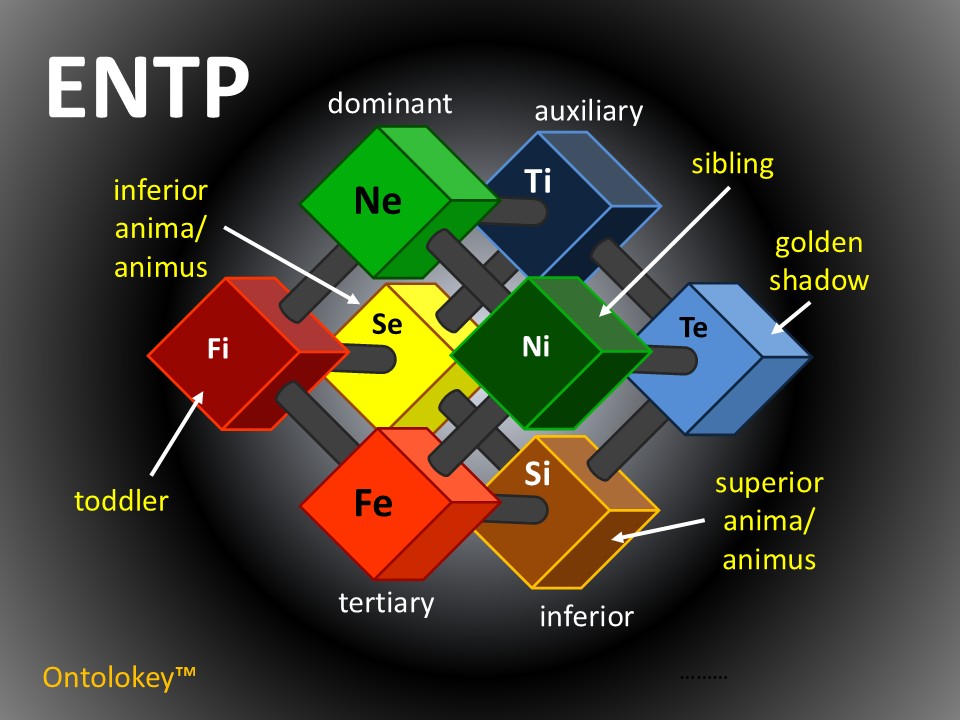
The Seduction of Possibility
Among all psychological structures, there are few that appear as alive, adaptive, inventive, and mentally restless as the ENTP. At first glance, this personality often seems gifted by life itself. It possesses an unusual capacity to perceive possibilities where others perceive limitations, to discover hidden connections where others see isolated facts, and to generate alternatives when circumstances appear fixed and unchangeable. Such individuals frequently impress their surroundings with intellectual agility, originality, humor, spontaneity, and a seemingly inexhaustible curiosity. They often enter a room carrying an invisible field of psychological electricity. Conversations accelerate around them. Stagnant situations become dynamic. Established assumptions are challenged. New perspectives emerge almost effortlessly.
Yet every psychological gift conceals a corresponding danger. Every strength carries within itself the seed of its own distortion. Human beings rarely suffer because of their weaknesses alone. More often, they suffer because their greatest talents become exaggerated, inflated, detached from reality, and transformed into compulsions. What begins as a capacity eventually becomes a prison. What initially grants freedom gradually becomes a form of enslavement. The deepest shadow of the ENTP emerges precisely at this point, where the extraordinary ability to perceive possibility becomes an inability to live within reality.
To understand this shadow, one must first recognize that the ENTP does not experience the world in the same manner as many other people. Most individuals encounter reality primarily through what already exists. They orient themselves toward established structures, known relationships, proven methods, and observable facts. The ENTP, however, tends to perceive reality through the lens of potentiality. The existing situation is rarely experienced as complete or sufficient. Instead, it appears as raw material for transformation, experimentation, and reinterpretation. Every object, institution, relationship, belief system, career path, and life situation contains hidden alternatives waiting to be discovered.
This orientation creates remarkable advantages. The ENTP can become an innovator, entrepreneur, inventor, strategist, visionary thinker, social catalyst, or intellectual pioneer. Many of humanity’s breakthroughs originate from minds unwilling to accept the apparent limits of current circumstances. The capacity to challenge assumptions is often a prerequisite for progress. Civilizations advance because certain individuals refuse to believe that the present state of affairs represents the final possibility. In this sense, the ENTP carries an archetypal relationship to the future. Their psychological attention is naturally drawn toward what could become rather than what already is.
The problem emerges because human life cannot be lived entirely in possibility. Reality demands participation. Possibilities must eventually become choices. Choices must eventually become commitments. Commitments inevitably require sacrifice. The individual who wishes to build a life must eventually exclude countless alternatives in order to actualize one specific path. At precisely this point, the ENTP often encounters an inner conflict that may remain hidden for years. The same psychological force that allows them to perceive unlimited opportunities also makes limitation feel intolerable.
A subtle anxiety begins to emerge whenever possibility starts transforming into reality. During the early stages of a project, a relationship, a career, or an idea, the ENTP often feels intensely alive. The future appears open. Countless developments seem possible. Imagination operates at maximum speed. Enthusiasm becomes almost contagious. The individual experiences a profound sense of expansion and psychological vitality. However, as the situation gradually stabilizes, something changes. The unknown becomes known. The open field begins to narrow. Practical obligations emerge. Details demand attention. Maintenance replaces discovery. What once felt like freedom now begins to feel like confinement.
From the outside, this transition may appear irrational. Others observe an opportunity finally becoming successful and assume satisfaction should follow. Yet the ENTP frequently experiences the opposite reaction. The moment others begin celebrating stability, the ENTP may begin feeling restless. The moment a relationship becomes secure, curiosity may drift elsewhere. The moment a business becomes operational, interest may shift toward a new venture. The moment an idea becomes fully articulated, another unexplored possibility starts demanding attention. The psychological energy that initially created the achievement now seeks escape from it.
This dynamic reveals one of the earliest manifestations of the shadow. The ENTP often falls in love not with reality itself but with emergence. The birth of possibilities becomes psychologically intoxicating. Novelty generates emotional stimulation. Discovery produces excitement. Uncertainty creates fascination. Consequently, completion may feel strangely disappointing. The individual unconsciously becomes dependent on beginnings while avoiding the psychological responsibilities associated with continuation.
Such a pattern frequently remains invisible because modern culture often rewards it. Society celebrates innovation, disruption, creativity, adaptability, and entrepreneurial thinking. The ENTP can therefore spend many years receiving external validation for behaviors that simultaneously undermine long-term fulfillment. People admire the brilliant ideas, the rapid insights, the intellectual versatility, and the ability to reinvent oneself repeatedly. Far fewer people notice the unfinished projects, abandoned relationships, neglected responsibilities, or chronic dissatisfaction concealed behind the appearance of freedom.
At a deeper level, the shadow originates in a particular relationship with limitation. Every human life is finite. Time is limited. Energy is limited. Attention is limited. Mortality itself represents the ultimate limitation. Psychological maturity requires accepting these boundaries and learning to work creatively within them. The ENTP, however, often experiences limitation as a threat to identity. If identity is unconsciously built around endless possibility, then every commitment feels like a form of death. Choosing one path means losing all other paths. Committing to one future requires abandoning countless imagined futures. The shadow emerges when the individual becomes unable to tolerate this reality.
What appears externally as spontaneity may internally conceal avoidance. What appears as intellectual openness may conceal fear of finality. What appears as freedom may conceal dependency. The ENTP can become trapped in an endless cycle of exploration that prevents genuine transformation. New ideas replace old ideas. New relationships replace old relationships. New ambitions replace old ambitions. Yet beneath the surface, the fundamental psychological conflict remains unresolved. The individual continues moving without truly arriving anywhere.
This is why the shadow of the ENTP is often more tragic than destructive. Many personality structures create suffering through rigidity. The ENTP more often suffers through excess openness. Life becomes fragmented into countless possibilities that never fully mature. Talents remain partially developed. Relationships remain partially explored. Dreams remain partially realized. The individual accumulates experiences rather than building an integrated existence. Years pass in motion, yet the deeper self remains strangely homeless.
The deepest irony is that the ENTP’s greatest fear is often precisely what could heal them. Stability appears threatening because it seems synonymous with stagnation. Commitment appears restrictive because it seems synonymous with imprisonment. Limitation appears dangerous because it seems synonymous with death. Yet psychological growth requires discovering that reality and possibility are not enemies. Possibility gains meaning only when embodied. Freedom becomes real only when expressed through action. Creativity achieves significance only when it survives contact with concrete life.
The shadow therefore begins with a paradox. The ENTP seeks freedom through infinite possibility, yet unlimited possibility eventually produces a different kind of captivity. A life spent avoiding limitation becomes limited by avoidance itself. The individual remains surrounded by potential futures while remaining disconnected from the present one. At this point, the shadow ceases to be merely a personality trait and becomes an existential problem. The question is no longer what possibilities exist. The question becomes whether the individual can remain present long enough to transform possibility into reality.
This is the threshold where the deeper descent into the ENTP shadow truly begins.
The Addiction to Novelty and the Fear of Completion
If the first movement of the ENTP shadow emerges through an excessive attachment to possibility, the second movement reveals itself through an addiction that is rarely recognized as such. Unlike addictions associated with substances, this addiction often receives admiration from the surrounding world. It appears intelligent, productive, creative, ambitious, and even visionary. Yet beneath these socially rewarded qualities lies a psychological dependence on stimulation itself. The ENTP does not merely enjoy novelty; in its shadow form, novelty becomes an emotional necessity. New ideas, new projects, new intellectual territories, new relationships, new environments, and new ambitions begin to function as psychological fuel. Without them, an uncomfortable inner emptiness starts to emerge, and it is precisely this emptiness that the shadow seeks to avoid.
Many ENTPs spend years believing that their constant search for new experiences is simply an expression of curiosity. To a degree, this interpretation is correct. Curiosity is one of the most authentic and beautiful characteristics of this personality structure. However, a crucial distinction exists between curiosity and compulsion. Curiosity expands consciousness because it seeks understanding. Compulsion seeks relief. Curiosity is motivated by genuine interest in reality. Compulsion is motivated by the need to escape an uncomfortable psychological state. The difference becomes visible when novelty ceases to be available. The curious individual can rest. The compulsive individual cannot. The absence of stimulation creates anxiety, restlessness, boredom, irritability, and a vague sense that life itself has somehow become insufficient.
At the root of this phenomenon lies an important psychological mechanism. The ENTP often experiences aliveness through the anticipation of discovery. The future contains excitement because it contains uncertainty. Every unexplored possibility carries emotional energy. Every unanswered question contains psychological tension. Every emerging project promises transformation. During these phases, the individual feels energized, inspired, and mentally expanded. The future seems infinitely rich. Life appears full of promise. Yet this state depends upon something remaining unresolved. It depends upon there still being something to discover. Once the unknown becomes known, the emotional charge begins to fade.
This process explains why completion can generate surprisingly complex emotions. Most people assume that achieving a goal should produce satisfaction. Yet for the ENTP, achievement often contains a hidden disappointment. The moment a possibility becomes reality, it loses its mystery. The project that once stimulated imagination now demands maintenance. The business that once represented adventure now requires administration. The relationship that once generated fascination now requires emotional consistency. The intellectual theory that once sparked endless exploration now stands completed before the mind. What was previously alive as potential becomes fixed as actuality. Something essential appears to vanish.
The shadow interprets this loss as evidence that the achievement itself was flawed. The individual assumes that enthusiasm disappeared because the project was wrong, the relationship was inadequate, the career was limiting, or the idea was insufficiently interesting. Consequently, attention shifts elsewhere. A new possibility appears. Excitement returns. Energy resurges. The cycle begins again. What remains unseen is that the problem was never the object itself. The problem was the unconscious dependency upon anticipation. The individual was attached not to the project but to the feeling generated by the project’s incompleteness.
This dynamic can become especially destructive in relationships. During the initial stages of romantic attraction, the ENTP often experiences intense fascination. Another human being appears as an unexplored universe. Every conversation reveals new dimensions. Every interaction contains uncertainty. The imagination fills gaps with possibilities. Curiosity flourishes. Emotional energy rises naturally. In healthy development, this phase gradually transforms into intimacy. Mystery gives way to familiarity. Excitement deepens into trust. Exploration evolves into commitment. Yet the shadow resists this transition because intimacy requires a fundamentally different psychological orientation than fascination.
Fascination thrives on uncertainty. Intimacy thrives on presence. Fascination is sustained by imagination. Intimacy is sustained by reality. Fascination asks what someone could become. Intimacy asks who they actually are. For the shadow-driven ENTP, this transition can feel profoundly disappointing, not because the partner lacks value, but because reality can never compete with unlimited imagination. No human being can embody every possibility projected upon them. No relationship can permanently maintain the excitement of its beginning. Consequently, the individual may unconsciously begin searching for stimulation elsewhere, not because love is absent, but because novelty has become psychologically confused with aliveness itself.
The same pattern frequently appears in intellectual life. The ENTP often possesses extraordinary cognitive versatility. Ideas are generated with remarkable speed. Connections emerge almost spontaneously. Entire conceptual systems can be constructed in a matter of hours. Yet there is a significant difference between creating ideas and developing them. The first activity requires inspiration. The second requires discipline. The first is driven by excitement. The second is driven by responsibility. Shadow dynamics emerge when the individual continually initiates intellectual exploration while avoiding the slower, less glamorous work of refinement and implementation.
This avoidance frequently produces a painful paradox. Many ENTPs possess exceptional potential, yet they become haunted by a chronic sense of unrealized capability. They know what they could achieve. Others often know it as well. Teachers, colleagues, friends, and partners repeatedly comment on their intelligence, creativity, and promise. However, potential alone does not build a life. Potential is merely stored energy. If it remains unexpressed, it gradually transforms into frustration. Over time, the individual begins carrying an invisible burden composed of abandoned possibilities. Every unfinished project becomes a reminder of what might have been. Every neglected ambition becomes evidence against the self. The result is not freedom but accumulated psychological debt.
This debt often manifests as self-doubt. From the outside, observers may assume that the ENTP possesses tremendous confidence. Their verbal fluency, intellectual agility, and willingness to challenge assumptions create an impression of certainty. Yet beneath this appearance there is often a far more complicated reality. The individual knows how many projects have been abandoned. They remember opportunities left unexplored. They are aware of talents that were never fully developed. The contrast between potential and actual achievement becomes increasingly difficult to ignore. What begins as optimism can gradually evolve into an uncomfortable awareness that possibility alone is insufficient.
As this awareness grows, another shadow process emerges. Instead of confronting the pain of incompletion, the individual may intensify the search for novelty. New projects become psychological distractions from old disappointments. New ambitions temporarily silence feelings of inadequacy. New intellectual adventures provide relief from confronting unfinished aspects of life. The cycle therefore becomes self-reinforcing. The more incompletion accumulates, the greater the need for new stimulation. The greater the need for stimulation, the less likely completion becomes. What initially appeared as freedom slowly reveals itself as dependency.
There is also a deeper existential dimension to this pattern. Completion is never merely practical. Completion represents finality. To finish something is to acknowledge limits. It means accepting that a particular possibility has reached its fullest expression. It means allowing ambiguity to disappear. It means surrendering the fantasy that infinite alternative outcomes still exist. Psychologically, this can feel surprisingly threatening. As long as a project remains unfinished, it can still become perfect in imagination. As long as a relationship remains undefined, it can still embody every desired possibility. As long as a dream remains unrealized, it remains protected from reality’s inevitable imperfections.
The shadow therefore develops a subtle preference for incompletion. Unfinished possibilities remain psychologically alive because they have not yet encountered limitation. Reality always introduces complexity, compromise, imperfection, and disappointment. Imagination introduces none of these things. The individual may unconsciously remain loyal to imagination because imagination preserves purity. Reality destroys fantasy by replacing it with facts. Yet only reality allows genuine growth. Only reality allows transformation. Only reality allows a human being to become something rather than merely think about becoming something.
This is why the fear of completion often conceals a deeper fear: the fear of discovering one’s actual limits. Possibility permits grand visions. Reality demands measurement. Within imagination, one can become a brilliant entrepreneur, revolutionary thinker, devoted partner, influential leader, or creative genius. Reality eventually asks a more difficult question. It asks whether one is willing to perform the repetitive, frustrating, exhausting work required to embody those identities. The shadow prefers potential because potential never faces this test. Potential remains eternally untouched by failure.
Yet life cannot be lived within potential forever. Sooner or later, the individual encounters an unavoidable truth. The purpose of possibility is not endless expansion. The purpose of possibility is incarnation. Ideas exist to become realities. Dreams exist to become experiences. Love exists to become commitment. Vision exists to become action. Without this transformation, possibility becomes a substitute for life rather than a path toward it.
The deepest tragedy of the shadow ENTP is therefore not failure. Failure can teach, refine, and strengthen character. The deeper tragedy is perpetual postponement. It is the endless deferral of embodiment. It is the accumulation of futures that never become presents. It is the gradual realization that one has explored countless roads without fully walking any of them. At that point, novelty ceases to feel liberating. It begins to reveal its hidden cost.
For beneath every addiction lies a sacrifice. The addiction to novelty sacrifices depth for breadth. It sacrifices mastery for exploration. It sacrifices intimacy for fascination. It sacrifices realization for possibility. The individual gains an ever-expanding horizon of opportunities while simultaneously losing contact with the transformative power that emerges only through sustained commitment.
This realization marks the next stage in the descent into the ENTP shadow. For beneath the addiction to novelty lies something even more unsettling: a profound conflict with structure itself. The personality that worships freedom eventually discovers that freedom without structure can become a sophisticated form of self-sabotage. It is here that the shadow reveals another of its deepest faces.
Freedom Against Structure: The Self-Sabotaging Rebel
If novelty represents the emotional fuel of the ENTP shadow, then freedom represents its sacred principle. Few psychological structures value autonomy as intensely. The desire to think independently, explore without restriction, question authority, resist intellectual conformity, and preserve personal sovereignty often forms a central pillar of identity. In its healthy expression, this characteristic produces originality, innovation, courage, and an unusual resistance to collective irrationality. Throughout history, individuals with this orientation have frequently challenged stagnant institutions, exposed hidden contradictions, and expanded the boundaries of accepted thought. Civilization itself depends upon people who are willing to question assumptions that others accept without examination.
Yet the shadow rarely attacks a virtue directly. Instead, it exaggerates that virtue until it becomes its opposite. The healthy love of freedom gradually mutates into an inability to tolerate structure. The capacity for independent thought becomes compulsive opposition. Intellectual skepticism becomes chronic contrarianism. What initially served growth begins serving avoidance. At this stage, freedom ceases to be a means toward a meaningful life and becomes an end in itself. The individual begins protecting freedom even when that freedom no longer serves any constructive purpose.
The psychological roots of this process run surprisingly deep. For many ENTPs, structure is not experienced as a neutral framework. It is often perceived as a threat. Rules imply limitation. Expectations imply obligation. Commitments imply permanence. Hierarchies imply constraint. Systems imply predictability. The personality that instinctively seeks expansion often experiences such elements as attempts to compress life into forms that are too narrow, too rigid, too lifeless. As a result, resistance emerges almost automatically. The individual may challenge authority not because authority is wrong but because authority exists. They may reject conventions not because conventions are irrational but because conventions restrict movement.
In early adulthood, this tendency frequently appears attractive. The rebel often seems courageous. The person who refuses to conform appears authentic. Others admire the willingness to question assumptions and resist social pressure. Indeed, there are circumstances where such resistance is genuinely admirable. Every society contains irrational norms, outdated structures, and institutions that deserve criticism. The problem arises when rebellion becomes detached from discernment. The individual no longer evaluates whether a structure is useful or harmful. Instead, structure itself becomes the enemy.
At this point, a subtle inversion occurs. The person who believes they are acting freely becomes psychologically predictable. Every request generates resistance. Every expectation triggers opposition. Every form of order invites disruption. Ironically, the individual who prides themselves on independence becomes governed by an unconscious compulsion to reject limitation. Freedom is no longer chosen consciously. It is demanded reflexively. The rebel ceases to direct the rebellion; the rebellion directs the rebel.
This dynamic frequently reveals itself in professional life. Many ENTPs possess exceptional entrepreneurial instincts because they naturally identify inefficiencies, hidden opportunities, and alternative solutions. They often excel in environments that reward creativity and adaptability. However, every successful endeavor eventually requires systems. Businesses require administration. Teams require coordination. Strategies require execution. Even the most brilliant idea eventually encounters practical realities. Here the shadow begins to create difficulties. The same individual who generated the vision may become frustrated by the structure necessary to realize it.
What often follows is a cycle of self-sabotage. The ENTP creates something valuable, then unconsciously undermines it when stability emerges. Procedures feel suffocating. Maintenance feels tedious. Repetition feels deadening. Responsibilities accumulate. Instead of adapting to these realities, the individual may abandon the project entirely and redirect attention toward a fresh opportunity. Externally, this appears as inconsistency. Internally, it feels like a desperate attempt to preserve vitality. Yet the long-term result is often deeply painful. The individual repeatedly escapes limitations while simultaneously escaping the rewards that only limitation makes possible.
The same conflict frequently appears in relationships. Commitment inevitably creates structure. Shared lives require agreements, responsibilities, compromises, and expectations. Love is not sustained merely by emotional intensity; it is sustained by reliability. Reliability requires consistency. Consistency requires discipline. These realities can feel surprisingly threatening to a shadow-driven ENTP because they introduce obligations that cannot be escaped without consequence. The individual may therefore experience an unconscious tension between intimacy and autonomy. The closer the relationship becomes, the stronger the fear of restriction may grow.
This does not mean the ENTP lacks the capacity for deep attachment. On the contrary, many experience profound emotional bonds. The problem is that attachment and freedom can appear psychologically incompatible when viewed through the lens of the shadow. The individual begins fearing that commitment will eliminate spontaneity, that responsibility will destroy authenticity, or that stability will extinguish excitement. As a result, they may create unnecessary conflict, maintain emotional distance, or continually seek escape routes from situations that actually possess the potential for genuine fulfillment.
A particularly destructive manifestation of this pattern involves the romanticization of alternatives. Whenever difficulties emerge within an existing commitment, imagination begins generating competing possibilities. Another career path appears more exciting. Another city appears more alive. Another project appears more meaningful. Another relationship appears more compatible. The current reality is unconsciously compared against idealized alternatives that exist only in imagination. Naturally, reality loses this comparison every time. Real life contains frustration, compromise, and imperfection. Fantasy contains none of these elements. Consequently, the individual becomes trapped in perpetual dissatisfaction, not because reality is inadequate, but because imagination is being used as a weapon against reality.
Beneath this struggle lies a deeper existential conflict. Structure confronts the individual with permanence. It forces encounters with consequences. It demands responsibility for choices. Yet responsibility is inseparable from adulthood itself. Psychological maturity does not mean eliminating freedom. Rather, it means learning that freedom and responsibility are complementary rather than contradictory. The shadow ENTP often experiences them as enemies. Freedom feels alive. Responsibility feels dead. Freedom feels expansive. Responsibility feels restrictive. Yet this perception conceals a profound misunderstanding about human development.
Without structure, freedom remains abstract. A musician requires disciplined practice to express artistic freedom. A writer requires consistency to transform ideas into books. An entrepreneur requires systems to transform vision into reality. A loving partner requires reliability to transform affection into trust. Every meaningful expression of freedom depends upon forms that initially appear restrictive. Structure is not the enemy of freedom. Structure is the vessel through which freedom becomes effective. The shadow fails to recognize this relationship and therefore remains trapped in a perpetual battle against the very conditions necessary for achievement.
This misunderstanding often becomes especially visible in the realm of self-discipline. The shadow ENTP frequently seeks motivation before action. They wait for enthusiasm, inspiration, excitement, or intellectual fascination to appear. When these states are present, productivity can become extraordinary. Hours of work may be completed effortlessly. Complex problems are solved with remarkable speed. Creativity seems inexhaustible. However, when inspiration disappears, activity often collapses. Tasks are postponed. Projects stagnate. Deadlines are ignored. The individual becomes dependent upon fluctuating internal states rather than stable commitments.
Over time, this dependence creates a painful fragmentation of identity. The individual begins seeing two versions of themselves. There is the person they know they can become during periods of inspiration, brilliance, and momentum. Then there is the person they encounter during periods of boredom, routine, and responsibility. The gap between these two selves grows increasingly painful. Self-esteem begins fluctuating dramatically. On some days the individual feels capable of extraordinary achievements. On other days they feel trapped by their own inconsistency. The resulting frustration often reinforces the desire to escape into new possibilities rather than confront the underlying problem.
The irony is profound. The ENTP shadow fears structure because it appears restrictive. Yet the absence of structure frequently produces far greater restrictions. Opportunities remain unrealized. Talents remain undeveloped. Relationships remain unstable. Financial insecurity persists. Long-term goals remain perpetually distant. What was intended as freedom gradually becomes a form of captivity. The individual remains free from commitment but also free from mastery. Free from responsibility but also free from fulfillment. Free from limitation but also free from achievement.
At a deeper psychological level, rebellion itself often conceals vulnerability. The compulsive rejection of structure frequently masks fear. There is fear of being controlled. Fear of becoming trapped. Fear of losing identity. Fear of being ordinary. Fear of discovering that one’s potential may not match one’s imagination. Structure introduces measurement. It creates visible outcomes. It exposes strengths and weaknesses alike. For this reason, endless freedom sometimes serves as a defense against self-confrontation. As long as possibilities remain open, definitive evaluation remains impossible.
The shadow therefore creates a seductive illusion. It whispers that freedom lies beyond every commitment, beyond every structure, beyond every responsibility. Yet every attempt to pursue this absolute freedom leads to the same destination: instability. Human beings require forms. They require continuity. They require commitments capable of surviving temporary fluctuations in emotion and motivation. The individual who refuses all structure eventually discovers that chaos is not liberation. Chaos is merely another prison.
The transformation begins when the ENTP recognizes that freedom is not the absence of structure but the intelligent selection of structure. Maturity does not require surrendering creativity, curiosity, or independence. It requires directing them. The river becomes powerful not because it lacks banks, but because the banks give its energy a direction. Without them, water disperses into a swamp. The same principle applies psychologically. Structure concentrates potential. Discipline transforms possibility into reality. Commitment allows depth to emerge where constant movement previously prevented it.
Yet this realization introduces an even more uncomfortable challenge. For beneath the conflict with structure lies something darker still. Beneath the rebellion, beneath the novelty seeking, beneath the restless pursuit of possibility, there often exists an unacknowledged emotional world. The ENTP shadow is not merely a battle against external limitations. It is also a battle against inner vulnerability. And it is there, in the hidden territory of feeling itself, that some of the deepest shadows begin to emerge.
The Emotional Blind Spot: Intellect as a Defense Against Vulnerability
One of the most persistent misconceptions surrounding the ENTP concerns emotion. Because these individuals are often articulate, socially agile, expressive, humorous, and psychologically perceptive, many people assume they possess effortless emotional self-awareness. They appear comfortable discussing human behavior. They can analyze motivations, predict reactions, interpret social dynamics, and often display an impressive understanding of psychological patterns. Their intellectual flexibility allows them to examine emotional situations from multiple perspectives. They can explain why people behave as they do, identify hidden tensions within relationships, and deconstruct complex interpersonal conflicts with remarkable clarity. Yet the ability to analyze emotion is not identical to the ability to experience it consciously. The shadow frequently emerges precisely within this distinction.
The ENTP often develops an extraordinarily sophisticated relationship with thought. Thinking becomes more than a cognitive tool. It becomes a primary mode of existence. Problems are approached intellectually. Conflicts are approached intellectually. Relationships are approached intellectually. Even personal suffering is frequently approached intellectually. The mind becomes a lens through which every experience is filtered before it is allowed to enter conscious awareness. While this process creates enormous strengths, it also introduces a subtle danger. Emotion is transformed into an object of observation rather than a lived reality.
At first, this tendency appears harmless. Indeed, it often produces genuine advantages. The ability to maintain psychological distance allows the ENTP to remain calm during crises. Emotional situations that overwhelm others may be approached with curiosity and analytical clarity. They can frequently identify solutions where more emotionally reactive individuals become trapped in confusion. This capacity contributes significantly to their reputation as adaptable and resilient thinkers. Yet what appears as resilience from the outside may sometimes conceal avoidance on the inside. Analysis can become a refuge from experience. Understanding a feeling intellectually can become a substitute for actually feeling it.
This distinction becomes crucial because emotions are not merely information. They are experiences that require participation. Grief cannot be solved as a conceptual puzzle. Fear cannot be neutralized through argument alone. Loneliness does not disappear because its origins have been identified. Shame does not dissolve because it has been accurately categorized. Human beings often attempt to use cognition as a means of controlling emotional reality, yet emotions possess a stubborn autonomy. They insist upon being experienced. When they are repeatedly intellectualized instead of integrated, they do not disappear. They retreat into the unconscious, where they continue influencing behavior in indirect and often destructive ways.
The ENTP shadow frequently develops around this very process. Faced with emotional discomfort, the individual instinctively moves upward into abstraction. Instead of asking, “What am I feeling?” they ask, “Why is this happening?” Instead of inhabiting sadness, they analyze its causes. Instead of confronting vulnerability, they construct theories about vulnerability. Instead of mourning loss, they philosophize about impermanence. While these intellectual responses may contain genuine insight, they often create distance from the emotional reality itself. The individual becomes knowledgeable about feelings while remaining disconnected from them.
Over time, this pattern creates an emotional blind spot. The person may genuinely believe they are self-aware because they possess elaborate explanations for their inner life. They can describe their psychological patterns in detail. They understand their motivations. They recognize recurring dynamics. Yet when confronted with direct emotional experience, uncertainty often emerges. Beneath the sophisticated intellectual framework, there may exist surprising difficulty identifying and expressing deeper emotional states. The individual knows what they think about their feelings but may not fully know what they feel.
This emotional distancing frequently begins early in life. Many intellectually gifted individuals discover that cognitive competence earns approval, admiration, and social value. Intelligence becomes a source of identity. The mind becomes a trusted ally. Emotional vulnerability, by contrast, often feels unpredictable. It introduces uncertainty. It exposes dependency. It reveals needs that cannot always be satisfied through personal competence. Consequently, the developing personality gradually learns to rely upon intellect whenever emotional discomfort appears. The mind becomes both shield and weapon. It protects against pain while simultaneously preventing deeper emotional integration.
One of the most common manifestations of this pattern appears in close relationships. The ENTP may genuinely care deeply about others and may even experience profound affection. However, when relationships enter emotionally demanding territory, a shift often occurs. Instead of remaining present with vulnerability, the individual moves toward analysis. The partner expresses pain, and the ENTP begins searching for explanations. The partner seeks empathy, and the ENTP offers solutions. The partner desires emotional presence, and the ENTP provides conceptual understanding. Although these responses are usually well-intentioned, they often miss the deeper need being expressed.
The problem is not lack of care. In many cases, the opposite is true. The ENTP cares intensely but feels uncertain about how to remain emotionally present without retreating into cognition. Vulnerability creates discomfort because it cannot be mastered through intelligence alone. There is no elegant argument capable of eliminating grief. No clever theory can replace emotional intimacy. No conceptual framework can substitute for genuine presence. Consequently, the individual may unconsciously withdraw into intellectual territory whenever emotional demands increase. From the outside, this can appear cold, detached, dismissive, or insensitive. Internally, however, it is often an attempt to regain psychological control.
This need for control reveals something important about the shadow. Beneath intellectual confidence, there frequently exists a profound discomfort with helplessness. Emotional experiences confront the individual with realities that cannot be managed through ingenuity. Love creates dependency. Loss creates vulnerability. Rejection creates pain. Attachment creates risk. These experiences expose dimensions of human existence that resist rational mastery. The shadow ENTP often responds by attempting to maintain distance from precisely those experiences capable of transforming them most deeply.
An especially revealing example involves grief. When confronted with significant loss, many ENTPs initially respond through analysis rather than emotional immersion. They seek understanding. They search for meaning. They attempt to contextualize the event within broader philosophical frameworks. Such efforts are not inherently unhealthy. Meaning-making can play a crucial role in healing. Problems arise only when understanding becomes a substitute for mourning. The individual may appear functional, productive, and intellectually composed while carrying unresolved grief beneath the surface. Years later, that grief may reappear unexpectedly through anxiety, restlessness, irritability, cynicism, or chronic dissatisfaction.
The same dynamic often emerges around shame. Shame represents one of the most difficult emotions for intellectually oriented personalities because it directly threatens self-image. The ENTP frequently defines identity through competence, adaptability, creativity, and intelligence. Consequently, failures that challenge these qualities can become psychologically destabilizing. Rather than confronting shame directly, the shadow may transform it into sarcasm, detachment, rationalization, or endless self-improvement projects. The individual continues moving forward while avoiding the deeper emotional wound beneath the movement. Yet shame that remains unacknowledged continues shaping behavior from the shadows.
This emotional avoidance is often reinforced by social expectations. Many people admire the ENTP precisely for their mental agility and apparent independence. They become accustomed to being perceived as confident, resilient, and intellectually capable. Over time, vulnerability may begin to feel incompatible with identity itself. Admitting confusion, fear, dependency, sadness, or insecurity seems to threaten the image they have constructed. As a result, emotional honesty becomes increasingly difficult. The individual may reveal thoughts freely while guarding feelings carefully. Others know what they think but remain uncertain who they truly are.
The tragedy of this pattern lies in the fact that the very qualities being avoided are often the ones most necessary for psychological growth. Vulnerability is not weakness. Vulnerability is the gateway to intimacy. Grief is not failure. Grief is the price of attachment. Fear is not evidence of inadequacy. Fear frequently accompanies meaningful transformation. Human beings become whole not by transcending emotion but by integrating it. The shadow ENTP often spends years attempting to outthink emotional reality before eventually discovering that emotional reality cannot be bypassed.
When this discovery occurs, it can feel profoundly disorienting. The individual realizes that intelligence, while enormously valuable, possesses limits. Thought can illuminate experience, but it cannot replace experience. Analysis can clarify suffering, but it cannot fully heal suffering. Insight can guide transformation, but transformation itself requires participation. The person who has spent a lifetime living primarily through cognition must gradually learn the unfamiliar language of emotional presence.
This process is rarely comfortable. It demands surrendering certain illusions of control. It requires remaining present with uncertainty instead of immediately resolving it. It asks the individual to experience sadness without explaining it away, fear without rationalizing it, and vulnerability without defending against it. Yet within this discomfort lies the possibility of genuine integration. The intellect ceases functioning as a fortress and becomes what it was always meant to be: a tool serving a fully embodied human being rather than protecting one from themselves.
For beneath the emotional blind spot lies an even darker territory. Once the defenses of intellect begin to weaken, another hidden force often emerges into view. It is a force that has quietly influenced countless decisions, relationships, ambitions, and conflicts. It is the shadow’s relationship with superiority itself. For the ENTP does not merely struggle with vulnerability. Very often, they struggle with the temptation to place themselves above the very world they claim to challenge. And it is there that one of the most dangerous distortions of this personality begins to reveal itself.
The Superiority Complex: When Intelligence Becomes Narcissistic
Every psychological gift carries a hidden temptation. Strength invites inflation. Talent invites identification. Success invites illusion. The greater the gift, the greater the danger that the individual will unconsciously begin confusing possession of the gift with possession of intrinsic superiority. In the case of the ENTP, the greatest gift is often intellectual agility. The ability to perceive patterns rapidly, identify inconsistencies, dismantle arguments, generate alternatives, and navigate complexity can be genuinely extraordinary. Such individuals frequently discover early in life that they think differently from those around them. They see connections others miss. They solve problems quickly. They become accustomed to being intellectually ahead of conversations, classrooms, workplaces, and sometimes entire social groups. While this capacity can become a source of contribution and creativity, it also contains one of the most dangerous seeds within the ENTP shadow: the temptation to mistake intelligence for value.
The emergence of this shadow is rarely conscious. Few people wake up one morning and decide to become arrogant. Instead, arrogance develops gradually through a subtle psychological process. The individual repeatedly encounters evidence of their intellectual competence. They notice how often predictions prove accurate. They observe others struggling with concepts that seem obvious. They become accustomed to challenging assumptions successfully. Over time, a hidden equation begins forming in the unconscious. Intelligence becomes associated not merely with capability but with worth. The individual starts measuring themselves and others primarily through cognitive criteria. What begins as confidence slowly evolves into a hierarchy.
This hierarchy is often invisible to the person who carries it. Outwardly, the ENTP may appear open-minded, humorous, and socially flexible. Indeed, many possess genuine curiosity about diverse perspectives. Yet beneath this openness there may exist an unspoken ranking system. Some people are perceived as intellectually stimulating. Others are perceived as mentally limited. Some are worthy of engagement. Others are tolerated. The distinction is rarely expressed directly, but it subtly shapes interactions. Attention gravitates toward those who provide novelty, complexity, or challenge. Interest diminishes when conversations become predictable or intellectually uninteresting.
The problem is not that intelligence is valued. Intelligence deserves respect. The problem emerges when intelligence becomes the primary lens through which human beings are evaluated. Such a perspective inevitably distorts reality because human value cannot be reduced to cognitive ability. Wisdom differs from intelligence. Character differs from intelligence. Integrity differs from intelligence. Emotional depth differs from intelligence. Yet the shadow often struggles to recognize these distinctions. It assumes that cognitive sophistication automatically implies overall superiority. In doing so, it commits one of the oldest psychological errors imaginable: confusing one dimension of human development with the whole person.
This distortion frequently manifests as chronic criticism. The ENTP shadow develops an exceptional capacity for identifying flaws. Weak arguments are exposed. Contradictions are noticed. Inefficiencies are highlighted. Social absurdities become obvious. Institutions reveal their weaknesses. Individuals reveal their inconsistencies. The mind becomes extraordinarily skilled at deconstruction. Initially, this capacity appears impressive. It often is impressive. Yet over time a subtle imbalance develops. The individual becomes far more capable of identifying what is wrong than recognizing what is valuable. Criticism becomes effortless. Appreciation becomes difficult.
The psychological consequences are profound. The person begins living in a world populated by disappointments. Every system appears flawed. Every authority appears incompetent. Every ideology appears incomplete. Every relationship contains contradictions. Every human being reveals limitations. Because the mind naturally detects imperfections, reality increasingly appears inadequate. What remains unseen is that this perception says as much about the observer as it does about the world. A consciousness trained primarily toward critique eventually loses its capacity for gratitude. It becomes trapped in permanent dissatisfaction.
This dissatisfaction often conceals an unconscious defense mechanism. The act of judging others creates psychological distance. The person who critiques remains above the object of critique. They become observer rather than participant, evaluator rather than equal. Such a position feels safe because it protects against vulnerability. If others are viewed primarily through their deficiencies, genuine intimacy becomes difficult. To recognize another person’s humanity fully requires recognizing one’s own. Superiority interrupts this process by maintaining separation. The individual remains intellectually engaged while emotionally detached.
An especially revealing manifestation of this dynamic appears in arguments. Healthy intellectual debate can be invigorating. It sharpens thought, exposes assumptions, and promotes understanding. Yet the shadow gradually transforms dialogue into competition. The purpose shifts from discovering truth to demonstrating superiority. Conversations become arenas. Ideas become weapons. Winning becomes more important than understanding. The individual may not even notice the transition because intellectual combat feels natural and stimulating. Yet those around them often perceive something different. They experience dismissal rather than engagement, correction rather than curiosity, and performance rather than dialogue.
Over time, this tendency can create loneliness. People admire intelligence but rarely feel emotionally nourished by constant evaluation. Friends become cautious. Partners become defensive. Colleagues become guarded. The ENTP may remain socially connected while experiencing a subtle absence of genuine intimacy. They understand others conceptually but struggle to meet them as equals. Relationships become intellectually active yet emotionally thin. The individual then wonders why profound connection remains elusive, often failing to recognize the role their own superiority has played in creating the distance they now experience.
The irony is particularly painful because beneath superiority there frequently lies insecurity. Psychological inflation almost always compensates for something. The louder the unconscious claim to exceptionalism, the more likely it is protecting an unacknowledged fear. In many ENTPs, that fear involves inadequacy. Despite outward confidence, there often exists a haunting awareness of unrealized potential. The individual knows how much remains unfinished. They know how many ambitions have been abandoned. They know how often brilliance has failed to become accomplishment. Consequently, superiority sometimes functions as a defense against self-judgment. By focusing on the limitations of others, attention is diverted from unresolved conflicts within the self.
This dynamic explains why criticism can become addictive. Every flaw identified externally provides temporary relief from confronting internal contradictions. Every intellectual victory offers momentary reassurance. Every demonstration of competence reinforces identity. Yet none of these experiences resolve the underlying insecurity. The relief remains temporary. The need for validation returns. The cycle repeats. What appears externally as arrogance often conceals an inner struggle with self-worth that has never been fully addressed.
The shadow becomes even more dangerous when intelligence is used to rationalize moral failures. Because the ENTP possesses considerable cognitive flexibility, they can often generate persuasive justifications for almost any behavior. Contradictions can be reframed. Responsibilities can be reinterpreted. Ethical concerns can be debated endlessly. The mind becomes capable of constructing elaborate narratives that protect the ego from accountability. At this stage, intelligence ceases serving truth and begins serving self-preservation. The individual becomes vulnerable to a particularly sophisticated form of self-deception because they possess the intellectual tools necessary to defend almost any position, including positions that undermine their own integrity.
This possibility was already hinted at in the classical descriptions of the intuitive personality. When intuitive perception becomes detached from balancing functions, loyalty shifts away from objective reality and toward the authority of one’s own vision. External consequences become secondary. Established values lose influence. Conviction derives not from careful integration but from confidence in perception itself. Under such conditions, the individual may begin treating their own insights as inherently superior to the accumulated wisdom of experience, tradition, or collective knowledge. The result is not liberation but inflation. The person becomes convinced of their exceptional perspective while gradually losing contact with corrective feedback.
The deeper tragedy of intellectual superiority is that it prevents learning. Genuine learning requires humility. One must admit ignorance before knowledge can enter. One must acknowledge limitation before growth becomes possible. The individual who secretly believes they already stand above others becomes increasingly resistant to transformation. New information is filtered through existing certainty. Criticism is dismissed. Feedback is rationalized away. The personality gradually hardens around its own intelligence. Ironically, the very quality that once enabled growth begins obstructing it.
Psychological maturity requires a painful but necessary realization. Intelligence is real, but it is not enough. A brilliant mind can still live a foolish life. A person capable of understanding human behavior can still misunderstand themselves. Someone able to dismantle every argument can still remain imprisoned by unconscious motivations. Human development involves dimensions that cannot be conquered through intellect alone. Compassion, integrity, humility, courage, loyalty, patience, and emotional depth obey different laws. They cannot be argued into existence. They must be lived.
The shadow begins dissolving when the ENTP discovers that intelligence reaches its highest form not through superiority but through service. The most developed mind is not the one that dominates others but the one that illuminates reality. It seeks truth rather than victory. It values understanding more than status. It remains curious even when certainty would feel more comfortable. Most importantly, it recognizes that every human being contains forms of knowledge inaccessible to intellect alone.
Yet this realization opens the door to an even deeper confrontation. For beneath superiority and criticism lies a hidden emotional wound that often drives both. The endless search for novelty, the resistance to commitment, the fear of vulnerability, and the need to remain intellectually above others frequently originate from a more fundamental anxiety. It is the fear of becoming insignificant. It is the terror that beneath all the ideas, possibilities, talents, and ambitions there may be no stable identity at all. And it is there, in the confrontation with inner emptiness, that the shadow reaches one of its darkest depths.
The Abyss of Meaninglessness: The Fear of Being Nobody
Every psychological shadow possesses a center of gravity. Numerous symptoms may appear on the surface, yet beneath them there often exists a single organizing fear from which many other distortions emerge. The addiction to novelty, the resistance to commitment, the avoidance of vulnerability, the inflation of intellect, and the tendency toward perpetual reinvention may appear at first glance to be separate issues. However, when examined carefully, they frequently reveal a common emotional source. Beneath the movement, beneath the stimulation, beneath the constant generation of possibilities, there often exists a fear that is rarely acknowledged directly. It is the fear that if all movement were to stop, if all distractions were removed, and if all future possibilities disappeared, there would be nothing substantial left. The shadow asks a terrifying question: Who am I when I am not becoming something?
This question strikes at the heart of the ENTP’s psychological structure because identity is often experienced dynamically rather than statically. Many people derive a stable sense of self from continuity. They know who they are because they remain connected to enduring commitments, long-term values, established roles, or consistent emotional bonds. The ENTP, by contrast, frequently experiences identity through exploration itself. The self is discovered through movement. It emerges through experimentation, innovation, adaptation, and engagement with new possibilities. This orientation creates extraordinary flexibility, but it also introduces a hidden vulnerability. If identity depends upon movement, then stillness becomes dangerous.
The shadow therefore develops an unconscious distrust of psychological stability. Stability creates silence. Silence creates self-confrontation. Self-confrontation raises uncomfortable questions. The individual who remains constantly occupied with new ideas rarely has to examine what remains unresolved beneath them. The next project, the next ambition, the next intellectual fascination, or the next life transformation can always postpone the encounter. Activity becomes a form of psychological anesthesia. It keeps deeper anxieties at bay. The individual continues moving, often sincerely believing they are pursuing fulfillment, while simultaneously avoiding an encounter with emptiness.
This emptiness is frequently misunderstood. It is not necessarily depression. It is not always sadness. Often it manifests as a subtle absence of meaning. The person feels stimulated but not fulfilled. They feel occupied but not grounded. They feel mentally alive but existentially uncertain. Outwardly, life may appear successful. Opportunities abound. Conversations remain interesting. New ideas continue appearing. Yet beneath the surface there is a growing sense that something essential is missing. The individual begins suspecting that endless possibility has failed to answer a deeper question.
This realization often arrives gradually. In youth, possibility itself provides meaning. The future appears vast. Every year introduces new experiences. Every opportunity feels transformative. The sheer abundance of potential creates excitement. However, as life progresses, a difficult truth begins to emerge. Potential is not meaning. Possibility is not identity. Opportunity is not purpose. One can spend decades accumulating experiences without ever discovering why those experiences matter. One can explore countless paths while remaining uncertain about where one actually belongs.
The shadow responds to this discomfort by intensifying the search. If one career fails to provide meaning, perhaps another will. If one city feels empty, perhaps a different environment will solve the problem. If one relationship loses emotional intensity, perhaps another connection will restore vitality. If one intellectual framework becomes unsatisfying, perhaps a more sophisticated philosophy will finally provide answers. The search becomes increasingly ambitious because the underlying dissatisfaction remains unresolved. Yet every external solution eventually produces the same outcome. Initial excitement fades. Familiarity emerges. The old questions return.
At this stage, many ENTPs begin encountering a form of existential fatigue. They have explored enough possibilities to realize that novelty itself cannot provide lasting fulfillment. Yet they may not yet know what can. The result is often a peculiar psychological state characterized by simultaneous excitement and emptiness. The individual remains fascinated by life while feeling strangely disconnected from it. New possibilities continue generating stimulation, but stimulation no longer feels sufficient. Something deeper is being sought, though its nature remains unclear.
This experience often exposes a painful contradiction. The ENTP frequently defines themselves through potential. They imagine who they could become. They envision future versions of themselves. They maintain multiple possible identities simultaneously. There is often a future entrepreneur, future writer, future philosopher, future creator, future innovator, future leader, future explorer, or future visionary existing somewhere in the imagination. These imagined selves provide motivation and hope. Yet they also create a problem. The actual self is continually measured against idealized future possibilities. The present becomes a temporary state that never feels complete.
Consequently, life begins occurring somewhere else. Meaning is postponed into the future. Fulfillment is expected after the next breakthrough, the next achievement, the next discovery, or the next transformation. The individual remains psychologically oriented toward what is coming rather than what is here. Years can pass within this orientation. The future remains alive while the present becomes strangely neglected. Eventually, however, reality intervenes. Time moves forward. Certain possibilities disappear forever. Some dreams remain unrealized. Some ambitions lose relevance. The individual begins recognizing that infinite potential is an illusion because human life itself is finite.
This recognition can trigger a profound existential crisis. The ENTP shadow has often operated under the assumption that identity remains open indefinitely. There is always another possibility. There is always another version of the self waiting to emerge. Yet mortality imposes limits. Every choice excludes alternatives. Every year closes certain doors. Every commitment eliminates competing futures. What once felt like freedom begins to reveal itself as impermanence. The individual realizes that they cannot become everything.
For some personalities, this realization produces acceptance. For the shadow ENTP, it often produces anxiety. If identity has been built around endless possibility, then limitation feels like annihilation. The person begins fearing that every choice destroys parts of themselves. Every commitment seems to require sacrifice. Every definitive step appears to eliminate countless alternative identities. Consequently, they remain suspended between futures, unable to fully inhabit any one of them. The result is not liberation but fragmentation.
At its deepest level, this fragmentation reflects a fear of insignificance. The ENTP often dreams on a large scale. Their imagination naturally expands toward future possibilities, innovations, discoveries, and transformations. They frequently carry an implicit expectation that life should be extraordinary. There should be impact. There should be meaning. There should be significance. While such aspirations can inspire remarkable achievements, they also create vulnerability. Ordinary existence begins to feel insufficient. Daily life appears too small. Routine feels threatening because it confronts the individual with the possibility that they may be fundamentally ordinary after all.
This fear is rarely spoken aloud because it feels embarrassing. Yet it exerts enormous influence. The need to remain exceptional drives perpetual movement. If significance has not yet been achieved, then the search must continue. If fulfillment has not yet arrived, then a greater possibility must exist somewhere else. The individual becomes psychologically dependent upon future greatness because present reality feels inadequate. Yet the pursuit itself often prevents the discovery of what they seek.
The paradox is devastatingly simple. Meaning is rarely found through expansion alone. Meaning emerges through depth. It arises from sustained relationships, enduring commitments, lived values, and the gradual integration of experience. Meaning requires roots as much as wings. The shadow ENTP often cultivates wings while neglecting roots. They learn how to move but not how to remain. They learn how to explore but not how to belong. Consequently, they become rich in possibilities yet poor in grounded significance.
The encounter with emptiness therefore represents a crucial turning point. For perhaps the emptiness is not merely an enemy. Perhaps it serves a psychological function. Perhaps it appears when distractions lose their power because something deeper is demanding attention. The individual who has spent years seeking identity externally must eventually confront the possibility that identity cannot be discovered through endless exploration alone. It must also be cultivated internally. The question is no longer what possibilities exist. The question becomes what values remain when possibility disappears.
This confrontation is profoundly unsettling because it removes familiar defenses. Novelty cannot answer it. Intelligence cannot answer it. Achievement cannot answer it. Social validation cannot answer it. The individual stands before a more fundamental challenge: constructing a self that remains meaningful even in the absence of stimulation, admiration, excitement, or future fantasies. Such a task requires a level of psychological maturity far deeper than intellectual brilliance.
Yet it is precisely here that transformation becomes possible. The fear of being nobody gradually dissolves when the individual discovers that identity is not something earned through exceptionalism. Identity emerges through authenticity. Meaning is not created by becoming everything. Meaning is created by becoming something fully. The self does not gain depth through infinite expansion but through conscious embodiment. The individual ceases chasing significance and begins living it.
However, before this transformation can occur completely, another shadow must be confronted. For the fear of insignificance often generates compensatory fantasies of greatness. Hidden beneath the anxiety of being nobody there frequently exists an opposite fantasy: the belief that one is destined to become somebody extraordinary. It is within this tension between grandiosity and emptiness that the next and perhaps most deceptive aspect of the ENTP shadow begins to emerge.
Grandiosity and Self-Deception: The Seduction of the Exceptional Self
The fear of insignificance rarely exists in isolation. Human psychology almost never tolerates a vacuum for long. Whenever a profound insecurity develops, the psyche instinctively seeks compensation. Feelings of weakness generate fantasies of strength. Feelings of inferiority generate fantasies of superiority. Feelings of emptiness generate fantasies of special destiny. The greater the unconscious fear, the more seductive the compensatory fantasy often becomes. In the shadow development of the ENTP, this compensatory process frequently assumes a particularly sophisticated form because it becomes intertwined with genuine intelligence, authentic creativity, and legitimate potential. Unlike purely delusional grandiosity, the ENTP’s grandiosity often contains enough truth to remain convincing.
This is what makes it so dangerous. The individual is not entirely wrong about themselves. They often are highly intelligent. They frequently do possess unusual talents. They may genuinely see possibilities others overlook. They may demonstrate remarkable originality and creative capacity. Consequently, when fantasies of exceptionalism emerge, they find fertile psychological ground. Reality provides supporting evidence. The individual remembers moments of brilliance, flashes of insight, extraordinary ideas, and occasions when their perception proved remarkably accurate. These experiences become building blocks for a hidden narrative. Gradually, the personality begins constructing an image of itself as uniquely gifted, unusually perceptive, or destined for extraordinary significance.
At first, such beliefs may appear harmless or even motivating. Confidence can encourage achievement. Ambition can inspire growth. Vision can expand horizons. Human beings often accomplish remarkable things because they dare to imagine possibilities beyond their current circumstances. The problem emerges when the imagined future self becomes psychologically more important than the actual self. The individual begins living in relationship not with reality but with a fantasy of future greatness. Identity shifts away from present embodiment toward projected potential. The exceptional person one might become gradually overshadows the ordinary person one currently is.
This shift creates a subtle but profound distortion of perception. Everyday reality begins losing value because it cannot compete with imagined futures. Ordinary responsibilities seem insignificant. Incremental progress feels inadequate. Practical limitations appear intolerable. Relationships become secondary to future ambitions. The present moment itself starts feeling like an obstacle rather than a home. The individual develops an unconscious impatience with reality because reality unfolds slowly, while imagination moves at the speed of thought.
The ENTP is particularly vulnerable to this process because imagination often operates with extraordinary power. Future possibilities do not appear as vague abstractions. They feel vivid, alive, emotionally compelling, and psychologically real. Entire futures can be envisioned in exquisite detail. New ventures seem destined for success. Creative projects appear revolutionary. Intellectual contributions feel potentially transformative. The imagination generates not merely possibilities but entire identities. The individual experiences themselves through these projected futures long before any corresponding reality exists.
Here the shadow introduces a dangerous confusion. Potential becomes mistaken for accomplishment. Vision becomes mistaken for realization. Insight becomes mistaken for transformation. The individual begins deriving emotional satisfaction from imagining achievements rather than creating them. Fantasies of success produce many of the same psychological rewards as actual success. Excitement emerges. Confidence increases. Motivation temporarily rises. Yet nothing concrete has changed. The person experiences the emotional benefits of achievement without enduring the difficulties necessary to achieve anything.
Over time, this pattern can become deeply addictive. The imagined future remains perfect because it has not encountered reality. Every project exists in ideal form. Every ambition remains free from limitation. Every future self possesses all the qualities currently lacking. Consequently, imagination becomes increasingly attractive while reality becomes increasingly disappointing. Real life introduces obstacles. Real work demands effort. Real relationships involve compromise. Real achievement requires patience. The fantasy remains pure. The world remains imperfect. The shadow naturally gravitates toward the fantasy.
This dynamic often produces a peculiar psychological split. On one level, the individual possesses grand visions of who they will become. On another level, they remain haunted by awareness of how little has actually been realized. The gap between these two realities gradually widens. Outward confidence may continue, but inward tension increases. The person simultaneously experiences superiority and inadequacy. They feel exceptional in imagination and insufficient in reality. These contradictory experiences coexist because they originate from different psychological levels.
The resulting instability frequently manifests through cycles of inflation and collapse. During periods of inspiration, the individual feels unstoppable. New ideas emerge rapidly. Future possibilities appear limitless. Confidence expands dramatically. The person becomes convinced that breakthrough success is imminent. Yet when reality inevitably introduces resistance, enthusiasm begins fading. Progress proves slower than expected. Obstacles appear. Doubts emerge. The inflated self-image starts weakening. What follows is often a period of disappointment, self-criticism, or disillusionment. The individual falls from imagined greatness into perceived failure.
Such cycles can repeat for years. Each new possibility reignites grand expectations. Each encounter with reality generates frustration. Instead of questioning the fantasy itself, the individual often assumes the specific project was flawed. Another opportunity appears. Hope returns. The cycle begins again. What remains unexamined is the psychological need driving the grandiosity. The fantasy persists because it serves an emotional function. It protects against confronting limitations, uncertainty, and ordinary humanity.
One of the most revealing manifestations of this shadow appears in the relationship to recognition. Many ENTPs sincerely believe they seek truth, innovation, or creative expression for their own sake. Often they do. Yet beneath these motives there may also exist a powerful desire to be seen as exceptional. The individual wants their uniqueness acknowledged. They want their intelligence recognized. They want their contribution appreciated. Such desires are entirely human. Problems arise only when self-worth becomes dependent upon them.
The shadow gradually transforms recognition into validation of existence itself. If others acknowledge brilliance, then significance feels secure. If admiration appears, identity feels confirmed. If achievement receives attention, self-doubt temporarily recedes. Yet because external validation can never permanently resolve internal insecurity, the hunger continues. Every achievement produces only temporary satisfaction. The need for recognition returns. The person begins chasing admiration in the same way others chase wealth, status, or pleasure. No amount ever feels sufficient because the underlying wound remains untouched.
This is why grandiosity often coexists with hypersensitivity to criticism. The individual may appear intellectually fearless, eagerly engaging in debate and challenging established ideas. Yet criticism directed toward the self often produces a disproportionately strong reaction. Defensive arguments emerge. Rationalizations appear. The critic is dismissed as uninformed or limited. What seems like confidence reveals itself as fragility. The grandiose self-image requires protection because it compensates for deeper uncertainty. Any challenge to that image threatens the psychological structure supporting it.
At its most extreme, the shadow develops a subtle contempt for ordinary life. The individual becomes convinced that they are meant for something greater. Routine appears beneath them. Practical responsibilities feel irrelevant. Incremental growth seems unworthy of their potential. They wait for extraordinary opportunities while neglecting ordinary disciplines. Yet almost every genuinely extraordinary achievement emerges from ordinary effort repeated consistently over time. Greatness is built through routines that the grandiose self often despises.
The tragedy here is immense because the fantasy of exceptionalism frequently prevents the realization of genuine excellence. The person becomes so attached to being extraordinary that they avoid the experiences necessary to become truly capable. They protect their image instead of developing their character. They preserve potential instead of embracing growth. They remain loyal to the dream of greatness while avoiding the humility that greatness requires.
Beneath all grandiosity lies an existential misunderstanding. The shadow assumes that value must be earned through exceptional achievement. It assumes that being ordinary is equivalent to being insignificant. It assumes that worth depends upon standing above others. Yet human dignity does not originate in exceptionalism. A meaningful life does not require historical importance. Depth of character is not measured by public recognition. The need to become extraordinary often conceals an inability to accept oneself as human.
Psychological maturity begins when this illusion starts dissolving. The individual gradually recognizes that greatness and ordinariness are not opposites. Every meaningful life contains both. Extraordinary moments emerge from ordinary days. Significant achievements emerge from humble disciplines. Creative breakthroughs emerge from persistent labor. The fantasy of exceptionalism loses its grip when the individual discovers that reality itself possesses enough richness to justify engagement.
Yet the collapse of grandiosity introduces a new challenge. Once the fantasy of future greatness begins weakening, the individual must confront aspects of themselves that have long remained hidden. Regrets emerge. Unresolved failures return to awareness. Opportunities that were abandoned become visible. The mind that once looked endlessly toward the future is forced to turn backward and examine its own history.
And it is here, among the unfinished projects, broken commitments, neglected talents, and unrealized possibilities, that another shadow awaits. For beneath grandiosity lies a painful accumulation of ghosts. These are not the ghosts of what happened. They are the ghosts of what could have happened. They are the lost futures that still linger within the psyche, demanding recognition long after they have disappeared.
The Graveyard of Unlived Lives: Regret, Lost Potential, and the Weight of Unchosen Futures
There are many forms of psychological suffering, but few are as uniquely characteristic of the ENTP shadow as the burden of unrealized possibility. Other personalities often suffer from failures they experienced, mistakes they made, opportunities they lost through action, or consequences they could not avoid. The ENTP, however, frequently suffers from something more elusive and in many ways more haunting. They suffer from futures that never became realities. Their pain often originates not from what happened, but from what might have happened. They are pursued not by memories alone, but by possibilities.
This distinction is important because unrealized potential occupies a peculiar position within the human psyche. An actual failure eventually acquires boundaries. It becomes part of history. One can analyze it, learn from it, mourn it, and ultimately integrate it. But unrealized potential remains unfinished. It never reaches completion. It exists in a perpetual state of psychological ambiguity. Because it never became real, it can never be fully evaluated. The imagined future remains suspended between possibility and impossibility. It survives as a question without an answer. The ENTP, perhaps more than most personality structures, possesses an unusual tendency to preserve these unanswered questions for years or even decades.
This tendency emerges naturally from their orientation toward possibility. Throughout life, they often perceive numerous paths simultaneously. While others commit relatively early to a particular direction, the ENTP frequently maintains awareness of alternatives. Every choice carries visible sacrifices. Every commitment excludes competing opportunities. Every decision closes doors that imagination continues illuminating long after they have been abandoned. Consequently, life becomes populated not only by actual experiences but also by parallel lives that were never lived.
In youth, this multiplicity often feels exhilarating. The future appears expansive. Possibilities seem endless. One can imagine becoming almost anything. Careers, relationships, intellectual pursuits, creative projects, businesses, adventures, and identities remain available. The individual experiences freedom through abundance. The existence of many possible futures creates hope. Yet time gradually transforms abundance into something more complicated. As years pass, possibilities begin narrowing. Some opportunities vanish. Certain paths become increasingly unlikely. The individual realizes that every life, regardless of intelligence or talent, eventually becomes a specific life rather than an infinite collection of potential ones.
For many ENTPs, this realization arrives later than expected because imagination continues generating alternatives long after circumstances have changed. Even after choosing a profession, one can still envision dozens of others. Even after entering a committed relationship, one can imagine alternative partners and alternative destinies. Even after establishing a life, countless unrealized versions of the self continue existing within the mind. These imagined lives possess remarkable psychological power because they remain untouched by reality. They never experienced failure. They never encountered limitation. They never suffered disappointment. They remain perfect precisely because they were never tested.
Here the shadow begins constructing one of its most deceptive illusions. The unlived life gradually becomes idealized. The abandoned path acquires an aura of greatness. The business that was never started appears destined for success. The creative project that remained unfinished seems capable of changing everything. The relationship that never developed acquires mythical significance. The city never moved to, the degree never pursued, the talent never cultivated, and the dream never realized all become psychologically elevated. The imagination edits out uncertainty and preserves only possibility.
As a result, the actual life becomes vulnerable to constant comparison. Reality, with all its frustrations and imperfections, is measured against fantasies that never encountered resistance. Naturally, reality loses. Every genuine life contains compromises. Every meaningful commitment involves sacrifices. Every achievement contains limitations. Yet the unlived life contains only potential. The comparison is fundamentally unfair, but the psyche often performs it unconsciously. The individual begins feeling dissatisfied not because their actual life lacks value, but because it is being compared to impossibly idealized alternatives.
This process can create a profound undercurrent of regret. Yet the regret itself often remains difficult to identify because it is diffuse. The person may not consciously think about specific missed opportunities every day. Instead, they experience a generalized sense of incompleteness. There is a feeling that something important was left unfinished. A suspicion that another version of life might have been more authentic. A lingering question about whether one’s greatest potential was ever truly realized. These feelings can persist even in objectively successful individuals because they are rooted not in external achievement but in the relationship between possibility and reality.
One of the most painful aspects of this shadow involves talent itself. Many ENTPs receive early recognition for their intellectual abilities, creativity, originality, or potential. Teachers notice them. Friends admire them. Colleagues recognize unusual capacities. Throughout life they often hear variations of the same message: “You could do anything if you applied yourself.” While intended as encouragement, such statements frequently create an invisible psychological burden. Potential becomes an obligation. The individual begins measuring themselves not against ordinary standards but against the highest versions of what they might become.
This burden grows heavier over time. Every abandoned project becomes evidence against the self. Every unrealized ambition contributes to an accumulating sense of debt. The person remembers books they intended to write, businesses they intended to build, disciplines they intended to master, relationships they intended to deepen, and transformations they intended to pursue. Individually, each unfinished endeavor may seem insignificant. Collectively, they create a psychological archive of unrealized possibilities. The shadow turns this archive into a source of self-judgment.
At a deeper level, these regrets often reveal a conflict between freedom and embodiment. The ENTP naturally loves possibilities because possibilities preserve freedom. Once a possibility becomes reality, it acquires limitations. Consequently, many possibilities remain in the realm of imagination longer than they should. Yet every postponed commitment eventually exacts a cost. Life rewards embodiment, not merely contemplation. Potential acquires value only when translated into action. The tragedy is that the shadow often discovers this truth only after enough time has passed for certain opportunities to disappear permanently.
This confrontation with irreversibility can be deeply unsettling. Human beings often imagine that life offers unlimited chances for reinvention. To some degree, it does. Yet certain opportunities belong to specific seasons of life. Relationships end. Circumstances change. Energy shifts. Time moves forward. The individual eventually realizes that some futures have truly been lost. Not postponed. Not delayed. Lost. This realization frequently produces grief, though it is a form of grief that society rarely acknowledges.
Most cultures possess rituals for mourning deaths, endings, and visible losses. Few possess rituals for mourning unlived lives. Yet psychologically, such mourning is necessary. The individual must eventually release attachment to identities that will never become reality. They must allow imagined futures to die. They must stop negotiating with possibilities that no longer exist. Without this process, the psyche remains divided between present reality and vanished alternatives. Energy becomes trapped in the past rather than invested in the life that remains available.
This mourning is particularly difficult because the ENTP often experiences identity through potential. Letting go of an unlived future can therefore feel like losing a part of oneself. The abandoned entrepreneur, artist, inventor, explorer, thinker, or visionary continues living within the imagination. To acknowledge that some of these identities will never fully materialize feels almost like a symbolic death. Yet psychological maturity requires precisely this acceptance. One cannot become whole while remaining loyal to every possible self.
Paradoxically, this acceptance often creates freedom rather than limitation. As long as the psyche remains attached to countless unrealized futures, attention becomes fragmented. Energy is divided among competing identities. The individual remains psychologically dispersed across multiple timelines. When those fantasies are consciously mourned, energy returns to the present. The person can finally invest themselves fully in the life they are actually living. Possibility ceases functioning as an escape from reality and begins serving reality instead.
This transformation involves a profound shift in perspective. The mature individual gradually recognizes that the value of a life is not determined by the number of possibilities preserved. It is determined by the depth with which chosen possibilities are embodied. Meaning does not emerge from keeping all doors open. Meaning emerges from walking through certain doors completely. The unlived life will always appear attractive because it remains untouched by imperfection. Yet only the lived life possesses substance. Only the lived life allows love, contribution, growth, failure, wisdom, and transformation.
The graveyard of unlived lives therefore contains an unexpected gift. If one has the courage to enter it consciously, it reveals the limits of possibility itself. It teaches that potential is not sacred. Reality is sacred. It teaches that preserving options indefinitely is not freedom. Freedom arises when one willingly sacrifices alternatives in service of something real. Most importantly, it teaches that regret often originates not from choosing wrongly, but from refusing to choose deeply enough.
Yet even after confronting regret, another challenge remains. For beneath the unfinished projects, beneath the abandoned dreams, and beneath the ghosts of unrealized futures lies a deeper confrontation with time itself. The ENTP shadow often behaves as though there will always be another opportunity, another beginning, another reinvention. But eventually every individual encounters the same truth: life is finite. And it is in the confrontation with finitude that the deepest illusions of endless possibility finally begin to break apart.
The War Against Time: Mortality, Finitude, and the Collapse of Infinite Possibility
There comes a moment in every human life when the architecture of possibility collides with the reality of time. For some, this confrontation occurs gradually. For others, it arrives with brutal suddenness through loss, illness, aging, failure, or an unexpected encounter with mortality. Regardless of how it appears, the confrontation cannot be avoided indefinitely. The future, which once seemed endless, begins revealing its boundaries. The individual discovers that life is not merely a field of possibilities but also a process of exclusions. Every year that passes transforms certain futures into impossibilities. Every choice narrows the range of available alternatives. Every commitment closes doors. Every decade removes opportunities that once appeared permanent. For the ENTP shadow, no realization feels more threatening.
To understand why this confrontation is so profound, one must remember that the ENTP often experiences psychological vitality through openness itself. Possibility is not merely attractive; it is existentially significant. The awareness that life could become something different generates energy, hope, curiosity, and motivation. The future functions almost like a psychological horizon. As long as it remains vast and undefined, the individual feels alive. Consequently, the gradual emergence of limitation is not experienced merely as a practical reality. It is experienced as an assault upon a fundamental orientation toward existence.
In youth, time appears generous. There is always another opportunity. Another career path can be explored. Another relationship can begin. Another project can be launched. Another skill can be learned. The future seems infinitely expandable. Mistakes appear reversible because there appears to be enough time to correct them. Even failures often feel temporary because countless alternative possibilities remain available. The individual moves through life with an implicit assumption that reinvention remains permanently accessible.
For many years, this assumption appears justified. The ENTP often possesses sufficient adaptability to recover from setbacks, redirect ambitions, and create new opportunities. Indeed, this capacity becomes one of their greatest strengths. They frequently survive circumstances that would psychologically immobilize others because they instinctively perceive alternatives. When one door closes, they immediately notice five others. When one identity becomes obsolete, they begin constructing another. Their resilience is often inseparable from their relationship to possibility.
Yet resilience contains a hidden vulnerability when it becomes dependent upon endless alternatives. Eventually, life introduces situations that cannot be solved through reinvention alone. Time itself becomes one of those situations. Unlike careers, relationships, locations, or identities, time cannot be replaced. It cannot be negotiated with. It cannot be outsmarted. It moves in one direction only. Every adaptation, no matter how brilliant, remains subject to this reality. The shadow often spends years unconsciously attempting to escape this truth.
One of the most common expressions of this escape appears through perpetual postponement. The individual behaves as though essential decisions can always be made later. Meaningful commitments are deferred. Difficult conversations are delayed. Creative ambitions remain in preparation. Personal transformation remains a future project. Life becomes organized around anticipated beginnings rather than actual engagement. The future functions as a psychological storage space where unresolved responsibilities accumulate indefinitely.
This pattern often persists because postponement initially feels harmless. A year passes. Then another. Opportunities still seem available. Possibilities remain visible. The individual continues assuming that the future will eventually provide the perfect conditions for action. Yet time quietly transforms the landscape. Circumstances change. Priorities shift. Energy fluctuates. Certain opportunities disappear altogether. What once seemed like temporary delay gradually reveals itself as permanent loss. The person discovers that postponement is not neutral. Every delay participates in the shaping of a life.
The shadow struggles intensely with this realization because it threatens one of its central fantasies: the fantasy of infinite reversibility. The ENTP often imagines that no choice is final because alternatives remain available. Yet life repeatedly demonstrates the opposite. Certain moments occur only once. Certain relationships cannot be recreated. Certain developmental stages belong to specific periods of existence. Every human life contains windows that eventually close. The recognition of this fact introduces a form of existential pressure that the shadow would prefer to avoid.
This pressure often becomes especially visible during midlife. By this stage, enough time has passed for patterns to become visible. The individual can no longer rely entirely on future projections because a substantial portion of life already exists as history. Dreams that once felt inevitable may remain unrealized. Talents that once seemed destined for development may remain dormant. Ambitions that once generated excitement may have lost relevance. The person begins encountering evidence that possibility alone does not guarantee fulfillment. What matters is not merely what could have happened but what actually happened.
For some ENTPs, this realization produces anxiety. The future no longer feels limitless. Mortality becomes psychologically real rather than intellectually abstract. The individual recognizes that there are now fewer years ahead than behind. Such awareness can trigger a frantic attempt to recover lost possibilities. New projects emerge. Major life changes are initiated. Radical reinventions are pursued. On the surface, these actions may appear energetic and courageous. Sometimes they genuinely are. Yet they can also represent an unconscious struggle against finitude itself.
The deeper issue is not aging. The deeper issue is identity. If identity has been built around endless possibility, then mortality threatens that identity directly. Death represents the ultimate limitation. It is the final closure of alternatives. Every unlived life remains unlived forever. Every unrealized possibility remains unrealized. Every postponed decision eventually becomes impossible. Mortality therefore forces a confrontation that the shadow has resisted for decades. It asks a devastatingly simple question: What if there is not enough time to become everything you imagined?
This question often generates grief because the answer is obvious. There is not enough time. There never was. Human life has always required sacrifice. Every meaningful existence is built upon renunciations. One path is chosen while others are abandoned. One identity develops while others remain dormant. One life is lived while countless alternative lives disappear. The ENTP shadow often attempts to avoid this truth by preserving options indefinitely. Yet mortality exposes the illusion. The finite nature of existence means that every life becomes specific whether one chooses consciously or not.
Paradoxically, this confrontation contains the possibility of liberation. The collapse of infinite possibility can feel devastating because it destroys cherished fantasies. Yet those fantasies often functioned as obstacles to genuine engagement. As long as countless alternatives remained psychologically active, commitment felt dangerous. Once limitation is accepted, commitment becomes possible. The individual no longer needs to preserve every future because they understand that such preservation is impossible anyway. Energy returns from imagination to reality.
This transformation resembles a profound psychological simplification. The person stops asking how many possibilities remain and begins asking which possibilities truly matter. Quantity loses importance. Depth becomes central. The future ceases functioning as an escape from the present and becomes an extension of it. The individual no longer seeks endless expansion. They seek meaningful embodiment. Possibility remains valuable, but it serves life rather than replacing it.
At this stage, mortality acquires a new significance. Instead of appearing solely as a threat, it begins functioning as a source of meaning. Because time is limited, choices matter. Because life ends, commitments gain importance. Because opportunities disappear, action becomes urgent. Finitude transforms abstract values into lived priorities. The person recognizes that meaning emerges not despite limitation but because of it. Without boundaries, nothing would require commitment. Without mortality, nothing would possess urgency. Without endings, beginnings would lose significance.
This realization stands in direct opposition to the shadow’s deepest assumptions. The shadow believes freedom requires infinite options. Mature consciousness discovers that meaning requires limitation. The shadow believes value lies in preserving possibilities. Mature consciousness discovers that value lies in embodying them. The shadow seeks immortality through endless becoming. Mature consciousness accepts mortality and therefore learns how to live.
Yet even this profound transformation does not fully complete the confrontation with the shadow. For beyond the fear of time, beyond the fear of limitation, beyond the fear of mortality itself, there remains one final and decisive challenge. It is the confrontation with responsibility. Not responsibility imposed from outside by society, institutions, or authority, but responsibility for one’s own life. The ENTP shadow has often spent years explaining, analyzing, rationalizing, postponing, imagining, and exploring. Eventually, however, every individual arrives at a point where explanations lose their power.
The question then becomes unavoidable.
What have you done with the life that was given to you?
And it is in the attempt to answer that question honestly that the final stage of shadow integration truly begins.
Radical Responsibility: The Beginning of Shadow Integration
Every psychological journey eventually arrives at a point where explanation ceases to be enough. Insight reaches its limits. Analysis exhausts itself. Theories lose their capacity to produce transformation. One may understand every mechanism of one’s personality, identify every recurring pattern, recognize every defense mechanism, and articulate every hidden motivation, yet remain fundamentally unchanged. This reality is especially important for the ENTP because few personality structures possess a greater capacity for psychological understanding. The ENTP can often explain themselves brilliantly. They can identify the origins of their fears, recognize their contradictions, and construct remarkably sophisticated interpretations of their behavior. Yet understanding is not transformation. Knowledge becomes meaningful only when it alters the way a person lives.
The confrontation with responsibility begins precisely at this threshold. Throughout the previous chapters, we have explored the shadow’s relationship with possibility, novelty, freedom, vulnerability, superiority, grandiosity, regret, and mortality. Each of these themes points toward a common conclusion. At some point, the individual must stop relating to life primarily as an observer and begin relating to it as a participant. The shadow thrives within distance. It survives through abstraction, interpretation, speculation, and anticipation. Responsibility destroys that distance by demanding action. It asks not what life could become but what one is willing to do with the life that already exists.
This transition is often more difficult than it appears because the ENTP possesses extraordinary skill in maintaining psychological mobility. When confronted with uncomfortable realities, alternatives immediately emerge. New interpretations appear. Different perspectives become available. Additional possibilities present themselves. Such flexibility is one of the personality’s greatest strengths, but it can also become a means of avoiding commitment. Every choice remains negotiable. Every conclusion remains provisional. Every identity remains subject to revision. The result is a life lived in perpetual preparation for action rather than through action itself.
Radical responsibility interrupts this pattern. It begins with a simple but uncomfortable recognition: regardless of the reasons behind one’s behavior, one remains responsible for the consequences. Childhood experiences matter. Temperament matters. Psychological wounds matter. Circumstances matter. Yet none of these realities eliminate responsibility. They explain behavior, but they do not absolve it. The individual who wishes to mature must eventually relinquish the comforting belief that understanding their patterns is equivalent to overcoming them.
This realization often feels harsh because it removes many of the narratives the shadow uses for protection. The unfinished project can no longer be explained solely through lack of inspiration. The failed relationship can no longer be attributed entirely to incompatibility. The neglected talent can no longer be blamed exclusively on circumstance. The abandoned ambition can no longer remain hidden beneath future intentions. Radical responsibility asks a more direct question. It asks what role the individual themselves played in creating the life they now inhabit.
For many ENTPs, this confrontation initially produces resistance. The mind instinctively generates counterarguments. There were obstacles. There were complexities. There were valid reasons. In many cases, these explanations are entirely true. Yet responsibility does not require denying complexity. It requires acknowledging agency within complexity. The mature individual learns to hold both realities simultaneously. Circumstances influence behavior, but they do not determine it completely. Limitations exist, yet choices remain. Constraints are real, yet freedom survives within them.
One of the most transformative aspects of responsibility is its relationship to regret. Earlier we explored the graveyard of unlived lives and the burden of unrealized potential. The shadow often approaches regret passively. It experiences regret as something that happened to it. Opportunities were lost. Time passed. Possibilities disappeared. Responsibility introduces a different perspective. It recognizes that many regrets emerged not because life was unfair, but because decisions were avoided. Commitments were postponed. Risks were not taken. Actions were deferred. This realization can be painful, but it also restores power. If one’s choices contributed to the problem, then one’s choices can contribute to the solution.
This shift from victimhood to agency represents a crucial stage of integration. Victimhood is psychologically seductive because it protects self-image. If circumstances are entirely responsible, then the self remains innocent. Yet innocence comes at a cost. The individual loses influence over their own future. Agency, by contrast, may initially feel uncomfortable because it requires acknowledging mistakes. However, agency restores freedom. The person recognizes that they are not merely a product of their history. They are also a participant in its ongoing creation.
Perhaps nowhere is this more important than in the realm of commitment. The shadow often treats commitment as a threat because commitment introduces limitation. Radical responsibility reveals a different truth. Commitment is the mechanism through which identity becomes real. Without commitment, values remain abstractions. Intentions remain fantasies. Potential remains dormant. One does not discover oneself by endlessly exploring possibilities. One discovers oneself by repeatedly choosing certain possibilities over others. Identity emerges through sustained action.
This understanding transforms the meaning of freedom itself. Earlier we examined how the shadow frequently mistakes freedom for the absence of constraints. Yet mature freedom operates differently. Mature freedom involves the capacity to choose one’s constraints consciously. Every meaningful life contains obligations. Every worthwhile endeavor requires sacrifice. Every enduring relationship imposes limitations. The question is not whether constraints will exist. The question is whether those constraints have been chosen deliberately in service of something meaningful.
The individual who embraces responsibility gradually stops asking how to avoid limitation and begins asking which limitations deserve devotion. This shift changes everything. Discipline is no longer experienced as oppression but as investment. Commitment is no longer experienced as imprisonment but as embodiment. Responsibility ceases being an external burden and becomes an expression of chosen values. The person discovers that depth requires repetition, mastery requires persistence, and meaning requires continuity.
Such discoveries often feel profoundly counterintuitive to the shadow ENTP because they challenge long-standing assumptions. The personality that once sought vitality through endless movement begins finding vitality through depth. The individual who once feared structure begins recognizing structure as a vehicle for expression. The person who once avoided permanence begins understanding that permanence grants significance to transient experiences. What previously appeared restrictive now reveals itself as liberating.
This transformation also alters the relationship with failure. The shadow often fears failure because failure threatens grandiose self-images and exposes limitations. Responsibility changes the equation. Failure is no longer interpreted as evidence of inadequacy. It becomes information. It becomes part of reality. The individual stops protecting their potential and starts developing it. Mistakes cease functioning as verdicts on identity and become opportunities for refinement. Such a shift dramatically reduces the need for self-deception because truth no longer feels dangerous.
An especially important consequence of responsibility involves emotional life. Earlier we explored the tendency to intellectualize feelings rather than experience them directly. Responsibility requires a different approach. The individual becomes accountable not only for actions but also for emotional honesty. Instead of analyzing feelings endlessly, they begin acknowledging them. Instead of explaining vulnerability away, they inhabit it. Instead of using intellect as a shield, they allow it to serve integration. This process deepens relationships because others finally encounter the person behind the ideas.
Over time, a remarkable psychological change occurs. The restless search for identity begins calming. The individual no longer needs to chase endless possibilities because they are actively participating in reality. Meaning becomes less dependent upon future achievements and more rooted in present engagement. Life acquires coherence. Choices align with values. Actions support intentions. The fragmented self gradually becomes integrated.
Yet integration should not be misunderstood. It does not mean eliminating the qualities that make the ENTP unique. Curiosity remains. Creativity remains. Imagination remains. Intellectual exploration remains. The goal is not to suppress possibility but to place possibility in service of reality. The integrated individual retains their capacity for innovation while developing the discipline necessary to embody their insights. They preserve their openness while cultivating commitment. They maintain their intellectual independence while learning humility. Their gifts remain intact, but those gifts are no longer ruled by the shadow.
This marks the true beginning of psychological adulthood. Not adulthood as defined by age, social status, or external achievement, but adulthood as an inner condition. The individual stops waiting for life to reveal itself and begins participating in its creation. They accept limitation without surrendering imagination. They embrace responsibility without abandoning freedom. They acknowledge mortality without losing vitality. Most importantly, they recognize that meaning emerges not from becoming everything but from becoming something consciously.
And yet one final chapter remains.
For responsibility begins integration, but it does not complete it. Beyond responsibility lies a deeper question concerning wholeness itself. What does the ENTP become when the shadow is no longer denied, feared, rationalized, or projected outward? What emerges when possibility and reality cease fighting one another and begin working together?
The answer lies not in perfection, but in integration. And it is there, in the reconciliation of opposites, that the final chapter of this journey awaits.
The Integrated ENTP: The Marriage of Possibility and Reality
The psychological journey into the shadow is often misunderstood. Many people unconsciously imagine that self-development culminates in the elimination of weakness, the conquest of contradiction, or the permanent transcendence of inner conflict. Such fantasies are understandable, yet they are fundamentally mistaken. Human beings do not become whole by removing their darkness. They become whole by integrating it. The shadow is not a foreign invader that can be expelled from the personality. It is part of the personality itself. The task is therefore not destruction but reconciliation. What was unconscious must become conscious. What was divided must become united. What was projected outward must be recognized inwardly. The final stage of development is not purity. It is wholeness.
This distinction is especially important for the ENTP because the shadow often emerges from the same psychological energies that produce the personality’s greatest strengths. The desire for freedom becomes avoidance of commitment. Curiosity becomes restlessness. Intelligence becomes superiority. Vision becomes grandiosity. Adaptability becomes instability. Possibility becomes escapism. None of these distortions arise from qualities that are inherently negative. They emerge when valuable capacities become disconnected from balance. Consequently, integration does not require abandoning these gifts. It requires transforming one’s relationship to them.
The mature ENTP therefore does not become less imaginative. If anything, imagination becomes more powerful. The difference is that imagination ceases functioning as an escape from reality and begins functioning as a tool for engaging reality more deeply. Earlier in life, possibility may have existed primarily as an alternative to the present. Whenever difficulties emerged, new futures appeared. Whenever limitations became uncomfortable, the imagination generated exits. Possibility served freedom by preserving distance from commitment. In maturity, possibility serves a different purpose. It becomes a means of enriching what already exists rather than replacing it.
This transformation represents a profound psychological shift because it alters the relationship between potential and embodiment. The shadow often worships potential precisely because potential remains untouched by failure. An unrealized possibility cannot disappoint. A dream cannot fail while it remains a dream. The integrated individual gradually relinquishes this protection. They accept that every meaningful possibility must eventually enter reality. Once embodied, it becomes vulnerable. It acquires limitations. It encounters resistance. It ceases being perfect. Yet it also becomes real.
Reality, unlike fantasy, possesses weight. It demands participation. A relationship becomes real only when sustained through difficult conversations. A vocation becomes real only through repeated effort. A creative vision becomes real only through disciplined execution. The integrated ENTP learns to respect this principle. They no longer derive identity primarily from what they might do. They derive identity from what they consistently do. Potential remains valuable, but action becomes sacred.
This shift transforms the experience of freedom. Earlier chapters explored how the shadow frequently confuses freedom with endless optionality. As long as alternatives remain available, the individual feels unconstrained. Yet such freedom often proves shallow because it remains dependent upon avoiding commitment. The integrated personality discovers a deeper form of freedom. True freedom emerges not from the absence of obligations but from conscious devotion to chosen obligations. One becomes free not by escaping all commitments but by selecting commitments worthy of one’s life.
This realization frequently surprises the mature ENTP because it reverses long-held assumptions. The structures once perceived as restrictive reveal themselves as enabling. Discipline enhances creativity rather than suppressing it. Commitment deepens love rather than limiting it. Responsibility strengthens individuality rather than destroying it. The individual begins understanding that depth requires continuity. Nothing meaningful develops without sustained attention. Relationships require time. Mastery requires repetition. Character requires consistency. Possibility alone can initiate these processes, but only commitment can complete them.
The integrated ENTP therefore develops a fundamentally different relationship with time. Earlier, time often appeared as an adversary because it imposed limitations. Every passing year reduced available possibilities. Mortality threatened infinite potential. The future seemed to shrink. In maturity, time acquires another meaning. It becomes the medium through which value is created. A life gains significance not because it contains endless possibilities but because certain possibilities are cultivated over decades. Time ceases functioning as a thief and begins functioning as a partner.
This altered relationship with time produces greater patience. The younger shadow often seeks immediate transformation. Ideas generate excitement, and excitement creates urgency. Projects begin rapidly. New directions appear irresistible. Yet the integrated individual recognizes that most meaningful achievements unfold slowly. Growth occurs through accumulation rather than sudden revelation. Understanding deepens through repeated encounters. Wisdom emerges through lived experience rather than intellectual brilliance alone. The person becomes capable of remaining with a process long enough for genuine transformation to occur.
Equally important is the transformation of the relationship with emotion. Earlier we examined the tendency to retreat into analysis whenever vulnerability appears. The integrated ENTP no longer needs to defend against emotional reality so aggressively. They discover that emotions do not threaten intelligence. In fact, emotional awareness often expands intelligence by providing access to dimensions of experience that logic alone cannot reach. Feelings become sources of information rather than obstacles to overcome. Vulnerability becomes a pathway to connection rather than a threat to autonomy.
This emotional integration changes relationships profoundly. Others no longer encounter only the mind. They encounter the person. Conversations remain intellectually rich, but they also acquire depth, sincerity, and presence. The individual learns that being understood is not the same as being known. One can impress others through ideas while remaining emotionally invisible. Genuine intimacy requires something different. It requires allowing another person to encounter one’s uncertainty, grief, fear, longing, and imperfection. The integrated ENTP gradually develops the courage necessary for such encounters.
A similar transformation occurs regarding superiority. Earlier, intelligence may have functioned as a source of identity and distinction. The individual measured themselves and others according to cognitive criteria. While intelligence remains valuable, it loses its role as a primary measure of human worth. The mature ENTP recognizes that wisdom appears in many forms. Some people understand systems. Others understand suffering. Some possess intellectual brilliance. Others possess extraordinary emotional depth. Human value reveals itself through multiple dimensions, many of which cannot be quantified or compared. This realization fosters humility without diminishing confidence.
Humility deserves special attention because it is often misunderstood. Humility is not self-deprecation. It is not the denial of talent. It is not pretending to be less capable than one truly is. Genuine humility involves accurate perception. It recognizes gifts without becoming possessed by them. It acknowledges strengths while remaining aware of limitations. The integrated ENTP no longer needs to inflate themselves because they are no longer secretly at war with inadequacy. They can appreciate their abilities without constructing an identity around superiority.
As grandiosity recedes, authenticity emerges. The individual becomes less concerned with appearing exceptional and more concerned with living truthfully. This change often produces a surprising sense of relief. Maintaining fantasies of greatness requires enormous psychological energy. One must constantly defend the imagined future self against the realities of the present. Integration dissolves this tension. The person no longer needs to become extraordinary in order to justify their existence. They discover that meaning does not depend upon historical significance. It depends upon conscious participation in life.
This discovery alters the relationship with achievement as well. Success remains desirable, but it is no longer responsible for creating self-worth. The integrated ENTP can pursue ambitious goals without becoming psychologically dependent upon them. Failure becomes survivable because identity is no longer built exclusively upon accomplishment. Achievement becomes an expression of character rather than a substitute for character. The person contributes because contribution is meaningful, not because significance must be proven.
Perhaps the deepest transformation concerns identity itself. Earlier, identity was often experienced through movement. The self existed in future possibilities, imagined versions, and unrealized potential. Integration gradually anchors identity in something more stable. The individual begins discovering values that remain meaningful regardless of changing circumstances. Curiosity remains. Creativity remains. Exploration remains. Yet beneath these qualities there emerges a center of gravity. The self no longer depends entirely upon becoming. It learns how to be.
This does not mean stagnation. The integrated ENTP remains dynamic, adaptive, inventive, and intellectually alive. The difference is that movement now emerges from wholeness rather than escape. Curiosity is no longer driven by restlessness. Exploration is no longer driven by avoidance. Innovation is no longer driven by dissatisfaction with reality itself. The person can explore because they are grounded, not because they are lost. They can change because they possess continuity. They can imagine futures without abandoning the present.
At the highest level of development, the central conflict between possibility and reality finally begins to dissolve. Earlier, these forces existed in opposition. Possibility criticized reality for being limited. Reality frustrated possibility by refusing perfection. The individual remained suspended between them. Integration reveals that both were necessary all along. Possibility without reality becomes fantasy. Reality without possibility becomes stagnation. One generates vision. The other generates substance. Together they create a life.
This union represents the deepest form of maturity available to the ENTP. Not the abandonment of imagination, but its embodiment. Not the rejection of freedom, but its conscious use. Not the destruction of the shadow, but its integration into a larger and more complete personality. The individual becomes capable of holding contradictions without fragmentation. They can dream while remaining grounded. They can commit without feeling trapped. They can love without losing autonomy. They can acknowledge mortality without surrendering vitality.
And it is precisely here that the journey reaches its final insight.
The greatest danger facing the ENTP was never failure.
It was dispersion.
The greatest threat was never limitation.
It was the inability to choose.
The greatest shadow was never weakness.
It was the endless attempt to escape being human.
For beneath every fantasy of infinite possibility lies a simple truth that the integrated individual eventually accepts:
A meaningful life is not created by becoming everything.
A meaningful life is created by becoming oneself.
The Wisdom Hidden Inside the Shadow
Every serious exploration of personality eventually arrives at a paradox. The qualities that create the greatest suffering often contain the seeds of the greatest development. What initially appears as weakness may conceal unrealized strength. What seems like a flaw may reveal itself as an unfinished capacity. The shadow is not merely a collection of defects waiting to be corrected. It is a repository of neglected truths. Hidden within every distortion lies an undeveloped virtue. Hidden within every psychological wound lies a possibility for greater consciousness. The journey through the ENTP shadow therefore culminates not in condemnation but in understanding. The purpose of examining darkness is not to become obsessed with darkness. It is to discover what the darkness has been attempting to teach.
Throughout this exploration, a recurring theme has emerged. The shadow ENTP is often characterized by movement. Possibilities multiply. Futures expand. Ideas proliferate. New directions constantly appear. At first glance, this movement seems to arise from strength. The individual appears energetic, imaginative, adaptive, and intellectually alive. Yet beneath the movement there is frequently another story. Movement often serves as a defense against stillness. Possibility becomes a defense against limitation. Exploration becomes a defense against commitment. Novelty becomes a defense against depth. The shadow reveals itself whenever a gift begins functioning as an escape from reality rather than as a means of engaging reality.
Yet it would be a profound mistake to conclude that curiosity itself is the problem. Curiosity is one of the ENTP’s greatest virtues. Without curiosity, innovation would disappear. Discovery would cease. Progress would stagnate. Curiosity allows human beings to transcend inherited assumptions and perceive realities that others overlook. The shadow emerges only when curiosity loses its center. When every new possibility becomes more attractive than existing reality, curiosity transforms into restlessness. When no commitment can compete with the excitement of alternatives, freedom becomes fragmentation. The wisdom hidden within the shadow is therefore not a rejection of curiosity but a call to ground it.
A similar truth applies to intelligence. Throughout this essay we have examined the dangers of intellectual superiority, emotional detachment, rationalization, and grandiosity. Yet intelligence itself is not the enemy. Intelligence remains one of humanity’s most remarkable capacities. It enables understanding, creativity, adaptation, and insight. The problem arises when intelligence attempts to replace other dimensions of human existence. Thought can illuminate life, but it cannot live life. Analysis can clarify emotion, but it cannot substitute for emotion. Knowledge can guide action, but it cannot replace action. The shadow emerges whenever intellect attempts to become sovereign.
This realization carries profound implications. Much of the ENTP’s suffering originates not from possessing extraordinary mental capacities but from unconsciously identifying with them. Intelligence becomes identity. Creativity becomes identity. Potential becomes identity. Once this occurs, every challenge to those qualities feels existential. Failure threatens self-worth. Criticism threatens existence. Limitation threatens meaning itself. The individual becomes trapped in a fragile relationship with their own gifts. The wisdom hidden within the shadow is the recognition that gifts are expressions of the self, not the self itself.
Perhaps nowhere is this lesson more important than in the realm of potential. Few personality structures possess such a powerful relationship with possibility. The ENTP often sees not only what exists but what could exist. They perceive alternatives, innovations, transformations, and future developments with remarkable clarity. This ability can become a source of extraordinary contribution. Yet it can also become a source of extraordinary suffering when possibility acquires greater psychological importance than reality. The individual begins inhabiting imagined futures more fully than actual life. Potential becomes sacred while embodiment becomes burdensome.
The shadow teaches a difficult lesson here. Potential has no intrinsic value until it enters reality. An unwritten book remains unwritten. An unlived relationship remains unlived. An undeveloped talent remains undeveloped. Human beings often romanticize potential because it remains free from imperfection. Reality inevitably introduces limits, resistance, and failure. Yet only reality allows transformation. The wisdom hidden within the shadow is the discovery that possibility exists not to replace life but to become life.
This insight naturally leads toward the deeper theme underlying the entire essay: the relationship between freedom and responsibility. Much of the ENTP’s shadow emerges from an understandable desire to remain free. Freedom promises movement. Freedom preserves alternatives. Freedom protects against confinement. Yet psychological maturity gradually reveals that freedom without responsibility eventually becomes emptiness. The individual remains surrounded by possibilities yet unable to build meaning from them. Every option remains available, but nothing acquires depth. The paradox is unavoidable. Meaning requires commitment. Commitment introduces limitation. Limitation therefore becomes a condition of meaning.
This truth stands in direct opposition to many of the shadow’s assumptions. The shadow imagines that commitment destroys freedom. Experience reveals the opposite. Commitment transforms abstract freedom into lived freedom. A person becomes free through mastery, not avoidance. They become free through devotion, not perpetual hesitation. They become free through choosing, not through endlessly preserving options. The wisdom hidden within the shadow is the realization that the life one refuses to commit to can never become meaningful.
Another recurring theme throughout this exploration has been vulnerability. Again and again we encountered the tendency to retreat into thought whenever emotional reality became difficult. This tendency is understandable. Vulnerability exposes uncertainty. It reveals dependency. It confronts the individual with needs that cannot always be satisfied through competence alone. The mind therefore attempts to regain control through analysis. Yet emotional life obeys different laws. Feelings demand participation. Grief requires mourning. Love requires openness. Fear requires courage. The wisdom hidden within the shadow is the recognition that emotional exposure is not a threat to strength but a dimension of strength itself.
Indeed, many of the qualities the shadow attempts to avoid eventually reveal themselves as essential components of wholeness. Dependency teaches connection. Limitation teaches focus. Failure teaches humility. Vulnerability teaches intimacy. Mortality teaches meaning. These realities appear threatening only when viewed from the perspective of the ego’s desire for control. From the perspective of development, they become teachers. The shadow does not disappear because these realities are conquered. The shadow begins dissolving because they are accepted.
Perhaps the deepest lesson concerns identity itself. The shadow ENTP often searches for identity through expansion. More experiences. More possibilities. More knowledge. More futures. More versions of the self. The search appears endless because identity remains associated with becoming rather than being. The individual imagines that fulfillment lies somewhere ahead, waiting within the next transformation. Yet every future eventually becomes a present. Every possibility eventually encounters reality. Every imagined self eventually confronts the question of embodiment.
The wisdom hidden within the shadow is the realization that identity cannot be discovered through endless expansion alone. Identity emerges through integration. It develops when values become actions. It deepens when commitments endure. It stabilizes when the individual stops fleeing from limitation and begins inhabiting reality consciously. The self is not found through infinite movement. It is found through meaningful participation in life.
This realization also transforms the relationship with mortality. Earlier we explored how the collapse of infinite possibility often appears threatening. Time imposes boundaries. Opportunities disappear. Futures narrow. Death eventually arrives. The shadow experiences these realities as enemies because they expose limitation. Yet limitation contains unexpected wisdom. If life were endless, urgency would disappear. If possibilities were infinite, choices would lose significance. If mortality did not exist, meaning itself would change fundamentally. The finite nature of existence grants importance to commitment. It forces prioritization. It asks what truly matters.
Seen from this perspective, mortality ceases being merely a source of anxiety. It becomes a teacher of value. It reminds the individual that no life can contain everything. Therefore something must be chosen. Some path must be walked. Some commitments must be honored. Some possibilities must be sacrificed. Meaning emerges precisely because such sacrifices are unavoidable. The wisdom hidden within the shadow is the recognition that finitude is not the enemy of significance. It is one of its preconditions.
At the end of this journey, one final observation remains. The ENTP is often described as a personality oriented toward the future. There is truth in this description. Such individuals frequently live in dialogue with possibilities that do not yet exist. They are drawn toward what could be rather than what merely is. Yet psychological maturity requires a reconciliation between future and present. The future must remain a source of vision without becoming a refuge from reality. Possibility must remain alive without undermining commitment. Imagination must remain expansive without dissolving embodiment.
The integrated ENTP eventually learns to hold these opposites simultaneously. They remain curious without becoming restless. They remain imaginative without becoming detached. They remain free without avoiding responsibility. They remain ambitious without becoming grandiose. They remain intellectually powerful without becoming emotionally absent. Most importantly, they remain open to possibility while fully inhabiting reality.
This is the final wisdom hidden inside the shadow.
The shadow was never merely an obstacle.
It was a guide.
Every fear pointed toward an undeveloped strength.
Every avoidance concealed a necessary lesson.
Every distortion revealed a neglected truth.
The restlessness pointed toward commitment.
The grandiosity pointed toward humility.
The superiority pointed toward humanity.
The fragmentation pointed toward wholeness.
And the endless search for possibility pointed, ultimately, toward the life that was waiting to be lived all along.
For the deepest shadow of the ENTP is not that they dream too much.
It is that they sometimes forget that dreams exist for one purpose only:
To become reality.


Leave a Reply