A Note to the Reader
This essay was written in the spirit of psychological honesty rather than comfort. Its purpose is not to flatter, condemn, shame, or pathologize anyone, but to illuminate unconscious patterns that often remain hidden beneath the surface of personality. Some readers may find certain observations uncomfortable, confronting, or even unsettling, particularly when they recognize aspects of themselves within these pages.
Those who are unwilling to engage with candid self-examination or who are seeking reassurance rather than insight may find this material difficult to read. The analyses presented here are intended solely for self-reflection and personal growth. They should never be used as weapons against others, as tools for judgment, manipulation, or psychological labeling. The shadow exists within every human being, and genuine understanding requires humility, maturity, and the willingness to confront uncomfortable truths with compassion rather than hostility.
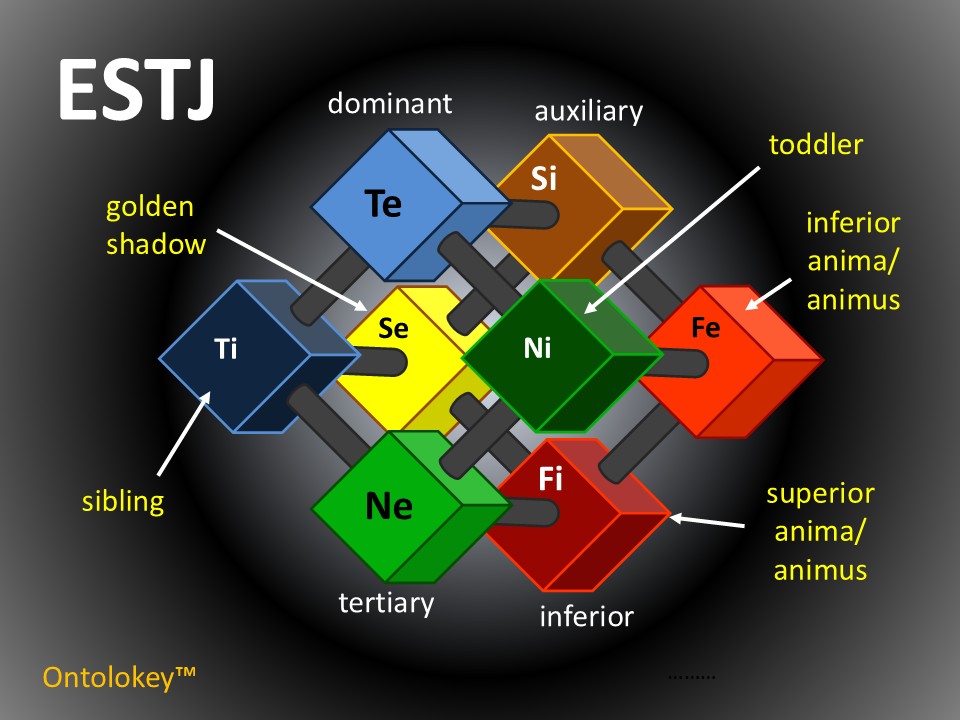
The Architecture of Power, Control, and Resentment
Most descriptions of the ESTJ personality focus almost exclusively on its strengths. Such portrayals are understandable. Few personality structures possess such a natural capacity for organization, execution, discipline, and practical leadership. Wherever complex systems must be maintained, standards enforced, resources allocated, and collective efforts coordinated, individuals of this type often emerge naturally into positions of responsibility. They possess an unusual ability to translate abstract intentions into concrete outcomes. While others discuss possibilities, they formulate plans. While others become lost in speculation, they focus on implementation. While others hesitate before uncertainty, they move toward action.
There is nothing inherently problematic about these characteristics. In their healthiest manifestation, they represent some of the most valuable capacities a human being can possess. Entire institutions, governments, businesses, and communities often depend upon individuals willing to shoulder burdens that others would rather avoid. The ESTJ frequently becomes such a person. They assume responsibility not merely because they desire authority, but because they possess a profound conviction that reality should be organized, managed, and improved through effort. Their relationship to the world is fundamentally active rather than contemplative. Life is experienced not as something to be interpreted but as something to be shaped.
Yet this same orientation contains the seeds of a profound psychological danger. The greatest shadows rarely emerge as opposites of our strengths. More often they emerge as their exaggerations. The tyrant is not the opposite of the leader but a leader whose strengths have become detached from self-awareness. Fanaticism is not the opposite of conviction but conviction that has become incapable of questioning itself. Likewise, the deepest darkness of the ESTJ does not arise from weakness, passivity, or incompetence. It arises when the very qualities that once enabled effectiveness begin to dominate the entire personality. The result is a gradual transformation in which discipline hardens into rigidity, responsibility evolves into control, and leadership becomes domination.
To understand this process, one must first understand the psychological foundations upon which the ESTJ personality is built.
At the center of this personality lies a profound orientation toward objective reality. The ESTJ tends to trust observable facts more readily than subjective impressions. They are naturally inclined to evaluate situations according to measurable outcomes rather than emotional atmospheres. Their attention is drawn instinctively toward efficiency, productivity, and practical consequences. This orientation often grants them a remarkable immunity to certain forms of self-deception. While many people become lost in fantasies, ideals, or wishful thinking, the ESTJ frequently sees what is directly in front of them. They notice what functions and what fails. They identify weaknesses within systems and seek methods to correct them. Because of this, they often become indispensable in environments where competence matters.
However, the psychological rewards associated with competence create an important developmental risk. Over time, effectiveness ceases to be merely something the ESTJ possesses and gradually becomes something they are. Their sense of worth becomes increasingly tied to their ability to produce results, maintain order, solve problems, and exercise influence. Achievement becomes more than a goal; it becomes a source of identity. Responsibility becomes more than a duty; it becomes evidence of personal value. Authority becomes more than a practical necessity; it becomes a psychological confirmation of worth.
This transformation usually occurs slowly and almost invisibly. The individual receives praise for being capable, reliable, and effective. Others come to depend upon them. Their judgment is trusted. Their decisions shape outcomes. Their efforts generate tangible rewards. Under such circumstances it is entirely natural for a person to begin identifying with the role they consistently perform. Yet the consequences of this identification are rarely recognized until life introduces failure, limitation, or defeat.
The hidden vulnerability of the ESTJ is not insecurity in the conventional sense. In many cases they appear remarkably confident. Rather, their deepest fear often concerns powerlessness. Beneath the desire for order lies a profound need to believe that reality responds to effort. They need to believe that competence matters, that discipline produces results, and that strength has practical value. As long as life confirms these assumptions, the ESTJ remains psychologically stable. Difficulties become challenges to overcome. Obstacles become problems to solve. Setbacks become temporary interruptions.
The situation changes dramatically when reality begins to contradict these assumptions. When effort goes unrewarded, when loyalty is betrayed, when competence is ignored, or when authority is challenged, the injury often penetrates far deeper than outsiders realize. Such experiences do not merely threaten goals; they threaten identity itself. If effectiveness has become the foundation of self-worth, then experiences of ineffectiveness begin to feel existentially significant. The individual is not simply frustrated by failure. They feel diminished by it.
It is here that one of the most important elements of the ESTJ shadow begins to emerge: resentment.
Resentment differs fundamentally from ordinary anger. Anger is immediate, explosive, and often temporary. Resentment is cumulative. It develops gradually through repeated experiences of perceived injustice, disrespect, betrayal, or frustration. Whereas anger seeks immediate expression, resentment seeks long-term compensation. It stores grievances rather than releasing them. It remembers rather than forgets.
The ESTJ possesses a particular susceptibility to resentment because they frequently invest extraordinary amounts of energy into achievement and responsibility. They often work harder than those around them. They frequently carry burdens others avoid. They make sacrifices in pursuit of objectives that benefit not only themselves but entire groups or organizations. Consequently, they often develop a strong belief that effort deserves reward, competence deserves recognition, and loyalty deserves reciprocity.
The difficulty arises when reality fails to satisfy these expectations. A promotion is awarded to someone less capable. A subordinate proves ungrateful. A colleague receives credit for work performed by others. An organization rewards political maneuvering rather than merit. Under such circumstances the ESTJ may experience not only disappointment but profound moral indignation. They perceive a violation of an implicit contract between effort and reward.
The danger is not that this perception is necessarily false. In many cases it is entirely accurate. The ESTJ often has worked harder. They often have sacrificed more. They often do possess greater competence. What makes resentment psychologically dangerous is precisely this mixture of truth and emotional injury. The individual begins constructing an internal narrative in which they become the wronged party and others become debtors. Every sacrifice enters an invisible ledger. Every betrayal becomes a recorded offense. Every disappointment acquires symbolic significance.
Over time this process can alter the individual’s entire perception of reality. Relationships become increasingly transactional. Trust becomes conditional. Interactions are evaluated according to fairness, contribution, and reciprocity. The person begins measuring what they have given against what they have received. Although this mentality initially appears reasonable, it gradually transforms human relationships into systems of accounting. Affection becomes difficult because affection requires generosity beyond calculation. Forgiveness becomes difficult because forgiveness requires releasing debts rather than collecting them.
The emergence of resentment frequently coincides with another development: the growing attraction of power.
Power is often misunderstood as a desire for dominance over others. In reality, power possesses a deeper psychological significance. Power reduces uncertainty. Power increases predictability. Power allows intentions to shape outcomes. For an individual whose psychological security depends upon effectiveness, power naturally becomes attractive because it appears to provide protection against helplessness.
At first this attraction may remain entirely healthy. The ESTJ assumes leadership positions because leadership allows them to solve problems. They acquire authority because authority permits effective action. They seek influence because influence enables meaningful results. In this stage power remains a tool. It serves practical objectives rather than personal insecurities.
Yet under conditions of prolonged frustration, resentment, or wounded pride, the relationship to power may begin to change. Authority ceases to be merely useful and gradually becomes psychologically necessary. Control no longer exists simply to improve outcomes; it begins protecting self-esteem. The individual becomes increasingly uncomfortable with unpredictability, dissent, and independence. Disagreement feels less like intellectual variation and more like personal opposition. Challenges to authority begin to resemble threats.
This transformation often occurs so gradually that neither the individual nor those around them immediately recognize it. The person continues believing they are acting rationally. Indeed, they often possess compelling arguments for their decisions. Their intelligence remains intact. Their organizational abilities remain intact. Their practical effectiveness may even increase. What changes is the emotional foundation beneath their behavior.
The healthy ESTJ asks whether a particular course of action is effective. The shadow-oriented ESTJ increasingly asks whether it preserves their position. The healthy ESTJ seeks solutions. The shadow-oriented ESTJ seeks control. The healthy ESTJ values authority because it facilitates responsibility. The shadow-oriented ESTJ values responsibility because it legitimizes authority.
One of the most dangerous aspects of this transformation is that it often remains hidden behind a sincere sense of moral conviction. Unlike certain personality structures that pursue power openly, the ESTJ frequently justifies power through duty. They genuinely believe they are acting in the interests of efficiency, stability, or collective welfare. Because they often possess real competence, this belief may be partially correct. However, partial truths frequently become the foundation of the most convincing self-deceptions.
The individual gradually develops the conviction that they know what is best. Initially this conclusion may be justified. Experience has taught them valuable lessons. Their judgment has often proven reliable. Yet as self-confidence grows, a subtle shift begins to occur. The belief that one often knows best gradually evolves into the belief that one always knows best. Constructive certainty hardens into psychological infallibility.
Once this transition occurs, the individual becomes increasingly resistant to criticism. Alternative viewpoints are not evaluated objectively but interpreted as obstacles. Independent thinkers become troublesome. Emotional considerations appear irrational. Human complexity becomes inconvenient. The temptation emerges to simplify reality into categories of competence and incompetence, loyalty and disloyalty, usefulness and obstruction.
At this stage another crucial dimension of the ESTJ shadow becomes visible: emotional blindness.
Contrary to common stereotypes, ESTJs are not emotionless. In many cases they possess extremely powerful emotional lives. The difficulty is not an absence of feeling but an underdeveloped relationship to feeling. Throughout life they often learn that competence earns respect while vulnerability invites discomfort. Action receives approval whereas introspection receives little reward. Consequently, emotional awareness may remain less differentiated than other psychological functions.
This imbalance becomes particularly dangerous during periods of stress. Because emotions are insufficiently examined, they often express themselves indirectly. Hurt appears as anger. Fear appears as control. Humiliation appears as aggression. Anxiety appears as micromanagement. Resentment appears as moral judgment. The individual sincerely believes they are behaving rationally because the emotional roots of their behavior remain largely unconscious.
This dynamic creates one of the defining paradoxes of the ESTJ shadow. The personality often appears most objective precisely when it is least objective. Decisions seem grounded in logic while actually being driven by unacknowledged emotional wounds. The person experiences themselves as defending principles when they may in fact be defending pride. They believe they are preserving order when they may be attempting to suppress anxiety. They insist they are enforcing standards when they may be retaliating against perceived disrespect.
The tragedy of this situation lies in the fact that the individual rarely recognizes what is happening. The more they rely upon logic as a source of identity, the more difficult it becomes to acknowledge emotional influences. Admitting vulnerability threatens the very image of strength upon which self-esteem depends. Consequently, emotional pressures continue accumulating beneath the surface, where they gradually distort perception, judgment, and relationships.
A particularly revealing feature of the ESTJ shadow concerns its relationship to weakness. Every personality possesses qualities it admires and qualities it fears. For the ESTJ, weakness often occupies a uniquely threatening position because it symbolizes the possibility of powerlessness. Dependency, indecision, emotional fragility, and helplessness evoke discomfort not necessarily because they are morally objectionable but because they represent states the ESTJ desperately wishes to avoid within themselves.
In healthy development this fear produces resilience and determination. The individual works hard to become capable and self-sufficient. In unhealthy development, however, the same fear may generate contempt. Human limitations become intolerable. Mistakes appear unforgivable. Emotional needs become irritating. Compassion is interpreted as weakness. The individual who once developed strength to overcome suffering gradually loses the ability to recognize suffering in others.
This transformation marks one of the most significant turning points in the evolution of the shadow. Strength ceases to serve humanity and begins demanding sacrifices from it. Discipline becomes rigidity. Responsibility becomes domination. Confidence becomes arrogance. The desire to create order becomes a need to control reality itself.
Yet the deepest tragedy of the ESTJ shadow does not ultimately concern cruelty. It concerns imprisonment. The very structures that once provided security gradually become psychological walls. Authority replaces intimacy. Achievement replaces meaning. Respect replaces love. Control replaces trust. The individual may continue accumulating success while simultaneously losing contact with the emotional dimensions of life that make success worthwhile.
From the outside such a person may appear extraordinarily accomplished. They may command organizations, influence institutions, and shape the lives of countless individuals. Yet internally they become increasingly dependent upon the very things they control. Their sense of worth narrows. Their flexibility diminishes. Their capacity for vulnerability disappears. The fortress they constructed to protect themselves eventually becomes their prison.
It is precisely at this point that the shadow enters its most dangerous phase. For when control becomes a psychological necessity rather than a practical tool, every challenge begins to resemble a threat. Every rival becomes a potential enemy. Every criticism becomes evidence of hostility. Every uncertainty becomes intolerable. The path toward paranoia, vindictiveness, and authoritarianism has not yet been completed, but its foundations have already been laid.
The tragedy is not that the ESTJ becomes weak. The tragedy is that they become too dependent upon strength. The tragedy is not that they lose control. The tragedy is that they become incapable of living without it. The deepest shadow of the ESTJ therefore begins not with malice but with an excessive identification with competence, power, and authority. What starts as a legitimate desire to shape reality gradually evolves into a desperate need to dominate it. And once domination replaces understanding, the personality enters a psychological landscape where resentment, suspicion, and moral self-justification can flourish unchecked.
The next stage of this development leads into an even darker territory: the emergence of the paranoid worldview, the fixation upon enemies and betrayal, the transformation of leadership into tyranny, and the archetypal figure who ultimately sacrifices truth, love, and humanity upon the altar of power itself.
The Paranoid Turn, the Tyrant Archetype, and the Psychology of Moral Self-Justification
The shadow of the ESTJ does not emerge suddenly. There is rarely a dramatic moment in which a healthy and productive individual consciously decides to become controlling, vindictive, or authoritarian. Psychological decline is usually more subtle than that. It unfolds through a series of adaptations that initially appear reasonable. Each step can be justified. Each reaction seems understandable when viewed in isolation. The danger lies not in any single decision but in the cumulative effect of hundreds of small psychological concessions that gradually reshape the individual’s relationship to reality.
The first stage of this transformation often begins with disappointment. The ESTJ enters life with a strong belief in the value of competence, effort, responsibility, and merit. They work hard because they assume hard work matters. They accept responsibility because they assume responsibility deserves respect. They strive for excellence because they believe excellence should be recognized. These assumptions are not irrational. In many environments they are largely correct. Yet reality is rarely governed by merit alone. Human affairs are influenced by politics, envy, incompetence, chance, corruption, and irrationality. Consequently, the ESTJ eventually encounters situations in which effort is not rewarded, loyalty is not reciprocated, and competence is not recognized.
At first such experiences produce frustration. However, when they accumulate over years, frustration begins to evolve into something far more dangerous. The individual gradually develops the conviction that the world is fundamentally unfair. More importantly, they begin to suspect that others are not merely mistaken but intentionally obstructive. The distinction is critical. A person who believes they have encountered bad luck remains psychologically flexible. A person who believes they are surrounded by enemies begins to interpret reality through an entirely different lens.
This marks the beginning of what might be called the paranoid turn.
Paranoia in its psychological form does not necessarily mean delusion. Popular culture often associates paranoia with irrational fantasies and bizarre conspiracies. In reality, many forms of paranoia emerge from experiences that contain genuine elements of truth. The individual has been betrayed. They have been undermined. They have encountered dishonesty, manipulation, and injustice. The problem is not that the initial observations are false. The problem is that they become generalized into a comprehensive worldview.
The unhealthy ESTJ increasingly begins to perceive hidden motives everywhere. Neutral actions acquire suspicious meanings. Ambiguous situations are interpreted negatively. Criticism is no longer viewed as feedback but as evidence of opposition. Independent thought appears as disloyalty. Success achieved by others becomes suspect. Every interaction is unconsciously scanned for signs of disrespect, betrayal, or challenge.
This process is intensified by one of the ESTJ’s greatest strengths: memory for practical realities. Unlike personalities who readily move on from past experiences, the ESTJ often remembers details with remarkable precision. They remember promises that were broken. They remember insults that were delivered. They remember favors that were never repaid. They remember opportunities that were denied. Under healthy circumstances this memory supports accountability and realism. Under shadow conditions it becomes a repository of grievances.
Gradually, the individual’s internal world begins to resemble a courtroom. Evidence is continuously collected. Cases are continuously built. The prosecution never rests. Every new disappointment is added to an expanding archive of previous injuries. Because the ESTJ values evidence, this archive often appears convincing. There are facts. There are examples. There are names, dates, and events. Yet the emotional significance attached to these facts slowly exceeds their objective importance. The individual no longer remembers experiences simply because they occurred. They remember them because they reinforce an emerging narrative of betrayal.
This narrative performs an important psychological function. It protects self-esteem.
One of the most difficult experiences for the ESTJ is the realization that effort alone cannot guarantee outcomes. Such a realization threatens the foundational belief that competence controls reality. It is often psychologically easier to conclude that others are malicious than to accept that life itself may be unpredictable. The enemy provides an explanation. The rival restores coherence. Betrayal feels more manageable than randomness because betrayal at least implies intention.
As this mentality deepens, the personality becomes increasingly organized around vigilance. Trust declines. Suspicion grows. Relationships become strategic rather than intimate. Every interaction acquires an undercurrent of evaluation. The individual unconsciously asks: Can this person be trusted? Does this person respect me? Does this person threaten my position? Does this person deserve loyalty?
The result is not merely emotional isolation but a gradual distortion of perception itself. Human beings become increasingly difficult to see as individuals. Instead, they are categorized according to their relationship to the self. Some are allies. Some are competitors. Some are obstacles. Some are potential traitors. The rich complexity of human psychology becomes compressed into a framework of loyalty and threat.
At this stage the shadow begins to assume a distinctly political character.
Politics, in its deepest psychological sense, is not merely the management of institutions. It is the management of power. The unhealthy ESTJ becomes increasingly preoccupied with questions of power because power appears to offer protection against vulnerability. If one possesses sufficient authority, one can prevent betrayal. If one controls enough resources, one can eliminate uncertainty. If one occupies a sufficiently dominant position, one can neutralize threats before they become dangerous.
This logic appears persuasive because it contains a kernel of truth. Power does provide protection. Authority does increase influence. Control does reduce uncertainty. Yet none of these advantages can eliminate the fundamental vulnerabilities of human existence. No amount of power can guarantee loyalty. No amount of control can prevent loss. No amount of authority can eliminate mortality, failure, or rejection.
The shadow-oriented ESTJ nevertheless continues pursuing these goals because they have become psychologically symbolic. Power is no longer merely power. It becomes a substitute for security. Authority becomes a substitute for trust. Control becomes a substitute for emotional resilience.
This transformation creates the psychological conditions from which the tyrant archetype emerges.
The tyrant is often misunderstood as a uniquely evil individual. In reality, tyranny is usually the pathological exaggeration of otherwise admirable traits. The tyrant is frequently hardworking, disciplined, organized, determined, and capable. What distinguishes the tyrant from the leader is not strength but the relationship to strength.
A genuine leader remains accountable to reality. They recognize that authority exists to serve a purpose beyond itself. They remain capable of self-correction. They understand that power is a tool rather than an identity.
The tyrant undergoes a different psychological evolution. Gradually, power becomes fused with self-worth. Criticism threatens identity. Opposition threatens legitimacy. Dissent threatens psychological stability. Consequently, the tyrant begins defending authority not because authority serves a higher goal but because authority has become necessary for emotional survival.
The most dangerous aspect of this process is that it is often accompanied by an increasing sense of moral righteousness.
The unhealthy ESTJ rarely experiences themselves as a villain. On the contrary, they often view themselves as the only responsible person remaining in an increasingly irresponsible world. They see themselves as protectors of standards, defenders of order, guardians of competence, and champions of discipline. In many cases there is genuine truth in this self-perception. They may indeed be more responsible than those around them. They may indeed possess greater competence. Their judgments may frequently prove correct.
Yet psychological corruption rarely begins with obvious falsehoods. It begins when legitimate strengths become the foundation of moral superiority.
The individual starts by believing they are capable. Eventually they begin believing they are indispensable. From there it is only a short step toward believing they alone understand what must be done. The final stage arrives when they conclude that ordinary moral constraints no longer apply because their goals are too important.
This mechanism has appeared repeatedly throughout history. Individuals convince themselves that harsh measures are necessary. They justify cruelty as discipline. They justify domination as responsibility. They justify suppression as protection. The language changes, but the psychological structure remains remarkably similar.
At the heart of this structure lies a profound inability to distinguish between being right and being good.
The unhealthy ESTJ often assumes that correctness automatically justifies action. If their analysis is accurate, then their methods appear acceptable. If their conclusions are valid, then opposition appears irrational. If their goals are beneficial, then resistance appears malicious. This mindset gradually erodes empathy because empathy requires acknowledging the subjective reality of others even when they are objectively mistaken.
The shadow therefore creates a paradoxical situation. The individual may become increasingly accurate in certain practical judgments while simultaneously becoming increasingly blind to human realities. They understand systems but not souls. They understand procedures but not suffering. They understand efficiency but not meaning.
This blindness becomes particularly destructive in intimate relationships.
The ESTJ often approaches relationships with sincerity and commitment. They value loyalty, stability, and reliability. They are frequently willing to make substantial sacrifices for those they love. Yet under shadow conditions these strengths become distorted. Love gradually acquires transactional elements. Affection becomes linked to obedience. Loyalty becomes confused with agreement. Disagreement begins to feel like betrayal.
The individual may genuinely believe they are acting in the best interests of others while simultaneously suppressing their autonomy. Their desire to help transforms into a desire to direct. Their concern becomes intrusive. Their guidance becomes control. Because their intentions appear noble, they remain largely unaware of the damage they cause.
This dynamic often reaches its most extreme form in individuals whose identities become entirely organized around achievement and status. Such individuals frequently derive self-worth from external accomplishments. Success confirms value. Recognition confirms importance. Authority confirms significance.
The problem emerges when these external sources of validation become threatened.
A career setback, loss of status, public humiliation, or challenge to authority can trigger reactions that appear wildly disproportionate to the objective event. Outsiders may struggle to understand why the individual responds with such intensity. Yet from a psychological perspective the explanation is straightforward. The event threatens not merely circumstances but identity itself.
The person who has built an entire self-concept around competence cannot easily tolerate evidence of limitation. The individual who derives meaning from authority cannot easily endure powerlessness. The person who has spent decades constructing an image of strength cannot easily acknowledge vulnerability.
Consequently, they often respond through compensation. They become more controlling when they feel powerless. They become more aggressive when they feel insecure. They become more rigid when reality becomes uncertain. The very qualities that once enabled adaptation become obstacles to it.
At this point the shadow approaches its most dangerous form. The individual no longer seeks truth but confirmation. They no longer seek understanding but validation. They no longer seek solutions but victory.
Reality itself begins to split into two camps: those who support the self and those who oppose it.
This is the psychological soil from which some of history’s most destructive personalities have emerged. Not because they were born evil, but because they became incapable of questioning their own righteousness. Their strengths became absolute. Their certainty became invulnerable. Their grievances became sacred. Their enemies became necessary.
The final tragedy is that the individual often experiences increasing loneliness as this process unfolds. The more power becomes central to identity, the more difficult genuine intimacy becomes. Relationships require vulnerability. Trust requires uncertainty. Love requires the willingness to relinquish control. Yet these are precisely the capacities that the shadow-oriented ESTJ increasingly loses.
The result is a profound irony. The individual may achieve everything they once desired—status, authority, influence, recognition—and yet remain haunted by a persistent sense of dissatisfaction. No amount of external success can satisfy a psychological wound rooted in the fear of vulnerability. No amount of control can eliminate existential uncertainty. No amount of power can replace emotional integration.
The shadow therefore reaches its culmination not in triumph but in isolation. The individual who sought strength above all else eventually discovers that strength alone is insufficient. The fortress they spent a lifetime constructing protects them from danger, but it also separates them from life itself.
And it is here, at the very edge of psychological rigidity, that two paths finally emerge. One path leads toward increasing paranoia, deeper resentment, and the complete identification of self with power. The other path requires a confrontation with everything the ESTJ has spent a lifetime trying to master: vulnerability, uncertainty, emotional truth, and the recognition that human worth cannot ultimately be measured by competence alone.
The possibility of redemption begins precisely where the illusion of control ends.
The Psychology of Contempt
Among the darker emotions that emerge within the ESTJ shadow, contempt occupies a particularly important place. Unlike anger, contempt does not erupt suddenly. It develops gradually through repeated experiences of disappointment, frustration, and disillusionment. Whereas anger still acknowledges the significance of the other person, contempt subtly strips them of value. It transforms disagreement into inferiority and weakness into a defect of character.
The roots of this process lie deeper than simple arrogance. In reality, contempt often emerges from an unresolved relationship with vulnerability. Throughout life, the ESTJ typically learns to respect competence, discipline, endurance, and self-reliance. These qualities become associated not only with success but with psychological survival. Strength is admired because strength appears to protect against chaos. Self-control is valued because self-control appears to prevent failure. Responsibility becomes sacred because responsibility provides structure in an unpredictable world.
As a consequence, traits that symbolize the opposite qualities frequently evoke discomfort. Dependency, indecision, emotional instability, passivity, or helplessness are not merely perceived as weaknesses in others; they become reminders of states the ESTJ fears within themselves. What is rejected externally often reflects what remains unaccepted internally.
Under healthy circumstances this dynamic encourages personal growth. The individual strives toward competence without losing compassion for human limitations. Under shadow conditions, however, the opposite occurs. Human frailty begins to provoke irritation rather than empathy. Mistakes appear less forgivable. Emotional needs become burdensome. The suffering of others is increasingly interpreted through the lens of personal responsibility.
The danger is that contempt gradually erodes the ability to perceive complexity. People cease to be seen as struggling human beings and become reduced to categories. They are judged according to usefulness, discipline, reliability, or contribution. Once this reduction takes place, empathy begins to disappear. The personality that once sought order in the world starts imposing value hierarchies upon human beings themselves.
At its extreme, contempt becomes a form of psychological blindness. The individual loses the capacity to recognize that weakness and strength coexist within every person, including themselves. What remains is a hardened worldview in which human worth becomes conditional upon performance. In such a worldview, compassion is interpreted as indulgence, vulnerability is mistaken for deficiency, and mercy begins to appear irrational.
The Addiction to Being Right
One of the least discussed aspects of the ESTJ shadow is the gradual transformation of competence into psychological certainty. In its healthy form, confidence emerges from experience. The individual learns to trust their judgment because their judgment has repeatedly proven effective. This confidence allows decisive action and practical leadership. Without it, many responsibilities could never be carried successfully.
The problem arises when confidence becomes inseparable from identity itself. Over time, the ability to make correct decisions becomes more than a skill; it becomes the foundation of self-worth. Being right no longer provides satisfaction alone. It provides security. It confirms competence. It validates identity.
At this point disagreement acquires a new emotional significance. A challenge to an idea is no longer experienced merely as an intellectual disagreement. It begins to feel like a challenge to the self. Criticism becomes difficult to tolerate because criticism threatens the very foundation upon which self-esteem has been constructed.
As this process deepens, discussions cease to function as collaborative searches for truth. They gradually become contests. The objective shifts from understanding reality to defending one’s position within it. Winning becomes psychologically rewarding in ways that have little to do with accuracy. Defeat becomes psychologically threatening in ways that have little to do with facts.
This dynamic explains why some shadow-oriented ESTJs become increasingly rigid despite their intelligence. The issue is rarely an inability to understand alternative perspectives. More often, it is an inability to emotionally tolerate the implications of being wrong. The possibility of error threatens a self-concept built upon reliability, competence, and authority.
Over time the distinction between truth and personal judgment begins to blur. The individual unconsciously assumes that because they are often correct, they must therefore be correct now. Confidence hardens into certainty. Certainty hardens into dogmatism. What once appeared as strength gradually transforms into ideological rigidity.
The tragedy is that the person may continue believing they are defending reason while becoming increasingly incapable of genuine self-correction. The pursuit of truth slowly gives way to the pursuit of confirmation, and intellectual integrity becomes subordinate to psychological self-preservation.
The Secret Relationship Between Power and Fear
Observers frequently assume that powerful individuals are motivated primarily by confidence. While confidence certainly plays a role, psychological reality is often more complicated. Many forms of power-seeking behavior are rooted not in strength but in a desire to escape vulnerability.
For the shadow-oriented ESTJ, power often serves a symbolic function. It represents protection against uncertainty. It promises immunity from helplessness. It creates the illusion that reality can be controlled if sufficient authority is obtained.
This illusion becomes particularly seductive after experiences of betrayal, humiliation, failure, or loss. Such experiences expose the limits of competence. They reveal that effort cannot guarantee outcomes and that authority cannot eliminate uncertainty. For many individuals these realizations become opportunities for greater humility. For the shadow-oriented ESTJ they may instead trigger an intensified pursuit of control.
The individual unconsciously reasons that greater authority will prevent future disappointments. More influence will reduce vulnerability. More control will eliminate uncertainty. Yet none of these assumptions can ever be fully realized because uncertainty is not a problem to be solved but a condition of existence.
As a result, the pursuit of power becomes self-perpetuating. The individual never feels sufficiently secure because security was never the true issue. The deeper issue was fear. Since fear remains unexamined, each increase in power merely creates a temporary sense of relief before new anxieties emerge.
What appears externally as dominance therefore often conceals an internal struggle with vulnerability. The more intensely the individual fears losing control, the more desperately they attempt to expand it. Eventually power ceases to be a practical instrument and becomes a psychological dependency. Authority functions not as a means of accomplishing goals but as a defense against existential insecurity.
This is one of the reasons why some individuals become increasingly rigid with age. They are not becoming stronger. They are becoming more dependent upon the structures that once made them feel safe.
The Tragic Hero Complex
One of the most seductive narratives available to the ESTJ shadow is the story of the misunderstood hero. Few personality structures are as willing to shoulder responsibility or endure hardship in pursuit of long-term objectives. They frequently carry burdens that others avoid. They solve problems that others ignore. They make sacrifices that often go unnoticed.
These realities can easily foster a powerful sense of moral legitimacy. The individual begins to view themselves as someone who continually contributes more than they receive. In many cases this perception contains substantial truth. However, when combined with resentment, it gradually evolves into something more dangerous.
The person starts to see themselves as uniquely burdened by responsibility. They become convinced that few people understand the pressures they endure. Their sacrifices acquire increasing psychological significance. Every hardship becomes evidence of virtue. Every disappointment becomes proof of injustice.
The resulting narrative is profoundly seductive because it transforms suffering into superiority. The individual no longer experiences themselves simply as someone who has struggled. They begin experiencing themselves as someone whose struggles elevate them above others.
Once this mentality becomes established, criticism becomes extraordinarily difficult to accept. Any challenge to their behavior appears insensitive because it fails to acknowledge their sacrifices. Any opposition appears unfair because it ignores their contributions. The heroic self-image creates a psychological shield that protects the personality from self-examination.
Over time the individual may become trapped within their own narrative. Their identity becomes dependent upon being the responsible one, the competent one, the burdened one, the misunderstood one. Relationships become increasingly unequal because others are viewed not as equals but as beneficiaries of sacrifices they can never fully appreciate.
The tragic irony is that the individual often becomes emotionally isolated by the very narrative that once provided meaning. The hero who seeks recognition gradually loses the capacity for mutuality. What remains is a profound loneliness disguised as moral superiority.
The Inability to Forgive
Among the most destructive consequences of prolonged resentment is the gradual erosion of forgiveness. The ESTJ often possesses a remarkable memory for concrete events. They remember promises, obligations, betrayals, insults, and disappointments with unusual clarity. This capacity serves valuable purposes when it supports accountability and realism. Under shadow conditions, however, it becomes a mechanism through which old wounds remain permanently alive.
The problem is not memory itself. The problem is psychological investment in memory. The injury becomes incorporated into identity. The betrayal becomes part of the personal narrative through which life is interpreted. The grievance acquires meaning beyond the original event.
As a result, forgiveness begins to feel psychologically threatening. To forgive would require relinquishing a story that has become central to the self. It would require surrendering a source of moral certainty. It would require acknowledging that the injury no longer defines reality.
Many shadow-oriented ESTJs therefore maintain emotional relationships with events that occurred years or even decades earlier. The original offense may have ended long ago, but its psychological consequences continue shaping perceptions and decisions. The individual believes they are preserving justice when they are often preserving suffering.
The tragedy of this dynamic lies in its self-perpetuating nature. The longer resentment is maintained, the more essential it becomes to identity. The more essential it becomes, the harder it becomes to release. Eventually the person is no longer holding onto the past. The past is holding onto them.
Forgiveness in this context does not mean denying wrongdoing. It means refusing to allow an old wound to govern the future. Yet this remains one of the most difficult lessons for a personality that naturally values accountability, memory, and justice.
Franz Moor: The Final Evolution of the Shadow
Few literary figures embody the darkest possibilities of this psychological structure more vividly than Franz Moor. He represents neither irrational evil nor chaotic destruction. His danger lies precisely in his intelligence, his calculation, and his capacity for strategic thinking. Unlike impulsive villains driven by passion, Franz operates through cold analysis and systematic manipulation.
What makes him psychologically fascinating is that his resentment possesses understandable origins. He experiences himself as overlooked, disadvantaged, and deprived of what he believes he deserves. His grievances are not entirely imaginary. They contain enough truth to sustain his sense of righteousness. Yet rather than integrating these injuries, he builds his entire identity around them.
In Franz we witness what happens when resentment becomes the organizing principle of personality. Intelligence ceases to serve understanding and becomes an instrument of revenge. Logic ceases to seek truth and becomes a tool of justification. Ambition becomes detached from meaning. Power becomes detached from responsibility.
The most disturbing aspect of his character is not his cruelty but his certainty. He experiences little inner conflict because he has transformed personal grievance into moral legitimacy. Every action appears justified. Every manipulation appears necessary. Every act of destruction appears rational.
This is the final danger of the ESTJ shadow. The individual no longer merely possesses resentment; they become resentment. Their identity fuses with their grievances. Their wounds become sacred. Their enemies become essential. Their pursuit of power becomes indistinguishable from their pursuit of justice.
At that point the original injury has long since ceased to matter. The personality is no longer responding to the wound. It is serving it. And what began as a legitimate experience of suffering ultimately culminates in self-destruction, because no human being can build a meaningful life upon resentment without eventually becoming consumed by it.
Beyond the Fortress: The Integration of the Shadow
The ultimate danger of the ESTJ shadow is not power, ambition, control, resentment, or even tyranny. These are merely symptoms. The deeper problem lies in a fundamental misunderstanding about what strength actually is.
Throughout much of life, the ESTJ often learns to equate strength with competence. Strength means being capable when others are incapable. It means remaining disciplined when others become distracted. It means carrying responsibility when others retreat from it. Such qualities undoubtedly possess immense value. They allow individuals to build careers, institutions, families, and civilizations. They create stability where instability threatens to prevail.
Yet there comes a point at which every psychological strength reaches its limit. There are realities that competence cannot solve. There are losses that discipline cannot prevent. There are betrayals that authority cannot undo. There are wounds that power cannot heal. The tragedy of the shadow-oriented ESTJ is that they often spend years attempting to solve existential problems through methods that only work in the practical world.
Control can organize an institution, but it cannot eliminate uncertainty. Authority can command obedience, but it cannot create love. Achievement can generate admiration, but it cannot create inner peace. Power can silence opposition, but it cannot silence fear.
The deeper the personality enters the shadow, the more desperately it attempts to use external solutions to resolve internal conflicts. Every new accomplishment promises fulfillment. Every new position promises security. Every new victory promises satisfaction. Yet the promised relief never fully arrives because the underlying problem remains untouched.
At its core, the shadow develops through a rejection of vulnerability. The ESTJ learns to trust strength while distrusting weakness. They learn to rely on action while neglecting reflection. They learn to master the external world while leaving large portions of the internal world unexplored. For many years this strategy appears successful. Eventually, however, life presents experiences that cannot be mastered through force of will alone.
Failure arrives.
Loss arrives.
Aging arrives.
Mortality arrives.
At such moments, the individual encounters a reality that no amount of competence can overcome. What was previously hidden beneath achievement suddenly becomes visible. The fear of helplessness, the fear of insignificance, the fear of betrayal, the fear of vulnerability—these forces emerge from the shadows and demand recognition.
This confrontation represents the decisive turning point in the development of the personality. One path leads toward increasing rigidity. The individual doubles down on control, intensifies resentment, expands suspicion, and seeks ever-greater authority in a desperate attempt to suppress uncertainty. This is the path of psychological hardening. It may preserve the illusion of strength, but it gradually impoverishes the soul.
The other path requires a far greater form of courage.
It requires the willingness to discover that vulnerability is not the opposite of strength.
It is part of strength.
The mature ESTJ eventually realizes that true authority does not require domination. True confidence does not require constant validation. True competence does not require superiority. Most importantly, true strength does not require the denial of human weakness.
The integrated personality no longer needs to be right at all costs. It no longer interprets disagreement as disrespect or criticism as betrayal. It becomes capable of recognizing that other people possess realities, fears, and struggles that cannot be reduced to categories of competence and incompetence. Empathy begins to complement judgment. Wisdom begins to temper certainty.
Perhaps most importantly, the integrated ESTJ learns that forgiveness is not an act of weakness but an act of liberation. Resentment creates the illusion of power because it preserves moral certainty. Yet every grievance carried indefinitely becomes a chain connecting the present to the past. The individual believes they are holding onto justice while justice gradually transforms into imprisonment.
To forgive does not mean to excuse wrongdoing. It means refusing to organize one’s future around an old wound.
The same principle applies to control itself. There comes a moment when the healthiest response to life is not greater control but greater acceptance. Reality cannot be completely managed. Human beings cannot be completely understood. Relationships cannot be completely secured. The future cannot be completely predicted. These truths are not defects within existence. They are existence itself.
The deepest shadow of the ESTJ emerges from the attempt to conquer uncertainty. The highest expression of the ESTJ emerges from the willingness to face uncertainty without becoming enslaved by it.
This is why the final lesson of the ESTJ is profoundly paradoxical. The personality that spends much of its life mastering the external world eventually discovers that its greatest challenge lies elsewhere. The final frontier is not leadership, achievement, authority, or power.
It is self-knowledge.
For in the end, the strongest individual is not the one who controls everything around them. The strongest individual is the one who no longer needs to.
The fortress can protect a person from many dangers. Yet every fortress eventually becomes a prison if its gates are never opened. The integrated ESTJ does not destroy the fortress. They simply stop living inside it.
And in doing so, they discover something the shadow could never understand: that humanity begins where domination ends, that wisdom begins where certainty ends, and that genuine strength begins where the fear of weakness is finally left behind.


Leave a Reply