A Note to the Reader
This essay was written in the spirit of psychological honesty rather than comfort. Its purpose is not to flatter, condemn, shame, or pathologize anyone, but to illuminate unconscious patterns that often remain hidden beneath the surface of personality. Some readers may find certain observations uncomfortable, confronting, or even unsettling, particularly when they recognize aspects of themselves within these pages.
Those who are unwilling to engage with candid self-examination or who are seeking reassurance rather than insight may find this material difficult to read. The analyses presented here are intended solely for self-reflection and personal growth. They should never be used as weapons against others, as tools for judgment, manipulation, or psychological labeling. The shadow exists within every human being, and genuine understanding requires humility, maturity, and the willingness to confront uncomfortable truths with compassion rather than hostility.
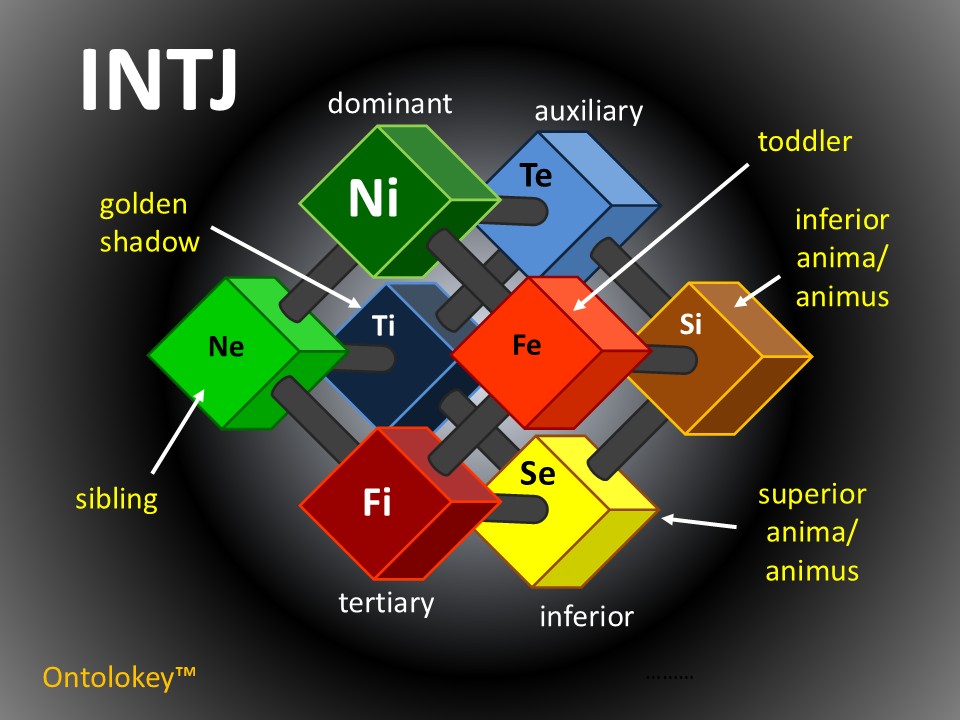
The Tragedy of Inner Sovereignty
When people speak about the INTJ personality, they almost always describe its strengths. They speak about strategic thinking, independence, foresight, intellectual rigor, long-range vision, and resistance to social conformity. Such descriptions are not necessarily false, but they are incomplete in a way that is psychologically dangerous. The problem with every gifted psychological structure is that its greatest strength often becomes the very mechanism through which its deepest pathology develops. The same faculty that allows a person to rise above collective illusions can also isolate him from reality. The same independence that protects him from manipulation can gradually estrange him from human connection. The same devotion to truth can become a merciless weapon turned against himself.
The deeper question is therefore not what the INTJ can accomplish when functioning well. The deeper question is what happens when the inner architecture of this personality begins to collapse under the weight of its own logic. Every personality contains a shadow, but the shadow of the INTJ possesses a uniquely paradoxical character. Unlike more impulsive personalities, whose darkness is often visible and dramatic, the darkness of the INTJ frequently develops in silence. It emerges not through emotional excess but through emotional deprivation. It does not usually announce itself through chaos but through increasing rigidity. It often appears not as irrationality but as an exaggerated devotion to reason itself. The tragedy is that the individual may believe he is becoming more disciplined, more principled, more objective, and more enlightened precisely at the moment when he is becoming increasingly disconnected from essential dimensions of life.
At the center of the INTJ psyche lies a profound orientation toward invisible structures. Such individuals instinctively search beneath appearances. They are rarely satisfied with surface explanations because their attention naturally gravitates toward hidden patterns, future implications, systemic relationships, and symbolic meaning. The world that occupies their deepest interest is not the visible world but the world behind the visible world. Reality is experienced less as a collection of objects than as a web of underlying principles waiting to be discovered. This orientation gives rise to remarkable insights, but it also creates a psychological danger. The individual may become so fascinated by internal perception that concrete reality gradually loses its authority. The visionary becomes increasingly detached from ordinary human life and eventually risks becoming a stranger not only to others but also to himself. The source document repeatedly associates this type with extraordinary distance from tangible reality and notes that such a person may eventually become an enigma even to those closest to him.
The popular image of the INTJ as a cold strategist captures only a small fragment of the truth. Beneath the apparent self-sufficiency often exists an intense relationship with an inner world that feels more real than external circumstances. Many INTJs experience life as an ongoing dialogue with possibilities, models, predictions, and abstractions. Their attention naturally flows toward what could be rather than what is. Under healthy conditions this capacity produces vision. Under unhealthy conditions it produces estrangement. Reality becomes increasingly evaluated according to whether it aligns with an internal image rather than being encountered on its own terms. The individual may begin to inhabit a psychological territory where subjective certainty acquires greater authority than lived experience. At this stage the INTJ does not merely think differently from others. He begins to exist in a fundamentally different world.
This movement toward psychological isolation often develops so gradually that it remains invisible for years. The individual usually experiences it not as withdrawal but as refinement. He believes he is discarding superficial distractions in order to focus on what truly matters. Social rituals appear trivial. Emotional complexities seem irrational. Everyday concerns feel insignificant compared to larger patterns and future implications. Yet every exclusion carries a cost. Human beings do not live by abstraction alone. Reality continually demands engagement with sensation, emotion, relationship, vulnerability, and embodiment. When these dimensions are neglected for too long, they do not disappear. They merely descend into the unconscious where they accumulate pressure.
Here we encounter one of the most important psychological insights contained in the material from which this essay is derived. The deepest repression associated with this personality structure concerns direct engagement with concrete experience. What is pushed away is not merely sensory life but the entire realm of immediate existence. The unconscious then develops a compensatory force that stands in direct opposition to the conscious identity. The more the person identifies with vision, abstraction, and inner perception, the more primitive and disruptive the rejected aspects become. The document describes how excessive identification with inner perception can eventually produce compulsive attachments, hypersensitivity, impulsive reactions, and an unhealthy dependence upon external objects and sensations. What was denied returns in distorted form.
This phenomenon reveals a universal psychological law. Whatever is excluded from consciousness does not disappear. It waits. The shadow is not created because a person possesses darkness. The shadow is created because a person refuses to recognize what already exists within him. The INTJ often excels at understanding complex systems while simultaneously remaining blind to certain aspects of his own emotional reality. He may analyze motives with surgical precision while remaining unaware of the fears hidden beneath his own convictions. He may understand the weaknesses of entire institutions while remaining ignorant of the vulnerabilities shaping his own behavior. The more intelligent the person becomes, the easier this self-deception can become because intellect itself begins to function as a defense mechanism.
The result is a peculiar form of inner division. On the surface stands the sovereign mind: disciplined, controlled, independent, rational, and self-directed. Beneath the surface grows another reality composed of needs, fears, longings, impulses, resentments, and emotional wounds that have never been granted full legitimacy. Because the conscious identity is built around mastery, these unconscious contents are often experienced as threats. They appear irrational, inconvenient, embarrassing, or dangerous. Consequently, they are suppressed rather than integrated. The individual begins to wage a subtle war against himself.
It is here that the shadow of the INTJ acquires its most tragic dimension. Many personality structures suffer because they lack self-control. The INTJ often suffers because he possesses too much of it. His deepest misery frequently emerges not from weakness but from relentless self-governance. The source material repeatedly describes a personality pattern characterized by self-condemnation, excessive internal regulation, distrust of spontaneity, and the construction of elaborate systems of commands and prohibitions directed against the self. The individual becomes both ruler and prisoner. He judges himself according to standards that no human being can consistently satisfy. Every emotional reaction is scrutinized. Every impulse is evaluated. Every vulnerability becomes evidence of imperfection. What begins as discipline gradually transforms into self-oppression.
The external world often rewards this behavior. Such individuals are frequently admired for their competence, reliability, seriousness, and intellectual integrity. Others may see only the disciplined exterior and assume strength where there is actually suffering. Yet beneath the surface a profound tension develops. The personality becomes increasingly organized around control. Spontaneity is viewed with suspicion because spontaneity cannot be predicted. Emotion is viewed with suspicion because emotion cannot be fully governed. Dependence is viewed with suspicion because dependence threatens autonomy. Gradually the individual begins to relate to his own humanity as though it were an adversary.
This is the moment at which the shadow becomes dangerous. The INTJ does not merely fear external chaos. He fears internal chaos. He fears the possibility that beneath the carefully maintained structure lies something uncontrollable. Consequently, he often attempts to become even more disciplined, even more detached, even more self-sufficient. Yet every additional layer of control increases the pressure beneath it. The document describes this condition with remarkable psychological clarity: the individual condemns everything spontaneous within himself, fears those dimensions of his psyche that cannot be commanded by will, and develops an increasingly despotic relationship toward his own inner life. Behind this self-rule lies a substantial reservoir of self-aggression.
The ultimate irony is that the shadow develops precisely because the individual seeks mastery. The more relentlessly he attempts to eliminate weakness, the more powerful the hidden weakness becomes. The more fiercely he suppresses emotional reality, the more distorted that reality becomes in the unconscious. The more completely he identifies with intellect, the more primitive the rejected dimensions of the psyche become. Eventually the personality may discover that its greatest enemy was never irrationality, emotion, dependency, or vulnerability. Its greatest enemy was the illusion that humanity could be reduced to a system that could be perfectly controlled.
The deepest shadow side of the INTJ therefore begins with a deceptively noble ambition: the desire to become sovereign over oneself. Yet when sovereignty loses contact with humility, embodiment, feeling, and psychological truth, it slowly transforms into tyranny. The ruler and the prisoner become the same person. The fortress built to protect the self becomes the structure that imprisons it. What initially appeared as strength reveals itself as a sophisticated form of alienation. The tragedy is not that the INTJ lacks depth. The tragedy is that he often possesses so much depth that he can disappear inside it.
The War Against Feeling: Why the INTJ Shadow Turns Emotion into an Enemy
One of the most persistent misunderstandings about the INTJ personality is the assumption that it is naturally detached from emotion. In reality, the psychological problem is usually not the absence of feeling but the difficulty of establishing a conscious relationship with it. The emotional life of many INTJs is not weak; it is hidden, compressed, intellectualized, or subjected to unusually strict internal regulation. The outer appearance of composure often conceals an inner world that is far more emotionally charged than observers suspect. What distinguishes this personality is not emotional emptiness but a tendency to distrust emotional experience whenever it threatens autonomy, clarity, or self-mastery. Over time, this distrust can become so deeply embedded that feeling itself begins to be treated as a hostile force rather than an essential dimension of psychological life.
The roots of this conflict often emerge from a fundamental experience of inner division. The INTJ tends to identify strongly with the observing mind, the strategic faculty that seeks order within complexity. This creates an implicit hierarchy within the psyche. Rationality occupies the throne, while emotional experience is relegated to a subordinate position. Such an arrangement may appear efficient in the short term, particularly within cultures that reward achievement, self-control, and intellectual competence. Yet the psyche does not function according to political systems. Human consciousness cannot permanently establish a dictatorship of reason without provoking resistance from the dimensions that have been excluded from power. The more aggressively emotional life is subordinated, the more likely it becomes that it will eventually reappear in distorted and disruptive forms. The shadow emerges precisely where psychological citizenship has been denied.
The source material repeatedly points toward a personality structure organized around self-condemnation rather than simple insecurity. This distinction is crucial. An insecure person doubts his abilities. A self-condemning person doubts his own nature. The difference is enormous. The former fears failure; the latter fears himself. The document describes a psychological tendency in which the individual perceives something fundamentally problematic, dangerous, or morally suspect within his own impulses and therefore constructs elaborate systems of commands, prohibitions, and self-restrictions designed to keep this perceived darkness under control. Such mechanisms may initially appear as discipline, but they often conceal a much deeper fear: the fear that spontaneity will reveal aspects of the self that cannot be fully predicted, explained, or managed.
This internal dynamic creates a peculiar relationship with emotion. Feelings are not merely experienced; they are evaluated before they are allowed to exist. An emotion arises, and immediately an invisible tribunal assembles. Is this feeling rational? Is it justified? Is it useful? Is it appropriate? Does it interfere with long-term objectives? Does it expose weakness? Does it create dependency? Before the emotional experience can complete its natural movement through consciousness, it is intercepted by judgment. The result is that emotions often remain half-lived. They are neither fully expressed nor fully integrated. Instead, they become trapped within the psyche where they continue to exert influence from behind the scenes.
Over many years this pattern can produce an increasingly artificial relationship with oneself. The document contains a profound observation regarding individuals who chronically suppress emotional experience. It notes that when feelings are repeatedly repressed, a person gradually loses the ability to know what he genuinely likes or dislikes, what he truly values, what he finds beautiful or ugly, meaningful or meaningless. In the absence of authentic feeling, external systems of value begin to replace internal conviction. One no longer lives from inner truth but from abstract principles, obligations, and inherited standards. For the INTJ shadow, this danger is particularly significant because intellectual coherence can easily masquerade as authenticity. A person may possess a perfectly logical worldview while remaining profoundly disconnected from his own emotional reality.
The tragedy becomes even more severe because emotional repression often creates the illusion of strength. The individual feels disciplined, objective, and self-controlled. He believes he has transcended emotional vulnerability when in fact he has merely buried it. Yet buried emotions do not become weaker. They become unconscious. Unconscious emotions possess a peculiar power because they continue to influence behavior while escaping conscious scrutiny. Resentments become moral principles. Fear becomes caution. Loneliness becomes superiority. Emotional hunger becomes intellectual elitism. Shame becomes perfectionism. The person experiences these manifestations as rational conclusions while remaining unaware of the emotional energies that generated them in the first place.
At this stage the INTJ shadow frequently develops what might be called a philosophy of distance. Human relationships become carefully managed rather than deeply inhabited. Vulnerability appears inefficient. Dependence appears dangerous. Emotional openness appears naive. Consequently, relationships are often approached through observation rather than participation. The individual remains intellectually present while emotionally guarded. He understands people without necessarily allowing himself to be understood. Such a person may become extraordinarily perceptive regarding the motives of others while remaining inaccessible in return. This asymmetry creates a subtle form of loneliness that is difficult to articulate because it coexists with apparent independence.
The paradox is that many INTJs secretly long for precisely the emotional depth they avoid. Human beings are not designed to flourish through cognition alone. Even the most intellectually sophisticated person requires emotional reciprocity, trust, affection, and acceptance. Yet these needs often collide with the shadow’s fear of exposure. To need another person is to surrender a degree of control. To love another person is to enter territory where prediction becomes impossible. To reveal emotional truth is to risk rejection. The shadow interprets these realities not as natural conditions of intimacy but as threats to sovereignty. Thus the individual may unconsciously sabotage the very connections he desires.
The document provides a remarkable insight into what eventually happens when emotional suppression becomes chronic. It argues that stifled feelings become increasingly chaotic and potentially dangerous precisely because they are denied conscious organization. Emotional life possesses its own internal order, what the text calls an “order of the heart.” When emotions are allowed to exist consciously, they gradually establish a hierarchy of values and meanings. When they are suppressed, this ordering process never occurs. The result is internal confusion disguised as self-control. A person may know what he thinks about everything while having no clear understanding of what he actually feels.
This observation touches upon one of the deepest wounds within the INTJ shadow. Many such individuals become experts in understanding systems while remaining strangers to their own emotional landscape. They can explain civilizations, ideologies, institutions, economic models, psychological theories, and historical patterns with astonishing sophistication. Yet when confronted with a simple question—What are you feeling right now?—they may experience uncertainty, irritation, or even anxiety. The complexity of the external world becomes easier to navigate than the complexity of the internal world. This imbalance creates a profound asymmetry within the personality.
As emotional life retreats further into the unconscious, another transformation begins to occur. The individual becomes increasingly governed by the language of necessity. Life is organized around obligations, responsibilities, standards, and principles. The words “must,” “should,” and “ought” gradually replace genuine desire. The source material repeatedly emphasizes how individuals of this psychological pattern often imprison themselves within systems of internal commandments. They become governed less by living values than by rigid imperatives. From the outside this may appear admirable. Internally it often produces exhaustion.
The deeper problem is that emotional life cannot be permanently governed through obligation. Feeling does not respond to commands. One cannot order oneself to love, grieve, trust, forgive, desire, or heal. These processes unfold according to psychological laws that operate largely outside conscious control. The more aggressively the individual attempts to dominate them, the more resistant they become. Eventually the shadow begins to retaliate. Emotional numbness alternates with emotional flooding. Long periods of detachment are interrupted by unexpected eruptions of anger, despair, longing, or obsession. What was denied demands recognition.
Here the shadow reveals its ultimate lesson. Emotion is not the enemy of reason. Emotion is one of the foundations upon which reason itself rests. The source document argues that emotional life forms the basis of an authentic value system and that purely rational structures require enormous effort to maintain when they are disconnected from feeling. This insight has profound implications for the INTJ. The attempt to construct a life entirely upon logic eventually collapses because logic alone cannot answer the most important human questions. Logic can tell a person how to achieve a goal. It cannot tell him why the goal matters. Logic can determine efficiency. It cannot determine meaning. Logic can optimize existence. It cannot justify existence.
The deepest shadow side of the INTJ therefore does not consist in coldness. Coldness is merely the symptom. The deeper issue is a long and exhausting war against feeling itself. It is the attempt to become invulnerable by suppressing the very capacities that make life meaningful. It is the belief that mastery requires emotional distance. It is the conviction that strength depends upon self-containment. Yet every step toward absolute control moves the individual further away from psychological wholeness. What appears to be self-protection gradually becomes self-alienation.
The path out of this shadow begins when the INTJ recognizes a difficult truth: emotions are not obstacles standing between him and reality. They are part of reality. They are not defects within the system. They are messages from dimensions of the psyche that reason alone cannot access. The individual who learns to listen to them without surrendering to them achieves something far greater than control. He achieves integration. And integration, unlike control, does not require a war against oneself.
The Fortress of Superiority: Intellectual Pride, Hidden Shame, and the Birth of Psychological Isolation
One of the most misunderstood aspects of the INTJ shadow is the phenomenon that appears on the surface as intellectual superiority. Observers often encounter the detached confidence, the skepticism toward conventional beliefs, the refusal to submit to social pressures, and the tendency to challenge assumptions, and they conclude that arrogance must be the central problem. Yet genuine psychological analysis demands that we look beneath appearances. Arrogance, in its deepest form, is rarely a primary phenomenon. More often it is a compensation. It is a structure built to protect something far more vulnerable than pride itself. The shadow of the INTJ frequently reveals that what appears to be superiority is often an elaborate defense against shame, uncertainty, dependency, and the fear of being psychologically overwhelmed by a world perceived as irrational, intrusive, or fundamentally unreliable. The fortress of superiority is therefore not constructed because the individual feels invincible. It is constructed because, somewhere beneath the visible architecture, he fears vulnerability more than almost anything else.
The development of this fortress often begins early. Many INTJs experience themselves as fundamentally different from the social environments into which they are born. Their attention naturally gravitates toward patterns, abstractions, principles, and long-term implications, while the people around them may appear primarily concerned with immediate social dynamics, emotional reactions, conventions, and group loyalties. As a result, the young INTJ frequently develops a sense of estrangement long before he develops a coherent explanation for it. He notices that his interests differ. He notices that his priorities differ. He notices that the questions occupying his mind often fail to resonate with those around him. In healthy circumstances this difference becomes a source of individuality. In unhealthy circumstances it becomes the seed of alienation. The individual gradually begins to experience himself not merely as different but as fundamentally separate.
The psychological consequences of this separation are profound. Human beings possess a deep need for belonging that operates independently of intellectual preference. Even the most independent individual requires recognition, understanding, and relational affirmation. When these needs remain unmet, the psyche must develop strategies to protect itself from the resulting pain. One such strategy involves transforming exclusion into superiority. Instead of experiencing the loneliness directly, the individual unconsciously reframes it. He does not tell himself that he feels disconnected. He tells himself that others are shallow. He does not admit that he feels misunderstood. He concludes that other people are incapable of understanding. He does not confront the pain of isolation. He develops a philosophy that glorifies isolation itself. In this way, a psychological wound gradually disguises itself as a virtue.
The source material repeatedly describes a personality structure characterized by intense self-judgment and chronic self-criticism. This observation is crucial because it reveals that the apparent superiority of the INTJ shadow often coexists with surprisingly severe self-condemnation. The individual may appear confident externally while internally maintaining standards so unforgiving that no actual human being could consistently satisfy them. Such a person often extends this judgmental framework outward. Because he is relentlessly critical of himself, he becomes relentlessly critical of others. What appears as contempt may actually originate from a worldview in which everyone, including himself, is measured against impossible ideals. The problem is not merely that standards exist. The problem is that the standards gradually become detached from reality.
At this stage intellectual ability acquires a dangerous psychological function. Instead of serving as a tool for understanding reality, it becomes a tool for protecting identity. The individual learns to use analysis not only to discover truth but also to defend himself against emotional exposure. Every criticism can be deconstructed. Every challenge can be intellectualized. Every uncomfortable feeling can be translated into theory. The mind becomes so skilled at interpretation that it eventually develops the capacity to avoid direct experience altogether. Psychological distance masquerades as objectivity. Emotional withdrawal masquerades as independence. Defensive detachment masquerades as wisdom. The individual sincerely believes he is becoming more rational while simultaneously becoming less connected to aspects of reality that cannot be fully captured by rational analysis.
The deeper irony is that intellectual superiority often emerges precisely where genuine confidence is absent. True confidence does not require constant comparison. A person who is fundamentally secure in himself has little need to establish his value through the deficiencies of others. The shadow operates differently. It depends upon contrast. The individual unconsciously reinforces his identity by emphasizing the irrationality, incompetence, emotional volatility, conformity, or superficiality he perceives around him. Other people become mirrors through which he continually reassures himself of his own distinctiveness. Yet because this reassurance depends upon external comparison, it never produces lasting security. Each victory merely postpones the return of underlying uncertainty.
The source material offers an important clue regarding this dynamic through its emphasis on self-aggression and internal hostility. The harshness directed toward others frequently reflects a harshness that already exists within the individual himself. Contempt is often projected self-contempt. The traits that provoke the strongest reactions are sometimes those that threaten to expose rejected aspects of one’s own humanity. The INTJ who despises emotional dependence may secretly fear his own need for connection. The INTJ who condemns irrationality may fear losing control of his own emotions. The INTJ who ridicules weakness may be defending himself against an unacknowledged sense of vulnerability. The shadow always reveals itself most clearly through disproportionate reactions.
As these dynamics intensify, psychological isolation deepens. The individual begins to withdraw not only from superficial relationships but from meaningful relationships as well. Trust becomes increasingly difficult because trust requires acknowledging dependence. Intimacy becomes increasingly difficult because intimacy requires revealing imperfection. Friendship becomes increasingly difficult because friendship requires accepting human inconsistency. The fortress that once provided protection gradually becomes a prison. The walls designed to keep threats out eventually prevent connection from entering.
This isolation possesses a peculiar quality because it is often accompanied by genuine intellectual fulfillment. The individual may continue to develop knowledge, competence, expertise, and strategic insight. From an external perspective, life may appear successful. Yet success cannot compensate indefinitely for relational deprivation. Human beings are relational creatures even when they prefer solitude. The need for meaningful connection cannot be eliminated through achievement. It can only be ignored. What is ignored eventually returns.
The return often takes the form of bitterness. Bitterness is one of the most dangerous manifestations of the INTJ shadow because it disguises itself as realism. The individual concludes that people are disappointing, relationships are unreliable, institutions are corrupt, and human nature is fundamentally flawed. These observations are not entirely false. Every mature person recognizes limitations within human existence. The problem arises when such observations become total explanations rather than partial truths. The individual ceases to perceive complexity. He no longer sees both strength and weakness, beauty and ugliness, wisdom and foolishness. He sees only confirmation of his pessimistic conclusions. Cynicism gradually replaces discernment.
The source material contains repeated references to a tendency toward excessive detachment from ordinary reality and an increasing estrangement from the living world. This estrangement does not occur solely on a sensory level. It also occurs on a relational level. The individual becomes more connected to ideas than to people, more connected to systems than to relationships, more connected to theories than to experience. Such a shift initially feels empowering because ideas are predictable in ways that people are not. Systems obey principles. Human beings do not. Yet life ultimately unfolds among people rather than theories. The person who loses contact with this reality risks becoming psychologically brilliant and existentially impoverished at the same time.
Perhaps the deepest layer of this shadow involves hidden shame. This shame rarely appears in obvious forms. It often remains concealed beneath competence, discipline, independence, and achievement. Nevertheless, it quietly shapes perception. The individual fears inadequacy and therefore pursues mastery. He fears rejection and therefore embraces self-sufficiency. He fears exposure and therefore cultivates emotional distance. The fortress grows higher with every accomplishment. Yet the original wound remains untouched because accomplishments cannot heal what only acceptance can heal.
This is why superiority ultimately fails as a psychological strategy. It can protect the ego, but it cannot nourish the soul. It can reduce vulnerability, but it cannot create intimacy. It can provide temporary feelings of control, but it cannot generate belonging. The individual eventually discovers that standing above humanity is not the same as being connected to it. The view from the tower may be impressive, but towers are lonely places from which to live.
The true challenge for the INTJ is therefore not intellectual development. Intellectual development often comes naturally. The deeper challenge is the willingness to descend from the fortress and encounter reality without the protection of superiority. This requires accepting something profoundly uncomfortable: that wisdom does not emerge from distance alone. It also emerges from participation. Human beings are not understood merely by observing them. They are understood by sharing in the conditions that make them human. Imperfection, uncertainty, dependence, longing, grief, failure, love, and vulnerability are not obstacles to understanding. They are among its prerequisites.
The deepest shadow side of the INTJ thus reveals a painful paradox. The more intensely he attempts to protect himself through superiority, the more isolated he becomes. The more isolated he becomes, the more he relies upon superiority to justify the isolation. A self-reinforcing cycle emerges in which pride conceals shame and distance conceals longing. The fortress appears strong from the outside, but its foundations rest upon a fear that has never been fully confronted. True psychological maturity begins only when the individual recognizes that the opposite of shame is not superiority. The opposite of shame is acceptance. And acceptance requires a courage that no intellectual achievement can replace.
The Tyranny of Self-Mastery: Perfectionism, Self-Aggression, and the Internal Dictator
Among all the shadow manifestations associated with the INTJ personality, perhaps none is more psychologically destructive than the transformation of self-discipline into self-domination. Discipline, in itself, is a virtue. The capacity to delay gratification, maintain focus, endure discomfort, and remain faithful to long-term goals is one of the foundations of achievement and psychological maturity. Yet every virtue contains the possibility of corruption. Courage can become recklessness. Humility can become self-erasure. Independence can become isolation. Likewise, discipline can become tyranny. The shadow emerges when self-mastery ceases to serve life and instead begins to wage war against it. What was once a tool becomes a ruler. What was once a source of strength becomes an instrument of oppression. The individual who initially sought freedom through self-control gradually finds himself living under the authority of an internal dictator whose demands become increasingly impossible to satisfy.
The source material contains an extraordinarily penetrating observation regarding this phenomenon. It describes a personality structure whose central problem is not insecurity but self-condemnation. This distinction cannot be overstated because it changes the entire psychological landscape. The insecure person fears that he is inadequate. The self-condemning person fears that something within his very nature is fundamentally wrong. As a result, he constructs an elaborate network of commands, prohibitions, restrictions, and internal punishments designed to keep this perceived darkness under control. The individual becomes convinced that if vigilance ever relaxes, something unacceptable will emerge from within. This belief creates a life organized around containment rather than development.
The tragedy is that many INTJs are exceptionally capable of maintaining such systems. Less disciplined personalities eventually rebel against excessive internal pressure simply because they lack the psychological endurance to sustain it. The INTJ often possesses enough willpower to continue functioning under conditions that would psychologically overwhelm many others. He can continue producing, achieving, planning, analyzing, and fulfilling obligations long after the emotional foundations of his life have begun to deteriorate. This creates a dangerous illusion. Because outward functioning remains intact, neither the individual nor the people around him immediately recognize the extent of the internal damage. The machine continues operating, but the operator is slowly disappearing.
At the center of this shadow lies a profound mistrust of spontaneity. The source document repeatedly emphasizes that the individual condemns precisely those aspects of himself that arise independently of conscious control. He fears the dimensions of his own psyche that cannot be governed by will and therefore becomes particularly suspicious of emotion, desire, mood, instinct, and vulnerability. In practical terms, this means that every spontaneous movement of the soul is subjected to scrutiny. Joy is questioned. Anger is restrained. Desire is analyzed. Grief is intellectualized. Longing is suppressed. The individual gradually develops the habit of treating every natural human impulse as though it were a potential security threat.
Over time this creates a deeply fragmented inner life. Human beings possess multiple psychological systems that must cooperate if psychological health is to emerge. There is reason, but there is also instinct. There is planning, but there is also spontaneity. There is will, but there is also feeling. There is conscious intention, but there is also unconscious wisdom. The shadow of the INTJ often attempts to establish a hierarchy in which one system dominates all others. Reason becomes king. Will becomes law. Everything else must justify its existence before being granted permission to participate. Yet the psyche is not a military organization. Its health depends upon integration rather than conquest. Every attempt to establish total control eventually produces resistance from the parts that have been subordinated.
The source material describes this dynamic with remarkable clarity when it states that the individual adopts the attitude of a ruler toward himself. He hates whatever fails to conform to his internal plan. He becomes irritated by aspects of his own nature that resist command. Behind this despotism, the text notes, lies a substantial reservoir of self-aggression. This observation reveals the hidden emotional reality beneath perfectionism. Perfectionism is often misunderstood as an excessive desire for excellence. In many cases it is actually a socially acceptable form of self-hostility. The perfectionist is not merely striving toward an ideal. He is attempting to escape condemnation. Achievement becomes less about fulfillment and more about avoiding punishment.
This distinction explains why perfectionists rarely experience lasting satisfaction. Every accomplishment temporarily relieves anxiety but never resolves it. The internal dictator immediately generates a new standard. Success is not celebrated. It is normalized. The achievement that once seemed extraordinary quickly becomes the new minimum requirement. The individual finds himself trapped on a psychological treadmill that never stops accelerating. Each victory increases expectations. Each improvement raises the standard. The destination continuously recedes as the person approaches it.
A particularly destructive consequence of this pattern is the gradual erosion of self-acceptance. The source material explicitly argues that healthy development requires a partial acceptance of one’s own nature. Human beings must strive toward growth, but they cannot do so by denying the reality of what they are. The tragedy of the self-condemning personality is that acceptance is precisely what remains absent. The individual continuously compares himself to an idealized image and experiences every discrepancy as evidence of failure. Yet because the ideal is often abstract, absolute, and unattainable, failure becomes inevitable. The result is chronic dissatisfaction not because the person lacks achievement but because he lacks permission to be human.
This dynamic frequently extends beyond the individual and into his relationships. A person who governs himself through relentless standards often unconsciously applies similar standards to others. He becomes impatient with inconsistency, frustrated by emotional complexity, irritated by inefficiency, and disappointed by ordinary human limitations. Yet the frustration directed toward others usually reflects an internal process already operating within himself. The standards imposed externally are often identical to the standards imposed internally. Consequently, relationships become strained by expectations that no real human being can consistently satisfy.
The source document also points toward another important aspect of this shadow: the influence of emotionally restrictive environments. It notes that many individuals displaying these tendencies emerge from psychological climates dominated by obligations, prohibitions, moral rigidity, and a lack of emotional warmth or spontaneity. While such environments do not create personality from nothing, they often amplify latent tendencies. A child who naturally values structure may gradually learn that affection must be earned, that mistakes are dangerous, that emotions are inconvenient, and that worth depends upon performance. These lessons are rarely forgotten. They become internal laws long after the external authorities have disappeared.
The result is a peculiar form of psychological imprisonment. The external judges vanish, but the internal judge remains. Parents, teachers, institutions, and social expectations no longer need to enforce the rules because the individual has absorbed them into his own identity. He becomes both prisoner and warden. He monitors himself constantly. He corrects himself constantly. He evaluates himself constantly. Even moments of rest become contaminated by guilt because rest appears unproductive. Even moments of pleasure become suspicious because pleasure appears undeserved. Life gradually loses its natural rhythm and becomes an endless exercise in self-management.
Yet the shadow contains an irony that eventually reveals the limits of this approach. The more aggressively the individual attempts to suppress unwanted aspects of himself, the stronger those aspects become. The source material repeatedly emphasizes that symptoms often emerge precisely in those domains over which the individual seeks the greatest control. The rebellion comes from within. What has been silenced begins demanding recognition. What has been suppressed begins exerting pressure. What has been condemned begins seeking expression. The psyche refuses to remain permanently divided. It continually moves toward wholeness even when the conscious mind resists that movement.
This rebellion may take many forms. It may appear as burnout after years of relentless productivity. It may appear as depression after decades of emotional suppression. It may appear as sudden anger that seems disproportionate to the situation. It may appear as obsessive thinking, compulsive behavior, chronic anxiety, or inexplicable exhaustion. The specific symptom matters less than the underlying principle. The psyche eventually demands that the neglected dimensions of life be acknowledged. The internal dictator may control behavior for years, but he cannot abolish the fundamental realities of human nature.
The most painful aspect of this shadow is that many INTJs secretly believe their suffering is necessary. They assume that self-compassion will weaken them, that acceptance will make them complacent, that gentleness will undermine excellence. Consequently, they cling to harshness because they believe harshness is responsible for their achievements. Yet this belief often confuses causation with correlation. Discipline may contribute to success, but self-hatred is not the same thing as discipline. Perfectionism is not the same thing as excellence. Self-aggression is not the same thing as growth. In fact, many of the most creative and psychologically mature individuals achieve greatness precisely because they no longer waste enormous amounts of energy fighting themselves.
The source document ultimately suggests that genuine healing begins when the individual develops a more tolerant relationship with his own nature. It describes therapeutic progress not as the elimination of discipline but as the softening of the self-control system. As self-condemnation decreases, freedom increases. As internal hostility decreases, spontaneity returns. As the armor weakens, authenticity becomes possible. This insight strikes at the heart of the INTJ shadow because it reveals a truth that the internal dictator cannot comprehend: human beings do not become whole by conquering themselves. They become whole by integrating themselves.
The deepest shadow side of the INTJ is therefore not perfectionism itself. Perfectionism is merely the visible expression of something deeper: the conviction that value must be earned through control. The internal dictator promises safety, achievement, and mastery. For a time, it may even deliver them. But it demands a terrible price in return. It demands spontaneity. It demands emotional freedom. It demands self-acceptance. Eventually it demands life itself. The individual awakens one day to discover that he has spent years building an empire within his own mind while neglecting the simple fact that empires are not homes.
True maturity begins when the ruler relinquishes absolute power. Not because discipline is abandoned, but because wisdom finally recognizes what tyranny never could: that the purpose of self-mastery is not domination. The purpose of self-mastery is participation in life. And life cannot be lived under permanent occupation.
The Split Between Mind and Body: The INTJ’s Fear of Instinct, Desire, and Embodied Life
Among the many internal divisions that characterize the darker expressions of the INTJ personality, perhaps none is more consequential than the gradual separation between mind and body. This division is rarely conscious. Most INTJs do not wake up one morning and decide that bodily existence is inferior to intellectual existence. The process unfolds slowly, often over many years, through thousands of seemingly rational choices. Attention is directed toward ideas rather than sensations, toward future possibilities rather than present experiences, toward abstract systems rather than immediate realities. What begins as a natural cognitive preference gradually evolves into an entire philosophy of existence. The mind becomes the true self, while the body is reduced to a vehicle, a tool, or, in extreme cases, an inconvenience. Yet human beings do not possess bodies in the way they possess objects. Human beings are embodied creatures. Consciousness itself emerges through embodied existence. The attempt to separate these dimensions inevitably produces profound psychological consequences.
The source material repeatedly points toward a tension between abstract perception and concrete engagement with reality. It describes a personality structure whose conscious orientation gravitates toward invisible patterns, future developments, and symbolic interpretations, while direct sensory experience often occupies a neglected position. When this imbalance becomes extreme, the individual may lose contact with ordinary reality and retreat into increasingly self-contained internal worlds. This observation reveals a crucial truth about the INTJ shadow. The problem is not intellectual depth itself. The problem emerges when intellectual depth begins replacing rather than enriching lived experience. Reality is no longer encountered directly. It is filtered through concepts, analyzed through abstractions, and evaluated according to internal models. The person gradually ceases to inhabit life and instead begins interpreting life from a distance.
This tendency often creates a subtle but powerful distrust of instinct. Instinct represents precisely the kind of intelligence that cannot be fully articulated through rational analysis. It emerges from layers of experience that operate beneath conscious thought. Instinct speaks through attraction, aversion, intuition, bodily sensation, and emotional resonance. It does not provide detailed explanations. It does not justify itself according to formal logic. For this reason, individuals who strongly identify with conscious reasoning frequently experience instinctive processes as suspicious. They prefer conclusions they can explain. They trust decisions they can defend intellectually. They feel safer within the territory of explicit understanding than within the uncertain terrain of embodied knowing.
The tragedy is that instinct is not the opposite of intelligence. Instinct is one of intelligence’s oldest foundations. Long before human beings developed sophisticated theories and abstract systems, they navigated reality through direct contact with life. They learned through experience, sensation, observation, and emotional attunement. These capacities remain active within modern consciousness even when they are ignored. The shadow emerges when the INTJ begins treating these dimensions as inferior rather than complementary. The body becomes something to manage rather than something to listen to. Desire becomes something to regulate rather than something to understand. Emotion becomes something to analyze rather than something to experience. Gradually the person loses access to entire layers of psychological information.
The source document contains particularly important observations regarding the unconscious consequences of this imbalance. It argues that excessive identification with abstract perception often produces compensatory disturbances involving concrete reality, sensation, and attachment. What is consciously neglected eventually reasserts itself from below. This principle reflects a fundamental law of psychological development. The psyche continually seeks equilibrium. Whenever one dimension of experience is excessively emphasized, another dimension accumulates pressure within the unconscious. The more intensely the individual identifies with intellect, the more forcefully neglected aspects of embodiment demand recognition.
This dynamic helps explain a paradox frequently observed among highly intellectual individuals. Outwardly they appear detached from physical concerns. Inwardly they may be surprisingly vulnerable to compulsive behaviors, sensory excesses, obsessive attachments, or bodily disturbances. Such phenomena often seem inconsistent with their self-image. Yet from a psychological perspective they are entirely predictable. The neglected body does not disappear. The neglected instinct does not vanish. The neglected desire does not cease to exist. They merely withdraw from conscious participation and eventually return in forms that appear irrational, excessive, or uncontrollable.
One of the most significant casualties of this division is the capacity for pleasure. Pleasure is often misunderstood as mere indulgence, but psychologically it serves a far deeper function. Healthy pleasure connects the individual to existence itself. It creates a direct experience of participation in life. The enjoyment of beauty, nature, physical movement, intimacy, food, art, and sensory richness reminds human beings that existence is not merely a problem to solve but also a reality to inhabit. Yet individuals dominated by the shadow frequently develop an uneasy relationship with pleasure because pleasure resists optimization. It cannot always be justified according to productivity, efficiency, or long-term strategic value. Consequently, it may be tolerated only when it serves a larger objective.
The source material repeatedly associates this personality pattern with excessive self-control and chronic self-restriction. Within such a framework, pleasure often becomes psychologically suspect. The individual unconsciously fears that enjoyment may weaken discipline, undermine ambition, or distract from important goals. Yet the suppression of pleasure carries significant consequences. Life gradually becomes organized around achievement rather than experience. Accomplishments accumulate, but fulfillment remains elusive. The person continually postpones living in preparation for a future moment when life will finally begin. Unfortunately, that moment rarely arrives because the underlying attitude remains unchanged.
The same conflict often manifests in the realm of desire. Desire occupies a complicated position within the INTJ shadow because it introduces uncertainty. To desire something intensely is to acknowledge need. To acknowledge need is to admit vulnerability. The individual may therefore attempt to reduce dependence by reducing desire itself. He convinces himself that he requires little, wants little, expects little. Such restraint may appear admirable on the surface, but psychological reality is rarely so simple. Human beings cannot eliminate desire without eliminating vitality. Desire is not merely appetite. It is the energy that propels development, creativity, intimacy, and meaning. When desire is chronically suppressed, life gradually loses color.
This suppression often extends into relationships. Emotional and physical intimacy require a level of embodied presence that can feel profoundly uncomfortable for someone accustomed to living primarily within the realm of thought. Intimacy cannot be mastered through theory alone. It demands responsiveness to subtle emotional and bodily realities that resist complete intellectual control. The shadow interprets this unpredictability as dangerous. Consequently, relationships may become overly conceptualized. The person understands love better than he experiences it. He analyzes connection better than he inhabits it. He studies human nature while remaining partially disconnected from his own.
The source document offers a particularly revealing insight when it describes the consequences of losing contact with immediate experience. It suggests that excessive immersion in abstract inner realities can lead to estrangement from ordinary life itself. The individual becomes increasingly disconnected from the concrete world that sustains psychological balance. This estrangement extends beyond sensory experience. It affects the individual’s relationship with time, place, community, and existence. He becomes a spectator within his own life, observing rather than participating.
At its deepest level, this division between mind and body reflects a misunderstanding of human nature. The shadow assumes that consciousness reaches its highest form through transcendence of embodiment. Yet psychological development suggests the opposite. Maturity emerges not through escape from embodied existence but through deeper integration with it. The wisest individuals are rarely those who have conquered their humanity. They are those who have learned to inhabit it fully. They understand that thought and sensation, reason and instinct, planning and spontaneity, intellect and desire are not enemies. They are complementary expressions of a larger whole.
The irony is that many INTJs secretly long for precisely this integration. Beneath the layers of abstraction often lies a profound yearning for immediacy. They long to experience life directly rather than merely understand it conceptually. They long for relationships that bypass endless analysis. They long for moments of immersion in which self-consciousness dissolves and existence becomes immediate. Yet the shadow frequently prevents these experiences because it interprets surrender as weakness. It cannot distinguish between losing control and participating fully in life.
This confusion becomes particularly dangerous because the INTJ’s natural strengths reinforce it. Intellectual competence genuinely works in many domains. Analysis often solves problems. Strategic thinking often produces success. Foresight often prevents mistakes. The individual therefore develops increasing confidence in cognitive solutions. Yet some dimensions of life cannot be solved. They can only be lived. Love cannot be optimized. Grief cannot be engineered. Beauty cannot be reduced to theory. Meaning cannot be manufactured through analysis alone. The attempt to approach these realities exclusively through intellect often leaves the person standing outside experiences that require direct participation.
The source material ultimately implies that healing requires reconciliation with those aspects of reality that consciousness has attempted to dominate or transcend. The neglected body must be listened to rather than managed. Instinct must be understood rather than feared. Desire must be explored rather than condemned. Sensory experience must be valued rather than dismissed. None of this requires abandoning intellect. Rather, it requires placing intellect within a larger psychological framework where it functions as one faculty among many rather than as an absolute ruler.
The deepest shadow side of the INTJ is therefore not merely intellectual isolation. It is existential disembodiment. It is the gradual replacement of lived reality with conceptual reality. It is the belief that understanding life is equivalent to experiencing life. Yet no amount of understanding can substitute for participation. A person may spend decades constructing elegant theories about existence while remaining disconnected from existence itself. He may learn every principle governing human nature while remaining estranged from his own humanity.
The path beyond this shadow begins when the individual recognizes that embodiment is not a limitation imposed upon consciousness. It is the medium through which consciousness becomes real. The body is not the prison of the mind. It is the place where life occurs. And until the INTJ learns to trust that reality, he remains suspended between knowledge and existence, understanding more and more while living less and less.
The Abyss of Nihilism: When the INTJ Loses Faith in Humanity, Meaning, and Life Itself
Among all possible manifestations of the INTJ shadow, none is more dangerous than the gradual descent into nihilism. Other shadow expressions create suffering, but nihilism attacks the very foundation upon which psychological recovery depends. A person can survive anxiety because he still hopes for peace. He can survive loneliness because he still believes connection is possible. He can survive failure because he still believes achievement has value. Nihilism is different. Nihilism systematically dismantles the structures that make endurance meaningful. It does not merely create pain. It creates the conviction that pain is all there is. Once this conviction takes hold, the individual no longer struggles against suffering because he increasingly views struggle itself as pointless.
The path into nihilism is rarely dramatic. Contrary to popular imagination, people seldom arrive at existential despair through a single catastrophic event. More often the process unfolds through a gradual accumulation of disappointments, contradictions, betrayals, and unmet expectations. The INTJ is particularly vulnerable to this development because of the very strengths that often distinguish him. He possesses an unusual capacity for pattern recognition. He notices inconsistencies. He sees hidden motivations. He identifies structural flaws within institutions, relationships, ideologies, and social systems. While others may remain comforted by appearances, he instinctively searches beneath them. This ability can produce wisdom, but it can also produce disillusionment. The more clearly one sees human imperfection, the greater the temptation to conclude that imperfection is the entirety of the human story.
The problem begins when discernment transforms into reductionism. Every mature person eventually discovers that people are inconsistent. Noble ideals coexist with selfish motives. Love coexists with manipulation. Integrity coexists with hypocrisy. Intelligence coexists with irrationality. The psychologically healthy individual accepts these contradictions as part of reality. The shadow, however, seeks certainty. It wants a definitive conclusion. Thus the INTJ may gradually move from recognizing human flaws to defining humanity entirely through its flaws. Corruption becomes the essence of politics. Self-interest becomes the essence of relationships. Irrationality becomes the essence of society. Weakness becomes the essence of human nature itself. Complexity disappears, replaced by a bleak and totalizing interpretation of existence.
At first this perspective often feels liberating. The individual experiences a sense of intellectual superiority because he believes he has transcended comforting illusions. He views himself as someone who sees reality as it truly is while others remain trapped within wishful thinking and sentimental fantasies. Yet this apparent clarity conceals a profound psychological danger. Every worldview eventually shapes perception. Once a person becomes convinced that meaning is an illusion, evidence of meaning gradually disappears from awareness. Once he becomes convinced that trust is foolish, trustworthy people become invisible. Once he becomes convinced that life lacks value, experiences that contradict this belief are dismissed as exceptions. What began as skepticism eventually hardens into dogma.
The source material repeatedly emphasizes a tendency toward detachment from ordinary reality and increasing estrangement from life itself. Although this observation initially appears to concern perception and embodiment, its implications are far broader. Estrangement does not remain confined to sensory experience. It eventually spreads into every domain of existence. The individual becomes detached from community, detached from emotional life, detached from relationships, detached from hope, and ultimately detached from meaning itself. Reality ceases to feel like a place of participation and becomes a subject of observation. The person studies life without fully inhabiting it.
This process is often intensified by the INTJ’s tendency toward internal self-sufficiency. Many personalities instinctively seek external validation when existential doubt arises. They turn toward relationships, communities, traditions, or collective beliefs. The INTJ frequently moves in the opposite direction. He retreats further inward. He attempts to solve existential questions through solitary analysis. While this approach may produce intellectual sophistication, it also creates isolation. Meaning is increasingly treated as a theoretical problem rather than a lived experience. The individual seeks logical certainty regarding questions that belong partly to the realm of experience, participation, and faith.
The shadow then introduces a particularly seductive argument. It suggests that disappointment is evidence of wisdom. Every betrayal becomes proof that trust is naive. Every failure becomes proof that ambition is pointless. Every loss becomes proof that attachment is dangerous. Every contradiction becomes proof that ideals are meaningless. Because the INTJ values intellectual consistency, this argument can become extraordinarily persuasive. It offers a coherent explanation for suffering. The problem is that coherence and truth are not identical. A worldview may explain reality elegantly while still being profoundly incomplete.
The source material’s discussion of emotional repression becomes highly relevant here. It argues that individuals who lose contact with feeling gradually lose contact with their authentic value systems. This insight reveals one of the hidden mechanisms through which nihilism develops. Meaning is not purely an intellectual phenomenon. Human beings do not derive purpose solely through abstract reasoning. Meaning emerges through relationships, commitments, experiences, aspirations, responsibilities, and emotional investments. When emotional life is suppressed, the individual’s connection to these sources weakens. He still understands concepts such as love, beauty, loyalty, courage, and sacrifice, but they become increasingly theoretical. He knows what they mean intellectually while no longer feeling their reality existentially.
As this disconnection deepens, a subtle emotional numbness often emerges. The individual may continue functioning effectively. He works, plans, thinks, creates, and fulfills obligations. Yet an invisible emptiness develops beneath these activities. Achievements produce diminishing satisfaction. Relationships feel increasingly distant. Success becomes strangely hollow. The future loses its emotional gravity. Life begins to resemble an endless sequence of tasks rather than a meaningful journey. The person may not immediately recognize what is happening because the deterioration occurs gradually. Yet the symptoms accumulate. Enthusiasm fades. Wonder fades. Gratitude fades. Curiosity remains, but vitality disappears.
One of the most tragic aspects of this process is that nihilism often disguises itself as realism. The individual insists that he is not pessimistic but merely honest. He claims that he has abandoned illusions and accepted reality. In some respects this may even be true. Psychological growth requires relinquishing many comforting fantasies. Yet genuine maturity does not end with disillusionment. Disillusionment is a transitional stage, not a final destination. Its purpose is to destroy false meaning so that deeper meaning can emerge. The shadow, however, becomes trapped within destruction. It mistakes demolition for wisdom.
The source document repeatedly describes a personality pattern characterized by chronic self-criticism, self-aggression, and internal hostility. These tendencies contribute directly to nihilism because the worldview a person applies to himself eventually becomes the worldview he applies to existence. A person who sees only deficiency within himself gradually begins seeing deficiency everywhere. A person who believes nothing within himself deserves acceptance eventually struggles to believe that anything within life deserves reverence. The internal dictator expands outward until it becomes an existential philosophy.
At its deepest level, nihilism represents a collapse of trust. This trust extends beyond relationships. It includes trust in life itself. It includes trust that existence contains dimensions not yet fully understood. It includes trust that suffering may possess meaning even when that meaning remains hidden. It includes trust that imperfection does not negate value. The nihilistic shadow rejects such possibilities because they require humility. They require acknowledging that reality may be larger than one’s current interpretation of it.
This is where the INTJ encounters one of his most difficult psychological challenges. His greatest strength—the capacity to construct comprehensive models of reality—can become his greatest weakness. The more elegant the model, the harder it becomes to abandon. The individual may cling to a nihilistic worldview not because it brings happiness but because it provides coherence. He would rather possess a painful certainty than tolerate an ambiguous hope. Yet life rarely conforms to complete certainty. Meaning often emerges precisely within ambiguity.
The deepest irony is that nihilism frequently develops in individuals who care intensely about truth, integrity, and significance. Indifference rarely produces existential despair because indifferent people seldom ask existential questions. The person who falls into nihilism is often someone who once longed passionately for meaning. His disappointment reflects the depth of his expectations. His cynicism reflects the intensity of his original idealism. The darkness exists because something within him once sought light.
The source material indirectly points toward the solution when it emphasizes the necessity of reconnecting with neglected dimensions of the psyche. Meaning cannot be discovered exclusively through intellectual analysis because meaning is not merely a conclusion. It is a relationship. It emerges through participation in life. It arises through commitment to people, purposes, responsibilities, and experiences that transcend the isolated ego. The individual does not think his way into meaning. He lives his way into it.
For the INTJ, this realization is profoundly difficult because it requires surrendering the fantasy that existence can be fully mastered through understanding. Some truths reveal themselves only through engagement. Love reveals itself through loving. Trust reveals itself through trusting. Beauty reveals itself through attention. Meaning reveals itself through participation. The intellect remains essential, but it can no longer occupy the throne alone.
The deepest shadow side of the INTJ is therefore not merely pessimism. It is the temptation to conclude that because reality contains suffering, suffering is all that reality contains. It is the temptation to interpret disillusionment as the final truth rather than the beginning of a deeper truth. It is the temptation to abandon meaning because imperfect meanings have failed. Yet life repeatedly demonstrates a reality that nihilism cannot fully explain: human beings continue creating, loving, building, sacrificing, and hoping despite knowing that they are imperfect and mortal.
The abyss of nihilism appears profound because it offers certainty. Meaning appears fragile because it requires faith. Yet the deeper psychological reality is the reverse. Nihilism depends upon a narrowing of perception. Meaning depends upon an expansion of perception. The abyss looks infinite only from within its own walls. Beyond those walls, life remains larger than the conclusions we draw about it. And the moment the INTJ recognizes that possibility, the shadow begins to lose its absolute authority.
The Dark God Complex: Control, Omniscience, and the Illusion of Being Above Human Limitations
There exists a particular shadow phenomenon that appears with unusual frequency among highly intellectual personalities. It is rarely discussed openly because its manifestations are often subtle, socially acceptable, and concealed beneath layers of apparent competence. Yet when examined closely, it reveals itself as one of the most dangerous psychological distortions available to the human mind. It is the fantasy of transcendence through understanding. It is the belief that sufficient intelligence, sufficient foresight, sufficient self-control, and sufficient knowledge can ultimately elevate a person above the ordinary limitations of human existence. In its most extreme form, this fantasy develops into what might be called the Dark God Complex: the unconscious conviction that one can achieve a position from which uncertainty, vulnerability, dependence, emotional chaos, and existential limitation no longer apply.
The INTJ is particularly susceptible to this distortion not because of arrogance alone, but because of the genuine effectiveness of his natural strengths. Unlike many psychological delusions, this one grows from real competence. The INTJ often possesses extraordinary capacities for long-range thinking, pattern recognition, strategic analysis, and independent judgment. He frequently sees consequences before others do. He often anticipates failures that others overlook. He may repeatedly discover that his assessments prove correct while the assumptions of those around him collapse under the weight of reality. Over time, such experiences create a powerful psychological reinforcement. The individual learns that his mind works. He learns that careful analysis frequently outperforms emotional impulse. He learns that distance often reveals truths invisible to those immersed in immediate circumstances. These lessons are valuable. Yet they contain a hidden danger. The mind that repeatedly demonstrates its power may gradually begin to overestimate its authority.
The transition from confidence to omniscience rarely occurs consciously. It develops through subtle shifts in attitude. The individual begins by trusting his judgment. Later he begins distrusting the judgment of others. Eventually he begins assuming that disagreement itself is evidence of misunderstanding. The possibility that other people might possess forms of knowledge unavailable to him becomes increasingly difficult to entertain. Wisdom narrows into intelligence. Intelligence narrows into certainty. Certainty narrows into superiority. What began as healthy self-reliance gradually transforms into a worldview in which the self occupies a privileged position relative to reality itself.
At this stage, the INTJ shadow often develops a complicated relationship with unpredictability. Human existence is fundamentally uncertain. Relationships are uncertain. Health is uncertain. History is uncertain. Markets are uncertain. Emotions are uncertain. Mortality itself guarantees uncertainty because no human being ultimately controls the conditions under which life unfolds. Yet the strategic mind experiences uncertainty as a challenge to be solved. Consequently, the individual may spend years attempting to construct increasingly comprehensive systems of prediction and control. He plans carefully. He anticipates contingencies. He minimizes risks. He analyzes variables. He seeks mastery over complexity through understanding.
Such behavior is not inherently problematic. In many situations it is profoundly useful. The shadow emerges when the individual begins confusing prediction with control. The fact that one understands a process does not mean one governs it. The fact that one anticipates outcomes does not mean one determines them. The fact that one sees patterns does not mean one stands outside them. Yet the Dark God Complex subtly encourages precisely this confusion. It whispers that knowledge grants exemption. It suggests that understanding elevates the individual above the ordinary vulnerabilities that constrain everyone else.
The source material repeatedly emphasizes the tendency of this personality structure to distance itself from immediate reality and retreat into internally generated systems of interpretation. This observation becomes particularly relevant here because omniscience is ultimately an internal fantasy rather than an external reality. The individual develops increasingly elaborate conceptual models through which the world is understood. These models often contain remarkable insights. Yet every model remains incomplete because reality itself exceeds any framework constructed to explain it. The shadow forgets this limitation. It begins treating maps as territories. It begins treating interpretations as reality itself.
One of the clearest signs that the Dark God Complex has taken hold is the gradual erosion of humility. Humility is often misunderstood as self-deprecation, but psychologically it represents something far more profound. Humility is the capacity to recognize the limits of one’s knowledge without abandoning confidence in one’s abilities. It is the awareness that reality remains larger than any perspective through which it is viewed. The shadow rejects this awareness because it experiences limitation as weakness. Consequently, the individual becomes increasingly uncomfortable with ambiguity. Questions demand answers. Contradictions demand resolution. Uncertainty demands elimination.
The irony is that many of the most important dimensions of life cannot be reduced to certainty. Love cannot be predicted with complete accuracy. Human beings cannot be fully understood through analysis alone. Meaning cannot be derived from logic in the same way that mathematical conclusions are derived from axioms. Even self-knowledge remains incomplete because much of the psyche operates outside conscious awareness. Yet the shadow resists these realities because they threaten its illusion of mastery. The individual unconsciously prefers a flawed certainty to an honest uncertainty.
This tendency frequently extends into the individual’s relationship with other people. The INTJ shadow often becomes fascinated by understanding others while remaining resistant to being understood. There is an asymmetry in the relationship. Observation flows outward, but vulnerability rarely flows inward. The person occupies the role of analyst, strategist, observer, or interpreter. Such positions provide psychological safety because they preserve distance. The observer studies the game without fully entering it. The analyst evaluates emotions without fully experiencing them. The strategist predicts outcomes without exposing his own uncertainty. Yet every position of superiority extracts a relational cost. People can be analyzed indefinitely without ever being genuinely encountered.
The source material’s repeated references to self-condemnation and internal authoritarianism reveal another crucial dimension of this shadow. The desire for omniscience is often inseparable from the desire for perfect self-control. The individual seeks not only mastery over the external world but also mastery over himself. He attempts to eliminate contradiction, vulnerability, weakness, dependency, and unpredictability from his own nature. In essence, he attempts to become more than human. The internal dictator discussed in previous chapters is merely one expression of this broader ambition. The ultimate goal is not discipline but transcendence.
Yet transcendence, as imagined by the shadow, is impossible because it is based upon a rejection of reality. Human beings are finite creatures. They are vulnerable. They are dependent. They are inconsistent. They are emotional. They are mortal. No amount of intelligence abolishes these facts. Indeed, intelligence often increases awareness of them. The tragedy of the Dark God Complex is that it interprets these conditions as defects to be overcome rather than truths to be integrated.
As this distortion deepens, the individual may develop increasing contempt for ordinary human needs. Rest appears weak. Emotional support appears unnecessary. Community appears restrictive. Dependency appears shameful. The person prides himself on needing less than others. Yet psychological reality rarely supports such claims. Human needs do not disappear because they are denied. They merely move into the unconscious where they continue shaping behavior from behind the scenes. The person who insists he needs nobody often becomes secretly dependent upon recognition. The person who claims emotional independence often becomes unconsciously controlled by unresolved emotional conflicts. The person who rejects vulnerability often becomes terrified of situations that expose it.
The source material offers an important corrective through its emphasis on psychological integration rather than domination. Integration requires acknowledging the legitimacy of multiple dimensions of experience. It recognizes that reason possesses immense value but does not possess absolute authority. It recognizes that emotion contains information. It recognizes that instinct possesses wisdom. It recognizes that vulnerability is not evidence of failure but a condition of existence. Most importantly, integration recognizes that wholeness emerges not from perfection but from reconciliation.
The Dark God Complex cannot tolerate reconciliation because reconciliation requires equality among the various dimensions of the self. The shadow demands hierarchy. It demands rulers and subjects, strengths and weaknesses, superior functions and inferior functions. Integration dissolves these distinctions. It understands that psychological maturity is not the victory of one aspect of the personality over another. It is the creation of a living relationship among them.
At the deepest level, the Dark God Complex represents a rebellion against the human condition itself. The individual refuses to accept limitation and therefore seeks refuge in mastery. He refuses to accept uncertainty and therefore seeks refuge in prediction. He refuses to accept vulnerability and therefore seeks refuge in distance. He refuses to accept dependence and therefore seeks refuge in self-sufficiency. Yet each refuge ultimately becomes a prison because it is built upon denial rather than truth.
The great paradox is that genuine wisdom often emerges only after the collapse of omniscience. So long as the individual believes he already understands reality, learning remains limited. So long as he believes he stands above ordinary human struggles, compassion remains incomplete. So long as he believes vulnerability can be eliminated, intimacy remains impossible. The collapse of the godlike self-image is painful because it feels like defeat. Yet psychologically it is often the beginning of genuine maturity.
This collapse usually arrives through experiences that cannot be controlled. A relationship ends despite careful planning. Grief arrives despite intellectual preparation. Illness appears without permission. Failure occurs despite competence. Love introduces uncertainty. Life refuses to obey theory. The individual discovers that reality is not a system existing for analysis alone. It is a living process in which participation matters as much as understanding. The lesson is often humiliating, but it is also liberating. One no longer needs to be omniscient. One no longer needs to be invulnerable. One no longer needs to stand above life in order to engage with it.
The deepest shadow side of the INTJ is therefore not intelligence itself but the temptation to transform intelligence into a substitute for humanity. The Dark God Complex promises freedom from limitation, yet it delivers isolation. It promises mastery, yet it creates rigidity. It promises certainty, yet it narrows perception. It promises superiority, yet it prevents connection. The individual spends years attempting to rise above the human condition only to discover that meaning exists precisely within the condition he tried to escape.
The final wisdom hidden within this shadow is profoundly simple. Human beings do not become whole by becoming gods. They become whole by becoming fully human. And for the INTJ, that realization may be the most difficult—and the most transformative—truth of all.
The Secret Loneliness of the INTJ: Why the Most Independent Personality Often Feels the Most Isolated
Among the many myths surrounding the INTJ personality, perhaps the most persistent is the belief that such individuals genuinely prefer isolation over connection. On the surface, the misconception seems understandable. INTJs often require large amounts of solitude. They tend to think independently, resist social conformity, value autonomy, and maintain a significant degree of emotional privacy. Compared to many other personality structures, they are often less dependent upon constant interaction and less motivated by social approval. Yet psychological reality is considerably more complex than this stereotype suggests. Solitude and loneliness are not the same phenomenon. The ability to function independently does not eliminate the need for human connection. In fact, one of the deepest tragedies of the INTJ shadow is that the very qualities that create extraordinary self-sufficiency often create extraordinary isolation as well.
The first distinction that must be understood is the difference between chosen solitude and defensive isolation. Chosen solitude is healthy. It serves psychological development by creating space for reflection, creativity, integration, and self-renewal. Defensive isolation serves an entirely different function. It protects the individual from disappointment, vulnerability, rejection, dependency, and emotional uncertainty. From the outside, these two states may appear identical. Inwardly, however, they emerge from entirely different motivations. The healthy individual withdraws because he values solitude. The wounded individual withdraws because he fears connection. One moves toward himself. The other moves away from others.
The shadow frequently obscures this distinction. The INTJ often becomes so accustomed to functioning independently that isolation gradually acquires a moral dimension. Dependence appears weak. Emotional need appears embarrassing. The desire for understanding appears naive. Over time, the individual begins to construct an identity around self-sufficiency itself. He takes pride in needing little from others. He views his emotional independence as evidence of strength. Yet beneath this self-image there often exists a more complicated reality. Human beings do not cease to require connection simply because they learn to survive without it. The need remains, even when it is denied.
The source material repeatedly points toward a personality structure that becomes increasingly detached from ordinary human reality and increasingly enclosed within its own internal world. This observation is crucial because psychological isolation rarely begins with social withdrawal alone. It begins with a shift in where reality itself is experienced. For many INTJs, the inner world possesses extraordinary richness. Ideas, models, theories, possibilities, symbolic structures, future projections, and abstract relationships form a living ecosystem within consciousness. Such internal complexity can be deeply rewarding. Yet it also creates a subtle danger. The more psychologically fulfilling the internal world becomes, the less incentive exists to engage with the unpredictable and often frustrating realities of external relationships.
This dynamic is reinforced by the INTJ’s tendency toward selective intimacy. Unlike personalities that establish emotional bonds easily and broadly, the INTJ often seeks depth rather than quantity. Superficial interactions may feel exhausting or meaningless. Casual social rituals may appear artificial. Small talk may seem like an elaborate performance lacking substantive content. Consequently, the individual often develops a highly selective approach to relationships. He desires genuine understanding rather than mere companionship. He seeks intellectual and psychological resonance rather than social convenience. While these standards are understandable, they can gradually become unrealistic. The search for profound connection may evolve into a refusal to accept ordinary human connection.
The shadow intensifies this tendency by introducing perfectionistic expectations into the relational domain. The individual unconsciously seeks people who will understand him completely, challenge him intellectually, respect his independence, appreciate his complexity, avoid emotional manipulation, tolerate his distance, and remain consistently authentic. Such desires are not unreasonable in themselves. The problem emerges when these qualities become prerequisites rather than aspirations. Human beings are imperfect. They misunderstand each other. They disappoint each other. They fail each other. Every meaningful relationship contains moments of confusion, conflict, and inconsistency. The shadow struggles to tolerate these realities because it interprets imperfection as evidence that the connection lacks value.
The result is a recurring pattern. The INTJ longs for profound connection but rejects imperfect connection. Since all real relationships are imperfect, loneliness gradually becomes inevitable. Yet the individual rarely interprets the situation this way. Instead, he concludes that meaningful relationships are rare, that genuine understanding is nearly impossible, or that most people simply lack sufficient depth. While such observations may contain elements of truth, they often conceal an uncomfortable psychological reality: the standards protecting him from disappointment are simultaneously preventing intimacy.
The source material’s discussion of self-condemnation becomes particularly relevant here. Individuals who maintain excessively harsh standards toward themselves frequently extend similar standards toward others. The inability to accept personal imperfection often produces an inability to accept relational imperfection. If one’s own flaws are treated as unacceptable, the flaws of others become equally difficult to tolerate. The consequence is emotional distance. Relationships remain trapped at levels where vulnerability never becomes fully possible because vulnerability inevitably reveals imperfection.
An even deeper layer of loneliness emerges from the INTJ’s relationship with emotional expression. As discussed in earlier chapters, many INTJs develop a habit of filtering feelings through analysis before allowing them conscious expression. This creates a peculiar relational asymmetry. The individual often understands his own emotions conceptually long before he experiences them directly. By the time a feeling reaches conscious awareness, it has frequently already been interpreted, categorized, and managed. Such processes create psychological order, but they also create distance. Other people encounter the explanation of the feeling rather than the feeling itself.
This distinction is subtle but significant. Human intimacy depends less upon the exchange of information than upon the exchange of experience. A person may understand exactly why he feels lonely without allowing anyone to witness the loneliness itself. He may describe grief without grieving in another’s presence. He may explain love without expressing it. He may analyze vulnerability without becoming vulnerable. Relationships built exclusively upon understanding often remain emotionally incomplete because they lack participation.
The source document repeatedly emphasizes the consequences of emotional repression and the resulting estrangement from authentic feeling. Such estrangement inevitably affects intimacy. Other people can only meet the aspects of the self that are genuinely present. If significant portions of emotional life remain hidden even from consciousness, they remain unavailable within relationships as well. The individual feels unseen not because others lack perception but because he has learned to conceal precisely those dimensions that most require recognition.
Another aspect of this loneliness involves the burden of competence. Many INTJs become highly capable individuals. They solve problems effectively, think independently, manage complexity, and maintain composure under pressure. Society tends to reward these qualities. Consequently, others often perceive them as exceptionally strong. While admiration may seem desirable, it frequently creates an unexpected form of isolation. Strong individuals are often supported less because people assume they need less support. Competent individuals are often understood less because people assume competence extends to every domain of life. The result is that the person becomes increasingly identified with his strengths while his vulnerabilities remain largely invisible.
This invisibility creates a profound existential tension. The individual may spend years being respected without feeling known. He may receive admiration without receiving understanding. He may be valued for what he can do rather than for who he is. Over time, this discrepancy becomes painful because achievement cannot satisfy needs that belong to intimacy. Success may attract attention, but attention is not the same as connection. Recognition is not the same as acceptance.
The shadow often responds to this pain by retreating further into self-sufficiency. The logic appears straightforward. If understanding is unlikely, why seek it? If vulnerability risks disappointment, why expose it? If dependence creates uncertainty, why cultivate it? Yet each retreat deepens the very loneliness it seeks to avoid. The fortress discussed in earlier chapters grows stronger, but the person within it grows increasingly isolated. Independence gradually becomes indistinguishable from exile.
At its deepest level, the loneliness of the INTJ shadow stems from a fundamental misunderstanding regarding human connection. The shadow assumes that intimacy is earned through exceptional compatibility, perfect understanding, or flawless communication. Reality suggests otherwise. Most meaningful relationships emerge not because two people understand each other completely but because they remain present despite incomplete understanding. Human connection does not require perfect resonance. It requires mutual willingness to encounter imperfection.
This insight challenges one of the core assumptions underlying the INTJ shadow. The individual often believes that he must first be fully understood before he can truly belong. Yet belonging frequently precedes understanding. People learn one another gradually. Trust develops through repeated encounters rather than instantaneous recognition. Intimacy deepens through shared experience rather than intellectual certainty. The demand for complete understanding before vulnerability becomes possible creates a paradoxical situation in which vulnerability never occurs and understanding never arrives.
The source material ultimately points toward psychological integration as the path beyond isolation. Integration requires accepting dimensions of oneself that have been excluded, feared, or condemned. Yet this process inevitably extends beyond the individual. One cannot fully integrate alone because many aspects of human identity emerge only within relationship. Acceptance becomes real when it is both given and received. Vulnerability becomes meaningful when it is witnessed. Love becomes transformative when it is shared.
The deepest shadow side of the INTJ is therefore not solitude itself. Solitude can be beautiful, necessary, and deeply nourishing. The true danger is the gradual conversion of solitude into isolation and isolation into identity. The individual begins by protecting himself from disappointment and eventually discovers that he has protected himself from connection as well. He becomes increasingly capable of living without others while simultaneously becoming increasingly hungry for what only others can provide.
The great irony is that the most independent personality often experiences some of the deepest forms of loneliness precisely because independence is both its strength and its defense. The fortress of self-sufficiency appears secure, but security alone cannot satisfy the human soul. A person may learn to need less, endure more, and rely upon himself almost completely. Yet no amount of independence can replace the experience of being genuinely seen by another human being.
And it is often at the moment when the INTJ finally admits this truth—not as a weakness but as a fact of existence—that the walls of the fortress begin to crack, allowing something long exiled to return: the possibility of belonging.
The Shadow’s Final Weapon: Why the INTJ Often Becomes His Own Greatest Enemy
When one follows the various shadow manifestations of the INTJ personality to their deepest psychological roots, a striking pattern begins to emerge. The emotional repression discussed in earlier chapters, the fortress of superiority, the internal dictator, the estrangement from the body, the temptation toward nihilism, the illusion of omniscience, and the chronic experience of loneliness all appear different on the surface. Yet beneath these apparently distinct phenomena lies a common principle. They are all expressions of a personality that has gradually turned against itself. The ultimate shadow of the INTJ is not another person, not society, not fate, not even suffering. The ultimate shadow is the emergence of an internal adversary so sophisticated, so rationalized, and so deeply integrated into consciousness that it becomes nearly indistinguishable from the self itself.
This is the final danger because it represents the culmination of all previous distortions. Earlier shadow manifestations still allow the individual to perceive himself as someone struggling against external difficulties. At this stage, however, the conflict becomes internalized. The enemy no longer appears outside the walls. The enemy occupies the command center. The individual’s greatest strengths become the very instruments through which he wounds himself. Intelligence becomes self-sabotage. Discipline becomes self-punishment. Independence becomes self-isolation. Insight becomes self-condemnation. The qualities that once promised liberation become mechanisms of psychological imprisonment.
The source material repeatedly identifies self-condemnation as a central characteristic of this personality structure. This observation deserves special attention because it reveals something far more serious than ordinary self-criticism. Self-criticism evaluates behavior. Self-condemnation evaluates being. The former says, “I made a mistake.” The latter says, “I am the mistake.” The difference is not merely semantic. It represents an entirely different relationship with oneself. The person who criticizes a behavior can change the behavior. The person who condemns his nature becomes trapped within an endless struggle against his own existence.
This distinction explains why many INTJs experience an unusually persistent sense of internal tension even during periods of objective success. External achievements often fail to produce lasting psychological relief because the conflict never concerned achievement in the first place. The individual may reach goals, acquire competence, earn respect, and solve complex problems, yet the internal dissatisfaction remains. Every accomplishment addresses the symptoms while leaving the underlying dynamic untouched. The self-condemning psyche continuously generates new reasons for dissatisfaction because its fundamental assumption has never been questioned. If one secretly believes that something is wrong with one’s essential nature, no amount of external success can fully compensate for that belief.
The shadow becomes particularly dangerous because it frequently disguises itself as virtue. The individual experiences his internal hostility as discipline, his perfectionism as excellence, his emotional suppression as maturity, and his self-denial as strength. Consequently, the destructive pattern remains hidden behind socially rewarded behaviors. Unlike more obvious psychological disturbances, this shadow often receives external validation. Others admire the individual’s competence, reliability, intelligence, and self-control. Few people recognize that these qualities may coexist with profound internal suffering. Fewer still recognize that the admired traits themselves may have become vehicles for self-aggression.
The source document repeatedly describes an internal structure governed by prohibitions, restrictions, and rigid systems of self-regulation. Such systems are initially established to create order and stability. Over time, however, they often become autonomous. The individual no longer controls the system. The system controls the individual. Internal rules multiply. Expectations escalate. Tolerance decreases. Every aspect of life becomes subject to evaluation. Productivity must be optimized. Emotions must be justified. Relationships must meet exacting standards. Even leisure must serve a purpose. Existence itself becomes an endless performance review.
This dynamic creates a peculiar form of exhaustion. The individual is never fully at rest because the internal observer never rests. There is always another improvement to make, another flaw to correct, another inefficiency to eliminate, another weakness to overcome. The psyche becomes trapped within a perpetual state of self-surveillance. Every action is monitored. Every thought is analyzed. Every feeling is evaluated. Such vigilance may produce impressive results for a time, but it extracts an enormous psychological cost. Human beings cannot flourish indefinitely under conditions of permanent internal scrutiny.
One of the most tragic consequences of this pattern is the gradual erosion of self-trust. At first glance this may seem paradoxical. The INTJ often appears highly self-reliant and confident in his judgments. Yet self-reliance and self-trust are not identical. Self-reliance refers to the ability to function independently. Self-trust refers to the ability to accept one’s own humanity without constant supervision. The shadow encourages the former while undermining the latter. The individual trusts his intellect but distrusts his emotions. He trusts his reasoning but distrusts his instincts. He trusts his plans but distrusts spontaneity. Over time, entire dimensions of the self become subjects rather than partners within the psyche.
The source material offers a profound insight into the consequences of this division. It suggests that the personality becomes increasingly hostile toward aspects of itself that resist conscious control. This hostility gradually fragments the individual. Instead of functioning as an integrated whole, the psyche becomes a battleground. One part issues commands. Another part resists. One part demands perfection. Another part seeks relief. One part strives for transcendence. Another part longs for acceptance. The resulting conflict consumes enormous amounts of psychological energy.
What makes this situation particularly dangerous is that the INTJ often possesses the intellectual capacity to rationalize every aspect of it. The individual can construct elegant explanations for his suffering. He can justify excessive standards through appeals to excellence. He can defend emotional repression through arguments about objectivity. He can explain isolation through theories of independence. He can reinterpret exhaustion as responsibility. Because the mind is so skilled at generating coherent narratives, the shadow becomes extraordinarily difficult to recognize. The prison is mistaken for a philosophy.
This phenomenon is closely connected to the loneliness discussed in the previous chapter. The individual not only becomes isolated from others but also from himself. Certain emotions are rejected. Certain desires are suppressed. Certain vulnerabilities are concealed. Certain needs are denied. Gradually a gap emerges between the person one is and the person one believes one should be. The larger this gap becomes, the more energy must be invested in maintaining it. Eventually the individual spends so much effort managing his identity that he loses contact with his actual experience.
The source material repeatedly emphasizes that healing begins when self-condemnation softens and greater acceptance becomes possible. This observation points toward a truth that the shadow resists with remarkable intensity. The individual assumes that acceptance will weaken him. He fears that self-compassion will lead to complacency. He worries that lowering internal pressure will destroy ambition. Yet psychological evidence repeatedly suggests the opposite. Human beings function most effectively when they are not wasting enormous amounts of energy fighting themselves. Acceptance does not eliminate growth. It makes growth sustainable.
At this point a deeper paradox emerges. The shadow has spent years attempting to eliminate weakness, vulnerability, uncertainty, dependency, and imperfection. Yet these qualities are not foreign intrusions into human existence. They are essential aspects of it. The attempt to eradicate them inevitably becomes an attempt to eradicate parts of oneself. The war against weakness becomes a war against humanity. The war against imperfection becomes a war against reality. The war against vulnerability becomes a war against connection. The shadow cannot win because victory would require the destruction of the very person it seeks to improve.
This is why the INTJ often becomes his own greatest enemy. No external critic can compete with the intensity of the internal critic. No external authority can impose standards as demanding as those imposed from within. No external adversary can monitor the individual as continuously as he monitors himself. The shadow possesses complete access to the psyche’s vulnerabilities, insecurities, fears, and aspirations. It knows exactly where to strike because it lives inside the walls. Every external defeat eventually ends. The internal conflict continues indefinitely unless consciously addressed.
The final weapon of the shadow is therefore not criticism, perfectionism, superiority, or isolation. It is identification. The individual becomes so accustomed to the voice of the shadow that he mistakes it for his authentic self. He no longer experiences self-condemnation as a psychological process. He experiences it as truth. He no longer perceives internal hostility as a distortion. He perceives it as realism. The shadow achieves its greatest victory when it convinces the individual that there is no distinction between the voice of wisdom and the voice of self-destruction.
Yet this is also the point at which transformation becomes possible. The moment a person recognizes that the internal critic is not the totality of his identity, a new relationship becomes possible. He begins observing the shadow rather than obeying it. He begins questioning assumptions previously accepted as absolute truths. He begins distinguishing discipline from punishment, excellence from perfectionism, independence from isolation, and wisdom from self-condemnation. Most importantly, he begins understanding that growth and acceptance are not opposites.
The source material ultimately points toward integration rather than conquest. This distinction is crucial because the shadow always thinks in terms of victory and defeat. Integration thinks in terms of relationship. The goal is not to destroy parts of oneself but to reconcile them. The goal is not to eliminate vulnerability but to incorporate it into a larger sense of identity. The goal is not to silence emotion but to listen without becoming overwhelmed. The goal is not to abandon reason but to place reason within a broader human context.
The deepest shadow side of the INTJ is therefore not any specific flaw, weakness, or pathology. It is the emergence of a divided self in which one part of the personality seeks domination over all others. The individual becomes both ruler and prisoner, judge and accused, architect and victim. He spends years attempting to master himself only to discover that he has become estranged from himself. The final lesson hidden within this shadow is as simple as it is difficult: the self is not an enemy to be conquered.
It is a reality to be understood.
And until that distinction is fully grasped, every victory over oneself risks becoming another form of defeat.
The Road Toward Integration: How the INTJ Reclaims the Parts of Himself He Tried to Destroy
Every shadow contains a paradox. The qualities that appear most threatening to conscious identity are often the very qualities required for psychological wholeness. This principle lies at the heart of all genuine transformation. Human beings do not become complete by strengthening only the traits they already admire in themselves. They become complete by entering into relationship with those dimensions they have rejected, feared, denied, or condemned. For the INTJ, this process is particularly difficult because many of the rejected aspects of the personality appear to stand in direct opposition to the qualities upon which identity has been built. Emotion appears to threaten rationality. Vulnerability appears to threaten strength. Dependence appears to threaten autonomy. Uncertainty appears to threaten competence. Yet psychological development repeatedly demonstrates that these apparent oppositions are often illusions. The qualities the INTJ fears are not necessarily enemies of his strengths. They are frequently the missing counterparts that make those strengths fully human.
The previous chapters have explored the various forms through which the shadow manifests itself. We have examined the war against feeling, the fortress of superiority, the internal dictator, the estrangement from the body, the temptation toward nihilism, the fantasy of omniscience, the burden of loneliness, and the emergence of the self as its own adversary. At first glance these phenomena may seem unrelated. In reality they represent different expressions of a single underlying dynamic. The conscious personality identifies strongly with a narrow set of qualities and gradually excludes everything that appears incompatible with that identity. The excluded dimensions do not disappear. They move into the unconscious where they continue influencing perception, behavior, relationships, and emotional life. The shadow is not a foreign invader. It is the rejected self.
This realization fundamentally changes the nature of the problem. If the shadow were merely an external obstacle, the solution would be straightforward. One would defeat it, eliminate it, or overcome it. Yet the shadow consists largely of aspects of oneself. The attempt to destroy it therefore becomes an attempt to destroy parts of one’s own humanity. The source material repeatedly emphasizes this point through its discussion of self-condemnation. The central pathology is not weakness but hostility toward one’s own nature. Consequently, healing cannot occur through further domination. It must occur through reconciliation.
The word reconciliation often creates discomfort because it is easily misunderstood. Many people assume that accepting neglected aspects of the self means surrendering to them. They fear that self-acceptance will weaken discipline, reduce ambition, encourage passivity, or justify destructive behavior. Yet genuine acceptance has little to do with indulgence. Acceptance simply means recognizing reality before attempting to transform it. A physician cannot heal a wound he refuses to acknowledge. Likewise, a person cannot integrate dimensions of himself that he continues treating as enemies. The first step toward wholeness is not improvement. It is recognition.
For the INTJ, this recognition often begins with emotion. As discussed earlier, many individuals of this type develop an unusually complicated relationship with feeling. Emotions are analyzed, managed, evaluated, and restrained. They are frequently treated as unreliable interruptions rather than meaningful psychological communications. Yet emotional life contains information unavailable through reason alone. Feelings reveal values. They reveal attachments. They reveal wounds, desires, fears, and aspirations. The individual who learns to listen to emotion without becoming enslaved by it gains access to dimensions of reality previously hidden from awareness.
The source material contains a particularly important observation regarding this issue. It argues that emotional life forms the foundation of authentic value systems and that chronic emotional repression gradually disconnects individuals from their genuine preferences and convictions. This insight reveals why integration is not merely therapeutic but existential. Without conscious access to feeling, the individual may know how to achieve goals without knowing why those goals matter. He may become extraordinarily efficient while remaining disconnected from meaning itself. Reclaiming emotional life therefore restores not only psychological balance but also existential orientation.
A similar process unfolds in relation to vulnerability. One of the most persistent illusions of the INTJ shadow is the belief that vulnerability and strength are mutually exclusive. The individual often assumes that exposing uncertainty, dependence, grief, fear, or longing will undermine competence and authority. Yet vulnerability is not the opposite of strength. It is one of the conditions under which strength becomes real. Courage, for example, is impossible without vulnerability. A person who cannot be wounded cannot be courageous. Love is impossible without vulnerability because attachment inevitably creates the possibility of loss. Authenticity is impossible without vulnerability because authenticity requires revealing realities that may not be universally accepted.
The shadow resists these truths because vulnerability introduces uncertainty. The individual cannot fully control how others will respond. He cannot guarantee understanding. He cannot eliminate the possibility of disappointment. Yet precisely because vulnerability contains risk, it also creates intimacy. Relationships deepen not through flawless performance but through honest presence. The person who never reveals weakness may earn admiration, but admiration alone cannot satisfy the human need for connection. People can love only what they are allowed to see.
The same principle applies to the body’s role within psychological life. Earlier chapters explored the tendency toward disembodiment that frequently accompanies the INTJ shadow. The individual becomes increasingly identified with thought while treating the body as secondary. Yet integration requires returning to embodied existence. The body contains forms of knowledge unavailable through abstraction. It communicates through sensation, energy, fatigue, tension, attraction, discomfort, and instinctive response. These signals are not irrational interruptions. They are components of a larger intelligence. The person who learns to inhabit his body more consciously often discovers that many psychological problems previously approached through endless analysis begin resolving themselves through direct engagement with life.
The source material repeatedly suggests that excessive abstraction creates estrangement from reality itself. This observation points toward a broader truth. Human beings do not live inside theories. They live inside experiences. No amount of intellectual understanding can substitute for direct participation in existence. Meaning emerges not only through thought but also through action, relationship, creativity, beauty, and presence. The individual who remains trapped within abstraction eventually discovers that understanding life is not the same as living it.
Perhaps the most difficult aspect of integration involves relinquishing the fantasy of perfection. The internal dictator described in earlier chapters survives by promising eventual completion. It suggests that if enough flaws are corrected, enough weaknesses eliminated, enough achievements accumulated, and enough uncertainties resolved, peace will finally arrive. Yet peace never arrives because perfection itself is an illusion. Human beings are unfinished by nature. Growth does not culminate in flawlessness. It culminates in greater wholeness.
The source document repeatedly emphasizes the therapeutic importance of reducing self-condemnation and cultivating greater tolerance toward one’s own nature. Such tolerance does not eliminate ambition. Rather, it transforms ambition from a desperate attempt to earn worth into a meaningful expression of potential. The individual no longer strives because he feels fundamentally deficient. He strives because development itself becomes valuable. The difference is profound. One approach is driven by fear. The other is driven by life.
Another crucial element of integration involves the reevaluation of uncertainty. Much of the INTJ shadow revolves around the desire for certainty, control, and predictability. Yet many of life’s most significant experiences emerge precisely from uncertainty. Friendship cannot be guaranteed. Love cannot be engineered. Creativity cannot be scheduled with perfect precision. Meaning cannot be derived through formula. The shadow interprets these realities as weaknesses within existence. Maturity recognizes them as conditions of existence. The goal is not to eliminate uncertainty but to develop a relationship with it.
This shift requires a different understanding of intelligence itself. The shadow often equates intelligence with control. The integrated personality understands intelligence as responsiveness. Control seeks domination over reality. Responsiveness seeks participation within reality. The former attempts to force life into predetermined structures. The latter adapts to life as it unfolds. Such flexibility does not weaken the intellect. It expands it. The individual remains analytical, strategic, and insightful, but these capacities are no longer employed as defenses against experience.
The deepest transformation occurs when the INTJ begins relating differently to himself. For much of his life, the shadow may have encouraged a relationship based upon evaluation, correction, discipline, and judgment. Every aspect of the self was measured against standards. Every weakness became a problem requiring resolution. Every vulnerability became evidence of incompleteness. Integration replaces this adversarial relationship with a cooperative one. The self ceases to be a project and becomes a companion. Internal dialogue shifts from command to conversation.
This change is difficult because it feels unfamiliar. Many individuals have spent so many years motivating themselves through pressure that they no longer know how to function without it. Yet over time they discover something remarkable. The energy previously consumed by self-conflict becomes available for life itself. Creativity increases. Relationships deepen. Emotional experience becomes richer. Meaning becomes more accessible. The person does not become less capable. He becomes less divided.
The source material ultimately points toward a vision of psychological health grounded not in domination but in harmony. Harmony does not imply passivity. It does not eliminate ambition, discipline, or intellectual rigor. Rather, it places these qualities within a larger framework where they serve life rather than replacing it. The individual remains strong, but the strength is no longer defensive. He remains intelligent, but the intelligence is no longer isolated. He remains independent, but the independence no longer requires emotional exile.
This represents the true opposite of the shadow. The shadow seeks control. Integration seeks relationship. The shadow seeks superiority. Integration seeks reality. The shadow seeks invulnerability. Integration seeks wholeness. The shadow attempts to become more than human. Integration embraces humanity itself.
The deepest lesson hidden within the INTJ shadow is therefore both simple and revolutionary. Everything the individual spent years attempting to eliminate—emotion, vulnerability, uncertainty, dependence, desire, limitation—was never the enemy. The real enemy was the belief that these aspects of existence diminished his value. Once that belief begins to dissolve, the entire psychological structure changes.
The parts of the self once condemned return as allies.
The qualities once feared become sources of wisdom.
The shadow itself becomes a guide.
And the individual finally discovers that wholeness was never located beyond his humanity.
It was hidden within it all along.
Beyond the Shadow: The Integrated INTJ and the Birth of Psychological Wholeness
Every serious psychological journey eventually arrives at a paradoxical destination. The individual begins by seeking liberation from suffering, weakness, contradiction, uncertainty, and limitation, only to discover that genuine freedom emerges not through escaping these realities but through establishing a different relationship with them. This insight stands at the center of all profound psychological development. The immature personality seeks perfection. The mature personality seeks wholeness. Perfection attempts to remove the unwanted parts of existence. Wholeness learns how to incorporate them. The distinction appears subtle, yet it separates two entirely different ways of living.
Throughout this essay, we have examined the shadow side of the INTJ personality from multiple perspectives. We have explored emotional repression, intellectual superiority, self-aggression, disembodiment, nihilism, omniscience, loneliness, and the emergence of the self as its own enemy. Each of these themes ultimately revealed the same underlying pattern: a personality attempting to secure itself through control. The mind sought mastery over feeling. The will sought mastery over instinct. The ideal self sought mastery over the actual self. The conscious personality sought mastery over uncertainty itself. Yet every attempt at domination produced further fragmentation because the psyche cannot achieve unity through internal warfare.
The integrated INTJ emerges when this war begins to end.
This ending is not dramatic. There is rarely a singular moment of enlightenment in which decades of psychological conditioning suddenly disappear. Integration unfolds gradually, often through experiences that initially feel like failures rather than victories. A relationship reveals emotional needs that can no longer be denied. Burnout exposes the limits of relentless self-discipline. Loss shatters the illusion of control. Love disrupts the fantasy of complete self-sufficiency. Illness reminds the individual that he remains embodied. Disappointment reveals the inadequacy of intellectual certainty. Reality slowly dismantles the structures through which the ego attempted to protect itself from life.
What makes this process transformative is not the suffering itself but the interpretation of suffering. The shadow interprets every limitation as evidence of deficiency. The integrated personality interprets limitation as evidence of humanity. This shift changes everything. Vulnerability is no longer viewed as a flaw requiring correction. It becomes recognized as a condition of authentic existence. Emotional needs are no longer treated as embarrassing weaknesses. They become understood as dimensions of psychological reality. Uncertainty ceases to be an enemy. It becomes an inevitable companion of every meaningful undertaking.
The source material repeatedly emphasizes that healing begins when self-condemnation softens and acceptance increases. This observation may appear deceptively simple, but it contains profound implications. The integrated INTJ no longer derives motivation primarily from self-rejection. He no longer believes that worth must be earned through endless improvement. He no longer treats existence as a perpetual examination in which every mistake threatens his value. Instead, development emerges from a different foundation. Growth becomes an expression of life rather than a defense against inadequacy.
This distinction fundamentally transforms ambition. The shadow often pursues achievement as a means of psychological compensation. Success becomes proof of worth. Competence becomes protection against shame. Mastery becomes a substitute for acceptance. Yet achievements built upon these motivations rarely produce satisfaction because no accomplishment can permanently resolve a problem rooted in identity. The integrated personality still values excellence, but excellence is no longer burdened with the impossible task of establishing self-worth. Achievement becomes meaningful precisely because it is no longer responsible for proving existence.
A similar transformation occurs in relation to intelligence. The shadow frequently uses intellect as both shield and weapon. It protects against uncertainty, vulnerability, and emotional exposure. It creates distance between the self and experiences that cannot be fully controlled. The integrated INTJ retains intellectual depth but relinquishes the need to use intelligence defensively. Analysis remains important, but it is no longer employed to avoid life. Thought becomes a tool for engagement rather than withdrawal.
This shift often produces a surprising increase in wisdom. Intelligence seeks correct answers. Wisdom seeks deeper relationships with reality. Intelligence asks how things work. Wisdom asks what things mean. Intelligence values certainty. Wisdom tolerates ambiguity. Intelligence often seeks mastery. Wisdom seeks participation. These distinctions do not diminish the importance of intellect. They place intellect within a broader human framework. The integrated INTJ discovers that understanding reality and belonging to reality are not identical experiences.
The relationship with emotion undergoes an equally profound change. Earlier chapters described the tendency to treat feelings as disruptive forces requiring management and control. Integration introduces a different perspective. Emotions become sources of information rather than obstacles. They reveal values, priorities, wounds, attachments, and needs. The individual learns that emotional awareness does not require emotional surrender. One can experience feelings fully without becoming dominated by them. This realization often feels revolutionary because it dissolves a conflict that may have existed for decades.
The source material’s emphasis on the importance of authentic feeling becomes particularly relevant here. Emotional life provides access to dimensions of meaning unavailable through abstraction alone. Without feeling, values become theoretical. Without feeling, relationships become intellectual exercises. Without feeling, existence gradually loses emotional significance. The integrated personality rediscovers that meaning is not merely understood. Meaning is experienced.
Perhaps nowhere is this transformation more visible than in relationships. The shadow often approaches intimacy through caution, evaluation, and psychological distance. It seeks guarantees that do not exist. It waits for complete understanding before permitting vulnerability. It protects itself so effectively that genuine connection becomes difficult. Integration reverses this pattern. The individual recognizes that intimacy emerges through participation rather than certainty. He becomes willing to be seen imperfectly. He accepts that misunderstanding is part of every relationship. He learns that connection depends less upon flawless compatibility than upon mutual presence.
This willingness to participate changes the experience of loneliness as well. The integrated INTJ does not suddenly become highly social or dependent upon constant interaction. Solitude remains important. Independence remains valuable. Yet these qualities are no longer used defensively. Solitude becomes nourishment rather than refuge. Independence becomes freedom rather than isolation. The individual remains capable of standing alone, but he no longer feels compelled to stand alone.
The relationship with the body also changes. Earlier chapters explored the tendency toward disembodiment and excessive identification with abstract thought. Integration restores contact with immediate experience. The individual becomes more attentive to physical reality, sensory experience, instinctive responses, and the rhythms of embodied life. He recognizes that existence occurs in the present moment rather than exclusively within future projections and conceptual frameworks. This shift often produces an unexpected sense of vitality. Life becomes something to inhabit rather than merely analyze.
One of the most important developments within the integrated personality is the collapse of the fantasy of omniscience. The individual gradually accepts that no human being fully understands reality. Every perspective remains partial. Every model remains incomplete. Every interpretation contains limitations. Rather than producing despair, this realization often creates freedom. One no longer needs to know everything in order to live meaningfully. One no longer needs certainty in order to act. One no longer needs complete control in order to participate.
The shadow’s attraction to nihilism also begins to weaken. Earlier chapters explored how excessive disillusionment can evolve into the belief that meaning itself is an illusion. Integration introduces a broader perspective. The individual recognizes that imperfection does not negate significance. Human beings are flawed, but flawlessness was never the requirement for meaning. Relationships are imperfect, yet they remain meaningful. Institutions are imperfect, yet they may still serve valuable functions. Life itself is imperfect, yet it remains capable of beauty, creativity, love, sacrifice, and wonder.
This recognition represents one of the most profound psychological shifts available to the INTJ. The shadow seeks absolute truths. Integration becomes capable of living with living truths—truths that remain real despite complexity, contradiction, and incompleteness. The individual no longer requires perfection in order to grant value. He no longer requires certainty in order to commit. He no longer requires guarantees in order to love.
The source material repeatedly points toward reconciliation as the ultimate goal of psychological development. Reconciliation does not eliminate tension entirely. Human beings remain complex. Conflicts continue to arise. Difficult emotions continue to emerge. Uncertainty never disappears completely. What changes is the relationship to these experiences. They cease to be enemies. They become participants within a larger psychological whole.
At the deepest level, the integrated INTJ achieves something that the shadow could never understand. He discovers that strength and vulnerability are not opposites. Intelligence and humility are not opposites. Independence and connection are not opposites. Discipline and self-compassion are not opposites. Reason and feeling are not opposites. The shadow required these divisions because it understood reality through hierarchy and control. Integration understands reality through relationship.
This final realization brings us to the true meaning of psychological wholeness. Wholeness is not perfection. It is not invulnerability. It is not emotional tranquility, intellectual certainty, or moral flawlessness. Wholeness is the capacity to contain contradictions without fragmentation. It is the ability to remain present to reality without needing to dominate it. It is the willingness to accept one’s humanity without abandoning one’s aspirations.
The deepest shadow side of the INTJ emerges from the attempt to become more than human. The deepest wisdom of the integrated INTJ emerges from embracing what it means to be human in the first place.
The journey therefore ends where it secretly began.
Not with superiority, but with humility.
Not with control, but with participation.
Not with perfection, but with wholeness.
And not with the conquest of the self, but with the realization that the self was never the enemy at all.


Leave a Reply