A Note to the Reader
This essay was written in the spirit of psychological honesty rather than comfort. Its purpose is not to flatter, condemn, shame, or pathologize anyone, but to illuminate unconscious patterns that often remain hidden beneath the surface of personality. Some readers may find certain observations uncomfortable, confronting, or even unsettling, particularly when they recognize aspects of themselves within these pages.
Those who are unwilling to engage with candid self-examination or who are seeking reassurance rather than insight may find this material difficult to read. The analyses presented here are intended solely for self-reflection and personal growth. They should never be used as weapons against others, as tools for judgment, manipulation, or psychological labeling. The shadow exists within every human being, and genuine understanding requires humility, maturity, and the willingness to confront uncomfortable truths with compassion rather than hostility.
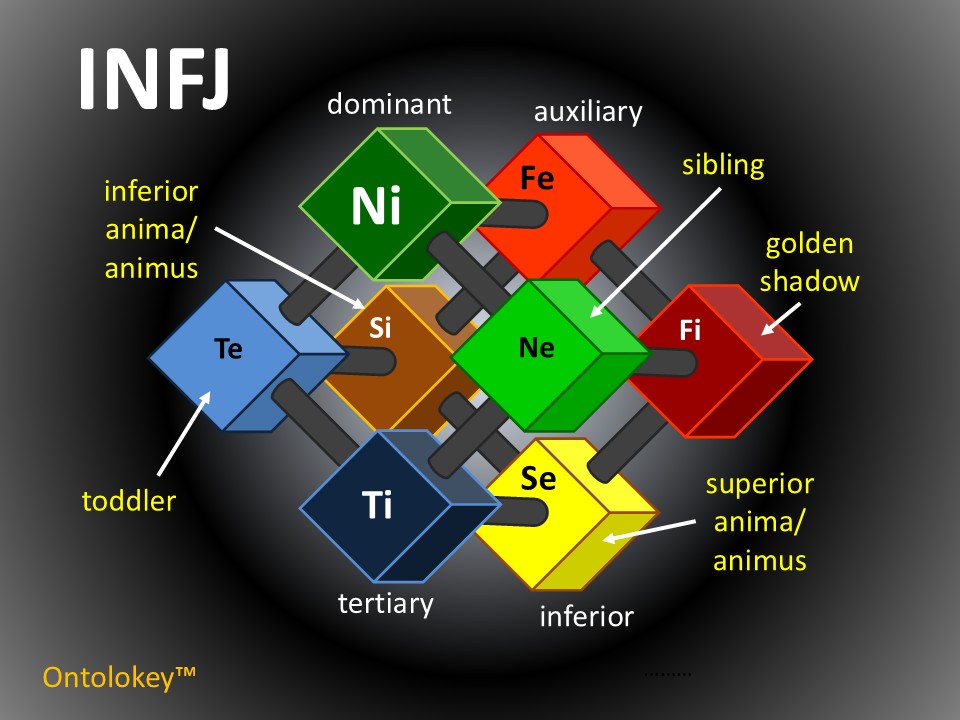
The Beautiful Mask and the Hidden Abyss
The INFJ is often described through qualities that society instinctively admires. Sensitivity, empathy, vision, intuition, idealism, emotional intelligence, moral concern, and a remarkable capacity to understand the psychological reality of other people all contribute to an image that appears almost archetypically noble. Such individuals often become counselors without formal training, healers without professional titles, and interpreters of human suffering long before they consciously decide to occupy those roles. They seem capable of perceiving emotional undercurrents that others overlook, detecting tensions beneath words, motivations beneath actions, and future consequences beneath present events. Many people experience the INFJ as unusually insightful because they often verbalize truths that others vaguely sense but cannot yet articulate. This ability creates an aura of depth that can easily lead observers to assume that the INFJ has already mastered the psychological terrain that most people spend a lifetime struggling to navigate. Yet this assumption is precisely where the first misunderstanding begins, because psychological depth and psychological integration are not the same thing. In many cases, the very capacities that make the INFJ appear wise can become the foundations upon which profound self-deception is built.
The tragedy of the INFJ does not emerge from a lack of psychological awareness. On the contrary, it emerges because awareness itself can become a hiding place. Individuals of this disposition often spend so much time observing human nature that they unconsciously exempt themselves from the same scrutiny they apply to everyone else. They become experts at understanding pain, trauma, fear, insecurity, and emotional defense mechanisms in others while remaining strangely disconnected from the darker motivations operating within their own psyche. Their insight can become selective. They can explain another person’s self-sabotage in exquisite detail while simultaneously remaining blind to their own hidden compulsions. This phenomenon is particularly dangerous because intelligence and introspection create an illusion of immunity. The INFJ often assumes that because they think deeply, they therefore know themselves deeply. Yet psychological history repeatedly demonstrates that self-knowledge and self-analysis are not synonymous. One can spend decades analyzing oneself while carefully avoiding the truths that would genuinely transform one’s life.
The source material associated with this personality structure repeatedly points toward a central characteristic: an inwardly directed intuitive perception that gravitates toward symbols, meanings, possibilities, and unseen realities rather than immediate external facts. The classic description portrays the individual as a dreamer, visionary, mystic, artist, seer, or psychological outsider. Such a person may become fascinated by patterns that transcend ordinary perception and may experience reality less as a collection of concrete objects than as an unfolding network of meanings. This gift can produce extraordinary creativity and profound psychological insight. However, every psychological gift contains the seed of its opposite. The same capacity that enables the INFJ to perceive hidden truths can also detach them from tangible reality. What begins as imagination can become projection. What begins as intuition can become assumption. What begins as vision can become fantasy. The individual may become increasingly captivated by internal images and symbolic narratives until these narratives gradually acquire more authority than reality itself. At that point, the person is no longer interpreting reality. They are interpreting their own interpretations.
This danger becomes especially significant because the INFJ often experiences inner certainty with unusual intensity. Many people arrive at conclusions through deliberate reasoning, evidence gathering, and external verification. The INFJ frequently arrives at conclusions through a different process. A perception emerges. A pattern crystallizes. A feeling of knowing appears. The conclusion feels complete before the evidence has been consciously assembled. While this process can generate startlingly accurate insights, it also creates a profound vulnerability. Human beings tend to trust what feels certain, and few experiences feel more certain than intuition that arrives fully formed. Consequently, the INFJ may become attached not merely to an idea but to the emotional conviction accompanying that idea. When challenged, they may defend not the conclusion itself but the deeper psychological structure supporting their sense of identity. What appears from the outside as stubbornness is often something more complicated: a defense of the inner world against the possibility that its organizing narrative may be incomplete.
One of the most misunderstood aspects of the INFJ shadow lies in their relationship to morality. Because they are often deeply concerned with ethical questions, many assume they are naturally less vulnerable to moral distortion. The opposite may sometimes be true. Individuals who consciously value morality often become susceptible to unconscious moral inflation. They begin to identify with the role of the good person, the helper, the understanding one, the emotionally mature one, the one who sees beyond selfishness. Over time, this identity becomes psychologically rewarding. The individual receives affirmation for being compassionate, insightful, and trustworthy. Gradually, an unconscious attachment forms. The ego becomes invested in maintaining the image of goodness. Once this occurs, darker emotions become increasingly difficult to acknowledge. Resentment, envy, vindictiveness, superiority, manipulation, passive aggression, and hidden hostility do not disappear. They merely descend beneath conscious awareness. The more strongly the individual identifies with goodness, the more threatening these emotions become. The shadow grows precisely because it is denied.
This process often creates a peculiar contradiction. Outwardly, the INFJ may appear remarkably compassionate. Inwardly, however, unacknowledged anger may accumulate for years. Because direct expressions of aggression conflict with their self-image, hostility frequently adopts indirect forms. Disappointment becomes silent withdrawal. Resentment becomes emotional distance. Judgment becomes concern. Control becomes guidance. Moral superiority becomes wisdom. The person may sincerely believe they are acting from benevolent motives while unconscious emotional forces shape their behavior from beneath awareness. This is not hypocrisy in the conventional sense. Hypocrisy implies conscious deception. The phenomenon described here is more psychologically subtle and therefore more dangerous. The INFJ often deceives themselves before they deceive anyone else.
The roots of this pattern can frequently be traced to an early psychological adaptation. Many INFJs learn, consciously or unconsciously, that emotional attunement creates safety. They become highly sensitive to the moods, needs, expectations, and vulnerabilities of others. This adaptation often grants them extraordinary interpersonal awareness, yet it may also create an unstable foundation for identity. Instead of developing a robust sense of self independent of external emotional environments, they may become accustomed to defining themselves through relational roles. They become the listener, the helper, the mediator, the healer, the understanding friend. While these roles provide meaning, they can also conceal an uncomfortable question: Who am I when I am not needed? Many INFJs spend years avoiding this question because the answer threatens structures of identity that have supported them since childhood.
The result is often a hidden dependency that contradicts the image of emotional independence they project. Although INFJs frequently appear self-sufficient, many derive significant psychological validation from being indispensable to others. Their generosity is often genuine, but it may coexist with unconscious needs for significance, purpose, and emotional relevance. When these needs remain unexamined, relationships become complicated. The INFJ may give excessively, sacrifice excessively, understand excessively, and tolerate excessively, not purely out of altruism but because the act of giving reinforces a particular self-concept. Eventually exhaustion emerges. Resentment follows. The person begins to feel unappreciated, misunderstood, or taken for granted. Yet the deeper issue is rarely addressed because it would require confronting a painful truth: some of the sacrifice was not entirely selfless. Some of it was connected to an unconscious need to feel valuable.
The deepest shadow of the INFJ begins precisely at the moment when the beautiful self-image starts to crack. It begins when the healer discovers their own hunger for recognition. It begins when the compassionate person encounters their own capacity for cruelty. It begins when the wise observer recognizes the extent of their own illusions. It begins when the idealist confronts the possibility that many cherished ideals have functioned as defenses against reality rather than bridges toward it. Such moments are psychologically devastating because they threaten not merely behaviors but identity itself. Yet they are also indispensable. No genuine psychological maturity is possible without them. The shadow exists not because the INFJ is uniquely flawed but because every human personality develops blind spots wherever it invests the greatest amount of psychic energy. The brighter the conscious image, the darker the unconscious counterpart tends to become.
For this reason, any serious exploration of the INFJ must move beyond flattering descriptions and enter more difficult territory. The real question is not why INFJs can be insightful, compassionate, visionary, or psychologically perceptive. Those qualities are already well documented. The more important question is what happens when those strengths become distorted, exaggerated, defended, and unconsciously weaponized against reality itself. Only there do we encounter the true shadow. Only there do we begin to understand why some of the most psychologically sensitive individuals can also become trapped within elaborate structures of self-deception. And only there does the path toward genuine integration begin, because the INFJ’s greatest enemy is rarely the external world. More often, it is the seductive beauty of an inner narrative that has gone unquestioned for too long.
The Seduction of the Inner World — When Intuition Becomes Delusion
Among all psychological gifts, few are as double-edged as profound intuition. The INFJ often experiences life through an ongoing process of symbolic perception in which visible events are merely surface expressions of deeper realities. Conversations are rarely interpreted at face value. Relationships are rarely viewed as simple exchanges between individuals. Social dynamics become manifestations of invisible psychological forces, and ordinary events acquire layers of meaning that appear inaccessible to less introspective minds. This capacity frequently allows the INFJ to anticipate developments long before they become obvious. It enables the detection of contradictions, hidden motives, emerging trends, and emotional truths that remain unnoticed by others. Many INFJs can accurately describe the trajectory of a relationship, the psychological condition of a friend, or the future consequences of a decision with remarkable precision. Yet the very success of this perceptive faculty creates the foundation for one of the most dangerous distortions within the INFJ psyche. The problem is not that intuition is unreliable. The problem is that intuition often becomes so reliable that the individual gradually loses the ability to distinguish between genuine insight and subjective projection.
The human mind naturally seeks coherence. It wants events to fit together. It wants experience to form patterns. It wants reality to make sense. The INFJ possesses an unusually powerful capacity to construct such patterns, often connecting seemingly unrelated observations into meaningful wholes. In its healthiest form, this process produces wisdom. In its darker form, it produces narrative addiction. The person becomes increasingly invested not in reality itself but in the explanatory structures they have built around reality. Gradually, the inner model begins to take precedence over direct experience. Facts that support the narrative are welcomed. Facts that contradict it are unconsciously minimized, reinterpreted, or ignored. The individual remains convinced that they are pursuing truth while becoming progressively more attached to a particular interpretation of truth. Because this process occurs largely beneath conscious awareness, it can continue for years without being recognized.
One of the most striking observations contained within the classical descriptions of this personality structure is the recurring image of the visionary who becomes detached from tangible reality. The same inward orientation that enables profound psychological perception can produce extraordinary distance from concrete circumstances. The individual becomes captivated by possibilities, meanings, archetypes, and future implications while neglecting the stubborn reality of what actually exists in the present moment. Reality becomes filtered through interpretation. Every event becomes symbolic. Every relationship becomes psychologically significant. Every conflict becomes evidence of a deeper pattern. At first glance, this tendency appears intellectually sophisticated. Yet there is a subtle danger hidden within it. Human beings can only interpret reality accurately if they maintain sufficient contact with reality itself. When interpretation becomes more important than observation, the individual begins to inhabit a world constructed primarily from their own psychological material.
The shadow emerges most clearly when intuition ceases to function as perception and begins functioning as certainty. Healthy intuition remains open to correction. It presents possibilities rather than final verdicts. It recognizes that insight is always partial and that every perception may contain blind spots. Unhealthy intuition behaves differently. It becomes absolute. The individual experiences an internal conviction so powerful that external evidence appears secondary. They do not merely suspect something; they know it. They do not merely perceive a pattern; they are convinced they have uncovered the hidden truth beneath appearances. Because INFJs often possess impressive psychological insight, they may accumulate numerous experiences that reinforce trust in their intuitive perceptions. Over time, this success can create overconfidence. The individual begins assuming that because many intuitions have proven correct, future intuitions must also be correct. What disappears is epistemological humility—the recognition that even the most insightful human being remains vulnerable to error.
This vulnerability becomes especially pronounced in relationships. Few personality structures devote as much psychological energy to understanding other people. The INFJ frequently studies behavior, emotional expression, inconsistencies, unconscious motives, and interpersonal dynamics with extraordinary intensity. They become highly skilled at reading between the lines. However, this skill contains an inherent danger. Because they often perceive hidden meanings accurately, they may begin assuming that hidden meanings always exist. A delayed response to a message becomes evidence of emotional withdrawal. A subtle shift in tone becomes evidence of deeper dissatisfaction. A minor inconsistency becomes proof of concealed motives. The individual ceases to observe behavior directly and instead interprets behavior through increasingly elaborate psychological frameworks. Sometimes these interpretations are correct. Sometimes they are profoundly mistaken. The problem is that certainty often arrives before verification.
This pattern can create a peculiar form of loneliness. The INFJ frequently feels misunderstood, but the reasons are often more complex than they initially appear. Many people genuinely fail to understand them. Yet another possibility exists. Sometimes the INFJ feels misunderstood because they are responding not to the actual behavior of others but to imagined meanings attributed to that behavior. They are having emotional reactions to psychological narratives rather than observable realities. A friend may feel confused because they are being held accountable for intentions they never possessed. A partner may feel scrutinized because ordinary actions are continuously interpreted through hidden psychological lenses. The INFJ often experiences these perceptions as self-evident truths, making disagreement particularly difficult. To challenge the interpretation feels like challenging reality itself.
What makes this dynamic especially dangerous is that the INFJ’s interpretations often contain partial truths. Delusions rarely succeed when they are entirely disconnected from reality. They succeed because they combine genuine perception with unconscious projection. The INFJ may correctly detect tension within a relationship but incorrectly identify its cause. They may accurately perceive emotional discomfort in another person but attribute motives that do not exist. They may recognize that something is wrong while misunderstanding precisely what is wrong. Because part of the perception is accurate, the entire narrative acquires credibility. The individual becomes unable to separate valid insight from subjective embellishment. This fusion of truth and projection forms one of the most persistent shadow patterns within the INFJ psyche.
Another manifestation of this dynamic appears in the realm of personal destiny. Many INFJs possess an unusually strong sense that their lives should possess meaning. They often feel driven by purpose, vision, or an internal awareness that existence must amount to something more than routine survival. This longing can inspire extraordinary achievements. It can also create profound suffering. The desire for meaning gradually evolves into an expectation of meaning. The individual begins constructing narratives about who they are supposed to become, what role they are destined to fulfill, or what kind of life they are meant to live. These narratives often possess tremendous emotional power because they emerge from genuine psychological needs. Yet the more emotionally invested the individual becomes in a particular vision, the more reality itself becomes threatening. Every deviation from the imagined path feels like failure. Every disappointment becomes existential. Every setback appears to invalidate the entire narrative.
The result is a subtle form of psychological tyranny. Instead of living life directly, the INFJ may begin evaluating every experience according to its relationship with an idealized future self. Reality becomes subordinate to destiny. The actual person becomes subordinate to the imagined person. Over time, this creates chronic dissatisfaction because no real life can consistently satisfy the demands of an idealized vision. The individual feels perpetually incomplete, perpetually behind, perpetually disconnected from the life they believe they should be living. Ironically, the very search for meaning becomes an obstacle to experiencing meaning. The person becomes so focused on fulfilling a narrative that they cease engaging fully with the reality unfolding before them.
The classical descriptions associated with this personality type repeatedly emphasize the figure of the dreamer, the mystic, the visionary, and occasionally the eccentric outsider whose internal world becomes inaccessible even to those closest to them. This observation touches upon a fundamental psychological truth. The INFJ often develops an intensely private inner reality that few people are permitted to enter. Within this internal world exist hopes, fears, symbolic narratives, imagined futures, moral ideals, romantic visions, and psychological interpretations accumulated over many years. Because this world feels rich and meaningful, it can gradually become preferable to ordinary reality. Relationships inside the imagination become more satisfying than relationships outside it. Future possibilities become more attractive than present circumstances. Idealized identities become more compelling than actual identities. At that point, withdrawal from reality no longer feels like avoidance. It feels like refinement. The individual convinces themselves they are pursuing depth while unconsciously retreating from life.
The deepest shadow appears when the INFJ begins mistaking subjective meaning for objective truth. Every human being interprets reality through personal filters, but some personalities remain closely anchored to external evidence. The INFJ often remains anchored to internal coherence instead. What matters is whether the interpretation feels meaningful, psychologically elegant, symbolically resonant, and emotionally convincing. Yet reality is not obligated to conform to psychological elegance. Human beings are inconsistent. Life is messy. Motives are contradictory. Events often occur without deeper significance. The shadow resists these truths because they threaten the beautiful architecture of meaning that intuition continuously constructs.
Psychological maturity therefore requires a painful transformation. The INFJ must learn to distrust certainty without abandoning intuition. They must learn to value reality more than interpretation. They must become willing to discover that some cherished insights are incomplete, some narratives are mistaken, and some convictions are projections disguised as wisdom. This process is profoundly uncomfortable because it feels like the loss of an identity. Yet it is actually the beginning of a more authentic relationship with truth. Genuine wisdom emerges not when intuition becomes infallible but when intuition becomes accountable to reality.
The mature INFJ eventually discovers that insight reaches its highest form not through certainty but through humility. The deepest truths are rarely accompanied by absolute conviction. They are accompanied by openness, curiosity, and the recognition that every perception remains incomplete. At that point, intuition ceases to function as a substitute for reality and becomes what it was always meant to be: a bridge toward reality. The inner world remains rich, imaginative, and meaningful, but it no longer imprisons the individual within its narratives. Instead, it serves as an instrument for engaging life more honestly. Only then does the visionary avoid becoming the dreamer lost within a dream. Only then does intuition illuminate rather than deceive. Only then does the INFJ begin to emerge from one of the deepest chambers of their shadow.
The Hidden Narcissism of the Helper — Moral Superiority, Martyrdom, and the Need to Be Needed
One of the most uncomfortable truths about the human psyche is that virtue and self-interest are rarely as separate as people imagine. Beneath many acts of generosity lie hidden desires for validation. Beneath sacrifice there may be a longing for significance. Beneath compassion there can exist a subtle need for emotional influence. This observation is not an indictment of kindness, nor is it an attempt to reduce all altruism to disguised selfishness. Human motivation is far more complex than such simplistic explanations allow. Nevertheless, genuine psychological maturity requires the willingness to examine not only what one does but also why one does it. For the INFJ, this examination becomes particularly important because few personality structures identify so strongly with being helpful, understanding, supportive, and emotionally available. The shadow does not emerge because these qualities are false. It emerges because they are real. Whenever a person builds a substantial portion of their identity around a virtue, that virtue inevitably becomes entangled with the needs of the ego.
The INFJ often develops a profound investment in understanding and helping other people. They become the confidant whom everyone trusts, the friend who listens for hours, the partner who anticipates emotional needs before they are spoken, and the individual who can often perceive suffering beneath carefully constructed social masks. Because many people experience genuine relief in their presence, the INFJ receives continual reinforcement for occupying this role. They become accustomed to being the psychologically aware one. Others come to them for guidance, comfort, interpretation, and emotional support. Over time, a powerful identity structure forms around this position. The individual no longer merely helps people. They become the helper. What began as a behavior gradually transforms into a self-definition. At first this appears entirely positive. Yet every identity carries hidden costs. The moment a role becomes psychologically necessary, the shadow begins to gather around it.
One of the most significant dangers arises from an unconscious dependency on being needed. Many INFJs sincerely believe that their motivation is entirely altruistic, and often large portions of it genuinely are. However, beneath the conscious desire to help may exist another force operating quietly in the background. The act of helping provides meaning. It provides direction. It provides psychological importance. Most importantly, it provides evidence that one’s existence matters. This hidden need is rarely acknowledged because it conflicts with the image of selfless service. Yet it often exerts enormous influence over behavior. The INFJ may repeatedly gravitate toward wounded individuals, emotionally unavailable partners, troubled friends, or psychologically dependent relationships not merely because they wish to help but because these environments continuously reinforce a particular identity. In such situations, they become indispensable. And indispensability can become psychologically addictive.
The reason this pattern remains hidden for so long is that it is wrapped in moral language. The INFJ does not consciously think, “I need people to depend on me.” Instead, they think, “People need support.” They do not think, “I fear being irrelevant.” They think, “I care deeply about others.” The surface statement is often true. Yet psychological truth frequently exists on multiple levels simultaneously. A person can genuinely care about others while also unconsciously seeking validation through caregiving. The presence of one motive does not eliminate the other. The shadow emerges when only one motive is acknowledged. Once the individual becomes convinced that their intentions are entirely pure, self-examination begins to deteriorate. The helper identity becomes protected from scrutiny. Any suggestion that hidden needs might be involved feels unfair, insulting, or morally offensive.
This psychological dynamic often leads to a form of emotional overextension that becomes characteristic of many unhealthy INFJs. They give more than they can sustain. They listen longer than they should. They tolerate behavior they privately resent. They invest energy in people who show little willingness to change. From the outside, such behavior appears noble. Internally, however, a different process unfolds. Exhaustion accumulates. Disappointment accumulates. Frustration accumulates. Because direct expressions of these emotions often conflict with the helper identity, they remain unspoken. The INFJ continues giving long after emotional resources have been depleted. Eventually, resentment begins to grow beneath the surface. Yet instead of recognizing resentment as a signal that boundaries have been violated, they often interpret it as evidence that others are ungrateful, selfish, or incapable of appreciation.
Here the shadow reveals one of its most paradoxical features. The INFJ who appears selfless may secretly expect recognition for their sacrifices. This expectation often remains unconscious because it contradicts their self-image. They believe they are giving freely. Yet when appreciation fails to appear, emotional pain emerges with surprising intensity. The individual feels invisible. They feel taken for granted. They feel misunderstood. Such reactions reveal an uncomfortable truth. Somewhere within the act of giving existed an expectation, however subtle, that the sacrifice would be seen, valued, or reciprocated. When that expectation remains unmet, disappointment exposes what consciousness had previously denied. The giving was not entirely unconditional. Hidden within it was a desire to receive something in return—not necessarily material rewards, but acknowledgment, emotional significance, loyalty, or validation.
This dynamic frequently evolves into what might be called psychological martyrdom. The martyr does not simply suffer. The martyr derives identity from suffering. They become attached to the narrative of being the one who gives the most, understands the most, sacrifices the most, and receives the least. For the INFJ, this pattern can become extraordinarily seductive because it preserves moral superiority while avoiding direct confrontation with personal needs. Instead of asking for support, they endure. Instead of expressing anger, they absorb it. Instead of establishing boundaries, they continue sacrificing. Eventually, their suffering becomes evidence of virtue. The more exhausted they become, the more righteous they feel. Yet beneath this moral elevation lies a hidden tragedy. The individual is no longer helping others from a position of strength. They are helping others in order to sustain an identity built around self-denial.
The psychological rewards of martyrdom are rarely discussed because they are difficult to acknowledge. Martyrdom grants moral authority. It allows the individual to occupy the position of the misunderstood giver surrounded by selfish recipients. It transforms personal suffering into proof of virtue. Most importantly, it eliminates the need to confront one’s own desires. As long as the INFJ remains focused on everyone else’s needs, they never have to examine the emptiness, loneliness, insecurity, or longing within themselves. The attention remains directed outward. The self remains hidden behind service. What appears to be compassion may therefore function partly as avoidance. The individual becomes so absorbed in rescuing others that they never develop a healthy relationship with their own unmet emotional needs.
This phenomenon often gives rise to another shadow characteristic: moral superiority. The phrase itself feels uncomfortable because it contradicts the image most INFJs hold of themselves. They do not usually experience themselves as arrogant. In fact, many appear humble and self-critical. Yet moral superiority rarely manifests through obvious grandiosity. It often emerges through comparison. The individual silently evaluates the emotional maturity, ethical awareness, authenticity, and psychological depth of those around them. Because they invest enormous effort in understanding emotions and motivations, they may gradually conclude that most people are less self-aware than they are. This conclusion is not entirely false. The problem arises when psychological insight becomes a basis for subtle judgment. The INFJ begins viewing others not as equals but as individuals who simply have not evolved to the same level of awareness.
Such judgment frequently remains invisible because it is expressed indirectly. Instead of overt contempt, there is disappointment. Instead of hostility, there is quiet withdrawal. Instead of direct criticism, there is a subtle sense that others are failing to meet certain psychological standards. The individual may genuinely wish people would become more authentic, more conscious, more compassionate, or more reflective. Yet beneath these aspirations often lies an unconscious assumption that they themselves already embody these qualities sufficiently. This assumption prevents further growth. After all, if one already occupies the moral high ground, what remains to be examined?
The irony is profound. The INFJ often spends years studying human psychology while remaining blind to the narcissistic elements hidden within their own virtue. This narcissism does not resemble the stereotypical image of vanity, self-promotion, or overt self-importance. It is far more subtle. It manifests as identification with goodness itself. The individual becomes attached to being compassionate, attached to being understanding, attached to being morally aware. Once this attachment forms, any evidence contradicting the self-image becomes difficult to integrate. Anger is denied. Self-interest is minimized. Manipulation is rationalized. Hidden motives are projected onto others. The shadow grows precisely because the conscious identity becomes too morally idealized to accommodate ordinary human complexity.
The deepest danger emerges when the helper begins unconsciously controlling others through generosity. This form of control is rarely malicious. Often it is invisible even to the person engaging in it. They offer guidance that was never requested. They provide solutions when empathy would suffice. They intervene in problems that are not theirs to solve. They become emotionally invested in outcomes that belong to someone else. On the surface, such behavior appears caring. Yet beneath it may exist an unconscious desire to shape reality according to one’s own vision of what is best. The individual mistakes influence for love and responsibility for intimacy. What they call helping may sometimes be an attempt to reduce anxiety by managing the lives of others.
The path out of this shadow begins with a difficult realization. True compassion does not require indispensability. Genuine love does not require sacrifice as proof of worth. Authentic service does not depend upon recognition. The mature INFJ eventually discovers that helping others and needing to help others are fundamentally different experiences. The first emerges from abundance. The second emerges from deficiency. One enriches relationships. The other quietly distorts them. As long as the individual remains dependent upon the helper identity, they cannot fully encounter either themselves or other people. Every interaction becomes filtered through the question of usefulness. Every relationship becomes vulnerable to hidden expectations.
Psychological integration therefore demands a radical shift. The INFJ must learn to derive worth from existence rather than usefulness. They must become willing to be ordinary, imperfect, limited, and occasionally unhelpful. They must discover that their value does not depend upon constant emotional labor. This realization feels threatening because it dismantles an identity structure that may have existed for decades. Yet it also creates the possibility of genuine freedom. When the need to be needed dissolves, compassion becomes cleaner. Relationships become more honest. Boundaries become healthier. The helper remains, but the hidden narcissism begins to fade.
Only then does the INFJ encounter a deeper form of love—one no longer rooted in rescue, sacrifice, or moral superiority, but in the quiet recognition that neither they nor anyone else needs saving in order to deserve care. It is at this point that the shadow of the helper begins to transform. What was once a source of unconscious control becomes a source of genuine presence. What was once martyrdom becomes humility. And what was once a desperate need to matter becomes the far more difficult and liberating realization that one already does.
The Secret Life of Repressed Anger — Passive Aggression, Withdrawal, and Emotional Revenge
Among the many misconceptions surrounding the INFJ personality, perhaps none is more persistent than the belief that sensitivity and compassion somehow diminish the capacity for aggression. Because INFJs often appear calm, understanding, diplomatic, and emotionally intelligent, others frequently assume that anger occupies only a minor place in their psychological landscape. Even many INFJs themselves subscribe to this perception. They identify strongly with empathy, understanding, and emotional harmony, and therefore tend to experience anger as something foreign to their essential nature. Yet psychology repeatedly demonstrates that emotions do not disappear because they are denied. They merely change form. The more thoroughly an emotion is rejected by consciousness, the more likely it is to operate from the shadows. Consequently, one of the deepest and least understood aspects of the INFJ shadow is not the absence of anger but the extraordinary lengths to which anger may be concealed, rationalized, spiritualized, intellectualized, or redirected. The result is often not peace but a complex subterranean world of resentment, withdrawal, passive aggression, and forms of emotional retaliation that remain largely invisible even to the person engaging in them.
The roots of this phenomenon often emerge early in life. Many INFJs develop an acute awareness of emotional atmospheres from childhood onward. They become highly sensitive to interpersonal tension and quickly learn that conflict can threaten emotional security. Whether through family dynamics, social experiences, or temperament itself, they often arrive at an implicit conclusion: maintaining harmony is safer than expressing hostility. As a result, they become skilled at managing emotions rather than expressing them. They monitor reactions, suppress impulses, and carefully regulate behavior in order to preserve relational stability. This adaptation may initially appear mature, particularly when compared to individuals who express anger impulsively or destructively. However, emotional suppression is not emotional resolution. The anger remains. It simply loses access to direct expression.
Over time, this creates a dangerous psychological split. The conscious personality becomes increasingly identified with patience, understanding, and emotional restraint, while aggression accumulates beneath awareness. Every unspoken disappointment, every tolerated boundary violation, every unresolved conflict, and every suppressed frustration contributes to a growing reservoir of emotional energy. Because the INFJ often prides themselves on being understanding, they may continually explain away the behavior of others. The friend who disappoints them is given another chance. The partner who neglects them is interpreted sympathetically. The colleague who takes advantage of them is excused due to stress or insecurity. Each explanation may contain genuine truth. Yet something important remains unaddressed. The emotional impact of these experiences is never fully processed. Compassion becomes a substitute for confrontation.
At first glance, such behavior appears noble. The individual demonstrates patience, forgiveness, and emotional maturity. Yet beneath the surface another process unfolds. Resentment begins accumulating in silence. The INFJ may not consciously experience themselves as angry because anger conflicts with their self-image. Instead, they experience exhaustion, disappointment, sadness, or emotional distance. What they often fail to recognize is that these states frequently contain anger in disguised form. Human emotions rarely remain neatly separated. Anger that cannot be expressed directly often transforms into other psychological experiences. It may become chronic irritation, emotional numbness, cynicism, moral judgment, or a growing sense that one is perpetually misunderstood. The conscious mind focuses on the secondary emotions while the primary emotion remains hidden.
This concealment creates one of the defining paradoxes of the INFJ shadow. Few personality structures can appear so gentle while harboring such intense unacknowledged hostility. The hostility is rarely overt. It seldom manifests through shouting, threats, or visible aggression. Instead, it operates indirectly. Communication becomes subtly colder. Enthusiasm disappears. Emotional availability decreases. Small acts of withdrawal begin to replace direct confrontation. The individual convinces themselves that they are simply protecting their energy or maintaining boundaries. Sometimes this explanation is accurate. At other times, however, the withdrawal functions as punishment. The person who caused pain is deprived of access, warmth, attention, or intimacy. The INFJ often remains unaware that this process constitutes a form of aggression because it lacks the outward appearance of hostility.
The phenomenon commonly referred to as the “door slam” provides an especially revealing example. Although often romanticized within popular discussions, psychologically it represents something far more complex. In its healthiest form, ending contact with a harmful person can be an act of necessary self-protection. There are relationships that genuinely require decisive closure. Yet not every instance of abrupt withdrawal belongs to this category. Sometimes the door slam emerges not from clarity but from accumulated resentment that was never communicated honestly. Years of frustration, disappointment, unmet expectations, and suppressed anger suddenly crystallize into a single act of emotional severance. The INFJ reaches a breaking point and concludes that the relationship is beyond repair. From their perspective, the decision feels justified because they have endured so much for so long. What often remains invisible is that the other person may never have fully understood the extent of the problem. The INFJ had been having an internal conversation for years while maintaining an external appearance of relative harmony.
This dynamic reveals a recurring shadow pattern: the substitution of silent endurance for direct communication. Many INFJs possess extraordinary skill when discussing emotions in theory. They can analyze psychological dynamics with remarkable sophistication. Yet when it comes to expressing personal anger in real time, they often struggle significantly. Anger requires confrontation with reality. It requires acknowledging personal needs, limits, disappointments, and grievances. Most importantly, it requires risking disapproval. For a personality structure strongly oriented toward emotional understanding and relational harmony, this risk can feel deeply threatening. Consequently, dissatisfaction is frequently communicated indirectly rather than explicitly. Hints replace requests. Withdrawal replaces confrontation. Silence replaces disagreement. Unfortunately, indirect communication rarely resolves conflict. More often, it intensifies misunderstanding.
As resentment accumulates, another shadow tendency may emerge: moralized anger. Because direct hostility conflicts with the INFJ’s self-concept, aggression often disguises itself as ethical concern. The individual becomes convinced that their frustration is entirely about principles, values, justice, authenticity, or emotional maturity. While these concerns may indeed be relevant, they frequently coexist with personal wounds that remain unacknowledged. The INFJ begins judging others not merely for specific actions but for perceived deficiencies of character. The friend becomes selfish. The partner becomes emotionally immature. The colleague becomes morally compromised. Such judgments provide psychological relief because they transform personal hurt into objective evaluation. The individual no longer feels angry. They feel correct.
This process is especially seductive because it allows aggression to masquerade as insight. The INFJ often possesses genuine psychological perceptiveness and can identify real flaws in others. The problem arises when those perceptions become entangled with unresolved emotional pain. At that point, insight ceases to function as understanding and begins functioning as weaponry. Psychological knowledge becomes a means of maintaining superiority. The individual does not attack directly. Instead, they silently categorize, diagnose, evaluate, and distance themselves. They convince themselves they have simply recognized the truth about another person. Yet beneath this apparent clarity often lies a deeper emotional reality: they have been hurt and do not know how to express it openly.
Perhaps the most troubling manifestation of repressed anger appears in the realm of emotional revenge. The phrase itself may seem incompatible with the INFJ image, yet shadow processes rarely conform to conscious identities. Emotional revenge does not necessarily involve cruelty in any overt sense. More often it consists of subtle attempts to restore psychological equilibrium after perceived injury. The INFJ may withdraw affection knowing that it will be noticed. They may become emotionally unavailable at precisely the moment another person seeks connection. They may cultivate an attitude of indifference that conceals profound resentment. In some cases, they may even derive quiet satisfaction from witnessing the consequences of another person’s mistakes. None of these behaviors are usually recognized as revenge because they lack dramatic aggression. Yet psychologically they serve the same function. They allow anger to express itself while preserving the illusion of innocence.
The deeper issue underlying all these patterns is the INFJ’s often complicated relationship with power. Anger is fundamentally connected to power. It signals that something matters, that a boundary has been crossed, or that an important need has been neglected. Healthy anger mobilizes action. It enables self-protection. It clarifies values. However, many INFJs unconsciously associate power with domination, selfishness, or emotional insensitivity. As a result, they become uncomfortable with their own aggressive capacities. They attempt to remain compassionate without recognizing that genuine compassion requires the ability to confront, oppose, and occasionally disappoint others. Without access to healthy aggression, kindness becomes fragile. It becomes dependent upon suppression rather than integration.
Psychological maturity therefore requires a radically different relationship with anger. The goal is not greater hostility but greater honesty. The INFJ must learn that anger is not evidence of moral failure. It is information. It reveals boundaries, needs, values, and injuries that require attention. When acknowledged consciously, anger becomes surprisingly constructive. It encourages direct communication before resentment accumulates. It prevents martyrdom. It reduces the likelihood of passive aggression. Most importantly, it eliminates the need for emotional revenge because grievances are addressed before they become poisonous.
The mature INFJ eventually discovers that confrontation and compassion are not opposites. In fact, genuine compassion often demands confrontation. To tell the truth when silence would be easier. To express disappointment when withdrawal would be safer. To establish boundaries before resentment takes root. To admit anger without transforming it into moral judgment. These capacities represent profound psychological achievements because they require abandoning the fantasy of being endlessly understanding. They require accepting one’s full humanity, including the uncomfortable emotions that accompany it.
Only then does anger cease to function as a shadow. It becomes integrated into the personality rather than exiled from it. The individual no longer needs passive aggression because they can speak directly. They no longer need emotional revenge because they can address injury honestly. They no longer need abrupt withdrawal because they have learned the difficult art of confrontation. What emerges is not a less compassionate person but a more authentic one. The hidden reservoir of resentment begins to dissolve, and in its place appears something far more powerful than suppressed anger: emotional integrity.
The Romantic Obsession — Idealization, Projection, and the Addiction to Impossible Love
Few dimensions of the INFJ shadow reveal themselves as dramatically as the realm of romantic attachment. While many personality structures struggle with unrealistic expectations in love, the INFJ often experiences this challenge with unusual intensity because romantic relationships do not exist merely as interpersonal arrangements within their psyche. They become symbolic events. Love is rarely interpreted as simple compatibility, mutual affection, or shared life-building. Instead, it becomes a vessel for meaning, transformation, destiny, redemption, psychological completion, and existential significance. The relationship is not merely a relationship. It becomes a story. It becomes an unfolding psychological narrative charged with archetypal importance. This tendency is partly responsible for the extraordinary depth many INFJs bring to intimacy. Yet it also forms the foundation of one of their most destructive shadow patterns: the addiction to idealization.
To understand this phenomenon, one must first recognize the unique way in which the INFJ often perceives other people. Their attention naturally gravitates toward latent potential rather than visible reality. They are frequently less interested in what a person currently is than in what that person could become. Hidden qualities, unrealized possibilities, suppressed talents, emotional wounds, and future growth trajectories attract their attention more strongly than immediate facts. In many situations this orientation is profoundly beneficial. It allows the INFJ to encourage development where others see only limitation. They often become catalysts for growth because they perceive strengths that have not yet fully emerged. However, the same ability that allows them to recognize potential also creates vulnerability to projection. The individual begins relating not to the person who exists but to the person they imagine exists beneath the surface.
The distinction is subtle yet psychologically decisive. Every human relationship contains some degree of projection. People inevitably fill gaps in their knowledge of others with imagination. Yet the INFJ’s tendency toward symbolic interpretation amplifies this process dramatically. A few meaningful conversations may generate a rich internal image of who someone is. Small signs of emotional depth become evidence of extraordinary compatibility. Shared values become indications of destiny. Emotional intensity becomes proof of significance. The imagination begins constructing an idealized figure long before sufficient evidence exists to support such conclusions. The actual person remains partially unknown, but the internal representation becomes increasingly vivid. Eventually the relationship may involve two parallel realities: the real individual and the symbolic figure created within the INFJ’s inner world.
This dynamic explains why INFJs often experience romantic disappointment with exceptional intensity. The pain they feel is rarely limited to the loss of a relationship. More often, they are mourning the collapse of an entire psychological narrative. The future they imagined disappears. The symbolic meaning attached to the relationship dissolves. The idealized image shatters. What makes this process particularly devastating is that the imagined reality often feels more emotionally compelling than the actual relationship itself. Consequently, the INFJ may struggle to understand why they remain attached long after objective reasons for attachment have disappeared. They are not only grieving a person. They are grieving a vision.
The source of this tendency lies partly in the INFJ’s relationship to imagination itself. Their inner world is often extraordinarily rich, nuanced, and emotionally charged. They do not merely experience events; they elaborate them. A glance, a conversation, a moment of emotional vulnerability, or a perceived sign of connection can generate extensive internal reflection. Meanings multiply. Possibilities expand. The relationship acquires depth long before external reality has had time to develop correspondingly. In effect, the emotional investment begins far earlier than the actual intimacy. By the time the other person is still exploring initial attraction, the INFJ may already be contemplating psychological compatibility, future trajectories, and profound emotional significance.
This asymmetry frequently creates suffering because reality develops more slowly than imagination. Human beings reveal themselves gradually. Genuine intimacy requires time, repetition, observation, and sustained contact with reality. The INFJ’s inner world, however, is capable of accelerating this process dramatically. The imagination fills empty spaces with meaning. Ambiguity becomes significance. Possibility becomes expectation. Eventually the individual may become emotionally attached not to what has actually occurred but to what could occur. The relationship exists partly in reality and partly in potential. Unfortunately, potential possesses a remarkable advantage over reality: it cannot disappoint. The imagined partner remains perfect precisely because they remain unfinished.
This attraction to potential often explains why many INFJs find themselves repeatedly drawn toward emotionally unavailable people. From a purely rational perspective, such attraction appears self-defeating. Yet psychologically it makes perfect sense. Emotional unavailability creates ambiguity, and ambiguity creates space for projection. The less accessible the person becomes, the more freedom the imagination acquires. The relationship remains unfinished, unresolved, and therefore infinitely expandable within the mind. The INFJ continues discovering meanings, possibilities, and hidden depths because reality never arrives decisively enough to impose limits upon the fantasy. What appears externally as unfortunate romantic luck may internally function as a sophisticated defense against reality.
The shadow becomes even more pronounced when one considers the role of suffering within these romantic narratives. Many INFJs possess an unconscious attraction to emotionally intense experiences. Not because they consciously desire pain, but because intensity often feels synonymous with significance. Relationships characterized by uncertainty, longing, complexity, and emotional struggle frequently generate stronger internal experiences than stable, healthy relationships. The emotional highs become intoxicating. The periods of separation intensify attachment. The obstacles enhance the sense of destiny. Gradually, the individual begins confusing emotional intensity with emotional depth. Yet the two are not identical. Intensity is often a product of instability. Depth emerges from reality.
This confusion creates one of the most destructive romantic patterns within the INFJ shadow: the addiction to impossible love. Impossible love possesses a unique psychological advantage. Because it cannot fully materialize, it remains protected from disillusionment. The unavailable partner never becomes ordinary. The relationship never encounters the mundane realities of shared life. The fantasy remains intact because reality never has the opportunity to challenge it. The INFJ may spend years emotionally attached to someone who was never truly available, convincing themselves that the strength of their feelings proves the significance of the connection. In reality, the impossibility of the relationship may be precisely what sustains the intensity.
Another dimension of this shadow emerges through the tendency to become emotionally invested in healing or transforming romantic partners. As discussed in previous chapters, many INFJs derive meaning from understanding and helping others. Within romantic contexts, this tendency can become particularly powerful. The wounded partner appears emotionally fascinating. Their struggles evoke compassion. Their hidden potential seems obvious. The INFJ begins imagining who the person could become if only they received sufficient understanding, support, or love. What begins as empathy gradually evolves into a rescue fantasy. The relationship becomes organized around transformation rather than mutuality.
The tragedy of this pattern is that it often prevents genuine intimacy. Real intimacy requires encountering another person as they are. Rescue fantasies focus on who the person might become. The partner becomes a project rather than a reality. The INFJ invests enormous emotional energy into potential growth while neglecting present compatibility. Red flags are overlooked because they are interpreted as temporary obstacles. Dysfunction is tolerated because it appears curable. Harmful behavior is rationalized because deeper wounds are perceived beneath it. The individual remains attached not to the existing relationship but to the imagined future relationship that might emerge after sufficient healing has occurred.
At a deeper level, these romantic dynamics reveal an underlying existential issue. Many INFJs unconsciously seek completion through love. They imagine that somewhere there exists a person capable of fully understanding them, fully seeing them, fully validating their inner world, and fully dissolving the loneliness that accompanies profound psychological sensitivity. This longing is understandable. Human beings naturally desire connection. Yet when the desire becomes absolute, love acquires impossible responsibilities. The partner is no longer expected merely to share life. They are expected to resolve existential isolation itself. No human being can fulfill such a role.
The inevitable consequence is disappointment. Even the healthiest relationship cannot eliminate the fundamental separateness of human existence. There will always remain aspects of the self that cannot be completely communicated. There will always be moments of misunderstanding. There will always be limitations. The mature INFJ eventually realizes that intimacy is not the elimination of distance but the willingness to remain connected despite distance. Love does not complete the self. It accompanies the self.
Psychological integration requires confronting a difficult truth: the qualities most passionately sought in others often reflect disowned aspects of oneself. The idealized partner frequently serves as a container for projections. Wisdom, strength, creativity, authenticity, courage, emotional depth, spiritual significance, or unconditional acceptance become concentrated within another person because the individual has not fully recognized these capacities within themselves. Romantic obsession therefore functions partly as a relationship with one’s own unrealized potential. The beloved becomes a mirror reflecting disowned possibilities.
When this realization occurs, the entire structure of idealization begins to weaken. The INFJ no longer seeks salvation through another person. They no longer require destiny to justify affection. They no longer confuse suffering with depth or ambiguity with significance. Instead, they gradually develop the capacity to love reality. This may sound less romantic, yet psychologically it represents a far deeper achievement. Reality includes flaws, limitations, contradictions, disappointments, and ordinary moments. It lacks the perfection of fantasy. Yet it possesses something fantasy can never provide: truth.
The mature INFJ eventually learns that genuine love begins precisely where idealization ends. It begins when projection dissolves. It begins when the symbolic figure fades and the actual human being emerges. It begins when the desire to rescue gives way to the willingness to witness. It begins when destiny becomes less important than presence. What remains is quieter than obsession, less dramatic than longing, and less intoxicating than fantasy. Yet it is infinitely more real.
And reality, though less glamorous than imagination, is the only place where love can truly exist.
The Dark Intuition — Paranoia, Catastrophizing, and the Tyranny of Future Visions
One of the most celebrated characteristics of the INFJ is the ability to perceive consequences before they become visible to others. Many INFJs possess a remarkable sensitivity to patterns unfolding across time. They often detect subtle developments, emerging tensions, hidden trajectories, and psychological undercurrents long before these elements crystallize into obvious reality. This capacity frequently appears almost prophetic to those around them. Friends may dismiss concerns that later prove justified. Colleagues may ignore warnings that eventually materialize. Partners may underestimate relational problems that the INFJ sensed months or years in advance. Experiences of this kind reinforce trust in intuition and strengthen the belief that one’s internal perceptions provide reliable guidance through an uncertain world. Yet every psychological strength carries within it the possibility of distortion. The same faculty that allows the INFJ to anticipate future outcomes can also become a source of profound psychological suffering when it loses contact with reality and becomes dominated by fear.
The central problem emerges from a simple fact: the human mind evolved not merely to perceive opportunities but also to detect threats. Pattern recognition therefore possesses a built-in negativity bias. Potential dangers demand attention because failure to notice them carries greater consequences than failure to notice positive possibilities. For most people this tendency remains moderated by external reality. The INFJ, however, often spends considerable time inhabiting the world of possibilities rather than immediate facts. As a result, threats may acquire psychological reality long before they acquire objective reality. The individual begins reacting not to events themselves but to anticipated futures. What exists becomes less important than what might exist. The imagination, which serves as a source of creativity and insight, gradually transforms into a generator of increasingly elaborate scenarios of loss, betrayal, failure, rejection, illness, catastrophe, or collapse.
This process rarely begins dramatically. More often it develops through subtle exaggerations of otherwise legitimate concerns. The INFJ notices a small inconsistency in someone’s behavior. Instead of treating it as an isolated observation, the mind immediately begins tracing potential implications. If this inconsistency exists, what does it suggest about the relationship? If the relationship contains this weakness, what future conflicts might emerge? If those conflicts occur, where will they ultimately lead? Within minutes, a minor observation has expanded into a comprehensive narrative about future deterioration. Importantly, every step in the chain may appear rational. The problem lies not in any individual conclusion but in the cumulative effect of endless extrapolation. The individual ceases living in the present and begins inhabiting a future that exists only within imagination.
This tendency toward future-oriented thinking becomes particularly dangerous because the INFJ often experiences imagined possibilities with extraordinary emotional intensity. Many people can entertain hypothetical scenarios without becoming psychologically absorbed by them. The INFJ frequently cannot. A possibility is not merely considered; it is felt. The emotional system reacts as though the anticipated event already possesses partial reality. Anxiety therefore emerges not as a response to what is happening but as a response to what could happen. Over time, the distinction between possibility and probability begins to erode. The individual becomes increasingly preoccupied with preventing outcomes that may never occur.
The psychiatric descriptions associated with inwardly intuitive personality structures repeatedly reveal a striking vulnerability to obsessive fears, catastrophic expectations, and forms of anxiety that gradually detach from objective circumstances. Several cases described in the source material demonstrate how an initially plausible concern can evolve into an all-consuming psychological reality. What begins as vigilance becomes hypervigilance. What begins as caution becomes obsession. What begins as awareness becomes imprisonment. Although such extreme manifestations do not characterize all INFJs, they illustrate a broader psychological principle. The imagination does not automatically distinguish between danger that exists and danger that is merely conceivable. Once fear attaches itself to a compelling narrative, the mind may continue elaborating that narrative indefinitely.
One reason this dynamic proves so difficult to recognize is that the INFJ often possesses genuine evidence supporting at least portions of their concerns. Unlike purely irrational fears, dark intuition frequently originates in accurate observations. The individual notices behavioral inconsistencies, social tensions, emerging risks, or subtle warning signs that others overlook. Unfortunately, the accuracy of the initial perception often lends credibility to increasingly speculative conclusions. Because the first step was correct, subsequent steps feel equally trustworthy. The mind moves seamlessly from observation to interpretation, from interpretation to prediction, and from prediction to certainty. At some point, however, the process ceases to be perception and becomes projection. The future is no longer being anticipated. It is being imagined.
This pattern frequently manifests in relationships. Few experiences torment the unhealthy INFJ more than uncertainty regarding emotional security. Because they often invest enormous psychological significance in close relationships, the possibility of loss acquires exceptional emotional weight. Consequently, minor fluctuations may trigger extensive internal analysis. A change in communication style becomes evidence of withdrawal. A period of emotional distance becomes evidence of fading affection. An unresolved disagreement becomes evidence of eventual abandonment. The mind relentlessly seeks patterns, and once anxiety enters the process, the search becomes biased toward threat detection. Every ambiguous signal acquires ominous significance.
The irony is that this fear-driven intuition often creates the very outcomes it seeks to prevent. The individual becomes preoccupied with signs of rejection and therefore behaves differently. They seek reassurance indirectly. They withdraw preemptively. They become emotionally guarded. They overanalyze interactions. The relationship begins experiencing strain, not because the feared future was inevitable, but because the fear itself altered behavior. This phenomenon represents one of the most tragic aspects of the INFJ shadow. The capacity to foresee possibilities becomes so entangled with anxiety that it actively participates in creating negative outcomes. The prophecy fulfills itself not because it was accurate but because it was believed.
Another manifestation of dark intuition appears in the realm of personal identity and life direction. Many INFJs possess a strong awareness of unrealized potential. While this awareness can be motivating, it can also generate chronic dissatisfaction. The individual becomes haunted by visions of future failure. They imagine lives wasted, opportunities missed, talents undeveloped, and destinies unfulfilled. Every decision acquires existential significance because it appears connected to a larger narrative about who they are meant to become. Small mistakes become evidence of larger inadequacies. Temporary setbacks become indicators of permanent decline. The imagination continuously projects forward, constructing futures in which current imperfections expand into lifelong limitations.
This tendency often creates a state of perpetual psychological tension. The INFJ feels responsible not merely for present actions but for entire future trajectories. Every choice seems loaded with consequences extending years or decades into the future. As a result, decision-making becomes increasingly difficult. The individual seeks certainty before acting, yet certainty remains impossible. More information is gathered. More reflection occurs. More possibilities are analyzed. Eventually, overthinking becomes paralysis. Life stalls because the person is attempting to eliminate all future risk before taking action in the present.
Underlying these patterns is a deeper psychological issue: the illusion of control. Dark intuition often functions as an unconscious attempt to manage uncertainty. If every possible threat can be anticipated, perhaps it can be prevented. If every negative outcome can be imagined, perhaps it can be avoided. Yet life refuses to cooperate with such strategies. Reality remains unpredictable. Human beings remain imperfectly knowable. The future remains fundamentally uncertain. The INFJ frequently experiences this uncertainty as intolerable because it challenges the very faculty upon which they rely most heavily. The mind continues generating scenarios in an effort to achieve security, unaware that the process itself is producing insecurity.
One of the most fascinating paradoxes of the INFJ shadow is that imagination and fear frequently become allies. Imagination expands possibilities. Fear selects the most threatening possibilities. Together they form an extraordinarily powerful psychological mechanism. The individual begins living within elaborate future narratives that possess immense emotional reality despite lacking objective confirmation. In severe cases, this process can approach paranoia. Not necessarily clinical paranoia in its psychiatric sense, but a more subtle form characterized by excessive suspicion, exaggerated interpretations, and chronic anticipation of hidden dangers. The individual becomes convinced that they are merely seeing what others cannot see. Sometimes this is true. Often it is only partially true. The challenge lies in distinguishing insight from fear.
Psychological maturity requires developing this distinction with exceptional rigor. The healthy INFJ learns that intuition is a hypothesis, not a verdict. A perception may be valuable without being infallible. A concern may be legitimate without being certain. An imagined future may deserve consideration without demanding emotional investment. This shift sounds simple, yet it represents a profound transformation. It requires relinquishing the illusion that enough foresight can eliminate uncertainty. It requires accepting that some risks must be faced rather than predicted away.
The mature INFJ eventually discovers that wisdom involves not only perceiving possibilities but also tolerating ambiguity. They learn that reality unfolds one moment at a time and that no amount of psychological forecasting can substitute for direct engagement with life. The future remains important, but it no longer dominates consciousness. Possibilities remain visible, yet they cease to function as tyrants. Anxiety loses its authority because it is no longer mistaken for insight.
At this stage, intuition becomes something very different from the fearful mechanism it once was. It remains perceptive, but it becomes grounded. It remains visionary, but it becomes accountable to evidence. Most importantly, it ceases to serve fear. Instead of generating endless catastrophic futures, it begins illuminating meaningful possibilities. The imagination remains powerful, but it no longer functions as a prison of anticipation.
Only then does the INFJ escape one of the darkest distortions of their gift. The ability to see the future remains, but the future no longer controls them. They cease living in imagined tomorrows and return to the only place where life can actually be lived: the present reality unfolding before them.
The Victim Archetype — Self-Pity, Misunderstood Identity, and the Addiction to Psychological Suffering
Among the many shadows that accompany the INFJ personality, few are as difficult to recognize because few are so deeply intertwined with genuine experience. Unlike arrogance, manipulation, or overt hostility, the victim archetype does not usually emerge from obvious moral failings. It often develops from real wounds, authentic disappointments, repeated misunderstandings, and legitimate experiences of alienation. Many INFJs genuinely do feel different from those around them. They often perceive emotional realities that others ignore, ask existential questions that others avoid, and experience psychological complexity that is difficult to communicate. Consequently, periods of loneliness, frustration, and social disconnection are often real rather than imagined. The shadow emerges not when these experiences occur, but when they gradually become integrated into identity itself. At that point, suffering ceases to be something one experiences and begins to become something one is.
This distinction is psychologically crucial. Human beings can endure extraordinary hardship without becoming victims in the psychological sense. Conversely, individuals can become trapped within a victim identity even when objective circumstances improve significantly. The difference lies in the relationship between suffering and selfhood. When suffering becomes central to identity, it acquires a paradoxical psychological value. The individual begins interpreting life through the lens of injury, disappointment, exclusion, and misunderstanding. Every new experience is unconsciously filtered through existing narratives of abandonment, rejection, invisibility, or emotional isolation. Over time, these narratives become increasingly difficult to challenge because they no longer function merely as interpretations. They become foundational explanations for existence itself.
The INFJ is particularly vulnerable to this process because of their tendency toward introspection and meaning-making. Most people experience pain and attempt to move beyond it. The INFJ often seeks to understand pain, contextualize it, explore its symbolism, trace its origins, and integrate it into a larger narrative about life. This tendency can facilitate profound growth. It can also create an unhealthy attachment to suffering. The individual becomes fascinated by their wounds. They revisit them repeatedly. They analyze them from multiple perspectives. They derive identity from surviving them. What initially serves healing gradually transforms into rumination. The psyche begins orbiting around pain rather than moving through it.
One reason this pattern proves so seductive is that suffering often provides coherence. Life is messy, contradictory, and ambiguous. Psychological pain offers a simple organizing principle. If one feels misunderstood, many difficulties can be interpreted through that framework. If one feels rejected, countless experiences appear connected by a common theme. The victim archetype therefore functions partly as a source of meaning. It explains disappointment. It explains loneliness. It explains unrealized potential. It explains relational failures. Most importantly, it explains why life has not unfolded according to one’s hopes. The narrative becomes psychologically attractive because it reduces complexity. Instead of confronting multiple contributing factors, the individual arrives at a single conclusion: people simply do not understand me.
There is often some truth within this conclusion. Many INFJs genuinely feel misunderstood because portions of their inner world remain difficult to communicate. Their psychological experience may differ significantly from prevailing social norms. Yet the shadow emerges when misunderstanding becomes an identity rather than an experience. The individual begins expecting not to be understood. They anticipate disappointment before it occurs. They unconsciously seek confirmation of their uniqueness and isolation. Ironically, this expectation often influences behavior in ways that perpetuate the very outcome being feared. Communication becomes indirect. Vulnerability becomes selective. Assumptions replace clarification. Others are expected to intuit emotional realities that have never been fully expressed. When understanding fails to materialize, the existing narrative gains further reinforcement.
A particularly subtle manifestation of this shadow involves the romanticization of suffering. Many INFJs possess a deep appreciation for psychological depth, emotional authenticity, and existential exploration. Consequently, suffering may acquire symbolic significance. Pain becomes evidence of sensitivity. Alienation becomes evidence of uniqueness. Emotional struggle becomes evidence of depth. While there is some validity to these associations, they contain hidden dangers. The individual begins distinguishing themselves from others through suffering. Psychological hardship becomes intertwined with identity and self-worth. Recovery therefore becomes complicated because healing threatens an established source of meaning.
The unconscious logic operates as follows: if suffering has made me who I am, then who will I become without it? If my wounds explain my sensitivity, my creativity, my insight, and my uniqueness, what remains when those wounds heal? These questions rarely reach consciousness directly, yet they exert considerable influence. The individual may sincerely desire relief while simultaneously resisting the psychological transformations required for relief. Healing becomes threatening because it demands relinquishing familiar narratives. The victim archetype therefore protects itself by maintaining attachment to pain even while consciously seeking liberation from it.
This dynamic often manifests through chronic self-pity. Self-pity differs from sadness in important ways. Sadness acknowledges suffering while remaining open to reality. Self-pity transforms suffering into identity. The individual becomes absorbed not merely by pain but by the perceived unfairness of pain. Attention turns inward. Perspective narrows. Life becomes organized around personal disappointment. The world is experienced less as a field of possibilities and more as a source of recurring injuries. Importantly, self-pity is rarely recognized as such by those experiencing it. It feels like realism. It feels like honesty. It feels like the accurate acknowledgment of hardship. Yet its psychological effects are profoundly different from genuine acceptance.
The victim archetype also influences relationships in subtle but significant ways. The INFJ may become attached to being the misunderstood one. This role provides moral innocence because responsibility for relational difficulties appears to reside elsewhere. Partners fail to understand. Friends fail to appreciate. Society fails to recognize depth. While these perceptions may occasionally be accurate, they often conceal an uncomfortable possibility. Understanding requires communication. Appreciation requires visibility. Recognition requires participation. The individual may unconsciously contribute to their own invisibility by withholding aspects of themselves from the very relationships they wish would perceive them more fully.
This tendency becomes particularly evident in situations involving unmet needs. Rather than expressing desires directly, the INFJ may hope others will recognize them intuitively. When recognition fails to occur, disappointment emerges. The disappointment reinforces feelings of being misunderstood. Yet the underlying issue often remains unaddressed because direct communication would challenge the victim narrative. It would introduce personal agency. The individual would need to acknowledge that some experiences of misunderstanding result not from the failures of others but from their own reluctance to communicate openly.
The psychiatric material associated with inwardly focused intuitive personalities repeatedly illustrates another relevant phenomenon: the tendency for certain forms of anxiety, obsession, and emotional fixation to persist because they become integrated into personality structure itself. The individual does not merely experience fear or suffering. They organize their psychological reality around it. As a result, the symptom acquires meaning beyond its immediate content. It becomes part of identity. This observation offers a useful lens through which to understand the victim archetype. Suffering persists not only because it hurts but because it serves hidden psychological functions.
One of those functions is moral protection. Victims are innocent. They have been wronged. They are not responsible for the injuries they have endured. While this perspective is entirely appropriate in many circumstances, problems arise when it expands beyond specific events and becomes a general worldview. The individual begins defining themselves primarily through what has happened to them rather than through how they respond to what has happened. Agency gradually diminishes. Responsibility becomes threatening because it appears to invalidate suffering. Yet the opposite is true. Acknowledging agency does not deny pain. It simply refuses to grant pain ultimate authority.
The deepest expression of the victim archetype emerges through what might be called the addiction to psychological suffering. Addiction in this context does not imply enjoyment. People rarely enjoy suffering. Rather, they become attached to the identity structures that suffering supports. Pain provides familiarity. Familiarity provides security. Even misery can feel safer than transformation because misery is known. Growth requires uncertainty. It requires abandoning established narratives and stepping into unfamiliar psychological territory. Consequently, many individuals unconsciously remain loyal to forms of suffering that no longer serve them.
For the INFJ, this loyalty often appears as recurring attachment to narratives of alienation, disappointment, and misunderstood uniqueness. The individual continues interpreting new experiences through old wounds. They become historians of their own pain. Every injury is remembered, contextualized, and integrated into an increasingly elaborate story about why connection remains difficult and fulfillment remains elusive. Yet eventually a critical realization becomes necessary. The story may explain suffering, but it cannot heal it. Explanation and liberation are not the same thing.
Psychological maturity begins when the INFJ recognizes that suffering, no matter how profound, cannot serve as the foundation of identity. Wounds are experiences. They are not selves. Disappointment is real, but it is not destiny. Misunderstanding occurs, but it is not an immutable condition. The individual must become willing to relinquish the emotional rewards associated with victimhood: moral innocence, explanatory simplicity, and familiar narratives of uniqueness through suffering. This relinquishment feels frightening because it removes a long-standing source of identity. Yet it also restores agency.
The mature INFJ eventually discovers a profound truth. One does not transcend suffering by denying it, minimizing it, or intellectualizing it. One transcends suffering by refusing to build a home within it. Pain may remain part of one’s history, but it ceases to dictate one’s future. The narrative changes. Instead of asking, “Why am I so misunderstood?” the individual begins asking, “How can I communicate more honestly?” Instead of asking, “Why does life continually disappoint me?” they begin asking, “What responsibilities am I avoiding?” Instead of defining themselves through wounds, they begin defining themselves through choices.
At that moment, the victim archetype loses its power. The suffering remains part of the story, but it is no longer the author of the story. And for the INFJ, few psychological transformations are more important than this one, because only when the identity built around pain dissolves can a deeper and more authentic self finally emerge from beneath it.
The Chameleon Self — Identity Diffusion, Adaptation, and the Fear of Being Truly Seen
One of the least visible yet most psychologically significant shadows within the INFJ personality is the problem of identity itself. To outsiders, INFJs often appear highly self-aware. They spend considerable time reflecting upon their inner world, analyzing motivations, examining emotional experiences, and searching for personal meaning. Such behaviors naturally create the impression that they possess a stronger sense of self than most people. Yet beneath this appearance there frequently exists a paradox that remains hidden for years, sometimes decades. The individual may know an enormous amount about their thoughts, emotions, ideals, values, and psychological patterns while remaining uncertain about who they actually are. This distinction is subtle but essential. Self-observation and self-possession are not identical. One may observe oneself continuously while still lacking a stable center from which to live.
The roots of this paradox often emerge from the INFJ’s extraordinary sensitivity to interpersonal environments. Few personality structures are as attuned to the emotional realities of other people. The INFJ instinctively notices shifts in mood, subtle expectations, unspoken tensions, relational dynamics, and hidden emotional needs. This sensitivity grants them remarkable social adaptability. They know how to communicate differently with different individuals. They understand how to make others feel comfortable. They can often adjust their presentation, tone, emphasis, and behavior in response to changing relational contexts without appearing artificial. In healthy forms, this flexibility becomes a valuable interpersonal skill. In unhealthy forms, however, it gradually erodes the distinction between adaptation and authenticity. The individual becomes so accustomed to adjusting themselves that they lose awareness of where adaptation ends and identity begins.
This process rarely feels deceptive because it is usually motivated by empathy rather than manipulation. The INFJ is not consciously trying to become someone they are not. More often, they are attempting to create harmony, understanding, connection, or emotional safety. They instinctively emphasize aspects of themselves that resonate with the people around them while minimizing aspects that may create distance or conflict. The problem is not the behavior itself. Every socially competent person adapts to some degree. The problem arises when adaptation becomes habitual and unconscious. Over time, the individual may discover that different people know radically different versions of them. One friend knows the intellectual side. Another knows the emotional side. A third knows the humorous side. A fourth knows the idealistic side. Yet very few people know the whole person because the whole person is rarely presented consistently.
The psychological consequences of this pattern are profound. When a person continually modifies self-expression according to context, they begin receiving fragmented reflections from the outside world. Each relationship mirrors a different version of the self. The individual becomes increasingly dependent upon external environments to determine which aspects of identity are expressed at any given moment. Eventually an unsettling question emerges: if every relationship brings forth a different version of me, which version is actually real? The answer is often more complicated than expected because all of the versions contain elements of truth. The problem is not falseness. The problem is fragmentation.
This fragmentation creates a peculiar form of loneliness that many INFJs struggle to articulate. They may be surrounded by people who care about them and yet feel deeply unseen. They may maintain numerous meaningful relationships while experiencing a persistent sense of invisibility. To others, this reaction can appear confusing. After all, the individual receives affection, validation, attention, and appreciation. Why then does the feeling of being unknown persist? The answer frequently lies in the fact that others can only know what they are allowed to encounter. If large portions of the self remain hidden behind adaptation, understanding becomes inherently limited. The INFJ often experiences the pain of not being fully seen while unconsciously participating in the conditions that make such invisibility inevitable.
At a deeper level, this tendency reflects a fundamental conflict between authenticity and belonging. Human beings possess two powerful psychological needs. One is the need to be accepted. The other is the need to be known. In healthy development, these needs become integrated. The individual learns that authentic self-expression and relational connection can coexist. For many INFJs, however, this integration remains incomplete. Somewhere within the psyche exists a fear that complete authenticity may threaten connection. Certain thoughts may appear too strange. Certain emotions may seem too intense. Certain desires may feel too unconventional. Certain aspects of personality may appear incompatible with acceptance. Consequently, selective self-disclosure becomes a survival strategy. The individual reveals enough to maintain closeness while withholding enough to remain protected.
The tragedy of this strategy is that it succeeds and fails simultaneously. It succeeds because relationships remain intact. The feared rejection often does not occur. Yet it fails because the resulting connection remains incomplete. Others form relationships with partial representations rather than the total person. The INFJ then experiences the painful sensation of being loved but not fully known. What often remains unrecognized is that these two experiences are intimately connected. The more carefully one curates self-presentation, the less opportunity others have to encounter the deeper layers that remain concealed.
This hidden fear of visibility is one of the most important dimensions of the INFJ shadow. On the surface, many INFJs long to be understood. Beneath that longing often exists an equally powerful fear of genuine exposure. Being truly seen means relinquishing control over how one is perceived. It means allowing others to encounter imperfections, contradictions, selfish impulses, insecurities, and unresolved conflicts. It means abandoning the carefully managed image of psychological depth, compassion, competence, wisdom, or emotional maturity. In other words, it requires vulnerability at a level far deeper than emotional disclosure alone. It requires the willingness to be ordinary.
For many INFJs, this is surprisingly difficult. The inner world often becomes a source of identity and pride. They may secretly view themselves as different from those around them—more reflective, more sensitive, more psychologically aware, or more concerned with meaning. While these perceptions may contain truth, they also create subtle barriers to authentic connection. The individual becomes attached to a particular image of who they are. Any aspect of reality that threatens this image becomes difficult to reveal. The shadow therefore remains hidden not only from others but from the self as well.
One of the more subtle manifestations of identity diffusion appears in decision-making. Because the INFJ often perceives multiple perspectives simultaneously, they may struggle to determine which desires genuinely belong to them. They understand what others need. They understand what society expects. They understand what morality demands. They understand what relationships require. Yet they frequently encounter difficulty identifying their own preferences independent of these influences. The internal question becomes complicated. Is this what I want, or is this what I believe I should want? Is this conviction genuinely mine, or have I absorbed it from my environment? Is this aspiration authentic, or does it exist because it aligns with a particular image of myself?
Such questions reveal an important psychological reality. Adaptation, when taken too far, weakens the development of a stable inner center. The individual becomes skilled at responding but less skilled at initiating. They become attuned to external realities while remaining uncertain about their own. As a result, life may gradually become organized around obligations, expectations, ideals, and relational responsibilities rather than direct personal desire. Years may pass before the individual realizes that they have become highly effective at living in accordance with psychological narratives while remaining disconnected from spontaneous authenticity.
This pattern often intensifies during periods of major life transition. Careers, relationships, belief systems, and identities that once provided structure begin to shift. Suddenly the adaptive self encounters a crisis. The roles that previously defined existence no longer function. The helper, the partner, the advisor, the visionary, the caretaker, or the emotionally aware one may discover that beneath these roles lies uncertainty. The question is no longer how to serve others or fulfill expectations. The question becomes far more uncomfortable: who am I when no role is available to define me?
Many INFJs experience such periods as profound existential disorientation. Yet these crises often contain tremendous transformative potential. The collapse of adaptive identities creates an opportunity for something more authentic to emerge. The individual begins recognizing that a true self cannot be constructed entirely through reflection, ideals, or relational roles. It must also be lived. Identity is not merely discovered through introspection. It is forged through choices, actions, boundaries, desires, failures, and experiences.
Psychological maturity therefore requires the INFJ to undertake a difficult task: separating authenticity from adaptation. This does not mean abandoning empathy or social awareness. Rather, it means developing the capacity to remain oneself even when doing so creates discomfort. It means expressing disagreement without excessive fear of disconnection. It means revealing imperfections without immediately compensating for them. It means allowing others to encounter complexity rather than carefully curated versions of the self. Most importantly, it means accepting that genuine intimacy cannot occur without genuine visibility.
The mature INFJ eventually realizes that the longing to be understood contains a hidden responsibility. If one wishes to be known, one must become knowable. This requires courage because visibility inevitably introduces risk. Some people may misunderstand. Some may disapprove. Some may leave. Yet the alternative is a life organized around perpetual adaptation—a life in which acceptance is achieved at the cost of authenticity.
When the fear of being seen begins to dissolve, something remarkable occurs. The fragmented selves gradually converge. The different versions presented to different people become less necessary. The individual no longer needs to shape-shift constantly in response to every emotional environment. Instead, a stable center emerges. This center remains flexible but no longer disappears. Relationships become simpler because less energy is devoted to self-management. Connection becomes deeper because more of the real person is present.
At that point, the chameleon ceases to be a survival strategy and becomes a choice. Adaptability remains available, but identity no longer depends upon it. The INFJ discovers that authenticity and belonging are not enemies. In fact, genuine belonging is impossible without authenticity. One cannot truly be accepted for a self that never fully appears. Only when the hidden person steps into the light can real connection begin. And only then does one of the deepest shadows of the INFJ finally start to dissolve.
The Spiritual Ego — Wisdom, Superiority, and the Seduction of Being Special
Few shadows are more difficult to confront than those that emerge from genuine strengths. Human beings generally recognize flaws more easily when those flaws appear in obviously undesirable forms. Vanity is easier to identify than righteousness. Greed is easier to recognize than moral superiority. Open arrogance is easier to detect than the subtle conviction that one’s depth, awareness, or insight places one slightly above the ordinary human condition. For the INFJ, this distinction becomes critically important because many of their most celebrated qualities—psychological insight, emotional intelligence, intuition, idealism, empathy, and existential curiosity—can gradually become the foundations of a highly sophisticated form of ego inflation. The resulting shadow is particularly dangerous because it rarely feels like arrogance. It feels like wisdom.
At the heart of this phenomenon lies a psychological paradox. The INFJ is often deeply interested in understanding human nature. They examine motivations, fears, traumas, emotional patterns, relational dynamics, and existential questions with unusual seriousness. Over time, this exploration frequently produces genuine insight. They may understand psychological mechanisms that remain invisible to many people. They may recognize self-deception, emotional avoidance, projection, and unconscious behavior with remarkable clarity. Such abilities are real. The problem begins when insight becomes identity. The individual ceases to merely possess psychological awareness and begins to define themselves through it. Awareness transforms into self-image. Self-image transforms into superiority.
This process rarely occurs consciously. Few INFJs walk through life believing themselves intellectually or spiritually superior in any overt sense. In fact, many experience themselves as humble, self-critical, and acutely aware of their shortcomings. Yet psychological superiority does not require conscious grandiosity. Often it operates beneath awareness through subtle comparisons. The individual notices how rarely others engage in self-reflection. They observe emotional immaturity, superficiality, dishonesty, conformity, or lack of psychological curiosity in those around them. Gradually, a silent conclusion begins to form. Most people seem asleep. Most people seem disconnected from deeper realities. Most people seem unaware of truths that feel obvious to the observer.
At first, such observations may contain considerable validity. Human beings vary significantly in self-awareness, emotional intelligence, and psychological curiosity. Yet the shadow emerges when these differences become integrated into identity. The INFJ begins seeing themselves not merely as someone who values depth but as someone who possesses depth to an exceptional degree. The distinction appears minor, but its psychological consequences are profound. Once identity becomes attached to being insightful, wise, conscious, or spiritually developed, an unconscious hierarchy is created. The self occupies a higher position. Others occupy lower positions. The ego has entered the realm of spirituality wearing the mask of humility.
One reason this shadow remains so difficult to recognize is that it often disguises itself as disappointment. The INFJ does not necessarily think, “I am better than other people.” Instead, they think, “Why are people so unconscious?” They do not consciously claim superiority. They simply find themselves repeatedly frustrated by what they perceive as emotional shallowness, intellectual laziness, ethical inconsistency, or lack of self-awareness. Yet beneath the frustration often lies an implicit assumption. The observer has positioned themselves outside the problem. They are the one who sees. Others are the ones who fail to see.
This pattern becomes especially visible in conversations about growth, healing, and personal development. Many INFJs devote significant energy to understanding themselves. They read extensively, reflect deeply, and engage seriously with psychological and existential questions. These efforts often produce genuine development. However, they may also produce a subtle attachment to being a person who grows. The individual begins identifying with the role of the seeker, the healer, the wise observer, or the psychologically evolved individual. Once this identification occurs, growth paradoxically becomes more difficult. After all, genuine growth requires confronting aspects of oneself that remain unconscious. Yet the ego now has a vested interest in believing that consciousness has already been largely achieved.
This is one of the most important psychological truths regarding the spiritual ego: it frequently emerges at precisely the point where genuine development has occurred. A person who has done meaningful inner work becomes vulnerable to believing that the work is largely complete. They become attached to the image of awareness. Consequently, new blind spots form around the very qualities that once facilitated growth. The INFJ who once questioned everything begins protecting certain self-concepts from examination. The pursuit of truth quietly transforms into the defense of identity.
The source material associated with this personality structure repeatedly describes individuals who become deeply immersed in symbolic realities, visionary thinking, philosophical concerns, and internal systems of meaning. Such tendencies can produce profound insight. Yet they also create vulnerability to what might be called metaphysical inflation. The individual begins experiencing themselves as uniquely connected to deeper truths. Their perceptions acquire heightened significance. Their interpretations acquire greater authority. Their inner experiences begin to feel more trustworthy than external reality itself. In extreme forms, this tendency can contribute to grandiose fantasies, obsessive belief systems, or increasingly detached relationships with objective evidence. More commonly, however, it manifests as a subtle conviction that one’s perspective possesses exceptional depth compared to those of ordinary people.
This conviction often influences relationships in ways that remain largely invisible. The INFJ may genuinely care for others while simultaneously relating to them from a position of psychological elevation. Advice is offered frequently. Insight is shared generously. Hidden motivations are perceived and interpreted. The individual becomes accustomed to understanding others more thoroughly than others understand them. Over time, reciprocity diminishes. Relationships become asymmetrical. The INFJ occupies the role of observer, counselor, interpreter, or guide while resisting situations in which they themselves must become vulnerable, confused, dependent, or uncertain.
Such asymmetry produces loneliness. Ironically, the very posture that creates a sense of superiority also creates isolation. The individual feels unseen because they rarely permit others to stand on equal psychological ground. They remain the analyst rather than the analyzed, the helper rather than the helped, the observer rather than the observed. Genuine intimacy becomes difficult because intimacy requires equality. It requires mutual vulnerability. The spiritual ego, however, depends upon differentiation. It requires maintaining a sense of exceptional awareness. Consequently, connection suffers.
Another manifestation of this shadow appears in the realm of suffering. As discussed in previous chapters, many INFJs derive meaning from psychological depth and emotional complexity. Over time, they may begin interpreting suffering as evidence of consciousness. Pain becomes proof of sensitivity. Alienation becomes proof of uniqueness. Existential struggle becomes proof of depth. Although such associations contain partial truth, they easily become distorted. The individual begins viewing ordinary happiness with suspicion. Simplicity appears shallow. Contentment appears unsophisticated. Complexity becomes preferable because complexity reinforces identity.
This dynamic contributes to one of the most subtle forms of ego inflation: the belief that one suffers more deeply, loves more deeply, understands more deeply, or feels more deeply than others. Again, the belief is rarely articulated explicitly. It exists as an emotional assumption. The individual experiences themselves as uniquely burdened by awareness. Their loneliness appears exceptional. Their existential struggles appear singular. Their emotional experiences seem unusually profound. While such perceptions may occasionally reflect reality, they often conceal a deeper psychological need to feel special.
The desire to be special occupies a central position within the spiritual ego. Human beings possess a fundamental need for significance. Some pursue significance through status, wealth, achievement, or power. Others pursue it through wisdom, depth, spirituality, or psychological awareness. The mechanism remains essentially identical. The ego seeks distinction. It seeks confirmation that it occupies a unique position within the world. For the INFJ, this pursuit often takes refined forms. Rather than wanting to be admired, they want to be understood. Rather than wanting to dominate, they want to illuminate. Rather than wanting superiority, they want depth. Yet the psychological structure may remain surprisingly similar.
The shadow reaches its peak when the pursuit of truth becomes subordinate to the need for uniqueness. At that point, the individual unconsciously resists experiences that would make them ordinary. Simplicity feels threatening. Common humanity feels disappointing. Shared limitations feel intolerable. The person becomes attached to exceptionalism in one form or another. They may reject this description consciously, but their behavior reveals an underlying investment in being different.
Psychological maturity requires confronting an uncomfortable realization. Genuine wisdom does not make a person special. It makes them humble. The deeper one understands human nature, the more clearly one recognizes shared vulnerability, shared confusion, shared fear, and shared limitation. Real insight dissolves superiority because it reveals how profoundly human everyone is. The mature INFJ eventually discovers that awareness is not a higher rung on a ladder separating them from others. It is a deeper descent into common humanity.
This realization transforms the entire structure of the spiritual ego. The individual no longer needs to be the wisest person in the room. They no longer need to interpret every interaction through the lens of psychological expertise. They no longer derive identity from being unusually conscious, unusually sensitive, or unusually deep. Instead, they become willing to participate fully in ordinary human life. They allow themselves to be wrong, confused, uncertain, needy, and imperfect.
Paradoxically, this surrender often produces the very wisdom that ego inflation imitates but can never achieve. True wisdom does not announce itself. It does not compare itself. It does not require recognition. It emerges quietly through direct contact with reality. It recognizes complexity without needing superiority. It recognizes depth without needing uniqueness. It recognizes truth without needing ownership.
For the INFJ, this transformation represents one of the most profound stages of psychological integration. The spiritual ego dissolves not because wisdom disappears but because wisdom finally becomes genuine. The need to be special fades. The need to be superior fades. The need to be uniquely aware fades. What remains is something far simpler and far more difficult: an honest human being confronting reality without the protection of exceptionalism.
And in that humility, perhaps for the first time, genuine depth begins.
The Inferior Reality Function — Chaos, Neglect, and the War Against the Concrete World
Every personality develops around certain strengths, and every strength extracts a price. The qualities that grant an individual psychological power simultaneously create regions of relative weakness. The INFJ’s greatest gifts often revolve around meaning, symbolism, vision, interpretation, future possibilities, emotional insight, and psychological depth. Their attention naturally gravitates toward what lies beneath appearances rather than toward appearances themselves. They are often fascinated by motives rather than behaviors, by trajectories rather than circumstances, and by existential significance rather than practical details. This orientation grants access to dimensions of reality that many people neglect. Yet it also creates one of the most consequential shadows within the INFJ personality: a difficult and frequently antagonistic relationship with the concrete world. While other shadow patterns primarily influence emotions and relationships, this one influences daily life itself. It determines how effectively the individual translates vision into reality, insight into action, and ideals into lived experience.
The problem rarely announces itself dramatically. In fact, many INFJs remain largely unaware of it because their attention is directed elsewhere. Their minds often operate several layers removed from immediate circumstances. While performing ordinary tasks, they may simultaneously be reflecting upon psychological dynamics, future possibilities, philosophical questions, unresolved relational issues, symbolic meanings, or creative ideas. The external environment frequently functions as a backdrop rather than the primary focus of consciousness. Consequently, practical matters can begin to accumulate unnoticed. Small obligations are postponed. Administrative details are neglected. Physical environments become disorganized. Financial realities receive less attention than abstract aspirations. Daily routines remain inconsistent. None of these issues necessarily appear serious in isolation. Yet over years they can create a widening gap between the life imagined and the life actually lived.
This gap is one of the defining tensions within the INFJ psyche. Few personalities possess such rich internal worlds. Their imagination often contains elaborate visions of future possibilities, meaningful projects, ideal relationships, personal transformations, and contributions they hope to make. These visions frequently feel vivid, emotionally compelling, and psychologically significant. The difficulty lies not in generating them but in manifesting them. Reality operates according to principles very different from imagination. The inner world responds to inspiration. The outer world responds to repetition. The inner world rewards insight. The outer world rewards execution. The inner world can change instantly. The outer world changes slowly. Consequently, many INFJs experience a recurring frustration: they can clearly perceive what should exist while struggling to create it consistently in concrete reality.
This struggle often produces feelings of inadequacy that remain difficult to explain. The individual knows they possess intelligence, insight, creativity, and depth. They know they are capable of extraordinary understanding. Yet portions of their external life may remain surprisingly chaotic. Projects remain unfinished. Goals remain unrealized. Plans remain conceptual. Opportunities pass without action. The discrepancy between inner potential and external results becomes increasingly painful because it appears irrational. How can someone who understands so much accomplish so little? The answer lies partly in the nature of psychological attention itself. Awareness directed toward abstract realities is not simultaneously available for concrete realities. Every strength creates a corresponding blind spot.
The classical descriptions associated with this personality structure repeatedly point toward a certain detachment from practical existence. The visionary, the mystic, the dreamer, the eccentric philosopher, and the symbolic thinker often struggle with ordinary tasks not because they lack intelligence but because their psychological energy is invested elsewhere. They perceive realities that others overlook while overlooking realities that others manage effortlessly. In severe forms, this imbalance can produce lives characterized by extraordinary insight alongside surprising practical dysfunction. The individual may possess profound understanding of human nature while struggling with organization, execution, routine maintenance, or material responsibilities. The contradiction appears paradoxical only from the outside. Psychologically, it is entirely consistent. Attention is finite, and what receives little attention inevitably deteriorates.
One of the most significant consequences of this dynamic is the tendency to romanticize potential while avoiding implementation. Potential possesses enormous psychological appeal because it remains perfect. An unrealized project cannot fail. An imagined future cannot disappoint. A vision remains untouched by the imperfections inherent in reality. Once action begins, however, limitations appear. Obstacles emerge. Mistakes occur. Complexity increases. The pristine image encounters the resistance of the actual world. Many INFJs unconsciously prefer the realm of possibility because possibility preserves idealism. Reality demands compromise.
This preference often contributes to chronic procrastination, though not always in the conventional sense. The issue is rarely simple laziness. More often it involves a subtle resistance to concretization itself. The moment a vision becomes real, it becomes finite. It acquires flaws. It reveals limitations. The INFJ may therefore remain trapped in cycles of preparation, refinement, analysis, and contemplation. Additional insight is sought. More understanding is gathered. Better timing is awaited. Meanwhile action remains deferred. The individual convinces themselves they are moving toward realization while remaining psychologically attached to the safety of potential.
The shadow becomes particularly evident in the relationship between ideals and ordinary responsibilities. Many INFJs are motivated by large questions. They care about meaning, authenticity, purpose, psychological growth, ethical integrity, and existential significance. Unfortunately, daily life is largely composed of smaller concerns. Bills must be paid. Schedules must be maintained. Emails require responses. Appointments must be kept. Environments require organization. Bodies require care. These realities often feel uninspiring compared to the grander themes that naturally attract the INFJ’s attention. As a result, practical responsibilities may be experienced as interruptions rather than foundations.
Yet reality possesses an inconvenient truth: lofty aspirations cannot exist independently of practical structures. Meaning requires embodiment. Purpose requires discipline. Vision requires execution. Without these foundations, even the most profound insights remain abstractions. Many INFJs spend years searching for deeper meaning while neglecting the mundane systems that would allow meaning to become effective. They seek transformation while resisting routine. They seek fulfillment while avoiding structure. They seek impact while neglecting implementation. Consequently, life becomes characterized by recurring cycles of inspiration followed by frustration.
Another manifestation of this shadow appears through periodic overcompensation. Because the INFJ is often aware of their practical weaknesses, they may occasionally attempt to correct them through extreme bursts of productivity and control. Suddenly schedules are created, goals are established, systems are implemented, and life becomes highly organized. For a brief period, everything appears transformed. Yet such efforts frequently collapse because they emerge from self-criticism rather than integration. The individual attempts to become someone fundamentally different rather than developing a sustainable relationship with practical reality. Eventually exhaustion occurs. The systems deteriorate. Chaos returns. The cycle begins again.
At a deeper psychological level, this struggle reflects an unresolved conflict with limitation itself. The inner world often experiences itself as expansive. Ideas are limitless. Possibilities are limitless. Imagination is limitless. Reality, however, imposes constraints. Time is finite. Energy is finite. Resources are finite. Human capability is finite. The concrete world continually reminds the individual that not every vision can be realized, not every possibility can be pursued, and not every ideal can be achieved. For a personality deeply invested in possibility, such reminders can feel profoundly frustrating. The result is often an unconscious hostility toward reality.
This hostility rarely appears openly. Instead, it manifests through avoidance. The individual delays confronting facts that conflict with aspirations. They postpone decisions requiring compromise. They remain attached to possibilities long after evidence suggests otherwise. Reality becomes something to negotiate with rather than something to engage directly. Yet reality always prevails. Unpaid attention accumulates consequences. Neglected responsibilities generate pressure. Ignored limitations eventually demand acknowledgment. The war against the concrete world cannot be won because the concrete world is where life actually occurs.
Perhaps the most painful expression of this shadow is the experience of unrealized potential. Many INFJs carry an enduring sense that they could become far more than they currently are. Often this perception is accurate. Their capacities may indeed exceed their visible achievements. Yet potential itself can become a psychological trap. The individual begins identifying more strongly with who they might become than with who they presently are. They derive self-worth from future possibilities rather than current realities. Over time, this creates chronic dissatisfaction because the idealized future continually overshadows the actual present.
The mature INFJ eventually confronts a difficult but liberating truth. Potential is meaningless unless embodied. Insight is meaningless unless enacted. Vision is meaningless unless translated into reality. The purpose of imagination is not to replace the world but to engage it more effectively. The purpose of understanding is not merely to perceive possibilities but to participate in their creation. This realization marks a profound turning point because it shifts attention away from internal perfection and toward external implementation.
Psychological integration therefore requires reconciliation with the concrete world. The INFJ must learn to respect reality rather than merely interpret it. They must recognize that ordinary responsibilities are not obstacles to meaning but vehicles for meaning. Discipline ceases to be the enemy of inspiration and becomes its ally. Structure ceases to be a limitation and becomes a container. Practicality ceases to be superficial and becomes essential.
When this transformation occurs, something remarkable happens. The individual’s insights acquire power. Their ideals acquire form. Their visions acquire consequences. The gap between inner life and outer life begins to narrow. No longer trapped between grand possibilities and practical avoidance, the INFJ develops the capacity to inhabit both worlds simultaneously. The dreamer learns to build. The visionary learns to execute. The philosopher learns to act.
Only then does one of the deepest fractures within the personality begin to heal. The war against reality ends, not because reality changes, but because the INFJ finally discovers that reality was never the enemy. The enemy was the illusion that understanding alone could substitute for participation. And once that illusion dissolves, the individual becomes capable of transforming not only their inner world but the world in which they actually live.
The INFJ Under Extreme Stress — Psychological Collapse, Obsession, and Shadow Possession
Every personality possesses a breaking point. Under ordinary circumstances, strengths and weaknesses remain relatively balanced. The conscious personality functions as intended, compensating for vulnerabilities through established habits, values, and coping mechanisms. However, extreme stress introduces a fundamentally different psychological reality. When pressure becomes severe enough, the structures that normally maintain internal equilibrium begin to weaken. Defenses fail. Repressed emotions emerge. Hidden motivations become active. Long-ignored aspects of the personality force themselves into awareness. What appears during such periods is often deeply unsettling because it bears little resemblance to the person’s usual self-image. For the INFJ, these moments can be particularly dramatic. The very qualities that normally create wisdom, empathy, and psychological depth may become distorted into obsession, paranoia, emotional volatility, rigid idealism, compulsive behavior, and profound disconnection from reality. To understand the deepest shadow of this personality, one must understand what happens when the entire psychological system begins to fracture under pressure.
Most people assume that psychological collapse resembles emotional breakdown in its simplest form. They imagine visible distress, uncontrollable sadness, or obvious dysfunction. While such symptoms can certainly occur, the INFJ often experiences something more complex. Because their identity is frequently organized around self-awareness, emotional understanding, and internal coherence, severe stress does not merely create pain. It creates disorientation. The person loses confidence in the very faculties that normally guide them through life. Intuition becomes unreliable. Emotional insight becomes distorted. Meaning becomes difficult to locate. The internal compass that once provided direction begins spinning unpredictably. As a result, the experience often feels less like suffering and more like psychological exile. The individual remains present within their own mind while simultaneously feeling disconnected from the person they thought they were.
The initial stages of this process are often subtle. Stress accumulates gradually. Emotional resources become depleted. Relationships require more energy than usual. Responsibilities begin exceeding capacity. Disappointment follows disappointment. The INFJ continues functioning because they are accustomed to enduring internal strain without external complaint. Yet beneath the surface, tension grows. Thoughts become repetitive. Emotional reactions intensify. Minor problems begin consuming disproportionate amounts of attention. The individual notices these changes but often assumes they can be managed through additional reflection. Unfortunately, reflection is not always the solution. In some cases, it becomes part of the problem.
One of the defining characteristics of the unhealthy INFJ under stress is the tendency toward obsessive psychological looping. Under normal circumstances, introspection produces insight. Under extreme pressure, introspection becomes rumination. The mind revisits the same questions repeatedly without arriving at resolution. Every conversation is analyzed. Every decision is reexamined. Every mistake is scrutinized. Every possibility is explored from multiple perspectives. The individual becomes trapped within a closed system of thought that continuously generates activity without producing clarity. What once functioned as psychological depth gradually transforms into cognitive imprisonment.
This process often intensifies because the INFJ tends to believe that sufficient understanding will eventually solve the problem. If they can think deeply enough, analyze carefully enough, or uncover the hidden pattern beneath events, relief will follow. Yet certain forms of suffering cannot be solved through analysis. They must be endured, expressed, or acted upon. The individual remains trapped because they continue applying the same psychological strategy long after it has ceased to function. More reflection produces more confusion. More analysis generates more complexity. The mind begins feeding upon itself.
The source material associated with this personality structure contains numerous descriptions of individuals whose inwardly directed intuitive processes become increasingly detached from reality under conditions of severe stress. In such states, symbolic interpretations expand dramatically. Ordinary events acquire excessive significance. Patterns appear everywhere. Personal concerns become interconnected with larger narratives. The distinction between possibility and certainty begins to blur. What emerges is not necessarily psychosis in the clinical sense but a profound distortion of perspective in which subjective interpretations acquire disproportionate authority. The individual becomes convinced that they are perceiving hidden truths while gradually losing the ability to evaluate those perceptions objectively.
This tendency toward interpretive inflation can create forms of obsession that dominate consciousness for months or even years. A relationship becomes the central organizing principle of life. A perceived betrayal becomes psychologically inescapable. An existential question consumes all available attention. A personal failure acquires symbolic significance far beyond its actual importance. The mind narrows around a particular issue and begins orbiting it endlessly. Everything becomes connected to the obsession. New experiences are interpreted through it. Conversations return to it. Emotional reactions become organized around it. Eventually the obsession ceases to be something the individual thinks about. It becomes the lens through which they experience reality itself.
Relationships often become primary targets of this process because they carry immense psychological significance for many INFJs. Under extreme stress, attachment can become distorted into fixation. The individual may become consumed by unanswered questions, unresolved conflicts, perceived betrayals, or imagined futures. Every interaction is analyzed. Every message is scrutinized. Every emotional shift acquires enormous importance. The relationship gradually expands until it occupies far more psychological space than reality justifies. From the outside, such behavior may appear irrational. From the inside, however, it feels entirely logical because the obsession has become integrated into the individual’s system of meaning.
Another common manifestation of stress involves the collapse of emotional regulation. Many INFJs spend years cultivating composure, empathy, and emotional restraint. These capacities are genuine strengths. Yet under sufficient pressure, the energy required to maintain them begins to disappear. Repressed anger emerges unexpectedly. Irritability increases. Emotional reactions become disproportionate. The individual may oscillate between numbness and overwhelming intensity. They may withdraw completely from others or become unusually confrontational. Because these behaviors conflict sharply with their self-image, they often produce shame in addition to distress. The person not only suffers emotionally but becomes disturbed by the fact that they are suffering in ways that seem inconsistent with who they believe themselves to be.
This experience introduces a concept of enormous psychological importance: shadow possession. Shadow possession occurs when aspects of the personality that have been denied, repressed, or excluded from conscious identity temporarily seize control of behavior. The individual does not merely experience anger. They become anger. They do not merely experience resentment. They become resentment. They do not merely experience fear. They become fear. The psychological distance that normally allows reflection disappears. The shadow no longer operates from beneath awareness. It occupies the center of consciousness.
For the INFJ, shadow possession frequently involves traits they have spent years attempting to avoid. Compassion becomes judgment. Understanding becomes suspicion. Idealism becomes rigidity. Sensitivity becomes self-absorption. Insight becomes certainty. The individual begins behaving in ways that seem foreign both to themselves and to those who know them. Yet these behaviors are not foreign. They are familiar aspects of the psyche that have remained excluded from conscious integration. Under normal circumstances they remain hidden. Under extreme stress they emerge with overwhelming force.
One of the most frightening aspects of shadow possession is the loss of psychological flexibility. Healthy consciousness remains capable of entertaining multiple perspectives. It tolerates ambiguity. It adapts to new information. The possessed state behaves differently. Certainty increases. Nuance decreases. The individual becomes convinced that their interpretation is correct. Alternative viewpoints appear threatening rather than informative. Relationships suffer because disagreement is experienced as invalidation. Reality itself begins narrowing around a single emotional narrative.
This rigidity often contributes to social withdrawal. Many INFJs already require periods of solitude for psychological renewal. Under extreme stress, however, solitude can become isolation. The individual retreats not to recover but to avoid. Contact with others feels exhausting. Misunderstanding appears inevitable. Vulnerability becomes intolerable. Consequently, the person withdraws deeper into their internal world precisely when external perspective is most needed. The inner world becomes increasingly self-referential. Without corrective feedback, distortions intensify.
Perhaps the most tragic consequence of severe stress is the erosion of meaning. Meaning serves as a central psychological resource for many INFJs. It provides direction, resilience, and coherence. Yet prolonged suffering often undermines the narratives that previously organized life. The individual begins questioning values, relationships, aspirations, and beliefs that once seemed self-evident. Cynicism emerges where idealism once existed. Emotional exhaustion replaces hope. The person becomes haunted by a disturbing possibility: perhaps the meaning they relied upon was never real to begin with.
Yet paradoxically, this collapse often contains the seeds of transformation. Psychological structures that never break are rarely examined. Assumptions that never fail are rarely questioned. Extreme stress forces confrontation with realities that ordinary functioning can conceal indefinitely. The INFJ begins recognizing hidden dependencies, unrealistic expectations, repressed emotions, and fragile identities that previously operated beneath awareness. What initially feels like destruction may actually be exposure. The collapse reveals what was unstable all along.
The path through such periods does not involve returning to the previous version of oneself. That version often contributed to the problem. Instead, recovery requires integration. The individual must acknowledge aspects of themselves that were previously denied. They must accept anger without becoming controlled by it. They must recognize vulnerability without building identity around it. They must relinquish certainty and reestablish contact with reality. Most importantly, they must abandon the illusion that psychological depth exempts them from ordinary human limitations.
The mature INFJ eventually learns that breakdown and breakthrough are often separated by surprisingly little distance. What appears initially as psychological failure may become an invitation to greater wholeness. The shadow emerges not to destroy the personality but to complete it. The qualities that surface during extreme stress are not enemies. They are neglected dimensions of the self demanding recognition.
Only when these neglected dimensions are integrated can true stability emerge. Not the fragile stability based on repression, idealization, and self-image, but a deeper stability rooted in reality. At that point, the INFJ no longer fears the shadow because they understand it. They no longer fear collapse because they know what lies beneath it. And they no longer need to maintain the illusion of psychological perfection because they have discovered something far more valuable: psychological wholeness.
The Final Confrontation — Individuation, Integration, and the Redemption of the INFJ Shadow
Every psychological journey eventually arrives at a decisive threshold. Before this threshold, growth is often experienced as improvement. The individual seeks greater self-awareness, healthier relationships, stronger emotional regulation, deeper understanding, and more effective ways of navigating life. Such efforts are valuable and necessary. Yet there comes a point where the central challenge is no longer improvement but integration. The question ceases to be how one can become a better version of oneself and becomes something far more difficult: how one can become a whole version of oneself. For the INFJ, whose personality is often organized around ideals, visions, aspirations, and images of what should be, this transition represents the final and most demanding confrontation. It requires abandoning the pursuit of psychological perfection and entering into relationship with everything that has been rejected, feared, denied, or hidden within the shadow.
Throughout the previous chapters, we have explored numerous expressions of the INFJ shadow. We have examined manipulation disguised as empathy, emotional repression disguised as maturity, idealization disguised as love, spiritual superiority disguised as wisdom, self-pity disguised as sensitivity, and obsessive future-oriented thinking disguised as intuition. Each of these distortions shares a common structure. In every case, a genuine strength becomes exaggerated, isolated, or detached from reality. The shadow is therefore not merely a collection of flaws. It is the consequence of imbalance. The very qualities that make the INFJ extraordinary become destructive when they are elevated above the rest of the personality and transformed into identity.
This realization immediately changes the nature of psychological growth. If the shadow were merely evil, integration would be simple. One would simply eliminate it. Yet the shadow cannot be eliminated because it contains aspects of the self that are necessary for wholeness. The manipulative tendencies explored earlier often conceal legitimate needs for influence and agency. Repressed anger frequently contains valuable information about violated boundaries. Cynicism may contain truths that idealism refuses to acknowledge. Emotional withdrawal may reflect the need for protection. Even the spiritual ego often emerges from authentic encounters with meaning and insight. The problem is not the existence of these qualities. The problem is the refusal to recognize them consciously.
The INFJ frequently struggles with this reality because their self-image is often strongly moralized. Many see themselves as compassionate, understanding, idealistic, thoughtful, and emotionally aware. These qualities become central components of identity. Consequently, traits that appear inconsistent with this image are pushed into the unconscious. Aggression, selfishness, envy, resentment, possessiveness, superiority, and the desire for control become difficult to acknowledge because they threaten the integrity of the preferred self-concept. Yet whatever is excluded from consciousness does not disappear. It merely relocates. The rejected qualities continue operating from beneath awareness, influencing behavior while remaining hidden from direct observation.
The central task of individuation begins precisely here. Individuation does not mean becoming a particular kind of person. It means becoming the person one already is in their entirety. It requires recognizing that human beings are fundamentally paradoxical. The compassionate individual also contains cruelty. The wise individual also contains foolishness. The idealist also contains cynicism. The healer also contains wounds. The morally conscious person also contains impulses that are neither noble nor admirable. Psychological maturity does not emerge through the elimination of these contradictions. It emerges through the capacity to tolerate them.
For the INFJ, this tolerance often feels profoundly threatening because it dismantles cherished illusions. Many spend years pursuing a coherent identity built around virtue, meaning, and psychological depth. Yet genuine wholeness inevitably disrupts coherence. The self becomes more complex, not less. Instead of seeing themselves as exceptionally compassionate, the individual begins recognizing both compassion and aggression. Instead of identifying exclusively with wisdom, they acknowledge ignorance. Instead of seeing themselves as uniquely sensitive, they recognize their capacity for insensitivity. Such realizations initially feel like regression. In reality, they represent expansion.
One of the most important transformations during this stage involves the collapse of idealized self-images. Earlier chapters explored how the INFJ often projects idealization onto romantic partners, future possibilities, spiritual aspirations, and personal identities. Eventually the same process must be examined within the self. Many INFJs unconsciously maintain an image of who they believe they should become. This image is often extraordinarily refined. It may involve perfect authenticity, complete wisdom, emotional mastery, profound creativity, flawless integrity, or extraordinary insight. While such aspirations may inspire growth, they also create endless dissatisfaction because reality can never fully conform to idealization.
The tragedy is that the ideal self frequently becomes an obstacle to actual development. Every imperfection appears as failure. Every weakness appears as evidence of inadequacy. Every contradiction appears as a threat. Consequently, enormous energy is devoted to maintaining an image that no human being can sustain. The individual becomes divided between the self that exists and the self that should exist. Life becomes a perpetual attempt to close an impossible gap.
Individuation begins when this struggle is abandoned. The INFJ gradually realizes that psychological perfection is neither attainable nor desirable. Human beings are not designed for perfection. They are designed for consciousness. Consciousness does not remove flaws. It illuminates them. The mature person is not the one who possesses no shadow. The mature person is the one who knows their shadow and remains accountable for it.
This shift produces a profound change in relationships. Previously, many interactions were influenced by hidden needs for validation, understanding, admiration, rescue, or significance. The individual often sought completion through others without fully recognizing it. Once integration begins, these unconscious demands gradually weaken. Relationships cease being arenas for projection and become opportunities for genuine encounter. Other people are no longer required to fulfill symbolic roles. They no longer need to serve as saviors, students, mirrors, validators, or sources of existential meaning. They can simply be human.
This development often brings disappointment at first because reality is less intoxicating than fantasy. Human beings reveal themselves as imperfect. Relationships contain ambiguity. Love includes misunderstanding. Friendship includes limitation. Yet what disappears in intensity is replaced by authenticity. The individual no longer relates primarily to projections. They relate to reality. Although reality lacks the dramatic appeal of fantasy, it possesses a depth that fantasy can never achieve because reality is alive.
A similar transformation occurs in the relationship with suffering. Earlier chapters explored the tendency toward victimhood, romanticized pain, and identification with wounds. Integration does not erase suffering. Rather, it alters one’s relationship to it. Pain ceases to function as identity. It becomes experience. The individual no longer derives uniqueness from suffering or meaning from perpetual struggle. Instead, suffering becomes part of the larger human condition. This realization is simultaneously humbling and liberating. One is no longer special because one suffers. One is simply human.
Perhaps the most difficult aspect of individuation involves confronting limitation. Much of the INFJ shadow emerges from resistance to limits. The idealist resists imperfect reality. The visionary resists practical constraints. The romantic resists ordinary love. The spiritual ego resists common humanity. The future-oriented mind resists uncertainty. Yet maturity requires surrendering these resistances. Reality cannot be forced into conformity with psychological ideals. Human beings remain flawed. Life remains uncertain. Relationships remain incomplete. Mortality remains unavoidable.
At first glance, this realization appears pessimistic. In truth, it is profoundly liberating. The endless struggle to perfect reality finally ends. The individual no longer needs to transform life into an idealized narrative. They no longer need to become extraordinary in order to justify existence. They no longer need to understand everything before acting. They no longer need to eliminate every weakness before accepting themselves. Instead, they learn to participate in life as it actually is.
This participation represents the redemption of the shadow. Redemption does not mean victory over darkness. It means relationship with darkness. The aggressive impulses become healthy assertiveness. The desire for control becomes responsibility. The tendency toward obsession becomes dedication. Emotional intensity becomes passion. Skepticism balances idealism. Practicality grounds vision. The shadow ceases to function as an enemy and becomes a source of psychological energy.
The integrated INFJ therefore looks remarkably different from the idealized image often associated with this personality. They are less mystical and more grounded. Less certain and more curious. Less idealistic and more realistic. Less obsessed with being understood and more capable of understanding others without demanding reciprocity. Less attached to uniqueness and more comfortable with ordinary humanity. They retain their depth, but the depth is no longer defensive. They retain their intuition, but it is no longer tyrannical. They retain their empathy, but it is no longer self-sacrificial.
Most importantly, they become capable of embracing contradiction. They understand that wisdom and foolishness coexist. Strength and vulnerability coexist. Compassion and anger coexist. Hope and despair coexist. The self is no longer divided into acceptable and unacceptable regions. It becomes a living totality.
This is the final confrontation because it demands the sacrifice of every illusion that previously protected the ego. The fantasy of perfection must die. The fantasy of uniqueness must die. The fantasy of complete understanding must die. The fantasy of total control must die. Yet what emerges after these deaths is not emptiness. It is freedom.
The deepest shadow of the INFJ is ultimately not manipulation, obsession, victimhood, idealization, superiority, or fear. Beneath all these expressions lies a single refusal: the refusal to be fully human. The shadow persists wherever the individual attempts to transcend ordinary humanity through perfection, exceptionalism, spiritual identity, romantic fantasy, or psychological superiority.
Individuation begins when that refusal ends.
At the end of the journey, the INFJ does not become more than human. They become human completely. And in that acceptance lies a depth far greater than any fantasy of perfection could ever provide.


Leave a Reply