The Familiar Portrait
The conventional description of this personality type centers on an inward-facing value system that functions less like an opinion and more like an identity. At the core of the psyche sits a quiet but immovable sense of what feels morally right, emotionally true, and authentically one’s own, and this inner compass governs decisions long before logic, convention, or social expectation ever get a vote. People carrying this pattern do not typically ask what others expect of them; they ask whether a given choice resonates with something they recognize as their own truth, and this orientation gives them an unusual, almost stubborn form of integrity. They are frequently drawn toward art, counseling, activism, writing, or any vocation that allows inner conviction to be expressed outward, because expression through creative or helping work is one of the few channels through which this private inner world can safely become visible to others without being flattened or distorted in the process.
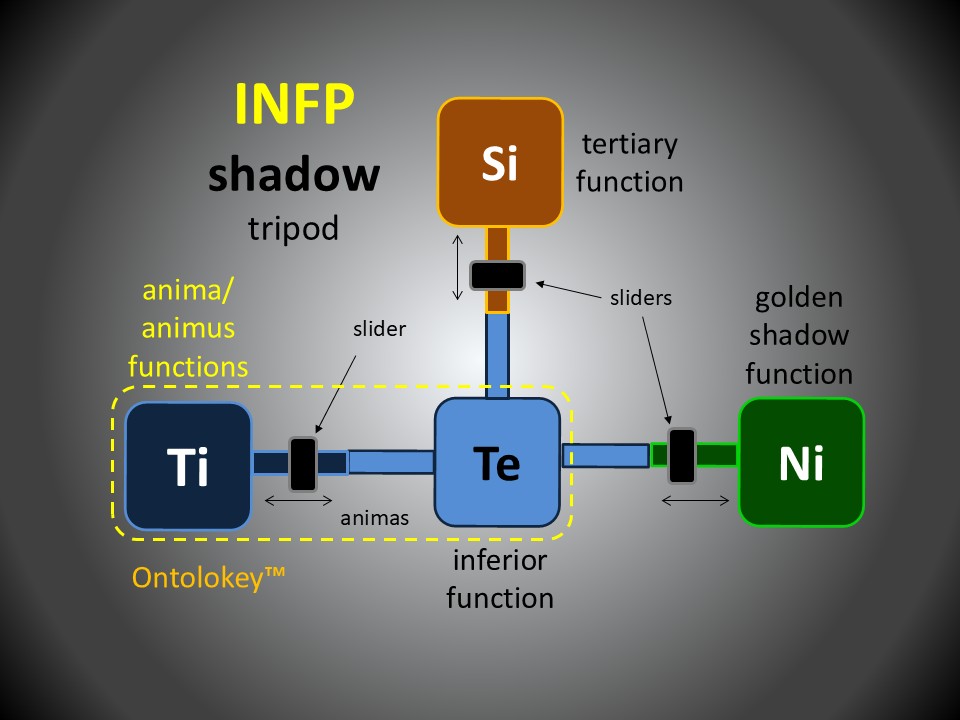
Alongside this moral compass runs an equally important capacity for expansive, associative thinking — a mind that continually generates alternative interpretations, symbolic connections, and imagined futures rather than settling on a single fixed reading of events. This gives the type its recognizable idealism and creative fluency: an ability to see five possible meanings in a single moment, to empathize with people whose lives they have never lived, and to sense the emotional consequences of a situation before it has fully unfolded. It also produces a discomfort with rigid systems, repetitive routines, and environments that demand conformity without offering room for meaning or novelty, since a life without imaginative space tends to feel, to this personality, like a slow suffocation rather than a mere inconvenience. Underneath these visible strengths, however, sits a quieter architecture of logical self-examination, sensory vulnerability, and a hunger for structure that is rarely expressed outwardly and even more rarely acknowledged — and it is precisely in that hidden architecture that the more difficult psychological material begins.
The Tyranny of the Ideal Self
The popular image built around empathy, authenticity, and creative sensitivity is not false, but it is dangerously incomplete, because it describes only the visible surface of a personality whose deepest conflicts occur far beneath conscious awareness. The central drama of this type’s inner life is not a struggle against an unkind or superficial world, though that struggle is real enough; it is a struggle against an internal tribunal whose standards exceed anything the outside world could reasonably demand. Long before any external critic has spoken, an idealized version of the self has already rendered its verdict, and because that idealized figure is by definition unattainable, the verdict is almost always some version of not enough. What begins as a genuinely admirable capacity for reflection and ethical seriousness gradually mutates into something closer to constant self-surveillance, in which every action is evaluated, every evaluation is itself evaluated, and every motive behind the evaluation is interrogated for hidden impurity.
This process disguises itself convincingly as conscience, which is precisely what makes it so difficult to interrupt. Conscience measures behavior against values while retaining compassion for human limitation, but perfectionism treats limitation itself as evidence of moral failure, and this personality type frequently crosses that line without noticing the crossing. A forgotten obligation becomes proof of irresponsibility, an awkward conversation becomes proof of inadequacy, a stalled project becomes proof of a flawed character, and slowly the ability to distinguish between a mistake and an identity erodes entirely. What is especially striking is the asymmetry involved: these individuals are frequently far more forgiving toward the flaws, contradictions, and failures of other people than they are toward their own, extending real compassion outward while withholding it from themselves almost entirely. The result is a peculiar, quiet form of guilt that has less to do with wrongdoing than with an endless, unwinnable comparison between who one actually is and who one imagines one is supposed to become.
Living Among Possibilities
If the ideal self functions as an internal judge, imagination is the territory over which that judge presides, and for this personality type imagination is rarely just a problem-solving tool — it becomes something closer to an alternative homeland. Internal experience can feel more coherent, more emotionally satisfying, and more controllable than external life, because within the mind every relationship remains free of misunderstanding, every creative vision remains untouched by technical failure, and every future remains perfect precisely because it has not yet collided with reality. This creates a quiet but consequential preference: thinking about a life gradually starts to feel more rewarding than living it, not through any dramatic decision but through an accumulation of small, unnoticed choices to stay inside the realm of the possible rather than risk the narrower, messier realm of the actual. Every real decision requires sacrificing countless alternatives, and for a mind that perceives possibility with unusual vividness, that narrowing can feel less like progress and more like a small death repeated over and over.
This dynamic also explains a pattern that looks, from the outside, like simple procrastination but is in fact something more psychologically loaded. Fantasy protects the psyche from disappointment in a way reality never can, since an imagined relationship cannot reject anyone and an unwritten book cannot be criticized by a single reader. Consequently, some individuals unconsciously begin protecting their own potential by never fully testing it, because as long as a dream remains unrealized it also remains flawless, and the moment it enters the world it becomes vulnerable to judgment, comparison, and failure. Over years this produces an accumulation not just of memories but of unlived lives — the version who moved abroad, the version who finished the manuscript, the version who spoke up at the decisive moment — and these unlived alternatives remain psychologically active in a way that ordinary memories do not, quietly competing against the actual, imperfect life that is actually being lived.
The Hidden Dependency on Acceptance
One of the more persistent myths about this personality is that it is simply indifferent to what others think, a conclusion drawn from its visible independence and private nature. Beneath that independence, however, often sits a need for acceptance that is unusually deep precisely because it is rarely expressed in ordinary ways. What is sought is not admiration in the conventional sense but confirmation that the authentic, private self can exist within relationships without being ridiculed, dismissed, or fundamentally misread — and because so much identity is invested in that authentic self, rejection of it lands with a force disproportionate to whatever triggered it. This produces a genuine paradox: the same individual who insists that public opinion does not matter to him may spend years organizing large parts of his life around the avoidance of exactly the kind of exposure that public opinion represents, concealing the most vulnerable dimensions of himself while still longing, often desperately, to be truly known.
The practical consequence of this hidden dependency is a peculiar form of loneliness that can coexist with genuine relationships, respect, and even love. Because only a partial self is ever revealed, only a partial self can ever be accepted, and the individual may therefore feel unseen even while surrounded by people who care about him sincerely. Supportive environments, by contrast, produce a strikingly visible transformation: self-doubt decreases, creative initiative increases, and qualities that had appeared entirely absent suddenly become available, which suggests that much of the apparent inhibition associated with this type is not a deficit of ability but a consequence of chronic psychological self-protection. The mature resolution of this pattern requires recognizing that identity cannot rest permanently on the hope of unanimous approval, since no human relationship offers perfect, unconditional understanding, and imperfect acceptance — offered by flawed, limited people — must eventually become enough.
Romantic Idealization and the Confusion of Longing with Truth
Few areas reveal this shadow as vividly as romantic attachment, where relationships are rarely experienced as simple companionship but instead become carriers of transcendence, identity, and existential belonging. A partner is often perceived not only as who they are but as what they represent within an unconscious emotional narrative, and small fragments of real interaction — a meaningful glance, an unexpected kindness, a resonant conversation — can quietly seed an entire imagined emotional world that extends well beyond anything the evidence actually supports. This is not conscious deception; the process of projection begins unconsciously, filling gaps in another person’s character with qualities drawn from one’s own hidden self, until the imagined figure and the real human being become almost impossible to distinguish from one another. Because these individuals often pride themselves on genuine psychological perceptiveness, the projection frequently feels indistinguishable from real insight, which only strengthens its grip.
This tendency intensifies considerably around loneliness or unmet emotional needs, since the psyche naturally searches for figures capable of resolving its internal tensions, and it also produces an unusual attachment to potential itself rather than to realized relationships. A connection that never fully materialized can remain more emotionally compelling in memory than one that actually played out, precisely because it was never disproven by reality’s imperfections, and this is part of why some individuals remain quietly attached to relationships or possibilities long after any objective reason to do so has disappeared. Intense feeling, in this dynamic, is frequently mistaken for objective truth about compatibility or destiny, when in fact emotional intensity reveals only subjective experience, not external reality. Genuine intimacy, by contrast, is less magical than fantasy but considerably more real, and maturity in this domain begins precisely where idealization ends — when another person is finally permitted to be fully, disappointingly, and valuably human.
The Passive Rebel: Anger in Disguise
Anger is one of the least visible emotions in this personality’s public presentation, and many individuals carrying this pattern would sincerely deny being particularly angry people at all, identifying instead with compassion, patience, and reconciliation. Yet psychological energy that is never consciously acknowledged does not simply vanish; it changes form, and a considerable reservoir of unprocessed resentment, disappointment, and frustration frequently accumulates beneath a calm and accommodating exterior. This suppression often has moral roots: an early, unconscious association forms between goodness and non-aggression, so that natural anger becomes lumped together with destructive hostility and is treated as evidence of moral failure rather than as the useful psychological alarm system it actually is. The consequence is a person who continues understanding others even while being mistreated by them, who searches for explanations rather than offering a response, and who loses access to a basic form of self-protection precisely because he has learned to distrust his own capacity for legitimate protest.
Because this anger cannot move outward, it typically turns inward first, becoming one of the primary engines behind chronic self-criticism, and only later does it resurface externally — not as confrontation, but as withdrawal. Communication quietens, availability shrinks, interest fades, and a relationship that once seemed meaningful becomes distant without any single dramatic incident explaining the change, because the grievance driving the withdrawal was never spoken aloud in the first place. Left unaddressed over years, this pattern can curdle into something darker than simple frustration: a wounded idealism that inverts itself into cynicism, in which hope for sincerity and integrity remains alive underneath but trust in it has quietly collapsed, leaving the person emotionally alive yet permanently guarded against the very things he once believed in most. The way beyond this shadow is not to become hostile but to recognize that healthy anger and compassion are not opposites — that boundaries protect intimacy rather than threatening it, and that saying no is not, in fact, a moral failure.
The Martyr Complex
Among the hardest shadow patterns to recognize is the one that dresses itself convincingly as virtue: an unconscious identification with self-sacrifice, endurance, and moral suffering that feels, from the inside, like simple goodness rather than a psychological need. Because identity for this type is so often organized around ethical coherence rather than achievement or status, sacrifice begins to function as proof of worth, and the more one gives or endures, the more virtuous and significant one appears to oneself. This dynamic is genuinely healthy in moderation, but it becomes distorted the moment sacrifice stops serving other people and starts serving the self-image of the giver, at which point help is no longer offered because it is needed but because it confirms a cherished identity as the one who understands, forgives, and endures more than everyone else around him. When the expected emotional return — gratitude, loyalty, recognition — fails to appear, a quiet resentment builds, even though the individual sincerely believed his generosity carried no hidden conditions at all.
This pattern also produces a subtler and more uncomfortable danger: a covert sense of moral superiority that coexists, without contradiction in the person’s own mind, with genuine humility. Repeatedly positioning oneself as the one who feels more, cares more, and suffers more than others can gradually create real emotional distance, transforming compassion into quiet judgment and understanding into condescension, all while the individual remains convinced of his own modesty. In its most entrenched form, suffering itself becomes woven into identity, so that healing feels threatening rather than desirable, since letting go of old wounds would mean surrendering a familiar and long-inhabited version of the self. The way through requires accepting an uncomfortable truth: human worth is not something that has to be earned through pain, and self-care is not a betrayal of compassion but its necessary foundation.
The Crisis of Action, the Fear of Power, and the Deeper Loneliness
All of these patterns converge on a single, decisive difficulty: the gap between vision and execution. This personality type often falls in love with becoming rather than being, because the future remains emotionally seductive precisely as long as it has not yet encountered friction, while every real project, relationship, or creative work inevitably reveals limitations the moment it actually begins. Insight is frequently mistaken for transformation, since understanding a psychological pattern produces genuine relief and the feeling that something has changed, even when behavior itself remains exactly as it was — and this is precisely why many individuals accumulate remarkable self-awareness while continuing, year after year, to live according to old habits. Underneath this hesitation often lies something even less examined than fear of failure: a fear of power itself, a quiet discomfort with the responsibility that comes from recognizing one’s own capacity to actually shape reality. Because power has so often been associated, through early observation, with coercion and moral compromise, many individuals unconsciously distance themselves from their own influence and capability, mistaking passivity for humility when it is often simply avoidance of accountability.
Beneath all of this sits a final, quieter wound that is closer to existential than psychological in the narrow sense — a persistent awareness of unrealized possibility that never fully resolves, an inner richness that outpaces whatever external life actually manages to contain. This is not despair in any clinical sense, and it should never be treated as a diagnosis, but it is a real and recurring undertone: the sense that reality, however good, remains slightly less vivid than what was imagined, and that a considerable portion of the self continues living in potential rather than in fact. The path out of this shadow is neither self-punishment nor the abandonment of imagination and idealism, both of which are genuine strengths worth protecting; it is the slow, difficult practice of allowing imperfect action, imperfect relationships, and imperfect creative work to matter more than perfect, untested possibility. A flawed, finished thing is worth more than a beautiful, unwritten one, and a life lived imperfectly in the open is worth more than a life prepared for endlessly behind closed doors.
This overview is necessarily brief compared with the source material, and much of the nuance, the case-by-case argumentation, and the broader framework connecting this type to the other fifteen personality patterns had to be left out for the sake of length. Readers who want to go deeper into this particular type, or who want to explore how these same dynamics play out across the full spectrum of personality patterns, are encouraged to read the original, far more extensive essays at www.ontolokey.com.


Leave a comment