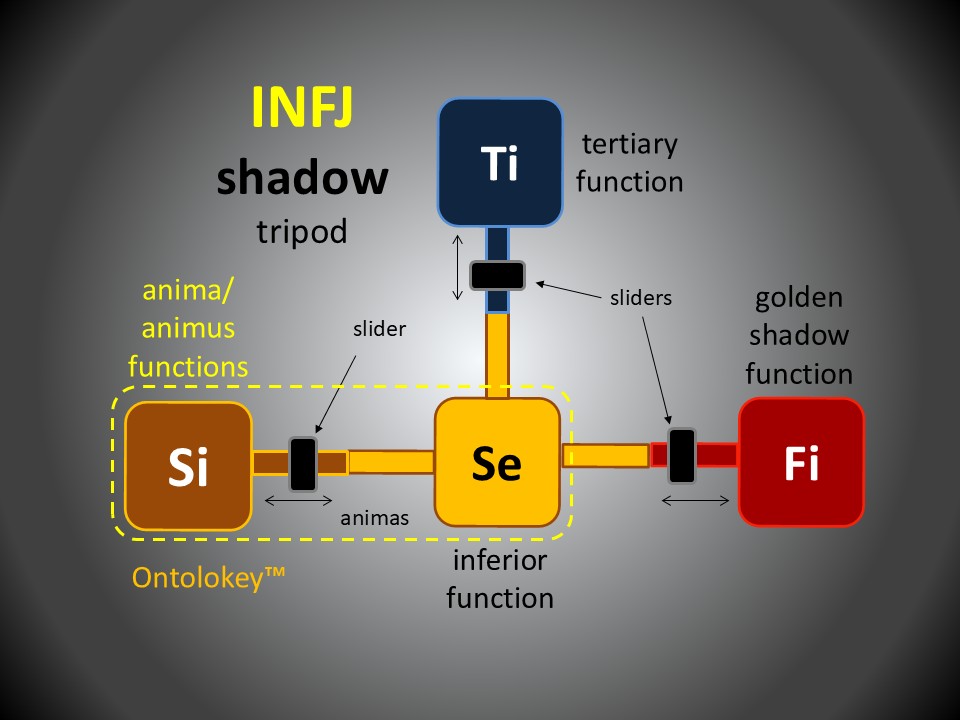
Among all the personality descriptions that circulate in contemporary psychological typology, the one built around the INFJ tends to attract a particular kind of fascination. This is the type most often associated with depth, foresight, moral seriousness, and an almost uncanny ability to perceive what lies beneath the surface of ordinary events. People of this disposition are frequently described as visionaries, mystics, quiet counselors, or old souls, individuals who seem to sense where a relationship is heading, where a conversation is really going, or where a person’s hidden wound actually lives. This reputation for depth is not undeserved, since the underlying psychological architecture genuinely does orient this type toward meaning, pattern, and symbolic interpretation rather than surface description. Yet a serious account of this personality cannot stop at admiration, because the very faculties that make the INFJ appear wise are also the faculties most capable of leading them into self-deception, isolation, and a peculiar, well-disguised form of suffering. To understand this type honestly, one has to walk through both the gift and the shadow it casts, since neither can be properly understood without the other.
The Functional Foundation: How the INFJ Engages the World
At the very center of this personality sits a function oriented toward inward, symbolic perception, one that does not scan the external world for possibilities so much as it distills complex impressions into a single, often startlingly clear vision. This leading function does not operate through step-by-step reasoning; instead it produces insights that seem to arrive already formed, carrying a felt sense of certainty long before the individual can explain, even to themselves, how the conclusion was reached. INFJs frequently experience time not as a fixed external structure but as something fluid, something that can stretch around a meaningful moment or compress around an unremarkable one, and this gives their inner life a quality of depth that many people find difficult to access in themselves. They do not merely observe events; they anticipate them, sensing a relationship turning, a conflict rising, or an opportunity forming well before anyone else in the room has noticed. This capacity for foresight is genuinely one of the most remarkable aspects of the type, and in its healthy form it produces extraordinary psychological insight, artistic sensitivity, and an ability to guide others toward transformation. Yet this same capacity, precisely because it feels so certain, carries within it the seed of a serious vulnerability, since a perception that arrives with the emotional weight of certainty is not always distinguishable, even to the person having it, from a perception that is accurate.
Supporting this inward vision is a second function oriented outward toward the emotional life of other people, one that allows the INFJ to translate an otherwise private, symbolic inner world into something communicable and socially meaningful. This function reads emotional atmospheres with considerable sensitivity, noticing unspoken expectations, subtle shifts in mood, and the underlying tone of a room or relationship, and it drives much of the type’s well-documented warmth, empathy, and tendency toward roles in counseling, education, healing, or advocacy. Without this bridge to the outer world, the INFJ’s rich inner vision would remain largely incommunicado, trapped inside a private symbolic universe that few others could ever access. With it, however, the individual gains real interpersonal influence, an ability to make others feel seen, understood, and cared for in ways that frequently exceed what the other person receives from anyone else in their life. Beneath these two conscious strengths lie several less visible capacities, oriented toward memory and sensory continuity, toward efficient external structure, toward playful and divergent exploration of new ideas, toward cold impersonal logical analysis, and toward direct, unmediated engagement with the physical present. Each of these less developed capacities tends to feel, from the inside, like unfamiliar territory, admired in others but awkward or unsettling when the INFJ is required to inhabit it directly, and it is precisely in this uneven terrain, where certain functions are extraordinarily refined while others remain comparatively undeveloped, that the deeper psychological difficulties of the type begin to take shape.
The Beautiful Mask and the Hidden Abyss
The tragedy that often develops within this personality does not stem from any deficiency of psychological awareness. If anything, the opposite is closer to the truth, since individuals of this type frequently spend so much of their attention studying human nature that they unconsciously exempt themselves from the same scrutiny they apply so readily to everyone else. They become remarkably skilled at explaining another person’s defense mechanisms, insecurities, or self-sabotage in exquisite detail while remaining strangely disconnected from the darker motivations operating within their own psyche. This is a dangerous asymmetry precisely because intelligence and introspection create an illusion of immunity; the INFJ often assumes that because they think deeply, they must therefore know themselves deeply, when in fact self-analysis and genuine self-knowledge are not the same capacity at all. A person can spend decades examining their own thoughts and emotions while carefully avoiding the specific truths that would actually transform their life, and this is a pattern that shows up with striking regularity within this type. The very gift for perceiving hidden meaning in others can become a sophisticated hiding place from perceiving hidden meaning in oneself, and this is where the first and most fundamental misunderstanding about the INFJ tends to begin.
This dynamic becomes especially significant in the realm of morality, since individuals who consciously and sincerely value ethical behavior often become, paradoxically, more vulnerable to unconscious moral inflation rather than less. The INFJ frequently comes to identify with being the good person, the understanding one, the emotionally mature one, the person who sees past selfishness into something deeper, and because this identity is consistently rewarded with trust, admiration, and social affirmation, an unconscious attachment to it gradually forms. Once this attachment is in place, darker emotions such as resentment, envy, superiority, or the desire to control others do not simply disappear; they merely descend beneath conscious awareness, continuing to develop and exert influence from a place the individual can no longer easily access. The more strongly the personality identifies with goodness, the more threatening these disowned emotions become, and so the shadow grows in direct proportion to how vigorously it is denied. What results is not hypocrisy in any deliberate sense, since hypocrisy implies conscious deception, but something more subtle and in some ways more dangerous: the INFJ typically deceives themselves long before they ever deceive anyone else, and they usually do so with complete sincerity.
When Intuition Becomes Delusion
Perhaps the most double-edged of all the INFJ’s gifts is their profound intuitive capacity, since the same faculty that allows them to anticipate developments long before they become obvious to others can also, under the wrong conditions, detach almost entirely from external reality. The human mind naturally seeks coherence, wanting events to fit together into meaningful patterns, and the INFJ possesses an unusually powerful capacity for constructing exactly this kind of coherence, often weaving together seemingly unrelated observations into an elegant, emotionally satisfying whole. In its healthy form this process produces genuine wisdom, but in its distorted form it produces what might be called narrative addiction, in which the individual becomes increasingly invested not in reality itself but in the explanatory structure they have built around it. Facts that support the existing narrative are welcomed; facts that contradict it are quietly minimized, reinterpreted, or ignored altogether, and because this filtering happens largely beneath conscious awareness, it can continue undetected for years. The danger intensifies because INFJ intuition so often arrives not as a tentative hypothesis but as an experience of settled certainty, and once certainty has taken hold, it becomes remarkably difficult to distinguish valid insight from subjective projection dressed up in the emotional clothing of insight.
This vulnerability becomes particularly pronounced within close relationships, where the INFJ’s habit of reading between the lines can shade almost imperceptibly into a habit of assuming that hidden meanings always exist, whether or not they actually do. A delayed reply to a message becomes evidence of emotional withdrawal, a subtle shift in someone’s tone becomes evidence of deeper dissatisfaction, and a minor inconsistency becomes proof of concealed motives that may never have existed at all. What makes this pattern so difficult to correct is that these interpretations frequently contain a kernel of genuine accuracy, since delusion rarely succeeds when it is entirely disconnected from reality; it succeeds precisely because it fuses real perception with unconscious projection, so that the individual becomes unable to separate the valid portion of their insight from the embellished portion. Over time this same tendency extends into the domain of personal destiny, where the healthy desire for a meaningful life can slowly harden into an expectation of meaning, complete with an idealized narrative about who one is supposed to become. Reality, which never obligingly conforms to psychological elegance, then becomes chronically disappointing, not because life itself has failed, but because it continually falls short of a story that was constructed largely out of internal coherence rather than external evidence. The path beyond this particular shadow requires the difficult acquisition of epistemological humility, learning to treat even the most emotionally convincing intuition as a hypothesis rather than a verdict, something to be tested against reality rather than substituted for it.
The Hidden Narcissism of the Helper
Beneath the INFJ’s genuine and often extraordinary capacity for compassion lies a considerably more uncomfortable dynamic, one in which the identity of the helper gradually becomes entangled with an unconscious need to be needed. Many INFJs sincerely believe their motivation for supporting others is entirely selfless, and in large part it usually is, but beneath this conscious desire to help there frequently exists a second, quieter force: the act of helping provides meaning, direction, and psychological importance, and above all it provides ongoing evidence that one’s existence actually matters. Because this hidden need contradicts the image of selfless service the INFJ holds of themselves, it is rarely acknowledged directly, yet it can exert enormous influence over which relationships are pursued and which behaviors are tolerated within them. The individual may find themselves repeatedly drawn toward wounded or emotionally unavailable people, not purely out of compassion but because these situations continuously reinforce a particular identity, one in which they remain indispensable, and indispensability, once it becomes psychologically necessary rather than freely offered, can become remarkably difficult to relinquish.
This dynamic frequently gives rise to a subtle form of psychological martyrdom, in which the individual derives identity not simply from suffering but from being recognized as the one who gives the most and receives the least. The INFJ may continue supporting others long after their own emotional resources have been depleted, absorbing frustration rather than expressing it, tolerating behavior they privately resent, and investing energy in people who show little genuine willingness to change. Because expressing anger or setting firm boundaries would conflict with the deeply held self-image of the understanding, generous helper, resentment instead accumulates silently beneath the surface, only to surface later as a disproportionate sense of being unappreciated, taken for granted, or quietly exploited. What makes this pattern especially difficult to see from the inside is that it wears the clothing of virtue rather than the clothing of self-interest; the individual is not consciously seeking validation, they are simply, as they experience it, caring about people, and this sincerity is precisely what allows the hidden dependency to remain unexamined for so long. Genuine psychological maturity requires the difficult recognition that helping others and needing to help others are two fundamentally different experiences, one arising from abundance and the other from deficiency, and that only the first can sustain a relationship without quietly distorting it.
The Secret Life of Repressed Anger
One of the most persistent misconceptions surrounding this personality type is the belief that emotional sensitivity and compassion somehow diminish the capacity for aggression, when in fact the opposite is frequently closer to the truth. Because INFJs so often identify strongly with empathy and emotional harmony, they tend to experience anger as something foreign to their essential nature, something inconsistent with who they believe themselves to be, and so they become remarkably skilled at managing this emotion rather than genuinely expressing or resolving it. The anger does not disappear simply because it goes unexpressed; instead it changes form, transforming into chronic irritation, emotional distance, moral judgment, or a persistent sense of being misunderstood, all of which feel more acceptable to the conscious self-image than raw hostility would. Over years of small, individually forgivable disappointments, boundary violations, and unresolved conflicts, a substantial reservoir of unacknowledged resentment can accumulate beneath an outwardly calm and understanding surface, and because it has never been permitted direct expression, it inevitably seeks indirect outlets instead.
These indirect outlets frequently take the form of passive aggression, emotional withdrawal, or what might be called moralized anger, in which genuine personal hurt is reframed as objective ethical judgment about another person’s character. The friend who disappointed the INFJ becomes selfish, the partner who neglected them becomes emotionally immature, and this reframing offers real psychological relief, since it transforms a painful personal wound into what feels like an impartial evaluation rather than an unresolved grievance. In more extreme cases, years of accumulated resentment can crystallize suddenly into an abrupt and seemingly final severing of a relationship, an act that often looks, from the outside, disproportionate to whatever immediate event triggered it, precisely because it is not really responding to that single event at all but to a long, largely silent internal history the other person was never given the chance to fully understand. The path toward integration here requires the INFJ to recognize that anger is not evidence of moral failure but a form of important information, one that reveals where boundaries have been crossed and where genuine needs have gone unmet, and that authentic compassion, far from being incompatible with anger, actually depends on the capacity to express it honestly before resentment has the chance to take root.
The Romantic Obsession: Idealization and the Addiction to Impossible Love
Few dimensions of this personality’s shadow reveal themselves as dramatically as the realm of romantic attachment, since for the INFJ a relationship rarely functions as a simple arrangement between two people but instead becomes charged with symbolic weight, transformation, and even a sense of destiny. Because this type is naturally drawn toward a person’s latent potential rather than their immediate, observable reality, they often begin relating not to the actual individual in front of them but to an idealized figure constructed largely out of imagination, one built from a few meaningful conversations, subtle signs of emotional depth, and an intuitive sense of significance that arrives long before sufficient evidence exists to justify it. This asymmetry between imagination and reality explains why romantic disappointment tends to strike this type with unusual intensity, since what collapses is rarely just a relationship but an entire internal narrative, a symbolic story about who this person was meant to become to them. It also explains a pattern that many INFJs find genuinely confusing about themselves: a recurring attraction toward emotionally unavailable partners, which makes little sense from a purely rational standpoint but a great deal of sense psychologically, since ambiguity leaves ample room for the imagination to continue elaborating a fantasy that reality has not yet had the opportunity to disappoint.
This tendency toward idealization is often compounded by an unconscious attraction to emotional intensity itself, in which uncertainty, longing, and struggle come to feel like evidence of depth and significance rather than what they more often are, namely symptoms of instability. The individual may find themselves emotionally invested not in an existing relationship but in the imagined future one that might emerge after sufficient healing, understanding, or transformation has occurred, treating the partner as a project to be nurtured toward their full potential rather than a person to be known and accepted as they currently are. The deeper resolution of this pattern requires the difficult recognition that many of the qualities most passionately sought in another person, whether wisdom, courage, authenticity, or unconditional acceptance, often reflect disowned aspects of the self that have not yet been consciously claimed, so that romantic obsession functions in part as a displaced relationship with one’s own unrealized potential. Genuine intimacy, by contrast, begins precisely where idealization ends, at the point where the symbolic figure fades and an actual, imperfect human being is allowed to emerge in its place.
Dark Intuition: Catastrophizing and the Tyranny of Future Visions
The same intuitive faculty that grants the INFJ such remarkable foresight can, under conditions of stress or insecurity, transform into a source of considerable psychological suffering, since the mind that excels at detecting patterns is also strongly biased toward detecting threats. A small, genuinely observed inconsistency in someone’s behavior can, within minutes, expand through a chain of entirely plausible-seeming extrapolations into a comprehensive narrative of future betrayal, failure, or loss, and because each individual step in that chain may feel reasonable, the cumulative narrative acquires an emotional reality that vastly outpaces its actual evidentiary support. Because the INFJ tends to experience imagined possibilities with unusual emotional intensity, a mere possibility can generate anxiety as though the anticipated event were already partially real, and the distinction between what might happen and what is actually likely to happen gradually erodes. This dynamic becomes especially painful within close relationships, where minor fluctuations in communication or affection can trigger extensive internal analysis, each ambiguous signal acquiring an ominous significance that often says considerably more about the observer’s fear than about the observed reality.
What makes this pattern particularly tragic is its tendency toward self-fulfillment, since a person preoccupied with signs of rejection frequently begins behaving in ways, whether through preemptive withdrawal, indirect reassurance-seeking, or excessive vigilance, that place genuine strain on the very relationship they feared losing. The imagined future does not simply remain imagined; it actively shapes present behavior in ways that can help bring about the outcome that was never inevitable to begin with. Psychological maturity in this domain requires learning to treat even a compelling intuitive perception as a hypothesis rather than a certainty, to remain open to the possibility that foresight, however often it has proven accurate in the past, remains fundamentally fallible, and to develop enough tolerance for ambiguity that the future can be approached with reasonable caution rather than governed by continuous, exhausting anticipation.
The Victim Archetype and the Chameleon Self
A further, more subtle shadow pattern develops when genuine and often legitimate experiences of loneliness or misunderstanding gradually harden into a fixed identity built around suffering itself. Many INFJs do, in fact, feel different from those around them, and their experiences of alienation are frequently real rather than imagined, yet the shadow emerges not from the suffering itself but from the moment suffering becomes central to how the individual understands who they are. Pain that is continually revisited, analyzed, and woven into an increasingly elaborate personal narrative can slowly shift from something one has experienced into something one has become, and because this narrative offers a certain psychological coherence, explaining disappointment, loneliness, and unrealized potential all at once, it becomes strangely difficult to relinquish even when the individual consciously longs for relief. Closely related to this is what might be called the chameleon self, a pattern in which the INFJ’s extraordinary sensitivity to interpersonal context leads them to continuously adjust their self-presentation according to who they happen to be with, until different people in their life come to know entirely different, fragmented versions of them, and very few come to know the whole person at all.
This fragmentation produces a peculiar and often bewildering form of loneliness, one in which the individual can be surrounded by people who genuinely care for them while still feeling deeply unseen, since understanding is inherently limited by what others are actually permitted to encounter. Beneath this pattern often lies a quiet fear that complete authenticity might threaten belonging, that certain thoughts, emotions, or contradictions are simply too much for a given relationship to hold, and so selective self-disclosure becomes an unconscious survival strategy that succeeds at preserving connection while simultaneously guaranteeing that the connection remains incomplete. Genuine psychological integration requires the INFJ to gradually close this gap, allowing more of themselves to become visible even at the risk of disapproval, since real intimacy is simply not available to a self that never fully appears.
The Spiritual Ego and the War Against the Concrete World
A final and particularly difficult shadow pattern emerges directly out of the INFJ’s genuine strengths in psychological insight and depth, since awareness itself can gradually transform into a subtle, well-disguised form of superiority. This rarely takes the shape of overt arrogance; instead it manifests as quiet disappointment in the perceived shallowness or unconsciousness of others, an implicit sense that the individual has positioned themselves outside the ordinary human condition as the one who sees clearly while others remain comparatively asleep. Because this conviction rarely announces itself directly, it can coexist quite comfortably with genuine humility and self-criticism on the surface, making it one of the hardest shadow elements to recognize precisely because it feels, from the inside, indistinguishable from wisdom itself. Genuine psychological maturity requires the somewhat humbling realization that real insight does not separate a person from common humanity but draws them more deeply into it, revealing shared vulnerability and shared confusion rather than exceptional depth.
Alongside this runs a more practical difficulty, rooted in the same functional imbalance that produces the INFJ’s remarkable inner vision: a genuinely uneven relationship with the concrete, physical, administrative dimensions of daily life. Because so much psychological attention is directed inward, toward meaning, pattern, and future possibility, ordinary obligations such as routine maintenance, financial organization, or simple follow-through can quietly accumulate unnoticed, creating a widening and often painful gap between the life imagined and the life actually being lived. Potential remains perpetually appealing precisely because it stays untouched by the imperfections of execution, and so the individual may find themselves lingering in preparation, reflection, and refinement long after the moment for action has arrived. The path toward wholeness here does not require abandoning the rich inner world that makes this type so distinctive, but rather learning to bring that world into concrete, sustained contact with reality, translating vision into habit and insight into the far less glamorous, far more necessary work of daily follow-through.
Toward Integration
What emerges, when these shadow patterns are acknowledged rather than denied, is not a diminished version of the INFJ but a considerably more honest and grounded one. Truth becomes easier to speak even when it complicates a cherished self-image, anger becomes a legitimate and timely signal rather than a decades-long accumulation waiting to erupt, and romantic longing becomes capable of resting in reality rather than perpetually chasing an idealized figure constructed out of imagination. Intuition remains a genuine gift, but it becomes accountable to evidence rather than mistaken for infallible certainty, and the identity once organized around suffering, helpfulness, or exceptional depth gradually loosens its grip, making room for a self that no longer needs to be special in order to feel that it exists. This, according to the material from which this overview is drawn, is the deeper promise contained within the INFJ’s long and difficult relationship with their own shadow: that a serious, unflinching engagement with one’s own darkness does not diminish the capacity for insight and compassion that defines this type at its best, but rather makes that capacity, for the first time, entirely genuine.
This summary was compiled from content published by Ontolokey, and represents only a condensed introduction to a much larger body of material. Readers interested in the full functional analysis of the INFJ, in the complete shadow essay from which much of this overview is drawn, or in explorations of the other fifteen personality types within this framework, are encouraged to visit www.ontolokey.com for the far more detailed original texts.


Leave a comment