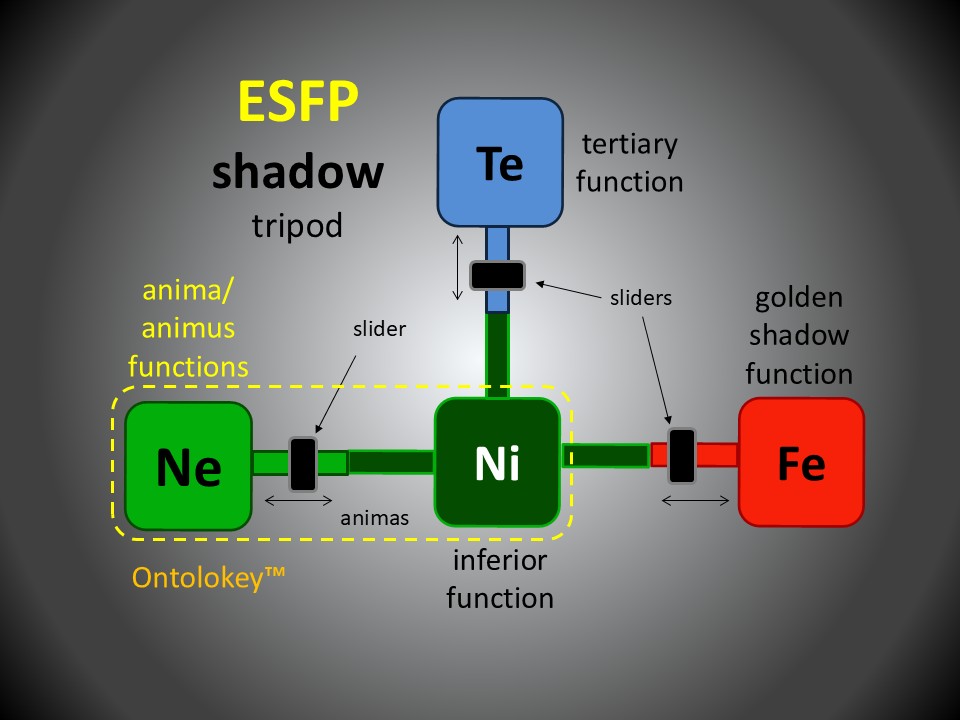
The ESFP is, at its core, a personality organized around direct contact with reality rather than around abstraction, theory, or detached reflection. Where many people construct an internal model of the world and then approach life through that model, the ESFP tends to reverse the sequence entirely: experience comes first, and whatever meaning can be extracted from it arrives afterward, if it arrives at all. Life, for this type, is something to be touched, tasted, tested, and inhabited rather than merely contemplated from a safe intellectual distance. This gives the healthy ESFP an unmistakable vividness, a sense of being more alive in the room than almost anyone else present, and a practical courage that allows them to act while others are still debating whether action is warranted. They notice immediate opportunities before other people have even registered that an opportunity exists, and they move toward those opportunities with a physical, embodied energy that can be genuinely inspiring to witness. This orientation is not shallow, even though it is sometimes mistaken for shallowness by more theoretical personalities; it carries its own form of wisdom, because reality frequently teaches lessons that abstract reasoning cannot.
Beneath this outward vitality sits a much quieter structure of personal values, a kind of inner moral compass that rarely announces itself but nonetheless governs a great deal of the ESFP’s behavior. This inner layer determines who they trust, who they remain loyal to, and what they consider fair or unfair treatment of another human being, and it explains why someone who appears so spontaneous on the surface can also be fiercely principled underneath. They want to be recognized not merely for what they accomplish, but for who they genuinely are, and when their motives are misread or their efforts dismissed, the wound goes considerably deeper than their easy charm would suggest. This is also the source of a certain emotional selectivity: people who matter to the ESFP on a values level receive extraordinary warmth and protection, while people who fall outside that inner circle may be met with an indifference or even coldness that can seem inconsistent from the outside. Friendships and rivalries for this type therefore tend toward an all-or-nothing quality, admiration on one side and disappointment on the other, with relatively little comfortable middle ground.
Alongside this private moral centre, the ESFP carries a more playful, less disciplined curiosity about future possibilities and about what other people are truly capable of. This part of the personality is not always trusted consciously, and it shows up less as careful planning and more as a willingness to provoke, test, and stir the emotional waters just to see what surfaces. It is this same restless curiosity that occasionally makes the ESFP overly optimistic about people or situations, quick to believe that a promising trend will continue or that an untested person will rise to an occasion, sometimes well past the point where the evidence supports that belief. Logical, systematic analysis, meanwhile, tends to sit uncomfortably in the background of the ESFP’s mind, present but rarely welcomed to the forefront. They can absolutely think things through when the situation demands it, but the process feels laborious rather than natural, and under stress they are more likely to repeat a familiar mistake than to sit down and methodically diagnose why the mistake keeps happening. What compensates for this is a kind of practical, results-oriented intelligence that activates whenever a goal feels concrete and personally meaningful, allowing the ESFP to mobilize people and resources with genuine effectiveness, even if the underlying plan was never written down anywhere.
There is, in addition, a quieter aesthetic sensibility running through the ESFP’s relationship with their physical surroundings, a preference for comfort, atmosphere, and personal style that rarely gets discussed in more superficial descriptions of the type. They tend to know, almost instinctively, what looks right, what feels good, and what creates the kind of environment they want to inhabit, and this sensibility often extends to how they present themselves to the world. And running underneath all of this sits one further, largely unconscious dimension: an emerging capacity for emotional leadership that goes beyond simply lighting up a room. When this dimension develops, the ESFP stops merely performing for an audience and starts genuinely reading the emotional needs of a group, becoming someone who can calm tension, host difficult moments, and hold space for other people rather than constantly needing to be the centre of it. This capacity represents a kind of hidden potential within the type, something not fully accessible in youth but increasingly available with maturity, and it marks the difference between charisma that entertains and charisma that genuinely leads.
None of this, however, captures the whole picture, and it is here that the analysis has to become considerably more honest. Popular descriptions of the ESFP tend to stop at the level of what this personality looks like when things are going well, when life cooperates, and when the individual’s natural orientation toward experience is being rewarded rather than punished. They rarely explore what happens when the same underlying mechanisms become exaggerated, compulsive, or entirely unconscious, and this omission does the type a real disservice, because every personality structure carries the seeds of its own shadow within it. For the ESFP, that shadow begins in a place most people would never suspect: not in recklessness or excess, but in a slow, almost invisible drift away from the inner world. Because direct experience is so immediately rewarding, self-reflection starts to feel unnecessary. Because action solves so many practical problems, sitting still and thinking starts to feel like a waste of time. The individual increasingly identifies with whatever is visible, tangible, and immediate, while everything hidden, symbolic, or emotionally unresolved gets quietly pushed into the background, where it does not disappear but instead accumulates.
This accumulation eventually produces one of the more troubling patterns within the ESFP shadow, namely a growing intolerance for internal tension of any kind. In a psychologically balanced version of this type, desire is simply information: something arises, gets acknowledged, and is either acted upon or consciously set aside. In the shadow-dominated version, desire starts to acquire real authority over the personality, until wanting something begins to feel like sufficient justification for pursuing it regardless of the consequences. Frustration stops being a minor disappointment and starts to feel like an attack on one’s basic equilibrium, and the capacity to simply sit with an unresolved feeling without immediately discharging it into action steadily weakens. This dynamic connects directly to how the shadow ESFP relates to power, which is rarely understood as an abstract or political concept but instead as something intensely personal: the ability to have a visible, immediate impact on the people and situations around them. In its healthy form this produces real leadership and genuine courage in a crisis. In its distorted form, other people’s boundaries start to feel like obstacles rather than legitimate realities, disagreement starts to feel like personal opposition, and the autonomy of people close to them starts to feel quietly threatening.
This same dynamic plays out with particular intensity inside romantic relationships, where the shadow ESFP often craves emotional intensity far more than stability, even while sincerely believing they want the opposite. Calm affection can start to feel boring, predictability can start to feel suffocating, and conflict, jealousy, and dramatic reconciliation can all become strangely attractive simply because they generate the kind of psychological aliveness that quiet stability does not. What makes this pattern especially difficult to untangle is that it typically coexists with real, sincere affection rather than replacing it; the shadow ESFP is rarely a cold manipulator in the way popular stereotypes might suggest, but rather someone whose genuine love gets periodically overtaken by an unconscious need to possess, control, or win. Underneath this possessiveness usually sits fear rather than strength, a quiet anxiety about losing status, attraction, relevance, or the people who provide a sense of psychological grounding, and the tighter the grip becomes in response to that fear, the more likely it is to produce exactly the instability it was trying to prevent. Anger, too, tends not to explode immediately but rather to accumulate silently over long stretches of time, until a seemingly minor incident triggers a release that seems wildly disproportionate to anyone who was not aware of everything building up beneath the surface.
A related but distinct thread of the shadow runs through the ESFP’s relationship with pleasure, sensation, and validation, and this is arguably where the type’s vulnerability is most easily misread by outside observers. Genuine pleasure is not inherently destructive, and there is nothing pathological about an ESFP who simply enjoys life fully. The trouble begins when pleasure stops enriching existence and starts functioning instead as a mechanism for avoiding it, a distinction that can look identical from the outside but feels entirely different from within. Because the ESFP experiences the world with such immediacy, music, attraction, competition, and adventure are not merely observed but physically absorbed, and this intensity, while a genuine gift, also creates fertile ground for stimulation to gradually shift from a preference into a psychological necessity. The threshold for satisfaction quietly rises over time; what once felt exciting becomes ordinary, and more intensity becomes required to produce the same feeling of aliveness. Sexuality frequently becomes one of the most powerful arenas in which this unfolds, not because ESFPs are inherently more promiscuous than other types, but because intimacy can become psychologically overloaded, pressed into service to regulate self-esteem, combat loneliness, or quietly confirm one’s own desirability. The deeper issue here is never really the frequency of behavior but the degree of psychological dependency attached to it, and this same mechanism can also produce a striking capacity for obsession and jealousy whenever certainty cannot be obtained through direct experience, since uncertainty itself becomes almost unbearable for a personality built around concrete engagement with reality.
Closely related to this hunger for stimulation is a shadow dimension centred on image, pride, and the fear of becoming insignificant. The healthy ESFP’s natural charisma requires almost no conscious effort, but repeated admiration has a way of quietly working its way into the foundation of identity itself, until the person begins to derive not just enjoyment but actual psychological stability from the reactions they provoke in others. Over time, image can start to overshadow identity: enormous energy gets invested in maintaining attractiveness, relevance, and social standing, and the questions “what can I achieve” or “how can I remain significant” gradually crowd out the more difficult and more important question of what would remain if all of that admiration simply disappeared tomorrow. When life inevitably withdraws some of that external reinforcement, whether through aging, changing circumstances, or shifting social hierarchies, the shadow often responds not with reflection but with inflation, becoming louder, more boastful, and more insistent on demonstrating superiority precisely because genuine confidence rarely needs to prove itself so loudly. Beneath this entire structure sits a fear that is rarely acknowledged directly: not the fear of failure exactly, but the fear of becoming unimportant, of mattering to no one, and this fear can quietly generate a peculiar kind of loneliness in which the individual is surrounded by admirers who are responding to an image rather than to the person actually standing behind it.
A further layer of the shadow concerns what might be called the inferior inner world, meaning everything related to long-range meaning, symbolic reflection, and existential questioning that the ESFP’s natural orientation tends to sideline. Direct engagement with reality simply works too well for this type to feel much urgency about contemplating abstract questions of purpose, and in many situations this practical bias is entirely reasonable, since excessive introspection really can become its own form of paralysis. The difficulty arises when this bias hardens into an absolute principle, because human beings are not only creatures of action but also creatures of meaning, and when interpretation is neglected for too long, the consequences accumulate quietly beneath conscious awareness. The ESFP frequently mistakes a meaning deficit for an experience deficit, responding to a vague, persistent dissatisfaction not with reflection but with yet another goal, another relationship, another adventure, only to find the same quiet emptiness returning once the novelty fades. This pattern tends to intensify with age, since youth conceals many existential problems behind an apparently endless horizon of future possibility, while later life gradually forces the individual to confront finitude, irreversible choices, and the uncomfortable question of what all the activity has actually amounted to.
Loyalty and betrayal form yet another crucial axis of the ESFP shadow, one that is frequently underestimated because the type’s outward social ease creates an impression of psychological lightness that does not match the emotional intensity underneath. The ESFP tends to judge trust through action rather than through stated principle, paying close attention to who actually showed up during difficult moments, and this concrete orientation gives them real insight into character while also making betrayal feel like something closer to an assault on reality itself rather than a mere disappointment. Once betrayal occurs, the psyche often reorganizes itself around a simplified narrative in which the offending party is reclassified from ally to adversary, positive memories lose their emotional weight, and a kind of tribal polarization sets in that divides the world neatly into those who are loyal and those who are not. Revenge, in this context, functions less as cruelty and more as an attempt to restore a violated sense of equilibrium, even though it typically prolongs the underlying wound rather than resolving it, since emotional energy remains tied to the very person the individual is trying to move beyond.
Perhaps the most significant shadow confrontation the ESFP eventually faces arrives with aging and the gradual collapse of what might be called the false self, meaning the collection of roles and adaptations, built around vitality, attractiveness, and social presence, that the individual has come to mistake for their entire identity. For years this identification functions well because life continually reinforces it, but eventually reality introduces limitations that cannot be outrun through charm or effort alone, and the resulting crisis is rarely about the specific circumstances of aging itself so much as the deeper realization that an image once taken for granted was never as permanent as it seemed. The healthy response to this crisis is not denial or increased performance but grief, an honest mourning not only of lost opportunities but of lost illusions, and it is through this grief that the individual gradually discovers dimensions of selfhood that remain meaningful even when external circumstances change dramatically.
What emerges on the other side of this confrontation, when the shadow material described above is not suppressed but genuinely integrated, is a considerably more complete version of the ESFP than either the popular description or the shadow analysis alone could suggest. Impulsiveness matures into vitality that no longer needs to prove itself through constant demonstration. Possessiveness matures into devotion that no longer depends on control. Pride matures into a quiet dignity that no longer requires an audience. The individual continues to act, to engage, and to enjoy life fully, but action stops functioning as an escape from self-confrontation and instead becomes a genuine expression of who they actually are. Solitude, once experienced as empty or threatening, gradually reveals itself as a source of depth rather than danger, and significance stops needing to be constantly demonstrated to others because it has finally been located internally instead. This is, according to the framework this summary draws from, the deepest and most honest achievement available to the ESFP personality: not the abandonment of their natural intensity, but its transformation into something wiser, more grounded, and considerably more free.
This overview necessarily compresses a great deal of nuance that the original essays explore in far greater depth, and readers who recognize themselves in either the brighter or the darker portions of this description, or who are simply curious how this same framework portrays the other fifteen personality types, are warmly invited to explore the fuller material directly at www.Ontolokey.com.


Leave a comment