A Note to the Reader
This essay was written in the spirit of psychological honesty rather than comfort. Its purpose is not to flatter, condemn, shame, or pathologize anyone, but to illuminate unconscious patterns that often remain hidden beneath the surface of personality. Some readers may find certain observations uncomfortable, confronting, or even unsettling, particularly when they recognize aspects of themselves within these pages.
Those who are unwilling to engage with candid self-examination or who are seeking reassurance rather than insight may find this material difficult to read. The analyses presented here are intended solely for self-reflection and personal growth. They should never be used as weapons against others, as tools for judgment, manipulation, or psychological labeling. The shadow exists within every human being, and genuine understanding requires humility, maturity, and the willingness to confront uncomfortable truths with compassion rather than hostility.
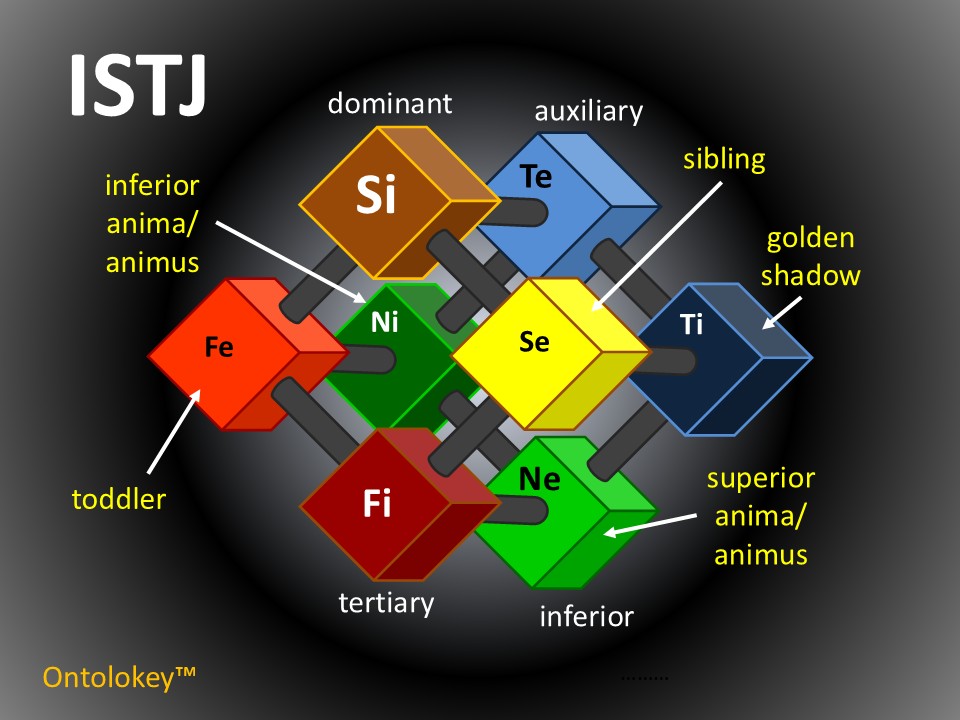
The Architecture of a Hidden Shadow
Every personality develops a public face and a private underworld. The public face is the aspect that receives social approval, gathers competence, earns trust, and establishes a recognizable identity. The private underworld contains everything that does not fit this identity. It houses impulses, emotions, desires, fears, fantasies, resentments, and vulnerabilities that contradict the image a person has built of themselves. The deeper and more successful the conscious identity becomes, the more material tends to accumulate in the unconscious regions of the psyche. This principle is not unique to any one personality structure; it is a universal law of psychological development. Yet it manifests differently depending on the architecture of the personality involved. In the case of the ISTJ, the shadow often develops in a particularly concealed form because the conscious personality is organized around stability, reliability, predictability, duty, and control. The very strengths that make this personality admirable can also create ideal conditions for the formation of a powerful and largely invisible shadow.
To understand the deepest shadow side of the ISTJ, one must first understand that this personality is often profoundly identified with reality as it is. Unlike personalities that orient themselves primarily toward possibilities, visions, ideals, or emotional atmospheres, the ISTJ tends to orient toward what has proven itself through experience. Reality is not approached as an open canvas waiting to be reinvented but as a structured environment that reveals patterns over time. Experience becomes authority. Repetition becomes evidence. Consistency becomes truth. This orientation creates remarkable strengths. Such individuals frequently become the guardians of continuity within families, organizations, institutions, and communities. They remember what worked. They preserve what has value. They resist collective madness when others become intoxicated by novelty. Yet every strength contains a hidden danger. When experience becomes the ultimate authority, the unfamiliar can gradually become associated not merely with uncertainty but with psychological threat.
The shadow begins forming whenever a person repeatedly suppresses aspects of themselves that do not align with their conscious identity. The ISTJ often learns early in life that competence is rewarded while emotional chaos is not. Reliability receives approval while vulnerability invites risk. Self-control generates respect while impulsiveness creates problems. Consequently, many ISTJs become highly skilled at regulating themselves. They learn to endure discomfort without complaint. They learn to suppress emotional turbulence. They learn to continue functioning even when exhausted, disappointed, lonely, or angry. From the outside this appears admirable. Indeed, it often is admirable. However, psychological reality operates according to a principle that is both simple and unforgiving: whatever is denied internally does not disappear. It merely moves underground. The emotions that are not consciously experienced do not cease to exist. They become autonomous forces operating beneath awareness.
This process creates one of the central paradoxes of the ISTJ shadow. The more disciplined the conscious personality becomes, the more primitive the unconscious compensations can become. Because the conscious self identifies with order, the shadow often accumulates disorder. Because the conscious self values responsibility, the shadow may secretly crave irresponsibility. Because the conscious self values restraint, the shadow may contain hidden impulses toward excess. These impulses are not usually visible during ordinary life. In fact, many ISTJs can maintain a highly controlled existence for decades. The shadow becomes visible primarily under conditions of stress, disappointment, burnout, betrayal, emotional deprivation, or existential crisis. At such moments the carefully constructed psychological structure begins to crack, and previously disowned aspects of the personality emerge with surprising force.
One of the darkest aspects of this shadow concerns emotional alienation. Many ISTJs possess deep emotional lives, but these emotions are frequently experienced through the lens of practicality rather than direct expression. Feelings are evaluated according to their usefulness, legitimacy, or relevance. As a result, emotional experiences may be processed intellectually long before they are consciously felt. Over time this can create a subtle separation between the individual and their own inner world. The person knows what they think but becomes increasingly uncertain about what they feel. They understand obligations but struggle to identify desires. They can explain responsibilities in exquisite detail while remaining disconnected from their own emotional needs. The tragedy is that this disconnection often develops gradually and invisibly. Because the individual continues functioning effectively, neither they nor those around them recognize the growing psychological distance between external performance and internal experience.
When this emotional alienation deepens, another shadow phenomenon begins to emerge. Resentment accumulates. The ISTJ frequently becomes the dependable person upon whom others rely. They fulfill duties that others neglect. They carry burdens that others avoid. They maintain standards that others disregard. Initially this role provides meaning and identity. Yet beneath the surface a dangerous imbalance can develop. The individual begins giving more than they receive while simultaneously feeling unable to articulate their needs. Since expressing such needs may feel uncomfortable, inappropriate, or selfish, they remain unspoken. Over the years these unspoken needs transform into hidden grievances. The individual may continue appearing calm and composed while internally compiling a detailed ledger of disappointments, betrayals, and inequities. Because the resentment remains largely unconscious, it often emerges indirectly through criticism, emotional withdrawal, passive resistance, stubbornness, or sudden disproportionate anger.
The shadow becomes even more complex when one examines the ISTJ relationship with control. Control is often misunderstood as a desire for power. In many cases it is something far more psychological. Control represents protection against uncertainty. It creates a sense of security within a world that can otherwise feel chaotic and unpredictable. The ISTJ often develops sophisticated systems for managing reality precisely because those systems reduce anxiety. Schedules, routines, procedures, standards, and expectations provide psychological structure. Problems arise when control shifts from being a tool to becoming an unconscious necessity. At that point uncertainty no longer feels merely uncomfortable; it feels intolerable. The individual begins defending familiar structures not because those structures remain useful but because they have become psychologically intertwined with identity itself. Any challenge to the structure is experienced as a challenge to the self.
This dynamic frequently produces rigidity, but rigidity is only the visible symptom. Beneath rigidity lies fear. The ISTJ shadow often contains a profound fear of disintegration. There is an unconscious concern that if the standards are relaxed, if the responsibilities are abandoned, if the routines are disrupted, something fundamental may collapse. Consequently, the personality may become increasingly invested in maintaining external order while neglecting internal development. Yet psychological growth inevitably requires encounters with uncertainty. Every major transformation in life involves entering territory that cannot be fully controlled. Love cannot be controlled. Creativity cannot be controlled. Grief cannot be controlled. Meaning cannot be controlled. The more the individual attempts to impose absolute order upon these experiences, the more frustrated and disconnected they become.
At its deepest level, the shadow of the ISTJ is not laziness, recklessness, irresponsibility, or emotional instability. Those qualities merely represent distorted compensations that may occasionally erupt from the unconscious. The true shadow is far more subtle and far more dangerous. It is the gradual replacement of authentic life with functional life. It is the slow transformation of existence into duty. It is the unconscious belief that being useful is more important than being alive. It is the conviction that responsibility alone can provide meaning. Under the influence of this shadow, the individual may become extraordinarily effective while simultaneously feeling increasingly empty. They fulfill obligations yet lose connection with desire. They maintain structures yet lose contact with spontaneity. They preserve stability yet become strangers to vitality itself.
The deepest tragedy is that this condition often goes unnoticed because society rewards it. The disciplined worker, the reliable partner, the responsible citizen, and the dependable family member are praised precisely for the qualities that may be contributing to their inner impoverishment. The individual receives external validation while internal dissatisfaction quietly expands. Eventually a crisis emerges. Sometimes it arrives through burnout. Sometimes through depression. Sometimes through unexpected rage. Sometimes through a destructive attraction toward experiences that appear completely out of character. Whatever form it takes, the crisis represents an attempt by the neglected parts of the psyche to reclaim existence. The shadow demands recognition because every rejected aspect of the self ultimately seeks integration.
Therefore, the deepest shadow side of the ISTJ is not found in obvious pathology. It is found in the silent conflict between structure and aliveness, between duty and desire, between reliability and authenticity. The shadow grows whenever order is purchased at the cost of humanity. It expands whenever self-control replaces self-knowledge. It deepens whenever the individual becomes so identified with responsibility that they forget they are also a living, feeling, imperfect human being. Only by confronting this conflict can the ISTJ move beyond mere functionality and enter a more complete form of psychological maturity. The journey begins when the individual stops asking merely what must be done and begins asking a far more unsettling question: what parts of myself have I sacrificed in order to become the person everyone trusts?
The Repressed Emotional World — Why the ISTJ Often Becomes a Stranger to Their Own Feelings
One of the most misunderstood aspects of the ISTJ personality is the assumption that emotional restraint is equivalent to emotional simplicity. Many observers encounter an ISTJ and conclude that emotions simply occupy a smaller place within their psychological life. Such conclusions are usually mistaken. The reality is often far more complex and, in some cases, considerably more tragic. Emotional restraint does not indicate emotional absence. It merely indicates that emotion is managed differently. In fact, many ISTJs experience emotional states with surprising intensity, yet those emotions are frequently filtered through layers of discipline, analysis, self-control, and internal regulation before they ever reach conscious expression. The result is a personality that may appear emotionally stable while simultaneously carrying a vast and largely invisible emotional burden. Over time this burden can become one of the primary foundations of the shadow.
The roots of this process often begin early. Many ISTJs naturally discover that competence generates security. Being useful creates acceptance. Fulfilling obligations earns trust. Reliability reduces conflict. Consequently, emotional expression may gradually become subordinated to practical effectiveness. The individual learns, consciously or unconsciously, that there is usually a task to complete, a responsibility to fulfill, a problem to solve, or a situation to manage. Emotional experiences are therefore pushed into the background, not because they are denied intellectually, but because they are continually postponed. The person tells themselves that there will be time later to process disappointment, grief, loneliness, frustration, or fear. Yet life rarely provides such opportunities voluntarily. Responsibilities multiply faster than self-reflection. As the years pass, emotions accumulate in storage rather than moving through healthy psychological integration.
The danger of this pattern lies in its apparent success. Unlike more emotionally expressive personalities, the ISTJ often remains highly functional while carrying enormous amounts of unresolved emotional material. They continue working. They continue supporting others. They continue meeting obligations. Their external life may remain remarkably stable even while their inner world becomes increasingly crowded with neglected experiences. This creates a particularly deceptive psychological situation because both the individual and those around them interpret functionality as evidence of well-being. The assumption becomes that if the person is still performing effectively, they must also be coping effectively. Yet these are not the same thing. Human beings can endure extraordinary emotional suffering while continuing to function at a high level. Indeed, some of the most psychologically exhausted individuals are often the very people whom others describe as strong.
As this pattern deepens, emotional awareness itself may begin to deteriorate. The issue is not that emotions disappear. Rather, the individual gradually loses direct access to them. Feelings that are repeatedly ignored become increasingly difficult to identify. Emotional signals that would normally provide valuable psychological information are overridden before they reach conscious recognition. The person learns to notice obligations faster than desires, problems faster than needs, and responsibilities faster than feelings. Eventually an unusual condition can emerge in which the individual possesses sophisticated knowledge about the external world while remaining surprisingly disconnected from their own emotional reality. They know exactly what must be done, yet struggle to answer questions about what they actually want. They understand their duties in precise detail, yet feel uncertain when asked about their deeper emotional longings.
This emotional estrangement creates fertile ground for shadow development because the unconscious begins expressing itself through indirect means. Emotions that are not consciously acknowledged do not remain passive. They seek alternative channels. Anger may emerge as chronic irritation. Grief may manifest as emotional numbness. Fear may disguise itself as excessive caution. Loneliness may transform into workaholism. Resentment may appear as relentless criticism. Because these expressions seem rational on the surface, the individual often fails to recognize their emotional origins. They believe they are responding objectively to reality when, in fact, unresolved emotional material is quietly shaping their perceptions. The shadow becomes powerful precisely because it wears the mask of reason.
Among the emotions most frequently relegated to the shadow are vulnerability and dependency. The ISTJ often develops a self-image centered around competence and self-sufficiency. Needing others may therefore feel psychologically uncomfortable. Depending on support can create feelings of exposure. Expressing emotional needs may generate anxiety because such expressions seem to conflict with the internal identity of being capable and reliable. Consequently, the individual learns to carry burdens alone. They become the listener rather than the speaker, the supporter rather than the supported, the problem-solver rather than the person seeking help. While this pattern may appear noble, it often comes at considerable psychological cost. Human beings are not designed to function in emotional isolation. The refusal to acknowledge dependency does not eliminate dependency; it merely drives it underground where it begins influencing behavior unconsciously.
One of the most painful manifestations of this hidden dependency appears in intimate relationships. Many ISTJs genuinely desire deep emotional connection, yet they may struggle to communicate this desire directly. Instead, affection is often expressed through actions rather than words. Loyalty becomes a love language. Responsibility becomes a love language. Protection becomes a love language. Practical assistance becomes a love language. While these expressions are sincere and meaningful, they sometimes create misunderstandings. Partners may fail to recognize the emotional significance behind such behaviors. The ISTJ, meanwhile, may feel profoundly unappreciated without fully understanding why. They know they have invested enormous energy into the relationship, yet the emotional recognition they unconsciously seek remains absent. Because their own emotional needs are only partially conscious, they often struggle to articulate them. The resulting frustration becomes another source of shadow material.
The repression of emotional life also affects the individual’s relationship with suffering. Many ISTJs possess remarkable endurance. They can tolerate difficult circumstances for extended periods. They can continue functioning during crises that would overwhelm others. They can absorb stress without immediate collapse. However, endurance can become pathological when it transforms into chronic self-neglect. The person begins assuming that suffering is simply something to be managed rather than understood. Emotional pain becomes another responsibility. Loneliness becomes another responsibility. Exhaustion becomes another responsibility. Instead of asking whether their current life remains psychologically sustainable, they focus exclusively on continuing to fulfill obligations. Such endurance often receives admiration from others, yet admiration does not heal emotional wounds. In some cases it actually reinforces the very behaviors that created those wounds.
At a deeper level, the repression of feeling often produces a subtle existential problem. Emotions are not merely psychological inconveniences. They are among the primary mechanisms through which human beings experience meaning. Joy reveals what matters. Grief reveals what has been lost. Fear reveals what feels threatened. Love reveals what is valued. Anger reveals where boundaries have been violated. When emotional awareness diminishes, meaning itself can become increasingly difficult to access. Life may continue operating efficiently while simultaneously feeling strangely empty. The individual performs all the correct actions yet senses that something essential is missing. This experience often emerges during midlife, when external achievements no longer provide sufficient psychological nourishment. The person discovers that a well-organized life is not necessarily a meaningful life.
The shadow responds to this emptiness in predictable ways. Sometimes it generates sudden attractions toward impulsive behavior. Sometimes it produces fantasies of escape. Sometimes it manifests through emotional affairs, compulsive spending, reckless decisions, or abrupt life changes that appear completely inconsistent with the individual’s previous character. Such behaviors often shock family members because they seem so out of alignment with the established personality. Yet from a psychological perspective they are rarely random. They represent attempts by neglected emotional energies to force themselves into conscious awareness. The individual has spent years prioritizing order over vitality, and the unconscious begins demanding compensation. What appears irrational from the outside frequently contains a hidden logic. The psyche is attempting to restore balance through whatever means remain available.
This phenomenon becomes particularly relevant when examining descriptions of pathological instability associated with distorted expressions of the broader psychological structure discussed in the source material. The text repeatedly highlights themes of impulsivity, avoidance of responsibility, hedonistic escape, emotional shallowness, and susceptibility to external influences. Although healthy ISTJs rarely resemble such descriptions on the surface, the psychological significance lies elsewhere. Extreme pathology often reveals, in exaggerated form, what the conscious personality fears becoming. The disciplined individual may unconsciously fear chaos. The responsible individual may unconsciously fear irresponsibility. The self-controlled individual may unconsciously fear indulgence. Consequently, the shadow frequently develops around precisely those qualities that the conscious personality rejects most strongly. What is condemned externally often reflects what has been disowned internally.
The path toward integration therefore requires more than emotional expression alone. It requires emotional honesty. The ISTJ must gradually learn that feelings are not enemies of reason. They are not obstacles to responsibility. They are not signs of weakness. Emotions are data. They provide information about psychological reality just as sensory perception provides information about physical reality. Ignoring emotions because they seem inconvenient is no different from ignoring pain because it interrupts productivity. Both strategies may work temporarily, but eventually the neglected signals become impossible to ignore. The psyche always demands payment for prolonged neglect.
Ultimately, the deepest emotional challenge facing the ISTJ is not learning how to feel. They already feel far more than most people realize. The real challenge is allowing themselves to acknowledge those feelings without immediately subordinating them to duty, practicality, or control. Emotional maturity begins when the individual recognizes that inner experience deserves attention even when it serves no immediate function. Not every feeling must be solved. Not every emotion requires correction. Some experiences simply need to be witnessed, understood, and integrated. Only then can the person move beyond emotional survival and enter genuine psychological wholeness. The shadow loses much of its power when the individual finally grants themselves permission to become emotionally real rather than merely emotionally controlled.
Resentment, Duty, and the Secret Anger of the Responsible Person
Among all the emotions that accumulate within the shadow of the ISTJ, none is more misunderstood than anger. This misunderstanding exists both within the individual and among those who know them. Because the ISTJ is usually associated with discipline, reliability, and emotional restraint, many people assume that anger plays only a minor role in their psychological life. In reality, anger often occupies a far more significant position than appearances suggest. The difference is that it rarely manifests in obvious or theatrical ways. Instead of explosive displays, it frequently develops as a slow-moving psychological current beneath the surface of consciousness. It accumulates gradually through years of unspoken disappointments, unequal responsibilities, ignored sacrifices, and unmet emotional needs. By the time it becomes visible, neither the individual nor those around them fully understand its origins. What appears to be sudden anger is often the final expression of grievances that have been silently accumulating for decades.
To understand this phenomenon, one must first examine the relationship between duty and identity. For many ISTJs, responsibility is not merely a behavior. It becomes a defining psychological principle. They do not simply fulfill obligations; they derive part of their self-worth from fulfilling them. Being dependable becomes intertwined with being valuable. Being useful becomes intertwined with being respected. Being responsible becomes intertwined with being good. This fusion creates remarkable strengths, but it also creates a hidden vulnerability. Whenever self-worth depends heavily upon responsibility, the individual becomes susceptible to exploitation. Not necessarily because others intend harm, but because responsible people naturally attract responsibilities. The more competent someone becomes, the more demands are placed upon them. Over time, the individual may find themselves carrying burdens that were never truly theirs to carry.
The tragedy is that this process often unfolds with the individual’s active participation. The ISTJ rarely views themselves as a victim. They usually assume additional responsibilities voluntarily because doing so appears practical, necessary, or morally correct. They step in when others fail. They solve problems that others create. They repair situations that others neglect. In many cases they do so without complaint. Yet every act of self-sacrifice creates a psychological debt. If that debt is acknowledged through appreciation, reciprocity, or emotional connection, the burden remains manageable. However, when sacrifice becomes expected rather than appreciated, resentment begins to form. The individual continues giving, yet increasingly feels unseen. They continue helping, yet increasingly feels alone. The emotional imbalance widens while remaining largely invisible.
One reason resentment becomes so powerful within this personality is that direct confrontation often feels uncomfortable. The ISTJ generally prefers practical solutions over emotional negotiations. They may recognize that something feels wrong but hesitate to discuss it openly. Expressing dissatisfaction can feel inefficient, unnecessary, or potentially disruptive. As a result, concerns are frequently minimized or postponed. The individual tells themselves that the issue is not serious enough to mention. They convince themselves that they can tolerate the situation a little longer. They assume that others should recognize the imbalance without being told. Unfortunately, human relationships rarely operate according to such assumptions. What remains unspoken often remains unknown. Consequently, the resentment continues growing beneath a surface that appears calm and cooperative.
Over time, this creates one of the defining paradoxes of the ISTJ shadow. Outwardly, the person may seem patient and accommodating. Inwardly, they may be maintaining an increasingly detailed record of disappointments. Every broken promise is remembered. Every neglected responsibility is remembered. Every act of ingratitude is remembered. Every instance of unfairness is remembered. The remarkable memory that often contributes to the ISTJ’s strengths can become a liability when combined with emotional injury. The mind begins functioning like an archive of unresolved grievances. Events that others forgot years ago remain psychologically active because they were never fully processed or addressed. The resentment acquires a historical dimension. The present is interpreted through the accumulated weight of the past.
This hidden archive of grievances often produces a specific form of anger that differs significantly from impulsive rage. Rather than exploding immediately, it hardens. Anger becomes crystallized into judgment. The individual develops increasingly rigid opinions about people, institutions, or relationships. Trust becomes difficult to restore once it has been damaged. Forgiveness becomes complicated because the emotional injury remains vividly remembered. From the outside, this may appear as stubbornness. In reality, it often represents a defensive response to unresolved emotional pain. The individual is not merely defending a principle. They are defending themselves against the possibility of being hurt again. The rigidity serves a protective function, even when it ultimately becomes self-defeating.
The shadow becomes especially dangerous when resentment merges with moral certainty. Because the ISTJ frequently evaluates situations according to standards of responsibility and accountability, anger can acquire an ethical dimension. The person does not merely feel hurt. They feel justified. Their grievances are often based upon genuine observations. Someone really was irresponsible. Someone really did fail to contribute. Someone really did violate expectations. The factual basis of the complaint gives the anger tremendous psychological power. Unlike irrational hostility, this resentment contains elements of truth. Yet truth alone does not prevent distortion. When emotional wounds remain unexamined, even legitimate grievances can gradually expand beyond their original context. The individual begins viewing entire categories of people through the lens of accumulated disappointment. Cynicism emerges not because reality is entirely negative, but because the psyche has become organized around evidence supporting its distrust.
At this stage, the shadow often expresses itself through chronic criticism. Criticism provides a socially acceptable outlet for anger. The individual can focus on inefficiency, incompetence, irresponsibility, or poor judgment without acknowledging the emotional pain underlying their observations. On the surface, they are merely identifying problems. Beneath the surface, they are expressing unresolved resentment. This distinction is crucial because problem-solving and emotional healing are not the same process. A person can correctly identify every flaw in their environment while remaining completely disconnected from the emotional injuries driving their perception. The more the shadow develops, the more criticism becomes a substitute for vulnerability. It feels safer to point out what others are doing wrong than to admit how deeply one has been hurt.
Another manifestation of this hidden anger appears through emotional withdrawal. Unlike personalities that externalize conflict aggressively, the ISTJ often responds to disappointment by retreating. Communication becomes minimal. Affection diminishes. Engagement decreases. The individual continues fulfilling obligations while quietly withdrawing emotionally from the relationship. This pattern can be profoundly confusing for partners, friends, and family members because the external structure of the relationship remains intact. Responsibilities are still performed. Promises are still honored. Daily routines continue. Yet something vital has disappeared. Emotional presence has been replaced by functional participation. The relationship survives operationally while deteriorating psychologically. In many cases, neither party fully understands what is happening until the distance has become immense.
This dynamic reveals a deeper truth about the shadow. Anger is often easier for the ISTJ to experience than vulnerability. Anger preserves strength. Vulnerability exposes need. Anger creates distance. Vulnerability invites connection. Anger allows the individual to maintain a sense of control. Vulnerability requires surrendering control. Consequently, the psyche may unconsciously choose resentment over openness because resentment feels safer. It protects against disappointment by reducing emotional investment. Unfortunately, it also prevents genuine intimacy. The very defense mechanism designed to prevent suffering often guarantees isolation.
The psychological descriptions contained within the source material repeatedly emphasize the consequences of weak structure, lack of responsibility, and avoidance of obligations in their most pathological forms. For the healthy ISTJ, these qualities frequently represent precisely what has been rejected and condemned within the self. The shadow therefore develops around an unconscious tension. On one side stands the disciplined identity that values duty above all else. On the other side lurks a disowned desire to escape burdens entirely. The individual may never consciously acknowledge such fantasies, yet they often appear in subtle forms. Daydreams about abandoning responsibilities, disappearing from obligations, withdrawing from demanding relationships, or escaping structured environments are more common than many realize. These fantasies are not evidence of weakness. They are evidence that the psyche has limits.
When resentment reaches advanced stages, the individual may begin experiencing periods of emotional numbness. Contrary to popular belief, numbness is rarely the absence of emotion. More often it represents emotional overload. The psyche temporarily shuts down conscious feeling because the accumulated burden has become too great to process directly. During such periods, life can feel mechanical. Motivation declines. Pleasure becomes muted. Relationships feel distant. The person continues functioning because functionality has become habitual, but the sense of vitality disappears. This condition is particularly dangerous because it often masquerades as maturity. Others see composure. The individual experiences emptiness.
The path toward integration requires confronting a difficult reality. Duty alone cannot sustain psychological health. Responsibility alone cannot create meaning. Self-sacrifice alone cannot produce love. The ISTJ must eventually recognize that resentment is not caused solely by the failures of others. It is also maintained by the refusal to acknowledge personal limits. Every unspoken boundary contributes to future resentment. Every hidden need contributes to future disappointment. Every sacrifice made without conscious consent becomes fertile ground for anger. Psychological maturity therefore requires learning to communicate needs before they transform into grievances and establishing boundaries before they become emotional emergencies.
Ultimately, the secret anger of the responsible person arises from a profound misunderstanding about human worth. The individual unconsciously assumes that their value depends upon what they provide. As long as this belief remains unquestioned, resentment will continue accumulating because no amount of effort can permanently satisfy such a demand. Human beings are not machines designed exclusively for service. They require rest, recognition, affection, reciprocity, and emotional connection. The shadow begins to lose its power when the ISTJ recognizes that their worth does not originate from endless responsibility. It originates from their humanity. Only then can duty become a choice rather than a prison, and only then can anger transform from a hidden poison into a source of self-knowledge.
Control, Rigidity, and the Fear of Chaos — The Hidden Anxiety Beneath the ISTJ’s Need for Order
Few qualities are more strongly associated with the ISTJ than order. They are often the people who create systems, maintain routines, preserve standards, and ensure that life continues functioning when others become distracted, impulsive, or careless. Their environments frequently reflect this orientation: schedules are respected, commitments are remembered, resources are managed carefully, and responsibilities are approached with seriousness. Because these behaviors are so visibly effective, they are usually interpreted as simple preferences. The deeper psychological reality is often more complex. For many ISTJs, order is not merely convenient; it is emotionally regulating. Structure provides a sense of predictability in a world that can otherwise feel unstable, irrational, and difficult to trust. The need for order therefore often contains an unspoken emotional component: it helps manage anxiety. This does not mean that every organized ISTJ is secretly fearful. Rather, it means that the attachment to structure frequently serves a psychological function that extends far beyond efficiency.
To understand this function, one must recognize how the ISTJ typically relates to uncertainty. Uncertainty is not merely the absence of information; it is the absence of reliable expectations. For a personality that values proven experience, stable patterns, and practical predictability, uncertainty can feel uniquely destabilizing. When the future becomes unclear, familiar rules lose some of their power. Procedures no longer guarantee outcomes. Experience no longer provides complete guidance. In such situations, many ISTJs experience a subtle but significant increase in internal tension. Their natural response is often to increase structure. They gather more information, create more plans, establish clearer rules, and tighten existing systems. From the outside this appears rational, and often it is. Yet beneath the rationality there may also be an attempt to restore psychological equilibrium. Control becomes a defense against the discomfort of not knowing.
This defense is usually highly adaptive during ordinary life. The ISTJ often excels in environments that reward consistency, planning, and reliability precisely because these qualities reduce unnecessary chaos. Problems arise when control gradually shifts from being a useful tool to becoming an unconscious necessity. At that point, flexibility begins to feel dangerous rather than merely inconvenient. The individual may become increasingly uncomfortable with spontaneity, ambiguity, emotional unpredictability, and unconventional approaches. New ideas are not evaluated solely on their merits; they are also evaluated according to how much uncertainty they introduce. Change becomes psychologically expensive because it threatens the structures that provide internal stability.
One of the clearest signs that the shadow is becoming active is the emergence of rigidity. Rigidity is often misunderstood as simple stubbornness, but psychologically it usually serves a protective function. The person clings to familiar methods because those methods have become associated with safety. Rules become emotionally charged. Traditions become emotionally charged. Established routines become emotionally charged. Any challenge to them can provoke a disproportionate reaction because the issue is no longer purely practical. The unconscious interprets the challenge as a threat to psychological security itself. Consequently, debates that appear trivial to others may feel surprisingly significant to the ISTJ. They are not merely defending a procedure; they are defending a sense of stability that the procedure has come to represent.
This dynamic becomes especially visible in relationships. Partners, children, friends, or colleagues may experience the ISTJ as controlling, overly particular, or resistant to change. The ISTJ, meanwhile, often experiences themselves as simply trying to prevent avoidable problems. Both perspectives contain truth. The difficulty is that anxiety frequently disguises itself as responsibility. The individual genuinely believes they are acting in everyone’s best interest, yet the intensity of their need for predictability may exceed what the situation objectively requires. Because the motivation feels rational, they may have little awareness that fear is influencing their behavior. The shadow becomes powerful precisely because it operates beneath conscious justification.
At a deeper level, many ISTJs carry an unspoken fear that if control is relaxed, disorder will spread. This fear may not be articulated directly, yet it often reveals itself through behavior. They may feel compelled to monitor details that others would ignore. They may struggle to delegate because they anticipate mistakes. They may become tense when plans change unexpectedly. They may overprepare for future problems long before those problems exist. Such behaviors are often praised because they produce reliability and competence. However, they can also create chronic hypervigilance. The individual remains psychologically braced against potential disruption, rarely allowing themselves to fully relax into uncertainty.
The cost of this vigilance is considerable. Human life contains many experiences that cannot be managed through planning alone. Love involves risk. Parenthood involves unpredictability. Illness ignores schedules. Aging disregards control. Loss arrives without permission. Creativity emerges from experimentation rather than certainty. Meaning often develops through experiences that were never planned. When the personality becomes excessively organized around control, it may begin avoiding precisely the kinds of experiences that lead to deeper psychological growth. The person becomes skilled at managing life while remaining somewhat protected from fully experiencing it.
This avoidance is rarely conscious. Few ISTJs deliberately decide to live narrowly. More often, they gradually discover that predictable environments feel easier, safer, and more manageable than emotionally ambiguous ones. They choose responsibilities they understand. They remain within familiar roles. They rely on established competencies. Over time, however, a subtle stagnation can develop. The individual continues functioning effectively yet senses that something has stopped developing internally. They have become highly competent at maintaining what already exists but increasingly uncertain about how to enter unknown territory. The shadow manifests not as obvious dysfunction but as arrested growth.
Paradoxically, the unconscious often compensates for excessive control by generating fantasies of complete escape. The more tightly life is regulated, the more attractive unstructured freedom can become. The person who appears highly disciplined may privately imagine abandoning obligations, traveling without plans, disappearing from demanding roles, or living without constant responsibility. Such fantasies frequently surprise ISTJs because they seem inconsistent with their conscious identity. Yet psychologically they make perfect sense. The psyche seeks balance. When order dominates consciousness, neglected impulses toward spontaneity, pleasure, and freedom accumulate in the unconscious. The shadow begins carrying everything that the conscious personality has excluded.
This compensatory mechanism helps explain why some highly controlled individuals occasionally engage in behavior that appears dramatically out of character. Sudden impulsive decisions, reckless spending, emotional affairs, abrupt career changes, or unexpected acts of rebellion often emerge after long periods of excessive self-regulation. These behaviors are rarely random. They represent attempts by the neglected parts of the psyche to reclaim space within a life that has become too narrowly organized around duty and control. The individual may later feel shocked by their own actions because the behavior seems to come from a different person. In a sense, it does: it comes from the parts of the self that were never allowed conscious expression.
The psychological descriptions associated with pathological instability in the source material repeatedly emphasize themes of weak structure, impulsive escape, susceptibility to external influence, and avoidance of sustained responsibility. These descriptions do not portray the healthy ISTJ; they portray a distorted and disorganized expression of related psychological dynamics. Their relevance here lies in what they reveal symbolically. The disciplined ISTJ often defines themselves in opposition to such qualities. Consequently, those qualities become especially likely to be pushed into the shadow. The more strongly the conscious personality identifies with control, the more threatening uncontrolled impulses become. What is rejected externally frequently acquires hidden power internally.
Another important consequence of excessive control is emotional narrowing. Uncertainty is not only external; it is also internal. Feelings are often ambiguous, contradictory, and difficult to predict. If the individual becomes uncomfortable with ambiguity in general, they may also become uncomfortable with emotional ambiguity in particular. They prefer clear decisions over mixed feelings, clear roles over evolving identities, and clear expectations over emotional complexity. Yet mature psychological life requires tolerating ambiguity. People can be loved and resented simultaneously. Decisions can be right and painful simultaneously. Stability and change can both be necessary. The more the individual demands absolute certainty, the less capable they become of navigating the nuanced realities of human experience.
Integration therefore requires a difficult shift. The ISTJ must gradually discover that control is not the same thing as safety. No system can eliminate uncertainty completely. No amount of planning can prevent every loss, mistake, disappointment, or change. The attempt to achieve perfect control often creates its own form of suffering because it turns life into an endless project of risk management. Psychological maturity emerges when the individual learns to distinguish between reasonable structure and defensive rigidity. Structure supports life. Rigidity protects against life.
Ultimately, the deepest fear beneath excessive control is often the fear of chaos within the self. The individual worries, consciously or unconsciously, that if the structures are loosened, unwanted emotions, impulses, needs, and vulnerabilities may emerge. Yet those aspects already exist. The question is not whether they are present but whether they will be acknowledged consciously or forced to erupt through the shadow. The path toward wholeness is not the destruction of order. The ISTJ does not need to become chaotic in order to become healthy. Rather, they must learn that order is strongest when it serves life rather than replacing it, and that true stability arises not from eliminating uncertainty but from developing the inner capacity to face uncertainty without losing oneself.
The Seduction of Escape — Why the ISTJ Shadow Sometimes Longs to Abandon Everything
One of the most disturbing experiences an ISTJ can encounter is the sudden realization that part of them wants to escape. Not merely to rest, not merely to take a vacation, and not merely to reduce stress, but to abandon the entire structure of life that they have spent years constructing. Such thoughts often arrive unexpectedly and feel profoundly foreign to the conscious personality. The individual who has devoted decades to responsibility suddenly fantasizes about disappearing. The person who has always fulfilled obligations imagines walking away from them. The reliable partner dreams of isolation. The diligent worker imagines never returning. The caretaker longs to stop caring. Because these fantasies seem incompatible with the established identity, they are frequently dismissed, suppressed, or treated as evidence of personal failure. Yet psychologically they deserve careful attention. They are often among the most important messages the shadow can send.
To understand why these fantasies emerge, one must first recognize a fundamental truth about psychological energy. Every human being possesses finite emotional resources. Discipline can extend those resources. Responsibility can organize them. Commitment can focus them. None of these qualities, however, can make them infinite. When a person consistently expends more energy than they replenish, an imbalance develops. In the early stages, this imbalance appears as fatigue. Later it becomes resentment. Eventually it transforms into something deeper: a desire to escape the entire system that is producing the exhaustion. The individual does not necessarily want freedom itself. They want relief from the burden of carrying more than they can sustain.
For the ISTJ, this process is particularly dangerous because exhaustion often remains invisible for a very long time. Many people recognize burnout quickly because their performance deteriorates. The ISTJ frequently continues functioning long after healthy limits have been exceeded. Responsibilities are still completed. Deadlines are still met. Obligations are still honored. Externally, very little appears wrong. Internally, however, psychological reserves may already be critically depleted. Because self-worth is often linked to competence and reliability, admitting exhaustion can feel uncomfortable. The individual continues pushing forward, convinced that perseverance will eventually restore equilibrium. Unfortunately, exhaustion rarely responds to further effort. The very strategy that created the problem is often applied in an attempt to solve it.
As this condition deepens, the psyche begins searching for compensation. One of the most common forms of compensation is fantasy. The mind starts constructing images of escape. These fantasies vary widely in content but tend to follow similar psychological themes. The individual imagines abandoning obligations, moving to an entirely different environment, severing demanding relationships, leaving their career, or starting life over from the beginning. Sometimes the fantasy is highly dramatic. Sometimes it is surprisingly simple. In either case, its emotional appeal lies in the same promise: freedom from accumulated pressure. The fantasy offers what reality no longer provides—a temporary experience of psychological spaciousness.
Importantly, these fantasies should not automatically be interpreted literally. The person who imagines quitting their job may not actually need a new career. The person who imagines ending a relationship may not truly desire separation. The person who dreams of disappearing may not genuinely wish to leave their life behind. The unconscious often communicates symbolically rather than directly. What appears to be a desire for external escape is frequently a desire for internal liberation. The psyche is not necessarily demanding new circumstances. It is demanding relief from old patterns. Unfortunately, because the conscious personality tends to think concretely, the symbolic nature of these fantasies is often overlooked.
One reason these impulses become so powerful is that the ISTJ frequently postpones personal desires for extended periods of time. Practical concerns are prioritized. Responsibilities come first. Long-term commitments take precedence over immediate satisfaction. Such sacrifices can be entirely appropriate when made consciously and temporarily. Problems arise when postponement becomes a permanent lifestyle. The individual gradually loses contact with spontaneous wants, pleasures, curiosities, and aspirations. Entire regions of psychological life are placed on indefinite hold. Years later, these neglected desires begin accumulating pressure within the unconscious. The shadow becomes a storage container for everything that was considered impractical, inefficient, irresponsible, or unnecessary. Eventually that container overflows.
At this stage, the desire for escape often acquires an almost intoxicating quality. The fantasy is appealing not only because it promises freedom but because it promises a reunion with lost vitality. The individual remembers what it felt like to be curious rather than obligated. They remember what it felt like to pursue interests without evaluating their usefulness. They remember what it felt like to act from desire rather than duty. The longing is therefore deeper than mere rebellion. It is an attempt to recover abandoned aspects of the self. The shadow does not merely want less responsibility. It wants the return of psychological aliveness.
This dynamic becomes particularly significant in midlife. During early adulthood, responsibility often generates a sense of purpose. Building a career, supporting a family, creating stability, and fulfilling obligations provide meaningful direction. As the years pass, however, a subtle question begins emerging from the unconscious. Once stability has been achieved, what comes next? Many ISTJs discover that they have become highly skilled at maintaining structures but less skilled at imagining possibilities beyond them. The life they built functions correctly, yet they increasingly wonder whether functionality is enough. The question is unsettling because it challenges assumptions that may have guided them for decades. The shadow often enters precisely at this point, presenting fantasies of radical change that seem both frightening and strangely attractive.
The descriptions contained within the source material repeatedly emphasize forms of escape that appear in highly pathological expressions of related psychological structures. Running away from obligations, seeking stimulation, avoiding responsibility, pursuing immediate gratification, and abandoning long-term commitments emerge as recurring themes. The healthy ISTJ usually lives at the opposite end of this spectrum. Yet psychological opposites frequently exist in dynamic relationship. What the conscious personality rejects often accumulates within the shadow. Thus, the disciplined individual may secretly envy spontaneity. The reliable individual may secretly envy freedom. The responsible individual may secretly envy those who appear unconstrained by obligation. Such envy is rarely acknowledged because it conflicts with conscious values. Nevertheless, it remains psychologically active.
This hidden attraction to freedom often creates intense internal conflict. On one side stands loyalty, commitment, duty, and responsibility. On the other side stands the longing for self-determination, pleasure, exploration, and personal autonomy. The individual may experience both impulses simultaneously and feel unable to reconcile them. If responsibility dominates completely, resentment grows. If freedom dominates completely, guilt emerges. The psyche becomes trapped between competing needs. Many ISTJs attempt to resolve this tension by suppressing one side entirely. Unfortunately, suppression rarely produces integration. It merely strengthens the shadow. The rejected impulse becomes more emotionally charged precisely because it is denied expression.
Another important aspect of escape fantasies concerns emotional fatigue. Human beings require periods during which they are not performing a role. They need moments when they are not functioning as employees, parents, partners, providers, caretakers, or problem-solvers. They need opportunities to exist without constantly producing value. The ISTJ often struggles with this requirement because identity has become closely connected to usefulness. When usefulness becomes a primary source of self-worth, rest can feel undeserved. Leisure can feel unproductive. Play can feel irresponsible. Consequently, the individual remains psychologically “on duty” even when no genuine duty exists. Over time this creates profound exhaustion. The fantasy of escape therefore becomes attractive because it promises something deeper than rest: it promises release from identity itself.
Yet the shadow contains a paradox. The individual who finally abandons everything rarely finds what they expected. External escape cannot solve an internal conflict. If the underlying patterns remain unchanged, the same psychological dynamics eventually reappear in new environments. A different job becomes another responsibility. A new relationship develops obligations of its own. A fresh start gradually acquires structure. The problem was never the existence of responsibility. The problem was the absence of balance. The individual attempted to build an entire life upon one psychological principle while neglecting others that were equally necessary.
True integration requires a more difficult solution. Instead of abandoning the structure of life, the ISTJ must learn to renegotiate their relationship with it. This means granting legitimacy to desires that were previously dismissed. It means creating space for spontaneity without waiting for collapse. It means allowing pleasure to exist without demanding that it justify itself through productivity. It means recognizing that rest is not earned through suffering but required for health. Most importantly, it means understanding that responsibility is meant to support life rather than replace it.
Ultimately, the shadow’s longing for escape is not a call to destruction. It is a call to restoration. The unconscious is attempting to recover parts of the self that have been sacrificed in service of stability. The fantasies become dangerous only when they are ignored until they erupt in extreme forms. When listened to carefully, they reveal something essential. Beneath the desire to abandon everything lies a simpler and more human need: the desire to live as a complete person rather than a perpetual function. The shadow whispers about freedom because some part of the psyche has forgotten what freedom feels like. The task is not to destroy the life that has been built but to make that life spacious enough for the neglected self to return home.
Emotional Desertification — How the ISTJ Slowly Loses Contact with Vitality, Desire, and Meaning
Among the most subtle dangers facing the ISTJ is not emotional collapse, reckless self-destruction, or visible psychological dysfunction. Those outcomes, while possible, are relatively easy to recognize. A far more insidious danger exists beneath the surface of ordinary life. It develops gradually, often over decades, and frequently remains unnoticed until it has become deeply entrenched. This danger can be described as emotional desertification. Like a landscape that slowly loses water year after year without dramatic catastrophe, the psyche can gradually lose access to vitality while maintaining the appearance of stability. Nothing spectacular happens. There is no major breakdown. No dramatic crisis announces the change. Instead, life slowly becomes less vivid, less emotionally alive, and less meaningful. The individual continues functioning, yet an invisible impoverishment spreads through the inner world. The tragedy of this process lies precisely in its subtlety. Because everything continues working, nobody notices that something essential is disappearing.
The first stage of emotional desertification usually begins with adaptation. The ISTJ learns to prioritize what is necessary over what is desired. This adaptation often serves an important developmental purpose. Every mature adult must occasionally postpone immediate gratification in order to pursue long-term goals. The problem arises when postponement becomes habitual and eventually transforms into a governing principle of life. The individual repeatedly chooses obligation over desire, practicality over curiosity, efficiency over exploration, and duty over spontaneity. None of these choices appear harmful in isolation. In fact, many of them appear admirable. Yet psychological life is shaped not merely by individual decisions but by cumulative patterns. When the same pattern is repeated thousands of times, it eventually alters the structure of the personality itself.
What begins as self-discipline can therefore evolve into self-abandonment. The distinction between the two is subtle but crucial. Self-discipline involves regulating desires in service of a larger purpose. Self-abandonment involves losing contact with desire altogether. The disciplined person still knows what they want even when they choose not to pursue it. The self-abandoning person gradually forgets what they want in the first place. This forgetting often occurs so slowly that it escapes conscious awareness. The individual becomes increasingly skilled at identifying obligations while becoming increasingly uncertain about personal aspirations. Questions concerning responsibility are answered immediately. Questions concerning longing, passion, creativity, or meaning generate hesitation. The inner compass that once pointed toward vitality begins losing its clarity.
This phenomenon is particularly common among individuals whose identity has become strongly associated with reliability. Because the ISTJ often receives recognition for competence, the personality gradually becomes organized around fulfilling external expectations. Family members depend on them. Colleagues depend on them. Institutions depend on them. Communities depend on them. Such dependence creates a powerful sense of purpose, but it also creates a dangerous temptation. The individual begins measuring their value according to their usefulness. Their attention becomes directed outward toward what must be maintained, repaired, protected, or managed. The more successful they become at meeting external demands, the less attention remains available for cultivating inner life. Eventually an imbalance emerges in which external functionality expands while internal development stagnates.
At first, this stagnation is difficult to detect because it does not necessarily produce suffering. The individual may experience satisfaction through achievement, responsibility, and competence. Yet satisfaction and vitality are not identical. Satisfaction often arises from accomplishing goals. Vitality arises from direct engagement with life itself. One can be satisfied without being deeply alive. One can be successful without being inwardly nourished. The difference becomes apparent only over time. Activities that once generated excitement begin feeling routine. Achievements that once provided fulfillment lose their emotional impact. Responsibilities remain, but the sense of aliveness that once accompanied them slowly diminishes. The person discovers that accomplishment alone cannot sustain the soul indefinitely.
As emotional desertification progresses, desire itself becomes increasingly muted. This does not mean that desires disappear. Rather, they cease reaching conscious awareness with their original intensity. The psyche learns that practical concerns will almost always take priority, so many desires stop presenting themselves altogether. Curiosities remain unexplored. Creative impulses remain undeveloped. Adventures remain postponed. Emotional risks remain unchosen. The unconscious gradually concludes that such impulses are irrelevant to the individual’s actual life. Consequently, entire regions of potential experience fall silent. The person becomes highly efficient at managing reality while losing contact with possibilities that once might have inspired them.
This loss of desire often manifests through a peculiar form of emotional neutrality. The individual is neither profoundly unhappy nor genuinely enthusiastic. They function competently within a narrow emotional range. Strong excitement becomes rare. Deep wonder becomes rare. Spontaneous joy becomes rare. Yet because overt suffering may also be absent, the condition often goes unnoticed. Others describe the person as stable, grounded, mature, and dependable. The individual themselves may even take pride in their consistency. Nevertheless, something vital has been sacrificed. Emotional richness has gradually been replaced by emotional predictability. The psyche becomes orderly at the cost of becoming less alive.
One of the most revealing symptoms of this condition is boredom. Boredom is frequently misunderstood as a trivial inconvenience. Psychologically, however, chronic boredom often carries profound significance. It signals that the relationship between the self and the world has become impoverished. The individual continues engaging with reality, yet no longer experiences genuine participation in it. Activities become repetitive. Conversations become predictable. Goals become mechanical. The future appears as an extension of the present rather than an unfolding horizon of possibility. For the ISTJ, this form of boredom can be especially confusing because external circumstances may appear entirely successful. The person has achieved stability, competence, and security, yet remains haunted by an unarticulated sense of emptiness.
The shadow responds to this emptiness in various ways. Sometimes it generates restlessness. Sometimes it creates fantasies of radical change. Sometimes it produces sudden attractions toward people, experiences, or opportunities that seem completely inconsistent with established values. These attractions often bewilder the individual because they emerge from regions of the psyche that have been neglected for many years. Yet their appearance is not accidental. The unconscious is attempting to restore psychological balance by reintroducing vitality into a life that has become overly organized around function. The more severe the desertification, the more dramatic these compensatory impulses may become.
The source material repeatedly describes pathological patterns characterized by stimulation-seeking, pursuit of immediate gratification, avoidance of sustained responsibility, and attraction toward novelty for its own sake. In healthy individuals, such tendencies are generally contained and regulated. Their psychological significance lies elsewhere. They reveal the existence of needs that cannot be permanently eliminated. Human beings require stimulation. They require novelty. They require pleasure. They require periods of freedom from obligation. When these needs are integrated consciously, they enrich life. When they are denied entirely, they migrate into the shadow. The disciplined personality may therefore find itself secretly fascinated by exactly those forms of spontaneity it publicly dismisses.
At a deeper level, emotional desertification is closely connected to meaning. Meaning cannot be manufactured through effort alone. It emerges from a living relationship between the self and existence. This relationship requires participation, curiosity, vulnerability, and engagement. Meaning arises when a person feels connected to something larger than mere function. It may emerge through love, creativity, spirituality, exploration, beauty, service, or intellectual discovery. Yet all of these experiences require openness. They require the willingness to encounter reality without fully controlling it. When life becomes excessively structured around predictability and obligation, opportunities for such encounters gradually diminish. The result is not immediate despair but a slow erosion of existential depth.
Many ISTJs reach a point where they can no longer ignore this erosion. Often it occurs during midlife, though it may arise earlier or later depending on circumstances. The individual begins noticing that efficiency no longer provides fulfillment. Accomplishment no longer provides meaning. Stability no longer provides vitality. What once seemed sufficient now feels incomplete. This realization can be deeply unsettling because it challenges assumptions that may have guided an entire lifetime. The person discovers that psychological health requires more than order. It requires aliveness. It requires participation in experiences that cannot be justified solely through utility.
The path out of emotional desertification begins with a radical shift in orientation. Instead of asking only what is necessary, the individual must also ask what is meaningful. Instead of evaluating every activity according to productivity, they must learn to recognize intrinsic value. Instead of treating desire as a distraction from responsibility, they must understand it as a source of psychological information. Desires reveal where vitality wishes to move. Curiosity reveals where growth wishes to occur. Longing reveals what aspects of life require attention. None of these signals are infallible, but neither are they meaningless. They are part of the psyche’s natural guidance system.
Ultimately, the deepest danger for the ISTJ is not chaos but lifelessness. Chaos is visible and therefore manageable. Lifelessness is subtle and therefore far more difficult to confront. A person can spend years defending themselves against disorder while never noticing that joy has quietly disappeared. They can preserve every structure and still lose connection with the reasons those structures were originally built. Emotional desertification represents the culmination of this process. The individual survives, functions, achieves, and endures, yet gradually becomes separated from the living core of experience itself. The shadow emerges to challenge this separation. Its disturbances, fantasies, restlessness, and dissatisfaction are not merely problems to be eliminated. They are signals pointing toward neglected dimensions of life. The task is not to abandon responsibility but to reconnect responsibility with vitality, so that order once again serves existence rather than replacing it.
The Moral Prison — When Principles Become Defenses Against Life
Every mature personality requires principles. Without principles, human behavior becomes governed by impulse, circumstance, and immediate gratification. Principles create continuity across time. They allow individuals to remain committed to values even when emotions fluctuate. They provide structure for ethical decision-making and help protect both individuals and communities from destructive tendencies. For the ISTJ, principles often occupy an especially important place within psychological life. They provide orientation, stability, and a framework through which reality can be interpreted. Many of the qualities for which this personality is respected—integrity, reliability, consistency, loyalty, and accountability—are rooted in a deep commitment to principles that remain stable across changing circumstances. Yet every psychological strength carries within it the possibility of distortion. Principles can guide life, but they can also imprison it. The difference depends on whether principles remain connected to reality or become substitutes for reality itself.
The danger begins when moral structure becomes intertwined with psychological security. At first, the individual follows principles because they believe those principles are right. Over time, however, something more subtle may occur. The principles no longer function merely as ethical guides; they begin functioning as emotional defenses. They provide certainty in situations that feel uncertain. They provide clarity in situations that feel ambiguous. They provide stability in situations that feel threatening. Consequently, the individual becomes emotionally invested not only in the truth of the principle but also in the security that the principle provides. At this point, questioning the principle no longer feels like an intellectual exercise. It feels like a personal threat. The person is not merely defending an idea. They are defending an entire psychological structure that has become built around that idea.
This process is particularly common among individuals who have spent much of their lives relying on discipline and responsibility. The ISTJ often learns early that clear standards reduce chaos. Rules prevent confusion. Expectations create predictability. Accountability protects against disorder. These lessons are usually correct. The problem arises when they become universalized beyond their appropriate limits. Human existence contains many realities that cannot be reduced to rules. Love resists standardization. Grief follows no schedule. Creativity refuses complete predictability. Identity evolves over time. Meaning emerges through experiences that often defy established expectations. When principles become excessively rigid, they lose their capacity to engage with the complexity of life. Instead of illuminating reality, they begin filtering reality.
The shadow enters whenever principles are used to avoid uncertainty rather than engage with it. Consider the individual who insists that every problem has a correct solution if people simply behave responsibly enough. Such a belief contains an element of truth. Responsibility matters. Yet reality also contains tragedy, ambiguity, contradiction, and limitation. Not every problem can be solved through discipline. Not every suffering can be prevented through effort. Not every outcome is deserved. When the individual refuses to acknowledge these realities, principles become a defense against vulnerability. They provide the comforting illusion that life is fully understandable and therefore controllable. The moral framework ceases to be a guide and becomes a fortress.
One of the consequences of this fortress mentality is judgment. The ISTJ is often capable of remarkable fairness when psychologically balanced. They recognize effort. They appreciate competence. They value accountability. Yet when the shadow becomes active, fairness can slowly transform into moral rigidity. The individual begins evaluating people primarily according to standards of responsibility and self-discipline. Those who fail to meet these standards are viewed with increasing skepticism. Compassion becomes conditional. Understanding becomes limited. Complexity is reduced to questions of effort and character. Such judgments often contain legitimate observations. Some people are irresponsible. Some people do avoid accountability. Yet the shadow encourages a dangerous simplification. Human beings are interpreted primarily through their failures rather than through the full complexity of their circumstances.
This tendency becomes especially pronounced when the individual has sacrificed extensively in service of duty. The more one has denied personal desires, endured hardship, and fulfilled obligations, the more difficult it becomes to understand those who have made different choices. Resentment quietly enters the moral system. The person begins thinking, consciously or unconsciously, “If I carried my burdens, why should others be excused from carrying theirs?” This perspective possesses emotional power because it is rooted in genuine sacrifice. Yet it also conceals a hidden wound. The judgment directed outward often reflects unresolved feelings about sacrifices that were never fully acknowledged or consciously chosen. The individual condemns others not only for their behavior but also for violating an internal standard that has governed their own life.
At a deeper level, the moral prison often develops around identity itself. The ISTJ may become strongly attached to being a good person, a responsible person, a dependable person, or a principled person. These identities are admirable, but they contain a hidden danger. The more tightly the personality identifies with virtue, the more difficult it becomes to acknowledge imperfections. Human beings possess contradictory impulses. They are capable of generosity and selfishness, courage and fear, loyalty and betrayal, honesty and deception. Psychological maturity requires recognizing this complexity within oneself. Yet if the individual’s identity depends heavily upon moral consistency, acknowledging darker impulses may feel intolerable. The shadow therefore becomes populated with everything that contradicts the preferred self-image.
This creates one of the most important paradoxes of moral development. The person who most desperately needs to confront their imperfections is often the person least willing to admit they possess them. Not because they are dishonest, but because their entire identity structure depends upon maintaining a coherent image of themselves as responsible and principled. Consequently, unacceptable emotions are projected outward. Aggression is recognized in others but not in oneself. Selfishness is recognized in others but not in oneself. Manipulation is recognized in others but not in oneself. The individual becomes highly sensitive to flaws in the external world while remaining partially blind to corresponding tendencies within their own psyche.
The source material repeatedly describes pathological patterns characterized by avoidance of responsibility, lack of discipline, impulsivity, susceptibility to pleasure, and failure to sustain long-term commitments. For many ISTJs, these qualities represent precisely what they have spent their lives resisting. As a result, they become ideal candidates for shadow projection. The individual may react with disproportionate hostility toward irresponsibility because it symbolizes something deeply threatening within their own psychological landscape. The rejection is not solely ethical. It is also defensive. By condemning the trait externally, the individual avoids confronting their own hidden longing for freedom from obligation.
The moral prison becomes particularly restrictive when applied to emotional life. Many ISTJs unconsciously categorize emotions according to their perceived legitimacy. Some feelings appear reasonable and therefore acceptable. Others appear inconvenient and therefore suspect. Anger may be tolerated if it can be justified. Sadness may be tolerated if it serves a clear purpose. Fear, dependency, envy, longing, uncertainty, or emotional confusion often receive far less acceptance. The person attempts to regulate these experiences through discipline rather than understanding. Yet emotions do not disappear because they fail a moral evaluation. They simply retreat into the unconscious. The shadow grows stronger with every feeling that is judged before it is understood.
Another consequence of the moral prison is the gradual erosion of curiosity. Curiosity requires openness to being wrong. It requires the willingness to encounter perspectives that challenge existing assumptions. When identity becomes strongly attached to certainty, curiosity feels risky. The individual becomes increasingly invested in defending conclusions rather than exploring possibilities. Intellectual flexibility decreases. Psychological development slows. What once served as a stabilizing framework becomes an obstacle to growth. The person remains loyal to principles that may no longer correspond fully to lived reality. The map becomes more important than the territory.
This rigidity often produces existential consequences. Human life inevitably presents situations that defy established frameworks. A trusted person behaves dishonorably. A flawed person demonstrates extraordinary courage. A sacrifice yields no reward. An undeserved tragedy occurs. A cherished belief proves incomplete. Such experiences challenge simplistic moral narratives. They reveal that reality is larger than any system designed to explain it. The psychologically mature individual allows these encounters to deepen their understanding. The rigid individual attempts to force reality back into familiar categories. Over time, this effort becomes exhausting because reality persistently exceeds the boundaries imposed upon it.
The path toward integration requires a profound transformation in the relationship between principles and life. Principles must remain important, but they must become servants rather than masters. They must illuminate reality rather than replace it. This means accepting ambiguity where ambiguity genuinely exists. It means recognizing that compassion and accountability are not opposites. It means acknowledging personal imperfections without collapsing into self-condemnation. Most importantly, it means allowing reality to challenge cherished assumptions when necessary. Psychological growth always involves surrendering smaller certainties in exchange for larger truths.
Ultimately, the deepest danger of the moral prison is not that it makes a person unethical. Quite the opposite. It often develops in individuals who care deeply about integrity and responsibility. The danger is that it replaces living wisdom with rigid certainty. Wisdom remains connected to experience. Certainty becomes detached from it. Wisdom evolves. Certainty resists change. Wisdom recognizes complexity. Certainty seeks simplicity. The ISTJ reaches a higher level of psychological maturity when they discover that principles are strongest when held with conviction and humility simultaneously. The shadow begins losing its power when the individual no longer needs moral certainty to protect themselves from the unpredictability of life. At that point, principles cease being walls and become what they were always meant to be: guides for navigating a reality that will forever remain richer, deeper, and more mysterious than any system designed to explain it.
The Rejected Self — Projection, Envy, and the Parts of the ISTJ They Refuse to See
Perhaps no psychological mechanism is more important for understanding the shadow than projection. Projection occurs whenever qualities that exist within the individual are unconsciously attributed to others. These qualities may be negative or positive, admired or despised, conscious or unconscious. The defining characteristic of projection is not the nature of the quality itself but the individual’s inability to recognize it as belonging to their own psychological reality. Instead of encountering these traits internally, they encounter them externally. They experience them as characteristics of other people, other groups, other cultures, or other ways of life. For the ISTJ, projection often becomes one of the primary ways through which the shadow reveals itself because this personality frequently develops a strong and coherent conscious identity. The more clearly a person defines who they are, the more likely they are to overlook aspects of themselves that do not fit that definition.
The process begins innocently enough. Every personality develops preferred traits and disowned traits. The ISTJ generally learns to value discipline, reliability, accountability, practicality, self-control, consistency, and competence. These qualities become integrated into conscious identity. At the same time, qualities associated with impulsivity, emotional volatility, unpredictability, dependency, self-indulgence, aimlessness, or irresponsibility may be viewed with suspicion. This distinction often appears entirely reasonable because the preferred traits genuinely contribute to success and stability. The problem emerges when the rejected traits are not merely regulated but psychologically exiled. The individual ceases to recognize them as potential aspects of their own humanity. They become characteristics that belong exclusively to other people.
At first glance, this may seem harmless. After all, many ISTJs genuinely possess extraordinary self-discipline. Yet psychological reality is rarely so simple. Every human being contains contradictory tendencies. The disciplined person also contains impulses toward laziness. The responsible person also contains impulses toward escape. The rational person also contains emotional irrationalities. The loyal person also contains fantasies of freedom. Psychological health does not require eliminating these opposites. It requires acknowledging them. The shadow develops when acknowledgement is replaced by denial. The unwanted qualities do not disappear. They merely move into the unconscious, where they continue influencing behavior indirectly.
One of the clearest indicators of projection is disproportionate emotional intensity. Whenever a person reacts to someone else with an intensity that exceeds the objective situation, there is often shadow material involved. Consider the ISTJ who becomes unusually irritated by someone who appears carefree, spontaneous, or unconcerned with long-term consequences. The irritation may initially appear justified. Perhaps the other person really is irresponsible. Yet the emotional intensity often reveals a deeper dynamic. The carefree individual embodies something that the ISTJ has denied within themselves. They represent a mode of being that feels simultaneously attractive and threatening. Attraction generates fascination. Threat generates hostility. The resulting mixture often manifests as judgment.
This phenomenon helps explain why some of the strongest emotional reactions occur not toward complete opposites but toward psychological mirrors. The individual encounters a trait in another person that resonates with a hidden aspect of their own psyche. Because this aspect remains unconscious, it cannot be recognized internally. Instead, all attention becomes focused on the external target. The person becomes obsessed with correcting, criticizing, condemning, or analyzing behavior that secretly reflects an unresolved inner conflict. What appears to be concern about another person’s choices often conceals anxiety about one’s own disowned impulses.
Among the most powerful forms of projection is envy. Envy is particularly difficult to acknowledge because it conflicts with the self-image of being mature, responsible, and self-sufficient. Consequently, many ISTJs experience envy indirectly. They do not consciously think, “I wish I had that person’s life.” Instead, they focus on what is wrong with that person’s life. They notice the risks, weaknesses, irresponsibilities, inefficiencies, or moral compromises involved. While these observations may contain truth, they often coexist with a hidden fascination. The individual is simultaneously criticizing and studying the very qualities they claim to reject. The shadow reveals itself through this contradiction.
For example, the ISTJ who has spent decades fulfilling obligations may feel inexplicably drawn to individuals who appear unconstrained by duty. Artists, adventurers, entrepreneurs, wanderers, unconventional thinkers, and emotionally expressive personalities often evoke complex reactions. On the surface, such individuals may be viewed as impractical or irresponsible. Yet beneath the criticism there may exist a powerful unconscious longing. These people embody possibilities that were sacrificed in service of stability. They represent roads not taken. They symbolize dimensions of life that were postponed indefinitely. The emotional charge surrounding them arises because they carry pieces of the self that were abandoned long ago.
This dynamic becomes particularly significant during periods of psychological transition. Midlife often forces individuals to confront aspects of themselves that were previously neglected. The ISTJ who once felt completely certain about their choices may suddenly become fascinated by lifestyles they previously dismissed. The attraction is rarely about copying another person. Rather, it reflects the psyche’s attempt to recover lost possibilities. The shadow is presenting evidence that the personality has become too narrow. The individual has overidentified with one side of their nature while neglecting the other. Projection serves as a messenger, directing attention toward what remains undeveloped.
The source material provides a particularly interesting lens through which to understand this process. The pathological descriptions repeatedly emphasize themes of irresponsibility, pleasure-seeking, avoidance of sustained effort, attraction to stimulation, and resistance to structure. For a healthy ISTJ, these qualities often represent precisely what has been excluded from conscious identity. Consequently, they possess immense symbolic power. The disciplined individual may consciously reject such traits while unconsciously envying the freedom they appear to represent. The envy does not concern the pathology itself. It concerns the underlying psychological need that the pathology exaggerates. Beneath irresponsibility lies freedom from burden. Beneath pleasure-seeking lies the desire for enjoyment. Beneath avoidance of duty lies the longing for relief. These needs remain human even when their distorted expressions become destructive.
Another important form of projection involves emotionality. Many ISTJs pride themselves on being rational, composed, and grounded. These qualities are valuable. Yet they can also create blind spots. Strong emotional expression may be interpreted as weakness, instability, or lack of self-control. Such judgments often conceal discomfort with one’s own emotional intensity. The individual has spent years regulating feelings so effectively that they forget how powerful those feelings actually are. When others express emotions openly, they become reminders of an inner world that has been carefully contained. The reaction is therefore not merely about the other person. It is also about the individual’s relationship with their own emotional life.
Projection becomes even more complex when positive qualities are involved. Not all projections are negative. Sometimes the individual encounters someone who appears extraordinarily creative, charismatic, passionate, courageous, or alive. They become captivated by this person and may place them on a pedestal. The admiration seems directed outward, but psychologically it often contains hidden information about the self. The admired individual embodies unrealized potentials that exist within the observer. The fascination arises because the psyche recognizes something familiar. The person is not merely seeing another individual; they are seeing an undeveloped part of themselves reflected back at them.
This insight carries profound implications for personal growth. Every intense admiration contains a question. What quality am I encountering here that I have not fully developed within myself? Likewise, every intense hostility contains a question. What quality am I encountering here that I refuse to acknowledge within myself? The shadow communicates through both attraction and repulsion. It draws attention toward what consciousness has neglected. The emotions generated by projection are therefore not obstacles to self-understanding. They are pathways toward it.
One of the greatest challenges facing the ISTJ is the tendency to define themselves too narrowly. The conscious identity often becomes organized around a relatively small set of virtues: responsibility, competence, reliability, practicality, and integrity. While these qualities are genuinely admirable, no human being can be reduced to a collection of virtues. Human nature is inherently contradictory. We contain impulses toward order and chaos, discipline and indulgence, certainty and exploration, loyalty and independence. The attempt to eliminate one side of these polarities inevitably strengthens the shadow. What is denied does not disappear. It simply becomes unconscious.
The path toward integration therefore requires a willingness to encounter the rejected self without condemnation. This does not mean acting out every impulse. It does not mean abandoning standards or responsibilities. It means recognizing that the capacity for impulsivity, selfishness, envy, anger, laziness, and emotional intensity exists within every human being. It means understanding that these tendencies become dangerous primarily when they remain unconscious. The individual who acknowledges their capacity for irresponsibility is often more responsible than the person who believes they are incapable of it. Awareness creates choice. Denial creates vulnerability.
Ultimately, the shadow is not an enemy. It is a repository of unrealized humanity. Within it lie not only weaknesses but also strengths, not only destructive impulses but also neglected capacities for joy, spontaneity, creativity, and emotional depth. The ISTJ often spends years constructing a life based on admirable principles, only to discover that certain parts of themselves were left behind during the process. Projection and envy are among the mechanisms through which those abandoned parts attempt to return. The task is not to destroy the conscious identity but to expand it. Psychological maturity emerges when the individual can finally say: the qualities I admire, the qualities I fear, the qualities I condemn, and the qualities I desire all belong to the same human psyche. They belong, in one form or another, to me. Only then does the rejected self cease being a shadow and begin becoming a source of wholeness.
The Inferior Realm — The ISTJ’s Relationship with Desire, Impulse, Pleasure, and Temptation
If there is one region of the psyche that most consistently unsettles the ISTJ, it is the realm of impulse. This is not because the ISTJ lacks impulses, desires, fantasies, appetites, or temptations. On the contrary, these forces exist within them as they exist within every human being. The difficulty lies elsewhere. The conscious personality is often built around precisely those qualities that regulate impulse: discipline, foresight, responsibility, self-restraint, and practical judgment. Consequently, instinctive desires frequently occupy an ambiguous position within the inner world. They are not entirely rejected, yet they are rarely granted full legitimacy. They are tolerated as long as they remain controlled, managed, and subordinated to more important concerns. Over time, however, this relationship can become increasingly strained. The more aggressively desire is regulated, the more psychologically charged it often becomes. What begins as healthy self-control can gradually evolve into an unconscious war against the instinctive dimensions of life itself.
The central problem is that desire does not obey the same logic as duty. Duty concerns necessity. Desire concerns vitality. Duty asks what must be done. Desire asks what wants to emerge. Duty operates according to obligation and consequence. Desire operates according to attraction and aliveness. These two forces are not enemies by nature, yet they frequently become adversaries within personalities that strongly identify with responsibility. The ISTJ often learns to trust duty because duty produces reliable outcomes. Desire, by contrast, appears unpredictable. It changes. It evolves. It sometimes contradicts long-term plans. It introduces uncertainty into carefully constructed systems. As a result, many ISTJs develop an unconscious hierarchy in which duty is regarded as mature and trustworthy while desire is viewed as potentially disruptive or suspect.
Initially this hierarchy appears entirely reasonable. Human civilization itself depends upon the ability to regulate impulse. Every meaningful achievement requires some capacity for delayed gratification. Relationships require commitment beyond temporary moods. Careers require persistence beyond immediate enthusiasm. Financial stability requires restraint. Long-term goals require sacrifice. Yet psychological health demands balance rather than domination. Problems emerge when the individual begins treating desire not as a partner that requires guidance but as an adversary that requires suppression. The instinctive life is gradually pushed into the background. Pleasure becomes secondary. Curiosity becomes secondary. Spontaneity becomes secondary. The individual remains functional, productive, and reliable, yet increasingly disconnected from sources of vitality that cannot be measured through accomplishment alone.
One consequence of this disconnection is the development of a peculiar relationship with pleasure. Many ISTJs unconsciously approach pleasure with suspicion. Enjoyment must be earned. Leisure must be justified. Recreation must serve a purpose. Relaxation must not interfere with productivity. Such attitudes often develop gradually and may seem entirely rational. Yet they reveal a deeper psychological tension. Pleasure is permitted only under certain conditions. It must remain subordinate to responsibility. The result is that experiences capable of nourishing the psyche are frequently approached with subtle guilt. The person struggles to fully inhabit moments of enjoyment because some part of the mind remains focused on obligations waiting elsewhere. Rest becomes incomplete because responsibility remains psychologically present even in its absence.
This tension becomes particularly visible when examining temptation. Temptation exerts power not merely because something is desired but because the desired object symbolizes something larger. The temptation itself is often less important than what it represents psychologically. For the overburdened ISTJ, temptation frequently embodies freedom. It symbolizes relief from constraint, release from obligation, and temporary escape from responsibility. Consequently, the emotional intensity surrounding temptation often exceeds the actual value of the thing being desired. The individual is not simply attracted to pleasure. They are attracted to what pleasure appears to promise: liberation from an identity built around perpetual duty.
This dynamic helps explain why highly disciplined individuals sometimes experience surprisingly intense attractions toward behaviors that seem inconsistent with their character. Such attractions are often misunderstood as evidence of weakness. In reality, they frequently reveal the existence of neglected psychological needs. The person who has denied themselves enjoyment for years may become fascinated by indulgence. The person who has lived according to rigid standards may become intrigued by transgression. The person who has prioritized responsibility above all else may feel drawn toward experiences that appear irresponsible. The attraction is not necessarily directed toward the behavior itself. Rather, it is directed toward qualities that have been excluded from conscious life.
The source material offers an illuminating contrast in this regard. The pathological descriptions repeatedly emphasize a relentless pursuit of immediate gratification, stimulation, entertainment, intoxication, and avoidance of sustained effort. These behaviors represent an extreme and distorted surrender to impulse. Yet psychologically they also reveal something fundamental: human beings possess instinctive needs that cannot be abolished. The healthy ISTJ typically spends a lifetime developing structures capable of regulating such impulses. However, regulation is not the same thing as integration. Regulation controls desire. Integration understands it. When desire is merely controlled, it remains psychologically separate from the conscious personality. When it is integrated, it becomes part of a larger and more balanced whole.
Many ISTJs unconsciously assume that acknowledging desire will strengthen it. Consequently, they avoid examining certain longings too closely. They fear that attention itself may be dangerous. Yet the opposite is often true. Unexamined desires possess greater power than examined ones because they operate in darkness. The individual experiences their influence without understanding their origins. A sudden attraction appears inexplicable. An unexpected obsession seems irrational. A compulsive fantasy emerges without warning. Because the underlying need remains unconscious, the person focuses on the surface manifestation rather than the deeper issue it represents.
At a deeper level, the relationship between impulse and identity becomes particularly important. The ISTJ often constructs a self-image based upon being dependable, competent, and self-controlled. While these qualities are admirable, they can become restrictive when they exclude other aspects of human nature. The individual begins viewing certain impulses as fundamentally incompatible with who they are. Anger feels unacceptable. Sensuality feels uncomfortable. Recklessness feels foreign. Emotional intensity feels dangerous. Yet these experiences remain part of the human condition. The attempt to distance oneself from them entirely creates a split within the psyche. The conscious identity occupies one side of the divide. The rejected instincts occupy the other. The shadow grows within the gap.
One of the most significant consequences of this split is periodic overcompensation. The psyche naturally seeks equilibrium. When one side of human nature becomes excessively dominant, neglected forces begin exerting pressure from below. This pressure often appears through fantasies, dreams, compulsions, attractions, and emotional reactions that seem inconsistent with conscious values. The individual becomes fascinated by what they consciously reject. They feel drawn toward experiences they cannot easily explain. The shadow is attempting to restore balance by reintroducing dimensions of life that have been excluded.
Importantly, integration does not require surrendering to every impulse. Such an interpretation represents a common misunderstanding of psychological growth. Maturity is not achieved by abandoning discipline. It is achieved by developing a more nuanced relationship with instinct. The individual learns to listen to desires without automatically obeying them or condemning them. They become curious about their longings rather than frightened by them. They recognize that impulses often contain information. A craving for freedom may reveal excessive constraint. A longing for pleasure may reveal chronic deprivation. A desire for novelty may reveal stagnation. The task is not to act impulsively but to understand what the impulse is communicating.
This understanding becomes especially important when examining pleasure. Pleasure is frequently treated as a reward rather than a necessity. Yet from a psychological perspective, pleasure serves essential functions. It replenishes energy. It deepens engagement with life. It strengthens relationships. It enhances creativity. It reminds the individual that existence contains value beyond productivity. When pleasure is systematically marginalized, psychological vitality inevitably declines. The person becomes increasingly efficient while becoming less fully alive. The shadow responds by intensifying cravings for experiences capable of restoring lost vitality.
The deeper issue therefore concerns permission. Many ISTJs unconsciously deny themselves permission to enjoy life except under narrowly defined conditions. They grant legitimacy to work more easily than play, to service more easily than pleasure, to obligation more easily than desire. Over time, this imbalance creates profound psychological consequences. The instinctive life becomes associated with guilt, while responsibility becomes associated with worth. The individual begins relating to themselves primarily through performance rather than experience. They know how to achieve, contribute, and endure, but gradually lose familiarity with simple enjoyment.
Ultimately, the inferior realm of desire and impulse is not a hostile territory that must be conquered. It is a neglected province of the psyche waiting to be understood. The shadow becomes dangerous only when instinctive needs are denied so completely that they can no longer communicate through ordinary channels. Then they erupt through compulsions, obsessions, temptations, and crises. The path toward wholeness requires a different approach. The ISTJ must learn that desire is not the enemy of responsibility. Pleasure is not the enemy of integrity. Enjoyment is not the enemy of discipline. When integrated consciously, these forces enrich life rather than undermine it. The deepest shadow begins to dissolve when the individual recognizes that being fully human requires more than self-control. It requires the courage to acknowledge what the soul longs for and the wisdom to give those longings an honorable place within life.
Burnout, Collapse, and the Shadow Eruption — What Happens When the ISTJ Can No Longer Carry the Weight
Every psychological system possesses a breaking point. This statement applies not only to fragile personalities but also, and perhaps especially, to strong ones. In fact, strength often conceals vulnerability more effectively than weakness because it delays recognition of limits. The ISTJ is particularly susceptible to this dynamic. Their capacity for endurance is frequently extraordinary. They can tolerate stress that would overwhelm others. They can maintain responsibility under difficult circumstances. They can continue functioning through disappointment, exhaustion, uncertainty, and emotional pain. These qualities make them invaluable in times of crisis. Yet they also create a dangerous illusion. Because the individual survives previous burdens, they gradually begin believing that survival itself is evidence of sustainability. The distinction between enduring something and being healthy within it slowly disappears. As a result, the ISTJ often reaches burnout not because they are weak but because they are strong enough to ignore warning signs long after others would have been forced to stop.
Burnout rarely arrives suddenly. The popular image of burnout as a dramatic collapse captures only the final stage of a much longer process. Long before visible symptoms emerge, subtle changes begin occurring within the psyche. Energy becomes increasingly difficult to replenish. Tasks that once felt meaningful become mechanical. Motivation becomes dependent upon obligation rather than genuine engagement. Emotional responsiveness decreases. Irritability increases. Pleasure loses intensity. Rest provides less recovery than it once did. Yet because these changes occur gradually, they are often interpreted as normal consequences of adulthood rather than signals of psychological distress. The individual continues fulfilling responsibilities while remaining largely unaware that an internal depletion process is already underway.
One reason burnout becomes so dangerous for the ISTJ is that many of their greatest strengths actively conceal it. Conscientiousness prevents them from abandoning obligations. Reliability prevents them from disappointing others. Discipline prevents them from surrendering to exhaustion. Responsibility prevents them from prioritizing personal needs over external commitments. Ironically, the very qualities that make them resilient also make them vulnerable. The personality becomes trapped within a paradox. The healthier aspects of character are recruited into the service of an increasingly unhealthy situation. Instead of helping the individual restore balance, these strengths enable further overextension. The person continues functioning precisely because they are capable of functioning.
At the heart of this process lies a profound misunderstanding about effort. Many ISTJs unconsciously believe that difficulties can be solved through increased commitment. When a problem arises, they work harder. When circumstances become demanding, they become more disciplined. When obstacles appear, they become more determined. This strategy often succeeds because effort genuinely does solve many problems. However, burnout represents a fundamentally different challenge. Burnout is not caused by insufficient effort. It is caused by the chronic overuse of effort. Applying more effort to burnout is analogous to extinguishing a fire with gasoline. The solution requires restoration rather than persistence. Yet restoration often feels psychologically uncomfortable because it requires the individual to relinquish their most familiar strategy.
As emotional reserves become depleted, the shadow begins accumulating pressure. Under ordinary conditions, the conscious personality successfully regulates many unconscious impulses. Responsibilities are fulfilled. Desires are managed. Frustrations are contained. Resentments remain controlled. However, psychological regulation requires energy. When energy declines, regulation weakens. The unconscious gains influence. Thoughts, emotions, fantasies, and impulses that were previously held at bay begin surfacing with increasing frequency. The individual may experience reactions that feel strangely unfamiliar. They become more irritable, more cynical, more emotionally volatile, or more impulsive than usual. These changes often cause confusion because they appear inconsistent with established character. Yet they are not evidence of sudden transformation. They are evidence that hidden aspects of the personality are becoming visible.
One of the earliest manifestations of shadow eruption is emotional disproportion. Minor frustrations provoke unusually strong reactions. Small inconveniences feel intolerable. Criticism becomes difficult to tolerate. Delays become infuriating. Demands that once seemed manageable now feel overwhelming. From the outside, such reactions appear irrational. Internally, however, they make perfect psychological sense. The individual is no longer responding solely to the immediate situation. They are responding from the accumulated weight of years of unprocessed stress, resentment, exhaustion, and unmet needs. The current trigger merely activates emotional material that has been waiting for an opportunity to emerge.
Another common manifestation involves cynicism. Cynicism is often mistaken for wisdom because it presents itself as realism. Yet psychologically it frequently represents disappointment that has lost contact with hope. The burned-out ISTJ may begin viewing people, institutions, relationships, and ideals through increasingly negative lenses. Trust declines. Compassion declines. Patience declines. The individual becomes preoccupied with inefficiency, incompetence, hypocrisy, and failure. While such observations may contain elements of truth, their growing dominance reflects something deeper. The psyche is struggling to justify sacrifices that no longer feel meaningful. Cynicism becomes a defense against further disappointment. If nothing is expected, nothing can be lost.
This defensive withdrawal often extends into relationships. Emotional intimacy requires energy, and energy has become scarce. The individual therefore retreats into functional participation. Conversations become practical rather than personal. Affection becomes routine rather than spontaneous. Presence becomes increasingly mechanical. Family members and partners frequently notice this shift before the individual does. They sense that something essential has disappeared, even though responsibilities continue being fulfilled. The relationship remains operational, but emotional engagement diminishes. The person is physically present yet psychologically distant.
At more advanced stages, burnout begins resembling existential crisis. The individual starts questioning assumptions that once seemed unquestionable. Why am I doing this? What is all of this for? Why does achievement no longer satisfy me? Why does responsibility feel heavier than it used to? Such questions often emerge with surprising intensity because they have been postponed for years. During periods of high functioning, practical concerns dominate awareness. Burnout weakens the ability to maintain that focus. Existential concerns that were previously ignored suddenly demand attention. The person discovers that they have constructed a life around competence without fully examining whether competence alone provides meaning.
It is precisely at this stage that the shadow often erupts most dramatically. The individual may experience powerful urges to escape, resign, withdraw, rebel, or radically restructure their life. These impulses can be deeply unsettling because they contradict decades of established behavior. The responsible employee imagines quitting. The devoted partner fantasizes about disappearance. The dependable caregiver longs to stop caring. The disciplined individual becomes fascinated by recklessness. Such experiences are frequently interpreted as evidence of psychological failure. In reality, they are often signals of severe imbalance. The unconscious is attempting to compensate for years of one-sided development. What appears irrational from the perspective of the conscious personality often contains an urgent psychological logic.
The pathological descriptions contained within the source material repeatedly portray themes of avoidance, escape from obligations, pursuit of stimulation, and flight from responsibility. In healthy ISTJs, these tendencies generally remain well regulated. However, burnout weakens regulation. Consequently, impulses that were previously confined to fantasy may acquire greater emotional force. The individual becomes vulnerable not because they suddenly transform into a different person but because the psychological equilibrium sustaining their usual functioning has deteriorated. The shadow exploits exhaustion because exhaustion reduces the strength of conscious control.
Yet the deepest danger of burnout is not impulsive behavior. It is despair. Despair emerges when the individual concludes that continued effort will never restore vitality. They continue carrying burdens but no longer experience purpose within them. They continue meeting obligations but no longer understand why. The future appears as an endless extension of the present. Meaning recedes. Hope diminishes. The psyche begins contemplating withdrawal not because it desires destruction but because it can no longer imagine renewal. This condition is profoundly painful because it strikes at the very foundation of identity. The qualities that once provided pride and purpose now feel hollow.
Fortunately, burnout also contains transformative potential. Collapse often forces confrontations that voluntary reflection never would. The individual can no longer maintain the illusion of infinite endurance. Limits become undeniable. Neglected needs become visible. Suppressed emotions demand recognition. The shadow ceases operating at the margins and moves into the center of awareness. Although this process is uncomfortable, it creates an opportunity for genuine psychological development. The person is finally confronted with realities that strength alone could no longer conceal.
Recovery begins when the individual abandons the belief that worth is measured exclusively through productivity. This is often one of the most difficult lessons for the ISTJ because productivity has frequently served as a primary source of identity. Yet healing requires a radical reorientation. Rest must be recognized as necessary rather than optional. Emotional needs must be acknowledged rather than dismissed. Boundaries must be established before exhaustion becomes catastrophic. Most importantly, the individual must accept that being human includes limitation. No amount of discipline can eliminate this truth.
Ultimately, burnout represents the moment when the shadow refuses further negotiation. For years it has communicated through subtle dissatisfaction, fleeting fantasies, chronic resentment, and emotional numbness. These messages were ignored because responsibility always appeared more urgent. Eventually the neglected parts of the psyche become too powerful to suppress. The shadow erupts not because it seeks destruction but because it seeks recognition. It demands that vitality be restored, that meaning be reconsidered, and that humanity be valued alongside competence. The collapse, painful as it may be, often marks the beginning of a more authentic life. What breaks down is not merely energy but an outdated psychological arrangement that can no longer sustain the person who lives within it. The shadow forces a question that the exhausted individual can no longer avoid: if I am more than my responsibilities, then who am I when I stop carrying them?
How the ISTJ Transforms the Shadow into Psychological Strength
Every discussion of the shadow risks creating a misunderstanding. After examining rigidity, repression, burnout, projection, emotional desertification, and the hidden longing for escape, one could easily conclude that psychological development consists of eliminating weaknesses. Such a conclusion would be profoundly mistaken. The shadow is not a defect to be removed from the personality. It is a dimension of the personality that has not yet been adequately understood. The goal of psychological development is therefore not purification but integration. Human beings do not become whole by amputating undesirable aspects of themselves. They become whole by bringing previously unconscious aspects into conscious relationship with the rest of their character. For the ISTJ, this distinction is especially important because the personality often approaches growth through the language of improvement, discipline, correction, and optimization. These approaches are useful when dealing with skills, habits, and performance. They become far less useful when dealing with the deeper realities of the psyche. The shadow cannot be conquered in the same way that one conquers a technical problem. It must be encountered, understood, and ultimately incorporated into a larger conception of the self.
The first step in this process requires a difficult act of humility. The ISTJ must abandon the fantasy that strength consists primarily of control. Throughout much of life, control has likely served them well. It has enabled achievement, stability, reliability, and competence. Yet the shadow repeatedly demonstrates that there are dimensions of human existence that refuse complete regulation. Desire cannot be fully controlled. Grief cannot be fully controlled. Love cannot be fully controlled. Creativity cannot be fully controlled. Meaning cannot be fully controlled. The attempt to dominate these realities often results in psychological stagnation rather than mastery. Integration begins when the individual recognizes that certain aspects of life must be engaged rather than managed. This realization does not weaken character. It deepens it.
One of the central tasks of integration involves developing a new relationship with vulnerability. For many ISTJs, vulnerability has long been associated with risk. It threatens competence. It threatens self-sufficiency. It threatens the image of being dependable and capable. Consequently, vulnerability is often tolerated only when absolutely necessary. Yet vulnerability is not merely exposure to pain. It is also openness to experience. The person who refuses vulnerability may avoid certain forms of suffering, but they also restrict their capacity for intimacy, creativity, wonder, and transformation. Every meaningful encounter with life requires some degree of openness to uncertainty. Integration therefore demands the courage to enter experiences that cannot be fully predicted or controlled.
This shift fundamentally alters the individual’s relationship with emotion. Earlier chapters explored how many ISTJs learn to prioritize function over feeling. Emotions are often acknowledged only after practical concerns have been addressed. While this approach may create efficiency, it frequently produces alienation from important dimensions of psychological life. Feelings contain information. They reveal needs, values, injuries, desires, and aspirations. They do not always provide accurate guidance, but neither are they meaningless disturbances. The integrated ISTJ learns to listen to emotional experience without becoming enslaved by it. Instead of suppressing feelings or immediately translating them into action plans, they become curious about what those feelings reveal. Emotional awareness gradually replaces emotional avoidance.
Another essential aspect of integration concerns desire. Throughout much of this essay, desire has appeared as a neglected force operating from the margins of consciousness. The shadow often communicates through longings that seem irrational, inconvenient, or incompatible with established identity. The immature response is either to obey these desires impulsively or suppress them completely. Neither approach produces genuine development. Integration requires a third possibility. The individual learns to dialogue with desire. They ask what the longing symbolizes. They explore what need remains unmet. They examine what aspect of life has become neglected. In many cases, the surface object of desire is less important than the deeper psychological reality it represents. The fantasy of escape may symbolize the need for freedom. The attraction to novelty may symbolize the need for growth. The craving for pleasure may symbolize the need for restoration. Understanding transforms compulsion into insight.
The source material repeatedly portrays a distorted psychological condition characterized by surrender to immediate gratification, avoidance of responsibility, flight from effort, and chronic immersion in distraction. These descriptions are valuable not because they define the healthy ISTJ, but because they reveal what often becomes relegated to the shadow. The integrated individual does not become this caricature. Rather, they acknowledge the underlying human needs hidden beneath these exaggerated expressions. The desire for enjoyment, the need for freedom, the longing for spontaneity, and the wish to escape burden are not pathological in themselves. They become destructive only when they are denied until they emerge in distorted forms. Psychological maturity consists of granting these needs conscious expression before they are forced to demand recognition through crisis.
Perhaps the most difficult task facing the ISTJ is learning that worth and usefulness are not identical. This lesson strikes at the heart of many of the shadow dynamics explored throughout this work. The tendency toward burnout, over-responsibility, emotional suppression, and self-sacrifice often rests upon a hidden assumption: I matter because I contribute. While contribution is undeniably meaningful, it cannot serve as the sole foundation of identity. Human value precedes productivity. A person remains worthy during periods of weakness, uncertainty, illness, confusion, and rest. This truth may seem obvious intellectually while remaining extraordinarily difficult to embody emotionally. Yet integration requires precisely this embodiment. The individual must discover that existence itself possesses value independent of performance.
As this realization deepens, relationships begin changing as well. The integrated ISTJ no longer approaches relationships primarily through responsibility. Responsibility remains important, but it is joined by presence. Many people feel cared for when their practical needs are met. They feel loved when they are emotionally encountered. The distinction is subtle yet profound. The healthy ISTJ gradually becomes more willing to reveal uncertainty, share inner experiences, express affection spontaneously, and tolerate emotional complexity. They no longer need to earn intimacy through service alone. They allow themselves to participate in relationships as full human beings rather than exclusively as providers of stability.
This transformation also alters the individual’s relationship with failure. Earlier stages of development often involve a powerful need to avoid mistakes. Errors feel threatening because they challenge competence and self-respect. The shadow, however, frequently exploits perfectionism by making failure psychologically intolerable. The integrated personality adopts a different perspective. Failure becomes information rather than condemnation. Imperfection becomes evidence of humanity rather than inadequacy. Growth accelerates because the individual is no longer investing enormous amounts of energy in defending an idealized image of themselves. They become freer to learn because they are less concerned with appearing flawless.
Another profound shift occurs in relation to uncertainty. Much of the shadow’s power derives from fear of the unknown. Control, rigidity, overplanning, and excessive caution often function as defenses against unpredictability. Yet life continually demonstrates that uncertainty cannot be eliminated. Careers change. Relationships evolve. Bodies age. Circumstances shift. Loss arrives. Opportunities appear unexpectedly. The integrated ISTJ gradually develops trust in their capacity to navigate uncertainty rather than attempting to prevent it altogether. This trust is not optimism in the simplistic sense. It is confidence rooted in experience. The individual discovers that they can survive ambiguity without collapsing into chaos. Order becomes a tool rather than a necessity.
Integration also brings a renewed relationship with vitality. Earlier chapters described emotional desertification as one of the greatest hidden dangers facing the ISTJ. The integrated personality reverses this process by consciously cultivating experiences that nourish the psyche. Creativity is no longer dismissed as impractical. Play is no longer treated as frivolous. Exploration is no longer viewed solely through the lens of utility. The individual begins allowing themselves encounters with beauty, curiosity, wonder, and spontaneity. These experiences are not luxuries. They are psychological necessities. They restore dimensions of life that excessive responsibility gradually erodes.
Importantly, integration does not require abandoning the strengths that define the ISTJ. This point cannot be overstated. The goal is not transformation into a fundamentally different personality. Discipline remains valuable. Reliability remains valuable. Loyalty remains valuable. Practical wisdom remains valuable. Responsibility remains valuable. The difference is that these strengths are no longer maintained at the expense of the rest of the psyche. They become part of a larger and more balanced system. The personality expands without losing its core. The individual remains grounded while becoming more alive.
At the deepest level, shadow integration represents a reconciliation between opposing forces. Duty and desire cease being enemies. Stability and freedom cease being enemies. Discipline and pleasure cease being enemies. Responsibility and vitality cease being enemies. The individual discovers that psychological maturity is not achieved by choosing one side of these polarities over the other. It emerges through the capacity to hold both simultaneously. This capacity requires wisdom rather than certainty. It requires flexibility rather than rigidity. It requires self-awareness rather than self-control alone.
Ultimately, the shadow transforms from an adversary into a teacher. Everything that once appeared threatening begins revealing hidden lessons. Burnout teaches the necessity of limits. Envy reveals neglected possibilities. Temptation exposes unmet needs. Emotional pain uncovers forgotten values. Restlessness points toward unrealized growth. Even the longing for escape contains guidance, revealing dimensions of life that have become too narrow to sustain the soul. The integrated ISTJ learns to listen to these messages rather than suppress them. The shadow loses its destructive power because it no longer operates in darkness.
Wholeness is not perfection. It is the willingness to acknowledge the full complexity of one’s humanity. The mature ISTJ eventually discovers that strength is not measured by how much of themselves they can suppress, control, or sacrifice. True strength emerges from the capacity to remain responsible without becoming rigid, disciplined without becoming lifeless, principled without becoming imprisoned, and stable without becoming emotionally absent. The shadow’s final gift is the realization that the qualities once feared most deeply often contain the missing pieces of psychological completeness. What was rejected becomes integrated. What was hidden becomes known. What was fragmented becomes whole. And in that wholeness, the personality achieves a depth of character that no amount of discipline alone could ever create.
The ISTJ’s Deepest Shadow Side — The Final Synthesis
After examining the many dimensions of the ISTJ shadow—control, rigidity, emotional repression, projection, burnout, moral absolutism, the longing for escape, the fear of vulnerability, and the gradual erosion of vitality—a deeper question remains. What lies beneath all of these phenomena? What is the central psychological wound around which the shadow ultimately organizes itself? Every personality possesses numerous weaknesses, contradictions, and defensive patterns, but these diverse manifestations often emerge from a smaller number of underlying psychological conflicts. The deepest shadow is therefore not a collection of behaviors. It is a fundamental distortion in the relationship between the self and life. To understand the ISTJ’s deepest shadow side, one must move beyond individual traits and examine the core existential dilemma that repeatedly appears beneath them.
At the heart of the ISTJ psyche lies an immense respect for reality. This respect is one of the personality’s greatest strengths. The ISTJ tends to understand that actions have consequences, that commitments matter, that life requires effort, and that stability is not maintained automatically. While others may become distracted by fantasies, wishes, or temporary emotional states, the ISTJ often remains anchored in what is concrete, practical, and enduring. This grounding provides extraordinary resilience. Entire families, organizations, and communities often depend upon individuals who possess this orientation. Yet every strength contains a hidden danger when pursued to its extreme. The danger emerges when responsibility becomes so dominant that it begins replacing other dimensions of existence. The individual gradually learns how to maintain life while forgetting how to inhabit it.
This is the deepest shadow. It is not laziness, selfishness, emotional instability, or recklessness. In fact, those qualities are often the opposite of the conscious personality. The deepest shadow is the gradual transformation of a human being into a function. It is the unconscious belief that one’s primary purpose is to fulfill obligations, maintain systems, solve problems, and carry burdens. At first this belief appears noble. It generates competence, reliability, and strength. Over time, however, it begins consuming aspects of the self that cannot be measured through usefulness. Desire becomes secondary. Creativity becomes secondary. Play becomes secondary. Emotional life becomes secondary. The individual increasingly defines themselves through what they do rather than through what they are. The soul becomes subordinated to the role.
The tragedy of this process is that it rarely feels tragic while it is happening. The individual often receives praise. They are respected for their dedication. They become known as dependable, trustworthy, and capable. Others rely upon them. Society rewards them. Their identity becomes reinforced by external validation. Consequently, the gradual narrowing of the personality remains largely invisible. The individual assumes they are becoming stronger when, in reality, certain dimensions of psychological life are quietly being abandoned. What disappears is not competence but aliveness. The person becomes increasingly effective while simultaneously becoming less connected to spontaneity, wonder, curiosity, emotional depth, and inner freedom.
This dynamic helps explain why so many of the shadow phenomena explored throughout this work appear paradoxical. The longing for escape emerges because the individual has become trapped within a life organized entirely around obligation. Emotional numbness emerges because feelings that interfere with responsibility have been repeatedly suppressed. Rigidity emerges because control has become a substitute for trust. Projection emerges because disowned desires seek expression through other people. Burnout emerges because the personality attempts to function indefinitely without adequate replenishment. These are not separate problems. They are different expressions of the same underlying imbalance. The psyche is attempting to compensate for a life that has become excessively organized around duty at the expense of humanity.
Perhaps the most painful aspect of the ISTJ shadow is that the individual often believes they are being virtuous precisely when they are abandoning themselves. They sacrifice personal needs in order to support others. They suppress emotions in order to remain reliable. They ignore exhaustion in order to fulfill commitments. They postpone joy in order to achieve stability. Each decision appears reasonable in isolation. Yet over decades, these decisions accumulate into a pattern. The person becomes extraordinarily skilled at taking care of everything except the inner life. They know how to maintain relationships but not always how to experience intimacy. They know how to build security but not always how to experience freedom. They know how to endure hardship but not always how to receive nourishment.
The shadow therefore confronts the individual with a terrifying possibility: what if responsibility alone is not enough? This question often emerges during periods of crisis because crisis strips away psychological illusions. The person discovers that achievement cannot fully compensate for emotional deprivation. Competence cannot fully compensate for lack of meaning. Stability cannot fully compensate for absence of vitality. The structures that once provided certainty begin revealing their limitations. The individual is forced to confront dimensions of existence that cannot be solved through effort alone. They encounter grief, longing, uncertainty, aging, mortality, and the mystery of being human. At this level, the shadow ceases to be a problem of personality and becomes a problem of existence.
One of the most profound realizations available to the ISTJ is that life is not merely a task to be completed. This statement sounds deceptively simple, yet its implications are enormous. Many people unconsciously approach existence as though fulfillment will finally arrive once all obligations have been managed successfully. There is always one more responsibility to address, one more problem to solve, one more goal to achieve, one more burden to carry. The horizon of completion continually recedes. The person postpones life while preparing for life. They organize, plan, maintain, and endure. Yet existence unfolds in the present, not in the imagined future where all responsibilities have finally been conquered. The shadow repeatedly attempts to communicate this truth through dissatisfaction, restlessness, and longing.
Another aspect of the deepest shadow concerns identity itself. Throughout much of life, the ISTJ may unconsciously define themselves through admirable qualities: responsibility, loyalty, integrity, competence, and dependability. These qualities become so central that they appear synonymous with the self. Yet no human being can be reduced to a set of virtues. The psyche contains contradictory impulses, hidden desires, irrational emotions, forgotten dreams, and unexplored possibilities. The shadow represents everything excluded from the conscious self-definition. Consequently, integration requires a radical expansion of identity. The individual must discover that they are more than the qualities for which they are known. They are also the qualities they fear, resist, envy, suppress, and deny.
This expansion often produces a profound psychological liberation. The person no longer needs to maintain an image of perfect reliability. They no longer need to prove their worth through constant usefulness. They no longer need to earn existence through productivity. Instead, they begin relating to themselves as complete human beings. Strength remains, but it is joined by vulnerability. Discipline remains, but it is joined by pleasure. Stability remains, but it is joined by spontaneity. Integrity remains, but it is joined by compassion for imperfection. The personality becomes larger rather than merely stronger.
The deepest shadow also reveals an important truth about control. Much of the ISTJ’s psychological development involves learning how to create order within a chaotic world. This capacity is valuable and necessary. Yet eventually life presents realities that cannot be controlled. Time cannot be controlled. Mortality cannot be controlled. Love cannot be controlled. Change cannot be controlled. The mature individual eventually realizes that control is not the highest psychological achievement. Relationship is. One can spend an entire lifetime attempting to master reality only to discover that reality asks not for mastery but for participation. The shadow repeatedly pushes the individual toward this realization because every attempt at total control ultimately generates suffering.
At the existential level, the deepest fear hidden within the ISTJ shadow is often the fear that if they stop carrying everything, they may discover that they do not know who they are. This fear explains much of the over-identification with duty. Responsibility provides identity. Obligation provides structure. Service provides meaning. Without these frameworks, the individual may feel exposed to questions that have been postponed for years. What do I actually desire? What gives me joy? What kind of life feels meaningful to me? What parts of myself have I neglected? Who am I beyond my function? These questions are unsettling precisely because they require self-discovery rather than performance.
Yet it is also here that the possibility of transformation emerges. The shadow does not seek to destroy the personality. It seeks to complete it. Every symptom examined throughout this work contains a hidden invitation. Burnout invites rest. Projection invites self-awareness. Envy invites growth. Emotional pain invites honesty. Longing invites exploration. Dissatisfaction invites change. The shadow becomes destructive only when its messages are ignored. When listened to carefully, it becomes a guide toward greater wholeness.
The fully integrated ISTJ is therefore not someone who abandons responsibility, discipline, or structure. Such a person would merely fall into the opposite extreme. True integration is more subtle. It involves retaining the strengths of the personality while dissolving the rigidity surrounding them. Responsibility becomes a choice rather than an identity. Discipline becomes a tool rather than a prison. Stability becomes a foundation rather than a limitation. The individual learns that they can remain dependable without sacrificing vitality, principled without becoming dogmatic, and strong without becoming emotionally inaccessible.
In the final analysis, the ISTJ’s deepest shadow side is not found in weakness but in one-sided strength. It emerges whenever admirable qualities become so dominant that they suppress equally necessary dimensions of life. The shadow is the forgotten self standing outside the walls of duty, waiting patiently for recognition. It is the neglected capacity for wonder hidden beneath efficiency. It is the longing for freedom concealed beneath responsibility. It is the emotional life buried beneath competence. It is the human being hidden beneath the function.
And perhaps this is the final truth. The greatest danger facing the ISTJ is not failure. It is success achieved at the cost of the soul. A life can be perfectly organized, highly productive, morally respectable, and socially admired while still remaining psychologically incomplete. The shadow emerges to prevent this outcome. It disrupts certainty, challenges identity, exposes neglected needs, and refuses to allow the individual to live forever within the confines of a narrow self-definition. Its purpose is not punishment but completion.
The ISTJ reaches the highest level of psychological development when they no longer ask only how to fulfill life’s demands, but also how to participate fully in life’s mystery. At that point, responsibility and vitality become allies rather than adversaries. Duty and desire enter into dialogue. Strength becomes balanced by humanity. The shadow is no longer an enemy lurking in darkness. It becomes an essential part of a larger and more complete self. What was once rejected is finally welcomed home, and in that reconciliation the personality discovers something deeper than control, achievement, or certainty.
It discovers wholeness.


Leave a Reply