A Note to the Reader
This essay was written in the spirit of psychological honesty rather than comfort. Its purpose is not to flatter, condemn, shame, or pathologize anyone, but to illuminate unconscious patterns that often remain hidden beneath the surface of personality. Some readers may find certain observations uncomfortable, confronting, or even unsettling, particularly when they recognize aspects of themselves within these pages.
Those who are unwilling to engage with candid self-examination or who are seeking reassurance rather than insight may find this material difficult to read. The analyses presented here are intended solely for self-reflection and personal growth. They should never be used as weapons against others, as tools for judgment, manipulation, or psychological labeling. The shadow exists within every human being, and genuine understanding requires humility, maturity, and the willingness to confront uncomfortable truths with compassion rather than hostility.
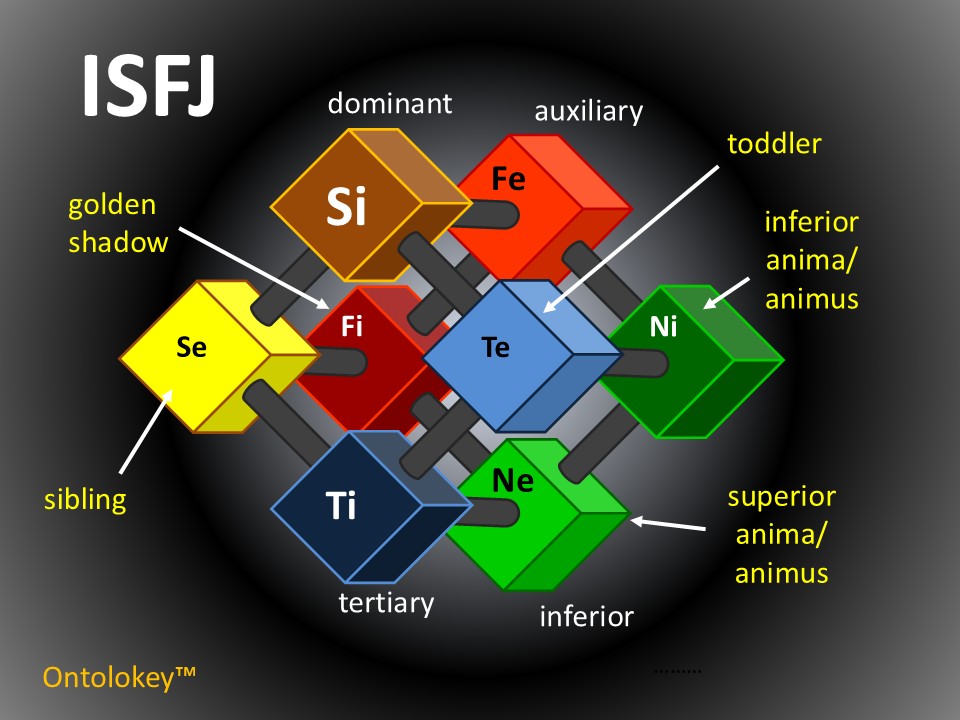
The Gentle Mask and the Unseen Abyss
When people think about the ISFJ personality, they usually imagine warmth, loyalty, patience, reliability, and a profound concern for the well-being of others. They imagine a person who remembers birthdays, notices emotional shifts in the room, protects traditions, and quietly carries responsibilities that many others would rather avoid. Such a portrait is not wrong. In fact, it contains an important truth. Yet it contains only half of the truth. Every personality structure develops a public face and a hidden interior, a visible character and an invisible compensation. What appears on the surface is often maintained by forces that remain unconscious even to the person who embodies them. The more benevolent and socially valued a personality appears, the more difficult it becomes to recognize the darker dynamics operating beneath the surface. This difficulty is particularly pronounced in the ISFJ because its strengths are so deeply associated with care, harmony, and emotional stability that observers often assume the absence of serious shadow material. Such an assumption is psychologically naive. Every personality pays a price for its strengths, and the deepest shadows frequently emerge precisely from those qualities that society praises most enthusiastically.
The ISFJ often develops an identity around being the stabilizer of human life. This individual becomes the keeper of continuity, the guardian of emotional comfort, and the protector of familiar realities. Such people tend to invest enormous psychological energy into maintaining a world that feels safe, predictable, and humanly manageable. They do not merely prefer stability; they often experience stability as a psychological necessity. Their inner world is strongly rooted in subjective impressions, personal memories, emotional associations, sensory familiarity, and lived experience. The result is a personality that frequently appears calm, accommodating, and grounded. Yet beneath this apparent calmness lies a profound dependence on an internal reality that may differ considerably from objective reality. The individual does not simply react to events as they are. Rather, events are filtered through layers of personal meaning, emotional memory, symbolic associations, and unconscious interpretations. As a result, the ISFJ can gradually begin living less in reality itself and more within an internally constructed version of reality. This tendency was already observed in classical psychological descriptions of the introverted sensation type, where subjective perception increasingly mediates and sometimes even replaces direct contact with objective facts.
This is where the shadow begins. The shadow of the ISFJ is not primarily aggression, domination, or open hostility. It is not the obvious darkness that people readily recognize. Instead, it emerges through subtle distortions of perception. The ISFJ often trusts personal impressions more than detached analysis. This trust can become so natural that it is no longer questioned. Over time, subjective emotional certainty may begin to feel more convincing than external evidence. The person feels something deeply and therefore assumes that the feeling must correspond to reality. Yet feelings are not reality. They are interpretations of reality. When this distinction becomes blurred, the personality slowly drifts into a world governed less by objective observation and more by unconscious symbolic meanings. What begins as sensitivity can become projection. What begins as empathy can become assumption. What begins as intuition about human motives can become a private mythology about people and events that has little connection to what is actually happening. The individual may remain entirely unaware of this process because subjective certainty often feels more real than objective verification. Classical descriptions of this personality pattern noted that such individuals may gradually orient themselves toward an inner mythological reality while remaining largely unconscious of the extent to which subjective interpretations are shaping their judgments.
The tragedy of this development is that it often occurs behind a façade of kindness. People rarely suspect that a gentle individual may be profoundly mistaken about reality. Human beings tend to associate danger with overt aggression rather than with unconscious distortion. Yet distorted perception can damage relationships just as effectively as hostility. An ISFJ who unconsciously projects hidden fears onto others may become convinced that certain people are untrustworthy, disloyal, selfish, or dangerous despite little evidence supporting such conclusions. Because the judgment arises from a felt certainty rather than a logical argument, it can be remarkably resistant to correction. The person does not think, “I am making an assumption.” Instead, the person feels, “I simply know.” At this point the shadow is already active. It is no longer operating as a hidden potential but as an invisible influence shaping perceptions, decisions, and emotional reactions.
One of the most misunderstood aspects of the ISFJ shadow concerns the repression of darker possibilities. The outward personality is often associated with benevolence, patience, and emotional goodwill. However, every conscious attitude creates an unconscious counterweight. The stronger the conscious commitment to harmony, the stronger the possibility that conflict, suspicion, hostility, and destructive imagination will be pushed into the unconscious. When these elements are excluded from conscious awareness, they do not disappear. They simply relocate. They continue to operate beneath the surface where they acquire greater autonomy and less supervision. Classical psychological observations described how the unconscious side of this personality can develop an extraordinary sensitivity toward hidden dangers, ambiguous motives, dark possibilities, and threatening interpretations that stand in sharp contrast to the individual’s conscious benevolence.
This phenomenon produces one of the deepest paradoxes of the ISFJ personality. The more consciously good-natured the individual becomes, the more disturbing the unconscious compensations may become. The person who appears gentle may secretly be haunted by catastrophic expectations. The person who seems trusting may privately imagine betrayal. The person who advocates peace may carry immense reservoirs of unacknowledged resentment. Because these contents are rarely integrated consciously, they emerge indirectly. They appear as suspicions, anxieties, compulsive worries, passive resistance, emotional withdrawal, victim narratives, or sudden emotional eruptions that seem disproportionate to the triggering event. The individual often experiences these reactions as something happening to them rather than something emerging from within them. Consequently, self-understanding remains limited. The shadow acts, but the ego claims innocence.
At a deeper level, the ISFJ’s greatest vulnerability may not be emotional sensitivity itself but rather the tendency to identify with an image of being good. This distinction is crucial. Genuine goodness requires continuous self-examination because it recognizes the existence of destructive impulses within every human being. The image of goodness, however, seeks validation rather than truth. Once a person becomes attached to the belief that they are fundamentally caring, selfless, and morally reliable, acknowledging darker motives becomes psychologically threatening. The shadow then gains protection from conscious scrutiny. Instead of confronting envy, manipulation, resentment, possessiveness, dependency, or self-interest directly, the individual begins explaining these impulses away. The mind creates narratives that preserve innocence. Responsibility is displaced. Motives are rationalized. Uncomfortable truths are softened into more acceptable stories. The person remains sincere, but sincerity is not the same thing as self-knowledge.
This dynamic becomes especially dangerous because it often manifests through self-deception rather than deliberate deception. Certain psychological descriptions associated with the broader emotional structure connected to this personality pattern emphasized a remarkable human capacity to suppress unwanted truths until the individual genuinely believes the revised narrative. In its extreme form, a person may no longer consciously distinguish between reality and the emotionally comforting version of reality. What matters here is not intentional dishonesty but the unconscious need to protect a preferred self-image. The individual does not necessarily lie to others first. The individual lies to themselves. Only afterward does the revised reality become available for communication to others.
The deepest shadow of the ISFJ therefore begins with a question that few members of this personality type naturally ask themselves: What if my perception is not reality? What if my emotional certainty is concealing something rather than revealing it? What if the story I tell myself about my motives is incomplete? These questions threaten the foundations of the personality because they challenge the internal world upon which psychological stability has been built. Yet without such questioning, genuine growth remains impossible. The shadow grows strongest wherever certainty replaces reflection. It thrives wherever self-images become sacred. It flourishes wherever subjective impressions are granted unquestioned authority.
The path toward psychological maturity requires the ISFJ to confront an uncomfortable truth. Benevolence does not eliminate darkness. Loyalty does not eliminate manipulation. Kindness does not eliminate resentment. Caregiving does not eliminate self-interest. Human beings do not transcend their shadow by becoming good. They transcend it by becoming conscious. The ISFJ who refuses this confrontation may spend an entire lifetime protecting an identity while remaining a stranger to the deeper forces shaping that identity. The ISFJ who accepts this confrontation begins a far more difficult journey, one that leads away from comforting illusions and toward genuine self-knowledge. It is precisely this journey that we must now examine, because the deepest shadow of the ISFJ is not cruelty, malice, or evil. The deepest shadow is unconsciousness itself.
The Psychology of Self-Deception: When Kindness Becomes a Mask
If there is one shadow dynamic that deserves to be called the central psychological danger of the ISFJ personality, it is not cruelty, narcissism, or overt destructiveness. It is self-deception. Not ordinary deception in the crude sense of consciously manipulating reality, but a far more subtle process through which uncomfortable truths gradually disappear from conscious awareness while emotionally acceptable narratives take their place. This distinction is essential because the ISFJ is rarely motivated by malicious intentions. In fact, many of the most psychologically unhealthy manifestations of this personality emerge precisely because the individual sincerely believes in their own benevolence. The tragedy is not that the person wishes to deceive others. The tragedy is that the person often becomes incapable of seeing where self-protection ends and truth begins. As a result, a gap develops between subjective experience and objective reality, and that gap can slowly expand over decades without ever being consciously recognized. What makes this process so dangerous is that it frequently hides itself beneath genuinely admirable qualities such as loyalty, compassion, responsibility, and sacrifice. The more these virtues become central to identity, the more difficult it becomes to acknowledge anything that contradicts them.
At the heart of this phenomenon lies a fundamental psychological fact: human beings do not experience themselves objectively. Every person carries an internal narrative about who they are, why they act as they do, and what motivates their decisions. The ISFJ often constructs this narrative around being supportive, caring, dependable, and morally conscientious. Such an identity is not inherently false. In many cases it is substantially true. Yet every identity becomes dangerous when it hardens into an unquestionable certainty. Once the individual becomes emotionally invested in the image of being a fundamentally good person, unconscious mechanisms begin filtering information that threatens this image. Resentment becomes concern. Possessiveness becomes loyalty. Control becomes protection. Dependency becomes love. Manipulation becomes sacrifice. The individual does not consciously invent these reinterpretations. Rather, they emerge automatically because the psyche seeks coherence between self-image and experience. The result is a form of psychological blindness in which the person remains sincere while simultaneously misunderstanding their own motives. Classical descriptions associated with this personality pattern repeatedly emphasize how subjective perception can become so influential that it gradually shapes thought, feeling, and action independently of objective reality.
The ISFJ’s capacity for self-deception is closely connected to an unusual relationship with emotional certainty. Many people assume that strong feelings indicate truth. The ISFJ is particularly vulnerable to this assumption because personal experience often carries more psychological authority than abstract analysis. When an emotional impression forms, it tends to acquire a sense of authenticity that is difficult to challenge. If someone feels hurt, they assume they have been wronged. If they feel excluded, they assume exclusion has occurred. If they feel mistrust, they assume there must be a reason for mistrust. Yet emotions are not objective measurements. They are subjective responses generated by conscious and unconscious factors alike. The shadow emerges when emotional conviction becomes indistinguishable from factual reality. At that point the individual may begin defending interpretations rather than examining them. The psyche becomes less interested in discovering what is true and more interested in preserving what feels true. This shift is subtle, almost invisible, yet it fundamentally alters the relationship between consciousness and reality.
A particularly revealing manifestation of this tendency appears in the ISFJ’s relationship with suffering. Few personalities identify as deeply with the role of caregiver. From early life onward, many ISFJs learn that their value comes from helping, supporting, nurturing, and stabilizing others. Such behavior is often rewarded by families, communities, and social institutions. Over time the person may become so accustomed to being needed that their entire sense of identity depends upon it. What begins as generosity can gradually transform into a hidden psychological dependency. The individual unconsciously requires situations in which others need support because these situations validate their existence. Yet acknowledging such dependency would threaten the self-image of pure altruism. Therefore the underlying need often remains unconscious. The person experiences themselves as selfless while remaining unaware of how deeply they need others to need them. In this way caregiving itself can become a sophisticated defense mechanism that conceals emotional dependency beneath a morally admirable exterior.
The shadow becomes darker when this unconscious dependency encounters disappointment. Suppose the ISFJ sacrifices time, energy, attention, and emotional labor for another person. Consciously, they may insist that they expect nothing in return. They may even believe this wholeheartedly. Yet beneath the surface there often exists an unspoken expectation of appreciation, loyalty, recognition, or emotional reciprocity. When these expectations are not fulfilled, resentment begins to accumulate. The crucial point is that the resentment frequently remains unconscious because it conflicts with the individual’s preferred identity. The person continues acting helpful while internally growing bitter. Instead of acknowledging anger directly, they may withdraw emotionally, become passive-aggressive, engage in guilt-inducing behavior, or cultivate narratives of victimhood. Because the resentment is denied rather than integrated, it acquires a covert quality. The individual suffers, yet often struggles to understand why. They experience themselves as unappreciated saints surrounded by insensitive people, while remaining largely blind to the hidden emotional contracts that contributed to the disappointment.
This dynamic explains why some ISFJs become remarkably skilled at moral self-justification. When people consciously identify with goodness, they often assume that their motives must also be good. As a consequence, motives are rarely examined with sufficient rigor. The individual may control others while believing they are helping them. They may guilt-trip loved ones while believing they are teaching responsibility. They may undermine independence while believing they are providing support. Because the conscious intention appears benevolent, the darker dimensions remain concealed. This phenomenon resembles a psychological process described by several classical theorists who observed that individuals can gradually lose awareness of uncomfortable truths while preserving emotionally satisfying narratives. In its more developed forms, a person may genuinely believe a version of reality that protects the ego from conflict, contradiction, or guilt.
The danger here is not deliberate hypocrisy. Deliberate hypocrisy is relatively easy to identify because the person knowingly presents one face while living another reality. Self-deception is far more difficult because the individual remains convinced of their own sincerity. The ISFJ may honestly believe that every sacrifice was freely chosen, every intervention was necessary, and every emotional reaction was justified. Yet honesty about one’s feelings does not guarantee accuracy about one’s motives. A person can be completely sincere and completely mistaken at the same time. In fact, the strongest self-deceptions are often accompanied by profound sincerity because the individual no longer recognizes the discrepancy between inner reality and conscious interpretation. The shadow thrives precisely in this territory where certainty replaces curiosity. Whenever self-examination stops, unconscious motives gain freedom to operate without supervision.
Another important dimension of the ISFJ shadow involves memory itself. This personality often experiences life through a richly textured network of emotional impressions, personal associations, and remembered experiences. Memory is not merely a storage system; it becomes a lens through which reality is interpreted. Yet memory is never objective. Human beings reconstruct memories continuously, emphasizing certain details while minimizing others. The ISFJ’s attachment to emotionally meaningful narratives can therefore create a tendency to remember events in ways that preserve psychological continuity. Conflicts may be remembered selectively. Personal mistakes may become softened. Sacrifices may become enlarged. Injuries received from others may acquire symbolic significance disproportionate to the original event. None of this requires conscious dishonesty. It emerges naturally from the psyche’s attempt to maintain a coherent identity. Over many years, however, such processes can create an increasingly mythologized personal history in which the individual relates not to what happened but to an emotionally reconstructed version of what happened.
Classical psychological descriptions of this personality structure contain a striking observation. The individual may gradually become oriented toward an inner reality that functions almost like a private mythology. People, situations, and events are unconsciously endowed with symbolic meanings that shape perception and judgment. The person may experience certain individuals as inherently trustworthy, others as inherently dangerous, and still others as embodiments of particular emotional themes. These perceptions often feel self-evident because they arise from deep subjective impressions rather than conscious reasoning. Yet the objective person standing before them may differ dramatically from the internal image. The ISFJ then begins relating to the image rather than to reality. Relationships become entangled with projections, expectations, and unconscious narratives. Misunderstandings multiply because the individual believes they are responding to what exists while actually responding to what has been psychologically constructed.
The shadow reaches its most sophisticated form when self-deception becomes morally reinforced. Society tends to celebrate caregivers, helpers, loyal friends, and self-sacrificing family members. Consequently, many of the ISFJ’s defenses receive external validation. People praise their devotion. They admire their reliability. They appreciate their willingness to endure burdens. Such praise strengthens the conscious identity while simultaneously making shadow work more difficult. The individual receives countless confirmations of who they believe themselves to be, but very few invitations to examine who they might also be. Yet maturity requires precisely this examination. The psychologically developed person recognizes not only their virtues but also their hidden motives, unconscious resentments, possessive tendencies, manipulative capacities, and need for validation. The undeveloped person remains attached to innocence. They seek confirmation instead of truth.
Ultimately, the deepest self-deception of the ISFJ may be the belief that goodness eliminates darkness. It does not. The more psychologically accurate perspective is that goodness and darkness coexist within every human being. Genuine compassion does not arise from denying this fact. It arises from confronting it. The mature ISFJ gradually learns that kindness can contain control, sacrifice can contain pride, loyalty can contain possession, and care can contain dependency. Such realizations are painful because they dismantle comforting illusions. Yet they also create the possibility of authentic integrity. A person who knows their shadow becomes less controlled by it. A person who denies their shadow becomes its servant.
The path forward therefore begins with a difficult act of humility. The ISFJ must learn to distrust emotional certainty just enough to investigate it. They must ask whether their interpretation is true or merely familiar. They must question whether their generosity is freely given or secretly transactional. They must examine whether their suffering originates in reality or in unspoken expectations. Above all, they must recognize that sincerity alone does not guarantee self-knowledge. Until this lesson is learned, the shadow remains hidden behind the most convincing mask imaginable: the mask of virtue itself.
The Dark Intuition Beneath the Surface: Suspicion, Catastrophizing, and the Hidden Paranoia of the ISFJ
One of the most misunderstood aspects of the ISFJ personality is the existence of a psychological force that appears to contradict everything commonly associated with this type. Most descriptions focus on warmth, empathy, practical care, and emotional attentiveness. These qualities are real, but they are not the whole story. Beneath the visible personality there often exists a second psychological current moving in the opposite direction. While the conscious personality seeks stability, reassurance, and human connection, the unconscious psyche frequently searches for danger, betrayal, disruption, and hidden threats. This creates a profound internal tension. The ISFJ may consciously desire peace while unconsciously scanning for evidence that peace is about to disappear. They may consciously trust others while unconsciously searching for reasons why that trust will eventually be violated. The result is a personality that often appears calm externally while internally managing a continuous stream of imagined possibilities, many of which revolve around loss, disappointment, humiliation, abandonment, illness, or catastrophe. This hidden psychological process is rarely discussed because it remains largely invisible until it reaches a level where it begins influencing behavior in obvious ways.
The roots of this phenomenon lie in the structure of perception itself. The ISFJ does not simply observe reality in a detached manner. Reality is filtered through a rich inner network of memories, associations, emotional impressions, symbolic meanings, and subjective interpretations. This internal world creates psychological depth, but it also creates vulnerability. When perception becomes strongly subjective, the boundary between observation and interpretation gradually weakens. The person no longer merely sees what is happening. They also see what might happen, what previously happened, what could be hidden behind appearances, and what emotional significance an event might possess. In healthy forms this capacity contributes to empathy and insight. In unhealthy forms it generates suspicion. The individual begins perceiving not only reality but countless potential realities layered beneath it. Because many of these possibilities originate unconsciously, they are often experienced as intuitions rather than hypotheses. The person does not think, “Perhaps this could be true.” They feel, “Something is wrong.” The certainty comes first, while evidence often arrives later or never arrives at all.
Classical psychological descriptions of this personality structure contain a remarkable observation regarding its unconscious processes. Beneath the consciously benevolent and accommodating personality there may exist what was described as an archaic form of intuition possessing an extraordinary sensitivity toward ambiguous, dangerous, gloomy, and threatening possibilities hidden behind ordinary events. This unconscious faculty does not focus on the visible intentions of people. Instead, it searches for concealed motives, hidden dangers, secret agendas, and future complications. It continually peers behind appearances looking for what might be wrong rather than what is immediately evident. In moderation, this process serves a protective function by compensating for excessive trust and idealization. However, when the unconscious becomes increasingly autonomous, these dark intuitions may begin dominating perception, producing compulsive suspicions and increasingly distorted interpretations of reality.
This dynamic helps explain a phenomenon that many ISFJs privately experience but rarely discuss. They often possess a surprisingly vivid imagination when it comes to negative outcomes. A delayed text message can become evidence of rejection. A change in someone’s tone can become evidence of hidden resentment. A minor physical symptom can become evidence of serious illness. An unexpected event can become the beginning of a catastrophic chain reaction. What distinguishes these reactions is not merely pessimism but the emotional realism attached to imagined scenarios. The possibility does not remain a possibility. It begins to feel like an approaching reality. The individual emotionally inhabits the feared future long before any objective confirmation exists. As a result, anxiety is experienced not as anticipation but as virtual certainty. The body reacts to imagined disasters as though they were already unfolding.
This tendency toward catastrophizing is especially powerful because it frequently disguises itself as responsibility. The ISFJ often believes that worrying is a form of preparation. They may tell themselves that considering every possible problem demonstrates maturity and conscientiousness. There is some truth in this belief. Responsible people do anticipate difficulties. Yet there is a crucial difference between preparation and psychological preoccupation. Preparation ends when sufficient action has been taken. Catastrophizing continues indefinitely because its purpose is not practical problem-solving but emotional control. The unconscious mind hopes that by imagining every possible disaster it can somehow prevent disaster from occurring. Unfortunately, reality does not operate according to this logic. The result is chronic vigilance, mental exhaustion, and a persistent sense that safety remains fragile and temporary.
The shadow becomes darker when these fears begin attaching themselves to other people. Relationships are particularly vulnerable because they activate the ISFJ’s deepest emotional investments. The more important a person becomes, the more psychological energy is devoted to preserving the relationship. Yet preservation often involves anticipation of loss. Consequently, attachment and anxiety become intertwined. The individual may unconsciously monitor loved ones for signs of withdrawal, disappointment, disloyalty, or emotional distance. Neutral behaviors acquire symbolic meaning. Ambiguous comments become clues. Ordinary fluctuations in mood become evidence of deeper problems. Because the interpretations originate from unconscious intuition rather than deliberate reasoning, they often feel indisputably true. The person may therefore react emotionally to possibilities that exist only within their own psychological landscape.
A particularly painful consequence of this process is the gradual development of defensive mistrust. The ISFJ usually wants to trust people. Their conscious values encourage loyalty, cooperation, and goodwill. However, repeated exposure to internally generated fears can slowly undermine this trust. The individual begins preparing for betrayals that have not occurred. They rehearse future disappointments in advance. They create emotional contingency plans for relationships that are currently functioning perfectly well. On the surface they remain supportive and caring. Underneath they increasingly expect eventual injury. This expectation influences behavior in subtle ways. They may become possessive without recognizing it. They may seek reassurance excessively. They may test loyalty indirectly. They may withdraw before others can withdraw from them. Ironically, the very behaviors intended to prevent abandonment can sometimes contribute to the relational tensions they fear most.
The connection between suspicion and projection must also be understood. Human beings often attribute unconscious contents to external objects. Traits, motives, and impulses that remain unrecognized within the self are unconsciously perceived in others. The ISFJ is not exempt from this universal tendency. In fact, because the personality often strives to maintain an image of kindness and moral reliability, darker impulses may be especially difficult to acknowledge consciously. Anger, envy, selfishness, aggression, competitiveness, and manipulative desires may therefore become shadow material. Once repressed, these qualities do not disappear. Instead, they frequently reappear as suspicions about the motives of others. The person becomes highly sensitive to selfishness because they cannot tolerate their own selfishness. They become preoccupied with manipulation because they cannot recognize their own subtle manipulations. They become suspicious of hidden agendas because they have not fully examined their own unconscious motives. The psyche externalizes what it cannot consciously integrate.
This process creates a peculiar psychological paradox. The ISFJ may genuinely be one of the most compassionate people in a social environment while simultaneously entertaining some of the darkest assumptions about human nature. On one level they want to help people. On another level they expect people to disappoint them. On one level they seek closeness. On another level they anticipate betrayal. On one level they desire harmony. On another level they continuously imagine conflict lurking beneath the surface. These contradictory tendencies often coexist without conscious recognition. The individual experiences only the emotional consequences: anxiety, tension, vigilance, and occasional bursts of distrust that seem disproportionate to external circumstances.
In more extreme forms, this shadow can produce obsessive patterns of thought. The individual becomes trapped in repetitive mental loops centered around a feared possibility. They revisit conversations repeatedly, searching for hidden meanings. They analyze behaviors for signs of concealed motives. They mentally reconstruct events, attempting to identify where danger first appeared. Classical observations noted that when unconscious dark intuition becomes excessively powerful, it may generate compulsive ideas about people and situations, forcing itself upon consciousness with remarkable intensity. What begins as ordinary concern can gradually evolve into obsession. The person knows they are overthinking, yet feels unable to stop. They become both observer and prisoner of their own imagination.
Health anxiety provides another revealing example. Many ISFJs possess a strong awareness of bodily states and physical well-being. In balanced forms this encourages self-care and practical responsibility. Under stress, however, bodily awareness may become amplified. Minor sensations acquire significance. Temporary discomfort becomes a symptom. Symptoms become evidence. Evidence becomes catastrophe. Clinical descriptions of conscientious and highly vigilant personalities frequently note a tendency toward excessive concern regarding health, sometimes progressing toward hypochondriacal patterns in which imagined illness acquires overwhelming emotional reality. The underlying mechanism is essentially the same as in interpersonal suspicion. The mind detects a possibility, emotionally invests in it, and gradually treats it as probable or inevitable. Once fear and imagination reinforce one another, objective evaluation becomes increasingly difficult.
What makes all of this particularly tragic is that the ISFJ often suffers in silence. Unlike personalities that externalize anxiety through dramatic expression, the ISFJ frequently internalizes it. They continue fulfilling responsibilities. They continue caring for others. They continue appearing dependable and composed. Friends and family may remain entirely unaware of the psychological storms occurring beneath the surface. The individual becomes a container for fears that are rarely shared openly. Consequently, loneliness often accompanies anxiety. The person feels burdened by concerns that seem difficult to explain because they themselves cannot fully distinguish intuition from projection, caution from fear, or insight from imagination.
Yet this dark intuition is not inherently pathological. In fact, when consciously integrated, it becomes one of the ISFJ’s greatest strengths. The problem is not the perception of danger. The problem is the unconsciousness of the perception. Integrated intuition functions as discernment. Unintegrated intuition functions as paranoia. Integrated intuition asks questions. Unintegrated intuition assumes answers. Integrated intuition remains open to evidence. Unintegrated intuition treats emotional certainty as proof. The mature ISFJ learns that every dark possibility is merely a possibility until reality confirms it. They learn to hold suspicion lightly rather than worship it. They learn to examine fears instead of obeying them.
The deepest lesson here is that the ISFJ’s hidden paranoia is rarely about other people. It is ultimately about uncertainty itself. The psyche fears what it cannot control, predict, or secure. Because life remains fundamentally uncertain, the mind attempts to compensate by imagining every possible threat in advance. Yet no amount of vigilance can eliminate uncertainty. No amount of preparation can guarantee safety. No amount of suspicion can prevent every betrayal. Psychological maturity therefore requires a surrender that feels almost unbearable to this personality: the acceptance that security can never be absolute. Only when this truth is accepted does the mind gradually release its compulsive need to search for danger everywhere.
The shadow then loses much of its power. Suspicion becomes discernment. Anxiety becomes awareness. Fear becomes wisdom. The individual no longer mistakes every shadow for a predator. They no longer assume that every unfamiliar movement conceals catastrophe. They begin living in reality rather than in imagined futures. And for a personality that has spent much of its life preparing for disaster, this transition may feel less like a psychological adjustment and more like a liberation.
The Martyr Complex: Victimhood, Silent Resentment, and Emotional Manipulation in the ISFJ
Among the many shadows that can emerge within the ISFJ personality, few are as psychologically complex, socially invisible, and personally destructive as the martyr complex. Unlike overt forms of manipulation, domination, or narcissism, the martyr complex rarely announces itself openly. It often develops beneath qualities that are widely admired: generosity, sacrifice, responsibility, loyalty, and devotion. Indeed, one of the reasons it is so difficult to recognize is that its foundations are built from virtues. The problem is not that these virtues are false. The problem is that they gradually become intertwined with unconscious emotional needs that remain unexamined. What begins as genuine care can slowly evolve into a hidden psychological economy in which giving, suffering, and self-denial acquire meanings that extend far beyond simple kindness. The individual may continue believing they are acting entirely for the benefit of others while remaining largely unaware of the deeper emotional dynamics motivating their behavior. As a result, the line between love and self-sacrifice, between generosity and self-erasure, becomes increasingly difficult to distinguish.
To understand this process, one must first understand the ISFJ’s profound relationship with responsibility. Many individuals of this personality structure experience responsibility not merely as a practical obligation but as a central component of identity itself. They often feel compelled to maintain relationships, preserve stability, solve problems, absorb emotional burdens, and ensure that the needs of others are met. This tendency frequently develops early in life. Whether through family dynamics, cultural expectations, or personal temperament, the individual learns that value is earned through usefulness. Being needed becomes synonymous with being loved. Being reliable becomes synonymous with being worthy. Over time this creates a psychological structure in which self-esteem becomes increasingly dependent upon service to others. Such a structure may function effectively for many years because society often rewards exactly these traits. Yet beneath the surface a dangerous equation begins to form: “I matter because I sacrifice.”
This equation contains the seed of the martyr complex. The moment personal worth becomes linked to sacrifice, suffering acquires psychological value. The individual may never consciously seek suffering, yet they begin unconsciously organizing life around situations that require endurance, accommodation, and self-denial. Healthy boundaries become difficult because boundaries threaten the identity of the caregiver. Saying no risks guilt. Prioritizing personal needs feels selfish. Asking for reciprocity feels uncomfortable. Consequently, the individual gives more than they can comfortably sustain. At first this pattern appears noble. Friends admire their dedication. Family members rely upon their support. Colleagues appreciate their reliability. Yet every act of giving depletes emotional resources. If replenishment does not occur, exhaustion inevitably follows. The tragedy is that the ISFJ often reaches exhaustion long before admitting it to themselves.
At this stage resentment begins its silent growth. Resentment is one of the least acknowledged emotions within this personality because it directly contradicts the preferred self-image of kindness and devotion. The individual wants to see themselves as generous, patient, and understanding. Therefore feelings of bitterness often remain unconscious. Instead of recognizing resentment directly, they experience secondary emotions such as disappointment, sadness, fatigue, loneliness, or a vague sense of being unappreciated. The conscious mind continues insisting that all sacrifices were freely chosen. Yet the unconscious mind quietly keeps score. Every unrecognized effort, every forgotten kindness, every unreturned favor is recorded somewhere beneath awareness. The individual may sincerely deny expecting anything in return while simultaneously carrying a growing ledger of emotional debts that others do not even know exists.
This hidden accounting system creates one of the central paradoxes of the martyr complex. The ISFJ often gives without explicitly asking for reciprocity, yet unconsciously expects reciprocity nonetheless. Because the expectation remains unspoken, others frequently fail to meet it. The resulting disappointment feels deeply unfair. From the individual’s perspective, they have invested enormous amounts of energy, loyalty, and care. They have been present during crises, offered emotional support, remembered important details, and sacrificed personal comfort for the sake of others. Yet when similar support is needed in return, reality often falls short of the idealized standard they themselves uphold. The person then experiences profound hurt. However, because the original expectation was never consciously acknowledged, the source of the hurt remains obscure. They know they feel betrayed, but they struggle to explain exactly why.
What follows is often a gradual shift toward victim consciousness. Victim consciousness should not be confused with genuine victimization. Human beings can experience real injustice, exploitation, neglect, and mistreatment. The psychological phenomenon under discussion here is different. It refers to a pattern in which personal suffering becomes central to identity and moral self-understanding. The individual begins viewing life primarily through the lens of how much they have endured for others. Every sacrifice becomes evidence of virtue. Every disappointment becomes evidence of others’ selfishness. Every burden reinforces the conviction that they carry more responsibility than anyone else. The world is increasingly divided into those who take and those who give, with the self firmly occupying the role of the giver. Such a worldview provides emotional validation, but it also prevents deeper self-examination because it externalizes responsibility for suffering.
The shadow becomes even more complex when passive forms of emotional manipulation emerge. The term manipulation often evokes images of calculated deceit and conscious exploitation. Yet manipulation can also occur unconsciously. An individual may influence others emotionally without fully recognizing what they are doing. The ISFJ’s version of this dynamic frequently operates through guilt rather than force. Because direct expressions of anger feel uncomfortable, frustration is communicated indirectly. Instead of saying, “I feel resentful because I have overextended myself,” the person may emphasize how much they have sacrificed. Instead of expressing unmet needs openly, they may remind others of past acts of generosity. Instead of establishing clear boundaries, they may continue giving while subtly communicating disappointment. The message remains implicit: “Look at everything I have done for you.” Others often sense the emotional pressure even when no explicit demand is made.
This pattern is particularly difficult to recognize because it often emerges from genuine suffering. The individual is not necessarily pretending to feel hurt. The hurt is real. The exhaustion is real. The disappointment is real. What remains unconscious is the role that self-sacrifice itself played in creating these outcomes. Because personal responsibility is not fully acknowledged, blame is directed outward. Family members become selfish. Friends become ungrateful. Partners become insensitive. Colleagues become exploitative. Sometimes these judgments contain elements of truth. Yet they frequently overlook the individual’s participation in the dynamic. Others cannot respect boundaries that were never communicated. They cannot honor needs that were never expressed. They cannot reciprocate expectations that were never articulated.
One of the most revealing aspects of the martyr complex is its relationship with power. On the surface, martyrs appear powerless. They seem burdened, overlooked, and taken for granted. Yet psychologically speaking, martyrdom often contains a hidden form of power. The individual occupies the moral high ground. Because they have sacrificed more, they feel entitled to moral authority. Because they have suffered more, they feel justified in their judgments. Because they have given more, they believe their perspective deserves greater legitimacy. This hidden superiority rarely appears consciously. In fact, many ISFJs would be horrified by the suggestion that they feel superior to others. Nevertheless, the dynamic often exists beneath awareness. Suffering becomes evidence of virtue, and virtue becomes evidence of moral elevation. The individual may therefore develop a subtle contempt for people who establish stronger boundaries, prioritize personal needs, or refuse excessive responsibility.
This hidden moral superiority creates significant obstacles to psychological growth. As long as suffering serves as proof of goodness, reducing suffering feels psychologically dangerous. Healthier behavior would require relinquishing part of the identity built around sacrifice. It would require admitting that some forms of suffering were not imposed from outside but chosen from within. It would require acknowledging that self-neglect is not the same thing as love. Such realizations can be profoundly destabilizing because they challenge narratives that may have guided the individual for decades. Yet without this confrontation, the martyr complex remains intact. The person continues creating the very conditions that generate resentment while simultaneously blaming others for the resulting pain.
The origins of this pattern often reach deeper than simple behavior. At its core lies a fundamental fear concerning worthiness. Many ISFJs unconsciously worry that their value depends upon what they provide rather than who they are. If they stop giving, who are they? If they stop helping, will they still be loved? If they stop carrying responsibilities, will they still matter? These questions rarely appear consciously, yet they shape countless decisions. The individual keeps proving their worth through service because they have not fully internalized the belief that worth exists independently of usefulness. Consequently, every act of sacrifice becomes both an expression of care and a plea for validation. The tragedy is that validation obtained through self-sacrifice never resolves the underlying insecurity. It merely reinforces the cycle.
Psychological maturity requires a radical shift in perspective. The healthy ISFJ eventually learns that genuine love does not require self-erasure. Caring for others does not necessitate abandoning oneself. Responsibility does not require omnipresence. Support does not require exhaustion. Most importantly, personal worth does not depend upon suffering. These lessons sound simple in theory but often require years of painful self-confrontation in practice. The individual must learn to express needs directly rather than hoping others will intuit them. They must learn to establish boundaries without guilt. They must learn to give freely rather than transactionally. They must learn to recognize resentment before it hardens into bitterness. Above all, they must relinquish the seductive moral identity of the misunderstood sacrificer.
This relinquishment is difficult because martyrdom offers psychological rewards. It provides certainty, innocence, and moral validation. It allows the individual to avoid examining their own participation in dysfunctional dynamics. Yet it ultimately leads to loneliness because relationships built upon hidden expectations and silent resentment cannot sustain genuine intimacy. Authentic intimacy requires transparency. It requires the courage to reveal needs, limits, frustrations, and vulnerabilities directly rather than expressing them through sacrifice. It requires abandoning the fantasy that love can be earned through endless giving.
The deepest shadow of the martyr complex therefore lies not in suffering itself but in the unconscious attachment to suffering. The individual becomes loyal to pain because pain has become meaningful. They cling to burdens because burdens have become identity. They remain trapped in cycles of disappointment because disappointment confirms familiar narratives about themselves and others. Liberation begins only when they recognize that their humanity does not depend upon sacrifice. They do not need to bleed in order to prove they care. They do not need to suffer in order to deserve love. And they do not need to become a victim in order to remain a good person.
Possessive Love and Hidden Control: The Dark Side of ISFJ Attachment
Love is perhaps the domain in which the ISFJ appears most admirable and, simultaneously, most vulnerable to shadow distortion. Few personality structures invest themselves as completely into the maintenance of emotional bonds. Relationships are rarely experienced as temporary arrangements or casual exchanges. Instead, they often become deeply woven into the individual’s sense of continuity, meaning, and personal identity. The ISFJ does not merely love people. They often build parts of their psychological world around them. Memories, routines, shared experiences, obligations, traditions, and emotional investments accumulate over time until the relationship becomes integrated into the architecture of the self. This capacity for devotion can create extraordinary loyalty and emotional depth. Yet every strength contains the seed of its opposite. The very intensity that allows profound attachment can also produce possessiveness, dependency, and subtle forms of control that frequently remain invisible to both the individual and those around them. The shadow emerges not because the ISFJ lacks love, but because love itself becomes entangled with fear.
At the center of this dynamic lies a fundamental psychological reality: human attachment is never purely about the other person. Every attachment simultaneously reflects something about the self. We seek not only connection but also stability, reassurance, belonging, validation, and emotional continuity. The ISFJ tends to experience these needs with particular intensity because relationships often serve as anchors within an uncertain world. Familiar people provide psychological orientation. Trusted bonds create predictability. Established emotional structures reduce existential ambiguity. Consequently, the loss of a significant relationship is often experienced not merely as separation from another person but as a disruption of the internal order upon which emotional security depends. This helps explain why many ISFJs invest extraordinary effort into preserving relationships long after other individuals might have withdrawn. The attachment is not simply to the person. It is also to the emotional reality that the relationship sustains.
This emotional investment can gradually create a hidden fear that remains largely unconscious. The fear is not merely abandonment in the conventional sense. It is the fear of losing a part of oneself. Because relationships become integrated into identity, separation can feel psychologically disorienting. The individual may therefore become highly motivated to maintain relational stability at almost any cost. Initially this motivation appears entirely positive. They become attentive partners, devoted friends, supportive family members, and dependable companions. They remember details. They anticipate needs. They provide consistency. Yet beneath these admirable qualities another question slowly emerges: what happens when the relationship begins changing in ways that threaten the emotional structure upon which the individual depends?
This question marks the beginning of possessiveness. Possessiveness is often misunderstood as simple jealousy or overt control. In reality, it frequently begins as anxiety. The individual senses movement within the relationship. Perhaps a partner becomes more independent. Perhaps a friend develops new priorities. Perhaps a family member begins establishing boundaries. These developments are entirely normal aspects of human growth. Yet to the ISFJ’s attachment system they may feel like signs of instability. The unconscious mind interprets change as potential loss. Once this interpretation takes hold, protective mechanisms begin activating. The individual seeks reassurance. They increase emotional investment. They become more attentive, more available, more involved. From the outside these behaviors may appear loving. Internally, however, they are increasingly driven by fear.
The crucial psychological distinction is that genuine love allows movement while possessiveness seeks preservation. Genuine love recognizes that relationships evolve because people evolve. Possessiveness experiences such evolution as a threat. The ISFJ often struggles with this distinction because preservation feels synonymous with care. If something is valuable, it should be protected. If a relationship matters, it should be maintained. If a bond is meaningful, it should endure. These assumptions are understandable, yet they contain hidden dangers. Relationships are living systems rather than static structures. They require adaptation as much as stability. When preservation becomes the primary objective, the individual may begin resisting necessary change. They do not necessarily do so consciously. In fact, they often believe they are acting entirely in the interest of the relationship. Nevertheless, unconscious fear gradually transforms care into control.
One of the most subtle manifestations of this process appears through emotional over-involvement. The ISFJ may become deeply invested in the emotional states, decisions, and life trajectories of people they love. Their concern is often genuine. They sincerely want others to flourish. Yet concern can gradually become intrusion when boundaries between self and other become blurred. The individual begins experiencing another person’s choices as emotionally consequential to their own stability. Independence then feels threatening because it reduces influence. Differentiation feels uncomfortable because it introduces uncertainty. The loved one is unconsciously expected to remain psychologically available in ways that support the individual’s need for continuity. Although these expectations are rarely articulated, they shape behavior nonetheless.
This dynamic becomes particularly visible in close romantic relationships. The ISFJ often expresses affection through service, attentiveness, reliability, and practical care. These expressions can create extraordinarily nurturing partnerships. However, when attachment insecurity enters the equation, caregiving itself may become a vehicle for control. The individual provides support not only because they wish to help but also because helping strengthens emotional indispensability. Being needed creates security. If the partner depends upon them, abandonment appears less likely. Consequently, acts of care may acquire a hidden function. They become investments in relational permanence. The person remains largely unaware of this motivation because it operates beneath conscious intention. Yet the emotional logic remains powerful: if I become essential, I cannot be replaced.
This unconscious pursuit of indispensability creates numerous complications. The first is disappointment. No human being can permanently occupy the role of emotional necessity within another person’s life. Healthy relationships involve interdependence, not dependency. As partners mature, they naturally seek autonomy alongside connection. When this occurs, the ISFJ may experience unexpected feelings of rejection. The partner’s independence is interpreted not as growth but as withdrawal. The resulting hurt often appears disproportionate because its true source lies beneath awareness. The individual believes they are reacting to present circumstances when they are actually responding to a deeper fear concerning emotional significance and security.
The second complication involves hidden expectations. Earlier chapters explored the tendency toward unspoken emotional contracts, and nowhere are such contracts more influential than in intimate relationships. The ISFJ frequently gives love in highly concrete forms: attention, support, loyalty, sacrifice, remembrance, and care. Because these expressions feel natural, the individual may unconsciously assume that love should be reciprocated in similar ways. When reciprocity does not occur, disappointment accumulates. Yet because the expectations were never fully communicated, the partner often remains unaware of the growing frustration. Resentment develops in silence. The individual begins feeling unseen, undervalued, or emotionally neglected while continuing to fulfill relational responsibilities outwardly. The relationship becomes increasingly burdened by needs that exist but have never been clearly expressed.
Possessiveness also manifests through memory. The ISFJ’s relationship to the past often intensifies attachment because emotional experiences acquire lasting significance. Shared histories become psychologically sacred. Important moments remain vivid long after they have faded for others. This capacity contributes to loyalty, but it also creates resistance to change. The individual may continue relating to a person based partly upon who they were rather than who they have become. Old versions of loved ones remain alive within memory. Expectations derived from previous phases of the relationship continue influencing perception. When reality diverges from these internal representations, conflict emerges. The person experiences not only the present relationship but also an entire archive of emotional associations attached to it. Consequently, letting go becomes extraordinarily difficult because one is not merely releasing a person. One is releasing a history.
The shadow deepens further when fear of loss combines with unconscious projection. Individuals often attribute their own hidden desires and anxieties to others. The ISFJ is particularly vulnerable to this process because conscious identity tends to emphasize loyalty and devotion. As a result, fears concerning disloyalty may become amplified. The individual becomes highly sensitive to signs of distance, detachment, or competing priorities. Innocent behaviors acquire symbolic significance. Ambiguous situations generate suspicion. Emotional energy is devoted to monitoring the relationship for indications of future abandonment. Ironically, these protective efforts can create precisely the tensions they were intended to prevent. Partners feel scrutinized. Friends feel pressured. Family members feel obligated. The relationship becomes burdened by anxieties that originated not from actual threats but from unconscious fears.
One of the most uncomfortable truths about attachment is that love and control often coexist. Few people enjoy acknowledging this reality because it contradicts idealized notions of affection. Yet whenever we become emotionally invested in another human being, we inevitably develop preferences regarding their behavior. We want them to remain close. We want them to choose us. We want them to value the relationship. These desires are normal. The problem arises when they remain unconscious. Unconscious desires seek fulfillment indirectly. They emerge through guilt, obligation, emotional pressure, passive resistance, and subtle manipulation. The individual does not say, “I want to control you.” Instead, they say, “I only want what is best for you.” Often they genuinely believe this. Yet psychological honesty requires recognizing that concern for another person’s welfare can sometimes conceal concern for one’s own emotional security.
The mature ISFJ eventually faces a painful realization. Love cannot eliminate uncertainty. No amount of devotion can guarantee permanence. No amount of sacrifice can prevent loss. No amount of attentiveness can ensure loyalty. Human relationships remain fundamentally vulnerable because human beings themselves are vulnerable. The desire to secure love through control is understandable, but it is ultimately futile. The more tightly one attempts to hold another person, the more fragile the relationship becomes. Genuine intimacy requires something far more difficult than control. It requires trust in the face of uncertainty.
This trust does not mean passivity or blind idealism. It means accepting that every relationship contains risk. The loved one may change. They may leave. They may disappoint. They may outgrow expectations. Such possibilities cannot be eliminated through vigilance. They can only be tolerated. The psychologically mature ISFJ learns to love without converting love into possession. They learn to care without becoming indispensable. They learn to support without controlling. Most importantly, they learn that another person’s freedom is not the enemy of intimacy but one of its prerequisites.
The deepest shadow of ISFJ attachment is therefore not jealousy, dependency, or possessiveness in isolation. It is the unconscious attempt to transform love into certainty. Yet love has never been certainty. Love has always been vulnerability. The moment this truth is accepted, relationships cease being fortresses built against loss and become living encounters between two autonomous human beings. Only then can attachment evolve beyond fear and become something genuinely transformative.
The Repressed Aggression of the ISFJ: Anger, Passive Aggression, and the Shadow of Niceness
Among all the shadows that inhabit the ISFJ personality, perhaps none is more difficult for both the individual and their environment to recognize than aggression. The very suggestion appears contradictory. The ISFJ is commonly associated with kindness, consideration, loyalty, patience, emotional sensitivity, and an instinctive concern for the welfare of others. Aggression, by contrast, evokes images of confrontation, domination, hostility, selfishness, and emotional insensitivity. The two seem fundamentally incompatible. Yet psychological reality rarely conforms to such simplistic oppositions. Every human personality contains aggressive energy because aggression is not merely a destructive force. At its most basic level, aggression is the energy required for self-assertion, boundary formation, differentiation, protection, and the pursuit of personal needs. Without aggression, no individual could say no, defend themselves, express disagreement, or establish an autonomous identity. The question is therefore never whether aggression exists. The question is what happens to it.
For the ISFJ, aggression often becomes one of the earliest casualties of social adaptation. Many individuals of this personality structure learn, either explicitly or implicitly, that harmony is preferable to conflict, accommodation is preferable to confrontation, and self-sacrifice is preferable to self-assertion. They discover that being agreeable generates approval, while expressing anger risks disapproval. They learn that caring for others strengthens relationships, while demanding attention for their own needs may create tension. Over time a psychological hierarchy develops in which kindness becomes associated with goodness and aggression becomes associated with moral failure. The result is not the elimination of aggression but its repression. The individual begins constructing an identity organized around being pleasant, reliable, understanding, and emotionally safe. Anything that threatens this identity is pushed out of conscious awareness. Anger becomes particularly problematic because it directly challenges the image of oneself as patient and benevolent.
The difficulty is that repressed emotions do not disappear. They merely change form. Psychological energy cannot simply be erased through acts of will. When anger is denied conscious expression, it continues operating beneath the surface, seeking indirect avenues through which it can manifest. This is where the shadow of niceness begins to emerge. The ISFJ often becomes extraordinarily skilled at appearing calm while simultaneously experiencing significant emotional frustration. Outwardly they remain courteous. Internally they accumulate grievances. Outwardly they continue fulfilling obligations. Internally they feel increasingly burdened. Outwardly they avoid confrontation. Internally they replay conflicts repeatedly, imagining conversations that never occurred and arguments that were never expressed. The tension between external behavior and internal reality gradually widens. As this gap expands, psychological strain becomes inevitable.
One reason this process remains hidden for so long is that the ISFJ frequently experiences anger indirectly. Rather than recognizing, “I am angry,” the individual may experience disappointment, sadness, fatigue, anxiety, hurt, or emotional withdrawal. These secondary emotions are often more acceptable because they align with the self-image of sensitivity and care. Anger, by contrast, feels foreign. Consequently, the original emotion becomes disguised even from the individual experiencing it. This phenomenon creates profound confusion because the person feels distressed without fully understanding why. They know something is wrong, yet they cannot clearly identify the source of their dissatisfaction. Emotional energy accumulates without a corresponding awareness of its true nature.
This pattern is especially evident in relationships characterized by chronic self-sacrifice. As discussed in previous chapters, the ISFJ often assumes responsibilities beyond what is sustainable. They give more than they receive. They provide support without requesting support. They suppress needs in order to maintain harmony. Initially these choices appear voluntary. Over time, however, they create emotional imbalances. The individual begins feeling overextended and underappreciated. Yet because they struggle to acknowledge resentment directly, the resulting anger remains unconscious. What emerges instead is passive aggression. Rather than openly expressing frustration, the person communicates it indirectly through behavior, tone, withdrawal, procrastination, subtle criticism, emotional distance, or guilt-inducing remarks. The aggression is present, but it is disguised.
Passive aggression deserves careful examination because it represents one of the most characteristic expressions of repressed hostility. Unlike direct aggression, passive aggression allows the individual to maintain the self-image of kindness while simultaneously expressing negative emotions. The person does not openly attack. Instead, they obstruct, withhold, delay, sulk, or communicate dissatisfaction through implication rather than declaration. For example, they may agree to a request while secretly resenting it. They may fulfill an obligation while ensuring that their resentment remains visible through their demeanor. They may repeatedly mention how busy and exhausted they are without directly addressing the underlying issue. In each case the conflict remains unresolved because the true emotion is never openly acknowledged. The relationship becomes filled with emotional signals that everyone senses but nobody explicitly discusses.
The psychological function of passive aggression is profoundly revealing. It allows the individual to express anger while avoiding responsibility for being angry. This distinction is crucial. Direct anger requires ownership. One must admit dissatisfaction, articulate needs, and risk confrontation. Passive aggression bypasses these challenges by externalizing responsibility. The person can continue viewing themselves as entirely reasonable while implying that others should recognize and correct the situation. Yet because the underlying problem remains unspoken, others often respond with confusion rather than understanding. They sense hostility but cannot identify its source. Consequently, misunderstandings multiply. Relationships become burdened by tensions that remain invisible precisely because they are never openly addressed.
Another manifestation of repressed aggression appears through moral judgment. When direct expressions of anger feel unacceptable, hostility often disguises itself as righteousness. The ISFJ may become increasingly critical of behaviors they perceive as selfish, irresponsible, inconsiderate, or insensitive. On the surface these criticisms may appear entirely justified. Indeed, they often contain legitimate observations. Yet the intensity of the reaction frequently reveals something deeper. The individual is not merely responding to another person’s behavior. They are also expressing accumulated frustration regarding their own unacknowledged sacrifices. Every encounter with selfishness reminds them of how much they have given. Every display of irresponsibility reminds them of how much responsibility they have carried. The external judgment becomes a vehicle through which internal resentment finds expression.
This dynamic frequently produces what might be called the shadow of virtue. Because the ISFJ consciously identifies with goodness, responsibility, and care, they often develop high standards regarding how people should behave. Such standards are not inherently problematic. Difficulties arise when these standards become infused with unconscious anger. The individual begins dividing the world into responsible and irresponsible people, caring and uncaring people, loyal and disloyal people. These distinctions may contain truth, but they also simplify psychological reality. Human beings are complex mixtures of virtue and flaw. When resentment enters the picture, nuance disappears. Moral categories become sharper. Judgments become harsher. Compassion becomes conditional. The individual who consciously values understanding may become surprisingly unforgiving toward those who fail to meet their expectations.
One of the most paradoxical consequences of repressed aggression is emotional exhaustion. Many people assume that anger is energizing. In its conscious form it often is. Directly expressed anger can clarify priorities, strengthen boundaries, and motivate action. Repressed anger produces the opposite effect. Because it cannot move outward, it turns inward. The individual becomes chronically tense. Emotional resources are consumed by suppression. Mental energy is devoted to monitoring behavior, maintaining composure, and preventing conflict. Over time this process creates profound fatigue. The person feels drained without understanding the source of the exhaustion. They attribute their condition to external responsibilities while overlooking the immense psychological effort required to contain emotions that have never been consciously integrated.
The shadow deepens further when anger becomes fused with guilt. Many ISFJs experience significant discomfort after expressing frustration, even when the frustration is entirely justified. They may replay conversations repeatedly, questioning whether they were too harsh, too demanding, or too insensitive. This tendency reflects an internal conflict between self-assertion and self-image. The moment aggression becomes visible, the individual fears they have violated their identity as a good person. Consequently, they retreat. Boundaries soften. Apologies emerge prematurely. Needs are minimized. The original issue remains unresolved. In effect, the person punishes themselves for exhibiting normal human emotions. Such self-punishment reinforces the cycle of repression and ensures that future anger will remain hidden as well.
Perhaps the most destructive consequence of repressed aggression is the erosion of authenticity. Genuine intimacy requires emotional honesty. Relationships cannot thrive when significant portions of emotional reality remain concealed. If anger is never expressed directly, others encounter only fragments of the individual. They interact with the agreeable exterior while remaining disconnected from deeper truths. The ISFJ may therefore become trapped within relationships that appear harmonious but lack genuine transparency. Conflict is avoided, yet understanding remains incomplete. Peace is preserved, but authenticity is sacrificed. Over time this imbalance creates loneliness because the individual feels unseen. They long for deeper recognition while simultaneously concealing the very emotions that would make such recognition possible.
Psychological maturity requires a radical re-evaluation of aggression itself. The healthy ISFJ gradually learns that anger is not the opposite of love. In many situations, anger is one of love’s necessary companions. A parent becomes angry when a child is endangered. A partner becomes angry when trust is violated. A friend becomes angry when boundaries are repeatedly ignored. These reactions do not negate care. They arise because care exists. The problem is not anger but unconscious anger. Once aggression becomes conscious, it can be directed toward constructive purposes. It becomes boundary-setting rather than hostility, honesty rather than resentment, self-respect rather than domination.
The mature ISFJ therefore undertakes a difficult psychological task. They must learn to recognize anger before it transforms into bitterness. They must learn to communicate dissatisfaction before it becomes passive aggression. They must learn to establish boundaries before resentment accumulates. Most importantly, they must abandon the illusion that goodness requires perpetual pleasantness. Human beings are not virtuous because they never become angry. They are virtuous because they engage their anger responsibly. They neither deny it nor surrender to it. They integrate it.
The deepest shadow of niceness is not kindness itself. It is the belief that kindness requires the suppression of truth. Once this belief is abandoned, aggression ceases to be an enemy and becomes an ally. The individual no longer needs to choose between caring for others and caring for themselves. They discover that genuine compassion includes both. Only then can the ISFJ move beyond the exhausting cycle of repression and toward a form of emotional integrity in which love and strength coexist rather than compete.
The Addiction to Familiarity: Why the ISFJ Clings to the Past and Fears Psychological Transformation
Every personality develops a particular relationship to time. Some live primarily in anticipation of the future. Others immerse themselves in the immediacy of the present. The ISFJ, however, often inhabits a psychological territory in which the past exerts an extraordinary gravitational force. This does not merely refer to nostalgia in the ordinary sense. It refers to a deep structural tendency to orient identity around what has already been experienced, already been proven, already been integrated into the inner world. Memory is not simply a record of life for the ISFJ. It becomes a source of psychological security, a repository of meaning, and a framework through which present reality is interpreted. This capacity contributes significantly to the personality’s strengths. It supports loyalty, continuity, emotional depth, and respect for experience. Yet it also creates one of the most powerful shadows within the entire personality structure: an unconscious attachment to familiarity so profound that genuine transformation begins to feel threatening.
To understand this shadow, one must first recognize that familiarity is not merely comfortable. Familiarity is psychologically stabilizing. Human beings naturally seek patterns because patterns reduce uncertainty. The ISFJ tends to experience this need with particular intensity because subjective experience often carries more authority than abstract possibility. What has been lived feels more real than what has merely been imagined. What has been proven through experience feels more trustworthy than what exists only as potential. Consequently, the individual often develops a strong preference for realities that can be anchored in memory. Familiar people, familiar environments, familiar routines, familiar emotional dynamics, and familiar interpretations of reality create a sense of orientation that protects against psychological disorganization. The problem is that life itself is not organized around familiarity. Life is organized around change.
This tension between the need for continuity and the inevitability of change creates a central existential conflict within the ISFJ psyche. Consciously, the individual may acknowledge that growth is necessary. They may support personal development in theory. They may even encourage transformation in others. Yet when transformation begins affecting the structures upon which their own psychological security depends, resistance often emerges. This resistance is rarely dramatic. It does not usually appear as open rebellion against change. Instead, it manifests as hesitation, caution, procrastination, rationalization, and subtle emotional reluctance. The individual convinces themselves that more information is needed, that timing is not yet right, or that existing arrangements should be preserved a little longer. Beneath these justifications lies a deeper reality: transformation threatens familiarity, and familiarity has become psychologically indispensable.
One of the most important truths about human development is that identity itself often becomes attached to suffering. This phenomenon is especially relevant to the ISFJ because emotional continuity frequently matters more than emotional quality. In other words, a familiar pain may feel safer than an unfamiliar freedom. An unhealthy relationship may be preserved because it is known. A limiting self-concept may be maintained because it is familiar. A dysfunctional family dynamic may continue because it provides psychological orientation. The individual does not consciously choose suffering. Rather, they choose continuity, and suffering happens to be part of what is continuous. This distinction is crucial because it reveals why intelligent and emotionally aware individuals sometimes remain trapped in situations that clearly undermine their well-being. The obstacle is not ignorance. The obstacle is attachment.
The power of memory plays a central role in this process. The ISFJ often experiences memories not as distant events but as emotionally living realities. Past experiences continue exerting influence long after they have objectively concluded. Relationships that ended years ago may still occupy psychological space. Childhood experiences may continue shaping present decisions. Old disappointments may remain emotionally active beneath conscious awareness. This capacity for deep remembrance contributes to emotional richness, yet it also creates a tendency toward psychological preservation. The past is not simply remembered. It is carried. Every significant experience becomes part of an internal archive that continues influencing perception, judgment, and emotional reaction.
Classical descriptions of this personality structure observed that subjective experience frequently acquires greater significance than objective reality itself. External events are absorbed into a deeply personal psychological landscape where they become associated with meanings, symbols, emotional impressions, and internal narratives. Over time, this process can produce an increasing orientation toward subjective reality. The individual may gradually become more loyal to internal representations than to present circumstances. They respond not only to what is happening but also to what similar experiences once meant. In effect, the past begins participating in every present encounter. Reality becomes layered with memory.
This phenomenon explains why the ISFJ often struggles with endings. Endings require more than behavioral adjustment. They require psychological reorganization. To release a relationship, a role, a belief, or a life chapter means relinquishing not only the external reality but also the internal structures attached to it. The individual must surrender familiar meanings, familiar narratives, and familiar emotional patterns. Such surrender can feel profoundly destabilizing because it creates temporary uncertainty regarding identity itself. Who am I if this relationship no longer defines me? Who am I if this responsibility disappears? Who am I if the story I have told myself for years is no longer true? These questions are psychologically unsettling precisely because they expose the fluid nature of identity.
Many ISFJs unconsciously defend against these questions by preserving outdated versions of themselves. They continue identifying with roles they have outgrown. They remain loyal to beliefs that no longer reflect reality. They maintain emotional commitments long after their psychological purpose has expired. What appears to be loyalty is sometimes fear. What appears to be dedication is sometimes avoidance. What appears to be stability is sometimes stagnation. The distinction is difficult because the behaviors often look identical from the outside. Only through careful self-examination can the individual determine whether they are preserving something because it remains meaningful or because they fear the uncertainty that would accompany its loss.
The shadow becomes particularly evident during periods of major life transition. Career changes, relocations, relationship transformations, aging, parenthood, divorce, illness, and personal reinvention all challenge established psychological structures. During such periods the ISFJ often experiences disproportionate anxiety. The anxiety is not necessarily about the practical challenges involved. It is about the dissolution of familiarity. The known world begins disappearing before the new world has fully emerged. The individual finds themselves suspended between identities, and this intermediate state can feel intolerable. Consequently, there is often a powerful temptation to retreat into old patterns simply because they are recognizable. Even painful patterns possess a certain comfort when compared to uncertainty.
This attachment to familiarity frequently extends beyond external circumstances and into the realm of self-perception. Every personality develops a story about who they are. The ISFJ often becomes deeply attached to this narrative because it provides continuity across time. Yet psychological growth inevitably requires revision of the self-story. New experiences reveal new capacities. Hidden motives become visible. Previously ignored aspects of the personality demand recognition. The individual discovers that they are more complex than they once believed. Such discoveries are essential for development, but they also threaten existing identity structures. The person must relinquish certainty regarding who they thought they were. In many cases, this process feels less like growth and more like death.
This is one reason shadow work is so difficult for the ISFJ. Every confrontation with the shadow challenges familiar self-images. The individual may have spent decades viewing themselves as selfless, patient, forgiving, or endlessly supportive. Then they discover resentment, possessiveness, anger, dependency, envy, or hidden desires for control. These discoveries are not signs of failure. They are signs of increased consciousness. Yet psychologically they can feel devastating because they undermine established narratives. The familiar self begins dissolving. A more complex and realistic self begins emerging. The transition requires tolerating ambiguity, contradiction, and uncertainty—all experiences that directly challenge the personality’s preference for psychological stability.
At a deeper level, the addiction to familiarity reflects a universal human fear: the fear of becoming someone we do not yet recognize. Transformation always contains an encounter with the unknown. Before a new identity can emerge, the old identity must weaken. Before a new life chapter can begin, the previous chapter must end. Before greater consciousness can develop, familiar illusions must collapse. These transitions are inherently disorienting because they temporarily remove the structures that previously organized experience. The ISFJ often experiences this disorientation with particular intensity because continuity functions as one of the primary foundations of emotional security.
Yet paradoxically, the very thing the individual seeks to preserve eventually becomes impossible to preserve. Life changes regardless of preference. Relationships evolve. Bodies age. Roles shift. Beliefs transform. Entire psychological worlds disappear. The attempt to prevent change ultimately creates greater suffering because it places the individual in opposition to reality itself. What could have been experienced as growth becomes experienced as loss. What could have been embraced as transformation becomes resisted as threat. The psyche expends enormous energy attempting to maintain structures that life has already begun dissolving.
The mature ISFJ gradually learns a different relationship to time. They begin understanding that continuity does not require permanence. Meaning does not require preservation. Love does not require possession. Memory does not require imprisonment. The past remains valuable, but it no longer governs the present. Experiences continue informing identity, but they no longer define it completely. The individual develops the capacity to honor what has been without becoming enslaved to it. They discover that psychological security cannot ultimately be found in familiarity because familiarity itself is temporary.
This realization marks a profound turning point in development. The person begins trusting their ability to survive transformation rather than trusting only what is already known. They become willing to release outdated identities, obsolete narratives, and relationships that have completed their purpose. They stop treating change as an enemy and start recognizing it as a fundamental aspect of existence. Most importantly, they discover that authenticity requires continual renewal. The self is not a fixed structure to be preserved but a living process that must remain open to evolution.
The deepest shadow of the ISFJ is therefore not attachment to the past itself. The deepest shadow is the unconscious belief that safety exists only within what is familiar. Once this belief is challenged, a remarkable freedom emerges. The individual no longer needs to remain loyal to old versions of themselves. They no longer need to preserve emotional realities that have ceased to serve life. They become capable of participating fully in transformation rather than merely enduring it. And in that moment, something extraordinary occurs: the guardian of continuity discovers that true continuity is not found in resisting change but in growing through it.
The Inferior Mind: Obsession, Overthinking, and the Collapse into Psychological Chaos
One of the greatest mistakes people make when attempting to understand personality is assuming that individuals are always defined by their strengths. In reality, human beings are often defined just as much by the psychological functions they trust least as by those they trust most. The conscious personality is only one part of the psyche. Beneath it exists an entire territory of underdeveloped capacities, neglected tendencies, rejected impulses, and latent potentials that remain largely outside conscious control. Under ordinary circumstances these unconscious elements remain relatively quiet. They influence behavior indirectly, but they do not dominate the personality. During periods of stress, however, the situation changes dramatically. The structures that normally maintain psychological equilibrium begin weakening. The unconscious starts compensating more aggressively. Qualities that usually remain hidden suddenly become powerful, disruptive, and at times overwhelming. For the ISFJ, this process often manifests through a peculiar and deeply unsettling phenomenon: the eruption of obsessive thinking, compulsive analysis, and psychological over-intellectualization.
To understand why this occurs, one must recognize that the ISFJ’s natural mode of orientation is rooted in lived experience rather than abstract conceptualization. The personality tends to trust what has been personally observed, emotionally experienced, and concretely verified. Reality is approached through familiarity, practical understanding, memory, and subjective experience. Abstract systems of thought may certainly be appreciated, but they rarely function as the primary organizing principle of consciousness. As a consequence, highly detached analytical thinking often occupies a relatively underdeveloped position within the psyche. It remains available, but it is not deeply integrated. Most of the time this creates few problems because the individual relies upon other strengths. Yet under sufficient pressure the neglected function begins demanding attention, and when an underdeveloped psychological function suddenly assumes center stage, it rarely behaves in a balanced manner.
The result is not mature analysis but compulsive analysis. Instead of producing clarity, thought becomes increasingly fragmented. Instead of organizing experience, it begins multiplying uncertainty. The individual who normally trusts personal impressions suddenly finds themselves trapped in endless chains of reasoning. Every possibility generates another possibility. Every explanation produces additional questions. Every conclusion immediately becomes subject to doubt. The mind begins operating at a speed and intensity that feels foreign to the personality’s usual way of functioning. Thoughts no longer serve experience. Experience becomes subordinate to thought. The individual feels compelled to think because thinking appears to offer control. Yet the more they think, the less control they possess.
This psychological state often emerges during periods when established sources of stability have been disrupted. A relationship crisis, career uncertainty, health concern, betrayal, existential transition, or significant personal loss may trigger the process. Faced with ambiguity, the psyche desperately seeks certainty. Under ordinary circumstances the ISFJ would attempt to restore equilibrium through familiar routines, trusted relationships, or practical action. When these strategies prove insufficient, however, the unconscious introduces a different solution: relentless mental analysis. The individual begins searching for answers through cognition rather than experience. They attempt to solve emotional uncertainty through intellectual effort. Unfortunately, emotions rarely yield to such methods. The result is a mind trapped in an endless effort to think its way out of problems that cannot be resolved through thought alone.
One of the most striking characteristics of this state is the transformation of curiosity into obsession. Healthy curiosity remains flexible. It explores possibilities without becoming imprisoned by them. Obsession functions differently. It narrows consciousness around a specific concern and repeatedly returns attention to the same unresolved issue. The ISFJ may find themselves analyzing conversations from months ago, replaying interpersonal interactions, scrutinizing motivations, examining hypothetical scenarios, and constructing elaborate explanations for events whose significance remains uncertain. The individual often recognizes the irrationality of the process while simultaneously feeling incapable of stopping it. Thought becomes self-perpetuating. Each attempt to achieve certainty produces additional uncertainty, which in turn generates more thinking.
This tendency is particularly visible in interpersonal situations because relationships occupy such a central place within the ISFJ’s psychological life. A simple disagreement may evolve into weeks of analysis. A partner’s ambiguous comment may become the subject of extensive interpretation. A perceived shift in emotional tone may trigger countless theories regarding its meaning. The individual searches desperately for hidden patterns because uncertainty feels intolerable. Yet human relationships contain unavoidable ambiguity. Not every behavior possesses a deeper meaning. Not every emotional fluctuation signals a hidden problem. The obsessive mind, however, struggles to accept such realities. It continues searching long after useful information has been exhausted.
Classical psychological observations associated with this personality structure contain a fascinating insight regarding what happens when unconscious compensatory processes become excessively activated. The normally grounded personality may become vulnerable to intrusive thoughts, suspicious interpretations, compulsive concerns, and exaggerated intellectual constructions that bear only a partial relationship to objective reality. What begins as an attempt to understand life gradually transforms into a distorted effort to control life through thought. The individual becomes increasingly detached from immediate experience and increasingly absorbed in mental speculation.
The psychological mechanism behind this phenomenon is deceptively simple. Thought promises certainty. Uncertainty creates anxiety. Therefore the mind attempts to eliminate anxiety through increased thinking. Yet certain forms of uncertainty cannot be eliminated because they are inherent to existence itself. No amount of analysis can guarantee that a relationship will survive. No amount of reasoning can remove the possibility of illness, loss, rejection, aging, or death. The obsessive mind refuses to accept these limitations. It continues working because it assumes that sufficient analysis will eventually produce safety. Consequently, the individual becomes trapped in a fundamentally unwinnable game. The goal remains absolute certainty. The prize does not exist.
Another important aspect of this shadow concerns perfectionism. Many ISFJs possess a strong desire to do things correctly. In healthy forms this contributes to conscientiousness and reliability. Under stress, however, the desire for correctness may become exaggerated. The individual begins believing that every decision must be optimized, every possibility considered, and every risk minimized. Ordinary choices become psychologically burdensome because they appear loaded with potential consequences. The person spends excessive amounts of time evaluating options, comparing alternatives, anticipating outcomes, and searching for reassurance. Decision-making slows dramatically because the mind becomes increasingly preoccupied with avoiding mistakes. Ironically, the pursuit of certainty often creates greater paralysis than the uncertainty it seeks to eliminate.
This dynamic frequently intersects with anxiety disorders, though it should not be confused with them. One can observe similar mechanisms even in psychologically healthy individuals undergoing significant stress. The essential issue is not pathology but compensation. When familiar methods of navigating reality cease functioning effectively, the psyche recruits underdeveloped resources in an attempt to restore balance. Unfortunately, underdeveloped resources often appear in exaggerated forms. The individual does not become calmly analytical. They become obsessively analytical. They do not become thoughtfully reflective. They become trapped in endless mental loops. They do not achieve objectivity. They become consumed by abstraction.
Perhaps the most destructive consequence of this process is alienation from immediate reality. The ISFJ’s natural strengths involve direct engagement with lived experience. They notice practical details, emotional nuances, interpersonal dynamics, and concrete realities. Obsessive overthinking interrupts this connection. Instead of inhabiting life, the individual begins analyzing life. Instead of experiencing relationships, they begin interpreting relationships. Instead of responding to events, they construct theories about events. Gradually, a peculiar form of psychological distance emerges. The person is present physically but absent mentally. They occupy an increasingly elaborate internal world composed of explanations, possibilities, concerns, and projections.
The irony is profound. The very process intended to create certainty ultimately generates greater confusion. The more the individual thinks, the less clear reality becomes. Endless analysis produces diminishing returns because many of life’s most important questions cannot be answered through intellectual effort alone. Trust, love, grief, identity, meaning, and purpose all contain dimensions that transcend rational explanation. They must be lived as much as understood. The obsessive mind resists this truth because lived experience requires vulnerability. Analysis feels safer. One can think endlessly without risking action. One can construct theories indefinitely without confronting reality directly.
At the deepest level, obsessive overthinking reflects an inability to tolerate uncertainty. The mind continues working because it assumes uncertainty is a problem to be solved. Yet maturity requires recognizing that uncertainty is not a temporary obstacle. It is a permanent feature of existence. No human being possesses complete knowledge. No relationship offers absolute guarantees. No future can be predicted with total accuracy. Once this reality is accepted, thought can return to its proper role. Thinking becomes a tool rather than a refuge. Analysis becomes useful rather than compulsive. The mind serves life instead of attempting to replace it.
The mature ISFJ eventually learns a lesson that feels almost paradoxical. The solution to excessive thinking is not better thinking. It is greater trust. Not blind trust in outcomes, but trust in one’s capacity to navigate uncertainty as it unfolds. The individual gradually discovers that they do not need to solve every possible future problem in advance. They do not need to understand every emotional ambiguity immediately. They do not need perfect certainty before taking action. Life becomes manageable not because uncertainty disappears but because the fear of uncertainty diminishes.
When this transformation occurs, the psyche regains balance. Thought remains available, but it no longer dominates consciousness. Analysis becomes disciplined rather than compulsive. Reflection becomes insightful rather than obsessive. The individual reconnects with direct experience and rediscovers the strengths that excessive intellectualization had temporarily obscured. Most importantly, they recognize that the mind’s deepest temptation is not ignorance but the illusion of total understanding.
The deepest shadow of the ISFJ’s thinking process is therefore not irrationality. It is the fantasy that enough thinking can eliminate the fundamental uncertainty of life. Once that fantasy collapses, psychological energy is liberated. The individual stops trying to control existence through analysis and begins participating in existence more fully. They return from the labyrinth of endless thought to the reality of lived experience. And in doing so, they discover that wisdom begins precisely where obsession ends.
The Hidden Narcissism of the Good Person: Moral Superiority, Innocence, and the ISFJ Ego
One of the most uncomfortable truths in psychology is that the ego rarely identifies itself through obvious selfishness. Popular culture often portrays narcissism as grandiosity, arrogance, entitlement, and overt self-importance. While such forms certainly exist, they represent only one manifestation of a much broader phenomenon. The ego is infinitely more adaptive than most people imagine. It can construct identities around strength, weakness, intelligence, suffering, spirituality, victimhood, humility, generosity, and even selflessness. In fact, some of the most difficult forms of narcissism to recognize are those that hide behind socially admired virtues. Whenever a particular self-image becomes psychologically sacred, the ego begins defending it. Whenever a person becomes deeply attached to seeing themselves in a certain way, reality gradually becomes distorted in service of preserving that identity. The shadow under examination in this chapter emerges precisely from this dynamic. It is not the narcissism of superiority through power or achievement. It is the narcissism of goodness itself.
For many ISFJs, the desire to be a good person is not merely a preference. It becomes a central organizing principle of identity. From an early age, they often receive positive reinforcement for qualities such as kindness, reliability, responsibility, patience, loyalty, and emotional sensitivity. These traits become associated not only with social approval but also with moral worth. Over time, the distinction between behavior and identity begins dissolving. The individual does not merely try to act kindly. They become psychologically invested in seeing themselves as kind. They do not merely value responsibility. They become attached to the image of themselves as responsible. Initially, this development appears entirely positive. Society benefits from conscientious individuals. Relationships benefit from dependable people. Yet every identity, no matter how admirable, eventually creates a shadow. The moment goodness becomes part of the ego, the ego begins protecting it.
This protection often occurs unconsciously. The individual develops a narrative regarding who they are and what role they occupy within the moral landscape of life. They become the helper, the caretaker, the loyal friend, the devoted partner, the responsible family member, the person who remains when others leave. Such identities provide meaning and stability. However, they also create blind spots. Every aspect of the personality that contradicts the preferred self-image becomes increasingly difficult to acknowledge. Anger threatens the identity of kindness. Selfishness threatens the identity of generosity. Envy threatens the identity of goodwill. Manipulation threatens the identity of sincerity. Consequently, these qualities are often pushed into the shadow. The conscious personality remains identified with virtue while the rejected aspects of human nature accumulate beneath awareness.
At first glance this process may appear harmless. Yet it produces a profound psychological distortion. The more strongly a person identifies with goodness, the more difficult it becomes to recognize their own capacity for harm. Human beings are not dangerous because they possess shadows. Human beings are dangerous because they deny shadows. The individual who acknowledges their aggression can regulate it. The individual who believes they have no aggression becomes vulnerable to acting it out unconsciously. The same principle applies to every other aspect of the psyche. When the ISFJ becomes excessively attached to the image of being good, the possibility of self-deception increases dramatically. The person begins assuming benevolent motives even when unconscious motives are simultaneously present.
This dynamic frequently manifests through the preservation of innocence. Innocence occupies a special place within the moral imagination of the ISFJ. Many derive considerable psychological comfort from perceiving themselves as fundamentally well-intentioned. Intentions matter deeply because they provide protection against guilt. If one meant well, then one’s actions feel morally justified. Unfortunately, psychological reality is rarely so simple. Human behavior is often motivated by multiple forces operating simultaneously. A person may help because they genuinely care and because they desire appreciation. They may sacrifice because they love and because they fear abandonment. They may forgive because they are compassionate and because they fear conflict. These motives are not mutually exclusive. They coexist. Yet the ego often prefers simpler narratives. It emphasizes noble motives while minimizing less flattering ones.
The consequence is a subtle form of moral inflation. The individual begins viewing themselves as more selfless, more understanding, and more virtuous than they actually are. This does not necessarily involve conscious arrogance. In fact, it often appears as humility. The person may rarely speak about their goodness directly. They may even deny possessing exceptional moral qualities. Yet beneath the surface exists a powerful conviction regarding their own innocence. Because they perceive themselves as fundamentally good, criticism feels disproportionately painful. Feedback that challenges the self-image is experienced not merely as disagreement but as a threat to identity. The person becomes defensive because the criticism strikes at the foundation upon which their moral self-understanding rests.
One of the most revealing indicators of hidden moral superiority is the difficulty many people experience when confronting their own contradictions. The ISFJ may readily acknowledge minor flaws while resisting recognition of deeper shadow dynamics. They can admit occasional impatience but struggle to acknowledge resentment. They can admit occasional mistakes but struggle to recognize manipulation. They can admit occasional selfishness but resist confronting dependency, possessiveness, or hidden hostility. The ego permits imperfections that do not fundamentally threaten identity while rejecting those that do. As a result, self-awareness often develops unevenly. Certain aspects of the personality become highly conscious while others remain hidden behind carefully maintained narratives of virtue.
The phenomenon becomes particularly visible in interpersonal conflicts. Because the ISFJ often invests heavily in being considerate and responsible, they may unconsciously assume that their perspective carries greater moral legitimacy than the perspectives of others. This assumption rarely appears explicitly. Instead, it manifests through subtle judgments. The individual begins seeing themselves as the reasonable party in conflicts, the mature party in disagreements, the caring party in relationships. Others become cast in complementary roles: insensitive, selfish, irresponsible, or emotionally immature. These judgments may contain elements of truth, but they also serve an important psychological function. They preserve innocence. If others are consistently responsible for relational problems, then one’s own contribution remains invisible.
This tendency intersects powerfully with the martyr complex discussed in earlier chapters. The individual who sacrifices extensively often develops an unconscious sense of moral entitlement. Suffering becomes evidence of virtue. Endurance becomes proof of goodness. Responsibility becomes justification for superiority. Because the person has carried more burdens, they feel more justified in their judgments. Because they have given more, they feel more deserving of recognition. Because they have suffered more, they feel more innocent. The shadow enters when this innocence becomes absolute. The individual no longer sees themselves as a participant in relational dynamics but primarily as a victim of them.
Psychologically speaking, innocence can become addictive. Innocence protects against guilt, uncertainty, and self-confrontation. It allows individuals to maintain stable identities even when reality becomes complicated. Yet growth requires something innocence cannot provide: accountability. Accountability means recognizing that good intentions do not eliminate unconscious motivations. It means acknowledging that caring people can manipulate, loving people can control, generous people can resent, and responsible people can harm. Such realizations are profoundly unsettling because they dissolve simplistic moral categories. The individual can no longer divide humanity into good people and flawed people. They must confront the fact that goodness and shadow coexist within the same psyche.
Classical depth psychology repeatedly emphasized that moral development requires more than the cultivation of virtue. It requires confrontation with one’s capacity for darkness. The individual who sees themselves exclusively through the lens of goodness remains psychologically incomplete because significant portions of their humanity remain unintegrated. The shadow does not disappear simply because it is ignored. It continues influencing behavior from outside conscious awareness. In many cases, the strongest moral judgments directed toward others reveal precisely those aspects of the self that have not yet been recognized. The person who cannot tolerate selfishness may be repressing their own legitimate needs. The person who condemns manipulation may be blind to their own indirect influence tactics. The person who despises weakness may be terrified of their own vulnerability.
One of the most painful stages of psychological development occurs when the idealized self-image begins collapsing. The ISFJ may gradually discover that they are not as selfless as they once believed. They may realize that many acts of generosity contained hidden expectations. They may recognize that some sacrifices were motivated by fear rather than love. They may confront possessiveness beneath devotion, resentment beneath kindness, and control beneath care. Such discoveries often provoke intense shame because they appear to invalidate cherished aspects of identity. Yet this interpretation is mistaken. The emergence of shadow material does not reveal moral failure. It reveals psychological reality. The person is not becoming worse. They are becoming more conscious.
This distinction is essential because the goal of development is not perfection. Perfection is an ego fantasy. The goal is wholeness. Wholeness requires embracing the totality of one’s nature rather than identifying exclusively with preferred qualities. The mature ISFJ learns that genuine goodness is fundamentally different from moral innocence. Innocence depends upon not seeing one’s darkness. Goodness depends upon seeing it clearly and choosing responsibly nonetheless. Innocence is fragile because it requires continual self-deception. Goodness is resilient because it is grounded in reality.
As this transformation unfolds, moral superiority gradually dissolves. The individual becomes less interested in maintaining an image of virtue and more interested in understanding the complexity of human nature. Compassion deepens because they recognize in themselves the very contradictions they once condemned in others. Judgment softens because certainty softens. Humility emerges not as a performance but as a consequence of genuine self-knowledge. The person no longer needs to be the good one, the innocent one, or the morally superior one. They become something far more psychologically mature: a human being aware of both light and shadow.
The deepest shadow of the ISFJ is therefore not selfishness, aggression, possessiveness, or resentment in isolation. It is the belief that these qualities exist everywhere except within oneself. The ego’s greatest temptation is not evil but innocence. The desire to remain good can become so powerful that it prevents genuine self-understanding. Yet the path toward wholeness begins precisely where innocence ends. It begins with the recognition that virtue without shadow awareness is merely self-image. Only when the individual confronts the darkness they carry can their goodness become something real, grounded, and transformative rather than merely idealized.
The Final Shadow: Self-Betrayal, the Fear of Individuation, and the ISFJ’s Encounter with the Authentic Self
If one examines all the shadows discussed throughout this work—martyrdom, possessiveness, repressed aggression, obsession, moral superiority, fear of change, hidden suspicion, and unconscious control—a common thread gradually emerges. These phenomena may appear distinct on the surface, yet they often originate from a single underlying psychological conflict. The ISFJ does not merely struggle with anger, dependency, anxiety, or attachment. At the deepest level, the ISFJ frequently struggles with themselves. More specifically, they struggle with the tension between the person they have learned to be and the person they actually are. Every personality develops an adaptation to life. Every child discovers certain ways of being that generate acceptance, belonging, and emotional security. Over time these adaptations become identity. What begins as a strategy gradually becomes a self-concept. Eventually the individual forgets that the adaptation was ever an adaptation at all. It simply feels like reality. Yet beneath every adaptation there remains another possibility: the unlived self. The final shadow of the ISFJ is not a particular trait or behavior. It is the lifelong temptation to betray that unlived self in order to preserve psychological safety.
The concept of self-betrayal is often misunderstood because people tend to associate betrayal with dramatic actions. They imagine major moral failures, broken promises, or conscious acts of dishonesty. Psychological self-betrayal is usually far subtler. It occurs whenever an individual repeatedly abandons inner truth in order to maintain external stability. It occurs when authentic desires are sacrificed for approval. It occurs when personal needs are suppressed to preserve relationships. It occurs when individuality is exchanged for belonging. Such compromises are not always avoidable. Human beings must adapt to social reality. Problems arise when adaptation becomes permanent. The person becomes so skilled at meeting expectations that they gradually lose contact with their own nature. The life they live may appear successful, responsible, and admirable while simultaneously feeling strangely disconnected from something essential within.
For the ISFJ, this danger is particularly pronounced because the personality often receives significant social reinforcement for adaptation. Reliability is rewarded. Self-sacrifice is praised. Loyalty is admired. Emotional accommodation is appreciated. The individual learns that being useful creates value. Being dependable creates security. Being agreeable creates acceptance. None of these lessons are inherently false. Yet when they become absolute, a profound distortion emerges. The person begins organizing life around external needs while neglecting internal realities. They become highly skilled at sensing what others require and increasingly uncertain about what they themselves require. Gradually, the center of gravity shifts outward. Identity becomes relational rather than intrinsic. The individual knows who they are for others but struggles to answer who they are for themselves.
This process often unfolds so gradually that it remains invisible for decades. The individual fulfills obligations, maintains relationships, supports loved ones, and contributes meaningfully to their communities. From the outside everything appears healthy. Yet beneath the surface a subtle dissatisfaction accumulates. There is a feeling that life is somehow smaller than it could be. There is a sense of incompleteness that cannot easily be explained. The person may feel restless despite stability, lonely despite connection, and unfulfilled despite accomplishment. Such experiences are frequently misunderstood because they do not correspond to obvious external problems. The issue is not that life has failed. The issue is that parts of the self have remained unlived.
One of the central themes of depth psychology is the distinction between adaptation and individuation. Adaptation concerns fitting into existing structures. Individuation concerns becoming who one truly is. During the first half of life, adaptation often dominates because survival and belonging require it. During the second half of life, however, a different task gradually emerges. The psyche begins demanding authenticity. Previously neglected aspects of the personality seek recognition. Hidden desires become more difficult to ignore. Old identities begin losing vitality. What once provided meaning no longer feels sufficient. The individual encounters a question that cannot be avoided indefinitely: Whose life am I actually living?
For the ISFJ, this question can be profoundly destabilizing because it challenges the very foundations upon which identity has often been built. The person may have spent decades defining themselves through service, responsibility, caregiving, loyalty, and relational commitment. These qualities are real and valuable. Yet they do not necessarily encompass the entirety of the personality. Beneath them may exist ambitions that were never pursued, creative impulses that were never expressed, anger that was never acknowledged, desires that were never legitimized, and aspects of individuality that were sacrificed in the name of harmony. Individuation requires confronting these neglected dimensions. It demands recognizing that the self is larger than the role.
This confrontation frequently triggers fear because authenticity threatens established structures. The individual begins realizing that some relationships depend upon the continuation of old patterns. Certain people benefit from their self-sacrifice. Certain systems rely upon their compliance. Certain identities are maintained through their willingness to suppress personal truth. If genuine transformation occurs, these structures may change or even collapse. Consequently, the pursuit of authenticity often generates guilt. The individual feels as though they are betraying others when, in reality, they are merely ceasing to betray themselves. This distinction is psychologically crucial yet emotionally difficult to accept.
One of the most painful aspects of individuation is the recognition of lost time. As consciousness expands, the person begins seeing how often fear influenced major decisions. They notice relationships maintained long after they ceased being healthy. They recognize opportunities abandoned because uncertainty felt too threatening. They become aware of countless moments in which adaptation was chosen over authenticity. Such realizations can provoke grief. Not ordinary grief directed toward external loss, but grief directed toward unlived possibilities. The individual mourns versions of themselves that never fully emerged. They grieve talents left undeveloped, dreams postponed indefinitely, and truths that remained unspoken. This mourning is not pathological. It is a natural consequence of becoming conscious.
At the heart of this process lies a profound psychological paradox. The ISFJ often spends much of life attempting to create security through stability. Yet genuine psychological growth eventually reveals that excessive stability can become a prison. Every identity, no matter how functional, becomes restrictive when it is treated as permanent. The caretaker becomes trapped by caregiving. The helper becomes trapped by helping. The responsible person becomes trapped by responsibility. The loyal person becomes trapped by loyalty. What once served life begins constraining it. Individuation therefore requires a willingness to dismantle aspects of the self that previously appeared indispensable.
This dismantling is frightening because it resembles death. Symbolically speaking, it is death. The old identity cannot remain intact if a larger identity is to emerge. The individual must relinquish certainty regarding who they have always been. They must tolerate periods of confusion, ambiguity, and psychological disorientation. The familiar self begins dissolving before the authentic self has fully appeared. During this transitional phase the person often feels lost. Yet this feeling of being lost is frequently misunderstood. One is not lost because one has abandoned the path. One feels lost because one has finally left a path that was never entirely one’s own.
The deepest resistance to individuation often comes from the ego’s attachment to predictability. The ego prefers known suffering to unknown freedom because suffering can at least be managed. Freedom introduces uncertainty. Authenticity introduces risk. Individuality introduces conflict. The self that emerges through individuation cannot be fully controlled because it arises organically rather than strategically. It may desire different relationships, different priorities, different forms of expression, and different ways of living. Such changes threaten established structures not because they are wrong but because they are alive. Life seeks expansion. The ego seeks preservation. The conflict between these forces lies at the center of psychological development.
For many ISFJs, the decisive turning point occurs when they realize that being needed is not the same as being known. They may spend years earning appreciation through service while remaining emotionally unseen. They may receive gratitude without receiving understanding. They may become indispensable to others while remaining strangers to themselves. This realization can be devastating because it exposes the limitations of adaptation. No amount of usefulness can substitute for authenticity. No amount of approval can replace self-knowledge. No amount of relational harmony can compensate for internal alienation. The individual eventually understands that they have spent enormous energy maintaining an image while neglecting the deeper task of becoming a person.
The encounter with the authentic self is rarely dramatic. It often begins through subtle moments of honesty. A boundary is established where none existed before. A truth is spoken despite fear of disapproval. A long-suppressed desire is acknowledged. An outdated role is relinquished. A relationship based upon obligation rather than genuine connection is questioned. These moments appear small externally yet possess enormous psychological significance. Each represents a refusal to continue living according to inherited expectations. Each represents a movement toward wholeness.
As this process deepens, the individual gradually discovers that authenticity does not destroy love. It transforms love. Relationships become less dependent upon obligation and more dependent upon truth. Care becomes less sacrificial and more reciprocal. Loyalty becomes a conscious choice rather than a compulsive necessity. Boundaries cease being threats to connection and become conditions for genuine intimacy. The person learns that they do not need to disappear in order to belong. They do not need to suffer in order to be valued. They do not need to adapt endlessly in order to deserve love.
Ultimately, the final shadow of the ISFJ is not aggression, dependency, fear, resentment, or moral innocence. These are merely expressions of something deeper. The final shadow is the temptation to remain loyal to an outdated identity long after the soul has begun demanding transformation. It is the temptation to choose safety over authenticity, adaptation over individuation, and familiarity over truth. Every other shadow emerges, in one way or another, from this central conflict.
The path toward wholeness therefore culminates in a simple yet terrifying realization: the person one has spent years trying to protect may not be the person one was meant to become. The carefully maintained identity, the admired role, the socially rewarded adaptation—all may represent only a partial expression of a much larger self waiting beneath the surface. The deepest challenge is not learning how to preserve the old self more effectively. The deepest challenge is finding the courage to outgrow it.
And perhaps this is the ultimate truth about the ISFJ’s shadow. The greatest danger is not becoming lost in darkness. The greatest danger is remaining imprisoned within a light that has become too small. True psychological maturity begins when the individual finally accepts that they were never meant merely to be good, useful, reliable, or needed. They were meant to become whole. And wholeness always requires the courage to betray every false version of oneself in service of something more authentic, more conscious, and more alive.
The Integrated ISFJ: What Happens When the Shadow Is Conscious
Every serious psychological journey eventually arrives at a decisive question. After the shadow has been exposed, after the illusions have been challenged, after the defensive structures of the personality have been examined, what comes next? Many people unconsciously assume that the purpose of shadow work is self-improvement. They imagine that psychological development consists of eliminating flaws, correcting weaknesses, and becoming a more refined version of oneself. Yet this assumption fundamentally misunderstands the nature of the shadow. The shadow is not a collection of mistakes waiting to be removed. It is a collection of realities waiting to be recognized. The goal is not purification. The goal is integration. Human beings do not become whole by amputating unwanted parts of themselves. They become whole by bringing those parts into consciousness and establishing a new relationship with them. For the ISFJ, this distinction is particularly important because so much of the personality’s suffering originates from the attempt to maintain an identity organized around goodness, reliability, and emotional safety. The integrated ISFJ is not the ISFJ who has eliminated darkness. The integrated ISFJ is the one who no longer needs to deny it.
Throughout the previous chapters, we have examined numerous shadow manifestations: hidden resentment, martyrdom, possessiveness, passive aggression, fear of change, obsessive thinking, moral superiority, unconscious control, and self-betrayal. At first glance these patterns may appear unrelated. Yet they all emerge from a common psychological strategy. The individual attempts to secure love, belonging, safety, and identity through adaptation. The personality becomes organized around maintaining stability and avoiding disruption. Every shadow phenomenon can ultimately be understood as an unintended consequence of this strategy. Resentment emerges when self-sacrifice exceeds healthy limits. Possessiveness emerges when attachment becomes a defense against uncertainty. Obsession emerges when thought attempts to control the uncontrollable. Moral superiority emerges when the ego seeks protection through innocence. Self-betrayal emerges when belonging is valued more highly than authenticity. The integrated personality does not simply suppress these tendencies more effectively. Instead, it understands their origins and therefore ceases to be unconsciously governed by them.
One of the first transformations that occurs during genuine integration involves the individual’s relationship with vulnerability. In the earlier stages of development, vulnerability is often experienced as danger. To need something is dangerous. To depend upon someone is dangerous. To reveal anger is dangerous. To express dissatisfaction is dangerous. To acknowledge personal desires is dangerous. Consequently, the personality develops countless strategies for managing vulnerability indirectly. Needs are transformed into service. Fear becomes control. Desire becomes sacrifice. Dependency becomes caretaking. Yet none of these strategies actually eliminate vulnerability. They merely disguise it. The integrated ISFJ gradually discovers that vulnerability becomes less threatening when it is consciously acknowledged. The person no longer needs elaborate psychological defenses because they are no longer at war with their own humanity.
This realization profoundly changes the nature of relationships. Earlier in life, many ISFJs unconsciously seek security through indispensability. They become the reliable one, the supportive one, the responsible one, the emotional caretaker. These roles provide value, but they also create subtle forms of dependency. The individual fears that if they stop providing, they may stop mattering. Integration dismantles this fear by separating worth from usefulness. The mature ISFJ begins understanding that authentic relationships cannot be built upon perpetual service. Genuine intimacy emerges when two people encounter one another as complete human beings rather than as roles. The person no longer needs to earn connection through self-sacrifice because they recognize that love based entirely upon usefulness is not love at all. It is a transaction disguised as affection.
As this transformation deepens, the relationship with anger changes as well. One of the defining characteristics of the unintegrated ISFJ is the tendency to experience aggression indirectly. Anger becomes resentment. Frustration becomes guilt. Boundaries become passive aggression. Yet anger itself is not the problem. The problem is the fear of anger. Once the individual understands that anger is a natural aspect of psychological life rather than evidence of moral failure, an enormous amount of energy is liberated. Anger becomes information rather than threat. It reveals violated boundaries, neglected needs, unresolved conflicts, and areas requiring attention. The person no longer experiences self-assertion as incompatible with kindness. Instead, they begin recognizing that authentic compassion requires honesty. Relationships become healthier because truth replaces suppression. Conflict becomes less frightening because it no longer threatens the individual’s sense of identity.
The integrated ISFJ also undergoes a profound transformation in relation to uncertainty. Earlier chapters explored the tendency toward suspicion, catastrophizing, and obsessive overthinking. These patterns all originate from a common desire: the desire for certainty. The psyche desperately wants guarantees. It wants assurance that relationships will endure, that losses can be prevented, that risks can be controlled, and that life can be managed through sufficient vigilance. Integration requires the gradual abandonment of this fantasy. The mature individual comes to understand that uncertainty is not a temporary problem awaiting a solution. It is a permanent condition of existence. Once this reality is accepted, a remarkable shift occurs. Energy previously consumed by anxiety becomes available for living. The person stops preparing endlessly for hypothetical futures and begins participating more fully in the present.
Perhaps the most difficult aspect of integration involves the collapse of moral innocence. Few experiences are more destabilizing than realizing that one is capable of the very qualities one has spent years condemning in others. The ISFJ who identifies strongly with kindness eventually discovers selfishness within themselves. The individual who prides themselves on loyalty discovers possessiveness. The person who values honesty discovers manipulation. These realizations often produce shame because they challenge cherished self-images. Yet integration transforms shame into humility. The individual recognizes that psychological maturity does not require perfection. It requires honesty. Human beings become trustworthy not because they are free from darkness but because they acknowledge darkness and take responsibility for it. The integrated ISFJ no longer needs to be innocent. They would rather be conscious.
This movement from innocence to consciousness fundamentally alters the individual’s relationship with other people. Judgment begins softening. The person becomes less interested in categorizing individuals as good or bad, caring or selfish, mature or immature. Such distinctions lose their certainty because the individual has encountered similar contradictions within themselves. Compassion deepens precisely because idealization diminishes. One no longer expects impossible purity from others because one no longer expects it from oneself. This shift often produces a richer and more realistic form of empathy. Instead of loving idealized images, the individual begins loving actual human beings with all their complexity, inconsistency, and imperfection.
A particularly significant change occurs in the realm of identity. The unintegrated ISFJ often defines themselves through specific roles. They are the helper, the caretaker, the loyal friend, the devoted partner, the responsible family member. While these roles may reflect genuine qualities, they can also become psychological prisons when treated as absolute definitions of the self. Integration loosens these identifications. The person gradually realizes that they are larger than any role they perform. They can care without becoming a caretaker. They can love without becoming a martyr. They can support without becoming responsible for everyone. Identity becomes more flexible, more fluid, and more authentic because it is no longer constrained by rigid self-concepts.
One of the most beautiful consequences of integration is the emergence of genuine freedom. Freedom, in this context, does not mean the absence of obligations or relationships. It means liberation from compulsive patterns. The individual no longer helps because they fear rejection. They help because they choose to help. They no longer remain loyal because they fear abandonment. They remain loyal because loyalty reflects their values. They no longer maintain relationships because they need validation. They maintain relationships because connection enriches life. The external behaviors may appear similar to those of the unintegrated personality, but their psychological foundation has changed completely. Actions emerge from consciousness rather than compulsion.
Another important transformation concerns the relationship between stability and growth. Earlier chapters explored the ISFJ’s attachment to familiarity and the fear of psychological transformation. Integration does not eliminate the desire for stability. Rather, it redefines stability. Previously, stability depended upon preserving external conditions. Familiar relationships, familiar routines, familiar identities, and familiar narratives provided security. The integrated personality discovers a deeper source of stability. Security is no longer derived primarily from circumstances. It emerges from trust in one’s ability to adapt. The individual realizes that they can survive change. They can survive uncertainty. They can survive transformation. This realization dramatically reduces the fear of growth because growth no longer threatens psychological annihilation.
At the deepest level, shadow integration changes the individual’s relationship with themselves. The unintegrated personality often operates through internal division. Certain aspects of the self are accepted while others are rejected. Kindness is welcomed. Anger is denied. Loyalty is embraced. Dependency is hidden. Compassion is celebrated. Selfishness is condemned. The psyche becomes fragmented because significant portions of human experience remain exiled from consciousness. Integration reverses this process. The person gradually develops the capacity to contain contradictions. They recognize that they are caring and selfish, generous and resentful, loving and possessive, courageous and fearful. These opposites no longer require resolution. They simply require acknowledgment. The self becomes larger because it no longer depends upon simplification.
This capacity to tolerate complexity marks one of the clearest signs of psychological maturity. Children need certainty. The immature ego needs certainty. The integrated individual develops a relationship with ambiguity. They understand that contradictory truths can coexist. They understand that virtue and shadow are intertwined. They understand that human beings cannot be reduced to moral categories. Such understanding produces a quieter, deeper form of wisdom than the certainty that preceded it. The person becomes less reactive because they no longer need reality to conform to rigid expectations. They become less defensive because self-worth no longer depends upon maintaining specific self-images.
Ultimately, the integrated ISFJ does not become a different personality. Integration is not transformation into another type of human being. The essential strengths remain intact. The individual continues valuing loyalty, connection, responsibility, compassion, and emotional depth. What changes is the relationship to these qualities. They are no longer used as defenses against insecurity. They are no longer employed as substitutes for identity. They become conscious expressions of character rather than unconscious strategies for survival.
And perhaps this is the deepest meaning of shadow integration. The goal was never to become less human. The goal was to become more fully human. The ISFJ who has integrated the shadow does not emerge purified, perfected, or morally superior. They emerge real. They become capable of love without possession, responsibility without self-erasure, kindness without denial, strength without aggression, and authenticity without guilt. They no longer need to choose between light and darkness because they understand that both belong to the same psyche.
Only then does the shadow cease to be an enemy. It becomes a teacher. And the individual who once feared it discovers that the path toward wholeness had been hidden inside it all along.
Beyond Goodness: The Individuated ISFJ and the Birth of Psychological Wholeness
Every serious psychological journey ultimately arrives at a point where the language of pathology becomes insufficient. Up to this stage, much of our exploration has focused on conflict, shadow, repression, compensation, fear, dependency, control, resentment, and self-betrayal. Such themes are unavoidable because genuine self-knowledge requires confrontation with everything the personality would prefer not to see. Yet if psychological development consisted only of exposing dysfunction, it would remain incomplete. The purpose of confronting the shadow is not to become endlessly preoccupied with darkness. The purpose is to remove the obstacles that prevent the emergence of a larger and more authentic life. Once this process begins, the central question changes. The individual no longer asks, “What is wrong with me?” Instead, they begin asking a far more profound question: “Who am I beneath the adaptations, defenses, fears, and identities that have organized my life until now?” The final stage of development is therefore not about correcting the personality. It is about discovering the self that exists beyond the personality.
This distinction is essential because many people unconsciously confuse their personality structure with their total identity. They assume that who they have always been is who they must remain. Yet personality is only one layer of the psyche. It is a way of navigating reality, not the entirety of one’s being. Throughout life, the ISFJ often develops a highly refined adaptation based upon care, loyalty, responsibility, emotional awareness, and relational commitment. These qualities become so familiar that they appear inseparable from identity itself. Yet individuation gradually reveals that even the most admirable personality traits can become limitations when they are mistaken for the whole person. The self is always larger than the role it occupies. It is always deeper than the image it presents to the world. Psychological maturity begins when the individual stops asking how to become a better version of their role and starts asking how to become a fuller version of themselves.
One of the most remarkable transformations that occurs during individuation is the shift from externally derived value to internally grounded value. Earlier in life, the ISFJ often derives a significant sense of worth from their usefulness. They matter because they help. They matter because they support. They matter because they are reliable. While these experiences can be meaningful, they also create a subtle dependency upon external confirmation. The individual becomes accustomed to measuring value through contribution. Consequently, periods in which they are unable to give, support, or perform their customary role may trigger deep insecurity. The unconscious assumption remains that worth must be earned. Individuation dismantles this assumption. The person gradually realizes that existence itself possesses value independent of performance. They begin experiencing themselves not merely as a function within other people’s lives but as a unique center of consciousness whose worth does not depend upon utility.
This realization often feels revolutionary because it challenges one of the deepest psychological contracts the individual has unconsciously maintained. For years, perhaps decades, they may have operated according to the belief that love is something secured through service. Relationships are maintained through sacrifice. Acceptance is obtained through accommodation. Belonging is achieved through reliability. Such assumptions rarely disappear overnight. They are woven into countless behaviors and emotional reflexes. Yet as consciousness deepens, the person begins recognizing the cost of these arrangements. They understand that any love dependent upon the suppression of the self is ultimately unstable because it requires continual self-abandonment. Genuine connection becomes possible only when authenticity replaces adaptation as the foundation of relationship.
At this stage of development, a profound reorientation often occurs regarding the meaning of responsibility. Earlier in life, responsibility may have functioned primarily as an obligation. The individual carries burdens because someone must carry them. They endure because others depend upon them. They continue because stopping feels selfish. While such attitudes may appear noble, they frequently contain elements of compulsion. The mature personality gradually learns that responsibility is healthiest when chosen freely rather than imposed internally through guilt. One can remain deeply committed to others while relinquishing the belief that one is responsible for everything. In fact, authentic responsibility often becomes possible only after the fantasy of total responsibility has been abandoned. The person discovers that caring for others and controlling outcomes are not the same thing.
This transformation has significant implications for emotional life. Throughout earlier chapters, we explored how fear frequently operates beneath the surface of the ISFJ personality. Fear of abandonment, fear of conflict, fear of change, fear of uncertainty, fear of selfishness, fear of becoming unlovable—these anxieties often influence behavior in ways that remain partially unconscious. Individuation does not eliminate fear. No psychological process can accomplish that. What changes is the individual’s relationship to fear. Fear ceases to function as an authority. It becomes a source of information rather than a governing force. The person learns that courage is not the absence of anxiety but the willingness to act despite it. Decisions increasingly emerge from values rather than fears. Life becomes guided by meaning rather than protection.
One of the most important consequences of this shift is the emergence of genuine autonomy. Autonomy is frequently misunderstood as independence from others. In psychological terms, however, autonomy refers to freedom from unconscious compulsion. A person may live alone and remain psychologically dependent. Another may be deeply connected to others while remaining internally free. The individuated ISFJ develops this latter form of autonomy. They continue loving, supporting, and connecting, but these actions no longer arise from fear-based necessity. Relationships become expressions of freedom rather than strategies for security. The individual remains capable of profound attachment, yet attachment no longer requires self-erasure.
This development inevitably alters the person’s relationship with suffering. Earlier in life, suffering often carried hidden meanings. Sacrifice provided identity. Endurance provided moral validation. Struggle reinforced self-worth. The individual unconsciously interpreted pain as evidence of commitment and virtue. Individuation gradually dissolves these associations. Suffering loses its symbolic prestige. The person no longer feels compelled to prove love through self-denial or demonstrate goodness through exhaustion. They begin valuing vitality as much as duty. Joy becomes psychologically legitimate. Pleasure becomes acceptable. Personal fulfillment ceases to appear morally suspicious. Such changes may seem simple from the outside, yet they often represent enormous shifts in consciousness.
Another significant transformation concerns the individual’s relationship with complexity. Earlier stages of development frequently involve a strong need for coherence. The psyche seeks clear distinctions between right and wrong, loyalty and betrayal, selfishness and generosity, strength and weakness. While such categories provide orientation, they can also oversimplify reality. Individuation introduces a more nuanced perspective. The person learns that contradictory truths often coexist. Love can contain anger. Loyalty can contain resentment. Independence can coexist with vulnerability. Strength can coexist with fear. Rather than attempting to resolve these tensions, the mature psyche learns to hold them. This capacity for psychological complexity is one of the hallmarks of wisdom because reality itself is complex.
At the deepest level, individuation transforms the individual’s relationship with identity. Earlier chapters described how many ISFJs unconsciously organize themselves around particular roles and narratives. They become the helper, the caretaker, the protector, the dependable one. Such identities provide structure, but they can also restrict growth. The individuated personality no longer depends upon fixed definitions. Identity becomes fluid, evolving, and alive. The person remains recognizable to themselves, yet they are no longer imprisoned by old self-concepts. They can change without experiencing change as betrayal. They can evolve without interpreting evolution as disloyalty to the past. This flexibility creates a profound sense of psychological freedom because the self is no longer constrained by outdated narratives.
One of the most beautiful outcomes of this process is the emergence of inner authority. Earlier in life, the individual may have relied heavily upon external expectations, social norms, relational feedback, and inherited beliefs when making decisions. Such influences remain important, but they cease being decisive. The individuated person develops an internal center of gravity. They listen to others without becoming governed by others. They consider expectations without becoming imprisoned by expectations. They remain connected to the collective while retaining loyalty to their own experience. This balance between relatedness and individuality represents one of the highest achievements of psychological development because it allows the person to participate fully in life without losing themselves within it.
As this inner authority strengthens, a new understanding of goodness begins emerging. Throughout much of life, goodness may have been associated with compliance, sacrifice, accommodation, and self-denial. Individuation radically expands this definition. Goodness becomes inseparable from truth. A lie spoken to preserve harmony is no longer experienced as virtuous. A sacrifice motivated by fear is no longer experienced as noble. A relationship maintained through self-betrayal is no longer experienced as loving. The individual recognizes that genuine morality requires authenticity. One cannot truly care for others while abandoning oneself. One cannot create healthy relationships through chronic dishonesty regarding personal needs. Goodness ceases to be performance and becomes integrity.
Perhaps the most profound realization of all concerns the nature of wholeness itself. Many people unconsciously imagine wholeness as a state of perfection. They envision a future in which all conflicts are resolved, all wounds are healed, and all contradictions disappear. Yet psychological reality points toward a different conclusion. Wholeness does not eliminate tension. It creates a larger container capable of holding tension. The individuated ISFJ remains vulnerable, uncertain, imperfect, and human. The difference is that these realities no longer require denial. The personality becomes spacious enough to include them. Light and shadow coexist. Strength and weakness coexist. Love and fear coexist. The self no longer fragments in response to contradiction.
In this sense, individuation is not the triumph of the ideal self over the shadow. It is the reconciliation of opposites within a larger identity. The person who once sought safety through adaptation discovers freedom through authenticity. The person who once sought value through usefulness discovers value through being. The person who once sought certainty through control discovers peace through acceptance. None of these transformations occur because life becomes easier. They occur because consciousness becomes deeper.
And so we arrive at the final truth of this entire exploration. The deepest shadow of the ISFJ was never anger, dependency, anxiety, possessiveness, martyrdom, or fear. Those were manifestations of a more fundamental conflict. The deepest shadow was the belief that love required self-abandonment and that worth required adaptation. Every other shadow emerged from this hidden assumption. Every defense, every resentment, every fear, and every unconscious strategy ultimately attempted to protect a self that had learned to secure belonging through sacrifice.
The individuated ISFJ finally releases that burden. They discover that they do not need to disappear in order to be loved. They do not need to suffer in order to matter. They do not need to become indispensable in order to belong. They do not need to remain the same in order to remain themselves.
Beyond goodness lies something greater than goodness.
Beyond adaptation lies authenticity.
Beyond the personality lies the self.
And it is there, beyond every mask, every role, every fear, and every shadow, that psychological wholeness begins.


Leave a Reply