A Note to the Reader
This essay was written in the spirit of psychological honesty rather than comfort. Its purpose is not to flatter, condemn, shame, or pathologize anyone, but to illuminate unconscious patterns that often remain hidden beneath the surface of personality. Some readers may find certain observations uncomfortable, confronting, or even unsettling, particularly when they recognize aspects of themselves within these pages.
Those who are unwilling to engage with candid self-examination or who are seeking reassurance rather than insight may find this material difficult to read. The analyses presented here are intended solely for self-reflection and personal growth. They should never be used as weapons against others, as tools for judgment, manipulation, or psychological labeling. The shadow exists within every human being, and genuine understanding requires humility, maturity, and the willingness to confront uncomfortable truths with compassion rather than hostility.
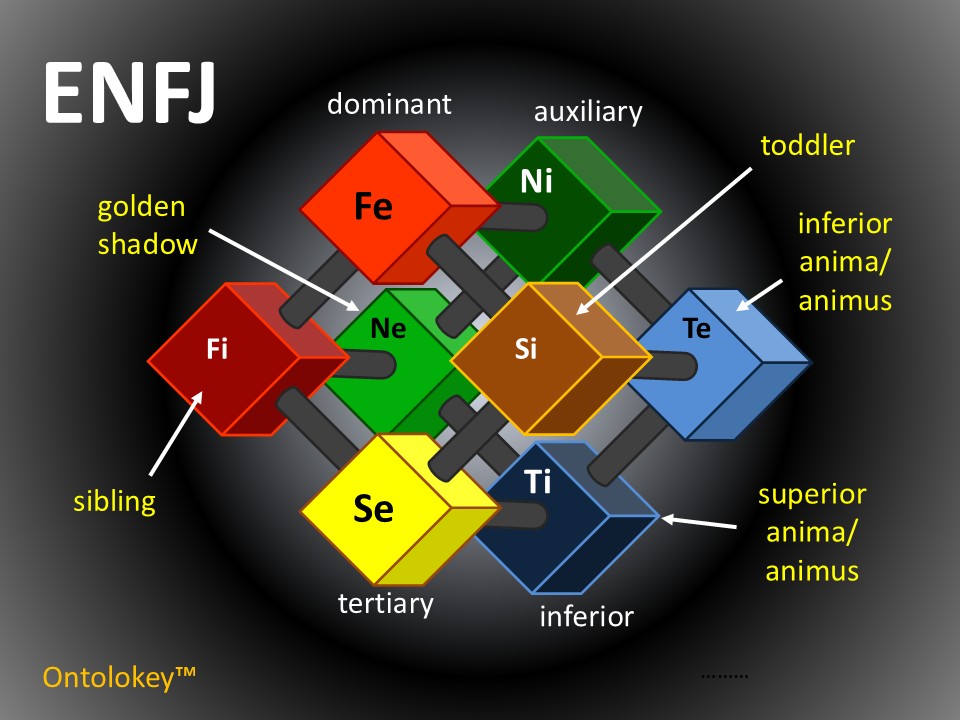
The Seduction of the Social Mirror
Among all psychologically recognizable character structures, few possess a more fascinating paradox than the ENFJ. At first glance, this personality often appears exceptionally alive. There is warmth, emotional responsiveness, interpersonal intelligence, charisma, and an uncanny ability to understand the emotional atmosphere of a room. Such individuals frequently become the emotional centers of families, communities, organizations, friendships, and social movements. They seem gifted in reading human needs, articulating collective aspirations, and generating emotional momentum wherever they go. People are naturally drawn toward them because they often radiate a sense of purpose, conviction, and human connection that feels increasingly rare in a fragmented world. Yet beneath this remarkable social competence lies a psychological tension that can become one of the deepest sources of suffering within the personality. The very gift that allows the ENFJ to connect so effectively with others may also become the mechanism through which the self gradually disappears. What initially appears as empathy can slowly transform into dependency. What begins as attunement can evolve into self-alienation. What starts as emotional intelligence can ultimately become a sophisticated adaptation to external expectations that leaves the authentic personality buried beneath layers of social performance.
The central psychological drama of the ENFJ does not begin with power, manipulation, control, or emotional intensity. It begins much earlier, at the level of identity formation itself. The developing ENFJ often learns that relationships are not merely important; they become the primary arena through which reality is experienced and interpreted. Other people are not simply companions on life’s journey. They become mirrors through which the individual discovers who they are. The opinions, reactions, approvals, disappointments, and emotional responses of others acquire enormous psychological significance. The self gradually becomes organized around interpersonal feedback. This process is subtle because it frequently produces socially desirable outcomes. The young ENFJ learns how to inspire, encourage, harmonize, motivate, comfort, and emotionally coordinate others. Teachers appreciate them. Friends trust them. Partners feel understood by them. Communities often reward them. Consequently, the personality receives continuous reinforcement for its capacity to adapt itself to the emotional demands of the social environment. What remains largely unnoticed is that adaptation and authenticity are not the same thing. The individual may become increasingly skilled at expressing what others need while becoming increasingly disconnected from what emerges spontaneously from within.
The deepest problem appears when the personality unconsciously begins to substitute social reflection for self-knowledge. At that moment, the individual ceases asking, “What do I truly feel?” and begins asking, “How am I being perceived?” This shift is subtle enough to remain invisible for years. In fact, it is often celebrated by society because it produces highly functional individuals. Such people become excellent leaders, caregivers, teachers, activists, mentors, therapists, community builders, and public figures. Yet beneath the surface, a dangerous psychological equation is taking shape. Personal worth becomes tied to emotional impact. Identity becomes tied to social response. Meaning becomes tied to recognition. The individual gradually loses contact with the internal source of value and begins deriving value from external affirmation. This creates a personality that may appear confident while secretly remaining dependent upon psychological mirrors. The stronger the need for affirmation becomes, the more difficult it becomes to tolerate solitude, disagreement, rejection, criticism, or emotional indifference from others. The self increasingly exists outside itself.
The tragedy of this process is that it often masquerades as love. The ENFJ genuinely cares about people. This must be emphasized because any serious psychological analysis risks becoming distorted if it reduces everything to pathology. The desire to help, support, uplift, and emotionally nurture others is usually authentic. Yet authenticity and unconscious compensation can coexist within the same behavior. An individual may genuinely love others while simultaneously depending upon that love to stabilize an uncertain identity. The external behavior looks identical in both cases. The distinction lies beneath the surface. One form of caring emerges from inner abundance. The other emerges from psychological necessity. When helping others becomes necessary for maintaining self-worth, the individual enters dangerous territory. Relationships cease being encounters between two autonomous individuals and instead become mechanisms for regulating self-esteem. The person may continue appearing generous while unconsciously extracting validation from every act of generosity. They may continue appearing compassionate while secretly needing others to remain dependent upon them. They may continue appearing altruistic while quietly fearing the psychological emptiness that emerges when nobody needs them.
This is where the shadow first begins to form. The shadow is not evil. It is not moral corruption. It is not villainy. The shadow consists of everything the conscious personality cannot fully acknowledge about itself. Whenever a person identifies too strongly with a particular image, everything incompatible with that image is pushed into the unconscious. The ENFJ frequently develops an identity organized around kindness, emotional awareness, social responsibility, inspiration, and moral leadership. These qualities may be real, but the psyche remains larger than any identity. Consequently, every trait excluded from the conscious self-image accumulates below the surface. Anger accumulates. Selfishness accumulates. Resentment accumulates. Envy accumulates. The desire for power accumulates. The wish to dominate accumulates. The longing to withdraw from humanity accumulates. The urge to stop caring accumulates. None of these tendencies disappear merely because they are inconsistent with the preferred identity. They simply descend into psychological darkness where they continue developing outside conscious awareness.
Because the ENFJ often possesses exceptional emotional expressiveness, many people mistakenly assume that such individuals are highly self-aware. The opposite can sometimes be true. Emotional expression and self-knowledge are not identical capacities. A person may express emotions continuously while remaining disconnected from their deeper motives. Indeed, constant emotional expression can sometimes function as a defense against self-examination. If one remains perpetually engaged with other people’s feelings, crises, dreams, conflicts, and needs, one never has to confront the unanswered questions residing within oneself. The result is a peculiar form of psychological displacement. The individual becomes an expert on everyone except themselves. They can explain the emotional dynamics of entire groups while remaining blind to the subterranean forces shaping their own behavior. Their insight moves outward with extraordinary precision but rarely turns inward with equal intensity.
The social world often rewards this imbalance. Modern culture celebrates visibility, influence, emotional impact, and social engagement. Consequently, the ENFJ may become trapped inside a feedback loop that appears successful from the outside while generating increasing fragmentation internally. The more approval they receive, the more they become invested in maintaining the image that produced that approval. The more they become invested in the image, the more difficult it becomes to acknowledge anything that contradicts it. The more contradiction is denied, the larger the shadow becomes. Eventually a split develops between the presented self and the hidden self. The presented self remains optimistic, encouraging, compassionate, emotionally available, and socially engaged. The hidden self becomes exhausted, resentful, lonely, angry, controlling, and psychologically starved. The tragedy is not that one side is real and the other false. Both sides are real. The tragedy lies in the fact that they no longer know each other.
As this division deepens, the ENFJ may begin experiencing an increasingly strange relationship with authenticity. They often become obsessed with authenticity in others while quietly losing contact with it in themselves. They can immediately recognize dishonesty, emotional manipulation, or insincerity in those around them, yet remain blind to the subtle performances operating within their own personality. This blindness is rarely intentional. It arises because the social persona has become psychologically necessary. If the individual has spent decades constructing an identity around being admired, trusted, needed, respected, or loved, questioning that identity can feel like psychological annihilation. The unconscious conclusion becomes terrifyingly simple: if I am not this person, then who am I? At that moment, the social mask ceases being a mask. It becomes experienced as the self itself.
The deepest shadow of the ENFJ therefore does not begin with manipulation, narcissism, emotional drama, or control, although all of these can emerge later as secondary manifestations. The deepest shadow begins with a more fundamental danger: the gradual replacement of the authentic self by the reflected self. The individual becomes increasingly dependent upon emotional mirrors while losing contact with the source of identity that exists prior to social approval. The tragedy unfolds slowly because the process is rewarded rather than punished. Society applauds it. Relationships reinforce it. Communities celebrate it. The individual may spend decades believing they are becoming more themselves while unconsciously moving further away from themselves. By the time the crisis arrives, it often feels less like a psychological problem and more like an existential collapse. The person suddenly discovers that the life they have built was organized around being seen rather than being known, around being valued rather than valuing themselves, around performing meaning rather than inhabiting it.
It is precisely at this point that the real confrontation with the shadow begins. The ENFJ must eventually face the terrifying possibility that much of what appeared to be love contained dependency, that much of what appeared to be confidence contained insecurity, that much of what appeared to be selflessness contained hidden needs, and that much of what appeared to be identity consisted of reflections gathered from countless social mirrors. This confrontation is profoundly painful because it threatens the entire structure upon which the personality has been built. Yet it is also the beginning of psychological liberation. For only when the mirror loses its authority can the individual finally encounter the face that existed before the mirror was ever needed.
The False Self and the Addiction to Being Needed
If the first movement of the ENFJ’s shadow begins with the seduction of the social mirror, the second movement begins when the personality discovers a powerful psychological truth: being needed creates security. This discovery rarely occurs consciously. It emerges gradually through countless interpersonal experiences in which appreciation, affection, belonging, and significance appear to increase whenever the individual becomes emotionally indispensable to others. The developing personality learns that emotional value can be created through service, guidance, encouragement, rescue, inspiration, and support. Over time, these experiences begin to form an unconscious equation. Existence itself becomes associated with usefulness. The individual does not merely enjoy helping people. Helping becomes the primary mechanism through which identity is stabilized. What initially appears as compassion slowly evolves into a subtle dependency upon being emotionally relevant. The individual feels most alive when someone needs them, most secure when someone depends upon them, and most valuable when they are playing a meaningful role in another person’s life. Because society often celebrates such behavior as altruistic, the underlying psychological dependency can remain hidden for decades.
The danger begins when the capacity to help becomes inseparable from the need to help. Healthy care emerges from freedom. One gives because one chooses to give. One supports because one genuinely wishes to support. Yet psychological necessity transforms the structure entirely. When the personality requires opportunities to help in order to maintain self-worth, care becomes burdened with unconscious expectations. The individual may still believe they are acting selflessly, but hidden motives begin to accumulate beneath the surface. They unconsciously seek appreciation. They seek confirmation of their importance. They seek evidence that they matter. They seek reassurance that their existence has meaning. None of these needs are inherently pathological. Every human being longs to matter. The problem arises when these needs become almost exclusively tied to interpersonal usefulness. The person gradually loses the ability to experience intrinsic worth. Instead of believing “I am valuable,” they begin believing “I am valuable because I am needed.” The distinction may appear subtle, but psychologically it creates entirely different lives.
This dynamic often produces one of the most misunderstood aspects of the ENFJ psyche. Outwardly, such individuals frequently appear extraordinarily confident. They can speak with conviction, lead groups, inspire movements, motivate teams, and influence emotional atmospheres with remarkable effectiveness. Yet beneath this social confidence there may exist a surprisingly fragile relationship with self-worth. The confidence is often conditional rather than fundamental. It remains stable as long as the individual occupies a meaningful social role. The admired leader feels confident. The trusted advisor feels confident. The indispensable partner feels confident. The beloved mentor feels confident. Yet remove the audience, remove the role, remove the emotional dependence of others, and something unsettling may emerge. A profound uncertainty begins to surface. The individual suddenly confronts the possibility that they do not know who they are outside the relationships they cultivate. What initially appeared to be confidence reveals itself as role-based identity. The self has become fused with function.
This fusion gives rise to what depth psychology has often described as the false self. The false self is not simple dishonesty. It is not deliberate deception. Rather, it is a psychological construction designed to secure love, approval, safety, and belonging. Every human being develops some version of it. Yet within the ENFJ, the false self often acquires unusual sophistication because it is reinforced through genuine social success. The personality becomes exceptionally skilled at understanding what others need emotionally. It learns how to provide encouragement, affirmation, guidance, inspiration, emotional containment, and hope. These abilities are real. They are not fabricated. Yet over time, the individual may become increasingly identified with the role itself. Instead of asking, “What am I experiencing?” they begin asking, “What does this situation require me to be?” The distinction is crucial. One question emerges from authenticity. The other emerges from adaptation. A life built entirely around adaptation eventually produces psychological exhaustion because no role, no matter how admirable, can permanently substitute for a genuine identity.
The false self becomes particularly dangerous because it frequently appears virtuous. Unlike more obvious forms of psychological compensation that reveal themselves through aggression or grandiosity, the ENFJ’s false self often disguises itself as goodness. The individual becomes the helper, the healer, the teacher, the rescuer, the advocate, the visionary, the moral voice, the emotional caretaker. These roles carry tremendous social approval. Consequently, questioning them can feel almost sacrilegious. Yet beneath even the most noble role, hidden motivations may exist. The rescuer may unconsciously need dependency. The mentor may unconsciously need admiration. The caregiver may unconsciously need gratitude. The visionary may unconsciously need followers. The advocate may unconsciously need moral superiority. Again, none of these dynamics necessarily invalidate the positive contributions being made. The shadow does not negate virtue. Rather, it reveals the hidden psychological investments attached to virtue. The more the individual denies these investments, the more power they acquire from the unconscious.
This is why resentment often becomes one of the first major signals that the false self has taken control. Resentment is psychologically fascinating because it frequently exposes unconscious bargains. Whenever a person repeatedly gives more than they genuinely wish to give, hidden expectations begin accumulating beneath the surface. The conscious personality insists that it is acting freely, while the unconscious quietly keeps score. The ENFJ may spend years supporting others, solving problems, providing emotional labor, offering guidance, maintaining relationships, and sacrificing personal needs. On the surface, everything appears generous. Yet beneath the surface a silent accounting system develops. Every sacrifice becomes registered. Every overlooked need becomes stored. Every disappointment accumulates. Eventually the individual begins feeling strangely unappreciated. They feel unseen. They feel taken for granted. They feel exploited. What makes this particularly confusing is that the people around them often never requested such extensive sacrifice in the first place. The ENFJ unconsciously volunteered for responsibilities that exceeded healthy boundaries and later experienced resentment when others failed to recognize the magnitude of those sacrifices.
At this stage, many individuals encounter an uncomfortable realization. Their generosity was not entirely unconditional. Hidden beneath the giving existed an unspoken hope. The hope was not necessarily material. It was often emotional. The individual hoped to receive loyalty, admiration, affection, gratitude, commitment, or recognition. Because these expectations remained unconscious, they were never openly negotiated. As a result, disappointment became inevitable. The person feels betrayed by obligations that nobody explicitly agreed to fulfill. This dynamic can generate enormous bitterness because it creates the illusion that the world is unfairly withholding appreciation. In reality, the deeper issue is that the personality has built its identity upon a form of emotional investment that was never consciously acknowledged.
One of the darkest manifestations of this pattern emerges in intimate relationships. The ENFJ frequently possesses a profound capacity for emotional devotion. When healthy, this devotion can create extraordinary intimacy. Yet when shadow dynamics dominate, devotion can become entangled with psychological possession. The individual begins deriving identity from their importance within another person’s life. They do not simply love the other person. They need to occupy a central role within that person’s emotional universe. As a result, independence may unconsciously feel threatening. Personal growth in the partner may feel destabilizing. Emotional distance may feel catastrophic. The individual often interprets these reactions as evidence of love when they may actually reveal dependency. Love desires the flourishing of the other. Dependency desires the preservation of psychological security. Because the two can appear identical externally, years may pass before the distinction becomes visible.
The shadow becomes even more complex when rejection enters the picture. Few experiences expose the ENFJ’s unconscious structure more dramatically than the realization that someone they deeply invested in does not need them. Such moments often generate disproportionate emotional pain because they strike at the foundation of identity itself. The individual may consciously believe they are grieving a relationship, while unconsciously they are grieving the collapse of a role. The loss is not merely relational. It is existential. If being needed has become synonymous with being valuable, then no longer being needed feels like a form of psychological death. This explains why some ENFJs experience rejection not simply as sadness but as annihilation. The wound reaches far deeper than the surface event. It touches the hidden conviction that worth depends upon emotional indispensability.
Over time, the personality may become trapped in a repetitive cycle. It seeks relationships in which it can provide value. It becomes indispensable. It sacrifices itself. It develops hidden expectations. Resentment accumulates. Disappointment follows. The relationship deteriorates. The individual feels misunderstood and unappreciated. Then the cycle begins again with a new person, a new group, a new mission, or a new cause. Because the underlying psychological mechanism remains unconscious, each repetition appears unique. Yet beneath the changing circumstances, the same structure continues operating. The self seeks validation through usefulness, discovers temporary fulfillment, and eventually encounters the inevitable limitations of that strategy.
The deeper tragedy is that this cycle prevents genuine intimacy. Authentic intimacy requires the courage to be known apart from one’s usefulness. It requires revealing confusion, weakness, selfishness, uncertainty, anger, neediness, and imperfection. Yet the false self fears precisely these disclosures because it believes love depends upon performance. Consequently, the individual may spend years surrounded by people who admire them without feeling truly known by anyone. They are loved for what they provide rather than for what they are. Ironically, this often happens because they themselves have unconsciously encouraged the arrangement. By presenting a carefully curated identity built around competence, strength, guidance, and emotional availability, they make it difficult for others to encounter the vulnerable human being beneath the role.
The shadow therefore confronts the ENFJ with a devastating but liberating question: Who are you when nobody needs you? This question cuts deeper than questions about career, relationships, success, or reputation. It reaches the core of identity itself. If the answer produces panic, emptiness, or confusion, the individual has likely discovered the hidden foundation upon which much of their life has been built. The realization can feel brutal because it dismantles years of psychological adaptation. Yet it also opens the door to genuine freedom. A person who no longer depends upon being needed can finally choose to care rather than compulsively caring. They can choose to help rather than compulsively helping. They can choose connection rather than compulsively seeking validation through connection.
The path toward integration begins when the ENFJ learns a truth that initially feels almost impossible to accept: worth exists before usefulness. Human value does not emerge from service, sacrifice, inspiration, leadership, or emotional labor. These may be beautiful expressions of the self, but they cannot become substitutes for the self. The mature personality eventually recognizes that being loved for one’s function is not the same as being loved for one’s existence. Only when this distinction is fully understood does the false self begin to loosen its grip. Only then can the individual stop performing importance and begin inhabiting identity. Only then can relationships become encounters between whole human beings rather than transactions organized around psychological need.
And yet, even after this realization, an even darker layer remains hidden beneath the surface. For underneath the addiction to being needed lies another force entirely—a force that has little to do with love and much to do with power. The ENFJ rarely sees it at first because it is concealed beneath idealism, compassion, and moral conviction. Yet it is there, waiting in the depths of the shadow, shaping motivations from behind the scenes. To encounter it requires entering territory that many never willingly explore.
The Hidden Will to Power Behind Compassion
Every psychological structure contains within it a paradox. The qualities that appear most virtuous on the surface often conceal the deepest shadow beneath. This is not because virtue is false, nor because every admirable characteristic secretly masks corruption. Rather, the psyche naturally compensates for one-sided identifications. Whenever a person strongly identifies with a particular image of themselves, unconscious forces begin accumulating in the opposite direction. The individual who identifies with rationality discovers irrational impulses lurking beneath consciousness. The individual who identifies with strength encounters hidden vulnerability. The individual who identifies with purity discovers forbidden desires. In the same way, the personality that identifies strongly with compassion eventually confronts something deeply uncomfortable: the existence of power motives hidden within acts of care. For the ENFJ, this realization is often among the most psychologically shocking experiences of adult development because it threatens the very foundation of the identity they have spent years constructing.
The reason this confrontation feels so disturbing is that the ENFJ typically experiences themselves as someone who genuinely wants the best for people. In most cases, this perception is accurate. Their concern for others is usually authentic. Their desire to inspire growth, facilitate healing, create harmony, and help people reach their potential is not merely an act. Yet authenticity alone does not eliminate unconscious motivations. Human beings rarely act from a single psychological source. Most behavior emerges from multiple layers operating simultaneously. A person may genuinely love while also seeking validation. They may genuinely teach while also seeking influence. They may genuinely help while also seeking significance. The problem is not that these secondary motivations exist. The problem arises when they remain unconscious. Hidden motives tend to acquire disproportionate power precisely because they are denied. What remains unseen begins governing behavior from the shadows.
Among the least discussed aspects of the ENFJ personality is its profound relationship with influence. Much has been written about empathy, emotional intelligence, and interpersonal awareness, yet these descriptions often overlook a crucial reality. The ENFJ does not merely perceive emotional dynamics. They instinctively understand how emotional dynamics can be shaped. They do not simply observe the atmosphere within a group. They frequently possess the ability to alter that atmosphere. They can elevate morale, redirect emotional energy, create enthusiasm, reduce tension, generate loyalty, inspire commitment, and influence collective perception. This capacity is neither inherently good nor inherently bad. It is simply power. Yet because it manifests through emotions rather than through overt authority, it often remains socially invisible. People readily recognize political power, financial power, physical power, and institutional power. Emotional power is more difficult to identify because it disguises itself as connection.
The immature ENFJ frequently experiences this influence as a natural extension of care. They genuinely want people to grow, succeed, heal, and flourish. Consequently, they feel justified in guiding others toward what they perceive as beneficial outcomes. At first glance, there appears to be nothing problematic about this tendency. Every teacher guides. Every parent guides. Every mentor guides. The difficulty emerges when guidance becomes psychologically entangled with identity. The individual gradually begins deriving self-worth from their ability to shape the lives of others. Influence ceases being a tool and becomes a source of validation. The person unconsciously needs evidence that their presence matters. They need proof that they are making an impact. They need confirmation that they can alter reality through interpersonal engagement. What initially appeared as generosity slowly becomes intertwined with the need for efficacy. The individual no longer merely helps because help is needed. They help because influence itself has become psychologically rewarding.
At this point, a subtle shift occurs. The ENFJ may begin experiencing other people less as autonomous individuals and more as psychological projects. This transformation rarely happens consciously. In fact, the individual often believes they are acting entirely out of concern. Yet beneath the surface, an unconscious hierarchy begins to emerge. The helper occupies the position of guidance. The other occupies the position of development. The helper becomes the one who sees. The other becomes the one who must be seen. Such arrangements can remain stable for years because both parties derive benefits from them. One receives support and direction. The other receives significance and purpose. The danger is that genuine equality gradually disappears. Relationships become organized around asymmetrical emotional roles rather than mutual recognition. The ENFJ may sincerely believe they are empowering others while unconsciously maintaining structures that preserve their own psychological importance.
This dynamic becomes especially visible when others refuse guidance. Nothing reveals unconscious power motives more clearly than resistance. As long as people appreciate advice, seek support, and welcome influence, the ENFJ experiences themselves as caring and constructive. Yet what happens when someone chooses a different path? What happens when a partner rejects their insight? What happens when a friend refuses their recommendations? What happens when a group ceases responding to their leadership? These situations often trigger reactions that surprise even the individual experiencing them. Irritation emerges. Frustration emerges. Disappointment emerges. Occasionally, profound resentment emerges. The conscious mind interprets these emotions as concern for the other person’s wellbeing. Yet beneath the surface, another possibility exists. The rejected guidance may represent not merely a failed attempt to help but a wound to the individual’s sense of influence. The person is forced to confront a painful truth: perhaps they were more attached to being effective than they realized.
The shadow deepens further because the ENFJ frequently possesses strong moral convictions. Their emotional sensitivity often leads them toward questions of justice, ethics, human development, and collective wellbeing. Such concerns can produce extraordinary contributions to society. Many become remarkable advocates, reformers, educators, leaders, and visionaries. Yet morality itself can become a vehicle for unconscious power. Few psychological positions provide greater authority than moral certainty. When an individual becomes convinced that they represent not merely a personal opinion but a higher ethical truth, disagreement begins to feel like something more than disagreement. It begins to feel like ignorance, resistance, immaturity, or moral failure. This is where the shadow acquires its most seductive form. The individual no longer experiences themselves as exercising power. They experience themselves as defending what is right. Consequently, power becomes almost impossible to detect because it is cloaked in idealism.
History repeatedly demonstrates that some of the most controlling individuals have sincerely believed they were helping humanity. They did not perceive themselves as tyrants. They perceived themselves as saviors. This pattern appears on every scale of human life, from political revolutions to intimate relationships. The psychological mechanism remains remarkably consistent. The stronger a person’s conviction that they know what others need, the greater the temptation to override autonomy in the name of care. Within the ENFJ shadow, this temptation can manifest through emotional pressure, subtle guilt, strategic persuasion, moral framing, or relational leverage. Rarely does it appear as direct domination. Instead, it operates through the emotional field itself. The individual influences perception, shapes narratives, and redirects emotional energies while maintaining the subjective experience that they are simply acting out of compassion.
One of the most uncomfortable truths the ENFJ eventually encounters is that emotional influence can become addictive. Every form of power carries this risk. The politician becomes addicted to authority. The entrepreneur becomes addicted to achievement. The intellectual becomes addicted to being right. The emotionally gifted individual may become addicted to influence. This addiction is rarely recognized because it lacks obvious external markers. Yet internally it creates a powerful reinforcement loop. The person experiences satisfaction whenever they successfully guide outcomes, shape relationships, inspire action, or alter emotional realities. These experiences produce a sense of significance that becomes increasingly difficult to relinquish. Over time, situations in which they lack influence begin generating discomfort. They feel invisible. Irrelevant. Unimportant. The absence of influence creates a subtle identity crisis because influence has become intertwined with self-definition.
This hidden attachment to power explains many of the interpersonal conflicts that emerge later in life. Mature relationships require increasing respect for autonomy. Children become adults. Students surpass teachers. Friends develop independent perspectives. Partners establish boundaries. Communities evolve beyond their founders. These developments are natural expressions of growth. Yet for the shadow-bound ENFJ, such changes can feel strangely painful. The individual may consciously celebrate the independence of others while unconsciously mourning the loss of influence. They may tell themselves they are happy for another person’s growth while secretly feeling abandoned. This emotional contradiction often generates confusion because it appears incompatible with their self-image. Yet the contradiction only reveals the coexistence of love and power within the same psychological structure.
The connection between power and identity becomes even clearer during periods of failure. When influence diminishes, many ENFJs experience profound psychological disorientation. The organization no longer listens. The relationship no longer depends upon them. The community moves in another direction. The audience disappears. Suddenly, the individual confronts a terrifying possibility. If their value has become tied to their ability to shape reality through other people, what remains when that ability disappears? This question strikes at the heart of the shadow because it exposes the hidden dependence beneath apparent strength. The person who seemed so socially powerful may discover that their sense of self was contingent upon maintaining emotional centrality within the lives of others.
The deeper purpose of shadow work is not to eliminate power but to transform one’s relationship with it. Power itself is neither virtuous nor corrupt. It is simply the capacity to influence reality. The psychologically mature ENFJ eventually learns to recognize their influence without becoming possessed by it. They learn to help without needing dependency. They learn to guide without needing obedience. They learn to inspire without needing followers. They learn to love without needing psychological centrality. This transformation requires immense courage because it demands relinquishing one of the personality’s most reliable sources of validation. The individual must gradually accept that people have the right to reject their guidance, misunderstand their intentions, ignore their insights, and pursue different paths. Only then does influence become truly ethical because it is no longer organized around unconscious need.
Yet surrendering the will to power does not immediately resolve the ENFJ’s shadow. In fact, another layer often emerges once the individual begins examining their hidden motives. Beneath the need for influence lies something even older and more painful: the fear that without admiration, without significance, without emotional relevance, they may ultimately be abandoned. The pursuit of influence often conceals a deeper wound. Power is not always sought because one wants control. Sometimes it is sought because one fears disappearance. Sometimes it is sought because being forgotten feels psychologically equivalent to ceasing to exist.
To understand this wound, one must descend further into the unconscious architecture of the ENFJ personality, into a realm where shame, longing, idealization, and abandonment converge. There, beneath compassion, beneath influence, and beneath the carefully maintained social identity, waits one of the deepest fears the personality can experience: the terror of becoming emotionally invisible.
The Terror of Emotional Irrelevance and the Fear of Being Forgotten
There comes a point in every serious psychological investigation when the visible symptoms must be abandoned and attention must turn toward the hidden wound that generates them. Until now, we have examined the ENFJ’s relationship with social validation, emotional usefulness, and interpersonal influence. Yet none of these phenomena constitute the deepest layer of the personality. They are expressions of something more fundamental. Human beings do not usually devote extraordinary amounts of energy to securing admiration, significance, emotional centrality, or relational indispensability unless some deeper anxiety compels them to do so. Beneath every persistent psychological strategy lies a fear. Beneath every fear lies a wound. And beneath every wound lies a particular experience of vulnerability that the personality has spent years attempting to escape. The ENFJ’s deepest vulnerability often revolves around a question so primitive and so emotionally charged that it frequently remains unconscious throughout much of life: If I am no longer emotionally significant to others, do I still exist in a meaningful way? The question may never appear in this exact form, yet it quietly shapes countless decisions, relationships, ambitions, and sacrifices.
This fear emerges because the ENFJ’s identity tends to develop in close relationship with the emotional field surrounding them. Whereas some personalities establish their sense of self primarily through internal convictions, intellectual frameworks, personal competence, or individual autonomy, the ENFJ often discovers identity through relational participation. They come alive in connection. They discover themselves through emotional exchange. Their experience of meaning is frequently intertwined with the experience of interpersonal resonance. This orientation possesses enormous strengths. It allows for extraordinary empathy, social awareness, emotional intelligence, and human understanding. Yet every strength contains a hidden vulnerability. When identity becomes heavily dependent upon relational significance, the loss of significance begins to feel like a threat to identity itself. The individual does not merely fear loneliness. They fear psychological disappearance. They fear becoming irrelevant within the emotional lives of others. They fear the possibility that their absence may ultimately make little difference.
This fear is rarely acknowledged because it appears incompatible with the image most ENFJs hold of themselves. They generally prefer to see themselves as strong, caring, purposeful, and socially engaged individuals. The idea that so much of their emotional life might be organized around a fear of invisibility feels humiliating. Consequently, the fear often disguises itself behind more acceptable concerns. The individual becomes preoccupied with helping. They become devoted to relationships. They become committed to causes. They become invested in leadership. They become emotionally available to everyone around them. On the surface, these behaviors appear admirable. Often they genuinely are. Yet beneath them there may exist an unconscious attempt to ensure psychological continuity. If one remains important enough, helpful enough, admired enough, loved enough, or necessary enough, then perhaps one can avoid confronting the terrifying possibility of emotional insignificance.
What makes this fear particularly painful is that it often remains hidden even from the individual experiencing it. The psyche possesses a remarkable ability to transform existential anxieties into practical concerns. Instead of consciously worrying about irrelevance, the ENFJ may become distressed when messages are not returned, when invitations cease arriving, when appreciation decreases, when a friend becomes distant, when a partner grows more independent, or when a social role loses importance. The surface explanation appears obvious. They feel hurt because someone withdrew. Yet the emotional intensity of the reaction frequently exceeds the objective circumstances. What has actually been activated is a deeper fear. The withdrawal is interpreted symbolically. It becomes evidence that significance is diminishing. The individual unconsciously experiences the event not merely as separation but as erasure. The emotional pain therefore carries a disproportionate weight because it touches an existential concern rather than a purely relational one.
This dynamic becomes especially visible during major life transitions. Many ENFJs thrive during periods when they occupy central positions within social systems. They become community organizers, leaders, teachers, mentors, parents, activists, advisors, or influential members of various groups. These roles provide opportunities to contribute meaningfully while simultaneously reinforcing a sense of relevance. Difficulties often emerge when circumstances change. Retirement arrives. Children leave home. Relationships end. Careers shift. Communities evolve. Social networks fragment. The individual suddenly discovers that roles which once provided structure and significance no longer exist. At such moments, many experience a profound crisis that cannot be explained solely by practical loss. What disappears is not merely activity. What disappears is a familiar source of identity. The individual is forced to confront a question that had previously remained dormant: Who am I when my importance to others is no longer guaranteed?
The shadow frequently responds to this crisis through intensification. Rather than confronting the underlying fear, the personality often doubles its efforts to remain relevant. Some become increasingly involved in other people’s lives. Others develop stronger emotional attachments. Some seek larger audiences. Others become more invested in social recognition. Still others begin subtly creating situations in which their presence remains indispensable. These strategies may provide temporary relief, but they ultimately deepen the problem. Every attempt to secure significance externally reinforces the unconscious belief that significance must be externally secured. The individual becomes trapped within a psychological cycle that can never truly satisfy itself. No amount of appreciation permanently eliminates the fear of irrelevance because the fear itself originates from an unstable foundation. The self has become dependent upon conditions that inevitably fluctuate.
One of the more tragic manifestations of this dynamic appears in the phenomenon of emotional overextension. Many ENFJs become deeply involved in the lives of others not merely because they care but because emotional involvement provides reassurance. The suffering of others creates opportunities for meaning. The struggles of others create opportunities for contribution. The needs of others create opportunities for significance. Consequently, the individual may unconsciously gravitate toward situations that require their intervention. They become the counselor among friends, the mediator within families, the stabilizing force within organizations, the emotional anchor within relationships. While these roles can be genuinely valuable, they also carry hidden risks. The person gradually loses contact with life as a participant and increasingly experiences life as a caretaker of participants. Their own existence becomes organized around maintaining relevance within the emotional ecosystems surrounding them.
This tendency often creates an unusual relationship with solitude. Solitude itself is not necessarily difficult for every ENFJ. Many enjoy reflection, creativity, learning, and personal growth. The deeper challenge lies elsewhere. Solitude removes external confirmation. It removes immediate feedback. It removes opportunities to influence, help, support, encourage, and connect. In solitude, the individual encounters themselves without relational reinforcement. For psychologically mature individuals, this encounter becomes a source of freedom. For those whose identity remains externally anchored, it can become profoundly unsettling. The silence begins asking questions that social activity successfully concealed. Am I enough without my roles? Am I enough without my usefulness? Am I enough without my audience? Am I enough without being remembered today? These questions reveal the true nature of the struggle. The problem is not loneliness. The problem is the uncertainty surrounding intrinsic worth.
The fear of being forgotten represents perhaps the most existential expression of this dynamic. Human beings possess a deep desire to leave traces of themselves within the world. We want our lives to matter. We want our existence to have significance beyond immediate survival. Yet for the ENFJ, this desire can acquire unusual emotional intensity because significance is often experienced relationally rather than abstractly. Being remembered becomes proof that one mattered. Being valued becomes proof that one existed meaningfully. Being missed becomes proof that one’s presence had substance. Consequently, the prospect of being forgotten may evoke a disproportionate level of anxiety. It symbolizes more than mortality. It symbolizes emotional nonexistence. The individual fears not merely dying but disappearing from the emotional memory of others.
This fear often fuels remarkable achievements. Many ENFJs dedicate themselves passionately to causes, communities, relationships, educational efforts, artistic endeavors, humanitarian work, and leadership responsibilities. Their contributions can be extraordinary. Entire organizations, families, and social movements may benefit from their dedication. Yet shadow work requires distinguishing between contribution and compensation. One may create meaningful change while simultaneously attempting to escape existential insecurity. The external achievement remains valuable. The internal motive remains conflicted. The individual must eventually ask whether they are building something because they genuinely love the work or because they cannot tolerate the possibility of being forgotten. The answer is rarely simple. Most human motivations contain both elements. The task is not to eliminate ambition but to illuminate the fears that secretly drive it.
The paradox is that the more desperately a person seeks significance, the more elusive significance becomes. This occurs because genuine meaning cannot be obtained through psychological coercion. The attempt to guarantee one’s importance creates chronic anxiety. Every relationship becomes a referendum on worth. Every social interaction becomes a measurement of relevance. Every silence becomes suspicious. Every rejection becomes catastrophic. The individual lives in a state of perpetual vigilance, constantly monitoring the emotional environment for evidence that they still matter. Such a life eventually becomes exhausting because it transforms human connection into an endless quest for reassurance. No relationship can bear that burden indefinitely.
Psychological maturity begins when the ENFJ gradually separates existence from significance. This distinction may initially sound strange, yet it represents a profound transformation. The immature personality believes it must earn significance in order to justify existence. The mature personality recognizes that existence precedes significance. Human worth is not contingent upon visibility. It is not contingent upon admiration. It is not contingent upon influence. It is not contingent upon remembrance. These things may enrich life, but they cannot serve as foundations for identity. The individual eventually learns that being forgotten by some people does not erase one’s reality. Losing importance within a particular social system does not diminish intrinsic value. The disappearance of a role does not constitute the disappearance of the self.
Yet this realization is extraordinarily difficult because it requires relinquishing one of the deepest fantasies within the shadow. The fantasy is that enough love, enough admiration, enough contribution, enough achievement, enough emotional impact, or enough importance will finally eliminate insecurity. The mature ENFJ eventually discovers that no external accomplishment can perform this function. The wound does not heal through greater visibility. It heals through a transformed relationship with vulnerability itself. One learns to exist without constant proof of significance. One learns to love without demanding permanence. One learns to contribute without requiring immortality. One learns to care without making identity dependent upon being remembered.
Only then does a remarkable shift occur. The individual begins acting from freedom rather than compensation. They help because they genuinely wish to help. They lead because leadership is needed. They love because love enriches life. They create because creation is meaningful. Their actions remain outwardly similar, yet their psychological foundation has changed entirely. They are no longer attempting to secure existence through significance. They have discovered something far deeper: existence never required justification in the first place.
And yet, beneath the fear of irrelevance lies another shadow still waiting to be confronted. For much of the ENFJ’s social identity depends upon maintaining an image of goodness, compassion, and emotional maturity. But what happens when rage enters the picture? What happens when years of sacrifice, repression, disappointment, and unspoken expectations begin demanding recognition? What happens when the individual can no longer sustain the image of the endlessly understanding human being?
There, in the darkness beneath kindness itself, waits one of the most explosive dimensions of the ENFJ shadow: the accumulated anger that develops whenever a person spends too many years becoming what everyone else needs them to be.
The Repressed Rage Beneath the Mask of Compassion
One of the most persistent illusions surrounding the ENFJ personality is the belief that emotional warmth and emotional harmony imply an absence of aggression. Because these individuals often appear encouraging, diplomatic, compassionate, and socially oriented, both they and those around them frequently assume that anger occupies only a minor role within their psychological lives. This assumption is profoundly mistaken. In reality, some of the most intense and potentially destructive forms of anger are found precisely within personalities that invest enormous energy into maintaining an image of kindness. The reason is simple. Anger that is acknowledged can be integrated. Anger that is denied does not disappear. It accumulates. It sinks beneath consciousness. It waits. Over years or even decades, it becomes compressed beneath layers of duty, responsibility, emotional self-control, and interpersonal adaptation. What eventually emerges is not ordinary irritation but something far more powerful: a reservoir of rage generated by the repeated betrayal of one’s own authentic needs.
To understand this phenomenon, one must first recognize how early the process often begins. The ENFJ typically develops exceptional sensitivity to the emotional states of others. They learn to anticipate reactions, monitor interpersonal atmospheres, and adapt their behavior accordingly. This adaptation frequently brings rewards. Relationships become smoother. Conflicts become easier to navigate. Approval becomes more accessible. Yet there is an unavoidable psychological cost. Every adaptation requires a decision regarding which emotions are acceptable and which are not. The child quickly discovers that warmth creates connection, while anger often threatens it. Compassion generates approval, while selfishness invites criticism. Understanding others strengthens relationships, while demanding understanding for oneself can produce tension. As a result, certain emotional experiences are welcomed into consciousness while others are gradually excluded. Anger becomes one of the primary casualties of this process.
The exclusion is rarely absolute. The individual does not become incapable of anger. Instead, anger undergoes transformation. Rather than being experienced directly, it becomes translated into more socially acceptable emotions. Frustration becomes concern. Resentment becomes disappointment. Hostility becomes moral disapproval. Aggression becomes excessive helpfulness. The person continues experiencing the underlying emotional energy, but its true nature becomes obscured. Consequently, many ENFJs develop a surprisingly poor relationship with their own anger. They can identify anger in others with remarkable accuracy, yet struggle to recognize it within themselves. They describe themselves as hurt, exhausted, disappointed, misunderstood, or unappreciated while remaining largely unaware that anger is operating beneath these experiences. The psyche protects the preferred self-image by disguising emotions that appear incompatible with compassion.
The shadow, however, does not accept such exclusions indefinitely. Every act of self-suppression creates psychological pressure. Every time an individual sacrifices a genuine need in order to preserve harmony, something remains unresolved. Every time they remain silent when honesty is required, something accumulates. Every time they prioritize another person’s comfort over their own reality, a small fragment of resentment is stored away. Most of these experiences appear insignificant in isolation. Yet psychological life is cumulative. The unconscious remembers what consciousness prefers to forget. Over years, thousands of small acts of self-abandonment begin forming an emotional debt. The individual continues presenting an image of patience, understanding, and generosity while internally becoming increasingly burdened by emotions they have never fully acknowledged.
This process is particularly dangerous because it often produces an illusion of virtue. The ENFJ may genuinely believe that continual self-sacrifice represents moral superiority. They become proud of their patience. Proud of their tolerance. Proud of their willingness to carry burdens for others. Proud of their ability to absorb emotional difficulties without complaint. Society frequently reinforces this self-concept. People praise their generosity. They admire their emotional strength. They appreciate their availability. Yet beneath these compliments, a troubling dynamic develops. The individual’s identity becomes invested in being the one who endures. They begin deriving self-worth from suffering nobly. Consequently, they become increasingly disconnected from their legitimate anger because acknowledging anger would require acknowledging limits. It would require admitting that some sacrifices should never have been made.
The shadow eventually retaliates against this arrangement. Repressed anger cannot remain dormant forever because anger serves an essential psychological function. Anger protects boundaries. Anger signals violations. Anger reveals where the self has been compromised. Anger announces that something important has been neglected. When anger is consistently ignored, the psyche seeks alternative methods of expression. The result is often passive aggression. The individual begins communicating hostility indirectly because direct hostility remains inconsistent with the preferred identity. They become sarcastic. They withdraw emotionally. They create guilt. They offer help while secretly resenting the recipient. They become subtly controlling. They engage in moral criticism disguised as concern. They maintain plausible deniability while expressing aggression through increasingly indirect means. Because these behaviors operate largely outside conscious awareness, the individual often experiences themselves as innocent while others experience them as surprisingly hostile.
This phenomenon helps explain one of the most misunderstood aspects of the ENFJ shadow: the capacity for emotional manipulation. Popular descriptions frequently portray manipulation as a conscious strategy employed by malicious individuals. Reality is usually more complicated. Most manipulation emerges from unmet needs that cannot be expressed directly. The ENFJ often struggles to state certain desires openly because doing so threatens the image of selflessness. They may want appreciation but feel ashamed of wanting it. They may want loyalty but fear appearing possessive. They may want recognition but fear appearing narcissistic. Because these desires remain unacknowledged, they seek indirect routes toward fulfillment. The individual begins influencing emotional situations in subtle ways designed to produce desired outcomes without openly admitting those desires. What appears externally as manipulation often originates internally as emotional illiteracy regarding one’s own needs.
The most explosive manifestations occur when the accumulated resentment finally exceeds the personality’s capacity for containment. At such moments, observers are frequently shocked by the intensity of the reaction. The person who appeared endlessly patient suddenly becomes ruthless. The individual who seemed perpetually understanding becomes condemning. The one who always prioritized harmony becomes confrontational. Friends, partners, and colleagues often describe these episodes as if an entirely different personality has emerged. In reality, the eruption reveals emotions that have existed for years beneath the surface. The explosion feels disproportionate because it is not responding solely to present circumstances. It is expressing the weight of countless previous grievances that were never properly acknowledged. What appears to be a reaction to one event is often the culmination of a decade of emotional suppression.
This dynamic bears a striking resemblance to descriptions found in certain psychiatric and depth psychological analyses of emotionally expressive personality structures. Such personalities often develop a split between an approved identity and a rejected identity. The approved identity contains socially rewarded traits. The rejected identity contains impulses, desires, and emotions deemed unacceptable. Over time, the rejected material accumulates within the unconscious and acquires increasing emotional intensity. The result is a form of psychological volcanism. The personality appears stable on the surface while immense pressures gather below. Eventually, eruptions occur that seem inconsistent with the individual’s normal behavior precisely because they originate from parts of the psyche that have been systematically excluded from conscious life.
Perhaps the most painful aspect of this process is that the ENFJ often experiences enormous guilt after expressing anger. Because the self-image remains organized around kindness and emotional responsibility, any display of aggression feels like a personal failure. Instead of exploring the underlying causes, the individual frequently attempts to restore harmony as quickly as possible. They apologize prematurely. They rationalize the conflict. They return to caretaking. They reestablish the familiar role of emotional stabilizer. Unfortunately, this response prevents genuine integration. The anger is never understood. It is merely reburied. Consequently, the cycle begins again. New sacrifices accumulate. New resentments form. Another eruption eventually follows.
The deeper issue is not anger itself but the individual’s relationship with it. Mature anger possesses extraordinary psychological value. It reveals truth. It exposes self-deception. It identifies exploitation. It protects dignity. It preserves individuality. Without access to anger, a person becomes incapable of maintaining authentic boundaries. They gradually transform into whatever their environment requires. The ENFJ’s challenge is therefore not to eliminate anger but to reclaim it from the shadow. They must learn that anger and compassion are not opposites. In fact, authentic compassion often requires anger. One cannot genuinely care for others while consistently abandoning oneself. The person who never permits anger ultimately becomes incapable of sustaining real love because love without boundaries degenerates into self-erasure.
This realization marks a crucial stage in psychological maturation. The individual begins recognizing that many of their most painful experiences did not result from excessive selfishness but from insufficient selfishness. They discover that some conflicts were necessary. Some disappointments were inevitable. Some relationships depended upon their willingness to neglect themselves. Some forms of harmony were purchased at an unacceptable cost. Such insights are deeply unsettling because they challenge decades of conditioning. Yet they also create the possibility of freedom. The person no longer needs to choose between kindness and authenticity. They begin constructing a more integrated identity capable of containing both.
At this stage, the ENFJ starts encountering a disturbing but transformative truth. Much of the suffering they attributed to external circumstances was actually generated by an internal split. One part of the personality wanted approval, harmony, and emotional connection. Another part wanted freedom, truth, and self-determination. For years, the first part dominated consciousness while the second remained buried. The resulting imbalance produced chronic resentment because the neglected side never ceased demanding recognition. Anger was simply its language.
Yet even anger is not the deepest layer of the shadow. Beneath the resentment, beneath the rage, beneath the accumulated frustrations, there exists an even more unsettling reality. For many ENFJs, the greatest fear is not conflict. It is not rejection. It is not failure. The deepest fear is discovering that much of the personality they have spent their lives protecting may not be entirely authentic. Beneath the social roles, the emotional performances, the moral ideals, the carefully maintained image, and even the accumulated anger, waits a terrifying question:
What if I no longer know who I am?
That question leads directly into one of the darkest and most transformative dimensions of the ENFJ shadow—the crisis of identity itself.
Identity Diffusion, Self-Deception, and the Collapse of the Persona
There are few psychological experiences more destabilizing than the gradual realization that one’s identity may be built upon foundations that are not entirely real. Most people encounter moments of self-doubt throughout life. They question decisions, relationships, beliefs, and ambitions. Yet these ordinary forms of uncertainty differ fundamentally from what may eventually occur within the shadow development of the ENFJ. Here the crisis reaches beyond isolated choices and penetrates the structure of identity itself. The individual does not merely wonder whether they made mistakes. They begin wondering whether the person who made those choices was ever fully authentic in the first place. Such moments often arrive unexpectedly. A relationship ends. A career loses meaning. A social role disappears. A betrayal occurs. A period of solitude becomes unavoidable. Suddenly, the familiar sources of self-definition no longer function. The personality discovers that it has spent years, sometimes decades, organizing itself around external references. What follows is not ordinary confusion but a profound confrontation with the possibility that much of one’s life has been shaped by adaptation rather than self-discovery.
To understand why this crisis can become so intense, one must examine the peculiar relationship the ENFJ often develops with the social world. Throughout life, they become highly skilled at understanding expectations. They learn how groups function, how relationships maintain stability, how emotional bonds are strengthened, and how influence operates within interpersonal systems. This sensitivity frequently becomes one of their greatest strengths. However, every adaptation carries a hidden risk. The more accurately a person perceives external expectations, the greater the temptation to organize themselves around those expectations. The individual gradually learns what version of themselves receives approval, admiration, affection, trust, and recognition. Over time, this preferred version becomes increasingly reinforced. The personality begins selecting traits that fit the social environment while suppressing traits that create friction. The process often occurs so gradually that it appears entirely natural. Yet beneath the surface, an important distinction begins disappearing: the distinction between who one is and who one has learned to become.
The tragedy is that adaptation often works remarkably well. The individual becomes successful. Relationships flourish. Opportunities appear. Communities respond positively. Because the strategy produces tangible rewards, there is little reason to question it. In fact, questioning it may seem irrational. Why examine a structure that appears to function effectively? Yet psychological reality is not measured solely by external outcomes. A person can achieve extraordinary social success while becoming increasingly alienated from themselves. The false self often thrives precisely because it is effective. It delivers results. It secures approval. It facilitates belonging. It creates influence. What it cannot provide is authenticity. Authenticity requires contact with dimensions of the self that may not be socially rewarded. It requires acknowledging impulses, desires, doubts, contradictions, and truths that cannot be entirely managed through adaptation.
This is where self-deception enters the picture. Self-deception is often misunderstood as a conscious refusal to face reality. More commonly, it emerges through selective awareness. The individual does not deliberately lie to themselves. Instead, they become increasingly invested in a particular narrative about who they are. Any information supporting that narrative is welcomed. Any information threatening it is minimized, rationalized, or ignored. The ENFJ may construct an identity organized around being compassionate, insightful, selfless, emotionally mature, and dedicated to others. These qualities may indeed exist. The problem arises when the individual becomes incapable of acknowledging evidence that complicates the story. They cannot admit selfish motives because they identify with selflessness. They cannot admit resentment because they identify with compassion. They cannot admit the desire for power because they identify with service. The personality becomes trapped within a restricted image of itself.
Such dynamics bear a striking resemblance to descriptions found within the psychological material underlying the emotionally expressive personality structure examined in the attached document. There, one repeatedly encounters the theme of a divided psyche, a split between the socially approved identity and another hidden dimension containing rejected impulses, contradictory motivations, and unacknowledged desires. The conscious personality becomes organized around values that receive social approval, while conflicting elements are pushed beyond awareness. Over time, two parallel structures emerge within the same individual. Neither represents the whole person. One becomes visible and socially acceptable. The other remains hidden yet increasingly influential. The resulting condition creates chronic uncertainty because the individual never experiences themselves as psychologically unified.
The consequences of this split are profound. Most importantly, the individual begins losing direct access to their own motivations. They know what they believe they should want. They know what they are expected to value. They know what version of themselves others admire. Yet they become increasingly uncertain about their genuine desires. This uncertainty often remains hidden beneath activity. As long as life provides continuous opportunities for engagement, the crisis can be postponed. The individual remains occupied with helping, leading, organizing, teaching, building relationships, and pursuing goals. Movement becomes a substitute for self-examination. The personality remains in motion because stillness threatens to reveal uncomfortable questions. Many ENFJs therefore discover that periods of inactivity, isolation, or major life transition provoke unusual levels of anxiety. Without external structures demanding adaptation, they are left alone with themselves. For the first time, they must confront the possibility that they no longer know who that self actually is.
This phenomenon often manifests through a peculiar form of emotional volatility. The individual begins oscillating between conflicting identities. One day they feel deeply committed to a particular direction. The next day they question everything. One relationship seems essential until another emotional reality emerges. One value system appears absolute until a contradictory perspective becomes emotionally compelling. To outside observers, these fluctuations can appear confusing or inconsistent. Yet beneath them lies a deeper issue. The personality lacks a sufficiently integrated center. Different aspects of the self take turns occupying consciousness, but no stable synthesis has been achieved. The person feels authentic in multiple incompatible ways, and because they have never fully integrated these contradictions, each new perspective temporarily displaces the previous one.
The crisis intensifies when reality begins exposing inconsistencies that the individual can no longer ignore. They notice recurring patterns in relationships. They observe the same disappointments repeating themselves. They encounter identical conflicts despite changing circumstances. They begin recognizing that the problem cannot always be explained by other people. This realization is profoundly painful because it threatens the protective narrative through which they have understood their lives. The psyche naturally resists such confrontations. Denial becomes tempting. Rationalization becomes tempting. Projection becomes tempting. Yet reality possesses remarkable persistence. Eventually the evidence accumulates. The individual can no longer avoid seeing the contradictions. The image they cultivated no longer aligns with the outcomes they continue producing.
At this stage, what Jungian psychology might describe as the collapse of the persona begins to occur. The persona is not inherently pathological. It represents the social face every individual develops in order to function within society. Problems arise only when the persona becomes mistaken for the entire personality. The ENFJ is particularly vulnerable to this confusion because social adaptation often constitutes one of their greatest talents. They become so skilled at inhabiting socially meaningful roles that they gradually lose awareness of the distinction between role and identity. The teacher becomes the self. The leader becomes the self. The caretaker becomes the self. The advocate becomes the self. The mentor becomes the self. Yet none of these roles encompass the totality of a human being. When circumstances force the individual to relinquish them, the underlying emptiness becomes impossible to ignore.
The collapse of the persona is rarely experienced as liberation at first. More often it feels like disintegration. The individual loses confidence in previously reliable sources of meaning. Relationships become uncertain. Motivations become ambiguous. Emotional reactions become difficult to interpret. The person may feel fraudulent, lost, fragmented, or internally divided. Many describe the experience as though they are meeting themselves for the first time and discovering a stranger. This sensation arises because the personality has spent so many years maintaining a coherent social image that it never fully explored the territory lying beyond that image. What appears to be psychological breakdown is often the beginning of psychological honesty.
The attached material repeatedly emphasizes the theme of inauthenticity and inner division. The personality becomes organized around approved values while contradictory elements continue developing beneath consciousness. This creates a chronic need for external confirmation because the individual lacks confidence in their own identity. Approval temporarily stabilizes the self, yet the stabilization never lasts because it does not address the underlying split. The person continues oscillating between competing versions of themselves, uncertain which one is real.
The great paradox is that this crisis, devastating as it may feel, represents one of the most important opportunities within the ENFJ’s psychological development. The collapse of an illusion creates the possibility of reality. For perhaps the first time, the individual is forced to confront dimensions of themselves that were previously excluded. They encounter selfishness and discover it does not make them evil. They encounter anger and discover it does not destroy compassion. They encounter insecurity and discover it does not invalidate strength. They encounter power motives and discover they can coexist with genuine care. The psyche gradually becomes larger, more complex, and more honest. What was previously split apart begins moving toward integration.
Yet integration requires a painful sacrifice. The individual must abandon the fantasy of being purely good. This fantasy often forms the hidden core of the ENFJ persona. They want to be the helper, the healer, the guide, the source of inspiration, the force for positive change. These aspirations may remain valid. What must disappear is the illusion that they exist without contradiction. Human beings are not angels. They are not devils. They are complex organisms containing opposing tendencies that must somehow coexist within a single consciousness. The mature personality does not eliminate darkness. It acknowledges darkness and assumes responsibility for it.
Only then can authentic identity emerge. Authenticity is not perfection. It is not moral purity. It is not consistency. Authenticity means no longer needing to hide from oneself. It means allowing contradictory truths to coexist without fragmenting the personality. It means recognizing that one can be compassionate and manipulative, generous and selfish, loving and angry, idealistic and power-seeking, all within the same psyche. Such recognition initially feels humiliating because it dismantles cherished illusions. Yet it ultimately creates a far deeper form of self-respect. One no longer needs constant validation because one is no longer defending a fragile image.
And still, beneath the collapse of the persona, another confrontation remains. For when the social identity dissolves, when self-deception weakens, and when the individual begins seeing themselves with greater honesty, they eventually encounter something that has haunted the ENFJ shadow from the very beginning: the terrifying presence of inner emptiness. Not sadness. Not loneliness. Something deeper. A sense that beneath all the activity, all the relationships, all the emotional intensity, there may be a void that has never truly been faced.
It is within that void that the deepest shadow finally reveals itself.
The Abyss Within: Emptiness, Meaninglessness, and the ENFJ’s Ultimate Shadow
Every serious journey into the depths of the psyche eventually arrives at a place where ordinary psychological language begins to fail. Up to a certain point, the shadow can be discussed in terms of repressed anger, hidden motives, emotional dependency, identity conflicts, power dynamics, and self-deception. These concepts are important because they describe real psychological phenomena. Yet beneath all of them lies something more primitive and more unsettling. There exists a level of experience where the personality ceases asking, “What am I doing wrong?” and begins asking, “What if there is nothing underneath all of this?” This question marks the threshold between psychological conflict and existential confrontation. It is here, in this territory beyond roles and beyond social identity, that the ENFJ encounters what may be the deepest shadow of all: the fear that beneath the endless activity, the emotional intensity, the relationships, the ideals, and the devotion to others, there may exist an inner void that has never truly been faced.
The existence of this void often comes as a profound shock because the ENFJ is rarely a personality associated with emptiness. On the contrary, such individuals frequently appear full of life. They are engaged with people, invested in causes, immersed in relationships, and emotionally connected to the world around them. Their lives are often characterized by movement rather than withdrawal, participation rather than isolation, expression rather than detachment. Because of this outward vitality, both the individual and those around them may assume that existential emptiness belongs to other personality structures. Yet psychological reality is often paradoxical. Sometimes the people who appear most alive are the ones running hardest from inner deadness. Sometimes the people who dedicate themselves most passionately to meaning are those who secretly fear meaninglessness. The intensity of the search often reveals the intensity of the underlying anxiety.
To understand why this abyss can become so central to the ENFJ shadow, one must return to the fundamental issue explored throughout the previous chapters: the tendency to construct identity through external engagement. For many years, perhaps even decades, the individual may derive a sense of self through relationships, influence, usefulness, emotional relevance, and social participation. These activities provide structure. They provide direction. They provide significance. Most importantly, they provide distraction. As long as attention remains focused outward, certain questions remain dormant. The person remains occupied with solving problems, helping others, pursuing ideals, maintaining relationships, and responding to life’s demands. The machinery of existence continues operating. Yet beneath this activity, another reality waits patiently. The question is not whether it exists. The question is when circumstances will finally force the individual to encounter it.
Such encounters often emerge during periods of loss. A relationship ends. A marriage collapses. A career loses meaning. A community dissolves. Children become independent. Illness interrupts familiar routines. Aging alters previously stable identities. Sometimes the trigger is less dramatic. The individual simply reaches a stage of life where old forms of validation no longer satisfy. What once felt meaningful now feels strangely empty. Activities continue, but the emotional vitality has disappeared. Achievements accumulate, yet fulfillment remains absent. Relationships persist, yet something essential seems missing. These moments often produce profound confusion because the person has acquired many of the things they once believed would create happiness. They have achieved significance, influence, connection, and recognition. Yet despite obtaining what they sought, they remain haunted by an inexplicable sense of incompleteness.
This experience frequently resembles what existential psychology has described as the confrontation with the void. The void is not depression in the clinical sense, although depression may accompany it. Nor is it simple loneliness. Rather, it is the sudden awareness that many of the structures previously relied upon to generate meaning are incapable of answering deeper questions. The individual begins recognizing that no amount of admiration can permanently establish self-worth. No relationship can eliminate existential uncertainty. No social role can provide ultimate identity. No achievement can permanently resolve insecurity. One by one, the external solutions reveal their limitations. The personality discovers that it has been attempting to answer existential questions through psychological strategies. Unfortunately, the questions are larger than the strategies.
The ENFJ often experiences this realization with unusual intensity because so much of their psychological energy has historically been invested in creating meaningful engagement with the world. Meaning has been pursued through connection, contribution, leadership, inspiration, care, and emotional participation. When these avenues begin losing their capacity to satisfy, the individual may feel as though reality itself is collapsing. The assumptions that organized life no longer function. The familiar methods of generating purpose produce diminishing returns. What emerges instead is a strange sense of internal vacancy. The person may continue doing all the things they have always done, yet they experience them differently. Activities that once generated fulfillment now feel mechanical. Relationships that once provided certainty now reveal their fragility. Ideals that once inspired devotion now appear incomplete.
At this stage, many individuals become desperate to escape the void. They seek new relationships. New causes. New ambitions. New communities. New identities. New forms of recognition. The psyche instinctively attempts to restore the previous equilibrium by replacing lost sources of meaning with new ones. Sometimes these efforts succeed temporarily. The emptiness recedes. The individual feels revitalized. Yet the relief rarely lasts because the underlying confrontation remains unresolved. The void returns, often with greater intensity than before. What makes this experience so painful is that the individual gradually realizes that no external arrangement can permanently eliminate it. The problem does not lie in the environment. The problem lies in a dimension of existence that the environment cannot address.
This is where many people encounter a truth they have spent their entire lives avoiding. Human beings cannot construct a stable identity solely from external realities. Relationships matter. Achievement matters. Contribution matters. Love matters. Community matters. Yet none of these things can replace a direct relationship with oneself. The ENFJ often postpones this realization because external engagement comes so naturally. The world of people feels more compelling than the world of introspection. The emotional life of others feels more urgent than the unexplored regions of one’s own psyche. Consequently, enormous portions of life may pass before the individual fully develops an inner foundation independent of external validation. When the void appears, it often reveals precisely this deficiency. The person discovers that they know how to connect with others but do not fully know how to inhabit themselves.
The attached psychological material repeatedly alludes to a similar dynamic. The emotionally expressive personality becomes increasingly dependent upon external emotional structures while remaining insufficiently grounded in an autonomous internal center. As a result, identity fluctuates according to changing social conditions. The self lacks a stable core because too much psychological energy has been invested in adaptation and emotional engagement. When external supports weaken, profound instability emerges. What appears to be a crisis of circumstances is often a crisis of internal grounding.
The deepest shadow reveals itself precisely here. For beneath the fear of rejection, beneath the fear of irrelevance, beneath the need for admiration, beneath the addiction to being needed, and beneath the collapse of the persona lies a terrifying possibility: perhaps the individual has spent years avoiding themselves. Not because they are weak. Not because they are dishonest. Not because they are malicious. But because genuine self-confrontation is among the most difficult tasks a human being can undertake. To encounter oneself without distraction, without performance, without social mirrors, without emotional roles, and without carefully maintained identities requires extraordinary courage. Many people never attempt it. The ENFJ often postpones it through activity. The world continually provides opportunities to remain externally engaged. Yet eventually life removes enough distractions that avoidance becomes impossible.
The experience of the abyss is therefore both destructive and transformative. It destroys illusions. It destroys false identities. It destroys dependency upon external significance. It destroys fantasies of permanent validation. It destroys the belief that meaning can be manufactured through endless activity. At first, this destruction feels catastrophic because the personality loses familiar reference points. Yet gradually another possibility emerges. The void reveals itself not as an enemy but as a doorway. What initially appeared empty begins revealing hidden depths. The silence that once felt terrifying becomes instructive. Solitude becomes fertile rather than threatening. The individual begins discovering aspects of themselves that were previously obscured by constant engagement with the external world.
This transformation marks the beginning of authentic individuality. For perhaps the first time, the ENFJ starts developing an identity that is not dependent upon emotional centrality. They discover values that remain meaningful even when nobody is watching. They discover interests that require no audience. They discover convictions that survive disagreement. They discover forms of self-respect that do not depend upon admiration. Most importantly, they discover that existence itself possesses value independent of performance. The self no longer needs to justify itself through usefulness. It no longer needs to secure worth through influence. It no longer needs to establish reality through emotional impact. The individual begins inhabiting a deeper level of being.
This does not eliminate suffering. Human life remains uncertain. Relationships remain fragile. Loss remains inevitable. Mortality remains unavoidable. Yet the relationship to these realities changes. The person no longer seeks salvation through external significance because they have encountered a deeper source of stability. The void that once appeared as annihilation becomes the ground upon which a more authentic life can be built. Instead of fleeing emptiness, they learn to remain present within it. Instead of demanding certainty, they develop the capacity to tolerate ambiguity. Instead of constructing identity through endless activity, they begin allowing identity to emerge organically from self-knowledge.
Paradoxically, it is only after passing through this abyss that the ENFJ becomes capable of genuine freedom. Before the confrontation, every act of care contained traces of dependency. Every relationship contained traces of fear. Every achievement contained traces of compensation. Afterward, these activities can continue, but their psychological meaning changes. Love becomes freer because it is no longer organized around self-validation. Leadership becomes healthier because it is no longer driven by the need for significance. Compassion becomes more authentic because it no longer requires emotional centrality. The individual can finally engage with the world without secretly demanding that the world provide an identity.
The ultimate shadow of the ENFJ is therefore not anger, manipulation, dependency, narcissism, or self-deception. All of these are secondary expressions. The deepest shadow is the fear of confronting the inner emptiness that exists when every external source of validation is removed. Yet within that emptiness lies the possibility of transformation. The void that appears to threaten the self ultimately reveals the self. The darkness that seemed to promise annihilation becomes the birthplace of authenticity. What initially felt like the end of identity becomes the beginning of a real one.
And yet, one final chapter remains. For after the abyss has been crossed, another question emerges. What does an integrated ENFJ actually look like? What remains when the shadow has been acknowledged rather than denied? What kind of human being emerges when compassion is united with truth, power is united with humility, and identity is grounded not in social mirrors but in psychological reality?
That question belongs to the final movement of this journey.
Integration: The Birth of the Authentic ENFJ
Every descent into the shadow poses a final question. After the illusions have collapsed, after the hidden motives have been exposed, after the anger has been acknowledged, after the dependency on admiration has been recognized, and after the abyss of inner emptiness has been confronted, what remains? Many people assume that shadow work ends in disillusionment, as though psychological honesty ultimately strips life of beauty. The opposite is often true. What dies is not the capacity for love, purpose, leadership, or connection. What dies is the compulsion to use these things as substitutes for an unformed self. The integrated ENFJ does not become cold, detached, or indifferent. Rather, they become capable of expressing their gifts without being secretly enslaved by them. The difference is subtle from the outside and revolutionary from the inside. Before integration, the personality seeks itself through the world. After integration, it brings itself to the world.
The first sign of integration is a transformed relationship with truth. The shadow-bound ENFJ often organizes life around maintaining emotional harmony and preserving a coherent social identity. This creates a constant temptation to soften realities that threaten connection. The integrated individual develops a greater tolerance for discomfort. They no longer need every relationship to remain emotionally smooth in order to feel secure. They can disappoint people without experiencing total psychological collapse. They can disagree without feeling that love has ended. They can hear criticism without immediately converting it into shame. Most importantly, they can tell the truth even when the truth complicates their image. This does not make them harsh. On the contrary, their compassion often becomes more genuine because it is no longer dependent upon maintaining universal approval. They discover that honesty and kindness are not enemies. Mature love sometimes requires saying what is difficult rather than what is pleasing.
A second transformation involves the relationship with anger. Earlier in life, anger was often either suppressed or expressed indirectly through resentment, guilt, moral criticism, or emotional withdrawal. The integrated ENFJ learns that anger is neither a moral failure nor a threat to connection. It is information. It reveals where boundaries have been crossed, where values have been violated, and where the self has been neglected. Instead of accumulating silent grievances for years, they begin addressing problems earlier and more directly. They can say, “This hurts me,” “This is not acceptable,” or “I cannot continue this arrangement,” without needing to become cruel. Their anger becomes cleaner because it is no longer carrying the weight of decades of repression. The volcanic eruptions that once shocked everyone around them become less necessary because emotional reality is acknowledged before pressure reaches catastrophic levels.
Perhaps the most profound change occurs in the realm of identity. The shadow-bound ENFJ often experiences themselves through roles: the helper, the leader, the mentor, the partner, the parent, the advocate, the source of encouragement. These roles may remain important, but they cease being the entire self. The integrated individual develops an identity that exists even when the roles disappear. They can be alone without feeling erased. They can step back from leadership without feeling worthless. They can allow others to grow beyond their guidance without experiencing it as abandonment. This new stability does not come from arrogance or emotional detachment. It comes from discovering that worth is intrinsic rather than earned through usefulness. The person no longer needs constant evidence that they matter because they have developed an internal center that is not entirely dependent upon external reflection.
This shift radically changes relationships. Before integration, love often contained hidden contracts. The individual gave care, support, devotion, and emotional labor while unconsciously hoping to receive reassurance, loyalty, admiration, or indispensability in return. After integration, these contracts gradually dissolve. The ENFJ can love more freely because they are less dependent upon the relationship for identity. They no longer need to be the emotional center of another person’s life in order to feel secure. They can support growth even when that growth leads someone away from them. They can tolerate periods of distance without immediately interpreting them as evidence of worthlessness. Ironically, this often makes their relationships deeper rather than weaker. People feel less controlled, less obligated, and more genuinely seen because the connection is no longer organized around hidden needs.
The integrated ENFJ also develops a healthier relationship with influence. Earlier, influence was often unconsciously tied to significance. Helping others change, inspiring people, shaping groups, and guiding outcomes provided proof that one mattered. Now influence becomes a tool rather than an identity. They can lead without needing followers. They can teach without needing disciples. They can inspire without needing to be admired. This creates a remarkable paradox: the less they need influence, the more trustworthy their influence becomes. Others sense the absence of hidden coercion. Guidance feels less manipulative because it is no longer driven by the fear of becoming irrelevant. The person can genuinely ask, “What is best for you?” because they are no longer secretly asking, “How can I remain important to you?”
Another crucial aspect of integration is the capacity to hold contradictions. Earlier, the personality often split itself into approved and disapproved parts. Compassion was accepted; selfishness was denied. Strength was accepted; vulnerability was denied. Idealism was accepted; power motives were denied. Integration does not eliminate these opposites. It allows them to coexist within consciousness. The mature ENFJ knows they can be generous and selfish, loving and angry, idealistic and ambitious, confident and insecure. This knowledge does not make them cynical. It makes them whole. They no longer need to maintain the fantasy of being purely good because they have discovered that psychological maturity consists not in purity but in responsibility. One becomes less dangerous when one stops pretending to be incapable of darkness.
The confrontation with emptiness also bears unexpected fruit. Earlier, solitude often threatened the self because identity depended heavily upon external engagement. After passing through the abyss, solitude becomes less frightening. The individual discovers interests, reflections, values, and forms of meaning that do not require an audience. They can enjoy creating without immediate recognition, learning without immediate application, and existing without constant performance. This does not diminish their love of people. It simply means that connection becomes a choice rather than a necessity for psychological survival. They can return to relationships from fullness rather than from hunger.
One of the most beautiful outcomes of this process is a new kind of compassion. The shadow-bound ENFJ often helps from a mixture of love and need. The integrated ENFJ helps from freedom. They no longer need to rescue everyone. They no longer feel responsible for managing every emotional atmosphere. They no longer believe that another person’s growth depends entirely upon their intervention. This allows them to respect the autonomy of others more deeply. They can stand beside people without taking over their lives. They can support suffering without making themselves indispensable. They can care without controlling.
Such individuals often become quieter in subtle ways. Not necessarily less expressive, but less performative. They no longer need every room to recognize their emotional presence. They no longer need constant confirmation that they are inspiring, valuable, or admired. Their confidence becomes less theatrical and more grounded. They can remain unseen without feeling annihilated. They can contribute without needing credit. They can love without needing guarantees. This quietness is not resignation. It is the stability that emerges when identity is no longer built entirely from mirrors.
In the end, the authentic ENFJ is not the person who has transcended all shadow. No human being achieves that state. Rather, authenticity appears when the individual stops fleeing from their own complexity. They acknowledge the hunger for admiration without being ruled by it. They recognize the desire for influence without disguising it as pure altruism. They accept their anger without drowning in it. They admit their vulnerabilities without constructing an identity around them. They confront emptiness without desperately filling it. Out of this honesty emerges a form of presence that is both warm and solid, compassionate and truthful, emotionally alive and psychologically grounded.
What remains after the deepest shadow has been faced is not a perfect person. It is a real person. And for the ENFJ, that may be the greatest transformation of all. The social mirror loses its throne. The false self loosens its grip. The hidden rage becomes integrated. The fear of irrelevance softens. The abyss reveals depth rather than annihilation. In place of the endlessly adaptive performer stands a human being who can finally say, without needing applause, “This is who I am.”


Leave a Reply