A Note to the Reader
This essay was written in the spirit of psychological honesty rather than comfort. Its purpose is not to flatter, condemn, shame, or pathologize anyone, but to illuminate unconscious patterns that often remain hidden beneath the surface of personality. Some readers may find certain observations uncomfortable, confronting, or even unsettling, particularly when they recognize aspects of themselves within these pages.
Those who are unwilling to engage with candid self-examination or who are seeking reassurance rather than insight may find this material difficult to read. The analyses presented here are intended solely for self-reflection and personal growth. They should never be used as weapons against others, as tools for judgment, manipulation, or psychological labeling. The shadow exists within every human being, and genuine understanding requires humility, maturity, and the willingness to confront uncomfortable truths with compassion rather than hostility.
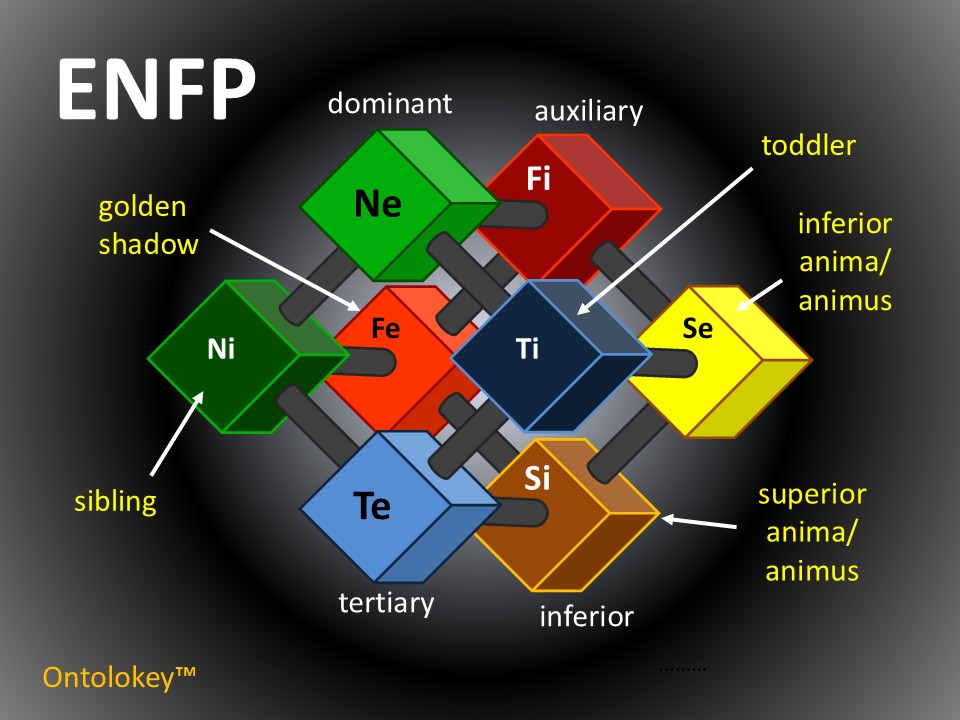
The Seduction of Possibility and the Birth of the Shadow
Every personality carries within itself a paradox. Its greatest gift is also the seed of its greatest danger. The qualities that enable an individual to flourish under favorable conditions often become the very forces that undermine psychological stability when left unconscious. This principle is especially true for the ENFP personality structure, whose extraordinary capacity for perceiving possibilities, inspiring others, generating emotional intensity, and imagining alternative futures makes it one of the most creative and life-affirming orientations of the human psyche. Yet the same mechanisms that allow such individuals to become visionaries, innovators, artists, catalysts, and emotional explorers can gradually transform into sources of fragmentation, restlessness, self-deception, emotional dependency, and existential dissatisfaction. The shadow of this personality does not emerge because something is fundamentally wrong with it. Rather, it emerges because its greatest strengths possess an inherent tendency toward excess. Like a river that nourishes a civilization when contained within its banks but becomes destructive when it overflows, the psychological energy of the ENFP can either create extraordinary growth or profound inner chaos. Understanding this shadow therefore requires moving beyond simplistic personality descriptions and entering the deeper territory of psychological contradiction, where gifts and wounds become inseparable aspects of the same phenomenon.
At the center of the ENFP psyche lies an almost instinctive attraction toward potential. Such individuals are not primarily interested in what exists. They are fascinated by what could exist. Reality, as it presently appears, often feels incomplete, unfinished, or merely transitional. Their attention naturally gravitates toward emerging patterns, unexplored opportunities, hidden meanings, future developments, and unrealized human potential. They possess a remarkable ability to detect possibilities long before others perceive them. This creates an undeniable advantage in creative endeavors, entrepreneurship, social innovation, personal development, artistic exploration, and the discovery of new ideas. Yet embedded within this gift is the first and perhaps most fundamental shadow dynamic. When possibility becomes psychologically more compelling than reality, an individual gradually loses contact with the concrete world. The imagination begins to dominate perception. Potential becomes more seductive than actuality. Dreams become more emotionally rewarding than implementation. The future becomes more meaningful than the present. Over time, the individual may find themselves living not in life itself but in a perpetual anticipation of life. The promise of tomorrow begins to eclipse the reality of today. This tendency was already described in classical psychological observations of the intuitive personality, where the pursuit of emerging possibilities repeatedly pulls attention away from established realities and existing commitments.
This attraction to possibility often creates an illusion of freedom. The ENFP frequently experiences life as an open horizon filled with countless pathways. At first glance this appears liberating, and indeed it often is. However, psychological freedom contains a hidden burden. The more possibilities a person perceives, the more difficult commitment becomes. Every choice automatically excludes alternative futures. Every decision closes doors. Every investment of energy into one direction requires abandoning hundreds of others. For many ENFPs, this psychological reality generates an underlying tension that remains largely unconscious throughout much of life. Commitment begins to feel less like self-definition and more like self-limitation. Stability can gradually acquire the emotional texture of confinement. Predictability may be experienced as stagnation. The individual therefore becomes trapped in a cycle where novelty generates excitement, commitment generates anxiety, and escape appears to restore vitality. Yet the restoration is temporary because the underlying conflict remains unresolved. What initially appeared to be freedom slowly reveals itself as an inability to remain psychologically present within the consequences of one’s own choices.
The shadow becomes even more visible in the realm of identity. Most people construct a relatively stable sense of self through repetition, continuity, and consistent engagement with particular roles and responsibilities. The ENFP often approaches identity differently. Rather than asking, “Who am I?” they are unconsciously inclined to ask, “Who might I become?” This distinction appears subtle, but its consequences are profound. When identity becomes organized around future possibilities rather than present realities, the self remains perpetually unfinished. There is always another version waiting to emerge, another life that could be lived, another transformation just beyond the horizon. Such a mindset can fuel remarkable growth and adaptability, yet it also creates chronic dissatisfaction. No achievement feels complete because another possibility immediately appears. No identity feels sufficient because alternative identities remain unexplored. No destination feels final because the psyche is already scanning for the next frontier. The individual may therefore become addicted not to achievement itself but to becoming. What appears externally as ambition may internally be an inability to rest within one’s own existence.
This perpetual orientation toward emergence produces another important shadow phenomenon: the devaluation of the ordinary. Because the ENFP psyche is naturally drawn toward novelty, intensity, discovery, and transformation, everyday life can seem psychologically undernourishing. Routine responsibilities rarely provide the same emotional stimulation as new experiences. Maintenance lacks the excitement of creation. Sustaining something often feels less rewarding than initiating it. As a result, many ENFPs unconsciously divide life into two categories. The first category contains experiences associated with inspiration, possibility, and emotional aliveness. The second contains experiences associated with repetition, limitation, and obligation. Unfortunately, mature adulthood requires continuous engagement with the second category. Relationships require maintenance. Careers require consistency. Financial security requires repetition. Psychological growth requires discipline. The shadow emerges when the individual continually attempts to extract the rewards of adulthood while avoiding its repetitive demands. Over time, unfinished projects accumulate. Promising beginnings fail to mature. Potential remains unrealized. The person becomes surrounded by evidence of talent yet haunted by a growing awareness that talent alone is insufficient.
The emotional dimension of this shadow is equally significant. The ENFP personality often possesses exceptional emotional responsiveness and empathy. Emotional experiences are not merely registered intellectually; they are felt with remarkable vividness. Joy can become ecstasy. Inspiration can become transcendence. Love can become devotion. Yet emotional intensity operates according to the same psychological principles as intuitive exploration. The pursuit of emotional highs can gradually become addictive. Everyday emotional states begin to feel inadequate. Normal contentment may seem dull compared to passionate excitement. Calm relationships may appear less meaningful than emotionally dramatic ones. Stability may be mistaken for stagnation. Consequently, some ENFPs unconsciously organize their lives around the pursuit of emotional intensity rather than emotional depth. This distinction is crucial. Intensity concerns magnitude. Depth concerns integration. Intensity is dramatic but temporary. Depth is quieter but enduring. The shadow emerges when intensity becomes confused with authenticity. The individual begins to trust feelings simply because they are strong rather than because they are true.
This dynamic is closely related to the heightened emotional reactivity described in classic descriptions of affectively exalted temperaments, where emotional responses can move rapidly between enthusiasm and despair, often with extraordinary psychological force. Such individuals may experience beauty, love, inspiration, disappointment, and loss with a depth that exceeds ordinary emotional ranges. While this sensitivity contributes significantly to creativity, empathy, and artistic expression, it also increases vulnerability to emotional instability and psychological overwhelm.
The deepest irony of the ENFP shadow is that it often develops precisely because the individual is attempting to remain loyal to what feels most alive within them. They do not abandon stability because they wish to be irresponsible. They do not pursue endless possibilities because they wish to avoid commitment. They do not seek emotional intensity because they consciously desire chaos. Rather, they are responding to a profound inner drive toward vitality, meaning, expansion, and authentic experience. The tragedy emerges when this drive becomes detached from psychological grounding. What begins as a search for life gradually transforms into an escape from reality. What begins as openness becomes fragmentation. What begins as imagination becomes avoidance. What begins as freedom becomes compulsion.
For this reason, the true shadow of the ENFP is not selfishness, immaturity, emotionality, inconsistency, or impulsiveness, although all of these may appear as secondary symptoms. The deepest shadow is the inability to reconcile possibility with reality. It is the unconscious belief that one must choose between aliveness and stability, between freedom and commitment, between imagination and embodiment. As long as this split remains unresolved, the individual continues oscillating between inspiration and disappointment, enthusiasm and exhaustion, attachment and escape. The central psychological task therefore begins with a difficult realization: possibility is not the opposite of reality. Possibility achieves its highest expression only when it is incarnated within reality. Until this truth is learned, the ENFP remains haunted by futures that never arrive and identities that never fully emerge.
The Addiction to Becoming: Why the ENFP Can Never Feel Finished
One of the least understood dimensions of the ENFP psyche is its peculiar relationship to completion. From the outside, many ENFPs appear ambitious, adventurous, intellectually curious, emotionally engaged, and passionately invested in personal growth. They often seem to be among the most psychologically alive individuals in any social environment. They are explorers of ideas, seekers of meaning, and enthusiastic participants in the unfolding drama of life. Yet beneath this vibrant exterior there frequently exists a subtle but relentless sense of incompleteness. Regardless of achievements, experiences, relationships, or personal development, something inside continues to whisper that the real life has not yet begun. The individual may accumulate impressive accomplishments, meaningful connections, and profound experiences, yet still feel strangely unfinished. This feeling is rarely recognized as a psychological pattern. Instead, it is usually projected onto external circumstances. The problem appears to be the current job, the current relationship, the current city, the current project, or the current version of the self. Somewhere beyond the present moment lies a future state that promises fulfillment. The tragedy is that this future state continuously recedes as soon as it is approached.
At the heart of this phenomenon lies a fundamental psychological orientation toward becoming rather than being. For many ENFPs, identity is experienced less as a stable structure and more as an unfolding process. They do not merely live their lives; they continuously reinvent them. While other personalities often derive security from consistency, the ENFP frequently derives vitality from transformation. Growth is not simply desirable; it becomes existentially necessary. Stagnation feels dangerous. Repetition feels threatening. The absence of change can evoke a subtle sensation of psychological suffocation. Consequently, the individual becomes deeply invested in self-expansion. New philosophies, new relationships, new creative pursuits, new ambitions, and new visions of the future become vehicles through which the self continually evolves. In healthy forms, this orientation produces extraordinary adaptability and resilience. However, when driven unconsciously, it creates a chronic inability to accept one’s current existence. The self becomes a perpetual project rather than a lived reality.
This dynamic creates a paradoxical relationship with success. Most people imagine that success eventually generates satisfaction. The ENFP often discovers the opposite. Success may briefly produce excitement, but it rarely resolves the underlying feeling of incompleteness. The reason is psychological rather than practical. The individual has unconsciously attached fulfillment to future development itself rather than to any specific outcome. Once a goal is achieved, the mind immediately generates a new horizon. Once a dream becomes reality, it ceases to function as a dream. The emotional energy that previously surrounded it evaporates. What was once charged with meaning now becomes ordinary. Consequently, the individual experiences a recurring pattern of enthusiasm, pursuit, achievement, disappointment, and renewed pursuit. Because the underlying mechanism remains unconscious, each new goal appears uniquely significant. Yet the emotional sequence remains remarkably consistent throughout life. The person is not chasing fulfillment. They are chasing the anticipation of fulfillment.
Classical observations of highly intuitive personalities described precisely this tendency. Such individuals often become completely absorbed by emerging possibilities, investing enormous emotional energy into future developments while gradually losing interest once those possibilities become concrete realities. What captivates them is not the object itself but the field of potential surrounding it. When the future becomes the present, the psychological fascination weakens and attention shifts toward a new horizon. This pattern explains why many ENFPs feel more energized at the beginning of projects than at their completion. The initiation phase is saturated with possibility. The middle phase requires endurance. The final phase demands implementation. Unfortunately, implementation often feels emotionally less rewarding than imagination. As a result, many ENFPs accumulate beginnings while struggling to cultivate endings.
The shadow side of this orientation becomes especially visible in personal relationships. The early stages of connection often provide exactly the psychological ingredients that the ENFP finds most intoxicating: discovery, emotional intensity, mystery, idealization, and the perception of unrealized potential. Every conversation reveals new dimensions of the other person. Every interaction contains possibility. The future feels open and exciting. Yet genuine intimacy operates according to entirely different principles. Mature relationships gradually replace novelty with familiarity. Mystery gives way to knowledge. Possibility gives way to reality. Fantasy yields to truth. At this point, the unconscious shadow emerges. The individual may begin experiencing restlessness, boredom, uncertainty, or a vague sense that something is missing. Frequently, nothing is actually missing. What has disappeared is the intoxicating psychological experience of potential. The relationship has become real.
For an unconscious ENFP, reality often feels emotionally less powerful than imagination. The partner standing before them can never compete with the infinite perfection of possibility. No human being can. Real people possess limitations, contradictions, flaws, weaknesses, and imperfections. Potential partners, by contrast, remain untouched by reality. They exist largely within fantasy and therefore appear endlessly promising. The shadow manifests when the individual repeatedly abandons reality in pursuit of imagined possibilities. Over time, they may develop a painful history of relationships that begin with extraordinary passion but end when ordinary life inevitably emerges. The person often interprets this pattern as bad luck, incompatibility, or unfortunate timing. In reality, they may be unconsciously addicted to possibility itself.
The same mechanism frequently appears in careers and creative endeavors. The ENFP often possesses an astonishing capacity to generate ideas. Their minds naturally produce connections, innovations, visions, and conceptual frameworks. They can envision futures that others cannot yet see. Yet generating ideas and building realities are fundamentally different psychological activities. Creation requires discipline. Execution requires patience. Long-term achievement requires repetition. The shadow emerges when the individual becomes psychologically attached to ideation while remaining resistant to implementation. New ideas continue arriving faster than old ideas can be completed. Excitement repeatedly outpaces commitment. Eventually, the individual becomes surrounded by evidence of unrealized potential. Half-finished manuscripts, abandoned businesses, incomplete artistic projects, neglected ambitions, and forgotten dreams accumulate like archaeological remains of previous identities.
What makes this dynamic particularly painful is that ENFPs are usually aware of their unrealized potential. They often possess acute insight into what they could become. This awareness distinguishes them from individuals who simply lack ambition. The ENFP frequently sees the gap between current reality and future possibility with extraordinary clarity. Unfortunately, this awareness can become psychologically destructive. Instead of serving as inspiration, it gradually transforms into self-judgment. Every unfinished project becomes evidence of failure. Every abandoned path becomes a reminder of wasted potential. Every unrealized dream becomes an accusation. The individual begins carrying an invisible burden composed not of actual failures but of alternative lives that were never fully lived.
This burden often generates profound anxiety around aging. While many people fear physical decline or mortality, the ENFP frequently fears limitation itself. Youth feels psychologically attractive because it contains countless possible futures. As life progresses, certain possibilities inevitably disappear. Some doors close permanently. Certain identities can no longer be pursued. Reality becomes increasingly defined by commitments already made. For a personality oriented toward endless expansion, this process can feel deeply threatening. Aging is unconsciously experienced not merely as growing older but as losing options. Consequently, some ENFPs spend years attempting to preserve psychological adolescence by avoiding definitive commitments. They maintain flexibility at all costs. They resist structures that might narrow future possibilities. Yet this strategy creates a cruel irony. In attempting to keep every door open, they often fail to fully enter any room.
The emotional consequences of this pattern become increasingly severe over time. What begins as freedom gradually transforms into fragmentation. The individual may experience persistent feelings of restlessness, dissatisfaction, and existential uncertainty. Nothing feels entirely right because the psyche remains oriented toward an imagined future. The present moment becomes psychologically devalued. Even positive experiences are partially overshadowed by thoughts of what might come next. This condition resembles a form of existential homesickness. The person longs for a place that does not actually exist. They are searching for a future self that continually retreats beyond reach. The object of desire remains permanently displaced into tomorrow.
The deeper shadow hidden beneath this endless becoming is often fear. On the surface, ENFPs appear courageous. They willingly explore unfamiliar ideas, challenge conventions, take social risks, and pursue unconventional paths. Yet underneath this courage there may exist a profound fear of finality. Completion carries psychological consequences that are rarely acknowledged. To finish something means accepting its limitations. To commit means surrendering alternatives. To define oneself means excluding other identities. To complete a project means exposing it to reality. As long as something remains unfinished, it retains perfection within imagination. Once completed, it becomes vulnerable to judgment, failure, disappointment, and imperfection. Therefore, endless becoming can function as a defense against the painful realities of embodiment.
The unconscious logic operates as follows: if I never fully commit, I never fully fail. If I never finish, the dream remains alive. If I keep moving, I never have to confront what is actually there. Although this strategy initially protects the individual from disappointment, it eventually creates far greater suffering. Life becomes populated by ghosts of unlived possibilities. The future becomes crowded with versions of the self that never materialized. The person remains suspended between identities, unable to fully inhabit any of them.
The ultimate psychological challenge for the ENFP is therefore not learning how to dream. They already know how to dream. It is not learning how to imagine, inspire, create, or envision possibilities. These capacities emerge naturally. The deeper challenge is learning how to stop becoming long enough to begin being. This requires a radical shift in consciousness. The individual must recognize that fulfillment does not exist at the end of an endless process of self-expansion. Fulfillment emerges when possibility becomes embodied within reality. The future self must eventually die so that the present self can live. The fantasy must surrender to the actual. The horizon must yield to the ground beneath one’s feet.
Only then does a remarkable transformation occur. The individual discovers that completion is not imprisonment. Commitment is not death. Stability is not stagnation. Reality is not the enemy of possibility. Reality is the vessel through which possibility becomes real. Until this lesson is learned, the ENFP remains trapped in an endless pursuit of the next version of themselves. Once it is learned, they finally discover something that has eluded them for years: the freedom to be unfinished without needing to endlessly become.
The Narcissism of Potential: The Hidden Ego Structure Behind the ENFP Shadow
Among all the shadow dynamics that can emerge within the ENFP personality, few are as misunderstood, controversial, or psychologically significant as what might be called the narcissism of potential. The term immediately invites misunderstanding because it evokes images of grandiosity, vanity, self-obsession, or overt superiority. Yet the phenomenon being described here is far more subtle and far more common. In fact, many ENFPs who suffer from this shadow would strongly reject any association with narcissism because they genuinely experience themselves as empathetic, caring, emotionally sensitive, and deeply concerned with the welfare of others. In many cases this self-perception is entirely accurate. The shadow does not manifest as a conscious belief that one is better than others. Rather, it emerges as an unconscious emotional investment in one’s own unrealized possibilities. The individual becomes psychologically attached not to who they are, but to who they imagine themselves capable of becoming. Over time, this imagined self gradually acquires greater emotional importance than the actual self living in reality.
This process begins innocently enough. The ENFP naturally perceives possibilities where others perceive limitations. They often recognize latent talents in themselves and others long before those potentials become visible. This capacity allows them to encourage people, inspire growth, and challenge restrictive assumptions. It is one of their most beautiful gifts. However, when directed inward, this same perception can become psychologically intoxicating. The individual begins to develop an internal relationship not with reality, but with possibility. They become fascinated by their own future potential. The artist they could become, the entrepreneur they could become, the healer they could become, the writer they could become, the visionary they could become, the lover they could become, and the extraordinary life they could someday create gradually form a constellation of idealized identities. These identities remain largely untouched by reality because they have not yet been fully lived. Consequently, they retain a sense of perfection that actual achievements can never possess.
The psychological danger lies in the fact that potential cannot be disproven. Reality is vulnerable to evidence. Potential is not. A completed novel can be criticized. An unfinished masterpiece exists beyond criticism. A real business can fail. A business idea remains protected by imagination. A relationship can reveal incompatibilities. A fantasy relationship remains flawless. The unrealized self therefore enjoys a unique psychological advantage. It is immune to reality. The ENFP may unconsciously become attached to this immunity. Instead of deriving self-worth from actual accomplishments, they begin deriving it from imagined futures. Instead of valuing themselves for what they have built, they value themselves for what they might someday build. The center of identity slowly shifts from actuality to possibility.
At first glance this may appear harmless. After all, many successful individuals are motivated by visions of future achievement. The difference lies in the emotional relationship to those visions. Healthy aspiration uses possibility as a guide. Shadow aspiration uses possibility as a refuge. In the former, potential inspires action. In the latter, potential replaces action. The individual becomes emotionally nourished by imagining future greatness while remaining psychologically disconnected from the difficult and often humiliating realities required to achieve it. Dreams become substitutes for embodiment. Fantasy becomes compensation for incompletion. The imagined self gradually overshadows the real one.
This dynamic explains a puzzling phenomenon frequently observed in highly intuitive and creative personalities. Some individuals appear extraordinarily gifted yet remain chronically unfulfilled. They speak passionately about future projects, future transformations, future ambitions, and future achievements. Their visions are often impressive. Their insight is often genuine. Their intelligence is often undeniable. Yet years pass and relatively little changes. The problem is not a lack of ability. The problem is that imagining success has become emotionally rewarding enough to partially replace the effort required to achieve it. The psyche learns that anticipation can generate many of the same emotional benefits as realization. Consequently, the person becomes unconsciously addicted to imagining rather than creating.
Classical descriptions of highly intuitive personalities repeatedly pointed toward this danger. Such individuals often become fused with future possibilities, investing enormous psychological energy into visions of what might emerge. They animate possibilities with extraordinary enthusiasm and inspire others through their conviction. Yet this same process can lead them to abandon realities once the initial promise fades, leaving others to harvest what they themselves initiated. The result is a life filled with beginnings but lacking integration. The individual continually falls in love with potential while struggling to remain faithful to reality.
The narcissism of potential becomes particularly dangerous because it often disguises itself as humility. The ENFP may openly acknowledge personal shortcomings, discuss insecurities, and express vulnerability. In fact, many genuinely struggle with self-doubt. Yet these insecurities coexist with a powerful unconscious conviction that extraordinary potential lies within them. This creates a strange psychological contradiction. On one level, the person may feel inadequate. On another level, they may feel secretly destined for something exceptional. These two beliefs are not mutually exclusive. They often reinforce one another. The more distant the idealized future self becomes, the more inadequate the present self appears by comparison.
This comparison gradually generates chronic dissatisfaction. The individual evaluates themselves not against reality but against fantasy. Every ordinary achievement feels insufficient because it cannot compete with infinite possibility. Every success contains traces of disappointment because reality inevitably falls short of imagination. The person becomes trapped between grand potential and ordinary existence. Life begins to feel like a perpetual failure to become who one was supposed to be.
What makes this shadow particularly painful is that it often remains invisible. The individual believes they are pursuing growth when in reality they may be avoiding embodiment. They believe they are honoring their potential when they are actually protecting it from reality. They believe they are remaining open-minded when they are avoiding commitment. Because the behavior appears positive on the surface, it rarely receives critical examination. Friends often reinforce it. Society frequently celebrates it. Contemporary culture constantly promotes self-optimization, reinvention, and limitless possibility. Consequently, the ENFP shadow can flourish while appearing psychologically healthy.
The problem becomes even more complex in relationships. Many ENFPs possess a remarkable ability to perceive hidden potential in others. They often see strengths, talents, and possibilities that remain invisible to everyone else. This capacity makes them extraordinary encouragers, mentors, and emotional supporters. Yet the shadow emerges when they begin relating to potential rather than reality. Instead of loving people as they are, they become attached to who those people might become. Relationships transform into developmental projects. Partners become future versions of themselves rather than present human beings. Initially this dynamic may feel deeply supportive. Over time, however, it creates subtle forms of disappointment and resentment.
The ENFP may unconsciously expect others to evolve according to their vision. When this transformation fails to occur, frustration emerges. The individual feels betrayed not by reality but by possibility. The partner has not violated any promise. The imagined future simply never materialized. Yet because the emotional investment was real, the disappointment feels profound. Relationships suffer under the weight of expectations that were never explicitly communicated. The individual becomes trapped between love for the actual person and attachment to the imagined version.
The same phenomenon can occur in reverse. Many ENFPs desperately want to be seen for their own potential. They long for someone who recognizes what they could become rather than merely what they are. On the surface this desire appears understandable. Everyone wants to be understood deeply. Yet in its shadow form, this longing becomes insatiable. No amount of appreciation feels sufficient because the individual is seeking recognition for identities that do not yet exist. They want validation not only for their reality but also for their imagined future greatness. Since no other person can fully validate unrealized possibilities, chronic feelings of misunderstanding often result.
Beneath all of this lies a deeper existential issue. The narcissism of potential functions as a defense against mortality. To exist fully in reality means accepting limitation. It means acknowledging that life is finite. It means recognizing that certain dreams will never be realized. Certain identities will never be lived. Certain possibilities will remain permanently unexplored. The ENFP psyche often resists this recognition with tremendous force. Possibility becomes a psychological strategy for escaping limitation. As long as new futures remain available, the individual avoids confronting the boundaries imposed by reality.
Yet reality eventually asserts itself. Time passes. Opportunities narrow. Life demands choices. At this stage the shadow often intensifies dramatically. The person begins experiencing profound regret, anxiety, or existential grief. They realize that preserving every possibility has prevented them from fully inhabiting any particular reality. The identities they protected remained imaginary. The futures they cherished remained theoretical. The life they postponed never arrived.
This confrontation can become the beginning of genuine psychological maturity. For perhaps the first time, the individual recognizes a painful truth. Potential itself possesses no value until it becomes embodied. A thousand unrealized possibilities cannot equal one fully lived reality. A dream remains incomplete until it enters the world. An identity remains fantasy until it is enacted. The future self remains a ghost until it becomes present.
Paradoxically, the ENFP discovers freedom only when the worship of potential ends. The idealized future self must be sacrificed. The fantasy of limitless possibility must be relinquished. The individual must accept that they will never become every version of themselves. Most possibilities will die. Most futures will remain unlived. Most identities will remain unexplored.
This realization initially feels devastating. Yet it contains the seed of liberation. For the first time, the person becomes available to reality. They stop trying to become everything and begin becoming something. They stop protecting their potential and start expressing it. They stop identifying with imagined greatness and start engaging with actual existence.
The deepest shadow of the ENFP is not arrogance. It is the unconscious belief that potential is more valuable than reality. The deepest healing occurs when this belief dissolves. At that moment, the individual discovers that reality was never the enemy of possibility. Reality is where possibility finally becomes alive.
Emotional Addiction, Romantic Obsession, and the ENFP’s Secret Hunger for Intensity
One of the most misunderstood aspects of the ENFP shadow is the degree to which emotional intensity can become psychologically addictive. Most descriptions of this personality emphasize enthusiasm, empathy, warmth, imagination, idealism, and emotional openness. While all of these characteristics are certainly present, they often conceal a deeper dynamic operating beneath conscious awareness. The ENFP is not merely someone who experiences emotions strongly. The deeper truth is that emotional intensity itself frequently becomes a primary source of psychological vitality. It functions almost like oxygen for the psyche. When life feels emotionally charged, meaningful, and alive, the individual feels connected to existence. When emotional intensity diminishes, a subtle sense of deadness can emerge. Consequently, many ENFPs spend years unconsciously organizing their lives around the pursuit of emotionally stimulating experiences without ever recognizing the underlying pattern.
To understand this phenomenon, one must first appreciate the relationship between intensity and meaning within the ENFP psyche. For many individuals, meaning is derived from stability, achievement, duty, belonging, or security. The ENFP often experiences meaning through aliveness. Experiences feel significant because they are emotionally vivid. Moments become memorable because they evoke strong psychological reactions. Relationships become valuable because they generate emotional depth. Ideas become compelling because they inspire passion. Consequently, emotional activation frequently serves as an unconscious indicator of importance. The stronger the feeling, the more meaningful the experience appears. This creates a profound vulnerability because emotional intensity and psychological truth are not the same thing. An experience can be emotionally overwhelming while being psychologically destructive. Conversely, something deeply beneficial can initially feel boring, repetitive, or emotionally uneventful.
The shadow emerges when intensity becomes confused with authenticity. The individual gradually begins trusting emotions simply because they are powerful. Excitement feels like destiny. Attraction feels like certainty. Inspiration feels like truth. Desire feels like guidance. Yet emotions, however valuable they may be, are not infallible. They reveal psychological energy, not objective reality. When intensity becomes the primary criterion for decision-making, life gradually starts revolving around emotional stimulation rather than genuine development. The person begins chasing feelings rather than pursuing integration.
This tendency becomes especially visible in romantic relationships. Few personality structures are as capable of profound romantic idealization as the ENFP. When emotionally captivated, they often perceive far more than the person standing before them. They perceive possibilities, hidden dimensions, unrealized futures, symbolic meanings, and transformative potential. Love becomes not merely a relationship but an unfolding narrative. The beloved is experienced simultaneously as a real human being and as a doorway into a more meaningful existence. This capacity for romantic imagination can produce extraordinary intimacy, devotion, and emotional richness. Yet it also contains the seeds of obsession.
The problem is not that the ENFP loves too deeply. The problem is that they frequently fall in love with psychological possibilities as much as with actual people. The beloved becomes a carrier of meaning. They represent hope, transformation, redemption, inspiration, adventure, emotional fulfillment, and future happiness. As a result, romantic attraction often acquires an intensity that exceeds the reality of the relationship itself. The individual is no longer responding solely to who the other person is. They are responding to what the relationship symbolizes.
This dynamic creates an experience that many ENFPs mistake for fate. The emotional intensity feels so overwhelming that it appears impossible to interpret it as anything other than profound truth. Yet intensity often says more about the needs of the perceiver than about the nature of the relationship. The psyche projects unlived possibilities onto another person. The beloved becomes a screen onto which unconscious desires are displayed. What appears to be perfect compatibility may partially consist of fantasy. What appears to be destiny may partially consist of projection.
Classical psychological observations regarding highly intuitive personalities repeatedly noted a tendency toward becoming unconsciously entangled with unsuitable partners. Such attachments often emerge unexpectedly and acquire a strangely compulsive quality. The individual feels irresistibly drawn toward a person despite obvious contradictions, incompatibilities, or warning signs. The relationship acquires an irrational emotional force that resists logical analysis. From the outside, observers may see the dysfunction clearly. From the inside, however, the emotional experience feels overwhelming and undeniable.
The shadow deepens because the ENFP often possesses a remarkable capacity for emotional endurance when pursuing romantic ideals. Many personalities abandon impossible relationships relatively quickly. The ENFP may continue investing enormous emotional energy into relationships sustained primarily by hope. Because they perceive potential so vividly, they remain connected not merely to what exists but to what could exist. As long as possibility remains alive, emotional withdrawal becomes extraordinarily difficult. The relationship does not have to be healthy. It merely has to remain psychologically open.
This creates one of the most painful patterns within the ENFP shadow: attachment to unrealized futures. The individual becomes emotionally bonded not only to a person but to a vision. They are mourning not merely what was lost but what might have been. Consequently, breakups often feel devastating in ways that others struggle to understand. The grief extends beyond the actual relationship. Entire imagined futures collapse simultaneously. Shared dreams, symbolic meanings, future identities, and psychological narratives disappear overnight. What dies is not merely a relationship but an entire possibility structure.
The same mechanism that fuels romantic obsession also fuels emotional addiction more broadly. Many ENFPs unconsciously seek situations that generate strong feelings because emotional activation temporarily alleviates a deeper existential discomfort. Intensity creates a sense of aliveness. Conflict creates stimulation. Drama creates movement. Passion creates meaning. Consequently, calm periods may provoke unexpected restlessness. Stable relationships can begin feeling emotionally underwhelming. Predictable environments may appear lifeless. The individual starts craving emotional peaks without recognizing the psychological dependency that has developed.
This tendency resembles what some psychologists describe as intermittent reinforcement. Unpredictable emotional rewards generate stronger psychological attachment than consistent rewards. Consequently, relationships characterized by inconsistency, uncertainty, emotional highs, and emotional lows often become strangely addictive. The ENFP may find themselves repeatedly drawn toward emotionally unavailable partners, complicated situations, or unstable dynamics precisely because these environments generate intense psychological activation. Stability feels less exciting by comparison.
The tragedy is that many ENFPs interpret this emotional activation as evidence of profound connection. In reality, it may reflect psychological dysregulation. The nervous system mistakes uncertainty for passion. Anxiety becomes confused with attraction. Emotional volatility becomes confused with intimacy. The individual feels alive, but aliveness alone does not indicate health.
Descriptions of affectively intense temperaments frequently emphasize their capacity to move rapidly between emotional extremes. Joy can become ecstasy. Disappointment can become despair. Hope can become euphoria. Loss can become devastation. Emotional experiences acquire extraordinary magnitude and vividness. While this sensitivity contributes to creativity, empathy, artistic expression, and emotional depth, it also creates vulnerability to overwhelming reactions and psychological instability. The same emotional intensity that allows profound love can also produce profound suffering.
Beneath the addiction to intensity lies a deeper existential issue. Emotional peaks provide temporary escape from emptiness. When intensely in love, intensely inspired, intensely engaged, or intensely activated, the individual does not have to confront deeper questions about identity, purpose, mortality, and self-worth. Intensity fills psychological space. It creates movement. It generates momentum. The problem emerges when the intensity fades. Eventually every emotional high subsides. Every romance normalizes. Every passion stabilizes. Every crisis resolves. What remains is the individual confronting themselves.
For many ENFPs, this moment is profoundly uncomfortable. Without emotional stimulation, they encounter feelings that have been temporarily obscured by intensity. Loneliness, insecurity, existential uncertainty, grief, self-doubt, and unresolved psychological wounds begin surfacing. Consequently, the individual may unconsciously seek new sources of emotional activation rather than remaining present with these deeper experiences. A new relationship replaces the old one. A new obsession replaces the previous obsession. A new dream replaces the abandoned dream.
The pattern can continue for decades.
Yet genuine psychological maturity requires something entirely different. It requires developing the capacity to remain present when emotional intensity disappears. It requires discovering meaning without excitement. It requires learning to love without idealization. It requires learning to remain committed after the emotional fireworks have faded. Most importantly, it requires recognizing that depth and intensity are not identical.
Intensity is easy to notice because it is loud. Depth is difficult to notice because it is quiet. Intensity creates emotional explosions. Depth creates transformation. Intensity demands attention. Depth changes character. Intensity often arrives suddenly and disappears just as quickly. Depth develops slowly and endures.
The mature ENFP eventually discovers a painful but liberating truth. Many of the most meaningful experiences in life do not feel extraordinary in the moment. Genuine intimacy often feels ordinary. Authentic love frequently feels calm. Psychological growth usually feels repetitive. Meaningful work often requires routine. Real life rarely produces the dramatic emotional peaks that fantasy promises.
Yet something remarkable happens when the addiction to intensity begins to loosen its grip. The individual starts perceiving dimensions of reality that were previously invisible. They discover beauty within stability. They discover intimacy within familiarity. They discover freedom within commitment. They discover depth within repetition. Most importantly, they discover that emotional intensity was never the ultimate source of aliveness.
Aliveness emerges from presence.
The shadow ENFP spends years chasing feelings in order to feel alive. The mature ENFP learns how to feel alive without chasing anything at all.
The Fear of Ordinary Life: Why the ENFP Often Sabotages Stability, Success, and Happiness
Perhaps no shadow dynamic is more difficult for the ENFP to recognize than their often unconscious fear of ordinary life. On the surface, this statement appears unfair or even absurd. After all, many ENFPs actively pursue meaningful careers, loving relationships, creative projects, and personal growth. They are not typically indifferent to success, nor are they incapable of commitment. In fact, many work extraordinarily hard and sincerely desire stability. Yet beneath these conscious aspirations there frequently exists a hidden psychological conflict. Part of the psyche longs for security, belonging, intimacy, achievement, and rootedness. Another part fears precisely these outcomes. The conflict rarely appears in explicit form. Few ENFPs wake up in the morning and consciously think, “I am afraid of happiness.” Instead, the fear manifests indirectly through restlessness, dissatisfaction, chronic reinvention, impulsive decisions, unfinished projects, unnecessary crises, and a persistent feeling that life should somehow be more than it currently is. The result is a subtle pattern of self-sabotage that can continue for years before it becomes visible.
To understand this dynamic, one must first understand how the ENFP experiences possibility. Possibility is not merely a cognitive category for this personality. It is an emotional experience. Potential futures carry psychological energy. They evoke excitement, anticipation, curiosity, and hope. The future often appears brighter than the present because it remains unburdened by reality. Every unrealized possibility retains perfection within imagination. A future relationship contains no conflicts. A future career contains no disappointments. A future version of oneself contains no compromises. Consequently, the individual develops a deep emotional attachment to what has not yet happened. This attachment becomes so strong that actual reality frequently struggles to compete.
The irony is that success itself often threatens this orientation. Success transforms possibility into reality. It converts dreams into responsibilities. It turns aspirations into structures. Once something becomes real, it ceases to exist primarily as potential. A successful business requires management. A successful marriage requires maintenance. A successful career demands consistency. A successful creative project requires refinement and repetition. In other words, success introduces limits. It narrows possibilities. It commits energy in specific directions. For many ENFPs, this narrowing process generates unexpected anxiety.
This anxiety is rarely interpreted correctly. The individual often assumes they have simply chosen the wrong path. Perhaps the job is not inspiring enough. Perhaps the relationship lacks passion. Perhaps the city feels restrictive. Perhaps another opportunity would be more fulfilling. While such assessments are occasionally accurate, they often conceal a deeper issue. The discomfort is not being caused by the specific reality. It is being caused by reality itself. The psyche is reacting to the loss of unlimited possibility.
Classical descriptions of highly intuitive personalities repeatedly emphasized their tendency to become fascinated by emerging opportunities while eventually experiencing established circumstances as restrictive. Situations that initially appear liberating gradually come to feel confining. Commitments once embraced with enthusiasm are later perceived as prisons. The individual becomes compelled toward new possibilities regardless of previous convictions or investments. What begins as adaptability eventually becomes chronic dissatisfaction.
The shadow becomes particularly destructive when it encounters genuine happiness. Most people assume that happiness naturally reinforces itself. Psychological reality is often more complicated. For individuals who have unconsciously organized their identity around striving, searching, becoming, and pursuing, fulfillment can feel surprisingly threatening. The reason is simple. If happiness is achieved, the search must end. If fulfillment is found, the pursuit loses its purpose. If life becomes genuinely satisfying, entire psychological structures organized around longing and anticipation become obsolete.
For the ENFP, whose identity is often deeply intertwined with exploration and transformation, this can create profound unconscious resistance. The individual may begin generating reasons why current happiness is insufficient. Minor imperfections become magnified. Hypothetical alternatives become increasingly attractive. New ambitions emerge. New dissatisfactions appear. What seemed like fulfillment gradually loses its emotional significance. The psyche reorients toward another horizon.
This process is not deliberate. In most cases, the individual genuinely believes they are pursuing growth or authenticity. Yet from a psychological perspective, something more complex is occurring. The search itself has become part of identity. The person knows how to desire. They know how to dream. They know how to pursue. What they do not know is how to stop searching long enough to inhabit what they already possess.
The fear of ordinary life also emerges in a subtler form: the fear of being average. Many ENFPs possess an intense need for significance. This need should not automatically be interpreted as vanity. More often, it reflects a deep existential longing to matter. The individual wants life to be meaningful. They want their existence to contribute something unique. They want to express their individuality fully. These desires are entirely healthy. Problems arise when significance becomes inseparable from extraordinariness.
The unconscious assumption develops that a meaningful life must also be exceptional. Ordinary existence begins to feel inadequate. Stable routines appear spiritually impoverished. Everyday responsibilities seem uninspiring. The person starts imagining that fulfillment exists somewhere beyond normal human experience. Yet reality presents an uncomfortable truth. Most meaningful lives are built through ordinary activities repeated consistently over long periods of time. Love grows through daily interactions. Careers develop through repetitive effort. Families thrive through mundane responsibilities. Mastery emerges through sustained practice. Psychological maturity is built through countless ordinary choices.
The shadow ENFP often struggles to accept this reality because ordinariness appears emotionally underwhelming. It lacks drama. It lacks novelty. It lacks immediate excitement. Consequently, the individual may unconsciously reject precisely the conditions required for long-term fulfillment.
This tendency is closely connected to emotional exaltation and sensitivity. Individuals who experience emotions intensely often perceive life through amplified psychological contrasts. Joy can feel transcendent. Inspiration can feel sacred. Disappointment can feel catastrophic. As a result, ordinary emotional states may seem insufficient by comparison. The person becomes accustomed to emotional peaks and begins overlooking quieter forms of fulfillment. The satisfaction of a stable relationship, a productive routine, or a peaceful evening can feel almost invisible when compared to the emotional intensity of dramatic experiences.
Over time, this creates a dangerous illusion. The individual starts believing that intensity equals significance. Calmness becomes associated with stagnation. Stability becomes associated with boredom. Predictability becomes associated with psychological death. Consequently, they may unconsciously disrupt situations that are actually healthy. A relationship is questioned not because it is failing but because it has become stable. A career is abandoned not because it lacks value but because it has become familiar. A project is discarded not because it lacks potential but because it requires maintenance rather than imagination.
The tragedy of this pattern lies in its cumulative consequences. Years pass. Opportunities are abandoned. Relationships dissolve. Foundations are repeatedly dismantled. Each departure feels justified in the moment because the next possibility appears more alive. Yet eventually a painful realization begins emerging. The issue was never the specific circumstances. The issue was the inability to remain present once novelty faded.
At a deeper level, the fear of ordinary life often conceals a fear of limitation. To embrace ordinary existence requires accepting human finitude. It requires acknowledging that one cannot live every possible life. One cannot pursue every dream. One cannot become every version of oneself. Reality demands sacrifice. Every commitment excludes alternatives. Every decision closes doors.
For a personality deeply attached to possibility, this realization can feel devastating. Yet it also marks the beginning of maturity. Psychological adulthood requires grieving unlived lives. It requires accepting that meaning emerges not from infinite options but from chosen directions. It requires recognizing that depth is impossible without limitation.
The mature ENFP eventually discovers something that the younger version of themselves could scarcely imagine. The ordinary is not the opposite of the extraordinary. The ordinary is where the extraordinary becomes possible. Great love emerges through ordinary conversations. Great achievements emerge through ordinary effort. Great wisdom emerges through ordinary suffering. Great character emerges through ordinary decisions repeated consistently over time.
The individual who constantly seeks transcendence often overlooks this truth. They imagine that fulfillment will arrive through a dramatic breakthrough, a perfect relationship, a transformative opportunity, or a revolutionary change in circumstances. Yet life repeatedly demonstrates something else. Meaning is rarely hidden in distant horizons. More often, it is concealed within realities already present.
This realization fundamentally transforms the relationship between possibility and existence. The individual no longer needs to escape stability in order to feel alive. They no longer need to sabotage happiness in order to preserve freedom. They no longer need to abandon ordinary life in search of significance.
Instead, they discover a deeper form of freedom. They learn that meaning does not require constant reinvention. Happiness does not require emotional intensity. Fulfillment does not require endless possibility. Life does not need to be extraordinary every day in order to be profoundly meaningful.
The deepest shadow of the ENFP is often the belief that something greater is always waiting elsewhere.
The deepest healing begins when they finally understand that much of what they have been searching for was already quietly present within the life they kept trying to escape.
The Dark Side of Empathy: Manipulation, Emotional Influence, and the ENFP’s Capacity for Psychological Seduction
Few aspects of the ENFP shadow provoke as much resistance as the discussion of manipulation. Most ENFPs identify strongly with authenticity, emotional honesty, compassion, individuality, and human connection. They generally view themselves as people who value freedom rather than control, understanding rather than domination, and inspiration rather than coercion. In many cases this self-perception is entirely justified. Compared to more overtly controlling personality structures, the ENFP often possesses little interest in rigid authority, hierarchical power, or direct domination of others. Yet this very self-image can create a blind spot. Manipulation does not always appear in the form of commands, threats, intimidation, or explicit control. Some of the most powerful forms of influence operate through emotional connection, psychological insight, charisma, idealization, and the ability to shape how others perceive themselves. The ENFP’s shadow frequently emerges not through force but through seduction—not necessarily sexual seduction, but psychological seduction. The individual learns, often unconsciously, how to influence the emotional realities of other people.
To understand this shadow, one must first appreciate the extraordinary interpersonal sensitivity that often characterizes the ENFP psyche. Such individuals frequently possess an intuitive awareness of emotional undercurrents. They notice tensions, desires, insecurities, aspirations, hidden strengths, and unspoken needs that others overlook. They can often sense what motivates a person before that person consciously understands it themselves. This capacity makes them gifted counselors, teachers, artists, leaders, friends, and partners. It allows them to encourage growth where others see limitations. It allows them to communicate directly with the emotional core of another human being. Yet every psychological gift possesses a shadow counterpart. The ability to understand people deeply also creates the ability to influence them deeply.
Most ENFPs do not consciously seek this influence. In fact, many remain unaware of the degree to which they affect others. Their enthusiasm feels natural. Their encouragement feels sincere. Their emotional engagement feels authentic. However, authenticity does not eliminate influence. Sometimes it amplifies it. The individual may enter a conversation with no intention of changing anyone, yet leave a profound psychological impression. They awaken possibilities, activate dormant desires, challenge existing identities, and create emotional experiences that linger long after the interaction ends. Because these effects arise naturally, the ENFP may underestimate their power.
This power becomes particularly significant because of the personality’s tendency to perceive potential in others. Few people feel more deeply seen than when an ENFP directs focused attention toward them. The ENFP often recognizes hidden talents, suppressed ambitions, neglected strengths, and unrealized possibilities that others have failed to acknowledge. This experience can be profoundly transformative. Many individuals go through life feeling misunderstood, invisible, or underestimated. When someone suddenly recognizes dimensions of their personality that have remained unseen, the emotional impact can be enormous. The ENFP becomes not merely a conversation partner but a mirror reflecting a more expansive vision of the self.
The shadow emerges when this process becomes psychologically rewarding. The individual begins enjoying the role of catalyst, awakener, rescuer, inspirer, or emotional guide. At first, there appears to be nothing problematic about this. After all, helping others grow is a positive endeavor. Yet unconscious motivations gradually complicate the picture. The ENFP may become attached to the emotional responses they evoke in others. They enjoy being admired, needed, understood, appreciated, or idealized. They begin deriving self-worth from the transformations they inspire. Without realizing it, they become emotionally dependent upon their role as a source of possibility.
This dependency often creates subtle forms of manipulation. The individual does not necessarily lie. They do not necessarily deceive. Instead, they selectively amplify emotional realities. They encourage certain narratives while neglecting others. They emphasize possibilities while minimizing limitations. They create emotional momentum around particular interpretations of events. Because their intentions are often positive, these behaviors rarely appear manipulative on the surface. Yet influence remains influence regardless of motivation.
Classical descriptions of highly intuitive personalities repeatedly emphasized their remarkable capacity to inspire enthusiasm, kindle courage, and animate emerging possibilities in others. Such individuals possess an almost unparalleled ability to generate excitement around new visions, ideas, and futures. They can become living embodiments of possibility itself. The difficulty is that influence of this magnitude carries ethical responsibilities that many never fully examine.
One of the most common manifestations of this shadow occurs in romantic contexts. The ENFP often creates intense emotional experiences simply by being fully present. They listen deeply. They engage passionately. They communicate vulnerability. They express curiosity. They recognize hidden dimensions of another person’s identity. Many individuals interpret these behaviors as evidence of profound romantic significance. Sometimes that interpretation is correct. Sometimes it is not.
The problem arises because the ENFP frequently enjoys emotional intimacy even when they are uncertain about long-term commitment. They are often fascinated by people. They enjoy exploring emotional depth. They appreciate meaningful conversations and authentic connection. Yet the emotional impact of these interactions may exceed their intentions. Another person may experience the connection as uniquely significant while the ENFP experiences it as a natural expression of openness.
When unconscious, the ENFP may continue fostering emotional intensity despite lacking clear intentions. They enjoy the connection. They enjoy being seen as special. They enjoy the mutual exchange of vulnerability. They enjoy the emotional energy. Yet they avoid defining the relationship because definition introduces limitation. As a result, ambiguity persists. The other person remains emotionally invested. Hope remains alive. Possibility remains open.
This is where manipulation becomes most subtle. No explicit promises have been made. No direct deception has occurred. Yet emotional realities have been shaped. Expectations have been encouraged. Psychological investments have been cultivated. The ENFP may genuinely believe they are simply being authentic. However, authenticity does not absolve responsibility for the effects one has on others.
The shadow deepens further when emotional influence becomes a substitute for genuine self-development. Instead of confronting their own insecurities, the individual learns how to evoke admiration. Instead of resolving internal wounds, they become skilled at helping others heal. Instead of developing stable self-worth, they rely on external affirmation generated through emotional impact. The role of catalyst becomes psychologically addictive.
This pattern shares certain features with what some psychologists describe as compensatory narcissism, though it manifests very differently from traditional forms. Rather than seeking superiority, the individual seeks significance. Rather than demanding attention directly, they generate it indirectly through emotional influence. Rather than controlling through authority, they influence through connection. The underlying psychological mechanism remains similar: self-worth becomes dependent upon external responses.
The danger is particularly pronounced because the ENFP often possesses strong empathic abilities. Empathy allows them to understand emotional vulnerabilities. In healthy forms, this understanding fosters compassion. In shadow forms, it can facilitate manipulation. The individual learns which words create hope, which gestures create attachment, which insights create dependency, and which forms of attention create emotional investment.
Importantly, this manipulation is often unconscious. The ENFP rarely sits down and formulates a strategy for controlling others. Instead, they discover through experience that certain behaviors reliably generate emotional responses. They learn what makes people feel special. They learn what inspires loyalty. They learn what creates attachment. Because these responses feel good, the behaviors become reinforced.
Descriptions of emotionally sensitive and affectively intense temperaments frequently note their extraordinary capacity for attachment, emotional responsiveness, and interpersonal influence. Their feelings are contagious. Their enthusiasm spreads. Their suffering evokes sympathy. Their joy inspires participation. Their emotional states shape social environments with remarkable force. While this capacity contributes enormously to leadership, creativity, and human connection, it also increases the ethical burden associated with emotional expression.
At a deeper level, the shadow of emotional influence often conceals a profound fear of insignificance. The ENFP wants to matter. They want their existence to create positive impact. They want to leave traces within the lives of others. These desires are deeply human. Yet when they remain unconscious, they can distort relationships. The individual begins seeking proof of significance through the reactions they evoke. They become attached to being unforgettable.
This desire is understandable but dangerous. Human beings are not meant to function as mirrors reflecting our importance back to us. When relationships become vehicles for validating significance, genuine intimacy becomes difficult. Other people are unconsciously transformed into audiences, students, admirers, projects, or emotional resources. Connection becomes contaminated by hidden needs.
Psychological maturity requires confronting this dynamic directly. The ENFP must learn that influence is not the same as intimacy. Being admired is not the same as being loved. Inspiring others is not the same as knowing oneself. Creating emotional impact is not the same as creating genuine connection.
Perhaps the most difficult lesson involves accepting anonymity. The mature ENFP gradually relinquishes the need to be unforgettable. They stop measuring their value by the transformations they inspire. They stop requiring emotional proof of significance. They allow relationships to exist without constantly generating intensity.
Paradoxically, this surrender produces deeper intimacy than psychological seduction ever could. Once the need to influence dissolves, genuine encounter becomes possible. The individual no longer relates to people as sources of affirmation or recipients of transformation. They meet them as equals.
The deepest shadow of the ENFP is not cruelty, domination, or malice. More often, it is the unconscious temptation to derive identity from the emotional effects one has on others.
The deepest healing begins when they discover that their value does not depend upon being extraordinary, unforgettable, inspiring, or transformative.
It depends upon something much simpler and much harder:
the willingness to be real.
The Child Who Never Grew Up: Regression, Dependency, and the ENFP’s Hidden Emotional Immaturity
Among the many shadows that can emerge within the ENFP personality, few are as difficult to acknowledge as the possibility of emotional immaturity. The reason is not that ENFPs lack emotional awareness. Quite the opposite. They are often exceptionally aware of emotions, both their own and those of others. They may spend years exploring psychological concepts, reflecting on personal experiences, discussing relationships, and pursuing self-understanding. Many become remarkably articulate regarding emotional life. Yet emotional awareness and emotional maturity are not identical phenomena. A person may possess extraordinary insight into feelings while remaining unconsciously governed by them. They may understand psychological dynamics intellectually while still being unable to tolerate frustration, limitation, boredom, rejection, or emotional deprivation. The shadow therefore does not emerge because the ENFP is emotionally blind. It emerges because emotional sophistication can sometimes disguise developmental areas that remain fundamentally unresolved.
At the center of this shadow lies a psychological tendency toward regression. Regression is not a sign of pathology in itself. Every human being regresses under stress. During periods of overwhelm, uncertainty, fear, or emotional pain, the psyche often reverts to earlier coping strategies developed during childhood. What distinguishes personalities is not whether regression occurs but how frequently it occurs and how deeply it shapes behavior. For the ENFP, whose psychological life is often organized around emotional responsiveness, imagination, possibility, and interpersonal connection, regression frequently manifests through a return to youthful modes of experiencing reality. The individual seeks novelty, stimulation, emotional reassurance, freedom from responsibility, and relief from limitation. When life becomes painful, they may unconsciously retreat into fantasy, idealization, impulsivity, emotional dependency, or endless future-oriented thinking. The adult self temporarily yields control to psychological patterns that originated much earlier in development.
This dynamic is often difficult to detect because it rarely resembles the stereotypical image of immaturity. The ENFP does not necessarily become irresponsible in obvious ways. They may continue working, maintaining relationships, paying bills, and fulfilling obligations. Externally they may appear entirely functional. Internally, however, a different process may be unfolding. Whenever reality becomes disappointing, frustrating, repetitive, or emotionally unsatisfying, the psyche begins searching for escape routes. New possibilities suddenly appear attractive. Existing commitments feel oppressive. Dreams become more compelling than realities. The future becomes psychologically preferable to the present. What appears to be creativity or adaptability may sometimes function as avoidance.
The roots of this tendency often extend back into childhood experiences. Many ENFPs grow up feeling emotionally intense in environments that do not fully understand or accommodate that intensity. Their emotional reactions may have been dismissed as excessive, unrealistic, dramatic, or impractical. Their imaginative tendencies may have been misunderstood. Their need for authenticity may have conflicted with social expectations. As a result, they often learn to construct rich internal worlds. Fantasy becomes a refuge. Imagination becomes a sanctuary. Possibility becomes protection. These strategies are highly adaptive during childhood. They allow the individual to preserve vitality and hope in environments that feel restrictive or disappointing.
The difficulty arises when these same strategies remain dominant during adulthood. Reality inevitably imposes frustrations that imagination cannot solve. Relationships disappoint. Careers stagnate. Dreams encounter obstacles. Other people fail to live up to expectations. The mature personality gradually develops the capacity to tolerate these realities without abandoning engagement. The immature personality continues searching for escape. In the ENFP shadow, this escape frequently takes the form of psychological reinvention. Rather than confronting limitations directly, the individual seeks a new possibility. Instead of integrating disappointment, they replace the disappointing reality with a more exciting fantasy.
This pattern often creates the illusion of growth while preventing actual development. The person is constantly changing, constantly exploring, constantly transforming. Yet transformation and maturation are not identical processes. Transformation involves movement. Maturation involves integration. One can change endlessly without ever growing up. In fact, perpetual change sometimes functions as a defense against growth because growth requires remaining present long enough to confront difficult truths.
One of the clearest manifestations of this shadow appears in the relationship to responsibility. Responsibility is often misunderstood as a purely practical concept. Psychologically, responsibility represents something far deeper. It means accepting ownership of reality. It means acknowledging consequences. It means remaining present after excitement fades. It means continuing engagement when emotional rewards diminish. For many ENFPs, responsibility initially feels constricting because it limits freedom and narrows possibilities. Yet beneath this discomfort often lies a deeper issue. Responsibility forces confrontation with reality as it actually exists rather than as it might someday become.
The immature psyche resists this confrontation. It longs to preserve the emotional freedom of childhood, where possibilities appear limitless and consequences remain distant. This resistance rarely appears as open rebellion. Instead, it manifests through procrastination, inconsistency, chronic indecision, unfinished commitments, and recurring cycles of enthusiasm followed by withdrawal. The individual genuinely wants success, intimacy, stability, and achievement. Yet another part of them resists the very structures through which these outcomes become possible.
The shadow becomes especially visible in intimate relationships. Mature love requires sustained engagement with reality. It demands patience, compromise, accountability, and emotional consistency. It requires remaining present not only for moments of passion but also for moments of disappointment, boredom, conflict, and uncertainty. For the regressive ENFP, these demands often activate unconscious resistance. The relationship initially feels magical because it is saturated with possibility. Over time, however, ordinary realities emerge. The partner reveals limitations. Differences become apparent. Daily life replaces romantic fantasy.
At this point, the immature psyche often interprets normal relational challenges as evidence that something is wrong. Instead of recognizing that intimacy naturally evolves beyond idealization, the individual may begin searching for renewed emotional intensity elsewhere. They mistake developmental challenges for incompatibility. They confuse familiarity with stagnation. They interpret the loss of fantasy as the loss of love. Consequently, they repeatedly abandon relationships at precisely the moment deeper intimacy becomes possible.
This dynamic is closely related to what developmental psychologists sometimes describe as the refusal of disillusionment. Psychological growth requires accepting that reality will never fully satisfy fantasy. No relationship will be perfect. No career will eliminate insecurity. No achievement will permanently resolve self-doubt. No life will contain every possibility. The mature personality gradually integrates these realities. The immature personality continues searching for an experience capable of preserving childhood fantasies indefinitely.
Classical psychological observations frequently noted that highly intuitive personalities often remain captivated by future possibilities while neglecting existing realities. Their attention repeatedly gravitates toward what could emerge rather than what already exists. While this orientation fuels creativity and innovation, it can also prevent full participation in present life when not balanced by psychological grounding. In its shadow form, possibility becomes a refuge from responsibility rather than a source of inspiration.
Dependency forms another important dimension of this shadow. Many ENFPs strongly value independence and therefore rarely perceive themselves as dependent individuals. Yet dependency is not always practical or financial. Emotional dependency can exist beneath a highly independent exterior. The individual may rely heavily on external validation, emotional stimulation, romantic attention, social affirmation, or interpersonal resonance to maintain psychological equilibrium. When these sources disappear, profound feelings of emptiness often emerge.
The immature psyche struggles to generate stability internally. It requires continuous input from the environment. Attention becomes nourishment. Connection becomes regulation. Excitement becomes medication. As long as these resources remain available, the individual feels alive. When they disappear, anxiety, loneliness, and self-doubt quickly surface. Consequently, relationships may become burdened with unconscious expectations. Partners are expected not only to provide companionship but also to regulate emotional states that the individual has not yet learned to manage independently.
This hidden dependency often creates a strange contradiction. The ENFP may fiercely defend personal freedom while simultaneously requiring significant emotional support from others. They may resist commitment while fearing abandonment. They may reject limitations while craving security. These contradictions are not signs of hypocrisy. They are expressions of developmental tension between psychological adulthood and unresolved childhood needs.
The deepest layer of this shadow concerns the relationship to suffering. Childhood consciousness often assumes that suffering is an interruption of life. Adulthood eventually reveals something different. Suffering is not an interruption. It is an inevitable dimension of existence. Loss, disappointment, grief, failure, rejection, uncertainty, and limitation are woven into the fabric of human life. Psychological maturity emerges when an individual stops treating suffering as evidence that something has gone wrong and begins recognizing it as part of reality itself.
The immature ENFP frequently resists this realization. They continue searching for a future configuration of life that will eliminate suffering. A better relationship, a more meaningful career, a new environment, a transformative experience, a deeper purpose, a more authentic identity. Each possibility promises relief. Yet every reality eventually reintroduces difficulty because difficulty is inseparable from existence.
At some point, the individual faces a crucial psychological crossroads. They can continue pursuing endless reinvention, or they can begin the more difficult work of maturation. Maturation requires relinquishing the fantasy that life will someday become free of frustration. It requires accepting limitation without surrendering hope. It requires remaining present when emotional intensity fades. It requires choosing reality over fantasy again and again.
Paradoxically, this surrender does not diminish vitality. It deepens it. The mature ENFP does not lose imagination, creativity, spontaneity, or wonder. Those qualities remain. What disappears is the compulsion to escape reality whenever reality becomes difficult. The individual no longer needs constant novelty in order to feel alive. They no longer require endless possibility in order to maintain hope. They no longer depend upon emotional intensity in order to experience meaning.
The child within is not destroyed. The child is integrated.
And this integration marks one of the most profound transformations available to the ENFP psyche. For the first time, freedom ceases to mean escape. It becomes the capacity to remain fully present within reality itself.
Self-Deception, Identity Diffusion, and the ENFP’s War Against Reality
Among all shadow manifestations that can emerge within the ENFP personality, perhaps none is more psychologically sophisticated than self-deception. Unlike simple dishonesty, self-deception does not involve knowingly rejecting the truth. Rather, it involves constructing interpretations of reality that allow the individual to avoid truths that feel psychologically threatening. The most effective forms of self-deception are rarely conscious. They operate beneath awareness, shaping perception itself. The individual does not experience themselves as lying. They experience themselves as being sincere. This is precisely what makes the phenomenon so powerful. The ENFP, whose personality is often organized around authenticity, self-expression, emotional honesty, and personal growth, may become especially vulnerable to this shadow because they frequently assume that sincerity guarantees truth. Yet sincerity only guarantees that one believes what one is saying. It does not guarantee that what one believes corresponds to reality.
The roots of this tendency lie in the extraordinary imaginative capacity that characterizes the ENFP psyche. Imagination is among its greatest gifts. It allows the individual to perceive possibilities hidden beneath appearances. It fuels creativity, innovation, empathy, and psychological insight. However, imagination possesses a dangerous double nature. The same faculty that allows a person to envision possibilities can also enable them to reinterpret reality in ways that protect preferred narratives. When reality becomes uncomfortable, imagination begins generating alternative explanations. These explanations often contain elements of truth, which makes them especially convincing. Yet their deeper function is defensive. They protect the individual from confronting realities that threaten identity, self-esteem, emotional attachments, or cherished beliefs.
The first arena in which this shadow typically emerges is self-understanding. ENFPs often spend significant portions of their lives exploring who they are. They analyze experiences, examine motivations, question assumptions, pursue personal development, and search for authenticity. On the surface, this appears highly self-aware. Yet self-exploration and self-knowledge are not always identical. In fact, excessive self-analysis can sometimes become a substitute for self-confrontation. The individual becomes fascinated with understanding themselves while unconsciously avoiding aspects of themselves that generate discomfort. They develop increasingly sophisticated explanations for their behavior without fundamentally changing the behavior itself.
This phenomenon creates a peculiar psychological illusion. The individual feels self-aware because they possess extensive insight into their emotional life. They can explain their fears, describe their patterns, articulate their wounds, and discuss their developmental history. Yet genuine self-awareness is measured not by explanatory complexity but by contact with reality. A person who accurately perceives an uncomfortable truth possesses greater self-awareness than someone who can generate elaborate theories about themselves while remaining disconnected from that truth. The ENFP shadow often favors interpretation over confrontation. Understanding becomes a way of avoiding transformation.
One reason this occurs is that the ENFP frequently identifies with growth itself. They see themselves as evolving, learning, expanding, and becoming. This self-image is often accurate. However, it can also become defensive. If one sees oneself primarily as a person who is constantly growing, then evidence of stagnation becomes difficult to acknowledge. If one identifies as authentic, it becomes painful to recognize self-deception. If one views oneself as open-minded, it becomes threatening to discover hidden biases. Consequently, the ego develops subtle mechanisms for preserving its preferred identity.
These mechanisms rarely appear in obvious forms. Instead, they emerge through rationalization. Failed commitments become evidence that something “was not aligned.” Chronic inconsistency becomes proof of being “multifaceted.” Fear of commitment becomes a desire for “freedom.” Avoidance becomes “intuition.” Emotional dependency becomes “deep connection.” Impulsivity becomes “following one’s heart.” None of these interpretations are necessarily false. The problem arises when they become automatic explanations that prevent deeper examination. Reality is repeatedly translated into narratives that preserve the self-image.
This process becomes particularly significant because the ENFP often possesses exceptional verbal and conceptual abilities. They can explain almost anything, including their own contradictions. They can construct compelling narratives around their decisions, emotions, and experiences. They can find meaning within confusion and possibility within failure. These capacities are valuable. Yet they also create the ability to intellectually outmaneuver reality. Instead of confronting a painful truth directly, the individual unconsciously reframes it until it becomes emotionally tolerable.
Classical observations of highly intuitive personalities frequently emphasized their tendency to become captivated by subjective interpretations of reality. Because their attention naturally gravitates toward possibilities, meanings, and emerging patterns, they may gradually lose contact with concrete facts when imagination becomes detached from reality. The individual becomes increasingly influenced by internal visions while external realities receive less psychological weight. When balanced, this capacity produces creativity and innovation. When unbalanced, it creates distortion.
One of the most profound consequences of chronic self-deception is identity diffusion. Identity diffusion occurs when a person possesses numerous potential identities but lacks a stable center. The ENFP is particularly vulnerable because they often perceive multiple possible versions of themselves simultaneously. They can imagine being an artist, entrepreneur, teacher, writer, healer, activist, traveler, philosopher, creator, or visionary. Each identity contains genuine aspects of their personality. Yet the abundance of possibilities creates a problem. If every identity feels partially true, which identity should be lived?
The unconscious solution is often to postpone the decision. Rather than committing to a particular identity, the individual remains psychologically open. They preserve flexibility. They avoid definitive self-definition. Initially this feels liberating. Over time, however, it produces fragmentation. The person becomes a collection of possibilities rather than an integrated self. Different contexts evoke different identities. Different relationships activate different versions of the personality. Different aspirations pull in different directions.
Eventually, the individual begins experiencing a strange sense of unreality. They no longer know which version of themselves is authentic because all versions feel authentic in certain moments. The self becomes fluid but unstable. Adaptable but undefined. Expansive but fragmented. The person possesses freedom without coherence.
This diffusion often generates chronic anxiety. Human beings require some degree of continuity in order to experience psychological stability. Without continuity, life begins feeling directionless. Decisions become difficult because every choice excludes alternative identities. Commitment becomes threatening because it requires narrowing possibilities. The individual remains suspended between futures, unable to fully inhabit the present.
The shadow intensifies further when identity becomes organized around emotional states rather than enduring values. Many ENFPs experience emotions with tremendous intensity. Consequently, they may unconsciously assume that authenticity means remaining faithful to whatever they feel in a particular moment. Yet emotions are inherently transient. If identity shifts with every emotional fluctuation, coherence becomes impossible. Today’s certainty becomes tomorrow’s doubt. Today’s passion becomes next month’s indifference. The self is continually reconstructed according to changing internal conditions.
This dynamic creates an ongoing war against reality because reality requires consistency. Relationships require reliability. Careers require persistence. Character requires continuity. The world rewards individuals who can remain committed beyond temporary emotional states. The shadow ENFP often experiences this demand as oppressive because it conflicts with the desire to remain open to every emerging feeling, possibility, and impulse.
Beneath this conflict lies a deeper existential fear. A stable identity inevitably involves limitation. To become someone means not becoming someone else. Every commitment closes alternatives. Every chosen path excludes countless unlived lives. Identity therefore confronts the individual with mortality in symbolic form. Infinite possibility must die so that actual life can emerge.
The immature psyche resists this death. It continues preserving alternatives. It refuses finality. It seeks ways of remaining everything simultaneously. Yet reality eventually exposes the impossibility of this strategy. A person cannot live every life. They cannot embody every identity. They cannot pursue every path. Existence itself demands selection.
At this stage, many ENFPs experience what can only be described as an identity crisis. The crisis is not caused by confusion alone. It is caused by the collapse of possibility. The individual begins recognizing that certain futures will never occur. Certain identities will never be lived. Certain dreams must be relinquished. What appears externally as confusion is often grief. The person is mourning unlived versions of themselves.
This grief is necessary. Without it, integration cannot occur. Psychological maturity requires accepting that identity is not discovered through endless exploration. It is created through commitment. One becomes oneself not by preserving every possibility but by choosing among possibilities and accepting the consequences.
The mature ENFP eventually realizes that authenticity does not mean remaining faithful to every feeling, fantasy, impulse, or potential identity. Authenticity means remaining faithful to reality. It means recognizing uncomfortable truths even when they threaten cherished narratives. It means acknowledging limitations without surrendering imagination. It means allowing fantasy to inspire life rather than replace it.
At this point, the war against reality begins to end. The individual no longer needs to reinterpret every disappointment as hidden opportunity or every failure as misunderstood destiny. They stop defending idealized versions of themselves. They stop constructing narratives designed to preserve endless possibility.
Instead, they develop the courage to encounter reality directly.
This courage is far rarer than creativity. It is far more difficult than imagination. It is far more transformative than self-analysis.
For the deepest shadow of the ENFP is not ignorance.
It is the temptation to love possibility so much that reality itself begins to feel like an enemy.
The deepest healing begins when reality is no longer experienced as a limitation upon the self, but as the very ground upon which the self can finally become whole.
The Inferior Function Unleashed: Control, Obsession, Rigidity, and the Collapse into the Shadow
Every personality possesses regions of psychological competence and regions of psychological weakness. The areas in which a person feels naturally gifted usually receive conscious development throughout life. Other capacities remain relatively unconscious, undeveloped, and psychologically primitive. Under normal conditions this imbalance creates manageable difficulties. Under prolonged stress, however, the neglected regions of the psyche often emerge with surprising force. What has remained unconscious for years suddenly erupts into consciousness, frequently in distorted and exaggerated forms. The result is one of the most fascinating and disturbing phenomena in depth psychology: the shadow inversion. The personality temporarily becomes the opposite of what it normally appears to be. Traits that once defined the individual seem to disappear, replaced by behaviors that feel foreign, compulsive, and often deeply destructive. For the ENFP, this inversion reveals one of the darkest dimensions of the personality structure, because beneath the visible enthusiasm, spontaneity, openness, and flexibility lies a hidden capacity for rigidity, obsession, control, perfectionism, and psychological authoritarianism.
Most people encounter the ENFP as someone who values freedom. They appear adaptable, exploratory, tolerant of ambiguity, and resistant to excessive structure. They often dislike rigid rules, bureaucratic systems, excessive planning, and overly controlled environments. They prefer discovery to predictability and inspiration to regulation. Consequently, few observers suspect that beneath this orientation exists an unconscious fascination with order. Yet what remains unconscious does not disappear. It accumulates psychological energy precisely because it has been neglected. The more intensely a person identifies with one side of their nature, the more forcefully the opposite side tends to emerge when circumstances become extreme.
This hidden dimension typically remains dormant during periods of psychological well-being. The individual feels energized by possibilities, connected to people, and engaged with meaningful goals. Under such conditions, flexibility comes naturally. Stress changes everything. When uncertainty becomes overwhelming, when repeated disappointments accumulate, when emotional exhaustion reaches critical levels, or when life begins to feel uncontrollable, the psyche starts searching for stability. The normal strategies no longer provide sufficient regulation. Possibility becomes exhausting rather than exciting. Openness becomes overwhelming rather than liberating. Freedom begins to feel like chaos. At this point, the unconscious seeks compensation.
The compensation often appears in the form of an intense desire for control. The same person who previously embraced ambiguity now demands certainty. The individual who once celebrated flexibility becomes rigid. The personality that normally explores possibilities starts obsessing over details. The mind narrows its focus dramatically. Instead of scanning for future opportunities, it becomes preoccupied with concrete facts, procedures, mistakes, inconsistencies, and imperfections. What was previously ignored suddenly becomes intolerably important.
This transformation can be profoundly confusing because it feels unlike the individual’s usual self. Many ENFPs describe periods in which they become consumed by compulsive thinking. They obsess over decisions, analyze details endlessly, and become trapped in repetitive mental loops. Small problems acquire disproportionate significance. Minor errors feel catastrophic. The individual becomes unusually critical of themselves and others. Their attention narrows around perceived flaws and inefficiencies. What once seemed trivial now feels urgent.
From a psychological perspective, this shift represents an attempt to regain stability through control. The mind unconsciously concludes that uncertainty has become dangerous. Consequently, it seeks security through precision. The individual begins focusing on what can be measured, organized, categorized, verified, and controlled. The more anxious they become, the more intensely they pursue certainty.
The irony is that certainty remains elusive. Life cannot be fully controlled. Human relationships cannot be perfectly managed. Future outcomes cannot be guaranteed. Reality contains ambiguity regardless of how much analysis is applied. Therefore, the pursuit of certainty becomes self-defeating. The individual continually searches for reassurance but never finds enough. Every answer generates new questions. Every solution reveals additional uncertainties. The mind becomes trapped in an endless attempt to eliminate unpredictability.
This dynamic often manifests as perfectionism. Many people mistakenly assume that perfectionism is driven by high standards. In reality, perfectionism is frequently driven by fear. The perfectionist believes that flawless performance will eliminate vulnerability. If everything is done correctly, perhaps disappointment can be avoided. If every detail is managed, perhaps failure can be prevented. If every possibility is anticipated, perhaps uncertainty can be controlled.
For the ENFP, perfectionism often emerges unexpectedly because it contrasts so sharply with their usual spontaneity. Yet the underlying logic is understandable. A personality accustomed to navigating life through intuition and inspiration may experience profound insecurity when those capacities no longer provide clear guidance. In moments of psychological collapse, details become substitutes for trust. Rules become substitutes for confidence. Control becomes a substitute for faith.
The shadow becomes particularly dangerous because the individual often directs this rigidity inward. They develop harsh internal standards. Every mistake becomes evidence of inadequacy. Every inconsistency becomes proof of failure. The same imagination that once generated inspiring possibilities now generates catastrophic scenarios. Instead of envisioning opportunities, the mind envisions errors. Instead of anticipating growth, it anticipates disaster.
This process frequently produces obsessive rumination. The individual replays conversations repeatedly. They analyze decisions long after decisions have been made. They scrutinize their own behavior with relentless intensity. Psychological energy that once flowed outward toward exploration becomes trapped within repetitive cycles of self-analysis. The result is exhaustion.
Classical descriptions of intuitive personalities repeatedly noted that under severe stress they often become unusually fixated on concrete details. Their attention narrows dramatically, and they may become preoccupied with practical concerns, procedural issues, and perceived errors. What normally remains peripheral suddenly dominates consciousness. The psyche attempts to compensate for overwhelming uncertainty by overemphasizing control and precision.
The interpersonal consequences can be equally severe. During these periods, the ENFP often becomes surprisingly critical. Individuals who normally celebrate individuality and freedom may begin demanding conformity. They become impatient with ambiguity. They insist upon clarity, order, and consistency. Others experience them as rigid, judgmental, controlling, or unusually demanding. Friends and partners are often bewildered because the behavior appears entirely out of character.
Yet from the inside, the experience feels different. The individual is not consciously attempting to dominate others. They are attempting to reduce anxiety. Control becomes a defensive strategy. Unfortunately, what feels like self-protection often feels like oppression to those around them. Relationships suffer as flexibility gives way to rigidity.
Another manifestation of this shadow involves compulsive productivity. The ENFP who normally thrives on inspiration may become obsessed with efficiency. Every moment must be optimized. Every task must be completed. Every weakness must be corrected. The person becomes trapped in a relentless cycle of self-improvement. Ironically, this pursuit often undermines genuine growth because it is driven by fear rather than development.
Beneath all these behaviors lies a profound existential issue. The collapse into control represents a crisis of trust. The individual no longer trusts life. They no longer trust themselves. They no longer trust the unfolding process through which uncertainty gradually reveals meaning. Consequently, they attempt to replace trust with management. They seek certainty where certainty does not exist.
This is why shadow episodes often feel so psychologically exhausting. The ENFP is trying to solve an existential problem through procedural means. They are attempting to eliminate uncertainty through analysis. They are attempting to control life itself. Because this goal is impossible, the effort generates increasing frustration.
Yet hidden within this collapse lies an important opportunity. The emergence of the shadow reveals dimensions of the personality that have been neglected for years. The problem is not that order, discipline, structure, and precision appear. These qualities are necessary for psychological maturity. The problem is that they emerge in exaggerated and distorted forms because they have remained unconscious.
The mature ENFP eventually learns a crucial lesson. Structure is not the enemy of freedom. Discipline is not the enemy of creativity. Precision is not the enemy of imagination. In fact, these qualities often make creativity possible. Great works of art require discipline. Meaningful relationships require consistency. Significant achievements require structure.
The shadow transformation becomes constructive when the individual stops rejecting these capacities and begins integrating them consciously. Order no longer appears only during crises. Discipline no longer emerges only through fear. Structure becomes an ally rather than a prison.
At this point, something remarkable occurs. The person no longer oscillates between chaos and control. They no longer alternate between limitless possibility and obsessive rigidity. Instead, they develop a psychological center capable of containing both.
The deepest shadow revealed during collapse is not perfectionism, control, or obsession themselves.
It is the belief that uncertainty is intolerable.
The deepest healing begins when the ENFP discovers that uncertainty was never the enemy.
Uncertainty is the condition of life itself.
And maturity begins when one learns to participate in life without demanding guarantees.
The Existential Abyss: Meaninglessness, Depression, and the ENFP’s Dark Night of the Soul
Every personality has a characteristic form of suffering. There are particular psychological wounds toward which each structure is especially vulnerable. Some struggle primarily with anxiety. Others battle guilt, shame, isolation, inadequacy, dependency, or control. The deepest suffering of the ENFP, however, is often existential in nature. While many descriptions emphasize enthusiasm, optimism, creativity, emotional warmth, and visionary imagination, they frequently overlook the fact that these very qualities create a unique vulnerability to despair. The brighter a person’s vision of what life could be, the more painful it becomes when reality appears incapable of fulfilling that vision. The deeper one’s hunger for meaning, the more devastating meaninglessness becomes. The more intensely one experiences aliveness, the more terrifying psychological deadness appears. Consequently, the darkest periods in the life of the ENFP are rarely defined merely by sadness. They are often defined by an existential collapse in which the entire structure of meaning upon which life depended begins to disintegrate.
To understand this abyss, one must first recognize that the ENFP rarely seeks happiness in a superficial sense. Their deeper longing is usually directed toward meaning, vitality, authenticity, connection, purpose, and psychological aliveness. They want life to matter. They want experiences to possess depth. They want relationships to feel genuine. They want existence itself to reveal some hidden significance. This longing can become a source of extraordinary creativity and personal growth. Yet it also creates a dangerous expectation. Life is unconsciously asked to provide a level of meaning that reality cannot consistently sustain. When this expectation remains unconscious, disappointment becomes inevitable.
The first signs of existential collapse often emerge subtly. Activities that once generated excitement begin feeling strangely empty. Dreams that once inspired passion lose their emotional charge. Future possibilities no longer produce the same anticipation. Relationships continue functioning externally, yet something essential feels absent. The individual often interprets these experiences as temporary fatigue, burnout, or dissatisfaction with specific circumstances. Consequently, they search for external explanations. Perhaps the job is wrong. Perhaps the environment is uninspiring. Perhaps the relationship has become stagnant. Perhaps a major life change is necessary.
Sometimes such explanations are correct. Frequently they are not. The deeper issue lies elsewhere. What is beginning to disappear is not a particular source of meaning but the psychological mechanism through which meaning itself has been experienced. The individual discovers that many of the structures that previously sustained vitality no longer function. Novelty no longer excites. Possibility no longer inspires. Emotional intensity no longer satisfies. The old methods of escaping existential uncertainty begin failing.
This moment is profoundly destabilizing because the ENFP often organizes much of life around future orientation. The future serves as a psychological reservoir of hope. Even during difficult periods, the individual can usually imagine alternative possibilities. There is always another dream, another direction, another opportunity, another version of the self waiting to emerge. The future remains emotionally charged. During existential collapse, however, something unprecedented occurs. The future loses its emotional magnetism. Possibility itself becomes exhausted.
This is one of the most frightening experiences available to the ENFP psyche. Their greatest psychological resource begins disappearing. The imagination continues functioning intellectually, but it no longer generates hope. New opportunities appear hollow. New ambitions feel artificial. New identities seem unconvincing. The individual becomes trapped within a reality that can no longer be escaped through possibility.
At this stage, many ENFPs encounter a form of depression that differs significantly from common stereotypes. Rather than simply feeling sad, they often experience profound meaninglessness. Life appears emotionally flattened. Activities continue, responsibilities remain, conversations occur, yet everything feels strangely disconnected from significance. The world loses symbolic depth. Experiences that once felt rich and alive become psychologically neutral. The person may continue functioning effectively while internally feeling as though they have been cut off from existence itself.
Existential thinkers throughout the twentieth century repeatedly described this condition. It is not merely a mood. It is a confrontation with the absence of meaning structures that previously organized experience. The individual is no longer suffering from a specific problem. They are suffering from the collapse of the framework through which problems and solutions were understood. What disappears is not happiness but orientation.
For the ENFP, this crisis often arrives unexpectedly because it contradicts their self-image. They are accustomed to being hopeful. They are accustomed to finding possibilities where others see limitations. They are accustomed to generating enthusiasm even under difficult circumstances. Consequently, when despair emerges, it feels alien. The individual may become frightened by the intensity of their own darkness. They begin questioning aspects of themselves that previously seemed certain. If they can no longer access hope, who are they? If meaning no longer appears self-evident, what remains?
The shadow deepens because the ENFP frequently attempts to solve existential problems using the same strategies that worked in earlier stages of life. They seek new experiences, new relationships, new ideas, new projects, or new identities. Yet nothing works. Every solution eventually collapses because the crisis is not situational. It is structural. The psyche is no longer willing to accept substitutes for genuine meaning.
This point marks the beginning of what many depth psychologists have called the dark night of the soul. The phrase is often romanticized, but its actual psychological reality is far less glamorous. It involves the progressive dismantling of illusions. Identities that once seemed meaningful begin losing credibility. Dreams reveal hidden motivations. Relationships expose unconscious dependencies. Personal narratives disintegrate. The individual discovers that many aspects of life were built upon assumptions that can no longer be sustained.
For the ENFP, this dismantling is particularly painful because imagination has often served as a primary source of psychological stability. The person has relied upon visions of the future, ideals, possibilities, and narratives of becoming. During the dark night, these structures collapse one after another. What remains is reality stripped of projection. The individual confronts existence without the protective filter of possibility.
Classical psychological observations repeatedly noted that highly intuitive personalities can experience profound crises when the possibilities that previously animated life lose their emotional significance. The same capacity that generates extraordinary enthusiasm can, under certain conditions, generate equally profound disillusionment. When future-oriented energy collapses, the individual may experience severe psychological exhaustion and despair.
Yet the deepest layer of this crisis concerns neither depression nor disappointment. It concerns mortality. Beneath the endless search for possibility often lies an unconscious attempt to transcend finitude. As long as new futures remain available, the individual avoids confronting the limits of existence. Possibility creates psychological distance from death. One is always becoming, always moving, always expanding. The dark night removes this protection. The person begins recognizing that life is finite. Time is limited. Certain dreams will never occur. Certain identities will never be lived. Certain possibilities are permanently gone.
This realization frequently produces grief of extraordinary intensity. The individual is not merely grieving events. They are grieving unlived lives. They mourn abandoned futures, forgotten identities, lost opportunities, failed relationships, and vanished possibilities. The pain often feels disproportionate because its true object is invisible. What is being mourned is not reality but potential.
Paradoxically, this grief becomes the doorway to transformation. As long as the individual remains attached to infinite possibility, they cannot fully inhabit reality. The death of possibility is therefore psychologically necessary. Not all possibility must disappear, but the fantasy of limitless possibility must die. Only then can genuine life begin.
The mature ENFP eventually discovers something astonishing during this descent. Meaning cannot be manufactured through excitement. It cannot be sustained through novelty. It cannot be guaranteed through achievement. It cannot be permanently secured through relationships. Meaning emerges through participation in reality itself.
This insight fundamentally alters the individual’s relationship to existence. They stop demanding that life continuously inspire them. They stop expecting every experience to feel meaningful. They stop measuring the value of life by emotional intensity. Instead, they begin engaging reality directly, including its suffering, uncertainty, limitations, and imperfections.
The transformation is gradual. Hope returns, but it is different from before. Earlier hope was often rooted in future possibilities. Mature hope emerges from the capacity to remain present regardless of outcomes. Earlier meaning depended upon inspiration. Mature meaning survives disappointment. Earlier identity revolved around becoming. Mature identity learns how to be.
The dark night therefore serves a profound psychological function. It destroys forms of hope that cannot survive reality. It dismantles identities dependent upon fantasy. It exposes hidden dependencies on possibility itself. What initially appears as catastrophe gradually reveals itself as initiation.
The deepest shadow of the ENFP is not sadness, depression, or despair.
It is the unconscious belief that life must feel meaningful in order to be meaningful.
The deepest healing begins when the individual discovers that meaning exists even when it cannot be felt.
And it is often in the darkest periods of existence that this truth finally becomes visible.
The Integration of the Shadow: How the ENFP Becomes Whole
After a long examination of the ENFP shadow, an important question inevitably arises. What is the purpose of confronting all these darker dimensions? Why spend so much time exploring self-deception, emotional addiction, romantic obsession, psychological seduction, existential despair, dependency, identity diffusion, avoidance of reality, fear of limitation, and the collapse into rigidity? If personality development were merely an exercise in cataloging flaws, such an exploration would have little value. The purpose of shadow work, however, is not self-condemnation. It is integration. The goal is not to become less of oneself but more fully oneself. Every shadow contains energies that have been distorted, denied, misunderstood, or expressed unconsciously. The task is not elimination but transformation. What appears initially as darkness often conceals unrealized strength. What appears as weakness frequently contains the seeds of wisdom. The shadow is not simply the enemy of personality. In many respects, it is the unfinished part of personality.
One of the most damaging misconceptions about psychological growth is the belief that maturity means becoming fundamentally different from who one is. Many ENFPs unconsciously fear that integration requires abandoning spontaneity, imagination, emotional depth, creativity, idealism, and passion. They fear becoming rigid, conventional, emotionally flat, or excessively practical. This fear is understandable because development often involves confronting neglected aspects of the psyche associated with structure, discipline, realism, and limitation. Yet genuine integration does not replace one side of personality with another. It creates dialogue between opposing forces. The mature ENFP does not become less imaginative. They become capable of grounding imagination in reality. They do not become less passionate. They become capable of sustaining passion through commitment rather than novelty alone.
To appreciate this transformation, one must understand that every shadow pattern discussed throughout this essay originates from a legitimate psychological need. Emotional intensity emerges from the longing to feel alive. Romantic idealization emerges from the longing for transcendence and connection. Endless possibility emerges from the desire for freedom. Identity exploration emerges from the search for authenticity. The need to inspire others emerges from the desire to contribute meaningfully to human life. Even the collapse into control emerges from the longing for stability amidst uncertainty. None of these impulses are inherently pathological. Problems arise when they operate unconsciously and without balance. Integration therefore requires neither suppression nor indulgence. It requires consciousness.
The first major transformation occurs in the relationship to possibility. Earlier in life, possibility often functions as an escape from reality. Future visions become refuges from present frustrations. The individual invests enormous psychological energy into what could happen while neglecting what is happening. This creates chronic dissatisfaction because reality can never compete with imagination. The mature ENFP gradually reverses this relationship. Possibility no longer serves as an alternative to reality. Instead, it becomes a way of enriching reality. Imagination is used to deepen engagement with life rather than avoid it. Dreams remain important, but they cease functioning as substitutes for existence.
This shift fundamentally changes the experience of freedom. The younger ENFP frequently defines freedom as the absence of limitation. Freedom means keeping options open, preserving flexibility, avoiding commitments that feel restrictive, and maintaining access to multiple possible futures. Yet such freedom often proves surprisingly fragile. It depends upon avoiding choices. It depends upon preserving alternatives. It depends upon resisting the very commitments through which meaningful life emerges. The mature ENFP discovers a deeper form of freedom. Freedom becomes the ability to choose consciously and accept consequences willingly. It is no longer threatened by commitment because commitment itself becomes an expression of freedom.
This realization has profound implications for relationships. Earlier shadow patterns often revolve around idealization, projection, emotional dependency, and fear of limitation. The individual loves possibility as much as reality. They become attached not only to people but to imagined futures. They seek emotional intensity and interpret it as evidence of depth. Consequently, relationships become unstable because they are asked to satisfy impossible expectations. The mature ENFP learns a radically different form of love. They begin loving people as they are rather than as they might become. They stop confusing emotional activation with intimacy. They stop measuring relationships by intensity and start evaluating them by truth, trust, reciprocity, and presence.
This transformation requires grieving certain fantasies. It requires accepting that no relationship will fulfill every psychological need. No partner will embody every possibility. No human connection will permanently eliminate loneliness or uncertainty. Yet what is lost in fantasy is gained in reality. Intimacy deepens because the other person is no longer burdened with impossible expectations. Love becomes less dramatic but more enduring. It becomes grounded in encounter rather than projection.
A similar process occurs regarding identity. The younger ENFP often experiences identity as an open-ended exploration. Numerous possible selves coexist simultaneously. Every new experience reveals another potential direction. While this flexibility encourages growth, it can also produce fragmentation. The individual remains psychologically dispersed across countless possibilities. Integration requires accepting that identity emerges through commitment rather than endless exploration. One becomes oneself not by preserving every option but by choosing among options repeatedly over time.
This does not mean becoming rigid. The mature identity remains capable of adaptation and growth. The difference is that change now occurs around a stable center. The person no longer reinvents themselves whenever emotions fluctuate. They possess enduring values, responsibilities, and commitments that provide continuity amidst transformation. Flexibility remains, but it exists within a coherent framework.
Perhaps the most important transformation concerns the relationship to emotion. Earlier chapters explored how emotional intensity can become addictive. The individual unconsciously pursues stimulation because stimulation creates a sense of aliveness. Over time, however, this pursuit often produces instability. Emotional highs become followed by emotional lows. Relationships become evaluated according to intensity rather than substance. Decisions become driven by temporary feelings rather than enduring values.
Integration does not involve suppressing emotion. The mature ENFP remains emotionally alive, often far more alive than many other personalities. The difference lies in their relationship to feeling. Emotions cease functioning as absolute authorities. They become sources of information rather than sources of command. The individual learns to experience feelings fully without immediately acting upon them. Excitement no longer automatically dictates direction. Anxiety no longer automatically determines avoidance. Emotional life becomes richer because it is no longer governed by compulsion.
This development naturally reduces susceptibility to self-deception. Earlier in life, imagination frequently collaborates with desire to construct appealing narratives. The individual explains away contradictions, rationalizes avoidance, and interprets reality according to emotional preferences. The mature ENFP gradually develops a profound respect for reality itself. They stop asking whether a belief feels inspiring and begin asking whether it is true. This shift sounds simple but represents a major psychological achievement.
Truth often arrives bearing uncomfortable messages. It exposes inconsistencies. It reveals limitations. It dismantles illusions. Yet truth also liberates. Every illusion requires energy to maintain. Every distortion creates distance from reality. The mature ENFP learns that genuine freedom emerges not from escaping truth but from inhabiting it fully. Imagination remains valuable, but it no longer functions as a defense against reality.
The integration of the shadow also transforms the relationship to suffering. Earlier chapters described the tendency to seek experiences that eliminate pain, uncertainty, boredom, limitation, and existential discomfort. Much of the shadow develops through attempts to avoid suffering. Endless possibility avoids commitment. Idealization avoids disappointment. Emotional intensity avoids emptiness. Control avoids uncertainty. Yet life repeatedly demonstrates that suffering cannot be eliminated.
The mature ENFP eventually abandons the search for a life without pain. This surrender initially feels like defeat but ultimately becomes liberation. Once suffering is accepted as an inevitable dimension of existence, enormous psychological energy becomes available. The individual no longer wastes effort attempting to avoid unavoidable realities. Instead, they focus upon how to respond meaningfully to those realities.
Existential maturity emerges from precisely this shift. Earlier hope depends upon favorable circumstances. It depends upon future possibilities and positive outcomes. Mature hope survives disappointment. It remains present even when certainty disappears. The individual learns to participate in life without demanding guarantees. They become capable of meaning without constant inspiration, commitment without certainty, and love without idealization.
This transformation inevitably includes the integration of structure, discipline, and responsibility. Earlier in life, these qualities often appear threatening because they seem opposed to freedom and creativity. Yet shadow work reveals something surprising. Structure is not the enemy of spontaneity. Discipline is not the enemy of imagination. Responsibility is not the enemy of authenticity. When integrated consciously, these qualities provide containers within which creativity can flourish. They transform inspiration from a temporary state into a sustainable force.
The mature ENFP therefore becomes far more powerful than either the idealized version or the shadow version of the personality. They retain imagination without losing reality. They retain passion without becoming enslaved by intensity. They retain freedom without avoiding commitment. They retain empathy without manipulating others. They retain hope without denying suffering. Most importantly, they retain openness without dissolving into fragmentation.
At the deepest level, integration involves reconciliation with reality itself. Much of the shadow originates from an unconscious conflict between what is and what could be. The psyche becomes polarized between imagination and existence, possibility and limitation, ideal and real. The mature ENFP no longer experiences these forces as enemies. They recognize that reality and possibility need each other. Possibility without reality becomes fantasy. Reality without possibility becomes stagnation. Meaning emerges through their union.
This realization marks the culmination of psychological development. The individual no longer needs to escape ordinary life in search of significance. They no longer require constant novelty to feel alive. They no longer fear limitation as though limitation were death. They understand that every meaningful life is finite, imperfect, uncertain, and incomplete.
And yet it is precisely these conditions that make meaning possible.
The deepest shadow of the ENFP is ultimately a refusal to accept reality as sufficient.
The deepest achievement of the mature ENFP is learning to love reality without surrendering imagination.
When this integration occurs, something remarkable becomes visible. The qualities that once generated suffering become sources of wisdom. Sensitivity becomes compassion. Imagination becomes vision. Passion becomes devotion. Freedom becomes responsibility. Possibility becomes purpose.
The personality does not become smaller through integration.
It becomes whole.


Leave a comment