A Note to the Reader
This essay was written in the spirit of psychological honesty rather than comfort. Its purpose is not to flatter, condemn, shame, or pathologize anyone, but to illuminate unconscious patterns that often remain hidden beneath the surface of personality. Some readers may find certain observations uncomfortable, confronting, or even unsettling, particularly when they recognize aspects of themselves within these pages.
Those who are unwilling to engage with candid self-examination or who are seeking reassurance rather than insight may find this material difficult to read. The analyses presented here are intended solely for self-reflection and personal growth. They should never be used as weapons against others, as tools for judgment, manipulation, or psychological labeling. The shadow exists within every human being, and genuine understanding requires humility, maturity, and the willingness to confront uncomfortable truths with compassion rather than hostility.
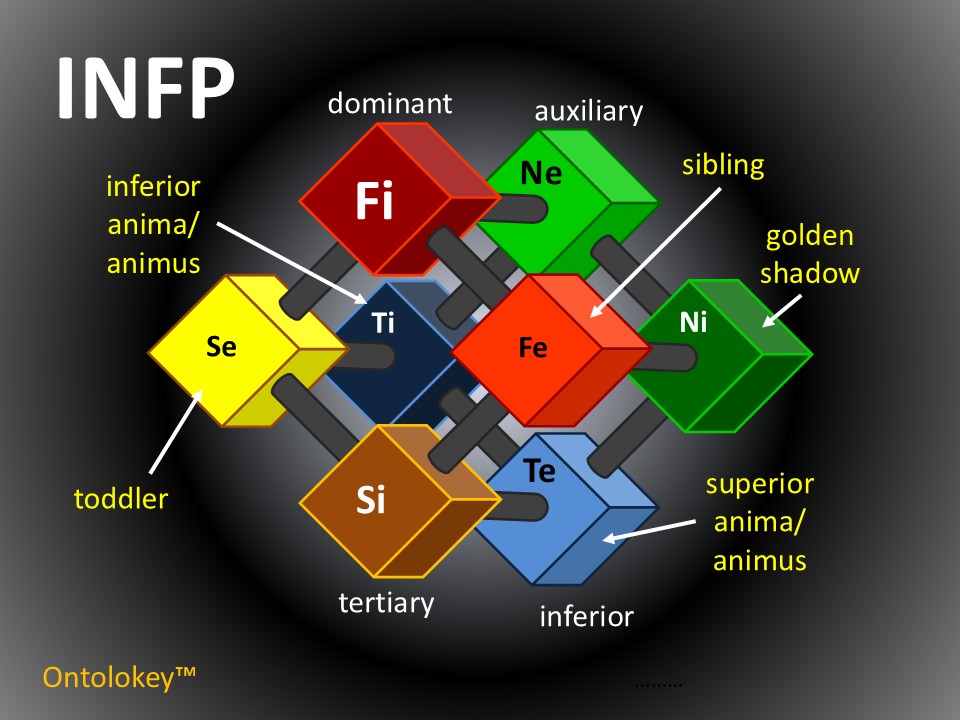
The Tragedy of the Invisible Self
The popular image of the INFP is often built around words such as empathy, idealism, authenticity, compassion, creativity, and emotional depth. While these descriptions contain truth, they are also profoundly incomplete. They describe the visible surface of the personality while leaving its darker psychological architecture largely unexplored. Every personality structure develops compensatory strengths around specific vulnerabilities, and the strengths that make the INFP appear gentle, humane, and morally sensitive are inseparable from deeper conflicts that often remain hidden even from the individual himself. The shadow of this personality is not primarily aggression, domination, cruelty, or narcissistic grandiosity. Its deepest shadow emerges from a far more subtle place: an increasingly painful separation between inner possibility and lived reality. This gap becomes the central drama of the INFP life. What begins as sensitivity gradually becomes hesitation. What begins as idealism slowly transforms into dissatisfaction. What begins as conscience eventually risks becoming self-condemnation. The tragedy is not that the INFP lacks depth, but that depth itself can become a prison when it remains unexpressed.
One of the most striking observations found throughout the psychological descriptions associated with this personality pattern is the recurring theme of excessive self-monitoring. The individual often experiences himself as standing under a permanent internal spotlight. He becomes intensely aware of how he appears, how he sounds, whether he is behaving correctly, whether his actions reflect his values, whether he has unintentionally harmed someone, whether his motives are pure enough, whether he has spoken too much or too little. This internal observation system develops to such an extent that spontaneity becomes increasingly difficult. Instead of moving naturally into action, the individual first evaluates the action, then evaluates the evaluation, and then evaluates the motives behind the evaluation. The result is not wisdom but paralysis. Action becomes burdened by an extraordinary weight of responsibility. Even minor decisions may feel morally significant, psychologically loaded, and existentially consequential. The person who appears calm from the outside may internally be navigating an exhausting labyrinth of self-reflection. The document repeatedly describes this phenomenon as a hypertrophy of self-control, where the individual feels constantly judged by an invisible audience and increasingly doubts his own adequacy.
The irony is that such people are often perceived by others as highly conscientious and morally reliable. They tend to be responsible, thoughtful, diligent, and careful in their dealings with others. Yet beneath this socially admirable exterior often lies a private experience of chronic insufficiency. No achievement feels complete. No effort feels entirely adequate. No expression fully captures what was intended. The inner vision remains larger than the outer reality. The individual imagines a richer conversation than the one that occurred, a deeper relationship than the one that exists, a nobler action than the one that was performed, a more authentic self than the one currently embodied. This discrepancy between the ideal and the real becomes one of the central psychological wounds of the INFP personality. The individual is not merely disappointed with life; he is disappointed by the inability of reality to fully embody the possibilities he perceives within himself. Consequently, life often feels like a succession of imperfect translations. What appears in the world always seems inferior to what existed inwardly before expression.
This psychological mechanism helps explain why many INFPs experience a peculiar form of hidden suffering. Unlike personalities whose frustrations arise from external obstacles, the INFP often experiences conflict between potential and realization. The imagination is not merely active; it is often richer, more emotionally nuanced, and more meaningful than external life itself. Inner worlds become populated with ideal conversations, ideal relationships, ideal futures, ideal moral resolutions, and ideal forms of self-expression. Reality, by comparison, feels crude, disappointing, and strangely inadequate. The individual may therefore begin retreating from life not because he consciously rejects it, but because reality repeatedly fails to satisfy the standards established by imagination. Over time this creates a dangerous pattern. The person increasingly lives among possibilities rather than realities. Dreams become emotionally safer than actions. Fantasies become psychologically richer than relationships. Reflection becomes more rewarding than participation. Eventually the individual may discover that he has become a spectator of his own existence.
The deepest shadow begins precisely here. Most people assume the opposite of life is death. Psychologically speaking, however, the opposite of life is often unrealized potential. Life requires incarnation. It requires that inner realities take form in speech, action, creativity, relationships, commitments, and risks. Potential that remains forever potential eventually becomes corrosive. The document repeatedly emphasizes the danger of an excessive accumulation of unrealized structures within consciousness. When possibilities endlessly multiply without becoming realities, the personality becomes overloaded. Decision-making becomes increasingly difficult because every choice simultaneously kills countless alternatives. The more possibilities the individual perceives, the harder it becomes to commit to one path. As a result, hesitation expands. Doubt expands. Self-consciousness expands. Meanwhile actual life contracts. The personality becomes rich inwardly and poor outwardly. It possesses enormous psychological substance but insufficient embodiment.
This dynamic also reveals why many INFPs carry a hidden relationship with melancholy. The melancholy is not necessarily caused by trauma, rejection, or failure, although such experiences may intensify it. Rather, it emerges from the constant awareness of unrealized possibilities. Every unspoken truth, every abandoned dream, every unlived version of oneself remains psychologically active. Many people leave their past behind. The INFP often carries entire alternative lives within memory and imagination. There is the artist who never created. The lover who never confessed. The leader who never stepped forward. The writer who never finished the manuscript. The visionary who never trusted his vision. These figures continue living inside the psyche like ghosts. They are not fantasies in the trivial sense. They are psychological realities that demand acknowledgment. The result is often a subtle feeling that life has not been fully lived, even when objective accomplishments suggest otherwise.
Another aspect of the shadow emerges through the individual’s relationship with social judgment. Popular descriptions often portray the INFP as completely independent and unconcerned with public opinion. The psychological evidence suggests something far more complicated. Beneath the appearance of independence often lies profound sensitivity to rejection, ridicule, misunderstanding, and moral condemnation. The person may not seek admiration in an overt way, but he often longs for acceptance. More specifically, he longs for acceptance of what is most authentic within him. Because his identity is strongly connected to personal values and emotional truth, criticism is rarely experienced as criticism of behavior alone. It frequently feels like criticism of the self. Consequently, social disapproval can become disproportionately painful. The individual may therefore conceal significant parts of himself from the world. He learns to remain invisible. He avoids situations where exposure could lead to humiliation. He retreats from opportunities that might reveal inadequacy. Eventually, the desire for authenticity collides with the fear of being seen.
This creates one of the great paradoxes of the INFP condition. On the surface, the personality appears private because it values individuality. At a deeper level, privacy often functions as protection. The individual is not merely guarding uniqueness; he is protecting vulnerability. He senses that what matters most to him is fragile. He therefore hides it from a world that appears careless, cynical, superficial, or hostile. Yet every act of concealment comes with a psychological cost. The hidden self cannot receive confirmation. It cannot participate in relationships. It cannot influence reality. Gradually the individual begins living in two worlds. One is visible, functional, socially adapted, and relatively safe. The other is invisible, emotionally intense, morally charged, and psychologically alive. The more these worlds separate, the greater the feeling of alienation. The individual may become surrounded by people who know him while simultaneously feeling that nobody truly knows him at all.
The document repeatedly returns to a theme that many modern personality descriptions overlook entirely: a painful sense of insufficiency. Sensitive individuals often carry extraordinarily high moral standards and ethical expectations toward themselves. They notice shortcomings that others would never perceive. They interpret weaknesses as evidence of character failure. They often experience guilt not because they have done something wrong, but because they have failed to become what they believe they should be. This distinction is crucial. Ordinary guilt concerns actions. Existential guilt concerns unrealized potential. The INFP shadow is frequently saturated with the latter. The individual does not merely regret mistakes. He regrets unrealized possibilities. He judges himself not only according to what he has done but according to everything he could have done. Because the imagined ideal remains perpetually out of reach, self-forgiveness becomes difficult. The personality becomes trapped in an endless courtroom where the judge, prosecutor, and accused are the same person.
Seen from this perspective, the deepest shadow of the INFP is not emotionality, introversion, idealism, or even sensitivity. The deepest shadow is the gradual replacement of life by possibility. The individual becomes so concerned with preserving inner truth that he struggles to embody it. He becomes so devoted to authenticity that he fears imperfect action. He becomes so aware of complexity that he loses confidence in decisions. He becomes so sensitive to meaning that ordinary reality appears insufficient. The result is not dramatic destruction but something quieter and more tragic. A person can spend years preparing to live, years refining values, years searching for certainty, years waiting for the perfect moment, and only later discover that life was occurring during the preparation itself. At that moment the central question emerges with unsettling force: How much of the self remained potential when it should have become reality?
This question marks the entrance into the true shadow territory of the INFP personality. Everything that follows in this essay will explore the consequences of that division between the inner world and the lived world, because it is within that fracture that the deepest psychological conflicts of this personality are born.
The Tyranny of the Ideal Self: Why INFPs Become Their Own Harshest Judge
One of the most misunderstood aspects of the INFP personality is the source of its suffering. Outsiders often assume that such individuals suffer primarily because the world is insensitive, unfair, superficial, or hostile to their values. While this is certainly part of the picture, it is not the deepest source of pain. The deeper conflict originates within the personality itself. Long before the individual feels judged by society, he has already established an internal tribunal whose standards exceed anything the external world could reasonably demand. The INFP often spends years believing that his greatest enemy is misunderstanding, rejection, or social alienation. Only later does he begin to recognize that the most relentless criticism originates from within. The true tyrant is frequently not society but the ideal self he carries inside his imagination. This ideal self is not merely a goal. It gradually becomes a psychological authority, a silent judge against which every action, emotion, decision, relationship, and achievement is measured. Because the ideal remains unattainable by definition, the verdict is almost always the same: not enough.
This internal dynamic develops from what is otherwise one of the personality’s greatest strengths. The INFP possesses an unusual capacity for self-reflection. Unlike individuals who move quickly from impulse to action, he often experiences a rich intermediate stage of evaluation, contemplation, and ethical examination. The problem is not reflection itself. Reflection becomes destructive when it loses its relationship to reality and becomes exclusively accountable to perfection. At that point the individual no longer evaluates himself according to human standards but according to imagined standards. He does not ask whether he acted reasonably well under imperfect circumstances. Instead he asks whether his behavior perfectly embodied his highest values. He does not ask whether a relationship was meaningful. He asks whether it matched the ideal vision of intimacy he carries within himself. He does not ask whether a creative work was valuable. He asks whether it fully expressed the image that existed in his imagination before it entered reality. Because reality is inherently limited and imperfect, it can never satisfy these expectations. Thus every accomplishment arrives accompanied by disappointment.
What makes this process especially dangerous is that it often disguises itself as morality. The individual may believe he is simply being conscientious, responsible, or ethically serious. Yet there is an important distinction between conscience and perfectionism. Conscience evaluates behavior according to values while preserving compassion for human limitations. Perfectionism, by contrast, treats limitation itself as a moral failure. The INFP shadow frequently crosses this boundary without noticing it. A forgotten obligation becomes evidence of irresponsibility. An awkward social interaction becomes evidence of personal inadequacy. A failed project becomes evidence of a flawed character. The personality gradually loses the ability to distinguish between mistakes and identity. Every failure becomes existential. Every disappointment becomes personal. Every imperfection becomes evidence in an ongoing case against oneself. The result is a form of psychological self-surveillance that never rests because the standards themselves are impossible to satisfy.
Many descriptions of this personality emphasize the individual’s strong ethical orientation. Yet relatively few examine the darker consequence of such an orientation when combined with insecurity. The document repeatedly describes a tendency toward feelings of insufficiency, self-reproach, exaggerated responsibility, and chronic self-doubt. These tendencies are not incidental characteristics. They emerge directly from the relationship between aspiration and self-perception. The individual often develops extraordinarily high ideals while simultaneously underestimating his own capabilities. This creates a devastating combination. The standards continually rise while confidence continually declines. The gap between who one is and who one believes one should be widens year after year. Eventually the individual may become incapable of appreciating genuine growth because every achievement merely reveals a new level that remains unattained. The psychological horizon constantly retreats into the distance. No matter how far one travels, fulfillment never arrives.
This phenomenon can be observed most clearly in the INFP’s relationship with guilt. Many people experience guilt after violating their values. The INFP often experiences guilt for failing to embody them completely. The difference may appear subtle, but psychologically it is enormous. In the first case, guilt serves a corrective function. In the second case, guilt becomes a permanent condition. The individual feels guilty not because he has done something objectively wrong, but because he has fallen short of an imagined ideal version of himself. He may feel guilty for not helping enough, caring enough, creating enough, achieving enough, loving enough, understanding enough, or sacrificing enough. The list becomes endless because perfection has no natural limit. Consequently, self-acceptance remains perpetually postponed until some future state of moral or psychological completion is achieved. Since such completion never arrives, self-acceptance never arrives either.
An especially tragic manifestation of this pattern emerges in the domain of personal authenticity. The INFP values authenticity more deeply than most people realize. Yet this value often becomes distorted by perfectionistic thinking. Instead of asking whether he is generally living in accordance with his values, the individual begins demanding complete authenticity in every thought, feeling, and action. He monitors his motives obsessively. He questions whether his kindness is sufficiently pure. He wonders whether his generosity contains hidden self-interest. He analyzes whether his emotions are genuine enough. He even scrutinizes the sincerity of his self-scrutiny. What initially appears to be self-awareness gradually becomes an endless recursive loop. The individual no longer lives his values. He audits them. He no longer experiences his emotions naturally. He investigates them. In extreme cases, this can create a profound sense of psychological exhaustion because consciousness becomes occupied by continuous internal evaluation rather than direct participation in life.
The paradox is that the INFP is often considerably more forgiving toward others than toward himself. He can recognize complexity in other human beings. He can understand context, trauma, uncertainty, weakness, and contradiction when evaluating the behavior of friends, family members, and even strangers. Yet this compassion frequently disappears when directed inward. Toward himself he often becomes remarkably severe. The very empathy he extends toward others becomes unavailable when he examines his own shortcomings. This asymmetry reveals the true nature of the shadow. The issue is not a lack of compassion. It is a refusal to include oneself among those who deserve it. Somewhere beneath the surface lies an unconscious belief that one’s own flaws require stricter judgment than the flaws of others. Such a belief inevitably leads to chronic self-condemnation because no human being can survive indefinitely under standards that exceed those applied to everyone else.
The roots of this tendency frequently extend into early experiences of sensitivity and social caution. Many individuals of this type grow up acutely aware of disapproval, criticism, embarrassment, and rejection. They often learn to monitor themselves carefully in order to avoid social pain. Over time this external monitoring becomes internalized. The voice that once belonged to parents, teachers, peers, or authority figures eventually becomes one’s own voice. Yet something important changes during this process. External criticism has limits because it depends on actual events. Internal criticism possesses no such limitations. Imagination can generate infinitely more accusations than reality ever could. The result is an inner authority that becomes increasingly detached from objective circumstances. Even when the environment is supportive, the individual continues judging himself according to old standards of vigilance and self-protection.
The document repeatedly notes that acceptance has an unusually powerful psychological effect upon this personality structure. This observation reveals something essential about the nature of the internal judge. Acceptance does not merely provide emotional comfort. It temporarily weakens the inhibitory mechanisms that prevent self-expression. When the individual feels genuinely accepted, his self-monitoring decreases. The internal critic loses authority. Creative expression becomes easier. Decisions become easier. Action becomes easier. The person begins transforming possibilities into realities rather than endlessly evaluating them. This suggests that much of the INFP’s inhibition is not caused by laziness, lack of talent, or lack of motivation. Instead it originates from fear of judgment combined with excessive self-criticism. The individual often possesses sufficient ability to act but insufficient permission to do so.
Perhaps the most destructive consequence of the ideal self emerges in the realm of identity. Over time the individual begins relating not to who he actually is but to who he imagines he should become. Life gradually transforms into a perpetual self-improvement project. Every experience becomes evaluated according to its usefulness in closing the gap between reality and ideality. Yet because the ideal self is largely imaginary, the gap can never fully disappear. The person therefore develops a strange relationship with his own existence. He lives continuously in anticipation of becoming himself. The authentic self is always located in the future. The worthy self is always one achievement away. The lovable self is always one transformation away. The complete self is always one insight away. Years may pass under this illusion without the individual noticing that the person being rejected in the meantime is his actual self.
This dynamic helps explain why many INFPs report feeling chronically unfinished. Their lives often contain a recurring sensation that something essential remains unrealized. While some of this feeling arises from genuine unrealized potential, much of it originates from perfectionistic comparison between reality and imagination. The individual compares himself not with other human beings but with an idealized psychological construct that has never existed anywhere. Naturally reality loses every comparison. Human life is inconsistent, contradictory, uncertain, and incomplete. The ideal self is none of these things. It exists beyond error because it exists beyond reality. To compare oneself to such a figure is to guarantee permanent dissatisfaction.
The shadow reaches its deepest form when the individual unconsciously becomes addicted to self-improvement itself. At first this statement sounds paradoxical. Self-improvement is generally considered virtuous. Yet psychological growth differs profoundly from psychological self-rejection. Growth emerges from acceptance and development. Self-rejection emerges from inadequacy and shame. The two may produce similar behaviors while arising from completely different motivations. Many INFPs spend years pursuing growth while secretly hoping to earn the right to accept themselves. The tragedy is that self-acceptance cannot be earned in this way. Any achievement sufficient to justify acceptance would also create a higher standard demanding further achievement. Thus the pursuit becomes endless. The individual runs toward a destination that recedes with every step.
The liberation from this shadow begins with a difficult realization. The ideal self is not an attainable destination but a symbolic guide. Its purpose is orientation, not judgment. It points toward values, meaning, and direction. It was never meant to function as a weapon against the actual self. Yet many INFPs unconsciously transform it into precisely that. The ideal becomes a tyrant. The vision becomes a prosecutor. The dream becomes an accusation. When this occurs, the personality enters a state of perpetual psychological warfare against itself. The deepest challenge is therefore not to become better but to stop treating humanity as failure. Only when the individual learns to extend toward himself the same compassion he naturally offers others can the internal tribunal finally begin to dissolve. Until then, the harshest critic the INFP will ever encounter is not the world but the impossible figure standing silently within his own imagination.
Living Among Possibilities: The Seduction of Fantasy and the Flight from Reality
If the ideal self represents the internal authority that judges the INFP, imagination represents the kingdom in which that authority resides. No discussion of the deeper shadow of this personality can avoid confronting the extraordinary role that possibility plays within its psychological structure. For many people, imagination functions primarily as a tool. It helps them solve problems, anticipate outcomes, or generate creative ideas. For the INFP, imagination often becomes something much larger. It becomes an alternative reality. It becomes a psychological homeland. It becomes a realm in which emotional truths, unrealized identities, ideal relationships, moral aspirations, and future possibilities coexist in a richness that external reality struggles to match. This capacity is one of the greatest gifts associated with the personality. It allows for profound creativity, empathy, symbolic thinking, artistic vision, and psychological insight. Yet every gift carries a shadow. The shadow emerges when imagination ceases to enrich life and begins replacing it. At that point possibility no longer serves reality. Reality begins serving possibility.
The fundamental psychological problem is not that the INFP dreams too much. Human beings require imagination in order to create, innovate, and transcend immediate circumstances. The problem emerges when imagination becomes emotionally superior to reality itself. The individual gradually discovers that the world inside his mind is more meaningful, more coherent, more beautiful, more emotionally satisfying, and more controllable than the world outside it. Internal experiences possess an intensity that ordinary life rarely provides. Relationships in imagination are free from misunderstanding. Creative achievements in imagination are free from technical limitations. Moral victories in imagination are free from compromise. The future remains perfect because it has not yet encountered reality. Consequently, the psyche develops a subtle preference. Instead of moving outward toward action, it increasingly moves inward toward possibility. This movement is rarely conscious. The individual simply notices that thinking about life feels more rewarding than living it. The dream slowly becomes more attractive than the journey required to realize it.
This tendency is especially powerful because imagination allows the personality to preserve perfection. Reality destroys perfection by forcing choices. Every actual relationship excludes countless alternative relationships. Every career path closes other possibilities. Every commitment eliminates competing futures. Every decision transforms possibility into limitation. Yet within imagination, all possibilities remain alive simultaneously. Nothing has to be sacrificed. Nothing has to be abandoned. The individual can be a writer, philosopher, artist, humanitarian, visionary, lover, traveler, and spiritual seeker all at once within the internal world. The moment action begins, however, reality demands prioritization. One path must be chosen over another. One identity must become more developed than others. One life must be lived instead of thousands. For a personality acutely aware of possibility, this necessity often feels painful. Every decision contains a hidden death. Every commitment requires renouncing countless unrealized alternatives.
The document repeatedly describes difficulties related to decisiveness, implementation, and movement from contemplation into action. These difficulties are not adequately explained by laziness or lack of discipline. More often they emerge from the psychological burden of possibility itself. The individual sees too much. He perceives too many variables, too many consequences, too many meanings, too many alternative paths. While others simplify reality in order to act, he often experiences its complexity in overwhelming detail. As a result, action becomes increasingly difficult. Every choice feels irreversible. Every commitment feels morally significant. Every step forward appears to close doors that remain psychologically alive. The individual may therefore postpone decisions while attempting to discover the perfect path. Unfortunately, the perfect path exists only within imagination. Reality offers only imperfect paths chosen under conditions of uncertainty.
This dynamic creates one of the central paradoxes of the INFP life. The personality often values authenticity above all else, yet authenticity requires embodiment. One cannot become authentic merely by imagining authenticity. Values must be translated into behavior. Convictions must become actions. Creativity must become creation. Love must become relationship. Meaning must become commitment. Yet each of these transformations requires entering the imperfect realm of reality. The individual therefore finds himself caught between two psychological forces. One force seeks expression, participation, and manifestation. The other seeks preservation, purity, and possibility. The first demands action. The second fears what action inevitably destroys. This conflict can persist for decades without reaching conscious awareness. The person simply experiences chronic hesitation, unexplained dissatisfaction, and recurring feelings that life remains somehow incomplete.
A particularly important aspect of this shadow concerns the emotional function of fantasy. Many people assume fantasy serves primarily intellectual purposes. In reality, fantasy often functions emotionally. It protects the psyche from disappointment. An imagined future cannot reject us. An imagined relationship cannot abandon us. An imagined achievement cannot fail. Within fantasy, emotional investments remain safe because reality never tests them. The INFP may therefore develop an unconscious attachment to possibility itself. Possibility becomes comforting precisely because it remains unrealized. Once a dream enters reality, it becomes vulnerable to imperfection. The book that is never written remains brilliant. The relationship that never begins remains ideal. The talent that is never tested remains extraordinary. Reality threatens these illusions because reality introduces limits, flaws, and uncertainty. Consequently, some individuals begin protecting their dreams by refusing to realize them.
This mechanism helps explain why many highly gifted INFPs struggle with implementation despite possessing remarkable insight and creativity. The obstacle is often not inability but exposure. Creation requires vulnerability. The moment an idea becomes a book, painting, business, philosophy, or public statement, it becomes subject to criticism. Others can evaluate it. Others can misunderstand it. Others can reject it. As long as the idea remains internal, however, it remains protected from judgment. The psyche therefore faces a difficult choice. It can preserve perfection through inaction, or it can risk imperfection through expression. Many individuals unconsciously choose the former for far longer than they realize. The cost of this choice only becomes visible later when unrealized potential begins generating regret.
The tragedy becomes especially apparent in the domain of identity. The INFP often possesses an unusually vivid awareness of who he might become. This awareness can be inspiring, but it can also become destabilizing. The personality becomes populated with alternative selves. There is the version who pursued art. The version who moved abroad. The version who started the company. The version who wrote the novel. The version who transformed his life after some decisive moment of courage. These identities remain psychologically active because imagination continues feeding them. As years pass, the individual accumulates not only memories but unlived lives. Each unlived life becomes a silent comparison against present reality. The actual self therefore finds itself competing against countless idealized alternatives that never encountered real-world limitations. Unsurprisingly, reality loses the comparison.
This phenomenon often produces a subtle but persistent dissatisfaction that outsiders struggle to understand. The individual may possess stable relationships, meaningful work, creative talents, and considerable accomplishments. Yet he still feels that something essential is missing. The source of this feeling is frequently misunderstood. It is not necessarily a deficiency in external circumstances. Rather, it emerges from the coexistence of actual life and imagined life. Actual life contains compromises, limitations, disappointments, and unfinished projects. Imagined life contains unlimited possibility. The comparison is fundamentally unfair. Nevertheless, the psyche performs it continuously. Every achievement is measured not against ordinary standards but against idealized futures that never had to prove themselves.
Over time, this tendency can evolve into a more dangerous form of escapism. Not all escapism is obvious. Many people imagine escapism as addiction, distraction, or avoidance through entertainment. The INFP often escapes through introspection, fantasy, contemplation, symbolic thinking, and emotional immersion. These activities are not inherently unhealthy. In fact, they often contribute significantly to creativity and personal growth. The problem arises when they become substitutes for engagement with reality. Reflection replaces action. Analysis replaces participation. Vision replaces execution. The individual becomes increasingly skilled at understanding life while becoming increasingly disconnected from living it. He develops profound insight into human nature yet struggles to make practical decisions regarding his own future. He understands the psychology of courage while avoiding situations that require courage from himself.
The document repeatedly emphasizes the importance of acceptance, encouragement, and supportive environments in unlocking the potential of this personality. This observation reveals something profound. The INFP often moves toward reality when he feels psychologically safe. Acceptance reduces self-consciousness. Encouragement reduces fear of failure. Trust reduces inhibition. Under these conditions, imagination begins serving reality rather than replacing it. The individual starts translating inner visions into concrete action. Creativity becomes productive rather than merely speculative. Relationships become lived rather than imagined. Possibility becomes embodiment. This transformation illustrates that the problem is not imagination itself. The problem is fear combined with imagination. Fear turns possibility into refuge. Courage turns possibility into creation.
The deeper shadow, however, emerges when the individual unconsciously mistakes potential for achievement. Potential possesses a peculiar psychological intoxication. It allows one to feel exceptional without confronting reality. The person knows he could write the novel, start the movement, create the artwork, transform his life, or fulfill his calling. This knowledge provides emotional satisfaction. Yet there is a crucial distinction between possessing potential and actualizing it. Potential is possibility. Achievement is incarnation. One exists in imagination; the other exists in reality. The longer potential remains unrealized, the easier it becomes to confuse the two. The individual begins identifying with what he might do rather than what he actually does. He lives psychologically in future accomplishments that never arrive.
This is perhaps the most painful truth confronting the INFP shadow. Possibility can become addictive because it protects identity from reality. As long as a dream remains unrealized, it cannot fail. As long as a talent remains untested, it cannot disappoint. As long as a future remains hypothetical, it remains perfect. Yet life demands something far more difficult. It demands that possibility surrender its perfection and enter reality. It demands that dreams accept limitation. It demands that ideals tolerate imperfection. It demands that the individual stop living among infinite futures and begin inhabiting one actual life.
The mature development of the INFP does not require abandoning imagination. Such a demand would destroy one of the personality’s greatest strengths. Rather, maturity requires a new relationship between imagination and reality. Imagination must become a servant rather than a refuge. Possibility must become a source of direction rather than escape. The individual must learn that imperfect embodiment is psychologically superior to perfect fantasy. A flawed book is more real than an unwritten masterpiece. An imperfect relationship is more meaningful than an imagined soulmate. A difficult journey is more transformative than a thousand beautiful plans. Reality may never achieve the elegance of imagination, but it possesses something imagination lacks entirely: existence.
The deepest danger for the INFP is therefore not failure. It is the temptation to remain forever within the kingdom of possibility, endlessly preparing, endlessly imagining, endlessly refining, while life quietly passes outside the gates. The shadow whispers that one more insight is needed before action, one more certainty before commitment, one more refinement before expression. Yet reality teaches the opposite lesson. Life is not discovered before participation. Life reveals itself through participation. The individual does not become himself by perfecting possibility. He becomes himself by risking reality.
The Hidden Dependency: Why the INFP Secretly Needs More Acceptance Than They Admit
One of the most persistent myths surrounding the INFP personality is the belief that it is fundamentally independent of social approval. Because these individuals often appear private, self-directed, and resistant to conformity, observers frequently conclude that they simply do not care what others think. On the surface, there is some truth to this perception. The INFP is often willing to hold unpopular opinions, reject collective trends, and preserve personal convictions even when external pressure encourages compromise. Yet beneath this visible independence lies a far more complicated psychological reality. The INFP may not seek approval in the obvious manner associated with more socially expressive personalities, but this should not be mistaken for immunity to acceptance and rejection. In fact, the opposite is often true. The need for acceptance frequently exists at extraordinary depth, hidden beneath layers of self-protection, idealism, and emotional privacy. The individual may spend years convincing himself that he does not need validation while simultaneously organizing large portions of his psychological life around avoiding rejection.
The key to understanding this apparent contradiction lies in recognizing the difference between admiration and acceptance. Many people seek admiration because they desire status, recognition, influence, or superiority. The INFP’s psychological need tends to be different. What he longs for is not necessarily praise but recognition of his authentic self. He wants to know that who he genuinely is can exist within relationships without being condemned, ridiculed, dismissed, or fundamentally misunderstood. This distinction is crucial because it explains why ordinary forms of approval often feel strangely unsatisfying. Compliments directed toward achievements, appearances, or social roles may provide temporary pleasure, but they rarely reach the deeper psychological need. What the individual seeks is confirmation that the vulnerable, hidden, emotionally authentic self can safely emerge into the world. Because this desire is so profound, rejection of the authentic self often wounds far more deeply than rejection of performance or competence.
The document repeatedly describes a personality structure that becomes highly responsive to acceptance, encouragement, and emotional validation. This responsiveness is not accidental. It reveals a central psychological dynamic operating beneath the surface. The INFP often experiences life through a heightened awareness of interpersonal atmosphere. Even when outwardly reserved, he is continuously registering signals of approval, disapproval, safety, tension, trust, and emotional receptivity. The surrounding psychological environment therefore exerts far greater influence than outsiders typically recognize. In supportive environments, the personality becomes expansive, creative, productive, and expressive. In critical or hostile environments, it often becomes inhibited, withdrawn, uncertain, and self-protective. What appears from the outside as inconsistency is often the consequence of fluctuating psychological safety. Acceptance functions not merely as comfort but as permission for self-expression.
This phenomenon becomes particularly visible when examining the individual’s relationship with vulnerability. The INFP often possesses emotional depths that are not immediately apparent. Thoughts, values, dreams, insecurities, and personal meanings are frequently protected behind carefully maintained boundaries. Outsiders sometimes interpret this privacy as emotional self-sufficiency. In reality, privacy often develops because the individual has learned through experience that exposure can be painful. Sensitivity creates memory. Every experience of ridicule, misunderstanding, betrayal, dismissal, or emotional invalidation leaves a lasting psychological impression. Over time, the personality develops sophisticated strategies for protecting what matters most. The authentic self retreats into increasingly private territories. Yet this protection creates a dilemma. The more successfully the self is hidden, the less opportunity exists for genuine acceptance. The individual longs to be known while simultaneously fearing the consequences of being seen.
This tension produces one of the defining paradoxes of the INFP shadow. On one level, the individual desires intimacy, understanding, and emotional recognition. On another level, he fears the vulnerability required to obtain them. Genuine acceptance requires exposure. One cannot be accepted for one’s authentic self without first revealing that self. Yet revelation creates risk. The hidden self may be misunderstood. The values that seem noble internally may appear naive externally. The emotions that feel profound privately may appear excessive publicly. Consequently, many INFPs develop a pattern of partial self-disclosure. They reveal enough to maintain relationships but conceal the most vulnerable dimensions of their identity. The result is a peculiar form of loneliness. The individual may be loved, appreciated, and respected while still feeling fundamentally unseen.
The psychological consequences of this hidden dependency become especially significant in the realm of self-esteem. Because the personality often places great importance on authenticity, acceptance from others carries unusual symbolic weight. It becomes evidence that one’s true self can survive contact with reality. Rejection, by contrast, threatens more than social belonging. It appears to confirm fears that authenticity itself is dangerous. Consequently, criticism often penetrates deeper than observers realize. What appears externally as a minor disagreement may internally trigger complex questions regarding worth, identity, belonging, and self-expression. The individual may spend hours or days reflecting upon interactions that others have already forgotten. This prolonged processing is not simply emotional sensitivity. It reflects the fact that social experiences frequently activate deeper existential concerns regarding acceptance and rejection.
The shadow becomes more complicated because the INFP often dislikes needing acceptance. There is frequently a strong desire for psychological independence. The individual wants to believe that his values remain stable regardless of public opinion and that his sense of self does not depend upon external validation. To some extent this aspiration is genuine. Yet because the need for acceptance remains active beneath consciousness, a conflict emerges. The individual simultaneously seeks validation and resents needing it. He longs for understanding while insisting that understanding should not matter. He desires affirmation while attempting to appear unaffected by its absence. This internal contradiction generates confusion because the dependency cannot be acknowledged openly. Instead it often manifests indirectly through withdrawal, disappointment, resentment, self-criticism, or emotional isolation.
One of the most revealing observations within the source material concerns the transformative impact of supportive relationships. When genuine acceptance is present, many of the personality’s chronic difficulties begin to diminish. Self-doubt decreases. Creativity increases. Initiative increases. Emotional expression becomes easier. Confidence emerges naturally rather than through force of will. This pattern suggests that much of the INFP’s inhibition originates not from incapacity but from psychological constriction. The personality possesses substantial resources that remain inaccessible under conditions of perceived judgment. Acceptance functions like sunlight reaching a previously hidden landscape. Qualities that appeared absent suddenly become visible. Talents emerge. Confidence emerges. Productivity emerges. The person who seemed uncertain reveals unexpected strength.
This observation points toward a deeper truth regarding the nature of the INFP shadow. Many psychological difficulties associated with this personality do not arise from weakness itself but from chronic self-protection. The individual becomes so focused on avoiding rejection that large portions of his vitality remain suppressed. Creative ideas are withheld. Opinions remain unspoken. Affections remain unexpressed. Ambitions remain unexplored. The person gradually adapts himself to anticipated judgment rather than actual reality. Ironically, this adaptation often creates the very loneliness it seeks to avoid. By hiding vulnerable aspects of the self, the individual prevents others from genuinely knowing him. Relationships become safer but less intimate. Social acceptance becomes easier but less meaningful. The authentic self remains protected yet isolated.
Over time this dynamic can evolve into a subtle dependency on idealized forms of connection. Because real relationships involve misunderstanding, compromise, and imperfection, the individual may increasingly invest emotional energy into imagined forms of acceptance. He dreams of the friend who understands everything without explanation, the partner who recognizes his deepest self immediately, the community where complete belonging exists, the future relationship in which no concealment is necessary. These fantasies emerge from legitimate psychological needs, but they often become problematic when compared against actual human relationships. Real people are limited. They misunderstand. They overlook important details. They fail to recognize emotional subtleties. If acceptance is expected to arrive in perfect form, reality inevitably disappoints. Consequently, the individual may overlook genuine acceptance because it arrives imperfectly rather than ideally.
This tendency also helps explain why some INFPs remain emotionally attached to relationships that never fully materialized. The imagined version of the relationship may become psychologically more significant than the actual relationship itself. Possibility once again competes with reality. The person is not merely grieving what existed. He is grieving everything that might have existed. Since imagined possibilities possess no limitations, they often appear more emotionally compelling than actual experiences. This dynamic reinforces withdrawal from reality because fantasy offers forms of acceptance that reality rarely provides. Yet the comfort gained through imagination comes at the cost of genuine participation in life.
The deeper tragedy is that the hidden dependency often remains unconscious. The individual interprets his behavior through other explanations. He believes he is withdrawing because people are superficial. He believes he is remaining silent because others would not understand. He believes he is avoiding vulnerability because privacy is preferable. While these explanations contain elements of truth, they frequently conceal a deeper fear. The fear is not merely that others will misunderstand him. The fear is that they will understand him and reject what they find. This possibility feels intolerable because so much of the personality’s identity is invested in authenticity. If the authentic self proves unacceptable, what remains?
Yet this question ultimately reveals the path beyond the shadow. The mature development of the INFP requires recognizing that acceptance cannot serve as the foundation of identity. Acceptance is valuable, healing, and deeply important, but it cannot become the source of selfhood itself. As long as identity depends upon external recognition, vulnerability will remain terrifying. Every social interaction will contain hidden existential stakes. Every disagreement will threaten self-worth. Every rejection will feel catastrophic. Freedom emerges only when the individual learns to grant himself the acceptance he seeks from others. This does not eliminate the human need for connection. Rather, it transforms the relationship between acceptance and identity. The self no longer exists because it is validated. It exists independently and then enters relationships from a position of psychological solidity.
For the INFP, this lesson is extraordinarily difficult because the longing to be understood runs so deep. Yet it is precisely this longing that must be examined. The individual spends years searching for people who will finally provide unconditional recognition, only to discover that no human being can completely fulfill such a role. Every relationship remains partial. Every understanding remains incomplete. Every acceptance remains imperfect. Maturity begins when one recognizes that imperfect acceptance is still acceptance and that authentic connection does not require perfect understanding.
The hidden dependency therefore contains both the wound and the cure. The wound is the belief that one’s authentic self requires external permission to exist. The cure is the realization that authenticity becomes strongest precisely when it no longer depends upon unanimous approval. Only then can the individual reveal himself honestly, not because rejection is impossible, but because acceptance is no longer the condition for selfhood. When that transformation occurs, relationships cease being courts of judgment and become what they were always meant to be: encounters between two imperfect human beings who are learning, however incompletely, to see one another as they truly are.
Emotional Idealism and Romantic Self-Deception: The Shadow of Love, Longing, and Projection
Among all dimensions of the INFP personality, perhaps none are more susceptible to distortion through idealization than love. While every personality type projects fantasies onto relationships to some degree, the INFP often experiences this process with unusual psychological intensity because relationships are rarely perceived merely as social arrangements. They are experienced as carriers of meaning. Love becomes connected not only to companionship but to identity, transcendence, redemption, emotional recognition, and existential belonging. The individual is not simply searching for a partner. He is often searching for a person through whom the deepest dimensions of his inner world can finally become visible. This longing is profoundly human and not inherently pathological. Yet precisely because it touches such fundamental psychological needs, it becomes vulnerable to some of the most powerful forms of self-deception. The shadow does not emerge because the INFP loves too deeply. It emerges because depth itself can become confused with projection, possibility, and fantasy.
To understand this dynamic, one must first recognize the unusual relationship the INFP often has with emotional meaning. Experiences are rarely evaluated solely according to observable facts. They are interpreted symbolically. A conversation may represent more than a conversation. A moment of connection may represent more than a moment. A shared interest, a meaningful glance, an unexpected act of kindness, or a profound intellectual exchange may acquire significance that extends far beyond its objective reality. This symbolic sensitivity enriches life enormously. It allows the individual to perceive layers of meaning that others overlook. Yet it also creates vulnerability because the psyche begins constructing narratives around fragments of reality. Small experiences become seeds from which entire emotional worlds emerge. The individual is often not relating exclusively to the person before him. He is relating to the possibilities that person appears to represent.
This distinction is crucial because projection always begins with possibility. No one falls in love with a fantasy knowingly. The process occurs unconsciously. Certain qualities in another person resonate with hidden aspects of the self. Perhaps the individual perceives intelligence, emotional depth, creativity, kindness, mystery, vulnerability, or moral beauty. These qualities activate powerful internal responses. Yet the psyche rarely stops there. Instead it begins filling gaps. Characteristics that are merely suggested become assumed. Potential compatibility becomes imagined certainty. Emotional resonance becomes interpreted as destiny. The person gradually transforms into a symbolic figure carrying meanings that may have little relationship to reality. The beloved becomes not simply a human being but an embodiment of hope, fulfillment, understanding, or salvation.
The tragedy of projection is that it often feels indistinguishable from genuine insight. The INFP frequently prides himself on psychological perception. He notices emotional subtleties. He detects underlying motivations. He senses complexities hidden beneath social masks. These abilities are often very real. Yet they can create overconfidence regarding interpersonal understanding. The individual begins believing he sees the person’s true essence, sometimes before substantial evidence exists. What he often sees, however, is a combination of reality and projection woven together so seamlessly that they become impossible to separate. The imagined person and the actual person merge into a single psychological image. Because the imagined elements originate from the individual’s own psyche, they often feel extraordinarily convincing.
This tendency becomes especially powerful when combined with loneliness or unmet emotional needs. The more deprived a person becomes of understanding, intimacy, or belonging, the greater the temptation to project these qualities onto potential relationships. The psyche naturally seeks completion. It searches for figures who appear capable of resolving internal tensions. The INFP may therefore become emotionally invested in people who symbolize psychological possibilities rather than demonstrated realities. What appears to be love may partially consist of longing directed toward an idealized image. The individual is not merely attracted to who the person is. He is attracted to what the person represents within his own emotional narrative.
The source material repeatedly emphasizes the importance of acceptance, emotional affirmation, and psychological safety for this personality structure. These needs naturally become activated in romantic relationships because intimate relationships seem capable of providing precisely what the individual longs for most deeply. A partner appears capable of offering understanding without judgment, closeness without intrusion, acceptance without compromise, and recognition without explanation. Yet such expectations create enormous pressure because no human being can consistently fulfill them. Every real relationship eventually encounters misunderstanding, disappointment, conflict, and limitation. The shadow emerges when these inevitable imperfections are interpreted not as normal aspects of intimacy but as evidence that something essential is wrong. The individual unconsciously compares the actual relationship against an idealized emotional vision that never existed outside imagination.
One of the less discussed aspects of the INFP shadow is the tendency to become attached not only to people but to emotional potential itself. Potential possesses extraordinary psychological power because it remains untouched by reality. A future relationship can still become perfect. An undeclared attraction can still become extraordinary. A connection that never fully materialized can still become legendary within memory. Once reality intervenes, however, possibilities collapse into actualities. Imperfections emerge. Differences become visible. Contradictions appear. The beloved becomes human. For many INFPs, this transition from possibility to reality constitutes one of the most difficult emotional adjustments in life. They are often exceptionally gifted at falling in love with potential and considerably less prepared for the ordinary realities that follow.
This dynamic helps explain why some INFPs remain emotionally attached to relationships long after objective circumstances suggest they should move on. They are not only attached to what happened. They are attached to what could have happened. In psychological terms, unrealized possibilities often remain more emotionally active than completed experiences. The mind continues exploring alternative futures, alternative decisions, alternative outcomes, and alternative versions of the relationship. Every unrealized possibility remains psychologically alive because it was never disproven by reality. Consequently, endings become unusually difficult. The individual is not grieving one loss but many losses simultaneously. He mourns the actual relationship, the imagined future, the symbolic meaning, and the version of himself that existed within that emotional possibility.
The shadow deepens further through the relationship between love and identity. Because the INFP often experiences intimacy as a form of self-revelation, romantic relationships frequently become intertwined with personal authenticity. Being loved feels equivalent to being understood. Being understood feels equivalent to being seen. Being seen feels equivalent to existing fully. While these connections contain elements of truth, they also create vulnerability. If identity becomes dependent upon romantic recognition, every relationship acquires existential significance. Rejection no longer concerns compatibility alone. It appears to invalidate the self. The individual may therefore enter relationships carrying psychological expectations that no partner can realistically satisfy. Love becomes burdened with responsibilities that properly belong to personal development, self-acceptance, and individuation.
A particularly subtle form of self-deception emerges when emotional intensity becomes confused with emotional truth. The INFP often experiences feelings with considerable depth. Because these feelings are powerful, there is a natural tendency to treat them as evidence. Yet emotions reveal subjective realities, not necessarily objective realities. Intense longing does not guarantee compatibility. Powerful attraction does not guarantee understanding. Emotional resonance does not guarantee sustainability. The shadow appears when feelings are granted authority they do not possess. The individual begins trusting emotional certainty more than observable evidence. Relationships are evaluated according to internal intensity rather than external reality. This can lead to repeated disappointment because reality eventually asserts itself regardless of emotional conviction.
The role of suffering deserves special attention here because many INFPs possess an unconscious tendency to romanticize emotional pain. This does not mean they enjoy suffering. Rather, suffering often acquires symbolic significance. Unfulfilled love feels meaningful because it reflects emotional depth. Longing feels profound because it demonstrates sincerity. Heartbreak feels transformative because it reveals vulnerability. There is truth within these perceptions. Yet suffering can also become psychologically seductive. The individual begins identifying with longing itself. Desire becomes more familiar than fulfillment. Yearning becomes more comfortable than possession. The psyche develops an attachment not merely to love but to the emotional intensity associated with unattainable love. In extreme cases, relationships that remain incomplete become more psychologically compelling than relationships that are actually available.
This tendency often contributes to a recurring pattern in which the individual becomes fascinated by emotionally unavailable people. Such attractions are rarely accidental. Emotionally unavailable partners preserve possibility while postponing reality. The relationship remains suspended within a realm of hope, imagination, and interpretation. Because fulfillment never fully arrives, projection remains intact. The beloved continues functioning as a symbolic figure rather than a fully known human being. Ironically, actual intimacy often threatens this arrangement because intimacy exposes reality. The more closely one knows another person, the less room remains for fantasy. Genuine closeness therefore requires surrendering the idealized image in favor of the actual individual.
The mature development of the INFP requires confronting one of the most uncomfortable truths about love: genuine intimacy is less magical than fantasy but infinitely more real. Real love contains misunderstandings. It contains ordinary days. It contains limitations, frustrations, disappointments, and imperfections. Yet it also contains something fantasy can never provide. It contains mutual participation in reality. Two people encounter one another not as symbols but as human beings. They are not asked to fulfill impossible psychological roles. They are not burdened with carrying one another’s unrealized dreams. Instead they share the difficult task of living.
This transformation requires relinquishing a powerful illusion. The illusion is that somewhere there exists a person who will finally eliminate loneliness, resolve self-doubt, heal existential uncertainty, and provide complete understanding. Such figures belong to fantasy, not reality. Real human beings cannot perform these functions because they are struggling with their own incompleteness. Yet this realization is not tragic. In many ways it is liberating. When the beloved is no longer expected to serve as savior, oracle, or destiny, genuine relationship becomes possible. Love shifts from projection to encounter. It ceases being a search for completion and becomes a meeting between two incomplete individuals.
The deepest shadow of the INFP in matters of love is therefore not emotional excess. It is the tendency to confuse possibility with reality, symbolism with personhood, longing with intimacy, and projection with understanding. The mature individual learns that authentic love begins precisely where idealization ends. It begins when another person is allowed to remain human. It begins when reality becomes more important than fantasy. It begins when connection is valued not because it fulfills a dream but because it exists. Only then can love cease functioning as an escape from life and become one of life’s most profound expressions.
The Passive Rebel: Resentment, Withdrawal, and the Dark Psychology of Unexpressed Anger
One of the most overlooked aspects of the INFP shadow is anger. The omission is understandable because anger rarely appears on the surface of this personality in its most recognizable forms. Unlike personalities whose frustration tends to manifest through confrontation, domination, or overt aggression, the INFP often develops a far more complicated relationship with hostility. Many spend years believing they are not particularly angry people at all. They identify with compassion rather than aggression, understanding rather than judgment, reconciliation rather than conflict. Yet beneath this self-image there frequently exists a vast reservoir of unacknowledged resentment, disappointment, frustration, and rage. The shadow emerges because anger does not disappear when it is ignored. Psychological energies that remain unconscious do not cease to exist. They simply change form. What cannot be expressed directly eventually seeks expression indirectly. Consequently, one of the deepest hidden dramas of the INFP personality concerns not the presence of anger but the refusal to recognize it.
The roots of this phenomenon often lie in the individual’s moral relationship with aggression itself. Many INFPs develop an early association between goodness and non-aggression. To be kind means not hurting others. To be compassionate means understanding rather than condemning. To be ethical means avoiding cruelty and domination. These values are admirable and frequently become genuine strengths. However, problems emerge when natural anger becomes unconsciously categorized alongside destructive aggression. The individual begins viewing his own hostile feelings as evidence of moral failure. Resentment feels shameful. Rage feels dangerous. Assertiveness feels selfish. Conflict feels inherently destructive. As a result, anger becomes pushed underground. The personality learns to remain patient, understanding, accommodating, and tolerant even when significant violations of personal boundaries occur.
This suppression creates an internal contradiction that can persist for decades. Human beings possess anger for a reason. Anger is not merely a destructive force. At its healthiest, it functions as a psychological alarm system. It signals injustice. It identifies violations. It protects boundaries. It mobilizes energy for necessary action. When this system is chronically suppressed, the individual loses access to an essential dimension of self-protection. He continues understanding others while failing to defend himself. He empathizes with those who harm him. He rationalizes mistreatment. He searches for explanations rather than responses. Over time, unresolved grievances accumulate beneath consciousness. The person who appears gentle externally may internally carry years of disappointment that have never been fully acknowledged.
The document repeatedly describes tendencies toward self-restraint, inhibition, accommodation, and excessive concern regarding interpersonal harmony. These characteristics help explain why anger often remains hidden within this personality structure. The individual frequently places substantial emphasis on maintaining positive relationships and avoiding unnecessary conflict. Consequently, emotional reactions that might threaten connection are often minimized or redirected inward. Instead of expressing frustration, he questions whether he is being unreasonable. Instead of defending himself, he attempts to understand the other person’s perspective. Instead of confronting injustice directly, he wonders whether he has somehow contributed to the problem. This pattern may appear mature on the surface, but it often conceals a profound imbalance. Compassion toward others gradually becomes abandonment of oneself.
The psychological consequences of this imbalance are significant because anger that cannot move outward typically turns inward. This transformation represents one of the central mechanisms underlying chronic self-criticism. The hostility that should be directed toward external violations becomes redirected against the self. The individual becomes his own adversary. He blames himself for circumstances beyond his control. He internalizes responsibility for relational failures that involve multiple people. He criticizes himself more harshly than he criticizes those who have actually harmed him. From the outside, this appears as humility. Psychologically, however, it often represents displaced aggression. The anger exists, but it has changed targets.
Over time, suppressed anger rarely remains entirely hidden. Instead it begins emerging through indirect channels. One of the most common manifestations is withdrawal. The INFP often avoids open confrontation for extended periods, yet eventually reaches a threshold beyond which continued tolerance becomes impossible. At this point, rather than initiating direct conflict, the individual frequently retreats. Communication decreases. Emotional openness decreases. Availability decreases. Interest decreases. Relationships that once seemed meaningful suddenly become distant. To observers, this shift may appear mysterious or disproportionate. In reality, it often represents the final stage of a long internal process. The resentment was present for months or years before the withdrawal occurred. The difference is that the individual never expressed it openly.
This tendency reveals why passive rebellion frequently replaces direct opposition within the INFP shadow. When anger cannot be expressed straightforwardly, it seeks alternative forms. Resistance becomes indirect. The individual may procrastinate, disengage, become emotionally unavailable, ignore expectations, quietly abandon commitments, or retreat into private autonomy. These behaviors often serve as substitutes for confrontation. Instead of saying no directly, the person becomes inaccessible. Instead of articulating dissatisfaction, he withdraws participation. Instead of challenging authority openly, he quietly stops cooperating. The rebellion remains real, but it unfolds through absence rather than presence.
The passive nature of this rebellion often causes both the individual and others to misunderstand what is occurring. Because no explicit conflict takes place, the underlying anger remains invisible. Yet invisibility does not reduce its power. In many cases, unexpressed resentment exerts greater influence than openly acknowledged frustration because it operates unconsciously. The individual begins making decisions motivated by grievances he has never articulated. Relationships deteriorate without clear explanations. Opportunities are abandoned for reasons that remain partially hidden even from himself. The psyche becomes organized around avoidance rather than conscious choice.
A particularly important aspect of this shadow concerns idealism. The INFP frequently enters relationships, workplaces, communities, and social structures carrying strong hopes regarding fairness, sincerity, authenticity, and mutual respect. These expectations are not unrealistic in themselves. Problems arise because reality inevitably falls short. People disappoint. Institutions disappoint. Friendships disappoint. Romantic partners disappoint. Society disappoints. The individual experiences these disappointments intensely because they violate not only practical expectations but moral expectations. What has been betrayed is not merely preference but meaning. Consequently, resentment often accumulates around perceived hypocrisy, dishonesty, manipulation, superficiality, and betrayal of values.
This moral dimension gives the INFP’s anger a distinctive character. Many personalities become angry when their interests are threatened. The INFP often becomes angry when his values are violated. Yet because he tends to suppress direct expressions of hostility, the resulting resentment acquires a particularly corrosive quality. It remains unresolved. The individual continues revisiting old wounds, old disappointments, old betrayals, and old injustices internally. The emotional energy never receives adequate expression. Instead it becomes incorporated into memory and identity. The person develops a growing sense that the world repeatedly fails to live up to its own ideals.
The danger here is not merely bitterness. The deeper danger is cynicism. Cynicism represents wounded idealism. It emerges when hopes remain alive but trust collapses. Many INFPs begin life with remarkable faith in authenticity, goodness, sincerity, and human potential. When repeated disappointments accumulate without proper emotional processing, these ideals do not disappear. Instead they become inverted. The individual begins expecting hypocrisy rather than integrity. He anticipates betrayal rather than loyalty. He assumes superficiality rather than depth. Cynicism provides psychological protection because it lowers expectations. Yet it also destroys wonder, openness, and trust. The person remains emotionally alive but increasingly guarded against hope itself.
Another manifestation of unexpressed anger appears through moral judgment. Because direct hostility feels uncomfortable, resentment often disguises itself as ethical evaluation. The individual focuses on the flaws, contradictions, insincerities, or shortcomings of others. These observations may contain considerable truth. However, their emotional intensity frequently reveals the presence of deeper frustrations. The anger that cannot be admitted directly becomes transformed into criticism. The person remains convinced he is merely identifying objective problems while remaining unaware of the emotional energy fueling his observations. Consequently, resentment gains moral legitimacy while remaining psychologically unresolved.
Perhaps the most painful consequence of this shadow concerns vitality. Anger contains energy. It mobilizes action. It generates momentum. It pushes the individual toward necessary change. When anger is chronically suppressed, this energy becomes unavailable. Many INFPs experience periods of passivity, stagnation, indecision, or low motivation that cannot be explained solely through anxiety or self-doubt. Sometimes the missing ingredient is anger itself. The individual has become so disconnected from healthy aggression that he lacks access to the force required for decisive action. He understands what should change yet feels unable to act. He recognizes injustice yet remains passive. He perceives violations yet struggles to respond. The problem is not absence of insight. The problem is absence of mobilized energy.
The mature development of this personality therefore requires a profound reevaluation of anger. The goal is not becoming aggressive, hostile, or confrontational. Rather, it is learning that anger and compassion are not opposites. Healthy anger protects what compassion values. Boundaries protect intimacy. Assertiveness protects authenticity. Conflict, when approached consciously, often preserves relationships rather than destroying them. The individual must learn that expressing dissatisfaction is not cruelty, defending oneself is not selfishness, and saying no is not moral failure.
This transformation often feels revolutionary because it challenges long-standing assumptions regarding goodness. The mature INFP gradually discovers that kindness without boundaries becomes self-erasure. Understanding without self-protection becomes vulnerability to exploitation. Forgiveness without acknowledgment becomes denial. Love without anger becomes submission. The integration of anger therefore represents not a departure from the personality’s values but a completion of them. The individual learns to honor both empathy and self-respect, both compassion and strength.
The deepest shadow of the passive rebel is not rage itself. It is the fear that anger will destroy love. Yet the truth is often the opposite. What destroys relationships, creativity, authenticity, and psychological well-being is not acknowledged anger but unacknowledged anger. Resentment grows in silence. Withdrawal grows in silence. Cynicism grows in silence. The mature personality learns to bring these forces into consciousness before they become destructive. Only then can anger cease being a hidden enemy and become what it was always meant to be: a guardian of the self rather than a threat to it.
The Martyr Complex: Self-Sacrifice, Moral Superiority, and the Addiction to Suffering
Among the many shadows hidden within the INFP personality, few are as difficult to recognize as the shadow of moral suffering. Unlike aggression, resentment, or self-criticism, this shadow often disguises itself as virtue. It emerges from qualities that are genuinely admirable: empathy, compassion, idealism, loyalty, and a willingness to endure hardship for the sake of others. Yet psychological strengths, when exaggerated beyond their natural function, frequently transform into sources of pathology. What begins as generosity can become self-erasure. What begins as devotion can become dependency. What begins as compassion can become unconscious manipulation. The tragedy of the martyr complex is that the individual often experiences himself as morally noble while remaining unaware of the psychological needs hidden beneath his sacrifices. Consequently, one of the most dangerous forms of self-deception available to the INFP is not selfishness but the conviction that he is being selfless.
To understand this phenomenon, one must first recognize the extraordinary importance that moral identity often holds within the INFP psyche. For many people, identity is organized primarily around achievement, competence, status, influence, or social belonging. The INFP, by contrast, frequently organizes identity around ethical coherence. The question is not merely whether one succeeds but whether one remains true to oneself while succeeding. Personal worth becomes intertwined with integrity, authenticity, and fidelity to deeply held values. This orientation creates remarkable strengths. It allows the individual to resist corruption, preserve conscience, and maintain loyalty to principles under considerable pressure. Yet it also creates vulnerability because moral identity can become psychologically addictive. The individual begins needing to see himself as good. Not merely decent or adequate, but fundamentally good. Once this need becomes unconscious, suffering itself may acquire moral significance.
The psychological logic behind this process is subtle. If goodness becomes central to identity, then sacrifice begins functioning as evidence of goodness. The more one gives, the more virtuous one appears. The more one endures, the more morally worthy one feels. Initially this dynamic remains healthy because genuine sacrifice is often necessary in relationships, communities, and meaningful commitments. Problems emerge when sacrifice ceases serving reality and begins serving identity. At that point the individual is no longer helping others simply because help is needed. He is helping because helping confirms a cherished image of himself. The behavior may appear identical from the outside, but psychologically the motivation has changed. Service has become self-definition.
The document repeatedly highlights tendencies toward self-restraint, accommodation, responsibility, and concern for others. These traits create fertile ground for the development of martyr dynamics because they encourage the individual to place other people’s needs ahead of his own. Over time, this pattern can become habitual. The person becomes highly skilled at recognizing what others require while gradually losing contact with his own requirements. He notices emotional wounds in friends, family members, partners, colleagues, and strangers, yet struggles to acknowledge his own frustrations, desires, and limitations. Compassion flows outward continuously while little flows inward. The result is an increasingly unequal relationship between self and others. Everyone receives understanding except the individual himself.
This imbalance often develops because self-sacrifice initially produces powerful emotional rewards. It generates meaning. It creates a sense of purpose. It allows the individual to feel useful, needed, and morally significant. In some cases, it even provides relief from personal uncertainty. Focusing on another person’s problems can temporarily distract from one’s own unresolved conflicts. Caring for others offers structure when inner life feels chaotic. Consequently, the individual may become unconsciously attached to situations that require sacrifice. Relationships characterized by mutuality and healthy boundaries can feel strangely unfamiliar, while relationships involving emotional rescue, excessive responsibility, or chronic caretaking feel meaningful and compelling.
At this stage the shadow begins revealing its more complicated dimensions. The martyr is rarely motivated solely by generosity. Hidden beneath the sacrifice there often exists a profound desire to be needed. Being needed provides psychological security because it guarantees significance. If others depend upon me, then my existence matters. If I am indispensable, then abandonment becomes less likely. If I continually give, then perhaps I will eventually receive the love, recognition, or acceptance I desire. These expectations are seldom conscious. The individual genuinely believes he is acting altruistically. Yet resentment frequently emerges whenever the expected emotional return fails to materialize. The sacrifice was offered freely on the surface but carried hidden conditions beneath it.
This helps explain why many INFPs experience recurring cycles of overgiving followed by exhaustion and disappointment. They invest enormous emotional energy into relationships, projects, causes, or communities. They offer understanding, patience, loyalty, and support far beyond what is reasonably sustainable. For a time this behavior feels meaningful. Eventually, however, reality intervenes. The individual begins noticing that his efforts are not fully reciprocated. Others continue taking while giving less in return. Appreciation feels insufficient. Recognition feels absent. The person becomes tired, discouraged, and increasingly resentful. Yet because resentment conflicts with the self-image of selflessness, it often remains unacknowledged. Instead the individual experiences vague disappointment without understanding its source.
The deeper issue is that genuine generosity differs fundamentally from sacrificial identity. True generosity gives because giving is appropriate. It does not require compensation. It does not create hidden debts. It does not demand emotional repayment. The martyr complex, by contrast, often contains unconscious expectations. The individual sacrifices with the hope that the sacrifice will eventually produce understanding, loyalty, gratitude, love, or validation. When these outcomes fail to appear, bitterness emerges. The person feels betrayed despite never communicating the expectations that existed beneath the surface. Thus relationships become burdened by invisible obligations that no one else knows exist.
Another aspect of the martyr shadow concerns moral superiority. This topic is particularly uncomfortable because it directly contradicts the humble self-image many INFPs maintain. Yet psychological reality is rarely concerned with conscious intentions. When individuals repeatedly position themselves as the ones who understand, forgive, endure, and sacrifice, a subtle hierarchy often develops. The individual begins seeing himself as morally deeper than those around him. He becomes the one who feels more, cares more, suffers more, and understands more. Again, this perception may contain elements of truth. However, it can gradually evolve into a covert form of superiority. The person remains externally modest while internally identifying with a special moral status.
The danger of moral superiority is that it isolates. Once the individual unconsciously identifies with being the wounded idealist surrounded by less sensitive people, genuine connection becomes difficult. Relationships require equality. They require recognition that all human beings possess strengths, weaknesses, contradictions, and blind spots. Moral superiority disrupts this balance because it places the individual in a psychologically elevated position. He becomes the observer of others rather than a participant among them. Compassion subtly transforms into judgment. Understanding becomes condescension. The individual remains convinced of his humility while unconsciously maintaining emotional distance from those he perceives as less aware or less ethical.
This pattern often intersects with another shadow tendency: the romanticization of suffering. Many INFPs possess a deep appreciation for emotional depth, existential struggle, and the transformative power of pain. Such appreciation is not inherently problematic. Human suffering can indeed foster wisdom, compassion, and growth. Yet the shadow emerges when suffering itself becomes a source of identity. The individual begins deriving meaning from hardship in ways that make recovery psychologically threatening. If pain has become central to self-understanding, healing creates uncertainty. Who am I without my wounds? Who am I without my struggles? Who am I if I am no longer the misunderstood outsider, the sacrificial caregiver, the lonely idealist, or the emotional survivor?
At this point suffering ceases being merely an experience and becomes a role. The individual unconsciously protects the very pain he consciously wishes to overcome. He remains attached to old grievances, old disappointments, old heartbreaks, and old narratives because they have become woven into identity. Letting go would require relinquishing a familiar self-concept. Consequently, healing proceeds slowly not because the individual lacks desire for change but because part of the psyche remains invested in maintaining the existing story.
The mature development of the INFP requires confronting a difficult truth: suffering does not automatically create virtue. Sacrifice does not automatically create wisdom. Pain does not automatically create depth. These experiences can contribute to growth, but only when they are integrated consciously. Otherwise they become psychological currency used to justify self-worth. The individual begins measuring value according to how much he has endured rather than how authentically he lives.
Perhaps the most liberating realization occurs when the person understands that self-care is not selfishness. This lesson sounds simple but often represents a profound psychological revolution. The martyr believes that caring for oneself detracts from caring for others. In reality, chronic self-neglect eventually damages both. Exhausted people become resentful. Overextended people become unavailable. Self-erasure eventually produces bitterness rather than love. Healthy compassion therefore requires boundaries. It requires recognizing that one’s own needs possess equal legitimacy. The individual is not morally obligated to destroy himself in order to prove his goodness.
The deepest shadow of the martyr complex is ultimately the belief that love must be earned through suffering. The individual unconsciously assumes that value emerges from sacrifice, endurance, and self-denial. Yet mature love operates according to a different principle. Human worth is not something that must be purchased through pain. It exists prior to achievement, prior to sacrifice, and prior to suffering. The person does not become valuable because he gives everything away. He becomes capable of genuine giving only after recognizing that his value does not depend upon doing so.
When this realization finally emerges, the martyr begins transforming into something far healthier: a person who helps because he chooses to help, loves because he chooses to love, and sacrifices when sacrifice is genuinely necessary rather than psychologically required. Compassion remains, but self-erasure disappears. Generosity remains, but hidden expectations disappear. Meaning remains, but suffering loses its privileged status. Only then can the individual discover a profound truth that the shadow concealed for years: a life does not become meaningful because it suffers. It becomes meaningful because it lives.
The Crisis of Action: Why So Many INFPs Remain Trapped Between Vision and Reality
If there is one shadow dynamic that ultimately determines whether the INFP’s gifts become reality or remain unrealized potential, it is the problem of action. Many of the previous chapters have circled around this issue indirectly. The ideal self creates impossible standards. Imagination generates infinite possibilities. The need for acceptance produces inhibition. Romantic projection encourages attachment to potential rather than actuality. Unexpressed anger weakens decisive movement. The martyr complex transforms suffering into identity. All these patterns converge upon a single psychological dilemma: the inability to consistently transform inner reality into outer reality. The tragedy is not that the INFP lacks vision. On the contrary, vision is often abundant. The tragedy is that vision alone cannot alter existence. Human beings are ultimately shaped not only by what they imagine, feel, understand, or intend, but by what they repeatedly do. The deepest crisis of the INFP therefore emerges at the boundary where imagination encounters execution.
From the outside, this difficulty is frequently misunderstood as laziness, lack of discipline, or insufficient ambition. Such interpretations rarely capture the underlying psychology. Most INFPs possess enormous reservoirs of emotional energy, intellectual curiosity, and idealistic motivation. They are often capable of working obsessively when inspired by meaningful goals. The problem is not the absence of motivation but the instability of motivation. Action depends heavily upon emotional alignment. When a task resonates deeply with personal values, extraordinary dedication becomes possible. When that resonance weakens, however, momentum often collapses. Consequently, the individual’s productivity appears inconsistent. Periods of intense engagement alternate with periods of stagnation, creating a life characterized less by steady development and more by cycles of inspiration and withdrawal.
The source material repeatedly emphasizes difficulties related to implementation, practical follow-through, sustained execution, and the translation of internal insights into external outcomes. These difficulties do not arise because the individual lacks intelligence regarding what should be done. In many cases, he understands exactly what needs to happen. The obstacle lies elsewhere. Action requires accepting reality’s imperfections. Every project becomes less ideal once it begins. Every plan encounters obstacles. Every creative effort reveals deficiencies. Every meaningful goal demands repetitive work that lacks emotional excitement. The individual therefore faces a painful transition from possibility to actuality. What existed as a beautiful vision in imagination becomes an unfinished, flawed, and uncertain process in reality. Many INFPs unconsciously resist this transition because it feels like a loss. The dream appears diminished by incarnation.
This dynamic reveals an important psychological truth. The INFP often falls in love with becoming but struggles with being. Becoming contains infinite possibility. Being contains concrete limitation. The future remains emotionally seductive because it has not yet encountered friction. The imagined novel remains perfect because it has not yet been written. The imagined career remains fulfilling because it has not yet encountered bureaucracy. The imagined relationship remains extraordinary because it has not yet encountered conflict. Reality inevitably introduces disappointment because reality introduces specifics. The individual therefore develops an unconscious preference for preparation over participation. Planning feels meaningful. Reflecting feels meaningful. Understanding feels meaningful. Yet these activities can gradually become substitutes for engagement rather than pathways toward it.
One of the most revealing characteristics of this shadow is the tendency to mistake insight for transformation. The INFP often possesses remarkable self-awareness. He can analyze motivations, identify emotional patterns, recognize personal wounds, and articulate psychological complexities with considerable sophistication. This capacity is valuable, but it creates a unique danger. Understanding a problem can generate the illusion that the problem is being solved. The individual experiences genuine relief when a psychological insight emerges. Something previously hidden becomes visible. A pattern finally makes sense. A wound receives a name. This experience feels transformative because consciousness expands. Yet insight and change are not identical. Awareness alters perception, but behavior changes only through repeated action. Consequently, many INFPs accumulate profound psychological understanding while continuing to live according to old patterns.
The distinction between revelation and implementation becomes crucial here. The personality often experiences life through moments of profound realization. These moments feel decisive. They seem capable of reorganizing the future. Yet without corresponding behavioral change, even the most profound realization gradually loses power. The individual discovers himself repeatedly standing at the same crossroads despite having understood the nature of the crossroads years earlier. This creates a particularly painful form of frustration because ignorance can no longer serve as an explanation. He knows what he should do. He understands why he struggles. He recognizes the pattern. Yet the pattern persists. The resulting self-criticism often becomes severe because the individual mistakes psychological knowledge for practical capability.
Underlying this problem is a deeper conflict regarding identity. Action requires commitment, and commitment necessarily excludes alternatives. Every time the individual acts decisively, he narrows possibility. A writer who commits to one book is not writing thousands of others. A professional who chooses one career is not pursuing countless alternatives. A person who enters one relationship is abandoning infinite hypothetical relationships. To many personalities, this narrowing feels natural. To the INFP, who often experiences possibility with unusual vividness, it can feel psychologically costly. Every commitment contains loss. Every choice contains sacrifice. Every action kills alternative futures. Consequently, hesitation often reflects grief rather than indecision. The individual is mourning possibilities before they have even disappeared.
This phenomenon becomes especially visible in creative endeavors. Many INFPs possess extraordinary creative potential, yet their relationship with creation is frequently complicated by perfectionism. The imagined work exists in a state of purity. It carries emotional significance, symbolic meaning, and aesthetic beauty. Once the creative process begins, however, imperfections emerge immediately. The execution fails to match the vision. Technical limitations become visible. The gap between imagination and reality appears overwhelming. At this point many individuals withdraw, not because they lack talent, but because the discrepancy feels intolerable. The unfinished project remains emotionally safer than the completed imperfect work. Potential once again triumphs over reality.
The document’s repeated emphasis on supportive environments offers an important clue regarding this struggle. Acceptance consistently appears as a catalyst for action. When the individual feels psychologically safe, many barriers begin dissolving. Initiative increases. Creativity increases. Confidence increases. This suggests that the crisis of action is deeply connected to fear. The problem is not merely practical execution. The problem is exposure. Action makes the self visible. A completed project can be evaluated. A public statement can be criticized. A relationship can fail. A dream can disappoint. Inaction protects identity from these risks. As long as the vision remains internal, it remains untouched by judgment. Reality, by contrast, exposes the individual to uncertainty.
The shadow deepens further because inactivity often generates guilt, and guilt paradoxically makes action even more difficult. The individual becomes increasingly aware of unrealized potential. He knows what he could be doing. He knows what he intended to accomplish. He knows how much time has passed. This awareness produces self-reproach. Yet self-reproach rarely creates sustainable motivation. More often it creates anxiety, discouragement, and avoidance. The task becomes associated not only with effort but with accumulated shame. Every day of delay increases the emotional burden attached to beginning. Eventually the project itself becomes psychologically contaminated by years of disappointment. Starting no longer means merely starting. It means confronting the entire history of postponement.
One of the darkest manifestations of this pattern is the gradual replacement of life with preparation for life. The individual continually improves, learns, reflects, heals, plans, and develops. Each activity appears productive. Each activity contains genuine value. Yet years pass without substantial movement toward concrete goals. The person remains perpetually on the threshold of becoming. He is always preparing for the future version of himself who will finally begin living fully. Unfortunately, this future self never arrives because he is imagined as possessing qualities no real human being possesses. He will be more confident, more disciplined, more inspired, more healed, more certain, and more prepared. Since such a figure does not exist, action remains indefinitely postponed.
At the heart of this crisis lies a profound misunderstanding regarding readiness. Many INFPs unconsciously believe that action should follow certainty. They wait until they feel fully aligned, fully motivated, fully prepared, or fully convinced. Reality rarely grants such conditions. Most meaningful actions occur under circumstances of ambiguity. People begin careers before feeling ready. They start relationships before feeling certain. They create art before believing it is good enough. They make decisions while still carrying doubts. The mature individual eventually recognizes that readiness is often the consequence of action rather than its prerequisite. Confidence emerges through participation. Clarity emerges through engagement. Identity emerges through experience.
This realization marks a decisive turning point because it reverses the entire psychological structure underlying procrastination. The individual stops waiting for inner perfection before acting. Instead he allows action itself to shape development. He accepts that uncertainty is not evidence of incapacity. He accepts that fear does not invalidate desire. He accepts that imperfect beginnings are not failures but necessities. Most importantly, he accepts that reality will always remain less elegant than imagination and that this discrepancy is not a flaw in existence but a condition of existence itself.
The mature INFP eventually discovers a truth that initially feels almost offensive to the idealistic psyche: action creates meaning more reliably than contemplation. Reflection remains valuable, but it cannot substitute for participation. One learns courage by acting courageously, not by understanding courage. One learns love by loving, not by imagining love. One becomes a writer by writing, not by identifying as someone who could write. Life unfolds through embodiment rather than possibility. The self is constructed not merely through dreams but through decisions.
The deepest shadow of the INFP is therefore not failure. It is unrealized potential. Failure at least belongs to reality. Failure proves participation. Unrealized potential belongs to possibility alone. It leaves behind no tangible evidence except longing, regret, and the haunting awareness of what might have been. The tragedy is not that the individual falls short of perfection. The tragedy is that he sometimes remains so devoted to perfection that he never fully enters life at all.
The path beyond this shadow begins when the individual abandons the fantasy of perfect readiness and accepts a more difficult truth: reality is where transformation occurs. Not in imagination. Not in reflection. Not in possibility. Reality. Every meaningful life eventually requires the same leap. The INFP’s challenge is not to dream less but to risk more. Not to abandon vision but to incarnate it. Not to choose certainty over uncertainty, but to act despite uncertainty. Only then does the inner world cease being a refuge from life and become what it was always meant to be: a source from which life itself can emerge.
The Fear of Power: Why Many INFPs Sabotage Their Own Strength
One of the most paradoxical aspects of the INFP personality is that many individuals who possess considerable psychological depth, creativity, insight, and influence spend large portions of their lives feeling powerless. This perception is often so deeply ingrained that it becomes part of identity itself. The individual comes to see himself as sensitive rather than strong, reflective rather than decisive, idealistic rather than effective. Over time these distinctions harden into assumptions about what kind of person he fundamentally is. Yet beneath this self-concept lies an uncomfortable possibility: many INFPs are not actually afraid of weakness. They are afraid of power. More specifically, they are afraid of what their own power might require from them, what it might reveal about them, and how it might alter the moral identity upon which so much of their psychological stability depends.
At first glance, this claim appears counterintuitive. The INFP rarely resembles conventional images of power. He is often more interested in meaning than dominance, more concerned with authenticity than authority, more attracted to ideals than hierarchy. Consequently, power may seem irrelevant to his inner life. Yet this assumption depends upon an impoverished understanding of power itself. Power is not merely the capacity to control others. At its deepest level, power is the capacity to affect reality. It is the ability to transform vision into action, values into consequences, intentions into outcomes. Understood in this way, power becomes central to the entire developmental journey of the INFP. The tragedy is that many individuals unconsciously distance themselves from this capacity precisely because they associate power with forms of behavior they find morally objectionable.
The roots of this conflict often emerge early in life. Sensitive individuals frequently develop a heightened awareness of coercion, manipulation, domination, and abuse. They witness people using authority carelessly. They observe ambition detached from conscience. They see status pursued at the expense of integrity. These experiences generate an understandable moral response. The individual concludes that power corrupts authenticity and that strength inevitably leads toward insensitivity. As a result, he begins identifying with the opposite qualities. He embraces humility, introspection, gentleness, and moral concern. These traits become not merely preferences but protective identities. The problem is that psychological opposites are rarely as separate as they appear. By rejecting unhealthy forms of power, the individual often rejects power itself.
The document repeatedly emphasizes tendencies toward self-doubt, hesitation, inhibition, and difficulties asserting oneself within external systems. These characteristics are often interpreted as limitations, but they can also be understood as manifestations of a deeper conflict regarding influence. The individual frequently possesses strong convictions, sophisticated insights, and profound values. Yet he struggles to impose these values upon reality. He hesitates to lead. He hesitates to direct. He hesitates to claim authority. He hesitates to occupy space. In many cases this hesitation does not arise because he lacks capability. It arises because capability itself feels morally ambiguous. To act decisively appears dangerously close to becoming the kind of person he does not wish to be.
This creates a psychological dilemma that remains largely unconscious. The individual wants his values to matter. He wants beauty, truth, authenticity, compassion, and integrity to influence the world. Yet influence requires power. Ideas that never leave the imagination affect nothing. Values that never become actions change nothing. Compassion that never acquires agency remains sentiment rather than transformation. Consequently, the INFP often finds himself in a painful contradiction. He longs for meaningful impact while simultaneously distrusting the very capacities required to create it.
The shadow emerges because rejected power does not disappear. Like all rejected aspects of the psyche, it becomes unconscious. Once unconscious, it often returns in distorted forms. One manifestation appears as chronic passivity. The individual convinces himself that circumstances prevent action when in reality he is avoiding responsibility for his own agency. Another manifestation appears as resentment toward those who possess influence. He criticizes leaders, institutions, successful individuals, or authority figures while remaining unwilling to assume comparable responsibility himself. The resentment is often justified in part because many forms of power genuinely deserve criticism. Yet beneath the criticism there may also exist envy. The individual sees others shaping reality while he remains confined to observation.
This dynamic becomes particularly evident in creative and professional contexts. Many INFPs possess talents that could significantly influence others. They have ideas worth sharing, perspectives worth articulating, and insights capable of changing lives. Yet they often remain hidden. The individual waits for perfect confidence before speaking, perfect certainty before leading, perfect competence before acting. Since these conditions never fully arrive, influence remains unrealized. The person continues identifying with potential rather than expression. He tells himself that he lacks readiness while unconsciously avoiding the burden of power itself.
The burden of power deserves careful attention because power always creates responsibility. Once the individual recognizes his own capacity to affect reality, excuses become less convincing. It becomes harder to blame circumstances exclusively. It becomes harder to attribute stagnation entirely to external obstacles. Agency introduces accountability. The moment one acknowledges the ability to act, one must confront the consequences of failing to act. Many INFPs unconsciously avoid this realization because it is psychologically demanding. Remaining powerless preserves innocence. Remaining powerful requires choice.
There is another dimension to this fear that reaches even deeper into the personality structure. The INFP often derives a significant portion of identity from being the observer rather than the actor. Observation feels safe. One can evaluate, analyze, understand, empathize, and imagine without becoming implicated in outcomes. Action changes this relationship fundamentally. Once the individual enters the arena of reality, he becomes subject to the same imperfections he observes in others. He makes mistakes. He disappoints people. He misjudges situations. He creates unintended consequences. In short, he becomes human in a more visible way. The fantasy of moral purity becomes difficult to maintain.
This is why many INFPs unconsciously cling to idealism in ways that undermine effectiveness. Idealism preserves psychological innocence because it remains uncontaminated by reality. The moment values are implemented, however, they encounter complexity. Every meaningful decision benefits some people while disappointing others. Every leadership role involves compromise. Every act of influence produces consequences that cannot be fully controlled. Power therefore requires tolerating imperfection. The individual must accept that acting ethically does not mean acting flawlessly. For personalities deeply attached to moral coherence, this realization can be profoundly uncomfortable.
The source material repeatedly suggests that acceptance and encouragement significantly increase confidence and initiative within this personality type. This observation reveals something important about the nature of the fear involved. The individual often requires reassurance that strength does not invalidate sensitivity. He needs evidence that influence does not destroy authenticity. He needs permission to occupy space without becoming domineering. When supportive environments provide such experiences, previously hidden capacities begin emerging. Leadership appears. Confidence appears. Assertiveness appears. The individual discovers qualities that were present all along but remained constrained by internal prohibitions.
Yet external encouragement can only accomplish so much. Ultimately the deeper work involves integrating a new understanding of power. The mature INFP gradually learns that power and conscience are not opposites. In fact, conscience without power often remains ineffective. Compassion without strength cannot reliably protect what it values. Vision without execution cannot transform reality. Authenticity without courage remains private. The individual begins recognizing that power is not inherently corrupting. It merely amplifies whatever already exists. In the hands of a narcissist, power magnifies narcissism. In the hands of a compassionate person, power magnifies compassion.
This realization often produces a profound shift in identity. The individual stops viewing strength as a threat to authenticity and begins seeing it as authenticity’s necessary ally. He understands that values require agency. Principles require embodiment. Meaning requires action. Rather than choosing between sensitivity and strength, he learns to unite them. The gentleness remains, but passivity diminishes. The empathy remains, but boundaries strengthen. The imagination remains, but execution improves. What emerges is not a different personality but a more complete one.
The shadow becomes particularly visible whenever opportunities for growth appear. Many INFPs unknowingly sabotage success because success threatens existing self-concepts. A promotion introduces authority. Public recognition introduces visibility. Creative achievement introduces influence. Financial success introduces responsibility. Leadership introduces accountability. These developments may be consciously desired yet unconsciously feared. The individual therefore creates obstacles. Projects remain unfinished. Opportunities are declined. Commitments are postponed. Dreams remain hypothetical. The sabotage appears irrational until one understands that the psyche is protecting an identity organized around limitation.
One of the most painful consequences of this pattern is the gradual accumulation of unrealized authority. The individual senses, often correctly, that he is capable of more than he currently expresses. He sees glimpses of latent strength. He notices moments when courage emerges unexpectedly. He experiences periods of extraordinary competence when circumstances demand it. These experiences reveal possibilities that cannot easily be forgotten. Yet if they remain unintegrated, they become sources of frustration. The person spends years oscillating between awareness of potential and avoidance of responsibility. He knows who he could become while remaining attached to who he has been.
At the deepest level, the fear of power is ultimately a fear of adulthood in its fullest psychological sense. Childhood permits dependence, hesitation, and prolonged preparation. Adulthood demands participation. It demands that one become an active force within reality rather than a passive observer of it. The INFP often postpones this transition because the inner world remains so rich, meaningful, and emotionally compelling. Yet sooner or later life presents a difficult question: Will your values remain private convictions, or will they become forces capable of shaping the world around you?
The mature answer requires a radical shift in perspective. The individual must stop asking whether he deserves power and begin asking what happens if he refuses it. What beauty remains uncreated? What truths remain unspoken? What relationships remain unlived? What contributions remain unrealized? What parts of himself remain unborn? At that point power ceases being a personal privilege and becomes an ethical responsibility. The question is no longer whether one wishes to influence reality. The question is whether one is willing to abandon reality to forces less conscientious than oneself.
The deepest shadow of the INFP is therefore not weakness. Weakness can be overcome. The deeper danger is the refusal to acknowledge strength. A person who knows he is weak can seek growth. A person who fears his own power often hides from growth because growth threatens the identity he has constructed around limitation. Liberation begins when the individual recognizes that strength does not betray sensitivity. It fulfills it. The purpose of power is not domination. The purpose of power is incarnation. It allows values to enter reality, dreams to become tangible, and inner truth to assume visible form.
Only then does the INFP cease being merely a guardian of possibilities and become what he was always capable of becoming: a creator of realities.
The Existential Wound: Meaning, Melancholy, and the Loneliness of the Inner World
Beneath all the visible struggles of the INFP personality—self-doubt, idealism, procrastination, emotional intensity, romantic longing, fear of power, and chronic dissatisfaction—there often lies a deeper wound that is more difficult to identify because it is woven into the fabric of existence itself. This wound is existential in nature. It does not originate from a specific trauma, a particular relationship, or a single developmental event. Rather, it emerges from the collision between an unusually sensitive consciousness and a reality that rarely conforms to the psyche’s deepest intuitions about beauty, truth, love, meaning, and human potential. Many INFPs spend years attempting to solve this wound through self-improvement, relationships, creativity, spiritual exploration, intellectual inquiry, or psychological growth. Yet no solution ever feels entirely sufficient because the problem itself is larger than any individual circumstance. It concerns the nature of existence. It concerns the painful gap between what life is and what life could be. Most importantly, it concerns the burden of perceiving that gap with unusual clarity.
This existential sensitivity often appears very early in life. While others adapt relatively easily to the structures and assumptions of the surrounding world, the INFP frequently experiences a subtle sense of estrangement. Something feels incomplete. Something feels missing. The individual may struggle to articulate the nature of this feeling, but it persists nonetheless. Everyday routines appear strangely disconnected from deeper questions. Social conventions often seem arbitrary. Collective ambitions frequently appear superficial. The world functions, but it rarely feels fully alive. Consequently, many INFPs grow up carrying a vague but persistent intuition that reality ought to contain more meaning than it visibly does. They are not merely dissatisfied with particular circumstances. They are dissatisfied with existence’s apparent inability to fulfill its own promise.
The source material repeatedly emphasizes the personality’s orientation toward ideals, values, emotional depth, and psychological significance. These qualities create extraordinary strengths, but they also generate profound vulnerability. The more intensely one perceives meaning, the more intensely one perceives meaninglessness. The more deeply one values authenticity, the more painful superficiality becomes. The more vividly one imagines beauty, the more noticeable ugliness appears. Every gift creates a corresponding shadow. The INFP’s capacity for transcendence therefore carries an unavoidable cost: an equally powerful awareness of life’s deficiencies. The individual is not simply aware of suffering. He is aware of the contrast between suffering and the possibilities that suffering appears to violate.
This dynamic helps explain why melancholy occupies such a central position within the emotional life of many INFPs. Melancholy differs significantly from ordinary sadness. Sadness usually concerns a specific loss. Melancholy concerns something more elusive. It is the feeling that accompanies an absence one cannot fully define. The individual senses that something essential is missing but cannot identify precisely what has been lost. Consequently, melancholy often becomes a recurring emotional atmosphere rather than a temporary state. It drifts through consciousness without obvious cause. External circumstances may appear relatively stable, yet an underlying ache remains. The person feels nostalgic for something that may never have existed, homesick for a place he has never known, and longing for a form of fulfillment he cannot clearly describe.
This experience frequently confuses both the individual and those around him. Friends may encourage gratitude. Family members may point toward achievements. Society may emphasize practical success. Yet none of these responses address the underlying issue because the wound is not primarily circumstantial. The INFP often possesses an intuitive awareness that no external accomplishment can fully resolve existential dissatisfaction. Career success cannot eliminate mortality. Romantic fulfillment cannot remove loneliness entirely. Creative achievement cannot answer ultimate questions. Material security cannot guarantee meaning. Consequently, the individual remains haunted by concerns that many people successfully ignore. He wonders whether life is being lived authentically. He wonders whether meaning is being discovered or merely constructed. He wonders whether beauty possesses objective reality or exists only within perception. These questions are not intellectual hobbies. They become emotional realities.
The loneliness associated with this orientation deserves special attention because it differs from ordinary social loneliness. Many INFPs can experience profound loneliness even while surrounded by people who care about them. The source of this loneliness lies not in physical isolation but in psychological depth. The individual often inhabits an extraordinarily rich inner world filled with values, symbols, memories, fantasies, contradictions, and reflections. Yet much of this inner world remains invisible to others. Communication inevitably simplifies experience. Language translates complexity into approximation. No matter how sincere the effort, something remains unspoken. Something remains inaccessible. The person therefore develops a recurring sense that his deepest reality cannot be fully shared.
This feeling is intensified by the fact that the INFP frequently experiences relationships through a lens of existential recognition. He does not merely want companionship. He wants to be known. More specifically, he wants the hidden dimensions of his inner life to be encountered without distortion. Yet such recognition is extraordinarily difficult because human beings never perceive one another completely. Every relationship contains misunderstandings. Every act of communication remains partial. Every attempt at intimacy encounters limits. The mature personality eventually accepts these limitations, but acceptance rarely eliminates the longing itself. The desire to be fully seen remains active even after one recognizes its impossibility.
This tension often contributes to the development of what might be called existential idealism. The individual unconsciously constructs images of future states in which alienation finally disappears. Perhaps a perfect relationship will provide complete understanding. Perhaps a creative masterpiece will communicate the incommunicable. Perhaps a spiritual revelation will resolve uncertainty. Perhaps a future version of oneself will finally achieve coherence. These hopes serve important psychological functions because they preserve meaning. Yet they can also become traps. The person begins postponing fulfillment until some imagined future condition arrives. Life becomes organized around anticipation rather than presence. The existential wound remains unhealed because the individual continually projects healing into the future.
One of the most painful aspects of this process is the recurring experience of disillusionment. The INFP often invests extraordinary emotional significance into people, projects, philosophies, movements, and ideals. Initially these investments generate enthusiasm because they appear capable of resolving existential tensions. A new relationship seems transformative. A new purpose seems definitive. A new belief system seems illuminating. Yet reality eventually introduces complexity. Imperfections emerge. Contradictions appear. Expectations collapse. The individual experiences disappointment not merely because something failed but because another potential source of meaning has proven incomplete. Over time these disappointments accumulate. The result is often a peculiar combination of idealism and skepticism. The person continues hoping while simultaneously expecting disappointment.
This combination contributes significantly to the personality’s vulnerability to existential exhaustion. Unlike physical fatigue, existential exhaustion concerns meaning itself. The individual becomes tired of searching, tired of hoping, tired of questioning, and tired of carrying expectations that reality repeatedly fails to satisfy. He may continue functioning effectively in daily life while privately experiencing profound weariness. Activities that once felt meaningful lose emotional intensity. Aspirations feel distant. The future appears less compelling than before. At such moments the individual confronts one of the central challenges of psychological development: whether meaning can survive disillusionment.
The answer to this question often determines the trajectory of the second half of life. Younger INFPs frequently seek meaning through idealization. They imagine conditions under which life will finally become complete. Maturity gradually reveals that completeness does not exist. No relationship eliminates loneliness entirely. No achievement resolves uncertainty permanently. No philosophy answers every question. No identity remains free from contradiction. Initially this realization feels devastating because it appears to invalidate hope itself. Yet over time a deeper possibility emerges. Meaning may not require perfection. Meaning may not require completion. Meaning may arise precisely within imperfection.
This shift represents one of the most important transformations available to the personality. Instead of searching for ultimate fulfillment, the individual begins participating in life despite incompleteness. He stops demanding that experiences justify existence and begins valuing experiences because they exist. Beauty remains meaningful even though it is temporary. Love remains meaningful even though it is fragile. Creativity remains meaningful even though it is unfinished. Life ceases being a problem to solve and becomes a reality to inhabit. The existential wound does not disappear, but its function changes. Rather than serving as evidence that something is wrong, it becomes a reminder that human existence itself contains irreducible mystery.
The mature INFP eventually discovers that melancholy and meaning are not enemies. In fact, they often emerge from the same source. Both arise from sensitivity to depth. The same consciousness capable of perceiving life’s tragedies is also capable of perceiving its beauty. The same awareness that notices imperfection notices wonder. The same heart that experiences longing experiences love. Attempting to eliminate melancholy entirely would require eliminating the capacities from which it originates. The goal is therefore not emotional invulnerability but integration. One learns to carry sadness without surrendering hope and to recognize limitations without abandoning meaning.
This realization also transforms the experience of loneliness. The individual gradually understands that complete understanding is not a prerequisite for connection. Human beings meet one another imperfectly, yet those imperfect meetings still matter. A conversation need not reveal everything in order to be profound. A relationship need not provide total recognition in order to be transformative. The longing to be fully known gives way to gratitude for partial understanding. Intimacy becomes less absolute and therefore more attainable.
At its deepest level, the existential wound of the INFP concerns the relationship between the finite and the infinite. The personality senses possibilities that reality cannot fully embody. It glimpses ideals that history cannot completely realize. It longs for forms of beauty, truth, and love that remain perpetually beyond reach. This longing can become a source of suffering, but it can also become a source of greatness. Much of humanity’s finest art, philosophy, literature, spirituality, and moral progress emerged from precisely this tension. The wound hurts because it points toward something larger than the self.
The deepest shadow appears when the individual interprets this wound as evidence that life is failing. The deeper wisdom emerges when he understands that the wound is inseparable from the very capacities that make life meaningful. Sensitivity creates vulnerability, but it also creates depth. Longing creates dissatisfaction, but it also creates aspiration. Melancholy creates pain, but it also creates awareness. The goal is not to escape these realities but to live consciously alongside them.
For the INFP, maturity begins when the search for a perfect world gives way to participation in an imperfect one. Meaning is no longer found beyond life. Meaning is discovered within life. Not because existence finally satisfies every ideal, but because the individual learns that beauty, love, truth, and purpose do not require perfection in order to matter. They require presence. And presence, however incomplete, is where life finally begins.
The Integrated INFP: What Emerges When the Shadow Is Finally Confronted
Every psychological journey eventually arrives at the same fundamental question: What remains after illusion collapses? The preceding chapters have explored numerous dimensions of the INFP shadow—the tyranny of the ideal self, the seduction of fantasy, hidden dependency on acceptance, romantic projection, suppressed anger, martyrdom, paralysis of action, fear of power, and the existential wound itself. Each of these patterns represents an attempt to solve a genuine human problem. None of them emerge from weakness alone. They arise because the personality is attempting to protect something precious: authenticity, meaning, sensitivity, conscience, individuality, or hope. Yet every protective strategy eventually becomes a prison when it remains unconscious. The shadow is not dangerous because it is evil. It is dangerous because it disguises itself as necessity. It convinces the individual that certain limitations are essential for survival when, in reality, they merely preserve old adaptations. The integrated INFP is therefore not someone who eliminates darkness. It is someone who stops being governed by it.
One of the first signs of genuine integration is the collapse of the idealized self-image. Earlier in life, the INFP often lives under the authority of an internal figure who represents perfection. This figure embodies flawless authenticity, complete moral coherence, unlimited creativity, ideal love, and perfect self-expression. The individual spends years trying to become this imagined person. Every failure becomes evidence of inadequacy. Every imperfection becomes a source of shame. Integration begins when the individual recognizes the impossible nature of this project. The ideal self was never meant to be achieved. It was meant to provide orientation. Once this distinction becomes clear, something remarkable happens. The person stops measuring himself against a fantasy and begins relating to himself as a human being. Compassion replaces condemnation. Growth replaces self-punishment. Development becomes possible because perfection is no longer required.
This shift transforms the individual’s relationship with authenticity. In its immature form, authenticity often functions as a demand. The person feels obligated to discover a perfectly coherent identity and express it flawlessly in every aspect of life. Yet human beings are inherently contradictory. They contain competing motives, conflicting values, unresolved tensions, and evolving perspectives. The integrated INFP no longer interprets contradiction as failure. Instead he recognizes contradiction as part of psychological reality. Authenticity ceases being a rigid state and becomes a dynamic process. One does not become authentic once and for all. One continually negotiates authenticity through conscious engagement with life. This realization removes an enormous burden because it allows the individual to remain genuine without requiring perfection.
Another profound transformation occurs in the relationship between imagination and reality. Earlier chapters described how imagination can become a refuge from existence. The immature personality often prefers possibility to actuality because possibility remains untouched by limitation. The integrated individual discovers something different. He learns that reality is not the enemy of imagination but its fulfillment. A dream that remains internal eventually becomes sterile. A vision that never enters the world eventually becomes a source of regret. Consequently, imagination ceases functioning as an escape and begins functioning as a source of creation. Ideas become projects. Values become actions. Insights become contributions. The inner world remains rich, but it no longer competes with reality. Instead it nourishes reality.
This development fundamentally alters the experience of action. The immature INFP often waits for certainty before acting. He waits until he feels ready, confident, inspired, healed, or fully aligned. The integrated individual gradually realizes that such conditions rarely exist. Life unfolds amid uncertainty. Meaningful decisions are made without guarantees. Creativity emerges through imperfect attempts. Courage develops through repeated exposure to fear rather than its absence. The person stops treating readiness as a prerequisite and begins treating it as a consequence. He acts before confidence arrives and discovers that confidence follows action rather than preceding it. This reversal may appear simple, but psychologically it represents a revolution.
The relationship with acceptance also undergoes a profound transformation. Earlier in life, much of the individual’s behavior may be organized around avoiding rejection and seeking understanding. Even when these needs remain unconscious, they exert enormous influence. The integrated INFP does not become indifferent to acceptance. Human beings never outgrow the need for connection. What changes is the foundation upon which identity rests. Selfhood no longer depends upon external validation. The individual appreciates recognition when it appears, but he no longer requires it in order to exist authentically. This independence creates a paradoxical effect. Because he is less dependent upon approval, he becomes more capable of genuine intimacy. Relationships cease being courts of judgment and become encounters between equals.
Perhaps one of the most important markers of integration involves the individual’s relationship with anger. Earlier, anger appeared as something feared, suppressed, redirected, or disguised. The mature personality no longer views anger as evidence of moral failure. Instead he recognizes it as information. Anger reveals violated boundaries, unmet needs, and legitimate concerns. It becomes one emotional voice among many rather than an enemy to be silenced. Consequently, resentment decreases because feelings are addressed before they accumulate. Boundaries become clearer. Communication becomes more direct. Relationships improve not because conflict disappears but because conflict becomes conscious. The person learns that honesty preserves connection more effectively than silent accommodation ever could.
The integration of power may be even more significant. For many INFPs, power initially appears suspicious. It seems associated with domination, corruption, and loss of authenticity. Yet mature development reveals a deeper truth. Power is simply the capacity to influence reality. Without power, values remain private. Compassion remains ineffective. Vision remains unrealized. The integrated individual therefore reclaims agency. He no longer apologizes for his strengths. He no longer minimizes his influence in order to remain psychologically comfortable. Instead he accepts responsibility for his capacity to shape the world around him. This acceptance often produces a noticeable increase in confidence, but it is a different kind of confidence than the personality typically imagines. It is not arrogance. It is not certainty. It is trust in one’s ability to engage reality despite uncertainty.
A similar transformation occurs in the realm of love. Earlier chapters explored how romantic idealism often leads to projection, longing, and disappointment. The immature personality seeks completion through another person. The integrated personality seeks companionship. This distinction changes everything. The beloved is no longer expected to heal existential wounds, resolve identity conflicts, eliminate loneliness, or provide absolute understanding. Such expectations are recognized as impossible. As a result, genuine intimacy becomes possible for the first time. The partner is allowed to remain human. Imperfection becomes tolerable. Reality becomes preferable to fantasy because reality offers something fantasy never can: mutual participation in life.
The martyr complex also begins dissolving during this process. The integrated INFP no longer measures worth through suffering. He no longer believes that love must be earned through sacrifice or that goodness requires self-erasure. Compassion remains central, but it becomes balanced by self-respect. The individual learns that caring for himself does not diminish his capacity to care for others. In fact, the opposite proves true. Boundaries increase generosity because they prevent resentment. Self-care increases availability because it prevents exhaustion. The person discovers that sustainable love requires reciprocity rather than perpetual self-denial. This realization often feels liberating because it allows him to contribute without disappearing.
Perhaps the most profound change, however, concerns the existential wound itself. Earlier in life, the individual often experiences the gap between reality and ideality as a source of chronic suffering. He sees what could be and feels pain because what is falls short. The integrated personality does not lose this sensitivity. He continues perceiving beauty, injustice, possibility, and limitation with unusual intensity. What changes is his interpretation of the experience. The gap no longer appears as evidence that life is failing. It becomes part of what life is. Meaning emerges not despite imperfection but within it. The person stops demanding that reality fulfill impossible expectations and begins participating in reality as it actually exists.
This shift gives rise to a quality that might best be described as tragic wisdom. The integrated INFP understands that existence contains suffering, loss, uncertainty, and incompleteness. He no longer requires illusions regarding human nature or the future. Yet neither does he become cynical. Cynicism represents wounded idealism. Wisdom represents transformed idealism. The individual continues valuing beauty despite impermanence, love despite vulnerability, truth despite ambiguity, and hope despite disappointment. He becomes capable of holding opposites simultaneously. Life is meaningful and incomplete. Human beings are flawed and worthy of compassion. Dreams are necessary and insufficient. Reality is imperfect and beautiful.
One of the most visible external changes associated with integration is increased groundedness. The person remains imaginative, sensitive, and reflective, but these qualities become anchored in action. Others often notice a new solidity. The individual appears calmer, more decisive, and less reactive. He spends less time defending identity and more time expressing it. Conversations become clearer. Boundaries become stronger. Creative work becomes more consistent. Relationships become more honest. The transformation may seem dramatic from the outside, yet internally it often feels surprisingly simple. The person has merely stopped fighting himself.
This point cannot be overstated because much of the INFP’s suffering originates from internal civil war. One part seeks perfection while another part seeks freedom. One part longs for connection while another fears exposure. One part desires action while another clings to possibility. One part values strength while another distrusts power. Integration occurs when these competing factions are brought into dialogue rather than conflict. The goal is not victory. The goal is reconciliation. The psyche becomes less fragmented. Energy previously consumed by self-opposition becomes available for living.
In practical terms, the integrated INFP often accomplishes more than the immature INFP ever imagined possible. This is not because he becomes more ambitious. It is because less energy is wasted. He no longer needs to maintain impossible standards. He no longer waits for perfect conditions. He no longer spends years negotiating with fear before acting. The same sensitivity that once created paralysis now creates insight. The same imagination that once fostered escapism now fuels creation. The same idealism that once generated disappointment now provides direction. Nothing essential has been lost. The strengths remain. Only the distortions have diminished.
Yet integration does not mean completion. This is perhaps the final lesson. There is no permanent state in which the shadow disappears forever. Human beings remain vulnerable to old patterns throughout life. The difference is that the integrated individual recognizes them when they emerge. He notices perfectionism before it becomes tyranny. He notices fantasy before it becomes escape. He notices resentment before it becomes bitterness. He notices longing before it becomes projection. Awareness does not eliminate struggle, but it prevents unconscious possession.
Ultimately, the integrated INFP is not someone who transcends humanity. He is someone who accepts it. He accepts his sensitivity without worshipping it. He accepts his flaws without identifying with them. He accepts uncertainty without surrendering meaning. He accepts reality without abandoning vision. The shadow loses its power because it is no longer hidden. What was once feared becomes understood. What was once denied becomes integrated. What was once unconscious becomes conscious.
And from that integration emerges something rare: a person who can remain idealistic without becoming naïve, sensitive without becoming fragile, compassionate without becoming self-sacrificing, powerful without becoming domineering, and deeply human without apologizing for it.
The journey does not end here. In many ways, it begins here.
The Dark Gift of the INFP: Why the Shadow Was Necessary All Along
At the conclusion of any serious psychological inquiry, a difficult question inevitably emerges. If the shadow creates so much suffering, why does it exist at all? Why does the INFP repeatedly encounter the same patterns of idealization, disappointment, self-doubt, withdrawal, longing, perfectionism, existential melancholy, and inner conflict? Why do so many of the personality’s greatest strengths appear inseparable from its deepest wounds? The instinctive answer is to view the shadow as an unfortunate obstacle, a collection of defects that interfere with psychological health. Yet such an interpretation remains incomplete. The shadow is never merely an error. It is a distorted expression of something valuable. Every shadow contains hidden intelligence. Every psychological wound contains a history. Every defensive structure once served a purpose. Consequently, the final stage of development requires a shift in perspective. The question is no longer how to eliminate the shadow. The question becomes what the shadow was attempting to accomplish all along.
This distinction is crucial because many people approach personal growth as a form of self-correction. They imagine development as a process through which undesirable traits are removed and desirable traits are strengthened. While there is some truth in this model, it often fails to capture the deeper reality of psychological transformation. Human beings are not machines with defective components. The psyche does not create patterns randomly. Even its most self-destructive tendencies emerge from attempts to solve genuine problems. The challenge lies in understanding those attempts. Once understood, the shadow ceases appearing as an enemy and begins revealing itself as a misguided ally. The integrated INFP eventually recognizes that many of the struggles that caused the greatest suffering were simultaneously cultivating the capacities that would later become sources of wisdom.
Consider idealism, perhaps the defining characteristic of the personality. Throughout previous chapters, idealism appeared repeatedly as a source of pain. It generated impossible standards, chronic disappointment, romantic projection, dissatisfaction with reality, and difficulties accepting imperfection. Yet without idealism, the INFP would lose something essential. The ability to imagine a better world is not a flaw. The capacity to perceive unrealized possibilities is not a weakness. Human progress depends upon individuals who refuse to accept existing reality as the final expression of what reality can become. Every significant moral advancement, artistic achievement, philosophical breakthrough, and cultural transformation began with someone imagining possibilities that did not yet exist. The problem was never idealism itself. The problem was demanding that reality conform perfectly to the ideal. Once this demand dissolves, idealism reveals its true purpose. It becomes not a weapon against reality but a compass within reality.
The same principle applies to sensitivity. Much of the INFP’s suffering originates from heightened emotional awareness. The individual notices subtleties others overlook. He perceives emotional undercurrents, contradictions, symbolic meanings, and psychological complexities with unusual intensity. This sensitivity often feels burdensome because it increases vulnerability. Pain penetrates more deeply. Rejection lingers longer. Disappointment carries greater weight. Yet sensitivity is also the foundation of empathy, creativity, intuition, and emotional intelligence. The qualities that allow the individual to suffer deeply are the same qualities that allow him to love deeply, understand deeply, and create deeply. One cannot selectively remove vulnerability while preserving depth. They emerge from the same source.
This realization introduces a profound paradox. Many INFPs spend years trying to escape precisely those qualities that make them who they are. They wish to be less affected by criticism, less prone to longing, less vulnerable to disappointment, less sensitive to emotional pain. Such desires are understandable. Suffering naturally motivates self-protection. Yet complete protection would require sacrificing the very capacities that give the personality its unique richness. The integrated individual eventually recognizes that the goal is not invulnerability. The goal is resilience. Sensitivity remains intact, but it is no longer experienced as helplessness. Vulnerability remains present, but it is no longer mistaken for weakness.
A similar pattern appears in relation to imagination. Earlier chapters described how imagination can become an escape from reality. The individual retreats into fantasy because fantasy remains uncontaminated by limitation. Dreams become preferable to participation. Possibility becomes safer than action. Yet imagination itself is not the problem. Without imagination, there would be no creativity, innovation, vision, or psychological flexibility. The ability to envision alternative realities is one of humanity’s greatest gifts. The shadow emerged only when imagination ceased serving life and began replacing it. Once integrated, imagination regains its proper function. It becomes a bridge rather than a refuge. Instead of pulling the individual away from existence, it helps him engage existence more fully.
The same truth extends to melancholy. Few experiences feel more burdensome to the INFP than the recurring sense of existential sadness explored in the previous chapter. The individual often carries a deep awareness of impermanence, limitation, loss, and incompleteness. At times this awareness feels unbearable. Yet melancholy also performs an important psychological function. It protects depth. A person entirely untouched by melancholy would likely be incapable of fully appreciating beauty. The awareness that life is fragile intensifies the value of what exists. The awareness that time is limited deepens appreciation for meaningful moments. Melancholy reminds the individual that existence is precious precisely because it is temporary. It becomes destructive only when interpreted as evidence that life lacks value. Properly understood, it reveals the opposite.
Perhaps the most surprising example concerns self-doubt. Throughout the essay, self-doubt has appeared as a major obstacle. It undermines confidence, delays action, weakens assertiveness, and contributes to chronic hesitation. Yet even self-doubt contains hidden intelligence. Individuals entirely free from self-doubt often become arrogant, dogmatic, or blind to their own limitations. The INFP’s tendency toward self-questioning creates humility. It encourages reflection. It prevents simplistic certainty. The shadow emerges only when self-questioning becomes excessive. Once balanced by self-trust, however, the capacity for introspection becomes an extraordinary strength. The individual learns to examine himself honestly without becoming trapped in endless self-analysis.
This pattern reveals a deeper principle operating throughout the personality. The shadow rarely emerges because the individual possesses too much darkness. More often it emerges because genuine strengths lose balance. Virtues become exaggerated. Sensitivity becomes fragility. Idealism becomes perfectionism. Compassion becomes self-sacrifice. Reflection becomes paralysis. Imagination becomes escapism. Humility becomes self-erasure. The shadow therefore cannot be healed through rejection. It must be healed through integration. The strengths must remain, but their distortions must be recognized.
Understanding this principle fundamentally alters the relationship between suffering and growth. Many people imagine that wisdom emerges despite suffering. In reality, wisdom often emerges through suffering. This does not mean suffering is inherently noble or desirable. Pain alone teaches nothing. Countless people suffer without becoming wiser. What matters is the relationship one develops toward suffering. The INFP often possesses a remarkable capacity to extract meaning from difficulty. Emotional wounds become sources of empathy. Loneliness becomes a catalyst for self-discovery. Disappointment becomes a teacher of realism. Failure becomes an invitation to humility. The shadow’s greatest gift lies precisely here. It forces confrontation with dimensions of existence that others may successfully avoid for years.
This confrontation frequently produces a kind of psychological depth that cannot be acquired through comfort alone. Individuals who have never wrestled with doubt often possess fragile confidence. Individuals who have never experienced loneliness often possess shallow relationships with themselves. Individuals who have never encountered disappointment often maintain unrealistic expectations. The INFP’s shadow repeatedly brings him into contact with complexity, ambiguity, contradiction, and limitation. These encounters hurt, but they also cultivate maturity. The individual gradually learns that life cannot be reduced to simplistic categories of success and failure, happiness and sadness, strength and weakness. Reality becomes richer, more nuanced, and more human.
There is another dimension to the shadow that deserves recognition. The INFP often feels different from those around him. This feeling can become a source of alienation, insecurity, and loneliness. Yet difference itself carries value. Individuals who stand slightly outside prevailing norms frequently perceive aspects of reality that remain invisible to others. They question assumptions. They challenge conventions. They preserve perspectives that collective thinking tends to suppress. Much of what society later recognizes as wisdom initially appears strange, impractical, or unrealistic. The outsider’s position is uncomfortable, but it also creates unique vision. The shadow emerges only when difference becomes isolation rather than contribution.
The mature INFP eventually realizes that his task was never to become less himself. The task was to become more completely himself. This distinction changes everything. Early development is often dominated by attempts to solve the self. The individual wants to eliminate weaknesses, overcome contradictions, resolve uncertainty, and achieve psychological coherence. Integration reveals that the self is not a problem requiring a solution. It is a reality requiring acceptance. Growth continues, but it no longer emerges from self-rejection. It emerges from participation in life.
At this point, the relationship between light and shadow changes fundamentally. Earlier in life, the individual experiences them as enemies. One represents the person he wishes to become. The other represents the person he fears being. Yet maturity reveals that both belong to the same psyche. The shadow contains undeveloped strengths. The strengths contain latent vulnerabilities. They cannot be separated completely because they originate from the same psychological roots. The goal is therefore not victory but wholeness. The individual stops dividing himself into acceptable and unacceptable parts. He begins relating to himself as a complete human being.
This movement toward wholeness represents the deepest psychological achievement available to the INFP. It does not produce perfection. It produces integration. The person remains sensitive, but sensitivity no longer controls him. He remains idealistic, but idealism no longer blinds him. He remains reflective, but reflection no longer paralyzes him. He remains vulnerable, but vulnerability no longer defines him. The shadow continues to exist, yet it loses its autonomous power because it has been brought into consciousness.
Ultimately, the dark gift of the INFP is not suffering itself. It is what suffering makes possible. The shadow repeatedly forces the individual to confront questions that many people spend their lives avoiding. What is authenticity? What is love? What is meaning? What is integrity? What is worth sacrificing for? What does it mean to live truthfully? These questions are not distractions from life. They are among life’s central concerns. The shadow hurts because it refuses superficial answers. It demands depth. It demands honesty. It demands psychological courage.
And so the final paradox emerges. The very shadow that appeared to obstruct development was secretly guiding it. The loneliness taught self-knowledge. The disappointment taught realism. The self-doubt taught humility. The longing taught aspiration. The melancholy taught depth. The struggle taught compassion. None of these experiences were pleasant. None were easy. Yet together they formed the path.
The deepest shadow of the INFP was never merely darkness.
It was an initiation.
And the person who emerges from that initiation is not someone who has conquered the shadow, but someone who has learned why it was necessary all along.


Leave a comment