• We are not isolated islands – we become who we are through others. Personality does not exist in a vacuum, but in constant interaction: with partners, families, teams, and communities. Understanding the self is the beginning – but understanding the space between us is the next frontier.

    Ontolokey, originally designed as a visual and symbolic model for personality and inner development, unfolds a surprising second function: It becomes a map of relational intelligence – revealing not only who I am, but how I meet you.

    Personality in Dialogue: Seeing the Other Clearly

    When two people meet, more than words are exchanged. Behind every conversation lie patterns: of thinking, perceiving, valuing, reacting. Often unconscious, these patterns shape the quality of our relationships.

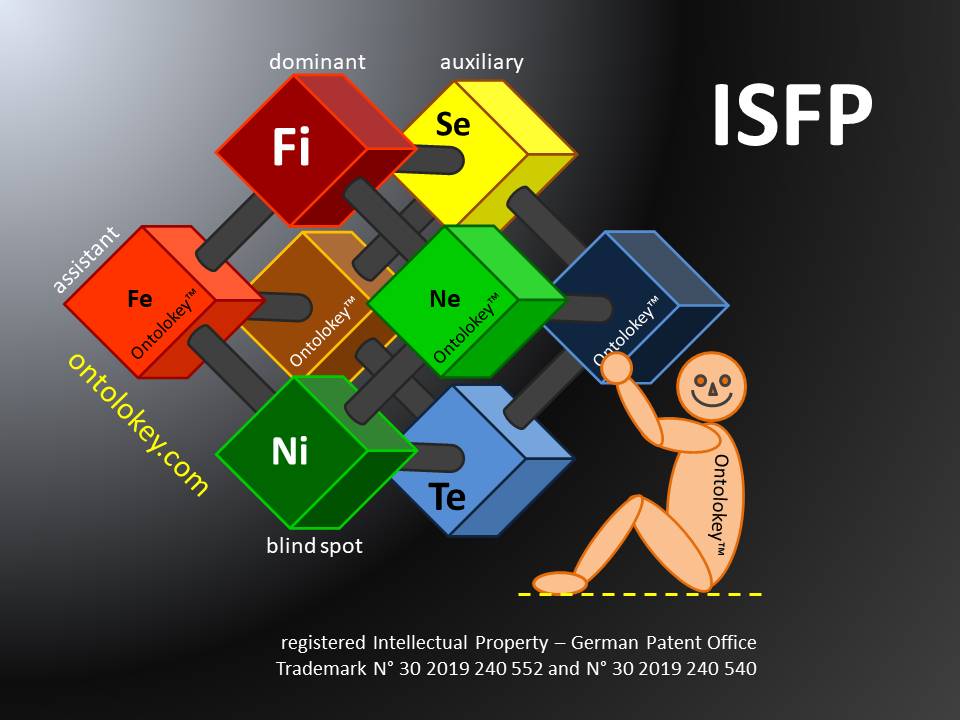
    Ontolokey offers a tool to make these dynamics visible. When two cubes meet – when two inner architectures interact – something new emerges:

    • Where one person leads with logic (Extraverted Thinking), another might value harmony (Introverted Feeling)
    • Where one sees possibilities (Extraverted Intuition), another seeks detail and certainty (Introverted Sensing)
    • Where one avoids conflict through adaptation, another seeks authenticity at any cost

    None of these modes are “wrong” – they are different functions in motion. Ontolokey allows us to visualize these differences, not as obstacles, but as complementary forces.

    It is not about “typing” others – it is about understanding the dialogue of functions between people. This makes empathy concrete, and conflict more navigable.

    Teams and Systems: The Architecture of Collaboration

    In group settings – whether in companies, schools, or communities – similar patterns apply. Every team is a psychological system, shaped by:

    • dominant and missing functions
    • collective strengths and blind spots
    • unspoken values, fears, and projections

    Ontolokey can help teams see themselves: • What functions are overrepresented – e.g., too much analysis, too little intuition? • Where do tensions arise – e.g., between rapid action and careful reflection? • Which “inner voices” are not yet invited into the conversation?

    Just as a healthy psyche integrates all eight functions, a healthy system benefits from psychological diversity. Ontolokey helps create that balance – visually, playfully, and without jargon.

    Love and Family: The Alchemy of Intimacy

    No space is more charged – and more transformative – than intimate relationships. Here, personality patterns are amplified: We project, we repeat, we mirror, we trigger.

    Ontolokey does not promise perfect relationships – but it offers a deeper understanding of the patterns at play. It helps partners see:

    • Which functions they naturally share
    • Where they compensate or clash
    • How to honor each other’s way of being without losing themselves

    Especially in family constellations – between parents and children, siblings, generations – the cube becomes a compass for compassion. It shows that behind every “difficult behavior” often lies an unseen function trying to find its place.

    A Tool for the Collective Psyche

    In a world marked by division, acceleration, and emotional overload, we need tools that slow us down – and help us reconnect. Ontolokey is not a technology of control, but a technology of understanding.

    It bridges the gap between psychology and everyday life – between self and other – between knowing and being known. As more people use it, a quiet shift occurs:

    • Conflicts become invitations to dialogue
    • Differences become sources of richness
    • And personality becomes not a label – but a shared language

    Conclusion: The Cube Between Us

    The first step is to unfold your own cube. The second is to hold space for someone else’s. The third is to see what arises between them – the space where real transformation lives.

    Ontolokey is not just a mirror of the self. It is a bridge. A dialogue. A shared key to the mystery of being human – together.

    See It in Action: Ontolokey on YouTube

    While the theory behind Ontolokey runs deep, its true impact is best experienced visually. On the official Ontolokey YouTube channel, you’ll find a growing library of short videos that demonstrate:

    • How the cube works and unfolds
    • How the eight functions are arranged and interact
    • How types, archetypes, and development paths can be explored intuitively

    Whether you’re new to the model or want to deepen your understanding, these clips offer quick and engaging access to Ontolokey in practice. Sometimes, all it takes is seeing the cube turn – and something inside begins to shift.

  • A Visual Tool for Human Understanding

    What if we could teach empathy not just as a concept, but as an experience?

    What if we could see – literally see – how the minds of others work, how they perceive the world, make decisions, or react under pressure?

    Ontolokey, a three-dimensional personality cube based on Jungian psychology, offers this possibility. It is more than a typology tool. It is a visual, hands-on way to explore the depths of the human psyche – and a potential key to a more peaceful, understanding society.


    A Cube That Makes the Mind Visible

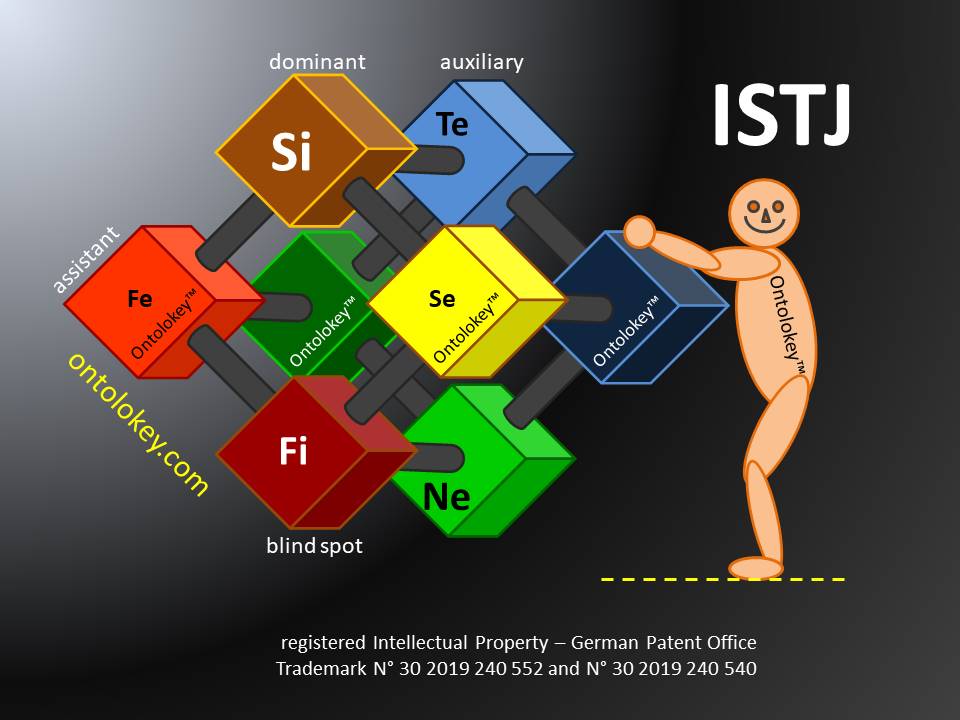
    Ontolokey brings together psychological depth and visual clarity. At its core lie Carl Gustav Jung’s eight cognitive functions – Thinking, Feeling, Intuition, and Sensing, each in introverted or extraverted form. These are expressed in the well-known 4-letter codes of MBTI or 16Personalities (e.g., ENTP, ISFJ, INTJ).

    But the cube does more than categorize. By rotating and unfolding the cube, users can explore the conscious and unconscious dimensions of each personality:

    • The Persona – the social mask
    • The Anima/Animus – the inner opposite
    • The Golden Shadow – repressed strengths and unrealized potential
    • And ultimately, the Self – the center of psychological wholeness

    A Tool for Education, Not Just Evaluation

    Ontolokey is not limited to coaching or personality workshops. Its true power unfolds in education, leadership, and social development:

    • In schools, it fosters emotional intelligence, reduces bullying, and teaches students how to recognize different ways of thinking and feeling.
    • In universities, it can bridge psychology, philosophy, leadership, and intercultural studies.
    • In companies, it helps managers and teams understand internal dynamics and resolve conflicts before they escalate.
    • And in society, it builds bridges – across cultures, identities, and beliefs.

    Preventing Polarization and Prejudice

    Prejudice, xenophobia, and extremist ideologies often begin where self-awareness ends. When people lack insight into their own psychological dynamics, they unconsciously project their fears onto “the other.”

    Ontolokey makes projection visible – literally. It helps individuals see:

    • What they admire but suppress (the Golden Shadow)
    • What they reject but unconsciously embody (the Shadow)
    • How the unknown in others reflects something unknown in themselves

    This is not just personal development. This is peace psychology.


    Toward a More Conscious Society

    Imagine if psychological education were as common in schools as math or history. Imagine if young people learned to read personality not as a label, but as a language – a dynamic, compassionate, visual language of the soul.

    This is the vision behind Ontolokey:

    A generation that sees difference not as danger – but as depth.


    Conclusion: Psychology as Prevention

    Ontolokey invites us to go beyond the surface. To see each other not as stereotypes, but as layered, evolving individuals. It shows that personality is not a box – it’s a space.

    A space where:

    • Self-reflection becomes a daily practice,
    • Dialogue becomes more respectful,
    • And understanding becomes stronger than fear.

    In a time of global polarization, Ontolokey offers something rare:
    A key to the psyche – and perhaps to peace.

  • A Global Invitation to Build a More Empathic Future

    What if we could reduce bullying, prejudice, and emotional misunderstanding – not with rules, but with insight?

    What if we equipped students, teams, and future leaders with the tools to understand themselves and others – in a way that is visual, intuitive, and psychologically grounded?

    Ontolokey is a visual model of personality – and a growing international movement.
    Now, we are inviting aligned investors to help bring this model into classrooms, companies, and cultures around the world.

    A Unique Tool with Global Purpose

    Ontolokey is a patented 3D model of personality – based on Carl Gustav Jung’s theory of psychological types and enriched by systems like MBTI, Big Five, and the Enneagram. But it is more than a model:

    It is:

    • a visual key to the inner workings of the mind,
    • a cube-based learning tool for personal and interpersonal growth,
    • and a catalyst for understanding, across age, culture, and profession.

    Already featured in videos, workshops, and trainings, Ontolokey makes complex psychological ideas accessible to people with no prior background in psychology.

    The Next Step: Global Distribution Through Local Partnerships

    We are now building a network of international license partners and regional production hubs.

    Each licensee will:

    • manufacture the Ontolokey cube locally (to reduce cost and enable customization),
    • build distribution networks to reach local schools, universities, and companies,
    • and host educational initiatives to train facilitators, coaches, and educators in using the model.

    This allows us to scale globally while acting locally – adapting to cultural nuances, language needs, and educational systems.

    A Mission with Measurable Impact

    Ontolokey is not only a business – it is a social mission with far-reaching benefits:

    • In schools and universities:
    • Helps students develop emotional intelligence and empathy
    • Can be integrated into psychology, ethics, or career development curricula
    • Reduces social exclusion and misunderstandings through better self-awareness
    • In businesses and teams:
    • Facilitates communication and collaboration across diverse personalities
    • Helps HR departments understand team dynamics and decision-making styles
    • Offers coaching and leadership tools rooted in depth psychology
    • In society at large:
    • Contributes to a culture of dialogue, not division
    • Offers an antidote to polarization by illuminating the inner complexity of others
    • Encourages compassion, not categorization

    Seeking: Strategic Investors with Purpose

    We are currently looking for mission-aligned investors and local entrepreneurs in:

    • 🇺🇸 North America
    • 🇪🇺 European Union
    • 🇧🇷 Latin America
    • 🇮🇳 India
    • 🇿🇦 Southern Africa
    • 🇸🇬 Southeast Asia
    • 🇦🇺 Australia & New Zealand

    Ideal partners are:

    • experienced in education, HR tech, publishing, coaching, or soft-skill training
    • interested in building long-term, culturally adapted business models
    • passionate about mental health, emotional education, and social transformation

    Why Invest in Ontolokey?

    • Registered 3D trademark and scalable IP
    • Strong symbolic and educational value
    • Low production cost – high perceived value
    • Cross-industry applications (education, HR, coaching, branding)
    • Strong ethical mission with real social relevance

    Join the Vision

    Ontolokey is more than a cube.
    It is a key to human potential – and a step toward a more connected, compassionate world.

    We invite you to be part of this journey – not only as an investor, but as a co-creator of a more psychologically literate future.

    If this resonates with your values, we would be glad to connect for further dialogue.

    Let’s unlock what’s possible – together.

  • When Psychological Overload Meets Spiritual Seeking

    How understanding your personality structure can lead to cognitive healing

    In today’s fast-moving, hyper-productive world, more and more people find themselves psychologically overwhelmed.
    Not because they are weak — but because they carry too much of something that has no place to go.

    Some people overflow with feelings.
    Some with ideas.
    Others with a deep need for structure, or a constant drive for harmony.

    When this inner surplus has no outlet, it turns inward — often leading to confusion, fatigue, or a quiet kind of desperation.
    Many seek relief in spiritual spaces: from mindfulness retreats to healing journeys in the Andes or Amazon, hoping for release, clarity, or redemption.

    But what if the first step wasn’t escape — but understanding?


    🧩 We are not psychologically balanced — and that’s not a flaw

    Each of us has a dominant psychological function — a way we naturally process the world.
    This is not just theory. It shapes how we think, feel, connect, decide, and lead.

    Models like MBTI or the more visual Ontolokey framework describe 16 unique personality types.
    Each type carries a surplus of certain soft skills — and a corresponding lack in others.
    That’s the human condition: we’re strong in some areas, and underdeveloped in others.

    And here’s the real insight:
    Much of our psychological overload comes from trying to cover both sides — to be “complete” within ourselves, instead of allowing others to complement us.


    🔮 The Ontolokey Cube: A mirror for inner structure

    Developed by Eduardo Seufferheld, the Ontolokey Cube is a visual, multidimensional tool for understanding personality.
    Unlike traditional letter-based models, it offers a cube-based representation of your dominant functions — making your cognitive and emotional profile visible, mappable, and explorable.

    This tool helps individuals identify:

    • What they naturally excel at (emotional depth, analytical thinking, structure, inspiration, etc.)
    • What functions they underuse or lack
    • What kind of people might carry the qualities they need
    • And how to grow without denying their core self

    Used in therapeutic or spiritual settings, the Ontolokey Cube becomes more than a tool.
    It becomes a form of cognitive spirituality — a bridge between psychological insight and soulful self-recognition.


    A new approach to healing and human connection

    This way of seeing the self doesn’t diagnose or label. It illuminates.
    Instead of asking, “What’s wrong with me?”, a person might finally ask, “What do I have too much of?” or “What quality in others soothes the thing I lack?”

    Seminars, retreats, and even professional teams can benefit from this approach:

    • Emotionally overloaded people find clarity and language for their inner experience
    • Structurally rigid people discover flexibility through others
    • Introspective thinkers find grounding through external energy

    We don’t need to become everything.
    We need to become aware — and connected.


    🧭 Final Reflection

    Your personality is not broken — it’s specialized.
    And when you learn to understand your unique surplus and shortfalls, you begin to heal, not by fixing yourself in isolation, but by embracing your shape — and recognizing that others are shaped differently, too.

    The path to balance may not be within — but between us.
    Through understanding, empathy, and the courage to see ourselves clearly, we stop striving for inner perfection — and begin living in relational wholeness.

  • From Self-Knowledge to Interpersonal Intelligence

    We are not isolated islands – we become who we are through others.
    Personality does not exist in a vacuum, but in constant interaction: with partners, families, teams, and communities.
    Understanding the self is the beginning – but understanding the space between us is the next frontier.

    Ontolokey, originally designed as a visual and symbolic model for personality and inner development, unfolds a surprising second function:
    It becomes a map of relational intelligence – revealing not only who I am, but how I meet you.

    Personality in Dialogue: Seeing the Other Clearly

    When two people meet, more than words are exchanged. Behind every conversation lie patterns: of thinking, perceiving, valuing, reacting. Often unconscious, these patterns shape the quality of our relationships.

    Ontolokey offers a tool to make these dynamics visible. When two cubes meet – when two inner architectures interact – something new emerges:

    • Where one person leads with logic (Extraverted Thinking), another might value harmony (Introverted Feeling)
    • Where one sees possibilities (Extraverted Intuition), another seeks detail and certainty (Introverted Sensing)
    • Where one avoids conflict through adaptation, another seeks authenticity at any cost

    None of these modes are “wrong” – they are different functions in motion.
    Ontolokey allows us to visualize these differences, not as obstacles, but as complementary forces.

    It is not about “typing” others – it is about understanding the dialogue of functions between people.
    This makes empathy concrete, and conflict more navigable.

    Teams and Systems: The Architecture of Collaboration

    In group settings – whether in companies, schools, or communities – similar patterns apply.
    Every team is a psychological system, shaped by:

    • dominant and missing functions
    • collective strengths and blind spots
    • unspoken values, fears, and projections

    Ontolokey can help teams see themselves:
    • What functions are overrepresented – e.g., too much analysis, too little intuition?
    • Where do tensions arise – e.g., between rapid action and careful reflection?
    • Which “inner voices” are not yet invited into the conversation?

    Just as a healthy psyche integrates all eight functions, a healthy system benefits from psychological diversity.
    Ontolokey helps create that balance – visually, playfully, and without jargon.

    Love and Family: The Alchemy of Intimacy

    No space is more charged – and more transformative – than intimate relationships.
    Here, personality patterns are amplified:
    We project, we repeat, we mirror, we trigger.

    Ontolokey does not promise perfect relationships – but it offers a deeper understanding of the patterns at play.
    It helps partners see:

    • Which functions they naturally share
    • Where they compensate or clash
    • How to honor each other’s way of being without losing themselves

    Especially in family constellations – between parents and children, siblings, generations – the cube becomes a compass for compassion.
    It shows that behind every “difficult behavior” often lies an unseen function trying to find its place.

    A Tool for the Collective Psyche

    In a world marked by division, acceleration, and emotional overload, we need tools that slow us down – and help us reconnect.
    Ontolokey is not a technology of control, but a technology of understanding.

    It bridges the gap between psychology and everyday life – between self and other – between knowing and being known.
    As more people use it, a quiet shift occurs:

    • Conflicts become invitations to dialogue
    • Differences become sources of richness
    • And personality becomes not a label – but a shared language

    Conclusion: The Cube Between Us

    The first step is to unfold your own cube.
    The second is to hold space for someone else’s.
    The third is to see what arises between them – the space where real transformation lives.

    Ontolokey is not just a mirror of the self.
    It is a bridge.
    A dialogue.
    A shared key to the mystery of being human – together.

    See It in Action: Ontolokey on YouTube

    While the theory behind Ontolokey runs deep, its true impact is best experienced visually.
    On the official Ontolokey YouTube channel, you’ll find a growing library of short videos that demonstrate:

    • How the cube works and unfolds
    • How the eight functions are arranged and interact
    • How types, archetypes, and development paths can be explored intuitively

    Whether you’re new to the model or want to deepen your understanding, these clips offer quick and engaging access to Ontolokey in practice.
    Sometimes, all it takes is seeing the cube turn – and something inside begins to shift.

  • Philosophy, Depth Psychology, and the Power of a 3D Brand

    What if a cube could symbolize your journey toward inner wholeness?
    What if a name could carry a philosophy of becoming – not just being?
    Ontolokey is not just a visual personality model. It’s a registered 3D trademark – and a concept rooted in centuries of human thought: from ancient philosophy to modern psychology.

    Let’s unfold the story behind the name, the cube, and the self.

    A Name That Opens Doors

    Ontolokey is more than a word – it’s a fusion of three powerful ideas:

    • Ontology – the philosophical study of being
    • Entelechy – an ancient concept from Aristotle, meaning the goal already present within a thing
    • Key – the English word for unlocking or accessing

    Together, they form a vision:

    Ontolokey is the key to the being that already wants to become – inside you.

    This is not just poetic. It’s psychological.

    Entelechy: The Goal Within

    In ancient Greek philosophy, entelechy means that every living thing carries its purpose within itself. A caterpillar does not “learn” to become a butterfly – it contains the butterfly as potential from the beginning.

    Entelechy is:

    • the inner compass of development,
    • the ability to grow into your full form,
    • the natural drive toward completion.

    Ontolokey is built on this principle:
    Your personality is not a fixed label. It is a seed with form, colour, and direction – ready to unfold.

    Jung’s Psychology: The Self as Center

    Carl Gustav Jung, the founder of analytical psychology, described the Self as the deep center of the psyche – a totality that includes both conscious and unconscious aspects.

    • The Ego is the conscious “I” – necessary, but limited.
    • The Self is larger – it holds potential, shadow, dreams, and wholeness.

    For Jung, psychological health meant individuation: the process of integrating all parts of the psyche, and moving toward the Self.
    If the ego believes it is the whole, it risks inflation – and disconnection from inner truth.

    Ontolokey makes this process visible: the unfolding of the cube reflects the unfolding of the self.

    A 3D Brand for a Multi-Dimensional Model

    Ontolokey is not just a theory – it’s a registered three-dimensional trademark at the German Patent and Trademark Office.
    This includes:

    • the name Ontolokey
    • and the visual design of the cube with its unique colour and function system

    Why register it as a 3D brand?
    Because form matters. The cube is not just an object – it’s a visual metaphor for personality, growth, and transformation.

    By turning, opening, and reconfiguring the cube, users experience that personality is:

    • not flat,
    • not fixed,
    • and not final.

    It is dynamic, structured, symbolic – and full of possibility.

    The Cube as a Modern Symbol of Entelechy

    In many ways, the Ontolokey cube is a contemporary version of what Aristotle and Jung described:

    • A form that holds potential
    • A structure that unfolds over time
    • A key to self-knowledge – and to transformation

    It speaks not only to coaches, therapists, and educators – but to anyone asking:

    Who am I?
    What could I become?
    And what is already waiting in me to emerge?

    Conclusion: A Tool with a Purpose

    Ontolokey is a tool – yes.
    But also a philosophy, a symbol, and a living system.

    It reminds us that growth is not imposed from the outside.
    It is invited from within – through curiosity, self-awareness, and creative interaction.

    Whether you’re exploring your own personality, helping others on their journey, or building bridges between people:
    Ontolokey offers a map, a method, and a key.

    A name with a soul.
    A cube with a center.
    And a brand that unfolds you.

  • What if personality wasn’t just something to analyze – but something you could see, turn, and immediately understand?

    Ontolokey, an innovative cube-based model, makes this possible. It brings complex personality structures into a tangible, visual form and opens new pathways for analysis, coaching, education, and self-development.

    Rooted in the function typology of Carl Gustav Jung, Ontolokey integrates elements from well-known personality models such as MBTI, 16Personalities, the Big Five, and the Enneagram – without being limited to a single framework.

    The Foundation: Jung’s Psychological Functions

    In 1921, Carl Gustav Jung outlined four core psychological functions – thinking, feeling, intuition, and sensation – each expressed in either an introverted or extraverted orientation. These eight function types continue to serve as the foundation for many modern typology systems.

    Ontolokey translates these abstract concepts into a color-coded, spatial structure. Each function is represented by a specific colour and location within a cube, making it possible to instantly recognize how cognitive processes interact and which are dominant or repressed.

    By rotating the cube, users can explore all 16 personality types known from MBTI or 16Personalities – including the dynamic order of their cognitive functions – in just seconds.

    Beyond Typing: Archetypes and Psychological Depth

    Ontolokey is much more than a quick type assessment. When the cube is unfolded, it reveals a symbolic map of the deeper layers of the psyche, inspired by Jung’s analytical psychology. This includes:

    • the Ego – the conscious identity
    • the Persona – our social mask
    • the Anima or Animus – our unconscious inner counterpart
    • the Golden Shadow – untapped potential and repressed strengths
    • and the Self – the deeper center of wholeness and transformation

    In this way, Ontolokey connects the surface of personality to the deeper psychological structures – offering insight not only into who we are, but who we might become.

    Applications: Coaching, Education, Brands, and Teams

    Ontolokey is a flexible tool that can be used across multiple fields – not only in psychology, but also in business, communication, and education:

    • In coaching and psychotherapy, it provides a visual shortcut to understanding personality structures and unconscious dynamics.
    • In education, it helps young people better understand themselves and others – fostering emotional intelligence, empathy, and social harmony.
    • In branding and marketing, Ontolokey can be used to identify and design brand personalities based on psychological type and colour association.
    • In team development, it enables better understanding of communication styles, decision-making approaches, and collaboration strategies.

    Most importantly, Ontolokey is accessible to non-experts. Its color-coded and spatial format makes even deep psychological concepts easy to grasp – making it ideal for workshops, schools, and everyday conversations.

    Conclusion: A Tool for Understanding and Growth

    Ontolokey offers a unique way to understand personality – one that is visual, spatial, and grounded in depth psychology. It simplifies complex models without losing nuance, and opens up new ways to explore personal potential, inner conflict, and transformation.

    In a time where self-awareness, empathy, and psychological well-being are more important than ever, Ontolokey provides a practical and holistic tool for understanding ourselves – and each other.

    It’s more than a model – it’s a key to the psyche.

  • Myth, Alchemy, and the Individuation Process Across Cultures

    Who am I really – and who could I become?
    This question transcends culture, era, and religion. Whether in ancient myths, world religions, Eastern alchemy, or Jungian psychology, we find strikingly similar answers: the path to wholeness leads through inner transformation.

    Ontolokey, a modern personality model in the form of a color-coded cube, makes this path tangible – translating deep psychological and symbolic knowledge into a visual and cross-cultural language.

    Ontolokey: The Cube as a Symbol of Inner Space

    Based on Carl Gustav Jung’s eight psychological functions – Thinking, Feeling, Intuition, and Sensing, in both introverted and extraverted forms – Ontolokey integrates systems like MBTI, Big Five, and the Enneagram. But it goes a step further:

    Ontolokey doesn’t reduce people to types. Instead, the cube becomes a dynamic space – one that unfolds, rotates, and reveals deeper layers of the psyche. This makes development visible: we are not static beings, but evolving selves in motion.

    Each surface of the cube, each axis and transformation reflects psychological energy – conscious or unconscious, integrated or projected. This three-dimensionality mirrors our inner complexity.

    Mythic Journeys and Archetypes of Transformation

    Many cultures have described the journey toward wholeness using myths and symbolic figures. These stories are not just old tales – they are psychological maps.

    • In Greek mythology, Odysseus’ return from war is a symbolic individuation process: projection, shadow confrontation, encounters with anima figures, and eventual homecoming.
    • In Plato’s Symposium, the idea of the original human as a spherical being, split in two by the gods, represents the eternal longing for psychological completeness.
    • In alchemical traditions, the inner work follows stages: nigredo (chaos), albedo (clarity), and rubedo (integration) – all mirrored in the cube’s transformational design.

    The Eight Immortals (Ba Xian): Unity in Diversity

    A profound Eastern parallel lies in the Chinese myth of the Eight Immortals (八仙, Ba Xian). Each of them represents a different human strength, personality, and symbolic tool. Though individually powerful, they become invincible only when united.

    From a Jungian perspective, the Eight Immortals symbolize the eight psychological functions:

    • Each Immortal reflects a unique attitude toward life – sensing, thinking, feeling, or intuiting; introverted or extraverted.
    • Only as a group can they balance and complement each other.
    • Their harmony shows: true mastery comes from internal integration, not dominance of one part over another.

    In the Ontolokey model, this principle becomes visible: only when all eight functions are honored and consciously integrated, do we approach psychological wholeness. The cube helps us see which of our “inner Immortals” are already active – and which are waiting to be awakened.

    Wholeness as a Universal Path

    Whether we look to:

    • the Greek heroes,
    • the alchemists of Europe,
    • the Taoist sages of China,
    • the Sufi mystics,
    • or the psychological pioneers of the 20th century –

    we always find the same basic insight:
    Human beings seek unity. Within themselves. With the world. With something greater.

    Ontolokey speaks this global language of the soul – without cultural appropriation, but with deep respect for symbolic wisdom across traditions.

    Conclusion: A New Visual Language for the Oldest Journey

    Ontolokey offers a bridge between cultures, disciplines, and people. It combines analytical depth with symbolic richness – and makes the journey toward wholeness visible, learnable, and shareable.

    In a time of fragmentation, speed, and psychological overload, Ontolokey invites us to slow down, turn inward, and discover what the ancient myths always knew: You are more than a type.
    You are a whole in the making.
    And the path to that wholeness runs through shadow, myth, mystery –
    …and a cube that unfolds your Self.