With the help of Ontolokey the 16 personality types according to C.G.Jung can be shown three-dimensionally just by turning the cube into the desired position.
1: Extraverted Sensing (Se) – Living in the Moment, Leading with Action
The ESFP is driven by the here and now. They’re naturally tuned in to their environment, highly aware of what’s happening around them, and eager to act on it. For them, life is a series of immediate opportunities to be seized, experiences to be lived fully, and challenges to be met head-on. Their actions are swift, bold, and often intuitive.
Whether it’s leading a team, organizing a social event, or launching into a spontaneous adventure, the ESFP brings high energy and physical presence. They don’t overthink—they just do. Their impressive stamina and readiness to act allow them to dive into demanding projects, sometimes pushing themselves far beyond their limits. Sacrifices are no big deal if the goal is meaningful. Even if it means signing up for three vocal coaches at once (true story), they’ll go all in.
Competition energizes them—not necessarily to crush others, but to push themselves to stand out. They don’t just want to be good; they want to be the best. They crave recognition for their efforts, talents, and passion. When others notice, it validates their sense of identity.
The ESFP’s dominant Se makes them quick to take initiative and often impatient with anything or anyone that holds them back. They dislike stagnation, passivity, or people who give up too easily. Their attitude is simple: “If there’s a door, try it. If it’s locked, try another. But don’t just sit there.” They encourage others to act, too—especially their INTJ counterparts, whose passive, inward nature often needs a push.
They often inspire by example: “I’m already done—why aren’t you?” It’s not arrogance; it’s how they motivate. But sometimes their intense pace can alienate those who can’t keep up. They may not realize it, but their enthusiastic drive can come across as overwhelming or even pushy.
Taking up space—literally and figuratively—is second nature. The ESFP doesn’t ask for permission to lead; they just step up. Without realizing it, they can dominate situations, conversations, and even relationships, not out of malice, but out of an impulse to shape their world actively.
They’re not tyrants—they actually hate tyranny—but they do struggle with letting go of influence. Losing relevance or being sidelined hits hard. When their efforts to lead are misunderstood or unappreciated, they may react emotionally or double down on their efforts, sometimes clumsily.
Still, Se gives them a bold creativity. They don’t just follow trends—they create them. In art, they’re often the ones who break the rules and set new standards. Their style may be extravagant or provocative, but that’s their way of saying, “This is who I am.”
At their best, ESFPs are magnetic doers who uplift and activate everyone around them. At their worst, they burn themselves out trying to prove their worth in every room. Their life is a performance of vitality, spontaneity, and sheer presence—and they don’t want to miss a moment.
2: Introverted Feeling (Fi) – Quiet Integrity Behind the Spark
Beneath the ESFP’s vibrant, action-packed exterior lies a deep, personal compass—Introverted Feeling (Fi). It’s not loud, it’s not public, and most people might miss it entirely. But for the ESFP, it’s a silent engine of authenticity, loyalty, and inner moral standards.
Despite their outgoing personality, ESFPs make value judgments privately. They know what matters to them and stick to those principles, even if they don’t always talk about it. While they may seem carefree and impulsive, they carry strong beliefs about what’s right and fair, especially when it comes to how people are treated.
This makes them fiercely loyal. Once they believe in someone, they’re all in. They want to earn trust, not just applause. It’s not enough for others to say they’re impressive—they want to know they’re genuinely respected for who they are, not just for how much they do.
If someone ignores their intentions or misjudges their motives, it hurts deeply. They may seem tough, even theatrical, but emotionally they’re far more sensitive than they let on. They care about being seen as kind-hearted, honest, and good—not just as fun or capable.
That’s why it stings when others don’t recognize their efforts to help, to support, to be decent. If their leadership is questioned, it feels like a dismissal not only of their actions, but of their inner worth. They don’t lead out of ego—they lead because they feel responsible for people and want to do right by them.
Still, their Fi is selective. They invest emotionally in those they respect or admire—but not everyone makes the cut. If someone doesn’t matter to them on a values level, they may treat them indifferently or even harshly. This can lead to emotional inconsistency that confuses others: warmth one day, coldness the next.
Friendships and rivalries for the ESFP are often all-or-nothing. Someone they admire might be placed on a pedestal, while a perceived betrayal can turn a close connection into “just another enemy.” These intense value judgments aren’t always expressed openly—but they’re deeply felt.
Fi also makes the ESFP hard on themselves. They want to be liked, yes, but more importantly, they want to be proud of themselves. They hold themselves to personal standards that few ever see. When they mess up, they know it. They might not admit it right away, but internally they reflect. And eventually, they often own up to their mistakes with sincerity—especially if it helps repair a relationship they care about.
In relationships, they want emotional connection, not just fun. But paradoxically, their Fi can make them hesitant to fully open up—especially if they fear judgment or rejection. They may put on a show of confidence, while privately wondering: “Do they really get me? Do they see who I really am?”
The ESFP’s Fi gives them empathy, emotional depth, and a desire to live truthfully. It’s why they fight for causes they believe in, protect people they love, and strive to become better—not just more successful, but more whole.
It’s their quiet center of gravity in a loud, kinetic life.
3: Extraverted Intuition (Ne) – The Curious Spark of the Unconscious (Anima/Animus)
Deep within the ESFP lies a restless curiosity—not always conscious, but constantly bubbling beneath the surface. This is Extraverted Intuition (Ne), their Anima/Animus function: the lens through which they explore what could be, flirt with possibilities, and probe the hidden “what ifs” of life. It’s not part of their conscious identity—but it shows up, often unpredictably, like a sudden breeze lifting a curtain.
Ne shows itself in the ESFP’s impulse to test limits and provoke reactions—not to be cruel, but to explore unseen boundaries. They’ll say something bold, act out dramatically, or stir the pot just to see how people will respond. “Let’s see what happens if…” is a question they live out in real time, often without even realizing it.
They might call this “telling it like it is”, but it’s really more of a test: “How will this person react?” “Can I get away with this?” “Is this connection strong enough to handle tension?” It’s not manipulation for manipulation’s sake—it’s a subconscious way of mapping the social landscape.
In moments of uncertainty, Ne compels the ESFP to create clarity by shaking things up. If a relationship feels vague or emotionally ambiguous, they might initiate drama just to force the truth to the surface. “Let’s find out now where we stand.” They’d rather crash through the unknown than float in confusion.
Their Ne also fuels an ongoing fascination with other people’s potential. They instinctively assess what others might be capable of—what roles they could play, what paths they might take. Sometimes they see more in others than those people see in themselves. This makes them both encouraging and dangerously idealistic.
In social settings, ESFPs are often the ones asking bold questions about others’ future plans or life choices—sometimes out of sincere interest, sometimes as a way of gauging their own place in the social hierarchy. They don’t just want to succeed—they want to know how everyone else is doing, and where they stand in comparison.
But because Ne is not a strong conscious function for them, their sense of what’s possible can be superficial or overly optimistic. They may jump to conclusions or fall for inflated promises, especially from unreliable sources. Sometimes they’re overly quick to trust rumors, trends, or appearances—believing the future is bright, right up until reality hits.
At worst, their unconscious Ne makes them vulnerable to overestimating others—or themselves. They may bluff, exaggerate, or make ambitious plans without solid grounding. It’s not dishonesty as much as it is hopeful projection. They believe in potential—perhaps too easily.
They can also get stuck in a strange cycle of over-committing and under-strategizing. Inspired by a burst of future possibility, they leap—but when obstacles appear, the dream evaporates. And then they’re left scrambling for a way out.
This is why they gravitate toward people with strong, stable intuition—especially the INTJ, their dual—who can calmly assess long-term outcomes and warn them gently about what lies ahead. The ESFP may resist such caution at first, but deep down, they crave it. Their inner Ne needs guidance, someone to tell them, “Here’s what’s actually likely to happen.”
Still, their Ne gives them a mischievous creativity, a hunger for novelty, and an ability to imagine vibrant alternatives—especially in art, storytelling, or unconventional life paths. It makes them spontaneous idea-generators, capable of reframing problems in unexpected ways.
And when their Ne and Se meet—possibility and presence—they become unstoppable: the visionary performer, the bold innovator, the one who says “Why not?” and then actually tries it.
4: Introverted Thinking (Ti) – The Toddler Function: Logic in the Backseat
If the ESFP’s life were a movie, Introverted Thinking (Ti) would be the slightly confused side character in the backseat yelling, “Wait—what’s going on again?” It’s there, but it’s not in charge. It’s the toddler function, and while it can speak up at surprising moments, it rarely runs the show.
Ti is all about internal logic, structure, systems, and coherence. But for the ESFP, thinking in this way feels… well, tedious. They don’t like getting stuck in abstract ideas, overanalyzing things, or following rigid step-by-step instructions. Life is to be lived, not diagrammed.
They often don’t notice logical inconsistency in their arguments—or if they do, they quickly brush it off with charm, humor, or emotional persuasion. When explaining something, they might start in the middle, jump back to the beginning, skip the point entirely, then circle back with a personal anecdote. The result? A kind of chaotic storytelling that’s fun, but rarely linear.
They can be smart and insightful—but their logic is often based on gut feelings or common clichés rather than deliberate analysis. “If they’re jealous, it means they love you.” “You made your bed, now lie in it.” These kinds of throwaway lines stand in for more nuanced reasoning.
When forced to “think things through,” the ESFP may panic. Being told to be more consistent, rational, or methodical can feel suffocating. It’s not that they don’t want to be smart—it’s that logical analysis doesn’t feel natural. They value intelligence deeply, but they want it to come from experience, instinct, or people they trust—not from having to dissect every decision themselves.
And yet, they do try. You’ll see them repeat the same mistakes more than once—painfully aware that something isn’t working, but unsure how to fix it. They’ll ask others for advice, listen politely, and then do the exact opposite. Later, when it backfires (again), they’ll feel frustrated and lost: “Why does this keep happening to me?”
Because Ti is so weak and undeveloped in them, the ESFP often delegates logic to someone else. Ideally: a calm, grounded INTJ who can explain things step-by-step without judgment. But the ESFP still needs freedom. If they sense control or condescension, they’ll reject the advice outright, even if it’s useful.
They don’t like reading manuals. They’d rather plug something in and figure it out by doing. Sometimes this works—other times it means frying a device or erasing an entire hard drive. And even then, they might just laugh it off: “Guess I won’t do that again… maybe.”
When they’re stressed, their lack of inner structure becomes obvious. They lose track of priorities, start too many things at once, and get overwhelmed by details they’ve ignored. Someone asking them for logical justification (“But why did you do it that way?”) can completely derail them.
Still, Ti gives the ESFP an unexpected gift: self-deprecating humor. They’re often the first to make fun of their own lack of logic, using laughter to mask deeper discomfort. It’s their way of saying, “Yes, I’m a little messy—but I’m real.”
In the end, the ESFP doesn’t need to be a logical mastermind. They just need clarity without pressure, structure without rigidity, and people who help them understand without making them feel small. With the right support, they can follow a train of thought from A to Z—they just prefer to ride the scenic route, with music playing and windows down.
5: Introverted Intuition (Ni) – The Inferior Function: Foggy Futures and Existential Glimpses
If Extraverted Sensing (Se) is the ESFP’s high-definition front camera, then Introverted Intuition (Ni) is the blurry rearview mirror: always there, but often ignored—until something forces them to look back (or forward) and wonder, “Where is this all going?”
As the inferior function, Ni operates in the shadows of the ESFP psyche. It’s not trusted, not natural, and often avoided. But in quieter moments—or under stress—it whispers strange, unsettling questions:
“Am I on the right path?”
“What will happen if I keep living like this?”
“Will any of this matter in five years?”
For someone who thrives on immediate action and sensory experience, long-term consequences and abstract futures are unnerving. The ESFP lives for now—but their inferior Ni sometimes drags them into uncomfortable reflection: “Is this sustainable?” “Am I just spinning my wheels?”
They might feel an urge to “get their life together,” reorganize everything, or “finally think things through.” But these reflections are usually exhausting. Too many unknowns, too many layers. So instead of diving into that deep mental fog, the ESFP often outsources Ni: they seek someone who can see the big picture for them.
Enter the INTJ: their dual. Calm, predictive, and future-focused, the INTJ becomes a sort of external Ni compass. The ESFP relies on them to assess risks, outline steps, and explain long-term consequences—especially when they themselves feel too overwhelmed to figure it out. A well-timed “Wait, let’s think this through” from an INTJ can anchor the ESFP like nothing else.
But on their own, the ESFP tends to resist thinking too far ahead. The future feels abstract, paralyzing. They’d rather keep moving—any direction feels better than stillness. If things feel unclear, they might switch tasks, change direction, or distract themselves entirely. Action soothes the anxiety that Ni can stir.
Sometimes, this avoidance comes at a cost. They may start multiple things with great enthusiasm—only to abandon them when long-term planning becomes necessary. They might jump into relationships, jobs, or projects without thinking through their trajectory, later wondering, “How did I get here?”
Ni also introduces a strange kind of fear: the fear of wasting their life, of missing something bigger. This fear doesn’t usually appear in loud existential crises—it sneaks in as quiet unease. They may suddenly feel lost, doubt their purpose, or spiral into questions they can’t answer.
When they do try to use Ni, it’s often through symbolic shortcuts: superstition, gut feelings about destiny, vague dreams of a better life. But real, strategic foresight? That’s hard. And frustrating.
Still, the ESFP wants to believe the future can be bright—they just don’t always know how to build a bridge to it. They rely on intuition borrowed from others, or they chase inspiring visions until reality sets in. Sometimes, they even create mini-dramas in relationships just to find out “where this is going,” because uncertainty is too heavy to bear.
With maturity, and the help of grounded, intuitive partners, ESFPs can learn to trust time—to reflect without panic, to plan without losing spontaneity, and to see the future not as a threat, but as a canvas.
When this happens, their natural vitality gains depth. They stop running from the future—and start walking toward it with purpose.
6: Extraverted Thinking (Te) – The Tertiary Function: Action Plans, Not Spreadsheets
While logic in the abstract (Ti) is frustrating for the ESFP, Extraverted Thinking (Te)—their tertiary function—feels much more natural. Te isn’t about inner analysis; it’s about results. And that’s something the ESFP can get behind.
When ESFPs are in motion, when they’re making things happen and seeing tangible progress, Te quietly kicks in and supports them. They don’t want to sit in theory—they want to do something, get results, make a real-world impact. They’re highly productive when a task feels concrete, urgent, and aligned with their energy.
They may not always organize their work methodically, but when something matters to them—like a performance, a launch, or a hands-on project—they’ll mobilize like a pro. They can delegate, push things forward, and make split-second decisions. Te shows itself here not as cold efficiency, but as pragmatic action.
Still, it’s not consistent. As a tertiary function, Te operates in spurts. One day, the ESFP is ultra-productive—checking off tasks, making decisions, coordinating with others. The next day? They’re improvising everything, chasing a new idea, or abandoning structure entirely. They can organize, but only when motivated. And even then, they prefer flexible planning over rigid structure.
They don’t love detailed instructions, long-term schedules, or spreadsheets. If a process feels too mechanical, they lose interest. What they need is meaningful direction: “What are we doing, and why does it matter?” If that’s clear, they’ll bring the energy, people skills, and hands-on initiative to make it happen.
Te also helps them take charge in a crisis. If something breaks down or needs quick reorganization, the ESFP can snap into action. They’ll tell others what to do, move things around, and fix the immediate issue. They may not always be elegant about it, but they are effective under pressure—especially in short-term, high-stakes situations.
Where they struggle is long-term consistency. Their Te doesn’t naturally sustain routines or enforce systems. They’re great at jumping into action—but not always great at follow-through. If the excitement wears off, so does their focus.
They also don’t respond well to overly rational criticism. If someone points out flaws in their process or questions their judgment in cold, technical terms, they may react defensively. Their logic works best when it’s practical and emotionally relevant, not detached.
That said, the ESFP does enjoy impressing others with their capability. When they pull something off successfully, especially when others doubted them, it feeds their confidence. “See? I got it done.” They want their competence to be recognized, even if their methods are unconventional.
At their best, Te allows ESFPs to turn inspiration into action—to not just dream, but build. It grounds their energy in the real world and helps them get things done. Not with spreadsheets or rigid plans, but with passion, adaptability, and street-smart logic.
Give them a goal that matters, some room to move, and a bit of support—and they’ll make it happen.
7: Introverted Sensing (Si) – The Sibling Function: Comfort, Memory, and Subtle Standards
Introverted Sensing (Si) operates quietly in the ESFP—like a background rhythm that keeps their world running smoothly, even if they rarely stop to analyze it. As the “sibling” function, it doesn’t lead or drive their personality, but it supports them in more personal, often aesthetic, ways.
While ESFPs are not meticulous organizers or obsessive traditionalists, they do care about how things feel—especially in their physical environment. They like comfort, beauty, and familiarity, and often create spaces that reflect this. Their home, clothing, and even their body language often reveal a subtle, but strong, sense of style and atmosphere.
No matter their income level, the ESFP usually finds a way to look put together. They might be flashy or low-key, but their appearance is intentional. They may even embrace bold or unusual fashion choices—not necessarily because they love them personally, but because they know it gets attention. Looking distinct is often more important than looking “classic.”
Si also shows up in the way the ESFP values personal rituals and bodily well-being—even if inconsistently. They often enjoy good food, sensory indulgence, cozy environments, and pleasant routines—as long as they don’t feel restricted. They want things to be nice and functional, not fussy.
They usually have a clear sense of what feels right—what smells good, what sounds pleasant, what colors work together, even if they can’t always explain it. Their aesthetic judgment is deeply internalized. This makes them excellent stylists, decorators, or artists who blend instinct with subtle sensory memory.
While they don’t like rules, the ESFP does keep internal reference points: memories of what has worked, what felt good, what was satisfying. These memories guide their decisions—often more than they realize. If something “feels off,” they might not know why, but they’ll trust their gut and pivot accordingly.
Si also governs their approach to health and physical endurance. They may ignore discomfort until it becomes serious, or push themselves too hard—especially when they’re driven by adrenaline or pride. But when they crash, they crash hard, and suddenly need rest, comfort, and solitude.
In work, they like to find their own methods—tried-and-true shortcuts that “just work.” They might avoid theoretical material or step-by-step instructions, preferring to learn by doing and develop personal systems over time. Once they’ve learned a skill, it sticks—and they tend to reuse their techniques again and again.
They don’t always question those methods, even if they’re outdated. If something has worked before, they’re likely to do it again—even if a better option exists. This gives their work a hands-on reliability, but can also make them resistant to new systems unless the benefit is obvious.
Ultimately, Si in the ESFP serves as a kind of quiet internal archive: filled with impressions, preferences, and sensory experiences. It grounds their wild, expressive energy in a sense of personal continuity. It gives them taste, texture, memory—and a little softness behind the spotlight.
8: Extraverted Feeling (Fe) – The Golden Shadow: Charisma, Harmony, and Emotional Leadership
Extraverted Feeling (Fe) is the golden shadow of the ESFP—the part of them that represents unrealized potential, a deeper layer of maturity, and an emerging power in social influence. It’s not their usual mode of interaction, but when developed, it adds depth, grace, and true charisma to their natural charm.
At first glance, ESFPs seem emotionally expressive—but their feelings are usually guided by introverted values (Fi) rather than Fe’s outward harmonizing. They express what they feel, not what the group needs. This can make them emotionally intense or unpredictable: laughing one moment, storming off the next. They’re real—but not always socially smooth.
Fe, in contrast, is about creating emotional atmosphere, tuning in to the collective mood, and adjusting behavior for the sake of harmony. For the ESFP, this doesn’t come naturally. They’re more focused on their own emotional truth than the group’s emotional expectations.
But when the ESFP steps into their golden shadow—when they consciously embrace Fe—a shift happens. Their emotional expressiveness becomes inclusive. Instead of just reacting, they start to lead others emotionally: lifting spirits, calming tension, setting the tone in a room. They become not just performers, but hosts, facilitators, even peacemakers.
In this state, their natural warmth is no longer about seeking attention—it’s about creating connection. Their charisma transforms from entertaining to inspiring. They learn to read the room, not just light it up.
At their best, ESFPs with integrated Fe can move people emotionally, not by shocking or dazzling them, but by meeting them where they are. They use their energy consciously, not just spontaneously. They become trusted emotional leaders—not just bright personalities.
But developing Fe also requires restraint—a challenge for the impulsive, fiery ESFP. They must learn that not every mood needs to be acted out, not every thought needs to be expressed. With experience (and often with help from mature Fe types like ENFJs or INFJs), they realize that holding space can be more powerful than performing in it.
The emotional “games” of early ESFPs—provoking reactions, stirring drama, dominating emotional dynamics—give way to emotional presence. They learn that silence, patience, and gentle encouragement can be just as impactful as laughter or flair.
This evolution doesn’t dim their spark—it elevates it. Their feelings gain focus. Their relationships deepen. Their influence grows, not just because they’re exciting, but because they’re emotionally reliable. They become the kind of person people trust in crisis, not just in celebration.
And perhaps most beautifully: when the ESFP integrates Fe, they stop trying to prove their worth through constant effort. Instead of pushing to be seen, they begin to see others—and that’s when their golden shadow truly shines.
ENFPs lead with Extraverted Intuition (Ne), a mental radar that constantly scans the world for ideas, connections, and untapped potential. They’re driven by a need to explore the “what ifs” in life – not necessarily to finish what they start, but to discover what could be. This makes them natural trendspotters, innovators, and creative provocateurs.
They have a remarkable instinct for reading situations and people quickly – often picking up on underlying intentions, subtle cues, or hidden opportunities before anyone else notices. It’s not uncommon for ENFPs to accurately predict how social or emotional dynamics will unfold, sometimes seeming almost psychic in their insight.
This visionary orientation gives them a unique ability to spot possibilities others overlook. Whether they’re in medicine, performance, or entrepreneurship, ENFPs excel at finding unorthodox paths forward. In fact, they’re rarely interested in the well-trodden road – unless it’s to leap ahead of everyone else and claim the win at the last minute.
They’re not just idea generators; they’re also idea testers. ENFPs treat the people around them like a kind of live feedback loop – tossing out concepts, watching reactions, and adjusting on the fly. They’re often several steps ahead in the conversation, mentally jumping between future possibilities, always looking for the next exciting breakthrough.
However, this hunger for novelty can make them restless. ENFPs are easily distracted, often abandoning projects or relationships once their curiosity is satisfied. Like a child who disassembles a toy to see how it works, they dive deep into something (or someone) and then lose interest once the mystery fades. Depth isn’t their enemy, but repetition and stagnation certainly are.
They thrive in environments where attention is a currency – where they can win people over with charm, enthusiasm, and raw originality. If others aren’t noticing them, ENFPs may grow anxious, resorting to provocations or dramatic gestures just to get back on the radar. Attention isn’t just an ego trip for them – it’s how they test their intuition of success in real time.
Their confidence in following gut instincts allows them to leap before looking. They know how to “ride the winds of opportunity” and often trust that things will work out somehow – or that they’ll land on their feet even if they don’t. Risk, to them, is often just another kind of exploration.
2. Auxiliary Function: Introverted Feeling (Fi)
“The Quiet Compass of Inner Truth”
Beneath the ENFP’s bold exterior lies a deep and private emotional world guided by Introverted Feeling (Fi). While their outer persona may be vibrant, expressive, and even provocative, their inner emotional life is subtle, complex, and deeply personal. ENFPs don’t broadcast their values – they live by them, often without explaining why.
Fi gives ENFPs a strong sense of individual ethics. They instinctively know what feels right or wrong for them – not based on external rules, but on an internal barometer of authenticity. This can make them fiercely independent in matters of morality, loyalty, or identity. If something violates their sense of personal integrity, they simply won’t go along with it, no matter how much social pressure there is.
Despite their extroverted flair, ENFPs are highly sensitive to emotional dissonance. They pick up on subtle shifts in relationships, can feel when someone’s holding back, and often mirror the mood of others. But they rarely show their full emotional range. Vulnerability, for them, is sacred – something offered carefully and only to those who’ve earned their trust.
ENFPs also struggle with being misunderstood. Because they can appear so easygoing and lighthearted on the surface, others may overlook the emotional intensity underneath. When they do open up, it’s often in indirect or artistic ways – through stories, metaphors, jokes, or ethical experiments disguised as fun. What seems like play may actually be their way of testing boundaries, loyalty, or character.
They crave emotional depth in relationships, but paradoxically, they may resist closeness if they fear being consumed or confined. Their Fi creates a strong need for autonomy. They want to be known, but not controlled; connected, but still free.
Helping others – emotionally or practically – comes naturally to ENFPs, but it can also create inner tension. They offer assistance out of genuine care, but once the responsibility becomes real, their freedom feels threatened. This can lead them to backpedal or create emotional distance after initiating connection.
When they pull away or go silent, it’s often not rejection but a quiet recalibration. Fi is slow-moving and selective. ENFPs are constantly re-evaluating: “Does this still align with who I am?” If not, they drift. Not out of cruelty, but because staying would feel like a betrayal of self.
At their best, ENFPs use Fi to champion individuality – not just their own, but everyone’s. They instinctively protect the outsider, the misunderstood, and the misjudged. Their empathy may not always come in the form of overt comfort, but rather in the space they give others to be fully themselves.
For the ENFP, Extraverted Sensing (Se) lives in the shadow – seductive, risky, and often misunderstood. It represents their Anima or Animus: an alluring, mysterious force that calls them to experience life more vividly, physically, and immediately – but one that can also destabilize their intuitive nature.
Unlike their dominant Ne, which dances in the realm of ideas and possibilities, Se is about the now – direct contact with the physical world, sensory pleasure, power dynamics, and bold action. ENFPs are simultaneously drawn to and unsettled by this energy. It fascinates them, like a dangerous game they’re not sure they want to play – but can’t look away from.
This is where their flirtation with thrill, risk, and chaos often surfaces. ENFPs love to “test” ethical or social boundaries. They may create provocative situations, play tricks, or stage spontaneous experiments just to see what happens – and then feign innocence when others are shocked. It’s not always malicious; it’s curiosity, drama, and entertainment all at once. But it is their Se peeking out.
They often admire people who embody raw presence, charisma, and physical strength – people who can take decisive action without second-guessing. ENFPs may even try on this persona from time to time: the bold leader, the seductive risk-taker, the one who storms into the room and owns it. But sustaining it usually drains them. It’s play, not identity.
In relationships, this function can lead ENFPs into intense attraction toward grounded, sensory-aware individuals – especially those who seem cool, composed, or slightly dangerous. But it also makes them wary of becoming “too much” or “too impulsive.” So they dance on the edge – approaching sensual closeness, then retreating, especially when emotional stakes rise.
This dynamic gives their romantic behavior a signature ENFP flavor: playful, unpredictable, and emotionally charged, but rarely straightforward. They may talk about “just being friends,” while simultaneously crafting an atmosphere of intimacy and possibility. Their Se-shadow doesn’t want to commit to the moment – it wants to tension it, play with it, explore it without losing freedom.
This shadow function also drives their love of dramatic flair. ENFPs can slip into “performer mode,” commanding attention through voice, fashion, storytelling, or spontaneous acts. Even if their sense of aesthetic isn’t always refined, they’re often bold and expressive – a statement haircut, an eccentric outfit, a vibrant energy that leaves an impression.
Still, their Se rarely operates with discipline. It can lead to sensory overindulgence, reckless spontaneity, or a tendency to start things without thinking through consequences. While ENFPs often seem like wild free spirits, they actually don’t like losing control – they just like dancing with it.
When balanced, this function gives ENFPs confidence in the moment. It allows them to act decisively, enjoy beauty, take creative risks, and engage life with all five senses. When unbalanced, it can leave them overextended, overstimulated, or entangled in situations they didn’t quite mean to create.
In the mythic landscape of their psyche, Extraverted Sensing is the unpredictable lover, the wild fire, the impulse to leap into the experience rather than just imagine it. It’s not their home – but it’s a powerful place to visit.
4. Toddler Function: Introverted Thinking (Ti)
“The Curious Tinkerer”
Introverted Thinking (Ti) is the ENFP’s playful, sometimes clumsy child function – curious, exploratory, and often delightfully messy. It’s not how they naturally navigate the world, but it is how they try to make sense of it when intuition and emotion aren’t quite enough.
ENFPs aren’t known for clean, structured logic – but they are fascinated by ideas. Their Ti doesn’t build tidy, step-by-step systems; it pokes at concepts, breaks things apart, and asks “But what if…?” It’s less about precision and more about exploration. ENFPs often chase tangents, connect random dots, and ask seemingly off-the-wall questions – not to derail the conversation, but to expand it.
Their way of thinking can be nonlinear, intuitive, and often a bit chaotic. They may begin a sentence in one place, go on a metaphorical journey through five topics, and land somewhere entirely unexpected – and insightful. Trying to interrupt or redirect them usually only makes things worse. “Let me explain!” they insist, and suddenly we’re hearing about their cousin’s coworker’s cat to make a point about human psychology.
Because Ti is underdeveloped in ENFPs, it can lead to confusion and contradiction. They may hold multiple opposing beliefs at once, passionately defending both, depending on the context. Their arguments might seem illogical or incomplete, but they often feel true – and that’s usually good enough for them. If someone challenges their reasoning, they may get flustered, defensive, or brush it off with humor.
At the same time, ENFPs love to sound wise. They may quote their own sayings like life mottos, drop aphorisms with theatrical flair, or deliver ambiguous “deep thoughts” that seem profound even when they’re more poetic than practical. Their speech often carries the tone of logic without always delivering the structure.
Still, they can be unexpectedly sharp when it comes to analyzing people or systems they’re emotionally invested in. Their Ti might be inconsistent, but it’s not unintelligent. When they slow down and focus, they can spot inconsistencies, question assumptions, and offer insights others miss – especially when paired with their Ne’s ability to reframe ideas from unusual angles.
Where Ti really shines for ENFPs is in mental play. They love thought experiments, philosophical debates, weird hypotheticals, and mind games. Not necessarily to win the argument, but to stretch their brains and see how reality bends. Logic, to them, is a playground – not a rulebook.
That said, they often struggle to explain things simply. Asked to clarify a concept, they may either start with too much detail or get stuck on irrelevant side notes. This can frustrate both them and their audience. When ENFPs feel misunderstood, they may retreat into vagueness or give up entirely: “Never mind, you wouldn’t get it.”
Still, Ti adds a quirky, endearing edge to their personality. It gives them the confidence to “figure it out as they go,” to improvise when things don’t make sense, and to trust that they’ll land on their feet – even if their explanations are a little scrambled. At its best, ENFP-Ti is creative logic: messy, playful, and full of surprising brilliance.
5. Inferior Function: Introverted Sensing (Si)
“The Forgotten Mirror”
Introverted Sensing (Si) is the ENFP’s inferior function – the quiet, uncomfortable opposite of their adventurous spirit. Where their dominant Ne thrives on change, possibilities, and novelty, Si asks for consistency, routine, and internal reference points. To the ENFP, this often feels like a foreign language.
Si is responsible for maintaining personal stability: remembering what worked before, honoring physical limits, recognizing patterns over time, and valuing sensory continuity. But for ENFPs, this function tends to operate in extremes – either ignored completely or obsessively overcompensated. There’s rarely a healthy middle ground early in life.
For example, ENFPs might neglect structure and routine for weeks – until suddenly they plunge into an overcorrection, obsessively reorganizing their diet, exercise, or schedule with almost fanatical intensity… only to burn out quickly. Si doesn’t operate smoothly for them; it surfaces in anxious bursts, like a suppressed alarm going off too late.
They also have a complicated relationship with the past. ENFPs prefer to move forward, chasing the next experience rather than reflecting on what has already happened. But when Si does activate, it can trap them in loops of nostalgia, regret, or “what might have been.” They may replay past emotional moments obsessively – especially those tied to failure, loss of reputation, or unmet expectations.
Their physical awareness can also be off-kilter. ENFPs often ignore bodily discomfort, forget to eat, or work until they crash – not out of resilience, but because their attention simply isn’t wired to track these cues. Ironically, some ENFPs become hyper-focused on health trends, fitness regimens, or body “hacks” as a way to tame this internal blind spot. But even then, their interest tends to fade as quickly as it arose.
Aesthetically, ENFPs can have strong opinions – but they’re often quirky or inconsistent. Fashion choices may reflect mood more than logic, and interior design might feel like a chaotic mix of trends, memories, and emotional associations. When it comes to taste and physical order, they tend to follow vibes more than rules.
Si also governs memory, and for ENFPs, it often shows up as selective recall. They might remember oddly specific moments or impressions, but forget practical details. Paperwork deadlines, object placement, and procedural steps can easily slip through the cracks. Their minds are tuned to possibility, not repetition.
Because of this, ENFPs often seek out people who are strong in Si – calm, grounded, routine-oriented types who can offer structure and reliability. Deep down, they long for that kind of internal stillness, even as they run from it. Their ideal partner is someone who won’t get pulled into their whirlwind, but will instead offer an anchor when things get overwhelming.
When Si is underdeveloped, ENFPs may struggle with follow-through, consistency, and long-term self-care. But when gently supported, it becomes a quiet ally – helping them remember what matters, build sustainable habits, and bring their visionary ideas into lasting form.
In the ENFP’s psyche, Introverted Sensing is like a forgotten mirror tucked away in the attic – dusty and neglected, but still reflecting a truth they secretly need: not everything has to change to be meaningful.
6. Tertiary Function: Extraverted Thinking (Te)
“The Efficient Mask”
Extraverted Thinking (Te) is the ENFP’s tertiary function – a tool they admire, play with, and sometimes exaggerate to prove they’ve got it together. While not their natural strength, Te gives ENFPs a practical edge: the drive to get results, organize their world, and make their ideas do something.
When healthy, ENFPs use Te to bring structure to their whirlwind of ideas. It helps them set goals, hit deadlines (sometimes), and project confidence even when they’re improvising. Te is what lets them write that book, launch that project, or suddenly shift from dreamy visionary to effective doer – especially when the stakes are high and the energy is right.
But here’s the twist: ENFPs often over-identify with Te to prove competence. Deep down, they may fear being seen as unserious or flaky. So they create an image of being “on top of things” – citing certificates, quoting studies, planning big projects, or flexing about productivity techniques. They might come across as impressively organized… until the curtain lifts and you see the beautiful mess behind it.
ENFPs can be obsessed with success – not necessarily as an end goal, but as proof that their ideas have value. Te offers tangible outcomes, and outcomes validate their internal world. That’s why failure hits so hard: it doesn’t just threaten their ego, it threatens their identity. Many ENFPs are quietly terrified of being exposed as “all talk, no delivery.”
Still, they often resist traditional methods of working. Long-term planning? Tedious. Bureaucracy? Soul-crushing. Doing the same thing every day? A creative death sentence. So they find shortcuts. They’re masters of getting just enough done, just in time, to keep up appearances – and somehow, it often works.
When inspired, ENFPs can outwork almost anyone. But motivation is key. If they don’t feel it, the whole machine shuts down. That’s when procrastination, excuses, or sudden detours emerge. They may even sabotage their own momentum just to avoid the pressure of expectation.
Their relationship with authority is equally complicated. ENFPs respect competence but dislike being told what to do. If someone tries to micromanage or enforce rules without explanation, the ENFP will rebel – either outwardly or with passive resistance. On the flip side, when they are in charge, they may overcompensate, acting more commanding or rigid than they really are just to be taken seriously.
Te also gives ENFPs their occasional “tough love” mode. They enjoy motivating others, offering advice, or stepping into leadership roles – especially if it lets them champion underdogs or launch exciting initiatives. But if others don’t respond to their “wisdom” or resist their solutions, ENFPs may get frustrated: “I’m trying to help you – why won’t you let me?”
At their best, ENFPs use Te to turn inspiration into execution. They become powerful communicators, charismatic leaders, and dynamic problem-solvers. But it requires balance. When Te becomes a mask rather than a tool – a way to perform competence instead of cultivating it – burnout, self-doubt, and emotional disconnection aren’t far behind.
Te is the ENFP’s effort to ground their lightning – to bring their brilliant, spontaneous ideas into the real world. It’s not their home turf, but when used with heart, it becomes a bridge between passion and impact.
7. Sibling Function: Introverted Intuition (Ni)
“The Silent Observer”
Introverted Intuition (Ni) is the ENFP’s seventh function – distant, quiet, and often working in the background like a ghost signal. It’s not a voice they trust instinctively, but it still whispers: “Pay attention to the patterns. Something deeper is unfolding.”
Unlike their dominant Ne, which bursts with a thousand possibilities at once, Ni focuses narrowly – it filters, distills, and foresees. For the ENFP, this kind of focused foresight feels unnatural, even confining. They prefer to leave doors open rather than close them in favor of one “destined” path.
Yet, ENFPs are not blind to time or long-term consequence. In fact, Ni often shows up as low-level anxiety about missed opportunities or slow progress: “Why hasn’t this happened yet? Shouldn’t things be moving faster?” This restless tracking of time creates internal tension. Their energy says “leap!” – but Ni lingers with quiet questions like: “What if you’re chasing the wrong thing?”
This function also informs their sensitivity to pacing in relationships. ENFPs might push for closeness quickly, then back off if the tempo feels wrong – not always knowing why. It’s Ni trying to regulate connection over time, to preserve emotional mystery, and to keep partners intrigued. Too fast, and the story ends. Too slow, and interest fades. It’s a delicate dance.
Ni gives ENFPs a strange relationship with consistency. They often track the “vibe” or trajectory of things, even if they can’t explain how. For example, they might suddenly ghost a situation or person because something feels off, even if everything looks fine on the surface. This isn’t logic or ethics talking – it’s that quiet Ni warning: “This won’t end well.”
But because this function is weak and unconscious, it can also misfire. ENFPs might read too much into ambiguous signals, overthink delays, or sabotage a good thing because they misinterpret the emotional “timeline.” It’s easy for them to confuse a passing intuition with a deep insight – and once they believe they’ve seen the “truth,” it can be hard to let go of that story.
At the same time, Ni gives ENFPs occasional moments of eerie clarity. In the right mindset, they suddenly know something – a realization that’s less about logic or sensation, and more about alignment. When this happens, it feels almost sacred: like a future thread has clicked into place.
Unfortunately, these flashes are hard to summon and even harder to explain. The ENFP may try to express them through art, metaphor, or storytelling, but often feels that language is too limited for what they “just know.”
In their healthiest state, ENFPs don’t suppress Ni – they respect its quiet guidance. They learn to pause, reflect, and ask: “Is this path aligned not just with excitement, but with purpose?” It’s not about replacing their intuition of possibility – it’s about balancing it with an intuition of meaning.
Ni is the ENFP’s inner timekeeper – the sibling in the psyche who doesn’t need to speak often, but who sees through the noise. When heard and honored, it helps them stop chasing everything, and start choosing what matters most.
8. Golden Shadow: Extraverted Feeling (Fe)
“The Hidden Charisma”
Extraverted Feeling (Fe) is the ENFP’s golden shadow – a radiant potential that feels just out of reach, yet profoundly magnetic. While ENFPs lead with internal values (Fi), they often admire – and occasionally envy – the Fe ability to move fluidly within social dynamics, to read the emotional room effortlessly, and to inspire collective harmony.
Fe isn’t how ENFPs normally engage emotions. Their own feelings are deeply personal, private, and nuanced – not shaped by the group, but by authenticity. Yet, many ENFPs secretly dream of expressing emotion with the same ease and fluency that Fe-dominant types seem to embody: warm, inclusive, gracious, and emotionally in sync with everyone around them.
This desire surfaces most clearly in performance, public speaking, or social leadership. ENFPs love to charm, to uplift, to move people – and in doing so, they touch that Fe magic. They might light up a room with storytelling, mirror someone’s energy with uncanny precision, or use humor and expressiveness to draw others in. But beneath it all is often a sense of acting, not being – like they’re wearing charisma as a costume rather than channeling it from within.
Still, they’re remarkably good at it. ENFPs have a natural ability to “play to the crowd,” even if they claim not to care what people think. They watch reactions closely, adjusting tone and body language on the fly. Their emotional intelligence is real – but it’s usually used to connect one-on-one, rather than orchestrate group feelings.
When Fe emerges in the golden shadow, it may come through exaggerated enthusiasm, emotional dramatization, or theatrical warmth. ENFPs might lean into Fe when they want to influence others or protect their social image – especially in high-stakes situations where harmony matters. At these times, they seem magnetic, even radiant… but also slightly disconnected from themselves.
This disconnection can become a trap. ENFPs may start performing emotion to meet social expectations, trying to be “likable,” “charming,” or “inspiring” even when it doesn’t align with how they truly feel. Over time, this can lead to emotional burnout or confusion: “Am I being genuine, or am I just trying to be who they want me to be?”
Yet, the golden shadow is not a weakness – it’s a promise. When ENFPs integrate Fe, they don’t have to choose between authenticity and expression. They learn to lead with heart and presence, to inspire others not through performance, but through genuine alignment. Their charm becomes real, their warmth effortless, their emotional presence trustworthy.
In its highest form, Fe lets the ENFP channel their deep personal values into shared human experience. It allows them to go beyond self-expression and step into emotional leadership – guiding others through story, humor, passion, and presence.
This is the ENFP’s final frontier: to take the stage, not just as a performer, but as a beacon – someone who doesn’t just explore possibilities, but gathers people around them to bring those possibilities to life.
For the ENTP, life is a constant hunt for what could be. Their dominant function, Extraverted Intuition (Ne), drives them to scan the world for new possibilities, fresh connections, and unrealized potential. They don’t just ask “What is?”—they ask, “What else is possible?”
Ne makes ENTPs endlessly curious and vision-driven. When others see rules, limits, or routines, ENTPs see hidden doors and creative detours. They instinctively connect abstract ideas across unrelated fields, creating inventive theories or launching projects no one saw coming. This intuitive “pattern radar” is fast, fluid, and never off—it sparks in the middle of a movie, a walk, a meal, or even a dream.
ENTPs thrive in ambiguity. They’re drawn to complexity, not to solve it in linear fashion, but to play with it—bend it, twist it, and see what emerges. A simple idea might explode into an entire universe of possibilities in their minds. They don’t just brainstorm—they live in brainstorm mode.
This can make them seem like “dreamers” to others—but to the ENTP, these dreams are rooted in something real. Their ideas may sound fantastical at first, but they’re usually grounded in insight and logic. What seems unrealistic to others feels entirely doable to them—if the world would just keep up.
Because Ne thrives on novelty, ENTPs get bored quickly with repetition or projects that are nearing completion. As soon as the creative phase is over or the challenge is solved, their energy drops—and their attention leaps toward the next big idea. This isn’t fickleness; it’s momentum. They’re wired to explore, not maintain.
When ENTPs are inspired, they become highly productive and energized. But when inspiration fades, they can appear scattered, restless, or even disengaged. This isn’t laziness—it’s their inner drive telling them it’s time to chase something new, something that sparks. Without that spark, they feel stifled, even trapped.
Structure and rigid schedules often feel suffocating to the ENTP. To them, being told when to think creatively is like telling lightning when to strike. Their intuition doesn’t follow a clock—it follows excitement, insight, and inner fire.
Ultimately, Extraverted Intuition is what makes ENTPs visionary thinkers, fearless creators, and agile ideates. They’re the ones who challenge the status quo not just for fun—but because they can’t not. They see the future not as something to predict, but something to design.
For the ENTP, life is a playground of possibilities. Wherever they go, they scan for opportunities—new ideas to explore, fresh problems to solve, uncharted paths to take. Their mind constantly jumps from one concept to the next, connecting patterns others don’t even see. They’re visionaries who are always ten steps ahead, dreaming up what the future could look like before the present has even caught up.
Ideas are not optional for ENTPs—they’re oxygen. Thinking and imagining are fused into one fluid process. When they ponder, they dream. When they dream, they analyze. It’s how they stay alive intellectually.
This makes them magnetic—others are drawn in by their enthusiasm, their whirlwind of inspiration. But if others aren’t as excited about their vision? It hurts. ENTPs don’t just want to create; they want co-creators. A lack of engagement from those around them can feel like betrayal. They crave people who dream boldly, who can match their mental energy. Dull realism or rigid “practicality” is an emotional turn-off, and those who dismiss their ideas outright are likely to become intellectual enemies.
ENTPs don’t sit still in their minds or in the world. The moment they sense a new potential, they dive in—and often rope others along for the ride. They love starting things: projects, conversations, movements. But finishing? That’s a different story. If a venture begins to lose novelty or seems creatively “closed off,” ENTPs will likely move on, not out of laziness, but because there’s something more alive calling to them elsewhere.
This mental agility often shows up early in life. In school, they might have seemed distracted, eyes staring out the window while the teacher spoke. But they weren’t lost—they had already grasped the lesson and were now building something more interesting in their heads. What looks like inattention is often a mind racing far ahead of the curriculum.
Inspiration strikes constantly—during a conversation, a walk, a meal, even while sleeping. ENTPs are idea machines. If they go an hour without a creative spark, it usually means something is wrong—either they’re sick or deeply stressed. New data, new people, new environments—they all act as fuel for the inner engine.
Their ideas aren’t just wild fantasies either. Many ENTPs see themselves as realists—just ones who are willing to think bigger and further. They root their visions in real-world knowledge, even if others find those visions too “out there.” History has shown that many ENTP ideas, initially dismissed, turn out to be prophetic.
They’re not possessive with their insights, either. In fact, the more they share, the more ideas they generate. Some ENTPs would rather let others develop and take credit for their concepts than watch those concepts rot on the shelf. Their ultimate dream is to lead or spark a think-tank: a creative hub where possibilities are explored, not limited.
To the outside world, ENTPs may look like dreamers with heads in the clouds. But from their perspective, they’re designing the clouds—and asking everyone else to come take a look.
2. Introverted Thinking (Ti) – The Inner Engineer
Beneath the ENTP’s whirlwind of imagination is a sharp, self-built logic system. ENTPs aren’t just idea generators — they’re mental engineers. They don’t accept things at face value. For an ENTP to believe in something, it has to make internal sense. Every concept must click together like pieces in a puzzle — not based on external consensus, but on their own mental blueprint.
Before ENTPs can adopt any belief, principle, or system, they must understand it for themselves. If it lacks internal coherence, it doesn’t hold weight. In fact, if something seems irrational or arbitrary, it may trigger unease, even superstition — until the ENTP breaks it down and reconstructs it in a way that satisfies their personal logic.
This is why ENTPs love to debate. Not to dominate (usually), but because discussion is their way of thinking out loud. A debate is like a mental laboratory where they test the strength of ideas — both their own and others’. Their arguments are flexible and unpredictable, and they’re masters at finding hidden contradictions or reframing a conversation in completely unexpected ways. They often win not by brute logic alone, but by creative reasoning that no one else saw coming.
What’s truly fascinating is how effortlessly ENTPs can re-invent logic. If they forget the official proof of a theorem during an exam, they’ll simply invent a new one on the spot. Their mind doesn’t rely on memorized systems — it builds its own from scratch.
In fact, ENTPs often form internal models of how the world works. These aren’t static structures — they evolve constantly with new information. A new idea isn’t just added; it reshapes the entire framework. This makes the ENTP incredibly adaptive, able to revise their understanding in real time.
They also expect this kind of thinking from others. ENTPs value mental autonomy — the ability to reason independently. If they’re in a teaching or mentoring role, they’ll often push students not just to remember information, but to think. Memorization is meaningless if it doesn’t lead to insight.
That said, Ti can also make the ENTP a tough critic. While they may overlook their own inconsistencies (“the big idea matters more than small errors”), they can be hyper-sensitive to flaws in other people’s logic. It’s not personal — it’s structural. Their mind catches weak reasoning like a radar catches signals.
Still, ENTPs don’t impose their logic system on others unless they believe the system is universally better. But in their own mind, everything must pass through the gate of inner clarity. Until it clicks, it doesn’t count.
This inner engineer — precise, curious, and tireless — gives the ENTP a deep need to understand before they act. Without Ti, Ne would be chaos. But together, they form the architecture of possibility.
3. Extraverted Sensing (Se) – The Sensory Challenger (Anima/Animus)
While ENTPs are usually known for their abstract, mental energy, there’s a part of them that occasionally bursts forth with bold, sometimes shocking intensity. That’s Se — the raw, physical, attention-grabbing part of their psyche. It’s not their home territory, but when it shows up, you know it.
ENTPs are capable of wildly spontaneous behavior. They’ll say what others are afraid to say, do something outrageous just to make a point, or pull a stunt that leaves everyone either laughing or stunned. At times, this impulsive boldness is their way of testing boundaries — especially social ones. Rules, norms, and “appropriate behavior” often feel optional to the ENTP. If something rigid stands in their way, Se steps in to knock it over.
This energy can make the ENTP magnetic, entertaining, and provocative in equal measure. They might speak loudly, act flamboyantly, or challenge someone in public—not out of aggression, but because their Se wants immediate engagement. They’ll provoke debate at a dinner party, call out hypocrisy in the middle of a ceremony, or bring up an uncomfortable truth just to see how others react.
In relationships, this side of the ENTP can become overbearing. If they feel emotionally cornered, Se may emerge as sharp sarcasm, biting humor, or even performative cruelty. They might stage emotional “scenes” in public, not always realizing the discomfort they’re causing. Deep down, they’re trying to regain control over a situation that feels messy or emotionally vulnerable.
Se also fuels the ENTP’s sense of aesthetic flair. While not always stylish in a conventional sense, they often express themselves through bold tastes — whether it’s in fashion, art, or public speaking. They might dress unconventionally, speak theatrically, or present their ideas in ways designed to grab immediate attention.
But because Se is not a natural strength for the ENTP, their relationship with it is unstable. Sometimes, it erupts dramatically; other times, it’s suppressed completely. They’re not always aware of how physically intense or invasive they can be — they may stand too close, speak too loudly, or accidentally steamroll others in their enthusiasm.
This function also explains why the ENTP sometimes seems to forget their body — skipping meals, losing track of time, or ignoring physical needs until they crash. But in certain moments — especially under pressure — they shift into full sensory alertness. They become reactive, present, and unfiltered. It’s like watching a storm hit an otherwise breezy landscape.
When integrated well, Se gives the ENTP an edge — a commanding presence that can electrify a room. But when unbalanced, it can lead to impulsiveness, overconfidence, or unintended harm. It’s a shadowy superpower: disruptive, seductive, and difficult to control.
4. Introverted Feeling (Fi) – The Silent Compass (Toddler Function)
Beneath all the ENTP’s boldness, humor, and mental fireworks lies a quiet, deeply personal emotional realm — one they rarely show, even to themselves. That’s Fi: a hidden moral compass, a set of inner values so private and delicate that even the ENTP isn’t always sure how to access or protect it.
ENTPs don’t like talking about feelings — especially their own. It’s not that they don’t have them; it’s that emotions feel murky, unstructured, and hard to control. When something affects them deeply, they may deflect with humor, intellectualize the experience, or lash out unexpectedly — anything but sit in raw emotional vulnerability.
This is why ENTPs often seem emotionally inconsistent. One moment, they’re bursting with creative generosity. The next, they’re distant, sarcastic, or oddly cruel. What’s really happening? Fi has been triggered — usually without their awareness — and it’s sending up smoke signals from deep inside.
Despite their extroverted energy, ENTPs feel things intensely, especially injustice, betrayal, or rejection. But because Fi is immature in their function stack, they often struggle to make sense of these feelings in real time. Instead, they bottle them up until something breaks — and when it does, the result can be dramatic emotional outbursts or even a full psychological withdrawal.
Some ENTPs cope by retreating into inner fantasy worlds — secret stories, imagined identities, creative expressions only they understand. These aren’t just escapism; they’re attempts to give shape to something inside that words can’t reach. These private inner spaces become a sanctuary, especially in times of emotional distress.
Fi also explains why ENTPs can seem insensitive to the feelings of others, even while being deeply hurt by perceived emotional slights themselves. They may miss subtle emotional cues or unintentionally bulldoze over others’ vulnerabilities. But they’re not heartless — they’re just not emotionally fluent. Their empathy exists, but it’s inward, raw, and unsophisticated.
When someone tries to guilt-trip or emotionally manipulate them, the ENTP reacts with hostility or mockery. Why? Because Fi isn’t something they can perform on demand. They resist emotional expectations that don’t make internal sense, and often feel deeply uncomfortable being told how they should feel.
Yet, Fi is also what drives their desire to be authentic — to live by their own inner code. When ENTPs do tap into it, they become surprisingly loyal, introspective, and value-driven. They care a lot, but they’ll rarely say it out loud.
If you earn an ENTP’s trust on this level, you’ll discover a sensitive, idealistic side — one that dreams of making the world better not just through ideas, but through integrity. But be warned: this side is fiercely protected, rarely shared, and easily wounded.
5. Introverted Sensing (Si) – The Forgotten Body (Inferior Function)
For all their mental agility, ENTPs often struggle with the here-and-now — not the future of ideas, but the immediate needs of their body, routine, and comfort. That’s the realm of Si: the most underdeveloped function in their stack, and perhaps the one they mistrust the most.
ENTPs are notoriously bad at self-care. They skip meals without noticing, forget where they put things, or wear the same clothes for days because… who’s got time to think about laundry when the mind is on fire with ideas? Practical, bodily maintenance is often seen as an annoying interruption — something to be outsourced, ignored, or done only when absolutely necessary.
Routine, to the ENTP, can feel like a slow death. Repetition drains them. The idea of doing the same thing every day — waking at the same time, following strict procedures, meal prepping — often feels like a prison. And yet, the absence of routine can cause its own kind of chaos, which they sometimes only realize when things fall apart.
Interestingly, ENTPs often have a nostalgic, sentimental relationship with comfort. They may crave foods from childhood, replay specific memories in great detail, or suddenly fixate on a long-forgotten scent, sound, or image. These moments offer a strange kind of inner refuge — a reminder that safety and softness do matter, even if they rarely admit it.
In fact, ENTPs often seek out people (especially partners) who are strong in Si — people who provide a calming, grounded, sensory-rich environment. It’s not that the ENTP wants to become this kind of person; rather, they want this stability in their life without having to generate it themselves. It’s the oasis they never learned to build.
This internal conflict shows up in surprising ways. ENTPs may harshly criticize others for trivial sensory matters — how something tastes, how a room is arranged — while remaining completely oblivious to their own messy habits. They may suddenly micromanage a household budget while forgetting to eat for hours. There’s often a gap between what they expect from others in terms of sensory stability and what they’re able (or willing) to give.
When overwhelmed, ENTPs may fall into Si loops — obsessing over minor bodily discomforts, retreating into rigid routines, or becoming oddly controlling about their environment. These behaviors are signs that they’ve been running on mental energy for too long without rest or regulation. The body, ignored for too long, finally demands attention — and often not in a pleasant way.
Ironically, though ENTPs tend to distrust Si, it holds a hidden key to their well-being. When they learn to slow down, honor their physical needs, and find peace in simplicity, they begin to reconnect with a deeper sense of presence. It’s not easy for them — but it’s necessary.
Because even minds as fast as theirs still live in human bodies. And even visionaries need sleep, warmth, and quiet sometimes.
6. Extraverted Feeling (Fe) – The Social Catalyst (Tertiary Function)
The ENTP doesn’t just think — they perform. Ideas aren’t meant to be hidden; they’re meant to be shared, challenged, laughed at, debated, shouted across a crowded room. That’s the influence of Extraverted Feeling (Fe): the function that gives the ENTP a sense of social stage presence — and a taste for impact.
ENTPs are natural provocateurs. They throw out bold statements, not necessarily because they believe them, but to get a reaction. They want to stir the room, ignite a conversation, shake people out of their apathy. Social rules? Boundaries? Politeness? Optional. What matters is engagement — and Fe provides the fuel.
When they’re in the right mood (or audience), ENTPs can be magnetic: warm, hilarious, emotionally intelligent in a chaotic kind of way. They intuitively know how to read the emotional flow of a group and either sync with it — or completely flip it. Give them a crowd, and they’ll fill the space with energy, tension, and ideas. Give them silence, and they’ll break it. Loudly.
But here’s the twist: Fe is not their strong suit — it’s a function they dabble in, sometimes recklessly. So while they may dominate a room, they might miss the emotional undercurrents. They may provoke laughter but leave behind discomfort. ENTPs often don’t notice when they’ve pushed too far — until the fallout begins.
This can be especially difficult in close relationships. While they can be charming in public, the same traits can come across as invasive or tactless behind closed doors. ENTPs might unintentionally humiliate their partners by turning private matters into public debates, or by springing deeply emotional conversations in the most inappropriate settings.
Fe also fuels the ENTP’s need for validation — the desire to be seen, admired, understood. They may deny it, wrapping their vulnerability in irony or confidence, but deep down, many ENTPs crave emotional resonance. They want people to get them — not just their thoughts, but their spark, their impact.
When their Fe is well integrated, ENTPs become brilliant social leaders: funny, relatable, and motivating. They can rally a team, bring energy to a dull environment, and use their charisma to lift others up. But when immature or unchecked, Fe can come out as manipulation, attention-seeking, or boundary-breaking chaos.
At their best, ENTPs don’t just share ideas — they move people. They turn thought into feeling, and feeling into action. That’s their unique social magic: they make people feel the momentum of change.
Even if they cause a little trouble along the way.
7. Introverted Intuition (Ni) – The Hidden Oracle (Sibling Function)
ENTPs live in the now of what could be. That’s Extraverted Intuition (Ne) doing its thing — casting wide nets, spinning webs of possibilities. But sometimes, something unusual happens: the ENTP narrows in. A single, sharp insight flashes across their mind. Not a tangle of ideas — but one clear outcome. That’s the work of Introverted Intuition (Ni), quietly whispering from the back room.
Though it’s not a dominant force for ENTPs, Ni shows up in powerful and sometimes eerie ways. They may suddenly know what’s going to happen — in politics, in a business cycle, in someone’s personal life — with striking accuracy. Unlike their usual “what if” thinking, Ni speaks in conviction: this is where it’s going.
ENTPs are surprisingly good at forecasting historical trends, spotting long-term shifts, and connecting dots others don’t even see. When they channel Ni, they don’t just brainstorm — they predict. And they’re often right. It’s like the chaos of Ne momentarily gives way to an internal compass that points due future.
This makes ENTPs powerful strategists — when they slow down long enough to listen to that inner voice. While their usual instinct is to explore a thousand ideas, Ni allows them to refine, to focus, to sense which path truly matters. It’s less exciting, but far more penetrating.
Ni also brings a certain existential depth. ENTPs may not dwell in symbolism or archetypes like Ni-dominant types, but they occasionally catch glimpses of deeper meanings — patterns unfolding across time, subtle themes in people’s lives, the long arc of cause and effect. These insights often come uninvited: during a conversation, a quiet walk, or even a dream.
In these moments, the ENTP shifts from entertainer to oracle — from brainstormer to philosopher. It’s not a place they live in, but one they occasionally visit. And when they do, it adds remarkable depth to their personality.
Still, Ni can also confuse or intimidate the ENTP. It challenges their need for open-ended exploration by suggesting there is a clear path, a final form, a truth that’s not up for debate. ENTPs may resist this — they like freedom too much. But deep down, they know the value of vision, and Ni gives them just enough to keep them grounded in purpose.
When ENTPs integrate Ni well, they become more than idea-generators. They become long-range architects of change — able to see not just what’s next, but what matters.
8. Extraverted Thinking (Te) – The Golden Shadow
If Ne is the ENTP’s spark and Ti is the engine, then Extraverted Thinking (Te) is the steering wheel they often forget to grab. Te is all about external execution: results, systems, deadlines, efficiency. It’s not glamorous — but it’s how ideas become reality. And for ENTPs, that’s the one part of the creative process that’s… well, a bit of a problem.
ENTPs have no shortage of brilliant ideas, but they often struggle to carry them to the finish line. They may launch a project with excitement, inspire others to join in, build momentum — and then vanish halfway through because a new idea came knocking. It’s not laziness. It’s not sabotage. It’s just that completion isn’t where the ENTP’s energy naturally goes.
That’s where Te comes in — or rather, doesn’t. As the shadow function, Te feels unnatural to the ENTP. It’s dry, rigid, mechanical. Why should inspiration follow a schedule? Why should creativity be managed by spreadsheets, deadlines, or project management tools?
And yet… ENTPs secretly admire people who can do all that. Those who turn visions into strategies, strategies into systems, and systems into impact. ENTPs may roll their eyes at the “corporate types,” but deep down, they know that their greatest ideas will remain daydreams unless someone brings Te to the table.
Sometimes, the ENTP tries to activate Te — often with chaotic results. They may overcompensate: micromanage a project they barely understand, insist on unrealistic systems, or give detailed instructions without practical grounding. They might demand perfection from others while skipping steps themselves. It’s not hypocrisy — it’s unfamiliar territory.
But when ENTPs do learn to collaborate with Te — either by developing it internally or partnering with someone who excels in it — something powerful happens. Their wild creativity gets traction. They become not just idea people, but change-makers. Innovators with impact. Leaders who ship.
This is the ENTP’s golden shadow: the part of themselves they resist, fear, and need. Not to lose their spark, but to anchor it. To ensure their best insights don’t just stay in notebooks and coffee-fueled rants, but actually enter the world and make a difference.
Because for all their talk about the future, ENTPs secretly long to build something that lasts.
At the core of the ISTP personality lies a deep drive for internal structure and logical coherence. ISTPs experience the world through a lens of concrete systems, patterns, and cause-effect relationships. They seek to understand how things work—not just in a mechanical sense, but in social, ethical, and structural terms. For them, reality isn’t a loose collection of events; it’s a web of systems that must be ordered, logical, and efficient.
ISTPs are constantly analyzing. Their mind naturally asks:
“Is this just a random event, or part of a broader system?”
“Is this action a one-time thing, or does it reflect a recurring pattern?”
“Is this behavior logical, or does it disrupt a known structure?”
Their goal isn’t just to observe, but to understand—to break down complexity into manageable systems. They do this not to control others, but to ensure that everything around them makes sense. For the ISTP, the unknown is unsettling unless it can be logically placed within a framework.
Their introverted thinking doesn’t work in abstraction—it is always rooted in real, concrete systems. They don’t care much for theory unless it can be practically applied. Any information must be tested against real-world data, checked for consistency, and then fit into an existing system. If the current model doesn’t work, the ISTP will refine or replace it—quietly and methodically.
This logical style gives ISTPs a unique kind of intellectual responsibility. They feel a deep obligation to understand the underlying structure of society, relationships, rules, and values. For them, “order” isn’t about control—it’s about clarity. It’s about each part knowing its role, and everything functioning as it should.
System Thinkers by Nature
ISTPs tend to view everything—people, organizations, ideas—as systems. This mindset is not optional for them; it’s how they’re wired. They cannot analyze a situation outside of some kind of structure. Even interpersonal dynamics are often viewed in terms of roles, duties, and social hierarchies.
They are highly sensitive to logical inconsistencies. For example, if someone’s behavior doesn’t match their position or role, the ISTP sees this as a threat to the system’s coherence. Similarly, if a social policy feels ideologically sound but lacks a clear structure for execution, the ISTP will dismiss it as unworkable.
What others might call rigid or overly systemized, the ISTP experiences as rational and fair. In fact, fairness is an important concept in their thinking. A system is only good if:
All parts are interchangeable and functional
There are no “untouchable” individuals
Everyone knows their responsibilities
Consequences are clearly defined
This emphasis on structure isn’t born out of coldness—it’s a reflection of their deep respect for systems that work and their rejection of chaos and unpredictability. They believe social and professional structures should be fair, logical, and efficient. When that’s the case, society as a whole functions better—and so do individuals within it.
Ti in Practice: Logic That Builds Stability
The ISTP doesn’t just think logically—they use logic to build. They create structures, develop systems, and optimize workflows. They often excel at:
Designing user manuals
Building rulebooks
Creating efficient protocols
Teaching through step-by-step logic
Presenting complex information in linear, digestible form
In conversations or public speaking, the ISTP usually leads with structured arguments. They pose a question, walk through the logic, and arrive at a clean conclusion. They’re not improvisers—they’re system explainers. Even when speaking informally, there’s a sense of order in their delivery.
They’re also highly skeptical of people who speak in vague or inconsistent terms. Tangents, unclear definitions, or disorganized presentations are stressful for ISTPs, even offensive. They prefer crisp logic, consistent terminology, and factual integrity.
Ti’s Social Role: Rational Anchors in a Chaotic World
The ISTP is not just a personal thinker—they often become ideological anchors in their communities. They don’t simply analyze for their own benefit; they feel a responsibility to uphold and defend the rational principles that keep society together. In this way, their Ti becomes more than a cognitive process—it becomes a mission.
They often take part in educational or ideological work, aiming to instill system-based thinking in others, especially younger generations. They’re not necessarily traditionalists, but they are structuralists. They teach that responsibilities come before privileges, and that fairness is not about feelings, but about function.
In a perfect ISTP world, everyone has a place in the system. The individual is respected—but only within the context of the whole. Individualism without responsibility, for the ISTP, is a destabilizing force. It introduces chaos where there should be clarity.
The Limits and Strengths of Ti
This intense focus on logical systems has trade-offs. ISTPs may struggle to entertain alternative perspectives if they don’t fit their current framework. Their mental models are detailed but often inflexible. It’s hard for them to “think outside the system,” because they see the system as the only reasonable way to think.
That said, their loyalty to logic and order makes them incredibly dependable. In crisis or uncertainty, they remain calm, analyze the facts, and seek the most rational solution. Whether in a family, a team, or an entire organization, they often become the quiet backbone—the one who keeps things together when others lose their footing.
In short: Introverted Thinking (Ti) gives the ISTP their intellectual structure, their drive for systemic clarity, and their need for logical order in every area of life. It’s not just a preference—it’s the framework through which they understand reality.
2. Auxiliary Function – Extraverted Sensing (Se)
Title: Living Through Impact – The ISTP’s Connection to the Physical World
While ISTPs are deeply internal thinkers, their Extraverted Sensing (Se) gives them an outward sharpness—a real-time awareness of the physical world that is both acute and action-oriented. It’s this function that gives ISTPs their practical edge: they don’t just think about how things should work—they want to test them, build them, move them, fix them. For them, knowledge must meet reality through action.
Se gives ISTPs a kind of tactical presence. They are highly attuned to what’s happening in the here and now. Unlike abstract types who drift into hypotheticals, ISTPs ground themselves in real experiences. This manifests in many ways:
A precise eye for physical details
Quick reaction times
A deep respect for tools, machines, and the material world
A practical mindset focused on solutions, not speculation
For the ISTP, the most reliable truth is the one that can be touched, tested, and measured. Theory without application feels hollow.
Real-World Logic: Testing Systems in Motion
Introverted Thinking (Ti) gives ISTPs the desire to understand systems. But it’s Se that allows them to put those systems to work. Se is the ISTP’s hands-on tool—it drives them to manipulate, experiment, and optimize through direct contact with the environment.
They don’t theorize forever. Once something makes logical sense, they test it in real-time. Se gives them the confidence to act decisively, especially under pressure. In fact, ISTPs often thrive in crisis situations where others freeze—they instinctively tune into what needs to be done right now.
Volitional Control: The ISTP’s Use of Force
One unique trait of ISTPs is their calm but commanding physical presence. They may not always speak loudly or take up space with big gestures, but they carry themselves with an inner authority. They are aware of their power—how to apply force, when to push, and when to withhold.
Their Se is not chaotic or reckless; it’s calculated. It’s about control—of space, of timing, of pressure. They are especially sensitive to:
Territory and personal boundaries
Hierarchies in space (who’s leading, who’s following)
The “temperature” of a room, tension, or mood shifts
When they act, they do so with precision and intent. They don’t waste energy. If necessary, the ISTP can exert dominance or authority to correct disarray in their environment. This might come in the form of taking charge of a chaotic workplace, physically reorganizing a space, or—when pushed—applying strict disciplinary measures.
The “Whip and Carrot” Principle
The ISTP often manages others through a reward-and-discipline structure. They instinctively understand how to control behavior using concrete, sensory feedback. Their Se picks up on what motivates or deters someone, and they apply this tactically.
In their personal lives or at home, this may take the form of:
Rewards for responsibility (treats, gestures, privileges)
Quick, sharp corrections for disrespect or negligence
Using tone, silence, or physical cues to assert boundaries
An ISTP parent, for instance, may alternate between stern discipline and warm affection, based on whether expectations are met. The key is clarity: everyone should know the rules, the consequences, and the standards.
Their use of Se in this way gives ISTPs a commanding presence, but one that is often respected rather than feared—provided their actions are fair and grounded.
Sensing Strengths and Precision
ISTPs are exceptionally observant. Their Se helps them scan their environment with incredible focus, often noticing subtle changes or details that others overlook. This makes them reliable problem-solvers in hands-on situations where accuracy matters:
Spotting an error in a blueprint
Detecting a strange sound in a machine
Realizing when someone’s tone or posture has shifted
They have little patience for sloppiness, both in physical execution and in communication. Vague instructions, imprecise language, or careless work can irritate them deeply. They believe that if you do something, you do it properly—with attention to every detail.
When Se is Pushed Too Far
Se is a powerful tool, but if overused or imbalanced, it can lead to excess control, harshness, or volatility. Under stress, an ISTP may:
Become overly strict or punitive
Impose rigid discipline on those around them
Lash out unexpectedly when irritated
Be tempted to test physical or emotional limits—on themselves or others
This often stems not from cruelty, but from frustration—especially if their efforts to create structure and order are being ignored or undermined. Later, they may feel regret or try to balance their actions with kindness, but the reaction is usually immediate and sensory. It bypasses words and goes straight to action.
The Loop Between Ti and Se
When Ti (internal logic) and Se (external action) form a feedback loop, ISTPs become hyper-efficient—but sometimes emotionally disconnected. They may:
Dismiss emotions as irrelevant or illogical
Rely solely on facts and consequences
Neglect internal reflection or long-term consequences
This Ti-Se loop creates brilliant tacticians, engineers, and crisis managers, but it can also make ISTPs seem cold or detached—especially when under emotional strain.
Se as a Stabilizer
Despite their commanding style, ISTPs don’t seek power for its own sake. They use Se to preserve order, maintain integrity, and anchor their place in the system. For them, the ability to act is a responsibility. When something threatens the balance—socially, ethically, structurally—they step in. Not to dominate, but to correct.
In this way, Se supports their internal logic by giving it a real-world outlet. Through direct action, ISTPs express their beliefs about fairness, justice, and system efficiency. If they see decay, they don’t just complain—they fix it.
In summary: Extraverted Sensing (Se) makes the ISTP present, precise, and powerful. It’s their way of grounding their logic in action, applying pressure where needed, and keeping the physical world from sliding into chaos. When Ti provides the blueprint, Se is the hand that builds.
3. The Anima/Animus Function – Introverted Feeling (Fi)
Title: Hidden Depths – The Silent Moral Compass of the ISTP
While the ISTP may appear rational, composed, and externally controlled, deep within them lies a quieter and more private emotional undercurrent. This is the domain of Introverted Feeling (Fi)—the Anima or Animus function. Unlike the ISTP’s dominant logic, Fi doesn’t speak in systems or structures. It speaks in values, gut-level convictions, and inner loyalty.
But here’s the twist: Fi is a low-conscious function for the ISTP. It’s not something they lead with, talk about openly, or even fully understand. It exists in the background—an invisible force that shapes what they really care about, often without them realizing it.
Loyalty, Betrayal, and Inner Ethics
Though they may not show it, ISTPs have very strong feelings about right and wrong—but these are personal rather than universal. They don’t like to be told what to feel or what to value. Instead, they form their own code of ethics based on lived experience and private judgment.
To outsiders, the ISTP may seem morally neutral or dispassionate. But if you cross a line that violates their personal values—especially loyalty, fairness, or respect for the group—you’ll discover just how deep that ethical conviction runs.
They don’t usually react emotionally in the moment. Instead, they observe quietly, form their judgment, and withdraw trust. When trust is gone, it’s gone. ISTPs don’t easily change their minds about people once they’ve made an internal moral ruling.
Relationships as Systems of Mutual Obligation
Fi in the ISTP operates like a private moral contract. You give loyalty, and you should get loyalty back. You fulfill your responsibilities, and you earn the right to make demands. For the ISTP, emotional rights are earned, not freely given.
They often treat even intimate relationships as structured alliances:
A friend who benefits from your help owes something in return.
A partner who’s welcomed into your family must behave accordingly.
A colleague who leans on you must show loyalty to the team.
This isn’t emotional coldness—it’s emotional logic. The ISTP is emotionally guarded, and so their inner Fi creates a code of fairness to protect them from betrayal. If someone breaks that code—through disloyalty, dishonesty, or carelessness—they may be cut off emotionally without warning or explanation.
Closed Doors and Emotional Distance
Because Fi is not a conscious strength for the ISTP, they often struggle to understand their own emotions—especially the more vulnerable ones, like sadness, guilt, or longing. These emotions are uncomfortable, unfamiliar, and hard to process logically. So they often hide them, even from themselves.
This can make close relationships challenging, especially when emotional depth is required. They may:
Misread their own emotional needs
Misinterpret others’ feelings as manipulation or instability
Pull away when emotions feel overwhelming
Avoid emotionally expressive people out of discomfort
At times, the ISTP may try to bring structure into emotional chaos by turning romantic relationships into logical partnerships—treating love like teamwork, affection like obligation, and loyalty like a rulebook. While this can feel cold to more emotionally driven types, it’s the ISTP’s way of making the emotional realm more navigable.
Emotional Testing: The Quiet Search for Integrity
Because Fi is unconscious, ISTPs often test the people around them—sometimes without realizing it. They want to know:
Can I trust you under pressure?
Will you stay loyal when things get tough?
Are your values real, or just surface-level?
These tests may look like random challenges, harsh remarks, or sudden boundary-pushing. But deep down, the ISTP is trying to find out whether someone is morally solid. If they pass the test, the ISTP’s trust can be unwavering. If not, the relationship begins to crumble—often silently.
This behavior is rarely malicious. It’s rooted in a desire for certainty in a realm that feels uncertain. Feelings are unpredictable, so the ISTP seeks proof—concrete demonstrations of loyalty, honesty, and integrity.
Why Fi Feels So Foreign
Introverted Feeling doesn’t align well with the ISTP’s dominant logic and real-world practicality. Emotions, to them, often appear:
Illogical
Unstable
Misleading
Dangerous if unchecked
So rather than explore emotions openly, ISTPs often try to analyze them from the outside. They watch how others express feelings, try to detect patterns, and may even imitate emotional behavior if it seems socially necessary. But deep down, they don’t fully trust emotion as a reliable guide.
Instead, they construct rational ethical standards—rules of fairness and duty—that substitute for emotional intuition. These standards help them navigate relationships in a way that feels secure.
The Shadow Side: Suspicion and Mistrust
When their inner Fi is triggered—especially by betrayal, disrespect, or ambiguity—ISTPs can become highly suspicious. They may assume the worst motivations in others, even without evidence:
“She’s just doing that to manipulate me.”
“He borrowed my stuff to break it on purpose.”
“They’re being kind because they want something.”
Their low-trust mindset isn’t rooted in paranoia, but in emotional self-defense. They’d rather be cautious and wrong than open and betrayed. Sadly, this can sometimes lead to self-fulfilling prophecies, where their mistrust damages otherwise healthy relationships.
And once trust is lost, rebuilding it is extremely hard. ISTPs rarely reopen doors they’ve closed.
What Fi Needs from Others
Because this function is so hidden, ISTPs need partners—especially emotionally intelligent ones—who can:
Interpret their unspoken emotional needs
Offer steady loyalty and transparency
Be patient with their emotional slow-burn
Defend their values without emotional drama
Avoid games, guilt-trips, or emotional manipulation
This is why ISTPs often pair best with partners like the ENFJ—people who are emotionally expressive, intuitively ethical, and deeply loyal. The ENFJ helps bring Fi to the surface in a way that feels safe and meaningful, not chaotic or irrational.
A Silent Flame
Though rarely expressed, the ISTP’s Introverted Feeling burns with quiet intensity. They don’t need to declare their values—they live them. Their actions speak for their commitments. Their standards are held internally, not externally broadcast.
If they fight, it’s for loyalty. If they punish, it’s for breach of ethics. If they stay silent, it may be because they’re hurting—deeply, but invisibly.
Behind the cool exterior of the ISTP lies a moral compass guided by integrity, mutual respect, and a quiet yearning for emotional certainty. They don’t talk about it, but it shapes everything they do.
In summary: Introverted Feeling (Fi) is the ISTP’s hidden emotional core—a quiet, personal, and deeply ethical function that guides their inner world. It values loyalty, fairness, and moral clarity, even if those values are rarely spoken aloud.
4. Toddler Function – Extraverted Intuition (Ne)
Title: The What-Ifs and the Chaos Factor – The ISTP’s Uneasy Relationship with Possibility
While ISTPs are incredibly grounded, logical, and sensory-focused, they possess a fragile and often uncomfortable connection to Extraverted Intuition (Ne). As their so-called “Toddler function”, Ne represents their least developed cognitive process—immature, unpredictable, and easily overwhelmed. This function governs speculation, hypothetical thinking, and seeing multiple possibilities at once. And for the ISTP? That’s a minefield.
Chaos in the Unknown
Extraverted Intuition thrives on uncertainty, novelty, and open-ended thinking. It asks:
“What if this could be different?”
“What other paths could we try?”
“What if there’s another explanation?”
But for the ISTP, this kind of thinking is disorienting. Their dominant Ti demands clarity and structure; their auxiliary Se wants immediate data and real-world relevance. In contrast, Ne deals in foggy “maybes” and endless permutations that rarely resolve into action. The result?
Paralysis, doubt, and frustration.
ISTPs don’t like being suspended in possibility. They want definitive answers, not infinite options. While some types (like ENFPs or ENTPs) thrive in the fog of “what might be,” the ISTP feels lost, even threatened.
“Just Tell Me What’s Real”
Ne introduces speculative thinking that can unsettle the ISTP’s internal logic. It creates:
Hypotheticals that contradict known facts
Unexpected variables in planning
Scenarios that can’t be tested or verified
Emotional and social “gray areas”
This destabilizes the ISTP’s logical system. If something can’t be measured, proven, or executed, then it feels irrelevant—or worse, dangerous. Ne introduces the possibility that the ISTP might not have all the answers, and that’s a deeply uncomfortable idea.
As a result, ISTPs are often:
Suspicious of dreamers and “big idea” people
Resistant to brainstorming sessions or speculative discussion
Irritated by vague theories or spiritual concepts
Dismissive of “gut instincts” not backed by evidence
Anxiety, Suspicion, and Overthinking
When Ne is unconsciously triggered—often under stress—it can create a kind of paranoid imagination. The ISTP starts to ask:
“What if I’m being lied to?”
“What if I chose the wrong path?”
“What if there’s a hidden motive here?”
“What if things fall apart and I didn’t see it coming?”
This mental spiral is exhausting. Ne isn’t strong enough in the ISTP to solve problems through intuition—it just creates more questions. And unlike Ti, it doesn’t offer solid conclusions. So it feeds fear rather than clarity.
This is where ISTPs may:
Begin testing others’ loyalty or honesty
Become hyper-vigilant to signs of betrayal
Invent problems that aren’t actually there
Second-guess themselves into inaction
This mental noise feels chaotic, like static in a clear logical signal. It interrupts their normally clean decision-making process and floods them with irrational doubts.
The Fear of Being “Out of the Loop”
Another key manifestation of weak Ne is the ISTP’s intense fear of missing information—especially critical or hidden information. Because they don’t intuitively sense patterns or intentions well, they worry:
“Am I being excluded?”
“What’s really going on behind the scenes?”
“Am I at risk because I don’t know something important?”
This can lead to distrust—even of loved ones—and to an obsessive need to “check facts,” verify details, or cross-reference conversations. ISTPs are not naturally suspicious people, but when Ne is triggered, it warps their normally sharp thinking into distrustful logic loops.
The Paradox of Novelty
Interestingly, ISTPs do seek novelty—but only when it’s concrete. They love:
New tools or gadgets
Unique hands-on experiences
Travel or exploration that has a clear purpose
Projects that challenge their skills in a tangible way
But abstract novelty—like new belief systems, ambiguous concepts, or open-ended philosophies—feels like mental quicksand. They’ll listen, maybe even engage, but deep inside, they’ll be asking:
“How does this help me do something real?”
If there’s no answer, they tune out.
The Problem with “Possibility People”
ISTPs often feel alienated from people who lead with Ne—especially if those people:
Constantly shift focus
Don’t follow through
Talk endlessly about untested ideas
Avoid structure or accountability
These people feel untrustworthy to the ISTP, not necessarily because of moral failings, but because their behavior is unpredictable. The ISTP prefers solid ground. If you keep changing your story or chasing a new dream every week, the ISTP will keep their distance.
How ISTPs Manage Their Ne
Because Ne is underdeveloped, ISTPs must consciously manage how they deal with uncertainty:
They rely on their Se to stay grounded: “What’s real right now?”
They double-check facts and consult trusted sources
They look to logical structures (Ti) to interpret new input
They keep emotional distance from chaotic or unstable influences
Their ideal environment is one where possibility is filtered through practicality. They don’t mind new ideas—as long as those ideas have legs.
When They Embrace It
Over time, some ISTPs learn to use Ne as a creative spark, not a threat. They might:
Brainstorm with trusted partners in limited bursts
Use Ne to anticipate system failures or blind spots
Explore alternative viewpoints to test the strength of their logic
Open up to new perspectives when supported by facts
This doesn’t come naturally—but when balanced, it makes the ISTP more adaptive, flexible, and even visionary in their own grounded way.
In summary: Extraverted Intuition (Ne) is the ISTP’s most fragile and volatile function. It introduces uncertainty, speculation, and abstract thinking into a mind that craves logic and clarity. Left unchecked, it can cause spirals of fear, suspicion, and doubt. But when gently integrated, it adds creativity and foresight to the ISTP’s otherwise steady, grounded personality.
5. Inferior Function – Extraverted Feeling (Fe)
Title: The Quiet Struggle for Connection – The ISTP and Emotional Expression
If Ti gives the ISTP clarity, and Se gives them real-world command, then Extraverted Feeling (Fe)—their inferior function—represents the most fragile, conflicted, and misunderstood part of their personality. Fe governs the expression of emotion in a social context: harmony, empathy, shared values, warmth. And for the ISTP, this is both attractive and deeply unsettling.
While they might not show it, ISTPs long to connect, to be seen, to matter emotionally to others. But this desire comes wrapped in discomfort, vulnerability, and fear of rejection. Their Fe is like an underdeveloped muscle—unsteady when used, but aching when neglected.
Emotional Blind Spots
ISTPs struggle with outward emotional expression. They:
Rarely show their feelings directly
Avoid emotional displays in public
Feel awkward when expected to comfort others
Dislike being the center of emotional attention
This isn’t because they lack feelings. Quite the opposite—they feel deeply. But Fe demands emotional openness, and that contradicts their Ti-driven sense of control and self-containment. So they hide their feelings, even from those closest to them, unless absolutely necessary.
For ISTPs, emotional expression often feels:
Invasive
Risky
Embarrassing
Unclear and hard to manage
They would rather demonstrate love or care through actions—solving problems, offering help, fixing things—than through words or sentiment.
The Emotional Wall
Many ISTPs build strong emotional walls—not to push people away, but to protect themselves. Behind the wall, they may feel:
Overwhelmed by others’ emotional needs
Inadequate at providing comfort
Confused by emotionally charged situations
Threatened by expectations of warmth they can’t fulfill
This can lead to social misunderstandings. Others may view them as cold, detached, or indifferent. But the truth is more complex: ISTPs are simply not fluent in emotional expression, and they fear doing it wrong. So instead of risking failure, they default to silence.
When conflict arises, the ISTP may:
Shut down emotionally
Withdraw rather than confront
Respond with cool logic to warm emotion
Ignore tension until it boils over
This can be frustrating for emotionally expressive types. But it’s not apathy—it’s emotional overwhelm. Fe is the ISTP’s weakest conscious function, and they have limited access to it under stress.
Emotional Outbursts: When Fe Explodes
Because Fe is repressed, it doesn’t disappear—it builds. When pushed too far, the ISTP may experience emotional eruptions that surprise even them:
Sudden anger
Harsh criticism
Passive-aggressive remarks
Sharp sarcasm or withdrawal
This typically happens when their emotional needs have been ignored, or when they feel trapped in relational chaos. The outburst is not calculated—it’s a release of suppressed feeling. Afterward, they may feel ashamed or confused about what just happened.
In these moments, the ISTP’s Fe surfaces as a raw, unrefined emotional cry, revealing just how deeply they’ve been affected.
Social Roles and Fe Conformity
Though not naturally expressive, ISTPs often try to “do the right thing” socially. They can play the expected emotional role if:
The social rules are clear
Their position is well-defined
There’s a hierarchy or tradition to follow
Their loyalty is engaged
In these cases, the ISTP becomes a kind of “emotional professional”—they will smile, offer polite words, or comfort someone in a structured way. This can be seen at work, in public ceremonies, or during family responsibilities. But it is a performance, not a natural flow.
The Risk of Emotional Rejection
At the heart of the ISTP’s Fe struggle is a fear of emotional rejection. Because Fe is underdeveloped, any attempt to express vulnerability feels:
Dangerous
Exposed
Beyond their skill level
If an ISTP opens up emotionally and is met with ridicule, dismissal, or coldness, the wound cuts deep—and they may shut down for a long time. To avoid this risk, many ISTPs:
Keep relationships formal
Stick to group roles rather than personal intimacy
Choose emotionally stable and predictable partners
Mask their own needs with sarcasm or stoicism
What the ISTP Needs (But Rarely Asks For)
Deep down, ISTPs want:
To feel accepted without having to perform emotionally
A partner who can read between the lines
Gentle encouragement, not emotional pressure
Honest communication that respects their logic
Quiet expressions of loyalty, trust, and appreciation
This is where their ideal partners—like ENFJs—shine. These types intuitively understand the ISTP’s emotional boundaries and offer non-intrusive warmth. They help the ISTP feel things safely, without demanding expression. This allows Fe to develop slowly, gently, and without shame.
Growing the Fe Function
Over time, ISTPs can learn to integrate their Fe more healthily. This often begins with:
Expressing appreciation through words, not just actions
Practicing empathy without needing to fix the problem
Being emotionally present even if unsure what to say
Accepting that vulnerability doesn’t mean weakness
Building trust through honesty, not emotional perfection
Mature ISTPs often become quiet pillars of emotional reliability. They might never be flamboyant with their feelings, but their consistency, loyalty, and authenticity become powerful expressions of love and social responsibility.
In summary: Extraverted Feeling (Fe) is the ISTP’s most vulnerable and underdeveloped function. It governs social harmony and emotional expression—areas the ISTP both longs for and fears. When nurtured carefully, Fe becomes the bridge between the ISTP’s logic and their hidden emotional depth, allowing them to connect with others in a way that feels real, safe, and deeply meaningful.
6. Tertiary Function – Introverted Intuition (Ni)
Title: Fleeting Visions – The ISTP’s Glimpses into the Future
Buried beneath the ISTP’s logical structure (Ti) and practical focus on the present (Se), there lies a quiet, subtle function: Introverted Intuition (Ni). As their tertiary function, Ni offers rare but meaningful moments of insight—flashes of future-oriented thinking, deeper understanding, and symbolic pattern recognition.
Unlike Extraverted Intuition (Ne), which spins endless possibilities, Ni works inwardly, distilling complexity into singular clarity. It whispers rather than shouts. And for the ISTP, it often arrives uninvited—like a dream just before waking—mysterious, compelling, but hard to hold onto.
The ISTP’s Relationship with Time
ISTPs are notoriously rooted in the “current moment”. Their Se is constantly scanning what’s happening now, while Ti is organizing what’s already happened. Time for the ISTP is:
The workday
The deadline
The shift schedule
“Where do I stand right now in the system?”
They have clear concepts of “now” and “recently”, but the future—especially the distant, abstract, or undefined future—is murky territory.
This is where Ni shows up. It allows them to occasionally:
Sense a shift coming before it happens
Recognize a pattern unfolding beneath the surface
Feel that a situation is headed toward failure or transformation
Experience an inner “knowing” without data
But these insights are usually hard to verbalize and often come too late to trust. As a result, ISTPs tend to second-guess or even ignore them—especially if the Ni insight contradicts what their Ti-Se system already believes.
When Ni is Ignored or Suppressed
Because it operates in the background, Ni is often underused or dismissed by ISTPs. They may:
Miss deeper meanings beneath practical details
Fail to recognize long-term implications
Be blindsided by shifts in relationships, careers, or systems
Avoid exploring symbolism, metaphor, or abstraction
This can cause frustration later. They may reflect on a past event and realize:
“I felt something was off… but I couldn’t explain it, so I ignored it.”
That quiet voice of intuition was there—but too faint to override logic. This pattern leads to regret, self-doubt, and sometimes a lingering sense that they’re always one step behind those who “see things coming.”
The Inner Conflict: Logic vs. Insight
Ti wants everything to be explicit, explainable, and logical. Ni, on the other hand, brings impressionistic and nonlinear awareness. This creates internal tension for the ISTP:
“If I can’t explain it, I shouldn’t act on it.”
“That’s just a feeling—not a fact.”
“There’s no proof yet, so it doesn’t count.”
But Ni isn’t about proof—it’s about truth that emerges gradually, often felt before seen. Learning to respect that slow-forming insight, rather than dismissing it, is part of the ISTP’s personal growth journey.
Ni as a Source of Depth and Vision
When the ISTP begins to trust and integrate Ni, something profound happens:
Their logic becomes more strategic, not just tactical
Their systems thinking extends into long-term sustainability
Their perception gains depth—not just clarity
They become better at anticipating problems before they occur
Instead of reacting only to what is, they begin preparing for what might become. This makes them powerful planners in crisis, highly competent in leadership, and even creative thinkers—so long as they allow Ni to speak.
Ni in Emotional and Symbolic Realms
Ni also shows up in symbolic or emotional experiences that ISTPs often struggle to categorize. For example:
Feeling a dream has meaning but not knowing why
Picking up on someone’s deeper motives without evidence
Sensing a pattern in social dynamics or history
Feeling “haunted” by a decision or interaction long after it ends
These are moments when rationality falls short, and the ISTP’s inner depth is stirred. It may be confusing or even disturbing, especially if it challenges their practical worldview. But over time, mature ISTPs learn to let these moments inform their decisions in subtle ways.
Crisis and the Awakening of Ni
Interestingly, Ni often activates most strongly during crisis. When the usual systems break down, when logic no longer explains what’s happening, when control is lost—that’s when the ISTP starts listening to the quiet voice of intuition.
This may take the form of:
A sudden, deep reevaluation of their values or path
A shift in identity or worldview
A quiet yet powerful clarity about what matters
A slow but certain detachment from systems that no longer serve them
This process can be disorienting—but it’s also transformative. Ni becomes the torch in the darkness when external structures crumble.
Integrating Ni – Moving From Tactics to Vision
As Ni matures, the ISTP gains something precious: foresight. They stop reacting to every small disruption and begin:
Making decisions with patience
Thinking beyond the next task
Creating resilient systems, not just efficient ones
Trusting hunches—when earned—with logic as backup
In this balanced state, ISTPs become not just excellent doers, but quiet visionaries—builders of long-lasting solutions who understand both how things work now and how they might evolve.
In summary: Introverted Intuition (Ni) is the ISTP’s subtle guide into deeper meaning and long-term foresight. It works quietly, beneath the surface of logic and action, offering glimpses of understanding that go beyond facts. Though underdeveloped, it holds the potential to turn the ISTP from a precise tactician into a wise and steady strategist—if they learn to listen.
7. Sibling Function – Extraverted Thinking (Te)
Title: The Outer Executive – The ISTP’s Relationship with Efficiency and Structure
Extraverted Thinking (Te) is not a dominant force in the ISTP’s personality—but it plays a “sibling role”, often manifesting as a shadow of their internal logic (Ti). While Ti is personal, analytical, and system-based, Te is outward, goal-driven, and results-focused. It manages resources, leads teams, implements plans, and pushes for measurable outcomes.
For ISTPs, Te is a double-edged sword. They recognize its value, and often respect its authority, but they don’t naturally lead with it. When Te is used consciously, it supports their practical goals. But when misused—or projected onto others—it can cause tension, rigidity, or burnout.
Te vs. Ti: Two Kinds of Logic
Let’s clarify the difference:
Ti asks: “Is this logically consistent within a system?”
Te asks: “Does this work in the real world, and how do we measure success?”
ISTPs operate with strong Ti. They want internal coherence, precision, and structure based on conceptual integrity. Te, on the other hand, wants to get things done efficiently, sometimes at the expense of elegance or theoretical soundness.
ISTPs may view Te-driven people (e.g., ENTJs, ESTJs) as:
Too aggressive
Overly focused on numbers and outcomes
Dismissive of nuance
Impatient with internal reasoning
That said, ISTPs still admire effective organization—especially in structured systems. They appreciate when rules are clear, deadlines are fair, and procedures are sensible. They just don’t want to be bullied into someone else’s version of logic.
Te in the System: Order, Control, Discipline
Although not naturally dominant in Te, ISTPs often thrive in Te-heavy environments—such as bureaucracies, military units, or industrial workplaces—where expectations are clear and results matter.
In these systems, the ISTP may:
Respect chain of command
Accept orders without protest (if logical)
Follow procedures to the letter
Expect others to do their part efficiently
Thrive on concrete feedback and clearly defined roles
They don’t want to lead large systems or rally groups with slogans, but they’ll run an efficient department, organize logistics, or optimize operations—especially when they believe in the structure itself.
If the system is fair and well-designed, ISTPs will invest fully. But if the system is inefficient, corrupt, or disorganized, they can become quietly defiant—or even cynical. They won’t fight it directly, but they may disengage emotionally, cut corners, or manipulate the rules to protect their own logic.
The ISTP as a Practical Executor
When Te is activated in healthy ways, ISTPs can:
Manage projects with high precision
Create clear workflows and checklists
Train others using tested methods
Make economic decisions based on outcomes
Prioritize utility over theory
They don’t show off their organizational skills, but they get things done, often more quietly and efficiently than more dominant Te types. They value results—especially if those results come from a system they’ve fine-tuned themselves.
When Te Becomes Overbearing
Te energy can become problematic for the ISTP when it’s:
Forced on them by external authorities they don’t respect
Overused by themselves under stress (e.g., micromanaging, over-planning)
Internalized as rigid perfectionism
Disconnected from their values or inner logic
In these cases, the ISTP may become:
Harsh and demanding with subordinates
Obsessed with control and productivity
Dismissive of emotional needs or flexibility
Locked into routines that no longer serve them
This often occurs when they’re trying to compensate for uncertainty—using Te to enforce order when their inner sense of clarity (Ti or Ni) is shaky.
Controlling Through Systems
Another manifestation of shadow-Te is the ISTP’s tendency to create rigid systems—for home, work, or relationships—and expect others to conform. For example:
Running a family household like a structured unit
Enforcing strict rules and consequences
Using “whip and carrot” motivational strategies
Expecting efficiency and discipline in every domain
To the ISTP, these structures feel protective—a way of ensuring fairness, safety, and predictability. But to others, they may feel restrictive or impersonal. Especially if the ISTP begins treating relationships like bureaucracies—where emotional needs are managed through policy rather than connection.
The ISTP’s Hidden Administrative Talent
Ironically, many ISTPs are excellent administrators—not because they enjoy managing people, but because they:
Respect procedures
Notice system flaws
Work well under pressure
Excel in environments that need reform
Believe in the dignity of efficiency
They aren’t visionaries or corporate stars, but they are indispensable implementers. They build the foundations others stand on. In emergencies, they often take the lead—not out of ambition, but out of a need to restore order.
Te and Ethical Structure
ISTPs often believe that distribution of rights must match distribution of responsibilities. They may not speak the language of ethics, but they enforce fairness through structure:
If you do your job, you earn privileges
If you’re unreliable, you lose status
If you abuse power, you should be removed
This is how their Te shadows their inner Fi (value system). Instead of emotional appeal, they create logical accountability systems—a moral order rooted in roles, actions, and rules.
The Te Trap: Stagnant Systems
In their drive for order and control, ISTPs may become attached to outdated systems—especially if those systems once gave them security, identity, or pride. They may:
Try to revive failing institutions
Cling to hierarchical structures that no longer serve people
Resist innovation that disrupts “what worked”
Prioritize function over growth
In extreme cases, this can lead to a kind of “ideological conservatism”—not political necessarily, but structural. They become defenders of systems, not just builders. And they risk becoming inflexible as the world changes.
In summary: Extraverted Thinking (Te) plays a secondary, shadow-like role in the ISTP’s personality. It supports their ability to manage systems, enforce order, and achieve results—but only when aligned with their inner logic. Overused, it can lead to control, rigidity, or over-structuring of life and relationships. When balanced, Te makes the ISTP not just a thinker and doer, but a builder of fair, functional systems that serve real-world needs.
8. Golden Shadow – Introverted Sensing (Si)
Title: The Keeper of Continuity – The ISTP’s Unconscious Anchor
Introverted Sensing (Si) is the eighth function in the ISTP’s cognitive stack—often referred to as the “golden shadow.” It is unconscious, subtle, and rarely acknowledged, yet it plays a profound role in the ISTP’s inner world. While ISTPs live in the moment (Se) and think logically (Ti), Si quietly stores impressions, routines, memories, and sensory detail—serving as a hidden anchor to stability, tradition, and personal meaning.
Though underdeveloped, Si provides the ISTP with something crucial: a sense of home, continuity, and identity over time.
The ISTP’s Quiet Need for Stability
Despite their reputation for independence, ISTPs deeply value stability—but not the kind that shouts or imposes itself. They prefer:
Familiar spaces
Trusted routines
Reliable structures
Physical order in their environment
Their Se handles real-time feedback, but Si archives experiences, forming a personal database of what works, what matters, and what feels right.
They may not realize it consciously, but ISTPs are often drawn to:
Systems that preserve tradition (military, legal, administrative)
Environments that feel “just right” based on past experience
Familiar foods, music, places, and rituals
Objects with sentimental or practical value
This hidden Si emerges especially when the outside world becomes chaotic or unpredictable. When uncertainty rises, the ISTP doesn’t just seek new data—they reach backward, searching for something known, something remembered, something proven.
Nostalgia and the Sense of Time
Though ISTPs live primarily in the “now,” their Si gives them a powerful, almost romantic attachment to the past. They may:
Revisit specific memories with precision
Feel emotionally tied to historical eras, styles, or symbols
Keep traditions alive—especially those that promote order and belonging
Long for “the way things used to be” in times of social upheaval
This is especially visible in the ISTP’s design aesthetic: many favor retro or “totalitarian-symmetrical” visual forms—strict, powerful, functional. It’s not about dominance; it’s about a deep sense of balance, order, and timelessness.
In music, fashion, and culture, they often gravitate toward what is simple, grounded, and symbolic. Not because they are stuck in the past, but because the past offers a familiar logic—a structure that makes sense in contrast to the emotional chaos of the present.
Sensory Comfort and Sensitivity
Though ISTPs are not typically described as “sensitive,” their Si function grants them a refined sensory palette, especially in familiar settings. This means:
They’re highly aware of bodily discomfort or changes in routine
They enjoy comfort when it’s earned, structured, or well-timed
They may become irritable when small details (temperature, taste, sound) are off
They remember specific sensory states from the past (a smell, a song, a touch)
ISTPs are not indulgent, but they are precise. They know what is real pain and real pleasure, and they use this knowledge—consciously or unconsciously—to discipline themselves and others. Their rewards and punishments are often sensory-based: strict rules followed by small, meaningful comforts.
Preserving Systems and Structures
Unconscious Si also plays a role in the ISTP’s drive to maintain the integrity of systems, even when the surrounding world changes. For example:
They may try to “rebuild” institutions that are falling apart
They seek to conserve the best elements of a dying order
They resist change that feels hasty, unearned, or disrespectful to the past
They deeply value traditions—especially when rooted in service, duty, and honor
Si doesn’t make them nostalgic for its own sake—it’s selective nostalgia, rooted in principle. If something worked well and upheld order, it is worth preserving.
Even when society transforms around them, ISTPs may retain core symbols and rituals, believing that these create psychological stability in uncertain times. This often makes them the quiet defenders of legacy in their families, workplaces, and communities.
Quiet Rituals of Control
In personal life, Si often reveals itself in the ISTP’s:
Love of order at home (tools in place, schedules respected)
Preference for consistency in relationships (rules, roles, expectations)
Aversion to unpredictable or eccentric behavior
Attachment to “how things are supposed to be”
This is not about obsession—it’s about making life work, by minimizing distractions and surprises. For the ISTP, control of the environment equals freedom of mind.
The Emotional Depth of Si
Though deeply rational, ISTPs often show unexpected emotional depth when speaking of:
Their childhood
Moments of sacrifice and loyalty
Past relationships that shaped them
Systems or people who let them down
These reflections are tinted with Si’s quiet power: emotion stored through memory, recalled only when the moment feels right. They may not be emotionally expressive, but when they do speak from memory, it’s heartfelt, grounded, and authentic.
Si as Moral Compass
Finally, Si often functions as an internal ethical guide for the ISTP—not based on ideals or emotions, but on consistency over time. For example:
“You’ve always been this way—what changed?”
“We agreed on this years ago—why are you breaking it now?”
“Tradition matters. You don’t just throw it away.”
This gives ISTPs a quiet but firm code of honor—especially toward family, work, and duty. Breaking this code feels like betrayal, not just of people, but of identity and history itself.
In summary: Introverted Sensing (Si) is the ISTP’s unconscious stabilizer—a hidden vault of memory, tradition, and sensory truth. It quietly shapes their values, aesthetics, loyalties, and sense of rightness. Though rarely discussed, it holds the emotional weight of their life experiences, grounding them when the world becomes too fast, too chaotic, or too abstract.
Conclusion – The ISTP, Revisited: Order, Integrity, and Silent Depth
The ISTP personality is often misunderstood—seen only as a cool-headed technician, a detached analyst, or a reserved doer. But beneath the surface lies a much richer and more layered psychological structure. Guided by a powerful internal logic (Ti), grounded by real-world awareness (Se), and quietly anchored by loyalty, memory, and ethical precision, the ISTP lives by a code that is not loud, but unshakable.
Each of the eight Jungian functions contributes to a unique mental architecture:
Ti brings clarity, structure, and unwavering logical standards.
Se connects the ISTP to the physical world—real, raw, and responsive.
Fi whispers personal values and guards emotional trust.
Ne stirs fear and curiosity about what might go wrong—or right.
Fe longs for emotional connection, though expression feels unsafe.
Ni occasionally offers flashes of future insight and inner meaning.
Te ensures practical execution within systems they respect.
Si grounds them in familiar traditions, memories, and sensory precision.
Together, these functions form a personality that is both deeply responsible and quietly intense. The ISTP does not seek recognition. They do not shout their truth. But they build, defend, and stabilize. In times of uncertainty, they are often the ones who hold the line—not through speeches, but through action. Not through feelings, but through loyalty. Not through fantasy, but through function.
Understanding the ISTP means recognizing the elegance of quiet strength. It is the strength to stay composed in chaos. The strength to do what must be done—even when no one is watching. The strength to believe in order, even when surrounded by disorder.
In a world increasingly driven by noise, speed, and spectacle, the ISTP reminds us of the value of precision, patience, and principle.
The ISTP and Ontolokey – Holding the Cube of the Self
Imagine your personality as a cube—a dynamic, interactive space you can turn in your hands. Each face of the cube represents one of your eight psychological functions. You can feel the weight of some more than others. Some sides are smooth and polished—your strengths. Others are dim, faint, or undeveloped—your shadows. This is the essence of Ontolokey.
For the ISTP, the cube comes alive in a very specific configuration:
The face of Introverted Thinking (Ti) is dominant—precise, logical, sharp-edged.
Extraverted Sensing (Se) pulses with immediacy and real-world awareness.
Introverted Feeling (Fi) glows faintly from within, a hidden moral compass.
Extraverted Feeling (Fe) remains fragile, transparent, often avoided.
Introverted Intuition (Ni) whispers from a corner, hard to grasp but valuable.
Extraverted Thinking (Te) frames the system—useful but only when aligned.
Introverted Sensing (Si) rests quietly at the base, storing memory and meaning.
By interacting with the Ontolokey cube, the ISTP can literally see themselves reflected—not as a fixed label, but as a living system of potential. The sliders and interfaces are more than visual metaphors; they invite the ISTP to:
Tune into their strengths and understand why certain functions feel so natural
Identify imbalances, noticing which areas need conscious development
Experiment with growth, shifting energy toward lesser-used functions
Visualize wholeness, not perfection—becoming more than just a type
In this way, the ISTP no longer passively is a type—they actively engage with it.
Ontolokey as a Mirror and a Map
The cube is both mirror and map:
A mirror, because it reflects how you function here and now—what’s active, what’s dormant, what’s reactive.
A map, because it guides you through inner terrain—showing where you can grow, integrate, or rebalance.
For the ISTP, this is powerful. They don’t want vague advice. They want systems, mechanisms, visual logic. Ontolokey gives them a tangible framework—a way to explore personality not just conceptually, but kinesthetically and intuitively.
They can:
Drag the slider between logic and feeling, and ask: Where do I resist emotional awareness?
Explore the tension between present sensing and future vision, and reflect: Am I stuck in the now?
Play with efficiency vs. internal precision, and notice: When do I favor practicality over principle?
This isn’t gamification. It’s ontological clarity—understanding who you are by seeing it, feeling it, and adjusting it with your own hands.
From Observation to Integration
In traditional typology, we describe types. With Ontolokey, we interact with them. This tool empowers the ISTP to move from:
Self-observation → “Yes, that’s me.”
Self-reflection → “I see where I’m strong and where I struggle.”
Self-direction → “Now I know what I want to work on.”
It transforms typology into a lived, evolving experience—something especially valuable for types like the ISTP, who prefer action, autonomy, and direct feedback over abstract theory.
Final Thought: Unlocking the Cube
The name “Ontolokey” itself is a beautiful fusion:
Ontology – the study of being, identity, and self-structure
Key – the tool that opens something locked, hidden, or protected
And so, for the ISTP, the cube is more than a device. It’s a key to the self.
By engaging with the cube—by literally holding the architecture of their mind in their hands—they unlock not just a type description, but a process of conscious development. They gain clarity, direction, and above all, agency.
Because true personality growth isn’t passive. It’s participatory. And Ontolokey makes that journey visible, tactile, and real.
In the evolving field of psychological typology, two paradigms have emerged as deeply insightful yet often misunderstood systems: Socionics and Ontolokey. While Socionics offers a structural and interrelational model grounded in information metabolism, Ontolokey provides a symbolic, embodied, and interactive map of the psyche in the form of a cube. This essay argues that the Ontolokey Cube is not merely compatible with Socionics Model A, but that it represents a three-dimensional key to unlocking the model’s full experiential potential. By superimposing Socionics’ functional logic onto Ontolokey’s dynamic, archetypal form, users gain an unprecedented way to visualize and internalize the interrelationships within the psyche.
1. Mapping the Types: Ontolokey and Socionics Alignment
The first point of convergence lies in the typology itself. Ontolokey utilizes a typological system that mirrors MBTI structure, while Socionics expands this by distinguishing between the conscious and unconscious operations of each function. The following cross-reference table translates the 16 Ontolokey types into their Socionics counterparts:
Ontolokey
Socionics TIM
ISTJ
SLI (ISTp)
ISFJ
SEI (ISFp)
INFJ
IEI (INFp)
INTJ
ILI (INTp)
ISTP
LSI (ISTj)
ISFP
ESI (ISFj)
INFP
EII (INFj)
INTP
LII (INTj)
ESTP
SLE (ESTp)
ESFP
SEE (ESFp)
ENFP
IEE (ENFp)
ENTP
ILE (ENTp)
ESTJ
LSE (ESTj)
ESFJ
ESE (ESFj)
ENFJ
EIE (ENFj)
ENTJ
LIE (ENTj)
Understanding these correlations lays the groundwork for deeper integration. While MBTI and Socionics often use similar terminology, their cognitive models differ; hence, the Ontolokey Cube becomes an ideal translator between the two.
2. Socionics Model A: Structure and Depth
Socionics Model A is an elegant but complex system consisting of eight function slots, divided into four blocks:
Ego Block (1 & 2): Dominant (Leading) and Auxiliary (Creative)
Super-Ego Block (3 & 4): Vulnerable and Role (PoLR)
Id Block (5 & 6): Suggestive (Inferior) and Mobilizing
Super- Id Block (7 & 8): Ignoring and Demonstrative
Each function varies by conscious accessibility, strength, and personal relevance. The Ego block represents strengths that are consciously used and socially expressed. Super-Ego houses obligatory but weak functions, while Super-Id represents deeply desired yet unconscious functions. The Id block is strong but unconscious, supporting the ego behind the scenes.
3. The Ontolokey Cube: Symbolic Geometry of the Psyche
Ontolokey introduces a unique spatial metaphor for personality: the Cube. Each of its eight vertices represents a psychological function arranged into two interlocked tripods: the primary tripod (Dominant, Auxiliary, Sibling) and the shadow tripod (Anima, Toddler, Inferior). These are further enriched by archetypal roles:
Dominant = Socionics Leading (Slot 1)
Auxiliary = Socionics Creative (Slot 2)
Anima = Socionics (vulnerable) Role (Slot 3)
Toddler = Socionics PoLR (Slot 4)
Sibling = Socionics Mobilizing (Slot 5)
Golden Shadow = Socionics Suggestive (Slot 6)
Inferior = Socionics Observing (Slot 7)
Tertiary = Socionics Demonstrative (Slot 8)
The cube structure invites rotation and reflection, showing the interplay between opposing forces and hidden potentials. It maps the inner and outer aspects of personality in a way that is at once visual, conceptual, and intuitive.
4. Visualizing Model A through the Cube
To understand the power of the Ontolokey Cube in visualizing Socionics Model A, consider the example of the INTP, which corresponds to LII (INTj) in Socionics. Below is how the eight functional positions in Model A align with the Ontolokey framework:
Model A Slot
Function
Ontolokey Term
Slot 1 (Dominant)
Ti
Dominant
Slot 2 (Creative)
Ne
Auxiliary
Slot 3 (Vulnerable Role)
Fi
Anima
Slot 4 (PoLR)
Se
Toddler
Slot 5 (Mobilizing)
Te
Sibling
Slot 6 (Suggestive)
Ni
Golden Shadow
Slot 7 (Ignoring / Observing)
Fe
Inferior
Slot 8 (Demonstrative)
Si
Tertiary
Visualizing this structure as a 3D Cube (as done in the Ontolokey system) reveals the hidden dynamics and psychological tensions that are often lost in the flat, linear presentation of Model A. In this view:
The Dominant (Ti) stands as the analytical backbone — conscious, strong, and the INTP’s main problem-solving lens.
The Auxiliary (Ne) supports exploration, idea generation, and pattern recognition.
The Anima (Fi) represents internal emotional depth that is often projected outwardly or suppressed in favor of logic — a shadowed, emerging part of identity.
The Toddler (Se) reflects sensory vulnerability and a discomfort with physical immediacy, confrontation, or spontaneity — often manifesting as emotional immaturity or avoidance in real-world action.
The Inferior (Fe) craves social harmony and emotional expression but lies buried and underdeveloped; it becomes a key point of psychological growth and desire.
The Tertiary (Si) supports internal comfort-seeking and physical self-awareness — activated under stress or maturity.
The Sibling (Te) is logically compatible with the dominant Ti but is dismissed as being “too external” or impersonal.
The Golden Shadow (Ni) operates silently, showing uncanny foresight and depth — highly capable yet undervalued, this function often arises in creative or spiritual endeavors.
By mapping these functions onto a rotating, visualizable cube, the practitioner gains a gestalt view of type — not just as a static list of functions, but as an interrelated, unfolding system of psychological energy. The Inferior (Fe) lies in shadow but craves recognition; the Golden Shadow (Ni) is proficient yet underplayed; the Toddler (Se) reveals the INTP’s tactile discomfort and action aversion. These become not just diagnostic labels, but interactive geometric metaphors that make the inner life of a personality visible, rotatable, and interpretable in real time.
This dimensionality is precisely what Ontolokey adds to Socionics: an embodied, visual metaphor for functions in motion — helping both novices and experts see Model A not merely as a table of roles, but as a living psychological architecture.
5. Practical Advantages of the Ontolokey Cube for Socionics
Embodied Cognition: The cube format supports active manipulation, ideal for kinesthetic and visual learners.
Shadow Integration: Users can visually track the anima, inferior, and toddler positions to identify growth areas.
Dynamic Development: Rather than treating functions statically, the cube allows for simulated rotation, unfolding psychological depth.
Therapeutic Application: Coaches and therapists can use the cube to help clients recognize suppressed functions and unconscious drives.
Educational Clarity: Abstract concepts like demonstrative or suggestive functions become tangible, reducing the learning curve for Socionics.
6. Toward a Unified Typology Language
Socionics excels in typological precision and intertype relationships, while Ontolokey brings symbolic depth and developmental perspective. Combining them creates a unified psychological language. Socionics provides the logic; Ontolokey provides the soul.
Where Model A is a map, the Ontolokey Cube is a globe. Where Socionics gives coordinates, Ontolokey renders terrain. This multidimensional synthesis empowers users not only to classify types but to embody them.
7. Mental vs. Vital Quadrants: Ontolokey and Socionics
Both systems divide functions into two rings or quadrants:
Socionics: “mental” ring (slots 1–4) and “vital” ring (5–8)
Ontolokey: P‑group (Ne, Se, Ti, Fi) and J‑group (Si, Ni, Fe, Te), layered spatially
Vital/J‑group: inferior → tertiary → sibling → golden shadow
Because both systems mirror this functional flow and pairings, Ontolokey’s cube structure ends up as a conceptual reflection of Model A in three‑dimensional space.
8. External Context: Socionics Model A and Ontolokey Foundations
Socionics Model A
Socionics Model A structures eight information‑metabolism functions into a fixed template with interrelated roles such as dominant, creative, mobilizing, etc. This model emphasizes how individuals process information and respond at both conscious (ego‑block) and unconscious (super‑id and id blocks) levels.
Ontolokey Cube
Ontolokey (Ontolokey.com) takes this Model A foundation and adds a spatial geometry: each vertex of a cube corresponds to one of the eight functions/archetypes, allowing visual mapping, rotation, and mirrored symmetry to highlight polarities and progression paths.
Ontolokey posits inner/outer axes, primary/shadow tripods, and archetypes like “Golden Shadow” that extend casual function naming into a narrative or mythic framework. It aims to make the relationships between functions intuitive via symbolic geometry.
9. Synthesis: Why the Systems Resonate So Closely
Identical function‑role mapping: Ontolokey reassigns Socionics slots directly into spatial positions via metaphors, without altering rotational flow.
Parallel Quadrant Divisions: Both divide mental and vital energies in complementary flows (1→4, 5→8).
Archetypal labeling: Ontolokey uses evocative terms (e.g. Toddler, Sibling, Golden Shadow) to mirror Socionics’ super‑id/id functions.
Dynamic symmetry: The cube enables geometric rotations, reflecting how individuals may shift energy or perspective across opposing functions and axes.
10. Implications and Insights
The cube model supports self‑reflective visualization: one can explore how mental and vital energies interplay, how shadow functions may emerge in stress, or how the golden shadow can be activated.
It deepens Model A literacy, offering a tangible way to grasp abstract functional dynamics.
It bridges systems: Ontolokey is not merely an artistic reinterpretation; it is structurally isomorphic to classical Socionics Model A.
Conclusion
Ontolokey and Socionics Model A converge in their deep structural architecture. Ontolokey’s Cube is more than flair: it is a spatial metaphor for Model A’s eight slots, grouping and energy flows. By mapping personality types and function roles (Dominant, Auxiliary, Anima/Toddler, Inferior, Tertiary, Sibling, Golden Shadow), Ontolokey mirrors Socionics while adding visual and symbolic richness. Using your cross-reference table and the cube metaphor, an English‑language article like this fleshes out both systems and shows why and how they correspond so elegantly.
The Ontolokey Cube is more than a new way to visualize typology; it is a tool for transformation. By aligning with Socionics Model A, it gives users a hands-on method to internalize, explore, and develop their cognitive architecture. The cube transforms theoretical knowledge into lived experience, enabling deeper insight, empathy, and growth. For practitioners, learners, and seekers alike, Ontolokey offers the missing dimension that Socionics has always pointed toward: the ability to not just understand the psyche, but to step inside it.
1. The Heart of the ISFP: Introverted Feeling (Fi)
Understanding the Core Emotional Compass
At the very centre of the ISFP personality lies a powerful and deeply personal sense of values – a moral compass that is internal, silent, and almost sacred. This is Introverted Feeling (Fi), the ISFP’s dominant function. It doesn’t shout, but it governs their every decision, relationship, and worldview.
For the ISFP, right and wrong aren’t abstract concepts – they are felt. Deeply. Morality isn’t based on external rules or societal norms, but on an inner emotional clarity: a felt sense of what aligns or misaligns with their core. They are guided by the principle: “Do unto others as you would have them do unto you”, but also, more intensely, “Don’t harm others – and don’t let them harm you or your people.”
This internal code makes the ISFP a fierce protector of emotional integrity. They are finely tuned to detect inauthenticity, emotional manipulation, or subtle hostility. If someone shows signs of dishonesty or malice, the ISFP picks it up almost instantly – not through logic or evidence, but through a gut-level emotional resonance. It’s like having a personal radar for emotional danger.
But Fi doesn’t just detect. It judges, quietly and often irrevocably. The ISFP will form impressions of people – especially based on emotional tone, intent, and moral character – and hold to these impressions unless strong evidence contradicts them. If someone violates their values, trust can be permanently broken.
Because of this, ISFPs tend to be cautious and slow in forming relationships. They don’t open up easily, not because they don’t care, but because their feelings are sacred. Trust must be earned, not assumed. And when it is broken, the ISFP will quietly distance themselves – often without confrontation, but with finality. That person may still be in the room, but emotionally, they’re already gone.
What can seem to others like “moral rigidity” is for the ISFP a matter of emotional survival. They live in a world where feelings aren’t just passing moods – they are the structure of their reality. When people pressure the ISFP to “just get along with everyone” or “be nice to people even if they don’t deserve it,” this feels like a betrayal of their deepest self. That’s why they recoil from shallow friendliness or forced social harmony. It asks them to violate their emotional truth.
Fi also explains the ISFP’s tendency toward emotional maximalism. When they love, they love with everything they have. They will give, sacrifice, and even suffer for those they care about. They are loyal, generous, and deeply sincere. They may lend money they don’t have, offer time they can’t spare, or give trust that others haven’t fully earned – all because they feel it is right. But once hurt, their retribution is just as intense. It may not be loud or vengeful, but it is final and absolute. They live by: “An eye for an eye. A tooth for a tooth.”
This intensity can lead to inner contradictions. ISFPs sometimes realize they’re being unfair – distrusting someone who has done no wrong, simply based on a feeling. But recognizing this dissonance is painful. It forces them to either admit emotional error (which feels like self-betrayal) or take a risk they’re not emotionally ready for. If they choose to open up prematurely, it often results in them getting hurt.
Perfectionism in relationships is another Fi hallmark. The ISFP sets high standards – not only for others, but also for themselves. They feel responsible for the emotional tone of their surroundings, and they expect others to act with the same moral clarity. They don’t tolerate double standards. If they’re held accountable, so should everyone else be.
All of this contributes to a paradox: the ISFP may seem warm, even gentle, but underneath that is a silent emotional warrior – constantly evaluating, judging, and fighting for a world that feels morally right.
This emotional strength gives them the courage to speak up – or walk away – when values are violated. It also gives them resilience. Even if they’re misunderstood, criticized, or isolated, they don’t change who they are. Fi doesn’t adapt to the world – it stands firm.
And yet, the ISFP is not cold or self-righteous. They’re just deeply principled. When you see their hesitation or emotional reserve, it’s not indifference – it’s care. Care about getting it right. About not hurting or being hurt. About living with emotional integrity in a world that so often asks people to fake it.
When an ISFP lets you in, it’s not by accident. It’s the result of a silent emotional process that tells them: “This person is safe. They feel right.” And from that moment on, they are truly yours – completely, protectively, and with quiet, fierce devotion.
2. Living Through the Senses: Extraverted Sensing (Se)
How ISFPs Experience and Shape the Physical World Around Them
While the ISFP’s heart belongs to the quiet strength of Introverted Feeling, their hands – and eyes – belong to Extraverted Sensing (Se). This auxiliary function gives the ISFP a direct, immersive connection to the present moment. They don’t just observe the world – they feel it, touch it, and respond to it in real time.
Se in the ISFP manifests as a heightened awareness of the physical world. They are incredibly perceptive of their surroundings: colours, textures, body language, subtle movements. A flicker of an eye, a shift in posture, a pause before a reply – the ISFP sees it all. Their ability to pick up on visual or sensory cues is so natural and refined that it often feels like a superpower.
In fact, this sensory intelligence is often how ISFPs sense truth. While other types might look for logical consistency or verbal clues, the ISFP watches. They’ll spot the contradiction between a smile and the tension in someone’s hands. They can detect when someone is pretending, even if the words say otherwise. People often feel “seen through” by the ISFP – not because they’re being analyzed, but because the ISFP is viscerally attuned to physical expression.
This function also gives ISFPs an intuitive mastery of aesthetics, beauty, and atmosphere. They naturally create environments that are clean, calm, cozy, and sensorially pleasant – not for show, but because physical order soothes their emotional world. A messy or chaotic space isn’t just unattractive to them – it’s disturbing. For this reason, ISFPs often tidy up before they can relax or begin creative work. Crumbs on the table or mismatched lighting may seem trivial to others, but to the ISFP, they disrupt peace.
Se also empowers the ISFP with practical action. Though introverted by nature, they’re far from passive. When something matters to them – a relationship, a cause, a task – they move with striking immediacy and force. If someone threatens a loved one, crosses a moral line, or creates emotional harm, the ISFP won’t stay quiet. Their response can be sharp, even shocking in its intensity. Calm and polite on the surface, they’ll suddenly act with a “no more” energy that leaves others stunned.
But ISFPs don’t use this power casually. Their Se is not loud or flamboyant – it’s precise and purposeful. They can “pin someone to the wall” emotionally with just the right words or actions. This is not meant to humiliate – it’s meant to clarify what they feel must be confronted. Unfortunately, this sometimes leaves others feeling unfairly overwhelmed or caught off guard, and the ISFP may later regret acting so forcefully.
Their use of Se is also visible in how ISFPs respond to extreme situations. Crises bring out a different side of them – focused, fast, and almost heroic. When someone they love is in danger, or when their values are under threat, ISFPs become fiercely protective. They move with instinctive clarity, tuning out distractions and pushing through fear to act. They don’t freeze or philosophize – they do. And they do it with a grounded, hands-on kind of bravery.
In everyday life, Se makes ISFPs highly capable in the physical realm. They’re often drawn to hands-on crafts, design, culinary arts, performance, and nature-based activities. Their artistic style tends toward refinement and function: simple, elegant, tactile. They don’t need flamboyance or spectacle – they prefer quiet excellence.
This is why ISFPs often excel at what others overlook. The perfectly plated meal. The subtle harmony of a color palette. The way a room “feels right.” They think through doing – through building, shaping, moving. For them, physical reality is not just a setting, it’s a language. And they speak it fluently.
But Se also brings a shadow: sensitivity to overstimulation. Loud noises, crowds, messiness, invasive people – all can be exhausting. ISFPs need their sensory environment to support their emotional one. When overwhelmed, they withdraw to “reset” – to regain harmony between body and soul.
At its best, Extraverted Sensing in the ISFP is not about thrill-seeking or impulsivity (as it might be in other types). It is about being present, responsive, and real. It allows them to live artfully, act decisively, and feel deeply connected to the physical world and the people in it.
Where Fi gives the ISFP depth, Se gives them form – the ability to shape life into something beautiful, meaningful, and alive. Through their hands, eyes, and instincts, they bring their values into the world in a way others can see, feel, and touch.
3. The Inner Analyst: Introverted Thinking (Ti)
The Quiet Struggle for Clarity and Mental Order
Beneath the warm heart and the sharp senses of the ISFP lies something more hidden: a subtle, often conflicted relationship with Introverted Thinking (Ti). This is not a function the ISFP uses with ease, but one that lives in the background – quietly shaping their identity, often surfacing in moments of doubt, reflection, or frustration.
Ti is the function of inner logic, structure, and precision. In types where Ti is strong, it brings clarity, sharp categorization, and detached analysis. But for the ISFP, Ti plays the role of the Anima or Animus – the mysterious opposite within, the inner stranger who offers both fascination and frustration.
This function often appears when the ISFP is trying to make sense of something they feel deeply. Their Fi says, “This feels wrong,” but Ti pushes in, asking, “Can you explain why?” The ISFP wants to trust their gut – and usually does – but a part of them craves logical clarity, especially when their feelings are challenged or misunderstood. They want to appear reasonable. Rational. Put together. They want to be fair.
Because of this, ISFPs often make deliberate efforts to “sound logical.” They try to organize their thoughts, break down their ideas into “firstly… secondly… thirdly…” and explain their feelings in ways that make sense to others. But despite their best efforts, they often lose track after a few points. Their arguments begin to loop, blend, or contradict themselves. They may accidentally start over-explaining or repeating themselves – not because they’re confused, but because their feelings are too complex to box into neat logic.
This internal tension can feel like failure. ISFPs admire clarity of thought in others – especially in types like the ENTJ, who can express complex ideas with bold confidence and clear structure. They look up to people who can “cut through the noise” and get to the point. And they often wish they could do the same – even if deep down, they know that their strength lies elsewhere.
In trying to sharpen their thinking, ISFPs may pursue structured learning environments. They appreciate subjects with clear rules and systems – where the “how” and “why” are laid out step-by-step. But if a subject feels chaotic, theoretical, or improvisational, they quickly become overwhelmed. For them, understanding comes only when there’s method and order. They may blame themselves when they fall behind in such settings, thinking, “Maybe I’m just not smart enough,” when the truth is: they’re too sensitive to mental chaos.
In relationships, Ti shows up as the need for consistency and honesty. ISFPs don’t like it when logic is twisted to excuse bad behaviour or manipulate emotions. While they may not always be able to argue a case clearly, they know when someone is being disingenuous. Their Ti isn’t refined enough to debate the point – but it’s sharp enough to call out hypocrisy, contradiction, or evasion.
This can create a sense of intellectual insecurity. The ISFP knows they’re emotionally intelligent – but they fear they’re not intellectually impressive. This makes them shy away from overly “mental” people or environments where knowledge is used competitively. And yet, the need to “understand how things work” remains. They want to improve, to develop this side of themselves – not to outsmart others, but to feel more whole.
Sometimes, this struggle with Ti becomes a quiet passion. Many ISFPs study, research, or teach themselves skills that require precision – music theory, language structure, mechanics, programming, even philosophy – as long as they can follow a system. They learn best when they’re emotionally invested in the subject and can see how it fits into their personal values.
And still, no matter how much they learn, the ISFP will always value ethics above logic. Their heart wins every debate, and that’s how it’s meant to be. But in their personal growth, Ti plays a crucial role: it grounds their emotions in reason, adds clarity to their convictions, and helps them see their own feelings in a more structured way.
Ultimately, Ti in the ISFP is like a soft internal voice, quietly asking: “Do you understand why you feel this way?” “Can you explain it – to others, and to yourself?”
And when the ISFP finds the words – not perfect, but honest – they begin to bridge the gap between feeling and reason, creating a rare kind of wisdom: one that doesn’t just feel right… it makes sense, too.
4. The Whisper of Possibilities: Extraverted Intuition (Ne)
The ISFP’s Fragile Curiosity and Its Hidden Power
For all their quiet emotional conviction and sharp connection to the physical world, ISFPs are often uneasy in the realm of speculation, abstraction, and “what if” thinking. This is the domain of Extraverted Intuition (Ne) – a function that sits in the most vulnerable, least developed position in their psyche. Like a toddler, it exists, it reacts, and it stumbles – often awkwardly, sometimes charmingly, and frequently under stress.
Ne is about exploring possibilities, imagining outcomes, entertaining different perspectives, and embracing change. But for the ISFP, this function doesn’t feel natural. The unknown is not exciting – it’s threatening. Open-ended situations, unpredictable people, or vague future plans often make the ISFP feel uncomfortable, anxious, even helpless.
This vulnerability can manifest as a kind of chronic low-level dread: a fear that something bad could happen – somewhere, somehow, from someone – even if there’s no concrete reason. The ISFP might find themselves scanning for threats, anticipating problems, or obsessing over what might go wrong. It’s not rational or even conscious – it’s a background hum of worry rooted in a lack of intuitive confidence.
Because of this, ISFPs tend to gravitate toward the familiar. They prefer environments, routines, and people they know and trust. They don’t like surprises – especially social ones. Unstructured events, abstract discussions, or open-ended planning sessions often leave them feeling overwhelmed or emotionally exposed. Their instinct is to pull back, withdraw, or quietly wait until the situation stabilizes.
In childhood, this sensitivity to unpredictability often shows up early. ISFP children are often quiet, reserved, and cautious, especially in unfamiliar settings. They may feel deeply unsettled by chaotic environments, unexpected changes, or emotionally volatile people. Other kids’ wildness or unpredictability can feel invasive or even frightening. These children often keep to themselves, preferring one-on-one play with trusted companions or solitary creative activities.
As adults, ISFPs may find it hard to envision the future with clarity or confidence. They might struggle with questions like:
Where do you see yourself in five years?
What are your long-term goals?
What’s your plan B? These kinds of inquiries can feel abstract and emotionally detached – and thus dissonant with the ISFP’s need for grounded, immediate meaning.
But here’s the paradox: while Ne is a weak point, it’s also a hidden doorway to inspiration. In the right circumstances – when the ISFP feels safe, supported, and emotionally connected – their Ne can sparkle. They can dream. They can improvise. They can explore new artistic directions or emotional perspectives. Creativity flows not from logic, but from playful experimentation.
When in a relaxed state, Ne opens the ISFP up to poetic imagination, metaphorical thinking, and flashes of genius. They might suddenly connect distant ideas, see beauty in contradiction, or reimagine something familiar in a completely new light. This is especially visible in their art, writing, music, or even in how they design their homes and outfits – where a subtle surrealism may peek through their otherwise practical aesthetic.
However, this creative play can quickly collapse into fear when Ne is triggered under stress. The ISFP may start to catastrophize – imagining worst-case scenarios, doubting their decisions, or becoming convinced that everything is about to fall apart. They might spiral into indecision, paralyzed by too many “what ifs” without any clear path forward.
In these moments, the ISFP needs grounding – not abstract encouragement like “just stay open!”, but concrete support and emotional reassurance. Someone to say: “Here’s what’s real. Here’s what you know. Here’s what you can control.” That’s why types with strong Te or Ni (like ENTJs) are often so stabilizing for them – they anchor the ISFP’s scattered Ne, giving shape to chaos and gently redirecting attention to what matters.
Ne also makes the ISFP susceptible to manipulation by charmers, con artists, or ideologues – especially early in life. If someone speaks confidently about the future or promises something grand and exciting, the ISFP may feel a mix of awe and intimidation. If emotionally disarmed, they may go along – only to later feel betrayed or disillusioned when reality doesn’t match the vision.
This is why ISFPs eventually develop a strong protective instinct: “I won’t be fooled again.” They become guarded, sceptical of too-good-to-be-true ideas, and wary of people who talk a lot but act little. Their vulnerability becomes a source of wisdom – and they learn to trust their own senses and values above speculative promises.
Despite its instability, Ne remains an essential part of the ISFP’s humanity. It adds dimension to their values, colour to their vision, and softness to their emotional depth. While it may never feel like home, it’s a place where wonder can be found – especially when visited gently, with care.
And in the rare moments when the ISFP allows themselves to dream – not just of what is, but of what could be – their quiet world opens, just a little, to the vastness of possibility.
5. The Weight of the World: Extraverted Thinking (Te)
Where Structure Feels Like Pressure, and Productivity Becomes a Struggle
While the ISFP is grounded in emotional depth and sensory presence, they often feel at odds with the practical demands of the external world. This struggle stems from their inferior function: Extraverted Thinking (Te) – the function that governs efficiency, planning, metrics, delegation, systems, and cold, hard facts.
Te asks questions like:
What’s the most effective way to get this done?
What’s the measurable result?
What’s the strategy? These are not the ISFP’s natural questions. In fact, such thinking often feels cold, rigid, or even dehumanizing to them.
But the world doesn’t wait for feelings. Deadlines, job markets, taxes, bills, expectations – they don’t care about your emotional truth. And this is where the ISFP’s great inner conflict begins.
Many ISFPs feel tension between their private ideals and public expectations. They want their work to be meaningful, beautiful, and emotionally resonant. But life often demands that they market, explain, schedule, compete, and sell themselves. This doesn’t come naturally. Talking about their skills feels arrogant. Asking for recognition feels demeaning. Negotiating salary feels uncomfortable – even disrespectful.
As a result, ISFPs often understate their talents, accept less than they deserve, or work behind the scenes while flashier personalities claim the spotlight. They may be highly skilled, even brilliant in their craft, but struggle to promote themselves, manage time efficiently, or demand fair compensation. They often wait for someone else to notice their efforts – and when that doesn’t happen, they feel invisible.
There’s also a deep discomfort with authority structures. ISFPs don’t like being told what to do – especially not by people who seem unfeeling or manipulative. If a boss uses logic to override ethical concerns, the ISFP may quietly resist or disengage altogether. They may be perceived as passive, but beneath the surface they are silently rejecting systems that violate their values.
At work, Te challenges the ISFP to be systematic, decisive, and goal-oriented – qualities they may admire but struggle to embody. When overloaded, they become scattered, anxious, or perfectionistic. A looming task may paralyze them not because it’s difficult, but because they fear it will not be done right. Ironically, this desire for high quality often slows them down or leads them to procrastinate entirely.
In group settings, they may feel insecure:
Am I pulling my weight?
Am I too slow?
What if I make a mistake and waste everyone’s time? These doubts gnaw at them, especially in fast-paced environments where performance is measured, not felt.
When their Te is triggered under stress, the ISFP may swing to the opposite extreme. Suddenly, they might try to control everything – making rigid schedules, obsessing over efficiency, or harshly criticizing themselves (and sometimes others) for “not doing things right.” This is not a natural state – it’s a stress reaction, a kind of inner panic where they try to impose order to avoid collapse. It rarely lasts, and often leaves them drained, guilty, or resentful.
And yet, despite this vulnerability, Te is also where the ISFP can grow the most. With time and the right environment, many ISFPs develop impressive competence. They become quietly effective – not by mimicking hard-charging efficiency types, but by finding their own rhythm. They may not be the fastest or most forceful, but they’re consistent, thoughtful, and committed to doing meaningful work. When paired with someone who supports their emotional integrity (often a Te-dom like the ENTJ), they flourish in structure without feeling diminished by it.
The key is integration – not rejecting Te, but redefining it. For the ISFP, productivity isn’t about hitting quotas – it’s about serving values. Planning isn’t about control – it’s about protecting what matters. Logic isn’t the enemy – it’s a tool for amplifying sincerity.
When the ISFP begins to trust their ability to navigate the outer world without betraying their inner truth, Te becomes less of a tyrant and more of a quiet ally. They stop seeing time, money, and structure as threats, and start using them as tools to build the kind of life they feel is worth living.
In the end, Te doesn’t have to silence the soul. It just needs to learn from it.
6. The Silent Thread: Introverted Intuition (Ni)
How the ISFP Seeks Meaning Beyond the Moment
Though rarely talked about in relation to ISFPs, Introverted Intuition (Ni) plays a subtle but significant role in their inner life. Positioned as the tertiary function, it’s neither dominant nor absent – but quietly working behind the scenes. It doesn’t control the ISFP’s behavior outright, yet it whispers to them in dreams, in instincts, in the vague feeling that something deeper is going on.
Unlike Extraverted Sensing (Se), which is fully immersed in the now, Ni draws the ISFP’s attention inward – toward time, symbolism, and the hidden connections between things. It asks:
What does this really mean?
Where is this all going?
Is there a deeper pattern here?
Though ISFPs are often labelled as “practical” or “present-focused,” many experience moments of introspective depth that surprise even themselves. In quiet solitude – perhaps after a strong emotional experience or while reflecting on a relationship – the ISFP may begin to piece together subtle threads. They start to see how one event led to another, how a certain pattern keeps repeating, or how their choices are building toward something larger, even if they can’t yet name it.
This isn’t the strategic forecasting of a Ni-dominant type like the INFJ. The ISFP doesn’t predict the future in detailed timelines. Rather, their Ni reveals itself as a kind of emotional foresight – a feeling that something is coming, that this moment matters, or that this relationship isn’t just coincidence. They can’t explain it logically, but they feel it in their bones.
Ni also influences the spiritual and symbolic side of the ISFP. Many are drawn to poetry, mythology, spiritual ideas, or archetypal themes – not necessarily through study, but through emotional resonance. A single image, lyric, or metaphor can haunt them for days. Art isn’t just expression – it’s often a symbolic exploration of the unconscious. What they paint, compose, or design is often more meaningful than they realize at first.
This is where the ISFP’s creativity becomes profound. When their Ni is engaged, their art transcends beauty – it touches truth. Their work begins to speak on levels they themselves didn’t fully intend, as if something deeper is speaking through them. This is often the moment when others begin to describe their creations as “haunting,” “timeless,” or “soulful.”
However, Ni’s shadow side can also show up. Because the function operates more in the background, the ISFP may struggle to articulate the insights they intuitively sense. They feel something is meaningful or significant, but can’t quite put it into words. This can lead to frustration, or the sense that others don’t understand the depth of what they’re expressing.
In difficult times, a poorly integrated Ni may manifest as pessimism, fatalism, or emotional withdrawal. The ISFP might begin to see everything as interconnected in the worst way – “Of course this happened. It always ends like this.” – drawing dramatic, sometimes self-defeating conclusions based on emotionally-charged patterns.
Yet, as they mature, many ISFPs begin to lean into Ni as a source of inner guidance. They realize that there is a wisdom in slowing down, in reflecting, in trusting not just what they feel in the moment – but what echoes over time. They begin to ask not just, “What do I feel now?”, but also, “What story am I writing with my life?”
This shift allows the ISFP to see meaning not just in what is beautiful or good, but also in pain, endings, and loss. Ni teaches them that everything – even suffering – can hold insight. It brings emotional depth into perspective, revealing that heartbreak can become strength, and that their quiet choices shape not only the present, but the future.
And while they may never speak of it openly, many ISFPs carry a deep personal philosophy – one crafted from lived experience, reflection, and symbolic resonance. It’s not something they preach. It lives quietly in the way they move, create, love, and choose.
Ni gives the ISFP a sense of continuity, a feeling that their life isn’t just a series of disconnected emotional moments, but a meaningful journey – a path only they can walk, and only they can understand.
7. The Misunderstood Mirror: Extraverted Feeling (Fe)
Why Group Emotions Feel Overwhelming – and How ISFPs Stay True to Themselves
For the ISFP, the world of shared emotional expression – public enthusiasm, group bonding, social niceties – can feel confusing, even artificial. That’s because their 7th function is Extraverted Feeling (Fe): the function responsible for managing group mood, expressing feelings outwardly, and building collective harmony.
Unlike Fi, which operates on a deeply personal and internal level, Fe wants everyone to feel good together. It’s the smiling hostess, the inspirational speaker, the friend who knows just what to say to make everyone laugh or cry. But for the ISFP, this kind of emotional display doesn’t feel sincere – it often feels forced, exaggerated, or emotionally invasive.
When someone walks into a room and tries to instantly cheer everyone up, tell personal stories, or insist on “good vibes only,” the ISFP often pulls back. Their instinct is to observe, feel, and decide for themselves what is real and what is posturing. And if something feels fake? Their internal Fi system quietly shuts the door.
This discomfort with Fe often causes others to misread the ISFP as distant, aloof, or emotionally cold. In truth, they are anything but cold – their emotional life runs deep. But they don’t perform their feelings, and they don’t want others to do so either. For them, authenticity matters more than emotional resonance. A quiet, honest presence is more comforting than a loud, cheerful one.
Group dynamics, in general, can be difficult for ISFPs. In social situations, they tend to keep a low profile. They may be friendly, even charming, but they don’t like being the center of attention, nor do they enjoy navigating emotional expectations from a crowd. Public praise can feel uncomfortable. Group empathy can feel overwhelming. And emotional manipulation – no matter how well-intentioned – is intolerable.
Fe also governs social etiquette – things like expected gestures of gratitude, expressions of sympathy, or rituals of politeness. ISFPs often struggle with this. If they don’t feel thankful, they don’t want to say “thank you.” If they don’t feel sadness, they don’t want to offer condolences. If they’re not impressed, they don’t want to clap.
But they know that society expects these things. So they may force themselves to follow the rules – to give a polite smile, to say “congratulations,” to write a thank-you card – even if it feels empty. They do this not out of hypocrisy, but out of respect for social norms. But the whole process feels awkward and exhausting, like speaking a foreign language they never quite mastered.
This leads to another challenge: interpreting others’ feelings when they’re presented in Fe-style. If someone says, “I’m fine!” with a big smile, but their tone is shaky, the ISFP may feel confused. Their Fi notices something is off, but their lack of Fe makes it hard to respond in a socially acceptable way. They may become silent, blunt, or even emotionally intense – revealing truth in a space where social harmony was expected. Others may find this jarring.
Because Fe is so low in the ISFP’s stack, it’s often viewed with suspicion – as a possible source of manipulation, superficiality, or false connection. When people try to “open up” the ISFP with warmth and emotional sharing, it can feel like they’re using a “master key” to unlock a door that was never meant to be forced.
That said, Fe is not an enemy. It’s a mirror function, one that reflects what the ISFP is missing – but also what they may quietly long for:
To be understood without having to explain.
To feel accepted in a group without performing.
To experience shared emotional moments that still feel genuine.
When the ISFP feels emotionally safe, they may allow their Fe to peek out – a genuine smile, a warm compliment, a quiet moment of shared laughter. These small gestures mean a great deal because they are never automatic. If the ISFP shows you joy, admiration, or affection in a social setting, it is sincere, considered, and deeply meant.
In maturity, ISFPs learn to appreciate healthy Fe in others – especially when it’s used with sensitivity and restraint. They value people who can lighten a mood without stealing attention, who can bring people together without imposing, who can express emotion without asking for anything in return.
And perhaps most importantly, the ISFP learns that social harmony doesn’t have to mean emotional compromise. They can be themselves – quiet, authentic, private – and still belong. They don’t need to mirror others’ energy to be accepted. They just need space to be honest in their own way.
8. The Quiet Sanctuary: Introverted Sensing (Si)
The ISFP’s Longing for Peace, Ritual, and Inner Stillness
Behind the ISFP’s sensitivity, passion, and moral intensity lies a subtle longing – one that often goes unspoken but shapes much of their emotional world. This is the quiet pull of Introverted Sensing (Si): the function of inner continuity, sensory memory, gentle routines, and a sense of “rightness” rooted in the familiar.
Si is not a function the ISFP actively uses or develops in the foreground. It operates in the deep background – as a kind of unconscious yearning for stability, peace, and comfort. It whispers:
“Let things be familiar.”
“Let me return to what once felt good.”
“Let there be calm.”
Though the ISFP is often viewed as spontaneous or artistic, many are surprisingly attached to their rituals and routines. They like certain foods prepared a certain way, they may insist on a clean and ordered home, and they can be particular about sensory details – not because they’re controlling, but because these details give them a sense of emotional safety.
A warm cup of tea in their favourite mug. A cozy chair near a window. A playlist that always calms them. A late-night walk down the same quiet street. These seemingly small habits hold huge emotional value. In them, the ISFP finds grounding, healing, and renewal.
Si also appears as a kind of nostalgic sensitivity. The ISFP often remembers experiences through the senses:
The feel of someone’s hand.
The scent of a room.
The exact look in someone’s eyes at a meaningful moment. These impressions stay with them – not in facts or timelines, but in felt textures. When revisited (even decades later), they trigger emotional recall, bringing not just memories, but whole emotional states rushing back in.
This is part of why change can feel difficult. The ISFP doesn’t resist novelty per se – but they often hold tightly to how things felt when they were “right.” If a beloved restaurant changes its menu, or a friend behaves differently, or a meaningful tradition is disrupted, the ISFP may feel subtly disoriented or disappointed. It’s not about control – it’s about emotional continuity.
They may not realize it consciously, but deep down, ISFPs often seek an ideal that could be described as: A simple, peaceful, beautiful life shared with one trusted person in a safe, sensory-rich space. This image – soft lighting, familiar smells, gentle music, mutual respect, emotional harmony – lives quietly in their psyche. It’s not glamorous. It’s not ambitious. But it’s sacred. It represents a return to wholeness.
When this need goes unmet, the ISFP may become silently restless, melancholic, or emotionally untethered. They might long for a sense of “home” without knowing exactly where it is. They may overwork, over give, or seek intense emotional experiences in an attempt to fill the gap – when all they really need is stillness, trust, and time.
The ISFP’s affinity for quality over quantity – in relationships, in objects, in experiences – is also rooted in Si. They’d rather have one cherished item than ten trendy ones. They don’t chase newness for its own sake. They look for meaning in repetition, comfort in familiarity, and beauty in the everyday.
Even their aesthetic choices often reflect this: soft fabrics, muted tones, natural materials, objects with history or sentiment. Nothing flashy – just real, lived-in beauty. A home that feels like a safe cocoon.
In maturity, the ISFP may become more aware of this side of themselves and begin to honor it more fully. They may slow down. Say no to chaos. Protect their time and space. Seek out people and places that support their nervous system, not overstimulate it. They stop chasing emotional intensity and begin choosing emotional resonance instead.
And when this side of the ISFP is nurtured – when they are allowed to build a world that feels safe, slow, and sincere – their full potential unfolds. Their art deepens. Their relationships stabilize. Their soul exhales.
Because in the end, Introverted Sensing is not a limitation for the ISFP. It is the golden thread that weaves their values, their memories, and their senses into a tapestry of inner peace. A quiet life, fully felt. A soft home, fully lived. A sacred rhythm, known only to them.
Conclusion: The Quiet Power of the ISFP
More Than a Feeling – A Way of Being
To understand the ISFP is to witness a life lived not through ambition or ideology, but through authenticity. They are quiet observers of the human soul, gentle creators of beauty, and fierce protectors of inner truth. At first glance, they may appear soft, even shy – but beneath that calm exterior lies a depth of conviction that is unshakable.
Guided by their dominant Introverted Feeling (Fi), ISFPs filter the world through a deeply personal lens of ethics, emotion, and meaning. They don’t speak loudly, but their presence carries weight. They stand for what feels right – even when it’s unpopular, even when it costs them.
Their Extraverted Sensing (Se) connects them to the physical world with a kind of artistic sensitivity. Through touch, color, sound, and motion, they turn values into form – crafting a life where even the ordinary becomes sacred. They are the artisans of atmosphere, the subtle shapers of space and soul.
Beneath their composed demeanor, the ISFP carries a quiet desire to make sense of their world, to find clarity through Introverted Thinking (Ti), and to protect themselves from the overwhelming possibilities of Extraverted Intuition (Ne). They crave simplicity, but also wrestle with complexity. They seek peace, but often find themselves navigating inner storms.
Their relationship with Extraverted Thinking (Te) challenges them to engage with systems, performance, and practicality – not for personal gain, but to protect what they care about. And though they may stumble in the face of external expectations, they always return to what matters most: living honestly, feeling deeply, and creating beauty on their own terms.
The ISFP’s quiet depth is further enriched by their Introverted Intuition (Ni), which adds a touch of existential wonder to their reflections. They may not always know where they’re going, but they feel that their life has a shape – a story. And in this story, they’re not just surviving… they’re evolving.
They often feel alienated from the expectations of Extraverted Feeling (Fe) – the pressure to perform, please, or conform. But this discomfort is also what keeps them authentic. They don’t fake emotions. They don’t join just to belong. And when they do express themselves socially, it’s always real.
At the far end of their psyche, in the realm of the Golden Shadow, lies Introverted Sensing (Si) – a longing for stillness, simplicity, and sacred repetition. Here, the ISFP dreams of a quiet, beautiful life: not loud, not famous, but true. A home that holds their memories. A love that doesn’t need words. A rhythm that makes life feel whole.
In a world that often rewards noise, the ISFP is a quiet revolution. They remind us that strength can be soft, that truth can be silent, and that beauty is not a luxury – it’s a language.
To befriend an ISFP is to earn something rare. To love one is to be changed. To be one is to walk through the world like a poem in motion.
The ISFP Through the Lens of Ontolokey
Visualizing Inner Architecture in a 3D Personality Map
While psychological type models like MBTI or Jungian typology describe personality through cognitive functions, Ontolokey takes it one step further: it turns type into a spatial, visual experience. Through its 3D cube system, Ontolokey offers a geometric way to understand how our eight cognitive functions interact, compete, and balance within us.
In this model, every type – including the ISFP – is represented by a unique cube. Each of the eight axes of the cube corresponds to one of the eight Jungian functions:
Introverted Feeling (Fi)
Extraverted Sensing (Se)
Introverted Thinking (Ti)
Extraverted Intuition (Ne)
Extraverted Thinking (Te)
Introverted Intuition (Ni)
Extraverted Feeling (Fe)
Introverted Sensing (Si)
These axes represent more than traits – they show how each function operates within the psyche: as a conscious strength, a supportive secondary mode, a blind spot, or even an unconscious longing. The cube’s layout reflects Beebe’s Eight-Function Model, but in visually interactive form.
ISFP in Ontolokey: A Cube of Inner Values and Sensory Experience
For the ISFP, the Ontolokey cube is structured around two core axes:
Fi as the dominant axis, representing deep personal values, moral integrity, and emotional honesty.
Se as the auxiliary axis, which grounds those values in the real world through sensory awareness, artistic creation, and present-moment experience.
Together, these two axes form the ISFP’s conscious operating core – their unique way of perceiving and judging life.
The other functions appear in supporting or shadowed positions:
Ti and Ne reflect the ISFP’s inner tensions – the desire for clarity and the fear of chaotic possibilities.
Te and Ni appear as aspirational or stress-related energies – the ISFP may push into structured thinking or symbolic vision under pressure.
Fe and Si, in their lowest positions, symbolize emotional group dynamics and nostalgic safety – often misunderstood, repressed, or unconsciously idealized.
This layout gives the ISFP cube a specific visual “weight”: heavy toward personal ethics and sensory detail, lighter in areas like public emotion or strategic abstraction.
Why Ontolokey Matters for the ISFP
Ontolokey doesn’t just label your type – it shows you how your psyche moves. As an ISFP:
You can see how Fi anchors your choices, how Se colors your world, and where Te might trip you up.
You realize your “weaknesses” (like Fe or Te) aren’t flaws – they’re just further from your core.
You begin to view your personal growth not as “fixing” what’s wrong, but balancing what’s underused.
The ISFP’s cube is not chaotic – it’s elegant, intentional, and values-driven. It reflects a personality that is quiet on the surface but complex in depth; gentle in expression but unwavering in conviction.
By mapping the ISFP this way, Ontolokey offers more than a diagnosis – it offers a mirror. One where you can finally see your inner architecture: how you love, how you sense, how you resist, and how you grow.
At the core of the INFP personality lies a powerful yet invisible force — Introverted Feeling (Fi). It’s not loud. It’s not flashy. But it’s fierce. For the INFP, Fi functions like a sacred compass, pointing always toward what feels morally right, emotionally true, and authentically “them.” This isn’t about reacting emotionally to everything; it’s about having a highly refined, deeply personal value system that quietly governs nearly every decision they make.
Living from Within
An INFP does not seek external validation to know who they are. They don’t ask, “What do others expect of me?” — they ask, “Does this resonate with my inner truth?” Their emotional world is rich, intricate, and often invisible to outsiders. Many INFPs appear reserved, even aloof at times, not because they lack depth, but because their most profound experiences occur within.
This internal life gives INFPs an unmatched sense of emotional integrity. They are deeply unwilling to violate their values — even if it costs them social approval, convenience, or career success. That’s why they’re often drawn to art, healing, activism, or mentorship: professions that allow them to express their beliefs or help others grow.
Emotional Sensitivity and the Weight of Meaning
Fi is also what makes the INFP so emotionally sensitive, not in a reactive sense, but in a profound empathic way. They don’t just notice others’ pain — they feel it. Not superficially, but as if it were happening inside them. It’s why so many INFPs are drawn to emotional caretaking roles, even informally — the friend who listens without judging, the stranger who senses when you’re hurting, the partner who makes small, gentle gestures to show love.
But this sensitivity has a price. INFPs often absorb emotional energy from the world like a sponge. They may carry around the pain of others long after an event has passed. When someone is unjustly hurt, it can keep them up at night. When someone close breaks their trust, it can shatter them from the inside out — not because of ego, but because a sacred bond has been violated.
And yet, INFPs are rarely vengeful. Fi does not seek to “win.” Instead, it seeks understanding. Forgiveness, when it comes, is quiet, sincere, and full-bodied. But it depends entirely on whether the other person recognizes the emotional impact of their actions. INFPs don’t demand apologies — they seek genuine remorse and self-awareness. Without that, the emotional door tends to stay closed.
The Unseen Moral Backbone
Though INFPs often avoid direct confrontation, their moral backbone is anything but weak. In fact, Fi is immovably strong in its quiet way. INFPs may tolerate a lot of noise, chaos, or contradiction in others — but if you cross a core boundary, they will shut the door without warning. And not out of cruelty — but out of protection. They need emotional safety the way others need food and water.
This quiet strength also makes them incredible protectors of the vulnerable. Whether it’s a bullied child, a wounded animal, or a struggling friend, INFPs will step in — often subtly, without demanding attention — to restore harmony and defend the innocent.
They are not warriors in the traditional sense. But they are guardians of emotional truth. And their armor is made of empathy, not steel.
The Cost of Being True
Fi comes with a sense of responsibility that often weighs heavy. Many INFPs spend their lives asking themselves: “Am I being authentic enough? Have I betrayed my own truth? Am I giving enough to others?” This constant emotional checking-in can make them incredibly self-aware — but also emotionally fatigued.
They may also struggle with guilt. Not the kind that comes from breaking rules, but the quiet, aching guilt of not living up to their own inner ideals. INFPs tend to be far more forgiving of others than they are of themselves. They don’t want to hurt anyone — and if they do, even by accident, they may ruminate over it for days, weeks, or even years.
This intense inner world is often invisible to others. On the outside, an INFP may appear calm, gentle, maybe even a little dreamy. But inside, a thousand ethical calculations are unfolding. They don’t act impulsively — they act when they’ve emotionally processed what feels right.
Authenticity Over Everything
The ultimate drive of Fi is authenticity — not as a performance, but as an alignment between one’s actions and one’s values. INFPs would rather be misunderstood while being true to themselves than be celebrated for something false.
They don’t fake smiles. They don’t network for gain. They don’t say things they don’t mean. This authenticity makes them magnetic in a quiet way — people feel safe around them because there’s no hidden agenda.
And yet, INFPs often feel like outsiders. They may go years without finding people who understand their depth. But when they do? Those connections are soul-deep, often lasting a lifetime.
To summarize: Introverted Feeling is not just a “preference” for the INFP — it is their very identity. It is their voice of truth, their source of empathy, and their deepest strength. Quiet but mighty, Fi is the light they carry through the world, often unseen — but profoundly felt.
2. Extraverted Intuition (Ne) — The Pathfinder of Possibilities
If Introverted Feeling is the compass of the INFP, then Extraverted Intuition (Ne) is the wings. It’s what lifts the INFP’s inner values out into the world, giving them movement, vision, and creativity. Where Fi is rooted in internal truth, Ne is always looking outward, scanning the horizon for what could be. It’s not concerned with what is — it’s enchanted by what is possible.
A Mind in Motion
INFPs with a well-developed Ne are idea-generators by nature. Their minds work like a kaleidoscope: turning, flipping, reframing — constantly generating new connections, analogies, interpretations. Give them a single emotional moment, and they’ll find five different ways it could unfold, three symbols it reminds them of, and two life lessons embedded in it.
This is why so many INFPs are drawn to writing, art, philosophy, and storytelling. Their Ne doesn’t just entertain ideas; it transforms them. They don’t observe the world — they interpret it through an endless stream of meaning, metaphor, and potential.
This intuitive agility often makes them seem idealistic, imaginative, and visionary. Even if their demeanor is quiet, their inner world is constantly sparking with creative fire.
The “What If” Mechanism
Ne speaks in “what ifs.” What if we looked at it this way? What if this situation is actually part of something larger? What if that tiny moment mattered more than we realize?
This function allows INFPs to explore multiple perspectives simultaneously. They can empathize with people they disagree with, imagine lives they’ve never lived, and understand emotions they’ve never personally experienced. They don’t need to have been in your shoes — their Ne can walk there anyway.
This ability makes them incredible counselors, writers, artists, and innovators. Their Ne doesn’t just think outside the box — it forgets the box even exists.
Navigating with Gentle Foresight
One of the subtler gifts of Ne is the INFP’s ability to sense consequences before they happen — particularly emotional ones. It’s not a logical, step-by-step prediction. It’s more like a feeling: “If we go down this road, something painful might happen…”
This foresight leads them to be cautious in relationships. They may hold back their full emotional investment until they’ve “read the field.” They aren’t cold — they’re protective. They’ve seen enough in their minds to know how heartbreak plays out. They may preemptively soften emotional landings, anticipate hurt feelings, or sidestep confrontation — all in service of peace.
That said, this foresight also allows for small, loving miracles. An INFP might predict a child will feel left out at a party and prepare a quiet activity just for them. Or they may sense tension in a friend group and gently steer the conversation to safer ground. These small acts go unnoticed by many — but they are the INFP’s way of protecting harmony before harm can take root.
The Gift of Creative Adaptability
Ne gives the INFP incredible flexibility in thinking. Where other types might double down on one perspective, INFPs can pivot. If a belief stops making sense, they question it. If a dream starts to feel restrictive, they revise it. This inner adaptability helps them grow in deeply personal ways — even if the process is slow and nonlinear.
They may change careers multiple times, experiment with different creative mediums, or shift worldviews as they evolve. What remains constant is their internal compass (Fi); Ne simply gives them the tools to navigate new terrains.
It also explains why INFPs often struggle with rigid systems or conventional life paths. Ne wants openness, freedom, room to explore. A 9-to-5 job with no creativity may feel like slow suffocation. They don’t rebel outwardly — but inwardly, their soul starts to wilt without novelty, purpose, or room to imagine.
The Double-Edged Sword of Endless Options
The downside of Ne is that it never really stops. With so many ideas, possibilities, and interpretations swirling in their minds, INFPs can struggle with indecision. They may get overwhelmed by the sheer volume of paths they could take. They want to make the “right” choice — not just logically, but emotionally and ethically — and so they wait. And analyze. And imagine more.
This can lead to procrastination, self-doubt, or “analysis paralysis.” Sometimes, their Ne opens so many doors that they forget to walk through any of them.
But over time, mature INFPs learn to blend Ne’s openness with Fi’s inner guidance. They realize that not every path needs to be perfect — just authentic. Not every possibility needs to be explored — just the ones that feel true.
The Visionary Seed-Planter
At its best, Ne helps INFPs become visionaries. They see potential where others see problems. They believe people can grow, that relationships can heal, that even the darkest moment can have a silver thread of meaning.
They are idea-collectors, meaning-makers, future-feelers. And while they may not always know how to get where they’re going, they trust that something beautiful is waiting just around the bend — and that it’s worth walking toward.
To summarize: Extraverted Intuition is the INFP’s open window to the world — a spark of possibility, connection, and transformation. It helps them dream, adapt, empathize, and imagine. When balanced with their deeply-held values, Ne allows the INFP to bring their inner truth into the outer world in profoundly creative and healing ways.
3. Introverted Thinking (Ti) — The Silent Analyzer in the Mirror
Introverted Thinking (Ti) is not a function most people associate with the gentle, value-driven INFP. It sits in the unconscious shadow — often unpolished, quiet, even conflicted. And yet, it plays a surprisingly important role in the INFP’s personal growth, especially as they wrestle with identity, truth, and self-understanding.
In Jungian terms, this function reflects the Anima or Animus — the inner “other” that challenges the conscious ego. For the INFP, Ti represents a part of themselves that seeks not emotional depth or moral meaning — but clarity, logic, and truth through internal analysis.
The Hidden Seeker of Coherence
While INFPs are led by feeling, their Ti quietly asks: “But does it make sense?” It doesn’t care if something is beautiful or touching. It wants precision, internal logic, consistency. Most INFPs don’t lead with this function, but when it activates — often in private, reflective moments — it brings a razor-sharp lens to their thinking.
This might emerge as a sudden need to untangle ideas: “Why do I believe this?” “Is this just an emotional story I’ve told myself?” “Does this idea contradict something I know to be true?”
In those moments, the INFP can feel like two people: the warm empath and the cool analyst. Ti doesn’t care about emotional harmony — it wants intellectual cleanliness. And when its voice gets louder, the INFP may enter deep periods of introspection, questioning not just external ideas, but the structure of their own inner world.
Quiet Intellect, Private Complexity
Ti in the INFP often remains hidden to others. While they might appear emotional, imaginative, or even idealistic on the outside, those who get closer discover something unexpected: a mind that is meticulously structured, almost surgical in its reasoning — but only when it feels safe to be revealed.
Because Ti is introverted and subtle, the INFP rarely engages in debate or “intellectual showdowns.” Instead, they analyze internally. They may spend hours — or days — working through contradictions in silence, refining their beliefs like a philosopher polishing a single sentence.
They don’t need to win arguments. They need to understand what is truly coherent. It’s not about being right — it’s about being in harmony with both their emotional truths and their intellectual ones.
The Inner Conflict: Logic vs. Feeling
One of the greatest internal tensions for INFPs comes when Fi and Ti are in conflict. Fi says, “This feels right. This aligns with who I am.” Ti counters, “But your reasoning has holes. You’re telling yourself a biased story.”
This creates emotional dissonance — a kind of self-doubt that can spiral. The INFP may feel stuck between authenticity and accuracy, between emotional loyalty and intellectual honesty. This inner tug-of-war can be draining, but it’s also essential to their evolution.
Over time, mature INFPs learn to let Ti refine Fi rather than undermine it. They begin to ask not just, “What do I value?” — but “Are my values logically consistent?” They may begin questioning spiritual beliefs, political ideals, or emotional narratives they’ve carried for years — not to discard them, but to reshape them into something truer, tighter, and more integrated.
The Self-Critic and the Inner Architect
In its shadow form, Ti can become overly harsh — like an inner critic whispering, “You don’t know enough. You’re not being rational. You’re fooling yourself.” It may show up as perfectionism in thought, a fear of sounding foolish, or a compulsion to understand everything before acting.
But in its healthy form, Ti becomes a kind of inner architect — helping the INFP build a solid internal foundation beneath their values and dreams. It says: “Let’s make this belief strong enough to stand, even under pressure.”
This process is deeply empowering. It allows the INFP to become not just emotionally authentic, but intellectually sovereign — no longer relying on external authorities to define truth.
The Philosopher Within
As they grow, many INFPs begin to embrace their Ti as a quiet philosopher within. They may read deeply, explore abstract systems (like typology itself), or question the very nature of reality. While they may never express these thoughts publicly, their inner world becomes a deeply thoughtful place — filled not just with passion, but with precision.
They may also be drawn to people who embody Ti: thinkers, inventors, or truth-seekers. At times, these relationships feel like a mirror — reflecting back a part of the INFP they both admire and fear. It is through these relationships that the Anima or Animus function comes alive, inviting them to expand who they are by integrating what they are not yet.
To summarize: Introverted Thinking is the INFP’s hidden analyst — the philosophical voice beneath the passion. It helps them bring order to their beliefs, coherence to their worldview, and clarity to their communication. When embraced, Ti doesn’t silence the INFP’s heart — it sharpens it, giving form to their deepest truths.
4. Extraverted Sensing (Se) — The Playful Stranger
Extraverted Sensing (Se) is not a function most people would expect to find in an INFP. It lives in their unconscious — undeveloped, unpredictable, and often treated like a curious visitor. Se is all about the here and now — sensory input, physical experience, vivid detail, and immediate action. For the INFP, who lives mostly in the realms of values, ideas, and imagination, Se can feel like both a delightful surprise and a disorienting jolt.
Fleeting Moments of Presence
When Se shows up in the INFP’s life, it often does so in bursts. A sudden craving to go for a walk and feel the wind. A moment of complete absorption in music. A spontaneous urge to redecorate a room, taste something new, or dive into a sensory-rich experience like dancing or painting.
These experiences can feel almost out of character — and yet deeply nourishing. Se gives the INFP access to the joy of embodiment. It’s the function that reminds them they’re not just spirits floating through life — they have a body, and the physical world can be beautiful, exhilarating, even healing.
This is why INFPs sometimes show flashes of sensuality, adventurousness, or playfulness — seemingly out of nowhere. It’s not a core way of being, but when it arrives, it brings lightness, immediacy, and fun.
The Childlike Approach to the Physical World
Because Se is so low in their function stack, INFPs often relate to the physical world like a toddler — with wonder, but also with a lack of skill or control. They may become overwhelmed in busy environments. Loud sounds, harsh lights, messy surroundings — all can feel intrusive or draining.
They may also struggle with practical matters that require constant attention to external detail — organizing clutter, maintaining physical routines, or managing time with precision. These are not their strengths. Their attention is usually turned inward or forward — not on the small, sensory details of the now.
And yet, in their own way, they do notice beauty. Just not systematically — they notice it emotionally. The way light filters through a window. The feel of a worn book in their hands. The atmosphere of a cozy café. Se may not be dominant, but it still whispers to them in subtle, poetic ways.
Impulses, Distractions, and Overstimulation
Because Se is underdeveloped, it can also become a source of distraction — or chaos. An INFP under stress may suddenly binge-watch shows, overindulge in sweets, or scroll endlessly through their phone, seeking relief in stimulation. Not because they’re “lazy,” but because Se is trying — clumsily — to balance the overwhelming emotional or imaginative input from Fi and Ne.
In these states, the INFP may feel lost in noise. They can become overstimulated by their surroundings or disconnected from their body. Their usual inner clarity may vanish, replaced by restlessness or even guilt for having “wasted time.”
This is why healthy Se integration isn’t about becoming hyper-practical or thrill-seeking — it’s about consciously reconnecting to the body and the moment.
When Se Awakens in Creativity
Interestingly, Se often surfaces in INFPs through creative expression. Photography, dance, fashion, food, gardening — these can become portals to the sensory world in a way that still aligns with their values and imagination.
When they cook, it’s not just to eat — it’s to create an experience. When they take photos, it’s not for documentation — it’s to capture an emotion. Through creativity, the INFP accesses Se in a way that feels authentic, gentle, and emotionally meaningful.
This is how Se grows: not through discipline or control, but through play, beauty, and sensory reverence. And when nurtured, it helps ground the INFP’s dreamy nature — giving their ideals and visions a tangible form.
The Role of Se in Growth
Over time, especially in adulthood, the INFP may begin to invite Se into their life in small ways: mindfulness, movement, decluttering, intentional rituals. These don’t need to be rigid routines — in fact, they shouldn’t be. What helps most is a sensory environment that feels soothing and aligned with their values.
Se also plays a key role in embodiment. Many INFPs struggle with feeling “out of touch” with reality or their physical needs. Learning to notice tension, hunger, fatigue, or sensory pleasure is a profound form of self-care — and one of the most overlooked growth paths for this type.
To summarize: Extraverted Sensing is the INFP’s playful, messy, sometimes overwhelming toddler function. But it’s also their access point to the joy of presence — to the taste, texture, sound, and color of life. When welcomed gently, Se becomes not a distraction, but a grounding force — a reminder that truth doesn’t live only in the heart and mind, but also in the moment.
5. Extraverted Thinking (Te) — The Reluctant Commander in the Shadows
At the bottom of the INFP’s cognitive function stack lies Extraverted Thinking (Te) — a function that deals in structure, logic, efficiency, results, and external order. It is everything the INFP instinctively avoids… and secretly craves.
Te is the INFP’s inferior function, and that makes it both a weakness and a powerful source of growth. It is the function that challenges their identity the most — the part of them that says, “Enough dreaming — what are you doing?”
The Inner Push to Do More, Be More
While INFPs are naturally guided by their values (Fi) and ideas (Ne), there’s a quiet, persistent voice inside them that wonders: “Am I doing enough? Shouldn’t I be more productive, more structured, more successful?”
That voice is Te. It measures progress not by meaning, but by output. It wants plans, systems, timelines, measurable goals. And for the INFP, this can feel suffocating — like trying to force a wildflower to grow in a spreadsheet.
But it’s not always hostile. In fact, it emerges when the INFP starts to care deeply about a cause or a dream. Suddenly, their idealism wants to become real. Their inner world starts to demand structure. And that’s where Te steps in — awkwardly, clumsily, but with purpose.
The Love-Hate Relationship with Productivity
Because Te is unconscious and underdeveloped, many INFPs have a strained relationship with productivity. They often have brilliant ideas, rich emotional insight, and creative visions — but struggle to organize them into something consistent or sustainable.
They may start ten projects and finish none. Or they may get stuck in a spiral of self-doubt: “If I can’t do this perfectly, why bother?” They’re often allergic to strict schedules, corporate hierarchies, and hard metrics — not because they’re lazy, but because these systems feel soulless. They want their efforts to mean something — and Te’s impersonal logic can feel cold in comparison.
Yet ironically, many INFPs deeply admire people who are efficient, articulate, and commanding. They long for just enough Te to bring order to their chaos — without losing their soul.
The Danger of Te Overdrive
Under stress — especially when feeling unheard or ineffective — an INFP might “flip” into Te in a harsh, unbalanced way. This is often called a “grip” state. In these moments, they may suddenly become blunt, critical, impatient, or obsessed with control.
They might lash out at others’ inefficiency, demand immediate results, or turn their perfectionism inward: “Why can’t I get it together?” This is not true Te mastery — it’s an emotional outburst driven by frustration and fear.
But if they learn to recognize this state, it becomes a powerful mirror. The Te-grip reveals what they really want: to feel effective, empowered, and in control of their direction.
The Journey Toward Empowered Structure
As they mature, INFPs often begin to embrace Te — not as a ruler, but as a tool. They realize that discipline doesn’t have to kill creativity. In fact, gentle structure can give their visions a foundation to thrive.
They start learning systems that support — rather than suppress — their values. They may begin using simple planners, setting soft deadlines, or building sustainable habits. The key is autonomy: they must feel like they chose the structure, not that it was imposed.
When Te is integrated, the INFP becomes a visionary builder. No longer just a dreamer, they begin to actualize their ideas. They start writing the book instead of just thinking about it. Launching the initiative instead of just envisioning it. They don’t abandon their inner world — they translate it.
Te as the Voice of Empowered Expression
At its best, Te helps the INFP express their inner truth in ways that impact the world. It lends their ideals clarity and power. It helps them say, “This is what I believe — and here’s how I will make it real.”
It also helps them communicate with confidence. Where Fi can be hesitant to assert itself, Te provides structure and strength. The INFP learns to make requests clearly, set boundaries, organize projects, and navigate the external world without apology.
This is the final form of Te-integration: not dominance, but alignment. Te becomes the INFP’s sword — not to fight others, but to cut through fear and self-doubt, carving a path for their ideals to walk in the world.
To summarize: Extraverted Thinking is the INFP’s reluctant commander — often resisted, sometimes feared, but ultimately essential. When integrated with self-compassion, Te gives the INFP the power to bring their inner world to life: not just to feel deeply, but to build meaning in a world that needs it.
6. Introverted Sensing (Si) — The Quiet Keeper of the Inner Archive
Introverted Sensing (Si) is often overshadowed by the INFP’s dominant idealism and intuition. Yet this tertiary function plays a subtle but essential role in grounding their identity. It is Si that holds onto experiences, safeguards memories, and maintains a quiet inner continuity — even when the outer world is constantly changing.
Unlike Ne, which reaches outward for novelty, Si turns inward toward familiarity. It honors patterns, protects the past, and builds internal consistency over time. In the INFP, this manifests as a quiet loyalty to their personal history — a deep emotional bond to the stories, people, and places that have shaped who they are.
Memory as Meaning
INFPs don’t just remember — they relive. Their Si doesn’t store data like a machine; it preserves emotional impressions. A childhood bedroom, the smell of a loved one’s sweater, the sound of a rainy morning — these aren’t just memories. They’re felt experiences, sometimes resurfacing with such intensity that it’s as if no time has passed.
This emotional memory gives INFPs their signature depth. They feel things not just in the moment, but across time. The past is never truly “gone” for them — it’s alive, layered, and sacred. They may carry old notebooks, letters, playlists, or objects with great sentimental value. Not out of nostalgia, but because these things anchor their evolving identity to something real.
The Comfort of the Known
Though INFPs are often perceived as spontaneous, they secretly find great comfort in routines, rituals, and familiar settings — as long as those routines are self-chosen and emotionally resonant.
A favorite tea every morning. The same playlist on long walks. A specific spot at the café. These small sensory rituals create a private rhythm that soothes the INFP’s often chaotic inner landscape.
Si provides an anchor. It reminds the INFP, “You’ve been here before. You know how to survive this.” In times of stress or change, it’s often Si that brings calm — not by solving the problem, but by offering a familiar emotional reference point from the past.
Struggles with Rigidity and Repetition
However, because Si is tertiary — and therefore less conscious — it can sometimes show up in problematic ways. INFPs may become stuck in comforting but limiting routines. They may romanticize the past to the point of resisting necessary change. Or they may hold onto emotional wounds long after they’ve ceased to serve them.
This can create a quiet form of internal inertia — a sense of being emotionally anchored to the past in ways that make forward movement difficult. Si says, “This felt safe once,” even when that safety no longer exists.
For the INFP to grow, they must learn when to honor Si’s wisdom — and when to gently release it.
Si in Service of Identity
Despite its quiet role, Si contributes to one of the INFP’s greatest strengths: their unwavering sense of inner continuity. They may change externally, but their internal compass remains consistent. Even in the face of external chaos, there’s something in them that whispers, “I still know who I am.”
Si supports this by tracking patterns in their emotional and physical lives. It helps them recognize what environments nourish them, what stories repeat, what emotions echo. In this way, it works hand-in-hand with Fi — not by judging, but by recalling: “This felt right before. This helped me heal. This person brought peace.”
INFPs who learn to listen to these signals often become deeply self-aware — not just in terms of their values, but in the rhythm and pace of their inner life.
Healing Through Familiarity
Si also plays a beautiful role in emotional healing. Revisiting a meaningful place, rereading an old journal, or wearing a beloved sweater can reconnect the INFP to versions of themselves they thought they’d lost. These small, grounding experiences offer not just comfort, but integration.
Rather than chasing reinvention, the INFP finds wholeness through remembering — not as escape, but as reconciliation with all they’ve been.
To summarize: Introverted Sensing is the INFP’s gentle archivist — holding their stories, preserving emotional truths, and offering quiet structure in a world of swirling feelings and ideas. When nurtured, Si becomes a deep well of memory, identity, and inner calm — reminding the INFP that growth is not just about change, but about continuity with the self.
7. Extraverted Feeling (Fe) — The Misunderstood Mirror
Extraverted Feeling (Fe) — the Sibling Function of the INFP — often lives at the edges of their awareness. While Fi, their dominant function, focuses on authentic personal values, Fe is concerned with social harmony, shared emotional expression, and external connection.
To the INFP, Fe can feel both familiar and foreign: it wants what they want — connection, emotional resonance — but it goes about it differently. Fe adapts to others; Fi stands its ground. Fe reads the room; Fi checks in with the soul. This creates both tension and potential in the INFP’s psyche.
The INFP’s Quiet Emotional Attunement
Even though INFPs don’t lead with Fe, they often exhibit a surprising level of emotional attunement to others. They may not track group dynamics as naturally as Fe-dominant types do (like ENFJs or ESFJs), but they deeply feel the emotional undercurrents around them — especially one-on-one.
They’re often the friend who intuitively senses when something’s wrong, who offers quiet support rather than public comfort. While Fe expresses emotion externally and seeks immediate emotional alignment, the INFP processes feelings internally — and offers empathy in a more reflective, personal way.
Fe says, “We’re all in this together.” Fi says, “I see you — and I honor your truth, even if it’s different from mine.”
This difference in emotional expression can lead to beautiful, complementary relationships — or to subtle friction.
The Struggle for Social Belonging
Because Fe is not a conscious strength, INFPs may feel awkward or uncertain in highly social situations. They may worry about saying the wrong thing, disrupting group harmony, or failing to respond in the “appropriate” emotional way.
They might be quiet in groups not because they don’t care — but because their emotional processing takes longer. Where Fe types respond in the moment, the INFP often needs time to reflect before they can speak authentically.
This can sometimes cause INFPs to feel socially “behind,” even though their emotional depth is profound. They long for connection — but not at the cost of their authenticity. And in a world that often rewards surface-level harmony over inner truth, this can feel lonely.
Conflict with Fe Expectations
Fe is also where many INFPs experience tension with cultural or familial norms. They may feel pressure to “smile,” “be nice,” or “go along with the group” — even when it violates their inner convictions. These social expectations can feel oppressive to the INFP, who sees emotional conformity as inauthentic, even manipulative.
As a result, they may reject Fe altogether — seeing it as shallow or dishonest. But in doing so, they sometimes miss its positive power: to connect, to comfort, to communicate warmth and openness.
The challenge, then, is not to become Fe — but to make peace with it.
Learning to Express Emotion Externally
When INFPs begin to explore their Fe function — even tentatively — they often discover new ways to connect with others without betraying themselves. They learn that emotion shared doesn’t have to be emotion diluted. That it’s okay to express care out loud, to offer comfort in ways that others can see and feel.
This might look like initiating a conversation, validating someone’s feelings aloud, or participating in rituals of social support — even if those rituals feel a bit foreign. With time, the INFP learns that these small acts of outward empathy don’t erase their inner truth — they amplify it.
And when the INFP pairs their deep, reflective Fi with occasional, sincere Fe-style expression, something powerful happens: their relationships deepen. Others feel not just seen — but safe with them.
The Emergence of Social Confidence
As they grow, many INFPs become surprisingly gifted at helping groups navigate emotionally charged situations — not by dominating the space, but by holding it. They become mediators, calm listeners, and quiet encouragers. They may never crave the spotlight, but they become steady emotional anchors for others.
They also become more comfortable showing warmth visibly. Smiling, offering affection, saying “I care about you” — these no longer feel like acts of compromise, but of courageous vulnerability.
In this way, Fe becomes a bridge, not a burden — a way to translate the INFP’s private emotional truth into shared human connection.
To summarize: Extraverted Feeling is the INFP’s social sibling — often misunderstood, sometimes avoided, but quietly present. When approached with openness rather than resistance, Fe becomes not a rival to Fi, but its complement: a gentle mirror that helps the INFP’s inner values meet the world with kindness and courage.
8. Introverted Intuition (Ni) — The Golden Shadow of Inner Knowing
Introverted Intuition (Ni), as the eighth and final function in the INFP’s cognitive stack, lives in the realm of the unconscious — and yet, its influence can be felt like a soft whisper in the background of the INFP’s inner life. Often overlooked or misunderstood, Ni represents the INFP’s golden shadow: a latent potential for visionary clarity, pattern recognition, and profound inner foresight.
Where their extraverted intuition (Ne) dances outward, leaping from idea to idea like sparks in the night sky, Ni moves inward, following a single thread toward a deeper, singular insight. It seeks essence, symbolism, and the ultimate meaning behind what is.
The Mysterious Pull Toward Something Deeper
Even though Ni is not consciously developed in most INFPs, many report a strange, intuitive knowing that occasionally rises from somewhere deeper than thought. It’s not like Ne’s quick “aha!” excitement — it’s quieter, slower, more penetrating.
It may come as a dream, a sudden realization, or a symbolic connection that lingers. A sense that there’s something more going on beneath the surface — something destined, something archetypal.
This is Ni’s voice within the INFP. Not frequent, not loud — but powerful when it breaks through.
When Ne Exhausts, Ni Emerges
INFPs typically rely on Ne to explore possibilities. It’s broad, playful, and divergent. But over time — especially in moments of deep personal transformation — Ne can begin to feel scattered or overwhelming. It’s in these moments that Ni sometimes steps forward with an unexpected gift: focus.
Where Ne asks, “What else?” Ni asks, “What does it all point to?”
This shift can feel almost spiritual. The INFP begins to move from curious seeker to inner pilgrim, drawn toward something specific yet hard to name — a purpose, a vision, a truth that unfolds in layers. This inner call is Ni in its purest form: a felt sense of trajectory that transcends logic or even conscious value.
A Gateway to the Archetypal
Ni often reveals itself through symbolism and mythic resonance. An INFP may find themselves strangely moved by recurring images — a falling star, a lone tree, a certain song or color — without knowing why. These inner symbols carry meaning that defies language, yet stirs something ancient within them.
Carl Jung would describe this as a connection to the collective unconscious. For INFPs who engage with dreams, inner imagery, or meditative states, Ni becomes a kind of internal oracle — a compass that doesn’t show the map, but whispers the direction.
It’s not about solving problems — it’s about sensing the underlying purpose.
The Danger of Misusing Ni Energy
Because Ni is in the shadow, it can also be misunderstood or distorted. INFPs under stress may fall into overinterpretation, believing they “just know” what others think or what the future holds — but without grounding those impressions in reality.
They might fixate on an imagined outcome or become entranced by symbolic patterns that don’t truly serve them. In these moments, Ni becomes less of a guide and more of a maze.
That’s why conscious integration is key: not rejecting Ni, but approaching it with humility and balance.
The Alchemy of Integration
When INFPs begin to embrace Ni in a healthy, grounded way, they unlock a new layer of insight: the ability to see their life not just as a series of emotional experiences (Fi), or a web of ideas (Ne), but as a mythic journey — with direction, pattern, and personal destiny.
They begin to ask questions like:
What is the deeper pattern beneath my story?
Where is this emotional journey leading me?
What inner image has always followed me, and what does it mean?
Ni helps the INFP listen to their life like a story unfolding in sacred time. They become more patient, more centered, more connected to a sense of deep inner vision. And this vision, when combined with Fi’s values and Ne’s creativity, becomes transformational — not only for the INFP, but for those they touch.
Ni as the Silent Future Within
Though rarely obvious, Ni is often the final step in the INFP’s individuation — the quiet arrival of a deeper knowing that was always there, waiting. It helps the INFP move from feeling to meaning, from scattered insight to quiet understanding, from wandering dreamer to visionary guide.
This is the gift of the golden shadow: not a function to dominate or master, but to befriend. To recognize that within all the complexity of emotion, imagination, and sensitivity, there exists a still point — a silent place inside the INFP that already knows.
To summarize: Introverted Intuition is the INFP’s final, hidden function — mysterious, symbolic, and deeply spiritual. When integrated gently, it adds depth, focus, and vision to the INFP’s journey, allowing them not just to imagine the future — but to intuit their place within it.
Conclusion: The Inner Odyssey of the INFP
The INFP is not just a personality type — they are a living paradox, a quiet storm, a soul in motion. Their journey through the eight cognitive functions is less a linear path and more a spiral inward, each layer revealing new dimensions of who they are and who they are becoming.
At the heart of this journey is Introverted Feeling (Fi) — their moral compass, their sanctuary of truth. It guides them inward to a place of deep integrity, where values are not adopted but discovered. Around this core orbits the free spirit of Extraverted Intuition (Ne), ever curious, ever searching, breathing possibility into every corner of their imagination.
As they grow, the INFP begins to meet lesser-known parts of themselves: the logical detachment of Introverted Thinking (Ti), the sensory impulsiveness of Extraverted Sensing (Se), and the assertive but foreign energy of Extraverted Thinking (Te) — their inferior function. Each of these adds complexity, conflict, and eventually, growth.
They find quiet grounding in Introverted Sensing (Si) — the archivist of memory, the emotional mapmaker. They learn to dance with Extraverted Feeling (Fe), navigating the balance between personal authenticity and social connection. And at last, they encounter the mystical presence of Introverted Intuition (Ni) — a golden whisper from the unconscious, pointing toward meaning, vision, and transformation.
This functional journey is not about perfection. It is about integration. The INFP does not need to become someone else — they need only to become more fully themselves.
By acknowledging all eight functions — not as tools to be mastered, but as voices within a larger internal chorus — the INFP begins to walk their true path: not just as an idealist, but as a whole human being. Sensitive, yes — but also strong. Dreaming, yes — but also anchored. Quiet, yes — but never small.
The INFP’s odyssey is one of returning home — not to comfort, but to inner coherence. To a life lived in deep alignment with soul, imagination, and purpose.
And in that journey, they become what they were always meant to be: a living bridge between the world as it is — and the world as it could be.
The INFP and the Ontolokey Cube: A Visual Map of the Inner World
Imagine standing in front of a translucent, multidimensional cube — not just a geometric object, but a living, breathing map of your inner world. This is the Ontolokey Cube: a framework that brings Carl Jung’s eight psychological functions into a spatial and dynamic format. Each corner of the cube represents one of these eight functions, and the adjustable sliders between them show the balance, tension, or dominance between opposing traits.
For the INFP, this cube becomes a mirror. It doesn’t just reflect who they are — it reveals who they are in motion, in growth, and in essence.
Orientation Within the Cube: Where the INFP Stands
At the heart of the INFP’s position within the Ontolokey Cube is Introverted Feeling (Fi). This function anchors their identity — a deeply personal, internal sense of what’s right, authentic, and meaningful. Within the cube, this shows up as a clearly lit and stable corner. It’s where the INFP feels most at home, the center of their moral gravity.
Close to Fi is Extraverted Intuition (Ne), the function that infuses their world with imagination, creativity, and possibility. In the cube, Ne glows with dynamic energy — not overwhelming, but expansive, showing the INFP’s openness to ideas and abstract connections. The Fi–Ne axis is vibrant and dominant, highlighting the harmony between feeling deeply and imagining widely.
By contrast, the corners representing Extraverted Thinking (Te) and Extraverted Sensing (Se) appear dim or under-activated. Te, the INFP’s inferior function, is barely lit — signaling a discomfort with external systems, control, or confrontation. Se, the toddler function, remains a quiet, undeveloped space in the cube, suggesting a struggle with immediate sensory demands or external stimulation.
The INFP’s Introverted Thinking (Ti) shows up as a quieter, more subtle presence in the background — present but reserved. It offers internal structure, helping to make sense of Fi’s emotional depth in a logical way, even if the INFP doesn’t always express this logically. The Ti–Te axis is unbalanced, tilted inward.
Meanwhile, the Introverted Sensing (Si) corner holds a gentle, nostalgic glow — the echo of emotional memory. It serves as a reflective archive of past experiences, traditions, and values. Its partner, Extraverted Feeling (Fe), is visible but not dominant. Fe’s presence reveals the INFP’s desire for emotional connection, though often filtered through their own internal value system (Fi).
Finally, Introverted Intuition (Ni) — the “golden shadow” of the INFP — sits subtly in the far corner of the cube. It is not strong at first glance, but it’s the seed of depth, vision, and symbolic insight. It represents the INFP’s potential for profound inner transformation — a vision that grows silently beneath the surface.
The Movement of Sliders: A Dynamic Inner Dance
The sliders between each function in the Ontolokey Cube aren’t static. They reflect how much each function influences the INFP’s life at any given time — and how balanced (or imbalanced) certain pairs are.
The slider between Fi and Fe leans heavily toward Fi, illustrating the INFP’s tendency to prioritize personal truth over social harmony. The Ne–Ni slider is skewed toward Ne — the dominant mode of exploring life through external ideas and patterns — while Ni remains a quiet undercurrent, waiting to emerge in more reflective or visionary phases of life.
The Se–Si slider is minimal toward Se, indicating that the INFP rarely seeks stimulation in the external world. Instead, they’re more likely to revisit internal landscapes, memories, and impressions (Si). And the Ti–Te slider shows a definite inward tilt: internal logic (Ti) may guide them in subtle ways, but external execution (Te) often feels unnatural or draining.
In short, the INFP’s cube is lopsided — but not broken. It is tilted gracefully toward introspection, idealism, memory, and possibility. And in that tilt lies the beauty of their unique perception.
The Cube as a Growth Map
The Ontolokey Cube doesn’t just chart how an INFP is today — it visualizes where they can grow. Each corner represents not only a cognitive function, but also a psychological frontier. For the INFP:
Strength lies in Fi and Ne — authenticity and vision.
Conflict arises through Te and Se — execution and presence.
Support is found in Si and Fe — memory and compassion.
Potential blooms in Ni — the intuitive channel to inner truth and destiny.
This cube is not a prison. It’s a playground. By mindfully adjusting the sliders — by activating lesser-used functions over time — the INFP can evolve toward greater balance, integration, and wholeness.
They don’t need to “fix” their type. They simply need to animate their cube.
Final Reflection: The INFP Sees Themselves in the Cube
To the INFP, the Ontolokey Cube is more than a model — it’s a story told in geometry. Each corner is a character, each slider a narrative arc, each imbalance a tension to explore. And within that framework, the INFP can finally see what they’ve always felt: that their complexity is not chaos, but an elegant structure waiting to be understood.
In seeing the Cube, they begin to see themselves — not as fragmented, but as complete.
At the heart of the INTP personality lies a powerful engine: Introverted Thinking, or Ti. It’s not about collecting facts or bossing others around—it’s about understanding how things work beneath the surface. INTPs are driven by a deep internal compass of logic. Their minds are wired to ask: “Does this make sense?”, “Is this consistent?”, and “What is truly fair?”
This inner logic system isn’t cold or detached—it’s principled. For INTPs, truth and fairness are inseparable. When something feels unjust, it’s not just emotionally wrong—it’s logically inconsistent. That’s why many INTPs are drawn to questions of ethics, justice, and societal structure. They believe a better, fairer system is possible, but only if it’s rooted in reason.
They often construct intricate mental frameworks—models of how society should work. These frameworks can be idealistic, even utopian, but they’re never arbitrary. INTPs don’t just dream; they analyze, test, and refine. If a system breaks down, they’ll dive into the mechanics to find where the contradiction lies.
Rather than relying on authority or tradition, INTPs trust their own judgment. They’ll listen to your reasoning—but not if you’re just repeating what someone else said. This independence can make them seem stubborn or aloof, but it comes from a place of integrity. They need their conclusions to stand up to rigorous, internal scrutiny.
When they challenge others, it’s rarely about winning an argument. It’s about holding logic accountable. If someone’s actions are unfair, the INTP won’t respond with emotional outrage—they’ll calmly dismantle the reasoning, step by step. It’s not about punishing—it’s about helping the other person see clearly. They educate through logic.
In fact, they prefer not to “convince” others in the usual sense. They don’t beg or plead—they demonstrate. They lay out their case so methodically that disagreement often feels intellectually impossible. And they hold themselves to the same standard: they’ll never demand from others what they wouldn’t expect of themselves.
Still, this commitment to logic can come at a cost. INTPs often struggle with the messiness of real life, where emotions, traditions, and politics can’t always be cleanly sorted into “right” and “wrong.” But to them, abandoning clarity means risking chaos—and chaos is the enemy of fairness.
At their best, INTPs are ethical architects—designers of ideas that aim to bring balance, equality, and justice to the world. Not through power, but through understanding. And in a world full of noise, their quiet, internal logic is often the clearest voice in the room.
2. The Explorer Mindset: Extraverted Intuition (Ne)
Seeing possibilities where others see boundaries.
If Ti is the INTP’s internal compass, then Extraverted Intuition (Ne) is their radar—scanning the world for patterns, connections, and hidden potential. It’s what gives the INTP their signature curiosity and tendency to jump from idea to idea, seemingly at random but always with an inner logic.
Ne doesn’t just look at what is—it sees what could be. It’s the function that whispers, “What if we did it differently?” or “Is there a better way?” INTPs aren’t satisfied with the status quo. They’re restless thinkers, driven by the thrill of exploring uncharted mental territory.
This is why so many INTPs are natural theorists, futurists, or inventors—not necessarily in the technical sense, but in how they approach life. They often imagine ideal societies, alternative systems, or new ways of understanding justice, fairness, and human behavior. Their mind is like an open-source sandbox for ideas.
Ne fuels a creative kind of logic. Instead of blindly applying rules, INTPs play with them. They mix concepts across domains, take abstract ideals and try to imagine how they could apply in the real world. They love mental experiments: What would a world look like without money? What if fairness were a physical law? What happens if we remove fear from punishment systems?
Because Ne is outward-facing, it makes INTPs unusually attuned to trends, emerging technologies, and social changes. They may not always seem engaged, but they notice everything—especially contradictions in the world around them. Ne picks up on subtle shifts and asks: “What does this mean for the bigger picture?”
This function also explains the INTP’s occasional unpredictability. They can suddenly shift direction, chasing a new idea or abandoning a plan if a better possibility appears. It’s not flakiness—it’s adaptability. For the INTP, life isn’t a rigid path; it’s a web of infinite routes, each leading to something worth discovering.
Ne gives the INTP a unique social ability too: they often see hidden potential in people. They believe that most limitations are environmental, not inherent. This belief leads them to advocate for equal opportunity—not just out of fairness, but because they believe everyone can rise if given the right conditions.
But Ne has its risks. Its open-ended nature can lead to overthinking or idealism disconnected from reality. The INTP may build visionary systems in their mind, only to find them impractical in the messy world of politics, economics, or human nature. Still, this doesn’t stop them—they adjust, rethink, and try again.
In short, Ne is the INTP’s imaginative jet fuel. It keeps them scanning, wondering, tinkering—and dreaming of systems that don’t just make sense, but make the world better.
3. The Quiet Flame: Introverted Feeling (Fi)
Private values. Deep convictions. A moral compass that doesn’t seek approval.
Though rarely visible on the surface, Introverted Feeling (Fi) hums quietly in the background of the INTP’s inner world. It doesn’t drive the personality like logic or ideas do—but when Fi speaks, it speaks from the soul.
Fi in the INTP isn’t loud or dramatic. It often shows up as a deep sense of integrity, a private standard for what feels emotionally right or wrong—something they might not even be fully aware of until it’s been violated. The INTP might say they value “logic above all,” but when fairness crosses into cruelty, or when people are manipulated, something in them recoils. That’s Fi.
This function forms the INTP’s moral backbone, though it can be difficult for them to explain or justify emotionally. Instead of saying “this hurts me,” they’ll say “this is unjust.” Often, that’s not because they don’t feel, but because their feelings are so internalized, so sacred, that they rarely surface in direct form.
Fi makes the INTP loyal to ideas and principles—but also quietly loyal to people they care about. While they may not show affection in obvious ways, they can carry deep emotional bonds, expressed through thoughtful actions rather than words. They won’t shower someone with praise, but they’ll remember a random detail and bring it up a year later—because they noticed, and they cared.
When Fi becomes active, the INTP might withdraw, retreating into solitude not just to think, but to feel. These moments often arrive after emotional conflict, betrayal of trust, or internal disillusionment. In those quiet spaces, they re-evaluate what matters, what really matters—not by polling others, but by listening inward.
At its healthiest, Fi gives the INTP emotional clarity—a subtle but steady awareness of what’s right for them, regardless of social pressure. It helps them avoid compromising their principles just to fit in. It whispers, “Don’t forget who you are.”
But when repressed or ignored, Fi can lead to trouble. The INTP might become emotionally tone-deaf, confusing fairness with harshness, or intellectualizing pain instead of facing it. They might rationalize cruelty as “deserved,” forgetting the importance of empathy. Or they may judge others for being “too emotional,” not realizing they’re defending a part of themselves they’ve locked away.
Fi also contributes to emotional intensity in private, which outsiders rarely see. A detached INTP on the surface may secretly hold strong inner reactions—quiet fury at injustice, grief over betrayal, or profound compassion for those who suffer silently. These feelings don’t always translate into visible action, but they can be powerful drivers for the INTP’s lifelong quest: to live in a world where truth and goodness are not mutually exclusive.
4. The Distracted Senses: Extraverted Sensing (Se)
The outer world is loud. Let me get back to my thoughts.
For the INTP, the physical world often feels like background noise—useful, necessary, but rarely compelling. This is the realm of Extraverted Sensing (Se), the function that tunes into real-time sensory data: sights, sounds, textures, movement. But for the INTP, this function is like a toddler tugging at their sleeve while they’re trying to read a philosophy book. Annoying. Distracting. Sometimes even threatening.
Because Se is their least developed function, INTPs can struggle with sensory overload. Crowded places, loud noises, or fast-paced environments can quickly exhaust them. They don’t thrive in high-stimulation settings—not because they’re weak, but because their inner world is so rich that the external world often feels like interference.
This leads many INTPs to value quiet spaces, simplicity, and minimalism—not out of aesthetic preference, but out of necessity. A cluttered environment can feel like a cluttered mind. Too many flashing lights, strong perfumes, or disorganized surroundings? It’s like someone turned the volume up on reality, and it’s hard to think.
Because Se is unconscious, the INTP may also neglect their physical needs until they become impossible to ignore. They might skip meals while absorbed in thought, forget appointments, or dress more for comfort than for style—often defaulting to plain clothes in neutral tones. It’s not that they don’t care, it’s that their focus lives elsewhere.
Ironically, this weak Se can lead to occasional overcorrections. When pushed into unfamiliar or high-stress sensory situations—like a loud argument, sudden confrontation, or chaotic environment—the INTP may react more strongly than expected: shutting down, panicking inwardly, or becoming uncharacteristically rigid. It’s like the toddler function throws a tantrum.
There’s also a kind of subtle mistrust toward the physical world. INTPs are abstract thinkers; they live in systems, symbols, and ideas. Concrete reality feels… limiting. That’s why they may struggle with activities that require split-second reactions, physical finesse, or an instinctive connection to their surroundings. They can feel out of sync with the moment.
But when INTPs make peace with this function—usually later in life—they can learn to ground their ideas in the present. They begin to enjoy the beauty of small pleasures: the texture of good paper, the calm of nature, the taste of a well-cooked meal. Se doesn’t have to dominate their lives—but it can gently remind them that the world isn’t just something to think about. It’s also something to live in.
5. The Uneasy Empath: Extraverted Feeling (Fe)
I care. I just don’t always know how to show it.
Extraverted Feeling (Fe) sits at the bottom of the INTP’s functional stack—like a distant cousin who shows up uninvited and asks for hugs. It governs emotional expression, social harmony, and the ability to tune into the feelings of the group. And while it’s far from a natural skill for the INTP, it’s also something they can’t fully ignore.
On the surface, INTPs may seem emotionally cool or detached. But beneath that logic-first exterior is someone who cares deeply about fairness, kindness, and human decency. The problem isn’t feeling—it’s the awkwardness of navigating shared emotional space.
Fe wants to connect, but for the INTP, the path there is often murky. They may misread social cues, under-react when others expect warmth, or express support in ways that come across as overly analytical. (“I’m sorry you’re sad… have you considered why?”) It’s not a lack of empathy. It’s a mismatch between intent and delivery.
This struggle can lead to self-doubt. INTPs often feel like emotional outsiders—aware that others are vibing on something they just don’t fully “get.” They may feel uncomfortable in group settings, dread small talk, or fear being asked to comfort someone when they don’t know how.
At times, their inferior Fe may trigger a reactive surge. When under stress or backed into a corner, the INTP might unexpectedly lash out emotionally, or overextend themselves socially in an attempt to “prove” they’re a good person. These moments feel inauthentic to them—and exhausting.
Despite all this, Fe holds great potential. When developed over time, it becomes a bridge between ideas and people. Mature INTPs learn to express their caring through thoughtful actions, quiet gestures, and a steady presence. They won’t throw you a surprise party, but they’ll help you move apartments, fix your resume, or send you the perfect article at the perfect time.
Importantly, Fe allows the INTP to humanize their ideas. Without it, their theories risk becoming cold, abstract, or detached from lived experience. But with Fe integrated, their vision of fairness becomes not just logically sound—but emotionally sustainable.
Ultimately, Fe is the INTP’s emotional blind spot and their emotional compass. They may never be the most outwardly expressive person in the room, but when they learn to trust this part of themselves, something beautiful happens: Their relationships deepen, their communication softens, and their idealism becomes truly human.
6. The Inner Archivist: Introverted Sensing (Si)
The past is a quiet teacher—if you know how to listen.
At first glance, Introverted Sensing (Si) doesn’t seem to fit the INTP. They’re known for future-focused thinking, wild mental experiments, and abstract theories. But tucked quietly in the background, Si plays a stabilizing role—a kind of internal memory bank that helps the INTP stay grounded, consistent, and even nostalgic in subtle ways.
Si is responsible for tracking patterns over time: What worked before? What does “normal” look like? What details repeat in familiar situations? While Ti and Ne keep the INTP jumping between ideas, Si whispers reminders like, “This method has always worked for you,” or “That didn’t end well last time.” It adds a sense of continuity to their otherwise fluid thought world.
In daily life, this shows up as a quiet appreciation for personal rituals, consistent habits, or familiar environments. Many INTPs like to work in the same place, use the same tools, or follow the same quiet morning routine. Not out of obsession—but because those small consistencies help reduce noise and create mental clarity.
Si also contributes to the INTP’s often underestimated sense of precision. They notice details that others miss—not sensory data in the Se sense, but internalized systems: formatting, tone, internal logic. They might spot inconsistencies in a document, remember obscure quotes, or recall how a group dynamic unfolded two years ago. Si catalogues experience, quietly and thoroughly.
But this function isn’t always a strength. Because it develops slowly and isn’t naturally dominant, Si can create a strange tension in the INTP: a desire for comfort versus a desire for freedom. They may resist change without realizing why, clinging to past frameworks or routines even as their Ne urges them to explore something new.
At its worst, Si can fuel internal rigidity. If past failures become too emotionally charged, the INTP might develop avoidant behaviors—steering clear of risks because of what once went wrong. Or they may find themselves trapped in routines that no longer serve them, simply because they’ve grown used to them.
Still, when balanced, Si offers a kind of inner reliability. It reminds the INTP that growth doesn’t always mean reinvention—sometimes it means refining what already works. It gives them a sense of rhythm, helps them track their own progress, and provides a quiet, personal history they can draw on in times of doubt.
And perhaps most importantly, Si helps anchor their ideas in real-life experience. It makes their thought systems more grounded, their philosophies more human, and their creativity more sustainable. In this way, Si becomes the humble archivist of the INTP’s ever-expanding mind.
7. The Reluctant Executor: Extraverted Thinking (Te)
I know the best way to do this—I just don’t always want to do it.
While INTPs are masters of internal logic and abstract thought, their relationship to Extraverted Thinking (Te)—the function of external structure, action, and efficiency—is complicated. It’s not that they can’t be productive or organized. It’s that they often resist doing things the standard way, especially when that way seems arbitrary or disconnected from deeper truth.
Te says, “Get it done. Hit the goal. Use the method that works.” Ti replies, “But is the method rational? Is the goal even worth pursuing?”
This tension is central to the INTP experience. While Te-oriented people thrive in environments with clear hierarchies, deadlines, and step-by-step execution, INTPs crave flexibility, independence, and space to think. They don’t want to be micromanaged, and they deeply dislike being told how to do something if they’ve already found a more elegant—or less soul-crushing—way.
Still, Te has its place in the INTP psyche. It often shows up in the form of quiet competence. When the INTP has to get something done, they will—but on their own terms. They might design an entire system from scratch, automate a boring process, or reinvent a workflow simply because the existing one was inefficient. Te provides the pragmatic edge to their theoretical brilliance.
However, because Te sits in a less-conscious position, it can also stir up insecurity. INTPs often underestimate their own ability to “perform” in traditional systems—corporate, academic, bureaucratic. They might think they’re too slow, too scattered, or too “non-linear” to succeed. In reality, they may just be resisting shallow expectations.
Under stress, Te can emerge in frustrated outbursts: “Why is everyone so inefficient?” “Why do I have to do this paperwork?” The INTP may become uncharacteristically sharp, critical, or even bossy—especially when they feel forced into action without proper reasoning. It’s as if the Te part of them grabs the wheel and says, “Enough analysis. Let’s go.” But it rarely feels comfortable.
And yet, Te has value for the INTP—not as a primary driver, but as a tool. It helps them implement their ideas, bring systems to life, and advocate for change in the real world. Without some engagement with Te, their insights risk remaining locked inside journals and private thought spirals.
As they mature, INTPs learn that efficiency doesn’t have to mean compromise. They discover that execution is not the enemy of creativity, and that taking action—even imperfectly—can amplify their impact. With time, Te becomes not an annoying sibling—but a practical partner that helps turn vision into reality.
8. The Visionary Echo: Introverted Intuition (Ni)
There’s a pattern beneath the pattern—and I can almost see it.
For all their love of logic and possibility, some INTPs report moments that feel strangely… inevitable. They don’t arrive through analysis or brainstorming. They emerge like whispers from the subconscious—quiet insights that seem to say, “This is where it’s all going.”
This is the quiet power of Introverted Intuition (Ni)—the INTP’s “golden shadow.” It’s not part of their main toolkit, but when it appears, it feels profound. Ni doesn’t generate possibilities (like Ne) or build logical structures (like Ti). It distills, compresses, and penetrates. It says not what could happen, but what will happen—if you know how to listen.
Ni gives the INTP occasional flashes of deep clarity—a sense that a thousand moving parts are actually just expressions of one underlying truth. In these moments, the INTP may seem less like a logician and more like a seer. They might not be able to explain how they know something—they just know. And when they trust it, they’re often right.
This intuition can show up as a quiet foresight about people, systems, or social trends. The INTP may pick up on a shift in group dynamics before it’s visible. They may sense when an idea is becoming obsolete, or when a movement is about to gain traction. Ni compresses time into insight. It doesn’t argue—it reveals.
However, because Ni is buried deep in the INTP’s psyche, they often second-guess it. They may dismiss it as superstition or coincidence, trying to reframe it through Ti or Ne. But the truth is, Ni works outside their usual logic. It deals in symbols, metaphors, quiet inevitabilities. It asks them to trust something they can’t fully trace.
When ignored, Ni may manifest as restlessness—a feeling that something is missing, or that life is drifting off-course in a subtle but important way. When integrated, however, it gives the INTP a sense of destiny. Not in the dramatic, hero’s-journey way—but in the quiet knowledge that their ideas, struggles, and questions do have direction. And purpose.
Ni also provides spiritual depth. While INTPs may appear skeptical or secular, many are quietly drawn to systems of thought that transcend logic: depth psychology, Eastern philosophy, existentialism. These aren’t mere curiosities—they’re doorways into the unknown patterns behind reality itself.
In the end, Ni is the function that invites the INTP to go beyond understanding. Not just to know—but to see. To recognize the deeper shape of things. And in doing so, to connect all their searching, doubting, building and dreaming into something greater—a vision that doesn’t just explain the world, but helps transform it.
The Ontolokey Cube: A Tactile Visualization of the Individuation Process According to Carl Gustav Jung
1. Introduction: Seeing and Touching the Psyche
From its inception, Carl Gustav Jung’s analytical psychology aimed not merely to describe the psyche, but to give it symbolic form—images and metaphors that touch both intellect and soul. The process of individuation, the path toward becoming a whole Self, cannot be taught through abstraction alone; it must be experienced. The Ontolokey Cube is a visual-tactile instrument that invites this kind of experience. It is a symbolic object, a psychological map, and a tool for transformation—all integrated into a form you can rotate, explore, and contemplate in your hands.
Each movement of the cube reflects inner motion; each color, each edge, each sliding disc represents a potential or a tension within the psyche. The cube offers a rare convergence of geometry, color, and Jungian function theory into one coherent model. And because it is physically manipulable, it allows the user not only to see the psyche, but to touch it—making psychological dynamics “graspable” in both the literal and metaphorical sense.
2. Physical Description: The Cube as a Handcrafted Instrument
2.1 Basic Structure and Components
The Ontolokey Cube is a three-dimensional geometric object, composed of:
8 vertices (corners), each representing one of the eight Jungian psychological functions
12 edges, connecting each vertex to three others
12 movable sliders, one on each edge, used to represent the degree of activation between two connected functions
Each corner of the cube is color-coded:
Dark Blue – Introverted Thinking (Ti)
Light Blue – Extraverted Thinking (Te)
Dark Red – Introverted Feeling (Fi)
Orange – Extraverted Feeling (Fe)
Dark Green – Introverted Intuition (Ni)
Light Green – Extraverted Intuition (Ne)
Beige – Introverted Sensing (Si)
Yellow – Extraverted Sensing (Se)
The edges of the cube are rounded rods, made of durable material—wood, resin, or aluminum—onto which sliders (small movable discs) can travel freely from one end to the other. Each slider is used to indicate how strongly the person uses one function compared to its opposite on the same axis.
The cube’s size is typically between 15–20 cm (6–8 inches) in length per edge—large enough for precise manipulation, small enough to be held or displayed.
2.2 Instructions for Artisans
To build the Ontolokey Cube:
Use modular vertices (e.g. beveled wood or 3D-printed junctions) with sockets for three rods each.
Connect each vertex to its three logical neighbors via interchangeable rods.
Ensure 12 sliders move with smooth resistance and can rest mid-axis.
Colors should be matte and distinct, easily recognizable from different angles.
Optional: Label each corner with abbreviated function code (e.g. “Ti”, “Ne”) or symbolic iconography.
This physical model is intended not only for demonstration, but for reflection. Its construction is symbolic craftsmanship, bridging material and mental worlds.
3. How to Use the Ontolokey Cube
3.1 Rotating the Psyche
The cube is meant to be held, turned, and contemplated. Users are encouraged to rotate the cube to find the perspective that resonates with their current state. This act of positioning itself becomes a psychological gesture: the cube becomes a mirror of internal balance.
To assess a personality type:
Identify the dominant function (e.g., Introverted Thinking – Ti).
Locate its corner (dark blue) and note the three adjacent functions: these form the Tripod.
Adjust the sliders between dominant and auxiliary, sibling, and toddler functions.
Observe the opposite corner: this is the inferior function.
Explore the “Shadow Tripod” built around the inferior function (with Anima/Animus, Golden Shadow, and Tertiary).
3.2 Understanding the Sliders
The 12 sliders represent the dynamic relationship between function pairs:
Ti ↔ Te
Ti ↔ Ne
Ti ↔ Se
Te ↔ Ni
Te ↔ Si
Fe ↔ Ni
Fe ↔ Fi
Fe ↔ Si
Se ↔ Fi
Se ↔ Si
Ne ↔ Ni
Ne ↔ Fi
By moving each slider, one can visualize how much a function is used (e.g. 70% Ti, 30% Te). The cube thus becomes a dynamic psychological map, adjustable according to type, situation, or inner development.
4. The Tripod Structure: Dominance and Support
Each corner of the cube is not isolated but supported by three others—forming what can be called a tripod structure. The dominant function is the “camera”, and its supporting functions are the “tripod legs”. These three legs represent:
Auxiliary function
Sibling function
Toddler function
Example ISTP with Introverted Thinking (Ti) as dominant function:
Te (Extraverted Thinking) is the sibling (functionally similar but extraverted)
Ne (Extraverted Intuition) is the toddler (creative but immature)
Se (Extraverted Sensing) is the auxiliary (pragmatic support)
These functions together stabilize the dominant function, offering flexibility and balance. Each psychological type has its own unique tripod configuration.
5. The P-Group and J-Group: Facing the Psyche
The cube’s surface also divides into two opposing planes:
The P-Group (Perceiving): Se, Ne, Ti, Fi
The J-Group (Judging): Te, Fe, Ni, Si
These opposing faces reflect a key psychological dichotomy:
Perception (P): openness, receptivity, processing of data
The cube’s edges that bridge these two faces represent axes of psychological balance:
Ti ↔ Te
Fi ↔ Fe
Se ↔ Si
Ne ↔ Ni
Each of these axes is crucial to understanding how one navigates reality: internally or externally, sensibly or intuitively, rationally or emotionally.
6. The Shadow Construction: Confronting the Unconscious
In Jungian psychology, the Shadow represents that which is denied, repressed, or unacknowledged in the psyche. The Ontolokey Cube gives the Shadow form.
The corner opposite the dominant function is its inferior function. Around it, three functions form the Shadow Tripod:
Anima/Animus: the gendered inner “other”
Golden Shadow: repressed talents and gifts
Tertiary Function: a latent but accessible support
This Shadow Tripod, like the dominant one, forms a mirror. By adjusting its sliders, users confront what lies beneath their conscious personality—both challenges and hidden potential.
7. Unfolding the Cube: The Cross of Individuation
Perhaps the most striking function of the Ontolokey Cube is its ability to be unfolded along its edges into the shape of a cross—a universal symbol of transformation.
7.1 The Unfolding Process
To unfold the cube:
Stand it diagonally, with the dominant and auxiliary functions at the top
The base of the cube now contains the inferior and tertiary functions
Fold out the toddler and Anima/Animus to the sides
Expand the golden shadow and sibling function to the other sides
The result is a cross with these symbolic positions:
Bottom: Dominant Function
Top: Tertiary Function (transformed support)
Left Arm: Sibling
Right Arm: Toddler
Center: Auxiliary function
Upper tip of the inner diamond: Inferior Function
Outer arms of the inner diamond: Anima/Animus & Golden Shadow
This unfolding symbolizes the entire individuation process: the descent into the unconscious and the ascent toward psychological integration.
7.2 The Royal Personality Type
At the culmination of individuation, the former inferior function becomes dominant, and the tertiary becomes the new auxiliary. This reversal reflects Jung’s idea that true wholeness only emerges when the psyche integrates its least developed parts. This “Royal Personality” stands at the top of the unfolded cross—complete, sovereign, and whole.
8. Myth, Alchemy, and Archetypal Foundations
The Ontolokey Cube is not only a tool for introspection, but a symbolic artifact rooted in mythic and alchemical traditions.
Odysseus’s journey reflects the descent into chaos and return with wisdom
Perseus’s slaying of Medusa mirrors the confrontation with paralyzing fears
Parzival’s Grail quest embodies the search for the true self
Lucius in The Golden Ass undergoes transformation through ordeal
In each of these myths, the hero faces a part of himself he does not yet understand. The cube provides a tactile map for such journeys. The cross, once unfolded, becomes the alchemy table, the hero’s road, and the compass rose of the soul.
9. Applications: Coaching, Therapy, and Education
The Ontolokey Cube can be used in various fields:
9.1 Coaching and Self-Development
Typing clients using cube configurations
Visualizing growth areas (e.g. underused functions)
Guiding transitions in career or identity
9.2 Psychotherapy
Mapping the Shadow in trauma work
Tracking client integration over time
Embodied metaphors for internal parts work
9.3 Education and Team Dynamics
Teaching MBTI/Socionics with physical interaction
Facilitating group exercises on complementary functions
Clarifying interpersonal communication styles
The cube brings abstract typology to life, and invites reflection through movement, touch, and positioning.
10. Conclusion: An Invitation to Touch the Self
The Ontolokey Cube is not just a model. It is a symbolic artifact, an experiential map, and an instrument for inner dialogue. By engaging the hands, the eyes, and the symbolic imagination, it reconnects psychology to its roots in ritual, myth, and personal encounter.
It invites its user to rotate, to balance, to open, and ultimately to transform. In a world of increasing abstraction and disembodiment, the Ontolokey Cube offers a grounded, tangible experience of the psyche in motion.
Its message is simple: The path to the Self can be held in your hands.
In the field of depth psychology, few ideas have resonated as powerfully and persistently as Carl Gustav Jung’s concept of individuation—the lifelong process by which a person becomes psychologically whole. Jung’s psychological model is rich with symbolic dimensions, yet remains grounded in the tension between the conscious and the unconscious, the known and the not-yet-known. While his typology of psychological functions has found practical application in systems such as the MBTI and Socionics, these frameworks are often represented in two-dimensional diagrams or categorical charts that fail to express the fluid, embodied nature of psychic life.
The Ontolokey Cube emerges as a compelling alternative: a three-dimensional, tactile, and symbolically informed object that transforms the theory of psychological functions into something one can hold, turn, examine, and—quite literally—grasp. The cube is not a metaphor, nor is it a mere teaching aid. It is a physical instrument designed to model the architecture of personality, to visualize the interplay of conscious and unconscious tendencies, and to support the unfolding process of individuation. In its structure, materials, and the symbolic logic that governs its form, it invites its user to contemplate the psyche as a living system in motion.
Constructed as a standard cube, the Ontolokey Cube comprises eight corners, each representing one of the eight Jungian psychological functions: Thinking (introverted and extraverted), Feeling (introverted and extraverted), Sensing (introverted and extraverted), and Intuition (introverted and extraverted). These corners are connected by twelve edges—solid rods that house movable sliders. Each slider visually expresses the dynamic balance between two functions. For example, the edge connecting introverted thinking (Ti) and extraverted thinking (Te) carries a small disc that can be moved to indicate how much the individual draws on one versus the other. All twelve sliders can be adjusted, allowing the cube to serve as a kind of “dialectical compass” for mapping psychological balance.
Unlike flat charts or typological boxes, the cube allows for physical interaction. The user can rotate the object, adjust sliders, and view the configuration from different angles. This engagement of the body—the hand, the eye, the sensation of motion—parallels the psychological movements it seeks to represent. The cube becomes a mirror of inner life, one that makes space for both structure and transformation.
One of the central innovations of the model lies in how it organizes the functional system around triads. Each corner is not isolated but forms a kind of psychological tripod, consisting of the dominant function and three supporting ones: an auxiliary function that reinforces it, a sibling function that shares its mode (introverted or extraverted), and a so-called toddler function, which is psychologically present but often underdeveloped. These triads reflect the interdependence of psychic components: no function stands entirely alone, and the efficacy of the dominant mode depends in part on the flexibility and integrity of its support system.
If, for instance, a person’s dominant function is introverted thinking (Ti), this will be positioned on the cube as the dark blue corner. Connected to it via three edges are extraverted intuition (Ne), extraverted sensing (Se), and extraverted thinking (Te). These become the tripod legs that stabilize the Ti function. The metaphor is that of a camera mounted on a tripod: Ti is the lens through which the person primarily views the world, but that lens depends on three stabilizing supports to operate clearly. This concept echoes elements of Socionics Model A and other function-based systems that explore relational dynamics between cognitive modes.
The cube also incorporates a polar structure, reflecting Jung’s insight into the psyche’s tendency to move between opposites. The surface of the cube is divided into two opposing faces: one contains the spontaneous functions (Se, Ne, Ti, Fi), referred to as the P-group, and the other the scheduling functions (Te, Fe, Ni, Si), the J-group. The edges connecting these opposing groups—Ne to Ni, Fi to Fe, and so on—represent key psychological tensions, such as the one between internal perception and external judgment, or between sensory input and intuitive abstraction. The position of each slider along these axes offers a concrete visualization of where a person currently resides in this intrapsychic dialogue.
Yet it is not only the conscious mind that the cube seeks to reflect. Just as Jungian psychology insists on the necessity of integrating unconscious contents, the Ontolokey Cube builds in a space for the “Shadow”—that dimension of the psyche which holds suppressed, neglected, or unrecognized qualities. In the model, the function opposite to the dominant is understood as inferior: underdeveloped, perhaps avoided, yet crucial to the process of growth. Around this inferior function form three further symbolic supports: the Anima or Animus (the gendered psychological other), the Golden Shadow (repressed talents or potential), and the Tertiary function (often undeveloped but psychologically accessible). This arrangement constitutes the “shadow tripod”—a structural counterpoint to the conscious tripod of the dominant function.
When the cube is viewed or rotated from the opposite side, these shadow functions come into view. Their placement and interrelationship represent the latent energies of the personality, waiting to be encountered, integrated, or transformed. These dynamics become particularly vivid in one of the most symbolically charged aspects of the cube: its ability to unfold.
Unfolding Structure, Integrating Shadow
One of the most revealing aspects of the Ontolokey Cube is its capacity to unfold. What initially presents itself as a self-contained geometric solid can, through a simple transformation, be laid open into a cross-like figure. This gesture is not merely mechanical. It is symbolic, echoing the archetypal process of inner revelation and reconfiguration—a movement from containment to integration.
When unfolded, the cube reveals its eight vertices on a two-dimensional plane, arranged in the form of a cross with a clear vertical and horizontal axis. The vertical axis of the cross shows from bottom to top the 4 psychological functions, dominant function, auxiliary function, inferior and tertiary function. The horizontal axis shows the 4 psychological functions Sibling, Golden Shadow, Anima/Animus and Toddler. This layout mirrors the spiritual and alchemical significance of the cross in Jungian symbolism: a symbol of the Self, the tension of opposites, and the path of wholeness that reconciles them. In this new configuration, the eight functions—no longer hidden behind edges or confined by three-dimensional orientation—become fully visible. Each takes its place on the “map” of the psyche.
At the bottom of the cross lies the dominant function, which can now be seen in direct relationship to all others. Above it stands the auxiliary function. The horizontal arms stretch towards the sibling and Golden Shadow on one side and the anima/animus and the toddler function on the other. This arrangement exposes not only the orientation of conscious functions but also the often-neglected architecture of the unconscious: the functions that lie latent, repressed, or only partially accessible. The cross thus becomes a mandala of personality—a diagram of psychic potential, complexity, and integration.
Such a transformation from cube to cross invites reflection on the teleological nature of individuation. Jung emphasized that psychological development is not a linear accumulation of traits but a spiral movement toward synthesis. The Ontolokey Cube, in its folded and unfolded forms, illustrates this: from a compact configuration that privileges dominant functions, toward an open form in which the shadow and the unconscious are brought into view. What was previously hidden—functionally and symbolically—can now be encountered consciously.
In therapeutic or coaching contexts, this unfolding gesture can be staged as a ritual of insight. A practitioner might guide a client through the process: first identifying the dominant tripod and its stabilizers, then rotating the cube to examine the shadow system, and finally unfolding the structure to place all elements into a unified field. In doing so, the practitioner does not interpret the client into a fixed category but rather facilitates a living conversation between function, form, and feeling.
This embodied interaction opens pathways for reflection, recognition, and recalibration. For example, a client may realize that their overidentification with extraverted thinking (Te) has left little room for introverted feeling (Fi), which appears across the cube as its neglected counterpart. Or they may begin to see how their intuitive capacities (Ne/Ni) have grown at the expense of grounded sensory input (Se/Si). These insights are not delivered from above but emerge from within the act of handling, turning, and unfolding.
In this sense, the Ontolokey Cube becomes a participatory diagnostic tool. It respects the fluidity of type, the nuance of development, and the multiplicity of psychic voice. Rather than categorizing, it reveals orientation and tension. Rather than closing identity, it opens space for evolution.
Moreover, the cube’s geometry allows for symbolic identification with mythic and archetypal figures—a form of active imagination. When a user sees their personality mapped in this way, they may begin to recognize themselves not just as a “type,” but as a traveler within a symbolic terrain. The dominant tripod may evoke the clarity of Athena or the rigor of Hermes; the shadow tripod may whisper the forgotten stories of Hades or Persephone. The cube becomes a theater of archetypes, staging the drama of integration in miniature.
Such use draws directly from Jung’s understanding of myth as a mirror of individuation. In classical mythology, figures like Odysseus, Parzival, or Psyche undergo journeys that mirror the dynamic of the cube: a departure into unconscious material, an encounter with shadow, and a return that reintegrates new awareness. The Ontolokey Cube, by modeling these inner movements in space, becomes not just a tool for self-awareness, but a compass for personal myth.
Its educational applications are equally promising. In teaching settings, the cube can be used to introduce Jungian functions not as dry abstractions but as spatial, relational elements. Students can explore the difference between extraverted sensing and introverted intuition by observing their placement and orientation. They can discuss the energies of the J and P planes by physically turning the object. In group contexts, different cubes can be used to compare typologies, to explore complementarity, and to mediate interpersonal conflict through structural clarity.
What makes the cube especially valuable in such contexts is its refusal to oversimplify. It affirms complexity while offering tools to navigate it. It encourages users to think in terms of balance, support, and transformation—not labels. And by engaging the body, it helps to anchor psychological insight in experience, making reflection something that can be touched, not just theorized.
The final significance of the Ontolokey Cube lies in its symbolic neutrality. It does not promote one type over another, nor does it pathologize shadow content. Instead, it affirms that each psyche has its own unique geometry, its own pathway through the field of functions. By holding the cube, turning it, unfolding it, and returning it to form, the individual symbolically enacts the rhythm of individuation itself: from differentiation, to encounter, to integration.
In a culture increasingly prone to reductive identity typing and static categories, the Ontolokey Cube offers something rare: a model that is structural but dynamic, psychological but embodied, symbolic but usable. It reminds us that personality is not a checklist—it is a geometry of becoming.
Conclusion: From Structure to Symbol, From Self to Whole
The Ontolokey Cube is, in the final analysis, more than a tool for typological mapping. It is a model of possibility—possibility not only for understanding oneself more deeply, but for entering into an ongoing relationship with the psyche as a living system. Where standard personality tests draw boundaries, the cube draws connections. Where charts classify, the cube invites exploration.
Its power lies in its form. In its three-dimensionality, the cube resists the flattening tendencies of digital and conceptual models. In its tactility, it restores the role of the hand in psychological knowing—reminding us that the act of grasping is both physical and cognitive. In its symbolic unfolding, it gives spatial expression to the temporal rhythm of individuation: opening, encountering, integrating, returning.
Jung often emphasized that psychological insight must become embodied to be transformative. The cube makes this principle tangible. It is not merely an object of analysis, but a surface for projection, a mirror for myth, a map for orientation. As such, it serves not only individuals but communities: therapists, teachers, researchers, artists, and coaches who seek to foster the conditions for inner dialogue.
At a cultural level, the Ontolokey Cube may also be read as a response to a deep modern hunger—for structure without rigidity, for identity without fixity, for tools that support development rather than diagnosis. It offers an image of the psyche that is stable yet dynamic, structured yet open, symbolic yet functional. In doing so, it aligns with a broader movement in psychology and the humanities: toward systems that honor complexity, respect embodiment, and recognize the irreducible depth of the human person.
What the user holds in their hands, then, is not just a cube—it is a gesture toward wholeness. A model of psyche that can be touched, turned, unfolded. A reminder that the journey toward the Self does not happen in abstraction, but in the concrete movements of attention, reflection, and symbolic play.
To hold the Ontolokey Cube is to hold a question: Who am I becoming—now, here, in this form?
And that question, held in both mind and hand, is the beginning of individuation.
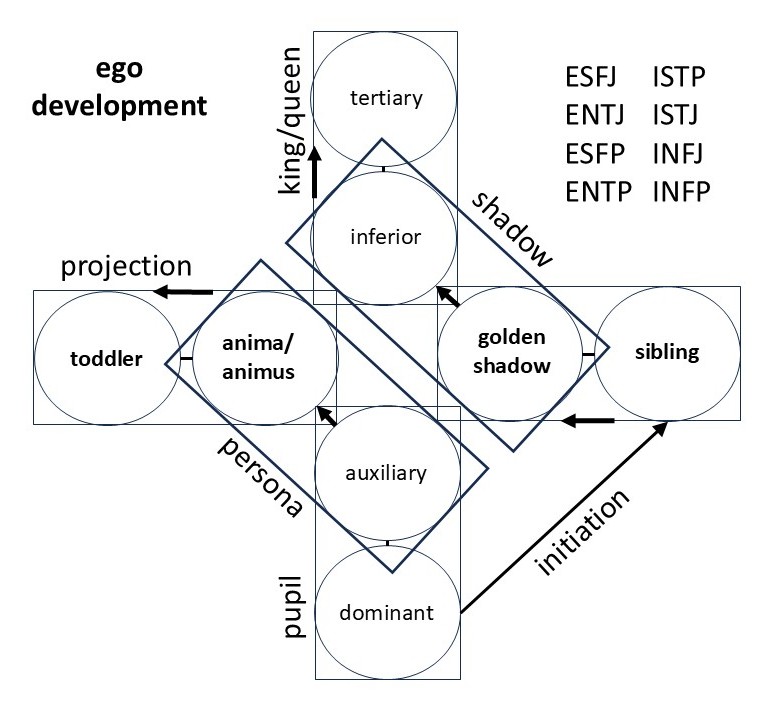
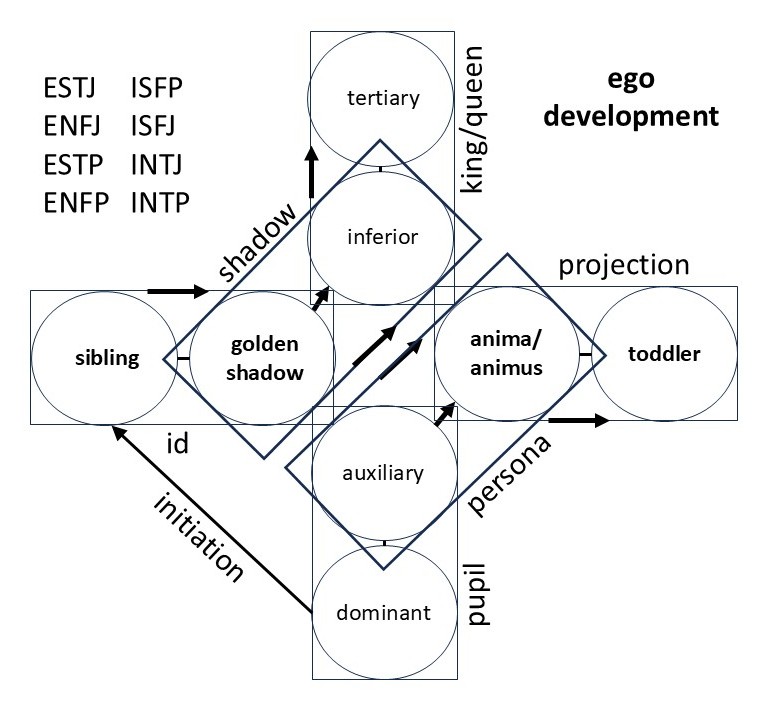
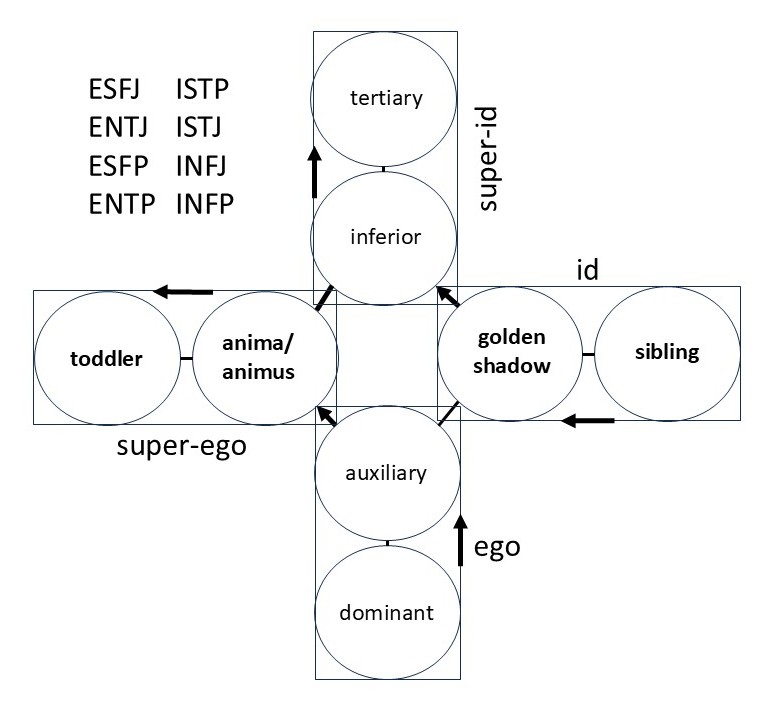

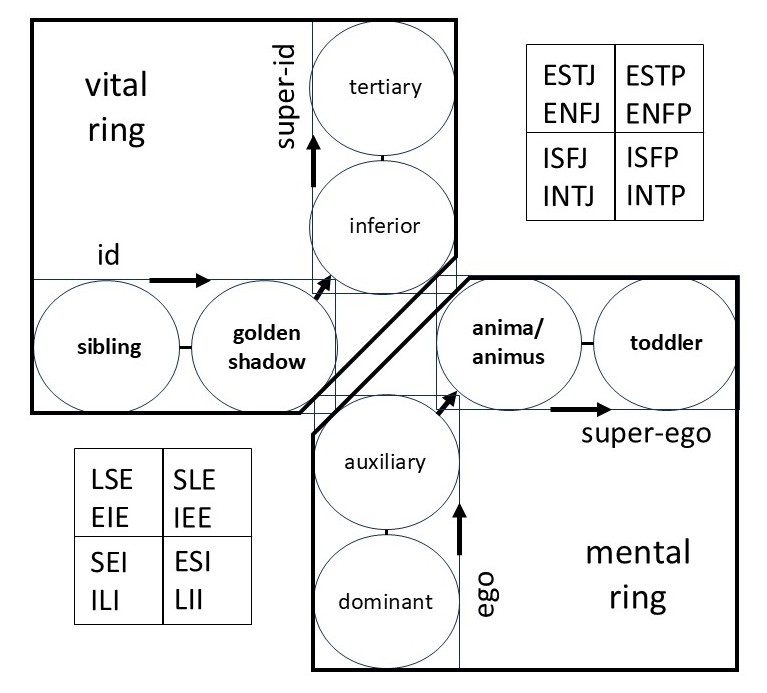
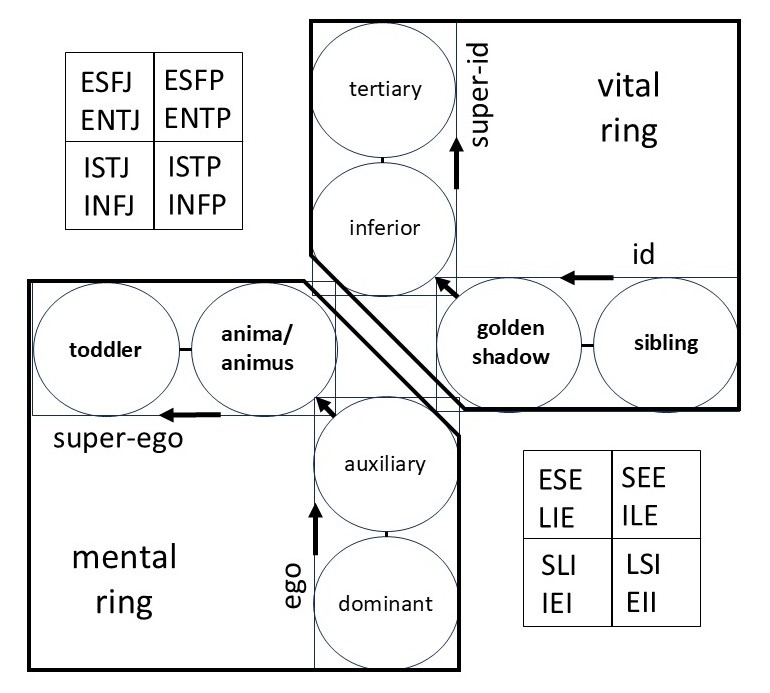


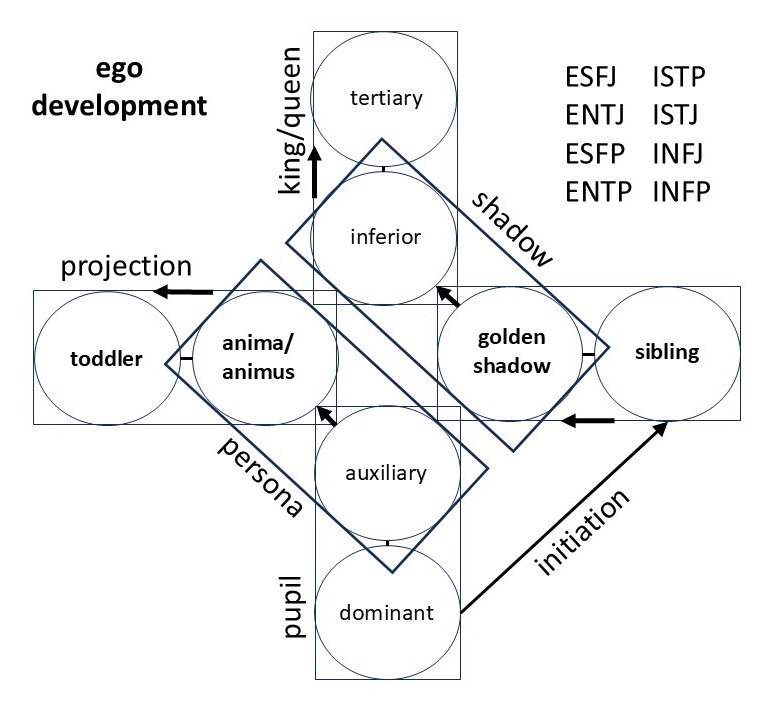

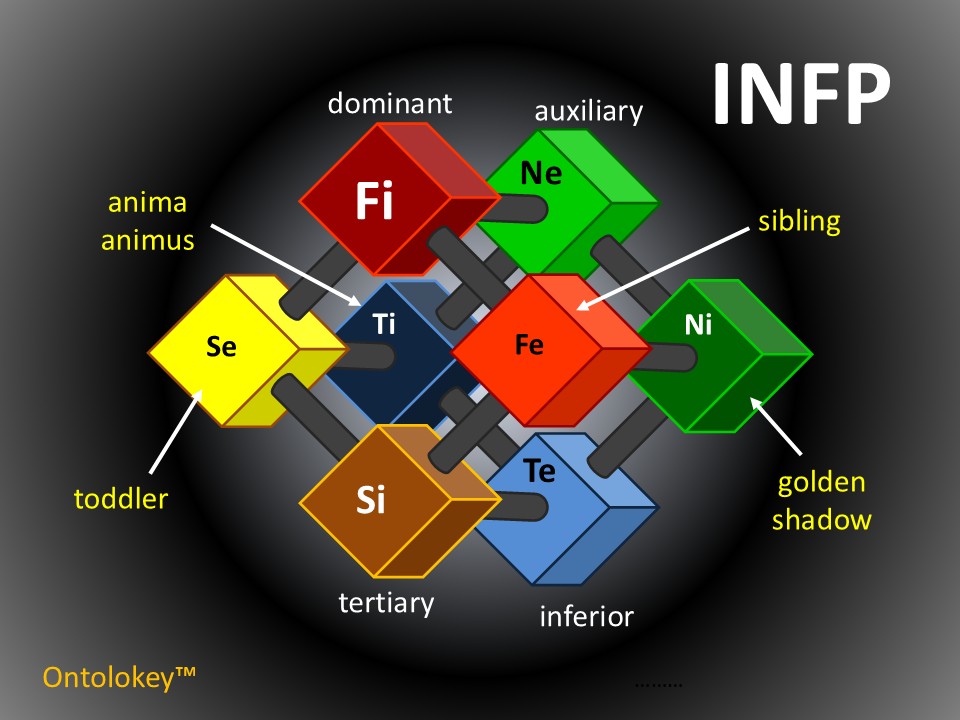
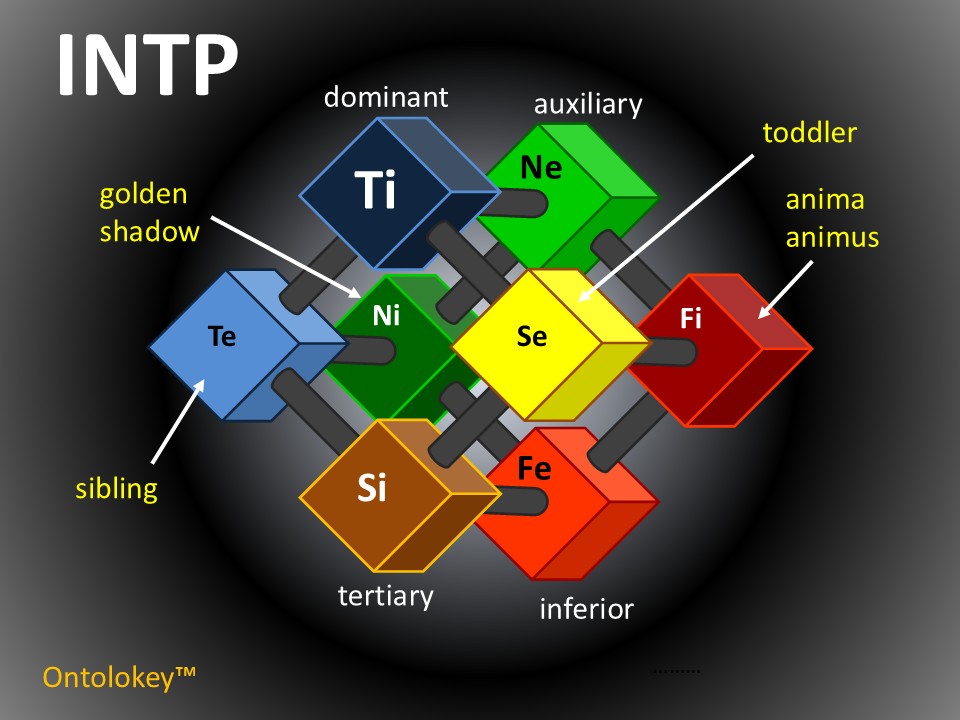

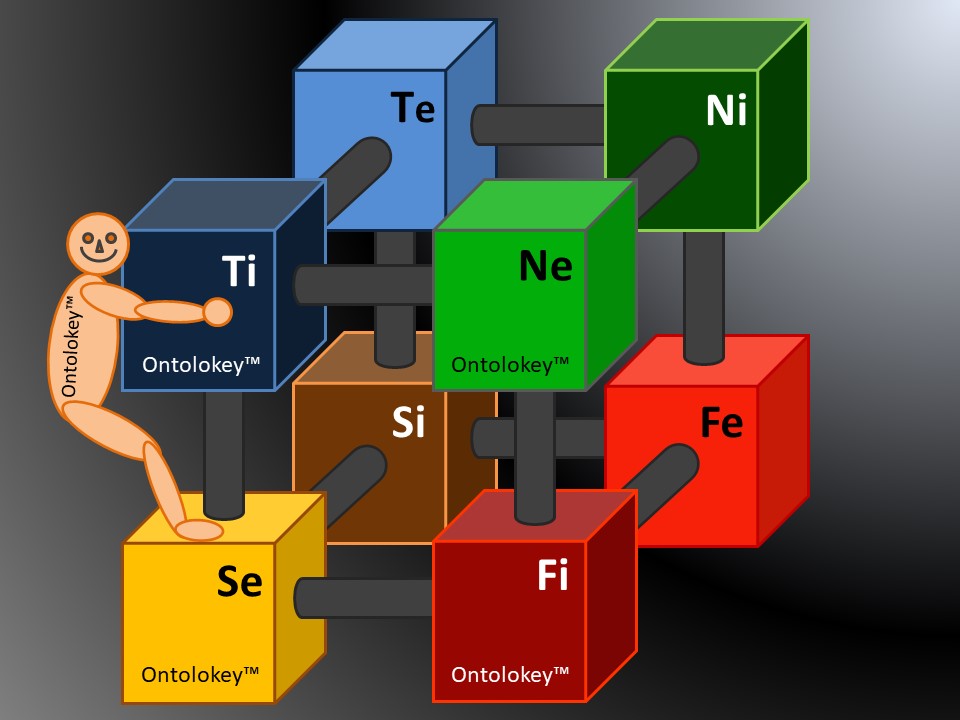
 Ontolokey