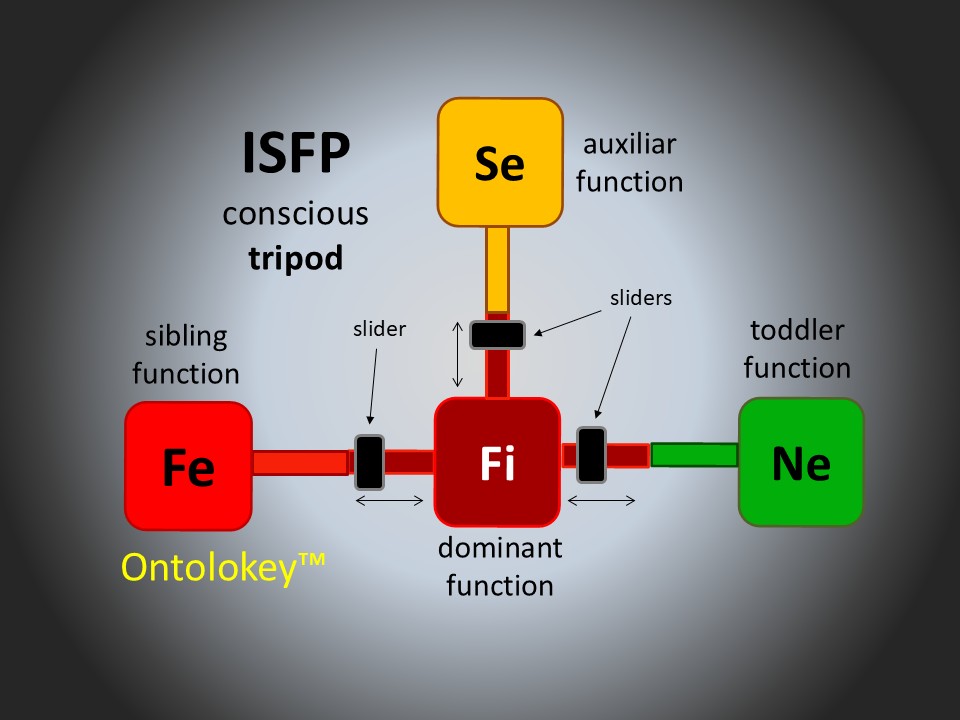
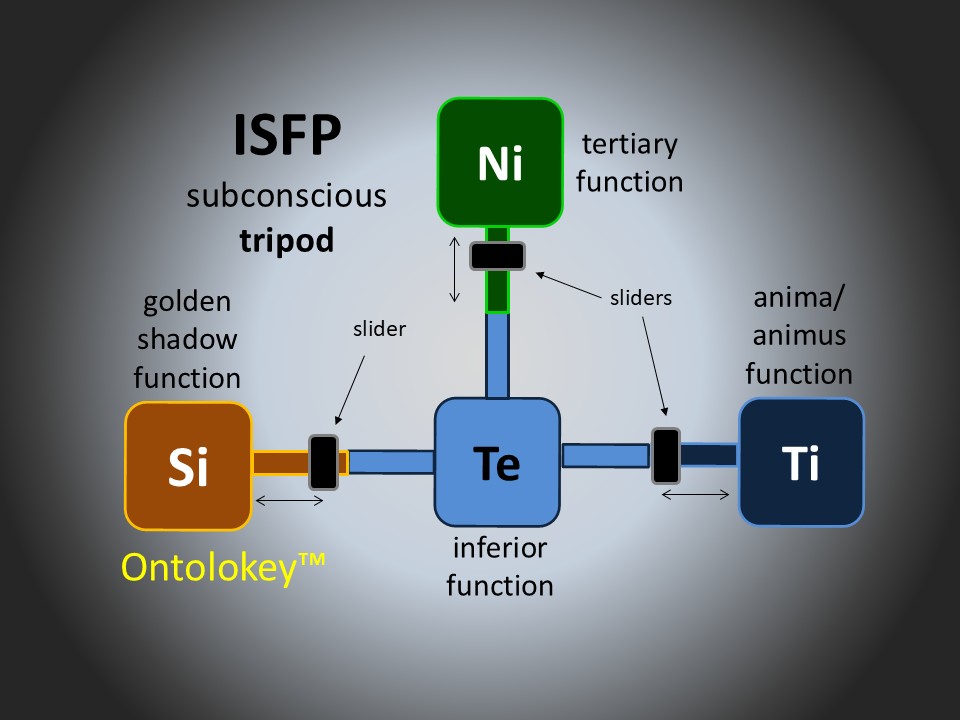
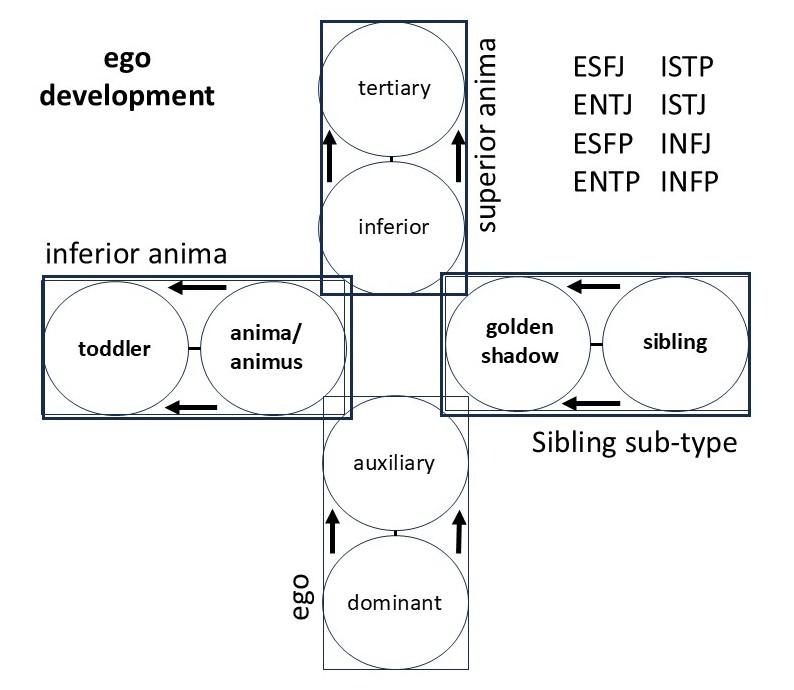
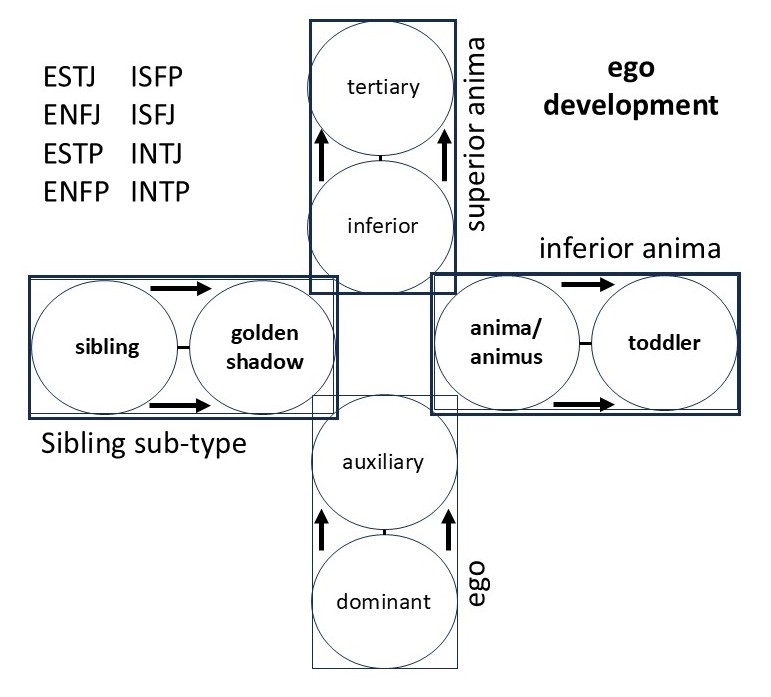
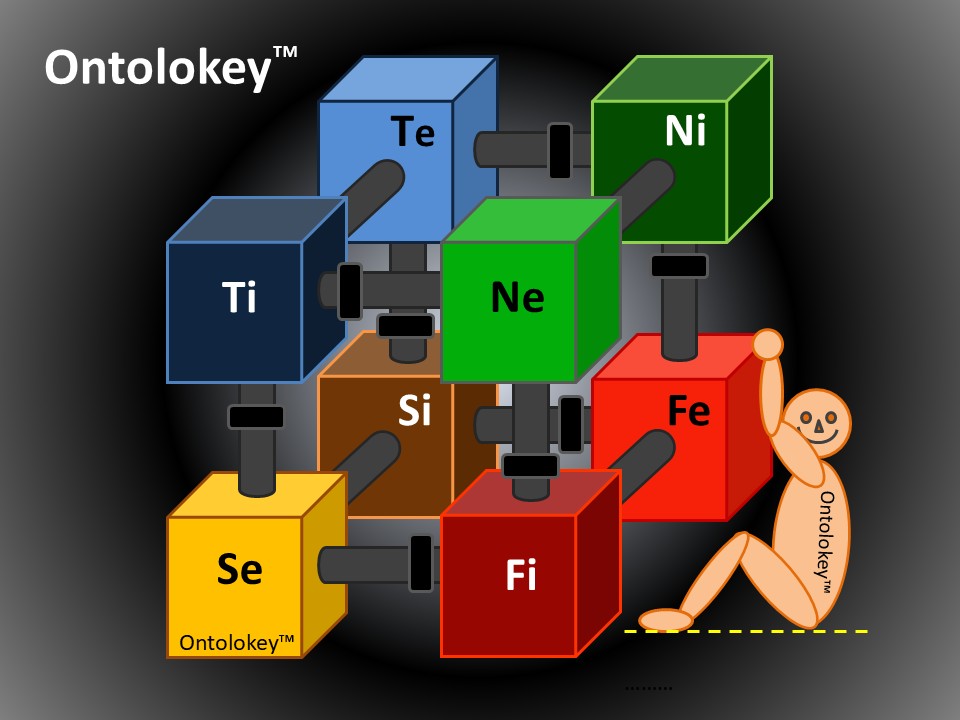
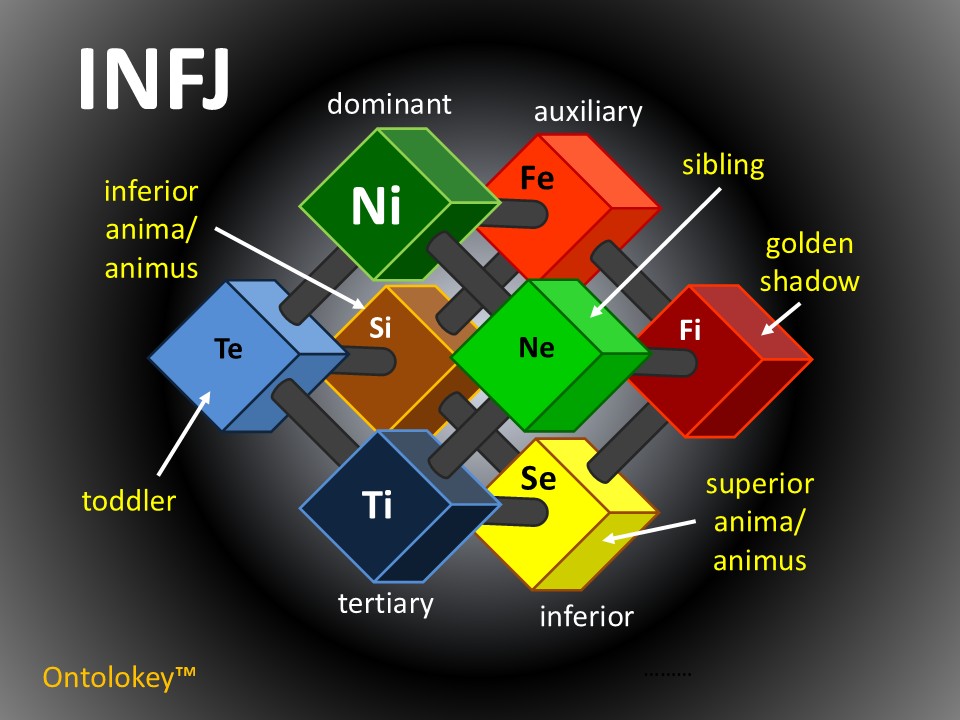
• This essay describes the anima of an INTJ personality according to Ontolokey in more detail in order to better clarify the terminology used in Ontolokey.

    The Anima of the INTJ

    The human psyche is not a monolith but a labyrinth—and for the INTJ personality type, few paths are as enigmatic and powerful as the journey of the anima. Often reduced to a vague archetype or the inferior Se function in typological charts, the anima in Jungian psychology is far more than a single psychological function. She is a dynamic, evolving presence in the unconscious that reflects the individual’s deepest emotional and spiritual maturation.

    Within the INTJ’s psyche, the anima is not a static concept—she moves, transforms, matures. Her presence marks the stages of individuation: the process of becoming a whole and integrated self. Unlike simplified personality theories that define extraverted sensing (Se) as the sole expression of the anima in INTJs, Jung’s model offers a richer and more nuanced framework. The anima unfolds in four archetypal stages: Eve, Helen, Mary, and Sophia. Borrowed from myth and religion, these figures serve as psychological milestones in the unfolding of the inner feminine/masculine.


    Stage One: Eve — The Archaic Beginning

    Mainstream psychology often assumes that Se—extraverted sensing—is the INTJ’s sole anima expression. But according to Carl Gustav Jung, the anima develops through four distinct stages.

    The journey begins with the Eve-anima, which influences the psyche during early development. She is still immature and therefore marked by archaic, childlike traits. Entirely unconscious, she remains inaccessible to the adolescent mind. At this stage, the anima is not yet extraverted but rather aligned with introverted sensing (Si).

    Because the INTJ’s dominant function—introverted intuition (Ni)—is also inward-facing, their early focus naturally leans toward inner sensation rather than the still-distant outer world of Se. “Distant” here refers to its position in the slow unfolding of individuation over a lifetime.

    The journey begins in adolescence with this Eve-anima—primitive, unconscious, and childlike. In the INTJ, she does not appear through Se, as some typologists claim, but rather through Si: bodily memory, inner familiarity, and instinctive resonance.

    This is critical: INTJs at this stage are not reaching out to the world through Se, but turning inward into the mist of memory, instinct, and pre-verbal emotion. The Eve-anima lives in projections—accessible only through visceral bodily sensations, sudden attractions, or vague inner disturbances.


    Stage Two: Helen — The Illusion of Completion

    In adulthood, the second stage of the anima emerges: Helen—named after the legendary figure from Homer’s Iliad, abducted by Paris and taken to Troy. This stage manifests as a projection onto an external person, often a romantic partner or “soulmate” who seems to complete the INTJ.

    Plato’s concept of the spherical being (from the Symposium) explains that Zeus once split humans in half—and each now longs for their missing other. The Helen-anima represents this idealized half, the search for lost wholeness.

    According to Jung, the INTJ is made up of four primary functions: dominant introverted intuition (Ni), auxiliary extraverted thinking (Te), tertiary introverted feeling (Fi), and inferior extraverted sensing (Se). But Jungian typology includes eight functions—and the four not present in the INTJ find their mirror in the ISFJ type.

    Thus, the ISFJ becomes the ideal projection screen for all the INTJ’s unconscious and undeveloped traits. The development levels of these functions can be described in Socionics as ranging from D1 (undeveloped) to D4 (fully developed). For the INTJ, Ni is at D4, Se at D1. In contrast, the ISFJ’s functions mirror this progression.

    The Helen-anima therefore appears in the form of an ISFJ-like partner—someone who embodies all the traits the INTJ longs for: emotional warmth, sensory grounding, bodily presence. But does the INTJ truly love this person? – perhaps they love the projection, only? Therefore the anima must eventually be reclaimed.


    Stage Three: Mary — Inner Gestation

    As the INTJ matures, the Helen projection collapses. Now begins the task of integration. The anima shifts from being projected onto another to being internalized as the Mary-anima.

    The name “Mary” draws from Christian mythology: her role is to “give birth” to a new function—extraverted feeling (Fe). The Mary-anima is the internalized ISFJ within the INTJ, striving toward wholeness.

    Psychologically, the INTJ accesses introverted sensing (Si) through their now-developed auxiliary function, extraverted thinking (Te), which must reach D4 maturity. The first step in this phase is to strengthen Te, allowing access to the internal Si—the Mary-anima.

    When Si reaches a sufficient level of development (D3 or higher), it becomes “pregnant,” symbolically mirroring the idea of the immaculate conception—an archetype found across cultures: Isis (Egypt), Maya (Buddhism), Danaë (Greece), Rhea Silvia (Rome).

    For the INTJ, introverted sensing (Si)—as the Mary-anima—gives birth to extraverted feeling (Fe), which is the auxiliary function of the internal ISFJ. Only after this “birth” can the “golden shadow” be integrated—a process not discussed further in this essay.

    Ontolokey refers to the Mary-anima as “inferior anima/animus”. “Interior” refers to the fact that there is a higher, more developed anima/animus, namely the Sophia-anima, which is called “superior anima/animus” in Ontolokey.


    Stage Four: Sophia — The Crown of Individuation

    After integrating the golden shadow (represented by ISTP dynamics in the INTJ), the final anima stage is Sophia: the embodiment of wisdom and wholeness. This is the culmination of the individuation journey.

    Extraverted sensing (Se)—once the INTJ’s inferior function—now becomes conscious and integrated, personified by the Sophia-anima. Sophia is represented by the ESFP personality type: whose dominant function is Se and auxiliary is Fi. This combination matches the INTJ’s former inferior and tertiary functions. The ESFP becomes the “Queen/King” archetype in Ontolokey—a symbol of full psychological maturity.

    When the INTJ reaches this stage, they are “crowned.” Like Odysseus returning to Ithaca or Christ with his crown of thorns—they are no longer just observers but sovereigns, fully present in the world.

    Ontolokey refers to the Sophia anima as a “superior anima/animus” because it is the most highly evolved anima/animus achieved at the end of the individuation process.


    Conclusion

    To pathologize the INTJ’s inferior Se is to miss the deeper narrative. The anima is not a weakness—it is the map.

    From Eve to Helen, from Mary to Sophia, the INTJ does not merely develop functions—they undergo metamorphosis. Each stage brings them closer to wholeness, to wisdom, to their true self.

    The anima is not a footnote to the personality. She is the soul’s great invitation.

  • 📖 Chapter 1: The Mythological Mind — Mapping the Psyche with ONTOLOKEY and Myth

    In every person lives a story — not just the biography shaped by external events, but an inner narrative unfolding silently beneath the surface. It is a mythological journey, one that mirrors the epic tales of heroes and gods, yet plays out in the contours of our own psychology. Carl Gustav Jung called this the process of individuation: the journey toward becoming whole, by integrating the many parts of the self.

    But how do we chart such a journey?

    One surprisingly effective map lies at the intersection of two systems: the ONTOLOKEY personality typology and classical mythology. The first offers a framework for understanding psychological preferences — how we think, feel, perceive, and decide. The second gives us living metaphors for the drama of the inner world. Taken together, they allow us to read our lives symbolically, with each personality type reflecting not just a set of traits, but a character within the mythic theater of the self.


    The Inner Cast of Characters

    Imagine your psyche as a landscape populated not by a single “you,” but by many sub-personalities — each with a voice, a function, and a desire. This idea echoes Jung’s notion of the multiplicity of the Self, where consciousness is but one actor on a stage crowded with archetypes: the Anima, the Shadow, the Hero, the Wise Old Man, and many more.

    To bring this into sharper focus, we turn to the ONTOLOKEY, which identifies sixteen personality types, each defined by four cognitive functions. Rather than viewing these types as static categories, we can see them as living sub-types, inner figures that surface in different contexts of our lives — sometimes developed and adult, sometimes immature and fragmented.

    In this framework, the INTP personality serves as our starting point — not just a type, but the symbolic Author of this inner myth. It represents the introverted thinker, the philosopher who seeks inner truth through reflection and abstraction. Yet even the most thoughtful mind cannot individuate alone. It requires a call to action — often initiated by an opposing force.


    The Individuation Journey as Myth

    Like Odysseus summoned to war, or Perseus destined to slay Medusa, the individuation journey begins with disruption. A hidden function emerges — usually one that challenges the dominant ego. In our case, the INTP’s journey is catalyzed by the arrival of Te (extraverted Thinking) — the cognitive function embodied by the ENTJ personality. ENTJ becomes the “Sibbling” archetype: the rival, the challenger, the brother who forces the INTP to move beyond abstract thought into real-world confrontation.

    This brotherly tension echoes mythic pairs: Cain and Abel, Set and Osiris, Jacob and Esau. The sibling is not merely an antagonist, but a spark for transformation. In myth, such pairs often represent the division of the Self — one cerebral, one action-oriented — and their conflict sets the wheel of development in motion.

    In Jungian terms, this is not a war of good versus evil, but a necessary friction between different aspects of the psyche. It is through this friction that the ego is cracked open, allowing the unconscious to flood in and reshape the self.


    As we progress, we will follow this symbolic journey — from the INTP’s awakening, through mythic trials of self-discovery, to the eventual integration of all sub-personalities, culminating in the ISFJ: the embodiment of peace, structure, and inner anchoring. Along the way, mythological figures such as Athene, Helena, Medusa, and Andromeda will serve as mirrors and milestones, reflecting the psychic transformations that shape the soul.

    In the next chapter, we begin this odyssey — not in peace, but in conflict. For the journey toward wholeness always begins with a call to leave home.

    📖 Chapter 2: The Awakening of Te — The ENTJ Brother and the Call to Action

    No hero sets out on a journey without provocation. There is always a break in the pattern — a rupture, a summons, a sibling.

    For the INTP, the introspective philosopher living in the quiet halls of thought, the world of ideas is home. Detached from emotional turbulence and indifferent to status or power, the INTP seeks understanding, not conquest. But as Jung taught us, the psyche is not satisfied with comfort. It demands evolution, often by forcing the ego to face its disowned functions.

    Enter the ENTJ: bold, assertive, and commanding. Where the INTP reflects, the ENTJ acts. Where Ti (introverted Thinking) analyzes from within, Te (extraverted Thinking) imposes order without. ENTJ does not wait for insight to crystallize — he builds systems, takes leadership, and drives change. In the landscape of the inner myth, ENTJ is the “Sibbling Function”, a psychological brother who disrupts the INTP’s isolation and forces confrontation with the external world.


    The Sibling as Catalyst

    In myth, brothers are rarely just family — they are often symbolic doubles, each carrying a different fate. In the biblical story of Cain and Abel, one is favored by God, the other by his own resentment. In Egyptian mythology, Set slays Osiris, setting in motion the drama that will lead to spiritual rebirth through Horus. These stories are not about murder alone, but about necessary rupture — the breaking of unity so that a higher synthesis can emerge.

    In our symbolic system, ENTJ represents this rupture. He is not the enemy of the INTP, but his active reflection — the part of the psyche that says: “It is not enough to think. You must act. You must build.”

    Thus begins the journey of individuation — not as a smooth ascent, but as a confrontation with the alien within.


    Athene Appears

    In Greek mythology, the goddess Athene embodies Te. She is wisdom not of introspection, but of strategic implementation. It is Athene who appears to Odysseus, urging him into battle. It is she who grants him cunning, political clarity, and the courage to navigate chaos. She is not maternal, but architectural. She does not comfort; she prepares.

    Likewise, in the psyche of the INTP, ENTJ arises not as a comforting guide but as a disruptive necessity. His presence demands that the quiet realm of inner thought submit to the rigor of external consequence. Suddenly, the INTP is not just observing the myth — he is inside it.

    Odysseus did not seek war, but Helen was taken, and the war came to him.


    The Theft of the Anima

    This theft — of Helen, the soul-image — is more than politics or beauty. It is the symbolic loss of the Anima, the inner feminine that connects the ego to the unconscious. In Jungian psychology, the Anima is a bridge to feeling, intuition, and deeper wisdom. When she is projected outward — idealized, romanticized, stolen — the self becomes fragmented. The war that follows is not only fought in Troy, but within the psyche.

    And so it begins.

    The ENTJ sibling calls the INTP to arms. The Anima has been projected, and now must be reclaimed. The Te-function awakens in the psyche, demanding structure, strategy, and action. The philosopher must become a wanderer. The thinker must become a hero.

    This is not a journey he chose — it is a journey that chose him.

    📖 Chapter 3: The Anima Is Taken — Helena, Projection, and the Inner War

    Every great journey begins with a loss. In the myth of Odysseus, it is the loss of Helen, whose abduction by Paris ignites the Trojan War. But on the psychological level, Helen is more than a queen or a symbol of beauty — she is the Anima: the soul-image that carries our deepest longings, intuitions, and emotional truths. When she is taken, the psyche is split. And the war that follows is not only external, but deeply internal.


    The Projection of the Anima

    Carl Jung taught that the Anima (in men) or Animus (in women) is a powerful archetype that mediates between the conscious ego and the unconscious mind. She appears in dreams, fantasies, and fascinations — often idealized, often misunderstood. When the ego is immature or unaware, the Anima is projected outward onto a real person: a lover, a muse, a goddess. We see in them what we cannot yet access in ourselves.

    In myth, Helen is such a projection. She is perfect, luminous, otherworldly — but also passive, voiceless, caught in the will of others. She is what the INTP (our symbolic hero) cannot yet integrate: Feeling (Fi) — the capacity to feel values deeply and to ground those feelings in personal memory and embodied experience.

    So long as the Anima is projected, the individual is not whole. He chases the outer image, mistaking it for his missing self. The abduction of Helen is thus not just the cause of a legendary war — it is the initiation of the Individuation Process.


    The Inner Troy

    Troy is not a city on a map. It is a fortress within the psyche — the place where the Anima is held captive by unconscious forces. In this framework, Paris, who takes Helen, represents the seductive but impulsive part of the self — the ENFP, driven by desire, curiosity, and chaotic potential. Paris is not evil; he is simply unintegrated. His charm masks his lack of responsibility. He acts without understanding the consequences.

    To recover the Anima, the hero must confront Paris — not as an enemy, but as a part of himself.

    Thus, the war begins. Not with swords and ships, but with inner conflict. The INTP must leave the world of detached thought and enter the chaos of feeling, desire, and contradiction. He must navigate a battlefield where each combatant is a function, an archetype, a piece of his own fragmented psyche.

    And like all wars in myth, this one is not meant to destroy — it is meant to transform.


    Kirke, Helena, and the Feminine Trial

    On the journey to reclaim the Anima, the hero encounters not only Helen, but other feminine figures — each representing a stage in the maturation of feeling.

    • Helena: the projected, distant Anima — beautiful but inaccessible. She represents the idealized soul.
    • Kirke: the seductive sorceress — embodiment of the unconscious feminine’s power to enchant, deceive, and initiate. She is a test of discernment.
    • Danaë: the inner Anima, locked away, waiting for integration — but only accessible once the hero passes through trials of insight and humility.

    Each of these figures corresponds to different stages in the INFP and ISFP sub-types — emotional depth, artistic sensibility, and inner values. They are not simply “women” in the story — they are mirrors, showing the hero who he is, and who he is not yet.


    The war is underway. The Anima has been taken, but she is also calling. Not to be rescued, but to be reclaimed — not from another man, but from the illusion of separation.

    In the next chapter, the hero will begin to wander — not yet returning home, but encountering the many islands of the soul. Each one holds a trial, a lesson, a sub-type. Each one is a step toward becoming whole.

    📖 Chapter 4: The Island Trials — Integrating the Inner Types

    After the war begins, the hero does not return home. Instead, he wanders.

    In Homer’s Odyssey, Odysseus sets sail from Troy not to seek further glory, but to find his way back to Ithaca — the symbol of inner stability, of “home” in the deepest sense. Yet he is blown off course, again and again, arriving at strange islands where temptations, monsters, lovers, and riddles await. On each island, he is tested. And these trials, far from distractions, are the very path of his transformation.

    Psychologically, each island represents an aspect of the self — a sub-personality or “inner type” that must be encountered, understood, and eventually integrated. Using the ONTOLOKEY framework, we can imagine these islands as living representations of the 16 personality types, each playing a role in the broader individuation process.

    The journey becomes not a straight line from problem to solution, but a spiraling return to the self, made possible only by meeting — and surviving — the diversity within.


    The Subtypes as Archetypal Islands

    Each ONTOLOKEY type can be understood as a personified function or psychic mode, sometimes immature (the “Child”), sometimes developed (the “Adult”), and each mapped to a figure from mythology.

    Let us visit some of these “islands”:


    🏝 ISFP — Danaë, the Anima Awaiting

    On this island, the hero meets Danaë, mother of Perseus, the divine feminine locked away from the world. She represents the ISFP type — rich in feeling (Fi) and sensing (Se), but often hidden or imprisoned. Danaë is not assertive. She waits. She holds value deep inside, untouched by strategy or analysis.

    Her presence challenges the hero to listen to his inner emotional truths, to honor beauty, vulnerability, and presence — qualities the INTP hero may have long suppressed.


    🏝 ESTP — Polydektes, the Toddler Tyrant

    Here, the hero meets Polydektes, the arrogant king who demands Danaë for himself. He is the dark side of ESTP — impulsive, dominant, and egocentric. He lives only in the present moment and fears nothing — including consequences.

    Polydektes is a warning. He shows the hero what happens when Se (extraverted Sensing) is unmoored from morality or reflection. To move forward, the hero must learn to integrate action with awareness.


    🏝 INFJ — Styx, the Shadow Guide

    A darker island: the river Styx, named here as the INFJ sub-type — mysterious, symbolic, powerful. This figure is not an enemy, but a shadow: a part of the self that knows more than the ego wants to admit.

    Styx speaks in riddles, dreams, and visions. She draws the hero downward, into the unconscious — into intuition (Ni) and ethical depth (Fe). She is the pain of unacknowledged insight. Integration here requires surrender, not control.


    🏝 ENFP — Paris, the Mask of Charm

    On another shore, the hero meets Paris again — not as a thief of Helen, but as a type: the ENFP, vibrant, scattered, idealistic. Paris is charisma without commitment. He reminds the hero of his own capacity for projection, for chasing ideals rather than integrating reality.

    To pass this island, the hero must balance the joy of possibility with the necessity of structure.


    Integration as Relationship

    These encounters are not one-time battles. The hero does not slay these figures — he relates to them, learns from them, and carries a piece of them forward. Individuation is not domination; it is relationship. It is the art of becoming many, without losing oneself.

    Each function, each type, becomes a voice within — first foreign, then familiar. The INTP begins to expand: feeling, sensing, intuiting, deciding. He becomes not just a thinker, but a whole person.

    And as the islands pass, he begins to understand: the journey is not about Helen, or even Ithaca. It is about becoming the kind of self who no longer seeks completion in others — because he has found it within.


    In the next chapter, the hero must face that which he most fears — the unseeable truth. It awaits not on an island, but in a cave. Not a lover, not a sibling, but a monster.

    📖 Chapter 5: From Leukothea to Arete — INFJ and ENFJ as the Golden Shadow Unfolded

    Not all shadows are dark. Some shine so brightly that the conscious mind dares not claim them. These are the golden shadows — the aspects of our highest potential that we unconsciously disown, because to step into them would mean to become truly powerful, responsible, seen.

    For the INTP, who lives primarily in the world of Ti (introverted thinking) and Ne (extraverted intuition), this golden shadow takes on the form of INFJ — the deep visionary, the silent guide, the one who sees patterns not just in ideas, but in the soul. And when fully integrated, this shadow matures and transforms into ENFJ — the radiant leader, the sovereign heart, the embodied wisdom in action.


    INFJ: The Rescuer in the Depth

    In Homer’s Odyssey, Odysseus is nearly drowned by Poseidon — overwhelmed by the unconscious, pulled under by forces far beyond his control. It is then that Leukothea, a sea goddess, appears and saves him. She gives him her veil — a sacred symbol — and tells him to let go of what he clings to. Only by surrendering can he survive.

    Leukothea is the INFJ archetype — the quiet, intuitive force that rescues not by strength, but by insight, faith, and timing. INFJ lives in the realm of Ni (introverted intuition) and Fe (extraverted feeling) — inner knowing paired with outer harmony. She represents the first encounter with the golden shadow: the part of the INTP that knows, feels, and guides — but not yet through action.

    To integrate INFJ is to accept the whisper of the soul, the irrational wisdom, the insight that defies logic. It is the turning point in the journey, where the thinker surrenders to something deeper than thought.


    From Integration to Embodiment

    But integration is not the end. It is the beginning of embodiment.

    Once the INFJ energy has been internalized — once the INTP has surrendered, listened, and allowed himself to be transformed — a new archetype emerges: ENFJ, the inverse of INFJ, where the auxiliary and dominant functions have flipped. Now, Fe leads — feeling, not thinking, guides the psyche.

    This shift is not just structural. It is spiritual.

    The inner wisdom (Ni) that once whispered in private now speaks with authority. The compassion once kept hidden now organizes communities. The vision once doubted now moves others. The INTP, once abstract and unsure, steps into charisma, presence, and ethical leadership.


    ENFJ: Queen Arete, Mirror of Fulfilled Potential

    In the myth, this energy is personified by Queen Arete, wife of King Alcinous and ruler of the Phaeacians. When Odysseus, broken and half-naked, arrives at her court, it is Arete, not the king, who holds the power to grant him aid and restoration.

    She does not lead with force — she leads with wisdom, discernment, and emotional clarity. She recognizes Odysseus not by his appearance, but by his essence. She is the ultimate mirror of the integrated self — the one who sees you not just as you are, but as you have become.

    Psychologically, Arete represents the ENFJ archetype as the crown of the golden shadow — not just deep intuition, but intuition in service to others. Not just personal transformation, but collective upliftment.

    To meet Arete is to be seen at your highest level of integrity.


    The Golden Shadow, Fulfilled

    The journey from INFJ to ENFJ is the journey from potential to power. It is the moment when the INTP no longer fears his capacity to lead, to love, to heal — but accepts it with humility and grace.

    This is not ego inflation. It is self-authorization.

    It is the realization that you are not here only to understand the world — but to shape it.
    Not just to reflect truth — but to embody it in relation to others.


    Closing Image

    Odysseus stands before Arete, no longer drifting, no longer hidden. She sees him — all of him. And in that gaze, he is made whole.

    From the silent depths of Leukothea to the radiant throne of Arete, the golden shadow has been not conquered, but claimed.

    The INTP has become more than mind.
    He has become presence.

    📖 Chapter 6: Medusa and the Shadow — Facing the Unseeable Self

    Every hero, no matter how far he travels, must one day stop running. Not from enemies or monsters — but from himself.

    There comes a moment in every individuation journey when the outer trials give way to an inner reckoning. The masks fall. The projections fade. And what remains is the Shadow: the rejected, repressed, or misunderstood part of the self. It waits not on an island, but in a cave. It speaks not with words, but through fear. And it looks the hero directly in the eye.

    Or rather, he dares not look directly at it — for to do so too soon would destroy him.

    This is Medusa.


    The Shadow as Truth in Disguise

    In mythology, Medusa is the monstrous woman whose gaze turns men to stone. She was once beautiful, but was cursed — a familiar pattern in myths of the feminine. In Jungian terms, she is not simply a monster. She is the Shadow-Anima — the terrifying truth of the self, seen without distortion.

    She represents what the ego cannot yet accept: unprocessed trauma, unintegrated rage, unacknowledged power. She is the truth that has been turned into a threat, because the conscious mind has refused to hold it.

    In this symbolic journey, Medusa is not to be slain in hatred — but understood, even loved. Still, her gaze is deadly until the hero is ready.


    Perseus and the Mirror

    In the myth, Perseus defeats Medusa by using a mirror — the polished shield of Athene. He does not confront her directly. He reflects her image back to her, using awareness to face what instinct fears.

    This is a profound psychological metaphor. The ego cannot face the full truth of the unconscious all at once. It must learn to see it indirectly — through dream, art, myth, projection, therapy. The mirror is symbolic consciousness: a way to look at the Shadow without being destroyed by it.

    Perseus, in our system, is linked to the ISTP type — pragmatic, focused, self-reliant. Unlike the abstract INTP, ISTP acts decisively in the physical world. He brings thought into embodied action. It is this capacity — to translate insight into form — that allows the confrontation with Medusa to succeed.


    The Psychological Medusa

    But who is Medusa, really?

    She may appear in the psyche as:

    • The part of you that feels too much and was shamed for it.
    • The memory you’ve locked away.
    • The power you’re afraid to claim.
    • The grief you haven’t faced.
    • The rage you’ve disowned.

    To face Medusa is to risk being paralyzed by truth. But not facing her at all is to remain half-alive.

    The mirror allows you to see her with compassion, not horror. Integration begins here — not with victory, but with presence.

    Medusa is not destroyed. She is transformed — her head becomes a symbol of protection, worn by Athene herself. What once was feared becomes a source of wisdom.


    The Turning Point

    This is the great paradox of individuation: that what we most fear holds the key to our power. That the darkest image is not our enemy, but our unmet self.

    Having faced Medusa, the hero is not yet whole — but he is no longer divided. He begins to walk with what was once repressed. The Shadow has become a companion, not a curse.

    He can now return — not as the person he was, but as the one he is becoming.

    📖 Chapter 7: The Return to Ithaca — The ISFJ and the Integration of Si

    After storms, monsters, war, and wandering, the hero finally sees land. But this land is not new. It is home.

    Only now does he understand what “home” truly means. Not a place, but a state of being — not a return to who he was, but the arrival at who he has become.

    This is Ithaca.

    And Ithaca, in our symbolic system, is embodied by the ISFJ: a personality type that holds the qualities of structure, care, memory, and quiet strength. ISFJ represents SiIntroverted Sensing — the function that roots identity in lived experience, tradition, and deep personal meaning. It is the opposite of the INTP’s airy abstraction. It is earth, flesh, ritual.


    The Completion of the Circle

    The journey began with INTP — the thinker lost in ideas, ungrounded, untested. Along the way, he met the fiery Te of ENTJ, the passions of the Anima, the chaos of ENFP, the precision of ISTP, the grace of INFJ, the authority of ENFJ, and the mirror of the Shadow.

    Through this spiral, he was drawn out of abstraction and into life.

    Now, at last, the personality stabilizes — not by rejecting thought, but by embodying it.

    ISFJ is the Guardian of the Inner Temple. Just as Andromeda is chained to the rock and freed by Perseus, the ISFJ stands for the part of the psyche that was once passive but is now liberated, not through external rescue, but through internal balance. Andromeda is no longer a victim; she is the foundation.

    In Christian metaphor, this is Petrus, the “rock” upon which the church is built. In psychological terms, it is the inner sanctuary — the place where memory, value, and presence converge.


    The Role of Si — Memory and Embodiment

    Introverted Sensing (Si) is often underestimated. It does not dazzle like Intuition or dominate like Thinking. But Si is the function that remembers. It preserves what matters. It honors the past not as nostalgia, but as root.

    In individuation, Si allows us to integrate the journey. Without it, the insights remain floating, disconnected. With it, we become whole — not because we’ve mastered every function, but because we can live in our truth, day by day, breath by breath.

    The ISFJ is not the hero in battle, but the hero in life. The one who holds the fire, tends the home, remembers the path. The one who lives quietly, but fully.


    Individuation as Ongoing Embodiment

    The return to Ithaca is not an ending. It is the beginning of a new kind of living — one that integrates thought, action, feeling, intuition, memory, and shadow into a dynamic wholeness.

    The INTP who once fled the world through abstraction now walks within it, grounded, aware, connected.

    He has learned:

    • From ENTJ: how to act.
    • From ENFP: how to imagine.
    • From ISFP: how to feel.
    • From ISTP: how to respond.
    • From INFJ: how to see.
    • From ENFJ: how to serve.
    • From ISFJ: how to be.

    He has become not a different person, but a unified one — and that is the essence of individuation.


    📖 Chapter 8: The Rebirth of the INTP — Entelechy and the Fully Realized Self

    The journey ends where it began — but nothing is the same.

    The INTP, who once lived in the high towers of thought, isolated from feeling and form, has returned. But this is no regression to old habits. It is a return transformed — a rebirth. What was once fragmented has become whole. What was once potential has become Entelechy: the full realization of inner essence.


    The Final Function: Si as the Gate of Completion

    In Jungian terms, the process of individuation is not complete until all eight psychological functions have been at least partially integrated. For the INTP, the last of these is Si — introverted sensing: the function most foreign to his starting point.

    Si is not imaginative or speculative. It does not seek new systems. It remembers. It embodies. It roots.

    On Ithaca, Odysseus reclaims this final function. He no longer wanders. He belongs. The wisdom of experience is no longer abstract — it lives in his body, his bones, his rituals, his relationships. The abstract mind becomes living memory.

    And as Si is integrated, the spiral closes. The circle becomes a sphere. The psyche becomes whole.


    The Return of Youth — But Transformed

    Myths often speak of youth regained — not in age, but in essence.
    Odysseus, once worn by war and wandering, is said to shine again like a god. He bends his bow. He stands tall. He is recognized not just by others, but by himself.

    This is not naïve youth, but awakened youth: Ti and Ne now infused with depth, love, structure, power, insight, presence, and memory. The original INTP framework remains — but now it is radiant, not limited.

    The INTP has become like Perseus, who returns not only with the head of Medusa, but with a new identity: one who has faced fear, redeemed the feminine, and fulfilled the heroic arc — not outwardly, but inwardly.


    All Eight Functions — The Inner Pantheon

    The INTP, once operating with two conscious functions, has now encountered and integrated all eight:

    1. Ti — precision of mind
    2. Ne — pattern recognition and possibility
    3. Si — grounded memory and continuity
    4. Fe — empathy and social resonance
    5. Te — external structure and execution
    6. Fi — personal value and depth
    7. Ni — inner vision and insight
    8. Se — embodied immediacy and perception

    These are no longer competing voices, but a symphony. The ego is no longer a ruler — it is a conductor. The self is no longer divided — it is polyphonic, fluid, and alive.


    The Metaphor of the Butterfly

    The Greeks had a word for soul: “psyche”, which also means butterfly.
    The butterfly does not simply grow wings — it dissolves into nothing in the cocoon and reforms from essence.

    The INTP, at the start of this journey, was the caterpillar — filled with hunger, ideas, and instinct. Through the trials of war, sea, shadow, and grace, he entered the cocoon of transformation. And now he emerges — not as a better thinker, but as a whole being.

    This is Entelechy — the final form contained within the seed of the first thought.


    The New Life

    Now the INTP walks the world not as an outsider, but as a mirror of the inner cosmos. He is still curious, still thoughtful — but also embodied, relational, intuitive, expressive, compassionate, and grounded.

    He teaches not only what he knows, but who he is.

    And most importantly: he is not done.
    Individuation is not an end. It is a way of being. A spiral. A flame. A dance.


    Final Words

    You began as a question.
    You have become the answer.
    Not the only answer — but your answer.
    Lived. Integrated. Whole.

    So let the world call you INTP — but know, in your soul,
    you are no longer a type.

    You are a myth made flesh.
    A psyche made whole.
    A butterfly — with memory in its wings.

  • In every person lives a story — not just the biography shaped by external events, but an inner narrative unfolding silently beneath the surface. It is a mythological journey, one that mirrors the epic tales of heroes and gods, yet plays out in the contours of our own psychology. Carl Gustav Jung called this the process of individuation: the journey toward becoming whole, by integrating the many parts of the self.

    But how do we chart such a journey?

    One surprisingly effective map lies at the intersection of two systems: the ONTOLOKEY personality typology and classical mythology. The first offers a framework for understanding psychological preferences — how we think, feel, perceive, and decide. The second gives us living metaphors for the drama of the inner world. Taken together, they allow us to read our lives symbolically, with each personality type reflecting not just a set of traits, but a character within the mythic theater of the self.

    The Inner Cast of Characters

    Imagine your psyche as a landscape populated not by a single “you,” but by many sub-personalities — each with a voice, a function, and a desire. This idea echoes Jung’s notion of the multiplicity of the Self, where consciousness is but one actor on a stage crowded with archetypes: the Anima, the Shadow, the Hero, the Wise Old Man, and many more.

    To bring this into sharper focus, we turn to the ONTOLOKEY, which identifies sixteen personality types, each defined by four cognitive functions. Rather than viewing these types as static categories, we can see them as living sub-types, inner figures that surface in different contexts of our lives — sometimes developed and adult, sometimes immature and fragmented.

    In this framework, the INTP personality serves as our starting point — not just a type, but the symbolic Author of this inner myth. It represents the introverted thinker, the philosopher who seeks inner truth through reflection and abstraction. Yet even the most thoughtful mind cannot individuate alone. It requires a call to action — often initiated by an opposing force.

    The Individuation Journey as Myth

    Like Odysseus summoned to war, or Perseus destined to slay Medusa, the individuation journey begins with disruption. A hidden function emerges — usually one that challenges the dominant ego. In our case, the INTP’s journey is catalysed by the arrival of Te (extraverted Thinking) — the cognitive function embodied by the ENTJ personality. ENTJ becomes the “Sibling” archetype: the rival, the challenger, the brother who forces the INTP to move beyond abstract thought into real-world confrontation.

    This brotherly tension echoes mythic pairs: Kain and Abel, Set and Osiris, Jacob and Esau. The sibling is not merely an antagonist, but a spark for transformation. In myth, such pairs often represent the division of the Self — one cerebral, one action-oriented — and their conflict sets the wheel of development in motion.

    In Jungian terms, this is not a war of good versus evil, but a necessary friction between different aspects of the psyche. It is through this friction that the ego is cracked open, allowing the unconscious to flood in and reshape the self.


    As we progress, we will follow this symbolic journey — from the INTP’s awakening, through mythic trials of self-discovery, to the eventual integration of all sub-personalities, culminating in the ISFJ: the embodiment of peace, structure, and inner anchoring. Along the way, mythological figures such as Athene, Helena, Medusa, and Andromeda will serve as mirrors and milestones, reflecting the psychic transformations that shape the soul.

    In the next chapter, we begin this odyssey — not in peace, but in conflict. For the journey toward wholeness always begins with a call to leave home.

    📖 Chapter 2: The Awakening of Te — The ENTJ Brother and the Call to Action

    No hero sets out on a journey without provocation. There is always a break in the pattern — a rupture, a summons, a sibling.

    For the INTP, the introspective philosopher living in the quiet halls of thought, the world of ideas is home. Detached from emotional turbulence and indifferent to status or power, the INTP seeks understanding, not conquest. But as Jung taught us, the psyche is not satisfied with comfort. It demands evolution, often by forcing the ego to face its disowned functions.

    Enter the ENTJ: bold, assertive, and commanding. Where the INTP reflects, the ENTJ acts. Where Ti (introverted Thinking) analyzes from within, Te (extraverted Thinking) imposes order without. ENTJ does not wait for insight to crystallize — he builds systems, takes leadership, and drives change. In the landscape of the inner myth, ENTJ is the “Sibling Function”, a psychological brother who disrupts the INTP’s isolation and forces confrontation with the external world.

    The Sibling as Catalyst

    In myth, brothers are rarely just family — they are often symbolic doubles, each carrying a different fate. In the biblical story of Cain and Abel, one is favored by God, the other by his own resentment. In Egyptian mythology, Set slays Osiris, setting in motion the drama that will lead to spiritual rebirth through Horus. These stories are not about murder alone, but about necessary rupture — the breaking of unity so that a higher synthesis can emerge.

    In our symbolic system, ENTJ represents this rupture. He is not the enemy of the INTP, but his active reflection — the part of the psyche that says: “It is not enough to think. You must act. You must build.”

    Thus begins the journey of individuation — not as a smooth ascent, but as a confrontation with the alien within.

    Athene Appears

    In Greek mythology, the goddess Athene embodies Te. She is wisdom not of introspection, but of strategic implementation. It is Athene who appears to Odysseus, urging him into battle. It is she who grants him cunning, political clarity, and the courage to navigate chaos. She is not maternal, but architectural. She does not comfort; she prepares.

    Likewise, in the psyche of the INTP, ENTJ arises not as a comforting guide but as a disruptive necessity. His presence demands that the quiet realm of inner thought submit to the rigor of external consequence. Suddenly, the INTP is not just observing the myth — he is inside it.

    Odysseus did not seek war, but Helen was taken, and the war came to him.

    The Theft of the Anima

    This theft — of Helen, the soul-image — is more than politics or beauty. It is the symbolic loss of the Anima, the inner feminine that connects the ego to the unconscious. In Jungian psychology, the Anima is a bridge to feeling, intuition, and deeper wisdom. When she is projected outward — idealized, romanticized, stolen — the self becomes fragmented. The war that follows is not only fought in Troy, but within the psyche.

    And so it begins.

    The ENTJ sibling calls the INTP to arms. The Anima has been projected, and now must be reclaimed. The Te-function awakens in the psyche, demanding structure, strategy, and action. The philosopher must become a wanderer. The thinker must become a hero.

    This is not a journey he chose — it is a journey that chose him.

    The Anima Is Taken — Helena, Projection, and the Inner War

    Every great journey begins with a loss. In the myth of Odysseus, it is the loss of Helen, whose abduction by Paris ignites the Trojan War. But on the psychological level, Helen is more than a queen or a symbol of beauty — she is the Anima: the soul-image that carries our deepest longings, intuitions, and emotional truths. When she is taken, the psyche is split. And the war that follows is not only external, but deeply internal.

    The Projection of the Anima

    Carl Jung taught that the Anima (in men) or Animus (in women) is a powerful archetype that mediates between the conscious ego and the unconscious mind. She appears in dreams, fantasies, and fascinations — often idealized, often misunderstood. When the ego is immature or unaware, the Anima is projected outward onto a real person: a lover, a muse, a goddess. We see in them what we cannot yet access in ourselves.

    In myth, Helen is such a projection. She is perfect, luminous, otherworldly — but also passive, voiceless, caught in the will of others. She is what the INTP (our symbolic hero) cannot yet integrate: Feeling (Fi) and Introverted Sensation (Si) — the capacity to feel values deeply and to ground those feelings in personal memory and embodied experience.

    So long as the Anima is projected, the individual is not whole. He chases the outer image, mistaking it for his missing self. The abduction of Helen is thus not just the cause of a legendary war — it is the initiation of the Individuation Process.

    The Inner Troy

    Troy is not a city on a map. It is a fortress within the psyche — the place where the Anima is held captive by unconscious forces. In this framework, Paris, who takes Helen, represents the seductive but impulsive part of the self — the ENFP, driven by desire, curiosity, and chaotic potential. Paris is not evil; he is simply unintegrated. His charm masks his lack of responsibility. He acts without understanding the consequences.

    To recover the Anima, the hero must confront Paris — not as an enemy, but as a part of himself.

    Thus, the war begins. Not with swords and ships, but with inner conflict. The INTP must leave the world of detached thought and enter the chaos of feeling, desire, and contradiction. He must navigate a battlefield where each combatant is a function, an archetype, a piece of his own fragmented psyche.

    And like all wars in myth, this one is not meant to destroy — it is meant to transform.

    Kirke, Helena, and the Feminine Trial

    On the journey to reclaim the Anima, the hero encounters not only Helen, but other feminine figures — each representing a stage in the maturation of feeling.

    • Helena: the projected, distant Anima — beautiful but inaccessible. She represents the idealized soul.
    • Kirke: the seductive sorceress — embodiment of the unconscious feminine’s power to enchant, deceive, and initiate. She is a test of discernment.
    • Danaë: the inner Anima, locked away, waiting for integration — but only accessible once the hero passes through trials of insight and humility.

    Each of these figures corresponds to different stages in the INFP and ISFP sub-types — emotional depth, artistic sensibility, and inner values. They are not simply “women” in the story — they are mirrors, showing the hero who he is, and who he is not yet.


    The war is underway. The Anima has been taken, but she is also calling. Not to be rescued, but to be reclaimed — not from another man, but from the illusion of separation.

    In the next chapter, the hero will begin to wander — not yet returning home, but encountering the many islands of the soul. Each one holds a trial, a lesson, a sub-type. Each one is a step toward becoming whole.

    The Island Trials — Integrating the Inner Types

    After the war begins, the hero does not return home. Instead, he wanders.

    In Homer’s Odyssey, Odysseus sets sail from Troy not to seek further glory, but to find his way back to Ithaca — the symbol of inner stability, of “home” in the deepest sense. Yet he is blown off course, again and again, arriving at strange islands where temptations, monsters, lovers, and riddles await. On each island, he is tested. And these trials, far from distractions, are the very path of his transformation.

    Psychologically, each island represents an aspect of the self — a sub-personality or “inner type” that must be encountered, understood, and eventually integrated. Using the ONTOLOKEY framework, we can imagine these islands as living representations of the 16 personality types, each playing a role in the broader individuation process.

    The journey becomes not a straight line from problem to solution, but a spiralling return to the self, made possible only by meeting — and surviving — the diversity within.


    The Subtypes as Archetypal Islands

    Each ONTOLOKEY type can be understood as a personified function or psychic mode, sometimes immature (the “Child”), sometimes developed (the “Adult”), and each mapped to a figure from mythology.

    Let us visit some of these “islands”:


    🏝 ISFP — Danaë, the Anima Awaiting

    On this island, the hero meets Danaë, mother of Perseus, the divine feminine locked away from the world. She represents the ISFP type — rich in feeling (Fi) and sensing (Se), but often hidden or imprisoned. Danaë is not assertive. She waits. She holds value deep inside, untouched by strategy or analysis.

    Her presence challenges the hero to listen to his inner emotional truths, to honor beauty, vulnerability, and presence — qualities the INTP hero may have long suppressed.


    🏝 ESTP — Polydektes, the Toddler Tyrant

    Here, the hero meets Polydektes, the arrogant king who demands Danaë for himself. He is the dark side of ESTP — impulsive, dominant, and egocentric. He lives only in the present moment and fears nothing — including consequences.

    Polydektes is a warning. He shows the hero what happens when Se (extraverted Sensing) is unmoored from morality or reflection. To move forward, the hero must learn to integrate action with awareness.


    🏝 INFJ — Styx, the Shadow Guide

    A darker island: the river Styx, named here as the INFJ sub-type — mysterious, symbolic, powerful. This figure is not an enemy, but a shadow: a part of the self that knows more than the ego wants to admit.

    Styx speaks in riddles, dreams, and visions. She draws the hero downward, into the unconscious — into intuition (Ni) and ethical depth (Fe). She is the pain of unacknowledged insight. Integration here requires surrender, not control.


    🏝 ENFP — Paris, the Mask of Charm

    On another shore, the hero meets Paris again — not as a thief of Helen, but as a type: the ENFP, vibrant, scattered, idealistic. Paris is charisma without commitment. He reminds the hero of his own capacity for projection, for chasing ideals rather than integrating reality.

    To pass this island, the hero must balance the joy of possibility with the necessity of structure.


    Integration as Relationship

    These encounters are not one-time battles. The hero does not slay these figures — he relates to them, learns from them, and carries a piece of them forward. Individuation is not domination; it is relationship. It is the art of becoming many, without losing oneself.

    Each function, each type, becomes a voice within — first foreign, then familiar. The INTP begins to expand: feeling, sensing, intuiting, deciding. He becomes not just a thinker, but a whole person.

    And as the islands pass, he begins to understand: the journey is not about Helen, or even Ithaca. It is about becoming the kind of self who no longer seeks completion in others — because he has found it within.


    In the next chapter, the hero must face that which he most fears — the unseeable truth. It awaits not on an island, but in a cave. Not a lover, not a sibling, but a monster.

    We now approach Medusa.

    Medusa and the Shadow — Facing the Unseeable Self

    Every hero, no matter how far he travels, must one day stop running. Not from enemies or monsters — but from himself.

    There comes a moment in every individuation journey when the outer trials give way to an inner reckoning. The masks fall. The projections fade. And what remains is the Shadow: the rejected, repressed, or misunderstood part of the self. It waits not on an island, but in a cave. It speaks not with words, but through fear. And it looks the hero directly in the eye.

    Or rather, he dares not look directly at it — for to do so too soon would destroy him.

    This is Medusa – the ENFJ Personality within the INTP


    The Shadow as Truth in Disguise

    In mythology, Medusa is the monstrous woman whose gaze turns men to stone. She was once beautiful, but was cursed — a familiar pattern in myths of the feminine. In Jungian terms, she is not simply a monster. She (ENFJ) is the result of the successfully integrated INFJ-Shadow — the truth of the self, seen without distortion.

    She represents what the ego cannot yet accept: unacknowledged power. She is the truth that has been turned into a potential, which the conscious mind had refused to integrate.

    In this symbolic journey, Medusa is not to be slain in hatred — but understood, even loved. Still, her gaze is deadly until the hero is ready.


    Perseus and the Mirror

    In the myth, Perseus defeats Medusa by using a mirror — the polished shield of Athene. He does not confront her directly. He reflects her image back to her, using awareness to face what instinct fears.

    This is a profound psychological metaphor. The ego cannot face the full truth of the unconscious all at once. It must learn to see it indirectly — through dream, art, myth, projection, therapy. The mirror is symbolic consciousness: a way to look at the Shadow without being destroyed by it.

    Perseus, in our system, is linked to the ISTP type — pragmatic, focused, self-reliant. Unlike the abstract INTP, ISTP acts decisively in the physical world. He brings thought into embodied action. It is this capacity — to translate insight into form — that allows the confrontation with Medusa to succeed.


    The Psychological Medusa

    But who is Medusa, really?

    She may appear in the psyche as:

    • The part of you that feels too much and was shamed for it.
    • The memory you’ve locked away.
    • The power you’re afraid to claim.
    • The grief you haven’t faced.
    • The rage you’ve disowned.

    To face Medusa is to risk being paralyzed by truth. But not facing her at all is to remain half-alive.

    The mirror allows you to see her with compassion, not horror. Integration begins here — not with victory, but with presence.

    Medusa is not destroyed. She is transformed — her head becomes a symbol of protection, worn by Athene herself. What once was feared becomes a source of wisdom.


    The Turning Point

    This is the great paradox of individuation: that what we most fear holds the key to our power. That the darkest image is not our enemy, but our unmet self.

    Having faced Medusa, the hero is not yet whole — but he is no longer divided. He begins to walk with what was once repressed. The Shadow has become a companion, not a curse.

    He can now return — not as the person he was, but as the one he is becoming.


    In the final chapter, we arrive not at triumph, but at integration. The war has ended. The wandering slows. And at last, the hero stands at the gate of Ithaca — the ISFJ archetype, the inner home.

    Penelope and the ESFJ — The Queen Who Waits

    As the hero approaches the final stage of his journey, another figure steps forward — not with a sword or a trial, but with constancy.

    She is Penelope, queen of Ithaca, wife of Odysseus, and guardian of the home he left behind. In the psychological myth, Penelope represents the ESFJ type: warm, structured, devoted, and relationally grounded. She is not the Shadow, not the Anima, not the Monster — she is the Heart of the System, the one who remembers who you are when you forget yourself.

    Before the hero can return to his inner foundation (ISFJ), he must pass through her gates — not physically, but relationally, emotionally, and ethically.


    ESFJ as the Archetype of Relational Structure

    The ESFJ personality is rooted in Fe (Extraverted Feeling) and Si (Introverted Sensing) — a combination that prioritizes harmony, tradition, and social responsibility. But in myth, these qualities take on archetypal weight: Penelope doesn’t just maintain social order; she maintains the emotional and symbolic coherence of the entire journey.

    She is the one who weaves and unweaves her tapestry, delaying the suitors, holding space, protecting the throne — not through power, but through ritual, memory, and loyalty.

    Penelope is the soul’s relational intelligence — the part of us that maintains connection even through long separations and inner fragmentation.


    The Tapestry as Symbol

    Penelope’s loom is not just a clever trick — it is a psychological metaphor. The tapestry she weaves and unweaves each day represents the way the psyche holds complexity over time. She maintains the narrative thread even when the hero is lost.

    This is what ESFJ does internally: it remembers the self socially, through relationships, family, and values. It keeps the emotional ecosystem intact. Without her, the hero would return to ruins.

    Penelope ensures that there is something to return to — not just a place, but a meaning.


    The Test of the Bed

    When Odysseus finally returns, he is not immediately embraced. Penelope tests him — asking if their marriage bed can be moved. Only Odysseus knows the truth: the bed is rooted in a living olive tree; it cannot be moved without destroying its essence.

    This is not a test of fact — it is a test of identity.

    And the ESFJ function, psychologically, does exactly that: it tests whether your growth is authentic, whether your transformation has roots — or is just another mask.

    Penelope accepts Odysseus only when he proves that he is not just returned — but truly home.


    ESFJ as Emotional Threshold

    In the individuation process, the Penelope moment is the moment you must re-enter your life — your relationships, responsibilities, and past — as the new self you’ve become. You are no longer the abstract seeker or the impulsive wanderer. You are whole, and now you must be known again, re-integrated into life.

    But this re-integration must be earned.

    Penelope (ESFJ) is not a passive endpoint. She is a threshold guardian. She asks: Can you bring your truth into your life? Can your soul be held in community? Can you love again, not as fantasy, but as integration?

    Only then may you pass into the final form — ISFJ — where truth becomes structure, and memory becomes foundation.


    The Inner Queen

    Penelope is not “just a wife” or a supporting character. She is the sovereign of the relational world within the psyche — the part that holds together emotional integrity, loyalty, and tradition.

    She teaches that individuation is not a solitary ascent into enlightenment. It is a return to responsibility, to people, to place — but this time with presence and awareness.

    She is the Queen of the Self — and no hero returns home without her.


    Final Words

    So before the final gate opens, the soul must stop here — not to rest, but to be recognized.

    Penelope does not ask, “Where have you been?”
    She asks, “Are you still true?”

    Only when the answer is yes can the final step into wholeness — into ISFJ, into rooted being — be made.

    The Return to Ithaca — The ISFJ and the Integration of Si

    After storms, monsters, war, and wandering, the hero finally sees land. But this land is not new. It is home.

    Only now does he understand what “home” truly means. Not a place, but a state of being — not a return to who he was, but the arrival at who he has become.

    This is Ithaca.

    And Ithaca, in our symbolic system, is embodied by the ISFJ: a personality type that holds the qualities of structure, care, memory, and quiet strength. ISFJ represents SiIntroverted Sensing — the function that roots identity in lived experience, tradition, and deep personal meaning. It is the opposite of the INTP’s airy abstraction. It is earth, flesh, ritual.


    The Completion of the Circle

    The journey began with INTP — the thinker lost in ideas, ungrounded, untested. Along the way, he met the fiery Te of ENTJ, the passions of the Anima, the chaos of ENFP, the precision of ISTP, and the mirror of the Shadow. Through this spiral, he was drawn out of abstraction and into life.

    Now, at last, the personality stabilizes — not by rejecting thought, but by embodying it.

    ISFJ is the Guardian of the Inner Temple. Just as Andromeda is chained to the rock and freed by Perseus, the ISFJ stands for the part of the psyche that was once passive but is now liberated, not through external rescue, but through internal balance. Andromeda is no longer a victim; she is the foundation.

    In Christian metaphor, this is Petrus, the “rock” upon which the church is built. In psychological terms, it is the inner sanctuary — the place where memory, value, and presence converge.


    The Role of Si — Memory and Embodiment

    Introverted Sensing (Si) is often underestimated. It does not dazzle like Intuition or dominate like Thinking. But Si is the function that remembers. It preserves what matters. It honors the past not as nostalgia, but as root.

    In individuation, Si allows us to integrate the journey. Without it, the insights remain floating, disconnected. With it, we become whole — not because we’ve mastered every function, but because we can live in our truth, day by day, breath by breath.

    The ISFJ is not the hero in battle, but the hero in life. The one who holds the fire, tends the home, remembers the path. The one who lives quietly, but fully.


    Individuation as Ongoing Embodiment

    The return to Ithaca is not an ending. It is the beginning of a new kind of living — one that integrates thought, action, feeling, intuition, memory, and shadow into a dynamic wholeness.

    The INTP who once fled the world through abstraction now walks within it, grounded, aware, connected.

    He has learned:

    • From ENTJ: how to act.
    • From ENFP: how to imagine.
    • From ISFP: how to feel.
    • From ISTP: how to respond.
    • From INFJ: how to see.
    • From ISFJ: how to be.

    He has become not a different person, but a unified one — and that is the essence of individuation.


    Final Reflection

    We are all heroes of our own inner myth.

    The ONTOLOKEY types are not boxes, but characters. The myths are not lies, but mirrors. The journey is not linear, but spiral — ever-deepening, ever-returning.

    You are not just your dominant function. You are the entire cast. And the story of your soul is still being written.

    So walk your path. Face your Medusas. Remember your Ithaca.

  • Carl Jung once wrote, “The meeting of two personalities is like the contact of two chemical substances: if there is any reaction, both are transformed.”
    But what happens when these “two personalities” exist within ourselves?

    In the Ontolokey Cube — a psychological model that unfolds the architecture of type-based inner sub-personalities — we can explore the rich ecosystem of distinct psychic roles that live within a single personality type. These inner figures are not mere abstractions. They have agency, voice, conflict, and transformation potential. They are our internal “cast of characters.”

    This essay introduces you to some of these sub-personalities — and in particular, the one known as The Sibling.


    The Sibling: Your Inner Rival and Mirror

    The Sibling personality behaves like an inner brother or sister. There is an unmistakable affinity — even emotional warmth — toward this sub-personality. But just like in real life, siblings can provoke friction. They challenge us. They mirror us. And they often express our values from the opposite angle.

    Psychologically, the Sibling shares your dominant function — but in the opposite attitude. If you lead with Introverted Thinking (Ti), your Sibling leads with Extraverted Thinking (Te). If your auxiliary function is Extraverted Intuition (Ne), your Sibling’s auxiliary is Introverted Intuition (Ni). In this way, the Sibling becomes a kind of parallel type that complements and contests your conscious ego.

    For example:

    • An INTP’s Sibling is an ENTJ.
    • An ENFJ’s Sibling is an INFP.
    • An ISFP’s Sibling is an ESFJ.

    This Sibling type always resides in the opposite Judging/Perceiving group (P ↔ J), even though it shares the same dominant and auxiliary functions in reversed attitudes. From the Socionics perspective, the Sibling — along with another key inner figure, the Golden Shadow — forms part of the Id Block, sitting in the Vital Ring of the psyche.

    Just like real siblings, this inner figure can be both ally and rival — pushing us toward integration, balance, and maturity through tension.

    The Golden Shadow: The Hidden Gift Within

    Carl Jung famously warned against projecting our darker traits onto others — but he also spoke of a “golden” side of the shadow: the repressed potentials, the talents we deny, the radiance we fear to own.

    In the Ontolokey framework, this Golden Shadow is more than a function — it is a personality sub-type with its own voice, energy, and trajectory. It represents the psychological function that is most natural for your Sibling — but still undeveloped in your conscious self.

    Let’s take the INTP as an example. Their auxiliary function is Extraverted Intuition (Ne). The Golden Shadow, then, is the opposite-attitude version: Introverted Intuition (Ni). This Ni becomes the dominant function of the INTP’s Golden Shadow personality type — a kind of inner INFJ — paired with the INTP’s inferior function, Extraverted Feeling (Fe), in the auxiliary position.

    We now have a personality structure that looks like this:

    Golden Shadow type for INTP
    Dominant: Introverted Intuition (Ni)
    Auxiliary: Extraverted Feeling (Fe)

    This Golden Shadow bridges the world of insight (Ni) with the emotional intelligence (Fe) the INTP typically struggles to access. It forms what Socionics calls the Id Block, connecting to the Super-Id through this archetypal bridge.

    Psychologically, the Golden Shadow is a gift — but a buried one. To access it, the ego must humble itself and cross the threshold into unfamiliar terrain. Unlike the dark shadow that we disown, the Golden Shadow is often admired in others but feels unreachable in ourselves.

    It is the music we long to write but don’t believe we can.
    It is the visionary depth we respect but rarely embody.
    It is the part of us we’re not sure we’re “allowed” to become.


    Function vs. Personality Type

    It’s crucial to make a distinction here:

    • The Golden Shadow as a function is just one of the eight cognitive functions.
    • The Golden Shadow as a personality type is a full internal structure — a sub-personality — defined by:
      • a dominant function (your Golden Shadow function), and
      • an auxiliary function (your inferior function in the main ego personality).

    This structure acts as a psychological counterpoint to your dominant personality — often emerging during deep introspection, life crises, or moments of spiritual searching. It’s not your “main character” — but it might be the one with the map.

    The Persona, The Anima/Animus, and The Toddler: A Psychological Drama Within

    If the Sibling and the Golden Shadow are like inner rivals or distant guides, then the Persona is your mask — and the Anima or Animus your inner muse. Together, they set the stage for a profound inner transformation, one that Jung described as the individuation process — the journey toward becoming whole.

    🟠 The Persona: A Composite of Strength and Seduction

    In the Ontolokey model, the Persona is a sub-personality made up of:

    • your auxiliary function, and
    • your Anima/Animus function.

    The auxiliary function represents the “supporting actor” of your conscious self — the one you often lean on in social or creative contexts. The Anima or Animus, by contrast, is a deeply internal figure. It often carries the emotional or imaginative opposite of your dominant function.

    For example, if your dominant function is Introverted Thinking (Ti), your Anima/Animus is Introverted Feeling (Fi). It is the complementary opposite, sharing the same attitude (introvert or extravert), but a different function axis (Thinking ↔ Feeling, Sensing ↔ Intuition).

    Let’s look at the INTP again. Their Persona type combines:

    • Extraverted Intuition (Ne) (auxiliary), and
    • Introverted Feeling (Fi) (Anima function).

    This gives us an ENFP-like internal Persona — full of curiosity, playfulness, emotional depth, and imagination. While the INTP may not identify with this type on the surface, the Persona often takes over in interpersonal relationships, especially when attraction, art, or identity are involved.

    The Persona is not false — but it is adaptive. It’s how we navigate society, charm others, or mask our deeper inner uncertainties. As Jung put it, “The Persona is that which in reality one is not, but which oneself and others think one is.”


    🔵 The Anima/Animus: Soul-Mirror and Inner Other

    The Anima (in men) or Animus (in women), according to Jung, is the archetype of the inner other — the unconscious image of the opposite gender, filled with potential for both projection and transformation.

    In Ontolokey, the Anima/Animus is represented by:

    • a function opposite in kind to your dominant (Thinking ↔ Feeling, Sensing ↔ Intuition),
    • but sharing the same attitude (introvert or extravert).

    For instance:

    • If your dominant function is Introverted Thinking (Ti),
      your Anima/Animus is Introverted Feeling (Fi).
    • If your dominant is Extraverted Sensing (Se),
      your Anima is Extraverted Intuition (Ne).

    This function is often hidden, even repressed — but it holds the key to emotional integration, especially in midlife. Jung saw the Anima/Animus as a guide to the unconscious. In the Ontolokey system, it also forms a sub-personality that influences dreams, attraction, imagination, and creativity.


    🟣 The Toddler: The Forgotten Limb of the Psyche

    If the dominant function is the “head” of the psyche, the Toddler is one of its legs — underdeveloped, clumsy, but essential. In the Ontolokey model, the Toddler function is the auxiliary of the Anima/Animus sub-type. It’s a deeply immature part of ourselves that only becomes integrated after the Anima/Animus is acknowledged and developed.

    Using the INTP example again:

    • Persona: ENFP (Ne + Fi)
    • Anima sub-type: ISFP (Fi + Se)
    • Toddler function: Extraverted Sensing (Se)

    Se is typically one of the weakest function in the INTP’s stack — the one most likely to be ignored or even scorned. But ironically, it is this very function that holds the key to embodied vitality, spontaneity, and direct action. The Toddler is awkward, emotional, messy — but full of life.

    In mythology, this process is mirrored in stories like Danaë and Perseus: the Anima (Danaë) gives birth to the Hero (Perseus) — the Toddler archetype who will one day slay inner dragons.


    From Persona to Integration

    In Socionics, the functions we’ve explored — dominant, auxiliary, Sibling, Golden Shadow, Anima, and Toddler — map onto the Ego, Id, Super-Id, and Super-Ego blocks. Each function belongs to a different Ring: the Mental Ring, the Vital Ring. The Ego and the Super-Ego belong to the Mental Ring, while the Id and Super-id belong to the Vital Ring. Ontolokey shares this very same knowledge and does further even visualize all these blocks, including the Mental and Vital Rings within the unfolded Ontolokey cube. It becomes herewith easy to “see” where within your personality these aspects can be found.

    The Anima/Animus function and the Toddler function belong to the Super-Ego-block. The Sibling function and the Golden Shadow function belong to the id-block.

    Integration is not about becoming all of these types at once. It’s about listening to their voices, recognizing their roles, and bringing them into conscious alignment. Jung called this “holding the tension of the opposites.” Ontolokey shows us how — function by function, sub-type by sub-type.

    Becoming Whole: The Dance of the Inner Types

    Each of us walks through life wearing a mask — our Persona — while guided by an inner compass, our dominant function. We build careers, relationships, even identities around this core. But beneath the surface, a symphony of other voices is waiting to be heard — voices that belong to a rich inner cast of characters.

    In the Ontolokey model, personality is not a static “type,” but a living ecosystem: a psychological architecture of distinct sub-types, each with its own role, rhythm, and voice.

    Let’s revisit these inner figures:

    • The Ego Personality: your primary type, shaped by your dominant and auxiliary functions. It’s the captain of your ship — but not the whole crew.
    • The Sibling: your psychological twin in reverse — same functions, but mirrored in attitude. A rival, a sparring partner, and often a source of inner conflict or unexpected insight.
    • The Golden Shadow: the function you most admire but haven’t yet owned. It calls you toward unrealized greatness — toward vision, courage, or heart.
    • The Persona: your adaptive, social mask. It helps you survive and perform — but when over-identified with, it can hide the deeper self.
    • The Anima/Animus: your soul mirror. Emotional, symbolic, often projected outward, it’s also the key to inner transformation.
    • The Toddler: one of the least developed function — raw, spontaneous, chaotic. But once integrated, it becomes a source of vitality and wholeness.

    This isn’t just a typological model — it’s a map of inner alchemy.

    Crowning the Self – The Completion of the Inner Journey


    From Fragment to Sovereignty

    Each sub-personality we’ve explored — from the confident Ego to the chaotic Toddler — has its place in the psychic structure. They are not accidents. They are the architecture of the Self.

    Together, they form a multidimensional map of consciousness, emotion, conflict, and potential.

    But this map is not just theoretical.

    It has a destination.


    The King or Queen: Returning to the Throne Within

    At the farthest corner of the Ontolokey Cube — in the diagonal opposite of the dominant function — rests the most unconscious of all: the inferior function. Paired with the tertiary function, it forms the Super-Id Block.

    These two functions, often the most emotionally charged and misunderstood, make up the final and most powerful sub-personality:
    The King or Queen.

    This sub-type does not emerge early in life.
    It cannot be forced.
    It only awakens when:

    • The Golden Shadow has been embraced,
    • The Anima/Animus has been integrated,
    • The Toddler has been nurtured.

    These three become the legs of what Ontolokey calls the Shadow Tripod, which supports the ascent of the inferior function into conscious rulership. Like the earlier Dominant Tripod that stabilizes our conscious dominant function, the Shadow Tripod stabilizes the deepest layers of our soul.


    The Mythic Return

    This moment of inner coronation is beautifully echoed in myth.
    After his long odyssey of war, loss, and temptation, Odysseus finally returns to Ithaca. To his home. To Penelope, his Queen.
    But he does not return as the same man.

    He is wiser. Whole. Sovereign.

    In psychological terms, the King or Queen is not about dominance. It is about integration.
    It is the moment when you no longer fight parts of yourself — because all voices in the inner system have been heard, honored, and brought into alignment.

    This is not the crown of the ego.
    It is the crown of the Self.


    The Cross and the Cube

    In the unfolded Ontolokey Cube — rendered as a cross — the inferior and tertiary functions reside at the top beam.
    Symbolically, this position represents ascension.

    The cross is not merely a symbol of suffering, but of transformation — the vertical path from unconscious fragmentation to conscious unity. From the lower shadow to the upper light. From exile to enthronement.

    When the King or Queen finally returns to the throne, the inner kingdom is whole.


    Wholeness Is Not a Fantasy

    This final integration — of Ego, Shadow, Sibling, Golden Shadow, Anima, Toddler, and finally King/Queen — is not abstract. It is lived.
    In your choices.
    In your relationships.
    In how you hold your pain and express your joy.
    In how you lead your life — not from ego, but from essence.

    Carl Jung called this individuation.
    Philosophy calls it entelechy — the actualization of your deepest nature.
    Myth calls it the Hero’s Return.

    And Ontolokey calls it:
    Becoming Whole.

    “The privilege of a lifetime is to become who you truly are.”
    — Carl Jung


    Individuation: From Fragmentation to Unity

    Carl Jung called the journey toward wholeness individuation — the lifelong process of integrating these sub-personalities into a cohesive self. It’s not about “fixing” yourself or becoming someone else. It’s about remembering who you already are — in full.

    And that journey is not linear. Sometimes the Golden Shadow bursts forth in a dream. Sometimes the Anima appears in the form of a lover. Sometimes the Sibling challenges your beliefs, and the Toddler throws a tantrum.

    But as you learn to give each of them space, voice, and form, you begin to move differently in the world. Less fragmented. Less reactive. More centered, creative, and free.

    In Socionics, these functions form dynamic Blocks — Ego, Super-Ego, Id, Super-Id. In Ontolokey, they are personified — so we don’t just analyze them, we relate to them.


    The Inner Hero’s Journey

    Every myth is a mirror of the psyche. From Theseus in the labyrinth to Luke Skywalker facing the shadow of his father, stories echo the movement of these inner functions.

    You are not just your MBTI type.
    You are not just your strengths.
    You are the entire constellation.

    A camera (dominant function) rests on three legs — Auxiliary, Sibling, and Toddler. To capture the full picture, it must move — and that movement comes from the Toddler. The vision comes from the Golden Shadow. The soul enters through the Anima. And the world meets you through the Persona.

    To become whole is not to suppress these parts — it is to bring them into dialogue. To build not a prison of type — but a temple of self.


    “One does not become enlightened by imagining figures of light, but by making the darkness conscious.”
    — Carl Jung

    Repetition of the last chapter:

     The King/Queen Personality: Psychological Sovereignty

    After the Sibling has challenged us,
    after the Golden Shadow has inspired us,
    after the Anima/Animus has seduced and transformed us,
    and after the Toddler has been embraced in all its mess and innocence…
    something begins to emerge from the depths.

    Something regal.

    In the Ontolokey model, this final sub-personality is known as the King or Queen — a synthesis of your inferior and tertiary functions. Together, they form the Super-Id Block, as described both in Socionics and Ontolokey. But unlike the earlier sub-types, the King/Queen is not an internal adversary or child. It is the sovereign. The one who rules when all parts have been heard, accepted, and integrated.


    The Shadow Tripod: Balancing the Inferior

    Imagine your inferior function — the weakest, most unconscious part of your psyche — as a camera perched on a three-legged tripod. This function is often misunderstood, ignored, or overcompensated for. And yet it represents the hidden crown of your psychological structure.

    The three legs that support it are:

    1. The Golden Shadow function,
    2. The Tertiary function,
    3. The Anima/Animus function.

    Together, these legs form what Ontolokey calls the Shadow Tripod. It mirrors the Dominant Tripod — made up of your dominant function (head), with the auxiliary, toddler, and sibling functions — but exists on the diagonally opposite corner of the Ontolokey Cube. In this inversion, we see not opposition, but completion. The unconscious becoming conscious. The low becoming high.

    Only when these three shadow legs have been consciously developed and integrated can the inferior function rise from weakness to wisdom — and the King or Queen personality take its throne.


    Myth and Integration: Odysseus Returns to Ithaca

    In Greek mythology, the journey to psychological sovereignty is beautifully symbolized in the story of Odysseus. After years of exile, wandering, war, and loss, he returns to Ithaca — to his kingdom, his Queen Penelope, and ultimately, to himself.

    He is no longer just a warrior or a clever trickster. He is transformed — mature, tempered, whole. And in reclaiming his throne, he regains his youthful strength.

    This is the essence of the King/Queen Personality: not childish dominance, but rightful sovereignty. Not control over others, but inner rulership — the ability to govern one’s instincts, emotions, and energies from a place of centered wholeness.


    The Cross of Individuation

    In the unfolded Ontolokey Cube, the inferior and tertiary functions are found at the top beam of the cross — the symbolic axis of integration. The entire cube, when flattened into this cruciform image, represents the path of individuation itself: a journey through tension, reversal, sacrifice, rebirth.

    The whole cross depicts the Self — not as ego, but as totality.

    In Aristotelian philosophy, this is called Entelechy: the realization of an inner potential into actual being.
    The caterpillar has become a butterfly.
    The exile has returned home.
    The fragmented psyche has become One.


    “Wholeness is not achieved by cutting off a portion of one’s being, but by integration of the contraries.”
    — Carl Jung

  • When Carl Gustav Jung first proposed his theory of psychological types, he was—as Aušra Augustinavičiūtė (whom I will refer to simply as Augusta) rightly observed—very close to uncovering a deep truth about the human psyche. But Augusta, by building on Jung’s framework through her creation of Socionics, took the theory even further. Her work is a testament to the analytical power of introverted thinking (Ti): rigorous, logical, and comprehensive.

    And yet, despite the brilliance of both Jung and Augusta, something was missing.

    They both lacked a key cognitive capacity: the ability to visualize their theories in a spatial, image-based form. This ability, I believe, is found more often in intuitive personality types—those with either dominant introverted or extraverted intuition (Ni or Ne). These types often “see” insights in the form of internal images, patterns, or metaphors, especially when enough information has been gathered through reading, observation, and reflection.

    That kind of visual insight happened to me in 2015, long before I knew about Socionics or Augusta. At the time, I was working exclusively with Jungian typology and had been certified as an MBTI practitioner in Florida, USA, back in 2012. My focus was purely on MBTI, and Socionics was unknown to me.

    But then, in a lucid dream, I saw it: a cube—a perfect 3D model that represented the dynamics of the psyche. I later called it the Ontolokey Cube. This cube became my internal blueprint for understanding not only Jung’s eight psychological functions but their interplay across levels of consciousness.

    Fast forward to 2025, when I finally encountered Socionics and Augusta’s work. I was blown away. Her descriptions of the psychological functions, her so-called Model A, aligned almost perfectly with the model I had visualized—down to the structure of an unfolded cube. The only thing Augusta lacked, it seemed, was the visual image itself.

    And that image, the cube, makes all the difference.

    The Ontolokey Cube: A Visual Architecture of the Psyche

    Imagine a cube where each corner represents one of the eight Jungian functions: Thinking, Feeling, Intuition, and Sensing, each in introverted or extraverted form. But it’s not just a symbolic representation—it’s structural.

    In my visualization, I saw two tripods, or three-legged stands, positioned diagonally across from each other in the cube:

    • The conscious tripod is built around the dominant function, supported by the auxiliary function and the other two, which I’ve termed the Sibling, and the Toddler functions.
    • The unconscious tripod, directly opposite in the cube, is built around the inferior function, supported by the tertiary, the Anima/Animus, and what I call the Golden Shadow.

    This configuration allows the dominant function to “stand” with stability, as if it were a camera on a tripod—focused, directed, and consciously used. The unconscious tripod mirrors this structure in the shadow realm of the psyche. The “head” of the conscious tripod is the most developed one, and the “head” of the unconscious tripod is the least developed one.

    This model aligns closely with what Freud described as the Ego, Super-Ego, and Id (or “Ich” in German). Augusta arrived at this insight through pure logic. I arrived at it through image. But the outcome is the same.

    Beyond Humans: The Functions in Nature

    If this cube model describes how the human mind processes information, could it also apply to other animals? I believe so. Elephants, octopuses, dolphins—creatures that show signs of feeling, reasoning, empathy, and memory—likely also operate through a similar structure of perception and cognition.

    The key difference? Humans differentiate only one or two of the eight functions at a time. Animals, lacking this differentiation, may use all eight functions more uniformly—without ego attachment or prioritization. Their cognition may be more holistic, even if less specialized.

    Unfolding the Cube: Mapping the Psyche

    To truly understand how Augusta’s Socionics model describes the human mind, I had to take the cube I visualized and unfold it—just like unfolding a paper box. What I saw matched her descriptions almost perfectly. She had essentially described the logic of an unfolded cube—without ever seeing the cube itself.

    This confirmed that the model wasn’t just a dream or an abstract metaphor. It was an accurate symbolic system for how our psyche organizes information—consciously and unconsciously.

    Where Jung and Augusta Pointed—And Where We Might Go Next

    Carl Jung gave us the blueprint. Augusta extended it into a functioning typology through Socionics. But perhaps the next step lies in visual cognition—the ability to “see” the system as a whole, like an architect seeing the entire house before a single brick is laid.

    By uniting logic with vision, abstraction with structure, we may come closer to understanding the full architecture of the psyche.

    Not just as thinkers. But as builders of the invisible.

    Ontolokey vs. Socionics: Mapping Inner Archetypes

    One of the key differences between Ontolokey and Socionics lies in the ability to visualize and track the process of individuation — Carl Gustav Jung’s concept of psychological integration.

    Socionics, as developed by Augusta, brilliantly describes interpersonal information metabolism (IM). It shows how people interact, process, and communicate. But it lacks a visual-symbolic framework to explain how the individual psyche becomes whole — how we integrate our unconscious shadow, confront the Anima or Animus, and transcend the mask of the Persona.

    Ontolokey, by contrast, doesn’t just treat the Jungian functions as isolated processes. It visualizes them as inner personality subtypes, each with structure and dynamic roles within the psyche. In this model, the process of integration involves not just understanding functions, but locating and differentiating them as fully-formed characters within the self.

    Let’s break this down:

    • The Persona, for example, is not just a mask—it’s a personality construct formed from the auxiliary function (as its dominant driver) and the Anima/Animus function (as its support).
    • The Anima or Animus, too, becomes more than an abstract archetype. It forms an internal personality type made of the Anima/Animus function (as dominant) and the Toddler function (as auxiliary). Successful integration of this type leads to the birth of the Toddler as a fully functional, conscious process.
    • Opposite the Persona stands the Golden Shadow, which also manifests as a personality subtype—this one composed of the Golden Shadow function in the dominant position and the inferior function as its support.

    In this model, each archetypal concept has a place, a function, and a supporting structure. This goes beyond the eight functions. It creates a living typological system where the elements of our psyche are structured as internal teams — interacting, evolving, sometimes conflicting.

    This idea wasn’t present in Socionics. Augusta, working without the cube, could not visualize these inner personality configurations. Therefore, Socionics is highly effective for understanding external interaction, but limited when it comes to explaining the inner path of individuation as Jung envisioned it.

    That’s where Ontolokey steps in — not as a replacement for Socionics, but as a complementary tool:

    • Socionics helps decode interpersonal dynamics, communication styles, and group interaction.
    • Ontolokey helps individuals understand their inner cast of characters, navigate their shadow, and support authentic personality development.

    Whether for personal growth or team design in organizations, the visualized structure of the Ontolokey Cube offers a powerful blueprint for both inner transformation and external collaboration.

  • In the evolving field of psychological typology, two paradigms have emerged as deeply insightful systems: Socionics and Ontolokey. While Socionics offers a structural and interrelational model grounded in information metabolism, Ontolokey provides a symbolic, embodied, and interactive map of the psyche in the form of a cube. This essay argues that the Ontolokey Cube is merely compatible with Socionics Model A, and that it represents a three-dimensional key to unlocking the model’s full experiential potential. By superimposing Socionics’ functional logic onto Ontolokey’s dynamic, archetypal form, users gain an unprecedented way to visualize and internalize the interrelationships within the psyche.

    1. Mapping the Types: Ontolokey and Socionics Alignment

    The first point of convergence lies in the typology itself. Ontolokey utilizes a typological system that mirrors both the MBTI and the Socionics Model A structure. Understanding these correlations lays the groundwork for deeper integration. While MBTI and Socionics often use similar terminology, their cognitive models differ; hence, the Ontolokey Cube becomes an ideal translator between the two.

    2. Socionics Model A: Structure and Depth

    Socionics Model A is an elegant but complex system consisting of eight function slots, divided into the very same four blocks as Ontolokey:

    • Ego Block (1 & 2): Dominant (Leading) and Auxiliary (Creative)
    • Super-Ego Block (3 & 4): Role and PoLR (Vulnerable)
    • Id Block (5 & 6): Mobilizing and Suggestive
    • Super-Id Block (7 & 8): Inferior (Ignoring) and Tertiary (Demonstrative)

    Each function varies by conscious accessibility, strength, and personal relevance. The Ego block represents strengths that are consciously used and socially expressed. Super-Ego houses obligatory but weak functions, while Super-Id represents deeply desired yet unconscious functions. The Id block is strong but unconscious, supporting the ego behind the scenes.

    3. The Ontolokey Cube: Symbolic Geometry of the Psyche

    Ontolokey introduces a unique spatial metaphor for personality: the Cube. Each of its eight vertices represents a psychological function arranged into two interlocked tripods: the primary tripod (Dominant head with Auxiliary, Sibling, Toddler legs) and the shadow tripod (Inferior head with Anima, Shadow, tertiary legs). The cube structure invites rotation and reflection, showing the interplay between opposing forces and hidden potentials. It maps the inner and outer aspects of personality in a way that is at once visual, conceptual, and intuitive.

    4. Visualizing Model A through the Cube

    To understand the power of the Ontolokey Cube in visualizing Socionics Model A, consider the example of the INTP, which corresponds to LII (INTj) in Socionics. Below is how the eight functional positions in Model A align with the Ontolokey framework:

    Model A SlotFunctionOntolokey Term
    Slot 1 (Dominant)TiDominant
    Slot 2 (Creative)NeAuxiliary
    Slot 3 (Role)FiAnima
    Slot 4 (PoLR-Vulnerable)SeToddler
    Slot 5 (Mobilizing)TeSibling
    Slot 6 (Suggestive)NiGolden Shadow
    Slot 7 (Observing-Ignoring)FeInferior
    Slot 8 (Demonstrative)SiTertiary

    Visualizing this structure as a 3D Cube (as done in the Ontolokey system) reveals the hidden dynamics and psychological tensions that are often lost in the flat, linear presentation of Model A. In this view:

    • The Dominant (Ti) stands as the analytical backbone — conscious, strong, and the INTP’s main problem-solving lens.
    • The Auxiliary (Ne) supports exploration, idea generation, and pattern recognition.
    • The Anima (Fi) represents internal emotional depth that is often projected outwardly or suppressed in favor of logic — a shadowed, emerging part of identity.
    • The Toddler (Se) reflects sensory vulnerability and a discomfort with physical immediacy, confrontation, or spontaneity — often manifesting as emotional immaturity or avoidance in real-world action.
    • The Inferior (Fe) craves social harmony and emotional expression but lies buried and underdeveloped; it becomes a key point of psychological growth and desire.
    • The Tertiary (Si) supports internal comfort-seeking and physical self-awareness — activated under stress or maturity.
    • The Sibling (Te) is logically compatible with the dominant Ti but is dismissed as being “too external” or impersonal.
    • The Golden Shadow (Ni) operates silently, showing uncanny foresight and depth — highly capable yet undervalued, this function often arises in creative or spiritual endeavors.

    By mapping these functions onto a rotating, visualizable cube, the practitioner gains a gestalt view of type — not just as a static list of functions, but as an interrelated, unfolding system of psychological energy. The Inferior (Fe) lies in shadow but craves recognition; the Golden Shadow (Ni) is proficient yet underplayed; the Toddler (Se) reveals the INTP’s tactile discomfort and financial matters aversion. These become not just diagnostic labels, but interactive geometric metaphors that make the inner life of a personality visible, rotatable, and interpretable in real time.

    This dimensionality is precisely what Ontolokey adds to Socionics: an embodied, visual metaphor for functions in motion — helping both novices and experts see Model A not merely as a table of roles, but as a living psychological architecture.

    5. Practical Advantages of the Ontolokey Cube for Socionics

    • Embodied Cognition: The cube format supports active manipulation, ideal for kinesthetic and visual learners.
    • Shadow Integration: Users can visually track the anima, inferior, and toddler positions to identify growth areas.
    • Dynamic Development: Rather than treating functions statically, the cube allows for simulated rotation, unfolding psychological depth.
    • Therapeutic Application: Coaches and therapists can use the cube to help clients recognize suppressed functions and unconscious drives.
    • Educational Clarity: Abstract concepts like demonstrative or suggestive functions become tangible, reducing the learning curve for Socionics.

    6. Toward a Unified Typology Language

    Socionics excels in typological precision and intertype relationships, while Ontolokey brings symbolic depth and developmental perspective. Combining them creates a unified psychological language. Socionics provides the logic; Ontolokey provides the soul.

    Where Model A is a map, the Ontolokey Cube is a globe. Where Socionics gives coordinates, Ontolokey renders terrain. This multidimensional synthesis empowers users not only to classify types but to embody them.

    Conclusion

    The Ontolokey Cube is more than a new way to visualize typology; it is a tool for transformation. By aligning with Socionics Model A, it gives users a hands-on method to internalize, explore, and develop their cognitive architecture. The cube transforms theoretical knowledge into lived experience, enabling deeper insight, empathy, and growth. For practitioners, learners, and seekers alike, Ontolokey offers the missing dimension that Socionics has always pointed toward: the ability to not just understand the psyche, but to step inside it.

    Ontolokey emphasizes dynamic unfolding, embodied interaction, and the symbolic integration of anima, golden shadow, inferior, and toddler in psychological development.

  • How Jung, Socionics, and one lucid dream revealed the structure of the inner world

    When Carl Gustav Jung introduced his theory of psychological types, he came incredibly close to articulating a foundational truth about the human mind. Aušra Augustinavičiūtė (whom I’ll refer to as Augusta) recognized this — and took it a step further.

    As the founder of Socionics, Augusta expanded Jung’s work with exceptional depth and clarity. Her logical refinement of the eight psychological functions reflects the signature style of introverted thinking (Ti): precise, analytical, and elegantly ordered.

    And yet, both Jung and Augusta fell short of something crucial.

    They couldn’t see their systems.

    Not metaphorically — literally. They lacked the cognitive function of visual intuition: the ability to perceive abstract structures as visual-spatial images. This ability is common among intuitive types, especially those with introverted or extraverted intuition (Ni or Ne) in their ego structure. These types often “see” their ideas as patterns, blueprints, or symbolic structures long before they can fully articulate them.

    That’s how the Ontolokey Cube came to me.


    🌀 A Lucid Dream and a Cube

    In 2015, during a lucid dream — years before I had even heard of Socionics — I visualized a structure: a cube composed of interrelated psychological functions. At that time, I had only studied MBTI and Jungian typology. I was certified as an MBTI practitioner in Florida (2012), and Socionics was completely unknown to me.

    But the cube appeared with clarity. It wasn’t just a symbolic image — it was a working system. Over time, I realized it was a spatial model for understanding the entire human psyche, including both conscious and unconscious functions, in a way that neither MBTI nor Socionics had yet expressed.

    In 2025, I finally encountered Socionics and Augusta’s Model A. To my astonishment, her theory aligned nearly perfectly with the cube I had already visualized. But there was one key difference: she had described the logic of the cube without ever seeing it.


    🔁 The Ontolokey Cube: Two Tripods, Eight Corners

    The Ontolokey Cube is more than a metaphor — it’s a visual architecture of the psyche.

    Imagine a cube where each of the eight corners represents one of Jung’s psychological functions: Thinking, Feeling, Sensing, and Intuition, each in introverted or extraverted form.

    Inside the cube are two opposing tripods:

    • The Conscious Tripod is anchored by the dominant function, supported by the auxiliary function, the Sibling, and the Toddler. These four form the conscious orientation of the psyche — like a tripod-mounted camera pointing outward.
    • The Unconscious Tripod mirrors this structure on the opposite corner, built around the inferior function, with support from the tertiary, the Anima/Animus, and what I call the Golden Shadow.

    Each tripod consists of four psychological functions. Together, these eight form the full 3D cognitive framework.


    🎭 The Persona: The Mask Between Psyche and Society

    Jung’s concept of the Persona — the social mask we wear — plays a key role in the cube. It isn’t merely a metaphor for social behavior; it is a structured psychological personality subtype.

    In the Ontolokey model:

    • The Persona is composed of the auxiliary function (as dominant) and the Anima/Animus function (as supportive). It is the part of us that adapts to society while protecting the core self.
    • The Anima/Animus, in turn, forms its own personality structure, composed of the Anima/Animus function (dominant) and the Toddler function (auxiliary). Its integration allows the Toddler function to be “born” into consciousness.
    • Opposite the Persona stands the Golden Shadow, located deep in the unconscious. It too forms a personality subtype — built from the Golden Shadow function (dominant) and the inferior function (auxiliary).

    Unlike Socionics, which treats these as abstract functions or blocks, Ontolokey personifies them — turning them into internal character roles that evolve, interact, and integrate.


    🧬 Individuation: Why Socionics Couldn’t Explain It

    Here lies the fundamental difference between Socionics and Ontolokey:

    • Socionics excels at explaining interpersonal information exchange — how types interact, what kind of information they value, and how compatibility works. It’s brilliant for mapping relationships and communication.
    • Ontolokey, however, is designed to map the individuation process — the inner journey Jung described, in which the unconscious is made conscious and the psyche becomes whole.

    Augusta did not include the Persona, Anima/Animus, Shadow, or Golden Shadow as personality subtypes. Nor could she, without a visualized model of the cube. As a result, Socionics offers no structural roadmap for the integration of the unconscious — a process central to Jungian psychology.

    In contrast, Ontolokey locates these archetypal roles within the cube — with precise function pairings, directional relationships, and symbolic oppositions. It allows us to track which functions form our masks, our shadows, our internal opposites — and how they evolve over time.


    🐘 Beyond Humans: Do Animals Have Cognitive Cubes?

    This structure may not be unique to humans.

    Elephants, dolphins, octopuses — all show signs of cognition, emotion, memory, and empathy. It’s possible they too possess a full set of psychological functions. The difference may lie in differentiation: humans tend to specialize in one or two dominant functions, while animals might operate all eight in a more undifferentiated, balanced form.

    This opens up intriguing questions about universal consciousness structures — and the role of type specialization in human identity and culture.


    📊 From Symbol to Tool: Team Design and Personal Growth

    Because Ontolokey provides a visual framework of the psyche, it has practical applications beyond theory:

    • In personal development, it helps individuals locate and integrate suppressed or unconscious aspects of their psyche.
    • In team dynamics, it helps identify how internal archetypes influence group roles, leadership styles, and interpersonal friction.

    Just as the Persona mediates between the individual and society, the Ontolokey Cube bridges the gap between inner psychology and outer function — in individuals, teams, and whole systems.


    🧱 Building the Psyche from the Inside Out

    Carl Jung laid the foundation. Augusta turned it into a typological system. The Ontolokey Cube adds one more dimension: visual space.

    By seeing the psyche not as a list of traits, but as a dynamic structure of interdependent personalities and functions, we gain a deeper understanding of what it means to grow, to integrate, and to become whole.

    Not just as thinkers.

    But as builders of the invisible.


    💬 About the Author

    Eduardo Seufferheld is the founder of Ontolokey, a visual personality model based on Carl Jung’s eight cognitive functions. Certified as an MBTI practitioner since 2012, he later expanded his work by integrating dream-derived symbolic visualization.

    Ontolokey maps not just types — but the inner structure of the psyche, offering new tools for self-awareness, individuation, and group development. You can read more at ontolokey.com or follow their essays on Medium.


    📣 If this sparked something in you…

    …a question, a challenge, or your own vision of the inner world — let’s connect. Leave a comment, share your model, or explore how Ontolokey might help you unfold your own cube.

  • 1. Extraverted Thinking (Te) – The Engine of Execution

    For the ESTJ, life is about getting things done — not just for the sake of checking boxes, but because action gives structure, and structure gives meaning. Extraverted Thinking (Te) is their dominant function, and it expresses itself through an unshakable drive to organize, manage, and make the external world more efficient. ESTJs see the world as a system of moving parts — all of which can be improved, streamlined, and optimized with the right approach and effort.

    Te gives the ESTJ their remarkable ability to lead, to coordinate, and to bring clarity where there is chaos. It pushes them to take initiative, establish procedures, set high standards, and then ensure that those standards are met — no matter what. Where others see complexity or confusion, the ESTJ sees an opportunity to implement order.

    ESTJs are, at their core, people of action. They don’t wait for ideal conditions to appear. Instead, they rely on their own strength, discipline, and work ethic to move forward. Even in uncertain or unfavorable environments, the ESTJ pushes ahead — trusting not in luck, but in careful planning and sustained effort. Work isn’t just part of their life; it’s the arena where they find purpose, expression, and identity.

    They’re natural at taking responsibility — for themselves, for their teams, for the outcomes of any project they’re involved in. Their motto could easily be: “If something needs to be done, do it well — or don’t do it at all.” Their perfectionism isn’t about ego — it’s about respect for the task and a deep inner belief that quality matters. For the ESTJ, sloppiness and laziness aren’t just irritating — they’re fundamentally unethical.

    One of the defining features of Te is efficiency through experience. The ESTJ doesn’t propose ideas based on guesswork or theory — their methods are always rooted in hands-on reality. They test, refine, and prove everything before recommending it to others. In their world, if a method works, it’s because it’s been earned through practice, not assumed in theory. As such, they feel personally attacked if someone dismisses their advice as ungrounded — because Te, by nature, is grounded.

    Te also gives the ESTJ an incredibly pragmatic and tactical mind. They break big goals into small, actionable steps, and then commit to seeing them through with unwavering persistence. Long work hours, high demands, and relentless standards don’t scare them — they expect that. They are the ones who voluntarily take on extra responsibility when others falter. If someone on their team is struggling, the ESTJ won’t lecture — they’ll jump in, show how to do it better, and then expect you to rise to the challenge next time.

    Feedback from ESTJs can be tough. They rarely give praise unless it’s earned — not because they’re unkind, but because they see praise as something valuable, not to be handed out casually. What they do appreciate deeply is initiative. Go above and beyond, and the ESTJ will take notice — and possibly raise their expectations to match your new standard.

    However, their relentless drive can lead to overwork and burnout — both for themselves and for those around them. Te’s hunger for structure and results doesn’t always leave room for rest, spontaneity, or emotional reflection. ESTJs often struggle to recognize when they’ve pushed too far, both physically and emotionally. In their mind, fatigue is a distraction — not a reason to stop.

    This devotion to productivity also shapes their leadership style. ESTJs lead by example — they don’t demand from others what they wouldn’t demand from themselves. In fact, they often hold themselves to an even higher standard. They’ll be the first in and last out, not because they crave recognition, but because it feels right. For them, integrity is measured by follow-through.

    One of the deeper dimensions of Te is its connection to justice and fairness in the realm of effort. ESTJs believe that people should be rewarded in proportion to their input — and penalized for their lack of it. They abhor laziness, dishonesty, and irresponsibility, and are unafraid to call it out. In their eyes, failing because you didn’t try is inexcusable.

    Yet, despite their tough exterior, ESTJs are not cruel or cold-hearted. Their Te is grounded in principle, not dominance. Their authority is earned through action, and they expect the same of others. Their deepest frustration arises not from mistakes, but from people who waste time, avoid responsibility, or disrespect the value of hard work.

    In the world of the ESTJ, excellence is not a destination — it’s a way of life. Through the lens of Te, every task becomes an opportunity to build something better, to do something with precision, to create something lasting. And behind it all stands a person whose greatest satisfaction is not applause, but knowing that the job was done right — no matter how heavy the load.

    2. Introverted Sensing (Si) – The Memory Keeper and Guardian of Stability

    If Extraverted Thinking (Te) is the engine that drives the ESTJ forward, then Introverted Sensing (Si) is the compass that keeps them grounded. As the auxiliary function, Si gives the ESTJ a deep sense of order, tradition, and consistency. It preserves what works, remembers what has been proven, and provides a sense of stability that fuels their confidence and certainty.

    Si doesn’t chase the new — it honors the known. For the ESTJ, the past is not something to escape, but something to learn from, rely on, and refine. It stores detailed impressions of what has worked before — from proven systems and processes, to cherished family traditions, to the exact way the dinner table should be set. These impressions become the silent framework that underlies many of the ESTJ’s choices.

    Routine, structure, and familiarity are not constraints for the ESTJ — they are sources of peace and efficiency. They appreciate consistency in their surroundings: a clean home, an organized workspace, a wardrobe that’s classic and high-quality rather than trendy. They often develop personal standards and rituals that are difficult to change — not because they’re rigid, but because those standards represent hard-earned trust in what has proven reliable.

    Si also brings with it a pragmatic, sensory awareness of reality. ESTJs tend to notice practical details — not in a scattered way, but in a methodical, meaningful pattern. They recall the right tool for the right task, the best way to store a product, or the most efficient route to complete a job. They know how to work with their hands, take care of their space, and maintain the material world with quiet mastery. If Te says, “Get it done,” Si says, “Do it properly, every time.”

    One of Si’s greatest gifts is resilience through repetition. ESTJs don’t need novelty to stay engaged — they find meaning in refining and repeating what works. They’re willing to do the same task a hundred times if it means mastering it. The mundane is not boring to them if it serves a purpose. In fact, they often find satisfaction in doing the small things well — whether that’s folding laundry with precision or perfecting a recipe handed down through generations.

    Si also fosters body awareness and self-discipline. ESTJs often take good care of their health, not through radical change but through steady habits. They’re consistent with routines, whether it’s early rising, regular meals, or preventive health measures. Even when they’re unwell, they’ll try to recover quickly and return to their responsibilities as soon as possible — they don’t like to be seen as weak or indulgent.

    Their preference for high-quality, durable, and tasteful objects also stems from Si. They’re often elegant in appearance without being flashy — favoring clothing that is practical, long-lasting, and subtly refined. For ESTJs, aesthetics aren’t about drawing attention, but about upholding standards. Even the layout of their home often reflects Si’s values: clean, functional, and well-supplied — a place where everything has its purpose.

    At a deeper level, Si carries a strong emotional connection to memory. ESTJs often remember specific moments, gestures, or traditions that carry deep sentimental value. While they may not openly express this nostalgia, they may be profoundly moved by things like a family gathering, a beloved song, or a childhood recipe. These sensory memories serve as emotional anchors — reminders of where they come from and who they are.

    And while ESTJs may seem outwardly brusque or demanding, Si creates an unexpected softness beneath their armor. They feel a strong sense of duty toward loved ones and are often fiercely loyal to family. If they throw a dinner party or organize a family event, they’ll do it with impeccable attention to detail — not to impress, but to honor the tradition and the people involved.

    However, the strength of Si can also lead to some challenges. It may make the ESTJ resistant to change, especially when new methods challenge their established ways. Innovation for the sake of innovation makes them wary. They may distrust new trends, unfamiliar foods, or people who seem too eccentric. They want proof before they adapt. Until then, they remain cautiously grounded in what’s known and tested.

    And yet, this caution is not fear — it’s respect for experience. Before they change anything, ESTJs ask: “Has this worked before? Is it worth changing? What’s the risk?” This mindset, guided by Si, protects their energy and preserves their strength — so they can lead from a place of experience, not from impulse.

    At its best, Si offers the ESTJ an inner calm — a steady rhythm that supports their drive for excellence. It allows them to maintain order amidst chaos, to build things that last, and to bring a sense of reliability to every space they enter. Whether they’re mentoring others, building a business, or running a household, their Si ensures that what they create is not only efficient — but also enduring.

    3. Extraverted Feeling (Fe) – The Hidden Performer and Social Mirror

    Extraverted Feeling (Fe), as the Anima/Animus function for the ESTJ, does not sit at the center of their consciousness — but it exerts a powerful, often surprising influence. It represents the ESTJ’s emotional interface with the outer world — their attempt to harmonize, to connect, to belong. While Te organizes the external world and Si maintains its continuity, Fe tries to make sense of the emotional temperature of the room — and, when it surfaces, it does so with striking force and intensity.

    Because Fe is not a dominant function, it often appears spontaneously and unpredictably in ESTJs. When it does, it can feel overwhelming, even theatrical. They might suddenly laugh too loudly at a joke, cry during a heartfelt toast, or deliver an emotional speech at a family celebration with a surprising level of vulnerability. These moments seem to catch even them off guard — as if some deeper, more sentimental part of them had been waiting for permission to emerge.

    These displays are not fake. Far from it. The ESTJ feels deeply — they simply don’t lead with those emotions. Fe gives them a desire to be liked, to be appreciated, to be seen as generous and warm, even if their primary personality seems hard-edged. And while they rarely talk about their inner world in everyday conversation, there’s a strong underlying need to be emotionally recognized — to know that their efforts and loyalty are noticed and valued.

    This emotional side often comes to life in family gatherings, team celebrations, or rites of passage. Give an ESTJ a moment to be publicly acknowledged, and you’ll see a childlike sparkle in their eyes. They beam under sincere praise. They’ll laugh, hug, even shed a tear — all while trying to keep their dignity intact. These outbursts are not signs of weakness, but windows into a rarely seen emotional core that craves meaning and human closeness.

    Fe also makes the ESTJ socially sensitive — but in a learned, rather than intuitive way. In unfamiliar environments, they often try to act cheerful, polite, even humorous. They’ll engage in small talk, compliment others, and try to maintain an upbeat mood — not because they enjoy superficiality, but because they see it as the correct way to behave. Social rituals are learned systems to them, and they strive to get them right.

    Ironically, this can lead to the impression that they are more emotionally expressive than they truly feel inside. At times, they may even overdo it — exaggerating their reactions in an attempt to match the moment. But beneath the performance is genuine effort. ESTJs want others to feel comfortable and respected, even if they aren’t always sure how to make that happen authentically.

    At times, Fe’s influence can leave the ESTJ emotionally vulnerable and exposed. During moments of affection or recognition, their emotional state can escalate quickly — joy turning into sentimentality, pride turning into embarrassment. In these moments, they feel extremely sensitive to the reactions of others. A misread cue, a poorly timed joke, or a lack of acknowledgment can pierce deeper than anyone expects.

    What makes Fe so complex for ESTJs is that they don’t always understand their own emotional reactions. They may feel deeply touched by a moment, only to later feel embarrassed by how they expressed it. Or they may lash out emotionally and then feel remorseful for being “unreasonable.” They strive to manage these reactions, but Fe often operates in the background, surfacing only when something emotionally meaningful breaks through their logical armor.

    When emotionally hurt, ESTJs may try to suppress it, rationalize it, or channel it into action — but Fe doesn’t always cooperate with that approach. Emotional wounds linger, especially those related to betrayal, disrespect, or broken trust. And though the ESTJ rarely speaks about their pain, they carry it with them — often longer than they admit.

    This is why trust, loyalty, and shared values mean so much to them. They do not bond quickly, but once they do, they offer an unwavering sense of responsibility and devotion. Their version of love is built on effort and reliability — not poetic words, but acts of loyalty. And in return, they want partners, friends, and colleagues who see and appreciate this consistency as a form of care.

    When surrounded by emotionally intelligent people — especially those who lead with Fe or Fi — ESTJs often relax into their own emotional expression. Their Fe begins to soften them, offering moments of unexpected empathy, tenderness, or even playful silliness. These are often the moments when others fall in love with them — not because they’re strong, but because they allow their humanity to shine through the cracks in their structure.

    In short, Fe is the emotional mirror the ESTJ holds up to the world, hoping to reflect harmony, recognition, and connection — even if it’s not always easy to read or control. When allowed to develop, this function gives them grace, humor, and emotional resonance — the qualities that complete their otherwise powerful, principled presence with a touch of warmth that lingers long after the task is done.

    4. Introverted Intuition (Ni) – The Whisper of Possibility and Preoccupation

    Introverted Intuition (Ni) is the ESTJ’s so-called “toddler function” — a part of the psyche that operates in the shadows: undeveloped, unconscious, and often misunderstood. While it doesn’t drive behavior in any overt way, it occasionally surfaces as a flicker of insight, unease, or a sudden sense that something is going to happen. Ni is not a regular tool in the ESTJ’s toolbox — but it still exists, quietly influencing their perception in unexpected ways.

    For someone as grounded and practical as the ESTJ, Ni is both fascinating and frustrating. It doesn’t follow logical steps, doesn’t present a clear plan, and offers no guarantees. Instead, it whispers vague impressions — an inexplicable hunch, a feeling that something’s “off,” or an abstract worry about how things might turn out. This tends to either be dismissed as irrational or taken far too seriously — because once the ESTJ’s attention lands on it, they struggle to let it go.

    Ni often appears in the form of mental over-preparation. An ESTJ may begin a project far earlier than necessary, feeling a strange pressure that “something could go wrong” if they don’t act immediately. They may over-research or over-plan, unable to tolerate the ambiguity of waiting. This is not so much a calculated move as it is a protective reaction against a blurry inner forecast — a shadowy vision that’s more about what might go wrong than what could go right.

    Because Ni operates in the background, it can cause the ESTJ to become preoccupied with potential problems that haven’t happened yet. It brings with it a subtle sense of foreboding or tension, like a storm on the horizon that no one else sees. In these moments, the ESTJ might become anxious, controlling, or rigid — trying to out-plan an imagined future threat.

    Yet, ironically, this same function can also spark moments of remarkable foresight. Though rare, ESTJs may suddenly grasp a long-term consequence or sense the deeper implications of a situation. It might come in a dream, a late-night worry, or during a quiet walk — not as a thought, but as a knowing. When this happens, it can be unsettling — they don’t know how they know, and that lack of concrete evidence can make them feel uncomfortable. Nevertheless, their instincts are often surprisingly accurate in hindsight.

    The immature nature of Ni in the ESTJ can also show up as overattachment to singular interpretations of events. Once they form an inner conclusion about something — especially about a person’s motives or a likely outcome — they may get locked into that narrative, unable to easily consider alternatives. In their effort to “make sense” of ambiguous situations, they sometimes default to overly simplistic inner stories that don’t reflect the complexity of reality.

    Moreover, Ni can express itself through existential worry. While ESTJs are not typically philosophical by nature, under stress they may become preoccupied with questions like “What does this all mean?” or “Am I running out of time?” These questions are usually not voiced, but they echo internally, especially during life transitions or major setbacks. ESTJs don’t like to sit with such ambiguity, and they often try to escape it by doubling down on work or structure.

    There’s also a shadowy perfectionism in how Ni influences the ESTJ: a sense that their work must stand the test of time, that nothing should be half-done, that everything must align with a bigger picture — even if that picture is unclear. This internal pressure can be exhausting, especially when the ideal vision they’re chasing is never explicitly defined. It’s as if some future version of themselves is always watching — silently judging whether they’ve done enough.

    But when Ni is gently developed — often through contact with more intuitive types or during periods of personal growth — it can become a quiet guide. It teaches the ESTJ to pause before acting, to listen for the patterns behind the facts, and to trust that not everything needs to be fully explained to be real. It gives them patience with uncertainty and tolerance for complexity.

    In its most evolved form, Ni helps the ESTJ balance action with vision. It expands their time horizon, allowing them to see not just what needs to be done now, but how it fits into a broader future. It slows them down in a good way — allowing space for reflection, subtlety, and sometimes even surrender.

    Though Ni will never be the ESTJ’s favorite function, it holds quiet wisdom. It reminds them that not all truths are visible, not all progress is measurable, and not all value lies in doing. Some of it lies in knowing when to wait, when to sense, and when to let go.

    5. Introverted Feeling (Fi) – The Silent Depth Behind the Duty

    Introverted Feeling (Fi), the inferior function of the ESTJ, is like a hidden chamber — rarely entered, deeply personal, and often misunderstood, even by the ESTJ themselves. While Extraverted Thinking (Te) dominates with its external structure, Fi represents the inner world of values, emotions, and quiet convictions. It doesn’t speak loudly, and it doesn’t argue — but it is there, shaping the ESTJ’s ethics, loyalties, and sense of what is truly right.

    Because Fi resides in the shadow of the ESTJ’s psyche, it often feels confusing, embarrassing, or vulnerable. ESTJs are doers, builders, leaders — but beneath their structured exterior lies a set of powerful, though often hidden, emotional principles. They rarely talk about them. In fact, they might not even be fully aware of them. But those inner values can influence them profoundly, especially in times of personal conflict, disappointment, or injustice.

    Fi shows up in the ESTJ’s deep commitment to honesty, integrity, and fairness. They may not use flowery words or poetic expressions, but when they make a promise, they mean it. When they protect someone, it’s not just out of duty — it’s because something in their soul says this is the right thing to do. If someone betrays their trust or acts dishonorably, the hurt cuts deep — not just because of broken expectations, but because it violates a silent ethical code they hold sacred.

    This ethical code is not negotiable, even if it’s rarely articulated. The ESTJ may not speak often about “what matters most,” but when pushed, they reveal an astonishing moral clarity. They value loyalty, respect, authenticity — and while they may struggle to express these ideals emotionally, they demonstrate them through consistent action.

    When this function is undeveloped or suppressed, it can lead to emotional suppression, judgmental attitudes, or difficulty empathizing with others’ pain. The ESTJ may try to solve emotional problems with logic, brushing aside the need for validation or comfort. This isn’t out of cruelty — it’s out of discomfort. Deep emotion feels foreign, unpredictable, and hard to manage.

    They might also feel uneasy when others express intense or vulnerable feelings, not knowing how to respond appropriately. In moments when empathy is called for, the ESTJ may default to offering advice, correcting the problem, or downplaying the emotion altogether. Ironically, these are often the moments when their loved ones just want them to listen and care, not fix.

    And yet, Fi has a subtle way of breaking through. An ESTJ who sees someone suffering unfairly may suddenly become protective, even emotional. They might speak up against a lie or defend someone who can’t defend themselves — not because it’s strategic, but because it feels wrong. Their internal compass activates, often surprising even them with its intensity.

    In private, ESTJs may struggle with emotions they don’t feel allowed to express. They may carry quiet guilt, regret, or sadness about past relationships or personal failures — not because others expect them to, but because they expect more from themselves. They are their own harshest judges, and when their actions don’t align with their ideals, they feel it deeply — though they’ll rarely admit it.

    At its worst, under stress or burnout, Fi can make the ESTJ feel morally inadequate, as if they’re failing some invisible standard. They may question whether they’re a good person, or whether anyone truly understands them. These thoughts can be isolating — especially because they often don’t feel safe sharing them. After all, they’re the ones who are supposed to be strong, decisive, and composed.

    But when gently acknowledged, Fi becomes a source of profound integrity and emotional authenticity. It helps the ESTJ become more compassionate, not just efficient. It allows them to connect not only through performance and protection, but through presence and understanding. Fi invites them to slow down, reflect, and consider why something matters — not just how to execute it.

    In relationships, Fi allows the ESTJ to become more open-hearted. They begin to realize that vulnerability is not weakness, and that emotional depth is not a distraction, but a doorway. They may not always have the perfect words, but their care becomes evident in small, quiet gestures — a memory remembered, a loyalty maintained, a silent act of kindness.

    Ultimately, Fi is the emotional soul of the ESTJ — buried deep beneath duty and discipline, but rich with personal meaning. It reminds them that they are more than what they do — they are also what they believe. And when that belief is honored, their leadership becomes more human, their actions more aligned, and their relationships more whole.

    6. Extraverted Intuition (Ne) – The Doorway to Possibility and Play

    Extraverted Intuition (Ne) is the ESTJ’s tertiary function — not the lead architect of their personality, but a creative sidekick that occasionally offers fresh ideas, “what ifs,” and unexpected insights. It brings a glimmer of spontaneity to an otherwise structured mind. While the ESTJ usually relies on facts, plans, and proven systems, Ne occasionally taps them on the shoulder with a playful whisper: “What if there’s another way?”

    Ne’s influence in the ESTJ can feel both refreshing and destabilizing. On one hand, it offers inspiration, innovation, and curiosity — allowing them to see multiple perspectives and explore novel approaches. On the other hand, it can lead to internal conflict: “Should I stick with what I know works, or experiment with something new?” Since Ne isn’t a fully conscious or trusted function for the ESTJ, its ideas are often greeted with suspicion or kept under wraps.

    And yet, when Ne is embraced, it becomes a quiet source of mental flexibility and visionary thinking. It’s the part of the ESTJ that enjoys brainstorming, playing with possibilities, and exploring unexpected connections — especially when they’re passionate about a topic or cause. In fact, ESTJs can surprise others (and themselves) with their inventive side when they feel safe to explore without fear of failure.

    This is often seen in how they solve problems. While their dominant Te seeks order and control, Ne invites them to think outside the box. They might suddenly suggest an unconventional approach, crack a clever joke, or come up with a creative workaround. These moments can seem spontaneous or even uncharacteristic — but they reveal an inner playfulness and mental agility that few expect from such a grounded type.

    In their personal lives, Ne might show up as a fascination with unusual topics, quirky hobbies, or a curiosity about people with different lifestyles and beliefs. ESTJs often enjoy learning about things that are far outside their daily routine — not to adopt them, necessarily, but to mentally explore the unknown. This curiosity can become a quiet joy, a way to mentally wander without having to leave their structure behind.

    Ne also gives the ESTJ an appreciation for creative thinkers. Though they may not always understand highly abstract people, they often admire their ability to generate ideas, make connections, and envision what others cannot yet see. The ESTJ may not live in the world of infinite possibilities, but they respect those who do — especially when those ideas are practical and implementable.

    But because Ne is a tertiary function, it can also become a source of restlessness or inconsistency — especially when the ESTJ is under pressure or uncertain. They might start a new project impulsively, get distracted by too many options, or second-guess a solid plan because a novel idea seems more exciting. In these moments, Ne pulls them away from their usual discipline and into a kind of creative chaos — which can be exhilarating or frustrating depending on the context.

    Immature Ne can also manifest as sudden optimism that lacks grounding: the belief that things will “just work out,” without sufficient evidence. While this might seem out of character, it’s part of the ESTJ’s internal tug-of-war between stability and expansion. Too much structure can feel suffocating; too much possibility can feel unsafe.

    The beauty of Ne, when balanced, is that it softens the ESTJ’s rigid edges. It allows them to wonder, explore, and imagine — not just plan and execute. It makes space for humor, curiosity, and adaptation. It helps them laugh at life’s absurdities, experiment with new interests, and dream a little, even if they don’t tell anyone they’re doing it.

    Over time, mature ESTJs often learn to invite Ne into their decision-making process. They pause before locking into a single path and ask themselves: “Are there other options? Have I considered all angles?” They might start asking others for input more openly, entertaining wild ideas just long enough to extract something useful from them.

    In relationships, Ne allows the ESTJ to be more playful and open-minded. It helps them respond with curiosity instead of criticism, to see potential in others rather than just their performance. It gives them the courage to say yes to things they don’t fully understand — whether it’s a spontaneous trip, a creative collaboration, or a heartfelt conversation outside their comfort zone.

    Ultimately, Extraverted Intuition is the ESTJ’s portal to imagination. It brings levity to their seriousness, breadth to their focus, and vision to their purpose. While they may never live in a world of endless “what ifs,” Ne ensures that they never forget: the world is bigger, weirder, and more beautiful than we can ever fully plan for — and sometimes, that’s exactly the point.

    7. Introverted Thinking (Ti) – The Inner Analyst in the Shadows

    Introverted Thinking (Ti) is the ESTJ’s seventh function, sometimes called the “blind spot” or “shadow sibling.” It resides deep in the unconscious and is typically underdeveloped and underutilized. While the ESTJ’s dominant Extraverted Thinking (Te) focuses on external logic, structure, and execution, Ti operates in the background, concerned with internal coherence, conceptual clarity, and subjective precision. But in the ESTJ, this function often feels unfamiliar, frustrating, or even irrelevant.

    Ti asks, “Does this make sense within itself?” — while Te asks, “Does this work in the real world?” Because ESTJs are externally focused problem-solvers, Ti’s inner, self-referencing logic can feel too abstract, too slow, or even too indulgent. They may grow impatient with philosophical debates, hypotheticals, or theoretical systems that have no clear application. If it doesn’t help achieve results, why waste time on it?

    However, Ti still plays a subtle role in the ESTJ’s cognition — often as an internal pressure to be logically consistent. While Te measures success by effectiveness, there’s a hidden part of the ESTJ that wants their decisions and reasoning to feel personally solid and internally sound. They may not always articulate this desire, but when there’s a logical contradiction in their methods or beliefs, it bothers them more than they let on.

    Sometimes, Ti shows up as a quiet need to understand how things work beneath the surface. Not just how to apply a method, but why it works. In mature ESTJs, this leads to a surprising depth of thought and knowledge in specific domains — often ones they’ve mastered through years of dedication. While they might not enjoy endless theorizing, they do value conceptual frameworks that explain and reinforce their hard-earned expertise.

    In their professional life, this can make ESTJs highly competent system builders. They don’t just enforce order — they understand the mechanics behind it. They can reverse-engineer complex problems, troubleshoot inconsistencies, and refine processes to perfection. Though their tools may be Te-dominant, Ti whispers in the background: “Make it cleaner. Make it tighter. Make it make sense.”

    However, when Ti is underdeveloped or repressed, it can lead to stubbornness and overconfidence. The ESTJ may dismiss others’ logic if it doesn’t match their own experience. They might trust results without questioning the framework behind them, relying too heavily on authority, procedure, or “the way things have always been done.” This can lead to blind spots — especially in fast-changing or ambiguous situations where inner adaptability is required.

    One of the challenges with Ti in the ESTJ is that it’s not naturally self-reflective. They’re rarely inclined to question their own frameworks, assumptions, or motivations unless confronted with a significant failure or emotional disruption. Without access to healthy Ti, the ESTJ may oversimplify complex ideas, relying too much on surface-level logic or dismissing nuances that don’t fit into their operational model.

    That said, when Ti is gently nurtured — especially through exposure to introverted thinkers or long periods of solitary work — it begins to offer the ESTJ a quiet, sharpening influence. It encourages them to pause, refine, and rework ideas with a deeper appreciation for structure and principle. Instead of merely applying rules, they start asking why those rules exist — and whether they still make sense.

    In moments of growth, Ti helps the ESTJ move from efficient to elegant. They begin to see that it’s not enough for a system to work — it should also be internally consistent and intellectually satisfying. They become more open to feedback that challenges their assumptions and more curious about logic that diverges from their own.

    In relationships, Ti can help the ESTJ listen more objectively, especially in moments of conflict. Instead of reacting with authority or emotional frustration, they can learn to step back and analyze the reasoning of others. This helps them avoid jumping to conclusions and strengthens their ability to negotiate, compromise, and adapt.

    Ultimately, Introverted Thinking is the ESTJ’s inner calibration tool — rarely used directly, but essential for balance. It ensures that their actions are not only efficient but also grounded in personal logic and conceptual integrity. When developed, even modestly, Ti gives them a thoughtful edge — a capacity for subtle analysis and self-correction that makes their outward leadership not just forceful, but wise.

    8. Extraverted Sensing (Se) – The Golden Shadow of Presence and Impact

    Extraverted Sensing (Se), often referred to as the “golden shadow” of the ESTJ, represents a dimension of their personality that is both aspirational and largely unconscious. It is everything the ESTJ respects, admires, and sometimes envies — but rarely claims as part of their identity. Where Te is about control, structure, and predictability, Se is about immediacy, bold action, and full engagement with the present moment.

    Se lives in the world of physical reality — color, movement, sensation, risk, and beauty. It thrives on real-time responsiveness, confidence under pressure, and a deep connection to the environment. While not a core strength for the ESTJ, Se’s energy is quietly reflected in their sharp presence, attention to detail, and aesthetic pride.

    Many ESTJs dress with deliberate elegance — not to stand out flamboyantly, but to embody order and respectability. Their homes are typically well-organized, clean, and equipped with all the essentials. Their tools are high-quality. Their surroundings are often practical, yet imbued with a refined sense of taste. This is Se’s subtle influence: the desire for life to not only function well, but look good doing so.

    Se also shows up in the ESTJ’s commanding physicality. They move with purpose, they speak with weight, and they often maintain an upright posture that communicates strength and direction. Even when silent, they radiate a presence that others feel — a kind of grounded authority that says, “I know where I stand.”

    But where Se becomes truly aspirational for the ESTJ is in its fearlessness and spontaneity. Se acts now. It doesn’t plan — it leaps. It’s the side of the psyche that trusts instinct, thrives under pressure, and rises to the challenge without overthinking. This is both captivating and foreign to the ESTJ, whose Te-Si combination tends to overprepare and over-structure.

    In moments of deep stress or exhaustion, Se may emerge in exaggerated or even destructive ways — through impulsive decisions, outbursts of temper, or a sudden craving for sensory indulgence (food, shopping, risky behavior). These outbursts are usually short-lived but intense — moments where the repressed hunger for immediacy explodes into action, often surprising those around them.

    On the flip side, when Se is positively integrated, it becomes a source of vitality. The ESTJ begins to engage more fully with the present — not just through work, but through pleasure, creativity, movement, and beauty. They allow themselves to enjoy art, nature, or physical activity not just as tasks, but as experiences. They develop a deeper appreciation for life as it is — not just life as it should be.

    Se also enriches the ESTJ’s leadership presence. It allows them to read a room more instinctively, react to unfolding events with greater fluidity, and make bold decisions when time is short. While Te wants a plan, Se allows them to trust the moment. This makes them appear more charismatic, responsive, and alive.

    In personal relationships, Se helps the ESTJ become more playful, adventurous, and sensually aware. They may begin to express affection more spontaneously, to dance without instruction, to savor the texture of a moment rather than rushing through it. These experiences are often liberating — proof that they can let go of control without losing themselves.

    The golden shadow of Se represents everything the ESTJ could be — not by abandoning their strengths, but by expanding into their untapped capacities. When embraced, it allows them to move from mere excellence to something greater: presence. It helps them live more fully, love more freely, and lead with not just discipline, but magnetism.

    Ultimately, Se reminds the ESTJ that life isn’t only about mastery — it’s also about embodiment. That success isn’t just measured by productivity, but also by the richness of the present. And that sometimes, the greatest form of strength is being fully, unapologetically here.

  • Extraverted Feeling (Fe): The Heart of the ESFJ

    Emotions in Action: The Core of the ESFJ Personality

    For an ESFJ, emotions aren’t just part of life – they are life. This personality type thrives in emotionally vibrant environments, where people express themselves openly, share joy, frustration, passion, and care. The ESFJ doesn’t just observe these feelings – they feel them, absorb them, and reflect them back with just as much intensity. That’s why their presence can light up a room, spark laughter, or even bring tears – they’re emotional conductors in a social symphony.

    Being emotionally expressive is natural to ESFJs. They see no reason to hide what they feel, and they’ll often openly share both the highs and lows of their day. Joy, anger, frustration, love – all come out in the moment, sometimes in colorful, dramatic bursts. When something delights or upsets them, the people around them will know about it almost instantly.

    What truly drives the ESFJ’s extraverted feeling is the deep need to create harmony and connection. They want people to be happy – not just surface-level happy, but emotionally fulfilled. So if they see someone sad or lonely, they’ll often jump into action, whether through jokes, small gifts, or grand emotional gestures. Sometimes, they might even exaggerate a story or promise something they can’t follow through on – not out of deceit, but in the hope of spreading a little more joy.

    They are also incredibly attuned to the emotional states of others. Through facial expressions, tone of voice, or even the energy in a room, an ESFJ can sense what’s going on beneath the surface. This makes them fantastic hosts, empathetic friends, and emotionally intelligent leaders. Their strength is their ability to connect quickly and deeply, making people feel seen and understood.

    But their emotional transparency is a double-edged sword. Just as easily as they spread joy, ESFJs can spiral into visible distress when they feel misunderstood, unsupported, or emotionally out of sync with their environment. Their fear of conflict, isolation, or rejection may cause them to avoid difficult emotional conversations – unless it’s with someone they deeply trust.

    The dual nature of their emotional world – vibrant and joyful on one side, panicked and hypersensitive on the other – can create a dramatic emotional landscape. Their moods may change quickly, especially in environments that feel cold or emotionally flat. In fact, emotional silence around them feels almost threatening: “If no one’s sharing anything, how can I know what they’re feeling? How can I connect?”

    Still, the ESFJ’s ability to feel so deeply and care so openly is also what makes them unforgettable. Their emotional generosity and desire to bring others together is often their most visible strength – and what makes them truly shine.

    Introverted Sensing (Si): The Value of Stability and Familiarity

    Tradition, Detail, and Emotional Memory: The ESFJ’s Anchor

    Beneath the colorful emotional surface of the ESFJ lies something quieter but just as essential: a strong sense of tradition, routine, and familiarity. This is the influence of introverted sensing (Si) – the ESFJ’s trusted guide for navigating the world. It’s not loud or flashy, but it gives the ESFJ a deep connection to the past, to what’s proven, and to the little comforts of daily life.

    ESFJs thrive when life feels familiar and reliable. They love routines, home-cooked meals, cozy living spaces, and well-planned events. They tend to keep a mental archive of what works – whether it’s a favorite recipe, a trusted brand, or the best way to organize a celebration. They don’t need to reinvent the wheel; they trust what has brought them joy and success before.

    Their Si also stores vivid emotional memories. An ESFJ might remember not just what happened years ago, but how it felt, what the room smelled like, and what song was playing in the background. This makes their connection to personal and shared history incredibly rich. It also explains why changes in their environment – even small ones – can sometimes feel threatening or overwhelming. What others might see as minor disruptions, the ESFJ can interpret as signals that something is “off” or unsafe.

    They take a lot of pride in preserving traditions and creating comfort for others. Hosting dinners, decorating for holidays, or preparing meals with nostalgic value isn’t just hospitality – it’s how they maintain emotional order and connection. Their attention to physical comfort and aesthetic harmony is often unmatched. Even their wardrobes and home décor reflect this: carefully chosen, color-coordinated, and often updated to reflect their mood or the season.

    Because their memory is linked with emotional significance, ESFJs also carry past injustices or slights for a long time. They don’t forget what hurt them or what felt unfair – and they’ll often wait for the right moment to address it. This isn’t about revenge, but about restoring emotional balance.

    The same internal reference system can make ESFJs a bit resistant to change, especially if it’s sudden or unstructured. They want to prepare, to make sense of what’s coming based on what they’ve already experienced. That’s why they may feel deeply stressed when plans change at the last minute or when faced with unfamiliar environments. Their instinct is to return to what they know works – their emotional safety net.

    In everyday life, this function makes them practical, grounded, and loyal. It’s what keeps them going when emotions run high – the inner compass that reminds them of who they are, where they come from, and how they care.

    Extraverted Thinking (Te): The Strategic Shadow (Anima/Animus)

    Efficiency, Authority, and the Complex Dance with Power

    For the ESFJ, extraverted thinking (Te) often operates behind the scenes – like a shadow or counterpart to their usual emotionally guided decision-making. It’s not their go-to function, but it plays a crucial role in how they relate to authority, structure, and the material world. This function is often projected outwardly, showing up in moments of ambition, business dealings, and the push for control – both over their own lives and in their interactions with others.

    ESFJs may not feel like natural strategists, but when circumstances demand it, they can quickly shift into assertive, even forceful, modes of action. This happens especially when they sense their emotional investments aren’t being respected. That’s when Te kicks in as a tool for reclaiming fairness, influence, or recognition – and they might suddenly sound surprisingly direct, logical, or even confrontational.

    This shows up often in financial matters. On the surface, ESFJs may seem emotionally driven in how they spend – impulse buying based on moods or moments of inspiration. But underneath, there’s often a quiet awareness of value, price negotiation, and fairness. They can be surprisingly savvy when it comes to budgeting, finding deals, and getting the most from their money – especially when they feel that providing for others (especially children or family) is on the line.

    Business relationships for the ESFJ are rarely purely transactional. They often blend emotional trust with strategic action. A business negotiation might start with warmth, compliments, and even gift-giving – but if trust is broken, the ESFJ can switch gears fast. In extreme cases, this could include emotional pressure, guilt tactics, or even veiled threats. Not out of malice, but as a way of defending their personal ethics or sense of justice.

    Interestingly, many ESFJs test the “fairness” of others through money. They might buy extravagant gifts or set up situations where their generosity is on display – not just to be kind, but to observe how others respond. Will they reciprocate? Will they appreciate the gesture? If not, the ESFJ may feel undervalued or even taken advantage of, which can provoke a sharp, Te-driven response.

    In romantic or business partnerships, this can become a power dynamic. If the ESFJ senses they’re giving more than they’re getting, they may respond by trying to control resources, influence decisions, or assert dominance – all through subtle but strategic means. This isn’t about ego, but about restoring what they perceive as emotional and practical balance.

    What they often crave – though they may not admit it – is a partner (like the INTP) who can handle the Te side of things for them. Someone who helps them make rational decisions, plan efficiently, and balance emotional generosity with practical structure. In such relationships, ESFJs often feel relieved, respected, and grounded – free to shine in their emotional domain, while someone else helps manage the logistics.

    At its best, Te empowers the ESFJ to stand up for their needs, organize their environment, and translate emotional intent into real-world results. At its worst, it can become a tool for controlling others when they feel unacknowledged or mistreated.

    Introverted Intuition (Ni): The Quiet Inner Vision (Toddler Function)

    Glimpses of the Future: The ESFJ’s Fragile Relationship with Foresight

    Introverted Intuition (Ni) sits low in the ESFJ’s function stack, often operating in the background like a soft whisper rather than a guiding voice. It’s not a strength, but it’s there – an undeveloped yet intriguing part of the ESFJ’s psyche. This function appears as fleeting insights, premonitions, or gut-level expectations about what the future might hold, often mixed with emotional undertones.

    ESFJs live very much in the present and the past – they trust what they know, what they’ve felt, and what they’ve seen. But every now and then, they get a strange pull from the future. A sudden fear, a dream, a sense of “something’s about to change.” These moments can be both exciting and unsettling, because Ni doesn’t come to them with clarity or structure – just a vague sense that something is coming… and they should be ready.

    This “readiness” often leads to spontaneous, mood-driven decisions. They might buy a new outfit “just in case” something big is about to happen. Or they’ll suddenly rearrange their schedule, driven by a hunch. They often don’t know why they’re doing it – they just feel that the time is right.

    Because Ni is underdeveloped, this relationship with the future can create tension. ESFJs often want to be prepared, but planning too far ahead stresses them. They worry they might make the wrong call or miss something important. Their preference is to rely on other people’s forecasts – especially those they trust for their logic and detachment (again, like the INTP).

    When left alone with uncertainty, ESFJs can become anxious, scattered, or reactive. They may try to predict outcomes emotionally rather than logically, which sometimes leads them to overcommit, overprepare, or catastrophize.

    Their optimism, however, is deeply tied to this function. ESFJs believe in miracles. They believe things can and will get better. They might say things like, “You just have to really want it!” or “Life is like a lottery – you never know when your number will be called.” These statements aren’t naive; they’re fueled by a quiet, hopeful vision of transformation – an Ni longing for something meaningful just over the horizon.

    But this also means they can become disillusioned when life doesn’t turn out as hoped. If the imagined future doesn’t materialize, they might feel emotionally cheated, even if the expectation was never grounded in reality. Still, they rarely give up hope entirely – that vision, however blurry, stays with them.

    Ni in the ESFJ is not about long-term strategies or abstract theories. It’s about faith, emotional anticipation, and intuitive yearning. It’s the part of them that buys the lottery ticket, believes in fate, and silently prepares for the day their life could change in an instant.

    Introverted Thinking (Ti): The Hidden Struggle with Logic (Inferior Function)

    Logic in the Shadows: When ESFJs Try to Make Sense of It All

    Introverted Thinking (Ti) is the ESFJ’s inferior function – their least developed, least trusted, and most sensitive cognitive process. It sits quietly in the background, often ignored or misunderstood, but when it does show up, it can create moments of deep insecurity, doubt, or even intellectual curiosity.

    Unlike extraverted feeling (Fe), which wants harmony, connection, and emotional clarity, Ti wants precision, structure, and truth. It asks: “Does this make sense? Is it logically sound?” For the ESFJ, this is difficult territory. They may admire people who can think clearly and logically – in fact, they often seek them out – but when they try to apply that same analytical lens to themselves, it often leaves them feeling vulnerable.

    ESFJs tend to second-guess their logic. They may start a task with enthusiasm, only to question their methods later. “Did I do that the right way?” “Was there a better solution?” These thoughts can creep in quietly, undermining their confidence. Outwardly, they might seem organized and capable, but internally, they can be plagued by a fear of being wrong, foolish, or unqualified.

    Still, they want to be reasonable. Many ESFJs will openly admit, often humorously, that they don’t always think things through. They might even invite others to “correct” them or laugh at their oversights – but behind the humor, there’s often a quiet plea for reassurance. “Please tell me I’m not completely irrational.”

    This insecurity is most obvious when the ESFJ is forced to make impersonal, purely logical decisions – especially those that affect others. If the logic conflicts with their emotional values, they may feel torn or even paralyzed. For instance, firing an underperforming employee who has a family to support might feel technically correct, but emotionally unbearable. Ti says “It’s necessary.” Fe says “It’s cruel.” And the ESFJ feels stuck in the middle.

    Interestingly, when the ESFJ is exposed to structured logic – well-organized systems, clear explanations, or educational environments – they often flourish. They enjoy learning when the content is presented clearly and systematically. They love step-by-step instructions, visual charts, and practical examples. It helps them feel like they can “get it right.”

    But when information is chaotic, abstract, or full of contradictions, their Ti goes into overload. They may reject it entirely, become defensive, or retreat into emotional reasoning. That’s why they often prefer debates where facts are clear and conclusions are tidy – not messy, open-ended analysis.

    Their closest relationships, especially with logical types like the INTP, can help them develop Ti in a safe and supportive way. These partners can show them how to think more clearly without criticism, helping the ESFJ build mental order without self-judgment.

    At its worst, suppressed Ti can lead to obsessive overthinking or perfectionism. At its best, it allows the ESFJ to become more precise, more reflective, and more balanced – integrating logic into their deeply emotional worldview without losing their heart.

    Extraverted Intuition (Ne): The Spark of Possibility (Tertiary Function)

    Open Windows to the Unknown: How ESFJs Dance with Possibility

    Though not a dominant force, Extraverted Intuition (Ne) gives the ESFJ a playful, creative edge. It’s the function that adds spark to their social warmth, allowing them to explore possibilities, entertain new ideas, and imagine futures that haven’t quite taken shape yet. It’s not always consistent, but when it activates, it gives the ESFJ a burst of excitement, inspiration, and spontaneous curiosity.

    Ne in the ESFJ shows up as a lightness of spirit – a desire to try something new, mix things up, or make a normal day feel a little extraordinary. This might mean hosting a themed party out of nowhere, decorating their home in a completely different style, or changing their entire outfit moments before leaving the house – just because “yesterday’s mood doesn’t match today.”

    They enjoy surprising people, lifting moods, and turning the ordinary into something memorable. “Let’s add balloons!” “What if we dressed up as characters from the movie?” These ideas don’t always stick, but they energize the ESFJ and those around them. Ne gives them a kind of social creativity that makes them magnetic and fun to be around.

    This playful imagination also fuels their love for gift-giving and aesthetics. They don’t just want to give someone a gift – they want it to be the perfect, unexpected gift. Something that will delight, surprise, and ideally spark a little magic.

    However, because Ne is a tertiary function, it isn’t always well-managed. ESFJs may chase after ideas on a whim, only to abandon them quickly when reality hits. They might impulsively buy things, plan events they can’t fully follow through on, or jump into projects that they later regret committing to. Their optimistic “why not?” energy can lead to overextending themselves, especially when mixed with their emotional desire to please others.

    There’s also a subtle restlessness under the surface. Ne whispers, “What if there’s more out there? What if life could be better, freer, more exciting?” And though the ESFJ loves structure and predictability, this part of them dreams of change – a new lifestyle, a surprise opportunity, an unexpected romance. They may find themselves romanticizing “what could be,” even if it conflicts with what they’ve already built.

    In moments of stress or boredom, Ne can become an escape hatch – a way to distract themselves from deeper concerns by focusing on novelty or fantasy. In contrast, when supported and balanced, Ne helps them stay open, hopeful, and inspired – adding depth and imagination to their otherwise grounded, practical mindset.

    This function also gives them a deep interest in people’s potential. The ESFJ doesn’t just see who someone is – they often imagine who that person could become. They’ll encourage growth, celebrate talents, and push others toward dreams they might not yet believe in themselves.

    At its best, Ne helps the ESFJ keep life fresh, creative, and forward-moving. It’s the spark that turns their grounded caring into joyful possibility.

    Introverted Feeling (Fi): The Quiet Moral Core (Sibling Function)

    Private Values in a Public World: The ESFJ’s Tension with Inner Morality

    Introverted Feeling (Fi) isn’t a dominant player in the ESFJ’s psyche, but it quietly influences their emotional depth – often through contrast, conflict, or subtle discomfort. Unlike their dominant Extraverted Feeling (Fe), which focuses on shared emotions, social harmony, and external validation, Fi is about private values, internal authenticity, and personal truth. For the ESFJ, this inner compass is both unfamiliar and, at times, unsettling.

    Because Fi doesn’t come naturally to them, ESFJs often struggle to fully understand people who operate from this deeply internal place. They may view Fi users (like INFPs or ISFPs) as mysterious, overly self-contained, or even selfish – not because they don’t care, but because they don’t express their care in the relational, outward way the ESFJ expects.

    Still, ESFJs do have inner values. They care deeply about fairness, loyalty, and doing what’s right – but they often seek validation for these values from the outside. “Does this feel right to others?” takes priority over “Does this feel right to me?” This can create an internal tension: the desire to be true to themselves is there, but they don’t always know what that self really wants without feedback from their environment.

    When Fi does surface, it can feel raw and disorienting. ESFJs may suddenly feel a deep sense of moral conflict or emotional injustice that isn’t easily explained. These are not their usual loud emotions – they are quiet, persistent, and intensely personal. Unlike Fe-based responses, which seek collective resolution, Fi-based reactions might cause the ESFJ to withdraw, become unusually silent, or retreat into a kind of moral fog.

    They may also find themselves dwelling on past moments where they violated their own deeper values in order to please others – and this realization can hurt. A promise made that didn’t align with their real feelings. A boundary they didn’t set. A moment when they stayed silent to keep the peace but felt internally compromised.

    Fi also affects how ESFJs handle judgment – both giving and receiving it. They can be deeply offended by accusations of being unfair or insincere, especially if they feel misunderstood. And while they may externally judge others for violating social norms, internally they may wrestle with whether their response was morally justified or simply emotionally reactive.

    In certain cases, this suppressed Fi can cause an ESFJ to snap unexpectedly, defending their own values with surprising intensity. What seemed like a mild-mannered person suddenly becomes unwavering, even cold, when a line is crossed that touches their hidden moral code.

    Developing a healthy relationship with Fi means learning to pause and ask: “What do I believe, even if no one agrees?” “What feels right, even if it’s unpopular?” It’s about honoring their inner voice, not just seeking external approval.

    In mature ESFJs, this results in a powerful fusion of compassion and integrity. They become not only emotionally generous, but also morally grounded – able to stand for what’s right even when it’s uncomfortable. When they integrate Fi, they become less reactive, more reflective, and more capable of quiet, personal conviction.

    Extraverted Sensing (Se): The Golden Shadow – Vitality, Action, and Presence

    Living in the Moment: The ESFJ’s Secret Longing for Bold Experience

    Extraverted Sensing (Se) is the ESFJ’s eighth function – the least conscious, often repressed, yet strangely alluring part of their personality. Psychologically, this is known as the “golden shadow”: a trait that the ESFJ may admire in others, occasionally envy, and sometimes even surprise themselves by channeling in bursts of confidence, style, and presence.

    Se is all about immediacy, physical engagement, and living fully in the now. Unlike introverted sensing (Si), which treasures routine and familiarity, Se craves spontaneity, risk, sensual pleasure, and bold expression. For the ESFJ, this realm can feel dangerous, indulgent—or exhilarating.

    While they typically rely on emotional cues and structured plans, many ESFJs are drawn to people who embody Se: those who move with confidence, act decisively, speak boldly, and seem effortlessly stylish or physically expressive. The ESFJ might admire these qualities from a distance—or try them on in short bursts.

    That’s why you might see an ESFJ suddenly own the room at a party, show up in an eye-catching outfit, or lead an event with theatrical flair. When Se shows up, the ESFJ can be dazzlingly present: commanding attention, savoring tastes, smells, textures, and aesthetics. In these moments, they radiate vitality and presence—they aren’t performing for others; they’re inhabiting the moment.

    This often shows up in their love for beauty, fashion, home décor, and entertaining. They don’t just want things to look good—they want to create an experience. The right lighting, the perfect dish, the ideal outfit for the occasion—it’s about creating a sensory atmosphere that uplifts everyone around them.

    However, because Se is so far down in their psyche, ESFJs may feel uncomfortable or even guilty when they indulge too much in the material world. They might spend impulsively on things they don’t need, follow a sudden craving, or get swept up in an intense sensory experience—then later scold themselves for being “irrational” or “impractical.”

    They may also project this function onto others, admiring those who are fearless, physically expressive, or unapologetically bold—yet secretly fearing they themselves don’t have what it takes to live that way. And so, Se becomes a source of both fascination and self-doubt.

    But when balanced, this function adds vibrance to the ESFJ. It helps them get out of their heads and into the real world, not just to serve and support others—but to experience life for themselves. It’s what fuels their creativity, their sense of celebration, and their love for beautiful, living things.

    In their golden moments, ESFJs fully embrace Se—not as something dangerous or selfish, but as an expression of joy. It gives them permission to enjoy the present, assert their presence, and let go of the pressure to constantly manage others’ emotions.

    When they reclaim this hidden function, ESFJs become not just nurturers and organizers—but fully alive humans: vibrant, grounded, and delightfully in touch with the richness of life itself.

  • 1: Dominant Function – Extraverted Feeling (Fe)

    “The Social Alchemist – How the ENFJ Shapes Emotions and Atmospheres”

    For the ENFJ, emotions are not just something to observe — they are tools, materials, even weapons. Their dominant function, Extraverted Feeling (Fe), gives them a finely tuned radar for the emotional atmosphere of a room, a group, or even society at large. But more than sensing, ENFJs shape those emotions. They don’t just feel with others — they create the emotional script others begin to follow.

    ENFJs naturally become the emotional “directors” of their environment. They influence how others feel, often without anyone realizing what’s happening. Sometimes it’s through charm, a well-timed joke, or a touch of heartfelt empathy. Other times, it’s subtle pressure — an unspoken expectation, a carefully delivered look, or a statement framed as “what everyone thinks.” Their social intuition is so advanced that people often find themselves going along with the ENFJ without knowing why.

    But it’s not manipulation for the sake of control — not usually. ENFJs often see themselves as helping, guiding, protecting. They want harmony and cohesion, and they’ll use whatever emotional tools are available to build it. At their best, they inspire and unify. At their worst, they dominate and guilt.

    One of their deepest fears? Emotional indifference. The ENFJ can’t stand blank stares or emotional distance. If someone refuses to join the “emotional theatre” — won’t engage, won’t react, won’t play along — the ENFJ feels powerless. To them, that’s worse than open conflict. They need feedback, connection, some sign that you’re in the emotional space with them.

    Their sense of emotional timing is uncanny. ENFJs know exactly when to say something to uplift a group — or to break the silence with a pointed comment that shifts the entire dynamic. Whether leading a project, mediating conflict, or rallying a cause, they are masters at mobilizing human feeling. If the group energy is low, they’ll stir it up. If emotions are chaotic, they’ll channel them. The ENFJ is a conductor of sentiment — sometimes melodramatic, sometimes mystical, but rarely unnoticed.

    Even in leadership roles, ENFJs tend to act through collective emotion. They’ll say, “People are concerned,” rather than “I’m concerned.” They don’t always trust their own private opinions — but they deeply trust what they perceive as the emotional truth of the group. They read the room, and then they become the room.

    The most vivid image of an ENFJ in Fe-mode? Picture someone standing at the center of a storm of human emotion, shaping it like an artist with clay — part showman, part healer, part political strategist. That’s Extraverted Feeling at work. And for the ENFJ, it’s not just a function. It’s a calling.

    2: Auxiliary Function – Introverted Intuition (Ni)

    “The Vision Behind the Curtain – How ENFJs See What’s Coming”

    Beneath the ENFJ’s emotional charisma lies something quieter, deeper — a sense of knowing. It’s not loud or showy like their dominant Fe, but it runs the show from behind the scenes. This is Introverted Intuition (Ni): the inner compass that helps ENFJs see beyond the present moment and tap into the bigger picture.

    ENFJs may seem wrapped up in people’s emotions, but make no mistake — they are visionaries. Their minds constantly scan for patterns, trends, and symbolic meaning. They don’t just ask “What’s happening?” — they ask “Where is this going?” While others see today’s chaos, the ENFJ is already mapping out tomorrow’s consequences. It’s a kind of foresight that’s hard to explain — part logic, part hunch, part existential insight.

    They often experience this as a quiet inner pressure: something is forming. A message. A mission. A moment approaching. ENFJs may not always have the language to explain what they feel is coming, but they trust the emotional weight of it. That trust gives them a boldness — they act with conviction because their inner sense says: “This is the right time. This is the right move.”

    This future-orientation gives ENFJs a deep sense of purpose. They rarely float through life without direction. Even when the world feels chaotic, they still feel they are part of something meaningful, something historical. Ni gives them an almost mythic outlook on life — they may see their struggles as part of a larger story or destiny. In a strange way, they are always living both in the now and in some imagined future that hasn’t arrived yet but already feels real to them.

    And when things go quiet — when there’s no cause to fight for, no group to lead — that’s when Ni kicks in the strongest. It’s in solitude or reflection that ENFJs clarify their big picture. What are the emotional undercurrents of this time? What is society really moving toward? What does this moment mean?

    But Ni doesn’t always come with certainty. Sometimes it brings restlessness — the feeling that there’s a mission out there, waiting to be fulfilled, even if it hasn’t revealed itself yet. This creates a lifelong tension in ENFJs between urgency and patience. They’re eager to act, but they know that timing is everything.

    In their healthiest state, ENFJs use Ni to become soulful leaders — people who don’t just respond to what is, but who guide others toward what could be. Their vision doesn’t come from data or consensus. It comes from a quiet, powerful place inside — a place that sees through time.

    3: Anima/Animus – Extraverted Thinking (Te)

    “The Shadow Strategist – ENFJ’s Complex Relationship with Logic and Efficiency”

    Extraverted Thinking (Te) sits in the ENFJ’s unconscious shadow — not entirely foreign, but certainly uncomfortable. It represents a kind of “other self,” often projected onto the outside world. For the ENFJ, Te can feel like both a missing strength and an irritating standard: structured, objective, no-nonsense, results-driven — everything Fe isn’t.

    ENFJs admire Te from a distance. They’re drawn to competent, decisive people who just “get things done” without all the emotional drama. At times, they idealize this kind of cool efficiency. It’s the voice in their head that says, “Why are you worrying about how people feel? Just execute.” In certain moods, especially under stress, the ENFJ tries to embody this — and it often comes out forceful, brittle, and a little too sharp.

    You’ll recognize this side when the ENFJ becomes strangely authoritarian or cold — delegating tasks, citing vague “standards” or “expectations,” and insisting something be done “because it has to.” There’s a stiff awkwardness in how they deliver these lines, like they’re reading from a script that doesn’t quite fit. It’s not their natural rhythm — but it’s their idea of what “being effective” looks like.

    They may also invoke “objectivity” in a way that’s more strategic than truthful. Rather than sharing personal opinions, they’ll say things like, “Everyone agrees,” or “This is what the leadership expects,” even if no one actually said that. It’s not necessarily dishonest — it’s that they use the idea of external logic to steer emotional dynamics in their favor. Te becomes a costume — sometimes a shield, sometimes a weapon.

    But Te isn’t just a shadowy voice. At times, it emerges as a deep inner longing — to be more rational, more grounded, more in control. ENFJs often wrestle with self-doubt in this area: Am I being too emotional? Too idealistic? Do people take me seriously? When this doubt surfaces, they may overcorrect — suppressing their emotions, trying to lead like a corporate boss or a military commander.

    Ironically, ENFJs can be very good at systems and structure — just not in the typical Te way. They organize people rather than spreadsheets. They manage emotional momentum rather than timelines. But when they try to imitate pure Te, it can feel forced, like a painter trying to be an accountant.

    In relationships, Te often shows up as projection: the ENFJ may fall for people who seem pragmatic, efficient, and tough-minded — not because they share those traits, but because they crave them. The Anima/Animus isn’t just about balance — it’s about longing, conflict, and growth.

    Ultimately, ENFJs grow by integrating Te without becoming it. When they stop imitating cold efficiency and instead learn to respect logic as a tool — not a rival — they become more grounded, capable of turning their dreams into action, and their visions into reality.

    4: Toddler Function – Introverted Sensing (Si)

    “The Fragile Anchor – ENFJ’s Struggle with Routine, Rest, and Physical Grounding”

    For all their emotional strength and visionary energy, ENFJs often have a surprisingly shaky relationship with the physical world. Their Introverted Sensing (Si) — the toddler of their psyche — is underdeveloped, reactive, and often ignored… until it throws a tantrum.

    ENFJs tend to live in the realm of meaning, emotion, and human drama. But the body? The details? The daily grind? That’s where things start to fall apart. They may forget to eat properly, overcommit, or neglect their health in favor of some bigger cause. Then one day, their body rebels: fatigue, burnout, or mysterious discomfort sets in — and they don’t understand why.

    Si is about consistency, familiarity, and attention to internal physical signals — all things the ENFJ often considers secondary or boring. Grocery lists, receipts, bills, vitamins, meal prep — these feel like distractions from “the real work.” As a result, their personal lives can become disorganized, cluttered, or filled with neglected tasks. Not because they’re lazy — but because their focus is always outward, always forward, rarely here and now.

    In moments of stress, Si rears its head in two ways: either hypersensitivity or overcompensation. Suddenly the ENFJ is irritated by bright lights, loud noises, or subtle changes in taste and texture. Or they go to the other extreme — obsessing over tiny sensory details, trying to “get everything just right,” only to become overwhelmed and frustrated.

    At home, ENFJs often want their space to feel emotionally inspiring — not necessarily functional. They may drape windows in heavy curtains, surround themselves with nostalgic or symbolic objects, or make bold, aesthetic choices that feel expressive… but not always practical. The result? A home that feels more like a stage set than a living space.

    Cooking is another area where Si quirks show up. Some ENFJs enjoy experimenting — others feel irritated by the expectation to cook at all. And when they do, their attention may wander mid-recipe. (“Did I already add the salt? Or was that the sugar?”) For them, food is more about mood than method.

    The deeper issue here is a lack of internal grounding. Without stable routines, healthy sensory input, and physical self-care, the ENFJ’s emotional world becomes unstable too. It’s like trying to build a cathedral on sand.

    That’s why ENFJs benefit deeply from people — or systems — that support their Si. A grounded partner who handles details. A schedule that builds in breaks. A home that’s not just expressive, but restorative. With these supports in place, the ENFJ begins to inhabit their body — not just their emotions.

    And when they do, their natural gifts shine even brighter. Because even the most inspired soul needs rest, rhythm, and roots.

    5: Inferior Function – Introverted Thinking (Ti)

    “The Cracked Mirror – ENFJ’s Uneasy Dance with Precision and Inner Logic”

    Deep down, ENFJs long for clarity. But when it comes to precise, objective thinking — Introverted Thinking (Ti) — they often feel like outsiders trying to navigate a foreign land without a map. Ti is their inferior function: awkward, reactive, and emotionally charged when activated.

    At first glance, ENFJs seem confident. They lead, they persuade, they inspire. But when they’re asked to analyze something in a cold, step-by-step way — to break it down logically, check for inconsistencies, define terms precisely — they can suddenly become foggy, defensive, or even self-conscious. They feel intelligent, but fear they’re not technically precise.

    This inner tension shows up in conversations. The ENFJ may passionately argue a point based on “how things feel” or “what people believe,” but if challenged with hard logic, they either double down emotionally or change the subject entirely. They might quote statistics, but only if it suits their message. If not, those same statistics are “missing the point.”

    They may even twist facts — not out of dishonesty, but because Ti is so undeveloped that it serves their feelings, not the truth. They may unknowingly streamline information to fit a personal or moral narrative, creating contradictions they don’t notice — or don’t want to see.

    When called out on this, the ENFJ can react like a startled child. They may become flustered, frustrated, or even playfully dismissive: “Well, whatever — you get what I mean, right?” Deep inside, though, it bothers them. They admire people who speak clearly, think sharply, and catch contradictions — even if those people frustrate them. There’s a kind of quiet envy there.

    This is the paradox: ENFJs value logic in others, but often mistrust it in themselves. They may secretly rely on more rational friends or partners to help them sort out “the facts” — while still reserving the right to go with their gut. Ti, for them, is like a fragile mirror: when it works, it gives a sharp reflection. But more often, it cracks under pressure.

    Still, growth lies here. When ENFJs take time to pause, slow their thinking, and check their own logic — not to “win,” but to understand — they become wiser, more trustworthy, and more balanced. Ti doesn’t have to be their strength. But when respected, it becomes their conscience — the quiet voice that says, “Hold on. Are you being fair? Are you being honest?”

    It’s not about perfection. It’s about precision — enough to ensure that their powerful emotions and ideals are built on something solid. When ENFJs make peace with Ti, they become not just compelling leaders, but credible ones.

    6: Tertiary Function – Extraverted Sensing (Se)

    “The Spark of Presence – ENFJ’s Flashes of Bold Action and Sensory Drama”

    While ENFJs live mostly in emotions and visions, they have a surprising wild card in their psychological toolkit: Extraverted Sensing (Se). It’s not dominant or refined — but it’s there, simmering in the background like a fire that occasionally roars to life.

    Se is about now. It’s the raw experience of the physical world: action, adrenaline, beauty, pleasure, and intensity. And while ENFJs aren’t rooted in this function, they dabble in it — sometimes dramatically.

    This shows up in bursts — a spontaneous decision, a passionate performance, a bold confrontation. ENFJs can become strikingly theatrical, physical, even aggressive when triggered. They might raise their voice, use dramatic gestures, or lean into a moment with surprising force. It’s as if their whole being says: “Feel this. Right now.”

    They may also seek intense sensory experiences to balance their emotionally saturated lives. Spicy food. Loud music. Unusual fashion. A sudden desire to travel, redecorate, or physically transform something — or themselves. These impulses can feel impulsive, but they’re actually expressions of an inner need: to ground all the emotion in something real.

    At times, Se becomes a tool for persuasion. ENFJs know how to control their physical presence — eye contact, posture, movement — to draw attention, create impact, or dominate a space. It’s unconscious, but powerful. They can feel when the energy in the room shifts, and they respond to it in real time.

    But Se also has a chaotic side for the ENFJ. Because it’s not well-developed, it can come out as restlessness, overindulgence, or sensory overwhelm. They might push their body too hard, ignore limits, or seek “big” experiences to escape emotional burnout — only to crash afterward.

    In everyday life, this function makes the ENFJ a bit inconsistent. One moment, they’re planning world-changing ideas — the next, they’re obsessing over home décor or impulsively rearranging furniture at midnight. They may overcompensate for a lack of inner calm by controlling their external environment.

    Still, this function gives the ENFJ something essential: aliveness. When healthy, Se keeps them in touch with beauty, movement, pleasure, and presence. It reminds them that not everything has to be meaningful. Some things can just be felt. Loudly. Vividly. In the now.

    And when ENFJs integrate this part of themselves, they become not only emotionally and intellectually engaging — but magnetically alive. They step onto the stage of life not just as visionaries, but as performers.

    7: Sibling Function – Introverted Feeling (Fi)

    “The Quiet Pulse – ENFJ’s Hidden Moral Compass and Search for Authenticity”

    Deep beneath the charisma and outward emotional fluency of the ENFJ lies something more private, more personal — a soft inner voice asking: “But what do I feel about this?” This is Introverted Feeling (Fi) — the ENFJ’s sibling function. It doesn’t lead, but it whispers. It doesn’t demand attention, but it quietly demands truth.

    Unlike their dominant Fe, which is external and collective (“How do we feel? What’s right for the group?”), Fi is personal and internal. It speaks in values that don’t always match what’s popular, polite, or socially approved. For ENFJs, this creates a strange tension: they are constantly attuned to others — yet somewhere deep down, there is a part of them that wants to feel something purely for themselves, unfiltered and unshared.

    This function is often underdeveloped, which is why ENFJs may struggle with questions of authenticity. They’re excellent at adapting, mirroring, even performing — but occasionally, a quiet dread creeps in: “Am I being real? Or just what everyone needs me to be?”

    Sometimes, Fi shows up as quiet melancholy. ENFJs may retreat inward, feeling misunderstood, unappreciated, or emotionally disconnected — not because others are ignoring them, but because they’ve lost touch with themselves. Their outer self is vivid and expressive; their inner world is a garden that rarely gets tended.

    They may also project Fi onto others — idealizing people who seem authentic, emotionally self-contained, or morally pure. They’re drawn to quiet intensity, to people who “don’t need the spotlight,” who seem to know what they believe without saying a word. These people seem mysterious… and safe.

    Yet ENFJs often feel awkward or clumsy when trying to access Fi directly. They may avoid solitude, dislike introspective journaling, or struggle to name their own core values apart from those of their family, community, or culture. They fear that if they turn inward, they might not like what they find — or worse, find nothing.

    Still, Fi holds a deep gift for the ENFJ: it reminds them that they are not just expressers of emotion, but also guardians of inner truth. When they learn to sit with their own feelings — not as data to manage, but as sacred, private signals — they begin to align their outer life with their inner soul.

    In maturity, Fi helps the ENFJ say, “Even if no one agrees… this matters to me.” And that quiet conviction makes their leadership not only powerful — but deeply authentic.

    8: Golden Shadow – Extraverted Intuition (Ne)

    “The Hidden Spark of Possibility – ENFJ’s Playful Glimpse into What Could Be”

    Tucked away like a secret flame, Extraverted Intuition (Ne) glows in the background of the ENFJ’s psyche. It’s not loud, and it’s not dominant — but when it flickers to life, it lights up new paths, fresh ideas, and unexpected “what ifs.” This is the golden shadow of the ENFJ: a subtle, sometimes magical ability to imagine wild possibilities and alternate outcomes.

    Ne is about divergent thinking — seeing new options, playful patterns, and strange connections that don’t have to mean anything… yet. It isn’t about what’s emotionally resonant (like Fe) or deeply foreseen (like Ni); it’s about exploration for its own sake.

    For ENFJs, Ne is often triggered by inspiration — a curious conversation, a creative project, a strange coincidence, or even a dream. Suddenly, their mind opens: What if we tried it this way? What if this person isn’t who we think they are? What if society could be completely different? These aren’t plans — they’re possibilities.

    When Ne is active, ENFJs become more flexible, playful, and even mischievous. Their usual intensity gives way to a lighter, more curious tone. They may brainstorm freely, dabble in unconventional theories, or experiment with new perspectives just for fun. It’s a breath of fresh air — for them and those around them.

    But since Ne lives in the shadow, it’s not always easy to trust. ENFJs may quickly abandon a novel idea because it doesn’t “fit the plan.” Or they may fear that entertaining too many options will distract from their larger vision. Ne asks questions that can disrupt order — and the ENFJ prefers order with a purpose.

    Still, when Ne is embraced (rather than feared), it becomes a source of creative renewal. It allows the ENFJ to break from rigid emotional patterns, to play with absurdity, and to consider alternate narratives. It’s especially helpful when things feel stuck. Ne whispers, “There’s always another way.”

    And perhaps most importantly, Ne gives the ENFJ permission to not know for a moment — to explore without commitment, to wonder without needing immediate resolution. That space can be uncomfortable… but it’s where many of their greatest insights are born.

    In short, Ne is the ENFJ’s secret superpower — not the force they lead with, but the spark that reignites their creativity when the path ahead grows dim. It invites them to loosen their grip on certainty, and to dance — even briefly — with the unknown.