• A Deep Psychological Cartography of the Introverted Intuitive Personality


    Introduction: The Paradox of Presence

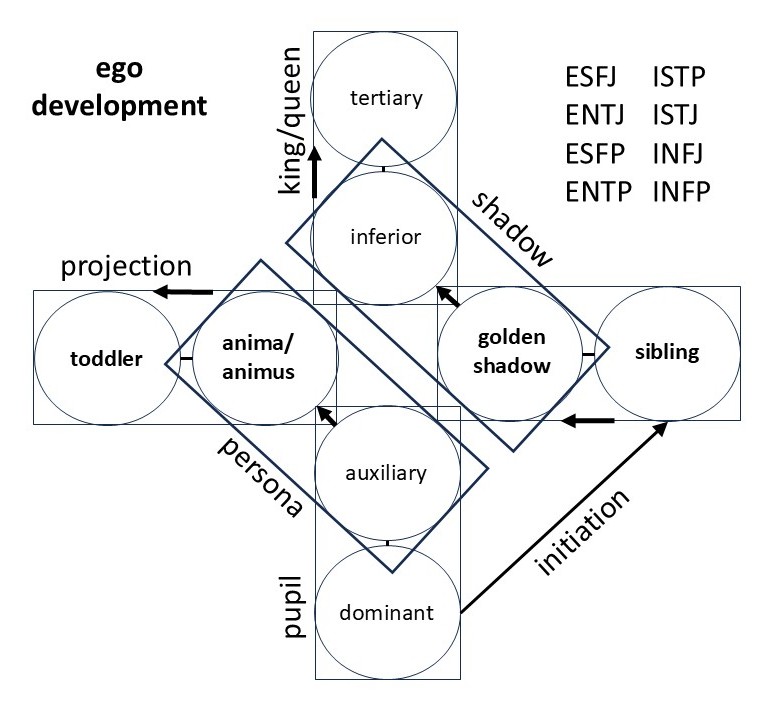
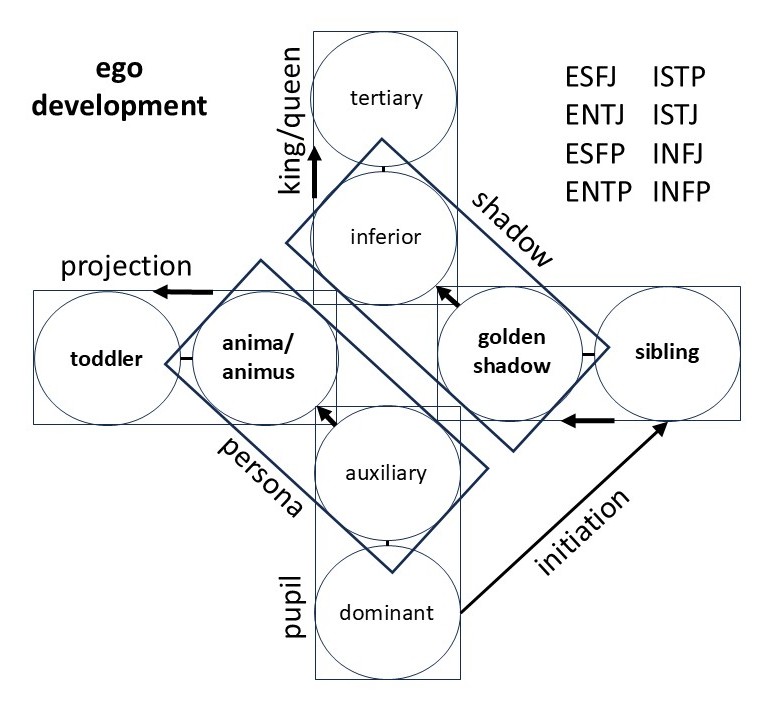
    The INFJ is a paradox: outwardly reserved, yet inwardly complex; focused on others, yet profoundly self-referential; guided by a moral compass, yet attuned to abstract symbolism. Among personality typologies, few types are as rare and enigmatic. Traditional models provide a limited map of the INFJ psyche by emphasizing four conscious functions. Ontolokey, by contrast, invites us to journey through all eight psychological functions in dynamic interplay—both conscious and unconscious.

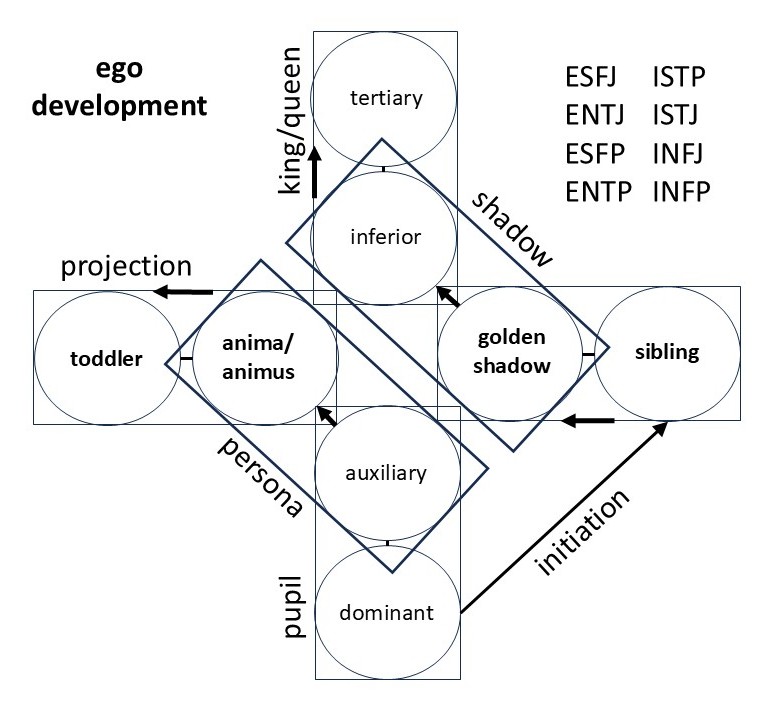
    With its innovative 3D cube, Ontolokey visualizes how the dominant function (Ni) is supported and challenged by others: the auxiliary (Fe), sibling (Ne), toddler (Te), tertiary (Ti), inferior (Se), anima (Si), and golden shadow (Fi). This essay seeks to describe the INFJ through this multidimensional psychological framework, blending insights from Jungian theory, depth psychology, and contemporary typology research—without explicitly naming alternative models.


    1. The INFJ: An Introverted, Irrational Type

    The INFJ belongs to the group of introverted and irrational types. “Irrational” here refers to Jung’s usage—where perception, not judgment, governs consciousness. INFJs prefer to perceive the world through intuition and sensation, particularly abstract, internal impressions. Their orientation is inward (introverted), meaning psychic energy flows toward the subjective world. This inward pull leads to introspection, abstraction, and an archetypal mode of experiencing reality.

    The INFJ lives primarily in the symbolic and intuitive dimension. Logical structuring and objective sensory data are filtered through the lens of inner meaning. While this enables profound insight and moral conviction, it can also result in miscommunication with a world that prioritizes tangibility and immediacy. The INFJ’s path of growth involves integrating the conscious with the unconscious—an individuation journey of wholeness.


    2. Dominant Function: Introverted Intuition (Ni)

    Introverted Intuition is the INFJ’s camera—its primary lens. It seeks depth, pattern, trajectory. Unlike extraverted intuition, which scans the surface for possibilities, Ni descends inward, distilling complex stimuli into an abstract singularity. Ni does not generate ideas through brainstorming; it produces fully formed visions, often with startling clarity. These insights are holistic and symbolic, tapping into archetypal fields of meaning.

    Psychologically, Ni operates beneath awareness. INFJs often report sudden, visceral certainties without knowing why. This “knowing without knowing how” reflects the unconscious operation of pattern recognition over time. Ni is convergent: it reduces ambiguity into insight. It also allows the INFJ to anticipate long-term outcomes and human motivations—giving them a reputation as foresighted, even prophetic.

    However, Ni’s strength is also its blind spot. It can lead to over-interpretation, rigid belief systems, or withdrawal into private worlds disconnected from sensory feedback. When not counterbalanced, Ni may fixate on abstract ideals or symbolic narratives at the expense of practical action.


    3. Auxiliary Function: Extraverted Feeling (Fe)

    Fe is the INFJ’s social bridge. As the function of interpersonal harmony, emotional attunement, and group norms, Fe enables the INFJ to adapt internal vision (Ni) into communicable form. Fe reads emotional atmospheres like a thermometer. It understands unspoken expectations and often shapes its behavior to maintain cohesion and mutual understanding.

    Psychologically, Fe is relational and responsive. It directs the INFJ’s deep concern for others’ well-being and often drives them toward service roles—therapy, education, activism. But Fe can also obscure the self, as INFJs may suppress their own needs or values to avoid dissonance or rejection.

    Because Fe is extraverted, it brings outward expression to the otherwise silent Ni. This is crucial: without Fe, the INFJ’s inner world may remain incommunicado. However, Fe must mature from compliance to authentic diplomacy; otherwise, it becomes people-pleasing or morally overextended.

    In Ontolokey, Fe is one leg of the tripod stabilizing Ni. The slider between Ni and Fe illustrates the tension between personal vision and collective empathy. Balance is key: too much Fe dilutes inner authenticity; too little results in isolation or social discord.


    4. Sibling Function: Extraverted Intuition (Ne)

    Ne is the exploratory cousin of Ni. While Ni converges, Ne diverges—gathering ideas, connections, and associations from the external world. As a sibling function in the Ontolokey cube, Ne offers creative breadth to Ni’s depth. It fuels ideation, lateral thinking, and unconventional associations.

    INFJs with developed Ne may express themselves more playfully, challenge their own paradigms, or experiment with novel solutions. Ne provides the raw material which Ni later distills. Without Ne, INFJs risk becoming ideologically rigid or stuck in visionary loops disconnected from novelty.

    The slider between Ni and Ne in the Ontolokey cube visually tracks the INFJ’s cognitive flexibility. Greater Ne integration results in resilience, humor, and adaptive creativity; less integration can lead to tunnel vision, existential monotony, or cognitive overcontrol.


    5. Toddler Function: Extraverted Thinking (Te)

    Te governs efficiency, structure, objective metrics. For INFJs, Te is underdeveloped and childlike—operating sporadically, impulsively, or reactively. As the toddler leg of the tripod, Te challenges the INFJ to externalize and implement their vision with precision.

    In early life, Te may express as perfectionism, frustration with inefficiency, or awkward attempts at organizing others. When undeveloped, INFJs may resent external systems or struggle to assert their ideas logically. Over time, however, the Te slider allows the INFJ to bring form to content—turning dreams into executable strategies.

    Te’s development marks a pivotal moment in INFJ maturation. They move from philosophical musings to real-world change. In professional settings, this manifests as structured planning, metrics-driven leadership, or disciplined creative output.


    6. Inferior Function: Extraverted Sensing (Se)

    Se is the INFJ’s least conscious function—and its greatest growth potential. It governs sensory perception, presence, spontaneity, and physical engagement. INFJs, governed by intuition and internal affect, often disregard or feel overwhelmed by the immediate environment.

    This disconnection can result in physical neglect, aesthetic numbness, or psychosomatic stress. INFJs may also experience episodes of compulsive indulgence when Se breaks through—uncharacteristic shopping sprees, impulsive experiences, or sensory cravings.

    However, Se is not the enemy. Its integration allows the INFJ to reconnect with the body, nature, art, and sensuality. Grounding practices—like yoga, dance, or culinary creativity—help INFJs anchor vision in tangible beauty. The inferior function does not demand dominance, only acknowledgment.


    7. Anima/Animus: Introverted Sensing (Si)

    Si is the INFJ’s anima: the internalized archetype of self that mediates access to the unconscious. Si stores personal memory, somatic experience, and tradition. For INFJs, the anima-Si reveals a yearning for continuity, ritual, and inner sanctuary.

    Though not actively used, Si shapes the INFJ’s emotional landscape. It explains their nostalgia, their clinging to meaningful symbols, and their intuitive sense of “rightness” based on past feeling-states. Si can also provoke overattachment to specific relationships or routines that once provided comfort.

    In Jungian terms, the anima is not immature—it is archaic. Its voice is childlike but profound. Through Si, INFJs access timeless truths, embodied knowledge, and the comfort of remembered wholeness.


    8. Tertiary Function (Blindspot): Introverted Thinking (Ti)

    Ti is the INFJ’s hidden analyst. It desires logical consistency, elegant systems, and internal coherence. Often overshadowed by Fe’s social attunement, Ti operates as a quiet inner critic—or, when undeveloped, as a reactive pedant.

    The Ti–Fe polarity is essential for INFJs. Fe absorbs external values; Ti questions them. Without Ti, INFJs may adopt social norms uncritically. But with Ti, they begin to examine ethical systems, refine arguments, and defend personal principles with precision.

    Ti’s emergence is a major psychological achievement. It tempers Fe’s need for approval, fortifies Ni’s insights with logic, and enables INFJs to differentiate their true beliefs from those borrowed from the collective.


    9. The Golden Shadow: Introverted Feeling (Fi)

    Fi is the INFJ’s golden shadow—the disowned light. While Fe seeks external harmony, Fi guards internal truth. It embodies authenticity, boundary-setting, and raw emotional honesty. INFJs often admire people with strong Fi traits—yet struggle to claim them.

    Why? Because Fi stands for inner sovereignty. It says: “This is my truth, even if no one understands.” INFJs, conditioned to be accommodating, may find this terrifying. And yet, their growth demands it. Fi integration means self-respect, resilience, and emotional autonomy.

    The golden shadow is not darkness—it is brilliance unclaimed. INFJs project Fi onto others until they learn to embody it. When they do, they become not only kind but clear, not only wise but real.


    10. The Ontolokey Sliders: Dynamic Integration

    Ontolokey’s 12 sliders track the balance between polar functions. For the INFJ, key developmental sliders include:

    • Ni–Fe: Vision vs. empathy.
    • Ni–Ne: Depth vs. breadth.
    • Ni–Te: Insight vs. execution.
    • Fe–Fi: Adaptation vs. authenticity.
    • Fe–Si: Harmony vs. tradition.

    Rather than static traits, the INFJ psyche is a moving constellation. Each slider represents an axis of growth. Psychological maturity involves conscious recalibration, not fixed preference.


    11. Conclusion: Toward Individuation

    The INFJ’s journey is alchemical. From archetypal vision (Ni) to embodied reality (Se), from social harmony (Fe) to personal truth (Fi), from unconscious memory (Si) to rational analysis (Ti)—each function is a chamber in the psyche’s temple.

    Ontolokey’s model shows: no function is disposable. Each has a role, a wound, and a gift. When all are honored, the INFJ becomes not only a visionary, but a whole human—rooted, radiant, and real.

    In wholeness lies transformation. In integration lies freedom. And in the INFJ’s silent depth lies the blueprint for a more soulful humanity.

  • Introduction: The Quiet Power of the Irrational Introvert

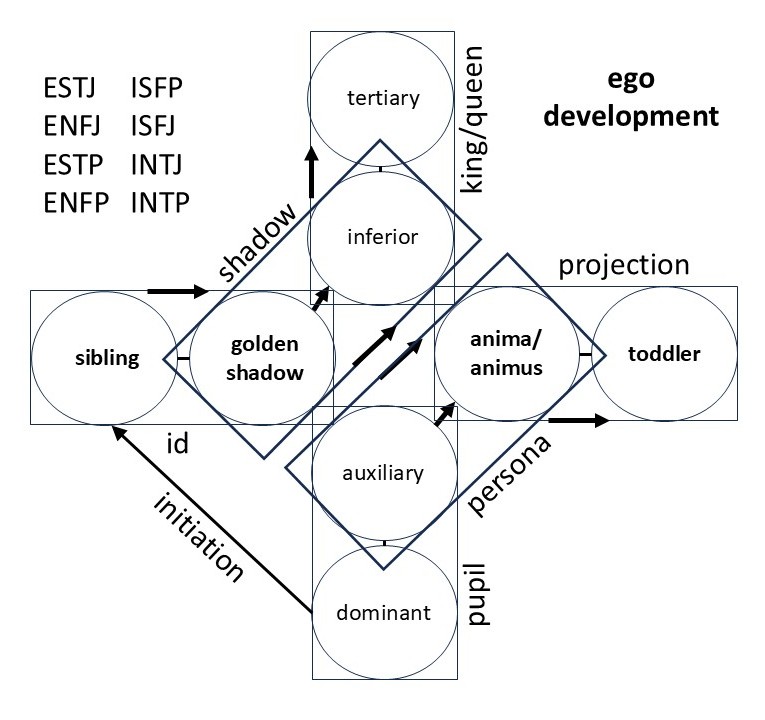
    The ISFJ personality type, often labeled as the “Defender” or “Protector,” is widely recognized for its care, loyalty, and sense of duty. Yet, this image—though accurate on the surface—barely scratches the depth of the ISFJ’s inner world. Through the lens of the Ontolokey model, we enter a three-dimensional, psychologically nuanced framework that reveals not only the four conscious functions but also the unconscious underpinnings of personality. Unlike typologies that reduce the psyche to behavior or surface traits, Ontolokey integrates all eight Jungian functions and maps their dynamic interplay through a rotating cube with twelve adjustable sliders—each representing the weighted use between two connected functions.

    As an introverted and irrational type, the ISFJ is shaped by a mode of cognition that is deeply experiential and inwardly oriented. “Irrational,” in the Jungian context, refers not to a lack of reason but to a preference for perception (sensation and intuition) over judgment (thinking and feeling). The ISFJ does not merely analyze or act—they absorb, feel, and remember. Their psychological center is anchored in the introverted sensation function (Si), a mode of consciousness that preserves impressions, routines, and emotional memory with almost archetypal significance. But the full complexity of the ISFJ is only understood when we explore the nuanced interaction of all eight functions: conscious, subconscious, and unconscious.


    I. Dominant Function: Introverted Sensing (Si)

    Introverted Sensing is the bedrock of the ISFJ psyche. It serves as the dominant function, situated at a vertex of the Ontolokey cube. Si does not merely catalog sensory input—it internalizes it into a rich mosaic of subjective experience. Every smell, every tone of voice, every nuance in facial expression is cataloged and compared to a vast internal database built over time. This gives the ISFJ an exceptional sense of continuity and tradition, and a deep sensitivity to the emotional atmosphere of their surroundings.

    Psychologically, Si is linked with long-term memory consolidation and emotional attachment to the familiar. This function fosters loyalty and conscientiousness, but also an aversion to unpredictability and novelty. In therapeutic settings, individuals with dominant Si often describe a preference for routines and a deep-seated anxiety when their internal order is disrupted.

    The power of Si is its ability to ground experience in context. While other functions seek abstraction or spontaneity, Si asks: “How does this compare to what I already know and trust?” This conservative epistemology can manifest as dependability or rigidity depending on the function’s development and the balance with its counterparts.

    In psychoanalytic terms, Si reflects a regressive function of the ego—a movement toward inner stability and preservation. It resonates with the archetype of the Mother: nurturing, conserving, and protective.


    II. Auxiliary Function: Extraverted Feeling (Fe)

    Fe serves as the ISFJ’s bridge to the external world. It is the second function in their stack, connected via one of the Ontolokey cube’s edges. This extraverted function is relational, social, and harmonizing. Through Fe, the ISFJ scans the emotional field for cues—what is needed, what is valued, what is appropriate.

    Fe is not simply about being kind or empathetic. It is about attunement to collective emotional norms. ISFJs often internalize external expectations, trying to embody the ideal role in each context—whether as parent, colleague, or friend. Their emotional responses are finely calibrated, not merely to individual needs, but to the implicit rules of the group. This makes them excellent mediators and caretakers, but also vulnerable to emotional burnout or enmeshment.

    Fe, as a Persona function (drawing from Jung’s concept of the social mask), gives the ISFJ an outward appearance of ENFJ energy. This is why ISFJs often come across as socially fluent despite being introverts—they’re not energized by interaction, but they are deeply skilled at making others feel understood.

    However, overuse of Fe may suppress the individual’s inner emotional compass, leading to over-compliance or difficulty asserting personal boundaries. Only through the integration of the tertiary and shadow functions can Fe become a tool of genuine expression rather than a mask.


    III. Sibling Function: Extraverted Sensing (Se)

    In Ontolokey’s cube geometry, Se acts as a “sibling” to Si—sharing an edge and thus forming one leg of the ISFJ’s functional tripod. Where Si is retrospective, Se is immediate. It engages with the environment in real-time: noticing movement, color, texture, and change.

    Though underutilized in ISFJs, Se is not absent. It often manifests in a subtle but refined aesthetic sense: a love for tactile beauty, home decoration, craftsmanship, or culinary experiences. When Se is underdeveloped, however, the ISFJ may struggle with spontaneity or become overwhelmed by sensory overload.

    In psychodynamic terms, Se represents the repressed capacity for spontaneity, risk-taking, and direct confrontation. Its development enables the ISFJ to be present rather than always referencing the past. Without this integration, Si can become neurotic—trapped in cycles of rumination and perfectionism.

    Therapeutic strategies aimed at enhancing mindfulness or body awareness often help ISFJs access Se more fully, grounding their sensing function in the present moment.


    IV. Toddler Function: Extraverted Thinking (Te)

    Te, the “toddler” of the functional quartet, is in early psychological development for the ISFJ. It represents structure, efficiency, and measurable outcome. Whereas Fe seeks harmony, Te seeks optimization. In ISFJs, Te is often immature—used reactively rather than strategically.

    This function may emerge under stress, especially in organizational or crisis situations. The ISFJ might suddenly become directive or rigid, clinging to checklists or external systems of order. This is a compensatory maneuver: when Si’s familiarity is disrupted and Fe’s harmony breaks down, Te rushes in to impose external control.

    The healthy development of Te involves learning to assert boundaries, delegate tasks, and evaluate data without becoming authoritarian or dismissive. Ontolokey’s sliding edge between Si and Te symbolizes the developmental bridge between comfort and assertive agency.

    Psychoeducation and cognitive restructuring therapies can be powerful tools in helping ISFJs refine this function—giving them the confidence to lead when necessary without abandoning their core values.


    V. Inferior Function: Extraverted Intuition (Ne)

    Ne is the ISFJ’s blind spot and greatest psychological challenge. Where Si clings to familiarity, Ne bursts open possibilities. It generates ideas, speculates, innovates. For the ISFJ, Ne often appears as anxiety, confusion, or chaos—the mind spinning out of control.

    Yet Ne is also the gateway to creativity, play, and reinvention. When developed, it allows ISFJs to step out of fixed patterns and entertain new perspectives. They begin to question assumptions, imagine future scenarios, and embrace uncertainty.

    Ne’s position as the inferior function makes it a reservoir of untapped potential. In Jungian individuation, the confrontation with the inferior function is a rite of passage—an initiation into psychological wholeness. It is through Ne that the ISFJ confronts the limits of control and opens to the numinous, the emergent, the transcendent.


    VI. Anima: Introverted Intuition (Ni)

    The Anima or Animus is the gateway to the unconscious. For the ISFJ, this inner figure is expressed through Introverted Intuition—Ni. This function doesn’t operate through logic or sensation but through symbolic insight. It perceives inner truth, archetypal patterns, and synchronistic meaning.

    Ni often emerges in dreams, art, or sudden insight. It is the inner oracle, the mythopoetic compass. In ISFJs, Ni may be underrecognized or misunderstood. They may feel drawn to mysticism, existential literature, or long-term pattern recognition without knowing why.

    Jung saw the Anima as the soul’s image—simultaneously guide and seductress. Developing Ni means honoring this inner figure: creating space for silence, contemplation, and symbolic exploration. Meditation, dream analysis, and depth psychological work can foster this integration.


    VII. Tertiary Function: Introverted Thinking (Ti)

    Ti represents internal logic, conceptual precision, and analytical clarity. As the counterpart to Fe, it is often undeveloped in the ISFJ. This can manifest as difficulty articulating personal beliefs or structuring abstract reasoning.

    Yet Ti is essential for individuation. It helps the ISFJ differentiate between authentic personal values and those absorbed from others. With Ti development, ISFJs become capable of drawing boundaries, questioning social norms, and developing intellectual autonomy.

    In therapeutic work, Ti emerges through journaling, philosophical dialogue, and structured inquiry. It supports self-definition beyond relational roles.


    VIII. The Golden Shadow: Introverted Feeling (Fi)

    Fi symbolizes the golden shadow—the reservoir of disowned virtues and passions. While Fe looks outward, Fi looks inward. It knows what feels right regardless of external approval.

    For ISFJs, Fi can be deeply threatening. It challenges their relational identity and calls them to personal truth. Yet within Fi lies moral courage, artistic authenticity, and spiritual integrity.

    Often, ISFJs project Fi onto others—admiring rebels, artists, or truth-tellers while denying those same impulses in themselves. The key to wholeness lies in reclaiming this shadow. Not in rejecting Fe, but in balancing it with an inner compass.


    Conclusion: Integration as Individuation

    The ISFJ’s journey is one of inner alchemy: from duty to authenticity, from memory to meaning, from compliance to wholeness. The Ontolokey model reveals that no function exists in isolation. Each is part of a living system, connected by movable thresholds, developmental tensions, and unconscious longings.

    Through conscious engagement with all eight functions—especially the neglected and shadowed ones—the ISFJ moves from protector to creator, from loyalist to visionary. The path is not easy, but it is profound.

    In a fragmented world, the ISFJ carries a deep gift: the capacity to remember, to feel, and to serve with heart. With full psychological integration, this gift becomes not only a personal strength—but a collective offering.

  • A Psychodynamic Essay on Order, Responsibility, and the Hidden Self

    Introduction: Structure as Inner Compass and External Order

    The ISTJ personality type is often associated with duty, precision, and responsibility. In many conventional models, this type is viewed as the backbone of societal systems—reliable, conscientious, and grounded. However, such portrayals risk reducing the ISTJ to a mere functionary of tradition. In truth, this personality reveals an intricate interplay of psychological functions—both conscious and unconscious—that shape behavior, motivation, and identity.

    Ontolokey, an innovative personality model grounded in the psychological function theory of Carl Gustav Jung, illuminates this depth by considering all eight psychological functions, not just the conscious top four. In its dynamic 3D cube, functions are connected by weighted sliders, visualizing the interplay between cognition, perception, and personal development. The ISTJ, seen through this model, emerges not as a static type but as a living system of psychological tensions and potentials.


    1. Psychological Orientation: Introversion and Irrational Perception

    ISTJs are introverted and irrational—terms that require redefinition in Jungian terms. Introversion reflects an inward orientation of energy, where attention is directed toward internal experiences, memories, and meaning-making. Irrationality, in this context, refers to a personality type that prefers perception over judgment. That is, ISTJs prioritize information intake and sensory attunement over decision-making or value assessment. They do not rush to conclusions but absorb reality carefully through subjective frameworks of experience.

    This combination creates an individual who is methodical, reflective, and highly attuned to what is real, yet prone to cautiousness when facing unpredictability. The irrational nature of the ISTJ is not chaotic—it is informed, data-rich, and subtly intuitive, despite its grounded appearance.


    2. Dominant Function: Introverted Sensing (Si) – The Archivist of Experience

    Si is a perception function that draws upon internalized sensory experiences and impressions. Unlike its extraverted counterpart, Si is not interested in novel stimuli, but rather in how current experiences correlate with established internal maps. It is about comparing, evaluating, and referencing what is known, reliable, and personally verified.

    For the ISTJ, Si becomes a psychological anchor. It preserves sensory details, emotional impressions, and routines with intense clarity—often resulting in strong memory recall and a deep sense of familiarity with established systems. The world is navigated not through improvisation, but through structured internal archives.

    Psychologically, Si also plays a protective role. It filters chaos, provides grounding, and buffers anxiety by reinforcing order. The ISTJ may thus appear emotionally restrained or inflexible, but this is a coping strategy grounded in a desire for predictable continuity.

    Neuroscientific research suggests that Si-dominant individuals may exhibit enhanced activity in brain regions responsible for episodic memory and pattern detection, supporting this heightened sensitivity to internal impressions.

    Ontolokey visually places Si at one corner of the cube, supported by three extraverted functions along its edges—each contributing to balance and challenge.


    3. Auxiliary Function: Extraverted Thinking (Te) – The Rational Executor

    Te is concerned with external structure, efficiency, and logical application. It seeks to optimize systems, standardize outcomes, and apply objective reasoning to real-world problems. In the ISTJ, Te acts as the outer face of competence—the function through which internal insights (Si) are translated into action.

    The auxiliary position of Te provides balance to the subjective tendencies of Si. It allows ISTJs to be pragmatic, structured, and highly organized. Whether leading projects, maintaining legal frameworks, or optimizing workflows, the ISTJ uses Te to construct external order out of internal familiarity.

    However, Te also presents developmental tension. It is extraverted, and thus sometimes at odds with the introverted nature of the ISTJ. When over-relied upon, it can lead to rigidity, over-control, and suppression of nuance. Over time, growth involves integrating the tertiary function (Fi) to soften this control and restore internal moral coherence.

    According to Ontolokey, the Si–Te relationship is visualized through a dynamic slider, allowing users to track the evolving balance between internal perception and external execution.


    4. Sibling Function: Extraverted Sensing (Se) – The Challenge of Immediate Presence

    Se, as the Sibling function, exists in tension with Si. Where Si looks inward, Se is immersed in the immediate external world. It processes real-time sensory input and thrives on novelty, action, and spontaneity. For the ISTJ, this function is present but underdeveloped—a source of both opportunity and stress.

    Ontolokey conceptualizes the Sibling function as a parallel tool—accessible but energetically different. Se may emerge in ISTJs during moments of crisis or experimentation, often leading to short bursts of boldness or sudden impulsive decisions. It may also manifest in a desire to physically organize, clean, or refine their environment—a hands-on attempt to control chaos.

    Psychologically, Se challenges the ISTJ to remain open to what is, not only what was. Its integration leads to greater flexibility, creativity, and grounded embodiment.


    5. Toddler Function: Extraverted Feeling (Fe) – The Underdeveloped Social Compass

    Fe governs social harmony, shared emotional dynamics, and external expressions of feeling. In the ISTJ, Fe resides in the Toddler position—immature, somewhat awkward, and easily misunderstood. This does not imply that ISTJs lack empathy, but that their emotional language is often private, grounded more in loyalty and service than in expressive warmth.

    Ontolokey treats the Toddler function as a developmental potential—its position indicates where the psyche remains vulnerable or immature. Fe in this position may lead to misjudgments in social tone, difficulty expressing care, or discomfort with emotional dependency.

    As development progresses, the slider between Si and Fe reflects an increasing emotional literacy—not necessarily in public warmth, but in deepened interpersonal ethics. The mature ISTJ learns not just to do the right thing, but to feel and express it in ways others can receive.


    6. Inferior Function: Extraverted Intuition (Ne) – The Shadow of Chaos and Creativity

    As the Inferior function, Ne represents what the ISTJ finds most alien and destabilizing. Where Si clings to structure, Ne seeks possibility, ambiguity, and spontaneous pattern recognition. It is curious, divergent, and speculative—everything that unnerves a control-oriented personality.

    Ne often surfaces under stress, producing irrational fears, worst-case scenarios, or mental chaos. However, when consciously integrated, Ne becomes the engine of innovation, allowing the ISTJ to imagine alternate futures, question assumptions, and break patterns.

    This Jungian dynamic is pivotal in Ontolokey, as the Inferior function is seen as both the source of greatest resistance and the gateway to individuation. The slider between Ne and Ti (the golden shadow) marks the bridge between scattered potential and refined insight.


    7. Anima/Animus: Introverted Intuition (Ni) – The Archetypal Soul

    Ni is the Anima of the ISTJ—a symbolic internal other that bridges consciousness and the unconscious. While not directly accessible, it influences through dreams, projections, and symbolic insights. Ni provides long-term vision, archetypal foresight, and metaphysical clarity.

    As Ni develops, the ISTJ begins to explore meaning beyond the empirical. Spirituality, myth, and inner vision may enter their world, often in the second half of life. Ni also fuels existential questioning—a deep inner pull toward purpose and philosophical reflection.

    Psychologically, this marks the ISTJ’s transition from duty-bound executor to inner seeker. The Fe–Ni slider tracks emotional maturity into soulful insight—a sign of advancing psychological complexity.


    8. Tertiary Function: Introverted Feeling (Fi) – The Moral Kernel

    Fi serves as the emotional conscience of the ISTJ. As a tertiary function, it often operates behind the scenes—providing internal assessments of right and wrong, value, and authenticity. However, its childlike position may lead to overcompensation or suppression.

    Undeveloped Fi can manifest as rigid morality, black-and-white thinking, or withdrawal from emotionally nuanced situations. When nurtured, it creates a rich ethical compass, allowing the ISTJ to move beyond external rules (Te) and act from personal conviction.

    The Fe–Fi slider in Ontolokey demonstrates the evolving interplay between social emotion and private value—a key axis for ISTJs seeking holistic authenticity.


    9. Golden Shadow: Introverted Thinking (Ti) – The Hidden Architect

    Ti is the ISTJ’s golden shadow—an unconscious reserve of analytical depth, independent logic, and intellectual creativity. Ti is self-validating and principle-driven. While Te seeks to implement external standards, Ti constructs internal systems of truth.

    ISTJs often admire clarity, intellectual depth, or philosophical thinking in others without realizing that these traits mirror their own untapped potential. The journey of integration involves moving from rule-bound cognition (Te) to self-authorized reflection (Ti).

    In shadow form, Ti may manifest as rigid skepticism, compulsive over-analysis, or devaluation of intuition. In golden form, it becomes a path to autonomy, insight, and theoretical mastery.


    10. Functional Dynamics: Ontolokey’s Twelve Sliders and Adaptive Growth

    Ontolokey’s 3D cube contains twelve bidirectional sliders, each representing a potential axis of integration. While early development revolves around the dominant tripod (Si, Te, Fe, Se), maturity is marked by fluidity across broader pairings:

    • Ti–Te: Inner logic vs. external systems
    • Ti–Ne: Internal consistency vs. generative chaos
    • Fe–Fi: Social appropriateness vs. personal value
    • Se–Si: Immediate perception vs. memory-based perception
    • Ne–Ni: Divergent possibility vs. convergent vision
    • … and others

    The model promotes not categorical typing but dynamic equilibrium. Each slider’s position reflects the psyche’s current state—and its growth edge.


    11. Individuation and Integration: The ISTJ as Archetypal Guardian and Visionary

    The mature ISTJ is no longer simply the manager, the officer, or the dutiful employee. Through integration, they become systemic thinkers, ethical leaders, intuitive planners, and soulful stewards. The journey from Te to Ti, from Si to Ni, from Fe to Fi, is not linear but spiral—each turn revealing new layers of self-understanding.

    In Jungian terms, this is the process of individuation: the gradual unification of all inner opposites. In Ontolokey, this is visualized—not abstracted. Every function is seen, measured, balanced.


    Conclusion: Beyond Type – Toward Wholeness

    Ontolokey redefines typology not as classification but as invitation to growth. In contrast to models that limit individuals to four-letter labels, it reveals the full inner architecture of personality—conscious and unconscious, strength and vulnerability, shadow and light.

    The ISTJ, in this view, is not a static guardian of tradition but a complex system in motion. Their journey is from stability to meaning, from habit to awareness, from outer responsibility to inner transformation. And in that journey, each function—no matter how buried—has its time to awaken.


    For readers, therapists, and seekers alike, this portrait of the ISTJ offers not only insight but invitation: to see structure not as the end, but as the frame through which inner life finds its full, unfolding form.

  • A Deep Psychological Analysis of the Eight Functions

    Introduction

    The INTJ personality type is often described as strategic, autonomous, and vision-driven. Yet beyond the stereotypical image of the “Mastermind” lies a profoundly complex psychological architecture. Ontolokey, a model grounded in Carl Gustav Jung’s theory of psychological types, provides a revolutionary framework for understanding the INTJ in full psychological depth. Unlike traditional typologies that focus on only four cognitive functions, Ontolokey visualizes all eight through a 3D cube with dynamic sliders that reveal the balance and tension between conscious and unconscious elements. This essay offers a thorough psychological portrait of the INTJ type, based on the Ontolokey model and enriched with complementary insights from analytical psychology and contemporary personality theories.


    1. Dominant Function: Introverted Intuition (Ni)

    “I perceive the future not as a possibility, but as a certainty in motion.”

    At the core of the INTJ personality lies Introverted Intuition (Ni), a function that operates beneath the surface of conscious thought. Unlike linear or deductive reasoning, Ni functions holistically and symbolically. It perceives patterns in seemingly unrelated events and integrates them into cohesive mental models. Ni is not merely imaginative—it is profoundly anticipatory.

    Psychologically, Ni-dominant individuals often report an internal sense of “knowing” without being able to articulate the steps by which they arrived at a conclusion. This is because Ni works on a subconscious level, feeding the conscious mind sudden insights, long-range visions, or ideological structures. These insights often appear as metaphors or images before they can be translated into language or plans.

    INTJs rely on Ni to develop personal frameworks about how the world works. Unlike extraverted types who adjust themselves to reality, the Ni-dominant INTJ builds an internal schema and expects the external world to align with it. This can be a source of genius—but also rigidity.

    In terms of psychic energy (libido in Jungian terms), Ni pulls energy inward and downward into the unconscious. This descent into the depths brings clarity and purpose but can also isolate the INTJ from sensory immediacy or emotional warmth. Without balancing mechanisms, Ni can overtake the psyche, manifesting as obsession, prophetic detachment, or even apocalyptic thinking.


    2. Auxiliary Function: Extraverted Thinking (Te)

    “Let’s systematize that vision into something actionable.”

    Te, as the INTJ’s auxiliary function, serves to extravert the insights born from Ni. Te brings structure, efficiency, and logical order to the INTJ’s vision. It ensures that ideas are not merely imagined, but implemented, refined, and measured.

    This function favors external standards of logic and productivity. It values timelines, objectives, and systems. Whereas Ni intuits what will happen, Te determines how to make it happen.

    From a developmental standpoint, Te plays a vital role in the INTJ’s engagement with the world. It is the primary channel through which INTJs interact with their environment, often giving them the appearance of cold rationality or executive decisiveness. In reality, however, Te is a servant of Ni’s vision—it does not originate meaning but gives it structure.

    When Te is overused at the expense of the tertiary Fi (introverted feeling), the INTJ can become utilitarian, dismissive of emotional nuance, or overidentified with competence. They may focus excessively on results, forgetting the ethical or human implications of their actions.

    Within the Ontolokey cube, Te is directly linked to Ni through a flexible slider. This dynamic illustrates the psychological tension between inner vision and outer execution—between what is meaningful and what is efficient. A balanced slider represents a mature INTJ who can operationalize insight without sacrificing authenticity.


    3. Sibling Function: Extraverted Intuition (Ne)

    “But what else could it be?”

    Extraverted Intuition (Ne) offers the INTJ an alternative perceptual mode—one that diverges from Ni’s convergent style. Whereas Ni narrows focus toward a singular vision, Ne broadens perception toward multiplicity, playfulness, and serendipity. It generates options, connections, and interpretations.

    In the Ontolokey model, the Ni-Ne axis represents the internal tug-of-war between certainty and curiosity, between singularity and pluralism. Ne is the INTJ’s sibling function—close in nature, but pulling in a different direction.

    Psychologically, access to Ne allows the INTJ to loosen their grip on control and explore paths not previously considered. A healthy engagement with Ne enriches creativity, prevents dogmatism, and supports innovation. However, immature or suppressed Ne can lead to restlessness, fragmented attention, or a tendency to chase distractions.

    The slider between Ni and Ne is crucial in the developmental process. INTJs who learn to balance these two intuitive styles become more open-minded and exploratory while still retaining their depth of insight.


    4. Toddler Function: Extraverted Feeling (Fe)

    “Am I attuned to the emotional atmosphere around me?”

    Fe represents the INTJ’s toddler function—a psychological component with limited maturity and conscious control. Fe manages social harmony, emotional expression, and group values. For INTJs, whose dominant mode is introverted and impersonal, Fe can feel alien or burdensome.

    Immature Fe expression often manifests as social awkwardness, insensitivity, or difficulty navigating group dynamics. INTJs may find small talk meaningless or emotional displays uncomfortable. However, when Fe is integrated through development, it fosters emotional intelligence, diplomatic awareness, and social influence.

    In the Ontolokey cube, Fe is one of the three support legs to Ni. The Ni-Fe slider reveals the degree to which the INTJ is aware of, and responsive to, the emotional needs of others. Neglecting this function can lead to miscommunication, professional friction, or emotional detachment. Cultivating it brings nuance, relatability, and interpersonal grace.


    5. Inferior Function: Extraverted Sensing (Se)

    “What is happening in the present moment?”

    Extraverted Sensing (Se) is the INTJ’s inferior function—the psychic counterweight to Ni. It focuses on the external world as it is: colors, textures, movements, and sensations. While Ni looks inward and forward, Se demands presence and immediacy.

    Because Se is deeply repressed in the INTJ, it often manifests as either a blind spot or a source of psychological turmoil. In moments of stress, the INTJ may become compulsive, thrill-seeking, or overwhelmed by sensory stimuli. Alternatively, they may deny their body’s needs, ignore aesthetic surroundings, or resist spontaneity.

    Yet paradoxically, Se is the gate to individuation. When an INTJ learns to honor their sensory awareness—through nature, physical activity, or art—they reconnect with reality, vitality, and spontaneity. The Se-Ni axis reflects the central Jungian polarity between unconscious instinct and conscious vision.


    6. Anima: Introverted Sensing (Si)

    “Where is my inner sanctuary?”

    Si, as the Anima (or Animus), represents the INTJ’s internalized soul-image—an unconscious embodiment of their emotional foundation. Si deals with internal sensations, traditions, and stored impressions. While Ni constructs the future, Si anchors the past.

    In Jungian terms, the Anima mediates between ego and unconscious, often appearing in dreams, fantasies, or projections. For the INTJ, Si may appear as a nostalgic longing for safety, continuity, or inner peace. When unrecognized, Si may provoke regression into comfort rituals or hypersensitivity to change.

    However, developing a relationship with the Anima allows the INTJ to access a richer emotional life, embodied awareness, and a sense of rootedness. It helps balance their forward momentum with reflective stillness.


    7. Tertiary Function: Introverted Feeling (Fi)

    “What do I truly believe in?”

    Fi governs internal values, ethical coherence, and emotional authenticity. As a tertiary function, Fi is not fully conscious in most INTJs—yet it is vital for integrity and personal alignment. It operates like a moral compass, quietly evaluating whether one’s actions match inner convictions.

    A neglected Fi can lead to disconnection from self or moral rigidity. An integrated Fi, however, empowers the INTJ to act with conscience, express vulnerability, and relate to others on a deeply personal level.

    Fi serves as a dichotomous counterpart to Te. Together, they define the INTJ’s axis of rationality and ethics: Te asks what works; Fi asks what matters. Ontolokey makes this tension visible, urging the INTJ toward integration.


    8. Golden Shadow: Introverted Thinking (Ti)

    “I want to understand the inner logic—just for its own sake.”

    Ti represents the INTJ’s golden shadow—the repressed but luminous potential within. Ti pursues internal logical consistency, precision, and theoretical clarity. Unlike Te, which acts outwardly, Ti analyzes inwardly.

    When Ti is not integrated, INTJs may project it onto others, idealizing those who are intellectually independent, hyper-analytical, or self-contained. They may admire this quality while denying its presence within themselves.

    By reclaiming the golden shadow, INTJs tap into a more elegant cognitive process—one that values internal alignment over external validation. The integration of Ti leads to greater autonomy, analytical subtlety, and philosophical insight.


    9. Dynamic Integration: The Role of the Sliders

    Ontolokey’s model of twelve dynamic sliders allows for a uniquely nuanced psychological map. For INTJs, the most impactful sliders in early development are:

    • Ni–Te: How effectively can insight be structured and applied?
    • Ni–Fe: How well is deep understanding communicated emotionally?
    • Ni–Ne: How flexible is the vision—can it accommodate ambiguity?

    Later in the individuation journey, additional axes come into play:

    • Ti–Te: Is logical precision aligned with practical execution?

    Each slider functions not only as a diagnostic but as a developmental guide. The goal is not to “maximize” one function, but to balance, integrate, and evolve.


    10. Conclusion: Individuation as Integration

    Ontolokey moves beyond static typologies by framing personality as a dynamic system of interacting psychic functions. The INTJ, far from being a cold strategist, is revealed as a rich psychological ecosystem—one defined by visionary perception, rational execution, internal ethics, and a profound path of individuation.

    True development arises not from amplifying strengths, but from integrating the shadow, embodying the Anima, and harmonizing all eight functions. In this light, the INTJ becomes not merely efficient or intelligent—but wise, whole, and psychologically sovereign.

  • A Dynamic Cartography of Personality

    Introduction: The ENTP – Creative Architect of Possibilities

    The ENTP personality type, often dubbed “The Visionary” or “The Inventor,” stands as one of the most enigmatic and mentally agile types within typological psychology. With their cognitive hallmark being extraverted intuition (Ne), ENTPs possess a restless desire to explore possibilities, construct abstract models, and challenge conventional wisdom. Yet beneath this vibrant exterior lies a rich psychological matrix shaped not only by conscious tendencies but also by deep unconscious patterns, shadow functions, and archetypal drives.

    The Ontolokey framework offers a groundbreaking perspective on personality by illuminating all eight Jungian functions (dominant, auxiliary, tertiary, inferior, sibling, toddler, anima/animus, and golden shadow), situating them within a dynamic 3D cube. This allows for a fluid interplay between awareness and shadow, conscious control and unconscious projection, strength and vulnerability. Through this lens, the ENTP becomes not only a creative ideator but also a psychological journeyer whose path involves integration, individuation, and psychological maturity.


    1. Fundamental Orientation: Extraversion and Irrationality

    At their psychological core, ENTPs are extraverted irrational types. In Jungian terms, “irrational” does not imply illogicality but rather refers to a personality whose dominant functions are perceiving rather than judging. That is, ENTPs lead not with critical assessment or value-based judgment, but with open perception – primarily through intuition.

    As extraverts, their psychic energy flows outward. They draw stimulation from the environment, people, concepts, and the flux of ideas. But unlike extraverted sensors, who engage with concrete, tangible information, ENTPs engage with abstract possibilities, patterns, and potential futures. This fundamental orientation leads to:

    • A tendency to initiate rather than complete
    • Difficulty with long-term consistency unless personally meaningful
    • An eagerness to explore diverse topics but often a resistance to depth unless challenged
    • Energizing effects from brainstorming, debates, and ideational play

    These traits can be easily mistaken for superficiality or flightiness; however, from the Ontolokey perspective, this is simply the natural expression of an extraverted irrational configuration – highly adaptable, improvisational, and driven by novelty.


    2. Dominant Function: Extraverted Intuition (Ne)

    Ne is the cognitive engine at the center of the ENTP’s psychological makeup. It operates through an outward search for emergent patterns and potential. Unlike introverted intuition (Ni), which aims for synthesis and convergence upon singular meaning, Ne is divergent, branching, and kaleidoscopic.

    In daily life, Ne manifests as:

    • A natural ability to connect unrelated concepts
    • Passion for innovation, design thinking, and speculative reasoning
    • Playful engagement with paradox, irony, and contradiction
    • Tendency to interrupt others not from rudeness, but from associative overflow

    Psychologically, Ne has a complex relationship to time and space. It is future-oriented but not in a linear or goal-directed way. It skips, extrapolates, and improvises. Ne resists closure, preferring open-ended structures and potentialities.

    In terms of developmental risk, unchecked Ne can lead to:

    • Chronic idea fatigue (too many ideas, not enough execution)
    • Shallow engagements (breadth without depth)
    • Difficulty with emotional or existential grounding

    In the Ontolokey model, Ne sits at the apex of the ENTP’s functional tripod and connects via sliding axes to three critical functions: Ti (auxiliary), Fi (toddler), and Ni (sibling). The tension and balance among these determine how constructive or chaotic Ne’s energy becomes.


    3. Auxiliary Function: Introverted Thinking (Ti)

    Ti provides the internal structure and logical calibration to Ne’s outward explosion. It is introverted and thus concerned with internal consistency, coherence, and subjective logical frameworks. Unlike its extraverted counterpart (Te), Ti is less concerned with efficiency or external validation and more with precision and internal truth.

    In an ENTP, well-developed Ti enables:

    • Analytical depth beneath the ideational play
    • Capacity to critique their own theories and mental models
    • Desire for intellectual integrity and conceptual elegance

    However, when underdeveloped or repressed, Ti’s absence may result in:

    • Overconfidence in half-formed ideas
    • Difficulty distinguishing intuition from logical inference
    • Tendency to manipulate logic to fit imaginative ends

    The Ne-Ti axis, when optimized, creates a cognitive powerhouse: expansive yet principled, creative yet ordered. In Ontolokey, the slider between Ne and Ti represents the ENTP’s ability to alternate between idea generation and logical refinement. Ti also serves as the psychological interface through which the ENTP adopts their social Persona, often appearing to others as cool, analytical, and detached – not unlike the ISTP archetype.


    4. Sibling Function: Introverted Intuition (Ni)

    Ni offers the ENTP access to deep symbolic understanding, foresight, and strategic insight. While Ne seeks multiplicity, Ni seeks essence. Though Ni is not a preferred function in the ENTP’s stack, its proximity to Ne in the Ontolokey cube makes it functionally adjacent.

    Ni provides counterbalance:

    • Focus versus diffusion
    • Inner vision versus outward scanning
    • Profundity versus novelty

    When sufficiently activated, Ni can refine the ENTP’s scattered ideas into meaningful trajectories. However, without conscious development, Ni can emerge as intrusive “gut feelings” or cryptic intuitions that the ENTP may distrust or misinterpret. The Ne-Ni slider allows Ontolokey users to visualize how much symbolic depth the ENTP is integrating into their visionary cognition.


    5. Toddler Function: Introverted Feeling (Fi)

    The Fi function is emotionally rich but psychologically immature in the ENTP. It governs personal values, ethics, and emotional authenticity. Unlike extraverted feeling (Fe), which adapts to social consensus, Fi is deeply individual.

    In ENTPs, Fi often appears:

    • As sudden bursts of moral passion
    • In defensive reactions when values feel violated
    • Through difficulty articulating one’s emotional core

    Ontolokey characterizes Fi in the toddler position: vulnerable, reactive, and developmentally early. Unexamined Fi can lead to internal conflicts such as:

    • Ambivalence toward personal commitments
    • Guilt over superficiality or perceived inauthenticity
    • Fear of emotional dependence or intimacy

    Yet, when nurtured, Fi becomes a critical counterweight to Ne’s cognitive detachment. The Ne-Fi slider tracks the ENTP’s development of ethical depth, self-awareness, and emotional individuation.


    6. Inferior Function: Introverted Sensing (Si)

    Si represents the ENTP’s least developed conscious function. It relates to memory, stability, attention to detail, and past experience. Where Ne thrives on novelty, Si anchors in the known.

    ENTPs typically struggle with:

    • Maintaining routines
    • Recalling specific sensory details
    • Managing structure or procedural consistency

    Yet, Si is also the gateway to inner order and long-term growth. When Si is integrated, the ENTP gains:

    • A memory palace of accumulated wisdom
    • Embodied habits that support creative freedom
    • Capacity for introspection based on past patterns

    Ontolokey visualizes this as the function diametrically opposed to Ne, and the integration of Si represents a significant milestone in personal evolution.


    7. Anima/Animus: Extraverted Sensing (Se)

    The Anima in Jungian psychology is the personified image of the soul – the unconscious feminine counterpart in men or the masculine counterpart (Animus) in women. For the ENTP, Se occupies this position.

    Se is fully present, sensually grounded, and reacts to the here and now. It emphasizes:

    • Immediate aesthetic or sensory pleasure
    • Physical risk-taking and thrill-seeking
    • Embodied spontaneity

    In the ENTP psyche, Se often appears as a projection: fascination with bold, active, or sensual individuals. It may also emerge in escapist behaviors: impulsive travel, overindulgence, or overstimulation.

    The challenge is to integrate Se without being consumed by it. This means finding balance between imagination and presence, between mind and body. Developing Se grants the ENTP access to vitality, courage, and grounded action.


    8. Tertiary Function: Extraverted Feeling (Fe)

    Fe seeks external harmony, social cohesion, and emotional resonance. For the ENTP, Fe is underdeveloped and often immature. It manifests as:

    • Attempts to win approval through charm or wit
    • Over-identification with group sentiment
    • Emotional inconsistency in relationships

    Despite its low rank, Fe is essential for social navigation. Its development allows the ENTP to:

    • Express empathy authentically
    • Collaborate with emotional intelligence
    • Balance autonomy with community

    In Ontolokey, Fe sits opposite Ti. The Ti-Fe slider indicates how much emotional intelligence complements the ENTP’s logic.


    9. The Golden Shadow: Extraverted Thinking (Te)

    The Golden Shadow represents hidden potential rather than repressed pathology. For the ENTP, Te embodies:

    • Decisiveness
    • Structural organization
    • Results-oriented leadership

    Often, ENTPs admire individuals with strong Te traits but feel disconnected from that power. They may externalize their own leadership potential through projection or envy.

    Integrating Te brings the ENTP into full agency. It enables:

    • Execution of vision
    • Strategic planning
    • Accountability

    In Ontolokey, the Ti-Te slider shows the balance between inner logic (Ti) and external efficiency (Te). Growth involves shifting from idea generation (Ne) and internal calibration (Ti) toward practical implementation (Te).


    10. Persona: ISTP as a Social Interface

    In navigating external reality, ENTPs often adopt a Persona – a psychological mask to relate to the world. In their case, the mask resembles an ISTP: cool, hands-on, and pragmatic.

    This persona serves to:

    • Withstand emotional overload
    • Gain credibility in analytical environments
    • Engage with tools, systems, or crafts in a focused manner

    While adaptive, over-identification with the ISTP persona can suppress emotional expression and long-term vision.


    11. Ontolokey Sliders: Mapping Development and Balance

    Ontolokey’s 3D model includes twelve key sliders between function pairs. These allow precise visualization of the psychological balance and areas for growth. For ENTPs, the most critical are:

    • Ne-Ti: Creativity vs. Logic
    • Ne-Fi: Ideation vs. Values
    • Ne-Ni: Expansion vs. Insight
    • Ti-Te: Internal structure vs. External execution
    • Fi-Se: Emotion vs. Sensation

    By adjusting these metaphorical sliders, the ENTP can consciously engage in self-development, aiming for functional integration rather than fragmentation.


    12. Conclusion: The ENTP as Archetype of Creative Individuation

    The Ontolokey model unveils the ENTP not as a stereotype of scattered brilliance but as a complex psychological architecture. This structure houses divergent intuitions, nascent values, buried fears, and golden potentials.

    The ENTP’s true power lies in synthesis: not in choosing between functions but in balancing them dynamically. Their journey is one of individuation – becoming whole by embracing contradiction, shadow, and emergence. In this sense, the ENTP is not only the architect of possibility but the living bridge between inspiration and realization, between thought and action, between vision and embodiment.

  • The Vital Presence of an Irrational Realist

    A psychological essay on Extraverted Sensing in its full spectrum


    1. Introduction: The ESTP – A Child of the Present

    In the dynamic landscape of human personality, few types embody immediacy, adaptability, and sensory engagement as vividly as the ESTP. Often perceived as energetic, daring, and pragmatic, this personality lives in the physical world with a readiness to act, not merely observe. While conventional typologies classify the ESTP using four-letter codes and behavioral tendencies, Ontolokey introduces a radically more integrative model. Here, the ESTP is not only described through their conscious preferences but also analyzed as an interrelated dynamic of all eight psychological functions described in the Jungian framework.

    Ontolokey’s 3D cube approach reveals a multidimensional portrait, where each psychological function occupies a vertex connected to others via flexible sliders. This allows a more nuanced, developmental perspective, recognizing the ESTP’s full psychological architecture, including unconscious drives and latent potentials. This essay aims to honor the ESTP’s rich inner dynamics, tracing the psychological scaffolding that underpins this vibrant, sensory-oriented type.


    2. Ontolokey: The 3D Cube of the Psyche

    Ontolokey conceptualizes personality as an eight-point cube. Each point represents one of the eight Jungian cognitive functions: Se, Si, Ne, Ni, Te, Ti, Fe, Fi. Unlike other typologies that focus on the four “preferred” functions, Ontolokey includes both conscious and unconscious elements in the analysis. The model includes movable sliders along each edge, which represent the fluid use and developmental stage of each functional pair.

    Of particular importance is the “tripod” (or “Dreifuß”): the dominant function (Se), the auxiliary (Ti), and two additional functions that directly support or conflict with it—the sibling (Si) and the toddler (Fi). This structure rests on a metaphorical platform, representing the individual’s conscious behavioral strategy. However, beneath this surface lies a shadow architecture of deeper psychological forces, including the inferior function (Ni), the anima (Ne), the tertiary (Fe), and the golden shadow (Te).

    Together, these twelve dynamic relationships invite a far richer and more transformative view of personality: one grounded in development, balance, and individuation.


    3. Extraverted Sensing (Se) – The Dominant Function

    Se is the cornerstone of the ESTP’s psyche. It is a function rooted in concrete reality, tuned to the sensory environment in high fidelity. For an ESTP, life is not a concept but an experience—to be seen, touched, tasted, and reacted to in real time. Se is fundamentally non-reflective: it seeks the stimulus, processes it quickly, and engages.

    ESTPs exhibit a high tolerance for chaos and rapid change. They thrive in situations requiring quick thinking, physical coordination, and real-time decision-making. Their attention is externally focused, alert to shifts in light, movement, sound, and social dynamics. They tend to be athletic, often excelling in sports, emergency response, or high-stakes negotiations.

    Yet, this immediacy can make them appear impulsive or inattentive to consequences. Se is not naturally future-oriented or reflective. Thus, without development of other functions, the ESTP may fall into a loop of overstimulation, living moment to moment without deeper anchoring.

    Neurologically, Se is associated with bottom-up processing: a cognitive style that favors incoming data over internally generated hypotheses. This supports the ESTP’s preference for action over abstraction, facts over theories, and solutions over questions.


    4. Introverted Thinking (Ti) – The Auxiliary Function

    If Se is the perceptive engine, then Ti is the internal logic filter that provides structure and coherence to the ESTP’s actions. Ti is introverted, private, and concerned with internal consistency. It asks: “Does this make sense to me?”

    While often underestimated in ESTPs, Ti grants them a remarkable ability to analyze systems, diagnose mechanical or social breakdowns, and solve problems efficiently. Unlike Te, which seeks external validation through objective measures, Ti prefers elegant internal systems—a minimalist’s logic.

    In mature ESTPs, Ti provides a strategic backbone for Se-driven improvisation. It enables them to not only act swiftly but to correct course with surgical precision. ESTPs with well-developed Ti often become engineers, tactical leaders, or system optimizers—individuals who balance spontaneity with internal rigor.

    Within Ontolokey, Ti also serves as the persona function: a mask that ESTPs often wear in professional or intellectual settings. They may adopt an INTP-like demeanor, speaking with logical detachment or philosophical curiosity, even if such expression is not their natural resting state. This persona offers legitimacy in a world that values rationalism—but it can also become an armor, obscuring emotional complexity.


    5. Introverted Sensing (Si) – The Sibling Function

    In Ontolokey, the sibling function shares a direct link with the dominant via a movable slider. Si stores impressions and compares current experiences against past templates. It is conservative, detail-focused, and context-dependent.

    In ESTPs, Si exists in tension with Se. While Se seeks novelty, Si values familiarity and stability. In stressful or overstimulating situations, the ESTP may regress into Si habits: repeating rituals, obsessing over past mistakes, or becoming uncharacteristically rigid. This regression often signals burnout.

    A mature engagement with Si enriches the ESTP with patience and historical awareness. Rather than reinventing the wheel, they learn from what has worked before. This makes their interventions not only bold but sustainable. In the Ontolokey model, movement along the Se–Si axis represents the evolution from raw spontaneity to wisdom earned through lived experience.


    6. Introverted Feeling (Fi) – The Toddler Function

    Fi is the least consciously integrated function within the ESTP’s primary tripod. It represents a nascent, childlike core of personal ethics, emotional authenticity, and value judgments.

    For many ESTPs, Fi is a blind spot. They may disregard feelings as inefficient or irrational, especially when those feelings belong to themselves. When Fi does surface, it often does so in bursts—moments of sudden loyalty, indignation, or emotional overwhelm.

    In psychological development, this toddler function is crucial. It offers a portal into the heart. ESTPs who engage Fi intentionally begin to discover what truly matters to them beyond excitement or success. They learn to recognize and name their emotions, to respect the subjective reality of others, and to make decisions aligned with deeper values.

    Failing to develop Fi leaves the ESTP vulnerable to moral disengagement or shallow relationships. Integrating it, however, infuses their dynamism with integrity.


    7. Introverted Intuition (Ni) – The Inferior Function

    Ni is the ESTP’s shadow nemesis—powerful, elusive, and often feared. It operates through deep insights, symbolic thinking, and future-oriented vision. It sees what might be, not just what is.

    As the polar opposite of Se, Ni can feel alien to the ESTP’s psyche. Under stress, ESTPs may experience intrusive thoughts, catastrophic predictions, or existential dread. This is the dark side of inferior Ni.

    Yet, Ni also holds the blueprint for transformation. When developed, it allows the ESTP to pause, reflect, and build long-term strategies. It is this function that turns the reactive daredevil into a visionary leader. In Jungian terms, integrating Ni moves the ESTP along the path of individuation—toward wholeness.


    8. Extraverted Intuition (Ne) – The Anima

    In Jungian depth psychology, the Anima (or Animus) represents the gateway to the unconscious—a bridge between ego and soul. For the ESTP, the Anima is embodied in Ne, which generates imaginative possibilities, alternative realities, and divergent thinking.

    Ne invites playfulness, curiosity, and wonder. ESTPs may find themselves secretly fascinated by philosophy, science fiction, or surreal humor—domains where Ne playfully subverts sensory logic. At times, Ne can lead to mental chaos, scattered focus, or ungrounded ideation.

    However, a developed relationship with Ne gives the ESTP wings. It softens their pragmatic edge and opens them to innovation. It also introduces a spiritual or existential dimension, offering inner renewal. In dreams, Ne often appears as an inner child—playful, mischievous, and wise.


    9. Extraverted Feeling (Fe) – The Tertiary Function

    Fe seeks interpersonal harmony and social alignment. As the ESTP’s tertiary function, it is underdeveloped and somewhat juvenile. It often manifests as charm, popularity, or people-pleasing behaviors, without true emotional depth.

    In its immature form, Fe drives the ESTP to perform likability. They may become hyper-aware of others’ reactions, adjusting their persona to maintain status or avoid conflict. This can lead to superficiality or inauthenticity.

    Yet, Fe also carries the seed of emotional intelligence. When matured, it enables the ESTP to listen deeply, respond empathically, and foster genuine connection. Alongside Fi, Fe supports the growth of relational integrity.


    10. Extraverted Thinking (Te) – The Golden Shadow

    Te represents the ESTP’s unclaimed power. It is decisive, organized, strategic—everything the Se-dominant type admires but rarely identifies with. Te projects the ideal of control: over time, resources, and outcomes.

    ESTPs often idolize Te-dominant figures: CEOs, military leaders, entrepreneurs. Yet, they may also resist structure in their own lives, viewing it as constraining.

    The golden shadow represents positive traits we admire in others but have not yet integrated. For the ESTP, claiming Te means recognizing their capacity for leadership, project management, and long-term execution. It is the key to becoming not just reactive, but effective.


    11. The Sliders: The Path to Balance

    The Ontolokey cube features 12 sliders—each representing a dynamic tension between two functions. For the ESTP, the most critical early developmental sliders are:

    • Se–Ti: sensory engagement vs. internal logic.
    • Se–Fi: action vs. authenticity.
    • Se–Si: novelty vs. tradition.

    These sliders visualize psychological growth. As one matures, the energy distribution among functions becomes more balanced. Psychological health in the ESTP is marked not by maximizing Se, but by harmonizing the entire cube.


    12. Conclusion: The Integrated ESTP

    The ESTP is often mistaken for a one-dimensional thrill-seeker. But Ontolokey reveals a complex, dynamic being whose development arcs from impulsive presence to strategic, ethical, and visionary action.

    Through integrating all eight functions—not just those on the surface—the ESTP matures into a full human being. They become not only responsive, but reflective; not only bold, but wise.

    In the fully developed ESTP, action becomes purposeful, charm becomes authentic, and possibility becomes legacy. They are no longer just actors on the world stage—they are the stage, the light, the narrative, and the vision.

    This is the promise of Ontolokey: a psychology that doesn’t box people in, but maps their becoming.

  • From the very beginning, thinking in all directions, rarely believing in boundaries, always seeking the next possible thing: This is perhaps the most accurate description of the ENFP – the extraverted intuitive feeler with an irrational base structure. Yet what may seem like a fleeting creative spark reveals itself, through the Ontolokey model, as a complex and multi-layered personality core, in which all eight psychological functions – both conscious and unconscious – stand in finely tuned dynamic relation to one another.


    1. Extraverted Intuition (Ne) – The Gaze Beyond the Horizon

    The ENFP’s dominant function is Extraverted Intuition (Ne) – a psychological radar constantly scanning for possibilities, patterns, ideas, connections, meanings, and future scenarios. Ne is the “camera” in the Ontolokey cube, perceiving the world not as a set of facts, but as a realm of potential.

    Individuals with dominant Ne possess a natural ability to think outside the box. Their attention is future-oriented, associative, idea-rich. This makes the ENFP a visionary, an innovative connector, one who enjoys simultaneously imagining multiple realities. Boundaries are flexible, even negotiable.

    Other typologies often describe the ENFP as charismatic, enthusiastic, and values-driven. But in the Ontolokey framework, Ne is not just dominant – it is in constant interaction with three opposing introverted functions, forming what the model calls a tripod.


    2. Fi – Introverted Feeling: Inner Ethics as a Stabilizer

    Directly linked to Ne via a cube edge is the auxiliary function: Introverted Feeling (Fi). It forms the ENFP’s internal ethical compass – quiet but deeply felt. While Ne freely associates, Fi asks: “Does this resonate with my values?”

    Fi does not speak loudly, but it does speak firmly. It provides inner grounding and moral coherence. It is the quiet depth behind the ENFP’s vibrant idea engine. Fi also plays a key role in the ENFP’s Persona, which often appears ISFP-like – creative, aesthetically sensitive, and emotionally centered.

    The dynamic tension between Ne and Fi – between outer exploration and inner alignment – is central to the ENFP’s psychological development. The movable slider between these two functions reflects this balance: When Ne dominates and Fi is underutilized, idealism may become unmoored; when Fi takes over, creative inhibition can result.


    3. Ni – The Sibling Function: Introverted Intuition as Mirror

    Introverted Intuition (Ni) is the “sibling” function, also connected to Ne. It focuses not on external possibilities but on deep internal insights and symbolic meaning.

    For the ENFP, Ni often remains ambivalent or underdeveloped. The slider between Ne and Ni shows the individual’s capacity not just to explore ideas outwardly, but to delve inward, to intuit complex internal truths. As Ni becomes more integrated, the ENFP gains access to focused vision beyond mere associative potential.


    4. Ti – The Toddler Function: Introverted Thinking as Developmental Key

    The Toddler function, still in early development, is the ENFP’s Introverted Thinking (Ti). It stands for logical analysis, internal structure, and precise categorization – abilities that initially challenge the ENFP but are essential to their growth.

    In early stages, Ti often appears fragmented or impulsive – thinking may be erratic or lacking in depth. But as this function matures, it empowers the ENFP to critically evaluate, structure, and clearly express their ideas – transforming chaotic inspiration into actionable strategy.


    5. Si – The Inferior Function: Introverted Sensing as a Growth Challenge

    The greatest growth challenge lies in the inferior function: Introverted Sensing (Si), which represents tradition, stability, bodily awareness, and memory.

    For the forward-looking ENFP, Si can feel like a restriction – slow, rule-based, past-oriented. Yet it is essential as a counterbalance to the expansive Ne. Underdeveloped Si often results in disorganization, poor stress resilience, and a disconnection from the body. The development of Si leads to grounding, patience, and inner calm.


    6. Se – The Anima: Extraverted Sensing as Soul Figure

    In Jungian terms, the Anima (Extraverted Sensing – Se) is the soul figure – the instinctive, inner personality. For the ENFP, Se embodies direct sensory experience, something both foreign and deeply alluring.

    Se lives in the moment – in touch, color, taste, sound, and physical vitality. It is spontaneous, vivid, and present. ENFPs often project this archetype onto others: people who dance, live boldly, travel freely, enjoy the here and now. Integration of Se means reclaiming one’s own capacity for embodiment and sensual engagement.


    7. Te – The Tertiary Function: Extraverted Thinking as the Inner Child

    Extraverted Thinking (Te), the tertiary function, is archaic, childlike, and impulsive in the ENFP. It governs external structure, results-oriented action, and assertiveness – areas that often emerge in fits and starts.

    In early development, Te shows up in passionate arguments or overzealous campaigns. With maturity, it becomes a tool for organizing ideas and realizing visions – not for domination, but for execution. It gives the ENFP’s ideals a practical pathway into the world.


    8. Fe – The Golden Shadow: Extraverted Feeling as Hidden Potential

    The Golden Shadow of the ENFP is Extraverted Feeling (Fe) – the capacity to harmonize, mediate, and lead emotionally. This potential lies unconsciously dormant – not because it is bad, but because it doesn’t fit the self-image.

    ENFPs often project Fe onto admired leaders, emotional nurturers, or charismatic influencers. Integrating Fe means recognizing one’s latent power to guide and unify, not just through ideas, but through emotional resonance. This is where leadership becomes not just possible, but authentic.


    9. Integration & Balance – The Art of the Sliders

    The 12 sliders in the Ontolokey cube allow nuanced self-assessment. They illustrate dynamic tensions such as:

    • Ti–Ne: logic vs. ideation
    • Fi–Fe: inner values vs. social values
    • Se–Si: present-moment awareness vs. memory-based stability

    For the ENFP, three sliders in particular – the tripod – are key to personal growth:

    • Ne–Fi: creativity and ethics
    • Ne–Ni: openness and depth
    • Ne–Ti: vision and clarity

    Development occurs not through over-reliance on strengths, but through intentional balancing and conscious use of all functions.


    10. Conclusion – The ENFP as an Integrated Self

    Ontolokey shows us that no psychological function exists in isolation. The ENFP is not just an idea machine – they are a dynamic center of energetic movement, suspended between idealism, emotional depth, rational evolution, and sensory yearning.

    True maturity arises when the ENFP integrates not only what they know, but what they’ve long ignored: presence (Se), structure (Si), leadership (Te), and social resonance (Fe).

    In a world increasingly polarized, the mature ENFP – visionary, ethical, differentiated, embodied – can become a bridge between worlds.

  • A Depth-Psychological Personality Analysis in Eight Functions
    A psychological essay for both mainstream and academic audiences, offering an integrative view of the ESFP using the Ontolokey model and C.G. Jung’s analytical psychology


    Introduction: The Colorful Mirror of Consciousness

    The ESFP personality type is often associated with vibrancy, spontaneity, and a direct engagement with the external world. Described as charismatic, entertaining, and emotionally approachable, this type is frequently reduced to these surface traits. However, these qualities only scratch the surface of a much more complex psychological inner life. Ontolokey—a model based on Carl Gustav Jung’s eight psychological functions—offers a deeper perspective. It connects conscious behavior with unconscious archetypes, introduces dynamic elements into classical typology, and enables a visual, analytical, and developmental view using a 3D cube structure and functional sliders.


    I. Basic Structure: The Tripod of Consciousness

    At the heart of this analysis lies the tripod: the dominant function (Extraverted Sensing, Se) is connected to three other functions—the auxiliary function (Introverted Feeling, Fi), the sibling function (Introverted Sensing, Si), and the toddler function (Introverted Thinking, Ti). These three are all of the opposite attitude—introverted—compared to the dominant, which is extraverted. For the ESFP, an extraverted, irrational type, psychological balance depends on integrating these introverted functions.


    II. Dominant Function: Extraverted Sensing (Se)

    The Camera That Records Everything

    Extraverted Sensing is immediate, concrete, and focused on the present moment. ESFPs take in the world through their senses—intensely and often with overwhelming richness. Their attention is fixed on the here and now. This function makes ESFPs natural performers, enjoyers of life, and masters of the moment. They are quick to react, adaptable, and able to find beauty in things others overlook.

    Se gives them direct access to outer reality—not through interpretation, but experience. ESFPs act before they analyze, they experience before they evaluate. This immediacy can be both a strength (spontaneity, authenticity, vitality) and a weakness (impulsivity, distraction, sensory overload).

    In the Ontolokey model, this function is likened to a camera mounted on a tripod—upright, leading, and observational. The three legs (Fi, Si, Ti) support it—with the opposite orientation (introverted).


    III. Auxiliary Function: Introverted Feeling (Fi)

    The Inner Compass – Persona = INFP

    Introverted Feeling anchors the ESFP in a quiet, moral-intuitive self. Despite their extraverted lifestyle, ESFPs have a deep need for emotional integrity and personal values. They experience emotions not as social expressions (like Extraverted Feeling), but as personal, silent, often ineffable inner experiences.

    Socially, ESFPs often communicate through their persona, which resembles that of an INFP: reflective, sensitive, and emotionally nuanced. In situations requiring emotional depth or ethical reflection, ESFPs may retreat into this introverted aspect of themselves.

    In Ontolokey, this function supports the dominant but also connects to the persona—the image we show the world. The Se–Fi slider indicates the degree to which the type can harmonize spontaneous perception with inner values.


    IV. Sibling Function: Introverted Sensing (Si)

    The Quiet Archive of the Body

    Si is the counterpart to dominant Se: instead of absorbing new sensory input, it recalls past sensory experiences. For the ESFP, this function serves as a quiet internal archive that becomes more accessible with maturity.

    This function helps ESFPs gain security through recognition—rituals, emotional memories, and bodily sensations. It’s the foundation of well-being and health, especially when Se becomes overstimulating.

    In Ontolokey, the Se–Si slider allows us to see how well the individual integrates reflection into sensory experience, instead of being purely reactive.


    V. Toddler Function: Introverted Thinking (Ti)

    The Curious Child That Asks “Why?”

    Ti is logical, analytical, and structured—traits that initially feel foreign to the ESFP. As a toddler function, it is underdeveloped, childlike, and awkward. Nevertheless, its integration is essential to help the ESFP make decisions based not only on feelings and impulses but also on internal logic and clarity.

    Ti often presents a challenge for ESFPs: they tend to avoid rules, abstract systems, and deep analysis. But as the Se–Ti slider moves toward Ti, the personality becomes more capable of distinguishing patterns, abstracting insights, and organizing knowledge.

    This function’s development marks a major step toward psychological maturity.


    VI. Inferior Function: Introverted Intuition (Ni)

    The Uncomfortable Oracle of the Future

    Ni is the most unconscious function—archaic, diffuse, and hard to access. It often emerges as vague premonitions, gut feelings, or symbolic impulses without connection to the present. It stands in direct opposition to Se, which is fully grounded in the now.

    The challenge is to give space to this inner oracle without being overwhelmed by its ambiguity. ESFPs who integrate Ni gain not just spontaneity, but foresight—an essential developmental leap toward wholeness.


    VII. Anima: Extraverted Intuition (Ne)

    The Playful Child in the Unconscious

    As Anima or Animus, Ne represents ideas, creativity, and associative thinking. For ESFPs, it manifests unconsciously through bursts of curiosity, sudden inspiration, and a taste for unstructured adventure. It fuels playful openness but also a tendency to be scattered.

    The Anima is the inner gateway to creative potential—not negative, but childlike, chaotic, and archaic. When Ne is not integrated, the ESFP projects this creative energy onto others, often admiring visionary or inventive people without realizing that this capacity also lies within them.


    VIII. Tertiary Function (Blind Spot): Extraverted Thinking (Te)

    The Forgotten Architect

    Te seeks efficiency, structure, and results. ESFPs may neglect or even reject these qualities, perceiving them as limiting. As the shadow of Fi, Te often lies dormant.

    However, when integrated, Te allows the ESFP to manage projects, achieve goals, and handle logistics—without sacrificing spontaneity. The Fi–Te slider indicates how well the individual can balance personal values with objective outcomes.


    IX. Golden Shadow: Extraverted Feeling (Fe)

    The Hidden Radiance

    Fe is responsible for social empathy, emotional harmony, and group cohesion. For ESFPs, this function lies in the golden shadow—undervalued, yet full of potential. Unlike Fi, which is deeply personal, Fe works through collective emotional expression.

    When unacknowledged, Fe is projected onto charismatic individuals. But when consciously integrated, the ESFP becomes not just likable but socially inspiring, empathetic, and emotionally attuned to the group.


    X. The 12 Sliders: Dynamics, Integration, and Growth

    Ontolokey’s cube is not a static structure—it is dynamic. Personality development is reflected in the movement of sliders between connected functions. For the ESFP, the three tripod sliders—Se–Fi, Se–Si, Se–Ti—are especially crucial.

    Other sliders (e.g., Fi–Fe, Te–Ni, Ti–Ne) show how nuanced the psychological system has become. Jung’s process of individuation is a lifelong journey of integrating all eight functions—conscious and unconscious.


    XI. Conclusion: The Performer Becomes Whole

    Through the Ontolokey lens, the ESFP is revealed not merely as a performer, hedonist, or entertainer—but as a multifaceted, emotionally profound individual with significant developmental potential. The key lies not in clinging to what is seen (Se), but in consciously integrating what is unseen: inner values (Fi), memories (Si), logic (Ti), intuition (Ni), and social intelligence (Fe).

    Ontolokey expands the psychological map—from four to eight functions, from consciousness to the unconscious, from static typology to dynamic growth. In this model, the ESFP is not a fixed type, but a living process—a journey from sensory immediacy to symbolic depth.


    From the stage into the self – the ESFP’s path to wholeness.

  • Introduction
    Those who know an INFP—or are one themselves—often sense a deep, quiet intensity beneath the surface. These individuals are idealists: guided by strong values, rich emotions, and a complex inner world. Creative, empathetic, and often lost in thought, they can seem elusive or hard to grasp. But behind their quiet nature lies a deep well of conviction and imagination.

    The Ontolokey model offers a new, dynamic way to understand this personality type. Unlike traditional frameworks that focus on four main traits, Ontolokey explores all eight psychological forces at play—both conscious and unconscious. Using a colorful 3D cube with adjustable sliders, it illustrates not just which traits are dominant, but how they interact and influence one another throughout life’s development.


    1. A World Within

    INFPs are introverts by nature. They recharge through solitude, reflection, and emotional processing—not through external stimulation. Their thoughts and feelings run deep, and they often need time alone to make sense of them. This isn’t shyness—it’s depth. Their inner world is where they find meaning and direction.


    2. A Moral Compass at the Core

    At the heart of the INFP personality lies a powerful sense of personal values. Right and wrong are not defined by social norms or group consensus—but by an internal sense of authenticity. This moral compass guides their decisions, sometimes making compromise difficult. They would rather be true to themselves than go along with something that doesn’t “feel right.”


    3. The Challenge of Social Dynamics

    While INFPs are deeply empathetic, they often struggle with social expectations. They may feel overwhelmed in groups or drained by the pressure to fit in. They long for genuine connection, but not at the expense of their inner truth. As they mature, many learn to engage socially without betraying themselves—creating space for deep, honest relationships.


    4. The Power of Imagination

    One of the INFP’s great strengths is their creative and intuitive mind. They see patterns others miss, generate original ideas, and explore endless possibilities. This visionary thinking fuels innovation—but it can also become a trap if it leads to overthinking or indecision. The real challenge is grounding those ideas into action.


    5. A Hidden Blind Spot – Presence in the Moment

    Living in the present, enjoying physical sensations, or responding spontaneously to the world can be difficult for INFPs. They often live in their heads or hearts, forgetting the here and now. Yet learning to be present—through movement, nature, or mindfulness—brings vitality and grounding to their idealistic spirit.


    6. Turning Dreams into Action

    Organization, planning, and execution may feel unnatural to INFPs. They might resist systems or structures that seem impersonal. But embracing this challenge can transform their lives. When they learn to apply discipline and structure to their ideals, they become powerful changemakers—not just dreamers, but doers.


    7. A Philosophical Soul Within

    Beneath the surface, INFPs often carry an inner voice that seeks understanding and intellectual clarity. They reflect deeply—on themselves, on others, on life’s mysteries. Though this part of them may remain quiet, it adds profound depth and contributes to their thoughtful, wise presence.


    8. Emotion and Memory – A Gentle Anchor

    INFPs form strong emotional bonds with their past. Certain places, songs, or rituals carry deep personal meaning. This connection to memory offers comfort—but it can also hold them back. When embraced consciously, it becomes a source of strength, not nostalgia.


    9. The Golden Shadow – A Hidden Visionary

    Within every INFP lies a hidden capacity for vision, insight, and intuitive depth. They may project these gifts onto others—admiring charismatic leaders or spiritual thinkers—without realizing they possess similar qualities themselves. Integrating this “golden shadow” unlocks their potential as quiet visionaries and soulful guides.


    10. Growth Through Balance

    The INFP’s journey is not linear. It involves emotional complexity, inner conflict, and the slow integration of hidden parts of the self. Ontolokey teaches that wholeness is not about becoming someone else—but about harmonizing all aspects of who we already are. Feelings, thoughts, imagination, and presence—all must come into balance.


    Conclusion

    INFPs are quiet revolutionaries—shaping the world not through force, but through depth and meaning. The Ontolokey model offers a rich, multi-dimensional view of this personality: not as a fixed type, but as an evolving system. It reminds us that every person holds vast inner resources—many of them unseen. And it is in the integration of these hidden forces that real transformation begins.

    In embracing this journey, the INFP does not simply observe life—but learns to shape it with quiet courage and inner light.

  • Die ISFP-Persönlichkeit ist geprägt von einer tiefen inneren Authentizität: Sie lebt nicht für Anerkennung oder äußere Bestätigung, sondern für ein Leben, das mit ihren eigenen Werten in Einklang steht. Entscheidungen werden nach einem inneren Kompass getroffen – einem Gefühl, das klar signalisiert, was gut und wahr ist, unabhängig externer Erwartungen. Dieses von innen gelenkte Empfinden verleiht der ISFP eine spürbare Integrität und eine ruhige, innere Stabilität. 

    Gleichzeitig ist die äußere Wahrnehmung durch eine ausgeprägte Sensibilität für die sinnliche Umwelt gekennzeichnet: Formen, Farben, Geräusche, Düfte und Texturen werden bewusst erlebt und wertgeschätzt. ISFPs nehmen Details wahr, die anderen entgehen, und reagieren eher durch Handlung als durch Worte. Sie lernen bevorzugt durch unmittelbare Erfahrung und Praxis – nicht durch abstrakte Theorien – und empfinden kreative Ausdrucksformen oft als direkten Zugang zu ihrer inneren Welt. 

    Neugierig öffnet die ISFP-Persönlichkeit sich mit leichter Zurückhaltung für neue Erfahrungen und Perspektiven. Diese Offenheit ist fühlbar, aber nicht dominant – sie erlaubt neue Ideen und Inspirationen, ohne das vertraute Gefühlssystem zu destabilisieren. Daraus entsteht eine subtile Balance zwischen dem Wunsch nach Stabilität und dem Bedürfnis nach innerer Entwicklung.

    Wenn es um das soziale Umfeld geht, tritt eine Art „emotionale Schwesterrolle“ in Erscheinung: Diese äußere Form des Gefühls wirkt wie eine Brücke zwischen innerer Wahrnehmung und sozialen Beziehungen. Sie schafft Verbindung, ohne die Individualität aufzugeben. In vertrauten Beziehungen reagieren ISFPs sehr feinfühlig und empathisch – sie schenken Wärme, ohne aufdringlich zu sein.

    Unterschätzt oder gar gemieden wird die Neigung zu effizienter Planung und konsequenter Umsetzung im äußeren Leben – häufig ein schwaches Bedürfnis. Doch wer diese Fähigkeit entwickelt, kann aus seinen tiefen inneren Werten heraus konkret handeln: finanziell planen, Projekte strukturieren oder kreative Visionen sinnvoll realisieren. 

    Still und oft unbemerkt arbeiten im Untergrund weitere Seiten der Persönlichkeit: Intuition, Erinnerung, rationales Denken. Das intuitive Verstehen, das ohne Worte entsteht, wird manchmal durch visuelle Bilder oder symbolische Eindrücke aktiviert – etwa in Momenten der Ruhe oder Meditation. Viele ISFPs finden in Yoga, Achtsamkeit oder Ritualen einen Zugang zu dieser intuitiven Tiefe – ohne dass sie darüber sprechen müssen. Die Praxis selbst wird zur symbolischen Sprache ihrer Seele. 

    Auch körperliche Erinnerungen und Sinneserfahrungen spielen eine subtile Rolle: das vertraute Gefühl eines Ortes, ein Duft aus der Kindheit, körperliche Rituale. Solche Eindrücke nähren das Gefühl von Zugehörigkeit, selbst wenn sie meist unbewusst bleiben. Ihre Integration bringt emotionale Sicherheit und mehr Erdung im Alltag.

    Rationales Denken und genaue Analyse – obwohl eher im Hintergrund – sind vorhanden und ermöglichen der ISFP, auch in komplizierteren Situationen durchdacht zu handeln. Es ist die Fähigkeit, über Emotionen hinaus etwas zu erkennen, zu strukturieren und gedanklich zu klären. Ruhig und bedacht, nicht dogmatisch und selten laut.

    In ihrer Gesamtheit bildet sich ein komplexes psychisches Netz: ein innerer Kern aus tiefem Gefühlen und integren Werten; getragen von sinnlicher Gegenwartsfreude, leichter Neugier und sozial-emotionaler Verbindung. Verborgene Potenziale bergen Stabilität, Inspiration und Klarheit.

    Ontolokey visualisiert dieses Gefüge: Der innere Wertedruck steht im Zentrum, sichtbar verbunden mit den Faktoren Sinneseindruck, Intuition und sozialem Resonanzgefühl. Am Rand wirken noch nicht vollständig sichtbare Fähigkeiten – Planung, Intuition, Erinnerung. Die Schieber im Modell zeigen, wie eng oder weit diese funktionalen Anteile im Leben integriert sind.

    Die psychologische Entwicklungsvision zielt auf eine Persönlichkeitsform, die Wertorientierung, Sinnesbewusstsein und emotionale Verbindung mit strukturiertem Handeln und Führungskraft verbindet – ein Schritt Richtung ENTJ: ein Mensch, der inneren Prinzipien konkrete Wirkung verleiht, empathisch führt und visionär handelt.

    Die ISFP-Persönlichkeit ist damit weit mehr als ein stiller Beobachter oder Künstler. Sie ist eine Persönlichkeit in Bewegung: zutiefst authentisch, sinnlich verankert, offen für Inspiration – und fähig, wenn sie reift, ihre Werte bewusst und wirksam in die Welt zu bringen. Ihr innerer Dreifuß – Werte, Sinneserleben, Neugier – unterstützt die Kopf-Funktion: das authentische, fühlende Selbst. Im Schatten liegen Ressourcen für Wachstum: intuitive Tiefe, materielle Erinnerung, rationale Klarheit. Die Integration dieser Anteile markiert den Weg zur Ganzheit – emotional, spirituell und intellektuell.

    Die ISFP‑Persönlichkeit ist gekennzeichnet durch eine sanfte, aber kraftvolle innere Welt, die von der dominanten Funktion introvertiertes Fühlen (Fi) geprägt wird. Diese Funktion bildet das Zentrum ihrer Identität – ein innerer Kompass, der aus tiefen Werten, Authentizität und persönlicher Integrität entsteht. ISFPs spüren instinktiv, was sich „richtig anfühlt“, und treffen Entscheidungen in Einklang mit ihrem inneren Maßstab. Sie streben nicht nach Anerkennung, sondern nach Echtheit – nach einem Leben, das im Einklang mit ihrem wahren Selbst steht.

    Ihre Wahrnehmung der Welt ist unmittelbar und lebendig – durch extravertiertes Empfinden (Se) erleben sie die Sinnlichkeit des Augenblicks: Farben, Formen, Klänge, Texturen. Diese Funktion hält sie geerdet, verankert im Jetzt und im Körper. Sie sind oft starke Beobachter, die in der Gegenwart denken und handeln. Se verleiht ihrer Kreativität Ausdruck, sei es in Kunst, Handwerk oder Naturverbundenheit – eine physische Sprache, die direkt mit der Seele kommuniziert.

    Zwischen Fi und Se bewegt sich die extravertierte Intuition (Ne) als Toddler‑Funktion, die erste Spur von Neugier in die Welt legt: sie öffnet sie für Möglichkeiten, Muster und Inspiration außerhalb der unmittelbaren Sinneswahrnehmung. Ohne Ne wäre Stimmung oft eindimensional – Ne öffnet Fenster zu anderen Perspektiven, sanft und spielerisch, ein Hauch neuer Ideen oder ungewohnter Wege.

    Das emotionale Umfeld wird über die Sibling-Funktion extravertiertes Fühlen (Fe) ergänzt. Fe tritt wie eine unterstützende Schwester an die Seite von Fi und schafft Berührung zur emotionalen Welt anderer. Sie vermittelt Harmonie, Fürsorge, soziale Resonanz – nicht als zentraler Zugang zur Welt, sondern als Brücke, die intime Grenzen respektiert und dennoch Verbindung ermöglicht.

    Doch hinter diesem bewussten Geflecht lauern auch unbewusste Kräfte. Die inferiore Funktion extravertiertes Denken (Te) wirkt wie ein König, der Macht aus der Außenwelt beansprucht: Planung, Effizienz, Struktur. Für viele ISFPs erscheint Te fremd oder sogar bedrohlich – ein Anspruch, dem sie sich widerstrebend unterwerfen, weil das persönliche Gefühlssystem stärker wiegt als äußere Machbarkeit. Doch wenn Te entwickelt wird, kann es eine solide Grundlage bilden, um die eigene Kunst, die Werte oder die Lebensvision in die Welt zu bringen.

    Tief verborgen, im Unbewussten, wirkt introvertierte Intuition (Ni) als der Blind Spot oder die tertiäre Funktion: sie bringt leise Signale, innere Bilder oder intuitive Eingebungen, die nicht analytisch gedacht, sondern gespürt werden. In dieser Funktion öffnen sich für ISFPs oft Räume der stillen Spiritualität: Yoga, Meditation, Achtsamkeitsrituale oder kreative Rituale werden zu Plattformen, auf denen das schwer fassbare Ni Gestalt annehmen kann. Manche ISFPs betreiben Yoga‑Studios oder tägliche spirituelle Praktiken – nicht aus religiöser Konzeption, sondern durch gelebte Sinnsuche, die sich in Bewegung und Stille ausdrückt.

    Ebenso leise, aber kraftvoll ist introvertierte Empfindung (Si) als goldener Schatten: sie speichert körperliche Erinnerungen, Rituale, Traditionen – jene vertrauten Rhythmen, die der Seele Halt geben. Obwohl Si selten bewusst gelebt wird, kann seine Integration ISFPs stabilisieren, indem sie ihnen Zugang zu tiefer emotionaler Gewissheit, gelebter Erinnerung und körperlicher Authentizität ermöglicht.

    Als Ganzes formen diese acht Funktionen ein lebendiges Netzwerk: Fi im Zentrum, getragen von Se, Ne und Fe, während Te, Ni und Si leise, oft unterschätzt, Räume der Entwicklung und Bewusstwerdung öffnen. Die Ontolokey‑Slider visualisieren, wie nahe oder fern die Persönlichkeitsanteile zueinander stehen – wo Integration gelingt und wo Schatten noch wirken.

    In der Entwicklungsvision führt diese Integration zur ENTJ‑Persönlichkeit als „königlichem Typ“: einem Menschen, der persönliche Werte in strukturierte Handlung umsetzt, Emotion mit Effizienz verbindet und intuitive Visionen in konkrete Veränderung übersetzt. ENTJ fungiert hier symbolisch als Reifeform, in der ISFPs ihre intime Wertwelt, ihre sinnliche Erfahrung und ihr intuitives Fühlen mit Stabilität, Führung und strategischem Denken verschmelzen.

    Die ISFP‑Persönlichkeit ist damit keine einfache Muse oder Träumerin. Sie ist ein authentischer Ausdruck, der aus innerer Tiefe schöpft, im Jetzt lebt, Zukunft ahnt und sein Potenzial eines Tages zielgerichtet nutzen kann. Fi ist ihr Kopf; Se, Ne, Fe sind die lebendigen Beine ihres Dreifußes. Ni, Si, Te bleiben Schattenfunktionen – unvollständig, aber nicht unentwickelt. Und wenn diese Schatten integriert werden, beginnt ihr Weg zu wahrer Ganzheit – emotional, intellektuell und intuitiv.