With the help of Ontolokey the 16 personality types according to C.G.Jung can be shown three-dimensionally just by turning the cube into the desired position.
Quarter after quarter, leaders are asked to do the impossible: decide faster with less certainty, inspire across cultures and time zones, and build teams that can thrive amid relentless change. Most executives respond with better dashboards, tighter OKRs, and sharper strategy off-sites. Useful—yet incomplete. In moments of true ambiguity, the limiting factor is not information but integration: the leader’s capacity to align cognition, emotion, and instinct so that judgment becomes both clear and humane.
This is where Ontolokey belongs—in the C-suite, not the clinic. The Ontolokey Cube is a three-dimensional, tactile instrument that models the architecture of the psyche in your hands. It translates Jung’s functions into a spatial system you can rotate, read, and apply, turning personality from an abstract report into a living map of strengths, blind spots, and growth paths. It is built to visualize the interplay of conscious and unconscious tendencies and to support the very process Jung called individuation—the movement toward psychological wholeness that underwrites mature leadership.
The Psyche and Individuation
Jung described individuation as the lifelong task of becoming whole, of integrating not only strengths but also the shadow—those unconscious aspects that resist awareness. For leaders, individuation is not optional; it is the foundation of sustainable authority. The unexamined psyche leaks into decision-making, culture, and relationships, while the integrated psyche provides clarity, resilience, and trustworthiness.
Ontolokey offers leaders a direct, actionable way to engage this process. By making visible the architecture of the psyche, it reveals where integration is incomplete and where growth can occur. It does not replace existing frameworks but makes them practical—a cube that embodies the map of individuation in three dimensions.
Bridging Freud, Jung, and Socionics
The Ontolokey Cube does not stand in isolation. It builds upon a century of psychological discovery, uniting threads that once appeared separate. Freud’s tripartite model of the psyche—Ego, Super-Ego, and Id—finds a direct structural correspondence in Socionics’ Model A: the Ego block as the conscious seat of agency, the Super-Ego as the domain of internalized norms and pressures, and the Id as the reservoir of unconscious drives and latent potential. Jung extended this framework by describing the cognitive functions that mediate perception and judgment, while Socionics formalized these insights into a system of intertype relations.
Ontolokey brings these traditions together into a single, tangible whole. By mapping Freud’s, Jung’s, and Augusta’s architectures of the psyche into a three-dimensional matrix, it shows leaders that what once appeared as competing theories are, in fact, complementary perspectives on the same structure. The cube allows us to hold the psyche in our hands—not as metaphor, but as an actionable model that bridges depth psychology and modern leadership practice.
For executives, this means more than theoretical elegance. It means being able to visualize the forces of ambition, responsibility, and instinct as interlocking parts of one system—revealing where strength becomes overextension, where conscience turns into constraint, and where untapped potential waits to be claimed. In other words, Ontolokey operationalizes the dialogue between Freud’s instincts, Jung’s functions, and Socionics’ dynamics, offering leaders a tool to master not just their strategy, but their own inner architecture.
Ontolokey as the Key
If Freud revealed the instincts that drive us, and Jung mapped the functions that shape us, Ontolokey delivers the instrument that allows us to work with both consciously and strategically. The cube is not theory in abstraction; it is a key you can hold, a structure that turns psychological insight into a navigational tool for leadership and growth.
At its simplest, the Ontolokey Cube visualizes the inner architecture of the psyche. Each plane reveals a different relationship: the balance between thinking and feeling, the interplay of intuition and sensing, the constant dialogue between conscious strengths and unconscious challenges. What once required years of study in Socionics or Jungian analysis can now be seen in a single rotation of the cube. For leaders pressed for time yet responsible for complex decisions, this visualization is transformational—it makes inner dynamics actionable.
But the cube is more than a diagnostic mirror; it is also a developmental compass. By revealing not only what is dominant but also what is underdeveloped, Ontolokey points directly to the next step in individuation. The neglected function—the “Royal Function,” as the model names it—becomes not a weakness to suppress but the hidden crown of authentic authority. Leaders who learn to engage this part of themselves find that their influence shifts: decisions gain depth, communication becomes whole, and presence carries both strength and empathy.
In this way, Ontolokey operationalizes a truth long known in psychology but rarely applied in leadership: growth comes not from doubling down on what you already do well, but from integrating the capacities you avoid. The cube makes that task visible, concrete, and practicable. It is a key not only to understanding but to unlocking—the psyche, the team, and ultimately the untapped potential of the organization itself.
From Self-Insight to Leadership Excellence
In the boardroom, clarity is power—but profound leadership depends on psychological integration. The Ontolokey Cube transforms personal insight into strategic strength. Thanks to its seamless 1:1 mapping from MBTI reports onto the cube, individual executive snapshots instantly translate into actionable visual systems. Every personality profile—complete with developmental percentages of each cognitive function—becomes a dynamic, three-dimensional self-portrait. Slides on the cube allow leaders to calibrate function strength, mapping not only their dominant traits but their paths of growth.
Here’s how that plays out in a real leadership context:
Accelerated Self-awareness A leader enters with an MBTI report—say, INTJ. Instead of a static printout, Ontolokey maps that data directly onto the cube, revealing which functions are active, underdeveloped, or unconscious. As one user put it, it goes from a “static report” to a living, evolving map of the psyche.
Actionable Development Roadmap With function sliders, executives can see their dominant (e.g., Ni), auxiliary (Te), and shadowed functions (e.g., Fe, Se). This makes it clear where to focus development—whether dialing up presence in meetings (Se), building emotional resonance (Fe), or enlisting empathy (Fi). As Ontolokey guides: not just a label, but a plan you can follow.
Team Mapping and Shared Language Picture leadership team sessions where each member’s cube is visible. Differences stop being deficits; they become complementary underwater currents mapped, shared, and leveraged. By visualizing overlapping and opposing functions, leaders unlock conversation around collaboration, stress zones, and mutual leverage.
Bridging MBTI and Socionics for Strategic Depth For companies rooted in MBTI, Ontolokey adds eight-function depth without changing the foundational system. For those using Socionics’ Model A, it makes the complex eight-slot architecture tangible. The Cube becomes a universal language: testing once, visualizing twice—connecting systems, translating insights and integrating growth.
Unlocking Human Potential
Leadership is not only about individual excellence; it is about amplifying the potential of others. Organizations thrive when leaders create environments where teams move beyond compliance and toward genuine contribution. Yet many corporate cultures remain trapped in surface-level assessments of “strengths and weaknesses,” never engaging with the deeper architecture of human potential.
Ontolokey offers a way out. By making the psyche’s structure visible, it allows leaders to see their people not just as performers of tasks, but as dynamic systems of developing capacities. Just as executives can calibrate their own cube to understand areas of growth, they can do the same for their teams—revealing hidden complementarities, surfacing unspoken tensions, and identifying untapped strengths waiting to be unlocked.
Consider the difference: a traditional leadership program might label someone an “extrovert leader” and another a “detail-oriented analyst.” Ontolokey, by contrast, shows the precise interplay of functions—how one person’s analytical strength complements another’s intuitive foresight, how a third’s relational empathy balances the group’s strategic rigor. The result is not categorization but orchestration: leadership becomes the art of aligning human potential into collective harmony.
For organizations, this has profound consequences. A team that sees itself through the Ontolokey Cube no longer debates who is “right” in a conflict but understands which functions are clashing and why. Executives can design project groups with intentional psychological balance, ensuring resilience not only in skills but in perspectives. Most importantly, Ontolokey grounds development in the principle of individuation applied at scale: when each member grows into wholeness, the organization itself becomes more integrated, creative, and adaptive.
In this sense, Ontolokey is more than a tool for leadership—it is a framework for cultural transformation. It aligns individual growth with collective evolution, unlocking the full spectrum of human potential within the enterprise.
Conclusion: A Call to Transformative Leadership
The challenges of our era will not be solved by sharper spreadsheets, faster AI, or even bold strategies alone. They will be solved by leaders who have the courage to look inward, integrate their own psyche, and then lead from a place of wholeness. Ontolokey was designed as the key to this transformation—a bridge between Freud’s instincts, Jung’s functions, Socionics’ dynamics, and the pragmatic needs of modern executives. It is a framework that turns psychology into practice, theory into action, and self-awareness into leadership excellence.
For managers, CEOs, and visionaries, the invitation is simple yet profound: hold the cube, see yourself, and begin the work of integration. As you unlock your own potential, you simultaneously unlock the potential of your teams, your culture, and your organization. The Ontolokey Cube is not an abstract tool for academics—it is a living compass for those tasked with navigating complexity, building resilience, and inspiring growth.
The future of leadership will belong to those who master not just markets and technologies, but the geometry of the human psyche. Ontolokey offers the key. The only question is: are you ready to turn it?
Ontolokey and AI: A New Frontier in Leadership Development
The true power of Ontolokey emerges when it is paired with modern AI tools such as ChatGPT. Imagine a leadership seminar where each participant brings their Ontolokey profile—mapped directly from MBTI or Socionics—and then interacts with ChatGPT as a personalized development coach. With internet access and basic proficiency in prompting, executives can explore their dominant and shadow functions, simulate challenging conversations, and even model intertype dynamics within their team. The cube provides the visual anchor, while AI supplies real-time dialogue, reflection, and scenario planning. Together, Ontolokey and ChatGPT transform training from a one-off workshop into a living, evolving practice—an interactive ecosystem where leaders not only learn about themselves but actively practice new ways of thinking, relating, and deciding. This synergy between psychological depth and digital intelligence marks a new era in management education: one where technology amplifies self-discovery and team cohesion rather than replacing it.
A Practical Scenario: Ontolokey + ChatGPT in Action
Picture a two-day executive seminar. Each participant arrives with their MBTI or Socionics profile, which is instantly mapped onto their Ontolokey Cube. During the first session, leaders visualize their psyche in 3D—seeing not only their dominant strengths but also the underdeveloped functions that often remain hidden in daily leadership. This creates a shared starting point of psychological transparency.
In the second session, ChatGPT enters as a co-facilitator. Participants work in pairs or small groups, feeding their Ontolokey data into ChatGPT. They then simulate real leadership challenges:
An INTJ CEO negotiating with an ESFP marketing lead can ask ChatGPT to model the likely communication frictions and generate strategies for bridging intuition with sensing.
A manager struggling with conflict avoidance (weak Fe) can role-play difficult conversations with ChatGPT, guided by the Ontolokey Cube’s visualization of their developmental path.
Teams can even input their collective Ontolokey maps, asking ChatGPT to highlight blind spots—e.g., a team too heavy in analytical functions but weak in empathy—and brainstorm practical interventions.
By alternating between cube-based visualization and AI-driven dialogue, leaders experience both the depth of psychological insight and the immediacy of applied practice. The result is a seminar that does not end when the workshop closes: every participant leaves with a tool (the cube) and a coach (ChatGPT), enabling continuous leadership development long after the event.
For decades, humans have sought to understand the intricate architecture of the mind. From ancient philosophies to modern psychology, the quest to map the contours of personality has remained a constant pursuit. In this journey, several frameworks have emerged, each offering a unique lens to examine the self. Among them, C.G. Jung’s typological theory laid the foundation, proposing that personality is shaped by fundamental cognitive functions, each manifesting in distinctive ways. Building upon Jung, systems like the Myers-Briggs Type Indicator (MBTI) and Socionics expanded this framework, offering structured models for understanding and predicting human behavior.
Yet, despite the widespread use of these systems, a persistent challenge remains: the compartmentalization of knowledge. MBTI has gained enormous popularity in Western corporate and counseling contexts, Socionics has achieved deep academic recognition in Eastern universities, and Jungian psychology continues to inform both therapeutic practice and personal exploration. Each system provides invaluable insights, but their interpretations often remain isolated, leaving gaps for practitioners, researchers, and enthusiasts seeking a holistic view.
Enter the Ontolokey Cube—a three-dimensional tool designed to integrate the depth of Jungian theory, the structural rigor of Socionics, and the accessibility of MBTI. Ontolokey does not attempt to replace these systems; rather, it serves as a unifying platform, offering a visual and conceptual representation of personality that respects the integrity of each framework. By positioning personality in a cubic matrix, Ontolokey enables a multi-dimensional understanding, making the complex interplay of cognitive functions, temperaments, and type dynamics immediately perceptible.
In this essay, we will explore how the Ontolokey Cube bridges these traditionally distinct systems, highlighting its potential as both an educational and research tool. More importantly, we will argue for its academic recognition, positioning Ontolokey not merely as a curiosity or pop-psychology innovation, but as a rigorous, integrative framework capable of advancing the study of personality in the 21st century.
Historical Context and Foundations
To understand the Ontolokey Cube, one must first appreciate the intellectual lineage it emerges from. The roots trace back to C.G. Jung, whose pioneering work in the early 20th century sought to categorize the human psyche in a systematic way. Jung proposed that personality is organized around cognitive functions—thinking, feeling, sensing, and intuition—each of which could be oriented either inwardly (introverted) or outwardly (extraverted). This framework provided a lens to interpret human behavior not as random or chaotic, but as patterned, predictable, and deeply meaningful.
Building on Jung’s insights, the Myers-Briggs Type Indicator (MBTI) emerged in the 1940s as a practical tool for identifying personality types. By translating Jungian functions into sixteen distinct types, MBTI offered an accessible method for personal development, career guidance, and interpersonal understanding. Its influence has spread worldwide, finding applications in business, education, and therapy. Yet, while MBTI excels at usability and communication, critics have noted its limitations in predictive depth and structural precision, often simplifying the fluid dynamics of personality into static categories.
Parallel to this, Socionics, developed in the former Soviet Union in the 1970s, pursued a more rigorous, systematic approach to personality modeling. Socionics mirrors MBTI’s sixteen types but adds a rich, formalized theory of intertype relations, information metabolism, and functional dynamics. In many Eastern universities, Socionics is studied academically, providing empirical and theoretical depth often missing in Western interpretations of Jungian typology. It not only categorizes personality but also predicts social compatibility, cognitive patterns, and behavioral tendencies with remarkable precision.
Despite their shared origins, these systems historically operated in isolation. Western audiences gravitated toward MBTI’s simplicity, while Socionics developed a robust academic following in Eastern contexts. Jung’s original insights, meanwhile, remained a philosophical and psychological touchstone but often lacked the structured application necessary for widespread practical use. This fragmentation has left a landscape in which enthusiasts and scholars alike face a choice: depth or accessibility, rigor or universality.
The Ontolokey Cube enters this context as a bridge. By faithfully mapping the structures of Jungian psychology, MBTI, and Socionics into a single, three-dimensional model, Ontolokey resolves the historical tension between accessibility and precision. It offers a unified perspective, demonstrating that these systems are not contradictory but complementary—each representing facets of the same underlying psychodynamic reality.
Ontolokey as the Integrative Tool
The Ontolokey Cube represents a breakthrough in the visualization and comprehension of personality systems. Imagine a three-dimensional space in which every axis corresponds to a fundamental aspect of the psyche. Each point within this cubic structure precisely locates an individual’s personality, encapsulating the dynamics described by Jung, MBTI, and Socionics simultaneously. This is not merely a metaphorical construct—it is a rigorous, mathematically and psychologically coherent framework that translates complex personality interactions into an intuitive, spatial form.
At the core of Ontolokey lies its faithful mapping of Jungian cognitive functions. Just as Jung described the interplay between thinking, feeling, sensing, and intuition, Ontolokey positions these functions along three orthogonal dimensions, allowing their relationships and hierarchies to be seen in a single glance. Extraverted and introverted attitudes, dominant and auxiliary functions, and even the subtle tertiary and inferior aspects are captured, demonstrating the full spectrum of an individual’s type in a format that is simultaneously precise and visually accessible.
In practical terms, consider the personality type often labeled as INTJ in MBTI or ILI (INTp) in Socionics. On a traditional MBTI chart, this type is represented by a four-letter code, which conveys limited information about functional interplay. Socionics expands the understanding by introducing intertype relations and functional blocks, yet its schematic representation is typically two-dimensional and abstract. Ontolokey, in contrast, positions this type as a three-dimensional entity within the cube. Here, one can immediately visualize not only the dominant and auxiliary functions but also their relational dynamics, potential stress points, and areas of natural competence. The cube thus transforms abstract theory into tangible insight.
Furthermore, Ontolokey offers a unique capacity for cross-system translation. MBTI practitioners can see how their four-letter code corresponds to Socionics terminology; Socionics scholars can trace the cube’s coordinates back to Jungian functional theory. In this way, Ontolokey acts as a universal translator, breaking down the historical silos between Western and Eastern typological research. It is a tool that fosters dialogue, comparison, and integration—allowing both researchers and enthusiasts to move seamlessly between systems without losing the nuance of each.
By making the invisible architecture of personality visible, Ontolokey accomplishes what neither MBTI nor Socionics alone can: a holistic, multidimensional representation of the psyche. This is not a simplification but an enhancement. It respects the theoretical integrity of each source while providing an intuitive framework that can be applied in education, therapy, coaching, and personal exploration. In essence, Ontolokey is both map and compass, guiding users through the complex terrain of human personality with unprecedented clarity.
Advantages of the Cubic Model
The Ontolokey Cube offers several distinct advantages over traditional typology frameworks, both in theory and in practical application. First and foremost, it provides clarity through dimensionality. Personality is inherently multidimensional, with cognitive functions interacting dynamically, influenced by temperament, environment, and personal growth. Linear charts or four-letter codes can only approximate this complexity. By representing personality in three dimensions, Ontolokey captures relationships and hierarchies that are invisible in flat models, allowing for a more accurate and nuanced understanding.
One of the most immediate benefits is enhanced self-awareness. Consider a professional seeking to understand why certain interactions at work are challenging. Traditional MBTI or Socionics frameworks might identify the person as an INTJ or ILI, providing some insight into tendencies and preferences. Ontolokey goes further: the cube reveals the interplay between dominant and auxiliary functions, areas of potential stress, and latent strengths that might otherwise remain unnoticed. This makes self-reflection not just conceptual but tangible, as users can “see” their cognitive landscape in a spatial format.
Another major advantage lies in interpersonal understanding. Socionics introduced the concept of intertype relations, highlighting how different types interact, complement, or conflict with one another. While invaluable, these models can be abstract and difficult to apply in real-world contexts. Ontolokey translates these dynamics into spatial relationships within the cube, enabling users to predict relational compatibility and communication patterns intuitively. Coaches, therapists, and managers can apply this insight to team building, conflict resolution, and personal development, bridging the gap between theory and practice.
The cube also excels in educational applications. Students of psychology and personality theory often struggle to grasp the intricate interdependencies between functions and types. Ontolokey’s visual and interactive approach transforms these abstract concepts into concrete representations, facilitating faster comprehension and retention. It can serve as a teaching tool in universities or workshops, demonstrating that personality is not a collection of discrete traits but an interconnected, multidimensional system.
Finally, the cubic model fosters integration and innovation. By uniting Jungian theory, MBTI, and Socionics, Ontolokey allows researchers to explore new patterns and hypotheses that were previously obscured by system-specific limitations. For example, cross-cultural studies of personality types, predictive modeling of behavioral tendencies, or even applications in artificial intelligence could benefit from this holistic, structured framework. The cube is more than a tool for visualization; it is a platform for advancing the scientific study of personality.
In short, the Ontolokey Cube transforms personality theory from a static map into a living, interactive system—one that is intuitively accessible, academically rigorous, and practically applicable. Its three-dimensional approach captures the full complexity of human cognition and behavior, offering insights that no two-dimensional chart or code can achieve.
Academic Potential and Recognition
While Ontolokey has clear practical benefits, its significance extends deeply into the academic realm. Socionics, as a rigorous typological framework, enjoys substantial recognition in Eastern universities, where it is applied in psychology, sociology, education, and even organizational studies. MBTI, though popular in the West, is often critiqued academically for its limited predictive power. Ontolokey, by faithfully integrating these systems with Jungian theory, provides a foundation for scholarly research that is both comprehensive and methodologically sound.
One of the key strengths of Ontolokey is its ability to systematize personality dynamics in a measurable and replicable way. Each axis of the cube corresponds to empirically defined psychological dimensions, while the three-dimensional structure allows for the mapping of functional hierarchies, temperament blends, and intertype interactions. This framework not only preserves the theoretical integrity of Jung, MBTI, and Socionics but also facilitates quantitative research. For instance, correlations between cognitive function placement in the cube and behavioral outcomes, decision-making patterns, or social compatibility can be statistically analyzed, opening new avenues for peer-reviewed studies.
Moreover, Ontolokey can serve as a universal platform for cross-cultural research. Socionics has been extensively studied in Russia, Ukraine, and other Eastern contexts, while MBTI is widely applied in Western corporations and educational institutions. By providing a translational bridge, Ontolokey enables comparative studies across cultural contexts, highlighting both universal cognitive patterns and culturally influenced behavioral tendencies. This positions Ontolokey as a tool not just for personal insight but for global psychological scholarship.
The cube also has pedagogical potential. Integrating Ontolokey into university curricula allows students to engage with personality theory interactively, understanding the interplay of cognitive functions and type dynamics in a spatially intuitive format. Psychology courses, leadership programs, and counseling education can all benefit from this multidimensional approach, which combines theoretical rigor with practical application.
Finally, Ontolokey’s academic legitimacy can be strengthened through collaborative research and publication. By encouraging psychologists, sociologists, and cognitive scientists to utilize the cube in empirical studies, it can generate a body of peer-reviewed work that demonstrates its validity and utility. Over time, Ontolokey has the potential to achieve recognition comparable to Socionics in Eastern academia, while also offering the accessibility and clarity required for broader international adoption.
In essence, Ontolokey is not merely a visualization tool; it is a bridge between theory and research, East and West, and practical application and scholarly investigation. Its academic potential is as vast as its conceptual depth, making it a strong candidate for serious consideration in the global study of personality.
Complementarity, Not Replacement
A common misconception about Ontolokey is that it seeks to replace established systems such as MBTI, Socionics, or Jungian typology. On the contrary, Ontolokey is designed as a complementary framework—a unifying lens through which these systems can be understood together, rather than in isolation. It respects the theoretical integrity of each approach, while providing a multidimensional perspective that highlights connections and nuances that are otherwise difficult to perceive.
Consider the analogy of a prism. MBTI, Socionics, and Jung’s theories each represent a different facet of light, illuminating certain aspects of personality while leaving others in shadow. Ontolokey functions as a prism that refracts these insights into a coherent, three-dimensional spectrum. By mapping functions, temperaments, and type dynamics in spatial relation, it allows users to see patterns that are invisible when working within a single system. The result is not replacement, but integration—a fuller, more precise understanding of the human psyche.
This integrative function also encourages cross-disciplinary dialogue. Researchers, educators, and practitioners who are devoted to one typology can now interact meaningfully with those rooted in another. A Socionics scholar, for example, can examine MBTI data through the Ontolokey cube, revealing structural parallels and functional dynamics that might otherwise be overlooked. Similarly, Jungian psychologists can explore intertype relations in a visual format, bridging theory and application.
Practical applications further demonstrate this complementarity. Coaches and therapists can use Ontolokey to visualize their clients’ cognitive patterns while retaining the descriptive language of MBTI or Socionics. Teams can map relational dynamics in corporate settings without abandoning familiar typological labels. Ontolokey thus enhances existing methods, adding depth, clarity, and predictive insight without undermining the established utility of each system.
Ultimately, the strength of Ontolokey lies in its harmonizing power. By acting as a bridge rather than a replacement, it affirms the value of MBTI, Socionics, and Jungian theory, while offering a sophisticated tool that amplifies their insights. It is this complementary approach that positions Ontolokey as not only innovative but essential for anyone seeking a comprehensive, nuanced understanding of personality.
Conclusion – Call to Consideration
In the evolving landscape of personality research, the quest for a comprehensive understanding of the human psyche remains as urgent as ever. C.G. Jung’s pioneering insights laid the foundation, MBTI provided accessibility, and Socionics delivered rigor. Yet until now, no single framework has seamlessly integrated these approaches into a coherent, multidimensional model—until the advent of the Ontolokey Cube.
Ontolokey demonstrates that the complexities of personality can be visualized, analyzed, and applied without sacrificing theoretical depth. Its three-dimensional structure allows for a holistic perspective, one that captures cognitive functions, intertype dynamics, and temperament subtleties in a single, intuitive framework. By bridging Jungian psychology, MBTI, and Socionics, Ontolokey transforms disparate systems into a unified tool for research, education, and practical application.
This is not merely a theoretical innovation. Ontolokey offers tangible benefits: enhanced self-awareness, improved interpersonal understanding, and a platform for cross-cultural and empirical research. It respects the integrity of existing typologies while extending their insights, demonstrating that integration can be both rigorous and accessible. In doing so, Ontolokey fulfills a long-standing need for a system that is simultaneously practical, scholarly, and transformative.
The call to consideration is clear. Psychologists, educators, researchers, and practitioners are invited to recognize Ontolokey as a serious, academically grounded tool—a bridge between East and West, theory and application, simplicity and depth. By embracing Ontolokey, the field of personality studies can move beyond the limitations of isolated systems, opening a new chapter in the understanding of human behavior and cognition.
In a world where understanding ourselves and others is more vital than ever, the Ontolokey Cube is not just a tool; it is a compass for the human mind, guiding us toward a richer, more integrated vision of personality—one that honors the legacy of Jung, MBTI, and Socionics, while forging a path toward the future of psychological exploration.
Ontolokey as a Complete and Academically Relevant Model
One of the most compelling aspects of Ontolokey is that it serves as a fully congruent, three-dimensional representation of Socionics, particularly Augustas’ Model A. Every principle, functional hierarchy, and intertype relation described in Socionics is preserved within the cube, while also being contextualized within MBTI and Jungian frameworks. This means that Ontolokey does not reinterpret or simplify Socionics—it encapsulates it entirely, providing a spatial visualization that reveals patterns and connections often difficult to perceive in two-dimensional models.
By translating the entirety of Model A into a three-dimensional structure, Ontolokey enhances accessibility and analytical clarity, making the complex architecture of personality immediately tangible. This unique capability suggests that Ontolokey is not merely complementary but academically significant, offering a platform that could facilitate empirical research, cross-cultural studies, and educational applications. Its completeness and fidelity to Socionics’ theoretical foundations position it as a tool that warrants serious academic consideration, bridging the gap between established theory and innovative methodology.
In this sense, Ontolokey already operates at a level of conceptual and analytical rigor that aligns with—and in some ways extends—the academic potential of Socionics and MBTI. It provides a unified, systematic, and empirically investigable model, demonstrating that a fully integrated, three-dimensional approach to personality typology is not only feasible but also academically valuable.
In short, Ontolokey is not simply a tool—it is a fully realized, academically credible evolution of personality typology.
Visual and tangible representations of personality constructs may help bridge the well-documented gap between psychometric description and everyday interpersonal understanding. This article advances a conceptual argument that embodied visualization—operationalized here by an interactive, hand-held cube that maps latent personality patterns onto perceivable spatial features—can facilitate shared meaning-making in families, peer groups, and organizations. We synthesize theory on cognitive offloading, dual-coding, and external representations to explain why physical artifacts can (a) reduce abstraction, (b) externalize tacit assumptions, and (c) create a common reference point for dialogue. We contrast these affordances with limitations of conventional text-based personality reports, which often struggle to convey multivariate structure, inter-trait dynamics, and situational contingencies to non-experts. As an illustrative case, we describe the Ontolokey Cube, a tangible interface intended to visualize personality profiles and role tendencies. We articulate testable propositions regarding comprehension, recall, perceived empathy, and conflict de-escalation when using tangible visualizations versus standard reports. Finally, we outline a research agenda—spanning controlled lab studies, field experiments in families and teams, and qualitative process tracing—to evaluate validity, reliability, and potential risks (e.g., reification, stereotyping, overconfidence). The contribution is to position tangible visualization as a promising, theory-grounded complement to traditional assessment feedback, with the goal of improving interpersonal understanding while maintaining scientific rigor.
Personality psychology has long sought to explain individual differences in behavior, motivation, and affective experience. A central challenge for both researchers and practitioners lies in communicating these differences in ways that are not only accurate but also accessible to diverse audiences. Traditional assessment instruments, such as psychometric inventories and narrative reports, excel at quantifying trait dimensions and generating descriptive feedback. Yet their utility in everyday contexts—families, peer groups, and organizational teams—remains limited by the abstract, text-heavy nature of the output. For many non-specialists, numerical scales and trait descriptors fail to capture the lived complexity of personality or to illuminate why significant others may act in ways that appear puzzling or even distressing.
Research in cognitive psychology suggests that individuals benefit when abstract constructs are anchored in visual and tangible representations. Cognitive offloading theory emphasizes how external artifacts reduce working memory demands, while dual-coding theory proposes that verbal and visual information combined enhance comprehension and recall. These principles are already leveraged in domains such as data visualization, educational technology, and clinical decision aids. Personality psychology, however, has been slow to integrate comparable visualization strategies into assessment feedback practices.
The present article argues that visual and haptic modes of representing personality can advance understanding in ways that text-based reports cannot. Specifically, we explore the potential of tangible visualization—three-dimensional objects designed to embody the relational structure of personality patterns—as a communicative tool. While the broader claim is theoretical, we highlight the Ontolokey Cube as a prototypical implementation, not to advocate a particular product, but to illustrate how a concrete artifact might operationalize these ideas.
By situating this inquiry at the intersection of personality assessment, visualization research, and human–computer interaction, we aim to (a) identify limitations of conventional reporting formats, (b) conceptualize the cognitive and interpersonal affordances of tangible representations, and (c) propose a research agenda for empirical validation. Ultimately, our goal is to encourage psychologists, educators, and organizational practitioners to reconsider the medium through which personality feedback is delivered, with the aspiration of deepening interpersonal understanding and mitigating avoidable conflict.
3. Limitations of Traditional Personality Assessments
Despite decades of refinement in psychometric theory and assessment methodology, the communication of personality results to non-expert audiences remains problematic. Most standardized instruments—ranging from lexical trait inventories to narrative-based typologies—produce outputs in the form of numerical profiles, factor scores, or textual interpretations. These formats offer reliability and construct validity from a measurement perspective, yet they face persistent challenges in applied settings.
First, abstraction and cognitive load limit comprehension. Reports often require readers to integrate multiple dimensions (e.g., high Extraversion with low Agreeableness, moderate Conscientiousness, and situational variability in Neuroticism) into a coherent picture. For trained psychologists, such integration is routine; for laypersons, the cognitive demands can be overwhelming, leading to partial or distorted interpretations.
Second, static representation of dynamic processes constrains ecological validity. Personality is inherently contextual and interactional—traits express differently across roles, relationships, and life stages. Linear text or numerical scales rarely capture such fluidity, often leaving individuals with a sense that the report fails to reflect their lived experience. This dissonance may reduce trust in the assessment process or diminish willingness to act on the feedback.
Third, limited affective resonance undermines engagement. Research on feedback delivery consistently shows that emotionally salient, personally meaningful formats are more likely to foster reflection and behavioral change. Conventional PDF reports or narrative summaries, however, may appear sterile, detached, or overly clinical. Without an affective anchor, recipients may dismiss the feedback as irrelevant or fail to internalize its implications.
Finally, interpersonal translation gaps arise when personality descriptions are used in families, friendships, or work teams. A spouse reading about their partner’s “low Expressiveness” or a manager interpreting an employee’s “moderate Openness to Experience” must still make the conceptual leap to concrete behaviors. Misinterpretations are common, potentially reinforcing the very misunderstandings that assessment was intended to resolve.
Taken together, these limitations suggest that while traditional personality assessments are psychometrically robust, their communicative format falls short of enabling shared understanding across social contexts. This communicative gap motivates exploration of alternative modalities—particularly visual and tangible representations—that may render personality constructs more intuitive, dynamic, and relationally meaningful.
4. The Value of Visualization in Personality Research
The use of visualization as a cognitive and communicative tool has gained prominence across scientific domains, from molecular biology to social network analysis. In psychology, visualization has primarily served as an analytic aid—for example, factor plots in trait research or multidimensional scaling maps in attitude studies. Far less attention has been given to visualization as a feedback medium for non-experts, despite converging evidence from cognitive science that external visual structures profoundly shape human reasoning.
4.1 Cognitive Offloading and Comprehension
Cognitive offloading theory posits that external representations reduce working memory demands by storing intermediate steps of complex reasoning outside the mind (Risko & Gilbert, 2016). When personality profiles are visualized, individuals no longer need to mentally juggle multiple trait dimensions. Instead, they can rely on spatial or geometric cues to perceive relations among attributes. This shift can increase accuracy of interpretation while lowering cognitive effort.
4.2 Dual-Coding and Memory Retention
Dual-coding theory (Paivio, 1986) suggests that information encoded simultaneously in verbal and visual channels is more easily remembered and retrieved. Personality descriptors presented solely in text may fade quickly from memory; when paired with structured visualization, they are more likely to leave a durable cognitive trace. This effect is especially relevant in interpersonal contexts, where sustained recall of personality insights can inform daily interactions long after an assessment session.
4.3 Shared Reference Points in Social Interaction
Visualization also provides a shared external reference that multiple individuals can attend to simultaneously. In family counseling or organizational coaching, a tangible or visual artifact can function as a “third object” in the conversation, reducing defensiveness and personal blame. By externalizing the personality profile into a neutral medium, discussion shifts from “you versus me” to “us examining the model together.” Such externalization has been shown to facilitate more constructive dialogue in domains ranging from negotiation to health communication.
4.4 Embodiment and Tangibility
Beyond traditional charts or graphs, emerging research in human–computer interaction highlights the benefits of embodied cognition and tangible interfaces. Physical objects can make abstract constructs more “graspable,” both literally and metaphorically. Holding and manipulating a three-dimensional representation of personality may foster a sense of immediacy and concreteness that static images or text cannot replicate. Such embodied visualization may be particularly powerful in helping children, adolescents, or individuals with limited abstract reasoning skills engage with personality feedback.
4.5 Implications for Personality Science
These insights suggest that visualization is not a mere stylistic choice but a theoretically grounded mechanism that can improve comprehension, recall, interpersonal resonance, and dialogue quality. For personality psychology, this opens new methodological possibilities: designing feedback not only for accuracy of measurement but also for effectiveness of communication. Tangible visualization thus represents an underexplored but promising frontier in translating complex personality constructs into lived understanding.
5. Case for the Ontolokey Cube
To illustrate how tangible visualization can operationalize the principles outlined above, we consider the Ontolokey Cube—a hand-held, three-dimensional artifact designed to map personality tendencies onto a geometric structure. While still at an early stage of scholarly evaluation, the cube serves as a useful case example for theorizing how physical models might enhance the communicability of personality constructs.
5.1 Conceptual Design
The Ontolokey Cube translates personality dimensions into a set of facets distributed across visible surfaces. By rotating the cube, users can examine how different traits or archetypes align, contrast, or interact. This format enables individuals to perceive personality not as a list of discrete descriptors, but as a system of interrelated tendencies. The cube thereby externalizes the multi-dimensional nature of personality into a holistic visual-spatial schema.
5.2 Cognitive and Interpersonal Affordances
As a tangible object, the cube provides several hypothesized advantages over text reports:
Reduced abstraction: Users can literally “see” personality contrasts rather than mentally integrating numerical scales.
Shared focus: Families, friends, or work teams can gather around the cube, using it as a neutral focal point for discussion.
Embodied engagement: The act of touching, rotating, and positioning the cube fosters deeper attentional investment, potentially increasing recall and perceived relevance.
Conflict mediation: By situating personality information in a physical artifact, discussions may feel less accusatory and more exploratory, reframing differences as natural variations rather than personal shortcomings.
5.3 Illustrative Applications
In family settings, the cube may help children understand why a parent expresses affection in less demonstrative ways, thereby reducing misattributions of rejection. In organizational contexts, colleagues can visualize why one member seeks stability while another thrives on novelty, framing differences as complementary strengths rather than deficiencies. In educational or counseling environments, the cube may support reflective dialogue by making abstract profiles more visually and haptically salient.
5.4 Cautions and Future Evaluation
It is important to note that the Ontolokey Cube is not presented here as an empirically validated tool but as a conceptual prototype. Over-reliance on simplified visual categories risks reification or stereotyping, particularly if users interpret the model as a deterministic label rather than a heuristic guide. Rigorous empirical testing—comparing outcomes of cube-based feedback to conventional reports—will be essential to establish its validity, reliability, and ethical safeguards.
By situating personality visualization in a tangible artifact such as the Ontolokey Cube, we see how abstract theoretical claims about cognitive offloading, dual-coding, and embodied engagement may be translated into concrete, testable practice. This case thus exemplifies the broader argument that how personality is represented—not only how it is measured—profoundly shapes its impact on interpersonal understanding.
6. Applications in Family, Education, and Organizations
While the concept of tangible visualization in personality assessment remains in its early stages, several applied domains stand to benefit from its systematic exploration. We focus here on three contexts—family dynamics, educational settings, and organizational practice—where misunderstandings of personality differences frequently contribute to conflict or inefficiency.
6.1 Family Contexts
Personality-related misunderstandings often play out most acutely within families, where expectations of intimacy, care, and reciprocity are high. Traditional assessment reports are rarely accessible to children or adolescents, yet these groups are often those most in need of tools to interpret parental or sibling behavior. A tangible artifact such as a cube can serve as a developmentally appropriate medium, allowing younger family members to literally grasp why, for example, one parent is less demonstrative or why a sibling appears restless and frequently changes jobs. By externalizing differences as patterns on a shared object, the family system may shift from framing these tendencies as personal failings to recognizing them as divergent but legitimate personality expressions.
6.2 Educational Settings
In educational psychology, personality assessment is often used to inform career counseling, learning strategies, or socio-emotional development. Yet the impact of such assessments is often diluted by students’ limited engagement with written feedback. Visualization-based tools may increase student agency by presenting results in a format that invites exploration rather than passive reading. Moreover, tangible representations could support peer-to-peer understanding, fostering empathy in classrooms where divergent personality styles—introverted versus extroverted, detail-oriented versus big-picture—are sources of misunderstanding or bullying.
6.3 Organizational Practice
Organizations frequently rely on personality assessments for team building, leadership development, and conflict management. However, text-based reports often fail to translate into shared team language. A tangible, visual artifact can act as a boundary object—a concept from organizational studies denoting material artifacts that facilitate collaboration across groups with different perspectives. By placing a physical model at the center of discussion, managers and employees may find it easier to articulate differences without resorting to evaluative or judgmental language. Moreover, tangible models may facilitate scenario planning by allowing teams to rotate the object and consider how different personality constellations interact under stress, ambiguity, or innovation pressures.
6.4 Cross-Contextual Considerations
Across families, schools, and organizations, the unifying theme is the potential of tangible visualization to shift the discourse from evaluation of individuals to understanding of diversity. However, this potential must be balanced against ethical considerations. Over-simplification or misinterpretation could entrench stereotypes or diminish the richness of personality constructs. Therefore, any implementation should be embedded within facilitated dialogue guided by trained professionals.
7. Conclusion
The present article has argued that the communicative format of personality feedback is as consequential as the psychometric quality of the assessment itself. While traditional reports provide reliable and valid descriptions of personality constructs, their reliance on text and numerical abstraction often limits comprehension, engagement, and interpersonal resonance. By contrast, visual and tangible representations—such as the Ontolokey Cube—offer the potential to externalize complex personality patterns in ways that are cognitively accessible, affectively resonant, and socially shareable.
From a theoretical standpoint, the promise of tangible visualization can be situated at the intersection of cognitive offloading, dual-coding, and embodied cognition. By reducing memory demands, enhancing recall, and anchoring interpersonal discussions in neutral artifacts, such approaches may address many of the limitations that have historically constrained the applied impact of personality assessments. The illustrative case of the Ontolokey Cube demonstrates how these principles can be embodied in a physical format, thereby providing a testable prototype for future empirical inquiry.
Nevertheless, enthusiasm must be tempered by caution. Without rigorous validation, tangible personality models risk reification, stereotyping, or misapplication. Simplified visual categories may obscure nuance, while the haptic immediacy of an object may lend it unwarranted authority in the eyes of lay users. For these reasons, future research should prioritize systematic evaluation of (a) interpretive accuracy, (b) interpersonal outcomes such as empathy and conflict reduction, and (c) potential unintended consequences. Controlled experiments, longitudinal field studies, and qualitative investigations are all needed to establish both the benefits and boundaries of this approach.
In closing, the contribution of this article is not to advocate for a single artifact but to highlight a broader paradigm shift: that the medium of personality representation matters. As psychology moves toward more participatory and applied forms of knowledge dissemination, incorporating visualization and tangibility into assessment feedback may deepen interpersonal understanding, foster appreciation of diversity, and mitigate avoidable conflict. By reimagining how personality is seen, held, and discussed, we open new pathways for research and practice at the interface of assessment science and everyday human relationships.
Family dynamics represent one of the most critical environments for psychological development in children and adolescents. The quality of parent–child relationships, the personality fit between caregiver and child, and the degree to which acceptance is experienced as conditional or unconditional all shape the developing self-concept. When these interactions become charged with tension, contradictions, or unresolvable paradoxes, the psychological impact can extend far beyond emotional wellbeing, potentially contributing to psychosomatic illness.
This essay develops a hypothetical model of how personality conflicts—illustrated through the case of an ISTP father and an ISFJ daughter—might lead to significant psychological strain and, in certain cases, psychosomatic consequences. While the biomedical foundations of conditions such as Type 1 Diabetes Mellitus (T1D) remain firmly anchored in immunological and genetic processes, psychosomatic frameworks allow us to explore how symbolic and relational dynamics may shape vulnerability, coping, and meaning-making around illness.
The essay proceeds in four steps: (1) outlining the father–daughter personality conflict, (2) describing the psychosomatic paradox, (3) proposing symbolic links to chronic illness and eating disorders, and (4) introducing the Ontolokey Cube as a practical tool for early prevention of such conflicts in families.
The ISTP Father and the ISFJ Daughter
Consider the father: strongly ISTP in personality structure. ISTPs are practical, emotionally restrained, and task-oriented. In our case, the father is also highly conservative and exhibits an aversion, even disdain, toward obesity, which he expresses openly and frequently. His worldview is binary: strength versus weakness, discipline versus indulgence.
Now consider his daughter, Monica, who embodies the ISFJ personality. ISFJs are sensitive, conscientious, and deeply relationship-oriented. Monica is a “father’s girl”—she idealizes him, orients her self-worth around his approval, and experiences his disapproval as existential rejection. For Monica, her father’s opinions are not just preferences; they are absolute truths that define her sense of belonging and lovability.
The stage is thus set for a profound intrapsychic tension: Monica’s natural inclinations toward comfort, nurturance, and enjoyment (manifesting in her love of food) collide directly with her father’s conditional standard—“to be loved, you must not become overweight.”
The Psychosomatic Conflict
The resulting paradox is simple but devastating:
“I must not become overweight, or my father will reject me.”
“But I find deep emotional satisfaction in eating.”
This paradox creates a double bind. Each option—eating freely or restricting severely—contains both relief and threat. Eating soothes but also risks the father’s disapproval. Restriction secures approval but denies a core source of pleasure and coping.
Chronic exposure to such an unresolved intrapsychic contradiction generates toxic stress. Psychologically, it may manifest as:
Anxiety and vigilance around food and body image.
Perfectionism and conditional self-worth.
Suppressed emotional expression, as love and fear intertwine.
In psychosomatic terms, this kind of prolonged double bind can lay the groundwork for somatic symptom expression. The body becomes the “stage” on which the unresolved conflict plays itself out.
Eating Disorders and Beyond
The most direct psychosomatic outcome of this paradox is the potential emergence of eating disorders:
Restrictive anorexic tendencies: striving to control weight as a defense against rejection.
Bulimic or binge-eating cycles: oscillating between indulgence and punishment, mirroring the conflict itself.
Obesity coupled with shame: rebellion against, but also imprisonment within, the paternal prohibition.
Adolescents in these dynamics may also develop depressive symptoms, anxiety disorders, or stress-related psychosomatic syndromes.
A Hypothetical Link to Type 1 Diabetes
From a strictly biomedical perspective, T1D is an autoimmune condition in which the immune system attacks insulin-producing beta cells of the pancreas. Genetic predispositions and environmental triggers—viral infections, gut microbiome alterations, and other factors—play well-documented roles.
However, psychosomatic and psychodynamic frameworks invite us to consider illness not only as a biological malfunction but also as a symbolic enactment of unresolved psychic conflicts.
In Monica’s case, one could imagine a metaphorical reading:
The immune system becomes the “enforcer” of the father’s prohibition against fatness.
By attacking beta cells, it disrupts insulin production, thereby undermining the body’s ability to store and process energy as fat.
Symbolically, the illness enacts the command: “You must not become overweight, for you would lose your father’s love.”
This is not a scientific claim about etiology but a hypothetical psychodynamic interpretation: illness as a symbolic defense against loss of parental love.
Personality Mismatch as a Risk Factor
The ISTP–ISFJ dyad highlights a broader theme: personality mismatches between parents and children can create developmental “fault lines.”
The ISTP’s emotional restraint may leave the ISFJ longing for affection and warmth.
The ISFJ’s desire for harmony and reassurance may be experienced by the ISTP as dependency or weakness.
When the father’s worldview is rigid and moralizing, the daughter’s natural sensitivities become potential liabilities.
This mismatch intensifies conditionality of love and increases psychosomatic vulnerability.
The Ontolokey Cube as a Preventive Tool
If such conflicts can produce profound psychological stress, how might they be prevented?
The Ontolokey Cube offers one promising approach. As a visual and interactive tool, the Cube helps families map out the psychological differences among their members. Each side of the Cube represents a key personality dimension or ontological orientation. By physically rotating and examining the Cube, family members can externalize and visualize the invisible tensions in their relational dynamics.
When introduced early in family life, the Ontolokey Cube can serve several functions:
Visualization: It makes abstract personality differences tangible and concrete.
Normalization: By showing that differences are natural and structural, it reduces the sense of blame or rejection.
Dialogue facilitation: It opens space for conversations about acceptance, needs, and boundaries before conflicts escalate.
Prevention: By clarifying potential fault lines, it helps families anticipate and mitigate the kinds of double binds that might otherwise contribute to psychosomatic strain.
In the ISTP–ISFJ scenario, the Cube could highlight the father’s preference for detachment and the daughter’s need for reassurance. This visualization could empower both to recognize the potential for misattunement and to negotiate healthier interactional patterns.
Toward a Research Agenda
This hypothesis invites psychologists to explore several avenues:
How do specific parent–child personality mismatches predict psychosomatic outcomes?
What role does conditional parental love play in the embodiment of psychological conflict?
Can tools like the Ontolokey Cube prevent the development of psychosomatic or eating disorders by intervening in the relational dynamic?
How can symbolic interpretations of chronic illness enrich, without undermining, biomedical explanations?
Conclusion
The story of the ISTP father and the ISFJ daughter illustrates how personality differences, when combined with conditional parental love, can create deep intrapsychic conflicts. These conflicts may manifest psychologically as eating disorders or anxiety, and symbolically—even metaphorically—as chronic somatic illnesses such as Type 1 Diabetes.
While the biological mechanisms of T1D remain firmly in the realm of immunology and genetics, the psychosomatic hypothesis underscores the necessity of integrating personality psychology, family dynamics, and symbolic interpretation into our understanding of adolescent health.
The Ontolokey Cube offers a practical means of visualizing and addressing such conflicts before they crystallize into pathology. By bringing hidden tensions into the open, it holds promise as a preventive tool to foster healthier family dynamics and reduce psychosomatic vulnerability in youth.
Ultimately, this essay does not present a proven causal model but a speculative framework—an invitation to further research, dialogue, and reflection on how love, personality, and the body intertwine in the crucible of family life.
A Proto-Scientific Hypothesis Integrating Jung’s Eight Functions, MBTI, Socionics, and the Ontolokey Cube
1. Introduction
Psychology has long debated whether stable personality differences are learned adaptations or whether they reflect innate structures of the mind. This article advances a proto-scientific hypothesis: human beings are born with neurobiologically pre-programmed personality types rooted in eight psychological functions as articulated by C. G. Jung (1921). We propose that these functions operate as basic modules of information processing whose relative weighting is present from birth, later shaped—but not created—by environmental influences such as family, culture, and education. In this view, typology is the root system of the psychological “tree,” while the observable canopy—beliefs, habits, roles—reflects subsequent growth under varying life conditions.
To make this hypothesis scientifically tractable, we introduce the Ontolokey Cube as a structural model of consciousness and the unconscious. Conceptually, the Ontolokey Cube serves as a three-dimensional map on which the eight function-attitudes can be located and their relative dominance, accessibility, and unconscious projection paths represented. The cube is intended as a “software-level” architecture: it does not presuppose any specific brain anatomy but offers a principled way to visualize and reason about typological structure and the dynamics of individuation across the lifespan.
Building on this architecture, we re-frame MBTI and Socionics as candidate neurobiological theories—not merely self-report typologies. Our aim is to supply a coherent conceptual bridge between these frameworks and Jung’s original model, positioning all three as hypotheses about wiring preferences in large-scale neural networks (e.g., networks that preferentially support certain modes of perception or judgment). The claim is not that decisive neurobiological evidence already exists; rather, we articulate a set of testable predictions to guide future measurement—behavioral, developmental, and neurophysiological.
An evolutionary rationale motivates the hypothesis. Echoing a theme from Plato’s Symposium—the search for one’s “other half”—we interpret interpersonal attraction as a tendency toward complementarity of psychological functions. If individuals are innately biased toward specific function-attitudes, assortative and complementary pairing would help sustain diversity in cognitive styles within families and groups, potentially enhancing adaptability and discouraging evolutionary stagnation. Thus, typological diversity is not a taxonomic curiosity but may reflect an adaptation that enriches social problem-solving and genetic mixing.
Practically, taking types as at least partly innate has implications for clinical, diagnostic, and organizational psychology. In therapy, it invites closer attention to unconscious projections arising from mismatches between partners’ dominant and inferior functions. In assessment, it encourages hypothesis-driven exploration of processing biases that underlie recurring difficulties. In teams, it suggests deliberate design for complementarity while mitigating predictable fault lines.
This paper proceeds as follows. Section 2 situates the proposal within Jung’s eight functions, MBTI, Socionics, and the Ontolokey Cube. Section 3 articulates the neurobiological pre-programming claim as a fixed-wiring preference at the network level. Section 4 develops the evolutionary case for typological diversity and complementary attraction. Section 5 addresses lifespan development and individuation. Section 6 outlines practical applications. Section 7 proposes empirical strategies and falsifiable predictions. We conclude by emphasizing the provisional, testable character of the framework.
2. Theoretical Foundations
2.1 Jung’s Psychological Types (1921)
In Psychologische Typen (1921), C. G. Jung described the psyche as organized around eight function-attitudes, defined by the interaction of two dichotomies:
Perception (Sensing vs. Intuition) and Judgment (Thinking vs. Feeling),
each expressed in either an Extraverted or Introverted orientation.
Thus, the psyche is structured into eight distinct modes of processing: Extraverted Thinking (Te), Introverted Thinking (Ti), Extraverted Feeling (Fe), Introverted Feeling (Fi), Extraverted Sensing (Se), Introverted Sensing (Si), Extraverted Intuition (Ne), and Introverted Intuition (Ni). According to Jung, every individual exhibits a dominant function that shapes the Ego, supported by auxiliary, tertiary, and inferior functions, with the latter often relegated to the unconscious. The dynamics among these functions underlie both personal strengths and unconscious projections in relationships.
Jung’s system was never meant as a rigid classification but as a framework for understanding archetypal structures of cognition. His insights into the compensatory role of the unconscious, and the process of individuation, remain central to this hypothesis.
2.2 MBTI and the Operationalization of Type
The Myers-Briggs Type Indicator (MBTI), developed by Isabel Briggs Myers and Katharine Cook Briggs, represents the most influential operationalization of Jung’s framework. MBTI introduced the well-known four dichotomies (E/I, S/N, T/F, J/P), yielding sixteen personality types. Despite criticisms—particularly regarding psychometric validity—MBTI has been widely adopted in organizational and educational contexts, attesting to its practical utility.
From the perspective of this hypothesis, MBTI is not treated as a mere self-report inventory but as an applied model of neurocognitive preference structures. The 16 types are interpreted as distinct constellations of functional dominance and auxiliary support, which may reflect neural wiring biases present from birth.
2.3 Socionics and Intertype Dynamics
Developed in the late Soviet era by Aušra Augustinavičiūtė, Socionics extends Jung’s typology and MBTI into a system of 16 sociotypes with an emphasis on intertype relations. Unlike MBTI, Socionics highlights how types interact dynamically, predicting patterns of compatibility and conflict. Socionics therefore provides a more explicit bridge between typology and social systems, offering hypotheses about why certain partnerships or teams thrive while others falter.
In the present hypothesis, Socionics contributes the crucial idea that innate functional structures shape unconscious attraction and projection, thereby influencing both intimate relationships and larger social organizations. Its emphasis on relational dynamics aligns closely with evolutionary considerations of genetic and social diversity.
2.4 The Ontolokey Cube as Integrative Framework
The Ontolokey Cube is introduced here as a unifying structural model for Jung’s eight functions, MBTI’s 16 types, and Socionics’ intertype dynamics. Conceptually, the cube is a three-dimensional map of consciousness and the unconscious. Each axis of the cube corresponds to a fundamental polarity of the psyche (e.g., extraversion–introversion, perception–judgment, conscious–unconscious). Within this space, the eight functions can be located as coordinates representing their role in an individual’s psychological architecture.
The Ontolokey Cube thus provides a visual and structural key:
It explains how the eight functions relate systematically to one another.
It shows how MBTI’s 16 types can be understood as distinct configurations within this cube.
It accommodates Socionics’ focus on relational patterns by mapping potential complementarity and conflict between positions.
Most importantly, the cube renders visible what has so far remained abstract: the pre-programmed structure of the psyche as a modular architecture. While still a conceptual model, it sets the stage for future empirical work, for instance, by generating predictions about neural activation patterns or behavioral biases associated with specific configurations.
3. Neurobiological Hypothesis
3.1 Pre-programmed Wiring as Network Preferences
The central claim of this paper is that personality types are rooted in fixed neural wiring preferences present from birth. These preferences correspond to Jung’s eight psychological functions, which operate as modules of information processing. Each individual is predisposed toward a dominant function and an auxiliary support, while other functions remain less accessible or relegated to the unconscious. This functional hierarchy, while malleable in expression, reflects a baseline configuration of neural networks.
The hypothesis does not posit hard anatomical structures (i.e., that one brain region “is” Introverted Intuition). Rather, it suggests that large-scale neural circuits—distributed across cortical and subcortical regions—are biased toward certain processing modes. For example, an individual with a dominant intuitive function may display stronger connectivity in associative networks that support pattern recognition, imagination, and abstraction, whereas a dominant sensing type may show preferential activation in sensory-motor integration networks.
3.2 Ontolokey as a Software-Level Model
The Ontolokey Cube provides a conceptual framework for understanding these innate wiring preferences. The cube functions at the software level—a map of information-processing architecture—rather than the hardware level of brain anatomy. By assigning each function a position within the cube, the model visualizes the relative dominance, suppression, and unconscious projection of functions.
In this sense, the Ontolokey Cube offers a neurocognitive topology:
The dominant function is positioned at the center of conscious orientation (Ego).
The auxiliary function supports conscious adaptation and balance.
The tertiary and inferior functions appear in less integrated or unconscious positions, often revealed through projection, conflict, or attraction to others.
This structural representation makes the hypothesis testable, as it suggests that individuals with different typological profiles should exhibit measurable differences in network dynamics, both at rest and during cognitive tasks.
3.3 Interaction with Environmental Influences
Although pre-programmed wiring provides the root, environmental conditions shape how this potential unfolds. Family, education, cultural norms, and socio-economic context act as environmental forces that cultivate, suppress, or distort innate functions. Cognitive ability (IQ) further moderates the degree to which functions can be differentiated and integrated.
To illustrate, one might imagine the psyche as a tree: typology supplies the genetic blueprint of the root system, while life circumstances—the “climate” of sun, soil, wind, and rain—determine how the branches and leaves develop. While two individuals may share the same root type, their life histories can lead to dramatically different expressions of personality.
3.4 Testable Predictions
This neurobiological hypothesis generates several predictions:
Stability: Core typological preferences should remain stable across the lifespan, even as behavior and self-concept evolve.
Neural Signatures: Brain imaging should reveal consistent network-level differences across individuals of different types (e.g., dominant intuitive vs. dominant sensing).
Projection Patterns: Individuals will unconsciously project inferior or unconscious functions onto others, a process observable in interpersonal dynamics.
Complementarity: Typological diversity will enhance group problem-solving, while homogeneity may limit adaptability.
These predictions highlight the proto-scientific nature of the claim: while empirical evidence is preliminary (e.g., Nardi’s early EEG studies), the framework offers a structured path for future research.
4. Evolutionary Considerations
4.1 Typological Diversity as Evolutionary Strategy
From an evolutionary perspective, diversity of cognitive styles within a population confers adaptive advantages. If all individuals processed information in the same way, societies would risk stagnation: their problem-solving strategies would be uniform, their blind spots identical, and their resilience limited. By contrast, the presence of distinct types—structured by Jung’s eight functions—ensures a variety of perceptual filters, evaluative mechanisms, and adaptive strategies.
Typological diversity therefore parallels genetic diversity: both prevent homogeneity, foster resilience, and enhance long-term survival. In this hypothesis, the existence of 16 types is not accidental but reflects an evolved strategy to balance specialization and complementarity within human groups.
4.2 Complementarity and Attraction
Plato’s Symposium describes the myth of the Kugelmenschen—original beings split in half, forever seeking their missing counterpart. Reinterpreted through a psychological lens, this metaphor captures the unconscious drive toward complementary functions. Individuals often feel drawn to others who embody their less-developed or unconscious functions, thereby experiencing a sense of wholeness when paired.
For example, a person whose dominant mode is Introverted Thinking (Ti) may feel unconsciously attracted to someone who strongly expresses Extraverted Feeling (Fe). Such complementarity provides balance: one partner contributes analytical detachment, the other social attunement. At a group level, these complementarities create functional ecosystems, where each member compensates for another’s limitations.
4.3 Preventing Evolutionary Stagnation
If mate selection were based purely on similarity, genetic and psychological diversity would decline. The unconscious attraction to complementary types helps to stimulate genetic mixing, preserving heterogeneity in the gene pool. At the same time, it sustains diversity in cognitive strategies within families and communities.
This mechanism may explain why certain typological pairings appear repeatedly across cultures and historical contexts: they are not merely social constructs but may reflect deep-seated evolutionary pressures favoring balance and variety. In this sense, typological attraction is not a romantic accident but a biological necessity.
4.4 A Thought Experiment
Consider a hypothetical prehistoric tribe composed entirely of individuals dominated by Sensing and Extraversion. Such a group might excel in immediate survival—tracking prey, navigating terrain, responding to visible threats—but would lack visionary planning, symbolic reasoning, and long-term strategy. By contrast, a tribe of purely Intuitive Introverts might generate rich myths and abstract insights but struggle with immediate practical action.
A mixed tribe, however—balancing sensing and intuitive types, thinkers and feelers, introverts and extraverts—would be equipped both for short-term survival and long-term innovation. The persistence of typological variety across human history may thus represent an adaptive equilibrium preserved by natural and sexual selection.
5. Development Across the Lifespan
5.1 The Dominant Function and the Ego
According to Jung, the dominant psychological function serves as the cornerstone of the personality. It is the lens through which the Ego perceives and organizes reality. This dominant function is not chosen but rather pre-given, emerging naturally in early life as the most accessible and reliable mode of processing experience. For example, a child predisposed toward Extraverted Intuition (Ne) may spontaneously display curiosity, improvisation, and enthusiasm for possibilities, while a child oriented toward Introverted Sensing (Si) may instead show preference for familiarity, routine, and detailed recollection.
This dominance shapes the Ego’s identity and establishes the basic trajectory of personality development. Crucially, however, the psyche does not remain static: the less accessible functions press for integration, creating the tensions and opportunities that drive psychological growth.
5.2 Auxiliary, Tertiary, and Inferior Functions
While the dominant function anchors the personality, the auxiliary function provides necessary balance. It supports adaptation to external demands and prevents over-reliance on a single mode of perception or judgment. Over time, the tertiary function emerges, often in adolescence or early adulthood, offering new capacities but also new sources of conflict. Finally, the inferior function, deeply repressed into the unconscious, tends to surface in moments of stress, projection, or attraction to others.
This layered unfolding mirrors the Ontolokey Cube: as individuals move through life, new regions of the cube are illuminated, shifting previously unconscious functions toward partial integration.
5.3 Individuation and Integration of the Unconscious
Jung’s concept of individuation describes the lifelong process of integrating unconscious aspects of the psyche. Initially, the individual is identified almost exclusively with the dominant function and Ego. But through dreams, relationships, crises, and symbolic experiences, the person is confronted with the shadow, the anima/animus, and neglected functions.
Incorporating these elements leads to greater psychological wholeness, akin to Aristotle’s notion of entelechy—the realization of an organism’s inner potential. Just as the caterpillar is implicitly “programmed” to become a butterfly, the psyche is implicitly programmed to seek integration of its full typological structure. The path is not linear; it involves conflict, resistance, and transformation. Yet the direction is inherent: a movement toward balance and completeness.
5.4 The Role of Environment and IQ in Development
Although typological wiring provides the root system, environmental conditions profoundly affect how individuation unfolds. Supportive environments may encourage the healthy development of auxiliary and tertiary functions, while hostile or restrictive conditions may lead to defensive over-reliance on the dominant function. Cognitive ability (IQ) can also mediate the process: higher intelligence may facilitate more flexible integration of functions, though it does not alter the underlying typological structure.
Thus, while personality development is shaped by countless external variables, the hypothesis insists that there is always an innate template guiding the process. Culture, education, and family determine the branches, but the root system—the typological predisposition—remains constant.
5.5 Contrast with the Environmentalist View
A purely environmentalist position would argue that personality is nothing more than the sum of cultural influences and learned behaviors. This hypothesis explicitly rejects that claim. While acknowledging the role of environment, it maintains that the sequence and structure of development cannot be explained without assuming an inner architecture. Just as a tree may grow crooked or tall depending on its surroundings, it still grows according to its genetic blueprint. So too with the psyche: individuation unfolds upon the foundation of a typological program, not from a blank slate.
6. Practical Relevance for Psychology
6.1 Clinical Psychology and Psychotherapy
If personality types are indeed innate structures, therapeutic work benefits from recognizing them as stable foundations rather than transient traits. In practice, this means:
Understanding projections: Patients often project their inferior or unconscious functions onto others. A therapist who recognizes the client’s typological predispositions can better interpret transference dynamics and guide the client toward integration rather than externalization.
Tailoring interventions: Therapy can be adapted to the client’s dominant function. For example, an Introverted Intuitive (Ni) client may benefit from symbolic exploration and future-oriented narratives, while an Extraverted Sensing (Se) client may respond better to concrete, present-focused interventions.
Facilitating individuation: By mapping the individual’s Ontolokey configuration, therapy can support conscious engagement with neglected functions, fostering long-term growth and psychological balance.
6.2 Diagnostic and Developmental Assessment
In assessment contexts, typology offers a framework for understanding processing biases that may underlie symptoms or maladaptive patterns. For instance:
Differentiating stress reactions from pathology: What may appear as clinical anxiety could, in some cases, represent an overwhelmed inferior function (e.g., an Extraverted Thinker struggling when forced into emotionally charged contexts).
Developmental trajectories: Recognizing which functions are dominant, auxiliary, or repressed provides a roadmap for anticipating developmental challenges across adolescence and adulthood.
Preventive insights: By understanding a client’s innate type, psychologists can anticipate likely areas of vulnerability and resilience, offering preventive strategies rather than purely reactive treatment.
6.3 Organizational and Occupational Psychology
Teams and workplaces represent social ecosystems where typological diversity becomes especially relevant. The hypothesis suggests several applications:
Team composition: Groups composed solely of similar types (e.g., all Extraverted Thinkers) may perform well in narrow tasks but risk blind spots and rigidity. A balanced team, with complementary functions, is more adaptive and innovative.
Conflict resolution: Many workplace conflicts arise from unconscious projections between types (e.g., a dominant Thinking type dismissing a Feeling colleague’s concerns). Mapping types within an organization can make these fault lines visible, enabling more constructive dialogue.
Leadership development: Leaders who understand typological diversity can consciously integrate perspectives from multiple functions, preventing over-identification with their own dominant mode.
6.4 Broader Implications
Taking personality types as innate does not diminish the role of culture, education, or therapy—it clarifies the boundary conditions. Just as educators tailor methods to children’s learning styles, psychologists can tailor interventions to clients’ innate processing biases. By acknowledging an underlying typological program, psychology gains a framework that explains both the stability of personality and its capacity for growth.
7. Future Directions & Empirical Research
7.1 Brain Imaging and Neural Signatures
A central prediction of this hypothesis is that typological preferences correspond to distinct network-level patterns in the brain. Early exploratory work, such as Dario Nardi’s EEG studies, suggests preliminary differences in cortical activation between types. Future research could expand on this by:
fMRI and EEG studies: comparing activation patterns when individuals engage in tasks aligned with their dominant vs. inferior functions.
Resting-state connectivity: examining whether individuals of different types show stable differences in large-scale network dynamics (e.g., default mode, executive, and salience networks).
Developmental neuroimaging: tracking how typological wiring manifests in children and whether functional dominance appears early, before extensive social conditioning.
Such studies would test whether typology corresponds to innate neural predispositions rather than learned preferences.
7.2 Ontolokey Cube as a Measurement Framework
The Ontolokey Cube offers a novel tool for structuring empirical research. By mapping the eight functions into a three-dimensional space of consciousness–unconsciousness, perception–judgment, and introversion–extraversion, the cube provides testable predictions:
Functions mapped to unconscious regions should show weaker conscious access but may surface in projection or stress.
Shifts over the lifespan (e.g., individuation processes) should appear as measurable transitions within the cube, visible in behavior or neural activation.
Interpersonal attraction and conflict should align with complementary or opposing positions in the cube, allowing quantitative modeling of intertype dynamics.
In this sense, the Ontolokey Cube serves as both a visual model and a research instrument, bridging abstract theory with operational hypotheses.
7.3 Longitudinal and Cross-Cultural Studies
Beyond neuroscience, the hypothesis invites developmental and cultural research:
Longitudinal designs: Following individuals over decades to test whether their dominant and auxiliary functions remain stable, even as environmental conditions change.
Cross-cultural studies: Examining whether typological distributions are universal across societies, or whether cultural environments bias the expression of certain functions without altering their underlying presence.
Family studies: Investigating whether typological combinations influence mate selection, parental roles, and intergenerational dynamics.
Such research could clarify the balance between innate wiring and cultural shaping, offering a richer understanding of human diversity.
7.4 Toward a Proto-Scientific Research Program
At present, evidence for innate personality types remains preliminary. This paper does not claim final proof but rather articulates a research agenda:
Neuroimaging to identify functional signatures.
Behavioral experiments to test projection and complementarity dynamics.
Longitudinal studies to track stability and development.
Cross-cultural comparisons to explore universality.
By grounding Jung’s typology, MBTI, Socionics, and the Ontolokey Cube within a neurobiological framework, the hypothesis becomes falsifiable. Empirical findings may refine, support, or refute the claim—but in any case, they will deepen psychology’s understanding of how structure and environment interact in the formation of personality.
8. Conclusion
This paper has proposed a proto-scientific hypothesis: that humans possess innate personality types grounded in the eight psychological functions described by C.G. Jung and formalized in frameworks such as MBTI, Socionics, and Ontolokey. While environmental and cultural factors shape the outward expression of personality, the hypothesis asserts the existence of a neurobiologically pre-programmed typological structure—a “root system” upon which the individual psyche develops.
8.1 Summary of Key Points
Innate Typology: Each individual begins life with a dominant function that anchors the Ego and sets the developmental trajectory. Auxiliary, tertiary, and inferior functions unfold over the lifespan in a process of individuation.
Ontolokey Integration: The Ontolokey Cube provides a structural model that visualizes conscious and unconscious functions, linking MBTI and Socionics within a unified framework.
Psychological Relevance: Recognizing innate types enhances clinical practice, diagnostic assessment, therapy, and organizational psychology, particularly in understanding projections, conflict, and development.
Research Potential: Neuroimaging, longitudinal, and cross-cultural studies could empirically test the hypothesis, moving typology from theoretical speculation to falsifiable science.
Philosophical Implication: Typological structure aligns with concepts of entelechy and individuation, suggesting that personality development follows an intrinsic program guided by biological predispositions, while remaining open to environmental influence.
8.2 Future Outlook
While the hypothesis currently ventures into uncharted territory, it provides a roadmap for integrating classical typology with modern neuroscience. By treating personality types as potentially innate, psychologists gain a framework for predicting developmental patterns, tailoring interventions, and understanding the unconscious dynamics that shape human relationships and cognition.
In closing, this work invites empirical exploration rather than asserting definitive conclusions. It proposes that personality is not solely a product of the environment; rather, it emerges from an interplay of innate structure and life experience, a dance between the pre-programmed functions of the mind and the world in which the individual matures.
Integrating Jungian Functions into Experiential Therapy through the Se–Ni Axis
Introduction
Psychology is not only a science of the psyche but also a mirror of its creators. Each major school of thought—Freud’s psychoanalysis, Adler’s Individual Psychology, Jung’s analytical psychology, and Perls’ Gestalt therapy—carries the imprint of its founder’s typological orientation. What often appeared as theoretical disagreement was, in fact, a clash of psychological functions.
Carl Gustav Jung, himself an ISTP with dominant introverted thinking (Ti), recognized this dynamic more clearly than anyone. In Psychological Types (1921), he argued that psychological theory is shaped not simply by data but by the subjective standpoint of the theorist. Freud (Te-dominant), Adler (Fe-dominant), and Perls (Se-dominant) each saw human problems through the lens of their own personality.
The Ontolokey Cube extends Jung’s insight into a new visual and structural form. By mapping not only clients but also theorists within a functional geometry, it renders the subjectivity of psychology transparent—transforming competing theories into coordinates within a shared framework.
Gestalt Therapy as Se-Oriented Practice
Fritz Perls’ Gestalt therapy reflects the mindset of extraverted sensing (Se):
Here-and-now focus: Gestalt avoids abstraction and draws the client into present experience.
Embodied experimentation: Exercises such as the empty chair externalize inner dynamics into perceptible form.
Action as awareness: Insight arises not from interpretation but from direct contact, expression, and sensation.
This orientation mirrors the Se-dominant personality (ESTP/ESFP): alive in the moment, experimental, and responsive to immediate reality.
The Empty Chair as Se–Ni Integration
Although Gestalt begins with Se, its signature technique—the empty chair—bridges to introverted intuition (Ni):
Symbolic projection: An absent figure is given presence; the invisible is externalized.
Dialogue with the unconscious: Clients engage with archetypal or unresolved aspects of the psyche.
Pattern-making: Ni synthesizes meaning from the enacted dialogue, weaving fragments into symbolic coherence.
For Se-dominant clients, Gestalt therefore provides not only affirmation of their strength but also a pathway into their inferior Ni—structured, tolerable, and transformative.
Adler, Freud, Jung, and Perls: Typological Contrasts
Alfred Adler (ENFJ – Fe-dominant): His Individual Psychology emphasized Gemeinschaftsgefühl (community feeling), belonging, and the ethical responsibility of the individual to the social whole. Psychological health was defined in terms of relatedness and values, a classic Fe perspective.
Sigmund Freud (ENTJ/ESTJ – Te-dominant): Freud’s genius was to order the psyche into a system (id, ego, superego), reflecting Te’s drive to structure, organize, and universalize. His conflicts with Adler and Jung stemmed as much from functional bias (Te vs. Fe vs. Ti) as from theoretical disagreement.
Carl Gustav Jung (ISTP – Ti-dominant, with strong Se and tertiary Ni): Jung’s originality lay in realizing that every theorist interpreted psychology through the lens of type. His Psychological Types was not merely a taxonomy of patients but a meta-theory of theorists, exposing the hidden subjectivity behind systems. In this sense, Jung was the first to move toward an Ontolokey perspective.
Fritz Perls (ESTP/ESFP – Se-dominant): His Gestalt therapy is the experiential counterpart of his type: rooted in the present, impatient with abstraction, and oriented toward direct engagement.
The Ontolokey Cube: Visualizing Subjectivity
The Ontolokey Cube provides a geometry that reveals psychology as a field of perspectives:
Mapping theorists: Freud at Te, Adler at Fe, Jung at Ti, Perls at Se.
Mapping clients: For Se-dominant individuals, Gestalt shows how their strength can be a bridge to Ni integration.
Revealing bias: Each school ceases to be a competing claim to absolute truth and becomes a functional standpoint, situated in relation to others.
In this way, the cube transforms subjectivity into transparency.
Clinical Implications
For Se-dominant clients (ESTP, ESFP):
Gestalt affirms their natural mode of perception.
The empty chair activates Ni in a structured manner, allowing symbolic integration without overwhelming abstraction.
For therapists and scholars:
The cube reframes theoretical disagreements (Freud vs. Adler vs. Jung) as functional divergences rather than irreconcilable conflicts.
It becomes a psychoeducational tool to normalize client struggles with inferior functions.
For psychology as a discipline:
The cube offers a unifying meta-structure: psychology is not fragmented, but plural by design—its diversity a reflection of typological standpoints.
Conclusion
The great psychologists did not only study the psyche—they enacted their own type in theory. Freud (Te), Adler (Fe), Perls (Se), and Jung (Ti) each built systems that mirrored their functional orientation. Jung, uniquely, recognized this and made it explicit in Psychological Types.
The Ontolokey Cube extends this recognition into a visual framework. By mapping both theorists and clients, it reveals psychology not as a battlefield of subjective schools but as a structured interplay of perspectives.
Gestalt therapy exemplifies this: grounded in Se, it activates Ni, enabling growth through integration. The cube shows how such dynamics unfold across functions, rendering the subjectivity of psychology visible—and transforming it into a transparent, integrative whole.
Throughout human history, certain numbers have carried symbolic weight far beyond their mathematical value. Three, seven, and twelve have had their champions, but one number—subtle, balanced, and quietly omnipresent—has threaded itself through psychology, religion, architecture, myth, and music: the number eight. Its recurrence is no accident. Rather, it reflects a deep structure in the way humans conceive of wholeness, order, and the architecture of the psyche itself.
Eight in the Architecture of the Mind
In modern psychology, particularly in typology, the pattern of eight appears with startling regularity. Carl Jung’s model of cognitive functions—introverted and extraverted forms of thinking, feeling, sensing, and intuition—amounts to precisely eight distinct mental functions. These eight functions reappear, under new names, in the Myers–Briggs Type Indicator (MBTI) and in Socionics, forming the cognitive backbone of sixteen personality types.
Even in systems that never reference Jung, the pattern emerges. Ancient Chinese philosophy speaks of the Ba Gua, the eight trigrams of the I Ching, representing fundamental modes of change and perception. The Buddhist Noble Eightfold Path describes eight disciplines that together bring the mind into harmony. The Chinese mythos of the Eight Immortals presents a cast of archetypal figures—scholars, warriors, musicians, wanderers—each embodying a distinct mode of being that mirrors the variety of human cognition.
It is as though, across time and culture, thinkers have intuited the same truth: that the complexity of human behavior crystallizes into eight fundamental orientations.
Eight in Religion and Spiritual Practice
Religious traditions have long used the number eight as a symbol of completeness. In Christian iconography, the octagon is the shape of baptismal fonts, signifying a “new creation” beyond the seven days of the week. Medieval mystics spoke of eight beatitudes, eight virtues. In Catholic lore—according to authors like Richard Rohr—priests during confession would recognize recurring patterns of sin and self-deception that could be grouped into archetypal categories. Whether or not these were precisely “eight deadly thoughts,” as the early ascetic Evagrius claimed, the fascination with eightfold moral patterns is unmistakable.
The Buddhist path to enlightenment likewise is structured into eight interdependent steps: right view, right intention, right speech, right action, right livelihood, right effort, right mindfulness, and right concentration. Not three, not seven—always eight.
Eight in Stone and Paint
The number also asserts itself in physical space. Castles and cathedrals throughout Europe incorporate octagonal layouts or eight major towers—Château de Chambord in France boasts eight prominent turrets, four inner and four outer. Islamic architecture often uses eight-pointed stars, merging two squares to symbolize the harmony of heaven and earth. The recurrence is not purely decorative; it encodes a message of balance, stability, and totality.
Renaissance thinkers such as Leonardo da Vinci, though rarely stating the number outright, worked with proportional systems that made heavy use of octagonal geometry. In da Vinci’s notebooks, the interplay of squares and circles—when doubled, rotated, and interlaced—often produces structures of eightfold symmetry.
Eight in Sound and Time
In music, the octave is the bedrock of harmony. Seven distinct notes ascend in pitch, and the eighth brings us “home”—not to something new, but to the same tone on a higher plane. The octave is both closure and renewal, the simplest sonic model of transformation without loss.
This principle—seven steps plus an eighth as both completion and beginning—echoes in many human stories, myths, and rites. It is the hero’s journey plus the return; the week plus the sabbath reborn; the seven virtues plus the transformation of grace.
Eight as an Archetypal Pattern
Why eight? One hypothesis is that human cognition seeks completeness through balance—pairs of opposites (introversion/extraversion, thinking/feeling, sensing/intuition) multiplied until all permutations are covered. Eight becomes the smallest number that allows for a full spectrum without redundancy. In this sense, the number 8 is not arbitrary—it is the minimal complete set for mapping the human mind.
This archetype of eight seems embedded in our collective unconscious, surfacing independently in cultures that never met, in philosophies that never shared a teacher. It serves as a natural blueprint for mapping not only the outer world but the inner landscape of thought, emotion, and spirit.
A Modern Reflection
And so we come full circle—from the Buddhist monk to the medieval mason, from the Renaissance master to the modern psychologist—all quietly drawing from the same eightfold well. It is a pattern so consistent that to ignore it is to miss the underlying symmetry of our cultural inheritance.
Which is why, perhaps, it feels strangely satisfying when one finally holds a model that honors it—a model with eight vertices, each representing one of these timeless orientations. A model like the Ontolokey Cube, where ancient archetypes meet modern cognitive science… and the number eight finds, at last, its perfect home.
It began as a simple diagram — nine points arranged around a circle, connected by odd, angular lines. To the untrained eye, it looked like something that could have been carved into the walls of an ancient temple or scribbled in a secret alchemist’s notebook. To those who really knew what it was — all seven of them — it was a geometric representation of two mystical laws: the “Law of Three” and the “Law of Seven.” Nothing more.
No personalities. No “Type Fours” wallowing in melancholy or “Type Eights” bulldozing boardrooms. No stress lines. No wings. Just math and metaphor.
This was G. I. Gurdjieff’s Enneagram — a tool for understanding processes, cycles, and transformation. It was esoteric, obscure, and about as marketable to the public as a trigonometry textbook.
Act I – Enter the Innovator (or the Opportunist)
Then came Oscar Ichazo, a Bolivian mystic with a gift for rebranding. Ichazo took one look at Gurdjieff’s barren geometric symbol and had an idea: What if we could turn this into something people could use to understand themselves — and each other — instantly?
Here was the stroke of genius — or audacity, depending on your view. Ichazo grafted his own framework of nine ego fixations onto the nine points of the Enneagram. These weren’t ancient personality types handed down by monks in dusty cloisters. They were Ichazo’s original formulations, based loosely on earlier philosophical and spiritual ideas but repackaged into a tight, marketable set.
With that move, the Enneagram stopped being a spiritual gearbox diagram and became a personality map. And once you have a map, you can sell the journey.
Act II – The California Explosion
If Ichazo built the prototype, Claudio Naranjo built the distribution network. A Chilean psychiatrist and former Ichazo student, Naranjo brought the Enneagram to the United States in the late 1960s and early 1970s, feeding it into California’s already simmering cauldron of human potential movements, Gestalt therapy, and pop psychology.
Here’s where the “stress” and “security” moves were born — a clever, invented narrative device. In Gurdjieff’s original Enneagram, the connecting lines represented fixed mathematical relationships. In Naranjo’s Enneagram, they became psychological escape routes: when stressed, you “move” to the negative traits of another type; when secure, you “move” to the positive traits of yet another. It was drama in diagram form — and people ate it up.
Act III – The Marketing Alchemy
Let’s be brutally honest: the Enneagram looks ancient. The combination of a circle, triangle, and hexagon feels mystical in a way that a bar graph never could. The moment you draw nine equally spaced points, people start whispering about “sacred geometry.”
Ichazo and Naranjo may not have invented sacred geometry, but they understood marketing psychology:
The symbol is the brand.
The brand confers instant credibility.
Credibility sells workshops, books, and certification programs.
And sell it did. By the 1980s, Enneagram workshops were popping up in corporate training sessions, church retreats, and therapy practices. By the 2000s, it had gone mainstream, riding the self-help wave straight into HR departments and Instagram feeds.
Act IV – The Untold Irony
Here’s the twist that most Enneagram devotees don’t know: the lines on the Enneagram never originally had anything to do with personality types. The Law of Seven describes repeating sequences (like musical scales or the stages of a process). The Law of Three describes the interplay of three forces. Neither law says a word about your “childhood wound” or “security number.”
The whole stress/security dynamic? Pure narrative engineering. Brilliant narrative engineering, yes — but entirely fabricated. And yet, because the symbol looks ancient, the story stuck.
Act V – The Spiritual Capitalism Jackpot
From obscure mystical symbol to a billion-dollar personality industry:
Countless books.
Certification courses that cost more than a used car.
Coaching businesses that hang their entire shingle on “Enneagram-informed” practice.
Influencers turning “Type 4 aesthetic” into a TikTok genre.
This is not to say the Enneagram is useless. Far from it. It has given millions of people a language to understand themselves, and its archetypes often ring true. But that truth is wrapped in a mythology that was built — intentionally — to sell.
Act VI – The Opportunity for a Better Map
Here’s the good news: We don’t have to throw the baby out with the bathwater. The Enneagram’s nine types can be mapped onto more empirically grounded frameworks like MBTI, Socionics, or Ontolokey — preserving the behavioral insights while stripping away the invented mysticism.
In other words: keep the data, lose the dogma.
Mic Drop
The Enneagram is a masterpiece of psychological insight and a masterpiece of branding — in equal measure. It is also one of the most successful rebrands in the history of spiritual capitalism: a symbol that went from obscure esoteric diagram to global personality empire, not because it was ancient, but because it was marketed as if it were.
And maybe that’s the real lesson of the Enneagram: the human mind doesn’t just crave self-understanding. It craves a good story to wrap it in.
The Confessional Myth: How the Enneagram Got Its “Priestly” Aura
One of the most persistent romantic tales in modern personality circles is that the Enneagram’s roots lie deep within the Catholic Church. The story—often repeated in retreat brochures and Christian self-help books—goes like this: for centuries, priests used the Enneagram in the confessional to understand their parishioners’ inner motives. The faithful, in awe of the priest’s uncanny insight, assumed he must have a direct line to God.
It’s a cinematic image—half medieval intrigue, half divine psychology. It’s also almost certainly a myth.
Richard Rohr’s Suggestive Framing
Franciscan friar Richard Rohr, in his 1989 book The Nine Faces of the Soul, implied that priests possessed a kind of “personality radar” used during confession. The implication is subtle but deliberate: this is not just a modern self-help fad, but a spiritual tool with a sacred pedigree. Yet even Rohr, in later writings, admits that the Enneagram is “not originally Christian.” The roots are not liturgical—they are psychological and, frankly, commercial.
The Historical Trail: Nowhere Near the Vatican
When we follow the paper trail, the romantic vision dissolves quickly:
No medieval or early modern evidence exists for the Enneagram as a Catholic pastoral tool.
The first appearance of the Enneagram diagram linked to personality types is from Óscar Ichazo in the 1960s—not from the Inquisition, not from cloistered monks.
The Enneagram entered Catholic circles only in the 1970s, when Jesuit teachers like Robert Ochs brought Claudio Naranjo’s modern system into seminaries and retreat houses.
The much older work of Evagrius Ponticus (4th century)—often cited as “proof” of an ancient Christian Enneagram—involves eight “deadly thoughts” plus a root vice (self-love). No nine-point diagram. No confession cheat-sheet.
In short, there’s no credible chain of custody from early Christianity to Ichazo’s nine-point symbol.
Why the Story Works Anyway
From a marketing perspective, the confessional origin myth is genius:
Authority by association — Linking the Enneagram to the Catholic tradition instantly cloaks it in centuries of moral legitimacy.
Mystical exclusivity — The idea of a “secret clergy tool” flatters the user into thinking they’ve been admitted into an inner circle.
Empirical camouflage — By attributing deep human insight to divine revelation, the system sidesteps questions about psychological validity.
It’s not so much a lie as a legend—a piece of narrative branding that keeps the Enneagram feeling ancient and sacred, even though its modern form is barely half a century old.
The Takeaway
The Enneagram didn’t descend from Vatican vaults. It came from South American human potential workshops, passed through the Esalen Institute, and was adopted—often uncritically—into Christian retreats. The “confessional” version is a retroactive fairy tale, told because it works.
The irony? The Enneagram doesn’t need this myth to be useful. But like so many spiritual tools, its aura has been polished with a well-crafted origin story—one part marketing, one part mystique, zero parts medieval confession.
From Myth to Mechanism: Translating the Enneagram into the Ontolokey Cube
Stripped of its romantic Catholic backstory, the Enneagram can finally be approached for what it truly is: not a relic of medieval confessionals, but a living, adaptable psychological framework. The question becomes—what do we do with it now?
Enter the Ontolokey Cube.
While the Enneagram describes nine behavioral “types” and their stress–security movements, it does so in a way that can feel imprecise when compared to systems like MBTI or Socionics. A Type 3 could be an ESTP or an ESFP. A Type 6 could map to multiple INTJ or ISTJ variants. The original Enneagram solves this fuzziness by adding “wings,” “triads,” and other modifiers—but these often add complexity without clarifying the cognitive mechanics.
The Ontolokey changes that.
Across nearly all major personality frameworks—C.G. Jung’s typology, MBTI, Socionics, and even mythological or spiritual systems like the Eight Immortals or the Eightfold Path in Buddhism—human behavior is consistently mapped onto eight core psychological functions. To retrofit the Enneagram into a neat symbolic diagram of nine points, a ninth type was essentially invented: Type 5. Historically and psychologically, this type does not stand independently; it is better understood as a hybrid of Type 1 and Type 3, corresponding in MBTI terms to the ISTP personality, which itself aligns naturally with Enneagram Type 1. This suggests that the ninth type is less a discovery of human nature and more a marketing construct, added to round out the visual appeal of the symbol. Reversing this historical “innovation” and returning the Enneagram to an 8-function framework would reconnect it with both its psychological roots and the broader, time-tested systems of human typology.
The Core Insight: Eight Psychological Functions, Eight Corners
The Ontolokey Cube starts with the basic architecture of the human mind as defined by the eight Jungian cognitive functions—Ti, Te, Fi, Fe, Ni, Ne, Si, Se. Each corner of the cube is a Tripod, with one dominant “head” function and two supporting “legs.” This structure allows us to:
Map Enneagram types directly onto a dominant cognitive function.
Determine the two MBTI types that naturally arise from that function when paired with different auxiliaries.
Identify the Sibling, Animus/Anima, Toddler, and Golden Shadow sub-personalities tied to that corner.
Instead of debating whether an Enneagram Type 4 is an INFP or an ISFP, the Ontolokey immediately tells you: the Type 4 archetype belongs to the Fi Tripod. From there, the auxiliary function reveals the precise MBTI/Socionics mapping.
A Cleaner Translation for Enneagram Users
For seasoned Enneagram practitioners, the power here is twofold:
Precision – Instead of “Type 6 with a 5 wing under stress looks like a 3 in growth,” you can say: “Ni-dominant with Te and Fe variants, shifting cognitive gears under stress/security.”
Integration – Ontolokey doesn’t discard the Enneagram’s centuries of behavioral observation. It re-labels them in terms of cognitive functions, making them cross-compatible with MBTI and Socionics.
Here’s an example with a fictional case:
John: Enneagram Type 6, INTJ in MBTI.
In Ontolokey terms: Ni Tripod head, with Te leg (INTJ) and Fe leg (INFJ).
Under stress: shifts toward the Se–Fi axis (mirroring the Type 3 “movement” in Enneagram terms).
In security: relaxes toward the Si–Fe axis (mirroring the Type 9 “movement”).
The result? Enneagram movement lines now have a concrete cognitive explanation rather than feeling like mystical geometry.
Why This Matters
The Enneagram’s greatest strength is its rich database of observed human patterns—many years of qualitative data about how people react, defend, and grow. The Ontolokey doesn’t replace that; it gives it a clear, testable frame. It removes the need for opaque diagrams and numerological symbolism, replacing them with an integrated model where each “type” is an expression of a specific cognitive function and its relationships.
The real power isn’t in the myth. It’s in finally seeing how these maps overlap, sharpen, and confirm each other—without the confessional curtain, without the mystique, and without the marketing fog.
Abstract Personality typology has historically developed along parallel lines, with systems such as the Myers–Briggs Type Indicator (MBTI), Socionics, and the Enneagram each offering unique but incomplete perspectives on human behavior. This paper introduces the Ontolokey Cube as a unifying geometric and cognitive framework that maps the eight Jungian cognitive functions onto an eight-vertex model, integrating Enneagram types and MBTI/Socionics profiles into a coherent, three-dimensional visualization. Historical evidence from Evagrius Ponticus supports the conceptual reduction of the Enneagram from nine to eight primary archetypes, eliminating Type 5 as a derivative rather than fundamental type. The resulting framework enhances descriptive precision, reduces redundancy, and retains the empirical richness of each system while providing a unified language for research and application.
1. Introduction
Psychologists, coaches, and researchers have long recognized that no single personality model perfectly encapsulates the complexity of human character. MBTI and Socionics approach personality from a cognitive-functional perspective, focusing on information processing and decision-making styles. The Enneagram, by contrast, emphasizes motivational and behavioral patterns rooted in centuries of empirical observation.
Yet, these systems often describe the same person from different angles — sometimes converging, often diverging. The Ontolokey Cube offers a way to unify these perspectives, grounding them in the eight cognitive functions while preserving the empirical insights of motivational models.
2. Historical Basis for an Eight-Type Model
While the modern Enneagram is commonly presented as a nine-type system, historical evidence suggests a different origin. In the 4th century, the Christian monk and theologian Evagrius Ponticus identified eight “deadly thoughts” (logismoi), patterns of thinking and behavior that distort human potential. Alongside these eight, he named a ninth, overarching condition: philautia, or “self-love.”
Critically, philautia was not an independent archetype but a root condition that generated the eight others. In modern terms, this ninth element parallels Enneagram Type 5, yet Type 5 emerges as a hybrid — specifically, a fusion of Type 1’s principled introverted thinking (Ti) and Type 3’s pragmatic extraverted sensing (Se). In MBTI terms, this aligns with the ISTP profile.
Thus, Type 5 is not a “vertex” in the same sense as the other types. Excluding it restores structural symmetry: eight pure archetypes, each corresponding to one dominant cognitive function and represented as a vertex on the Ontolokey Cube.
3. The Ontolokey Cube and the Tripod Model
The Ontolokey Cube maps the eight Jungian functions — Ti, Ne, Se, Fi, Te, Ni, Fe, Si — onto its eight vertices. Each vertex (or “corner”) forms the head of a Tripod, with three “legs” representing its relational functions:
Leg A: forming one MBTI/Socionics type with the head function
Leg B: forming a second MBTI/Socionics type with the head function
Sibling function: the natural counterpoint in the cube’s symmetry
Example:
Ti-head Tripod
Leg A: Se → ISTP
Leg B: Ne → INTP
Sibling: Te
Enneagram: Type 1
Each Tripod thus encapsulates two MBTI types, one Enneagram type, and a direct mapping to its sibling, Anima/Animus, Toddler, and Golden Shadow functions.
4. Integrating the Enneagram
In its conventional form, the Enneagram lacks the granularity to distinguish between MBTI subtypes within the same number. For example, Enneagram Type 3 could describe both ESTP and ESFP profiles. To compensate, the Enneagram uses constructs such as Wings and Triads, which indirectly capture cognitive-function differences but add complexity and opacity.
The Ontolokey approach reveals that Wings and Triads correspond directly to the eight cognitive functions themselves. By placing an Enneagram type on the cube, its specific MBTI/Socionics realization becomes clear, eliminating the need for multiple auxiliary constructs.
Case Study: Susanna – The Fi-Head Tripod in Practice
Susanna presents a compelling example of how Ontolokey integrates the Enneagram’s motivational depth with the structural clarity of cognitive functions. According to the Enneagram, she is a Type 4 – The Individualist, characterized by a search for authenticity, emotional depth, and a strong sense of personal identity. Within the Ontolokey cube, this places her at the Fi-Head Tripod, where her dominant mental energy is directed inward toward personal values and moral congruence.
In MBTI terms, Susanna’s primary manifestation is ISFP (Introverted Feeling + Extraverted Sensing) — a personality defined by an acute awareness of sensory reality, combined with a private, values-driven decision-making process. However, she can also operate effectively as INFP (Introverted Feeling + Extraverted Intuition), particularly in contexts where creative ideation and pattern recognition are called for. This dual expression reflects the two leg functions of her Fi Tripod:
Se-Leg → ISFP
Ne-Leg → INFP
From the perspective of functional depth, Ontolokey further illuminates the structural underpinnings of her psyche:
Inferior Animus Function (Ti): Susanna’s unconscious opposite is Introverted Thinking, represented by the INTP archetype. This is her Animus Sub-Personality, surfacing in moments requiring analytical detachment or logical system-building — a mode that feels alien but also transformative when developed.
Toddler Function (Ne): The ENFP sub-personality emerges here — spontaneous, energetic, and driven by exploration of possibilities, but often expressed in a playful, immature, or impulsive form when underdeveloped.
Golden Shadow Function (Si): The ISTJ sub-personality represents her hidden potential for order, discipline, and adherence to established systems — qualities she admires in others but may struggle to integrate without intentional effort.
Superior Animus Function (Te): In its mature form, her opposing-axis counterpart is ENTJ — a commanding, goal-oriented strategist who channels objective reasoning into decisive action. This represents her fully integrated Animus potential, balancing her Fi-driven subjectivity with strong, results-oriented execution.
By situating Susanna’s personality within the Ontolokey cube, the relationship between her Enneagram core type and cognitive architecture becomes visually and conceptually coherent. The Enneagram’s behavioral insights (Type 4’s tendency toward introspection, emotional expressiveness, and identity formation) are not lost but instead mapped directly to the cube’s geometry: Fi-head dominance, Se and Ne leg dynamics, Ti Animus polarity, and shadow functions.
This integrated model enables both clinicians and researchers to trace developmental pathways:
Strengthening Se allows Susanna to ground her ideals in tangible experience.
Engaging Ne expands her creative flexibility.
Integrating Ti supports objective self-analysis and problem-solving.
Accessing Si and Te offers stability and structured achievement.
Where the Enneagram might describe her as a “self-expressive, authenticity-seeking creative,” Ontolokey provides the structural map of how that creative drive is supported, challenged, and expanded by her full functional ecosystem.
6. Corner-by-Corner Analysis of the Eight Tripods
Each corner (vertex) of the Ontolokey Cube corresponds to one dominant cognitive function and thus to a primary Enneagram archetype. Every Tripod is anchored by its Head Function, supported by two auxiliary “Leg Functions” forming complete MBTI/Socionics types, and accompanied by a Sibling Function that mirrors and balances its cognitive strengths. This section examines each Tripod in depth.
6.1 Ti-Head Tripod — Enneagram Type 1 (The Reformer)
Head Function:Introverted Thinking (Ti) — analytical precision, structural logic, and a quest for internal consistency. MBTI Mappings:
Ti + Se → ISTP (“The Virtuoso”): pragmatic problem-solvers, grounded in real-world engagement.
Ti + Ne → INTP (“The Thinker”): inventive analysts, testing possibilities against internal logic. Sibling Function:Extraverted Thinking (Te) — complements Ti by externalizing logical systems.
Enneagram Fit: Type 1’s emphasis on correctness, integrity, and moral clarity parallels Ti’s internal standards. The ISTP variant applies these standards tactically in physical or technical domains; the INTP variant applies them strategically in conceptual and hypothetical contexts.
Ontolokey Insight: Within the cube, the Ti-Tripod is the “structural engineer” of thought. Its conscious focus is on refining systems; its unconscious shadow often lies in over-criticism or perfectionism. The Sibling Te offers a path to balance — turning inward precision outward for practical application.
6.2 Ne-Head Tripod — Enneagram Type 7 (The Enthusiast)
Head Function:Extraverted Intuition (Ne) — divergent thinking, pattern recognition, and the pursuit of novelty. MBTI Mappings:
Ne + Ti → ENTP: adaptive explorers, synthesizing new frameworks.
Ne + Fi → ENFP (“The Campaigner”): idealistic connectors, seeking meaning through possibilities. Sibling Function:Introverted Intuition (Ni) — provides depth and long-range vision to Ne’s breadth.
Enneagram Fit: Type 7’s energy, optimism, and avoidance of restriction echo Ne’s restless curiosity. The ENTP variant tends toward debate and intellectual exploration; the ENFP variant channels curiosity into personal meaning and connection.
Ontolokey Insight: The Ne-Tripod functions as the “idea generator” of the cube, yet it risks scattered focus. The Sibling Ni introduces convergence — the discipline of selecting and committing to one insight among many.
6.3 Se-Head Tripod — Enneagram Type 3 (The Achiever)
Head Function:Extraverted Sensing (Se) — acute awareness of the present moment, rapid adaptation to immediate demands. MBTI Mappings:
Se + Ti → ESTP (“The Entrepreneur”): dynamic strategists, decisive in action.
Se + Fi → ESFP (“The Performer”): socially attuned, experientially driven. Sibling Function:Introverted Sensing (Si) — offers stability and memory-based reference to Se’s adaptability.
Enneagram Fit: Type 3’s focus on success, image, and tangible achievement aligns with Se’s action-oriented drive. The ESTP variant approaches achievement competitively; the ESFP variant favors experiential success and social charm.
Ontolokey Insight: The Se-Tripod is the “executive” of the cube, excelling under pressure but prone to impulsivity. Si as the sibling can temper overextension with reflection and lessons from the past.
6.4 Fi-Head Tripod — Enneagram Type 4 (The Individualist)
Head Function:Introverted Feeling (Fi) — deeply personal values, authenticity, and emotional congruence. MBTI Mappings:
Fi + Se → ISFP (“The Adventurer”): artistic realists, attuned to sensory aesthetics.
Fi + Ne → INFP (“The Mediator”): imaginative idealists, devoted to personal meaning. Sibling Function:Extraverted Feeling (Fe) — externalizes values for shared harmony.
Enneagram Fit: Type 4’s search for uniqueness and emotional authenticity mirrors Fi’s introspective moral compass. The ISFP variant expresses authenticity through tangible craft; the INFP variant channels it through symbolic or narrative expression.
Ontolokey Insight: The Fi-Tripod serves as the “moral compass” of the cube. Its challenge lies in isolation; the Fe sibling invites outward connection and shared values.
6.5 Te-Head Tripod — Enneagram Type 8 (The Challenger)
Head Function:Extraverted Thinking (Te) — external efficiency, goal-oriented execution, and system implementation. MBTI Mappings:
Te + Ni → ENTJ (“The Commander”): visionary organizers, strategically directing resources.
Te + Si → ESTJ (“The Executive”): procedural leaders, optimizing established systems. Sibling Function:Introverted Thinking (Ti) — ensures internal logical consistency to match external efficiency.
Enneagram Fit: Type 8’s assertiveness, decisiveness, and control orientation parallel Te’s directive nature. The ENTJ variant is future-focused; the ESTJ variant emphasizes present stability.
Ontolokey Insight: The Te-Tripod is the “architect and enforcer” of the cube, but may over-prioritize control. Ti sibling engagement can temper this by refining logical coherence.
6.6 Ni-Head Tripod — Enneagram Type 6 (The Loyalist)
Head Function:Introverted Intuition (Ni) — singular vision, symbolic insight, and future-oriented strategy. MBTI Mappings:
Ni + Te → INTJ (“The Mastermind”): strategic planners with systemic vision.
Ni + Fe → INFJ (“The Advocate”): visionaries focused on human potential and harmony. Sibling Function:Extraverted Intuition (Ne) — expands Ni’s focus to multiple possibilities.
Enneagram Fit: Type 6’s need for security and strategic foresight matches Ni’s predictive and preparatory mindset. The INTJ variant fortifies security through structural control; the INFJ variant secures it through interpersonal trust networks.
Ontolokey Insight: The Ni-Tripod is the “seer” of the cube — precise in vision but at risk of over-narrowing focus. Ne as sibling broadens horizons.
6.7 Fe-Head Tripod — Enneagram Type 2 (The Helper)
Head Function:Extraverted Feeling (Fe) — attunement to others’ emotions, creating social harmony. MBTI Mappings:
Fe + Si → ESFJ (“The Consul”): community-oriented organizers.
Fe + Ni → ENFJ (“The Protagonist”): visionary leaders focused on collective growth. Sibling Function:Introverted Feeling (Fi) — deepens authenticity within outward harmony.
Enneagram Fit: Type 2’s generosity and relational focus mirror Fe’s interpersonal prioritization. The ESFJ variant nurtures stability; the ENFJ variant inspires transformation.
Ontolokey Insight: The Fe-Tripod is the “diplomat” of the cube, excelling at unity but prone to self-neglect. Fi sibling engagement restores self-referential integrity.
6.8 Si-Head Tripod — Enneagram Type 9 (The Peacemaker)
Head Function:Introverted Sensing (Si) — preservation of stability, tradition, and personal continuity. MBTI Mappings:
Si + Fe → ISFJ (“The Nurturer”): gentle guardians, protecting relational stability.
Si + Te → ISTJ (“The Inspector”): meticulous stewards of order and duty. Sibling Function:Extraverted Sensing (Se) — injects responsiveness into Si’s conservatism.
Enneagram Fit: Type 9’s desire for peace, avoidance of conflict, and steady rhythm parallels Si’s stability-oriented cognition. The ISFJ variant fosters peace relationally; the ISTJ variant fosters peace structurally.
Ontolokey Insight: The Si-Tripod is the “caretaker” of the cube — grounding and preserving, yet vulnerable to inertia. Se sibling activation reintroduces vitality and adaptability.
Integrative Summary of the Eight Tripods
In the Ontolokey framework, each Tripod is not merely a static “type” but a dynamic cognitive-motivational system, in which the head function drives primary perception/judgment, the legs form active personality expressions, and the sibling function offers balance. The Enneagram archetypes describe the why of behavior, MBTI/Socionics the how, and the Ontolokey Cube situates both within a geometric, relational structure.
7. Theoretical Implications
By aligning the Enneagram’s motivational archetypes with the cube’s structural logic, Ontolokey offers:
Cognitive-structural clarity: precise mapping of auxiliary and shadow functions
Empirical depth: retention of centuries-old Enneagram behavioral data
Research synergy: capacity to integrate datasets from MBTI, Socionics, and Enneagram studies
Clinical utility: clearer diagnostics for coaching, therapy, and organizational psychology
8. Future Research Directions
Potential areas include:
Quantitative validation of Tripod–Enneagram correlations
Cross-cultural testing of the eight-type archetype symmetry
Application of the cube to dynamic personality modeling over the lifespan
Conclusion
The Ontolokey Cube bridges the gap between cognitive, behavioral, and motivational typologies. By recognizing the historical roots of the Enneagram in an eight-type structure and aligning it with MBTI and Socionics, psychologists gain a model that is both theoretically elegant and empirically grounded. This integrated system enables richer, more precise personality descriptions — without sacrificing the depth of any contributing framework.
Tripod Head Function
Leg 1 Function → MBTI
Leg 2 Function → MBTI
Sibling Function
Enneagram Core Type
Functional Role in Ontolokey
Ti (Introverted Thinking)
Se → ISTP (Virtuoso)
Ne → INTP (The (Thinker)
Te
Type 1 — The Reformer
Internal logical precision, system integrity
Ne (Extraverted Intuition)
Ti → ENTP (Debater)
Fi → ENFP (Campaigner)
Ni
Type 7 — The Enthusiast
Breadth of ideas, novelty seeking
Se (Extraverted Sensing)
Ti → ESTP (Entrepreneur)
Fi → ESFP (Performer)
Si
Type 3 — The Achiever
Present-moment mastery, competitive action
Fi (Introverted Feeling)
Se → ISFP (Adventurer)
Ne → INFP (Mediator)
Fe
Type 4 — The Individualist
Authenticity, personal moral compass
Te (Extraverted Thinking)
Ni → ENTJ (Commander)
Si → ESTJ (Executive)
Ti
Type 8 — The Challenger
External organization, strategic control
Ni (Introverted Intuition)
Te → INTJ (Mastermind)
Fe → INFJ (Advocate)
Ne
Type 6 — The Loyalist
Singular vision, strategic foresight
Fe (Extraverted Feeling)
Si → ESFJ (Consul)
Ni → ENFJ (Protagonist)
Fi
Type 2 — The Helper
Interpersonal harmony, social leadership
Si (Introverted Sensing)
Fe → ISFJ (Nurturer)
Te → ISTJ (Inspector)
Se
Type 9 — The Peacemaker
Stability, tradition, and continuity
Usage Notes for Practitioners:
Head Function: Determines the cognitive anchor — the lens through which the individual’s dominant mental energy flows.
Leg Functions: These are the auxiliary partnerships that form two MBTI/Socionics personalities emerging from the same head function.
Sibling Function: Often an unconscious balancing function; it can be developed for greater integration.
Enneagram Core Type: Captures the motivational and emotional tone of the Tripod.
Role in Ontolokey: Offers a condensed description of the Tripod’s contribution to human personality architecture.
To illustrate the ISFP “tripod” model, let me introduce Susanna. Susanna is a 33-year-old choreographer and passionate dancer. She leads a small dance troupe in a Mexican city, training them for occasional theater performances both in Mexico and in the United States.
Susanna is an ISFP personality type, with Introverted Feeling (Fi) as her dominant function and Extraverted Sensing (Se) as her auxiliary function. Her Se allows her to express her deep emotions through movement, using her body as a visible form of emotional language. Since Extraverted Thinking (Te)—responsible, among other things, for rhetoric—is her inferior function within the subconscious “tripod,” she often struggles to find the right words to verbalize her feelings. As a result, she turns to nonverbal communication, using her dance as the primary outlet for her emotional world.
But Susanna is also a choreographer, and creating performances for her troupe requires a spark of creativity and innovation. This is where Extraverted Intuition (Ne) comes into play. In the conscious tripod model, she has a direct link to Ne—referred to in the Ontolokey framework as the “Toddler” function. The position of the “slider” indicates the degree to which each psychological function is being engaged.
When Susanna sits at her desk—or perhaps on her bed—planning a choreography, the slider moves closer to Extraverted Intuition (Ne), while the slider for Extraverted Sensing (Se) retreats toward her dominant Introverted Feeling (Fi). At these moments, she operates more like an INFP than her usual ISFP self, giving her creativity free rein. This shift allows her to design an innovative choreography that remains deeply faithful to her emotions. Her feelings, and her desire to express them through movement, remain at the heart of her creative process.
The third “foot” of the tripod is Extraverted Feeling (Fe), which enables Susanna to connect with society. After all, the dance performance will be presented to an audience sitting in a theater. The Fi–Fe slider shows how much she takes societal expectations into account when choreographing. She might ask herself: Will my choreography appeal to the audience? Is it morally acceptable? Can the costumes work for both Mexico and the USA, or are they too revealing? Do the movements appear too provocative?
As indicated in the Ontolokey cube, Susanna has a direct link to Fe, enabling her to adjust her choreography to meet the cultural expectations of both countries. This flexibility ensures her performances resonate with audiences and increases the likelihood of her show’s success.
The Ontolokey Tripod Model – Brief Overview The Ontolokey model visualizes how a person’s cognitive functions work together like a tripod with three “legs” (primary areas of mental operation) and movable “sliders” that indicate moment-to-moment shifts in function use.
Each “foot” represents a functional pathway.
Sliders move depending on the task, mood, or environment.
This helps explain why a person can temporarily resemble a different personality type when engaging certain skills.
Susanna and the Second Unconscious Tripod
Susanna also possesses a second unconscious tripod. The “head” of this tripod is Extraverted Thinking (Te)—the inferior function of the ISFP personality type. Te is located diagonally opposite to her dominant Introverted Feeling (Fi), making it the most distant function in her cognitive landscape.
In the Ontolokey Cube model, you can imagine the dominant function as the positive pole of a magnet, and the inferior function as the negative pole. The twelve “sliders” located along the cube’s edges are naturally drawn toward the positive pole—that is, toward the dominant function. Moving these sliders away from the dominant pole toward another function requires deliberate effort. The more developed a person’s personality, the easier it becomes to move these sliders to activate and use different functions.
The Ontolokey Cube – Magnet Analogy
Plus Pole = Dominant function (strongest, most natural mode of operation)
Minus Pole = Inferior function (weakest, most unconscious)
Sliders = Indicators of which functions are currently active
Effort Required = The “distance” a slider must be moved from the dominant function
For Susanna, the Te–Ni slider sits closer to Introverted Intuition (Ni), because Ni lies nearer to her dominant Fi, and so the slider is naturally pulled in that direction. Ni gives Susanna a deep sense of faith and lived spirituality. She believes in God and prays for the success of her dance troupe. She dedicates hours to deep meditation, attending to her spiritual core. Through this practice, she gains visions and intuitive foresight regarding upcoming theater performances. She even dreams vividly about future events, unconsciously sensing potential dangers. If her intuitions are negative, she will not hesitate to cancel a show.
The Te–Ti slider lies closer to Introverted Thinking (Ti)—her Animus function. This thinking style is strategic and anticipatory. While Te often evaluates after an event has occurred, Ti operates beforehand. If Te is like Epimetheus—the one who thinks afterward—Ti is like his brother Prometheus, the one who thinks ahead. This helps Susanna pre-plan performances, considering in advance every factor that might need attention. She can map out each step of the choreography and the entire event strategically, long before it takes place.
The third “leg” of this tripod is Introverted Sensing (Si). Here too, the slider moves away from Te toward Si, because Si lies closer to her dominant Fi—a fact clearly visible in the Ontolokey Cube. Susanna uses Si to review past choreographies, sometimes borrowing elements from them. She trusts in past successes: what worked well before will likely work again. Successful performances by other artists inspire her, serving as valuable reference points. Si, is called the golden shadow of the ISFP personality, contains tremendous potential. Susanna especially treasures achievements from the distant past that triggered strong bodily sensations in her—goosebumps, a quickened heartbeat, and similar visceral reactions.
Through this example, we see how Susanna can effectively engage all eight of her psychological functions. Naturally, she will also use her inferior function (Te) after events, reflecting deeply on each performance and its outcomes.



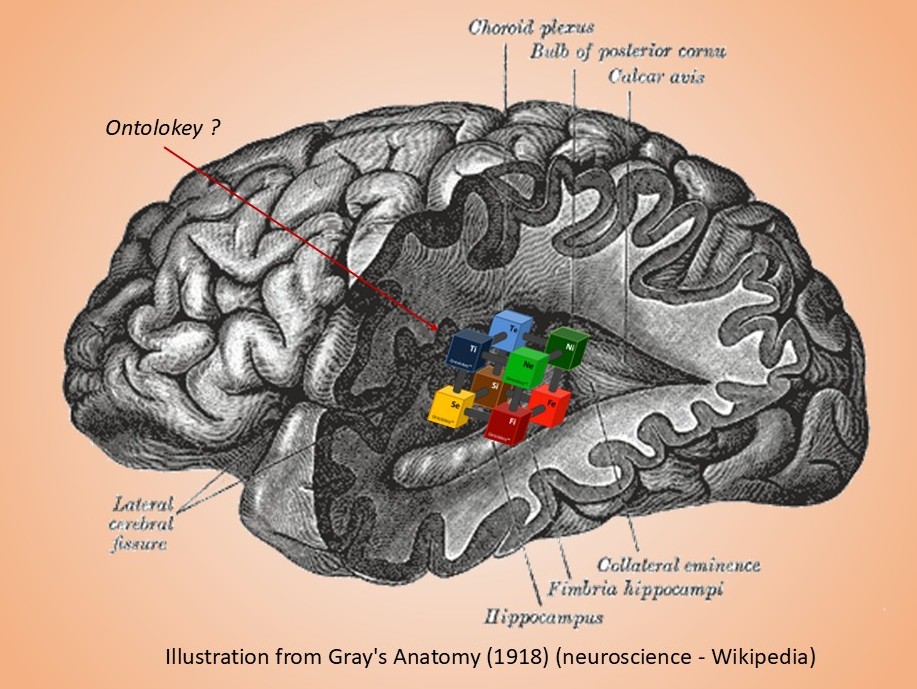


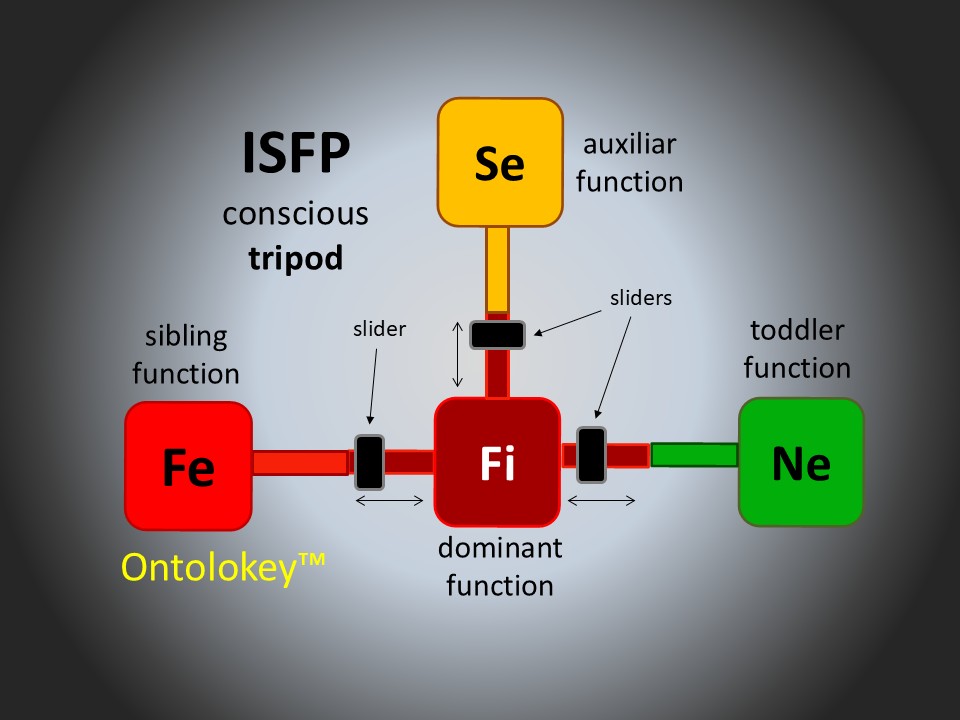
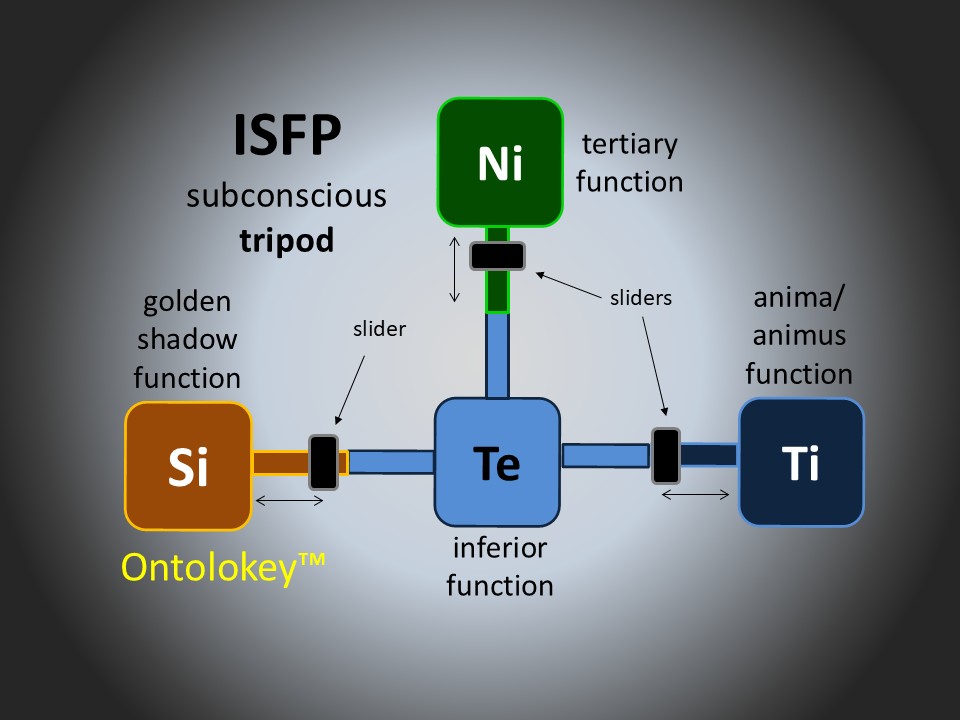
 Ontolokey