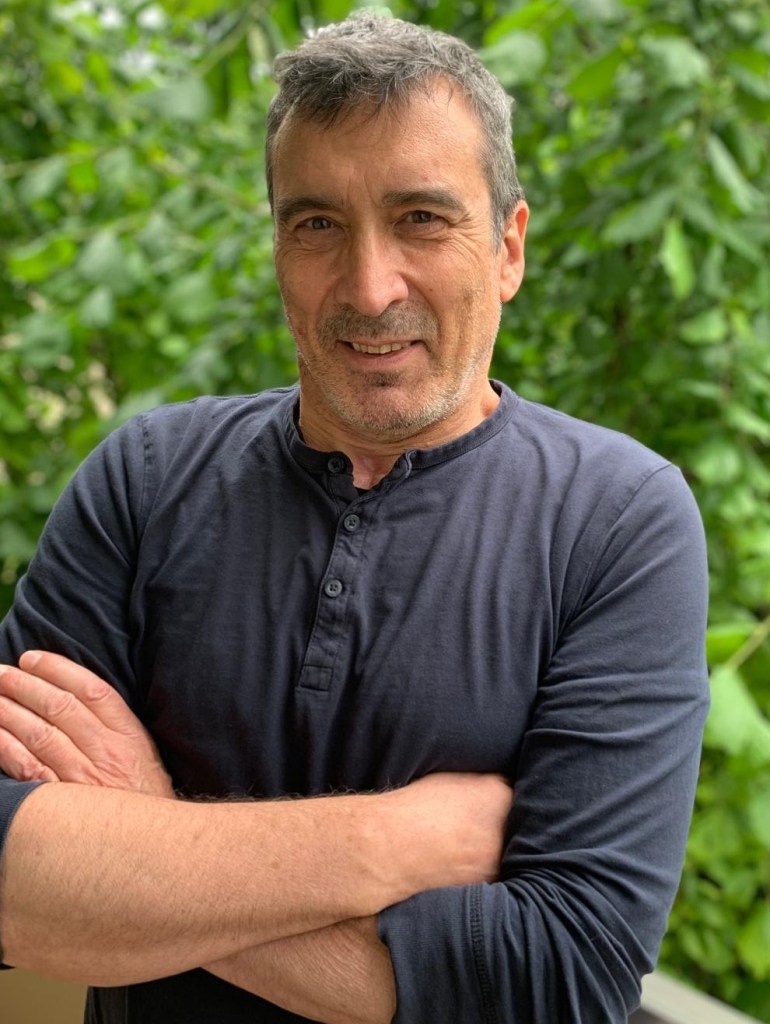
Jorge Eduardo Seufferheld
My Journey: A Life Across Continents and Passions
I was born in Montevideo, Uruguay, in 1964. My family’s story is one of movement, resilience, and unexpected turns, spanning generations and continents.
My grandfather, Max von Seufferheld, was born in Weinsberg, Germany, in 1887. Under German Emperor Wilhelm II, he worked as an agricultural engineer, even spending time in Southwest Africa, now Namibia. After marrying Anna von Grohmann, a Frenchwoman from Strasbourg, he was held as a prisoner of war by the British on Gran Canaria during World War I. It was there that his first son, Werner, was born.
After the war, having lost his estate in Southwest Africa, Max moved to Posadas, Argentina, to establish a vineyard. This is where my father, Manfred Hans Georg, was born in 1933. However, my father spent his childhood in Berchtesgaden, Bavaria, Germany, because my grandfather Max was conscripted by nationalist Germany to serve in World War II.
After the war, they returned to Argentina. Unfortunately, the administrator of our family’s large estate had sold the property in Posadas and disappeared with the profits. We later found out he’d even slightly changed his name, making him untraceable. So, Max, Anna, and their two sons moved to Mendoza, where Max bought an olive oil factory.
My father, Manfred, chose a different path, pursuing a trade. He moved to Montevideo, Uruguay, to work as a refrigeration technician for an American company. In Montevideo, he met my mother, Ilone Zimmer, who was born in 1945 in Ijuí, Brazil, the daughter of German immigrants – her mother Florentina Millich and her father Johannes Zimmer (according to the manifesto of 1763 under Catherine II, the Johannes Zimmer family emigrated in the 19th century from the German Empire to what was then the Russian Empire, today’s Poland. Catherine’s manifesto promised free or cheap land properties, decades or lifelong tax exemptions, freedom from military service, community self-government, religious freedom, etc.)
From his first marriage to Raquel, my father Manfred had three children: my half-brothers Dr. Manfredo Jose and Francisco, both professors at the University of Illinois Urbana-Champaign in the USA, and my half-sister Maria Isabel, a travel agent in Atlanta, Georgia. Francisco, along with his wife Dr. med. dent. Jeannine Koninchx and their son, Dr. med. Javier Seufferheld, work on humanitarian projects in the Argentine Andes, among other things.
In 1970, a devastating event struck our family. My sister Anny, my six-month-old brother Daniel, and I were with my parents on a weekend trip to the beach in Punta del Este. A tall wall of large rocks, built to protect the city from stormy seas, collapsed, burying my father and brother. Miraculously, both survived the severe accident, but my father was permanently paralyzed from the waist down due to a fractured spine. To save his life, we had to quickly sell our house on the beach in Solymar and return to Germany, where he underwent several more operations on his severely damaged internal organs in Heidelberg. After retraining, he successfully worked as a designer for the Max Planck Institute for Astronomy in Heidelberg.
I grew up in Ketsch, a small village near Heidelberg and Mannheim, and went to school in Brühl. After training as a heating engineer, I attended technical school in Karlsruhe, then in Maintal, near Frankfurt am Main, where I also earned my master’s degree in the refrigeration craft.
After marrying Michaela Steiner, my sons Marc and Kay were born in Schwetzingen. An exciting opportunity arose when a Swiss company offered me a position in Riyadh, Saudi Arabia, to establish three departments for the American company Carrier in their branches in Riyadh, Dammam, and Jeddah. Following that, my family and I moved to Dubai in the United Arab Emirates to set up and manage a new company. You can see more about my professional journey on my LinkedIn profile.
After a truly captivating time in the Middle East, I initially returned to Germany before moving to Brazil and then spending over a decade in Mexico. My youngest son, Eduard Alex, was born in Monterrey, Mexico, in 2004.
Beyond my professional life, my passion for Argentine Tango began in 1997 when I started taking lessons. Over the years, I’ve become a devoted tango dancer. My ex-wife, Susana Banda, is a Mexican choreographer and dance teacher, which has greatly benefited my dancing skills. From Susana and many Argentine tango teachers, including several world champions, I’ve gained almost professional dance knowledge. Susana and I even ran a small, part-time dance school in Piedras Negras, Mexico. I’ve also spent several months in Buenos Aires, deepening my skills in its renowned tango schools.
Carrier (UTC) provided me with a scholarship to study Management and Leadership at Indiana Wesleyan University, though I didn’t complete the degree due to financial constraints from the company. During this time, I also became a certified MBTI Practitioner in Florida, USA. My interest in Carl Gustav Jung’s typology began in 2005, leading me to read almost all of his books and many others related to the topic.
Back in Germany in 2014, while working as an Account Manager for the American company Parker Hannifin, I started a part-time course as a Psychological Counselor at the Paracelsus Heilpraktiker-Schule in Mannheim. In 2015, I had a lucid dream where I saw a colorful cube made up of the eight psychological functions. The very next morning, after breakfast, I rushed to the nearest hardware store to buy materials and constructed what I now call the Ontolokey Cube.
Since 2015, I have dedicated myself daily to the development of Ontolokey. My work involved mapping both the conscious and unconscious dimensions of the 16 personality types onto the Ontolokey Cube — from the dominant, auxiliary, tertiary, and inferior functions, to deeper structures such as the Persona, the Anima/Animus, the Sibling and Toddler functions (the latter two introduced through my own research), and the concept of the Golden Shadow. Drawing from the insights of Sigmund Freud and the depth psychological interpretations of Socionics (particularly Model A’s framework of Ego, Super-Ego, Id, and Super-Id), I was able to integrate all eight of Jung’s psychological functions within each of the 16 single personality structures and project them onto the Cube. Additionally, I translated the individuation process — as outlined in Jung’s analytical psychology and enriched by mythological and alchemical sources — onto the unfolded geometry of the Cube.
The cube became my constant companion. As I got to know it step by step, I simultaneously recognized myself within it. The cube began to explain my deepest inner self and reveal my true essence to me. Through it, I learned to know myself, suddenly understanding who I truly am by being able to observe and comprehend my unconscious mind. And I not only understood myself but also the people around me.
After years of refinement and a profound learning process, the result is the Ontolokey Cube: an ontological tool grounded in Carl Gustav Jung’s typological principles. This tool helps you not only understand yourself and the people around you but also to become who you truly are.
Since 2022, I’ve been in early retirement, but I continue to passionately explore the field of psychology.
Please feel free to contact me for any kind of information: Eduardo.seufferheld@outlook.de
Additional note: I have registered several technical inventions with the German Trademark and Patent Office that provide alternative vehicle propulsion systems with fuel cells and CO2 turbines for cars, motorcycles, ships and aircraft turbines (e.g. DE102018008081A1). Although the Internet was consistently enthusiastic about the technology, unfortunately no suitable investor could be found, so that these patent applications are currently freely available as “state of the art”. However, a Chinese company took one of my ideas and used it to commission the world´s first CO₂-based turbine concept, the “Chaotan One“, with a 75% increase in efficiency. However, some current patent applications for the storage of renewable energies are still protected for a few years, so I do not give up hope that an interested investor will be found.
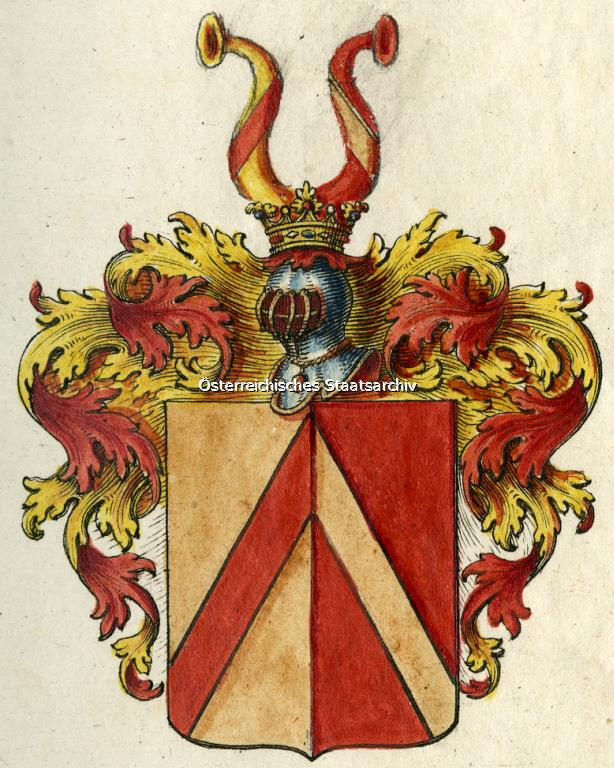
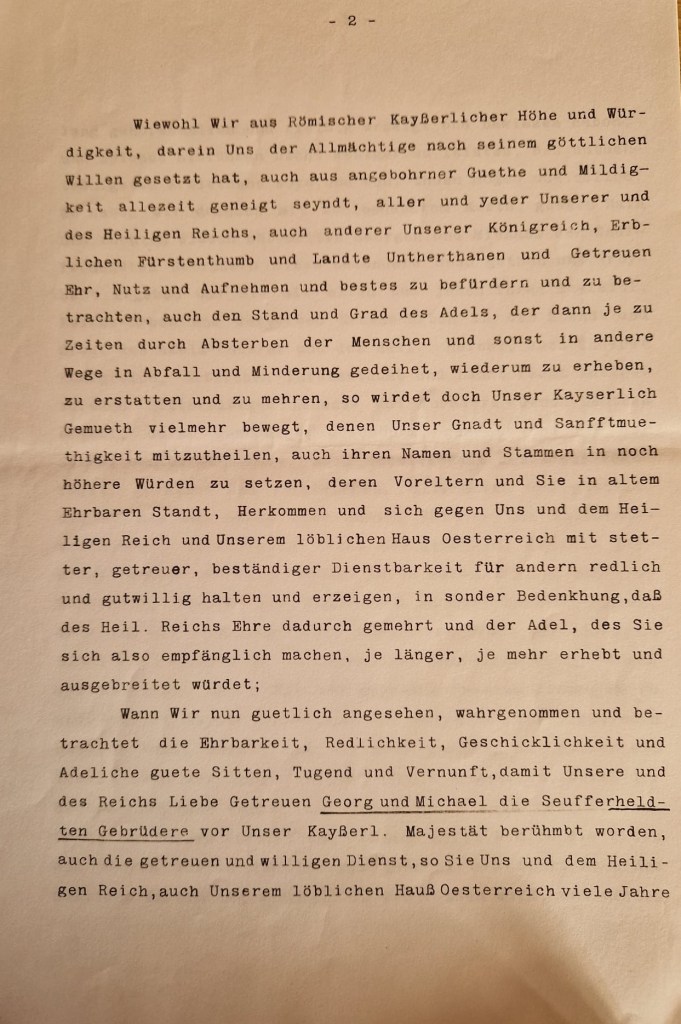
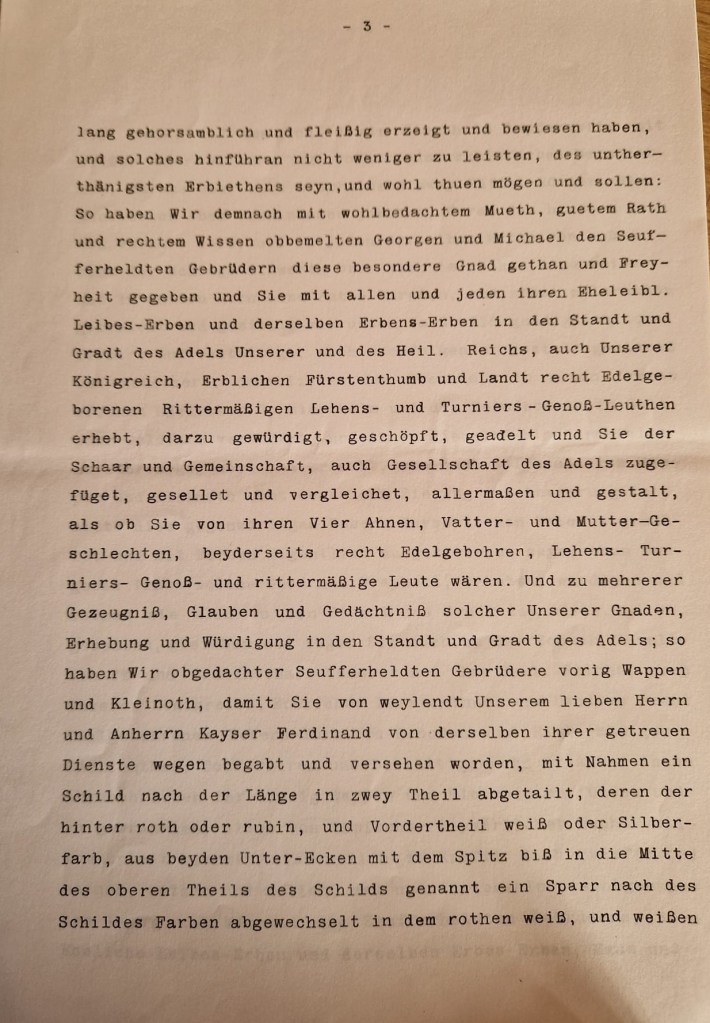
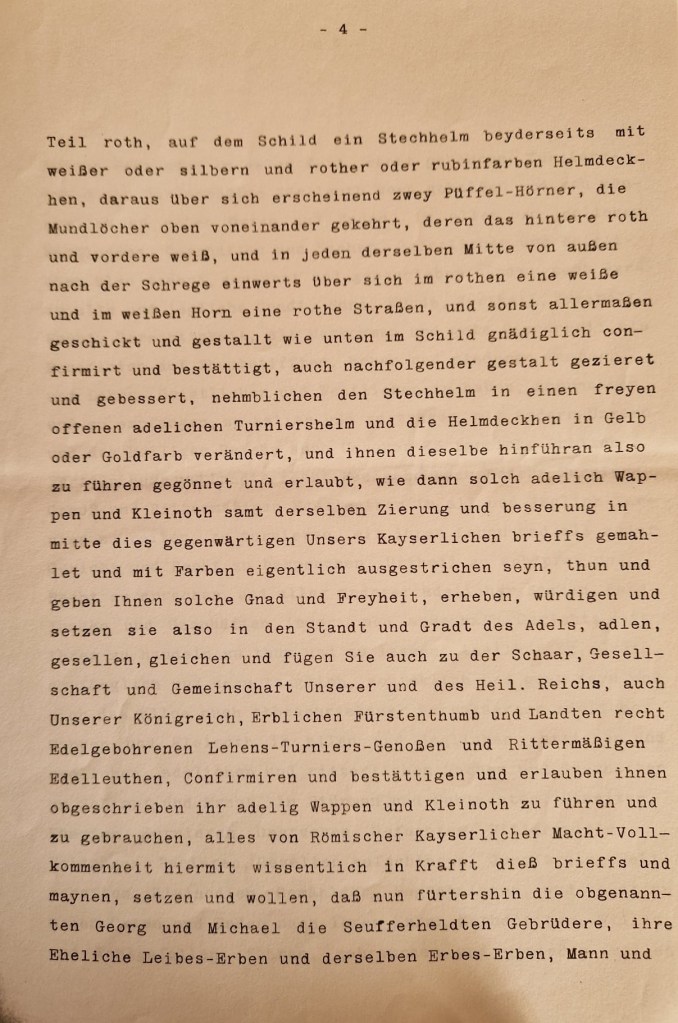
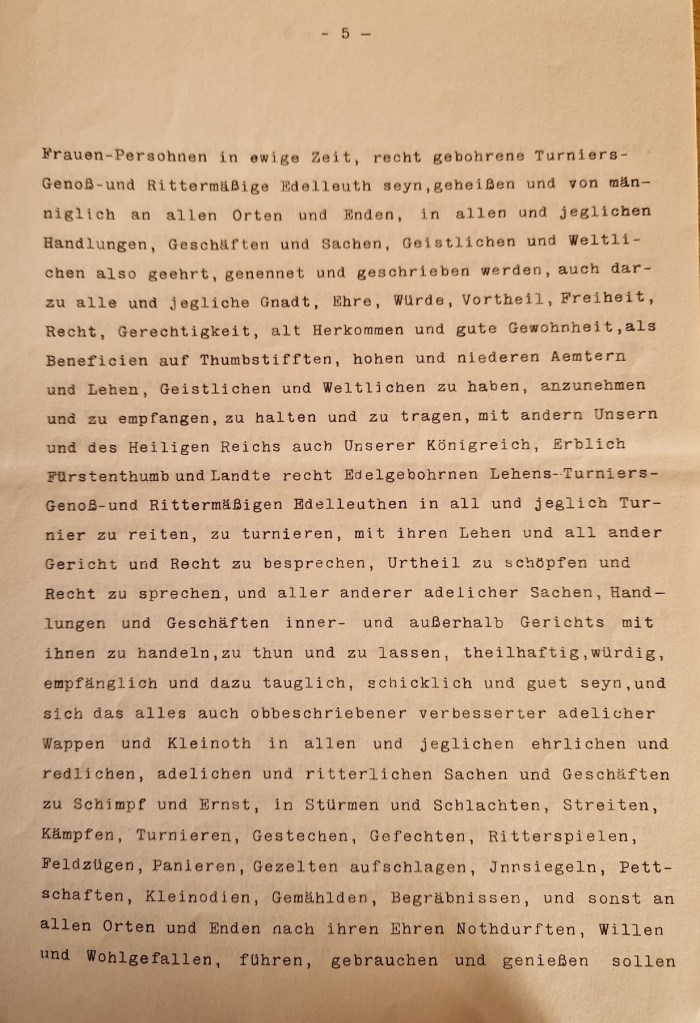
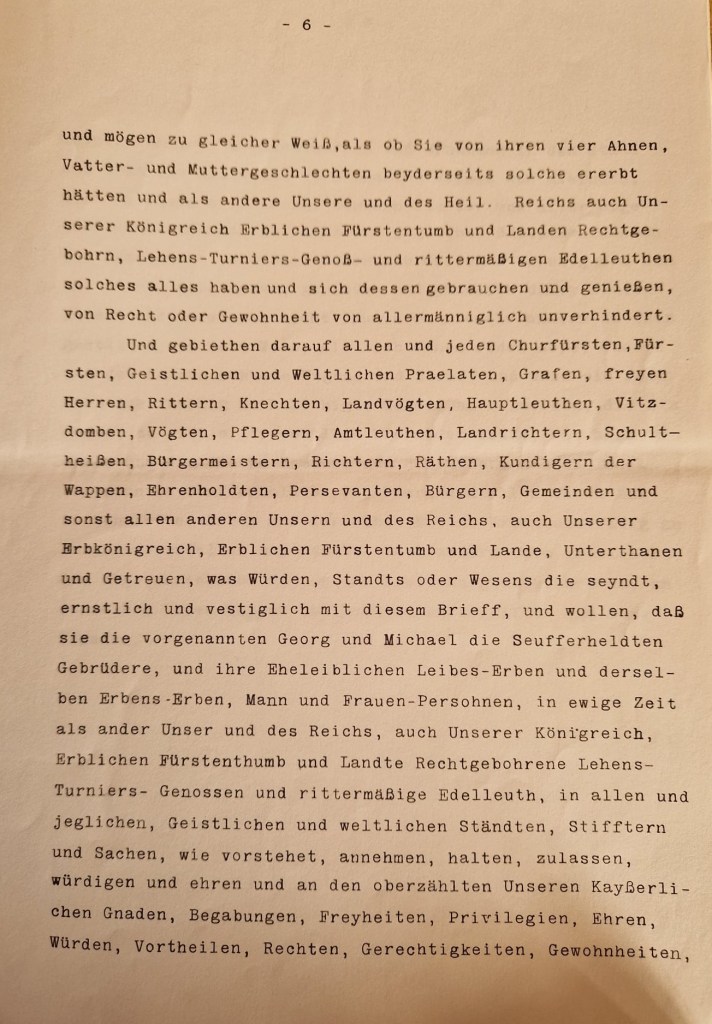
The Seufferheld family received a coat of arms on August 16, 1562, and was elevated to nobility December 10th, 1577 by Roman Emperor Rudolf II. The noble titles were renewed in 1771 and for the last time in 1821 in Frankfurt am Main (Germany), after which the family no longer used them. The letter of nobility and the family coat of arms can be found in the Austrian State Archives. Notable descendants included Georg Heinrich Seufferheld, Marquard Georg Seufferheld, Johann Georg Seufferheld, and Heinrich Seufferheld, the great-uncle of Jorge Eduardo Seufferheld. The family was mistakenly considered extinct with Max Seufferheld, the grandfather of Jorge Eduardo Seufferheld.
Österreichisches Staatsarchiv: Signatur: AT-OeStA/AVA Adel RAA 392.12



 Ontolokey