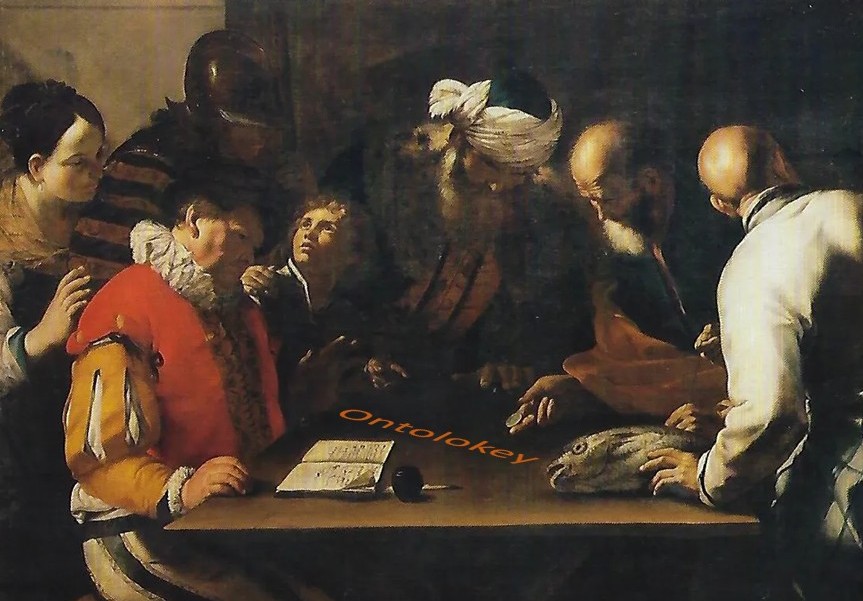
How Two Mythic Brothers Reveal the Real Difference Between Ti and Te
In the vibrant world of typology, people often talk about functions as if they were mechanical parts inside our minds: Introverted Thinking (Ti), Extraverted Thinking (Te), Introverted Feeling, and so on. But when you try to explain to someone what Ti feels like from the inside—or why Te behaves the way it does in real life—technical descriptions usually fall short. They are accurate, but sterile. They miss the living texture of cognition.
Mythology, in contrast, has never had that problem. Myths speak in metaphors, emotions, and contradictions. Their characters embody forces that are too large, too human, and too ancient to fit neatly onto a typology chart. And perhaps no myth captures the essence of the thinking functions better than the story of two brothers: Prometheus and Epimetheus—forethought and afterthought.
These figures give us a surprisingly intimate window into the psychological contrast between Ti and Te. Through them, the thinking functions stop being abstract cognitive jargon and begin to feel like living characters within us—one peering toward the horizon, the other standing firmly in the dust of the real world, reacting and adjusting as life unfolds.
The question is not which brother is more intelligent. It’s how these two forms of intelligence interact—and why a society, an organization, or even a single human being needs both in order to make wise decisions.
Visit “Table of Contents” on the home page http://www.ontolokey.com for more information about Ti and Te!
Prometheus: The Quiet Fire of Ti
If you’ve ever found yourself endlessly dissecting an idea—not for the sake of winning an argument, but simply because your mind refuses to rest until everything aligns perfectly—then you’ve already met the Promethean spirit of Ti. Prometheus is the thinker who lives one layer deeper than everyone else. He does not simply ask what works. He asks why it works, what principle drives it, and whether the explanation is logically clean all the way down.
In mythology, Prometheus is the one who sees the future danger no one else sees. He anticipates flaws, consequences, and hidden variables. In typological language, this is the essence of Ti: a private, internal logic system that cares about conceptual accuracy more than external approval. Something is not true unless it fits together cleanly.
Promethean cognition often feels solitary because the individual is usually conversing with an internal model rather than reacting to the outer world. When a Ti-dominant or Ti-heavy person listens, they are not simply absorbing information; they are filtering it through a razor-sharp internal framework. If it doesn’t fit, it gets returned for inspection. They may ask quiet but pointed questions. They may fall silent for thirty seconds while “running the model.” They may dismantle a statement just to understand whether its core principle stands on its own or crumbles under scrutiny.
This inner precision leads to subtle but profound strengths. A Promethean thinker can detect contradictions long before they lead to problems. They can see the underlying structure of an issue when others see only surface-level symptoms. They often generate elegant solutions—the kind that feel simple only after someone has done the hard work of distilling complexity into clarity.
But Prometheus also carries a shadow. He can get stuck perfecting a system instead of applying it. He can hesitate to act until every variable is accounted for. Sometimes the world moves faster than Ti is comfortable with, and the pressure to “just do something” can feel like being forced to paint a masterpiece in the middle of an earthquake. And because Promethean logic is internally driven, it can take time before the person realizes that an idea, while theoretically brilliant, may collapse under real-world conditions.
Prometheus often knows the right answer, but not always the right timing.
Epimetheus: The Bold Momentum of Te
While Prometheus is still analyzing, Epimetheus is already moving. Te doesn’t need to fully understand every nuance before acting. It needs measurable results. It needs to see something happen. In myth, Epimetheus acts first and reflects later—not because he is foolish, but because his intelligence is rooted in adaptation. He learns by touching reality.
Te-dominant or Te-heavy individuals carry this same instinct. When they hear an idea, they immediately want to know how to use it. Theoretical perfection means little if it cannot be translated into practical steps. They place trust in organization, efficiency, and externally verifiable methods. Show them the workflow, the data, the measurable outcomes, and now you’re speaking their language.
Where Ti sifts inwardly, Te pushes outwardly. Where Ti refines, Te mobilizes. And while this sometimes earns Te the stereotype of being pushy or overly pragmatic, the truth is that Epimethean thinking is one of the engines of civilization. Without it, ideas never leave the blueprint stage. Te thinkers create schedules, enforce deadlines, make tough decisions, hold people accountable, and take responsibility for implementation. They anchor lofty concepts into the world of action.
Te also brings a refreshing straightforwardness. It tends to be direct, unembellished, and impatient with unnecessary complications. Life is short. There is work to do. If something doesn’t function, Te fixes it. If a plan is too theoretical, Te trims it down. If a decision needs to be made, Te will make it even if the conditions aren’t perfect.
But, like Epimetheus in the myth, Te’s decisiveness can backfire. Acting quickly sometimes means missing subtle risks. Relying too heavily on external metrics can lead to decisions that are efficient but not wise. And the drive to maintain order can cause Te to bulldoze complexities that actually needed more nuanced analysis.
Epimetheus knows how to build momentum, but not always how to avoid unseen pitfalls.
Two Brothers, Two Minds, One Human Story
The beauty of the Prometheus–Epimetheus symbolism is that it gives us a human way to understand Ti and Te without reducing them to algorithms. One brother is not “smarter” than the other. They are simply concerned with different aspects of reality.
Prometheus stares at the blueprint.
Epimetheus picks up the hammer.
Prometheus examines principles.
Epimetheus evaluates outcomes.
Prometheus constructs theories.
Epimetheus constructs systems.
Both are forms of intelligence. Both are needed. Neither is complete without the other.
When you read typology communities—whether MBTI, Socionics, or Ontolokey—you quickly notice how easily people idealize one form of thinking and dismiss the other. Ti users may look down on Te for being too blunt or too execution-focused. Te users may dismiss Ti as slow, nitpicky, or out of touch with real-world demands.
Mythology cuts through this bias. The story shows us that forethought without afterthought is as dangerous as the reverse. Before Prometheus gifted humanity the fire of knowledge, he needed Epimetheus’s physical creations. After Epimetheus made hasty mistakes, he needed Prometheus’s clarity to correct them.
This is not a rivalry. It is a partnership.
How Ti and Te View the World
Imagine Ti and Te standing on opposite sides of the same landscape. They are looking at the same environment, but their attention goes in different directions.
The Ti mind notices the hidden patterns—the rules of nature, the conceptual skeleton underlying the forest, the reasons why one tree grows faster than another. Ti tries to understand the system deeply so it can anticipate what will happen long before anyone else sees it. It believes that if the internal model is correct, the results will follow naturally.
The Te mind, on the other hand, notices the terrain—the fallen branches, the fastest routes through the trees, the immediate obstacles that will slow you down. Te wants to get from point A to point B efficiently. It believes that the best model is useless if it cannot be turned into action that produces real results.
Ti is a watchmaker assembling gears with microscopic precision.
Te is the train conductor keeping the schedule intact.
Ti lives in theory to perfect reality.
Te lives in reality to refine theory.
Neither is wrong. Both serve a different kind of truth.
When Prometheus Leads Without Epimetheus
When the Promethean mindset dominates without the balancing presence of Te, thinking can become a labyrinth. Every idea is questioned, every principle examined, every system broken down into dust. Progress slows, not because the thinker is incapable, but because the mind becomes absorbed in its own architecture.
People with strong Ti sometimes live with the feeling that the world rushes them. They are expected to deliver answers before they’ve had time to ensure those answers make sense. The external world can feel chaotic, intrusive, or indifferent to the importance of internal clarity. Projects stall because the individual is still perfecting their understanding. Decisions are postponed because a single inconsistency still bothers them.
The tragedy is that Prometheus does in fact have the answers. But without Epimetheus’s willingness to act, those answers remain trapped in the realm of potential.
When Epimetheus Leads Without Prometheus
When the Epimethean mindset dominates without Promethean caution, life becomes an endless series of rapid decisions. Action piles upon action, project upon project, with little time to pause for reflection. Things get done—but sometimes the wrong things get done efficiently.
A Te-dominant person may find themselves building systems that look solid on the outside but rest on unstable foundations. They may follow protocols that work in the short term but contain hidden contradictions. Because they rely heavily on external data, they may trust results that appear successful but mask deeper problems.
The world rewards their decisiveness, but eventually the cracks appear.
Without Prometheus, Epimetheus learns lessons only after mistakes have been made. Sometimes those mistakes are small. Sometimes, as in the myth of Pandora’s jar, they reshape everything.
When the Brothers Work Together
Now imagine the myth rewritten—not as a cautionary tale, but as a collaboration.
Prometheus sees the approaching storm long before it reaches the horizon.
Epimetheus builds the shelter before the winds arrive.
Prometheus designs the structure.
Epimetheus ensures the walls stand firm.
Prometheus understands why a problem exists.
Epimetheus ensures the solution actually works.
This synergy is the ideal relationship between Ti and Te. Each compensates for the other’s blind spots. Together, they produce both accuracy and momentum.
When the Ti mind works alongside Te—within the same individual or in a team—the results become both elegant and effective. The internal clarity of Ti ensures that the plan is sound, while the external drive of Te ensures that the plan becomes reality.
One provides foresight.
The other provides follow-through.
Together, they offer wisdom.
A Typology Perspective: Why Communities Need Both
People enthusiastic about typology communities already know how different the types feel from one another. But what sometimes gets lost is that the cognitive functions aren’t moral qualities or signs of intelligence. They’re simply different styles of intelligence. And just like Prometheus and Epimetheus, their strengths shine brightest when they are allowed to complement each other.
When a Ti-heavy person and a Te-heavy person work together, something remarkable happens. The Ti user keeps the structure honest, pointing out inconsistencies that might turn into problems. The Te user keeps the project alive, pushing it forward when analysis threatens to freeze it. One makes sure the ship is seaworthy; the other makes sure it actually leaves the harbor.
In discussions, debates, or collaborations within MBTI, Socionics, and Ontolokey communities, these two forms of thinking bring richness and diversity. Ti offers nuance and precision. Te offers decisiveness and clarity of action. A community that values only one becomes lopsided. Too much Ti leads to endless theorycrafting with no real-world grounding. Too much Te leads to oversimplified systems that ignore subtle truths.
Typology thrives when its Prometheans and Epimetheans learn from each other.
The Inner Balance: How One Person Can Hold Both Brothers
We each have a dominant set of functions, but every person has the capacity to develop the complementary form of thinking. Someone who leads with Ti can learn to apply their insights more boldly. Someone who leads with Te can learn to slow down and analyze deeply. The goal is not to silence your dominant function, but to broaden your cognitive palette.
If you are naturally Promethean, practice stepping into the world sooner—testing your ideas in small ways, letting feedback refine your model. If you are naturally Epimethean, allow yourself moments of stillness—time to understand the principles behind your actions before you dive in.
Inner balance does not erase your natural preference; it simply lets both brothers take turns.
A Fire Worth Sharing
The myth of Prometheus and Epimetheus is more than a story about ancient Titans. It is a map of human cognition, a poetic reminder that wisdom comes from the interplay of foresight and experience. Ti and Te are not rivals. They are two expressions of the same human desire: to understand the world and shape it into something better.
Prometheus teaches us to think before we act.
Epimetheus teaches us to learn from what we’ve done.
Between them lies the path of true insight.
If more people learned to honor both brothers—within themselves and within one another—we would make decisions that are not only smarter but wiser. And in a world saturated with information, speed, and pressure, that kind of wisdom is a gift as precious as the fire Prometheus once stole for humanity.
Part II : same article but written for students:
Why We Need Both to Make Wise Decisions
In every society, in every organization, and even within each human being, two forms of thinking coexist: one that turns inward to analyze, refine, and perfect ideas, and another that reaches outward to organize, implement, and bring those ideas into concrete reality. Personality psychology—especially the cognitive function framework popularized in typology communities—refers to these two processes as Introverted Thinking (Ti) and Extraverted Thinking (Te).
These are not merely abstract cognitive categories. They can be understood vividly through two ancient mythological brothers: Prometheus and Epimetheus. Their names translate roughly to forethought and afterthought. Both are intelligent, both are essential, and both, when isolated, have blind spots that can lead to catastrophe or stagnation.
What follows is a deep, engaging exploration of these two modes of thought—what they are, what strengths they offer, what traps they fall into, and why their collaboration is indispensable for sound judgment. The goal is to provide readers with a framework to understand different thinkers in everyday life, and to show why bridging these cognitive worlds leads to better decisions, healthier teams, and a more resilient society.
The Myth as a Map: Forethought and Afterthought
The mythological symbolism is elegantly simple:
- Prometheus (Ti) sees patterns others overlook. He anticipates danger, imagines possibilities, contemplates systems, and evaluates internal logic. He is the architect of ideas.
- Epimetheus (Te) deals with the world as it is—messy, material, full of obstacles and demands for quick action. He organizes, delegates, and reacts. He ensures that plans actually happen.
Prometheus thinks before acting. Epimetheus thinks after acting, adjusting course based on results. The former aims for correctness; the latter aims for effectiveness.
In psychological terms:
- Ti is subjective logic—focused on internal coherence, precision, and conceptual integrity.
- Te is objective logic—focused on external results, measurable outcomes, and productivity.
Understanding them through myth makes their dynamic much clearer:
One brother strategizes. The other implements. One refines truth. The other produces impact.
Part I — The Realm of Prometheus (Ti): The Strategist’s Mind
Promethean thinkers—those who lead with or rely heavily on Ti—tend to be introspective, analytical, and concerned with the purity of ideas. They want to understand why something works before accepting it. Their mindset revolves around:
1. Internal Frameworks and Conceptual Precision
Promethean thinkers build intricate mental models. They strip information down to its core principles, eliminating contradictions and refining definitions. Their logic is inward-facing, not in the sense of being self-centered, but because it emerges from within rather than from external conventions.
They ask:
- “Does this make sense to me?”
- “Is this internally consistent?”
- “What principle underlies this?”
2. Independence of Thought
Ti thinkers dislike being told what to think. They resist rigid rules and prefer to analyze problems from first principles. They frequently challenge traditions, assumptions, and standard procedures.
3. A Strategic, Forethought-Oriented Approach
Like Prometheus foreseeing the needs of humanity, Ti thinkers recognize implications and vulnerabilities that others often overlook. They spot long-term outcomes, identify flaws before they manifest, and conceive elegant solutions that may seem abstract to others.
4. Strengths of the Promethean Mind
- Clarity and conceptual accuracy
- Dependable assessment of logical coherence
- Novel solutions grounded in principled reasoning
- Skill in troubleshooting, debugging, and system design
They excel in roles that require foresight: research, engineering, theoretical sciences, philosophy, system architecture, strategy development.
5. Pitfalls and Blind Spots: When Prometheus Overthinks
Yet Prometheus has his weaknesses—legendary ones. He can become so consumed with planning, analyzing, or perfecting that he neglects the immediate needs of the moment.
Ti’s common pitfalls include:
- Analysis paralysis—refusing to act without absolute clarity
- Overcomplexity—creating elegant theories that are inefficient in practice
- Detachment from real-world constraints
- Difficulty delegating or trusting external standards
- Perfectionism that delays execution
Prometheus may envision brilliant solutions, but without collaboration, those ideas may remain trapped in his mind or fail in practice due to untested assumptions.
Part II — The Realm of Epimetheus (Te): The Executor’s Mind
Epimethean thinkers—those who rely heavily on Te—operate with decisiveness, practicality, and results-orientation. They move quickly, organize resources efficiently, and measure success through outcomes rather than internal elegance.
They are the builders, managers, and implementers of the world.
1. Objective Logic and External Efficiency
Te relies on observable data, measurable productivity, and objective criteria. It asks:
- “What works?”
- “What is the most efficient method?”
- “What gets us results?”
Whether or not they fully understand the underlying principles is less important than achieving concrete objectives.
2. Action Before Reflection
Epimetheus famously accepted Pandora’s jar before reflecting on the consequences. This myth captures Te’s tendency to act decisively and refine later. In modern terms: “We’ll fix it in the next iteration.”
This isn’t recklessness—it’s adaptive pragmatism.
3. Organizational Strength
Te thinkers excel at structuring processes, delegating tasks, creating workflows, and maintaining accountability. They thrive in environments that reward measurable progress.
4. Strengths of the Epimethean Mind
- High productivity and rapid decision-making
- Ability to manage resources and people
- Skill in implementation and logistics
- Comfort with experimentation and iteration
They flourish in leadership, management, operations, project execution, finance, and entrepreneurship.
5. Pitfalls and Blind Spots: When Epimetheus Acts Too Fast
Te also carries its vulnerabilities—famously portrayed in the myth. Epimetheus’s afterthought sometimes comes too late.
Te’s pitfalls include:
- Acting prematurely without sufficient analysis
- Relying too heavily on external metrics, ignoring nuance
- Over-prioritizing efficiency at the cost of long-term stability
- Impatience with complexity or abstract reasoning
- Rigid adherence to procedures even when flawed
Epimetheus gets things done—but without Prometheus’s guidance, he can get the wrong things done efficiently.
Part III — Why the World Needs Both: The Synergy of Ti and Te
The magic happens when forethought and afterthought collaborate. Modern organizations unintentionally recreate the mythic dynamic: strategists vs. operators, analysts vs. managers, thinkers vs. executors.
1. Complementary Strengths
Ti brings:
- depth
- clarity
- nuance
- conceptual insight
Te brings:
- speed
- structure
- pressure-tested results
- real-world grounding
Together, they allow for coherent strategies that actually work.
2. Balancing Precision and Productivity
A plan designed solely by Ti may be perfect in theory but impractical.
A plan executed solely by Te may be efficient but unsustainable or ill-conceived.
When they collaborate:
- Ti refines the “why” and “how.”
- Te ensures the “what” and “when” get accomplished.
This balance is the foundation of effective decision-making.
3. Bridging Worlds: How Ti–Te Teams Excel
Successful teams often pair:
- Analysts with managers
- Visionaries with operational experts
- Theorists with implementers
- People who ask “Is this true?” with those who ask “Does this work?”
Such partnerships avoid the traps of both extremes:
- Te without Ti → reckless action
- Ti without Te → stagnant overthinking
In combination, the strengths multiply while the weaknesses neutralize each other.
Part IV — The Internal Dance: When One Person Balances Ti and Te
Even individuals who prefer one function benefit from integrating the other. You don’t need to change your personality; you simply need to cultivate the complementary skill set.
If you lead with Ti, ask yourself:
- “How can I test this idea in reality?”
- “What small action can I take to move forward?”
- “Which metrics would show whether this works?”
If you lead with Te, ask yourself:
- “What principles justify this action?”
- “Have I considered long-term consequences?”
- “Is the method logically sound or just convenient?”
The goal is not to silence your natural cognition but to round it out so that your decisions incorporate both thoughtful analysis and decisive execution.
Part V — Lessons from the Myth: A Story of Necessary Partnership
Prometheus and Epimetheus were not enemies. They were brothers designed to work together. When read symbolically, the myth warns against:
- Acting without thinking (Te without Ti)
- Thinking without acting (Ti without Te)
Humanity thrives when forethought and afterthought coexist.
A Modern Interpretation
Prometheus offers us internal clarity, innovation, and long-term strategy.
Epimetheus offers us adaptability, real-world testing, and implemented reality.
When Prometheus alone leads, progress stalls.
When Epimetheus alone leads, progress destabilizes.
Together, they bring humanity:
- foresight
- adaptability
- innovation
- resilience
They build a world grounded in reason and elevated by action.
Conclusion: A Call to Integrate the Promethean and Epimethean Minds
Whether we are individuals, teams, or entire societies, our thinking is stronger when it incorporates both introspective analysis and practical execution. By understanding how Introverted Thinking (Ti) and Extraverted Thinking (Te) operate—through the rich symbolism of Prometheus and Epimetheus—we can learn to appreciate diverse cognitive perspectives.
This article is not merely about personality types; it is about embracing the idea that forethought and afterthought must work hand-in-hand.
To build a better world:
- We need thinkers who question assumptions and refine ideas.
- We need doers who organize resources and push ideas into action.
- And above all, we need them to collaborate, not compete.
By integrating these modes of thought—within ourselves and within our communities—we honor both mythic brothers and build a society capable of wise, effective, and enduring progress.
Visit “Table of Contents” on the home page http://www.ontolokey.com for more information about Ti and Te!
 Ontolokey
Leave a comment