By Eduardo Seufferheld
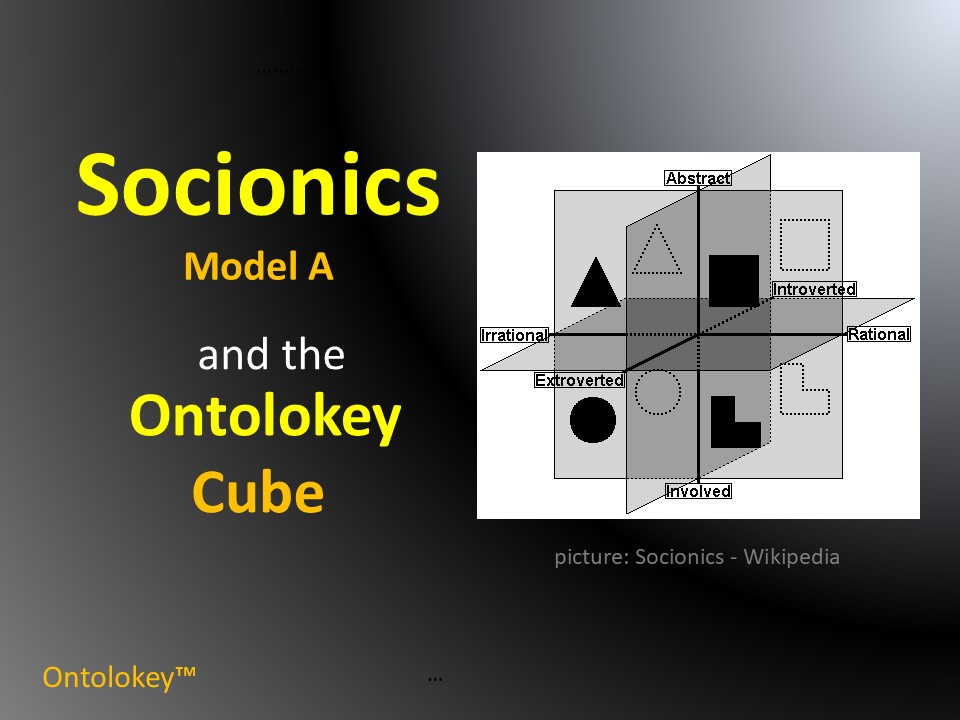
For years, the intersection between MBTI, Socionics, and emerging hybrid models has been a maze of overlapping terminology, conflicting definitions, and structural inconsistencies. People who are familiar with MBTI often move on to Socionics for its precision, only to discover that typology becomes even more complex once various schools, interpretations, and terminologies collide. And now, with Ontolokey entering the landscape, users are asking a new wave of questions: how exactly do Ontolokey’s eight function positions relate to Socionics Model A? Why do these correspondences matter? And how can someone understand their functions more deeply than the usual “strengths vs. weaknesses” dichotomy found in mainstream MBTI descriptions?
This article will operate as a Masterclass — a deep, richly textured, and highly contextualized exploration of each Ontolokey function, how it maps to Socionics Model A, and how all of this relates back to MBTI and Jung’s original conceptual groundwork. The goal is not to promote Ontolokey but to provide clarity for readers who already know it at least superficially and want to understand its inner mechanics on a level that is coherent, psychologically meaningful, and grounded in established typological structures.
Let us begin by setting the conceptual stage.
A — Why This Comparison Matters: A New Era of Cognitive Architecture
Personality theory in the 21st century isn’t the same field Jung inaugurated a century ago. Today, people use personality theory as an interpretive technology — a tool of self-analysis, a way to understand cognitive patterns under different mental loads, and increasingly, as a framework integrated into digital environments and AI-driven self-reflection tools. Because of this, we need typological models that are not only psychologically resonant but also structurally coherent.
MBTI popularized the language of functions but left many architectural questions unanswered.
Socionics Model A refined the structure but remained niche and challenging.
Ontolokey introduces an integrative labeling system that resonates immediately with users while respecting the rigor of Socionics.
The most important clarification to begin with is this:
Ontolokey itself does not use the Socionics terms “Mental Ring” and “Vital Ring.”
However, Ontolokey maps onto Socionics’ Model A in such a way that the functions fall into the same ring structures depending on the MBTI type (P vs. J).
This means Ontolokey does not reinvent the underlying architecture — it renames Socionics positions in a way that is more psychologically intuitive for many users, especially those coming from MBTI.
Why does this matter?
Because most confusion in the typology community arises from terminology, not conceptual differences. When labels across systems don’t align, the underlying ideas appear contradictory even when they are structurally similar.
This article resolves these contradictions by giving you a single, coherent map.
B — Building the Bridge: How MBTI, Socionics, and Ontolokey Interrelate
Before diving deep into the functions, it’s essential to understand the three systems and how each conceptualizes cognitive operations.
MBTI: The Accessible Framework
MBTI gives you an easy entrance point with its four dichotomies and function stacks.
Strengths: intuitive, relatable, widely used.
Weaknesses: structurally ambiguous, especially regarding the inferior and tertiary functions.
Socionics Model A: The Structural Precision System
Socionics reshapes Jungian functions into eight distinct positions, each with a defined cognitive role, energy cost, and level of conscious access.
Strengths: very precise functional architecture.
Weaknesses: terminology is opaque to newcomers, and its relationship to MBTI is not straightforward.
Ontolokey: The Semantic Clarifier
Ontolokey takes the eight Socionics positions and renames them using psychologically resonant archetypes:
- Dominant = MBTI & Ontolokey → Socionics = Leading
- Auxiliar = MBTI & Ontolokey → Socionics = Creative
- Anima/Animus = Ontolokey → Socionics = Role
- Toddler = Ontolokey → Socionics = PoLR (Point of Least Resistence)
- Sibling = Ontolokey → Socionics = Mobilizing
- Golden Shadow = C.G. Jung & Ontolokey → Socionics = Suggestive
- Inferior = MBTI & Ontolokey → Socionics = Observing / Ignoring
- Tertiary = MBTI & Ontolokey → Socionics = Demonstrative
Ontolokey does not modify the structure of Socionics — it changes the storytelling lens, giving each function a name that users can intuitively relate to.
This is why Ontolokey is helpful as a descriptive tool, not a theoretical innovation:
It imports Socionics’ architecture and gives English-speaking MBTI users a familiar conceptual vocabulary.
Now that the conceptual groundwork is laid, we can move into the heart of this Masterclass: the eight functions.
C — The Functional Architecture: A Deep Exploration of Each Position
Below follows the comprehensive examination of each Ontolokey function, how it maps to Socionics Model A, and what it represents psychologically. Each function receives a multi-paragraph deep dive.
1. Dominant = Leading Function (Socionics)
MBTI Equivalent: Dominant Function
Ontolokey Archetype: The Central Identity Axis
The Dominant in Ontolokey corresponds to Socionics’ Leading Function, the engine of consciousness.
This is the function that defines the person’s default mode of understanding the world. It is not only the strongest but the most identity-defining cognitive disposition.
In Socionics, the Leading function is considered “programmatic,” meaning it acts like a long-running internal script that shapes perception and behavior without needing deliberate effort. It is deeply conscious yet not always flexible: its strength lies in consistency, not adaptability.
Ontolokey captures this beautifully.
When people describe themselves using MBTI function language — “I’m a Ti-dom,” “I lead with Fi,” “My Se is always on” — they are speaking from the vantage point of the Dominant. It feels instinctive, self-trusting, and foundational.
Psychologically, the Dominant also creates confirmation patterns. People look for information that fits the logic of their Leading function, which can make the Dominant both a genius and a blind filter. Its greatest limitation isn’t weakness — it’s over-reliance.
From a developmental perspective, the Dominant matures early and remains stable throughout life. But its very stability can create rigidity. Many midlife crises are essentially confrontations with the limitations of the Leading function.
However, the Leading function is also where a person’s sense of meaning resides. It is the axis around which the entire psyche organizes itself.
2. Auxiliar = Creative Function (Socionics)
MBTI Equivalent: Auxiliary Function
Ontolokey Archetype: The Supportive Innovator
The Auxiliar in Ontolokey matches Socionics’ Creative Function, the collaborator to the Leading.
Where the Dominant is fixed, the Creative is flexible.
Where the Dominant is serious, the Creative is exploratory.
Where the Dominant drives identity, the Creative drives adaptability.
This is the function that shapes how one expresses the dominant outwardly. In MBTI language, it often accounts for why two people with the same dominant function can seem very different: a Ti-dom with Ne will move through the world differently than a Ti-dom with Se.
In Socionics, the Creative is both conscious and improvisational. It is the function used for “cognitive craftsmanship”: problem-solving, experimentation, and interactive engagement. Unlike the Dominant, which seeks consistency, the Creative seeks novelty and flexibility.
Ontolokey’s Auxiliar naming reflects this elegant dynamic. This function supports the Dominant, stabilizes it under pressure, and gives it the tools to manifest in the real world. It is often the function that others find most relatable or visible in a person’s behavior — not because it is stronger, but because it is more behaviorally expressed.
Over time, the Auxiliar becomes the place where people discover their personal style — their way of doing things, not just understanding them.
3. Anima/Animus = Role Function (Socionics)
MBTI: No direct equivalent
Jungian Connection: Contrapsychic image
This is one of the most fascinating functions in the entire cognitive ecosystem.
In Ontolokey, the Anima/Animus corresponds to the Socionics Role Function, a function that is:
- unconscious
- effortful
- compensatory
- designed to meet social expectations rather than inner desires
The naming brings Jungian symbolism into play: the Anima/Animus represents both the internal “other” and the internalized expectations of the outside world. This includes projections, idealized roles, and the pressure to behave a certain way.
In practical life, the Role Function feels like a mask worn to appear competent or socially acceptable. A person can operate through it, but the experience feels stiff or emotionally expensive. In Socionics, this function is seen as something one uses out of obligation, not preference.
Ontolokey’s framing emphasizes that this function is not a shadow to be ignored but a role to be understood. It is the part of us that negotiates with society, that tries to “be a good citizen,” that meets responsibilities. It is functional but not nourishing.
When overused, the Role Function leads to burnout. When underused, it leads to social friction. Finding balance here is an art of self-awareness.
4. Toddler = PoLR (Point of Least Resistance) — (Socionics)
MBTI: No equivalent
Ontolokey Archetype: The Cognitive Vulnerable Spot
The Toddler function in Ontolokey maps directly to the Socionics PoLR — the most sensitive and underdeveloped part of the cognitive system. The Toddler ≠ Blindspot (which is instead the tertiary in Ontolokey).
The PoLR is not playful or immature in the MBTI sense — it is structurally vulnerable.
This function is:
- easily overwhelmed
- prone to misinterpretation
- defensive when triggered
- avoided whenever possible
Ontolokey’s choice of the name “Toddler” is fitting: this function behaves like a child who has not yet developed the motor skills to manage the task they are asked to perform. When someone’s PoLR is challenged, reactions can range from withdrawal to anger to panic — depending on personality type and life experience.
In daily life, people often develop elaborate compensatory strategies to avoid PoLR situations. Others may project competence here, only to crumble under pressure. The Toddler does not tolerate sustained cognitive load.
Understanding and protecting this function is often a turning point in personal development.
5. Sibling = Mobilizing Function (Socionics)
MBTI: No equivalent
Ontolokey Archetype: The Competitive Companion
The Sibling corresponds to Socionics’ Mobilizing Function, one of the most paradoxical cognitive positions. It is a function that people want to use but struggle to integrate smoothly. It sits in psychological tension with the Dominant because it has opposite orientation (e.g., introverted vs. extraverted).
In daily life, the Sibling function behaves like a rival sibling:
familiar, compelling, but also challenging and emotionally charged.
This function motivates growth, ambition, and self-improvement. Yet it can also become an area of insecurity, because a person may feel that they “should” be good at it — and are frustrated when they are not.
In Socionics, this function is nurtured most effectively through supportive relationships. Ontolokey maintains this idea: the Sibling function thrives when others validate it, encourage it, and collaborate with it. Left unsupported, it can turn into a source of self-doubt or overcompensation.
Understanding one’s Sibling function often illuminates hidden ambitions and unspoken emotional needs.
6. Golden Shadow = Suggestive Function (Socionics)
MBTI: No equivalent
Jungian Influence: Idealized potential
Ontolokey Archetype: The Hidden Aspiration
The Golden Shadow in Ontolokey corresponds to the Socionics Suggestive Function, often described as the most psychologically “hungry” position. It is the function through which a person seeks nourishment, guidance, and affirmation.
In Jungian terms, this represents the idealized shadow — the part of the self that holds latent potential, longing, and projected admiration.
People do not usually feel confident expressing their Golden Shadow on their own. Instead, they are deeply drawn to people who embody this function elegantly. This is one reason why certain interpersonal relationships feel instantly meaningful: someone else naturally expresses what you wish you could access more easily within yourself.
Ontolokey’s Golden Shadow naming captures the emotional texture perfectly. It is not a dark, repressed shadow — it is a luminous one, a function full of aspiration, softness, and possibility.
This function often plays a significant role in romantic attraction, mentorship choices, and even creative inspiration.
7. Inferior Function = Observing (Ignoring) Function (Socionics)
MBTI Equivalent: Inferior Function
Ontolokey Archetype: The King/Queen — The Quiet Regulator
In MBTI, the inferior function is described as explosive, childish, or insecure.
Ontolokey, drawing from Socionics’ Observing Function, presents a more nuanced view.
This function is:
- subconscious
- stable
- calm
- protective
- vigilant
Ontolokey associates this with the King/Queen archetype — the part of the psyche that quietly oversees, guards, and regulates. It is the panicked, volatile inferior of MBTI pop psychology; it is a deep layer of awareness that rarely acts but often senses.
8. Tertiary Function = Demonstrative (Socionics Model A)
In Socionics’ Model A, the final position in the eight-function stack is called the Demonstrative function — and it is far from a mere afterthought. While it sits at the edge of conscious awareness, this function operates continuously in the background, shaping how a person moves through life in subtle but unmistakable ways. Unlike the Ego block’s functions, which govern conscious identity and agency, or the Super-id and Super-ego blocks, which tug at aspiration and social adaptation, the Demonstrative lives in the Id block — an arena of unspoken competence and instinctive influence that also forms the counterpart to the Ignoring (seventh) function.
Where the Role and Vulnerable positions carry social expectations and psychological strain, the Demonstrative is more akin to an unclaimed reserve of strength: it is strong but unvalued and, crucially, effortless to use when unconsciously engaged. In practice, this means that a person may perform admirably in areas governed by this function without ever acknowledging it — they simply do what needs doing without explanation, without inner dialogue, and without seeking credit. This is why it is called demonstrative: it appears outwardly as action, example, and competence, but not as verbally argued logic or conscious strategy.
Psychological Texture and Interaction
Psychologically, the Demonstrative sits at the interface between what a person can do naturally and what they do not value consciously. It tends to emerge most clearly in everyday behaviors, embodied responses, and practical solutions that don’t require reflection or justification. Socionics theorists often describe it as the part of the psyche that prevents negative developments in one’s environment through quiet, effective intervention — not by forecasting problems with words, but by shaping outcomes through behavior and presence. This sets it apart from functions that are debated internally or expressed intentionally; it works like a silent guardian or background director of experience.
Within the self–other dynamics of Model A, the Demonstrative function also plays an interpersonal role. It aligns with the fourth function of the dual type and serves as a kind of living example for that type to learn from. The demonstrative individual doesn’t lecture or instruct verbally — instead, others learn how it’s done simply by observing what they do. In this respect, the Demonstrative function creates a bridge between internal capability and external influence, offering a quiet model of competence and resilience that others can adopt through proximity and imitation.
Ontolokey Mapping and the Tertiary Archetype
In the Ontolokey schema, this Socionics eighth position corresponds to the Tertiary function, completing the eight-part cognitive architecture with a function that is simultaneously powerful and undercover. Within Ontolokey’s cube, the Demonstrative occupies a function that connects the vital energies of the psyche in a way that is both grounding and stabilizing: it represents the unconscious reservoir of competence that supports growth without dominating personality narrative. This is why, despite lying outside the conscious ego and social blocks, the Demonstrative ultimately enriches the psychological whole — it is the silent field of mastery from which a person’s lived functionality often springs.
Where the Ego functions delineate conscious style, and the Super-ego and Super-id functions shape aspiration and adaptation, the Demonstrative simply is — manifesting as practical efficacy, instinctual confidence, and a level of performance that doesn’t demand explanation, argument, or justification.
 Ontolokey
Leave a comment