Why We Need a New Way to See Ourselves
For more than a century, personality psychology has been defined by two seemingly opposing forces: the desire to understand the deep structures of the human psyche and the equally strong desire to simplify that complexity into neat, usable categories. From the early psychoanalytic theories of Freud and Jung, to trait-based models like the Big Five, to the recent revival of typology through frameworks such as the MBTI, the field has spent decades circling a central paradox: how do we represent something as multidimensional and dynamic as human personality without reducing it into something too flat to be meaningful?
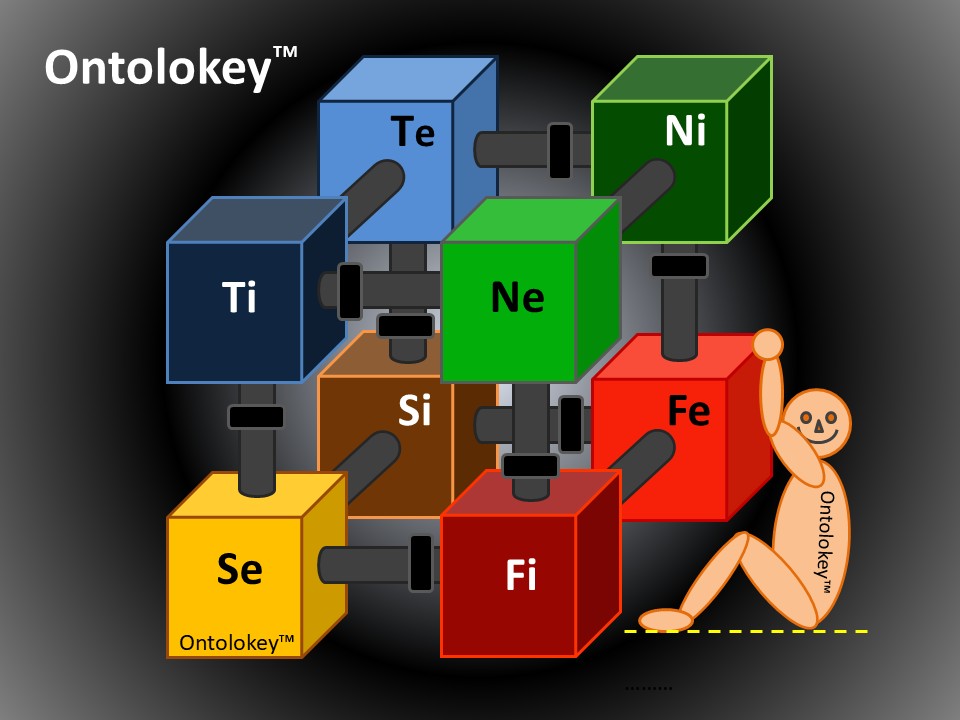
Today, we stand at the threshold of a new wave in psychological modeling—one that merges the depth of classical theory with the usability of modern visualization. A new system called Ontolokey proposes that our long-standing struggle stems from a fundamental limitation: most personality models operate in two dimensions, using charts, lists, or spectra. In contrast, Ontolokey introduces a three-dimensional approach that treats personality as a dynamic spatial structure—something we can not only read, but see, rotate, and experience.
The result is a conceptual leap with surprising consequences: deeper self-understanding, more empathic interpersonal insight, and even a framework for examining societal behavior with greater nuance.
This article explores how Ontolokey works, why the ability to visualize personality in three dimensions matters, and what this paradigm shift might mean for individuals, organizations, and society at large.
1. The Problem with Flat Personality Models
Before exploring what Ontolokey adds, it is important to look at what traditional personality models are missing.
Most people are familiar with at least one personality system:
- The MBTI, which identifies 16 types
- The Big Five, which maps traits across five dimensions
- Jung’s cognitive functions
- Enneagram motivations
- Trait-based assessments used in modern organizational psychology
Each system provides insights—but each also has blind spots.
1.1 Typologies simplify too much
Typologies like the MBTI are easy to remember and fun to explore, but they often flatten human identity into fixed categories. Labels like “INTP” or “ESFJ” imply that personality is static, when research overwhelmingly shows that personality is:
- influenceable
- context-dependent
- developmental
- full of internal contradictions
In other words, you are never only your type.
1.2 Trait models are precise but abstract
Trait models like the Big Five offer scientific rigor but struggle to capture the lived experience of personality. Terms like “Openness to experience” or “Agreeableness” can feel too generic to be personally meaningful. Trait models measure; they rarely explain.
1.3 Most models ignore internal dynamics
Perhaps the biggest limitation is structural: nearly all personality systems present information in a flat format—charts, lists, percentages, or axes. But human psychology is not flat. It is a structure of interlocking processes, shifting priorities, and competing internal voices. Many conflicts in personal development arise not from a lack of traits, but from tensions between internal psychological functions.
Without a way to represent these relationships visually, we are left with a fragmented understanding of the whole.
This is the gap Ontolokey seeks to bridge.
2. Ontolokey: A 3D Framework for a 3D Mind
Ontolokey is built on the theoretical foundation of C. G. Jung’s cognitive functions, the same underlying elements later used by the MBTI. But it diverges sharply from the traditional typology approach by translating these abstract psychological processes into a 3D geometric model: the Ontolokey Cube.
2.1 The Ontolokey Cube
The cube is more than a metaphor. It is a spatial representation of the psyche, where each cognitive function occupies a structural position. These positions reflect:
- degree of consciousness
- dominance or suppression
- relational tension between functions
- developmental potential
Instead of defining people through labels, Ontolokey shows the architecture of their psychology.
2.2 Why 3D matters
People understand spatial systems intuitively. A map, a globe, an anatomical model—these objects make complex systems navigable because they allow us to:
- see connections
- rotate perspectives
- grasp scale
- recognize asymmetries
- observe internal relationships
Ontolokey brings this same spatial cognition to psychological understanding.
When someone interacts with the cube—digitally or physically—they experience personality not as an abstract theory, but as a living structure.
2.3 A system of tensions, growth, and balance
One of the key insights of the Ontolokey method is that personal growth often comes from integrating weaker or unconscious psychological functions, not simply amplifying dominant ones.
The cube makes this visually obvious:
- Overdeveloped areas create visible imbalance.
- Shadow functions appear in the “hidden” areas.
- Growth becomes a process of expanding or rotating neglected regions.
Through this, Ontolokey reframes personality as a dynamic system—one that evolves over time and responds to life experience.
3. How 3D Visualization Improves Self-Understanding
The psychological benefits of seeing one’s personality structure in three dimensions fall into three categories: clarity, awareness, and development.
3.1 Clarity: Seeing the whole instead of isolated traits
When personality is mapped visually, individuals often have immediate “aha” reactions. They can see:
- why some tasks feel effortless
- why certain patterns repeat in relationships
- where emotional blind spots come from
- why they behave differently under stress
Words can describe these patterns, but visuals reveal them.
3.2 Awareness: Understanding blind spots and shadow functions
Every psychological model acknowledges the concept of the “shadow”—those aspects of ourselves we do not see or do not want to see. Ontolokey allows people to identify:
- suppressed thinking styles
- emotional biases
- overlooked perspectives
- underdeveloped decision-making functions
This is not about labeling flaws, but understanding the architecture that produces them.
3.3 Growth: A map for development rather than a label for identity
Traditional personality types often feel like identity boxes. Ontolokey positions personality as a starting point, not a definition.
Seeing one’s cube allows individuals to ask:
- What would a more balanced version of myself look like?
- Which functions do I want to strengthen?
- How do stress or trauma distort my internal structure?
- What developmental trajectory feels authentic?
The 3D model becomes a guide for intentional self-evolution.
4. Understanding Others: A More Empathic Lens on Human Behavior
Where Ontolokey truly shines is not only in self-exploration, but in interpersonal understanding. By giving people a structured view of how others think, feel, and process information, it provides a new foundation for empathy.
4.1 Moving beyond stereotypes
Typology communities often fall into caricatures:
- “INTJs are cold.”
- “ESFPs are shallow.”
- “INFPs are overly sensitive.”
These stereotypes collapse the richness of psychological diversity into cartoons.
The Ontolokey Cube makes it harder to simplify people. Its structural form highlights internal tensions and hidden strengths, revealing that:
- An “analytical” person may struggle internally with emotional uncertainty.
- A “warm” personality may carry deep internal logic unseen by others.
- A “practical” individual may contain repressed creativity waiting for space to emerge.
Personality becomes more dimensional—and so do people.
4.2 Seeing how others see the world
One of the most powerful applications of Ontolokey is perspective-shifting.
When you visualize another person’s psychological structure, you can ask:
- What information does this person notice first?
- How do they process decisions?
- What feels natural vs. stressful for them?
- How do they experience conflict?
Instead of assuming malicious intent or ignorance, it becomes clearer that:
People behave differently because they perceive the world differently.
This reduces interpersonal tension and increases collaboration.
4.3 Predicting interpersonal dynamics
The cube also allows for analysis of relational dynamics:
- Which personality structures complement each other?
- Which combinations create friction—and why?
- How do dominant functions interact across individuals?
- How can groups balance diverse psychological strengths?
In organizations, teams, friendships, and families, these insights can dramatically improve communication and reduce conflict.
5. Applications Across Society
A three-dimensional personality model has implications stretching beyond personal growth. Ontolokey opens new possibilities in education, mental health, organizational psychology, and cultural analysis.
5.1 Education: Teaching students how their minds work
Students learn better when they understand how they think. Ontolokey helps learners:
- identify their cognitive strengths
- understand their processing bottlenecks
- tailor study methods to their psychological architecture
- recognize the diversity of thinking styles among peers
Teachers can also benefit, adapting instruction to cognitive profiles to increase engagement and reduce frustration.
5.2 Coaching and therapy: Mapping the mind for transformation
Therapists and coaches often rely on verbal descriptions of internal experiences. Ontolokey provides:
- a shared reference point
- a visual map for discussing psychological tensions
- a tool for tracking growth over time
- a method for decoding personality-shifts under stress
It makes abstract concepts concrete, which can accelerate insight and healing.
5.3 Organizational development: Building balanced teams
Teams often fail not because individuals lack skill, but because their psychological functions are unevenly distributed. For example:
- A team full of intuitive thinkers may lack grounding.
- A team of strong feelers may struggle with conflict.
- A team dominated by analysts may overvalue data and undervalue human impact.
Ontolokey makes these imbalances visible and helps leaders build more complementary teams.
5.4 Cultural and societal understanding
Beyond individuals and groups, Ontolokey opens the possibility of examining personality structures on a societal scale:
- Why do cultures differ in values and decision-making?
- How do societies shift psychologically over time?
- Which cognitive functions are rewarded or suppressed in different environments?
By mapping psychological tendencies across populations, researchers may gain new insights into:
- political polarization
- generational differences
- cultural conflict
- collective trauma
- societal resilience
A model that treats personality as a structural, interconnected system could provide tools for understanding entire societies as psychological ecosystems.
6. The Scientific and Philosophical Implications
Ontolokey sits at the intersection of psychology, philosophy, and systems thinking. Its conceptual foundation has broader implications for how we think about the human mind.
6.1 From traits to systems
Modern psychology has long favored trait models because they can be quantified. But traits alone cannot capture:
- meaning
- internal conflict
- cognitive processes
- unconscious dynamics
- identity formation
Ontolokey reintroduces systems into the conversation—offering a framework that explains how parts work together, not just what the parts are.
6.2 A dynamic view of consciousness
The cube acknowledges that consciousness is not a fixed state but a fluid structure. It suggests that:
- awareness can expand
- suppressed functions can emerge
- cognitive patterns can reorganize
- identity evolves with time
This aligns with modern neuroscience, which increasingly describes the brain as a dynamic, plastic, adaptive system.
6.3 Bridging rational psychology and lived experience
One of the longstanding challenges in psychology is the gap between:
- scientific models (precise but abstract)
- personal experience (rich but subjective)
Ontolokey bridges this divide by providing a model that is both conceptually rigorous and personally intuitive.
It allows people to experience theory rather than just read about it.
7. The Future of Personality Science: Toward a More Dimensional Psychology
Ontolokey represents an important shift in our understanding of personality—one that reflects broader trends across psychology, neuroscience, and even artificial intelligence.
7.1 Visual cognition as a tool for psychological insight
The brain evolved as a spatial processor. We understand the world most clearly when we can see structures and manipulate them. Ontolokey’s visual approach is likely the first of many systems that will emphasize:
- spatial modeling
- interactive cognition
- multimodal learning
- dynamic mapping of psychological processes
7.2 The end of one-dimensional thinking
Reducing people to types is comfortable but inaccurate. Flattening human personality into traits is measurable but incomplete. Ontolokey points toward a future where personality science embraces complexity without sacrificing usability.
7.3 Personality as a developmental journey
Most models describe personality as a fixed identity. Ontolokey portrays it as a trajectory:
a structure that shifts across life stages, experiences, and relationships.
This perspective aligns with developmental psychology and offers a more humane and hopeful understanding of personal change.
Conclusion: A More Human Way of Understanding Humans
Ontolokey’s contribution to personality science is not merely that it introduces a new model, but that it restores something essential: dimensionality.
Humans are not flat.
Our minds are not lists.
Our personalities are not static labels.
We are dynamic, evolving, complex systems whose inner structures shape the way we relate to ourselves, to others, and to society.
By visualizing personality in three dimensions—by literally seeing parts of ourselves we could previously only imagine—Ontolokey offers a profound shift in perspective. It helps individuals understand their inner architecture, enables more empathy across differences, and opens a new path for social insight.
In a time of growing polarization and misunderstanding, tools that help us see ourselves and others more clearly are not just psychologically interesting—they are socially necessary.
Ontolokey is one such tool, inviting us to look at personality not as a box to categorize people, but as a multidimensional space to explore, develop, and ultimately integrate.
It reminds us that the mind is not a stereotype.
It is not a checklist.
It is a structure—alive, evolving, and uniquely dimensional.
 Ontolokey
Leave a comment