A Proto-Scientific Hypothesis Integrating Jung’s Eight Functions, MBTI, Socionics, and the Ontolokey Cube
1. Introduction
Psychology has long debated whether stable personality differences are learned adaptations or whether they reflect innate structures of the mind. This article advances a proto-scientific hypothesis: human beings are born with neurobiologically pre-programmed personality types rooted in eight psychological functions as articulated by C. G. Jung (1921). We propose that these functions operate as basic modules of information processing whose relative weighting is present from birth, later shaped—but not created—by environmental influences such as family, culture, and education. In this view, typology is the root system of the psychological “tree,” while the observable canopy—beliefs, habits, roles—reflects subsequent growth under varying life conditions.
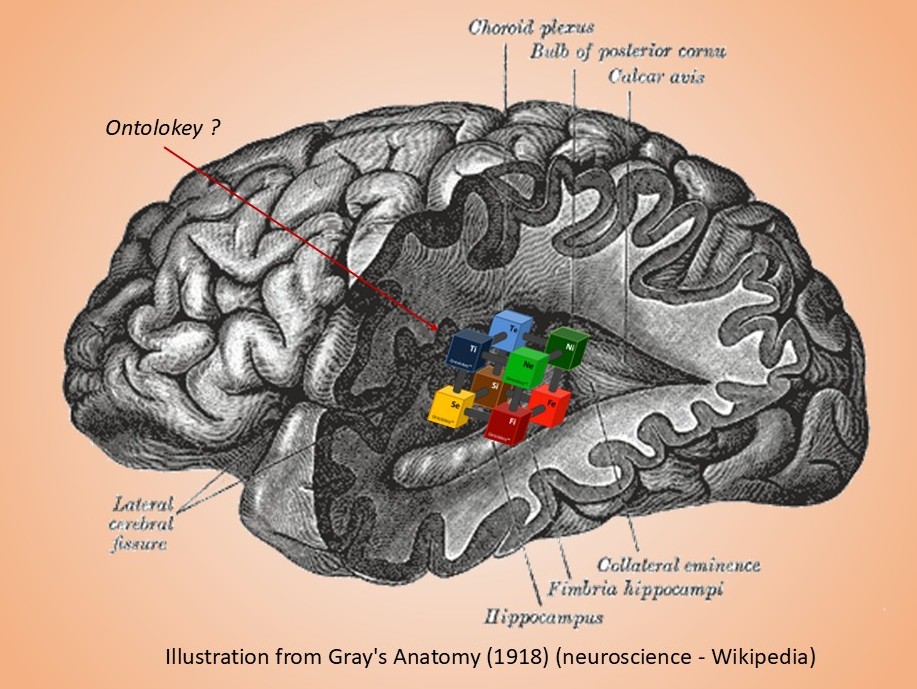
To make this hypothesis scientifically tractable, we introduce the Ontolokey Cube as a structural model of consciousness and the unconscious. Conceptually, the Ontolokey Cube serves as a three-dimensional map on which the eight function-attitudes can be located and their relative dominance, accessibility, and unconscious projection paths represented. The cube is intended as a “software-level” architecture: it does not presuppose any specific brain anatomy but offers a principled way to visualize and reason about typological structure and the dynamics of individuation across the lifespan.
Building on this architecture, we re-frame MBTI and Socionics as candidate neurobiological theories—not merely self-report typologies. Our aim is to supply a coherent conceptual bridge between these frameworks and Jung’s original model, positioning all three as hypotheses about wiring preferences in large-scale neural networks (e.g., networks that preferentially support certain modes of perception or judgment). The claim is not that decisive neurobiological evidence already exists; rather, we articulate a set of testable predictions to guide future measurement—behavioral, developmental, and neurophysiological.
An evolutionary rationale motivates the hypothesis. Echoing a theme from Plato’s Symposium—the search for one’s “other half”—we interpret interpersonal attraction as a tendency toward complementarity of psychological functions. If individuals are innately biased toward specific function-attitudes, assortative and complementary pairing would help sustain diversity in cognitive styles within families and groups, potentially enhancing adaptability and discouraging evolutionary stagnation. Thus, typological diversity is not a taxonomic curiosity but may reflect an adaptation that enriches social problem-solving and genetic mixing.
Practically, taking types as at least partly innate has implications for clinical, diagnostic, and organizational psychology. In therapy, it invites closer attention to unconscious projections arising from mismatches between partners’ dominant and inferior functions. In assessment, it encourages hypothesis-driven exploration of processing biases that underlie recurring difficulties. In teams, it suggests deliberate design for complementarity while mitigating predictable fault lines.
This paper proceeds as follows. Section 2 situates the proposal within Jung’s eight functions, MBTI, Socionics, and the Ontolokey Cube. Section 3 articulates the neurobiological pre-programming claim as a fixed-wiring preference at the network level. Section 4 develops the evolutionary case for typological diversity and complementary attraction. Section 5 addresses lifespan development and individuation. Section 6 outlines practical applications. Section 7 proposes empirical strategies and falsifiable predictions. We conclude by emphasizing the provisional, testable character of the framework.
2. Theoretical Foundations
2.1 Jung’s Psychological Types (1921)
In Psychologische Typen (1921), C. G. Jung described the psyche as organized around eight function-attitudes, defined by the interaction of two dichotomies:
- Perception (Sensing vs. Intuition) and Judgment (Thinking vs. Feeling),
- each expressed in either an Extraverted or Introverted orientation.
Thus, the psyche is structured into eight distinct modes of processing: Extraverted Thinking (Te), Introverted Thinking (Ti), Extraverted Feeling (Fe), Introverted Feeling (Fi), Extraverted Sensing (Se), Introverted Sensing (Si), Extraverted Intuition (Ne), and Introverted Intuition (Ni). According to Jung, every individual exhibits a dominant function that shapes the Ego, supported by auxiliary, tertiary, and inferior functions, with the latter often relegated to the unconscious. The dynamics among these functions underlie both personal strengths and unconscious projections in relationships.
Jung’s system was never meant as a rigid classification but as a framework for understanding archetypal structures of cognition. His insights into the compensatory role of the unconscious, and the process of individuation, remain central to this hypothesis.
2.2 MBTI and the Operationalization of Type
The Myers-Briggs Type Indicator (MBTI), developed by Isabel Briggs Myers and Katharine Cook Briggs, represents the most influential operationalization of Jung’s framework. MBTI introduced the well-known four dichotomies (E/I, S/N, T/F, J/P), yielding sixteen personality types. Despite criticisms—particularly regarding psychometric validity—MBTI has been widely adopted in organizational and educational contexts, attesting to its practical utility.
From the perspective of this hypothesis, MBTI is not treated as a mere self-report inventory but as an applied model of neurocognitive preference structures. The 16 types are interpreted as distinct constellations of functional dominance and auxiliary support, which may reflect neural wiring biases present from birth.
2.3 Socionics and Intertype Dynamics
Developed in the late Soviet era by Aušra Augustinavičiūtė, Socionics extends Jung’s typology and MBTI into a system of 16 sociotypes with an emphasis on intertype relations. Unlike MBTI, Socionics highlights how types interact dynamically, predicting patterns of compatibility and conflict. Socionics therefore provides a more explicit bridge between typology and social systems, offering hypotheses about why certain partnerships or teams thrive while others falter.
In the present hypothesis, Socionics contributes the crucial idea that innate functional structures shape unconscious attraction and projection, thereby influencing both intimate relationships and larger social organizations. Its emphasis on relational dynamics aligns closely with evolutionary considerations of genetic and social diversity.
2.4 The Ontolokey Cube as Integrative Framework
The Ontolokey Cube is introduced here as a unifying structural model for Jung’s eight functions, MBTI’s 16 types, and Socionics’ intertype dynamics. Conceptually, the cube is a three-dimensional map of consciousness and the unconscious. Each axis of the cube corresponds to a fundamental polarity of the psyche (e.g., extraversion–introversion, perception–judgment, conscious–unconscious). Within this space, the eight functions can be located as coordinates representing their role in an individual’s psychological architecture.
The Ontolokey Cube thus provides a visual and structural key:
- It explains how the eight functions relate systematically to one another.
- It shows how MBTI’s 16 types can be understood as distinct configurations within this cube.
- It accommodates Socionics’ focus on relational patterns by mapping potential complementarity and conflict between positions.
Most importantly, the cube renders visible what has so far remained abstract: the pre-programmed structure of the psyche as a modular architecture. While still a conceptual model, it sets the stage for future empirical work, for instance, by generating predictions about neural activation patterns or behavioral biases associated with specific configurations.
3. Neurobiological Hypothesis
3.1 Pre-programmed Wiring as Network Preferences
The central claim of this paper is that personality types are rooted in fixed neural wiring preferences present from birth. These preferences correspond to Jung’s eight psychological functions, which operate as modules of information processing. Each individual is predisposed toward a dominant function and an auxiliary support, while other functions remain less accessible or relegated to the unconscious. This functional hierarchy, while malleable in expression, reflects a baseline configuration of neural networks.
The hypothesis does not posit hard anatomical structures (i.e., that one brain region “is” Introverted Intuition). Rather, it suggests that large-scale neural circuits—distributed across cortical and subcortical regions—are biased toward certain processing modes. For example, an individual with a dominant intuitive function may display stronger connectivity in associative networks that support pattern recognition, imagination, and abstraction, whereas a dominant sensing type may show preferential activation in sensory-motor integration networks.
3.2 Ontolokey as a Software-Level Model
The Ontolokey Cube provides a conceptual framework for understanding these innate wiring preferences. The cube functions at the software level—a map of information-processing architecture—rather than the hardware level of brain anatomy. By assigning each function a position within the cube, the model visualizes the relative dominance, suppression, and unconscious projection of functions.
In this sense, the Ontolokey Cube offers a neurocognitive topology:
- The dominant function is positioned at the center of conscious orientation (Ego).
- The auxiliary function supports conscious adaptation and balance.
- The tertiary and inferior functions appear in less integrated or unconscious positions, often revealed through projection, conflict, or attraction to others.
This structural representation makes the hypothesis testable, as it suggests that individuals with different typological profiles should exhibit measurable differences in network dynamics, both at rest and during cognitive tasks.
3.3 Interaction with Environmental Influences
Although pre-programmed wiring provides the root, environmental conditions shape how this potential unfolds. Family, education, cultural norms, and socio-economic context act as environmental forces that cultivate, suppress, or distort innate functions. Cognitive ability (IQ) further moderates the degree to which functions can be differentiated and integrated.
To illustrate, one might imagine the psyche as a tree: typology supplies the genetic blueprint of the root system, while life circumstances—the “climate” of sun, soil, wind, and rain—determine how the branches and leaves develop. While two individuals may share the same root type, their life histories can lead to dramatically different expressions of personality.
3.4 Testable Predictions
This neurobiological hypothesis generates several predictions:
- Stability: Core typological preferences should remain stable across the lifespan, even as behavior and self-concept evolve.
- Neural Signatures: Brain imaging should reveal consistent network-level differences across individuals of different types (e.g., dominant intuitive vs. dominant sensing).
- Projection Patterns: Individuals will unconsciously project inferior or unconscious functions onto others, a process observable in interpersonal dynamics.
- Complementarity: Typological diversity will enhance group problem-solving, while homogeneity may limit adaptability.
These predictions highlight the proto-scientific nature of the claim: while empirical evidence is preliminary (e.g., Nardi’s early EEG studies), the framework offers a structured path for future research.
4. Evolutionary Considerations
4.1 Typological Diversity as Evolutionary Strategy
From an evolutionary perspective, diversity of cognitive styles within a population confers adaptive advantages. If all individuals processed information in the same way, societies would risk stagnation: their problem-solving strategies would be uniform, their blind spots identical, and their resilience limited. By contrast, the presence of distinct types—structured by Jung’s eight functions—ensures a variety of perceptual filters, evaluative mechanisms, and adaptive strategies.
Typological diversity therefore parallels genetic diversity: both prevent homogeneity, foster resilience, and enhance long-term survival. In this hypothesis, the existence of 16 types is not accidental but reflects an evolved strategy to balance specialization and complementarity within human groups.
4.2 Complementarity and Attraction
Plato’s Symposium describes the myth of the Kugelmenschen—original beings split in half, forever seeking their missing counterpart. Reinterpreted through a psychological lens, this metaphor captures the unconscious drive toward complementary functions. Individuals often feel drawn to others who embody their less-developed or unconscious functions, thereby experiencing a sense of wholeness when paired.
For example, a person whose dominant mode is Introverted Thinking (Ti) may feel unconsciously attracted to someone who strongly expresses Extraverted Feeling (Fe). Such complementarity provides balance: one partner contributes analytical detachment, the other social attunement. At a group level, these complementarities create functional ecosystems, where each member compensates for another’s limitations.
4.3 Preventing Evolutionary Stagnation
If mate selection were based purely on similarity, genetic and psychological diversity would decline. The unconscious attraction to complementary types helps to stimulate genetic mixing, preserving heterogeneity in the gene pool. At the same time, it sustains diversity in cognitive strategies within families and communities.
This mechanism may explain why certain typological pairings appear repeatedly across cultures and historical contexts: they are not merely social constructs but may reflect deep-seated evolutionary pressures favoring balance and variety. In this sense, typological attraction is not a romantic accident but a biological necessity.
4.4 A Thought Experiment
Consider a hypothetical prehistoric tribe composed entirely of individuals dominated by Sensing and Extraversion. Such a group might excel in immediate survival—tracking prey, navigating terrain, responding to visible threats—but would lack visionary planning, symbolic reasoning, and long-term strategy. By contrast, a tribe of purely Intuitive Introverts might generate rich myths and abstract insights but struggle with immediate practical action.
A mixed tribe, however—balancing sensing and intuitive types, thinkers and feelers, introverts and extraverts—would be equipped both for short-term survival and long-term innovation. The persistence of typological variety across human history may thus represent an adaptive equilibrium preserved by natural and sexual selection.
5. Development Across the Lifespan
5.1 The Dominant Function and the Ego
According to Jung, the dominant psychological function serves as the cornerstone of the personality. It is the lens through which the Ego perceives and organizes reality. This dominant function is not chosen but rather pre-given, emerging naturally in early life as the most accessible and reliable mode of processing experience. For example, a child predisposed toward Extraverted Intuition (Ne) may spontaneously display curiosity, improvisation, and enthusiasm for possibilities, while a child oriented toward Introverted Sensing (Si) may instead show preference for familiarity, routine, and detailed recollection.
This dominance shapes the Ego’s identity and establishes the basic trajectory of personality development. Crucially, however, the psyche does not remain static: the less accessible functions press for integration, creating the tensions and opportunities that drive psychological growth.
5.2 Auxiliary, Tertiary, and Inferior Functions
While the dominant function anchors the personality, the auxiliary function provides necessary balance. It supports adaptation to external demands and prevents over-reliance on a single mode of perception or judgment. Over time, the tertiary function emerges, often in adolescence or early adulthood, offering new capacities but also new sources of conflict. Finally, the inferior function, deeply repressed into the unconscious, tends to surface in moments of stress, projection, or attraction to others.
This layered unfolding mirrors the Ontolokey Cube: as individuals move through life, new regions of the cube are illuminated, shifting previously unconscious functions toward partial integration.
5.3 Individuation and Integration of the Unconscious
Jung’s concept of individuation describes the lifelong process of integrating unconscious aspects of the psyche. Initially, the individual is identified almost exclusively with the dominant function and Ego. But through dreams, relationships, crises, and symbolic experiences, the person is confronted with the shadow, the anima/animus, and neglected functions.
Incorporating these elements leads to greater psychological wholeness, akin to Aristotle’s notion of entelechy—the realization of an organism’s inner potential. Just as the caterpillar is implicitly “programmed” to become a butterfly, the psyche is implicitly programmed to seek integration of its full typological structure. The path is not linear; it involves conflict, resistance, and transformation. Yet the direction is inherent: a movement toward balance and completeness.
5.4 The Role of Environment and IQ in Development
Although typological wiring provides the root system, environmental conditions profoundly affect how individuation unfolds. Supportive environments may encourage the healthy development of auxiliary and tertiary functions, while hostile or restrictive conditions may lead to defensive over-reliance on the dominant function. Cognitive ability (IQ) can also mediate the process: higher intelligence may facilitate more flexible integration of functions, though it does not alter the underlying typological structure.
Thus, while personality development is shaped by countless external variables, the hypothesis insists that there is always an innate template guiding the process. Culture, education, and family determine the branches, but the root system—the typological predisposition—remains constant.
5.5 Contrast with the Environmentalist View
A purely environmentalist position would argue that personality is nothing more than the sum of cultural influences and learned behaviors. This hypothesis explicitly rejects that claim. While acknowledging the role of environment, it maintains that the sequence and structure of development cannot be explained without assuming an inner architecture. Just as a tree may grow crooked or tall depending on its surroundings, it still grows according to its genetic blueprint. So too with the psyche: individuation unfolds upon the foundation of a typological program, not from a blank slate.
6. Practical Relevance for Psychology
6.1 Clinical Psychology and Psychotherapy
If personality types are indeed innate structures, therapeutic work benefits from recognizing them as stable foundations rather than transient traits. In practice, this means:
- Understanding projections: Patients often project their inferior or unconscious functions onto others. A therapist who recognizes the client’s typological predispositions can better interpret transference dynamics and guide the client toward integration rather than externalization.
- Tailoring interventions: Therapy can be adapted to the client’s dominant function. For example, an Introverted Intuitive (Ni) client may benefit from symbolic exploration and future-oriented narratives, while an Extraverted Sensing (Se) client may respond better to concrete, present-focused interventions.
- Facilitating individuation: By mapping the individual’s Ontolokey configuration, therapy can support conscious engagement with neglected functions, fostering long-term growth and psychological balance.
6.2 Diagnostic and Developmental Assessment
In assessment contexts, typology offers a framework for understanding processing biases that may underlie symptoms or maladaptive patterns. For instance:
- Differentiating stress reactions from pathology: What may appear as clinical anxiety could, in some cases, represent an overwhelmed inferior function (e.g., an Extraverted Thinker struggling when forced into emotionally charged contexts).
- Developmental trajectories: Recognizing which functions are dominant, auxiliary, or repressed provides a roadmap for anticipating developmental challenges across adolescence and adulthood.
- Preventive insights: By understanding a client’s innate type, psychologists can anticipate likely areas of vulnerability and resilience, offering preventive strategies rather than purely reactive treatment.
6.3 Organizational and Occupational Psychology
Teams and workplaces represent social ecosystems where typological diversity becomes especially relevant. The hypothesis suggests several applications:
- Team composition: Groups composed solely of similar types (e.g., all Extraverted Thinkers) may perform well in narrow tasks but risk blind spots and rigidity. A balanced team, with complementary functions, is more adaptive and innovative.
- Conflict resolution: Many workplace conflicts arise from unconscious projections between types (e.g., a dominant Thinking type dismissing a Feeling colleague’s concerns). Mapping types within an organization can make these fault lines visible, enabling more constructive dialogue.
- Leadership development: Leaders who understand typological diversity can consciously integrate perspectives from multiple functions, preventing over-identification with their own dominant mode.
6.4 Broader Implications
Taking personality types as innate does not diminish the role of culture, education, or therapy—it clarifies the boundary conditions. Just as educators tailor methods to children’s learning styles, psychologists can tailor interventions to clients’ innate processing biases. By acknowledging an underlying typological program, psychology gains a framework that explains both the stability of personality and its capacity for growth.
7. Future Directions & Empirical Research
7.1 Brain Imaging and Neural Signatures
A central prediction of this hypothesis is that typological preferences correspond to distinct network-level patterns in the brain. Early exploratory work, such as Dario Nardi’s EEG studies, suggests preliminary differences in cortical activation between types. Future research could expand on this by:
- fMRI and EEG studies: comparing activation patterns when individuals engage in tasks aligned with their dominant vs. inferior functions.
- Resting-state connectivity: examining whether individuals of different types show stable differences in large-scale network dynamics (e.g., default mode, executive, and salience networks).
- Developmental neuroimaging: tracking how typological wiring manifests in children and whether functional dominance appears early, before extensive social conditioning.
Such studies would test whether typology corresponds to innate neural predispositions rather than learned preferences.
7.2 Ontolokey Cube as a Measurement Framework
The Ontolokey Cube offers a novel tool for structuring empirical research. By mapping the eight functions into a three-dimensional space of consciousness–unconsciousness, perception–judgment, and introversion–extraversion, the cube provides testable predictions:
- Functions mapped to unconscious regions should show weaker conscious access but may surface in projection or stress.
- Shifts over the lifespan (e.g., individuation processes) should appear as measurable transitions within the cube, visible in behavior or neural activation.
- Interpersonal attraction and conflict should align with complementary or opposing positions in the cube, allowing quantitative modeling of intertype dynamics.
In this sense, the Ontolokey Cube serves as both a visual model and a research instrument, bridging abstract theory with operational hypotheses.
7.3 Longitudinal and Cross-Cultural Studies
Beyond neuroscience, the hypothesis invites developmental and cultural research:
- Longitudinal designs: Following individuals over decades to test whether their dominant and auxiliary functions remain stable, even as environmental conditions change.
- Cross-cultural studies: Examining whether typological distributions are universal across societies, or whether cultural environments bias the expression of certain functions without altering their underlying presence.
- Family studies: Investigating whether typological combinations influence mate selection, parental roles, and intergenerational dynamics.
Such research could clarify the balance between innate wiring and cultural shaping, offering a richer understanding of human diversity.
7.4 Toward a Proto-Scientific Research Program
At present, evidence for innate personality types remains preliminary. This paper does not claim final proof but rather articulates a research agenda:
- Neuroimaging to identify functional signatures.
- Behavioral experiments to test projection and complementarity dynamics.
- Longitudinal studies to track stability and development.
- Cross-cultural comparisons to explore universality.
By grounding Jung’s typology, MBTI, Socionics, and the Ontolokey Cube within a neurobiological framework, the hypothesis becomes falsifiable. Empirical findings may refine, support, or refute the claim—but in any case, they will deepen psychology’s understanding of how structure and environment interact in the formation of personality.
8. Conclusion
This paper has proposed a proto-scientific hypothesis: that humans possess innate personality types grounded in the eight psychological functions described by C.G. Jung and formalized in frameworks such as MBTI, Socionics, and Ontolokey. While environmental and cultural factors shape the outward expression of personality, the hypothesis asserts the existence of a neurobiologically pre-programmed typological structure—a “root system” upon which the individual psyche develops.
8.1 Summary of Key Points
- Innate Typology: Each individual begins life with a dominant function that anchors the Ego and sets the developmental trajectory. Auxiliary, tertiary, and inferior functions unfold over the lifespan in a process of individuation.
- Ontolokey Integration: The Ontolokey Cube provides a structural model that visualizes conscious and unconscious functions, linking MBTI and Socionics within a unified framework.
- Psychological Relevance: Recognizing innate types enhances clinical practice, diagnostic assessment, therapy, and organizational psychology, particularly in understanding projections, conflict, and development.
- Research Potential: Neuroimaging, longitudinal, and cross-cultural studies could empirically test the hypothesis, moving typology from theoretical speculation to falsifiable science.
- Philosophical Implication: Typological structure aligns with concepts of entelechy and individuation, suggesting that personality development follows an intrinsic program guided by biological predispositions, while remaining open to environmental influence.
8.2 Future Outlook
While the hypothesis currently ventures into uncharted territory, it provides a roadmap for integrating classical typology with modern neuroscience. By treating personality types as potentially innate, psychologists gain a framework for predicting developmental patterns, tailoring interventions, and understanding the unconscious dynamics that shape human relationships and cognition.
In closing, this work invites empirical exploration rather than asserting definitive conclusions. It proposes that personality is not solely a product of the environment; rather, it emerges from an interplay of innate structure and life experience, a dance between the pre-programmed functions of the mind and the world in which the individual matures.
 Ontolokey
Leave a comment