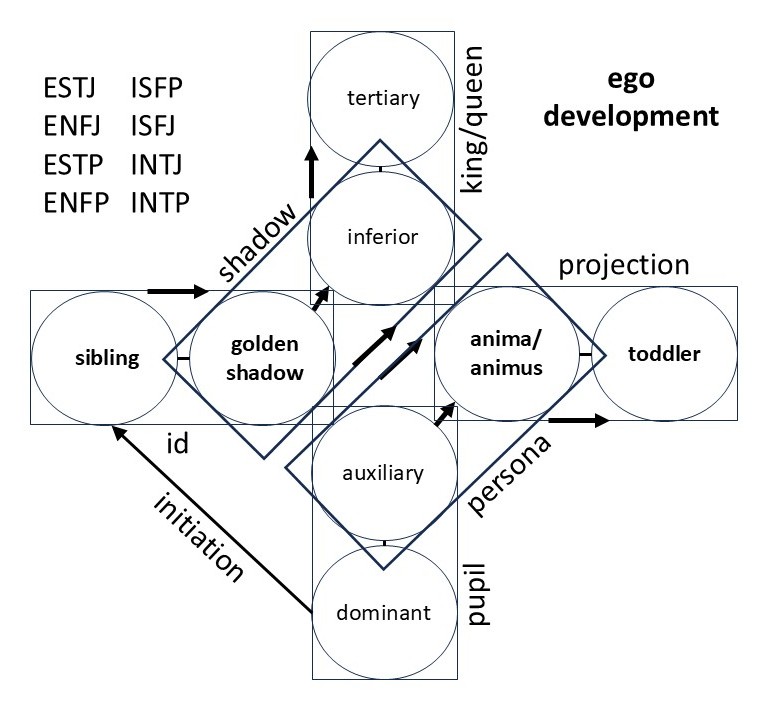
1: Dominant Function – Extraverted Feeling (Fe)
“The Social Alchemist – How the ENFJ Shapes Emotions and Atmospheres”
For the ENFJ, emotions are not just something to observe — they are tools, materials, even weapons. Their dominant function, Extraverted Feeling (Fe), gives them a finely tuned radar for the emotional atmosphere of a room, a group, or even society at large. But more than sensing, ENFJs shape those emotions. They don’t just feel with others — they create the emotional script others begin to follow.
ENFJs naturally become the emotional “directors” of their environment. They influence how others feel, often without anyone realizing what’s happening. Sometimes it’s through charm, a well-timed joke, or a touch of heartfelt empathy. Other times, it’s subtle pressure — an unspoken expectation, a carefully delivered look, or a statement framed as “what everyone thinks.” Their social intuition is so advanced that people often find themselves going along with the ENFJ without knowing why.
But it’s not manipulation for the sake of control — not usually. ENFJs often see themselves as helping, guiding, protecting. They want harmony and cohesion, and they’ll use whatever emotional tools are available to build it. At their best, they inspire and unify. At their worst, they dominate and guilt.
One of their deepest fears? Emotional indifference. The ENFJ can’t stand blank stares or emotional distance. If someone refuses to join the “emotional theatre” — won’t engage, won’t react, won’t play along — the ENFJ feels powerless. To them, that’s worse than open conflict. They need feedback, connection, some sign that you’re in the emotional space with them.
Their sense of emotional timing is uncanny. ENFJs know exactly when to say something to uplift a group — or to break the silence with a pointed comment that shifts the entire dynamic. Whether leading a project, mediating conflict, or rallying a cause, they are masters at mobilizing human feeling. If the group energy is low, they’ll stir it up. If emotions are chaotic, they’ll channel them. The ENFJ is a conductor of sentiment — sometimes melodramatic, sometimes mystical, but rarely unnoticed.
Even in leadership roles, ENFJs tend to act through collective emotion. They’ll say, “People are concerned,” rather than “I’m concerned.” They don’t always trust their own private opinions — but they deeply trust what they perceive as the emotional truth of the group. They read the room, and then they become the room.
The most vivid image of an ENFJ in Fe-mode? Picture someone standing at the center of a storm of human emotion, shaping it like an artist with clay — part showman, part healer, part political strategist. That’s Extraverted Feeling at work. And for the ENFJ, it’s not just a function. It’s a calling.
2: Auxiliary Function – Introverted Intuition (Ni)
“The Vision Behind the Curtain – How ENFJs See What’s Coming”
Beneath the ENFJ’s emotional charisma lies something quieter, deeper — a sense of knowing. It’s not loud or showy like their dominant Fe, but it runs the show from behind the scenes. This is Introverted Intuition (Ni): the inner compass that helps ENFJs see beyond the present moment and tap into the bigger picture.
ENFJs may seem wrapped up in people’s emotions, but make no mistake — they are visionaries. Their minds constantly scan for patterns, trends, and symbolic meaning. They don’t just ask “What’s happening?” — they ask “Where is this going?” While others see today’s chaos, the ENFJ is already mapping out tomorrow’s consequences. It’s a kind of foresight that’s hard to explain — part logic, part hunch, part existential insight.
They often experience this as a quiet inner pressure: something is forming. A message. A mission. A moment approaching. ENFJs may not always have the language to explain what they feel is coming, but they trust the emotional weight of it. That trust gives them a boldness — they act with conviction because their inner sense says: “This is the right time. This is the right move.”
This future-orientation gives ENFJs a deep sense of purpose. They rarely float through life without direction. Even when the world feels chaotic, they still feel they are part of something meaningful, something historical. Ni gives them an almost mythic outlook on life — they may see their struggles as part of a larger story or destiny. In a strange way, they are always living both in the now and in some imagined future that hasn’t arrived yet but already feels real to them.
And when things go quiet — when there’s no cause to fight for, no group to lead — that’s when Ni kicks in the strongest. It’s in solitude or reflection that ENFJs clarify their big picture. What are the emotional undercurrents of this time? What is society really moving toward? What does this moment mean?
But Ni doesn’t always come with certainty. Sometimes it brings restlessness — the feeling that there’s a mission out there, waiting to be fulfilled, even if it hasn’t revealed itself yet. This creates a lifelong tension in ENFJs between urgency and patience. They’re eager to act, but they know that timing is everything.
In their healthiest state, ENFJs use Ni to become soulful leaders — people who don’t just respond to what is, but who guide others toward what could be. Their vision doesn’t come from data or consensus. It comes from a quiet, powerful place inside — a place that sees through time.
3: Anima/Animus – Extraverted Thinking (Te)
“The Shadow Strategist – ENFJ’s Complex Relationship with Logic and Efficiency”
Extraverted Thinking (Te) sits in the ENFJ’s unconscious shadow — not entirely foreign, but certainly uncomfortable. It represents a kind of “other self,” often projected onto the outside world. For the ENFJ, Te can feel like both a missing strength and an irritating standard: structured, objective, no-nonsense, results-driven — everything Fe isn’t.
ENFJs admire Te from a distance. They’re drawn to competent, decisive people who just “get things done” without all the emotional drama. At times, they idealize this kind of cool efficiency. It’s the voice in their head that says, “Why are you worrying about how people feel? Just execute.” In certain moods, especially under stress, the ENFJ tries to embody this — and it often comes out forceful, brittle, and a little too sharp.
You’ll recognize this side when the ENFJ becomes strangely authoritarian or cold — delegating tasks, citing vague “standards” or “expectations,” and insisting something be done “because it has to.” There’s a stiff awkwardness in how they deliver these lines, like they’re reading from a script that doesn’t quite fit. It’s not their natural rhythm — but it’s their idea of what “being effective” looks like.
They may also invoke “objectivity” in a way that’s more strategic than truthful. Rather than sharing personal opinions, they’ll say things like, “Everyone agrees,” or “This is what the leadership expects,” even if no one actually said that. It’s not necessarily dishonest — it’s that they use the idea of external logic to steer emotional dynamics in their favor. Te becomes a costume — sometimes a shield, sometimes a weapon.
But Te isn’t just a shadowy voice. At times, it emerges as a deep inner longing — to be more rational, more grounded, more in control. ENFJs often wrestle with self-doubt in this area: Am I being too emotional? Too idealistic? Do people take me seriously? When this doubt surfaces, they may overcorrect — suppressing their emotions, trying to lead like a corporate boss or a military commander.
Ironically, ENFJs can be very good at systems and structure — just not in the typical Te way. They organize people rather than spreadsheets. They manage emotional momentum rather than timelines. But when they try to imitate pure Te, it can feel forced, like a painter trying to be an accountant.
In relationships, Te often shows up as projection: the ENFJ may fall for people who seem pragmatic, efficient, and tough-minded — not because they share those traits, but because they crave them. The Anima/Animus isn’t just about balance — it’s about longing, conflict, and growth.
Ultimately, ENFJs grow by integrating Te without becoming it. When they stop imitating cold efficiency and instead learn to respect logic as a tool — not a rival — they become more grounded, capable of turning their dreams into action, and their visions into reality.
4: Toddler Function – Introverted Sensing (Si)
“The Fragile Anchor – ENFJ’s Struggle with Routine, Rest, and Physical Grounding”
For all their emotional strength and visionary energy, ENFJs often have a surprisingly shaky relationship with the physical world. Their Introverted Sensing (Si) — the toddler of their psyche — is underdeveloped, reactive, and often ignored… until it throws a tantrum.
ENFJs tend to live in the realm of meaning, emotion, and human drama. But the body? The details? The daily grind? That’s where things start to fall apart. They may forget to eat properly, overcommit, or neglect their health in favor of some bigger cause. Then one day, their body rebels: fatigue, burnout, or mysterious discomfort sets in — and they don’t understand why.
Si is about consistency, familiarity, and attention to internal physical signals — all things the ENFJ often considers secondary or boring. Grocery lists, receipts, bills, vitamins, meal prep — these feel like distractions from “the real work.” As a result, their personal lives can become disorganized, cluttered, or filled with neglected tasks. Not because they’re lazy — but because their focus is always outward, always forward, rarely here and now.
In moments of stress, Si rears its head in two ways: either hypersensitivity or overcompensation. Suddenly the ENFJ is irritated by bright lights, loud noises, or subtle changes in taste and texture. Or they go to the other extreme — obsessing over tiny sensory details, trying to “get everything just right,” only to become overwhelmed and frustrated.
At home, ENFJs often want their space to feel emotionally inspiring — not necessarily functional. They may drape windows in heavy curtains, surround themselves with nostalgic or symbolic objects, or make bold, aesthetic choices that feel expressive… but not always practical. The result? A home that feels more like a stage set than a living space.
Cooking is another area where Si quirks show up. Some ENFJs enjoy experimenting — others feel irritated by the expectation to cook at all. And when they do, their attention may wander mid-recipe. (“Did I already add the salt? Or was that the sugar?”) For them, food is more about mood than method.
The deeper issue here is a lack of internal grounding. Without stable routines, healthy sensory input, and physical self-care, the ENFJ’s emotional world becomes unstable too. It’s like trying to build a cathedral on sand.
That’s why ENFJs benefit deeply from people — or systems — that support their Si. A grounded partner who handles details. A schedule that builds in breaks. A home that’s not just expressive, but restorative. With these supports in place, the ENFJ begins to inhabit their body — not just their emotions.
And when they do, their natural gifts shine even brighter. Because even the most inspired soul needs rest, rhythm, and roots.
5: Inferior Function – Introverted Thinking (Ti)
“The Cracked Mirror – ENFJ’s Uneasy Dance with Precision and Inner Logic”
Deep down, ENFJs long for clarity. But when it comes to precise, objective thinking — Introverted Thinking (Ti) — they often feel like outsiders trying to navigate a foreign land without a map. Ti is their inferior function: awkward, reactive, and emotionally charged when activated.
At first glance, ENFJs seem confident. They lead, they persuade, they inspire. But when they’re asked to analyze something in a cold, step-by-step way — to break it down logically, check for inconsistencies, define terms precisely — they can suddenly become foggy, defensive, or even self-conscious. They feel intelligent, but fear they’re not technically precise.
This inner tension shows up in conversations. The ENFJ may passionately argue a point based on “how things feel” or “what people believe,” but if challenged with hard logic, they either double down emotionally or change the subject entirely. They might quote statistics, but only if it suits their message. If not, those same statistics are “missing the point.”
They may even twist facts — not out of dishonesty, but because Ti is so undeveloped that it serves their feelings, not the truth. They may unknowingly streamline information to fit a personal or moral narrative, creating contradictions they don’t notice — or don’t want to see.
When called out on this, the ENFJ can react like a startled child. They may become flustered, frustrated, or even playfully dismissive: “Well, whatever — you get what I mean, right?” Deep inside, though, it bothers them. They admire people who speak clearly, think sharply, and catch contradictions — even if those people frustrate them. There’s a kind of quiet envy there.
This is the paradox: ENFJs value logic in others, but often mistrust it in themselves. They may secretly rely on more rational friends or partners to help them sort out “the facts” — while still reserving the right to go with their gut. Ti, for them, is like a fragile mirror: when it works, it gives a sharp reflection. But more often, it cracks under pressure.
Still, growth lies here. When ENFJs take time to pause, slow their thinking, and check their own logic — not to “win,” but to understand — they become wiser, more trustworthy, and more balanced. Ti doesn’t have to be their strength. But when respected, it becomes their conscience — the quiet voice that says, “Hold on. Are you being fair? Are you being honest?”
It’s not about perfection. It’s about precision — enough to ensure that their powerful emotions and ideals are built on something solid. When ENFJs make peace with Ti, they become not just compelling leaders, but credible ones.
6: Tertiary Function – Extraverted Sensing (Se)
“The Spark of Presence – ENFJ’s Flashes of Bold Action and Sensory Drama”
While ENFJs live mostly in emotions and visions, they have a surprising wild card in their psychological toolkit: Extraverted Sensing (Se). It’s not dominant or refined — but it’s there, simmering in the background like a fire that occasionally roars to life.
Se is about now. It’s the raw experience of the physical world: action, adrenaline, beauty, pleasure, and intensity. And while ENFJs aren’t rooted in this function, they dabble in it — sometimes dramatically.
This shows up in bursts — a spontaneous decision, a passionate performance, a bold confrontation. ENFJs can become strikingly theatrical, physical, even aggressive when triggered. They might raise their voice, use dramatic gestures, or lean into a moment with surprising force. It’s as if their whole being says: “Feel this. Right now.”
They may also seek intense sensory experiences to balance their emotionally saturated lives. Spicy food. Loud music. Unusual fashion. A sudden desire to travel, redecorate, or physically transform something — or themselves. These impulses can feel impulsive, but they’re actually expressions of an inner need: to ground all the emotion in something real.
At times, Se becomes a tool for persuasion. ENFJs know how to control their physical presence — eye contact, posture, movement — to draw attention, create impact, or dominate a space. It’s unconscious, but powerful. They can feel when the energy in the room shifts, and they respond to it in real time.
But Se also has a chaotic side for the ENFJ. Because it’s not well-developed, it can come out as restlessness, overindulgence, or sensory overwhelm. They might push their body too hard, ignore limits, or seek “big” experiences to escape emotional burnout — only to crash afterward.
In everyday life, this function makes the ENFJ a bit inconsistent. One moment, they’re planning world-changing ideas — the next, they’re obsessing over home décor or impulsively rearranging furniture at midnight. They may overcompensate for a lack of inner calm by controlling their external environment.
Still, this function gives the ENFJ something essential: aliveness. When healthy, Se keeps them in touch with beauty, movement, pleasure, and presence. It reminds them that not everything has to be meaningful. Some things can just be felt. Loudly. Vividly. In the now.
And when ENFJs integrate this part of themselves, they become not only emotionally and intellectually engaging — but magnetically alive. They step onto the stage of life not just as visionaries, but as performers.
7: Sibling Function – Introverted Feeling (Fi)
“The Quiet Pulse – ENFJ’s Hidden Moral Compass and Search for Authenticity”
Deep beneath the charisma and outward emotional fluency of the ENFJ lies something more private, more personal — a soft inner voice asking: “But what do I feel about this?” This is Introverted Feeling (Fi) — the ENFJ’s sibling function. It doesn’t lead, but it whispers. It doesn’t demand attention, but it quietly demands truth.
Unlike their dominant Fe, which is external and collective (“How do we feel? What’s right for the group?”), Fi is personal and internal. It speaks in values that don’t always match what’s popular, polite, or socially approved. For ENFJs, this creates a strange tension: they are constantly attuned to others — yet somewhere deep down, there is a part of them that wants to feel something purely for themselves, unfiltered and unshared.
This function is often underdeveloped, which is why ENFJs may struggle with questions of authenticity. They’re excellent at adapting, mirroring, even performing — but occasionally, a quiet dread creeps in: “Am I being real? Or just what everyone needs me to be?”
Sometimes, Fi shows up as quiet melancholy. ENFJs may retreat inward, feeling misunderstood, unappreciated, or emotionally disconnected — not because others are ignoring them, but because they’ve lost touch with themselves. Their outer self is vivid and expressive; their inner world is a garden that rarely gets tended.
They may also project Fi onto others — idealizing people who seem authentic, emotionally self-contained, or morally pure. They’re drawn to quiet intensity, to people who “don’t need the spotlight,” who seem to know what they believe without saying a word. These people seem mysterious… and safe.
Yet ENFJs often feel awkward or clumsy when trying to access Fi directly. They may avoid solitude, dislike introspective journaling, or struggle to name their own core values apart from those of their family, community, or culture. They fear that if they turn inward, they might not like what they find — or worse, find nothing.
Still, Fi holds a deep gift for the ENFJ: it reminds them that they are not just expressers of emotion, but also guardians of inner truth. When they learn to sit with their own feelings — not as data to manage, but as sacred, private signals — they begin to align their outer life with their inner soul.
In maturity, Fi helps the ENFJ say, “Even if no one agrees… this matters to me.” And that quiet conviction makes their leadership not only powerful — but deeply authentic.
8: Golden Shadow – Extraverted Intuition (Ne)
“The Hidden Spark of Possibility – ENFJ’s Playful Glimpse into What Could Be”
Tucked away like a secret flame, Extraverted Intuition (Ne) glows in the background of the ENFJ’s psyche. It’s not loud, and it’s not dominant — but when it flickers to life, it lights up new paths, fresh ideas, and unexpected “what ifs.” This is the golden shadow of the ENFJ: a subtle, sometimes magical ability to imagine wild possibilities and alternate outcomes.
Ne is about divergent thinking — seeing new options, playful patterns, and strange connections that don’t have to mean anything… yet. It isn’t about what’s emotionally resonant (like Fe) or deeply foreseen (like Ni); it’s about exploration for its own sake.
For ENFJs, Ne is often triggered by inspiration — a curious conversation, a creative project, a strange coincidence, or even a dream. Suddenly, their mind opens: What if we tried it this way? What if this person isn’t who we think they are? What if society could be completely different? These aren’t plans — they’re possibilities.
When Ne is active, ENFJs become more flexible, playful, and even mischievous. Their usual intensity gives way to a lighter, more curious tone. They may brainstorm freely, dabble in unconventional theories, or experiment with new perspectives just for fun. It’s a breath of fresh air — for them and those around them.
But since Ne lives in the shadow, it’s not always easy to trust. ENFJs may quickly abandon a novel idea because it doesn’t “fit the plan.” Or they may fear that entertaining too many options will distract from their larger vision. Ne asks questions that can disrupt order — and the ENFJ prefers order with a purpose.
Still, when Ne is embraced (rather than feared), it becomes a source of creative renewal. It allows the ENFJ to break from rigid emotional patterns, to play with absurdity, and to consider alternate narratives. It’s especially helpful when things feel stuck. Ne whispers, “There’s always another way.”
And perhaps most importantly, Ne gives the ENFJ permission to not know for a moment — to explore without commitment, to wonder without needing immediate resolution. That space can be uncomfortable… but it’s where many of their greatest insights are born.
In short, Ne is the ENFJ’s secret superpower — not the force they lead with, but the spark that reignites their creativity when the path ahead grows dim. It invites them to loosen their grip on certainty, and to dance — even briefly — with the unknown.
 Ontolokey
Leave a comment