1. The Comfort of the Familiar: How ISTJs Experience the World (Introverted Sensing – Si)
For ISTJs, the world is a rich sensory archive. They don’t just remember events — they relive them. A smell, a sound, a place can instantly take them back to a vivid memory, as if time folded in on itself. That first walk across a grassy football field? They still remember the smell of the cut grass, the texture under their feet, and the light in the sky. That’s how deep their impressions go.
This isn’t nostalgia for its own sake. It’s about comfort — a kind of inner order built from meaningful experiences. ISTJs instinctively protect this inner world by avoiding chaotic, overstimulating, or unpleasant environments. Harsh lighting, loud noises, or even chipped paint on a wall can disturb their inner calm. They crave harmony in every sensory detail — from how a room looks, smells, and feels, to how someone’s voice sounds.
Because they’re so tuned into the physical and emotional atmosphere around them, ISTJs often notice what others miss. If someone is hungry or uncomfortable, the ISTJ is likely to pick up on it before anyone else — and quietly offer help. It’s not about making a scene; it’s about restoring balance.
Their homes and personal spaces reflect this too. They prefer simple, practical, and aesthetically pleasing environments, free from clutter or chaos. Even small spaces feel open and inviting when shaped by an ISTJ’s careful eye. Japanese minimalism — functional, calm, and beautiful — often mirrors their aesthetic.
ISTJs are deeply sensual people, though not always in the way you might expect. They appreciate the pleasure of a well-cooked meal, a well-made shirt, or the perfect texture of a walking path. They don’t chase thrills, but when they do seek adventure — like hiking or scuba diving — it’s for the immersive, full-body experience, not the adrenaline.
This sensitivity can make them seem picky or even rigid, but it’s really about maintaining internal stability. They live best when they can set their own pace and move through life in a way that feels intentional, not rushed. Solitude, to an ISTJ, isn’t loneliness — it’s sanctuary.
2. Getting Things Done: The Efficient, Practical Side of ISTJs (Extraverted Thinking – Te)
When an ISTJ faces a task, their first instinct is to break it down, organize it, and approach it methodically. Their focus isn’t just on completing the job — it’s about getting it done right, with precision and efficiency. For them, planning is as important as action. They are not drawn to chaos or unpredictability; they thrive when there’s a clear structure, a roadmap to follow, and measurable outcomes to achieve.
One of the hallmarks of an ISTJ is their ability to focus on practical solutions. While others might get caught up in abstract ideas or theories, the ISTJ brings everything back to reality. They’ll look for the most efficient way to fix a broken item or improve a system, using logic and practicality to find the best solution. Whether it’s fixing a tool or reorganizing a workflow, they think through every step before diving in.
The ISTJ’s efficiency extends beyond tasks to the way they interact with people. They don’t like wasting time on unnecessary details or conversations. When they give advice, it’s direct, to the point, and grounded in their own personal experience. They believe in showing rather than telling — whether it’s explaining a process or demonstrating how something works, they enjoy being hands-on and practical.
This no-nonsense approach to problem-solving makes them incredibly reliable in the workplace or in any environment that values results. They are often the ones trusted with complex or long-term projects because they can be counted on to stick to a plan and follow it through to completion, no matter how long it takes.
However, ISTJs can sometimes appear overly focused on efficiency, missing out on the emotional or interpersonal side of situations. Their drive for practicality might make them seem distant or detached, but in reality, they care deeply about the quality and integrity of their work. Their sense of pride comes from knowing they’ve done something well and effectively.
Though they may not always express it, ISTJs gain a sense of fulfillment from their accomplishments. The act of completing a task or solving a problem is more than just about ticking a box — it’s about feeling competent and in control. When they get it right, it’s like a small victory, and that sense of mastery keeps them going.
ISTJs are natural systems-thinkers. When something needs to get done, they don’t waste time wondering if it can happen — they figure out how. Their minds break complex problems into logical steps, like clearing a mountain one handful at a time. It’s not flashy, but it’s efficient — and it works.
Their approach to work is methodical and grounded in results. They take pride in doing things thoroughly, with precision and consistency. Every detail is part of a larger structure. Whether it’s organizing a workshop or building a new routine, ISTJs thrive on making systems run smoothly — and improving them over time. They aren’t interested in ideas just for the sake of novelty; ideas must be useful, measurable, and actionable.
Their sense of productivity is deeply tied to purpose. They don’t just work to work — they want their efforts to matter. If a task has no clear outcome or practical value, it’s hard for an ISTJ to stay engaged. But if it serves a real-world need? They’ll commit fully, often working long hours not because they have to, but because they want to see it done right.
Even in creative or abstract settings, ISTJs bring structure. They’re the ones who turn messy brainstorming sessions into concrete plans, or who quietly fix what others overlook. They organize tools, streamline processes, and often bring more to a team than they get credit for — because they don’t seek the spotlight, just the outcome.
ISTJs are also instructors at heart. They love sharing knowledge, especially when it helps others become more capable. Whether they’re explaining how to brew the perfect cup of tea or guiding someone through a repair, they teach clearly, step-by-step, often with hands-on examples. Their advice is practical, grounded, and usually spot-on.
But don’t mistake their logic for coldness. ISTJs care deeply about quality — in work, in decisions, in life. Their thinking may be external and results-driven, but it’s tied to a deep desire for stability, fairness, and competence. To them, logic isn’t just a tool — it’s a way of respecting the world.
3. Quiet Hunches and Inner Puzzles: The Hidden Vision of ISTJs (Introverted Intuition – Ni)
Beneath the structured, detail-focused surface of the ISTJ lies a subtler, more mysterious function — their introverted intuition. It’s not their main way of interacting with the world, but it quietly shapes their long-term thinking, offering sudden insights and deep reflections that often take even them by surprise.
ISTJs don’t typically trust vague feelings or abstract patterns — at least not at first. But over time, many develop a strong sense of foresight. They may find themselves predicting how situations will unfold or seeing the “big picture” behind people’s behavior, even if they can’t explain exactly how they know. It often comes as a quiet realization, a mental whisper rather than a bold vision.
This inner voice is strongest when an ISTJ steps back from the noise and busyness of daily life. During solitary walks or quiet moments of reflection, they may suddenly understand a relationship dynamic, realize what went wrong in a past situation, or anticipate how someone will react before it happens. It’s subtle, but persistent — like putting together a puzzle without knowing what the finished picture looks like.
Sometimes, their Ni shows up as a fascination with deeper meaning. Even though ISTJs are known for their practical mindset, they’re often drawn to symbolic thinking — especially when tied to real-world experiences. Films, art, or literature that use imagery and metaphor to explore complex human emotions can resonate strongly with them. They’re often moved by subtle layers of meaning others might miss.
That said, Ni is also a source of frustration for many ISTJs. It doesn’t always offer clear answers, and it can make them second-guess their actions. They may not fully understand why they feel uneasy about something — only to realize later that their instincts were right. And when it comes to understanding their own emotional patterns, they often feel like they’re solving a riddle written in invisible ink.
Because Ni isn’t a dominant strength, it sometimes creates blind spots. ISTJs might misread other people’s intentions or fail to spot shifting emotional undercurrents until it’s too late. They often understand after a conflict what was really going on — not during. But even with this delay, they learn from these moments and refine their understanding over time.
Ultimately, their introverted intuition adds depth to their personality. It balances their love of facts and routines with a quiet curiosity about life’s deeper patterns — an inner compass that, when listened to, helps them navigate with wisdom, not just logic.
4. Feeling the Room… Then Trying to Manage It (Extraverted Feeling – Fe)
ISTJs aren’t naturally expressive when it comes to emotions — theirs or anyone else’s. But that doesn’t mean they’re emotionally unaware. Quite the opposite: they feel the emotional atmosphere around them intensely. They just don’t always know what to do with it.
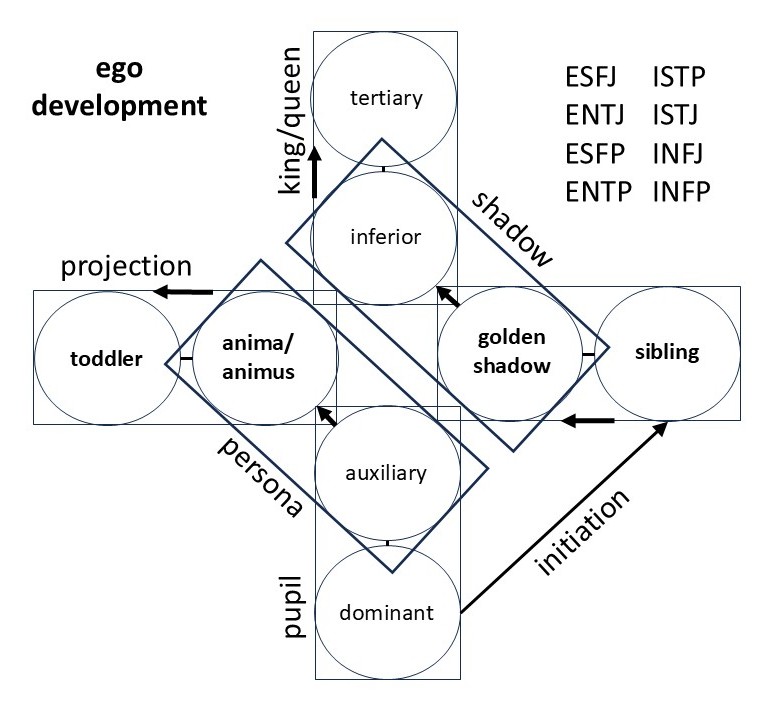
Their Fe function is like a toddler learning to walk — unsteady, a little clumsy, but sincere in its efforts. ISTJs instinctively try to create a pleasant, harmonious emotional environment, especially with those close to them. If someone seems too upset or too excited, the ISTJ may try to tone things down, often in a quiet, indirect way. “Let’s not get carried away,” is a sentence that would feel very natural coming from them.
They’re uncomfortable when emotions get too loud, too chaotic, or too unpredictable. Dramatic outbursts — yelling, sobbing, intense declarations — feel like storms that threaten the fragile balance of their inner world. In such moments, they might withdraw, go quiet, or even suddenly walk away. It’s not coldness. It’s self-preservation.
Still, ISTJs often take on the role of emotional “thermostat” in close relationships — gently nudging others toward calm or trying to “fix” the mood without really talking about it. They may offer practical comforts (food, rest, a distraction) instead of emotional ones. If you’re sad, they might clean the kitchen for you rather than say, “Tell me how you feel.”
Interestingly, this attempt to regulate others’ emotions isn’t always conscious. They might push someone to “cheer up” or “calm down” without realizing that the person needs to feel things fully in that moment. And if those emotional waves become too big, the ISTJ might try to step back — not out of rejection, but to avoid being overwhelmed.
At the same time, they keep their own emotions locked behind an impressive calm. Even if they’re hurt, angry, or disappointed, they often show nothing but a neutral expression. For the ISTJ, revealing emotional vulnerability can feel like giving up control — something they are extremely reluctant to do.
But the truth is: ISTJs do feel deeply. They just prefer to express those feelings through action, consistency, and care — not grand displays. And when they do open up, it’s a rare and precious moment that shows just how much they trust you.
Their emotional world is like a still lake: peaceful, but with great depth. Disturbing its surface isn’t something they take lightly.
5. The Fear and Fascination of “What If?” (Extraverted Intuition – Ne)
If there’s one mental space where ISTJs feel out of their depth, it’s the world of endless possibilities — the realm of “what if?” scenarios, big leaps of imagination, and future outcomes that can’t be predicted or controlled. While ISTJs are excellent at dealing with facts, systems, and what is, they feel uneasy when pushed into the fog of what might be.
Extraverted Intuition — their inferior function — lives in that fog. It whispers possibilities that aren’t grounded in present reality, and this can feel both intriguing and terrifying for the ISTJ. On one hand, they are curious. They like learning new things, discovering novel ideas, and considering perspectives they hadn’t thought of before. But too much ambiguity? Too many options? That can quickly turn into mental overload.
This is why ISTJs can come off as skeptical, even dismissive, when someone introduces radical new ideas or unpredictable plans. They’re not trying to shut down creativity — they’re trying to manage their anxiety. The unknown feels dangerous when you’re used to relying on certainty and control.
Yet, the influence of Ne can also be surprisingly playful. In moments of comfort and inspiration, ISTJs may suddenly generate quirky ideas, entertain odd theories, or explore new hobbies that seem completely out of character. They might get excited by an unusual concept or take a spontaneous trip — and then immediately retreat to familiar routines to recover.
There’s also a deeper side to this function: a hidden longing for meaning beyond practicality. Sometimes, ISTJs feel a restless need for something more — a sense of purpose, of personal growth, or even spiritual exploration. They might try to read between the lines, to find hidden messages in life, to connect seemingly unrelated events. But because Ne is not their strong suit, this search can feel ungrounded and lead to misinterpretations.
At its worst, when stressed, Ne can show up as worst-case-scenario thinking. The ISTJ might obsess over what could go wrong, get trapped in rumination, or spiral into fears that aren’t based in fact. It’s like their normally solid ground suddenly turns to quicksand.
Still, when embraced with balance, Ne offers the ISTJ a valuable window into creativity and flexibility. It reminds them that not everything needs to be known, proven, or planned — and that sometimes, the best paths are the ones that surprise us.
6. Quiet Values, Strong Convictions (Introverted Feeling – Fi)
ISTJs don’t wear their hearts on their sleeves — but that doesn’t mean they lack emotional depth. In fact, they carry a powerful inner compass of values, one that quietly guides their decisions and defines what’s right or wrong for them on a personal level. This is the influence of their introverted feeling.
Unlike external emotional expression (like Fe), Fi is personal, private, and internalized. ISTJs often find it difficult to explain why something feels meaningful or important to them — they just know it does. Their values aren’t up for debate, and they rarely try to push them onto others. But when something crosses a moral line in their eyes, you’ll feel it — not through loud protest, but through calm, unwavering resistance.
For example, if an ISTJ promises to do something, they’ll follow through — not because someone expects it, but because breaking their word would violate their inner sense of integrity. They dislike emotional manipulation, grandstanding, or people who fake sincerity. To them, authenticity matters more than charm.
Though they may not talk much about emotions, ISTJs care deeply — especially about people they feel connected to. They’ll show love through reliability, service, and loyalty, not emotional speeches. And when they do express personal sentiments, it’s typically in a quiet, one-on-one setting — a rare window into how much someone truly means to them.
This function also gives the ISTJ a strong sense of fairness and loyalty. They tend to stick with people they trust, even when it’s difficult, and have a hard time letting go of relationships that once felt meaningful. But because they often keep their emotional world so private, others might underestimate just how deeply they’re affected by personal bonds — and by personal loss.
One of the most misunderstood parts of the ISTJ personality is this emotional independence. They don’t need others to agree with their values, and they don’t always feel the need to explain them. That can come across as cold or distant, when in reality, it’s a sign of quiet conviction.
Their Fi doesn’t shout. It whispers — but its voice carries weight.
7. Beauty, Boldness, and the Temptation of the Now (Extraverted Sensing – Se)
There’s a part of the ISTJ that quietly craves vivid experiences — moments that awaken the senses and bring the physical world into sharp focus. This is their extraverted sensing at play, sitting just outside their core comfort zone. It’s not dominant, but it’s seductive.
When Se is active, the ISTJ is drawn to physical precision, aesthetic harmony, and graceful movement. Think of a perfectly set table, the clean rhythm of a long walk, or the tactile joy of working with well-made tools. They take real pleasure in physical beauty — but in a refined, understated way. They notice when things “feel right” in the real world: how a shirt fits, how a room flows, or how well an object functions in the hand.
In small doses, Se energizes the ISTJ. It gives them a sense of presence — of being rooted in the moment. That’s why many ISTJs love sports that combine sensation with control, like hiking, diving, martial arts, or even yoga. These activities let them test their physical limits while connecting to something real and immediate.
But there’s a flip side: too much raw sensory stimulation can overwhelm them. Loud environments, chaotic crowds, flashy distractions — all of this can quickly feel exhausting. ISTJs prefer experiences that are curated and intentional, not wild or impulsive. If the outside world feels too loud, they’ll retreat quickly into the safety of their own rhythm.
They also have a complex relationship with spontaneity. On one hand, the thrill of “just going for it” can be incredibly tempting — trying a new food, changing plans last minute, or getting swept up in an experience. On the other hand, giving up control makes them uneasy. So, they may flirt with spontaneity, but they’ll often pull back before diving all the way in.
What Se brings them, ultimately, is a connection to beauty, precision, and the physical reality of now — but only when it doesn’t clash with their inner sense of order. It’s a bit like stepping out onto a sunlit balcony: invigorating, but best enjoyed in short intervals.
8. Inner Frameworks and the Elegance of Logic (Introverted Thinking – Ti)
Deep within the ISTJ — beneath the routines, the plans, the carefully curated experiences — lives a quiet fascination with how things fit together. Not just practically, but elegantly. This is introverted thinking (Ti): their golden shadow.
Unlike their outward, pragmatic thinking style (Te), which focuses on results and efficiency, Ti is inward-facing and exploratory. It asks: “Why does this work the way it does?” or “Is there a more refined, precise way to understand this?” When ISTJs tap into their Ti, they’re no longer just solving problems — they’re playing with structure, form, and logic itself.
This often shows up in subtle ways. For example, when describing how they fixed something, ISTJs might not just say what they did — they’ll explain why each step matters, often with surprising clarity and detail. They enjoy breaking complex things down into understandable pieces. There’s a quiet satisfaction in untangling a mental knot — and then organizing the thread.
ISTJs might not always identify as “philosophical,” but many have a deep respect for systems of thought. Whether it’s traditional philosophy, logic puzzles, martial arts forms, or the narrative structure of a well-edited film, they enjoy recognizing internal coherence and symmetry. This is especially true when sensory and logical elements overlap — think of analyzing color theory in painting, or interpreting symbolism in cinema. (Their appreciation for directors like Tarkovsky isn’t just emotional — it’s structural.)
At times, their Ti also drives a kind of subtle irony in how they communicate. They may say something that sounds serious, only to follow it with a glance or a wry smile that reveals another layer of meaning. It’s not about deception — it’s about showing that ideas, like people, can have depth.
This part of the ISTJ is often underdeveloped or hidden, but when accessed, it brings lightness to their personality. It allows them to see the humor in rigidity, to question their own assumptions, and to understand others not just by what they do, but how they think.
Ti gives the ISTJ something rare: the ability to step back from the world they manage so well, and appreciate it — not just for how useful it is, but for how beautifully it all fits together.
 Ontolokey
Leave a comment