1. Introverted Sensing (Si) – The ISFJ’s Foundation of Inner Stability
For the ISFJ, life is deeply rooted in memory, detail, and personal experience. Their dominant function, Introverted Sensing (Si), acts like an inner compass – drawing on stored impressions of the past to navigate the present. Whether it’s a scent, a melody, or the way sunlight hits a room, ISFJs absorb the world through finely tuned internal filters. But this isn’t just passive memory – it’s emotional, sensory, and highly personal.
ISFJs don’t just remember moments; they relive them. A specific dinner with loved ones, a cozy Sunday afternoon, or a walk through nature at dusk can all be replayed in vivid detail – the sights, the smells, the warmth of the moment. These internal experiences provide comfort, consistency, and grounding in a world that often feels uncertain.
They are deeply aware of the present through the lens of the past. A misplaced scent or a poorly arranged room can feel jarring, because ISFJs have an inner archive of how things should feel. They notice when others are physically uncomfortable – tight shoes, a cold breeze, stale air – and instinctively want to fix it, often before the person even mentions it. Their sensitivity to physical discomfort isn’t just about being helpful – it’s because well-being is sacred to them.
Si also fuels the ISFJ’s strong connection to ritual and tradition. Holidays, meals, or family gatherings are often carefully planned, not just to impress, but to recreate a sense of warmth, familiarity, and joy. They find beauty in order – not rigid control, but a kind of quiet, aesthetic harmony. A home arranged just right, a table set with love, favorite songs playing in the background – this is how ISFJs create an emotional refuge, both for themselves and for others.
They take time to prepare experiences that delight the senses: soft lighting, delicious food, carefully selected music. Even everyday routines like cooking or decorating are infused with meaning. This is not about vanity, but about making life beautiful in a subtle, lasting way.
While they may appear cheerful and easygoing on the outside, ISFJs carry a deeply introspective world within. If their inner equilibrium is disturbed – physically or emotionally – it shows. They become withdrawn, sensitive, perhaps even irritable if their sense of internal order is upset. A missed meal, an overbearing environment, or disorganized space can quietly drain them.
In work and life, they prefer systems that are proven and practical. They tend to mistrust sudden change, not out of fear, but out of respect for what has already proven itself over time. To the ISFJ, consistency isn’t resistance – it’s wisdom.
Summary of Si in the ISFJ:
- Remembers and re-experiences sensory moments in fine detail
- Creates physical and emotional comfort for self and others
- Finds meaning in routine, tradition, and aesthetic harmony
- Highly aware of bodily and environmental cues
- Grounded in what has been tested and felt
2. Extraverted Feeling (Fe) – The ISFJ’s Gift for Emotional Harmony
If Introverted Sensing forms the ISFJ’s inner world, then Extraverted Feeling (Fe) is the bridge that connects them warmly to others. This function enables ISFJs to read the emotional temperature of a room almost instantly and adjust their behavior to create peace, comfort, and cohesion. It’s their way of saying: “I see how you feel – and I care.”
ISFJs are natural emotional caretakers. They sense when someone’s hurting, tense, or feeling left out – and they don’t just notice, they respond. Whether it’s through a comforting word, a warm smile, or a quiet gesture, ISFJs actively shape the social space around them. Their empathy is practical, not performative. They genuinely want others to feel good, and often put others’ emotional needs ahead of their own.
They tend to avoid conflict, not because they’re passive, but because they deeply value harmony and goodwill. If a conversation turns tense, they’re often the first to soften the edges, change the subject, or bring in a little humor. In this way, they become emotional mediators, helping people reconnect and feel safe.
In familiar environments, ISFJs can be surprisingly lively and expressive. They love telling stories, sharing light-hearted jokes, and making others feel included. Their warmth is authentic, their kindness deeply rooted. They don’t need to dominate a room – they uplift it.
Yet, their emotional attunement comes with a vulnerability: they take social disapproval deeply to heart. If their efforts to connect are ignored or rejected, it can leave a lasting sting. They may feel misunderstood or even question their own worth. Formal, impersonal kindness doesn’t satisfy them – they want sincerity. When they feel others don’t care, they withdraw quietly, sometimes for long stretches.
ISFJs can also be surprisingly expressive when they’re upset – not with anger, but with visible hurt or disappointment. If they feel underappreciated or dismissed, they may go quiet, become overly polite, or show subtle signs of emotional retreat. This is often a signal that something important to them has been overlooked.
Despite this sensitivity, ISFJs rarely burden others with their struggles. If they do open up, it’s often through soft, careful complaints or indirect expressions of need. But make no mistake – behind that gentle tone may lie a very real emotional storm. They don’t want to be cheered up with clichés – they want to be comforted, understood without being judged.
Their emotional intelligence also shines in leadership roles – especially in small teams. As supervisors, they prioritize the well-being of the group, maintaining balance and encouraging open, respectful communication. They’re not commanding leaders, but trustworthy emotional anchors who create a culture of empathy and mutual support.
Ultimately, Fe gives the ISFJ a superpower: they make people feel seen, safe, and valued. Whether in friendships, families, or the workplace, they’re often the quiet force holding everything – and everyone – together.
Summary of Fe in the ISFJ:
- Deeply tuned in to others’ emotional states
- Driven to create and maintain social harmony
- Soothes conflict and uplifts group energy
- Sensitive to emotional rejection or indifference
- Leads with empathy, warmth, and diplomacy
3. Introverted Intuition (Ni) – The Quiet Pull of the Future
Though not a dominant function, Introverted Intuition (Ni) plays a subtle yet powerful role in the ISFJ’s inner world. It’s the source of their instinctive reflections about time, fate, and life’s deeper meaning. Often in the background, Ni whispers questions like: “What’s coming? What does this mean in the long run?”
For the ISFJ, Ni often emerges as persistent thoughts about the future – their own, their family’s, society’s. These aren’t always logical projections, but rather emotional impressions. One good day at work might trigger dreams of success; one bad comment may spark fears of failure. Their mood often colors their future vision, swinging between quiet hope and quiet dread.
They may obsess over long-term outcomes even in situations that don’t warrant it. A random encounter or a small piece of feedback can feel like a sign – a signal of something bigger to come. They often wonder: “Is this the beginning of something great? Or something terrible?” This tendency can make them seem overly cautious or worry-prone, even when things are going well.
Unlike types with strong Ni, ISFJs don’t usually trust their long-term insights right away. Instead, they ruminate, often turning over the same concerns in their mind, unsure what to believe. When decisions must be made about the unknown, they often hesitate. Ni gives them a sense that something matters, but not always the clarity to define what it is.
This is why ISFJs often seek out partners, mentors, or friends who “see the big picture.” Someone who can help them interpret their hunches and offer reassurance or guidance is incredibly valuable. They’re drawn to people who can provide structure to their instincts – who can say, “Here’s what this likely means, and here’s what you can do about it.”
Sometimes, Ni leads ISFJs to get stuck in expectation mode. They wait for a sign, a perfect condition, or a “right time” that never quite arrives. During this waiting, they might turn down real opportunities in favor of an ideal that feels just out of reach.
Still, Ni also brings richness: a poetic view of life, a sensitivity to symbolism, and an ability to see beyond the obvious. ISFJs may not talk about it much, but they often feel that life has deeper undercurrents – that what’s happening now connects to something meaningful, even if they can’t put it into words yet.
When they’re emotionally safe and creatively engaged, this intuitive side can blossom into real vision – allowing them to dream bigger, take bold steps, and make sense of life’s patterns. But when it’s unbalanced, it can lead to worry, regret, and emotional paralysis.
Summary of Ni in the ISFJ:
- Feels connected to the flow of time and future possibilities
- Ruminates on what events might mean long-term
- Prone to emotional forecasting – sometimes too optimistic or too pessimistic
- Seeks external clarity for internal hunches
- Can get stuck waiting for “the right moment”
- Quietly sensitive to meaning, fate, and symbolic depth
4. Extraverted Thinking (Te) – The Struggle for Efficiency and Structure
Extraverted Thinking (Te) in the ISFJ functions like a reluctant child: curious about how the world works, eager to do things “right,” but easily overwhelmed by too much pressure, complexity, or rigid expectations. It’s a part of them that wants to be competent, organized, and practical – but often feels like it’s fighting an uphill battle.
ISFJs care about doing things well. They value systems that are clear, logical, and results-driven, but only when they make sense on a human level. Give them a messy, chaotic problem in their area of expertise, and they’ll methodically break it down with surprising focus. But introduce a system that feels cold, overly technical, or arbitrary – and their motivation may collapse.
Schedules and rigid structures often feel burdensome to them. ISFJs want flexibility to follow their natural rhythm – they prefer to stop working when a task feels done, not necessarily when the clock says it’s time. Planning ahead can feel draining, not because they’re lazy, but because they are usually absorbed in managing the immediate, not the abstract.
This is why ISFJs often resent unnecessary bureaucracy. If there’s a simple, direct way to do something, they’ll prefer it. Complex protocols, training that feels redundant, or rule-following for the sake of appearance will quietly frustrate them. They want the freedom to just do the job well, in their own way.
When they’re in roles where Te is demanded (like management, budgeting, or productivity-driven environments), ISFJs may feel pressured or exhausted. They can get caught up in small logistical hurdles and turn them into emotional stress. They might overestimate how much they need to do or underestimate their capacity, spiraling into feelings of overwhelm:
“I can’t do this… I don’t have enough time… Why does this have to be so complicated?”
Yet ironically, when inspiration strikes, ISFJs can work with intense focus and get a lot done – quickly, efficiently, and even creatively. The problem isn’t ability, but mental resistance to pressure. They do best when they can self-regulate the pace and structure of their tasks.
In daily life, they often worry about being practical and useful, especially when it comes to family and finances. But instead of using Te to strategically analyze situations, they may rely on others to help with long-term planning, goal-setting, or problem-solving – especially partners with strong Te.
Interestingly, ISFJs can be highly methodical in areas they personally care about: organizing study notes, mastering a household budget, designing a routine. When they find a system that works, they stick to it with loyalty. But if someone imposes a new “logical” way on them, especially without emotional consideration, the response might be quiet but fierce resistance.
Summary of Te in the ISFJ:
- Wants structure and efficiency, but on their own terms
- Resents unnecessary complexity and bureaucratic systems
- Can become overwhelmed by time pressure or disorganization
- Feels confident when mastering practical routines or tools they trust
- May rely on trusted others for long-term planning or strategic decisions
- Productive when inspired – but resists being forced
5. Extraverted Intuition (Ne) – The Fragile Dance with Possibility
For the ISFJ, Extraverted Intuition (Ne) is both a source of potential and a source of anxiety. It sits deep in their psyche, pulling them toward new ideas, alternative outcomes, and what might be — but without offering a solid foundation. While their dominant Si craves what’s known, tested, and proven, Ne whispers:
“But what if there’s something else out there? Something better… or worse?”
ISFJs are naturally cautious about the unknown. When Ne activates, they often feel mentally unsettled. New opportunities may excite them briefly, but quickly lead to second-guessing:
Is this the right choice?
What if it doesn’t work?
What if I lose what I already have?
This fear of destabilizing the known can lead ISFJs to overestimate risks and underestimate their own adaptability. They may hesitate to try new things — not because they’re incapable, but because Ne represents a world that doesn’t follow the rules their Si has carefully curated. In unfamiliar territory, they feel vulnerable.
Yet paradoxically, ISFJs are drawn to possibility, especially when they feel safe and supported. They’re curious about new ideas, technologies, or ways of thinking — but they don’t like being rushed into them. They prefer to experiment slowly, one step at a time, often needing a trusted person to scout ahead and reassure them.
This is where relationships with strong Ne types (like ENTPs or ENFPs) can feel both exhilarating and terrifying. These types push the ISFJ out of their comfort zone, challenging them to see potential where they usually see risk. When done gently, this helps the ISFJ grow in unexpected, exciting ways. When done abruptly, it can feel destabilizing or even threatening.
In stressful situations, Ne may express itself through catastrophizing. A small issue might suddenly snowball in the ISFJ’s mind into a worst-case scenario. They might imagine far-off outcomes that feel very real emotionally, even if they’re unlikely. This tendency to spiral can cause paralysis, regret, or misplaced guilt.
Despite these struggles, developing a healthier relationship with Ne brings real rewards. It allows the ISFJ to become more flexible, creative, and hopeful about the future. When integrated, Ne offers a spark of optimism — a reminder that the future isn’t just uncertain, but full of possibility.
Summary of Ne in the ISFJ:
- Fascinated and frightened by new possibilities
- Cautious in unfamiliar or unpredictable environments
- Struggles with overthinking and imagining worst-case outcomes
- Can feel overwhelmed by too many options
- Grows through gentle exposure to novelty and exploration
- When supported, can become quietly innovative and visionary
6. Introverted Thinking (Ti) – Quiet Logic and the Search for Mental Clarity
Beneath the ISFJ’s warm presence and practical nature lies a lesser-known trait: a desire for logical clarity. While it may not define their personality, Introverted Thinking (Ti) gives ISFJs a thoughtful, detail-oriented edge. It’s not about arguing or debating — it’s about making sure things make sense.
ISFJs have a quiet but persistent need to understand how things work. They like analyzing information, noticing inconsistencies, and organizing thoughts into coherent systems — especially in areas that are meaningful to them. Whether it’s health, education, parenting, or a favorite hobby, they often study deeply and methodically, preferring to work things out on their own.
This function shows up in their love of reliable sources, accuracy, and intellectual precision. If a source seems flawed or contradictory, the ISFJ won’t rest until they’ve figured out what’s wrong. They dislike loose logic, vague claims, or conflicting instructions — not because they’re rigid, but because they genuinely value intellectual trustworthiness.
Their Ti isn’t loud or forceful; it’s internal and personal. It drives them to perfect their understanding, to double-check their facts, and to mentally prepare before speaking or acting. They don’t usually assert their logic in group discussions unless asked, but when they do, it’s usually well-reasoned and precise.
ISFJs also show their Ti in how they structure their thoughts and communication. Their notes are often immaculate, their files carefully organized, and their explanations step-by-step and clear. If someone needs help understanding a system or method, the ISFJ is usually a great guide — patient, thorough, and exact.
However, because Ti is a tertiary function, it can sometimes overactivate — especially under stress. In these moments, ISFJs may overthink, obsess over minor inconsistencies, or become overly critical of themselves or others. They might get “stuck in their heads,” spinning over logical details, unable to move forward.
When balanced, though, Ti adds a valuable depth to the ISFJ: a strong personal logic that complements their empathy. It helps them not only feel what’s right — but understand why.
Summary of Ti in the ISFJ:
- Seeks internal clarity and logical consistency
- Enjoys researching and organizing information independently
- Dislikes contradictions, unreliable sources, or vague claims
- Quietly analytical, but not confrontational
- Supports their Si with structured thought and self-verified knowledge
- Can become overly self-critical when logic feels uncertain
7. Extraverted Sensing (Se) – The Subtle Push and Pull of the Present Moment
Extraverted Sensing (Se) is the ISFJ’s least developed perception of the immediate, physical world — the realm of fast action, bold presence, and raw sensory experience. Unlike types who thrive on adrenaline and spontaneity, ISFJs experience Se as something they both enjoy in moderation and feel somewhat wary of.
They appreciate beauty, certainly — but not in loud, overstimulating doses. ISFJs are drawn to subtle, aesthetic experiences: warm lighting, soft textures, quiet music, tasteful decor. They enjoy being in nature or walking through a well-designed space, but too much sensory chaos — noise, crowds, intense visuals — can leave them feeling overwhelmed and overstimulated.
They are not thrill-seekers. In fact, situations that require quick physical responses, high energy, or sudden decisions often make them uneasy. They tend to avoid environments that demand sharp instincts or assertive reactions. Extreme sports, confrontational debates, or competitive workplaces are often exhausting for them.
That said, Se does show up in positive ways — especially when it’s paired with their dominant Si. ISFJs often have a highly refined sensory memory: they can remember the smell of a dish, the sound of a voice, the look of a room — and recreate those impressions with care. When they entertain guests, for example, they design the experience down to the smallest sensory detail. It’s less about Se in the moment, and more about curating sensory comfort with intention.
Se also plays a protective role. ISFJs are quick to notice discomfort in others — tight shoes, poor lighting, stale air — and will quietly fix it. They may not dominate a space, but they absolutely control the atmosphere. This attentiveness comes not from raw Se engagement, but from Si-guided sensory awareness.
When Se is under stress or poorly integrated, ISFJs might feel a loss of control. They may become uncharacteristically impulsive — acting out, overeating, overspending, or chasing short bursts of stimulation as a way to “escape.” But this is rare and usually a sign that their internal balance has been shaken.
Most of the time, ISFJs engage with Se in small, mindful ways. They prefer comfort over intensity, beauty over drama, subtlety over spectacle. They don’t need to conquer the world — they want to make it feel like home.
Summary of Se in the ISFJ:
- Drawn to calm, comforting sensory environments
- Avoids overstimulation, fast-paced action, and confrontation
- Highly aware of others’ physical comfort and subtle needs
- Expresses Se through aesthetic refinement, not dominance
- May become impulsive under extreme stress
- Prefers curated, meaningful sensory experiences over raw sensation
8. Introverted Feeling (Fi) – The Quiet Core of Integrity
Deep within the ISFJ lives a moral compass — not always obvious, but unmistakably present. While their dominant functions focus on harmony, tradition, and care for others, Introverted Feeling (Fi) speaks in a different voice:
“What is true for me? What do I believe in – even if no one else agrees?”
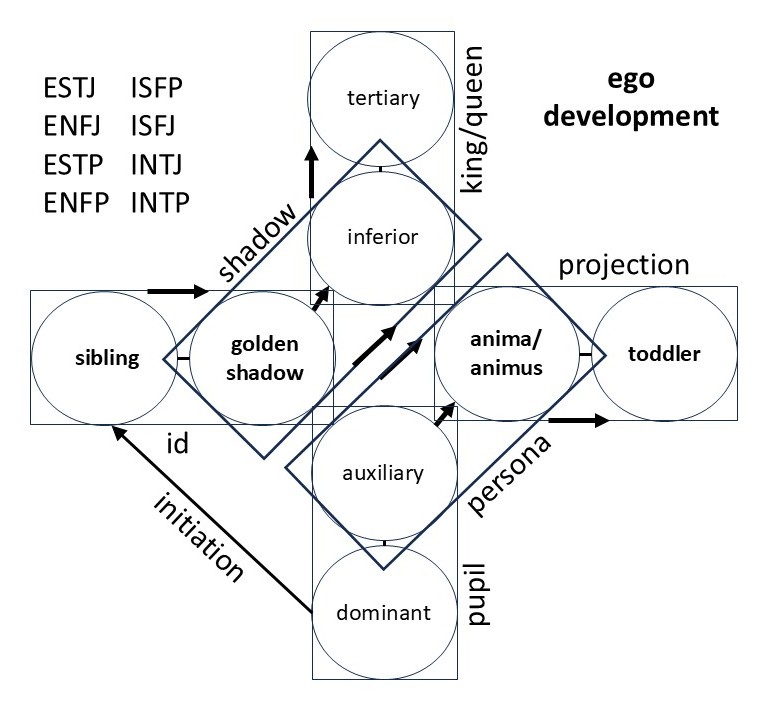
Fi is the ISFJ’s golden shadow — a function that holds their most personal values, quiet convictions, and emotional depth. It doesn’t look outward for validation; it looks inward for authenticity. And though ISFJs may not be known for being rebellious or individualistic, they often harbour strong private ideals, especially about kindness, fairness, and human dignity.
Unlike Extraverted Feeling (Fe), which wants harmony with others, Fi seeks harmony with oneself. This inner alignment drives ISFJs to live in a way that feels morally consistent. If they feel they’ve compromised their values — even in small ways — it can trouble them deeply, often more than any external criticism.
This part of them may not speak loudly, but when something violates their inner code, ISFJs can become surprisingly firm. They may not argue or protest, but they’ll quietly withdraw their support, distance themselves, or take action behind the scenes. Their stand isn’t performative — it’s personal, deliberate, and rooted in deep care.
Fi also gives ISFJs the ability to see the emotional truth in others — to feel what another person might be going through, not just socially (as Fe would), but existentially. This is what makes them such gifted listeners, counsellors, and quiet confidants. They hold space for others to be fully human — messy, conflicted, vulnerable — without judgment.
In mature ISFJs, Fi brings depth of character. They don’t just do what’s expected — they seek what’s meaningful. They may express it through art, personal writing, acts of service, or simply through a life lived with humility and conscience. While they may not proclaim their values out loud, you can often feel them in the way they show up: gently, consistently, and with quiet strength.
When unintegrated, however, Fi may remain hidden or repressed — leading to confusion about one’s deeper desires, suppressed anger, or frustration from always accommodating others. Developing a relationship with Fi helps ISFJs learn to say “no,” to set boundaries, and to honor their own emotional truth — not just others’.
Ultimately, Fi is where the ISFJ’s soul lives. It is their quiet light, their deep conscience, and their source of personal integrity.
Summary of Fi in the ISFJ:
- Holds deep, personal values that may not be openly expressed
- Seeks internal emotional and moral alignment
- Withdraws or resists quietly when values are violated
- Sensitive to the private emotional realities of others
- Grows by learning to set boundaries and express personal truth
- When integrated, adds depth, quiet strength, and authenticity
 Ontolokey
Leave a comment