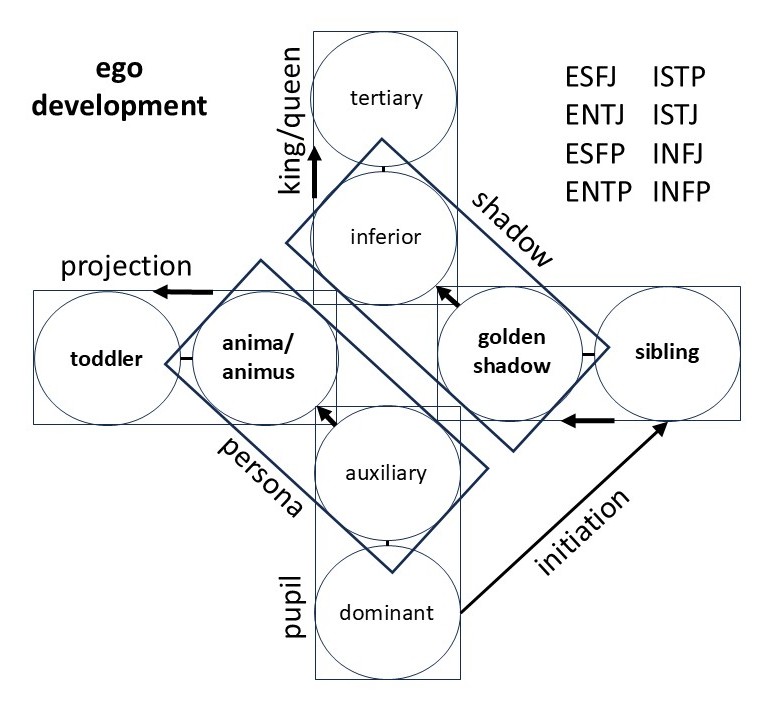
1. Introverted Intuition (Ni) – The Inner Visionary
INFJs experience time not as something fixed, but as something fluid – something they can stretch or compress depending on how it feels. They’re often lost in moments that others would overlook: a glance, a mood, a thought. If something feels meaningful, they can pause and soak it in, sometimes for what feels like an eternity. That’s how they move through life – not by the clock, but by a deeply personal sense of timing and inner rhythm.
They don’t just observe the world; they foresee it. INFJs can often tell when something is about to change – a relationship turning, a conflict rising, or an opportunity forming. Rather than rushing forward, they prefer to wait, watch, and act at just the right moment. It’s not luck – it’s intuition paired with patience. Their plans are rarely loud or flashy, but they run deep and often involve long-term thinking that others don’t see until much later.
Even when things fall apart – a missed opportunity, a failed plan, or someone breaking their trust – the INFJ will try to absorb the shock inwardly and adjust their course. But make no mistake: they don’t take such disruptions lightly. When their inner vision is derailed, they may feel as if the ground beneath them has shifted.
This sense of timing also extends to relationships. INFJs often “set the tempo” in interactions. If they’re calm, the other person tends to relax too. If they’re quietly intense, that energy can dominate the space. It’s like they have an invisible conductor’s baton, shaping the emotional flow of the moment. They may not even speak much – and yet, people find themselves aligning with the INFJ’s quiet, deliberate pace.
This intuitive mastery allows INFJs to craft environments that feel almost enchanted – moments of deep connection, timeless beauty, or surreal peace. But when that rhythm is broken by chaos, pressure, or someone else’s intrusion, it can feel to them like their entire inner world has been disturbed.
Their intuition is not about logic, but about meaning – patterns beneath the surface, unspoken motives, the unfolding story of someone’s life. They often sense where things are going, even if they can’t explain how. That’s why INFJs can appear mysterious or even uncanny – not because they’re trying to be, but because they see what others overlook.
And perhaps most powerfully, INFJs believe that time, vision, and meaning are theirs to shape – not to be dictated by external demands. Their path may not be direct, but it’s guided by a strong inner compass that rarely points them wrong.
2. Extraverted Feeling (Fe) – The Emotional Conductor
INFJs don’t just feel emotions – they shape them. Whether they’re aware of it or not, they have a powerful influence on the emotional atmosphere of any room they enter. They can sense the subtle shifts in people’s moods, and more importantly, they care. They instinctively respond in ways that uplift, soothe, or harmonize. It’s not manipulation – it’s empathy with purpose.
When an INFJ smiles warmly at someone, it’s not just a social gesture. It’s an intentional emotional signal: “You’re seen. You’re safe here.” Their presence alone can make others feel lighter, more hopeful, even inspired. And because of this, many people find themselves opening up to INFJs without even knowing why.
They don’t like conflict – but they will engage in it if they believe it’s emotionally necessary. When their sense of harmony is threatened or when someone close to them is hurting, the INFJ can switch from calm and caring to fierce and direct. And when that happens, their words can cut with surgical precision. They know exactly where to touch a person’s heart – to heal or to hurt. This isn’t cruelty; it’s emotional clarity wielded like a scalpel.
INFJs are not afraid of raw feeling – their own or others’. They’re deeply affected by art, beauty, kindness, and tragedy. They might cry during a movie or feel emotionally stirred by a song they’ve heard a hundred times. Their emotions aren’t always visible on the surface, but they run deep – and they remember emotional experiences long after the moment has passed.
What’s unusual about INFJs is their ability to mirror and reflect the emotions of others while still shaping them. Like an emotional alchemist, they take in someone’s distress, translate it inside themselves, and return it as comfort or insight. They can feel the room like others feel the temperature – and if something’s “off,” they’ll do what they can to set it right.
This makes them powerful connectors – people want to be near them, not because INFJs demand attention, but because they offer something rare: sincere, nonjudgmental emotional presence. They can make others feel understood – sometimes better than they understand themselves.
But all this sensitivity has a cost. INFJs can become drained when they feel their emotional contributions aren’t valued. If their efforts to bring peace and connection go unnoticed or are taken for granted, they may withdraw – not out of spite, but out of quiet disappointment.
Still, even when they’re emotionally burned out, INFJs rarely stop caring. At their core, they are attuned to the emotional needs of others and driven to improve the emotional climate around them. Whether through words, gestures, or simply presence, they seek to restore harmony – not by ignoring emotion, but by embracing it with wisdom.
3. Introverted Sensing (Si) – The Inner Keeper of Memory (Anima/Animus)
While INFJs are future-oriented by nature, they carry with them a surprisingly detailed and emotionally rich inner archive of the past. These memories aren’t just facts – they’re atmospheres, textures, and feelings. A scent, a color, or a specific tone in someone’s voice can suddenly awaken a cascade of personal associations, pulling them into a vivid recollection of something long gone but emotionally alive.
This function often shows itself in their deep appreciation for comfort, aesthetics, and sensory details – not in a flashy or materialistic way, but in how things feel. A cozy corner filled with soft lighting, a favorite sweater that reminds them of a special time, or the gentle ritual of making tea can hold profound emotional meaning. These sensory experiences ground them and provide continuity when the world feels overwhelming or chaotic.
At times, INFJs may surprise others with their contradictions: their style might fluctuate between classic and experimental, and their taste in food might swing from familiar staples to exotic curiosity. This reflects the tension between their intuitive search for meaning and their sensory desire for grounded familiarity. When they feel emotionally saturated or stuck in routine, they might seek out new sensations, sometimes even dissonant or “offbeat” ones, just to feel something different.
But their relationship with the material world is not always easy. Household tasks, daily upkeep, or practical chores can quickly overwhelm them. They might start a project with inspiration, only to lose interest when the process becomes repetitive or messy. It’s not laziness – it’s more like their energy isn’t naturally drawn to maintenance. They long for someone who enjoys taking care of those practical things so they can stay focused on the meaningful, the beautiful, the emotional.
This is where the Anima/Animus theme truly comes into play: INFJs deeply admire and are drawn to people who embody groundedness, physical competence, and earthy practicality – often qualities they feel they lack. They find peace in the presence of someone who brings order to the physical world without expecting them to do the same. In return, they offer emotional insight and vision – a dance between the inner world and the tangible one.
The INFJ’s sensory relationship with the world is deeply personal, emotionally charged, and often filled with contradictions. But through this, they learn what grounds them, what delights them, and what connects them to the beauty of lived experience. It is a quiet function, but one with a heartbeat of nostalgia and longing – for harmony, for belonging, for that elusive feeling of “home.”
4. Extraverted Thinking (Te) – The Toddler Function: Doing Things “The Right Way” (Maybe)
When it comes to structure, productivity, or efficiency, INFJs often have a complicated relationship with the outside world’s expectations. They want to be effective. They respect those who are. But when it comes to executing plans, meeting deadlines, or following procedures to the letter… things can get a little wobbly.
That’s because Extraverted Thinking – the function responsible for logical systems, measurable results, and external order – sits in the toddler seat of the INFJ’s mind. It’s present, but immature. It occasionally wakes up, stomps its foot, and demands that things get done – right now! – only to get distracted, frustrated, or overwhelmed shortly after.
INFJs may begin a project with great enthusiasm, organizing their workspace, buying supplies, and visualizing the end result – only to lose motivation halfway through. Not because they don’t care, but because the feeling behind the work has faded. The emotional “why” matters more to them than the mechanical “how.” If the work no longer resonates, it becomes exhausting – even meaningless.
This explains why INFJs can be oddly inconsistent in their productivity. One day, they might be highly focused, creative, and even impressively organized – and the next, totally scattered or absent-minded. They might create elaborate to-do lists, only to ignore them. They may even resist structure altogether, fearing it will trap their spontaneity or crush their inspiration.
INFJs also tend to put off responsibilities they find unappealing, sometimes to the point of self-sabotage. Deadlines may creep up while they’re still searching for the perfect mood to begin. They might wait for inspiration that never comes, hoping someone else will step in and take the lead – especially someone competent and reliable.
At work or in leadership roles, INFJs often prefer to influence through vision and emotion rather than strict control. If forced into managerial duties, they may feel uncomfortable enforcing rules or making hard calls. They’ll often try to pass off responsibilities or avoid being the final decision-maker. But when pressed, they can become surprisingly stubborn – especially if someone challenges their sense of meaning or value.
Interestingly, INFJs are very aware of this soft spot in themselves. They admire people who “get things done” and make things work. That’s why they’re drawn to grounded, action-oriented types – especially those who make complexity seem simple. These individuals can serve as role models or collaborators, helping INFJs translate their vision into action.
Still, the INFJ’s Te isn’t useless – it simply needs guidance. When inspired and emotionally aligned, they can produce incredible results. But the process has to start from the inside out. If their heart’s not in it, no amount of external structure will make it happen. But if they believe in the goal, even their awkward toddler-function can grow up for a moment – and do something brilliant.
5. Extraverted Sensing (Se) – The Inferior Function: Overstimulated or Under Control
For the INFJ, the outer sensory world can be overwhelming. Bright lights, loud environments, chaotic situations – these things don’t just distract them; they unsettle them. Their natural focus is internal, abstract, and intuitive. So when the external world demands their full sensory attention, it can feel like a system overload.
That’s because Extraverted Sensing – the function responsible for engaging directly with the physical present – sits at the very bottom of the INFJ’s stack. It’s their blind spot, their weakness, and sometimes, their secret source of anxiety.
On the surface, INFJs might appear graceful or composed, but internally they often feel clumsy, uncoordinated, or awkward in fast-paced physical environments. They may struggle with practical tasks that require quick reactions or fine motor skills. They’re rarely “hands-on” people by nature – unless they’ve developed this side intentionally over time.
INFJs tend to avoid sensory conflict and unpredictability. They prefer environments that are calm, quiet, and aesthetically pleasant. Crowds, loud music, and sensory clutter can drain them faster than most people realize. They might even unconsciously withdraw from their body when things get too intense – daydreaming, dissociating, or simply checking out to preserve their inner peace.
Yet paradoxically, Se also holds a strange allure for INFJs. Because it’s their inferior function, it represents something enticingly out of reach – the boldness, the spontaneity, the physical command of the moment that they often lack but secretly admire. Sometimes, this comes out in short, intense bursts: the sudden craving for a daring experience, a dramatic outfit, a sensory thrill. They might surprise even themselves – and then retreat, wondering, “Where did that come from?”
In relationships, they’re often drawn to people who are confident in the physical world – people who move through life with ease, directness, and presence. These individuals help ground the INFJ and bring balance to their often abstract, emotional world. It’s no coincidence that their typological “dual,” the ESTP, is a master of Se – offering precisely what the INFJ lacks.
But this relationship with Se also has a shadow side. INFJs may become perfectionistic or hyper-controlling when they feel unsafe or disoriented by the sensory chaos around them. They might obsess over minor details, try to control their environment too rigidly, or become overly sensitive to disruptions. In these moments, they’re not embracing Se – they’re trying to defend themselves against it.
Growth for the INFJ means learning to trust the moment. To breathe, to be present in their body, to take action even if the outcome is uncertain. It means realizing that not every moment needs to be meaningful – some things are simply to be lived. And while Se will never be their natural strength, embracing it with curiosity rather than fear allows the INFJ to experience the world not just as a dreamer – but as a fully present human being.
6. Introverted Thinking (Ti) – The Quiet Analyst: Searching for Inner Logic
While INFJs are known for their emotional depth and intuitive insight, there’s another side to them that often goes unnoticed – a quieter, more internal process that asks: Does this make sense? That’s their Introverted Thinking (Ti), a tertiary function that doesn’t drive the INFJ’s personality, but colors it in subtle, sometimes surprising ways.
Ti in the INFJ acts like an inner editor – always quietly evaluating, questioning, and tinkering behind the scenes. It’s less about building complex systems or running mathematical equations and more about personal coherence. “Do my thoughts align with my values?” “Is what I’m saying actually what I mean?” “Am I being intellectually honest with myself?”
This function gives INFJs a desire to understand, not just feel. They enjoy taking apart abstract ideas, exploring philosophical questions, or trying to explain something just to see if they can. But their thinking isn’t always linear. It tends to move in loops, tangents, or paradoxes – they often feel more like poetic thinkers than cold logicians.
That said, Ti can also be a source of inner frustration. INFJs often struggle with logical consistency, especially when their emotions or ideals pull in a different direction. They may argue passionately for something one moment, only to quietly doubt themselves later. Their thoughts can be hard to untangle – even to themselves – leading to circular reasoning or contradictory conclusions.
In conversation, they might drift into abstract territory, making intuitive leaps that others can’t follow. When pressed to explain their reasoning step by step, they might hesitate, simplify, or even laugh it off with self-deprecating humor. Not because they’re unintelligent – far from it – but because their internal logic isn’t always easy to verbalize. It’s more like a “felt” understanding than a structured one.
INFJs can also be highly sensitive to being misunderstood intellectually. They might keep their deeper thoughts to themselves unless they feel truly safe – not because they fear being wrong, but because they dislike conflict and don’t want to seem foolish. At the same time, they can be quietly judgmental of ideas they find shallow, inconsistent, or insincere.
The INFJ’s Ti isn’t meant to dominate their personality. It’s there to support clarity – to help them refine their vision, question assumptions, and communicate more precisely. When balanced, it gives their intuitive and emotional insights structure. It’s the skeleton beneath their dream.
But when unbalanced, it can lead to overthinking, intellectual self-doubt, or passive-aggressive debate tactics – turning arguments personal instead of logical. Growth comes when INFJs allow themselves to explore truth without fear of contradiction, and when they realize that not knowing is also a form of honesty.
Ultimately, Ti gives the INFJ mind a delicate kind of sharpness – not cutting like a blade, but precise like a whisper. It doesn’t shout to be heard. It asks gently: “Are you sure?”
7. Extraverted Intuition (Ne) – The Sibling Function: The Spark That Wanders
INFJs live in a world shaped by inner vision and depth – but sometimes, their mind is unexpectedly lit up by something different: curiosity, possibility, and the thrill of “what if?” That’s the influence of Extraverted Intuition (Ne), their seventh (or “Sibling”) function. It’s not dominant or reliable, but it peeks through in interesting, sometimes chaotic ways.
Ne brings flashes of playful exploration. For a moment, the INFJ becomes fascinated by a random idea, a quirky theory, a new project that seems unrelated to anything else they’ve been doing. It’s like a creative detour, often prompted by a conversation, a piece of art, or even an advertisement. Suddenly, they have to know more – even if it’s not practical or part of their long-term vision.
These moments can be exciting but also disorienting. INFJs are usually methodical with their energy and intentional with their focus. Ne disrupts that. It invites novelty for novelty’s sake, opening windows to unrelated ideas, alternate futures, or unexpected interpretations of reality. Sometimes, this is how INFJs discover something truly profound. Other times, it leaves them feeling scattered or overwhelmed.
This function also feeds the INFJ’s ability to see potential in people. When they meet someone new, they don’t just see who that person is – they see who they could become. Their imagination spins out scenarios, stories, and futures, often long before reality has caught up. This can be inspiring – or misleading. INFJs might project too much onto others, or become disillusioned when potential doesn’t manifest the way they’d hoped.
Ne can also feed into a kind of existential restlessness. The INFJ may suddenly fear that they’ve chosen the wrong path, missed out on something big, or settled too soon. They might daydream about alternate lives, secret callings, or “what could have been.” These moments don’t usually last long, but when they hit, they can stir up doubt and dissatisfaction.
At its best, Ne gives INFJs a flexible mind – one that can entertain multiple perspectives and imagine creative outcomes. It helps them brainstorm, connect ideas across disciplines, and stay open to new possibilities. But when overused or underdeveloped, it can pull them away from their grounded intuition and deeper values, leading to a kind of scattered idealism.
Ne is the playful younger sibling in the INFJ’s psyche – energetic, unpredictable, and full of odd surprises. INFJs don’t always know what to do with it, but when they allow it space to breathe – without letting it hijack their direction – it adds color, curiosity, and a spark of chaos that keeps life from becoming too rigid.
8. Introverted Feeling (Fi) – The Golden Shadow: The Quiet Truth Within
Hidden deep in the INFJ psyche is something often overlooked – not because it’s weak, but because it operates so silently that even the INFJ might not notice it: Introverted Feeling (Fi). It’s not their usual compass, and it rarely takes center stage, but when it does speak, it speaks with quiet, unwavering truth.
Fi is about personal values – not the collective ones, not the emotional needs of others (that’s Fe), but the deep, private convictions that don’t require validation. It asks: “What feels right to me – even if no one else understands it?”
For the INFJ, Fi is like a golden thread running through their soul. They may not lead with it, but it anchors them. It shows up in their intense sense of justice, their silent moral boundaries, and their instinct to protect the vulnerable – especially when no one else is watching. They may not preach it, but they live it, often in subtle acts of loyalty, quiet rebellion, or principled restraint.
Unlike Fe, which adjusts to external dynamics, Fi doesn’t bend. It doesn’t explain itself. That’s why INFJs sometimes experience an inner conflict: their Fe wants harmony and connection, but their shadowed Fi says, “No – this crosses a line for me.” In these moments, the INFJ may withdraw, go silent, or even surprise others with a firm, unexpected stance.
Fi also gives INFJs the ability to connect deeply with their own individuality – not in a public or expressive way, but in solitude, creativity, or introspection. It’s the part of them that creates just because it matters to them, that holds onto dreams no one else understands, that quietly refuses to compromise certain truths.
This is also why INFJs are sometimes misread. Their outer warmth (Fe) can mask a much more selective, even fiercely private inner world. They might seem open and emotionally generous – but there are parts of themselves no one gets to see. Not because they’re guarded, but because those parts are sacred.
When Fi is integrated, INFJs become more whole. They no longer feel the need to please everyone or overextend themselves emotionally. They become anchored in an inner knowing that doesn’t demand applause. Their empathy becomes more discerning. Their boundaries become clearer. And their authenticity becomes quieter – but more powerful.
Fi is their golden shadow – not because it’s dark or negative, but because it holds treasure. It’s the part of them that knows who they are without asking permission.
 Ontolokey
Leave a comment