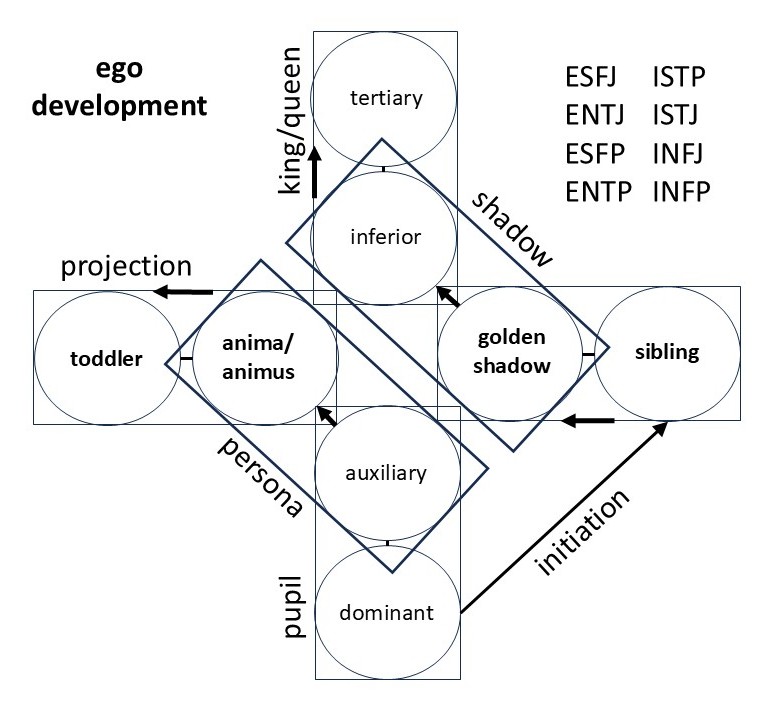
1: Extraverted Sensing (Se) – Living in the Moment, Leading with Action
The ESFP is driven by the here and now. They’re naturally tuned in to their environment, highly aware of what’s happening around them, and eager to act on it. For them, life is a series of immediate opportunities to be seized, experiences to be lived fully, and challenges to be met head-on. Their actions are swift, bold, and often intuitive.
Whether it’s leading a team, organizing a social event, or launching into a spontaneous adventure, the ESFP brings high energy and physical presence. They don’t overthink—they just do. Their impressive stamina and readiness to act allow them to dive into demanding projects, sometimes pushing themselves far beyond their limits. Sacrifices are no big deal if the goal is meaningful. Even if it means signing up for three vocal coaches at once (true story), they’ll go all in.
Competition energizes them—not necessarily to crush others, but to push themselves to stand out. They don’t just want to be good; they want to be the best. They crave recognition for their efforts, talents, and passion. When others notice, it validates their sense of identity.
The ESFP’s dominant Se makes them quick to take initiative and often impatient with anything or anyone that holds them back. They dislike stagnation, passivity, or people who give up too easily. Their attitude is simple: “If there’s a door, try it. If it’s locked, try another. But don’t just sit there.” They encourage others to act, too—especially their INTJ counterparts, whose passive, inward nature often needs a push.
They often inspire by example: “I’m already done—why aren’t you?” It’s not arrogance; it’s how they motivate. But sometimes their intense pace can alienate those who can’t keep up. They may not realize it, but their enthusiastic drive can come across as overwhelming or even pushy.
Taking up space—literally and figuratively—is second nature. The ESFP doesn’t ask for permission to lead; they just step up. Without realizing it, they can dominate situations, conversations, and even relationships, not out of malice, but out of an impulse to shape their world actively.
They’re not tyrants—they actually hate tyranny—but they do struggle with letting go of influence. Losing relevance or being sidelined hits hard. When their efforts to lead are misunderstood or unappreciated, they may react emotionally or double down on their efforts, sometimes clumsily.
Still, Se gives them a bold creativity. They don’t just follow trends—they create them. In art, they’re often the ones who break the rules and set new standards. Their style may be extravagant or provocative, but that’s their way of saying, “This is who I am.”
At their best, ESFPs are magnetic doers who uplift and activate everyone around them. At their worst, they burn themselves out trying to prove their worth in every room. Their life is a performance of vitality, spontaneity, and sheer presence—and they don’t want to miss a moment.
2: Introverted Feeling (Fi) – Quiet Integrity Behind the Spark
Beneath the ESFP’s vibrant, action-packed exterior lies a deep, personal compass—Introverted Feeling (Fi). It’s not loud, it’s not public, and most people might miss it entirely. But for the ESFP, it’s a silent engine of authenticity, loyalty, and inner moral standards.
Despite their outgoing personality, ESFPs make value judgments privately. They know what matters to them and stick to those principles, even if they don’t always talk about it. While they may seem carefree and impulsive, they carry strong beliefs about what’s right and fair, especially when it comes to how people are treated.
This makes them fiercely loyal. Once they believe in someone, they’re all in. They want to earn trust, not just applause. It’s not enough for others to say they’re impressive—they want to know they’re genuinely respected for who they are, not just for how much they do.
If someone ignores their intentions or misjudges their motives, it hurts deeply. They may seem tough, even theatrical, but emotionally they’re far more sensitive than they let on. They care about being seen as kind-hearted, honest, and good—not just as fun or capable.
That’s why it stings when others don’t recognize their efforts to help, to support, to be decent. If their leadership is questioned, it feels like a dismissal not only of their actions, but of their inner worth. They don’t lead out of ego—they lead because they feel responsible for people and want to do right by them.
Still, their Fi is selective. They invest emotionally in those they respect or admire—but not everyone makes the cut. If someone doesn’t matter to them on a values level, they may treat them indifferently or even harshly. This can lead to emotional inconsistency that confuses others: warmth one day, coldness the next.
Friendships and rivalries for the ESFP are often all-or-nothing. Someone they admire might be placed on a pedestal, while a perceived betrayal can turn a close connection into “just another enemy.” These intense value judgments aren’t always expressed openly—but they’re deeply felt.
Fi also makes the ESFP hard on themselves. They want to be liked, yes, but more importantly, they want to be proud of themselves. They hold themselves to personal standards that few ever see. When they mess up, they know it. They might not admit it right away, but internally they reflect. And eventually, they often own up to their mistakes with sincerity—especially if it helps repair a relationship they care about.
In relationships, they want emotional connection, not just fun. But paradoxically, their Fi can make them hesitant to fully open up—especially if they fear judgment or rejection. They may put on a show of confidence, while privately wondering: “Do they really get me? Do they see who I really am?”
The ESFP’s Fi gives them empathy, emotional depth, and a desire to live truthfully. It’s why they fight for causes they believe in, protect people they love, and strive to become better—not just more successful, but more whole.
It’s their quiet center of gravity in a loud, kinetic life.
3: Extraverted Intuition (Ne) – The Curious Spark of the Unconscious (Anima/Animus)
Deep within the ESFP lies a restless curiosity—not always conscious, but constantly bubbling beneath the surface. This is Extraverted Intuition (Ne), their Anima/Animus function: the lens through which they explore what could be, flirt with possibilities, and probe the hidden “what ifs” of life. It’s not part of their conscious identity—but it shows up, often unpredictably, like a sudden breeze lifting a curtain.
Ne shows itself in the ESFP’s impulse to test limits and provoke reactions—not to be cruel, but to explore unseen boundaries. They’ll say something bold, act out dramatically, or stir the pot just to see how people will respond. “Let’s see what happens if…” is a question they live out in real time, often without even realizing it.
They might call this “telling it like it is”, but it’s really more of a test: “How will this person react?” “Can I get away with this?” “Is this connection strong enough to handle tension?” It’s not manipulation for manipulation’s sake—it’s a subconscious way of mapping the social landscape.
In moments of uncertainty, Ne compels the ESFP to create clarity by shaking things up. If a relationship feels vague or emotionally ambiguous, they might initiate drama just to force the truth to the surface. “Let’s find out now where we stand.” They’d rather crash through the unknown than float in confusion.
Their Ne also fuels an ongoing fascination with other people’s potential. They instinctively assess what others might be capable of—what roles they could play, what paths they might take. Sometimes they see more in others than those people see in themselves. This makes them both encouraging and dangerously idealistic.
In social settings, ESFPs are often the ones asking bold questions about others’ future plans or life choices—sometimes out of sincere interest, sometimes as a way of gauging their own place in the social hierarchy. They don’t just want to succeed—they want to know how everyone else is doing, and where they stand in comparison.
But because Ne is not a strong conscious function for them, their sense of what’s possible can be superficial or overly optimistic. They may jump to conclusions or fall for inflated promises, especially from unreliable sources. Sometimes they’re overly quick to trust rumors, trends, or appearances—believing the future is bright, right up until reality hits.
At worst, their unconscious Ne makes them vulnerable to overestimating others—or themselves. They may bluff, exaggerate, or make ambitious plans without solid grounding. It’s not dishonesty as much as it is hopeful projection. They believe in potential—perhaps too easily.
They can also get stuck in a strange cycle of over-committing and under-strategizing. Inspired by a burst of future possibility, they leap—but when obstacles appear, the dream evaporates. And then they’re left scrambling for a way out.
This is why they gravitate toward people with strong, stable intuition—especially the INTJ, their dual—who can calmly assess long-term outcomes and warn them gently about what lies ahead. The ESFP may resist such caution at first, but deep down, they crave it. Their inner Ne needs guidance, someone to tell them, “Here’s what’s actually likely to happen.”
Still, their Ne gives them a mischievous creativity, a hunger for novelty, and an ability to imagine vibrant alternatives—especially in art, storytelling, or unconventional life paths. It makes them spontaneous idea-generators, capable of reframing problems in unexpected ways.
And when their Ne and Se meet—possibility and presence—they become unstoppable: the visionary performer, the bold innovator, the one who says “Why not?” and then actually tries it.
4: Introverted Thinking (Ti) – The Toddler Function: Logic in the Backseat
If the ESFP’s life were a movie, Introverted Thinking (Ti) would be the slightly confused side character in the backseat yelling, “Wait—what’s going on again?” It’s there, but it’s not in charge. It’s the toddler function, and while it can speak up at surprising moments, it rarely runs the show.
Ti is all about internal logic, structure, systems, and coherence. But for the ESFP, thinking in this way feels… well, tedious. They don’t like getting stuck in abstract ideas, overanalyzing things, or following rigid step-by-step instructions. Life is to be lived, not diagrammed.
They often don’t notice logical inconsistency in their arguments—or if they do, they quickly brush it off with charm, humor, or emotional persuasion. When explaining something, they might start in the middle, jump back to the beginning, skip the point entirely, then circle back with a personal anecdote. The result? A kind of chaotic storytelling that’s fun, but rarely linear.
They can be smart and insightful—but their logic is often based on gut feelings or common clichés rather than deliberate analysis. “If they’re jealous, it means they love you.” “You made your bed, now lie in it.” These kinds of throwaway lines stand in for more nuanced reasoning.
When forced to “think things through,” the ESFP may panic. Being told to be more consistent, rational, or methodical can feel suffocating. It’s not that they don’t want to be smart—it’s that logical analysis doesn’t feel natural. They value intelligence deeply, but they want it to come from experience, instinct, or people they trust—not from having to dissect every decision themselves.
And yet, they do try. You’ll see them repeat the same mistakes more than once—painfully aware that something isn’t working, but unsure how to fix it. They’ll ask others for advice, listen politely, and then do the exact opposite. Later, when it backfires (again), they’ll feel frustrated and lost: “Why does this keep happening to me?”
Because Ti is so weak and undeveloped in them, the ESFP often delegates logic to someone else. Ideally: a calm, grounded INTJ who can explain things step-by-step without judgment. But the ESFP still needs freedom. If they sense control or condescension, they’ll reject the advice outright, even if it’s useful.
They don’t like reading manuals. They’d rather plug something in and figure it out by doing. Sometimes this works—other times it means frying a device or erasing an entire hard drive. And even then, they might just laugh it off: “Guess I won’t do that again… maybe.”
When they’re stressed, their lack of inner structure becomes obvious. They lose track of priorities, start too many things at once, and get overwhelmed by details they’ve ignored. Someone asking them for logical justification (“But why did you do it that way?”) can completely derail them.
Still, Ti gives the ESFP an unexpected gift: self-deprecating humor. They’re often the first to make fun of their own lack of logic, using laughter to mask deeper discomfort. It’s their way of saying, “Yes, I’m a little messy—but I’m real.”
In the end, the ESFP doesn’t need to be a logical mastermind. They just need clarity without pressure, structure without rigidity, and people who help them understand without making them feel small. With the right support, they can follow a train of thought from A to Z—they just prefer to ride the scenic route, with music playing and windows down.
5: Introverted Intuition (Ni) – The Inferior Function: Foggy Futures and Existential Glimpses
If Extraverted Sensing (Se) is the ESFP’s high-definition front camera, then Introverted Intuition (Ni) is the blurry rearview mirror: always there, but often ignored—until something forces them to look back (or forward) and wonder, “Where is this all going?”
As the inferior function, Ni operates in the shadows of the ESFP psyche. It’s not trusted, not natural, and often avoided. But in quieter moments—or under stress—it whispers strange, unsettling questions:
- “Am I on the right path?”
- “What will happen if I keep living like this?”
- “Will any of this matter in five years?”
For someone who thrives on immediate action and sensory experience, long-term consequences and abstract futures are unnerving. The ESFP lives for now—but their inferior Ni sometimes drags them into uncomfortable reflection: “Is this sustainable?” “Am I just spinning my wheels?”
They might feel an urge to “get their life together,” reorganize everything, or “finally think things through.” But these reflections are usually exhausting. Too many unknowns, too many layers. So instead of diving into that deep mental fog, the ESFP often outsources Ni: they seek someone who can see the big picture for them.
Enter the INTJ: their dual. Calm, predictive, and future-focused, the INTJ becomes a sort of external Ni compass. The ESFP relies on them to assess risks, outline steps, and explain long-term consequences—especially when they themselves feel too overwhelmed to figure it out. A well-timed “Wait, let’s think this through” from an INTJ can anchor the ESFP like nothing else.
But on their own, the ESFP tends to resist thinking too far ahead. The future feels abstract, paralyzing. They’d rather keep moving—any direction feels better than stillness. If things feel unclear, they might switch tasks, change direction, or distract themselves entirely. Action soothes the anxiety that Ni can stir.
Sometimes, this avoidance comes at a cost. They may start multiple things with great enthusiasm—only to abandon them when long-term planning becomes necessary. They might jump into relationships, jobs, or projects without thinking through their trajectory, later wondering, “How did I get here?”
Ni also introduces a strange kind of fear: the fear of wasting their life, of missing something bigger. This fear doesn’t usually appear in loud existential crises—it sneaks in as quiet unease. They may suddenly feel lost, doubt their purpose, or spiral into questions they can’t answer.
When they do try to use Ni, it’s often through symbolic shortcuts: superstition, gut feelings about destiny, vague dreams of a better life. But real, strategic foresight? That’s hard. And frustrating.
Still, the ESFP wants to believe the future can be bright—they just don’t always know how to build a bridge to it. They rely on intuition borrowed from others, or they chase inspiring visions until reality sets in. Sometimes, they even create mini-dramas in relationships just to find out “where this is going,” because uncertainty is too heavy to bear.
With maturity, and the help of grounded, intuitive partners, ESFPs can learn to trust time—to reflect without panic, to plan without losing spontaneity, and to see the future not as a threat, but as a canvas.
When this happens, their natural vitality gains depth. They stop running from the future—and start walking toward it with purpose.
6: Extraverted Thinking (Te) – The Tertiary Function: Action Plans, Not Spreadsheets
While logic in the abstract (Ti) is frustrating for the ESFP, Extraverted Thinking (Te)—their tertiary function—feels much more natural. Te isn’t about inner analysis; it’s about results. And that’s something the ESFP can get behind.
When ESFPs are in motion, when they’re making things happen and seeing tangible progress, Te quietly kicks in and supports them. They don’t want to sit in theory—they want to do something, get results, make a real-world impact. They’re highly productive when a task feels concrete, urgent, and aligned with their energy.
They may not always organize their work methodically, but when something matters to them—like a performance, a launch, or a hands-on project—they’ll mobilize like a pro. They can delegate, push things forward, and make split-second decisions. Te shows itself here not as cold efficiency, but as pragmatic action.
Still, it’s not consistent. As a tertiary function, Te operates in spurts. One day, the ESFP is ultra-productive—checking off tasks, making decisions, coordinating with others. The next day? They’re improvising everything, chasing a new idea, or abandoning structure entirely. They can organize, but only when motivated. And even then, they prefer flexible planning over rigid structure.
They don’t love detailed instructions, long-term schedules, or spreadsheets. If a process feels too mechanical, they lose interest. What they need is meaningful direction: “What are we doing, and why does it matter?” If that’s clear, they’ll bring the energy, people skills, and hands-on initiative to make it happen.
Te also helps them take charge in a crisis. If something breaks down or needs quick reorganization, the ESFP can snap into action. They’ll tell others what to do, move things around, and fix the immediate issue. They may not always be elegant about it, but they are effective under pressure—especially in short-term, high-stakes situations.
Where they struggle is long-term consistency. Their Te doesn’t naturally sustain routines or enforce systems. They’re great at jumping into action—but not always great at follow-through. If the excitement wears off, so does their focus.
They also don’t respond well to overly rational criticism. If someone points out flaws in their process or questions their judgment in cold, technical terms, they may react defensively. Their logic works best when it’s practical and emotionally relevant, not detached.
That said, the ESFP does enjoy impressing others with their capability. When they pull something off successfully, especially when others doubted them, it feeds their confidence. “See? I got it done.” They want their competence to be recognized, even if their methods are unconventional.
At their best, Te allows ESFPs to turn inspiration into action—to not just dream, but build. It grounds their energy in the real world and helps them get things done. Not with spreadsheets or rigid plans, but with passion, adaptability, and street-smart logic.
Give them a goal that matters, some room to move, and a bit of support—and they’ll make it happen.
7: Introverted Sensing (Si) – The Sibling Function: Comfort, Memory, and Subtle Standards
Introverted Sensing (Si) operates quietly in the ESFP—like a background rhythm that keeps their world running smoothly, even if they rarely stop to analyze it. As the “sibling” function, it doesn’t lead or drive their personality, but it supports them in more personal, often aesthetic, ways.
While ESFPs are not meticulous organizers or obsessive traditionalists, they do care about how things feel—especially in their physical environment. They like comfort, beauty, and familiarity, and often create spaces that reflect this. Their home, clothing, and even their body language often reveal a subtle, but strong, sense of style and atmosphere.
No matter their income level, the ESFP usually finds a way to look put together. They might be flashy or low-key, but their appearance is intentional. They may even embrace bold or unusual fashion choices—not necessarily because they love them personally, but because they know it gets attention. Looking distinct is often more important than looking “classic.”
Si also shows up in the way the ESFP values personal rituals and bodily well-being—even if inconsistently. They often enjoy good food, sensory indulgence, cozy environments, and pleasant routines—as long as they don’t feel restricted. They want things to be nice and functional, not fussy.
They usually have a clear sense of what feels right—what smells good, what sounds pleasant, what colors work together, even if they can’t always explain it. Their aesthetic judgment is deeply internalized. This makes them excellent stylists, decorators, or artists who blend instinct with subtle sensory memory.
While they don’t like rules, the ESFP does keep internal reference points: memories of what has worked, what felt good, what was satisfying. These memories guide their decisions—often more than they realize. If something “feels off,” they might not know why, but they’ll trust their gut and pivot accordingly.
Si also governs their approach to health and physical endurance. They may ignore discomfort until it becomes serious, or push themselves too hard—especially when they’re driven by adrenaline or pride. But when they crash, they crash hard, and suddenly need rest, comfort, and solitude.
In work, they like to find their own methods—tried-and-true shortcuts that “just work.” They might avoid theoretical material or step-by-step instructions, preferring to learn by doing and develop personal systems over time. Once they’ve learned a skill, it sticks—and they tend to reuse their techniques again and again.
They don’t always question those methods, even if they’re outdated. If something has worked before, they’re likely to do it again—even if a better option exists. This gives their work a hands-on reliability, but can also make them resistant to new systems unless the benefit is obvious.
Ultimately, Si in the ESFP serves as a kind of quiet internal archive: filled with impressions, preferences, and sensory experiences. It grounds their wild, expressive energy in a sense of personal continuity. It gives them taste, texture, memory—and a little softness behind the spotlight.
8: Extraverted Feeling (Fe) – The Golden Shadow: Charisma, Harmony, and Emotional Leadership
Extraverted Feeling (Fe) is the golden shadow of the ESFP—the part of them that represents unrealized potential, a deeper layer of maturity, and an emerging power in social influence. It’s not their usual mode of interaction, but when developed, it adds depth, grace, and true charisma to their natural charm.
At first glance, ESFPs seem emotionally expressive—but their feelings are usually guided by introverted values (Fi) rather than Fe’s outward harmonizing. They express what they feel, not what the group needs. This can make them emotionally intense or unpredictable: laughing one moment, storming off the next. They’re real—but not always socially smooth.
Fe, in contrast, is about creating emotional atmosphere, tuning in to the collective mood, and adjusting behavior for the sake of harmony. For the ESFP, this doesn’t come naturally. They’re more focused on their own emotional truth than the group’s emotional expectations.
But when the ESFP steps into their golden shadow—when they consciously embrace Fe—a shift happens. Their emotional expressiveness becomes inclusive. Instead of just reacting, they start to lead others emotionally: lifting spirits, calming tension, setting the tone in a room. They become not just performers, but hosts, facilitators, even peacemakers.
In this state, their natural warmth is no longer about seeking attention—it’s about creating connection. Their charisma transforms from entertaining to inspiring. They learn to read the room, not just light it up.
At their best, ESFPs with integrated Fe can move people emotionally, not by shocking or dazzling them, but by meeting them where they are. They use their energy consciously, not just spontaneously. They become trusted emotional leaders—not just bright personalities.
But developing Fe also requires restraint—a challenge for the impulsive, fiery ESFP. They must learn that not every mood needs to be acted out, not every thought needs to be expressed. With experience (and often with help from mature Fe types like ENFJs or INFJs), they realize that holding space can be more powerful than performing in it.
The emotional “games” of early ESFPs—provoking reactions, stirring drama, dominating emotional dynamics—give way to emotional presence. They learn that silence, patience, and gentle encouragement can be just as impactful as laughter or flair.
This evolution doesn’t dim their spark—it elevates it. Their feelings gain focus. Their relationships deepen. Their influence grows, not just because they’re exciting, but because they’re emotionally reliable. They become the kind of person people trust in crisis, not just in celebration.
And perhaps most beautifully: when the ESFP integrates Fe, they stop trying to prove their worth through constant effort. Instead of pushing to be seen, they begin to see others—and that’s when their golden shadow truly shines.
 Ontolokey
Leave a comment