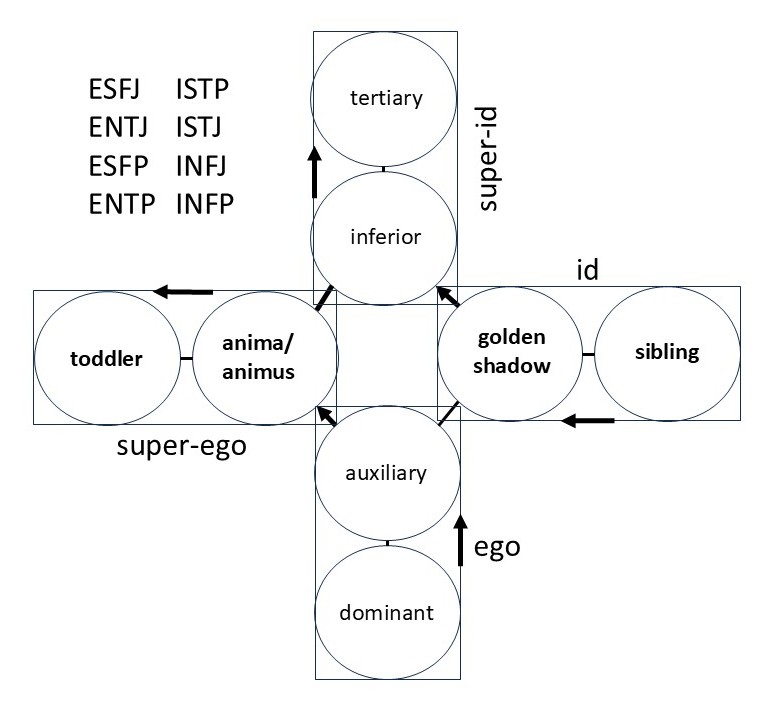
1. Extraverted Intuition (Ne) – The Explorer Mind
For the ENTP, life is a constant hunt for what could be. Their dominant function, Extraverted Intuition (Ne), drives them to scan the world for new possibilities, fresh connections, and unrealized potential. They don’t just ask “What is?”—they ask, “What else is possible?”
Ne makes ENTPs endlessly curious and vision-driven. When others see rules, limits, or routines, ENTPs see hidden doors and creative detours. They instinctively connect abstract ideas across unrelated fields, creating inventive theories or launching projects no one saw coming. This intuitive “pattern radar” is fast, fluid, and never off—it sparks in the middle of a movie, a walk, a meal, or even a dream.
ENTPs thrive in ambiguity. They’re drawn to complexity, not to solve it in linear fashion, but to play with it—bend it, twist it, and see what emerges. A simple idea might explode into an entire universe of possibilities in their minds. They don’t just brainstorm—they live in brainstorm mode.
This can make them seem like “dreamers” to others—but to the ENTP, these dreams are rooted in something real. Their ideas may sound fantastical at first, but they’re usually grounded in insight and logic. What seems unrealistic to others feels entirely doable to them—if the world would just keep up.
Because Ne thrives on novelty, ENTPs get bored quickly with repetition or projects that are nearing completion. As soon as the creative phase is over or the challenge is solved, their energy drops—and their attention leaps toward the next big idea. This isn’t fickleness; it’s momentum. They’re wired to explore, not maintain.
When ENTPs are inspired, they become highly productive and energized. But when inspiration fades, they can appear scattered, restless, or even disengaged. This isn’t laziness—it’s their inner drive telling them it’s time to chase something new, something that sparks. Without that spark, they feel stifled, even trapped.
Structure and rigid schedules often feel suffocating to the ENTP. To them, being told when to think creatively is like telling lightning when to strike. Their intuition doesn’t follow a clock—it follows excitement, insight, and inner fire.
Ultimately, Extraverted Intuition is what makes ENTPs visionary thinkers, fearless creators, and agile ideates. They’re the ones who challenge the status quo not just for fun—but because they can’t not. They see the future not as something to predict, but something to design.
For the ENTP, life is a playground of possibilities. Wherever they go, they scan for opportunities—new ideas to explore, fresh problems to solve, uncharted paths to take. Their mind constantly jumps from one concept to the next, connecting patterns others don’t even see. They’re visionaries who are always ten steps ahead, dreaming up what the future could look like before the present has even caught up.
Ideas are not optional for ENTPs—they’re oxygen. Thinking and imagining are fused into one fluid process. When they ponder, they dream. When they dream, they analyze. It’s how they stay alive intellectually.
This makes them magnetic—others are drawn in by their enthusiasm, their whirlwind of inspiration. But if others aren’t as excited about their vision? It hurts. ENTPs don’t just want to create; they want co-creators. A lack of engagement from those around them can feel like betrayal. They crave people who dream boldly, who can match their mental energy. Dull realism or rigid “practicality” is an emotional turn-off, and those who dismiss their ideas outright are likely to become intellectual enemies.
ENTPs don’t sit still in their minds or in the world. The moment they sense a new potential, they dive in—and often rope others along for the ride. They love starting things: projects, conversations, movements. But finishing? That’s a different story. If a venture begins to lose novelty or seems creatively “closed off,” ENTPs will likely move on, not out of laziness, but because there’s something more alive calling to them elsewhere.
This mental agility often shows up early in life. In school, they might have seemed distracted, eyes staring out the window while the teacher spoke. But they weren’t lost—they had already grasped the lesson and were now building something more interesting in their heads. What looks like inattention is often a mind racing far ahead of the curriculum.
Inspiration strikes constantly—during a conversation, a walk, a meal, even while sleeping. ENTPs are idea machines. If they go an hour without a creative spark, it usually means something is wrong—either they’re sick or deeply stressed. New data, new people, new environments—they all act as fuel for the inner engine.
Their ideas aren’t just wild fantasies either. Many ENTPs see themselves as realists—just ones who are willing to think bigger and further. They root their visions in real-world knowledge, even if others find those visions too “out there.” History has shown that many ENTP ideas, initially dismissed, turn out to be prophetic.
They’re not possessive with their insights, either. In fact, the more they share, the more ideas they generate. Some ENTPs would rather let others develop and take credit for their concepts than watch those concepts rot on the shelf. Their ultimate dream is to lead or spark a think-tank: a creative hub where possibilities are explored, not limited.
To the outside world, ENTPs may look like dreamers with heads in the clouds. But from their perspective, they’re designing the clouds—and asking everyone else to come take a look.
2. Introverted Thinking (Ti) – The Inner Engineer
Beneath the ENTP’s whirlwind of imagination is a sharp, self-built logic system. ENTPs aren’t just idea generators — they’re mental engineers. They don’t accept things at face value. For an ENTP to believe in something, it has to make internal sense. Every concept must click together like pieces in a puzzle — not based on external consensus, but on their own mental blueprint.
Before ENTPs can adopt any belief, principle, or system, they must understand it for themselves. If it lacks internal coherence, it doesn’t hold weight. In fact, if something seems irrational or arbitrary, it may trigger unease, even superstition — until the ENTP breaks it down and reconstructs it in a way that satisfies their personal logic.
This is why ENTPs love to debate. Not to dominate (usually), but because discussion is their way of thinking out loud. A debate is like a mental laboratory where they test the strength of ideas — both their own and others’. Their arguments are flexible and unpredictable, and they’re masters at finding hidden contradictions or reframing a conversation in completely unexpected ways. They often win not by brute logic alone, but by creative reasoning that no one else saw coming.
What’s truly fascinating is how effortlessly ENTPs can re-invent logic. If they forget the official proof of a theorem during an exam, they’ll simply invent a new one on the spot. Their mind doesn’t rely on memorized systems — it builds its own from scratch.
In fact, ENTPs often form internal models of how the world works. These aren’t static structures — they evolve constantly with new information. A new idea isn’t just added; it reshapes the entire framework. This makes the ENTP incredibly adaptive, able to revise their understanding in real time.
They also expect this kind of thinking from others. ENTPs value mental autonomy — the ability to reason independently. If they’re in a teaching or mentoring role, they’ll often push students not just to remember information, but to think. Memorization is meaningless if it doesn’t lead to insight.
That said, Ti can also make the ENTP a tough critic. While they may overlook their own inconsistencies (“the big idea matters more than small errors”), they can be hyper-sensitive to flaws in other people’s logic. It’s not personal — it’s structural. Their mind catches weak reasoning like a radar catches signals.
Still, ENTPs don’t impose their logic system on others unless they believe the system is universally better. But in their own mind, everything must pass through the gate of inner clarity. Until it clicks, it doesn’t count.
This inner engineer — precise, curious, and tireless — gives the ENTP a deep need to understand before they act. Without Ti, Ne would be chaos. But together, they form the architecture of possibility.
3. Extraverted Sensing (Se) – The Sensory Challenger (Anima/Animus)
While ENTPs are usually known for their abstract, mental energy, there’s a part of them that occasionally bursts forth with bold, sometimes shocking intensity. That’s Se — the raw, physical, attention-grabbing part of their psyche. It’s not their home territory, but when it shows up, you know it.
ENTPs are capable of wildly spontaneous behavior. They’ll say what others are afraid to say, do something outrageous just to make a point, or pull a stunt that leaves everyone either laughing or stunned. At times, this impulsive boldness is their way of testing boundaries — especially social ones. Rules, norms, and “appropriate behavior” often feel optional to the ENTP. If something rigid stands in their way, Se steps in to knock it over.
This energy can make the ENTP magnetic, entertaining, and provocative in equal measure. They might speak loudly, act flamboyantly, or challenge someone in public—not out of aggression, but because their Se wants immediate engagement. They’ll provoke debate at a dinner party, call out hypocrisy in the middle of a ceremony, or bring up an uncomfortable truth just to see how others react.
In relationships, this side of the ENTP can become overbearing. If they feel emotionally cornered, Se may emerge as sharp sarcasm, biting humor, or even performative cruelty. They might stage emotional “scenes” in public, not always realizing the discomfort they’re causing. Deep down, they’re trying to regain control over a situation that feels messy or emotionally vulnerable.
Se also fuels the ENTP’s sense of aesthetic flair. While not always stylish in a conventional sense, they often express themselves through bold tastes — whether it’s in fashion, art, or public speaking. They might dress unconventionally, speak theatrically, or present their ideas in ways designed to grab immediate attention.
But because Se is not a natural strength for the ENTP, their relationship with it is unstable. Sometimes, it erupts dramatically; other times, it’s suppressed completely. They’re not always aware of how physically intense or invasive they can be — they may stand too close, speak too loudly, or accidentally steamroll others in their enthusiasm.
This function also explains why the ENTP sometimes seems to forget their body — skipping meals, losing track of time, or ignoring physical needs until they crash. But in certain moments — especially under pressure — they shift into full sensory alertness. They become reactive, present, and unfiltered. It’s like watching a storm hit an otherwise breezy landscape.
When integrated well, Se gives the ENTP an edge — a commanding presence that can electrify a room. But when unbalanced, it can lead to impulsiveness, overconfidence, or unintended harm. It’s a shadowy superpower: disruptive, seductive, and difficult to control.
4. Introverted Feeling (Fi) – The Silent Compass (Toddler Function)
Beneath all the ENTP’s boldness, humor, and mental fireworks lies a quiet, deeply personal emotional realm — one they rarely show, even to themselves. That’s Fi: a hidden moral compass, a set of inner values so private and delicate that even the ENTP isn’t always sure how to access or protect it.
ENTPs don’t like talking about feelings — especially their own. It’s not that they don’t have them; it’s that emotions feel murky, unstructured, and hard to control. When something affects them deeply, they may deflect with humor, intellectualize the experience, or lash out unexpectedly — anything but sit in raw emotional vulnerability.
This is why ENTPs often seem emotionally inconsistent. One moment, they’re bursting with creative generosity. The next, they’re distant, sarcastic, or oddly cruel. What’s really happening? Fi has been triggered — usually without their awareness — and it’s sending up smoke signals from deep inside.
Despite their extroverted energy, ENTPs feel things intensely, especially injustice, betrayal, or rejection. But because Fi is immature in their function stack, they often struggle to make sense of these feelings in real time. Instead, they bottle them up until something breaks — and when it does, the result can be dramatic emotional outbursts or even a full psychological withdrawal.
Some ENTPs cope by retreating into inner fantasy worlds — secret stories, imagined identities, creative expressions only they understand. These aren’t just escapism; they’re attempts to give shape to something inside that words can’t reach. These private inner spaces become a sanctuary, especially in times of emotional distress.
Fi also explains why ENTPs can seem insensitive to the feelings of others, even while being deeply hurt by perceived emotional slights themselves. They may miss subtle emotional cues or unintentionally bulldoze over others’ vulnerabilities. But they’re not heartless — they’re just not emotionally fluent. Their empathy exists, but it’s inward, raw, and unsophisticated.
When someone tries to guilt-trip or emotionally manipulate them, the ENTP reacts with hostility or mockery. Why? Because Fi isn’t something they can perform on demand. They resist emotional expectations that don’t make internal sense, and often feel deeply uncomfortable being told how they should feel.
Yet, Fi is also what drives their desire to be authentic — to live by their own inner code. When ENTPs do tap into it, they become surprisingly loyal, introspective, and value-driven. They care a lot, but they’ll rarely say it out loud.
If you earn an ENTP’s trust on this level, you’ll discover a sensitive, idealistic side — one that dreams of making the world better not just through ideas, but through integrity. But be warned: this side is fiercely protected, rarely shared, and easily wounded.
5. Introverted Sensing (Si) – The Forgotten Body (Inferior Function)
For all their mental agility, ENTPs often struggle with the here-and-now — not the future of ideas, but the immediate needs of their body, routine, and comfort. That’s the realm of Si: the most underdeveloped function in their stack, and perhaps the one they mistrust the most.
ENTPs are notoriously bad at self-care. They skip meals without noticing, forget where they put things, or wear the same clothes for days because… who’s got time to think about laundry when the mind is on fire with ideas? Practical, bodily maintenance is often seen as an annoying interruption — something to be outsourced, ignored, or done only when absolutely necessary.
Routine, to the ENTP, can feel like a slow death. Repetition drains them. The idea of doing the same thing every day — waking at the same time, following strict procedures, meal prepping — often feels like a prison. And yet, the absence of routine can cause its own kind of chaos, which they sometimes only realize when things fall apart.
Interestingly, ENTPs often have a nostalgic, sentimental relationship with comfort. They may crave foods from childhood, replay specific memories in great detail, or suddenly fixate on a long-forgotten scent, sound, or image. These moments offer a strange kind of inner refuge — a reminder that safety and softness do matter, even if they rarely admit it.
In fact, ENTPs often seek out people (especially partners) who are strong in Si — people who provide a calming, grounded, sensory-rich environment. It’s not that the ENTP wants to become this kind of person; rather, they want this stability in their life without having to generate it themselves. It’s the oasis they never learned to build.
This internal conflict shows up in surprising ways. ENTPs may harshly criticize others for trivial sensory matters — how something tastes, how a room is arranged — while remaining completely oblivious to their own messy habits. They may suddenly micromanage a household budget while forgetting to eat for hours. There’s often a gap between what they expect from others in terms of sensory stability and what they’re able (or willing) to give.
When overwhelmed, ENTPs may fall into Si loops — obsessing over minor bodily discomforts, retreating into rigid routines, or becoming oddly controlling about their environment. These behaviors are signs that they’ve been running on mental energy for too long without rest or regulation. The body, ignored for too long, finally demands attention — and often not in a pleasant way.
Ironically, though ENTPs tend to distrust Si, it holds a hidden key to their well-being. When they learn to slow down, honor their physical needs, and find peace in simplicity, they begin to reconnect with a deeper sense of presence. It’s not easy for them — but it’s necessary.
Because even minds as fast as theirs still live in human bodies. And even visionaries need sleep, warmth, and quiet sometimes.
6. Extraverted Feeling (Fe) – The Social Catalyst (Tertiary Function)
The ENTP doesn’t just think — they perform. Ideas aren’t meant to be hidden; they’re meant to be shared, challenged, laughed at, debated, shouted across a crowded room. That’s the influence of Extraverted Feeling (Fe): the function that gives the ENTP a sense of social stage presence — and a taste for impact.
ENTPs are natural provocateurs. They throw out bold statements, not necessarily because they believe them, but to get a reaction. They want to stir the room, ignite a conversation, shake people out of their apathy. Social rules? Boundaries? Politeness? Optional. What matters is engagement — and Fe provides the fuel.
When they’re in the right mood (or audience), ENTPs can be magnetic: warm, hilarious, emotionally intelligent in a chaotic kind of way. They intuitively know how to read the emotional flow of a group and either sync with it — or completely flip it. Give them a crowd, and they’ll fill the space with energy, tension, and ideas. Give them silence, and they’ll break it. Loudly.
But here’s the twist: Fe is not their strong suit — it’s a function they dabble in, sometimes recklessly. So while they may dominate a room, they might miss the emotional undercurrents. They may provoke laughter but leave behind discomfort. ENTPs often don’t notice when they’ve pushed too far — until the fallout begins.
This can be especially difficult in close relationships. While they can be charming in public, the same traits can come across as invasive or tactless behind closed doors. ENTPs might unintentionally humiliate their partners by turning private matters into public debates, or by springing deeply emotional conversations in the most inappropriate settings.
Fe also fuels the ENTP’s need for validation — the desire to be seen, admired, understood. They may deny it, wrapping their vulnerability in irony or confidence, but deep down, many ENTPs crave emotional resonance. They want people to get them — not just their thoughts, but their spark, their impact.
When their Fe is well integrated, ENTPs become brilliant social leaders: funny, relatable, and motivating. They can rally a team, bring energy to a dull environment, and use their charisma to lift others up. But when immature or unchecked, Fe can come out as manipulation, attention-seeking, or boundary-breaking chaos.
At their best, ENTPs don’t just share ideas — they move people. They turn thought into feeling, and feeling into action. That’s their unique social magic: they make people feel the momentum of change.
Even if they cause a little trouble along the way.
7. Introverted Intuition (Ni) – The Hidden Oracle (Sibling Function)
ENTPs live in the now of what could be. That’s Extraverted Intuition (Ne) doing its thing — casting wide nets, spinning webs of possibilities. But sometimes, something unusual happens: the ENTP narrows in. A single, sharp insight flashes across their mind. Not a tangle of ideas — but one clear outcome. That’s the work of Introverted Intuition (Ni), quietly whispering from the back room.
Though it’s not a dominant force for ENTPs, Ni shows up in powerful and sometimes eerie ways. They may suddenly know what’s going to happen — in politics, in a business cycle, in someone’s personal life — with striking accuracy. Unlike their usual “what if” thinking, Ni speaks in conviction: this is where it’s going.
ENTPs are surprisingly good at forecasting historical trends, spotting long-term shifts, and connecting dots others don’t even see. When they channel Ni, they don’t just brainstorm — they predict. And they’re often right. It’s like the chaos of Ne momentarily gives way to an internal compass that points due future.
This makes ENTPs powerful strategists — when they slow down long enough to listen to that inner voice. While their usual instinct is to explore a thousand ideas, Ni allows them to refine, to focus, to sense which path truly matters. It’s less exciting, but far more penetrating.
Ni also brings a certain existential depth. ENTPs may not dwell in symbolism or archetypes like Ni-dominant types, but they occasionally catch glimpses of deeper meanings — patterns unfolding across time, subtle themes in people’s lives, the long arc of cause and effect. These insights often come uninvited: during a conversation, a quiet walk, or even a dream.
In these moments, the ENTP shifts from entertainer to oracle — from brainstormer to philosopher. It’s not a place they live in, but one they occasionally visit. And when they do, it adds remarkable depth to their personality.
Still, Ni can also confuse or intimidate the ENTP. It challenges their need for open-ended exploration by suggesting there is a clear path, a final form, a truth that’s not up for debate. ENTPs may resist this — they like freedom too much. But deep down, they know the value of vision, and Ni gives them just enough to keep them grounded in purpose.
When ENTPs integrate Ni well, they become more than idea-generators. They become long-range architects of change — able to see not just what’s next, but what matters.
8. Extraverted Thinking (Te) – The Golden Shadow
If Ne is the ENTP’s spark and Ti is the engine, then Extraverted Thinking (Te) is the steering wheel they often forget to grab. Te is all about external execution: results, systems, deadlines, efficiency. It’s not glamorous — but it’s how ideas become reality. And for ENTPs, that’s the one part of the creative process that’s… well, a bit of a problem.
ENTPs have no shortage of brilliant ideas, but they often struggle to carry them to the finish line. They may launch a project with excitement, inspire others to join in, build momentum — and then vanish halfway through because a new idea came knocking. It’s not laziness. It’s not sabotage. It’s just that completion isn’t where the ENTP’s energy naturally goes.
That’s where Te comes in — or rather, doesn’t. As the shadow function, Te feels unnatural to the ENTP. It’s dry, rigid, mechanical. Why should inspiration follow a schedule? Why should creativity be managed by spreadsheets, deadlines, or project management tools?
And yet… ENTPs secretly admire people who can do all that. Those who turn visions into strategies, strategies into systems, and systems into impact. ENTPs may roll their eyes at the “corporate types,” but deep down, they know that their greatest ideas will remain daydreams unless someone brings Te to the table.
Sometimes, the ENTP tries to activate Te — often with chaotic results. They may overcompensate: micromanage a project they barely understand, insist on unrealistic systems, or give detailed instructions without practical grounding. They might demand perfection from others while skipping steps themselves. It’s not hypocrisy — it’s unfamiliar territory.
But when ENTPs do learn to collaborate with Te — either by developing it internally or partnering with someone who excels in it — something powerful happens. Their wild creativity gets traction. They become not just idea people, but change-makers. Innovators with impact. Leaders who ship.
This is the ENTP’s golden shadow: the part of themselves they resist, fear, and need. Not to lose their spark, but to anchor it. To ensure their best insights don’t just stay in notebooks and coffee-fueled rants, but actually enter the world and make a difference.
Because for all their talk about the future, ENTPs secretly long to build something that lasts.
 Ontolokey
Leave a comment