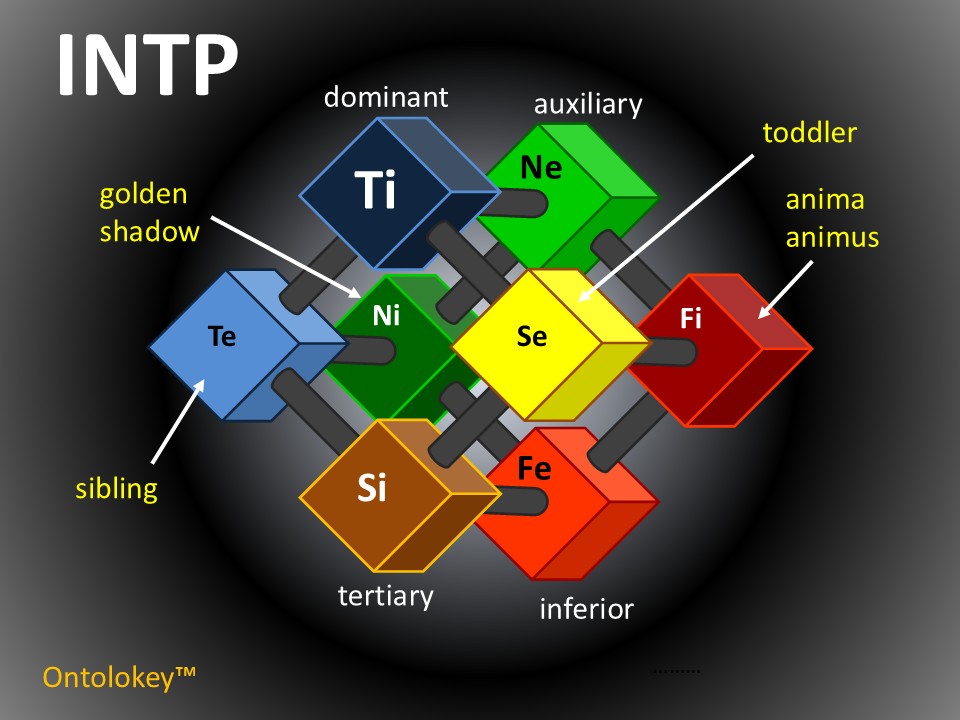
1. The Core Processor: Introverted Thinking (Ti)
Seeking clarity, not control.
At the heart of the INTP personality lies a powerful engine: Introverted Thinking, or Ti. It’s not about collecting facts or bossing others around—it’s about understanding how things work beneath the surface. INTPs are driven by a deep internal compass of logic. Their minds are wired to ask: “Does this make sense?”, “Is this consistent?”, and “What is truly fair?”
This inner logic system isn’t cold or detached—it’s principled. For INTPs, truth and fairness are inseparable. When something feels unjust, it’s not just emotionally wrong—it’s logically inconsistent. That’s why many INTPs are drawn to questions of ethics, justice, and societal structure. They believe a better, fairer system is possible, but only if it’s rooted in reason.
They often construct intricate mental frameworks—models of how society should work. These frameworks can be idealistic, even utopian, but they’re never arbitrary. INTPs don’t just dream; they analyze, test, and refine. If a system breaks down, they’ll dive into the mechanics to find where the contradiction lies.
Rather than relying on authority or tradition, INTPs trust their own judgment. They’ll listen to your reasoning—but not if you’re just repeating what someone else said. This independence can make them seem stubborn or aloof, but it comes from a place of integrity. They need their conclusions to stand up to rigorous, internal scrutiny.
When they challenge others, it’s rarely about winning an argument. It’s about holding logic accountable. If someone’s actions are unfair, the INTP won’t respond with emotional outrage—they’ll calmly dismantle the reasoning, step by step. It’s not about punishing—it’s about helping the other person see clearly. They educate through logic.
In fact, they prefer not to “convince” others in the usual sense. They don’t beg or plead—they demonstrate. They lay out their case so methodically that disagreement often feels intellectually impossible. And they hold themselves to the same standard: they’ll never demand from others what they wouldn’t expect of themselves.
Still, this commitment to logic can come at a cost. INTPs often struggle with the messiness of real life, where emotions, traditions, and politics can’t always be cleanly sorted into “right” and “wrong.” But to them, abandoning clarity means risking chaos—and chaos is the enemy of fairness.
At their best, INTPs are ethical architects—designers of ideas that aim to bring balance, equality, and justice to the world. Not through power, but through understanding. And in a world full of noise, their quiet, internal logic is often the clearest voice in the room.
2. The Explorer Mindset: Extraverted Intuition (Ne)
Seeing possibilities where others see boundaries.
If Ti is the INTP’s internal compass, then Extraverted Intuition (Ne) is their radar—scanning the world for patterns, connections, and hidden potential. It’s what gives the INTP their signature curiosity and tendency to jump from idea to idea, seemingly at random but always with an inner logic.
Ne doesn’t just look at what is—it sees what could be. It’s the function that whispers, “What if we did it differently?” or “Is there a better way?” INTPs aren’t satisfied with the status quo. They’re restless thinkers, driven by the thrill of exploring uncharted mental territory.
This is why so many INTPs are natural theorists, futurists, or inventors—not necessarily in the technical sense, but in how they approach life. They often imagine ideal societies, alternative systems, or new ways of understanding justice, fairness, and human behavior. Their mind is like an open-source sandbox for ideas.
Ne fuels a creative kind of logic. Instead of blindly applying rules, INTPs play with them. They mix concepts across domains, take abstract ideals and try to imagine how they could apply in the real world. They love mental experiments: What would a world look like without money? What if fairness were a physical law? What happens if we remove fear from punishment systems?
Because Ne is outward-facing, it makes INTPs unusually attuned to trends, emerging technologies, and social changes. They may not always seem engaged, but they notice everything—especially contradictions in the world around them. Ne picks up on subtle shifts and asks: “What does this mean for the bigger picture?”
This function also explains the INTP’s occasional unpredictability. They can suddenly shift direction, chasing a new idea or abandoning a plan if a better possibility appears. It’s not flakiness—it’s adaptability. For the INTP, life isn’t a rigid path; it’s a web of infinite routes, each leading to something worth discovering.
Ne gives the INTP a unique social ability too: they often see hidden potential in people. They believe that most limitations are environmental, not inherent. This belief leads them to advocate for equal opportunity—not just out of fairness, but because they believe everyone can rise if given the right conditions.
But Ne has its risks. Its open-ended nature can lead to overthinking or idealism disconnected from reality. The INTP may build visionary systems in their mind, only to find them impractical in the messy world of politics, economics, or human nature. Still, this doesn’t stop them—they adjust, rethink, and try again.
In short, Ne is the INTP’s imaginative jet fuel. It keeps them scanning, wondering, tinkering—and dreaming of systems that don’t just make sense, but make the world better.
3. The Quiet Flame: Introverted Feeling (Fi)
Private values. Deep convictions. A moral compass that doesn’t seek approval.
Though rarely visible on the surface, Introverted Feeling (Fi) hums quietly in the background of the INTP’s inner world. It doesn’t drive the personality like logic or ideas do—but when Fi speaks, it speaks from the soul.
Fi in the INTP isn’t loud or dramatic. It often shows up as a deep sense of integrity, a private standard for what feels emotionally right or wrong—something they might not even be fully aware of until it’s been violated. The INTP might say they value “logic above all,” but when fairness crosses into cruelty, or when people are manipulated, something in them recoils. That’s Fi.
This function forms the INTP’s moral backbone, though it can be difficult for them to explain or justify emotionally. Instead of saying “this hurts me,” they’ll say “this is unjust.” Often, that’s not because they don’t feel, but because their feelings are so internalized, so sacred, that they rarely surface in direct form.
Fi makes the INTP loyal to ideas and principles—but also quietly loyal to people they care about. While they may not show affection in obvious ways, they can carry deep emotional bonds, expressed through thoughtful actions rather than words. They won’t shower someone with praise, but they’ll remember a random detail and bring it up a year later—because they noticed, and they cared.
When Fi becomes active, the INTP might withdraw, retreating into solitude not just to think, but to feel. These moments often arrive after emotional conflict, betrayal of trust, or internal disillusionment. In those quiet spaces, they re-evaluate what matters, what really matters—not by polling others, but by listening inward.
At its healthiest, Fi gives the INTP emotional clarity—a subtle but steady awareness of what’s right for them, regardless of social pressure. It helps them avoid compromising their principles just to fit in. It whispers, “Don’t forget who you are.”
But when repressed or ignored, Fi can lead to trouble. The INTP might become emotionally tone-deaf, confusing fairness with harshness, or intellectualizing pain instead of facing it. They might rationalize cruelty as “deserved,” forgetting the importance of empathy. Or they may judge others for being “too emotional,” not realizing they’re defending a part of themselves they’ve locked away.
Fi also contributes to emotional intensity in private, which outsiders rarely see. A detached INTP on the surface may secretly hold strong inner reactions—quiet fury at injustice, grief over betrayal, or profound compassion for those who suffer silently. These feelings don’t always translate into visible action, but they can be powerful drivers for the INTP’s lifelong quest: to live in a world where truth and goodness are not mutually exclusive.
4. The Distracted Senses: Extraverted Sensing (Se)
The outer world is loud. Let me get back to my thoughts.
For the INTP, the physical world often feels like background noise—useful, necessary, but rarely compelling. This is the realm of Extraverted Sensing (Se), the function that tunes into real-time sensory data: sights, sounds, textures, movement. But for the INTP, this function is like a toddler tugging at their sleeve while they’re trying to read a philosophy book. Annoying. Distracting. Sometimes even threatening.
Because Se is their least developed function, INTPs can struggle with sensory overload. Crowded places, loud noises, or fast-paced environments can quickly exhaust them. They don’t thrive in high-stimulation settings—not because they’re weak, but because their inner world is so rich that the external world often feels like interference.
This leads many INTPs to value quiet spaces, simplicity, and minimalism—not out of aesthetic preference, but out of necessity. A cluttered environment can feel like a cluttered mind. Too many flashing lights, strong perfumes, or disorganized surroundings? It’s like someone turned the volume up on reality, and it’s hard to think.
Because Se is unconscious, the INTP may also neglect their physical needs until they become impossible to ignore. They might skip meals while absorbed in thought, forget appointments, or dress more for comfort than for style—often defaulting to plain clothes in neutral tones. It’s not that they don’t care, it’s that their focus lives elsewhere.
Ironically, this weak Se can lead to occasional overcorrections. When pushed into unfamiliar or high-stress sensory situations—like a loud argument, sudden confrontation, or chaotic environment—the INTP may react more strongly than expected: shutting down, panicking inwardly, or becoming uncharacteristically rigid. It’s like the toddler function throws a tantrum.
There’s also a kind of subtle mistrust toward the physical world. INTPs are abstract thinkers; they live in systems, symbols, and ideas. Concrete reality feels… limiting. That’s why they may struggle with activities that require split-second reactions, physical finesse, or an instinctive connection to their surroundings. They can feel out of sync with the moment.
But when INTPs make peace with this function—usually later in life—they can learn to ground their ideas in the present. They begin to enjoy the beauty of small pleasures: the texture of good paper, the calm of nature, the taste of a well-cooked meal. Se doesn’t have to dominate their lives—but it can gently remind them that the world isn’t just something to think about. It’s also something to live in.
5. The Uneasy Empath: Extraverted Feeling (Fe)
I care. I just don’t always know how to show it.
Extraverted Feeling (Fe) sits at the bottom of the INTP’s functional stack—like a distant cousin who shows up uninvited and asks for hugs. It governs emotional expression, social harmony, and the ability to tune into the feelings of the group. And while it’s far from a natural skill for the INTP, it’s also something they can’t fully ignore.
On the surface, INTPs may seem emotionally cool or detached. But beneath that logic-first exterior is someone who cares deeply about fairness, kindness, and human decency. The problem isn’t feeling—it’s the awkwardness of navigating shared emotional space.
Fe wants to connect, but for the INTP, the path there is often murky. They may misread social cues, under-react when others expect warmth, or express support in ways that come across as overly analytical. (“I’m sorry you’re sad… have you considered why?”) It’s not a lack of empathy. It’s a mismatch between intent and delivery.
This struggle can lead to self-doubt. INTPs often feel like emotional outsiders—aware that others are vibing on something they just don’t fully “get.” They may feel uncomfortable in group settings, dread small talk, or fear being asked to comfort someone when they don’t know how.
At times, their inferior Fe may trigger a reactive surge. When under stress or backed into a corner, the INTP might unexpectedly lash out emotionally, or overextend themselves socially in an attempt to “prove” they’re a good person. These moments feel inauthentic to them—and exhausting.
Despite all this, Fe holds great potential. When developed over time, it becomes a bridge between ideas and people. Mature INTPs learn to express their caring through thoughtful actions, quiet gestures, and a steady presence. They won’t throw you a surprise party, but they’ll help you move apartments, fix your resume, or send you the perfect article at the perfect time.
Importantly, Fe allows the INTP to humanize their ideas. Without it, their theories risk becoming cold, abstract, or detached from lived experience. But with Fe integrated, their vision of fairness becomes not just logically sound—but emotionally sustainable.
Ultimately, Fe is the INTP’s emotional blind spot and their emotional compass. They may never be the most outwardly expressive person in the room, but when they learn to trust this part of themselves, something beautiful happens:
Their relationships deepen, their communication softens, and their idealism becomes truly human.
6. The Inner Archivist: Introverted Sensing (Si)
The past is a quiet teacher—if you know how to listen.
At first glance, Introverted Sensing (Si) doesn’t seem to fit the INTP. They’re known for future-focused thinking, wild mental experiments, and abstract theories. But tucked quietly in the background, Si plays a stabilizing role—a kind of internal memory bank that helps the INTP stay grounded, consistent, and even nostalgic in subtle ways.
Si is responsible for tracking patterns over time: What worked before? What does “normal” look like? What details repeat in familiar situations? While Ti and Ne keep the INTP jumping between ideas, Si whispers reminders like, “This method has always worked for you,” or “That didn’t end well last time.” It adds a sense of continuity to their otherwise fluid thought world.
In daily life, this shows up as a quiet appreciation for personal rituals, consistent habits, or familiar environments. Many INTPs like to work in the same place, use the same tools, or follow the same quiet morning routine. Not out of obsession—but because those small consistencies help reduce noise and create mental clarity.
Si also contributes to the INTP’s often underestimated sense of precision. They notice details that others miss—not sensory data in the Se sense, but internalized systems: formatting, tone, internal logic. They might spot inconsistencies in a document, remember obscure quotes, or recall how a group dynamic unfolded two years ago. Si catalogues experience, quietly and thoroughly.
But this function isn’t always a strength. Because it develops slowly and isn’t naturally dominant, Si can create a strange tension in the INTP: a desire for comfort versus a desire for freedom. They may resist change without realizing why, clinging to past frameworks or routines even as their Ne urges them to explore something new.
At its worst, Si can fuel internal rigidity. If past failures become too emotionally charged, the INTP might develop avoidant behaviors—steering clear of risks because of what once went wrong. Or they may find themselves trapped in routines that no longer serve them, simply because they’ve grown used to them.
Still, when balanced, Si offers a kind of inner reliability. It reminds the INTP that growth doesn’t always mean reinvention—sometimes it means refining what already works. It gives them a sense of rhythm, helps them track their own progress, and provides a quiet, personal history they can draw on in times of doubt.
And perhaps most importantly, Si helps anchor their ideas in real-life experience. It makes their thought systems more grounded, their philosophies more human, and their creativity more sustainable. In this way, Si becomes the humble archivist of the INTP’s ever-expanding mind.
7. The Reluctant Executor: Extraverted Thinking (Te)
I know the best way to do this—I just don’t always want to do it.
While INTPs are masters of internal logic and abstract thought, their relationship to Extraverted Thinking (Te)—the function of external structure, action, and efficiency—is complicated. It’s not that they can’t be productive or organized. It’s that they often resist doing things the standard way, especially when that way seems arbitrary or disconnected from deeper truth.
Te says, “Get it done. Hit the goal. Use the method that works.”
Ti replies, “But is the method rational? Is the goal even worth pursuing?”
This tension is central to the INTP experience. While Te-oriented people thrive in environments with clear hierarchies, deadlines, and step-by-step execution, INTPs crave flexibility, independence, and space to think. They don’t want to be micromanaged, and they deeply dislike being told how to do something if they’ve already found a more elegant—or less soul-crushing—way.
Still, Te has its place in the INTP psyche. It often shows up in the form of quiet competence. When the INTP has to get something done, they will—but on their own terms. They might design an entire system from scratch, automate a boring process, or reinvent a workflow simply because the existing one was inefficient. Te provides the pragmatic edge to their theoretical brilliance.
However, because Te sits in a less-conscious position, it can also stir up insecurity. INTPs often underestimate their own ability to “perform” in traditional systems—corporate, academic, bureaucratic. They might think they’re too slow, too scattered, or too “non-linear” to succeed. In reality, they may just be resisting shallow expectations.
Under stress, Te can emerge in frustrated outbursts: “Why is everyone so inefficient?” “Why do I have to do this paperwork?” The INTP may become uncharacteristically sharp, critical, or even bossy—especially when they feel forced into action without proper reasoning. It’s as if the Te part of them grabs the wheel and says, “Enough analysis. Let’s go.” But it rarely feels comfortable.
And yet, Te has value for the INTP—not as a primary driver, but as a tool. It helps them implement their ideas, bring systems to life, and advocate for change in the real world. Without some engagement with Te, their insights risk remaining locked inside journals and private thought spirals.
As they mature, INTPs learn that efficiency doesn’t have to mean compromise. They discover that execution is not the enemy of creativity, and that taking action—even imperfectly—can amplify their impact. With time, Te becomes not an annoying sibling—but a practical partner that helps turn vision into reality.
8. The Visionary Echo: Introverted Intuition (Ni)
There’s a pattern beneath the pattern—and I can almost see it.
For all their love of logic and possibility, some INTPs report moments that feel strangely… inevitable. They don’t arrive through analysis or brainstorming. They emerge like whispers from the subconscious—quiet insights that seem to say, “This is where it’s all going.”
This is the quiet power of Introverted Intuition (Ni)—the INTP’s “golden shadow.” It’s not part of their main toolkit, but when it appears, it feels profound. Ni doesn’t generate possibilities (like Ne) or build logical structures (like Ti). It distills, compresses, and penetrates. It says not what could happen, but what will happen—if you know how to listen.
Ni gives the INTP occasional flashes of deep clarity—a sense that a thousand moving parts are actually just expressions of one underlying truth. In these moments, the INTP may seem less like a logician and more like a seer. They might not be able to explain how they know something—they just know. And when they trust it, they’re often right.
This intuition can show up as a quiet foresight about people, systems, or social trends. The INTP may pick up on a shift in group dynamics before it’s visible. They may sense when an idea is becoming obsolete, or when a movement is about to gain traction. Ni compresses time into insight. It doesn’t argue—it reveals.
However, because Ni is buried deep in the INTP’s psyche, they often second-guess it. They may dismiss it as superstition or coincidence, trying to reframe it through Ti or Ne. But the truth is, Ni works outside their usual logic. It deals in symbols, metaphors, quiet inevitabilities. It asks them to trust something they can’t fully trace.
When ignored, Ni may manifest as restlessness—a feeling that something is missing, or that life is drifting off-course in a subtle but important way. When integrated, however, it gives the INTP a sense of destiny. Not in the dramatic, hero’s-journey way—but in the quiet knowledge that their ideas, struggles, and questions do have direction. And purpose.
Ni also provides spiritual depth. While INTPs may appear skeptical or secular, many are quietly drawn to systems of thought that transcend logic: depth psychology, Eastern philosophy, existentialism. These aren’t mere curiosities—they’re doorways into the unknown patterns behind reality itself.
In the end, Ni is the function that invites the INTP to go beyond understanding. Not just to know—but to see. To recognize the deeper shape of things. And in doing so, to connect all their searching, doubting, building and dreaming into something greater—a vision that doesn’t just explain the world, but helps transform it.
 Ontolokey
Leave a comment