Introduction
Those who know an INFP—or are one themselves—often sense a deep, quiet intensity beneath the surface. These individuals are idealists: guided by strong values, rich emotions, and a complex inner world. Creative, empathetic, and often lost in thought, they can seem elusive or hard to grasp. But behind their quiet nature lies a deep well of conviction and imagination.
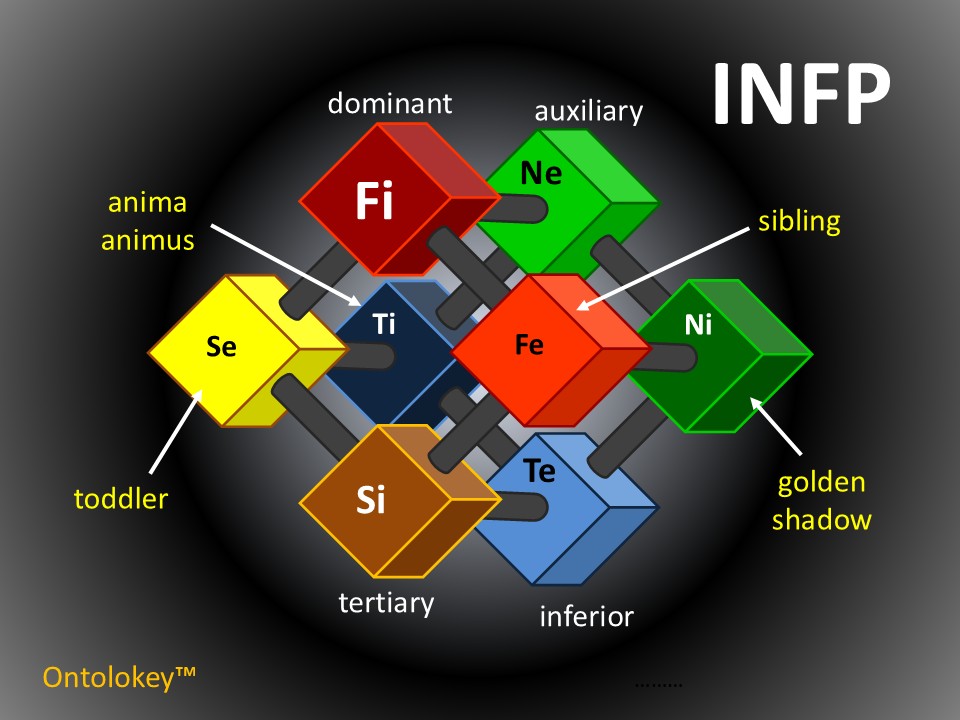
The Ontolokey model offers a new, dynamic way to understand this personality type. Unlike traditional frameworks that focus on four main traits, Ontolokey explores all eight psychological forces at play—both conscious and unconscious. Using a colorful 3D cube with adjustable sliders, it illustrates not just which traits are dominant, but how they interact and influence one another throughout life’s development.
1. A World Within
INFPs are introverts by nature. They recharge through solitude, reflection, and emotional processing—not through external stimulation. Their thoughts and feelings run deep, and they often need time alone to make sense of them. This isn’t shyness—it’s depth. Their inner world is where they find meaning and direction.
2. A Moral Compass at the Core
At the heart of the INFP personality lies a powerful sense of personal values. Right and wrong are not defined by social norms or group consensus—but by an internal sense of authenticity. This moral compass guides their decisions, sometimes making compromise difficult. They would rather be true to themselves than go along with something that doesn’t “feel right.”
3. The Challenge of Social Dynamics
While INFPs are deeply empathetic, they often struggle with social expectations. They may feel overwhelmed in groups or drained by the pressure to fit in. They long for genuine connection, but not at the expense of their inner truth. As they mature, many learn to engage socially without betraying themselves—creating space for deep, honest relationships.
4. The Power of Imagination
One of the INFP’s great strengths is their creative and intuitive mind. They see patterns others miss, generate original ideas, and explore endless possibilities. This visionary thinking fuels innovation—but it can also become a trap if it leads to overthinking or indecision. The real challenge is grounding those ideas into action.
5. A Hidden Blind Spot – Presence in the Moment
Living in the present, enjoying physical sensations, or responding spontaneously to the world can be difficult for INFPs. They often live in their heads or hearts, forgetting the here and now. Yet learning to be present—through movement, nature, or mindfulness—brings vitality and grounding to their idealistic spirit.
6. Turning Dreams into Action
Organization, planning, and execution may feel unnatural to INFPs. They might resist systems or structures that seem impersonal. But embracing this challenge can transform their lives. When they learn to apply discipline and structure to their ideals, they become powerful changemakers—not just dreamers, but doers.
7. A Philosophical Soul Within
Beneath the surface, INFPs often carry an inner voice that seeks understanding and intellectual clarity. They reflect deeply—on themselves, on others, on life’s mysteries. Though this part of them may remain quiet, it adds profound depth and contributes to their thoughtful, wise presence.
8. Emotion and Memory – A Gentle Anchor
INFPs form strong emotional bonds with their past. Certain places, songs, or rituals carry deep personal meaning. This connection to memory offers comfort—but it can also hold them back. When embraced consciously, it becomes a source of strength, not nostalgia.
9. The Golden Shadow – A Hidden Visionary
Within every INFP lies a hidden capacity for vision, insight, and intuitive depth. They may project these gifts onto others—admiring charismatic leaders or spiritual thinkers—without realizing they possess similar qualities themselves. Integrating this “golden shadow” unlocks their potential as quiet visionaries and soulful guides.
10. Growth Through Balance
The INFP’s journey is not linear. It involves emotional complexity, inner conflict, and the slow integration of hidden parts of the self. Ontolokey teaches that wholeness is not about becoming someone else—but about harmonizing all aspects of who we already are. Feelings, thoughts, imagination, and presence—all must come into balance.
Conclusion
INFPs are quiet revolutionaries—shaping the world not through force, but through depth and meaning. The Ontolokey model offers a rich, multi-dimensional view of this personality: not as a fixed type, but as an evolving system. It reminds us that every person holds vast inner resources—many of them unseen. And it is in the integration of these hidden forces that real transformation begins.
In embracing this journey, the INFP does not simply observe life—but learns to shape it with quiet courage and inner light.
 Ontolokey
Leave a comment