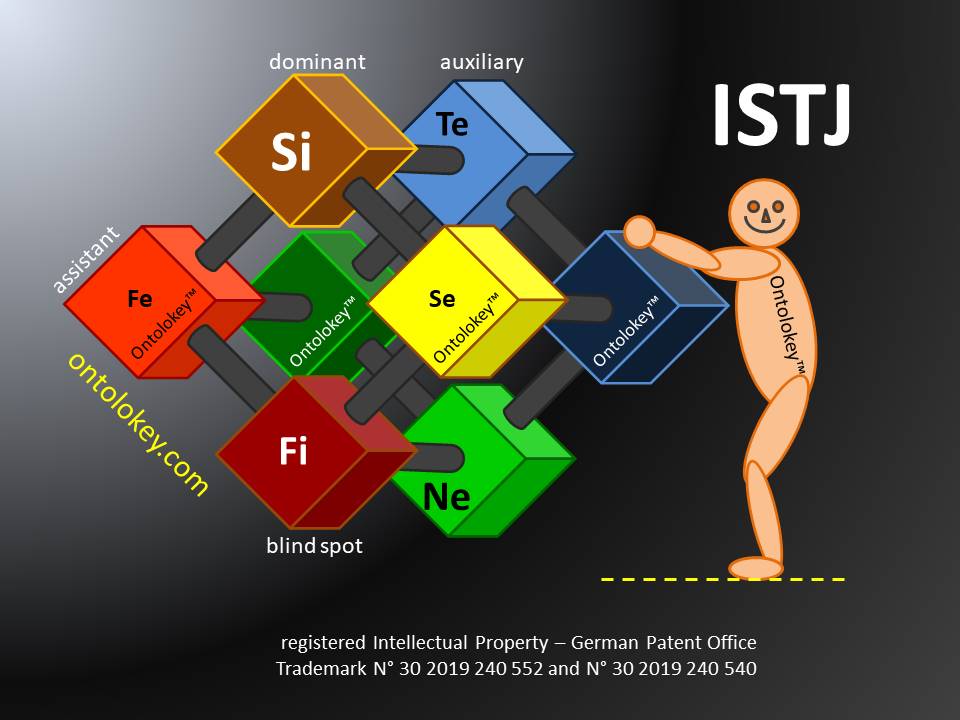
Introduction: Reframing Sensation in the Introverted Psyche
In Jungian typology, sensation is typically understood as the function that registers the concrete, immediate reality provided by the senses. It is the most “objective” of the four primary functions. However, in its introverted form, sensation undergoes a profound transformation. Rather than merely receiving impressions from the external world, introverted sensation (Si) becomes oriented toward the subjective experience of perception.
This means that what is perceived is filtered not just through the senses, but through an internal framework of meaning, memory, and affective resonance. The object, while still present, becomes secondary to the inner image it evokes.
The Subjective Nature of Introverted Sensation
All perception includes both a stimulus (the object) and a perceiver (the subject). In the case of introverted sensation, the subject plays a dominant role in shaping how sensory information is processed. The result is a perceptual experience that is often deeply colored by inner states, mood, and unconscious archetypes.
This is best illustrated in the arts. When multiple artists attempt to depict the same landscape, the resulting paintings will vary—not only in technical skill, but more crucially in mood, style, and psychological tone. These variations reveal the influence of the subjective factor in sensation. The painting reflects less of the objective landscape and more of the artist’s internal response to it.
Introverted sensation thus does not represent a direct reproduction of reality, but a reconstitution of it within the psyche. The sensory impression is interwoven with the personal and collective unconscious, often subtly, sometimes dramatically.
Archetypes and the Deep Structure of Perception
Si-type perception is often saturated with mythological or archetypal imagery—not overtly symbolic, but rather unconsciously embedded in how the object is experienced. The impression of an object evokes more than its appearance; it awakens ancient layers of meaning. These meanings are not constructed through conscious reasoning but arise spontaneously, as if from an older, more primordial level of mind.
Jung compares this to viewing the world from the standpoint of eternity—sub specie aeternitatis. In such perception, objects are not seen only in their present form but are imbued with temporal depth: their becoming, their vanishing, their symbolic weight across time. A house might be perceived not merely as a structure, but as an embodiment of shelter, tradition, or ancestral continuity—even if the observer is unaware of these associations.
Characteristics of the Introverted Sensation Type
The personality type dominated by introverted sensation is irrational in Jungian terms. That is, it does not prioritize logic or rational judgments but is led by what presents itself inwardly as significant or real. The type is receptive rather than constructive, often passive in appearance, and highly selective in what it attends to.
This selectivity is not governed by external criteria but by inner resonance. Consequently, there is no clear or predictable link between the external stimulus and the individual’s reaction. What seems trivial to others may deeply move the Si type, while what is generally considered important might leave them unmoved.
Externally, these individuals often appear calm, balanced, and even indifferent. But beneath the surface, their inner world is vivid, intricate, and emotionally charged. What seems like emotional neutrality is often a cover for intense, internal experiences that are not easily verbalized.
Expression Difficulties and Misunderstanding by Others
One of the challenges for introverted sensation types lies in articulating their inner experiences. Their dominant function operates largely outside the realm of language. Their conscious thinking and feeling functions are often underdeveloped or only serviceable at a mundane level, which makes expressing the richness of their inner life difficult.
Unless they have cultivated a medium of symbolic expression—such as art, music, or poetry—they may find themselves misunderstood or dismissed. Their experiences are authentic and deeply felt, but often remain private or misinterpreted by others.
This difficulty in externalizing their internal experiences can lead to a sense of isolation or self-alienation. The individual may feel that even they cannot fully grasp or explain what moves them so profoundly.
Relationship to the Outer World: Detachment and Sensitivity
Although Si types are not typically hostile to the external world, they often relate to it with a neutral detachment. The object is not devalued intentionally, but it fails to dominate their psyche because its influence is immediately filtered through a subjective lens. This can make the Si type appear insensitive or unengaged, though in reality they are often highly sensitive—just not in an outwardly expressive way.
Their interaction with the world tends to regulate extremes: they tone down enthusiasm, curb extravagance, and normalize the unusual. This can make them seem like calming, stabilizing presences—or, in some cases, like suppressive forces.
If their harmlessness is perceived, they may be exploited by more dominant personalities. This can lead to passive resistance or stubborn defiance in inappropriate contexts, as repressed reactions seek an outlet.
Vulnerability to Inner Overload and Neurosis
When the unconscious components of introverted sensation become too dominant, the individual risks confusing inner images with external reality. This does not necessarily indicate psychosis, but it may distort behavior, relationships, or judgment.
In extreme cases, the unconscious intuitive function, which is extraverted and archaic, may become activated. This function has an uncanny ability to sense the dark, dangerous, or hidden possibilities behind objects or people. It is not the constructive intuition of extraverted intuitive types but a paranoid, undermining force that distrusts appearances and projects disturbing meanings onto reality.
If this unconscious intuition takes over, it may lead to obsessive thoughts, compulsions, or paranoia—a clinical picture that resembles obsessive-compulsive neurosis, especially when the conscious mind is unable to integrate or distance itself from these intrusive perceptions.
Mythological Consciousness and Archaism
The Si type often unconsciously lives in a mythic landscape. People, objects, and events may be experienced as representations of archetypal forces—benevolent gods, punishing spirits, mysterious powers. This mythological perception of reality, while largely unconscious, shapes judgment and behavior as if these forces were real.
Unless the individual becomes aware of the discrepancy between subjective image and objective fact, they risk living in a world of projections, where the outer world is interpreted symbolically but not accurately.
When reality and perception finally clash, the Si type faces a dilemma: either invalidate the inner experience and feel mentally unwell, or dismiss the outer world as a shallow illusion. This tension defines the Si type’s inner drama—usually hidden, but deeply influential.
Conclusion: The Hidden Depth of Si
Introverted sensation is a subtle, deep, and often misunderstood function. It is not oriented toward controlling or changing the world, but toward absorbing, experiencing, and giving meaning to it—through a slow, internal alchemy that connects the personal with the archetypal.
Its strength lies in its ability to reveal depth beneath the surface, to sense meaning where others see only matter. But it comes with a risk: losing contact with objective reality, becoming captive to one’s own psychic images.
In a balanced psyche, introverted sensation offers a poetic, contemplative, and soulful relation to the world—one that speaks less to the intellect and more to the timeless language of the inner self.
 Ontolokey
Leave a comment