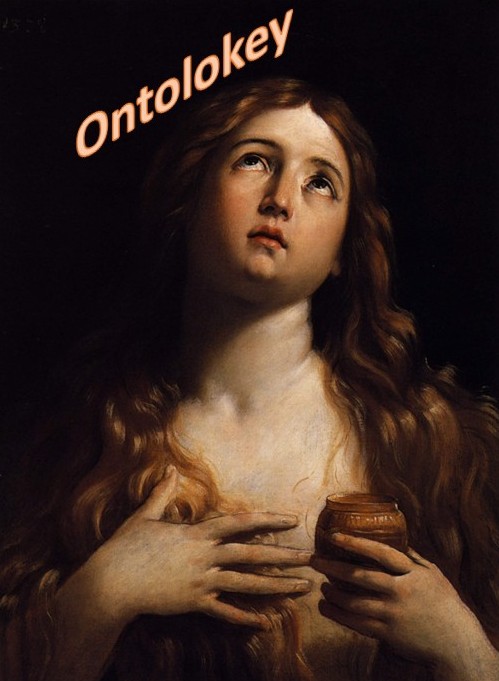
In the psychological framework of Carl Gustav Jung, the Anima (or Animus) represents far more than a gendered inner figure—it is the soul, the emotional compass, and the unconscious motivator behind much of our behavior. Within the Ontolokey system, this concept gains a powerful new form: one that is visual, interactive, and grounded in the structure of personality itself.
🔍 The Hidden Mirror Behind the Dominant Function
In Ontolokey, the Anima follows a distinct pattern:
- It has the same attitude (introverted or extraverted) as the dominant function.
- Yet, it is the opposite in function family:
- Thinking ↔ Feeling
- Sensing ↔ Intuition
This means, for example:
- A dominant Introverted Thinking (Ti) type has an Introverted Feeling (Fi) Anima.
- A dominant Introverted Sensing (Si) type carries an Introverted Intuition (Ni) Anima.
- A dominant Extraverted Feeling (Fe) type holds an Extraverted Thinking (Te) Anima.
This functional opposite is not just a theoretical element—it is the very soul mirror, an inner force shaping our deepest desires, our projections, and our emotional responses.
🌌 The Anima as Unconscious Motivation
The Anima lies dormant in the unconscious, often influencing our behavior without our awareness. It’s the hidden motivator, the why behind the what—especially when our actions seem to contradict our rational self-image.
Take the Introverted Thinker (Ti-dominant) for example. Rational, precise, and internal. Yet beneath that logical surface lies an Introverted Feeling Anima, silently steering the individual toward meaning, authenticity—and ultimately, true love.
This love, however, is not always consciously directed. Instead, it is often projected outward—onto another person, a fantasy, or a relationship ideal. One doesn’t recognize this need as an inner dynamic, but sees it “out there,” in someone else.
🌀 The Platonic Echo: Searching for the Lost Half
This phenomenon was described powerfully in Plato’s Symposium. There, humans were once spherical beings—complete, unified. But Zeus split them in two, condemning us to wander the earth in search of our lost half.
In the Ontolokey interpretation, this “lost half” is nothing external. It is the Anima, the internal soul-part we’ve disowned and projected. The journey is not to find someone else—but to reclaim the anima within.
By understanding your Anima through Ontolokey, you don’t just interpret your emotional patterns—you begin the individuation process. You integrate what was once unconscious and foreign. You become whole.
🗝️ Ontolokey: Making the Invisible Visible
Through its revolutionary 3D key mechanism, Ontolokey reveals this dynamic visually and intuitively. Users can not only identify their personality type but also see how the Anima relates to their dominant function. For the first time, such deeply rooted psychological content is made both accessible and experiential.
By recognizing the Anima not as a weakness or flaw, but as a sacred inner force, we gain the opportunity to deepen our relationships, heal projections, and align our actions with our hidden truths.
❤️ Integration Begins Within
When we stop searching for our soul in someone else, and instead turn inward with clarity and compassion, the Anima transforms from a shadowy ghost into a guiding light.
Let Ontolokey be your companion on this journey toward wholeness.
 Ontolokey
Leave a comment